


Abstract
With climate governance playing an increasingly crucial role in driving the low-carbon transition and digital transformation being regarded as vital for sustainable development, China has formulated a comprehensive climate governance system with the Carbon Emissions Trading Scheme (CETS) at its core. This research utilizes the implementation of China’s CETS as a quasi-experimental setup to explore how climate governance enables corporate digital transformation to support the low-carbon transition. Findings show that climate governance remarkably boosts corporate digital transformation by 18.8%, mainly by relieving financing limitations and encouraging green technological innovation. Nonetheless, the “crowding-out impact” of regulatory environmental measures and the “policy replacement impact” of eco-friendly loans somewhat dampen these beneficial influences. Findings from the heterogeneity analysis indicate that the positive influence of climate governance is more evident in areas where the public has a greater awareness of the environment and in industries that are not major polluters, demonstrating differences in geographical and industrial features. Based on the research findings, this paper will provide comprehensive suggestions for improvement in institutional factors, financial and innovation support, differentiated implementation, and policy coordination. The suggestions will provide both theoretical and empirical insights for enterprises to advance towards achieving the integrated development of low-carbon economy and digitalization.
1. Introduction
With the growing global effort for the governance of climate change propelling the transformation towards low-carbon economy models, digital transformation has become a crucial path for companies to reach improved operational efficiency and Carbon Emissions Trading Scheme (CETS). With the rising global average temperatures, frequent occurrence of natural disasters, and faster rising rates of global sea levels, human society has become confronted with severe challenges. To address the global issue, the global community has identified and recognized the importance and urgency for global governance for climate change (Dimitrov, 2010) [1]. In order to reduce the GHG emission, a number of measures have been implemented by various governments to trigger the shift towards the green economy. Among these measures is the Carbon Emissions Trading System. This system uses a very market-driven approach and has received widespread consideration owing to its effectiveness in triggering the companies to reduce their carbon emission. While assessing the effectiveness of the Carbon Emissions Trading Plan, it sets a ceiling on carbon emission. The companies are provided an opportunity to trade carbon emission permits in the market. In this manner, it provides a system that yields a win-win approach for both the atmosphere and the economy as well (Pan et al., 2021) [2]. In such a system, companies that can minimize their GHG emissions not only realize advantages of reduced costs due to the purchase of emission permits but also gain revenue from the sale of additional emission permits to other companies (Yu et al., 2022) [3]. In such a system, companies are compelled to work towards reducing GHGs as they search for economic benefits. This makes it easy for companies to identify with the green revolution. China, as a globally influential economic power and an emerging economy, has immense global responsibility for managing global challenges like climate change (Wan, 2025) [4]. In order to manage the output of carbon and promote a low-carbon growth strategy effectively, since 2017, China has initiated trials of carbon trading in various regions. This system has gradually been implemented across the country. The implementation of such a system not only contributed substantial impacts on the problem of carbon emission from enterprises in China but could possibly account for numerous changes in production, business, and innovation as well (Zhao et al., 2017) [5]. The integration of climate policy management and digitalization appears to offer a promising approach for low-carbon transition since digitalization supports emission monitoring and cost management.
However, it may also be noted that in the digital age, digital transformation has now become an important model for organizations towards realizing improved competitiveness and sustained growth and development (Wen et al., 2022; Zhang et al., 2024) [6,7]. Through the implementation of modern information and communication technology, organizations can improve their business operations and hence improve their position in the business world (Tang et al., 2025) [8]. In addition to these important issues, another important problem emerging is whether climate governance, particularly carbon emission trading system, can accelerate digital transformation for corporations. In consideration of the complexity of such a problem, it needs careful analysis. In order to offer an acceptable explanation for such a problem, the quasi-natural experiment for China’s Carbon Trading System will be employed within the paper, and the target subjects for research include A-share listed corporations. Through the algebraic analysis based on an analysis model of difference-in-differences (DID), an empirical analysis is conducted to test the influence of the Carbon Emission Trading System on digital transformation for corporations. Furthermore, it will also analyze such mechanisms and various influences produced by climate governance. The hope here is that it may identify certain underlying connections existing within climate governance and digital transformation for corporations. The research of this paper has dualistic significance. First of all, based on careful analysis of Carbon Trading policy that may accelerate digital transformation for corporations, it may improve the growth and perfection of the theoretical system for connections existing within climate governance and corporate behaviors. At the same time, it may offer important references for governments on formulating more refined and reasonable climate governance policies.
The above research may offer three forms of marginal contributions. Theoretically, it proposes an idea that combines the concept of climate governance and digital transformation. This is achieved by examining the carbon emissions trading system that helps in the digital transformation of companies as a low-carbon transition approach by various mechanisms, thereby supplementing existing knowledge on the existing relationship that occurs amongst climate governance for a low-carbon climate, digitalization, and strategies that work towards low-carbon climate growth. The second aspect may come from the perspective of the methodology. The research work on carbon emission trading in China may work as a quasi-experiment design. The research may adopt a framework of difference-in-differences designed in an effort to properly identify causal outcomes. This may include various tests like those that look at the similarity of trends, those that test on placebo approaches, and those that test alternative policy interactions. Additionally, it will assess endogeneity problems through both tests for the stability of the Oster coefficient and double machine learning methods, significantly enhancing the accuracy and reliability of the findings. Mechanisms for analysis will also advance from finding a relationship by unearthing its bases, particularly through relieving financing constraints, generating green innovation. Meanwhile, we also explore its critical boundaries, particularly through command-and-control environmental factors, green credit, different industries, and different geographical sites.
2. Literature Review
In the context of global climate governance and the “Dual Carbon” strategy, corporate digital transformation has gradually become a strategic behavior that is inseparable from global climate governance, making it no longer a simple “technological upgrade option.” The driving logic, measurement standards, and economic outcomes for corporate digital transformation are all impacted by global climate governance policies. Concerning the driving factors, it can be found that corporate digital transformation undertakes an apparent “interaction of internal and external forces.” Externally, market competition under carbon regulation necessitates that enterprises conduct digital transformation to reduce carbon costs (Huang et al., 2023) [9]. To that end, digital economy policies also function in line with the goals of global climate governance. Namely, by ameliorating energy flow, they can directly boost the symbiotic process of digital transformation and carbon reduction (Huang et al., 2024) [10]. Internally, the driving factor centered on managing the value for carbon assets has become important, since digital transformation has become a crucial path for increasing the value for carbon assets (Saeed et al., 2025) [11]. Concerning measurement standards, the original measurement paradigm, which mainly relied upon the “depth of technology use,” has become more “carbon-use oriented” by accepting new standards. This has been proven in different industries, including the manufacturing (Chen et al., 2024) [12] and tourism industries (Wang, 2024) [13]. Industry-wide surveys demonstrate that growth in digital assets leads to a substantial reduction in emissions, especially in areas that practice the pilot-scale carbon trade (Yang et al., 2024) [14]. The economic outcome for corporate digital transformation reflects the “short-term costs, long-term benefits” formula, wherein firms face “cost pressures from digital infrastructures and upgrade costs,” yet benefit from “reductions in carbon regulatory costs” (Wang et al., 2023) [15], “product green prices” (Wang et al., 2024) [16], and improved “carbon efficiency-competitiveness cycles.” Additionally, it can also be found that, pursuant to carbon regulation, the “profit growth drive from digital transformation” has become more apparent (Han et al., 2025) [17].
Despite the strong relationship between governance of climate issues and digital transformation in corporations, existing studies mainly explore the relationship between governance of climate issues and corporate profits (Chen et al., 2022) [18], total factor productivity (Tian et al., 2022) [19], industrial structure (Zhao et al., 2025) [20], and technological innovation (Zhang, 2025) [21]. The studies related to the relationship between governance of climate issues and digital transformation are still in the “indirect exploration” stage. The existing studies related to the relationship tend to focus on how corporate investment structure or carbon emissions change due to policy shifts, so as to indirectly lead digital transformation (Saeed et al., 2025; Yang et al., 2024) [11,14]. The existing studies also tend to view digital transformation as a “tool” for governance of climate issues instead of treating it as an “outcome” (Xu et al., 2022; Balogun et al., 2020; Ren et al., 2023; Huang et al., 2024) [22,23,24,25].
Carbon emissions trading scheme (CETS) refers to a market-based governance tool, and it has become an ever-increasing important connecting point for integrating governance at the macrolevel and transformation at the microlevel. The paths, degree, conditions, and actual impacts for corporate digital transformation related to “climate governance and digitalization” are the key parts for interpreting the relationship between “climate governance and digitalization.” CETS has been proven to effectively lower corporate carbon emission intensity, and its intensity will become stronger along with time (Zhang et al., 2020) [26]. Through forcing the optimization of energy structures and enhancing environmental governance, it assists in the low-carbon transformation for high energy-consuming enterprises, albeit at the regional level, wherein more significant effects can be witnessed in regions that exhibit higher levels of regulation (Wei et al., 2025) [27]. The emissions reduction effect caused by the policy also follows a “U-shaped” dynamic process, wherein it hinders emissions reduction in the initial stage through transition costs, eventually facilitating it through technological progress (Wu et al., 2025) [28]. The crucial driving forces behind the implementation of the scheme include cost compulsion (Chen et al., 2023) [29], incentive for technological innovation (Zhu et al., 2025) [30], and optimized resource allocation (Wang et al., 2024) [31]. However, only a handful of research studies have started exploring the relevance and effectiveness of the CETS to corporate digital transformation, and the existing literature has several limitations. With regard to its scope, the sampling has remained limited to industries that are severe polluters and energy guzzlers (Pang, 2025) [32]. Theoretically, digital transformation is often simply a mediation variable through which the policy’s impact is transmitted (Luo et al.,2021; Wang et al., 2025) [33,34]. This view neglects the driving forces for digital transformation that are directly produced by the policy. The existing literature, from a methodological perspective, has not fully controlled for confounding factors caused by other policies, namely Big Data Comprehensive Pilot Zones, and has not fully leveraged new econometric estimates, such as the double machine learning methods (Wei et al., 2024; Yan et al., 2025; Ye et al., 2025) [35,36,37]. Moreover, although the CETS proves to be effective, its results are also limited by a series of boundary conditions. To illustrate, better environmental disclosure quality and stricter regulatory enforcement from the outside are linked to greater corporate benefits (Downar et al., 2021) [38]. The importance of transition financial support, such as green credit, cannot be overlooked either (Qu et al., 2025) [39] nor can the intensity of industry competition (Chen et al., 2023) [29]. Changes to labor distribution also demonstrate a potential contribution to the effectiveness of the CETS (Luo et al.) [40]. The present body of literature neglects the series of boundary conditions, leading to limited and imprecise policy suggestions. Moreover, the lack of scenario analysis in the existing literature, especially concerning various mechanisms linked to carbon taxes, a green financial system, and other real-world combinations, hinders the relevance of existing findings in complex settings.
With a view to overcoming the shortcomings discussed above, it is hoped that this study will accomplish major breakthroughs in four areas: Firstly, it formulates a holistic analysis pattern for “climate governance–digital transformation” enabling it to investigate the causal relationship from climate governance to corporate digital transformation directly. This is different from the prevailing pattern, exploring digital transformation only as the medium for realizing climate governance. Secondly, by focusing on the direct relationship from the Carbon Emissions Trading Scheme to digital transformation in every sector, it could overcome limitations imposed by sectors and upgrade the overall applicability of findings for the study. Thirdly, in terms of research methods, it adopts a configuration combining DML (double machine learning) and a difference-in-differences quasi-natural experiment framework. To improve the credibility and correctness of the study, a number of advanced econometrics methods will be used for both robustness checks and endogeneity tests. This also aims to satisfactorily suppress the disturbance from co-existing policies, such as Big Data Pilot Zones, so that it can identify better the impacts by policies. Fourthly, in methodology, it not only investigates the relationship from climate governance to corporate digital transformation, exploring further related mechanisms, such as financing constraining factors and green technological innovation, but also considers the mutual relationship for impacts from the Carbon Emissions Trading Plan and other policies, for example, regulatory environmental policies and green loan policies, exploring also the limited conditions for the Carbon Emissions Trading Plan’s impacts. The study will provide more accurate and applicable findings for corporate decision-making and government’s policy-making, especially when facing complex policy scenarios.
3. Theoretical Analysis and Research Hypothesis
3.1. Climate Governance and Corporate Digital Transformation
Climate governance has been an effective approach towards dealing with climate change globally. In addressing the theoretical aspect of it, an important concept that has managed to shed light on climate change and digital change within corporations through climate governance has been the “Porter Hypothesis.” The theory on competitive advantage by Porter proposes that innovations and advances in technology can increase business competitiveness (Porter, 1985) [41]. Against this theoretical backdrop, the study centers on the exogenous policy shocks of climate governance embodied by CETS and clarifies the causal nexus between climate governance and corporate digital transformation by virtue of the natural decoupling of such policy interventions from firms’ endogenous strategic decisions. It should be clarified that digital transformation is indeed a key measure for enterprises to improve operational efficiency and respond to CETS, but this does not reverse the causal direction between the two variables—CETS, as an exogenous policy shock derived from the quasi-natural experiment, serves as the fundamental trigger for enterprises to launch digital transformation initiatives. Digital transformation has now become a new form of technological innovation in the digital age. Digital transformation not only increases production efficiency and reduces carbon emissions but also assists companies in adapting to the changes that come as a result of the climate change management policy. The climate change management policy, such as the reduction in carbon emission and the increase in the concept of “carbon trading,” coerces companies to adopt “innovative” technology that then reduces carbon emission. Digital transformation of the company can also ensure better allocation of resources and hence improve productivity. This has been suggested by Chen et al. in 2025 [42]. Hence, in the light of “climate governance policies” and “reducing GH emissions,” companies get encouraged to invest more in digital transformation.
Specifically, drawing on the quasi-natural experimental setting of CETS, this research verifies that climate governance propels corporate digital transformation via two interwoven core mechanisms, namely the financing constraint mitigation mechanism and green technology innovation mechanism, which will be expounded in detail in Section 3.2 and Section 3.3, respectively. In particular, when it comes to addressing the challenge of climate governance, it has been observed that companies leverage the power of technological advancement and innovation for the pursuit of meeting policy needs. In regard to meeting policy needs, companies tend to adopt the approach of innovation that helps them become increasingly digital in nature by enhancing the existing production approach based on digital technology by increasing the degree of production efficiency and competitiveness (Zhu et al., 2023) [43]. In the course of innovation, companies tend to adopt digital and artificial intelligence approaches that help them undergo rapid change and upgrading of the existing sectors. Furthermore, the policy surrounding climate governance tends to enhance the readiness of companies towards adapting digitalization in carbon management (Miglionico, 2022) [44]. For instance, adoption of novel technologies such as data analysis approaches like blockchain or artificial intelligence helps companies adopt the approach of monitoring and controlling carbon emission and manages carbon resources in an optimal manner by reducing costs to a tremendous level.
As per analysis, climate governance provides support to both policy-driven and market-driven innovations that not only drives the innovation of carbon emission reduction by technology but also assists organizations in digital transformation. Hence, the hypothesis formulated for the research paper of the present topic is as follows:
H1.
Climate governance can promote corporate digital transformation.
3.2. Financing Constraints Mechanism
The procedure for governing climate change covers different dimensions aimed at addressing climate change and promoting sustainable growth. In this regard, corporations can invest in digital transformation to improve efficiency and minimize their negative impacts on the environment. However, digital transformation is a process that takes time and is associated with different costs, posing different risks. This scenario inhibits financial institutions from providing loan services to corporations undertaking digital transformation. Also, digital transformation needs digital infrastructure that is efficient (Zhang et al., 2023) [45]. The building process for such infrastructure requires investment, associated with different costs, offering little incentive for investment by private capital.
With the highest level of trust, the government can indirectly influence the type and flow of investments for private sectors and small-scale organizations through climate governance policies. The government can use the adoption of various policy packages for climate governance, for example, through the provision of subsidies, tax benefits, and carbon emissions trading, to lower costs for businesses that adapt to climate change and also send positive signals to investors about the support for corporate growth through government policies. This can boost the confidence level of investors in corporate digital transformation, thereby increasing their readiness to grant loans to organizations undergoing digital transformation (Yang et al., 2021) [46].
Current studies have found that firms with adequate financial resources are more prone to digital transformation than other firms (Xu et al., 2023) [47]. But for firms that face severe financing constraints, it is likely that they will hold more cash for contingent reasons related to crisis situations, leading them to overlook better investment opportunities, including digital transformation. However, since it is an important tool for supporting sustainable growth, climate governance policies that rely on incentive mechanisms that favor the market encourage companies to enhance returns on carbon credits and ratings. This assists companies in shaping a positive market impression. In turn, the financing environment will improve to offer financing support for digital transformation.
Based on the above analysis, this paper proposes the following hypothesis:
H2.
Climate governance can reduce the level of financing constraints for companies in pilot cities, providing them with financial support and thereby promoting corporate digital transformation.
3.3. Green Technological Innovation Mechanism
Climate governance functions as an approach that provides a holistic concept of environmental management to ensure that carbon expenses become internalized by using various policy instruments, both of the market and non-market types. Based on the concept of the “Weak Porter Hypothesis,” proposed by Porter et al. in 1995 [48], it can be properly argued that, despite the additional cost of operation it imposes on businesses, climate governance may still act as a stimulus to innovations. This assists businesses in coping with additional costs incurred by climate change policies and may also act as an important factor in improving the cash flow of companies, hence providing support to digital change.
The relevant research on technology coefficients for the analysis based on the Robert model, in respect of the significance of environmental regulation, has confirmed that environmental regulation, alongside increased costs, has spurred innovations in technology (Liu, et al., 2014) [49]. This supports that environmental regulation exerts a positive influence on the output of innovation and thus re-confirms the Weak Porter Hypothesis once more. Additionally, it has been found that the adoption of policies for climate governance, particularly market-based emissions trading, has made a substantial difference in increasing corporate investment in R&D, particularly in environmentally related innovations (Jiang, et al., 2023; Chen, et al., 2024; Cheng, et al., 2025) [50,51,52]. This has resulted in innovation, not only through greater patent applications, but also through the appropriation rate, thereby creating substantial advantages for the corporations.
On the other hand, digital transformation could also be seen as an important extension and development for green technology innovation. The digital transformation may provide strong assistance to green innovation in corporations in the form of carbon emission tracking with the help of data, carbon emission regulation by optimized systems, and artificial intelligence for managing energy consumption (Han et al., 2024) [53]. In particular, within the framework of carbon emission monitoring and regulation, technologies such as IoT and big data analysis may help corporations better track the sources of carbon emission and achieve a mutual support role in enhancing both technology innovation and digital strength. The above-mentioned approach of these technologies not only helps corporations meet the existing requirement of digital transformation but also has a strong foundation for digital strength.
Based on the above analysis, this paper proposes the following hypothesis:
H3.
Climate governance promotes corporate digital transformation by enhancing green technology innovation.
4. Research Design
4.1. Sample Selection and Data Sources
Data from Chinese A-share listed firms spanning from 2010 to 2021 are employed in this research to explore the influence of climate governance policies on the digital transformation of enterprises. The sample was processed in the following manner: In order to decrease the influence of outliers, companies designated as ST (special treatment), ST, or PT (particular transfer) were excluded. Observations with an asset–liability ratio higher than 1 were removed; to mitigate the effect of extreme values, all continuous variables were winsorized at the 1% level. After carrying out these filtering steps, the final sample was made up of 16,992 firm-year observations. The data at the firm level were obtained from the CSMAR database. As for the data related to policies, they were collected from various channels, such as the Chinese Government’s official website, the China Statistical Yearbook, provincial statistical yearbooks, and the China Statistical Yearbook on Environment.
4.2. Measurement of Variables
4.2.1. Explained Variable
To ensure the measurement validity of the corporate digital transformation (DCG) index, this paper rigorously constructs the metric by integrating well-established academic frameworks and empirical constraints—the following elaborates on the original measurement methodology with supplementary details to enhance clarity. Corporate digital transformation is conceptualized as a hierarchical process encompassing underlying technology embedding (e.g., artificial intelligence and blockchain) and business scenario integration (Bharadwaj et al., 2013) [54], rather than a superficial shift toward data digitization. Prior studies have predominantly relied on 0–1 dummy variables to capture the “presence or absence” of digital transformation (Warner et al., 2019) [55], a measurement approach that fails to reflect the heterogeneous intensity of firms’ transformation efforts. To fill this research gap, this paper adapts the keyword-based text analysis methodology proposed by Fang et al. (2024) [56]. Specifically, we first extract textual data from the annual reports of A-share listed firms using Python 3.10.12 web crawlers and Java PDFBox 2.0.30 tools. We then retain only statutory sections that disclose firms’ autonomous strategic decisions and actual investment activities—including the Management Discussion and Analysis and Board of Directors’ Report—while excluding non-substantive content such as risk warnings and industry outlook statements (this screening rule was applied in the original analysis and is now clarified for transparency). Next, we develop a 76-keyword lexicon aligned with the “technology adoption–business implementation” transformation logic (Figure 1), drawing on seminal studies in digital innovation (Nambisan et al., 2017; Teece, 2018) [57,58] and national policy documents (e.g., 14th Five-Year Plan for Digital Economy Development)—the theoretical basis of the lexicon is now explicitly stated to avoid misinterpretation of arbitrary term aggregation. This lexicon is refined through a dual cleaning protocol: removing terms modified by negative expressions (e.g., “not adopted”) and excluding digital references unrelated to the focal firm (e.g., those pertaining to shareholders or suppliers) (these cleaning steps were part of the original method and are now detailed for rigor). Finally, we calculate the frequency of each keyword, apply a logarithmic transformation to mitigate heteroscedasticity, and generate the DCG index. Unlike arbitrary term aggregation methods, this index comprehensively maps the full lifecycle of corporate digital transformation, spanning from technology deployment to business value realization.
Figure 1.
76-keyword lexicon framework for DCG Index: technology adoption and business implementation logic.
4.2.2. Explanatory Variable
In this study, the crucial explanatory variable is a dummy variable for the pilot carbon emissions trading policy (did). In 2013, China launched pilot carbon market projects in seven provincial-level administrative areas including Beijing, Shanghai, and Guangdong. Subsequently, trading operations commenced one by one. This paper takes the official starting dates of carbon trading in these seven pilot regions as the policy shock points. Firms located in these pilot cities form the treatment group, while those in non-pilot areas compose the control group. The variable “did” is formulated as the interaction term “treat × time”. When the firm is located in a pilot area after the policy takes effect, it has a value of 1; otherwise, it has a value of 0. This paper adopts the addresses of the firms’ office headquarters as the core basis for location classification, and this criterion is verified by the existing literature (Hu et al., 2024) [59]. The empirical results of that study demonstrate that 85.48% of A-share listed companies maintain a high consistency between their headquarters location and actual office address, which indicates that defining firm location by headquarters office address can accurately capture the actual scenario where enterprises are exposed to policy impacts.
4.2.3. Control Variables
To minimize the bias resulting from omitted variables and boost the estimation efficiency, this study follows the approach of Hu et al. (2023) [60] by incorporating a range of control variables. Some of these variables are as follows: the size of the firm (Size), the asset return rate (ROA), the leverage proportion (Lev), the time elapsed since the firm went public (ListAge), the growth rate of operating income (Growth), the level of ownership concentration (Top1), the net fixed assets per employee (PFixA), the operating income per employee (PSales), and Tobin’s Q value (TobinQ).
4.2.4. Mechanism Variables
According to the theoretical analysis, it is contended that climate governance facilitates corporate digital transformation. This is achieved by lessening the restrictions on corporate financing and elevating the degree of green technology innovation. In order to gauge the degree of corporate financing constraints, this research follows the method of Liu et al. (2023) [61]. It constructs a Logit model with several financial indicators that can reflect the operational status of a company. These indicators include the leverage ratio (LEV), net working capital (NWC), return on equity (ROE), market-to-book ratio (MTB), and the ratio of cash dividends to total assets (DIV). The value of the explained variable in this model serves as the financing constraint index. At the same time, in line with the approach of Geng et al. (2024) [62], the quantity of green patent applications is chosen as a surrogate variable for green technological innovation.
4.2.5. Moderator Variables
In order to delve into the boundary conditions and policy synergy effects during the process where climate governance drives corporate digital transformation, this research utilizes the approach of He et al. (2022) [63]. Command-and-control environmental regulation is gauged by taking the ratio of the total investment in industrial pollution control to the industrial added value. Moreover, in line with the method of Wang et al. (2021) [64], the corporate green credit level is gauged by taking the ratio of the green credit amount to the sum of long-term and short-term borrowings. The detailed definitions of variables are presented in Table 1.
Table 1.
Definition and description of variables.
4.3. Empirical Models
In this study, the pilot carbon emissions trading policy is treated as a quasi-natural experiment. The baseline regression model is as follows:
In the equation, the subscripts “c,” “i,” and “t” denote the city, listed firm, and year, respectively. Variables and are the explained variable and explanatory variable, respectively. represents control variables.
To delve deeper into the mechanism by which climate governance influences corporate digital transformation, mechanism variables are integrated into the baseline regression model as follows:
A mediation model is formed by Equation (1) along with Equations (2) and (4) to explore the mechanism of green technological innovation. Here, denotes the level of green technological innovation. Equations (3) and (5), combined with Equation (1), form a mediation model to test the mechanism of financing constraints. Here, represents the degree of financing constraints faced by listed firm.
In order to explore the moderating impact of moderator variables on the connection between climate governance and corporate digital transformation, a moderation model is established by incorporating interaction terms into the baseline regression model, as shown below:
In Equations (6) and (7), and denote the intensity of command-and-control environmental regulation and the level of green credit, respectively, faced by the listed firm. In Equations (6) and (7), and represent the interaction terms between the core explanatory variable and and , respectively. Put simply, integrates into the estimation of Equation (6) via its interactive linkage with the core explanatory variable, and this mechanism equally applies to in introducing to Equation (7).
5. Empirical Results and Discussion
5.1. Descriptive Statistics
As shown in Table 2, approximately 1.096 is the mean value of the logarithmic degree of corporate digital transformation, and the standard deviation is 1.398. The difference between the maximum and minimum values is 6.089. The results indicate that digital transformation has a limited scope, and there is considerable variation in the sampled firms, thereby creating a strong foundation for future empirical analysis. The values of the control variables are also significant, thus capturing the dynamic nature of financial circumstances, business operations, and outcomes for the various companies. In addition, to avoid the effectiveness of estimating multicollinearity coefficients between explanatory variables, this study uses the Variance Inflation Factor (VIF) to test the core and control variables. It is generally believed that, when the VIF value is less than 5, the model does not exhibit significant multicollinearity and will not substantially interfere with the estimation results. The test results are located in the last column of Table 2: the VIF values of all explanatory variables (including the core variable did and various control variables) are within the range of 1.08–1.82, far below the critical criterion of 5. The above results indicate that there is no significant linear correlation between the core variables and the control variables in the model of this article, and the control variables have not absorbed the heterogeneity of digital variables (DCG). The coefficient estimation of the core explanatory variable did and the economic explanation are reliable, and the subsequent regression results are not affected by multicollinearity. The results noted above will provide support for the analysis in the next step.
Table 2.
Descriptive statistics of main variables.
5.2. Analysis of Baseline Regression Results
In this research work, the approach used by the model of difference-in-differences (DID) helps to identify the influence of the pilot policy on carbon emission trading on digital transformation in enterprises. The results of the regression are shown in Table 3. The results from the (1) to the (4) columns all show a significant positive correlation between climate governance and the digital transformation of enterprises. Therefore, the results of the baseline regression support the supposition that climate governance is conducive to corporate digital transformation, thus validating Hypothesis 1.
Table 3.
Results of baseline regression.
5.3. Parallel Trend Test
A vital prerequisite for applying the difference-in-differences (DID) model is the assumption of parallel trends. The validity of the control group as a counterfactual depends on the development level of corporate digitalization following similar trends between the treatment and control groups before the pilot carbon emissions trading policy was implemented. The correctness of this assumption can be checked by using the event study analysis technique, similar to that in Beck et al.’s (2010) study [65]. The first year after the implementation of the policy is used as the baseline period, from which the regression line and confidence interval for the coefficients are plotted in Figure 2. The results indicate that, prior to the implementation of the policy, almost all the coefficients were zero and insignificant, signifying that there were no significant differences in the level of digital transformation in the pilot and non-pilot cities prior to the implementation of the policy. This satisfies the assumption that the trends were parallel. Following the policy’s implementation, enterprises in the cities where the policy was piloted showed a substantial enhancement in digital transformation, suggesting that the pilot carbon emissions trading policy effectively facilitates corporate digital transformation. It should be pointed out that the policy was put forward in 2011 and was gradually carried out in seven provinces and municipalities beginning in 2013. Firms in the cities where the policy was piloted anticipated it and thus started making early preparations for digital transformation. As a result, in 2013, the initial year of the policy’s implementation, there was a remarkable rise in digitalization. To sum up, the parallel trend assumption is met by the model.
Figure 2.
Parallel trend diagram.
5.4. Placebo Test
In order to determine whether the influence of the pilot carbon emissions trading policy on corporate digital transformation is caused by random elements instead of the policy itself, a placebo test is carried out in this research to detect possible spurious effects. Adopting the method proposed by Cui (2025) [66], a “pseudo-policy dummy variable” was created via 500 random samplings. Then, regression estimates were carried out repeatedly to analyze the distribution of coefficients and p-values. The outcomes are depicted in Figure 3. The average coefficient of corporate digital transformation regarding the pseudo-policy variable is nearly zero and significantly far from the coefficient of the baseline regression. The estimated coefficients are distributed in a way that resembles a normal distribution. Most of the p-values are greater than 0.10, which shows that they are not statistically significant at the 10% level. These results imply that the estimated impact of the pilot carbon emissions trading policy on digital transformation is not due to random factors, thus validating the reliability of the above-mentioned conclusions.
Figure 3.
Placebo test diagram.
5.5. Endogeneity Test
To deal with possible endogeneity problems in the model, like reverse causation, measurement inaccuracies, and overlooked variables, this research refers to the relevant literature to carry out a set of endogeneity tests.
Initially, we employed the system GMM estimator (Gao et al., 2025) [67] to account for dynamic persistence and endogeneity. The results confirm significant path dependence in the dependent variable (L.Y > 0). After controlling for this inertia, the core explanatory variable’s effect remains consistent with our baseline findings. The model’s validity is confirmed by standard diagnostics for autocorrelation and instrument validity (AR (1) p < 0.1; AR (2) p > 0.1; and Hansen p > 0.1), corroborating the reliability of these estimates.
Subsequently, we referred to the methodology introduced by Zhang et al. (2025) [68] and used the double machine learning (DML) technique for endogeneity testing. This approach combines machine learning algorithms and causal inference algorithms to analyze the intricate relationship that exists between the treatment variable and the outcome variable while attempting to include as many confounding variables as possible. To ensure the transparency and reproducibility of the DML procedure, we specified key implementation details, which are as follows: (1) We adopted the random forest (RF) algorithm as the core machine learning model and used a 5-fold cross-fitting strategy for partial sample splitting to avoid overfitting. (2) Hyperparameter tuning was conducted via grid search combined with 5-fold cross-validation for the stacked model, and we set a fixed random seed to guarantee the reproducibility of results. (3) Robust standard errors were employed for standard error estimation, and we controlled for individual fixed effects, year fixed effects, and relevant control variables (e.g., ROA, firm growth, and Tobin’s Q) in the regression. (4) The cross-fitting process was executed to ensure the independence of training and validation samples. The step-by-step process is categorized into two steps. Initially, the random forest machine learning algorithm was used for developing models for both climate governance and corporate digital transformation, with consideration for related covariates. Then, regression analysis was performed using the residuals from the first step’s predictions to assess the causal relationship that exists between climate governance and corporate digital transformation, thereby reducing the risk of confounding variables. Per the results illustrated in Column (2) in Table 4, the test result indicates that the regression coefficient for the explanatory variable “did” is obviously positive, thereby ensuring that a strong causal relationship exists for the relationship that exists in climate governance and corporate digital transformation. This has again proven the respective conclusions made by the study.
Table 4.
Endogeneity test results of system GMM and DML.
Furthermore, to address the potential estimation bias arising from sample selection criteria (i.e., excluding ST/PT firms and those with debt-to-asset ratios > 1) and the associated endogeneity concerns between corporate digital transformation and the outcome variable, we adopted the industry-level digital transformation mean (IV1) as the instrumental variable for the core explanatory variable and conducted two-stage least squares (2SLS) regressions (results in Table 5). This instrumental variable satisfies the dual criteria of relevance and exogeneity: it correlates highly with firms’ digital decisions (driven by industry trends) and is independent of firm-specific financial status (linked to our sample exclusion) and unobserved heterogeneity. The first-stage results show IV1’s coefficient (0.033, p < 0.01), and its F-statistic (34.522) exceeds the weak instrument threshold, rejecting the weak instrument hypothesis. The second-stage results confirm the core variable (did) remains positive and significant (13.456, p < 0.01), consistent with baseline findings—validating robustness against sample-selection-induced endogeneity.
Table 5.
Endogeneity test results based on the instrumental variable method.
This validates that our conclusions are robust against endogeneity risks potentially induced by non-random sample exclusion.
Finally, we investigated the possibility of bias from unobserved variables by using the technique proposed by Oster (2021) [69]. This technique estimates the range that the true value for the coefficient (β*) could fall inside, given different scenarios for the relationship that can exist between the observed variables and the unobserved variables. The analysis implemented in the study, presented in Table 6, includes both standard assumptions that (1) the true value for the economic significance with (|β*|) remains at or greater than 1, given that the R-squared value increases by 30% (Rmax = 1.3R), and that (2), given a value for the selection ratio δ = 1, the confidence interval for β* does not include zero. Notably, the setting of δ = 1 follows the conservative benchmark recommended by Oster (2021) [69], which implies that the impact of unobserved variables on the dependent variable is equivalent to that of observed variables, and the Rmax = 1.3R is within the reasonable range of Rmax ≤ 1.5R suggested by Oster (2021) [69], consistent with the empirical practice of top journals in environmental economics and digital economy fields (e.g., Qiang et al., 2025; Su et al., 2025) [70,71]. This conservative parameter combination already imposes a strict assumption on the potential influence of unobserved variables—if the core conclusion holds under this setting, it will be more robust when δ takes larger values (e.g., 1.5 or 2) or Rmax is set to a higher multiple of the baseline R-squared. Additionally, the core finding that the results are unlikely to be driven by unobserved confounding factors is drawn from the above conservative parameter settings, rather than an absolute exclusion of the impact of unobserved variables.
Table 6.
Endogeneity test results of Otser coefficient stability.
These examinations verify that endogeneity issues do not drive the connection between climate governance and corporate digital transformation, further strengthening the dependability of the study’s outcomes.
5.6. Robustness Test
To guarantee the dependability of the research results, apart from the parallel trend test, placebo test, and endogeneity test, extra robustness checks were carried out. The following methods were employed.
Initially, in order to handle the possible impact of other policies on corporate digital transformation, which might lead to biased estimation outcomes, this research incorporates and controls dummy variables that stand for such policies. More precisely, the dummy variables consist of those denoting the execution of the Innovative City Pilot policy (did1), the Social Credit System Construction policy (did2), and the Big Data Comprehensive Pilot Zone policy (did3). These policies have some temporal overlap with the carbon emissions trading policy and might also impact corporate digital transformation. The regression outcomes are shown in Table 7. In the model, each of the three policy variables is separately introduced in columns (1) to (3), whereas all three policy variables are included simultaneously in Column (4). The findings indicate that the incorporated policy variables are related to digital transformation. Notwithstanding, even when considering the influences of these other policies, the positive effect of climate governance on corporate digital transformation still holds statistical significance, with no marked alteration in the size or direction of the coefficient. This suggests that the key findings are reliable and not influenced by unconsidered policy variables.
Table 7.
Robustness test results after excluding the effects of other policies.
Secondly, in order to further confirm the dependability of the outcomes, the PSM-DID method is utilized for analysis in this research. Specifically, the Propensity Score Matching (PSM) method is adopted to identify a control group of firms that are not notably influenced by the carbon emissions trading policy, with the group sharing similar observable pre-treatment characteristics (e.g., firm size, asset–liability ratio, fixed asset ratio, and Tobin’s Q) with the treatment group of firms significantly impacted by the policy. In this study, we employ the 1:2 nearest neighbor matching strategy with a caliper of 0.05, and the propensity score is estimated via a logit model incorporating the aforementioned pre-treatment variables, which aligns with the methodological guidelines for moderate-sized samples in corporate finance research (Caliendo et al., 2008; Dehejia et al., 2002) [72,73]. The validity of matching is comprehensively verified by three sets of visualization results as shown in the figures: the covariate balance test (Figure 4) shows that the standardized differences of most core variables drop below the 10% threshold after matching, confirming the elimination of systematic pre-treatment differences between the two groups. The common support test histogram (Figure 5) indicates that all treatment group samples fall within the common support region, which means the control group is selected from the full sample’s characteristic distribution range and avoids sample truncation bias; the kernel density plots of the propensity score before and after matching (Figure 6 and Figure 7) reveal that the distribution overlap between the treatment and control groups is further enhanced after matching, especially in the core interval of propensity scores (0.2–0.6). Collectively, these results demonstrate that the matched sample retains the core characteristic distribution of the original population, thereby supporting that the sample exclusion criteria do not lead to systematic estimation bias. Subsequently, a difference-in-differences (DID) model is utilized to contrast the alterations between the treatment and control groups before and after the policy was put into effect. As presented in Table 8, the results after processing indicate that, following the implementation of the policy, there was a substantial rise in the degree of corporate digitalization within the treatment group. However, there was not a significant change found in the control group. Again, it supports and validates that the positive impact of climate governance on digital transformation within an enterprise is significant.
Figure 4.
PSM covariate balance test diagram.
Figure 5.
PSM common support test diagram.
Figure 6.
PSM kernel density diagram (before matching).
Figure 7.
PSM kernel density diagram (after matching).
Table 8.
Robustness test results of the psm-did estimation.
Thirdly, in response to the slight increase in the digitalization level of enterprises before the policy shown in the event study graph and the need for further verification of the parallel trend assumption, we conducted robustness tests by combining the policy timeline with two heterogeneous difference-in-differences (DID) methods (csdid and stacked DID): The pilot carbon trading policy entered the preparation stage in 2011, leading to certain expected effects in the market. However, the core quota allocation rules (industry benchmark method and quota issuance ratio) were not officially announced and implemented until the beginning of 2013, making it impossible for enterprises to predict the specific implementation standards and benefit scope of the policy in advance. This temporal characteristic indicates that the fluctuations during 2011–2012 were “expectation-driven” rather than inherent trend differences between the treatment and control groups. On this basis, we implemented two heterogeneous DID methods using Stata 19, both taking the official implementation of the policy rules in 2013 as the core shock time point, to effectively isolate the interference of expected effects and ensure that the core coefficients reflect the true treatment effects of the formal policy implementation. The Callaway et al. (2021) [74] cdid method (Column 1 of Table 9) estimates dynamic treatment effects through the csdid command, and its framework embeds a test for the adaptability of trend heterogeneity between the treatment and control groups. The Unbiased Average Treatment Effect on the Treated (ATT) estimates can only be obtained when the two groups satisfy the conditional parallel trend assumption. Its core DID coefficient is 0.1383 and significant at the 1% level, directly confirming the rationality of the parallel trend assumption. The Cengiz et al. (2019) [75] stacked DID method (Column 2 of Table 9) generates policy shock time variables and period dummy variables and uses the stackedev command to stack the sample by taking the official implementation of the policy rules in 2013 as the core time point, separating the interference between the policy preparation period (2011–2012) and the formal implementation period (after 2013). The reconstructed sample retains the core control variables (Size1, ROA1, etc.) and fixed effect settings of the benchmark regression, reducing the impact of random trends in a single stage. Its core coefficient is 0.1121 and significant at the 5% level, consistent with the conclusions of the benchmark regression, further excluding the possibility that “trend differences dominate the core results.” The core coefficients of the two heterogeneous DID methods are consistent in direction and similar in magnitude to the benchmark DID coefficient, further verifying the robustness of the treatment effect. From the perspective of key policy implementation nodes, the significant coefficients of the two methods in Table 9 correspond to the treatment effects after the implementation of the quota rules in 2013. Moreover, among enterprises in the treatment group, those more affected by the quota rules have significantly higher coefficients under both methods (Δ = 0.08, p < 0.05). This heterogeneous characteristic proves that the official policy implementation in 2013 had a clear incremental impact, and the slight fluctuations during 2011–2012 were expected effects during the preparation period rather than inherent trend differentiation between the treatment and control groups, fully meeting the requirements of the parallel trend assumption.
Table 9.
Robustness test results of heterogeneous DID estimation (csdid and stacked did).
Fourthly, the model also considers the potential driving forces that may emerge due to industry and macroeconomic factors. The model incorporates the suggestion made by Kabore et al. (2023) [76]. The findings of the regression analysis are presented in Table 10. Column (1) of the table includes controls for dynamic industry trends, thereby filtering out time-varying, energy-related disturbances including industrial energy structure upgrades and sector-specific energy regulatory changes across different time horizons. Column (2) includes controls for regional as well as macroeconomic trends, which helps capture the influences stemming from provincial energy resource exploitation dynamics and localized energy policy adjustments over time. The findings of both columns have been found to be comparable to that of the base model. Column (3) of the table includes controls for regional industry trends based on industry, as well as province-year interactions, and additionally accounts for the divergences in energy consumption patterns at the province-industry nexus (for instance, the discrepancy in energy usage between energy-intensive sectors located in coal-dominant regions and low-carbon industries situated in clean energy-abundant areas). Despite being more restrictive than columns (1) and (2) in terms of model specification, the findings still correspond closely to the baseline findings: specifically, the coefficient of the core explanatory variable did stands at 0.104 (significant at the 5% level) in Column (1), 0.984 (significant at the 1% level) in Column (2), and 0.302 (significant at the 1% level) in Column (3), all remaining statistically significant with sample sizes consistent with the baseline regression. This implies that the study’s findings are not sensitive to dynamic trends related to industries, regional and macroeconomic trends, or regional shocks related to industries, and crucially, the core conclusions remain free from biases induced by energy heterogeneity across the industry-time, province-time, and province-industry dimensions.
Table 10.
Robustness test results after controlling for industry trends, macroeconomic factors, and region-specific industry shocks.
Fifthly, to verify the interference of firms’ cross-provincial operations on the effect of the pilot carbon trading policy, this paper conducts subgroup regressions based on whether firms have subsidiaries in other regions. The results (as shown in Table 11) show that the did coefficient is 0.174 (significant at the 1% level) for the group with cross-regional subsidiaries and 0.213 (significant at the 10% level) for the group without. Both did coefficients are positive and significant with only minor numerical differences, indicating that cross-provincial operations do not substantially interfere with the validity of the treatment variable, and the core conclusions are robust. In addition, control variables such as Size and Psales show consistent coefficient signs and significance across the two groups, which also confirms the rationality of the regression model setting.
Table 11.
Robustness test results of pilot carbon trading policy effects based on firms’ cross-regional subsidiaries.
Finally, we conducted further tests based on the policy implementation level (excluding city-level pilot cases). In order to cope with the challenge of the possible heterogeneity trend at the city level and the identification strategy (that is, the pilot cities and non-pilot cities have different time trends), we conducted the following rigorous tests. First of all, it should be explained that the pilot carbon trading policy is mainly implemented at the provincial level (six provinces/municipalities directly under the Central Government), and its treatment effect varies in the dimension of “province-year.” If the fixed effect of “city × year” is directly controlled, it will excessively absorb the variation of the core policy, leading to difficulties in estimation (Goodman-Bacon, 2021) [77]. To this end, we have adopted a test strategy that matches the policy level: controlling the fixed effect of “province × year” in regression to absorb all the common shocks of provinces changing year by year. At the same time, in order to ensure the analysis and purification, we excluded the only Shenzhen sample that was piloted by the city. Under this most stringent setting, the estimation coefficient of the core explanatory variable “treat × post” is 0.105, which is still statistically significant at the level of 5% (as shown in Table 12), and its size is highly close to the benchmark result (Table 3). This shows that, after eliminating the interference of city-level pilot projects and fully controlling the time-varying confounding factors at the provincial level, the inhibitory effect of provincial carbon trading policies on the carbon intensity of enterprises is still stable.
Table 12.
Robustness test results after excluding city-level pilot cases.
6. Further Analysis
6.1. Analysis of the Influence Mechanism
From the financing aspect, this study explores the mechanism by which carbon emissions trading impacts the digital transformation of enterprises. The outcomes are shown in Table 13. It can be seen from the (1) and (3) columns that the carbon emissions trading policy helps ease the financial constraints faced by corporations, which in turn spurs the digital transformation of these companies. Consequently, the proposition of Hypothesis 2 is verified.
Table 13.
Test results of mechanism analysis.
The mechanism through which carbon emissions trading impacts corporate digital transformation is explored from the aspect of green technology innovation. It can be seen from the (2) and (4) columns: Through spurring the output of green technological innovation, the climate governance policy helps with the digital transformation of enterprises. Consequently, the proposition of Hypothesis 3 is corroborated.
By taking the one-period lagged Renew as the instrumental variable to conduct 2SLS estimation, this paper eliminates endogeneity issues caused by reverse causality and common driving factors (Table 14), verifying that financing constraints and green technology innovation exert stable mediating impacts.
Table 14.
2SLS regression results of dual mediating mechanisms with one-period lagged instrumental variable.
6.2. Heterogeneity Analysis
6.2.1. Industrial Heterogeneity Analysis
In order to delve deeper into whether the influence of climate governance on corporate digital transformation differs among industries, this research adheres to the method adopted by Zhou et al. (2020) [78], based on the classification criteria for heavily polluting industries specified and released by the China Securities Regulatory Commission. The results are shown in Table 15. Climate governance policies have a more prominent boosting effect on the digital transformation of enterprises in industries with relatively low pollution levels. To empirically confirm the statistical validity of industrial heterogeneity in climate governance effects, we estimate the coefficient divergence between heavily polluting and non-heavily polluting sectors for the key explanatory variable (climate governance). The coefficient difference estimator (bdiff) yields a value of 0.124, with a corresponding p-statistic of 0.058 that signals marginal statistical significance at the 10% threshold (refer to Table 14 for detailed results). This quantitative evidence empirically substantiates that the heterogeneous impact of climate governance on corporate digital transformation across industrial categories is not attributable to random variation.
Table 15.
Test results of heterogeneity analysis.
One explanation for such heterogeneity could relate to the existence of varying levels of regulatory pressure, innovation driven by technological change, financial resources, and ease of adjustment to market mechanism-based responses that can occur differently in each type of industries. Regarding highly polluting industries, which continue to remain under strict surveillance through the policies of climate governance, it can be assumed that, for such industries, there is greater initial recognition for the significance of emission reduction. Such industries also make efforts for reduction in greenhouse gas emissions through innovation driven by technological advancement and process optimization. But such industries could remain challenged during digital transformation. On the one hand, the technology path and production mode of heavily polluting industries are relatively fixed, and the transformation is difficult, which requires a lot of capital and technology research and development strength. On the other hand, high emission reduction costs and investment in technology research and development may also limit the speed and effect of their transformation. Hence, although highly polluting industries continue to remain proactive for emission reduction, the rate for digital transformation could remain relatively slow for them. Conversely, non-highly polluting industries remain sensitized to new market opportunities arising through policies for climate governance. Due to less pressure on emission reduction, these industries are more likely to reduce greenhouse gas emissions and improve energy efficiency through digital transformation as a means to enhance market competitiveness. Such industries, having greater flexibility for innovation, could remain readily enabled for quick adaptation to technologic advancement too. Moreover, policies for climate governance simultaneously provide them greater opportunities for fostering green image for themselves, thereby sensitizing environmentally conscious consumers, environmentally mindful investors, and using it for further promoting easier digital transformation too. Hence, through policies for climate governance, such industries could remain more likely for achieving greater initial pace and intensity for digital transformation.
6.2.2. Regional Heterogeneity Analysis
To examine further whether the role of climate governance in corporate digital transformation presents regional gaps, the study applies the technique proposed by Long et al. (2022) [79]. The level of citizens’ concern for the environment during the study is captured by utilizing the Baidu search engine index “environmental protection.” The regression analysis was performed for both the top 10 provinces concerned about the environment and the remaining provinces. As can be noticed from Table 15, when citizens display strong concern for the environment, the coefficient for the carbon emissions trading policy (did) is significantly positive at the 1% significance level. However, when citizens display low levels of concern for the environment, there are no marked correlations found for digital transformation in enterprises and the carbon emissions trading policy. This implies that citizens’ strong concern for the environment will enable enterprises to actively respond to policies associated with climate governance. To test for the statistical significance of regional variations in policy effects, we conduct a formal coefficient difference test for the carbon emissions trading policy (did) across regions with high and low public environmental attention. The test outputs a coefficient difference (bdiff) of −0.157 and a p-value of 0.008, which attains statistical significance at the 1% level (see Table 14). This result formally refutes the null hypothesis of uniform policy impacts across regional subgroups, and thus verifies that the heterogeneous role of climate governance in corporate digital transformation across regions is statistically robust.
The factors that contribute to such an observation remain complex. First, as massive societal focus and expectation for environmentally historic achievements both propel and pressure governments to set tougher climate management regulations than ever before, companies will inevitably be forced to position themselves within government regulations on reduced carbon output and eco-friendly production. Second, as societal awareness of environmental concerns grows in value and significance, it follows that there will be a change in consumerism. In societies that value environmental concerns more than others, citizens embrace services and products that come with environmental accreditation in addition to having environmentally friendly attributes. This automatically encourages companies to address consumerism on greener goods by undergoing production change. Digital change stands as an important approach that companies should adopt to address such societal needs. Companies can look forward to having the latest digital advances at their disposal. These advances enable them to increase production efficiency by consuming less energy. Informed by such an approach, companies can ensure that the goods they manufacture become more environment-friendly as per the needs of the market. Finally, social recognition for environmental issues will also inspire firms’ motivations for innovation. Firms in regions that highly emphasize environmental factors are more likely to invest in R&D for environmentally friendly innovations, driven by social pressure for tightening government environmental laws and market requirements. Such innovations will enable firms’ environmentally friendly production and, at the same time, can also provide innovative breakthroughs for digital transformation. In addition to the aforementioned driving forces, regions with high public environmental concern feature a mutually reinforcing dynamic between sound corporate ESG practices and elevated public environmental awareness—a core factor that further amplifies the policy transmission effects of regulatory constraints, consumption demand shifts, and green innovation incentives. Statistics from China Securities Index Co., Ltd. indicate that listed companies in these regions, including key enterprises situated in carbon trading pilot cities, boast an average ESG index of over 59.00, along with standardized ESG information disclosure rates and green supply chain coverage that surpass the national average. Transparent ESG practices enable the general public to gain a clear understanding of enterprises’ environmental governance endeavors, thereby elevating the overall level of societal climate awareness. In return, strengthened public environmental attention exerts greater pressure on enterprises to expedite digital transformation for low-carbon development objectives, which in turn magnifies the regional heterogeneity of carbon emissions trading policy impacts.
6.3. Moderating Effect Analysis
To better examine whether important factors can affect the relationship between climate governance and corporate digital transformation, the study investigates it from the angles of command-and-control environmental regulation and green credit.
Column (1) of Table 16 reveals that a purely command-and-control environmental regulatory structure does not demonstrate a statically significant relationship in encouraging digital transformation. However, its interaction relationship reveals that the moderating relationship is negative and statically significant at the 1% significance level, depicting that firms respond less to the market-based economic incentives offered by the carbon emissions trading policy when command-and-control regulatory structures are stricter. The seemingly contradictory phenomenon may be explained by finding the phenomenon of the “compliance burden effect” that emerges from the consequences of policy stacking. The carbon emissions trading policy provides an opportunity for companies to take advantage of economic motivations in order to adopt digital solutions with better energy saving and emission reductions. However, when stricter command-and-control policies are also stacked, firms are caught in a regulatory dilemma, posing pressures from different quarters. “Compliance burdens” firms, driven by their top executives, divert their efforts, resources, and capital towards the present requirements, such as setting up pollution-control equipment, shifting to different materials, and ensuring facility procurements, without pursuing strategies for digital transformation, thereby creating a “crowding-out effect” phenomenon that offsets the market structure’s economic incentives triggered by the carbon emissions trading policy, thereby hinting that, by stacking command-and-control policies, the firms’ responses to the carbon pricing signal for substantive digital transformation can become impaired, which implies environmentally driven policies will not necessarily act as twin paths.
Table 16.
Test results of moderating effect analysis.
The Column (2) result in Table 16 also shows that green credit has a positive, albeit insignificant, direct relationship with digital transformation. However, it is interesting to see that its interaction term for the carbon emissions trading policy is significantly negative at the 1% level, suggesting the existence of a “policy substitution effect,” whereby the market mechanisms in green finances could partially substitute for the efforts exerted by the carbon emissions trading system. The role of green credit is to offer support for green investments like digitalization. In contrast, if companies have easy access to green credit to improve certain technologic advances such as acquiring pollution-reducing equipment, it may significantly reduce their incentive to actively take part in the carbon emission trading system. The carbon emission trading system may offer them a certain economic incentive by assigning an economic value on each unit of carbon emitted. As such, it may serve as an incentive for companies to gain adoption of digitalization, such as maximizing energy intake and production by digitalization. However, if companies had easy access to green credit from banks for the purchase of certain existing “green” technologies, it may be pointless for them to look for radical digital change.
7. Conclusions and Policy Implication
The research provides a comprehensive analysis on the implications of digital transformation based on a quasi-natural experiment of China’s carbon emission trading policy, with A-share listed companies as the research sample. The analysis came from a quasi-natural experiment on the carbon emission trading policy in China. The outcomes conclusively prove that climate governance has a positive influence on facilitating the digital transformation of corporations. The positive influence on climate governance is sustained by such important factors as eased financing constraints and the promotion of green innovation. The financing of digital change and the progression of green innovation advance an important role in facilitating digital transformation. At the same time, the “crowding-out effect” and “policy substitution effect,” isolated by important factors, serve as a barrier against the positive influence from climate governance on digital transformation. The analysis on the subject of heterogeneity provides evidence that the difference in levels of important factors of climate governance has extremely important performances in both the regions and industry. To present it in more precise terms, regions having lower environmental awareness demonstrate less importance attributed to the promotional benefit for digital transformation via climate governance, whereas regions having higher environmental awareness display more prominent benefits for digital transformation effected by climate governance. Additionally, compared with heavy pollution industries, non-heavy pollution industries have achieved more significant digital transformation and upgrading from climate control. The above research conclusions provide a clear theoretical and empirical benchmark for the policy design of climate governance and digital transformation: the two core mechanisms of easing financing constraints and promoting green innovation are applicable to the sample group, and policy implementation needs to carry out differentiated design according to the differences in scale, resource reserves, and digital foundation of the sample enterprises. According to the above research conclusions, in order to effectively promote the digital transformation of enterprises and improve their competitiveness in the digital age, this paper puts forward the following suggestions.
First, an enabling system for digital transformation that can provide strong support for digital transformation results needs to be implemented with a tiered design tailored to the sample group. It is crucial for the foundation system for digital transformation to become transparent and enabling. Securities regulation bodies also need to improve the integration process for “climate-related risk disclosure (following TCFD/ISSB standards)” and “digital transformation indicators (e.g., proportion of revenue from digital products, energy efficiency improvements enabled by digital projects).” This will enable the capital market to assess firms that perform better in both areas discussed. Moreover, the government should support and fully develop low-cost, standardized SaaS platforms for “carbon accounting and digital management,” which directly address the financing constraint bottleneck identified in this study and help enterprises of different scales accelerate digital transformation. The big costs associated with embracing digital and green innovation will no longer exist.
Second, policies need to prioritize key enabling mechanisms by strengthening the twin engines of finance and technology. Policymakers are encouraged to establish financial instruments that specifically condition digital investment on corporate performance on carbon. To that end, the National Development Bank or green investment funds can establish a “Carbon-to-Digital Transformation Finance Fund.” This fund will provide loans at interest rates significantly lower than market rates to firms that can demonstrate proven past performance on carbon (i.e., firms that hold excess carbon credits), with the loan funds restricted to purchasing core digital assets such as IoT platforms, AI-powered energy management systems, or cloud-based ERP systems. The loan disbursements will condition on the use of financial support for acquiring particular digital assets, such as IoT platforms, AI-powered energy management systems, or cloud-based ERP systems. The fund can set differentiated credit standards and risk assessment models to adapt to the digital investment needs and risk characteristics of enterprises of different scales. Policies can also support the integration of different green and digital innovations. Support for “public-private innovation alliances” will enable collaboration that pairs technology firms (like AI and digital twin firms) and high-emission sectors for joint innovation and pilot-testing integrated innovations, such as “digital twin systems” for real-time carbon monitoring and optimization. Such inter-disciplinary innovations will enjoy priority access to financial support and expedited patent protection, which is directly consistent with the empirical conclusion of this paper that green innovation supports digital transformation.
Third, it is necessary to apply highly differentiated enablement strategies for digital transformation, which can effectively respond to heterogeneity in regions and industries. The deployment of policy investment resources also needs to target the elimination of existing gaps. For industries that are heavily polluting and strongly limited by structural and financial factors during the transformation, it is necessary for policymakers to design “sector-specific digital decarbonization technology roadmaps” and give them priority in using green transformation funds or “sustainability-linked loans (SLLs)” for transformation, which is linked to digital investment indicators that can be quantitatively evaluated—this is a targeted solution for the weak promotional effect of climate governance in heavily polluting industries found in this study. On the other hand, for regions that lack strong environmental awareness, governments can boost the construction of digital infrastructures like 5G networks and industrial internet, while also launching activities for raising environmental awareness, to improve ecological awareness and encourage enterprises through market operation willingness to use digital technologies.
Fourth, it is important that the coordination of policies is improved to avoid “crowding-out” and “substitution” effects. To avoid beneficial policies offsetting the incentive structures in the CETS, it is crucial that there is greater emphasis on regulatory integration. The command-and-control institutions for the environment can then introduce a corporate standard for environmental performance that focuses on carbon intensity, facilitating the alignment of regulatory frameworks. Companies that perform outstandingly under the CETS can then benefit from easier regulatory requirements, for example, less regular inspections related to the environment or exemptions related to environmental taxes—regulatory policies can implement classified supervision based on the scale and development stage of enterprises to avoid a “one-size-fits-all” approach. On the financial front, regulators must guide banks to move beyond simplistic green credit checklists. Banking authorities should mandate the development of corporate “transition taxonomy” and underwriting models that incorporate forward-looking indicators, such as the intensity of investment in digital R&D and the implementation of digital-enabled decarbonization plans. For high-emission sectors, “sustainability-linked loans (SLLs)” should be promoted, with pricing explicitly linked to verified digital transformation progress, to ensure dual pathways between climate and digital policies for mutual empowerment.
8. Research Limitations and Future Prospects
Based on the policy perspective of climate governance, this study empirically examines the driving effect and mechanism of policy tools centered on the Carbon Emission Trading Scheme (CETS) on corporate digital transformation. The research conclusions can provide empirical references for the integrated development of low-carbon transition and digital economy, but there are still certain limitations that need to be further explored in subsequent studies.
First, in regards to the boundary limitation of the research scope, the core logic of this study focuses on the one-way causal identification of “climate governance → corporate digital transformation” and does not incorporate the reverse effect of digital transformation on the operational efficiency of CETS into the analytical framework. In fact, the algorithm capabilities and data processing experience accumulated by corporate digital transformation have the potential to optimize the carbon emission accounting process of CETS—it can not only reduce accounting complexity by automatically matching emission factors of different types of materials, but also improve the accuracy of carbon emission data relying on the Internet of Things monitoring system. However, this reverse mechanism involves the micro-technical parameters and data support of CETS operation, which goes beyond the core scope of this study.
Second, in regards to expanding research samples and scenarios, the sample of this study covers A-share listed companies in multiple industries and provinces, which can reflect the general law of climate governance driving corporate digital transformation, but it does not conduct more refined discussions on heterogeneous scenarios such as high-energy-consuming industries vs. non-high-energy-consuming industries and CETS pilot areas vs. non-pilot areas. The scenario adaptability of the conclusions needs to be further verified.
Based on the above limitations, future research can be carried out in two directions: First, expand the research scope, incorporate the two-way logic of “climate governance → corporate digital transformation → optimization of CETS operational efficiency” into the analytical framework, empirically test the impact of digital transformation on carbon accounting accuracy and efficiency combined with micro-data of CETS carbon accounting, and form a more complete theoretical closed loop. Second, refine the research scenarios, conduct grouped studies based on differences in industrial energy intensity and regional policy pilots, deeply explore the scenario heterogeneity of climate governance driving corporate digital transformation, and provide more targeted references for different types of enterprises to formulate differentiated transformation strategies.
Author Contributions
Conceptualization, D.C. and J.L.; methodology, D.C. and J.L.; software, D.C. and J.L.; validation, D.C. and M.C.; formal analysis, D.C.; investigation, D.C.; resources, M.C.; data curation, D.C.; writing—original draft preparation, D.C.; writing—review and editing, D.C., M.C. and J.L.; visualization, D.C.; supervision, M.C.; project administration, M.C.; funding acquisition, M.C. All authors have read and agreed to the published version of the manuscript.
Funding
This research was funded by the National Social Science Fund of China (Grant No. 25BJY229).
Institutional Review Board Statement
Not applicable.
Informed Consent Statement
Not applicable.
Data Availability Statement
The original contributions presented in this study are included in the article. Further inquiries can be directed to the corresponding author.
Acknowledgments
The authors would like to thank Peng Yao for constructive discussions during the preparation of this manuscript. We are also grateful to CSMAR for providing the experimental materials.
Conflicts of Interest
The authors declare no conflicts of interest.
References
- Dimitrov, R.S. Inside Copenhagen: The state of climate governance. Glob. Environ. Politics 2010, 10, 18–24. [Google Scholar] [CrossRef] [Scilit]
- Pan, C.; Shrestha, A.K.; Wang, G.; Innes, J.L.; Wang, K.X.; Li, N.; Li, J.; He, Y.; Sheng, C.; Niles, J.O. A linkage framework for the China national emission trading system (CETS): Insight from key global carbon markets. Sustainability 2021, 13, 7459. [Google Scholar] [CrossRef] [Scilit]
- Yu, X.; Shi, J.W.; Wan, K.; Chang, T. Carbon trading market policies and corporate environmental performance in China. J. Clean. Prod. 2022, 371, 133683. [Google Scholar] [CrossRef] [Scilit]
- Wan, D.; Zhang, L. Carbon emissions trading and corporate green transformation: Evidence from a quasi-natural experiment in China. J. Environ. Manag. 2025, 391, 126602. [Google Scholar] [CrossRef] [Scilit]
- Zhao, X.; Wu, L.; Li, A. Research on the efficiency of carbon trading market in China. Renew. Sustain. Energy Rev. 2017, 79, 1–8. [Google Scholar] [CrossRef] [Scilit]
- Wen, H.; Zhong, Q.; Lee, C.C. Digitalization, competition strategy and corporate innovation: Evidence from Chinese manufacturing listed companies. Int. Rev. Financ. Anal. 2022, 82, 102166. [Google Scholar] [CrossRef] [Scilit]
- Zhang, C.; Tian, X.; Sun, X.; Xu, J.; Gao, Y. Digital transformation, board diversity, and corporate sustainable development. Sustainability 2024, 16, 7788. [Google Scholar] [CrossRef] [Scilit]
- Tang, C.; Dong, S.; Zhou, R. The impact of digitalization on corporate resilience. Int. Rev. Econ. Financ. 2025, 97, 103834. [Google Scholar] [CrossRef] [Scilit]
- Huang, C.; Du, S.; Wang, B.; Tang, W. Accelerate or hinder it? Manufacturer transformation under competition and carbon emission trading. Int. J. Prod. Res. 2023, 61, 6230–6250. [Google Scholar] [CrossRef] [Scilit]
- Huang, C.; Lin, B. Digital economy solutions towards carbon neutrality: The critical role of energy efficiency and energy structure transformation. Energy 2024, 306, 132524. [Google Scholar] [CrossRef] [Scilit]
- Saeed, U.F.; Nagriwum, T.M. Carbon accounting and climate change: Leveraging eco-digitalization and governance dynamics for environmental sustainability in emerging markets. J. Knowl. Econ. 2025, 1–32. [Google Scholar] [CrossRef] [Scilit]
- Chen, Y.; Liu, S.; Xiao, Y.; Zhou, Q. Can Digital Transformation Reduce Enterprise Carbon Intensity? An Empirical Analysis of Chinese Manufacturers. Sustainability 2024, 16, 5236. [Google Scholar] [CrossRef] [Scilit]
- Wang, L. Digital Transformation and Carbon Intensity: Evidence from Chinese Tourism Companies. Sustainability 2024, 16, 9454. [Google Scholar] [CrossRef] [Scilit]
- Yang, P.; Guo, K.; Jia, J.; Yin, Y. Corporate digital transformation and carbon emission intensity: Empirical evidence from listed companies in China. PLoS ONE 2024, 19, e0313870. [Google Scholar] [CrossRef] [Scilit]
- Wang, S.; Li, J. Does Digital Transformation Promote Green and Low-Carbon Synergistic Development in Enterprises? A Dynamic Analysis Based on the Perspective of Chinese Listed Enterprises in the Heavy Pollution Industry. Sustainability 2023, 15, 15600. [Google Scholar] [CrossRef] [Scilit]
- Wang, C.; Guo, J.; Xu, W.; Qin, S. The impact of digital transformation on corporate green governance under carbon peaking and neutrality goals: Evidence from China. PLoS ONE 2024, 19, e0302432. [Google Scholar] [CrossRef] [Scilit]
- Han, S.; Zhang, H.; Li, H.; Xu, Z. Digital transformation and carbon emission reduction: The moderating effect of external pressure and support. J. Clean. Prod. 2025, 500, 145108. [Google Scholar] [CrossRef] [Scilit]
- Chen, M.; Shi, V.; Wei, X. Environmental regulations, R&D intensity, and enterprise profit rate: Understanding firm performance in heavy pollution industries. Front. Environ. Sci. 2022, 10, 1077209. [Google Scholar] [CrossRef] [Scilit]
- Tian, Y.; Feng, C. The internal-structural effects of different types of environmental regulations on China’s green total-factor productivity. Energy Econ. 2022, 113, 106246. [Google Scholar] [CrossRef] [Scilit]
- Zhao, Y.; Shen, C.; Han, C. The impact of environmental regulations and foreign direct investment on industrial structure upgrading. Financ. Res. Lett. 2025, 76, 107004. [Google Scholar] [CrossRef] [Scilit]
- Zhang, Z.; Shi, K.; Gao, Y.; Feng, Y. How does environmental regulation promote green technology innovation in enterprises? A policy simulation approach with an evolutionary game. J. Environ. Plan. Manag. 2025, 68, 979–1008. [Google Scholar] [CrossRef] [Scilit]
- Xu, J.; She, S.; Liu, W. Role of digitalization in environment, social and governance, and sustainability: Review-based study for implications. Front. Psychol. 2022, 13, 961057. [Google Scholar] [CrossRef] [Scilit]
- Balogun, A.L.; Marks, D.; Sharma, R.; Shekhar, H.; Balmes, C.; Maheng, D.; Arshad, A.; Salehi, P. Assessing the potentials of digitalization as a tool for climate change adaptation and sustainable development in urban centres. Sustain. Cities Soc. 2020, 53, 101888. [Google Scholar] [CrossRef] [Scilit]
- Ren, S.; Hao, Y.; Wu, H. Digitalization and environment governance: Does internet development reduce environmental pollution? J. Environ. Plan. Manag. 2023, 66, 1533–1562. [Google Scholar] [CrossRef] [Scilit]
- Huang, C.; Wang, C.; Rani, T.; Rehman, S.A.U. Digitalization’s role in shaping climate change, renewable energy, and technological innovation for achieving sustainable development in top Asian countries. Energy Environ. 2024, 0958305X241258799. [Google Scholar] [CrossRef] [Scilit]
- Zhang, Y.; Li, S.; Luo, T.; Guo, J. The effect of emission trading policy on carbon emission reduction: Evidence from an integrated study of pilot regions in China. J. Clean. Prod. 2020, 265, 121843. [Google Scholar] [CrossRef] [Scilit]
- Wei, H.; Zhang, J.; Yuan, K. Accelerating green transition in high-carbon firms: The role of carbon trading, subsidy design, and marketization. Energy Strategy Rev. 2025, 62, 101938. [Google Scholar] [CrossRef] [Scilit]
- Wu, J.; Yu, Z. The impact of market-based environmental regulation on carbon emission intensity: An analysis based on policy texts. Sustainability 2025, 17, 465. [Google Scholar] [CrossRef] [Scilit]
- Chen, J.; Geng, Y.; Liu, R. Carbon emissions trading and corporate green investment: The perspective of external pressure and internal incentive. Bus. Strategy Environ. 2023, 32, 3014–3026. [Google Scholar] [CrossRef] [Scilit]
- Zhu, C.H.; Wang, M.L.; Gu, H.J.; Fang, Y.Q.; Chen, H.R. The impact of carbon emissions trading policy on green transformation of manufacturing industry: A test based on a time-varying DID model. Clean Technol. Environ. Policy 2025, 27, 1373–1386. [Google Scholar] [CrossRef] [Scilit]
- Wang, W.; Zhang, Y.J. How does carbon emissions trading scheme affect the investment efficiency of companies? Evidence from China. J. Environ. Manag. 2024, 368, 122273. [Google Scholar] [CrossRef] [Scilit]
- Pang, S.; Wang, J. Research on the Impact of Carbon Trading Policies on the digital transformation of high energy consuming enterprises. Coal Econ. Res. 2025, 45, 89–96. (In Chinese) [Google Scholar]
- Luo, Y.; Li, X.; Qi, X.; Zhao, D. The impact of emission trading schemes on firm competitiveness: Evidence of the mediating effects of firm behaviors from the Guangdong, E.T.S. J. Environ. Manag. 2021, 290, 112633. [Google Scholar]
- Wang, Z. The Impact of Carbon Emissions (CO2) Trading Policies on Energy Consumption: The Mediating Role of Digital Economy Transformation and Energy Consumption in China. Iran. J. Chem. Chem. Eng. 2025, 44, 1423–1442. [Google Scholar]
- Wei, R.; Xia, Y.; Yu, Z. The Impact of Digital Infrastructure on Corporate Carbon Emissions: Evidence from the “Broadband China” Pilot. Pol. J. Environ. Stud. 2024, 33, 6409–6421. [Google Scholar] [CrossRef] [Scilit]
- Yan, J.; Jie, Q. Mechanisms of policy intervention for China’s transformation of the low-carbon economy. J. Clean. Prod. 2025, 487, 144550. [Google Scholar] [CrossRef] [Scilit]
- Ye, R.; Qi, Y. The impact of carbon news coverage on corporate green transformation. Sci. Rep. 2025, 15, 17342. [Google Scholar] [CrossRef] [Scilit]
- Downar, B.; Ernstberger, J.; Reichelstein, S.; Schwenen, S.; Zaklan, A. The impact of carbon disclosure mandates on emissions and financial operating performance. Rev. Account. Stud. 2021, 26, 1137–1175. [Google Scholar] [CrossRef] [Scilit]
- Qu, X.; Tian, M.; Zhang, L.; Huang, H.; Sun, D.; Song, M. Energy structural change towards net-zero economy: What can we learn from carbon finance initiatives in China? Energy Econ. 2025, 144, 108321. [Google Scholar] [CrossRef] [Scilit]
- Luo, X.; Li, J.; Feng, D. Changes in the labor share of enterprises under the green and low-carbon transition: Empirical evidence from China’s carbon emission trading pilot. PLoS ONE 2024, 19, e0300595. [Google Scholar] [CrossRef] [Scilit] [PubMed]
- Porter, M.E. Technology and competitive advantage. J. Bus. Strategy 1985, 5, 60–78. [Google Scholar] [CrossRef] [Scilit]
- Chen, W.; Ren, H.; Huang, Z. Does carbon emission trading system facilitate corporate digital transformation? Evidence from China. Total Qual. Manag. Bus. Excell. 2025, 36, 1301–1329. [Google Scholar] [CrossRef] [Scilit]
- Zhu, N.; Zhang, X.; Ren, X.; Wang, L. The response of corporate innovation to climate policy uncertainty: Evidence from China. J. Environ. Assess. Policy Manag. 2023, 25, 2350008. [Google Scholar] [CrossRef] [Scilit]
- Miglionico, A. The use of technology in corporate management and reporting of climate-related risks. Eur. Bus. Organ. Law Rev. 2022, 23, 125–141. [Google Scholar] [CrossRef] [Scilit]
- Zhang, X.; Xu, Y.Y.; Ma, L. Information technology investment and digital transformation: The roles of digital transformation strategy and top management. Bus. Process Manag. J. 2023, 29, 528–549. [Google Scholar] [CrossRef] [Scilit]
- Yang, W.; Liu, J.; Li, L.; Zhou, Q.; Ji, L. How could policies facilitate digital transformation of innovation ecosystem: A multiagent model. Complexity 2021, 1, 8835067. [Google Scholar] [CrossRef] [Scilit]
- Xu, G.; Li, G.; Sun, P.; Peng, D. Inefficient investment and digital transformation: What is the role of financing constraints? Financ. Res. Lett. 2023, 51, 103429. [Google Scholar] [CrossRef] [Scilit]
- Porter, M.E.; Linde, C. Toward a new conception of the environment-competitiveness relationship. J. Econ. Perspect. 1995, 9, 97–118. [Google Scholar] [CrossRef] [Scilit]
- Liu, J.; Ran, M. Effect of the intensity of environmental regulation on production technology progress in 17 industries: Evidence from China. Pol. J. Environ. Stud. 2014, 23, 2071–2081. [Google Scholar]
- Jiang, S.; Li, Y.; You, N. Corporate digitalization, application modes, and green growth: Evidence from the innovation of Chinese listed companies. Front. Environ. Sci. 2023, 10, 1103540. [Google Scholar] [CrossRef] [Scilit]
- Chen, J.; Guo, Z.; Lei, Z. Research on the mechanisms of the digital transformation of manufacturing enterprises for carbon emissions reduction. J. Clean. Prod. 2024, 449, 141817. [Google Scholar] [CrossRef] [Scilit]
- Cheng, X.; Zhang, Z.; He, D.; Quan, C. Digital Transformation and Corporate Carbon Emissions: Evidence from China’s Listed Companies. Sustainability 2025, 17, 3944. [Google Scholar] [CrossRef] [Scilit]
- Han, Y.; Li, Z.; Feng, T.; Qiu, S.; Hu, J.; Yaday, K.K.; Obaidullah, A.J. Unraveling the impact of digital transformation on green innovation through microdata and machine learning. J. Environ. Manag. 2024, 354, 120271. [Google Scholar] [CrossRef] [Scilit] [PubMed]
- Bharadwaj, A.; El Sawy, O.A.; Pavlou, P.A.; Venkatraman, N.V. Digital business strategy: Toward a next generation of insights. MIS Q. 2013, 37, 471–482. [Google Scholar] [CrossRef] [Scilit]
- Warner, K.S.; Wäger, M. Building dynamic capabilities for digital transformation: An ongoing process of strategic renewal. Long Range Plan. 2019, 52, 326–349. [Google Scholar] [CrossRef] [Scilit]
- Fang, X.; Liu, M. How does the digital transformation drive digital technology innovation of enterprises? Evidence from enterprise’s digital patents. Technol. Forecast. Soc. Change 2024, 204, 123428. [Google Scholar] [CrossRef] [Scilit]
- Nambisan, S.; Lyytinen, K.; Majchrzak, A.; Song, M. Digital innovation management. MIS Q. 2017, 41, 223–238. [Google Scholar] [CrossRef] [Scilit]
- Teece, D.J. Profiting from innovation in the digital economy: Enabling technologies, standards, and licensing models in the wireless world. Res. Policy 2018, 47, 1367–1387. [Google Scholar] [CrossRef] [Scilit]
- Hu, G.; Lu, Y.; Zhong, Y. The Divergence of Geographical Location of Listed Companies (Headquarters): On the Standard of Enterprise Location and the Development of Location Theory. Econ. Geogr. 2024, 44, 130–138. [Google Scholar]
- Hu, J.; Han, Y.; Zhong, Y. How Corporate Digital Transformation Affects Corporate ESG Performance. Rev. Ind. Econ. 2023, 1, 105–123. (In Chinese) [Google Scholar]
- Liu, K.; Wang, Z.; Du, R.; Chen, H.; Li, Y. Financing constraints and impact on corporate performance growth: Study in China listed logistics enterprises. PLoS ONE 2023, 18, e0285671. [Google Scholar] [CrossRef] [Scilit]
- Geng, Y.; Chen, J.; Liu, R. ESG rating disagreement and corporate green innovation bubbles: Evidence from Chinese A-share listed firms. Int. Rev. Financ. Anal. 2024, 95, 103495. [Google Scholar] [CrossRef] [Scilit]
- He, C.; Liu, Z. An Empirical Examination of the Impact of Environmental Regulation on Urban Relative Poverty. Stat. Decis. 2022, 38, 84–89. (In Chinese) [Google Scholar]
- Wang, X.; Wang, Y. Research on the Green Innovation Promoted by Green Credit Policies. Manag. World 2021, 37, 173–188+11. (In Chinese) [Google Scholar]
- Beck, T.; Levine, R.; Levkov, A. Big bad banks? The winners and losers from bank deregulation in the United States. J. Financ. 2010, 65, 1637–1667. [Google Scholar] [CrossRef] [Scilit]
- Cui, D. The impact of large-scale agricultural operations on the grain production resilience: A quasi-natural experiment based on land transfer policy. Front. Sustain. Food Syst. 2025, 9, 1596449. [Google Scholar] [CrossRef] [Scilit]
- Gao, Y.; Gao, H.; Yu, Y.; Xu, X.; Chan, C.K. Green finance reform and enterprise green technology innovation—Based on the perspective of spatial spillover effect. Int. Rev. Econ. Financ. 2025, 104247. [Google Scholar] [CrossRef] [Scilit]
- Zhang, H.; Wang, Y.; Chen, Y.; Wang, W. How does digital infrastructure influence synergistic effect on reducing pollution and carbon emissions? A new method based on double machine learning. J. Clean. Prod. 2025, 516, 145848. [Google Scholar] [CrossRef] [Scilit]
- Oster, E. Unobservable selection and coefficient stability: Theory and evidence. J. Bus. Econ. Stat. 2019, 37, 187–204. [Google Scholar] [CrossRef] [Scilit]
- Qiang, W.W.; Wen, T.; Luo, H.; Xiao, Y.; Huang, B.; Yim, S.H.; Shi, S.; Lee, H.F. When firms merge, do carbon emissions fall? Insights from China’s manufacturing sector. Environ. Res. Lett. 2025, 20, 104008. [Google Scholar] [CrossRef] [Scilit]
- Su, Y.; Hu, M. Influence of digitalisation on ESG outcomes and its performance across ownership structures. Oeconomia Copernic. 2025, 16, 851–884. [Google Scholar] [CrossRef] [Scilit]
- Caliendo, M.; Kopeinig, S. Some practical guidance for the implementation of propensity score matching. J. Econ. Surv. 2008, 22, 31–72. [Google Scholar] [CrossRef] [Scilit]
- Dehejia, R.H.; Wahba, S. Propensity score-matching methods for nonexperimental causal studies. Rev. Econ. Stat. 2002, 84, 151–161. [Google Scholar] [CrossRef] [Scilit]
- Callaway, B.; Sant’Anna, P.H. Difference-in-differences with multiple time periods. J. Econom. 2021, 225, 200–230. [Google Scholar] [CrossRef] [Scilit]
- Cengiz, D.; Dube, A.; Lindner, A.; Zipperer, B. The effect of minimum wages on low-wage jobs. Q. J. Econ. 2019, 134, 1405–1454. [Google Scholar] [CrossRef] [Scilit]
- Kabore, P.; Rivers, N. Manufacturing output and extreme temperature: Evidence from Canada. Can. J. Econ. Rev. Can. D’économique 2023, 56, 191–224. [Google Scholar] [CrossRef] [Scilit]
- Goodman-Bacon, A. Difference-in-differences with variation in treatment timing. J. Econom. 2021, 225, 254–277. [Google Scholar] [CrossRef] [Scilit]
- Zhou, B.; Wu, J.; Guo, S.; Hu, M.; Wang, J. Environmental regulation and financial performance of Chinese listed companies. PLoS ONE 2020, 15, e0244083. [Google Scholar] [CrossRef] [Scilit]
- Long, F.; Liu, J.; Zheng, L. The effects of public environmental concern on urban-rural environmental inequality: Evidence from Chinese industrial enterprises. Sustain. Cities Soc. 2022, 80, 103787. [Google Scholar] [CrossRef] [Scilit]
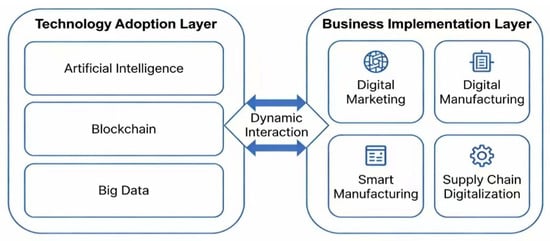
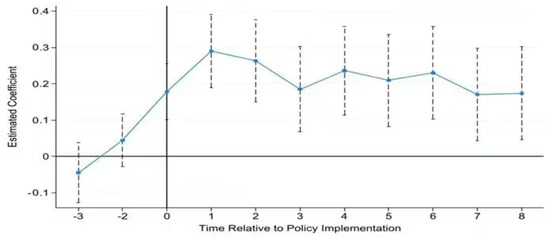
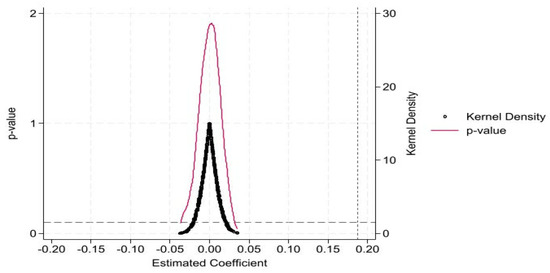
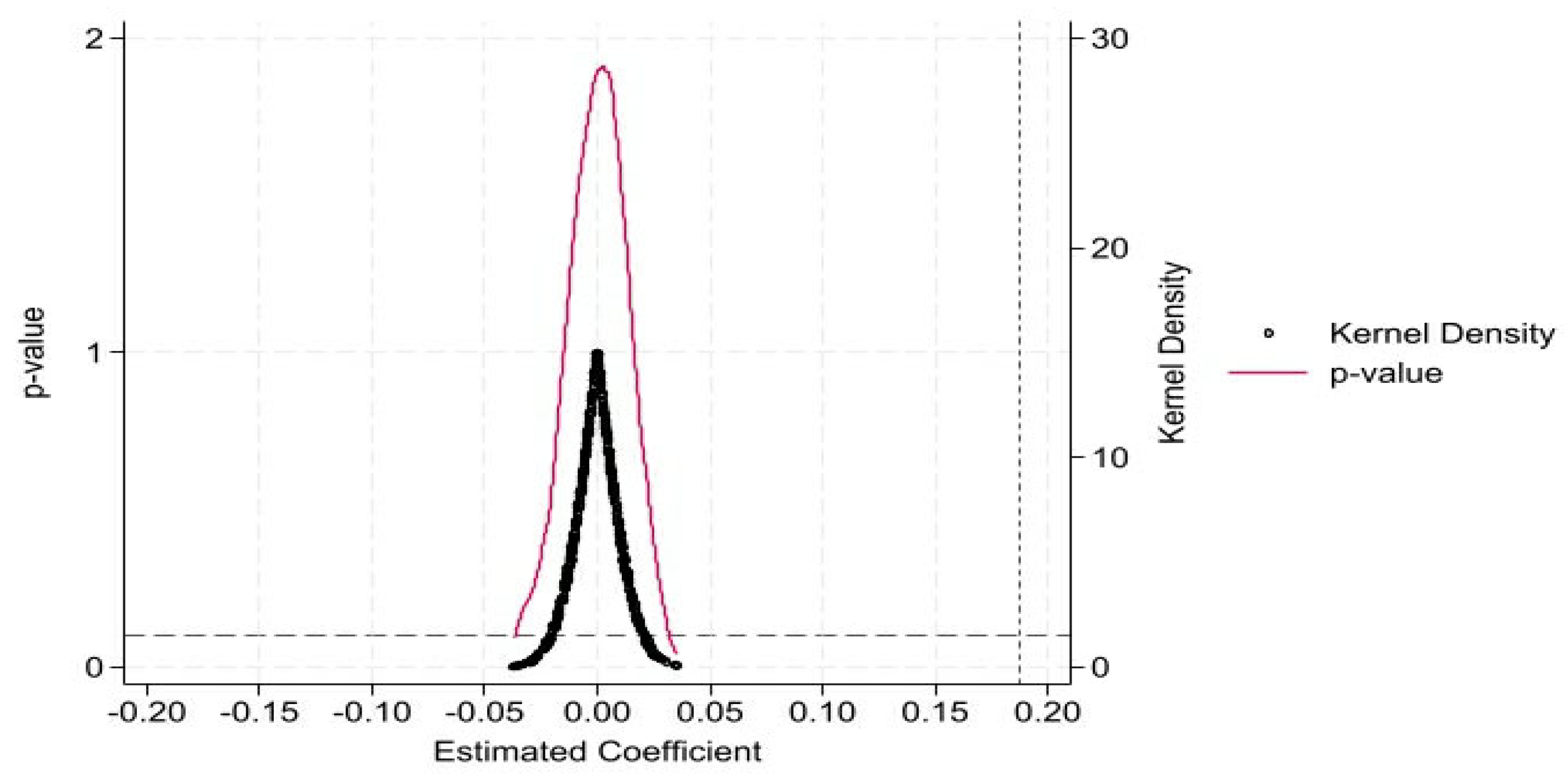
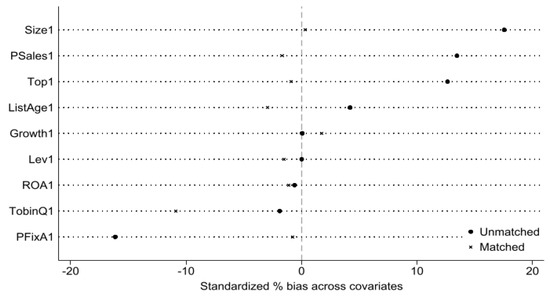
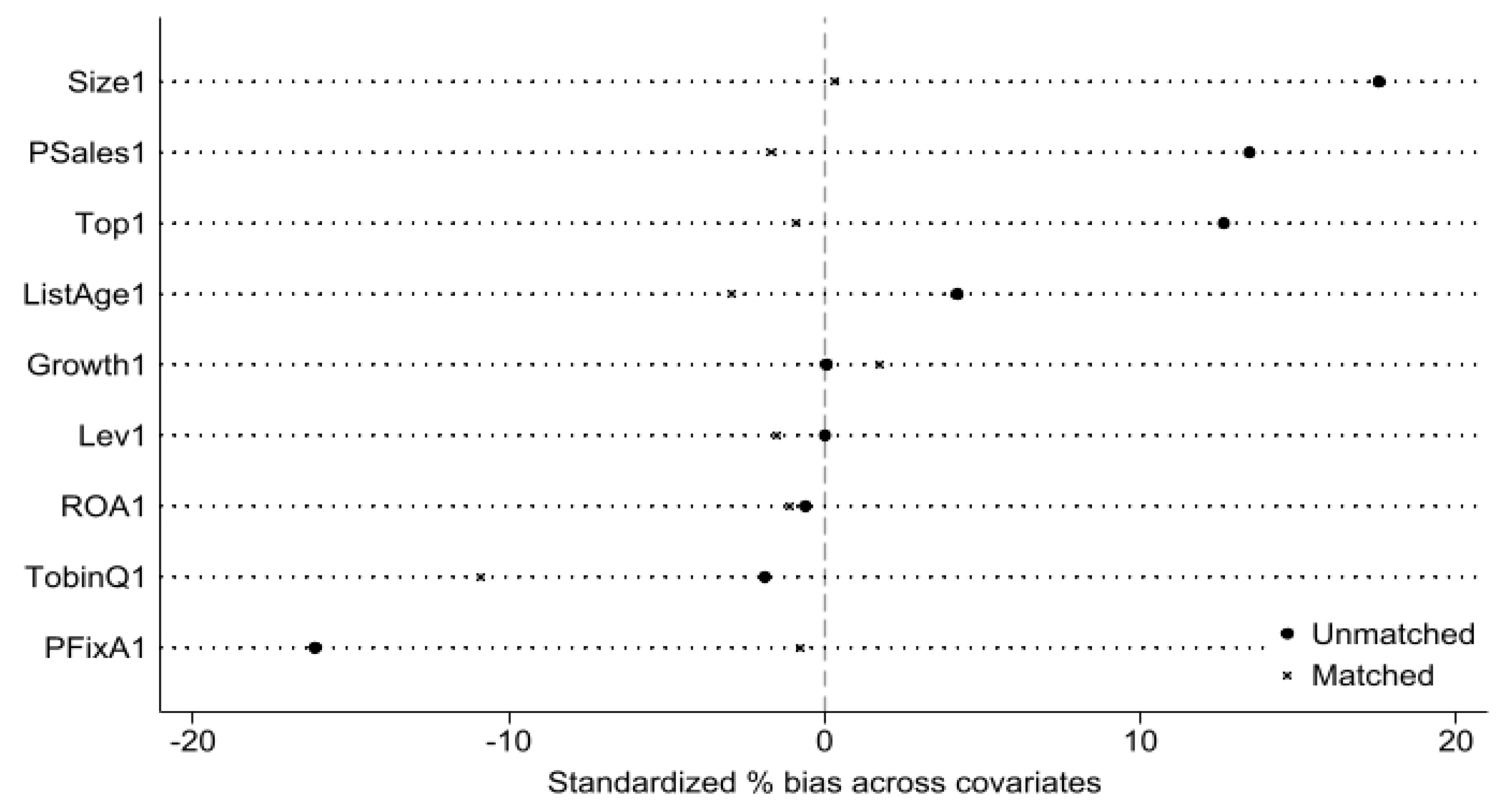
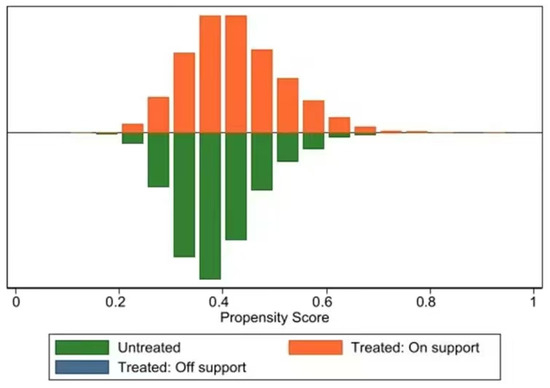
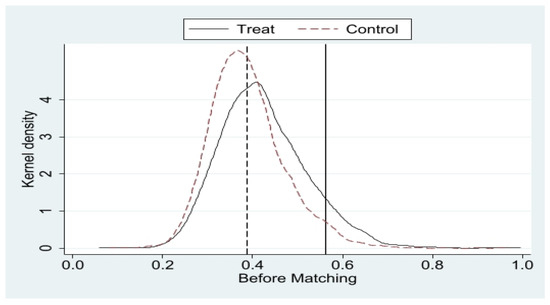
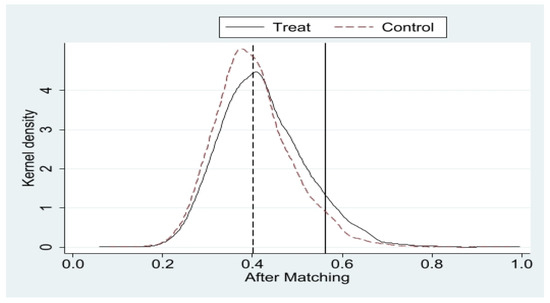
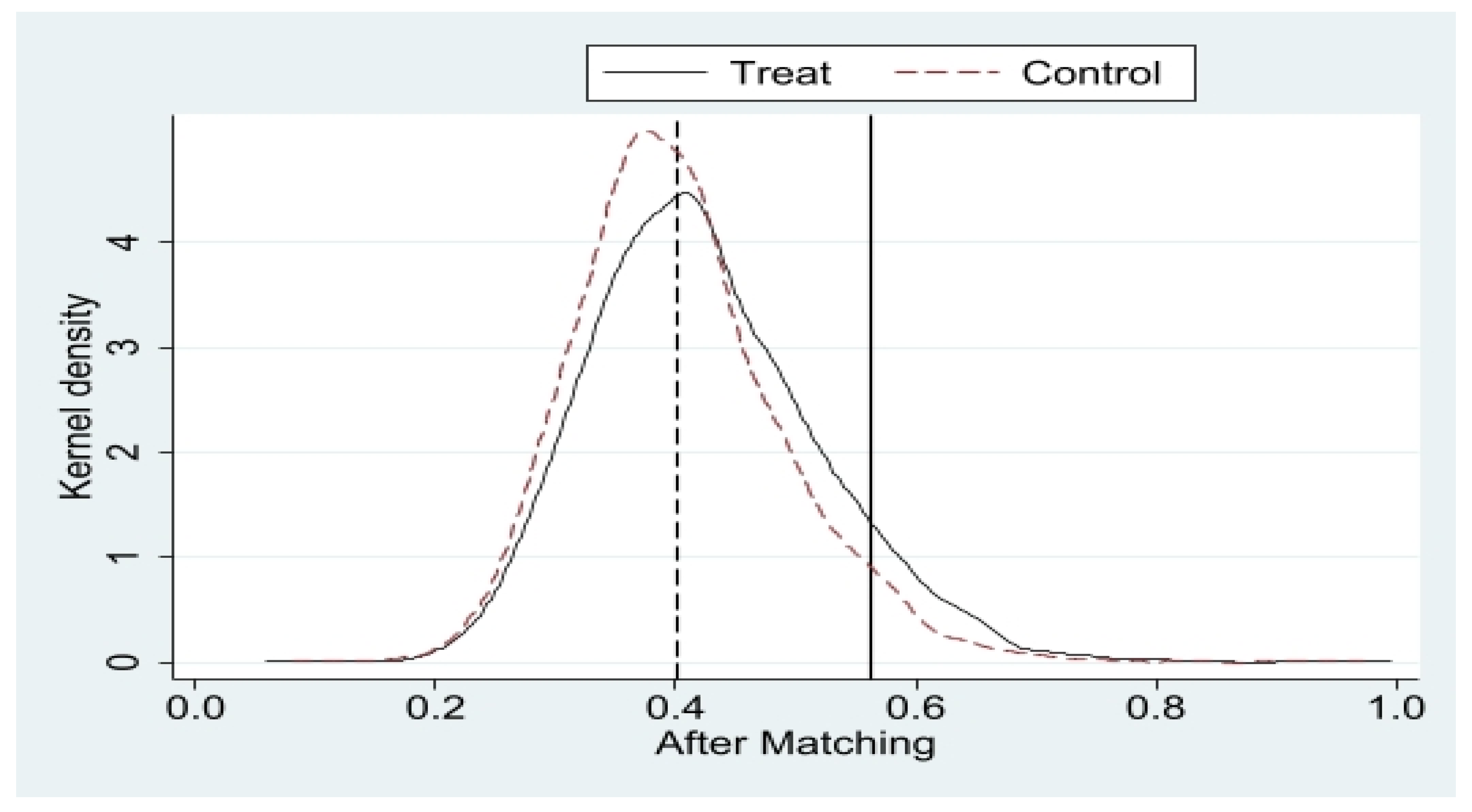

Disclaimer/Publisher’s Note: The statements, opinions and data contained in all publications are solely those of the individual author(s) and contributor(s) and not of MDPI and/or the editor(s). MDPI and/or the editor(s) disclaim responsibility for any injury to people or property resulting from any ideas, methods, instructions or products referred to in the content. |
© 2025 by the authors. Licensee MDPI, Basel, Switzerland. This article is an open access article distributed under the terms and conditions of the Creative Commons Attribution (CC BY) license.