


Abstract
Occupant-Centric Control (OCC) aims to achieve a balance between personalized comfort and energy efficiency; however, current strategies often optimize either thermal comfort or indoor air quality (IAQ) in isolation. This study presents a model predictive control (MPC) framework that integrates incremental learning of individual thermal preferences with IAQ and energy co-optimization in office buildings. An incremental Naive Bayes classifier updates personalized temperature preference bands. Gray-box models, including an RC-network for temperature and a CO2 mass-balance model, provide multi-step forecasts calibrated via genetic algorithm cross-validation. These learned preferences, along with a CO2 limit, are enforced as constraints within the MPC, which minimizes HVAC energy use, supported by a supervisory layer for preventing inefficient operation and allowing manual override. Python–EnergyPlus co-simulations for an open office and a meeting room demonstrate that the framework maintains CO2 concentrations below 1000 ppm and keeps 95% of temperatures within comfort ranges. Compared with baseline control, HVAC energy use decreased by 66% in winter and 56% in summer for the open office and by 44% in winter and 57% in summer for the meeting room. The proposed framework provides a reproducible approach for HVAC control that simultaneously enhances comfort, indoor environmental quality, and energy performance.
1. Introduction
People in modern cities spend more than 70% of their time indoors [1], making indoor environmental quality, and particularly indoor air quality (IAQ), a critical determinant of human health and comfort. Occupant behavior is inherently stochastic and heterogeneous, and it has been widely recognized as a major contributor to excessive building energy use [2]. Increasing expectations for thermal comfort further escalate HVAC energy demand, highlighting the need for control strategies that improve energy efficiency without compromising occupant comfort [3].
Conventional HVAC control strategies largely rely on pre-defined schedules and maximum-occupancy assumptions, often with minimal integration of real-time occupant information [4]. Such static approaches frequently diverge from actual occupant needs, leading to both energy waste and discomfort. Field studies have documented these inefficiencies: Peng et al. [5] reported that HVAC systems frequently remain active during unoccupied periods, while Deng and Chen [6] observed occupants setting extreme temperatures and failing to restore setpoints after leaving. Upadhyay et al. [7] found that post-occupancy cooling energy in 48 Sydney homes was significantly underestimated at the design stage. Yan et al. [8] further highlighted that occupant interactions with windows, lighting, and thermostats introduce substantial uncertainty in energy-use, a conclusion supported by Daniel and Lyrian [9].
Early research on occupant behavior primarily focused on detecting presence or absence within specific spaces at particular times [10]. Subsequent studies demonstrated that occupancy counts and movement patterns can influence HVAC control optimization [11], yet these variables alone fail to capture the full range of occupant states and activities [12]. Accurate modeling of occupant behavior, therefore, remains essential. Given that indoor air temperature is the primary determinant of thermal conditions, many studies have focused on temperature regulation. Jung et al. [13] developed a human-centered real-time temperature control system integrating deep learning (RL)and Convolutional Neural Networks (CNN) for activity recognition, achieving a 10.9% reduction in thermal discomfort. Similarly, Peng et al. [14] proposed an online-learning controller using neural networks with hyperparameter tuning to model individual temperature preferences, achieving 4–25% energy savings compared to fixed setpoints.
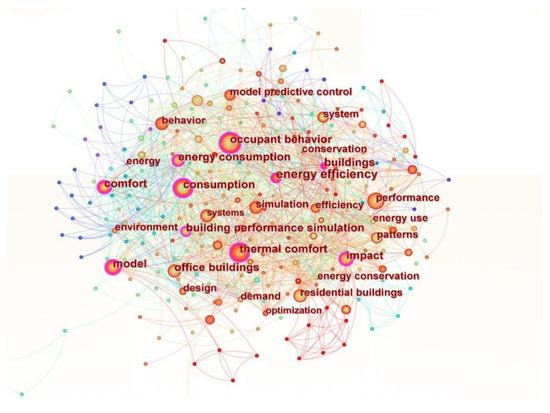
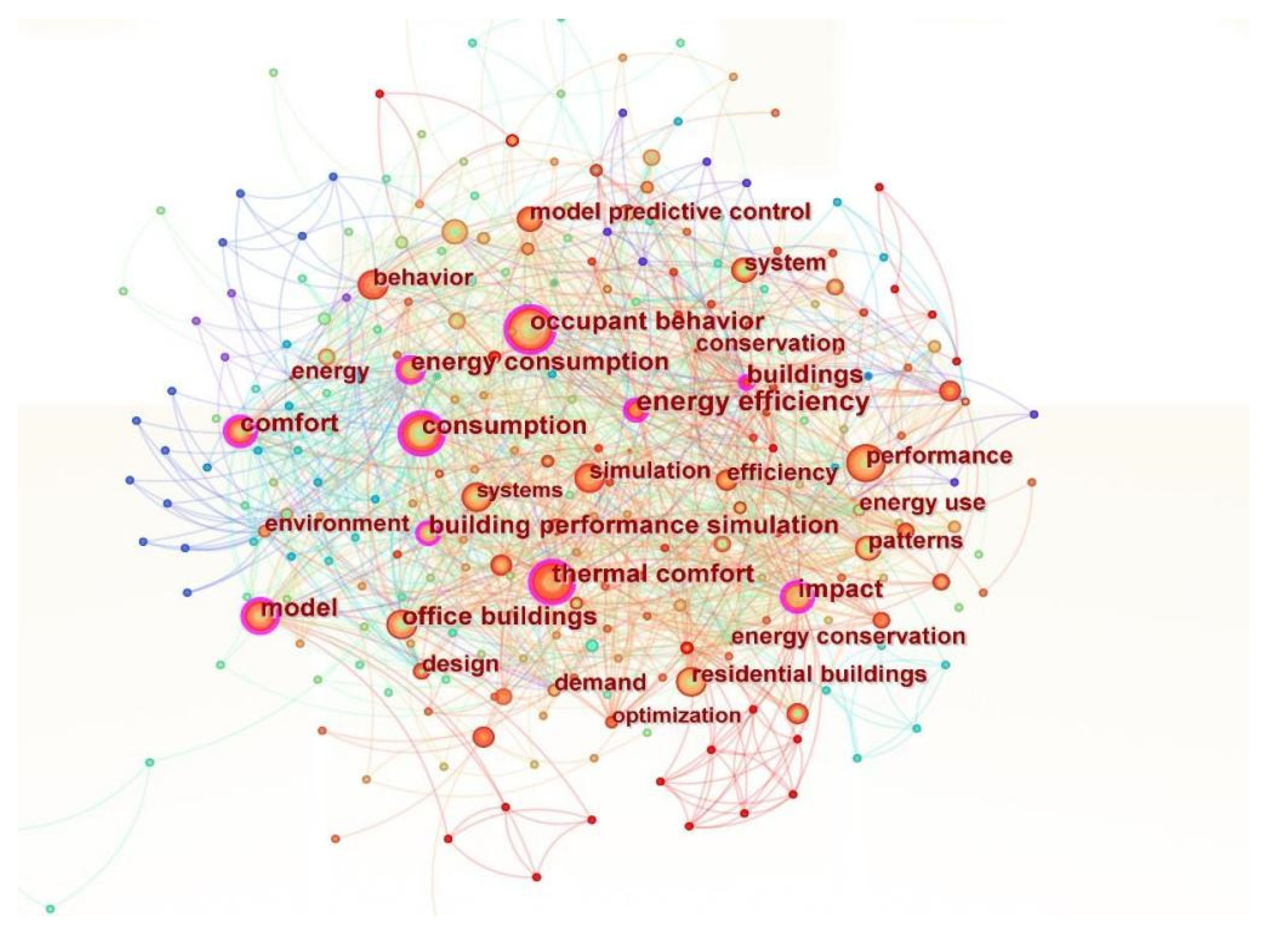
Figure 1 presents a co-occurrence keyword analysis of occupant behavior research. Nodes are colored according to their cluster membership: red nodes primarily represent energy-related concepts, blue nodes focus on occupant behavior and simulation aspects, green nodes highlight comfort and environmental quality themes, and orange nodes cover building-specific contexts. Node size reflects the frequency and centrality of the keyword in the network, while line thickness indicates the strength of co-occurrence associations between concepts." It was performed by using Web of Science data (2013–2023), visualized via Citespace, revealing that “thermal comfort,” “occupant behavior,” and “simulation” are dominant terms, indicating strong research interest in comfort optimization. Although “energy efficiency,” “consumption,” and “energy consumption” appear less frequently, their high centrality implies significant potential for deeper exploration of energy-related aspects within occupant behavior studies.
Figure 1.
Co-occurrence map of keywords of human behavior.
Beyond comfort and energy performance, IAQ is a crucial component of indoor environmental quality. Common indoor pollutants include CO2, volatile organic compounds (VOCs), and particulate matter, with indoor CO2 concentration widely used as a proxy for IAQ [15]. Numerous studies have argued that incorporating CO2 measurements as a predictive variable can significantly improve controller performance [16]. CO2-based demand-controlled ventilation (DCV) based on CO2 sensing has been shown to enhance IAQ while reducing energy consumption [17]. Pantazaras et al. [16] collected two years of CO2 and HVAC data from an open office and a library to develop a short-term CO2 forecasting model using simple identification methods. Likewise, Macarulla et al. [18] examined gray-box modeling approaches for indoor CO2 dynamics, demonstrating their potential for predictive ventilation control.
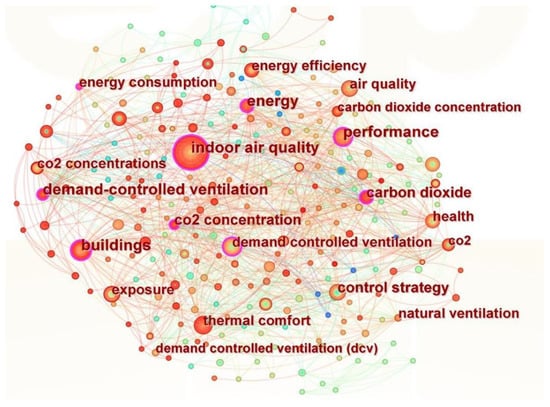
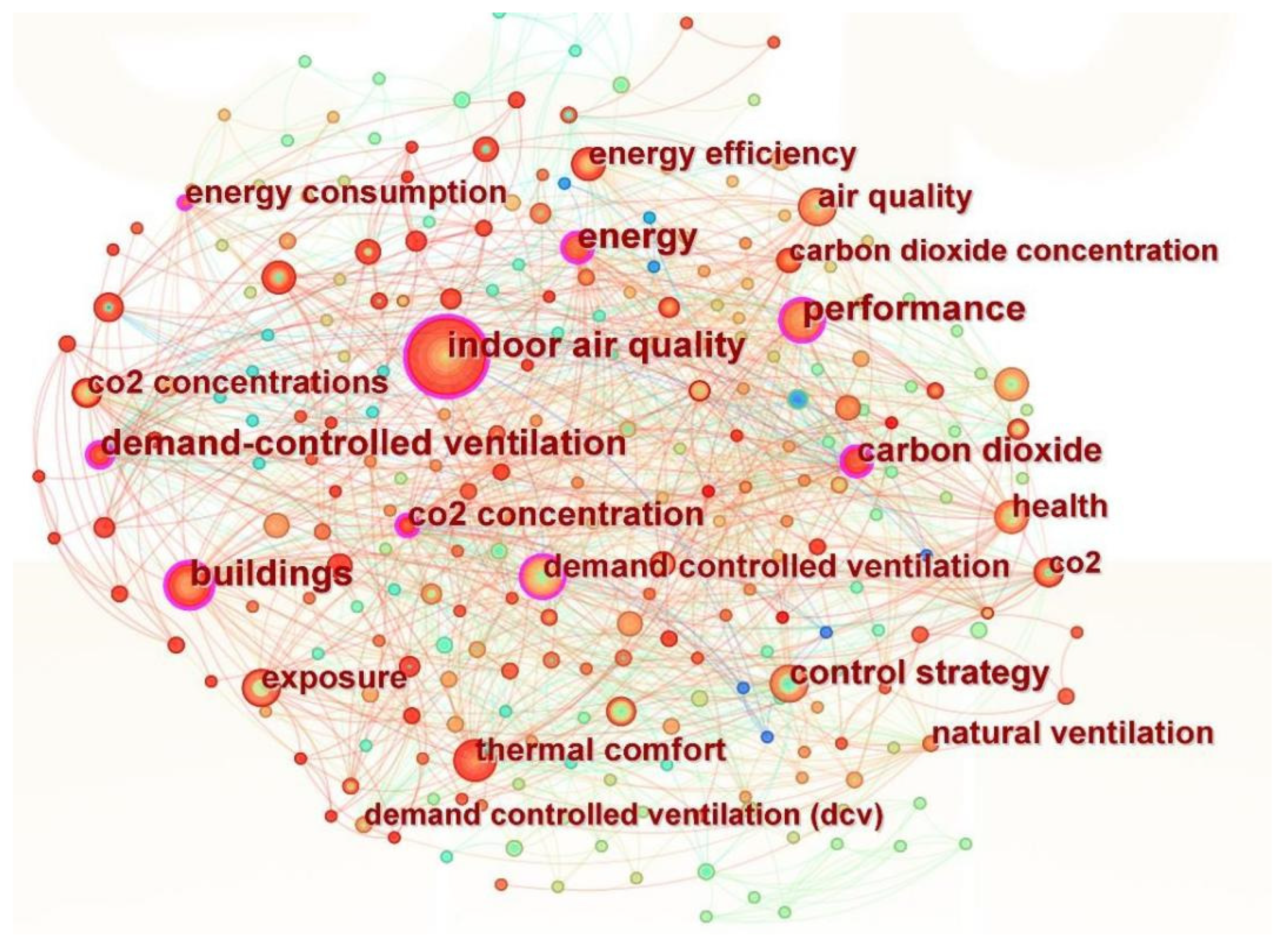
However, few studies simultaneously address IAQ enhancement and thermal comfort using CO2 forecasting. For instance, Mei and Xia [19] developed a multi-input, multi-output MPC framework for a direct-expansion air-conditioning system, achieving 27.2% energy savings while maintaining prescribed comfort and IAQ ranges. The keyword co-occurrence map for CO2-control strategies in Figure 2, and the nodes are colored to indicate different concept categories: red nodes represent core air quality metrics (e.g., CO2 concentration, pollutants), orange nodes represent energy-related factors (e.g., energy consumption, efficiency), and green nodes represent comfort and ventilation aspects (e.g., thermal comfort, demand-controlled ventilation). Node size reflects the centrality/frequency of the concept in the literature network, and line thickness indicates the strength of association between concepts. The map highlights “indoor air quality,” “buildings,” and “thermal comfort” as high-frequency terms, indicating active research on IAQ–comfort relationships. Meanwhile, keywords such as “energy,” “demand-controlled ventilation,” and “energy consumption” demonstrate high centrality, suggesting that CO2-based DCV and building energy efficiency will remain central research directions.
Figure 2.
Co-occurrence map of keywords of indoor CO2 concentration control strategies.
Recent advances in optimization techniques highlight MPC as an effective method for improving HVAC performance [20]. DCV further enhances IAQ while reducing energy consumption [21], and many thermal comfort studies emphasize PMV-based temperature regulation [22]. Decentralized approaches, such as personalized comfort systems (PECSs) [23] and mixed-mode ventilation [24], provide localized control advantages but often neglect humidity management [25]. Nevertheless, these strategies typically optimize a single objective (e.g., temperature–humidity control, thermal comfort, or zone-level coordination) within specific HVAC subsystems. Achieving holistic co-optimization of energy efficiency, IAQ, and thermal comfort across diverse HVAC configurations thus remains a significant challenge.
Current HVAC control research continues to face critical gaps. Most OCC frameworks focus exclusively on either thermal comfort or IAQ, with few integrating dynamically learned thermal preferences and predictive IAQ constraints for joint optimization of comfort, health, and energy performance. Furthermore, thermal-preference learning is often conducted offline, lacking online updating mechanisms to capture long-term preference drift. Control designs are frequently decoupled from actual occupant behavior, failing to leverage valuable insights from long-term field data, such as start/stop patterns and window-opening behavior, which limits real-world applicability. Although Pantazaras et al. [16] developed CO2 forecasting and Zhu et al. [26] implemented preference self-learning, neither approach incorporated multi-objective coordination among thermal comfort, IAQ, and energy efficiency.
To address these challenges, this study investigates an office building in Beijing and proposes an integrated, behavior-driven strategy based on year-long field data and MPC. A three-objective MPC framework is developed to jointly optimize thermal comfort, IAQ, and energy performance, contrasting with most existing OCC approaches that address comfort and IAQ separately. The framework integrates incrementally learned occupant-specific temperature preference bands with CO2-based air-quality prediction and comprises three tightly coupled modules: (i) an incremental thermal-preference learner that continuously updates individual comfort bounds from in situ setpoint overrides, (ii) an MPC module that employs gray-box models to forecast indoor temperature and CO2 levels and optimizes HVAC setpoints and airflow under system constraints, and (iii) a rule-based supervisory layer that schedules HVAC operation based on occupancy, maintains manual override priority, and suppresses inefficient behaviors, such as unattended overnight operation. Year-long field deployment demonstrates that this behavior-driven framework enables adaptive, real-time co-optimization of comfort, IAQ, and energy, representing a significant step toward truly occupant-adaptive building operation. This approach provides a robust pathway for minimizing avoidable energy use, alleviating operational inefficiencies arising from occupant behavioral uncertainty, and supporting long-term sustainability objectives in building operations.
2. Methods
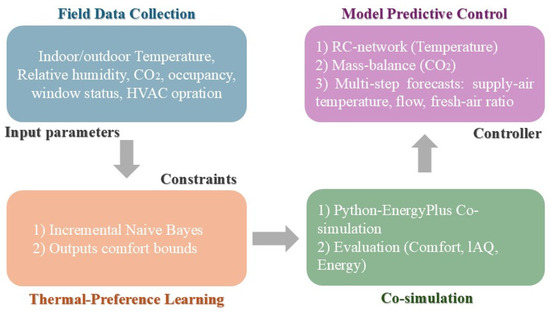
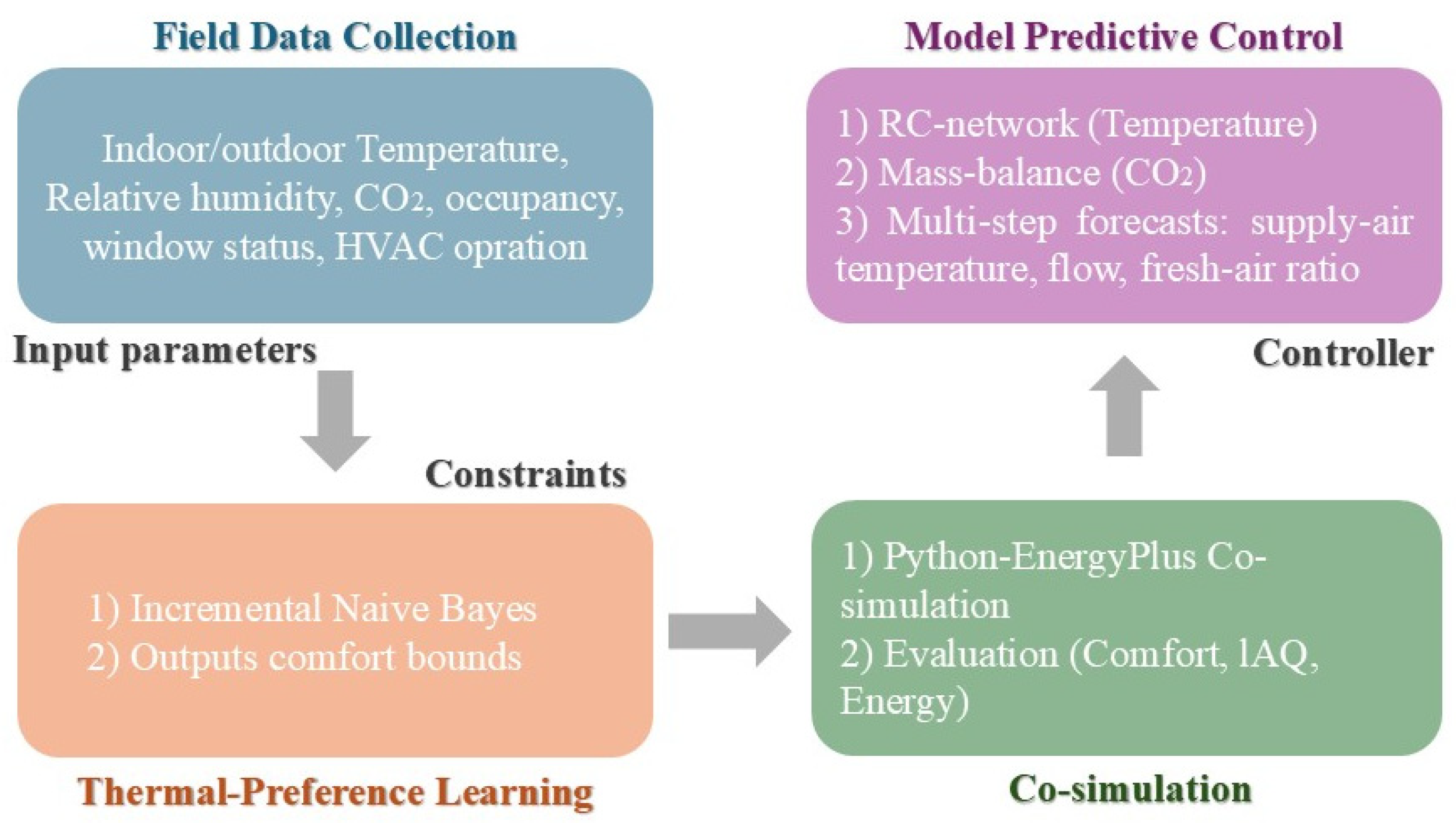
The thermal-preference learning module continuously infers occupant-specific comfort bounds, which are imposed as hard constraints in the MPC optimization, while a supervisory rule-based layer governs the execution of the control actions. In parallel, quantitative analyses of window-opening behavior and temperature-setting patterns inform the design of the supervisory rules and help define realistic boundary conditions for the predictive controller. The overall methodological framework and signal flow, including field data collection, thermal-preference learning, MPC, and co-simulation, are summarized in Figure 3.
Figure 3.
Overall methodological framework.
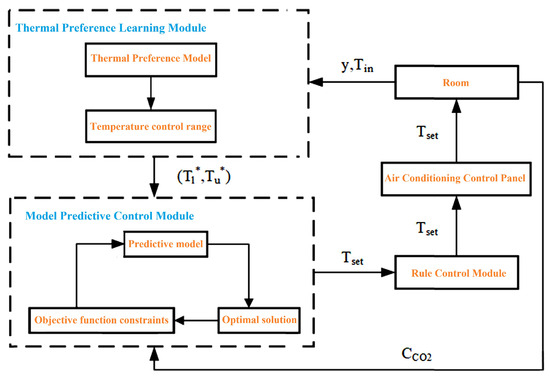
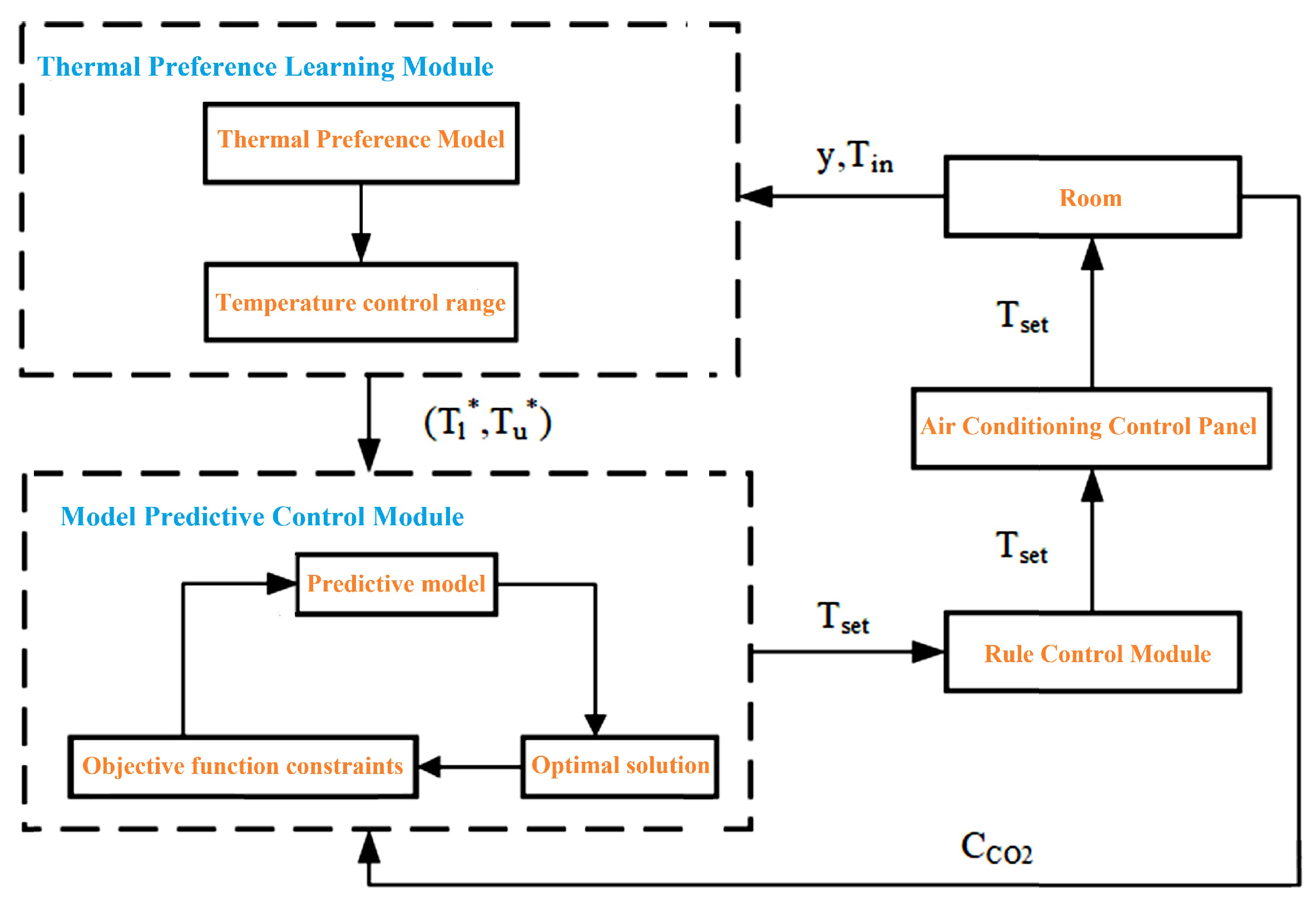
The proposed MPC-based strategy for coupled thermal-preference and indoor air-quality control follows a core logic of data-driven learning, model-based prediction and rule-based safeguarding. As illustrated in Figure 4, the framework comprises three tightly coupled modules—a thermal-preference learning module, an MPC module and a supervisory rule layer, which exchange signals to form a closed-loop controller.
Figure 4.
Schematic of the integrated thermal-preference learning and MPC framework.
The learning module assimilates the feedback signal , the measured indoor temperature , and a full 12-month record of user interactions to infer a personalized, seasonally robust temperature preference range . Using an annual dataset, including representative winter, summer and shoulder-season conditions, is essential because the field data exhibit pronounced seasonal shifts in both set-point behavior and indoor temperature; training on a single season would bias the preference estimates, compromise year-round generalizability, and fail to provide a numerically stable initialization of the Naive Bayes classifier, which is subsequently updated online. The learned bounds are imposed as hard comfort constraints in the MPC module. Together with the measured indoor concentration, they are used in predictive models of indoor temperature and dynamics and an objective function with constraints to compute the optimal temperature set-point and associated ventilation actions, while enforcing .
The computed is transmitted to the rule control module and the air-conditioning control panel, which actuate the room system. A supervisory rule layer determines HVAC on/off decisions based on occupancy and accommodates manual overrides, while the resulting room conditions and user actions are fed back to the learning module, closing the loop for joint thermal-comfort and indoor-air-quality regulation.
2.1. Field Measurement Subjects and Data Collection
The field measurements in this work were conducted in an open office and a meeting room on the 23rd floor of an office building in Beijing. The east-facing open office spans approximately 80 m2 and typically accommodates ten occupants, while the meeting room, also east-facing, covers around 60 m2 and accommodates up to 12 occupants. Both spaces are equipped with Variable Refrigerant Volume (VRV) air-conditioning systems and independent fresh air systems, employing VRV heating in winter and VRV cooling in summer. The monitoring campaign spanned a continuous 12-month period (November 2022–October 2023), capturing representative heating and cooling season conditions for subsequent modeling and control evaluation.
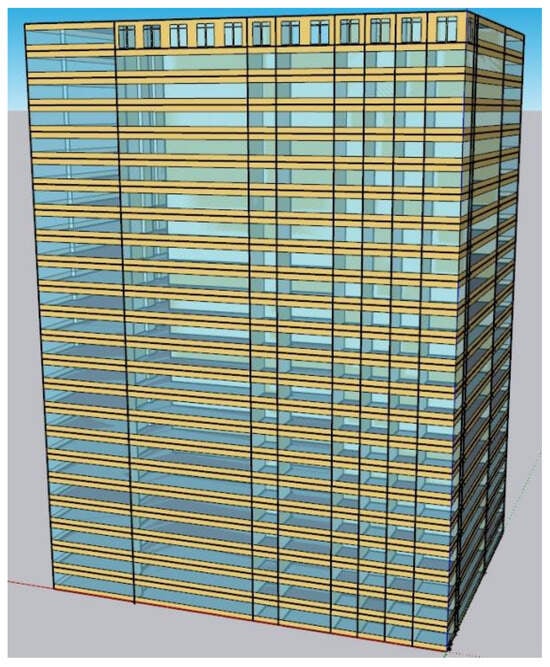
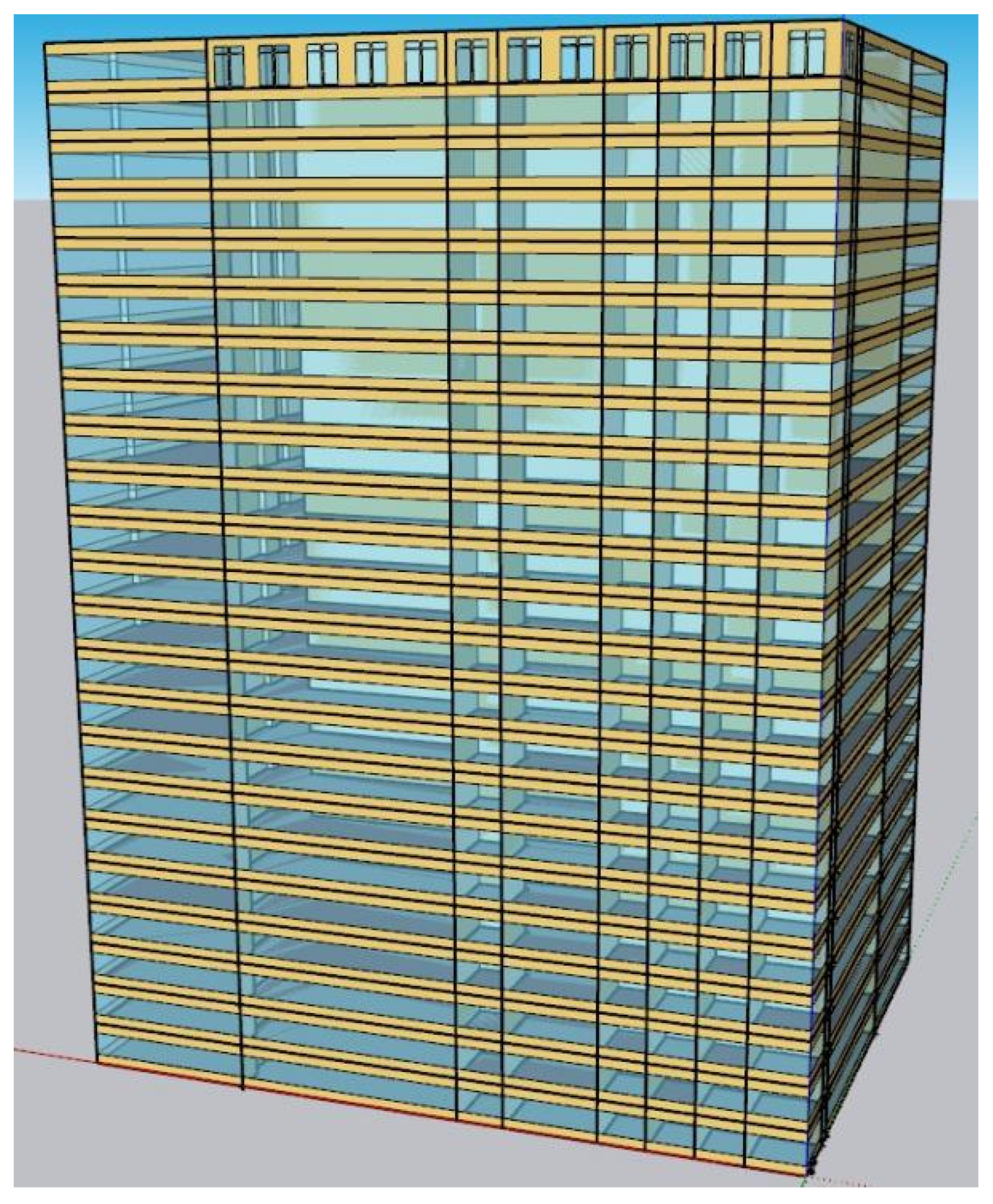
To provide realistic boundary conditions, a whole-building EnergyPlus model was developed. The two experimental zones and their adjacent spaces were modeled with detailed geometry, while the remaining floors were represented as homogeneous perimeter and core zones with equivalent envelope properties, internal gains, and a uniform window-to-wall ratio of 0.532. For control design, the MPC operates on reduced-order RC and CO2 models calibrated against measured indoor trajectories, rather than directly on EnergyPlus state variables. This ensures that any discrepancies from geometric simplifications are absorbed into the calibrated dynamics, maintaining controller consistency with observed zone behavior (Figure 5).
Figure 5.
Architectural geometric model.
2.1.1. Indoor and Outdoor Environmental Monitoring
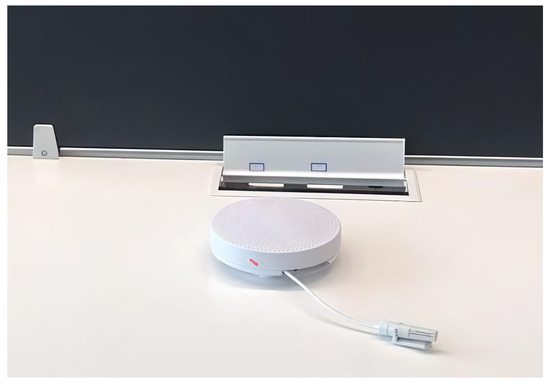
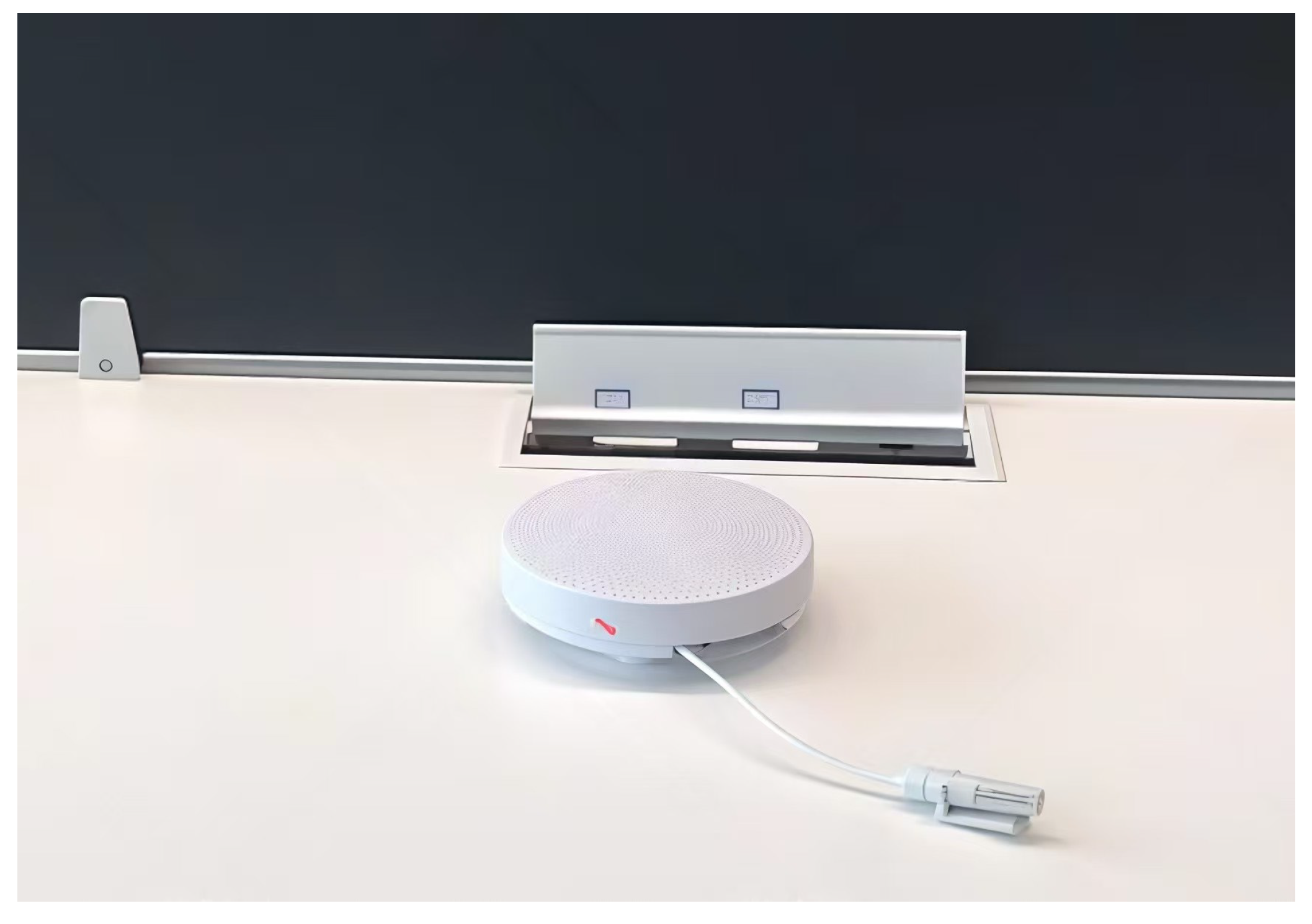
In this study, a Prsens multi-parameter environmental monitoring sensor was deployed as the primary instrument for measuring indoor environmental conditions in Figure 6. The main indoor parameters recorded were air temperature, relative humidity and CO2 concentration. The detailed technical specifications of the monitoring equipment are summarized in Table 1.
Figure 6.
Prsens multiparameter environmental monitoring sensor.
Table 1.
Detailed information about multi-parameter environment sensors.
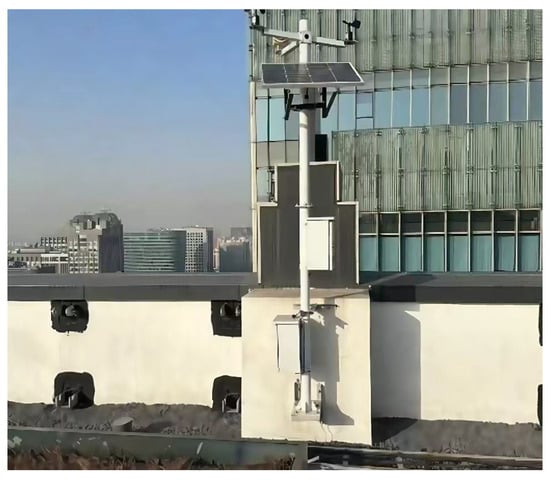
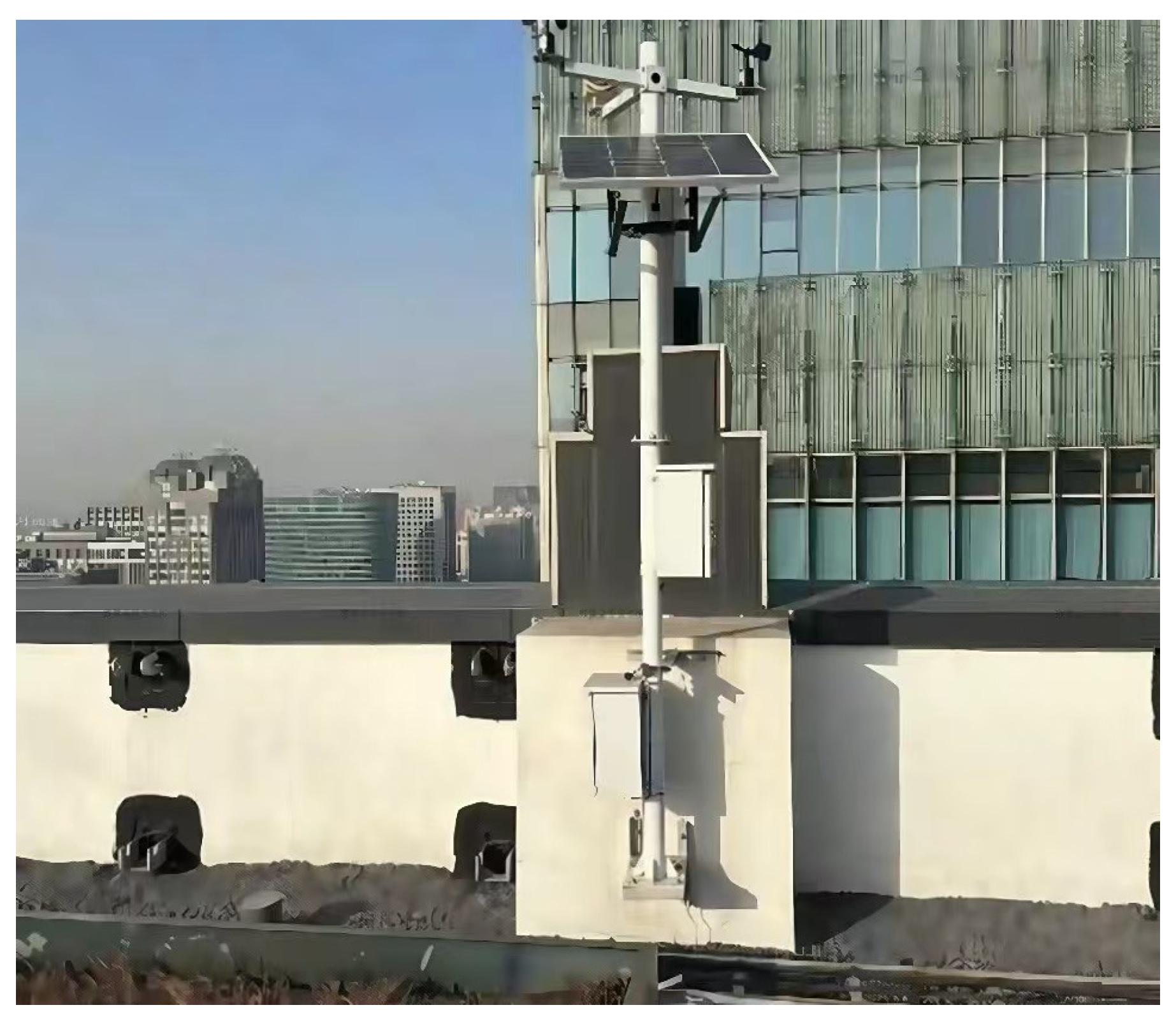
Long-term outdoor environmental conditions were monitored using a Prsens automatic weather station, which was sourced from Shandong Saien Electronic Technology Co., Ltd., located in Jinan, China. As shown in Figure 7, the station continuously measured outdoor air temperature, relative humidity and global horizontal illuminance. The detailed technical specifications of the monitoring equipment are summarized in Table 2.
Figure 7.
Prsens outdoor environmental weather station.
Table 2.
Detailed information about outdoor environmental weather station.
Indoor temperature, relative humidity, and CO2 concentration were recorded at 30 min intervals. At the zone scale studied, thermal and IAQ dynamics evolve relatively slowly due to the thermal inertia of the building envelope and furnishings, occupant emissions, and mechanically supplied fresh air. All indoor multi-parameter sensors were operated with factory calibration. Given the stated sensor accuracy and the relatively wide comfort and IAQ thresholds, moderate long-term sensor drift is not expected to affect the qualitative findings.
2.1.2. Personnel Status Monitoring
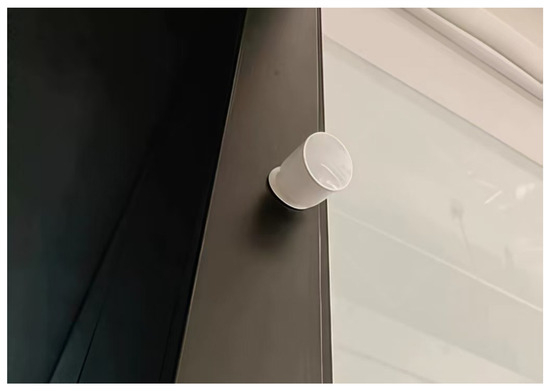
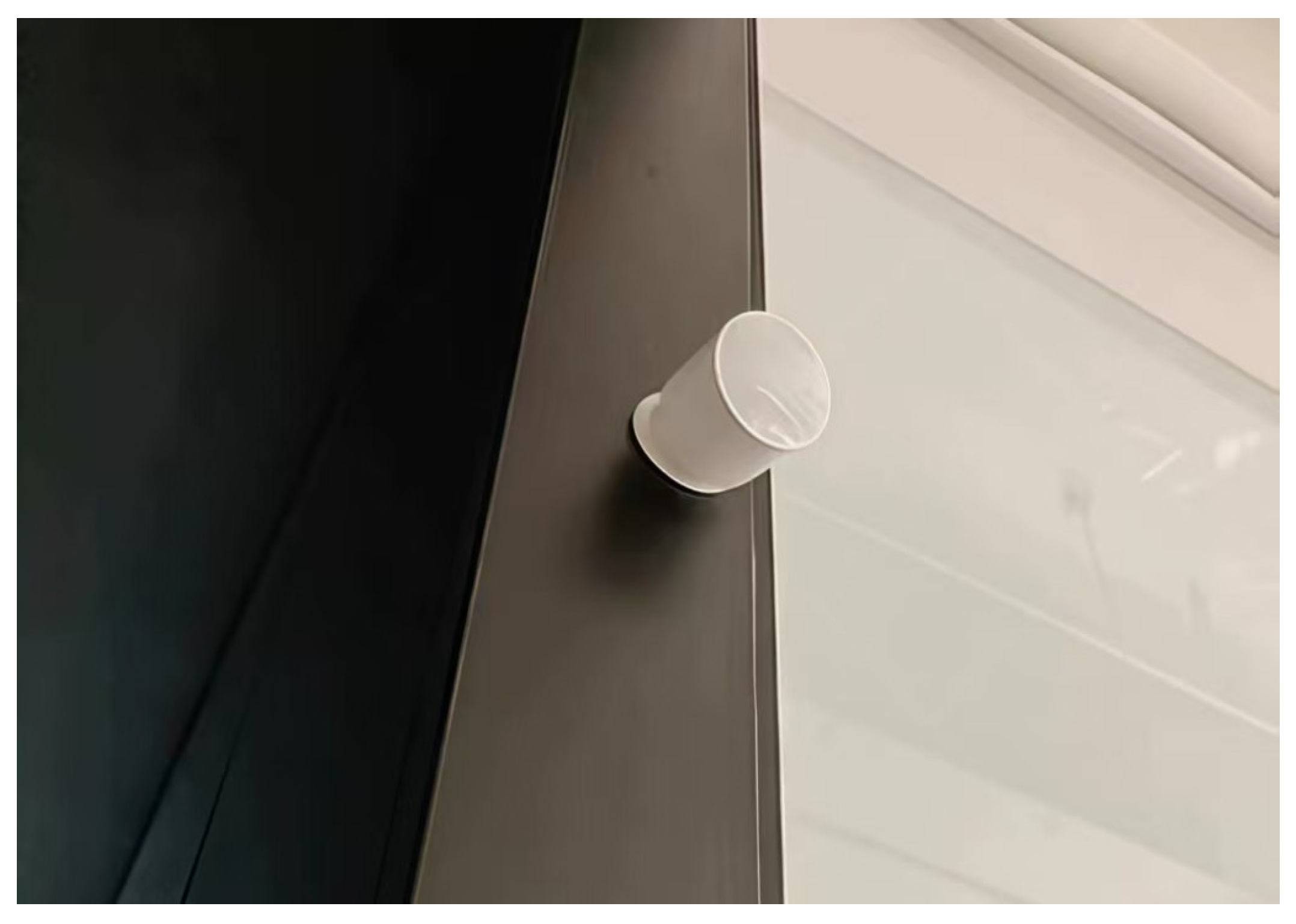
Occupancy was tracked using PIR-based motion and ambient-light sensors (Qingping series from Qingping Technology Co., Ltd., located in Beijing, China) mounted on interior walls of the open-plan office near both corridor sides and on pillars inside the meeting room, as shown in Figure 8. Sensors were installed at approximately 2.2 m above the floor with a downward tilt of about 20°, and motion events were recorded every 10 s. Continuous motion indicates occupancy, whereas the absence of motion for more than 30 min labels the space as unoccupied. In such cases, the occupant count is set to 0, preventing false occupancy detection caused by CO2 fluctuations during vacancy.
Figure 8.
Qingping motion and ambient light sensors.
2.1.3. Device Status Monitoring
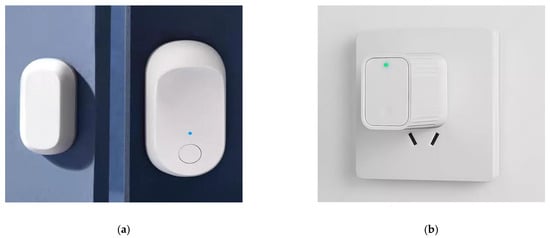
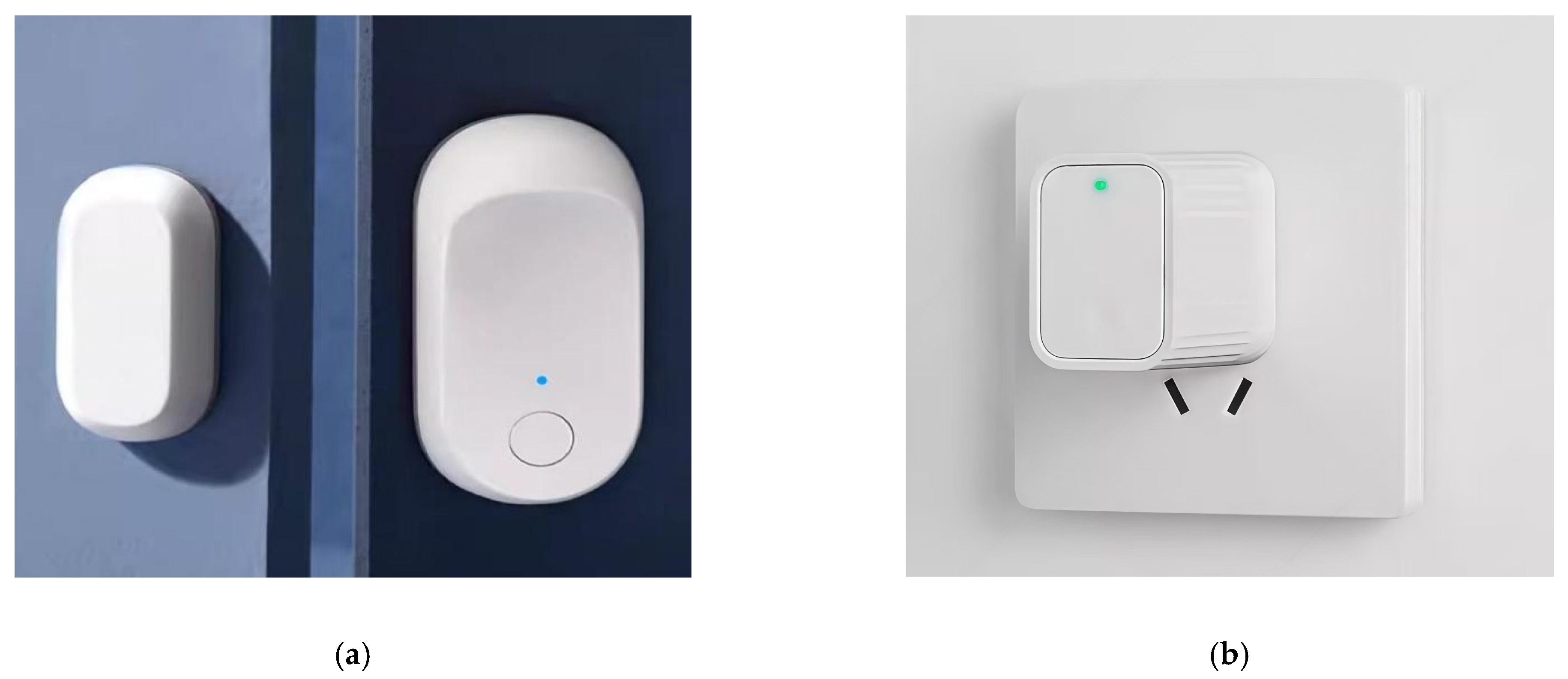
Window status in the test room was monitored using Qingping door and window opening sensors in Figure 9. Each device determines the open/closed state by detecting the distance between its main body and a paired magnet. When the separation exceeds 15 mm, the sensor transmits a digital signal “1” to the gateway, which is recorded as “open”; when the distance is less than or equal to 15 mm, the window state is recorded as “closed”.
Figure 9.
Qingping door and window opening and closing sensor and Bluetooth gateway. (a) Qingping door and window opening and closing sensor; (b) Qingping Bluetooth gateway.
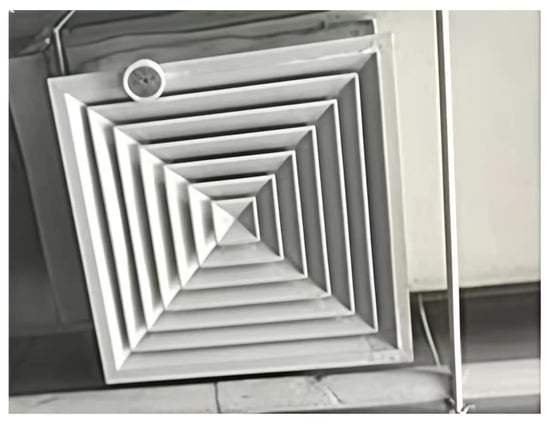
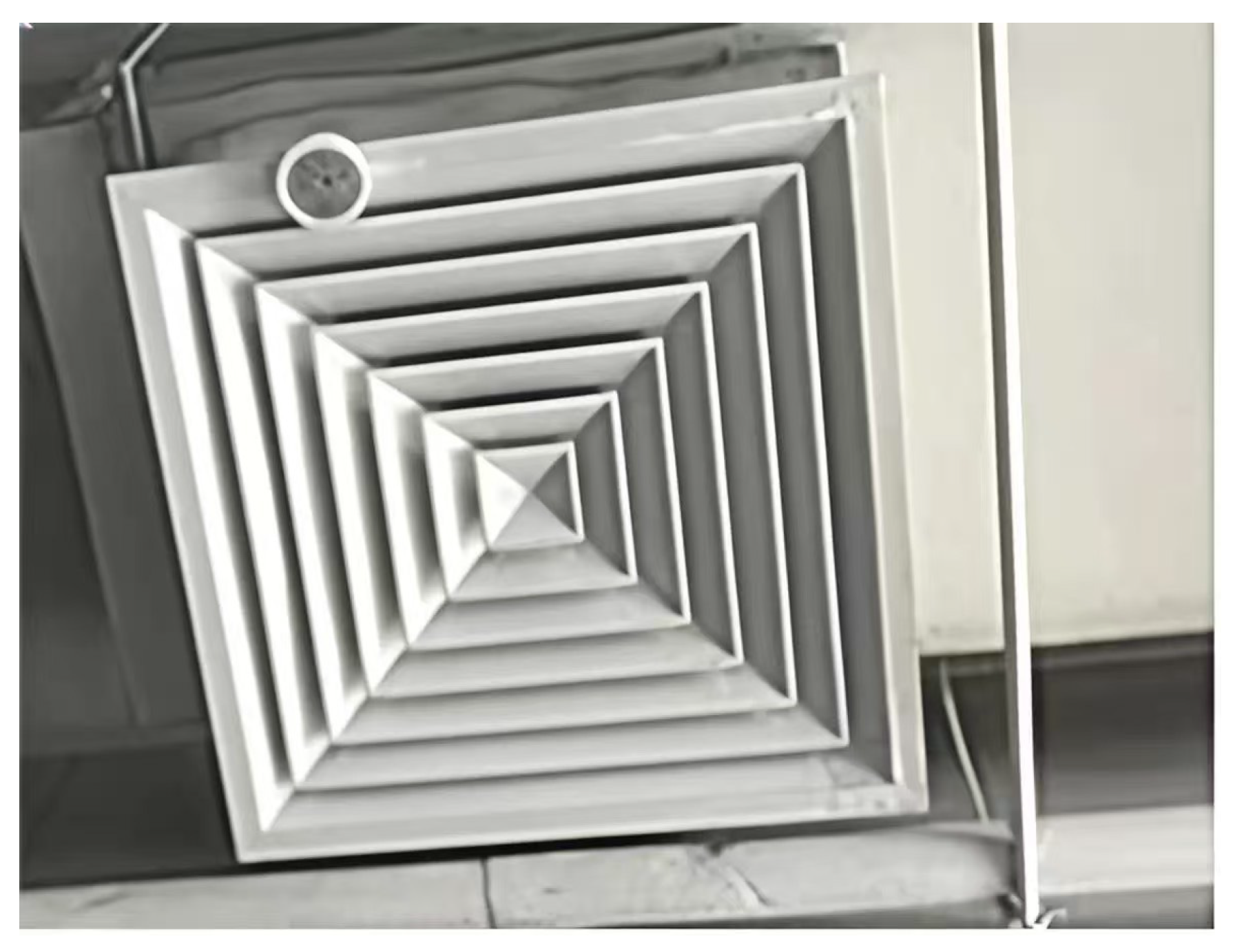
Airflow conditions at the air-conditioning supply vents, including supply air temperature and duration, were monitored using the Qingping Bluetooth Temperature and Humidity Monitor M Edition in Figure 10. This device employs a temperature and humidity sensor from Sensirion (Stäfa, Switzerland) providing rapid response and high accuracy as shown in Table 3. Like other sensors, the supply air temperature and humidity probes relied on factory calibration. Given their specified accuracy and the focus on zone-level behavior rather than absolute point measurements, any residual sensor drift is expected to have a negligible impact on comparative results. The device also features built-in data storage, recording at 15 min intervals, and retaining up to 30 days of historical data.
Figure 10.
Qingping Bluetooth monitor.
Table 3.
Detailed information about temperature and humidity sensor.
2.2. Analysis of Typical Energy Consumption Scenarios
Typical VRV operating scenarios in the open office and meeting room were clustered using the K-means algorithm. The feature vector included normalized air-conditioning setpoint temperature, window-opening ratio, and a limited set of encoded operational behaviors (e.g., early start-up, mid-cycle activation, left open overnight). Continuous variables were normalized to prevent temperature magnitudes from dominating the distance metric.
In addition, K-means was chosen as a transparent, centroid-based method for deriving interpretable operating archetypes. Since most dataset variability arises from continuous or quasi-continuous attributes, Euclidean distance provides a useful, though approximate, measure for grouping days with similar patterns. Categorical start/stop behaviors were mapped to integer codes (0–5) to enable joint clustering with the continuous features. This pseudo-ordinal mapping approximates categorical information. Consequently, the resulting clusters are interpreted as coarse behavioral archetypes rather than a definitive mixed-type taxonomy. More advanced clustering methods for mixed numerical categorical data, such as k-modes or k-prototypes, are promising avenues for refining behavioral segmentation in future studies.
Furthermore, the activation and deactivation conditions capture system start-up and shutdown relative to working hours and the deviation of room temperature from the setpoint, as summarized in Table 4. Categorical states encode occupant operating preferences that reflect energy-comfort trade-offs. To avoid any spurious ordinal interpretation, all categories are integer-coded and treated strictly as nominal variables (e.g., in winter open-office scenarios: code 0 = “early activation (−60, 0),” code 3 = “left unclosed overnight,” code 5 = “midway activation”). Offline clustering of these nominal features is then used to extract representative operational patterns, including start-up timing, shutdown delay, and window-opening habits.
Table 4.
Label encoder assignment results correspond to distinct values.
It is worth noting here that these patterns inform behavior-aware supervisory rules and provide realistic boundary conditions. These clustering outputs are not used as online inputs to the MPC, which operates independently in real-time. The categories were derived as data-driven behavioral classes for each season, explaining both the lack of reversal and the unequal number of items across seasonal datasets.
2.3. Incremental Learning Thermal Preference Model
The Naive Bayes algorithm offers two key advantages compared with other classifiers: reliable performance under limited training data and natural support for incremental learning. When new samples become available, the model can be updated by revising class priors and likelihoods, without retraining on the full historical dataset. Additionally, Naive Bayes is computationally lightweight and straightforward to implement, making it well-suited for engineering applications where efficiency and maintainability are crucial [27]. From a modeling perspective, the conditional independence assumption in Naive Bayes represents an approximation, as indoor and outdoor temperature, humidity, and air-supply conditions are physically correlated. Alternative approaches, such as online logistic regression or support vector machines, relax this assumption. Nevertheless, Naive Bayes is employed here as a transparent, data-efficient foundational learner to derive temperature preference boundaries.
Let the dataset contain feature variables with realizations , and let the thermal-preference label denote “prefer warmer,” “no change,” and “prefer cooler.” The calculation formula is shown in Equation (1).
Here, is the prior probability of class ; is the posterior probability; is the class-conditional probability (likelihood) of observing under class ; and is the evidence term. The Naive Bayes classifier thus converts the computation of the posterior into the estimation of the prior and the likelihood . Directly estimating the joint likelihood is difficult when many features are involved. Therefore, Naive Bayes adopts the conditional-independence assumption among features, as follows in Equation (2):
Since is identical for all classes, the decision criterion for the Naive Bayes algorithm can be rewritten as Equation (3):
Let denote the subset of samples in class c within the dataset, be the total number of samples, and be the number of samples belonging to class . The prior probability may then be estimated as given by Equation (4):
Historical indoor and outdoor temperature and humidity data, together with supply air conditions, are used to train the Naive Bayes thermal-preference model. The model estimates the class priors for winter and summer (with corresponding to “prefer cooler”, “no change” and “prefer warmer”, respectively) and the posterior distribution of indoor temperature conditioned on each preference class.
A cost matrix (Table 5) quantifies penalties for different classification outcomes. Misclassifying an occupant’s thermal preference of “wanting to be cooler” as “no change” is denoted by . Misclassifications that reverse the preference direction, predicting “wanting to be cooler” as “wanting to be warmer,” or vice versa, are treated as high-severity errors and, following Lee [28], assigned a cost of 4.
Table 5.
Misclassified cost matrix.
To ensure all misclassification penalties remain strictly positive while preserving relative weighting within , is constrained to 0 < < 2. Larger values penalize labeling dissatisfied occupants as satisfied, whereas smaller values emphasize the opposite. Since neither error type is prioritized, a symmetric setting is adopted with .
Incorporating the cost matrix into the training objective adjusts effective sample weights, preventing the model from defaulting to the majority “no change” class. This approach places greater emphasis on correctly identifying minority preference classes, improving sensitivity to non-neutral thermal demands.
2.4. Model Predictive Control Module
2.4.1. Indoor Temperature Model
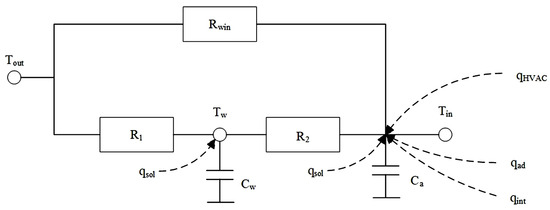
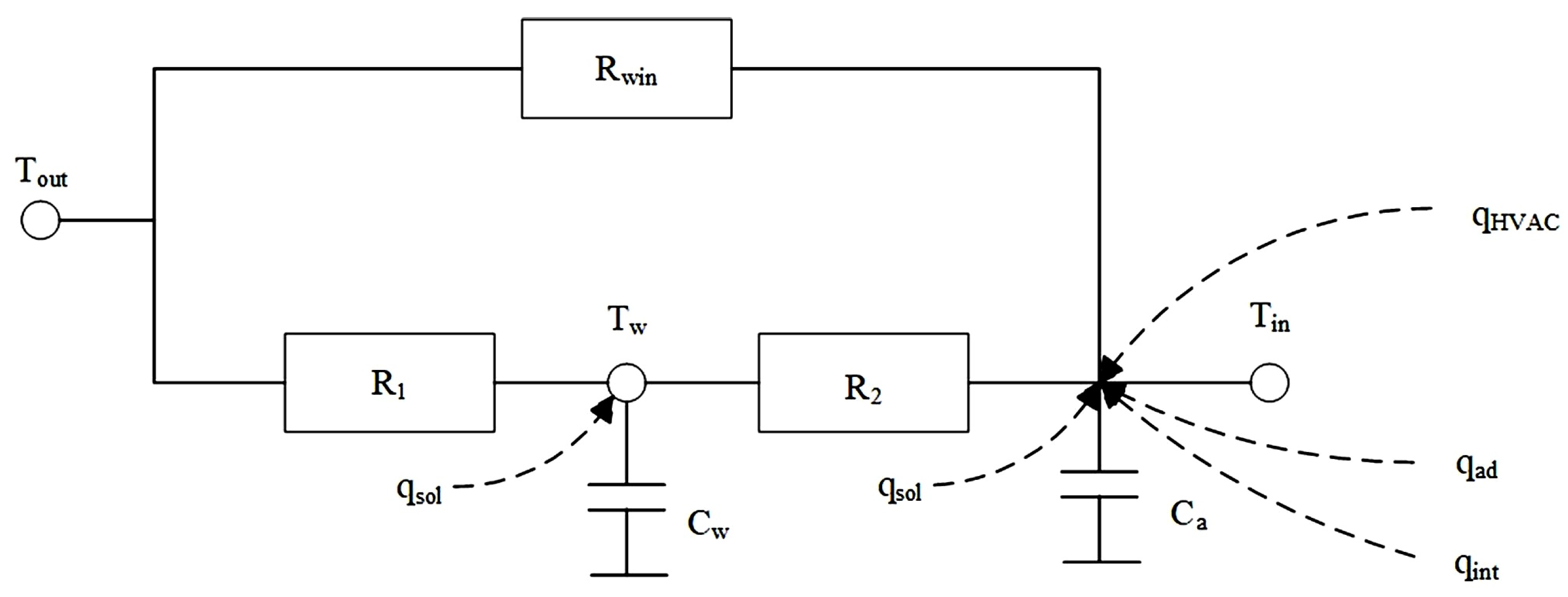
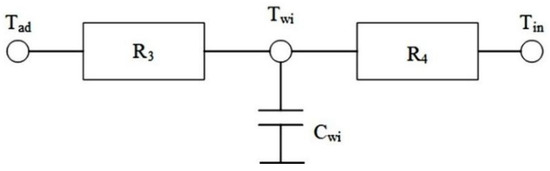
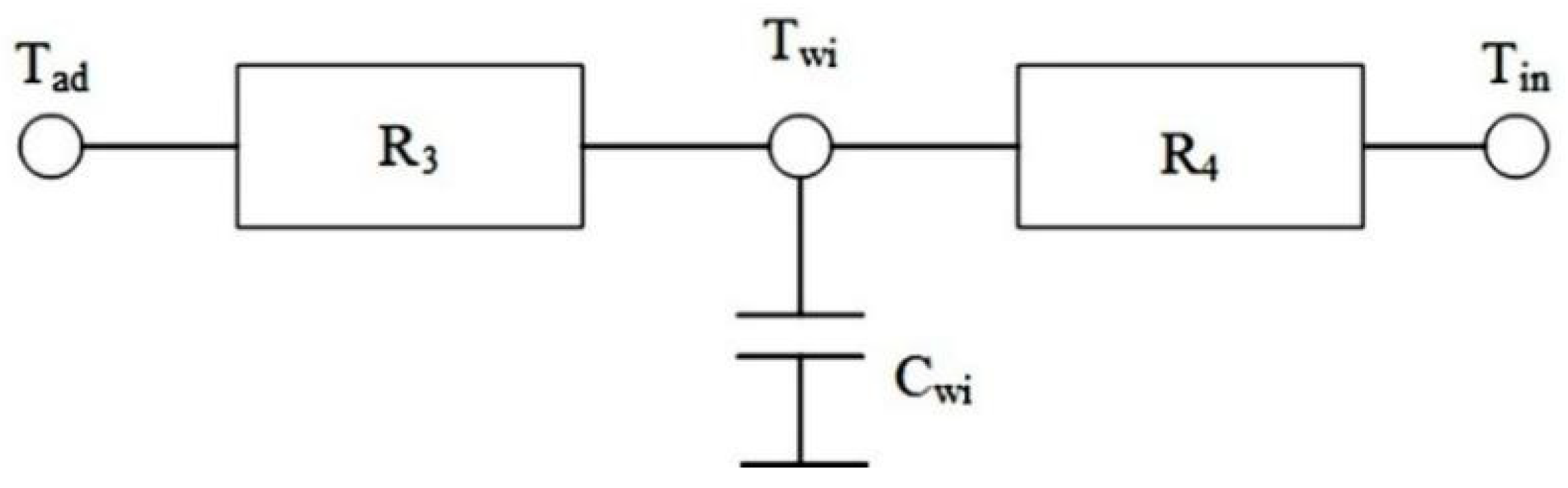
RC (resistance–capacitance) networks, grounded in physical priors, are widely used to represent indoor thermal dynamics [29]. Dashed lines/arrows indicate possible or optional heat flow paths through the RC network. The two test rooms differ in configuration; therefore, separate temperature sub-models are constructed. Because of the distinct layouts and set-points, heat transfer between the open-plan office and the meeting room is non-negligible. Indoor temperature is thus driven by the HVAC system, solar gains, outdoor temperature, adjacent-room temperature and internal heat gains. The resulting RC networks for the two rooms are shown in Figure 11, and the RC representation of the internal wall between adjacent rooms is shown in Figure 12.
Figure 11.
RC network model structure diagram.
Figure 12.
RC model structure of adjacent interior wall.
In the RC network schematics, , , , and denote temperature, thermal resistance, thermal capacitance and heat-flux density, respectively. The subscripts “out”, “in”, “ad”, “w”, “wi”, “HVAC”, “sol” and “int” refer to outdoor, indoor, adjacent room, external wall, internal wall, air-conditioning system, solar radiation and internal heat sources, respectively.
2.4.2. Indoor Air Quality Model
Indoor air pollution is influenced by multiple factors, including indoor pollution sources, air conditioning systems, purification equipment, and occupant activity. In this study, indoor CO2 concentration is selected as a representative indicator of indoor air quality, as it is a common office pollutant primarily associated with occupant metabolism [30]. Thus, the source term is expressed as the product of the number of occupants and the human CO2 emission rate. Given the absence of air-purification equipment and the gaseous nature of CO2 under standard conditions, additional indoor pollutant emissions are neglected. CO2 levels in supply air are modeled as the weighted sum of return air and fresh-air concentrations. Because typical air-conditioning filters are ineffective at removing CO2 [15], constant outdoor CO2 concentration and average human emission rate are assumed to facilitate control strategy implementation. The indoor air quality model established based on CO2 concentration characteristics is expressed as Equations (2)–(5):
In the equation, denotes the number of occupants within the premises; represents the average human CO2 emission rate, which is entirely dependent on the number of occupants and the nature of their activities; and denote the indoor pollutant concentration and outdoor pollutant concentration, respectively; denotes the fresh air supply rate.
2.4.3. Parameter Identification via Genetic Algorithm
Unknown parameters in both the indoor temperature model and the indoor air-quality model include heat capacity, thermal resistance, outdoor CO2 concentration and the average human CO2 emission rate. Parameter identification is performed using a genetic algorithm. Genetic algorithms offer simple principles, ease of implementation, fast convergence and strong robustness in complex search spaces [31,32], and therefore present clear advantages over many alternative identification methods.
The genetic algorithm toolkit within Python 3.13 was employed for model parameter identification. The population size was set to 600, with a maximum iteration count of 200, a crossover probability of 0.9, and a mutation probability of 0.6.
2.4.4. Predictive Control of the Coupled Model
MPC is a mature constrained control technique that reduces computational complexity by decomposing long-term control problems into several subproblems [33]. Its core components include a predictive model, rolling optimization, and feedback correction. Multi-step prediction forecasts indoor temperature and CO2 concentration over multiple future sampling periods using indoor temperature and air quality models, future meteorological data, and the current room state as the initial condition. The prediction horizon () and control horizon () are selected based on the system’s dominant thermal time constant, indoor CO2 dynamics, and the sampling interval. With a 15 min sampling interval, both horizons are set to 10 h ( steps ≈ 600 min), capturing the main indoor temperature and CO2 response during a typical work period while maintaining stable actuation. In this formulation, thermal comfort bands and the CO2 threshold are imposed as hard constraints, while the objective function minimizes the HVAC energy use.
For the indoor temperature model, the objective function is defined as the mean squared error (MSE) between predicted and measured temperatures. Similarly, for the indoor air quality model, the objective function is the MSE between predicted and measured indoor CO2 concentrations. The explicit formulation is given in Equation (6).
In Equation (6), denotes the objective function, is the number of samples, represents the model prediction for sample , and is the corresponding measured value.
Moreover, achieving the optimization objective requires enforcing constraints that satisfy occupant thermal preferences and IAQ while minimizing energy use. Indoor temperature is maintained within prescribed comfort bands, and indoor CO2 is constrained to ≤1000 ppm in accordance with ASHRAE standards. The outdoor-air rate is minimized subject to these IAQ requirements to reduce energy consumption. and denote the upper and lower limits of the temperature control range, respectively. Supply air volume (, where subscripts 1 and 2 are for the open office and meeting room, respectively) and the proportion of fresh air () are adjusted according to system configuration. The constraints are set as follows:
The MPC temperature constraints are derived from the comfort bounds of the test rooms estimated by the thermal-preference learning module. In the baseline case, the maximum winter set-point and minimum summer set-point for each room are kept constant during operation, as listed in Table 6.
Table 6.
The air conditioning setting temperature of the reference model.
For the baseline condition, fixed temperature setpoints (28 °C in winter; 22–24 °C in summer) were derived from one-year field measurements of typical occupant-adjusted settings in the test rooms rather than guideline values. This behavior-based selection provides a realistic benchmark reflecting actual operational practices in the building, yielding a fixed-setpoint, schedule-based reference representative of conventional rule-based control. Energy comparisons, therefore, illustrate the potential performance of the MPC relative to this baseline fixed-setpoint strategy, and reported savings should be interpreted as indicative upper bounds under the modeled assumptions rather than exact predictions of utility reductions.
Standard work schedules assume the MPC operates air-conditioning from 09:00 to 18:00, whereas the baseline extends operation to 09:00–19:00 to reflect current practice. To account for the coexistence of air conditioning and open windows, the baseline keeps windows open between 09:00 and 18:00, while the MPC closes windows whenever indoor air-quality and thermal-comfort constraints are satisfied.
Feasibility challenges may arise during start-up and under extreme outdoor temperatures. To prevent infeasibility or excessive control actions, constraints are relaxed during the first 30 min. In the first two sampling intervals, temperature bounds are widened by ±1 °C, and the CO2 ceiling is raised to 1200 ppm, and the supervisory rule sets the outdoor-air fraction () to 0.8 to rapidly restore IAQ. Hard constraints are reinstated from the third interval, with MPC feedback correction accelerating convergence.
Under extreme weather conditions, (outdoor temperature) ≤ −10 °C or ≥38 °C, feasibility is preserved by prioritizing thermal comfort, relaxing the CO2 limit to 1100 ppm, and reducing to 0.3–0.5. Under normal conditions, CO2 constraints dominate, maintaining ≥ 0.6. This supervisory layer provides a controlled comfort-IAQ trade-off using existing bounds, ventilation settings, and feedback correction, without requiring additional hardware. During real-time operation, the MPC interacts only with the incremental thermal-preference learning module and real-time environmental measurements; clustering results are not provided online. While removing clustering does not affect MPC optimization feasibility, it would weaken behavior-informed supervisory rules and reduce robustness under irregular occupant actions.
2.5. Rule-Based Control and Manual Priority
In this study, ten occupants in both the open-plan office and meeting room served as fixed thermal-preference feedback subjects. Thermal-preference signals were acquired at one-hour intervals solely from adjustments recorded on the air-conditioning control panel. The occupancy-estimation error was defined as in Equation (10), with denoting the fixed occupant count and varied to represent 20%, 30%, and 50% underestimation or overestimation scenarios.
For 20%, IAQ prediction errors remain below 10%, and compliance is maintained by the feedback-correction mechanism, with an energy penalty capped at 5%, representing an acceptable tolerance. When ≥ 30%, underestimation may cause transient IAQ non-compliance, while overestimation can lead to notable energy inefficiency. It is worth noting here that the feedback-correction mechanism mitigates these deviations, demonstrating measurable robustness of the proposed control strategy to practical occupancy-estimation uncertainties.
Moreover, the supervisory layer governs HVAC operation through three complementary mechanisms. First, occupancy status determines whether conditioning is required, with the MPC sequence executed only when the space is occupied. Second, behavior-informed rules suppress inefficient operating patterns, such as unnecessary early activation, extended post-occupancy runtime, and simultaneous window opening and cooling, ensuring that optimization occurs within realistic behavioral constraints. Finally, manual overrides always take precedence over automated actions. Any user-adjusted setpoints, along with the associated environmental conditions, are logged to support the continuous refinement of the thermal-preference model.
3. Results and Discussion
3.1. Analysis of System Operational Status
3.1.1. Start-Up and Shutdown Time Analysis
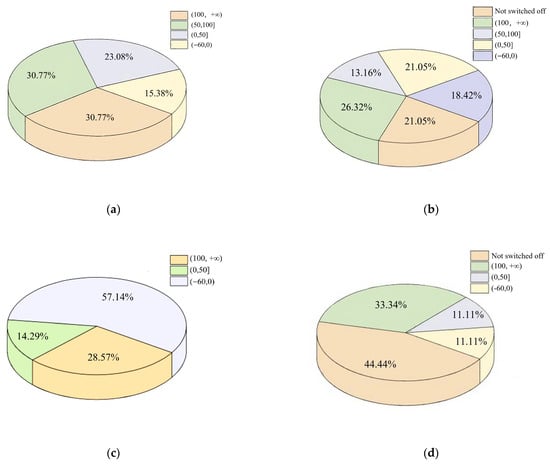
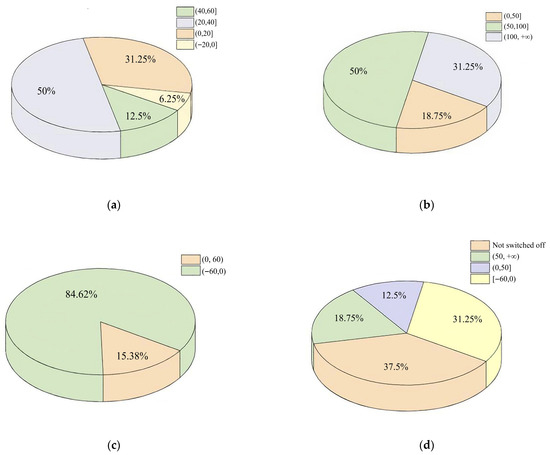
Figure 13 and Figure 14 show the statistical distributions of the start-up and shutdown times of the indoor units in the VRV air-conditioning system for the open-plan office and the meeting room in winter and summer. The analysis focuses on the first activation and final deactivation of each day, in order to capture occupant-driven behavior relative to the standard working hours (09:00–18:00).
Figure 13.
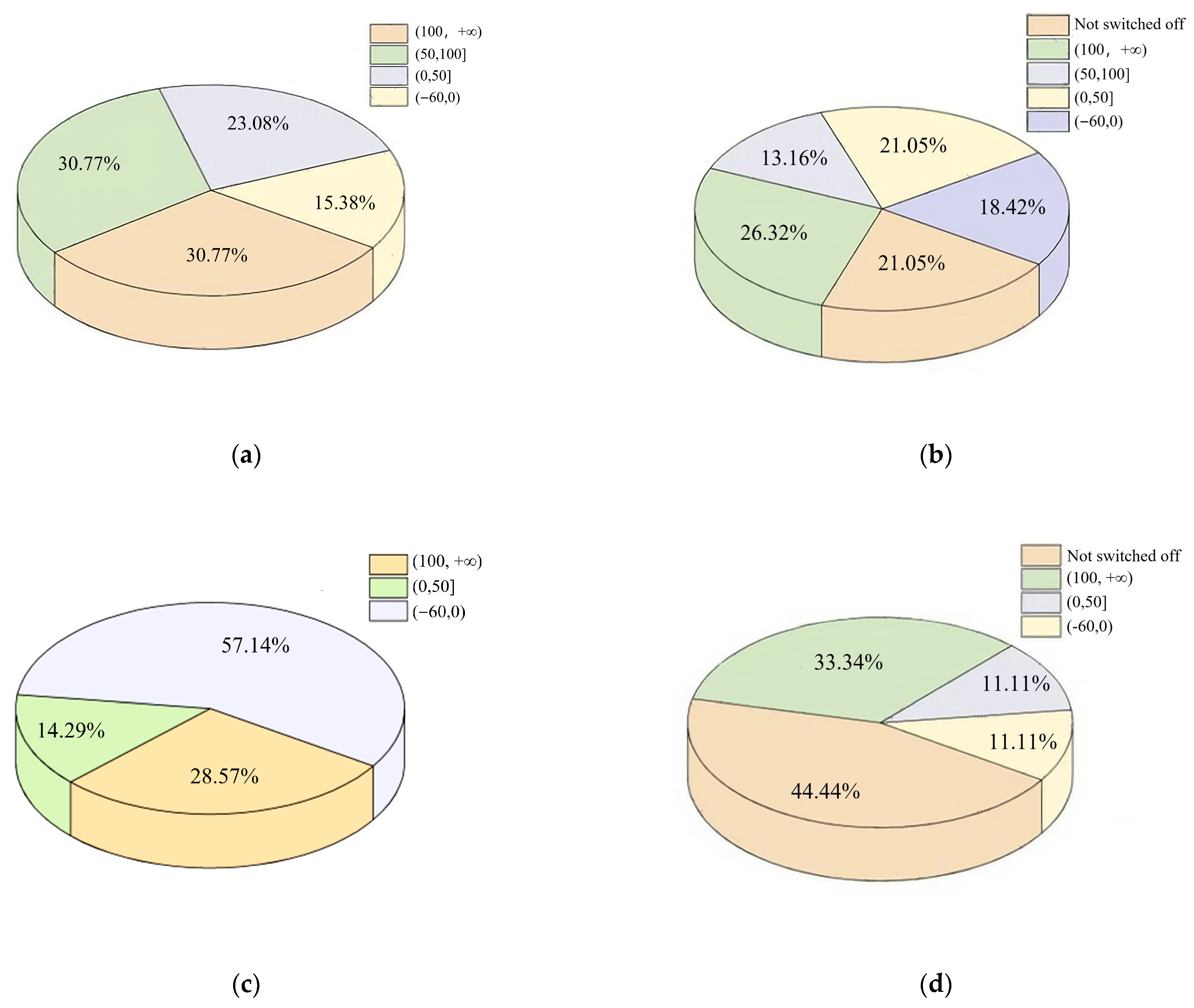
Statistics of air conditioning (AC) start and stop time in open office and meeting room in winter. (a) Office AC switched on; (b) office AC switched off; (c) meeting room AC switched on; (d) meeting room AC switched off.
Figure 14.
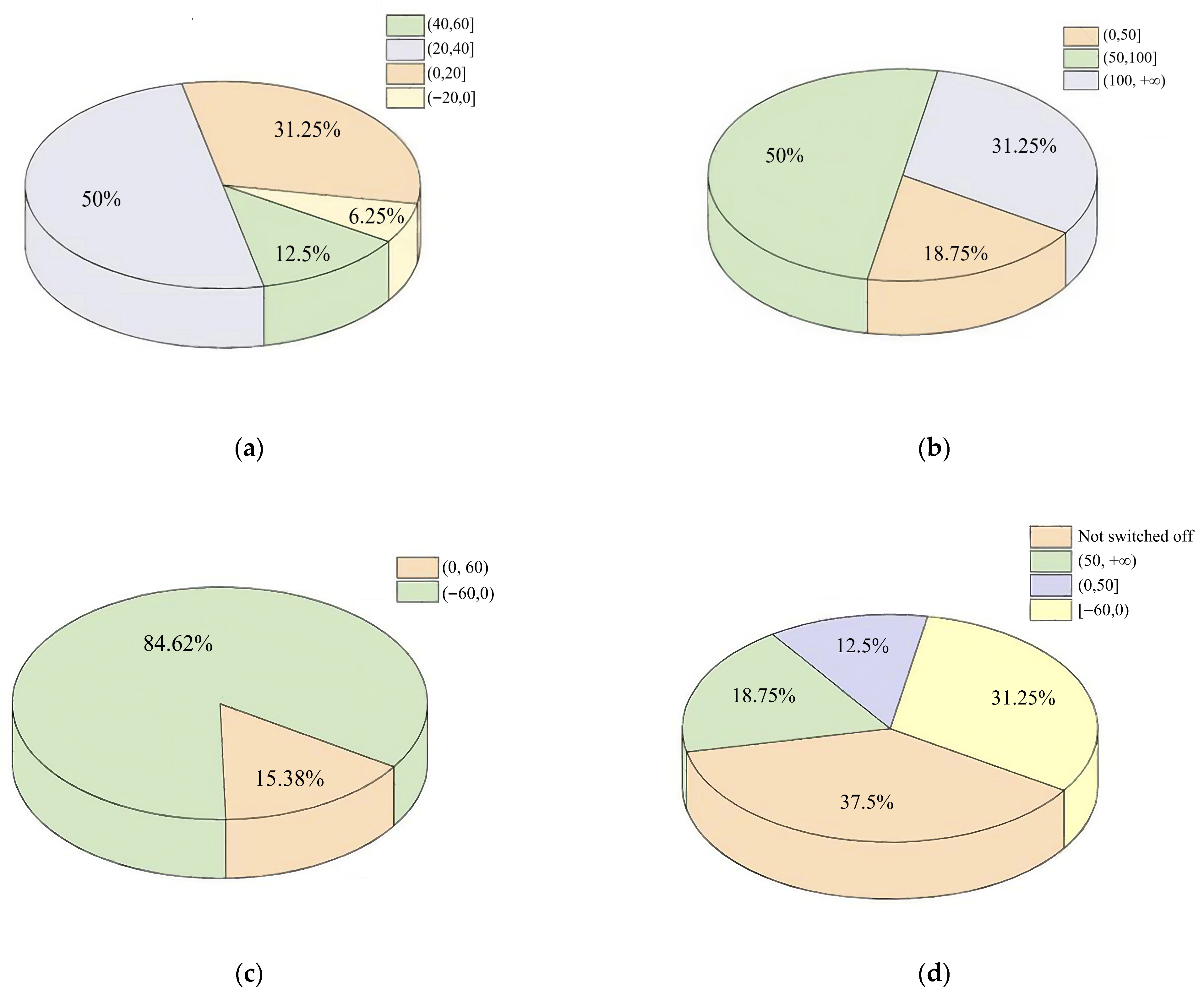
Statistics of air conditioning (AC) start and stop times in open office and meeting room in summer. (a) Office AC switched on; (b) office AC switched off; (c) meeting room AC switched on; (d) meeting room AC switched off.
During the winter season (Figure 13a, approximately 85% of air-conditioning units in open-plan offices were activated before the official start of work. Of these, 30.77% were switched on more than 100 min early, and another 30.77% within 50–100 min before 9:00. This indicates a pronounced tendency for early pre-cooling behavior driven by early occupant arrival. Shutdowns were generally delayed, as illustrated in Figure 13b, with 65.22% occurring more than 50 min after the end of the workday. Notably, around 21% of units remained operational overnight, contributing to significant energy waste. These patterns reveal strong behavioral inertia, where air-conditioning operation is loosely aligned with working hours and occupant energy-awareness remains limited.
In meeting rooms (Figure 13c,d), operational timing is even more irregular. Air conditioning was predominantly activated within 60 min after work began (57.14%) and seldom beforehand, reflecting the flexible and task-dependent nature of meeting usage. Shutdowns, however, often occurred well beyond scheduled meeting times, with 44.44% of cases involving overnight operation. The lack of immediate deactivation following occupancy highlights the absence of localized control responsibility and demonstrates the potential for energy savings through automation.
Similar behavior tendencies were observed during the summer season in Figure 14. In open offices, the majority of activations occurred within 40 min before working hours (8:20–8:40), accounting for 50% of instances, while shutdowns mostly occurred between 18:50 and 19:40, confirming that late deactivation persists year-round. For meeting rooms, air-conditioning operation continued to align closely with meeting schedules, with 84.62% of activations occurring after 9:00 and 37.5% of systems left running overnight.
These results demonstrate that occupant start-up and shutdown behaviors exhibit clear temporal clustering but remain decoupled from energy-efficient scheduling. Frequent early activations and delayed shutdowns indicate that comfort expectations often take precedence over energy considerations. Persistent overnight operation further highlights a systemic management gap. Variability between open offices and meeting rooms further confirms that occupant behavior is space-dependent. In this regard, open offices display routine-driven patterns, whereas meeting rooms follow event-driven, irregular usage.
Analysis of Figure 13 and Figure 14 highlights significant inefficiencies in air-conditioning operation. While moderate pre-conditioning is necessary to ensure comfort at occupancy onset, excessively early or prolonged pre-cooling and delayed shutdowns lead to avoidable energy use. These effects are exacerbated by manual control practices that fail to enforce timely system deactivation. Collectively, the findings highlight the need for intelligent, adaptive control mechanisms capable of predicting occupancy and autonomously regulating HVAC operation to mitigate such inefficiencies.
3.1.2. Window Opening Status
The open office is equipped with four operable external windows. To facilitate description of window opening scenarios, the opening ratio () is defined as the proportion of open windows to the total number of windows in the room, calculated as per Equation (11):
where is the window opening ratio, %; is the number of open windows in the room, units; is the total number of windows in the room, units.
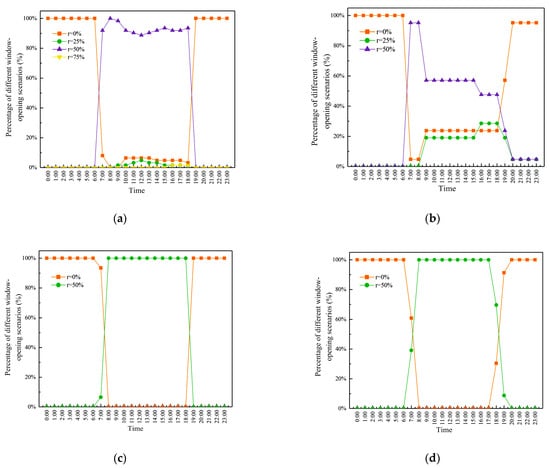
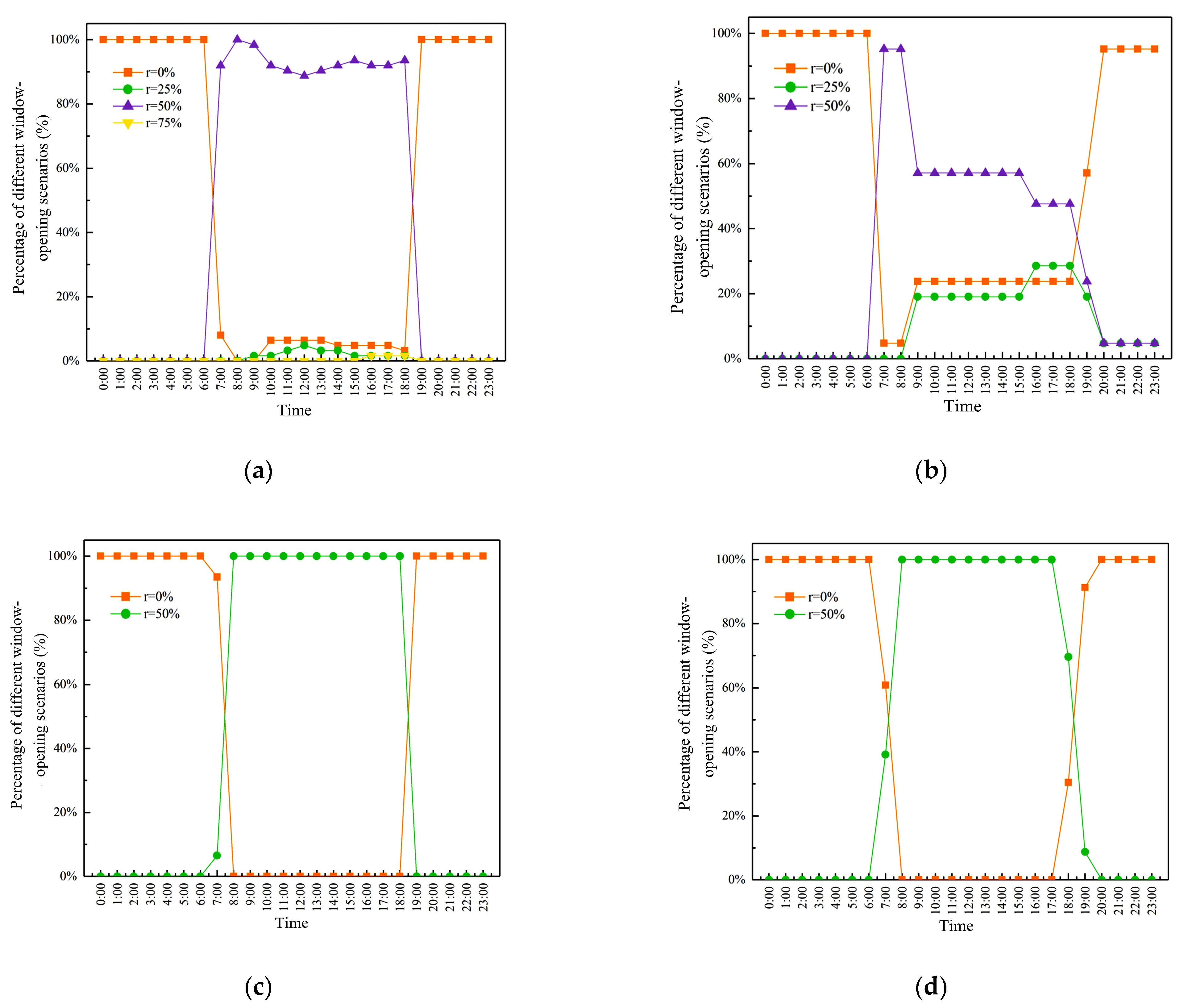
Figure 15a,b show the distribution of window-opening scenarios during winter and summer, respectively, across working hours. Since open offices are largely unoccupied on non-working days and windows remain closed, the analysis focuses exclusively on working days.
Figure 15.
Statistics of air conditioning start and stop times in open office and meeting room in summer. (a) Open office in winter; (b) open office in summer; (c) meeting room in winter; (d) meeting room in summer.
During winter, a 50% window-opening ratio, indicating that two of the four windows are open, dominates working hours (09:00–18:00), accounting for approximately 92% of observations. Scenarios with 0%, 25%, and 75% openings accounted for 6%, 5%, and 2%, respectively. In summer, the 50% window opening scenario again predominates, followed by 0%, with 25% being the least prevalent. In other words, office windows remain largely in a “half-open” state for the majority of the time during working hours, serving as an approximate indicator of typical opening frequency rather than a precise measure of effective ventilation rates. A “50% window opening ratio” simply denotes that two of the four operable windows are detected as open by the binary sensors. Furthermore, it is evident that regardless of season, window-opening actions primarily occur between 7:00 and 8:00. Additionally, the proportions of each window-opening scenario remain largely stable throughout the workday, indicating limited occupant adjustments during office hours. This aligns with observations that windows in the test room are typically opened at fixed times to satisfy occupants’ indoor air quality needs, corroborating the patterns described in this section.
Figure 15c,d illustrate the proportion of different window-opening scenarios in open offices during winter and summer when air conditioning is operational.
During winter, active air conditioning frequently coexists with partially open windows, while fully closed-window scenarios account for only a small fraction of operating hours. In summer, the proportion of fully closed windows (0% opening ratio) increases, yet cases with at least one window open still represent a substantial share of AC operating periods. This pattern indicates that occupants often combine mechanical cooling with natural ventilation, likely in response to perceived stuffiness or local discomfort, even though such operation can increase cooling energy use compared with fully closed windows. In the present monitoring design, indoor CO2 was recorded at 30 min intervals, and PM2.5 was not measured, so short-term IAQ excursions that might trigger window opening cannot be fully reconstructed.
3.2. Energy Usage Scenario Cluster Analysis
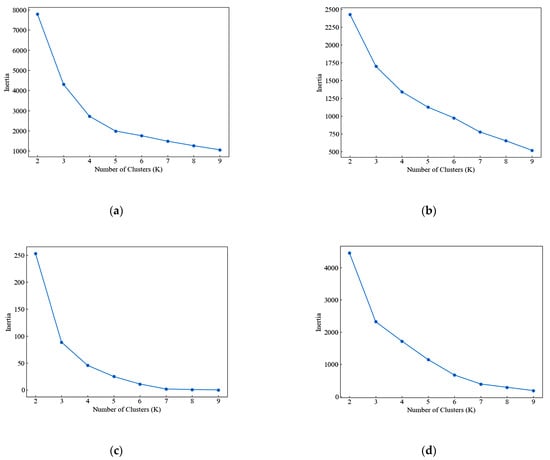
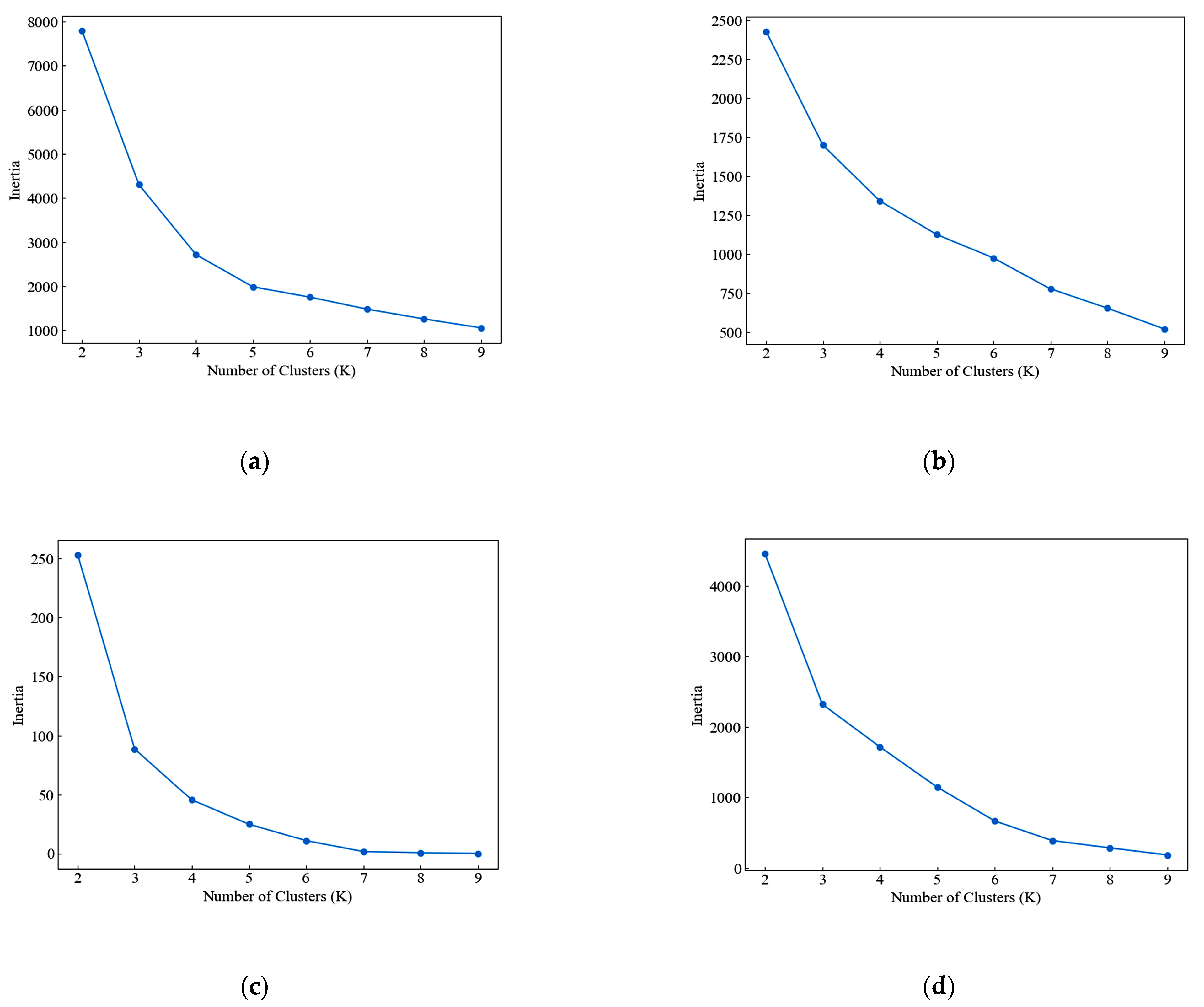
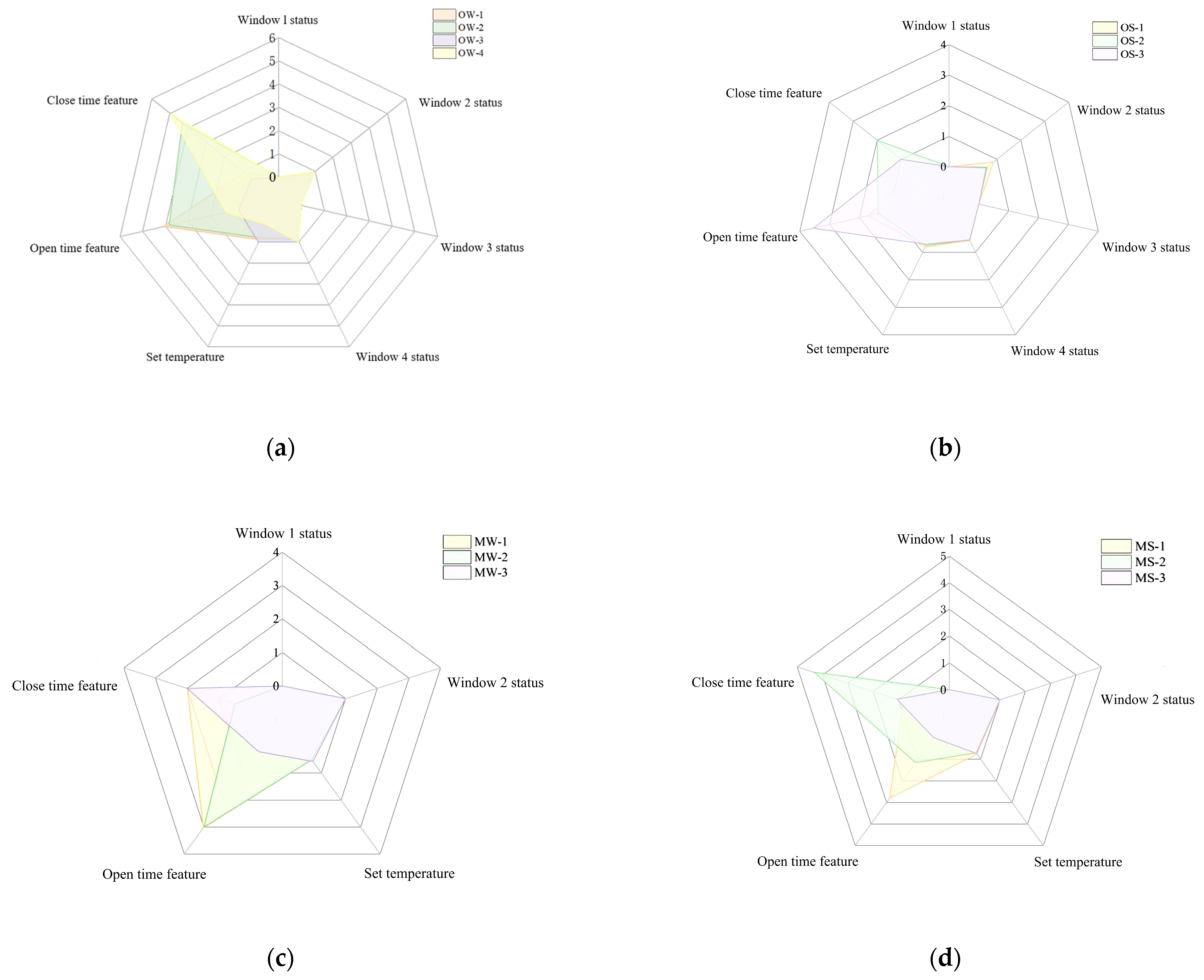
Figure 16 and Figure 17 illustrate the procedure and results of the K-means clustering analysis applied to energy-use patterns in the open-plan office and the meeting room across the winter and summer seasons.
Figure 16.
Relationship between the sum of squares within clusters and the k value. (a) Open office in winter; (b) open office in summer; (c) meeting room in winter; (d) meeting room in summer.
Figure 17.
Clustering results for energy usage scenarios in open offices and meeting rooms during winter and summer. (a) Open office in winter; (b) open office in summer; (c) meeting room in winter; (d) meeting room in summer.
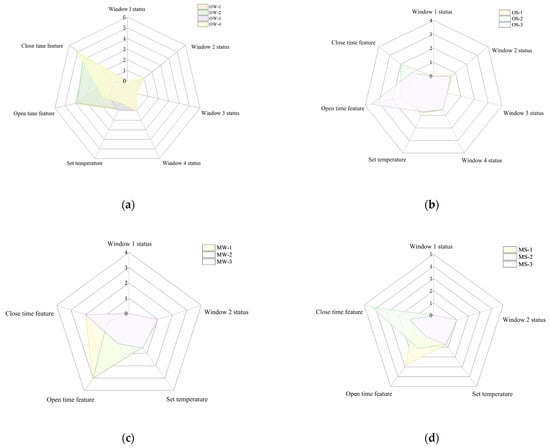
Figure 16 presents the relationship between the intra-cluster sum of squares and the number of clusters (k), with the elbow method used to determine the optimal cluster count. A distinct inflection point is observed at k = 4 for open offices in winter and k = 3 for all other scenarios, indicating that these configurations provide a suitable balance between model simplicity and clustering accuracy.
In addition, Figure 17 presents the clustering results, illustrating how occupant behavior, air-conditioning operation patterns, and window-opening habits are grouped into typical energy usage scenarios. The clear separation between clusters highlights substantial behavioral diversity, indicating that even under similar environmental conditions, occupants follow distinct operational modes. In open offices, clusters reveal relatively consistent but energy-intensive operation patterns, whereas in meeting rooms, clusters exhibit greater temporal variability due to irregular occupancy and task-dependent usage. These findings confirm that occupant behavior is a critical factor influencing HVAC performance and demonstrate the value of behavior-informed modeling.
Table 7 provides a comprehensive summary of the clustering results across space types and seasonal conditions, highlighting the relationship between occupant behavior patterns and air-conditioning operational characteristics. Figure 16 and Figure 17 offer an intuitive visualization of the data-driven segmentation that underpins the quantitative summary in Table 7.
Table 7.
Cluster Matching Table for Different Scenarios.
The results indicate that both open offices and meeting rooms exhibit distinct energy usage patterns influenced by occupants’ thermal preferences, work schedules, and ventilation habits. Open offices generally feature higher air-conditioning set temperatures, ranging from 24.7 °C to 28.0 °C, whereas meeting rooms maintain a relatively stable temperature around 25.5 °C. This difference suggests that occupants in open offices display greater thermal comfort variability and more flexible temperature adjustment behavior, likely associated with longer occupancy durations and group interactions.
In terms of temporal operation, most air-conditioning systems are activated within 60 min before or after the start of working hours, while shutdowns typically occur 60–100 min after the end of the day. Certain clusters, such as OW-3 and MS-3, exhibit prolonged or continuous operation, reflecting overcooling or failure to deactivate the system. These instances contribute to unnecessary energy consumption and highlight the importance of automated control strategies to prevent such inefficiencies. Meanwhile, the coexistence of partially open windows, e.g., “two open, two closed” or “alternating open–closed” states with active air-conditioning, indicates that occupants often combine natural ventilation with mechanical cooling. Although driven by perceived comfort, this behavior can reduce system efficiency and destabilize indoor temperature.
Moreover, behavioral contrasts between open offices and meeting rooms are also apparent in the clustering results. Meeting rooms, used intermittently, show irregular operation times and shorter active periods, consistent with task-dependent usage. Open offices, in contrast, exhibit more predictable yet energy-intensive operation, often extending cooling or heating beyond working hours. These differences underline the need for differentiated control strategies tailored to spatial function and occupancy characteristics.
Overall, the results summarized in Table 7 provide an empirical foundation for the development of the MPC strategy discussed in the following section. The identified clusters capture the diversity of occupant behaviors and offer data-driven insights into typical operation modes, enabling the MPC controller to dynamically predict and adjust system performance.
Although clustering is currently applied as an offline analysis tool, integrating behavior-pattern identification into real-time adaptive control could further enhance the framework’s responsiveness to irregular or evolving occupant behaviors. This will be explored in future research.
3.3. Incremental Learning Thermal Preference Results
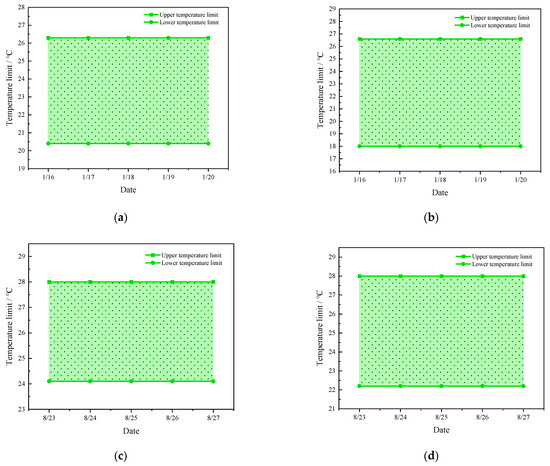
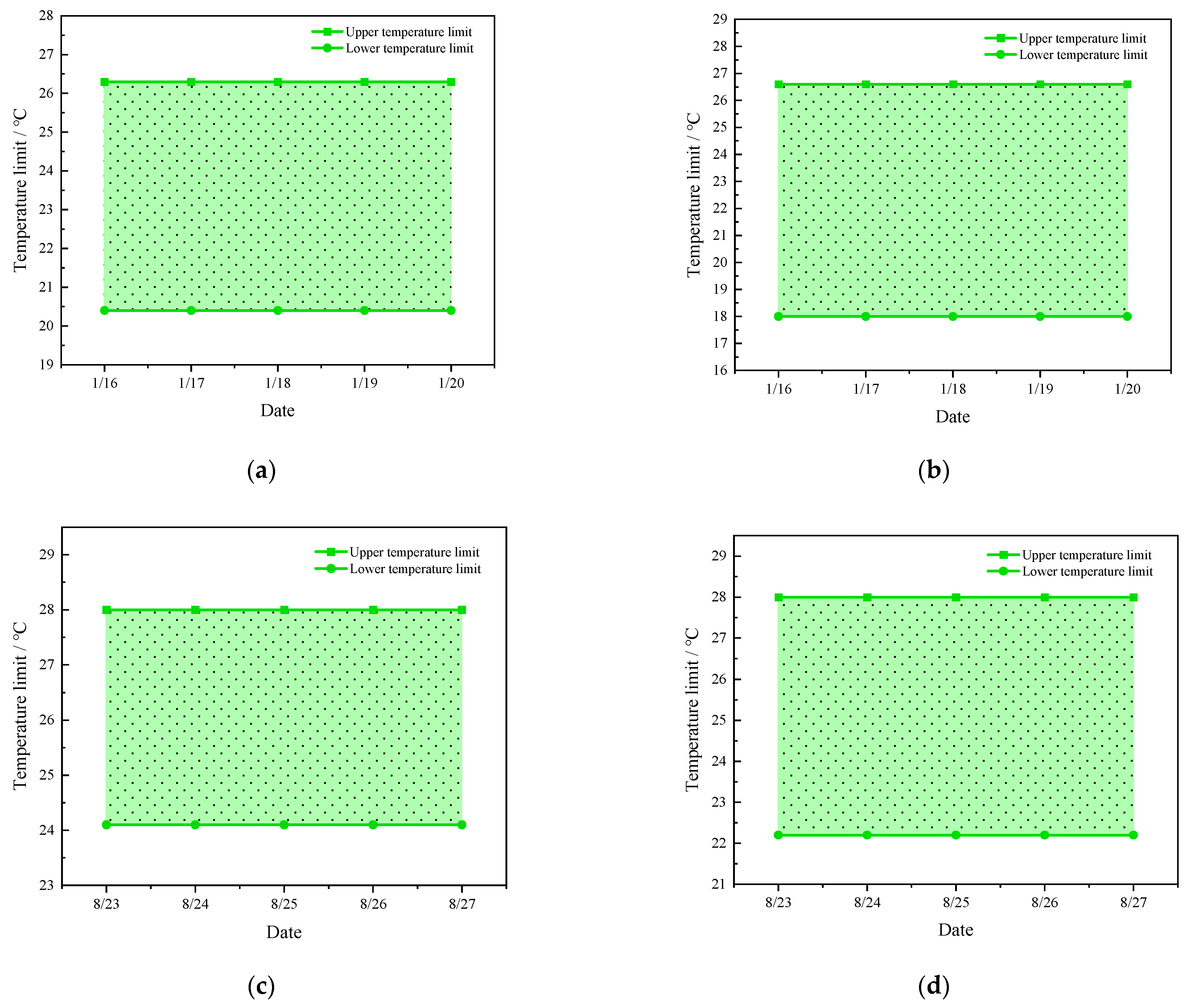
A thermal preference model based was developed in this study based on historical data of indoor and outdoor temperature and humidity, as well as air-conditioning supply air conditions. The temperature control bounds for the test rooms, obtained from the thermal-preference learning module within the control framework, are shown in Figure 18.
Figure 18.
Temperature control limits of the room being tested. (a) Open office in winter; (b) open office in summer; (c) meeting room in winter; (d) meeting room in summer.
As indicated in the figure, the bounds reflect user preference ranges. In the open-plan office, the winter range is [20.4, 26.3] °C, and the summer range is [24.1, 28.0] °C, while in the meeting room, the winter range is [18.0, 26.6] °C, and the summer range is [22.2, 28.0] °C.
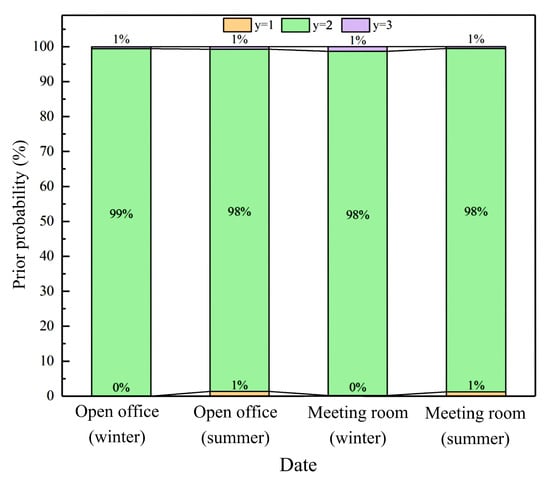
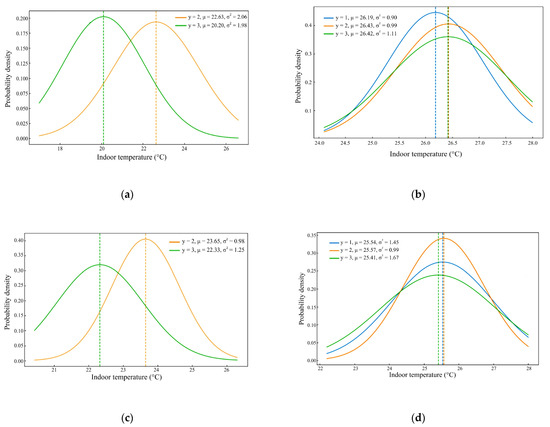
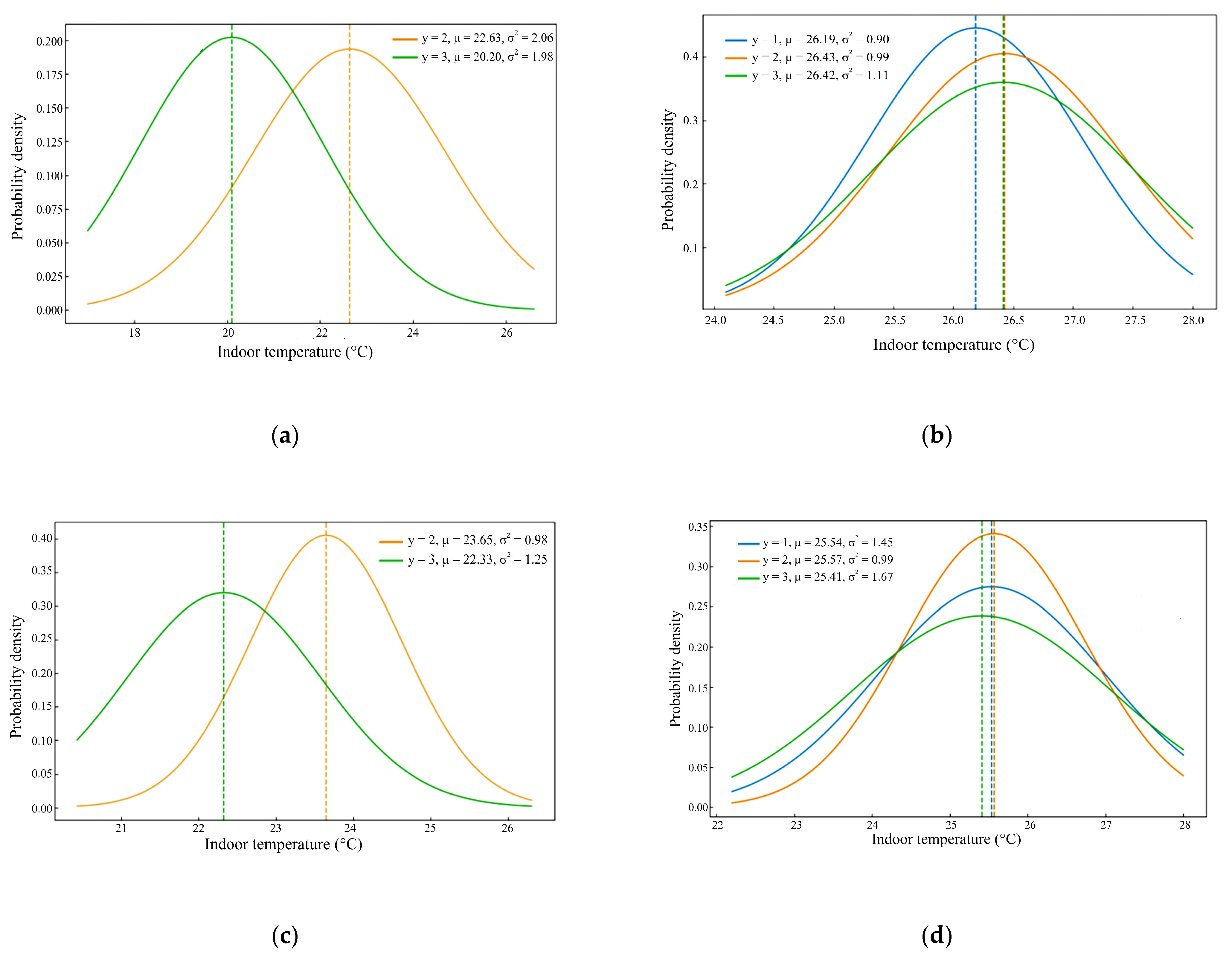
Concurrently, the model calculates both the prior probabilities of different occupant thermal preference categories and the posterior probability distributions of indoor temperature for winter and summer seasons, as illustrated in Figure 19 and Figure 20.
Figure 19.
The thermal preference category prior probability of the room being tested.
Figure 20.
Posterior probability density distribution of indoor temperature in the thermal preference model of the room under test. (a) Open office in winter; (b) open office in summer; (c) meeting room in winter; (d) meeting room in summer.
As illustrated in Figure 19, the “no change” preference dominates the prior distribution and exceeds 98%, indicating that occupants most often accept the prevailing conditions and only occasionally request adjustments. This pattern suggests that, under the existing control settings, most occupants remain in a thermally neutral or comfortable state. In summer, the proportion of the “prefer cooler” category increases, revealing a higher sensitivity to overheating under high outdoor temperatures.
Figure 20 presents the posterior probability density distributions of indoor temperature for each thermal preference category. The vertical dashed lines indicate the mean indoor temperatures for the respective datasets: the orange dashed line marks the mean temperature (μ = 23.65 °C) for condition y = 2, while the green dashed line marks the mean temperature (μ = 22.33 °C) for condition y = 3. These reference lines facilitate direct comparison of temperature distributions across scenarios. It is noted that when occupants report an “unchanged” preference, indoor temperatures are systematically higher in summer and lower in winter, reflecting seasonal thermal adaptation. The results show that the mean temperature for the “unchanged” class exceeds that of the “prefer cooler” and “prefer warmer” classes, indicating that comfort expectations shift with the external environment. These posterior curves are interpreted as smoothed empirical summaries rather than results of formal hypothesis testing. Because the “prefer cooler” and “prefer warmer” labels are sparse relative to the dominant “no change” class, confidence bands and variance estimates are not reported. Instead, the distributions serve to identify temperature ranges where neutral versus non-neutral responses are most likely, forming the comfort bounds imposed in the MPC. A more rigorous quantification of uncertainty, such as incorporating bootstrapped confidence intervals and formal tests of between-class differences, will be undertaken in future work once larger and more balanced datasets become available.
Furthermore, the distinct posterior temperature distributions in Figure 20 demonstrate that, despite class imbalance, the conditional densities for the three thermal preference categories occupy different temperature ranges. These ranges are used to define the comfort bounds imposed in the MPC. A complete evaluation using discrimination metrics, such as ROC curves and confusion matrices, is deferred to future work when larger and more balanced datasets become available.
These patterns align with seasonal adaptive behavior but are also influenced by individual differences in thermal tolerance, clothing, metabolic rate, and reporting thresholds. Consequently, the observed distributions reflect a combination of adaptive expectations and personal behavioral factors rather than a single dominant cause. To capture these dynamics, the incremental thermal-preference learner is calibrated using one year of in situ HVAC panel overrides and continuously updated with new manual adjustments. This results in empirically grounded preference bounds that reflect actual occupant actions rather than heuristic or PMV-based assumptions. Overall, manual overrides consistently supersede MPC decisions, ensuring that system behavior remains aligned with user intent. Although no post-deployment surveys were collected, the learned bounds serve as a behavior-derived proxy for perceived comfort rooted in long-term real-world operation.
3.4. Control Strategy Performance
3.4.1. Indoor Temperature Distribution
For model validation, the dataset is divided by time period, with 70% used for training and calibration and the remaining 30% reserved for validation. The parameter values of the indoor temperature model identified by the genetic algorithm are reported in Table 8.
Table 8.
Parameter identification results of indoor temperature model.
and denote the indoor pollutant concentration and outdoor pollutant concentration, respectively; denotes the fresh air supply rate.
According to ASHRAE standards, thermal resistance based on building physical characteristics typically ranges from 0.001 to 1.0 m2·K/W. As shown in Table 8, all identified resistances () lie within this range and remain physically plausible.
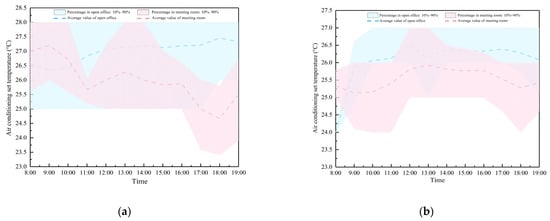
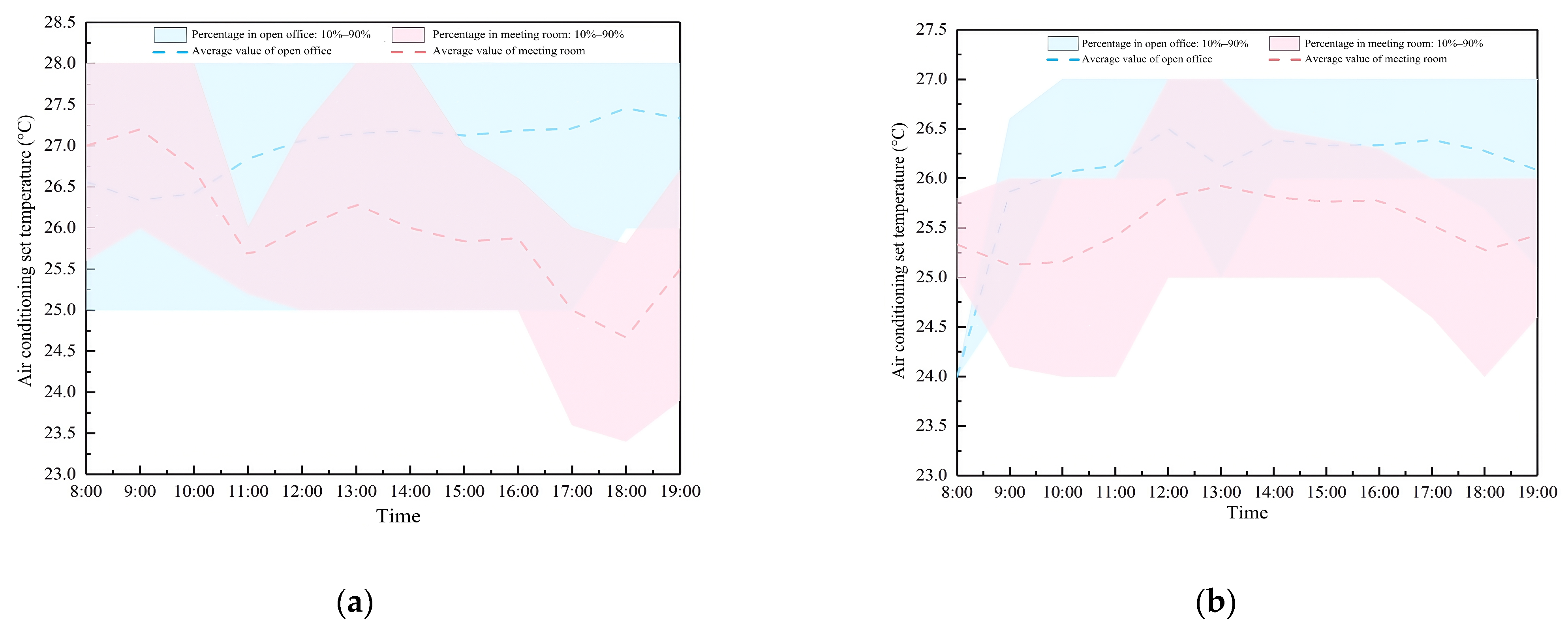
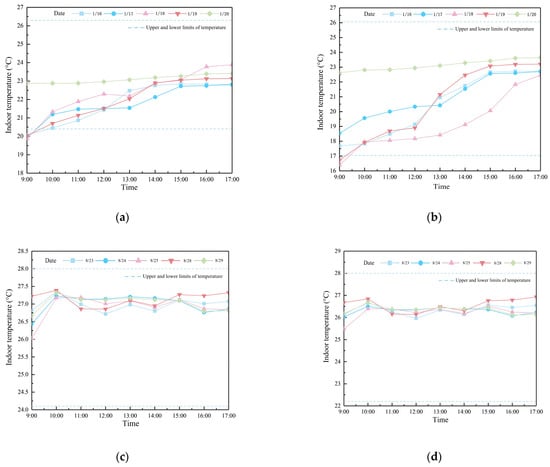
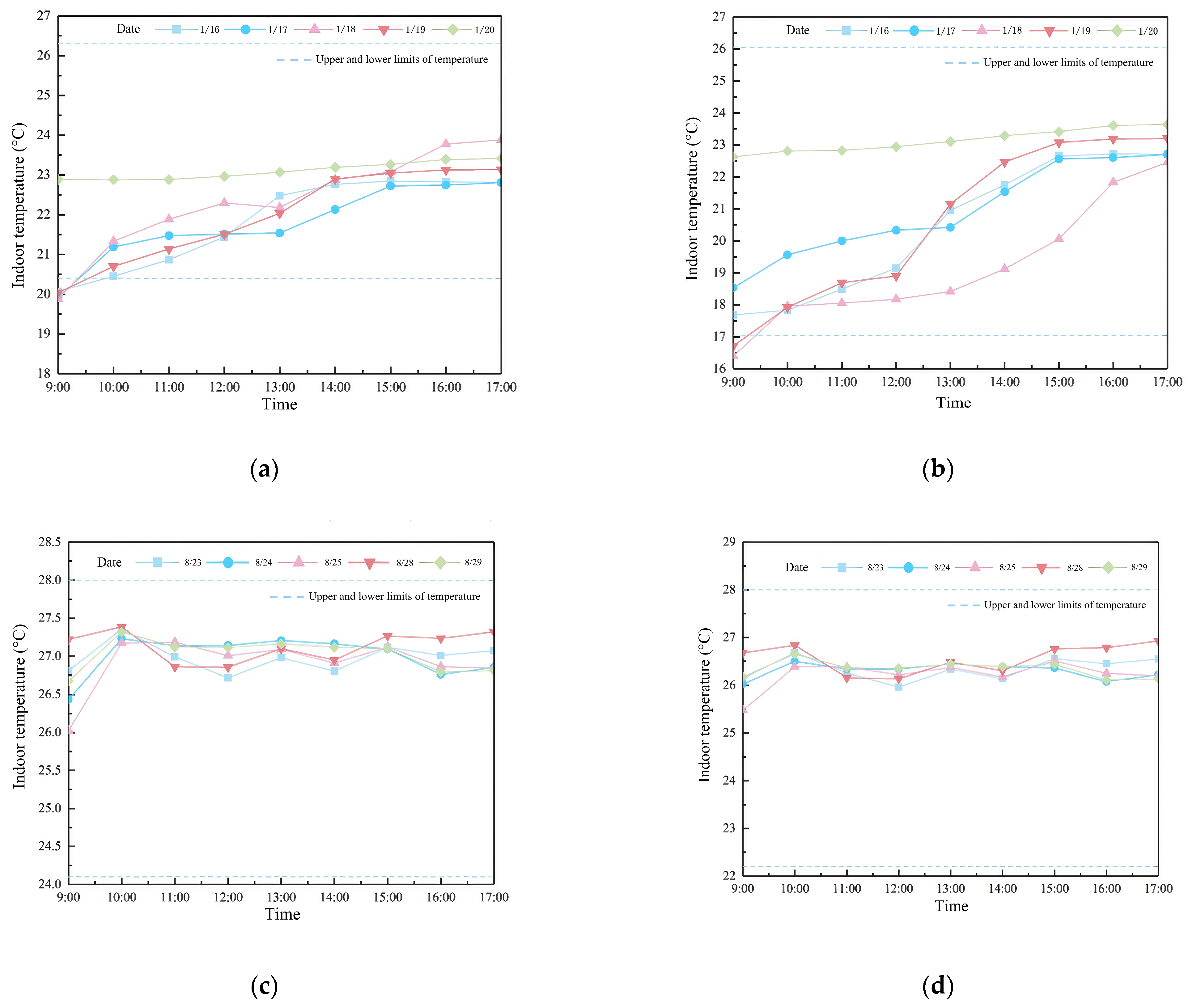
Figure 21 and Figure 22 summarize the indoor temperature characteristics and control performance for the open-plan office and the meeting room in winter and summer. Figure 21 shows the variation in the air-conditioning set-point temperatures without active regulation, while Figure 22 presents the corresponding indoor temperature distributions under the proposed control strategy.
Figure 21.
Trend in temperature settings for open offices and meeting rooms during winter and summer seasons over time. (a) In winter; (b) in summer.
Figure 22.
Indoor temperature distribution. (a) Open office in winter; (b) meeting room in winter; (c) open office in summer; (d) meeting room in summer.
As shown in Figure 21a, during the winter period, the open-plan offices maintain relatively stable setpoint temperatures between 25 °C and 28 °C, with minimal fluctuation throughout the working day. This stability is consistent with relatively uniform use of the open-plan office and moderate comfort demands. By contrast, meeting rooms exhibit larger variability in temperature settings, with deviations up to 2.5 °C. These fluctuations are consistent with intermittently scheduled meetings and changing preferences between sessions, but remain behavior-informed hypotheses rather than demonstrated causal relationships. Since meeting durations are shorter and occupancy densities are higher, temperature adjustments occur more frequently to accommodate changing comfort expectations.
Figure 21b presents the same analysis for the summer season. Both open offices and meeting rooms operate within the 24–27 °C range. However, it is noted here that in the open-plan office, setpoints tend to be lower around midday (12:00–13:00), whereas meeting rooms exhibit slightly higher setpoints. This contrast is consistent with faster heat accumulation in meeting rooms, likely due to higher occupant density and more concentrated use, although formal causal attribution cannot be confirmed with the available data. The differences between the two space types highlight the influence of spatial function, occupancy intensity, and behavioral adaptation on temperature regulation patterns.
Moreover, Figure 22 shows the actual indoor temperature distribution under the implemented control strategy. The results indicate that indoor temperatures largely remained within the control range defined by the thermal preference learning module for both open-plan offices and meeting rooms, except during the initial air-conditioning startup period around 9:00. These findings confirm that the adaptive control algorithm effectively maintains thermal comfort within acceptable limits while dynamically responding to temporal and spatial variations in thermal load. The narrow temperature deviations observed during operation further demonstrate the model’s robustness and responsiveness to occupant comfort preferences.
The results shown in Figure 21 and Figure 22 indicate that open-plan offices exhibit smoother, occupancy-driven temperature regulation, whereas meeting rooms display more variable but responsive adjustment behavior. The thermal environment achieved under the implemented control strategy aligns well with occupant comfort requirements in both winter and summer seasons. These findings validate the effectiveness of the thermal preference learning module in enabling fine-grained, occupant-adaptive temperature control.
It should be noted that detailed occupancy logs and explicit meeting schedules were not analyzed in this study. Consequently, the behavior-related explanations provided here should be interpreted as hypothesis-generating interpretations of observed patterns rather than statistically validated causal inferences.
3.4.2. Indoor CO2 Concentration Distribution
The parameter values of the indoor air quality model identified through genetic algorithm are shown in Table 9.
Table 9.
Parameter identification results of indoor air quality model.
Table 9 presents the results of indoor air quality model parameter identification. It can be noted that both the outdoor CO2 concentration () and human CO2 emission rate () in open offices and meeting rooms fall within ASHRAE standards and are consistent with physical expectations.
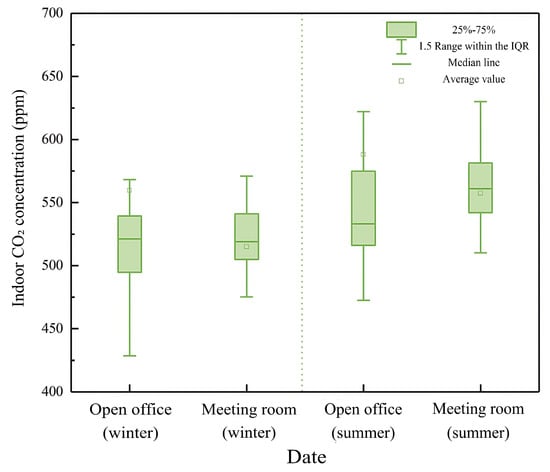
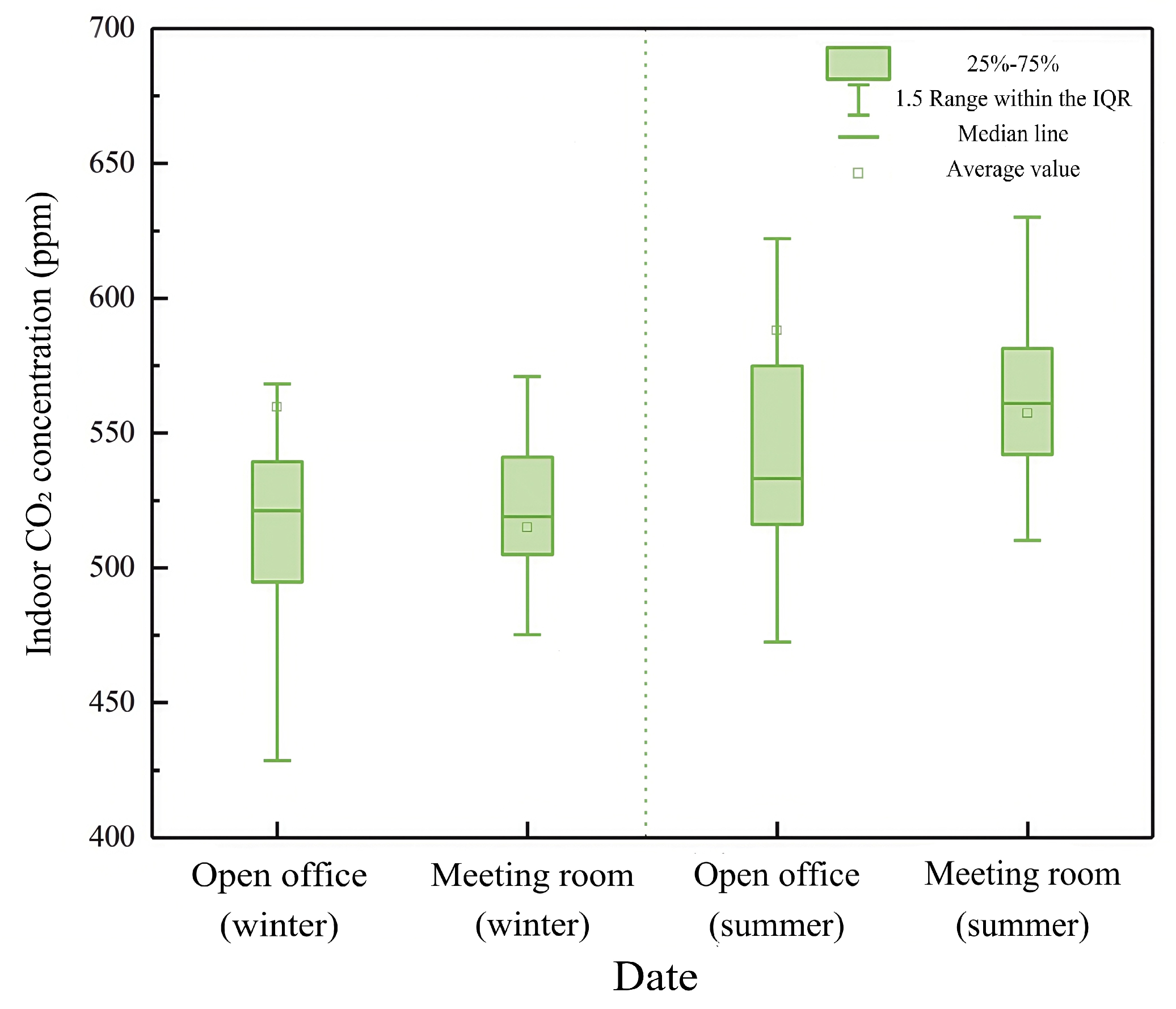
Figure 23 shows the indoor CO2 concentration distribution in open offices and meeting rooms during winter and summer. The vertical dashed line separates the winter and summer datasets. Under the implemented MPC-based control strategy, indoor CO2 levels in all test rooms remained well below 1000 ppm, indicating that satisfactory indoor air quality was maintained throughout operation.
Figure 23.
Distribution of Measured Indoor CO2 Concentration.
Moreover, CO2 concentrations were generally higher during the morning hours (around 9:00–10:00), coinciding with occupant arrival and system startup, followed by stabilization once ventilation reached steady operation. Open offices exhibited slightly higher average CO2 concentrations than meeting rooms, consistent with higher occupant density and longer occupancy durations. Meeting rooms, in contrast, showed short but pronounced CO2 peaks corresponding to periods of intensive use inferred from room function. These patterns are interpreted as plausible behavior-related explanations rather than direct causal evidence. Overall, the observed fluctuations confirm that the adaptive ventilation adjustment within the control strategy effectively responded to occupancy variations and prevented excessive CO2 accumulation.
From an analytical perspective, the results demonstrate that the coupled MPC strategy effectively integrates thermal comfort and air-quality management. By maintaining CO2 levels below 1000 ppm without excessive ventilation energy consumption, the system achieves a balanced trade-off between air quality and energy efficiency. The controller’s ability to dynamically regulate ventilation rates in response to predicted occupancy and real-time concentration feedback provides a foundation for intelligent, demand-driven air-quality management.
3.4.3. Energy Consumption Analysis of Air Conditioning Systems
Direct measurement of the actual energy consumption in the two test rooms was not feasible due to practical constraints. Model accuracy was therefore evaluated by comparing recorded indoor temperatures with EnergyPlus simulations. Two representative days were selected to capture heating and cooling season conditions: 20 January 2023 and 29 August 2023. The hourly average deviation between measured and simulated indoor temperatures was computed using Equation (12), and the results are summarized in Table 10.
Table 10.
Average hourly deviation of indoor temperature on typical days.
In the equation, denotes the hourly mean bias; indicates the measured indoor temperature; and denotes the number of data points. As shown in Table 10, the hourly mean bias of indoor temperatures during these typical days remained consistently within the ±10% tolerance specified by ASHRAE standards, demonstrating the model’s reliable accuracy for subsequent energy consumption analysis.
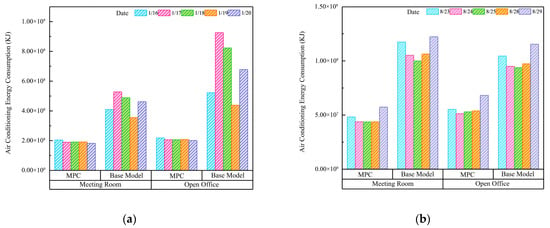
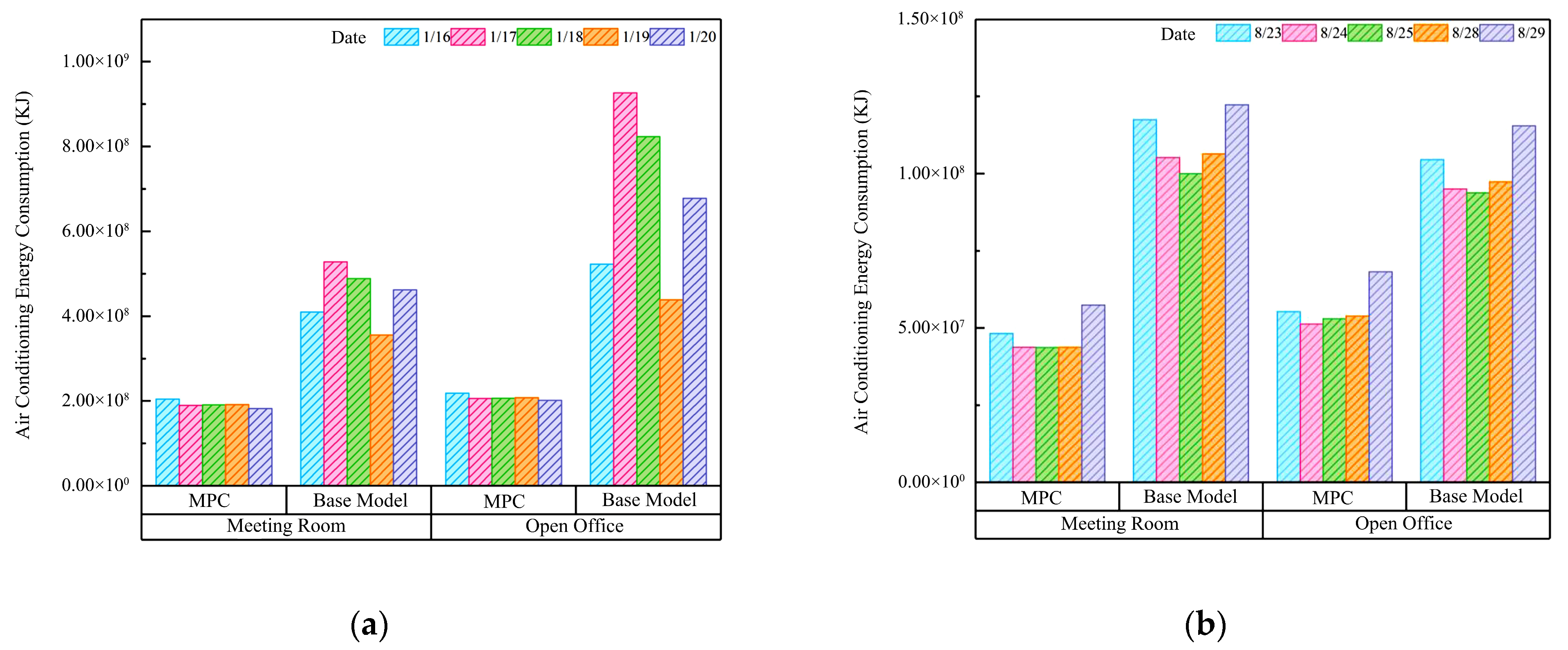
Figure 24 compares air-conditioning energy consumption under the proposed MPC strategy and the baseline reference model during winter and summer. According to the baseline settings listed in Table 10, fixed temperature setpoints of 28 °C in winter and 22 °C in summer were maintained for open offices, and 28 °C and 24 °C for meeting rooms, without adaptive control. In contrast, the MPC strategy dynamically adjusted temperature and ventilation based on predicted occupancy, thermal preference, and air-quality feedback.
Figure 24.
Comparison of air conditioning energy consumption. (a) Testing room in winter; (b) testing room in summer.
The results demonstrate that the MPC strategy achieved substantial energy savings compared with the baseline. Under the simulated conditions, energy consumption was reduced by 66% and 56% in open offices and 44% and 57% in meeting rooms during winter and summer, respectively. These reductions reflect the controller’s capacity to anticipate thermal load variations and optimize both cooling and heating cycles. As a result, unnecessary system operation is minimized, and overcooling/overheating is avoided.
In addition to the quantitative energy savings reported in this study, the MPC-based strategy demonstrates notable qualitative improvements in energy management. Unlike traditional feedback-only systems, the predictive model leverages future load estimation to proactively adjust operation schedules and temperature setpoints. This results in smoother system transitions, reduced compressor cycling, and improved part-load efficiency. The energy-saving effect is particularly pronounced in open offices, where extended occupancy and fluctuating heat gains previously led to inefficient operation under static control.
In summary, the comparative results confirm the superior performance of the proposed MPC strategy. It not only maintains thermal comfort and indoor air-quality but also achieves substantial energy savings relative to conventional fixed-setpoint operation. The ideal reference condition serves as a benchmark scenario without predictive optimization, allowing the observed energy reductions to illustrate the strategic advantage of integrating thermal-preference learning with CO2-based ventilation control.
Since the energy analysis conducted in this work is based on deterministic co-simulation rather than repeated experiments or long-term utility data, classical confidence intervals and formal uncertainty bounds are not reported. Comprehensive uncertainty quantification, incorporating stochastic representations of occupancy and equipment performance variability, along with repeated Monte Carlo simulations, is identified as future work to complement the scenario-based results.
4. Conclusions
Continuous field measurements and data analysis across both heating and cooling seasons revealed distinctive operational patterns of the VRV air-conditioning system. In open-plan offices, approximately 85% of office units were activated before working hours, with 31% starting more than 100 min early, while 65% were shut down over 50 min late, and around 20% operated overnight. In meeting rooms, roughly 57% of systems were activated within 60 min after work began, yet 44% remained on overnight, reflecting an irregular, event-driven usage pattern. Furthermore, over 70% of working hours involved simultaneous operation of air conditioning and open windows, particularly in open offices where windows were half-open (≈50% opening ratio) for more than 90% of the time. These findings highlight a significant mismatch between comfort-driven occupant behavior and energy-efficient system management.
To address these challenges, an incremental learning-based thermal preference model was developed to characterize occupants’ comfort boundaries and predict dynamic thermal preferences. The identified comfort intervals ranged from 20.4 °C to 26.3 °C in winter and 24.1 °C to 28.0 °C in summer for the open office and from 18.0 °C to 26.6 °C in winter and 22.2 °C to 28.0 °C in summer for the meeting room. Leveraging these adaptive ranges, a coupled MPC strategy for thermal preference and IAQ control was implemented. Compared with baseline operation, the proposed approach consistently maintained indoor CO2 concentrations below 1000 ppm and ensured thermal conditions remained within user-preferred ranges across all periods, while substantially enhancing energy efficiency. Specifically, HVAC energy consumption was reduced by 66% and 56% in the open office and by 44% and 57% in the meeting room during winter and summer, respectively.
The proposed occupant-centric MPC framework promotes energy-efficient operation without sacrificing comfort or health, aligning with sustainable building operation principles. The demonstrated energy savings and improved control robustness indicate the potential of such data-driven, adaptive strategies to support long-term sustainability objectives in office buildings and beyond.
However, the current case study is limited to two VRV-served rooms in a single Beijing office. This may constrain direct generalization across different climates, HVAC configurations, and heterogeneous multi-zone environments. Future research should extend the framework to diverse building types and real-world multi-zone settings, including validation across various climatic regions and with systems such as mixed-mode and radiant HVAC. This should be supported by occupancy detection, individualized preference learning, multi-objective parameter tuning, and post-occupancy subjective assessments to complement behavior-based inference and strengthen user-centric validation. Further work will also explore more expressive online models and automated feature selection strategies to quantify potential gains in preference prediction accuracy relative to the current baseline. Additionally, incorporating schedule-based thermostatic control with deadbands and CO2-driven demand-controlled ventilation as benchmark strategies will provide a more rigorous foundation for evaluating the performance and practical advantages of occupant-centric MPC.
Author Contributions
Conceptualization, J.L. and X.H.; methodology, J.L. and Y.L.; software, S.G.; validation, T.N.; formal analysis, Y.C.; investigation, J.L.; resources, Y.L.; data curation, S.G.; writing—original draft preparation, J.L.; writing—review and editing, X.H. and S.P.; visualization, J.L. and Y.L.; supervision, Y.C. and S.P.; project administration, X.H. and T.N.; funding acquisition, X.H. All authors have read and agreed to the published version of the manuscript.
Funding
This research was funded by the Major Scientific Research Project of China National Machinery Industry Corporation entitled “Key Technologies and Equipment for Low-Carbon Resilience in Urban Renewal” (Grant No. ZDZX2022-4) and the Hebei Provincial Major Science and Technology Support Project (Grant No. 24294301Z).
Institutional Review Board Statement
Not applicable.
Informed Consent Statement
Not applicable.
Data Availability Statement
Dataset available on request from the authors. The raw data supporting the conclusions of this article will be made available by the authors on request.
Conflicts of Interest
Author Xiaojia Huang was employed by the company China IPPR International Engineering Co., Ltd. Tianchen Nan was employed by the company China IPPR International Engineering Co., Ltd. Yiqiao Liu was employed by China MCC5 Group Corp., Ltd., Chengdu 610063, China. The remaining authors declare that the research was conducted in the absence of any commercial or financial relationships that could be construed as a potential conflict of interest.
References
- Cohen, A.J.; Brauer, M.; Burnett, R.; Anderson, H.R.; Frostad, J.; Estep, K.; Balakrishnan, K.; Brunekreef, B.; Dandona, L.; Dandona, R.; et al. Estimates and 25-year trends of the global burden of disease attributable to ambient air pollution: An analysis of data from the Global Burden of Diseases Study 2015. Lancet 2017, 389, 1907–1918. [Google Scholar] [CrossRef] [Scilit] [PubMed]
- Menezes, A.C.; Cripps, A.; Bouchlaghem, D.; Buswell, R. Predicted vs. actual energy performance of non-domestic buildings: Using post-occupancy evaluation data to reduce the performance gap. Appl. Energy 2012, 97, 355–364. [Google Scholar] [CrossRef] [Scilit]
- Zhang, G.; Li, X.; Shi, W.; Wang, B.; Cao, Y. Influence of occupant behavior on the energy performance of variable refrigerant flow systems for office buildings: A case study. J. Build. Eng. 2019, 22, 327–334. [Google Scholar] [CrossRef] [Scilit]
- Yang, T.; Bandyopadhyay, A.; O’Neill, Z.; Wen, J.; Dong, B. From occupants to occupants: A review of the occupant information understanding for building HVAC occupant-centric control. Build. Simul. 2022, 15, 913–932. [Google Scholar] [CrossRef] [Scilit]
- Peng, Y.; Rysanek, A.; Nagy, Z.; Schlüter, A. Occupancy learning-based demand-driven cooling control for office spaces. Build. Environ. 2017, 122, 145–160. [Google Scholar] [CrossRef] [Scilit]
- Deng, Z.; Chen, Q. Simulating the impact of occupant behavior on energy use of HVAC systems by implementing a behavioral artificial neural network model. Energy Build. 2019, 198, 216–227. [Google Scholar] [CrossRef] [Scilit]
- Upadhyay, A.K.; Ding, L.; Yee, K.W.K.; Prasad, D. Post-occupancy energy consumption of BASIX affected dwellings in the Sydney metropolitan area. Procedia Eng. 2017, 180, 331–342. [Google Scholar] [CrossRef] [Scilit]
- Yan, D.; O’Brien, W.; Hong, T.; Feng, X.; Gunay, H.B.; Tahmasebi, F.; Mahdavi, A. Occupant behavior modeling for building performance simulation: Current state and future challenges. Energy Build. 2015, 107, 264–278. [Google Scholar] [CrossRef] [Scilit]
- Daniel, L.; Soebarto, V.; Williamson, T. House energy rating schemes and low energy dwellings: The impact of occupant behaviours in Australia. Energy Build. 2015, 88, 34–44. [Google Scholar] [CrossRef] [Scilit]
- Qaisar, I.; Liang, W.; Sun, K.; Xing, T.; Zhao, Q. An experimental comparative study of energy saving based on occupancy-centric control in smart buildings. Build. Environ. 2025, 268, 112322. [Google Scholar] [CrossRef] [Scilit]
- Rosiek, S.; Batlles, F.J. Reducing a solar-assisted air-conditioning system’s energy consumption by applying real-time occupancy sensors and chilled water storage tanks throughout the summer: A case study. Energy Convers. Manag. 2013, 76, 1029–1042. [Google Scholar] [CrossRef] [Scilit]
- Kim, D.; Cox, S.J.; Cho, H.; Im, P. Evaluation of energy savings potential of variable refrigerant flow (VRF) from variable air volume (VAV) in the U.S. climate locations. Energy Rep. 2017, 3, 85–93. [Google Scholar] [CrossRef] [Scilit]
- Jung, S.; Jeoung, J.; Hong, T. Occupant-centered real-time control of indoor temperature using deep learning algorithms. Build. Environ. 2022, 208, 108633. [Google Scholar] [CrossRef] [Scilit]
- Peng, Y.; Nagy, Z.; Schlütter, A. Temperature-preference learning with neural networks for occupant-centric building indoor climate controls. Build. Environ. 2019, 154, 296–308. [Google Scholar] [CrossRef] [Scilit]
- Wang, X.; Dong, B.; Zhang, J.J. Nationwide evaluation of energy and indoor air quality predictive control and impact on infection risk for cooling season. Build. Simul. 2023, 16, 205–223. [Google Scholar] [CrossRef] [Scilit] [PubMed]
- Pantazaras, A.; Lee, S.E.; Santamouris, M.; Yang, J. Predicting the CO2 levels in buildings using deterministic and identified models. Energy Build. 2016, 127, 774–785. [Google Scholar] [CrossRef] [Scilit]
- Li, W.; Koo, C.; Cha, S.H.; Hong, T.; Oh, J. A novel real-time method for HVAC system operation to improve indoor environmental quality in meeting rooms. Build. Environ. 2018, 144, 365–385. [Google Scholar] [CrossRef] [Scilit]
- Macarulla, M.; Casals, M.; Carnevali, M.; Forcada, N.; Gangolells, M. Modelling indoor air carbon dioxide concentration using grey-box models. Build. Environ. 2017, 117, 146–153. [Google Scholar] [CrossRef] [Scilit]
- Mei, J.; Xia, X. Energy-efficient predictive control of indoor thermal comfort and air quality in a direct expansion air conditioning system. Appl. Energy 2017, 195, 439–452. [Google Scholar] [CrossRef] [Scilit]
- Balali, Y.; Chong, A.; Busch, A.; O’Keefe, S. Energy modelling and control of building heating and cooling systems with data-driven and hybrid models-A review. Renew. Sustain. Energy Rev. 2023, 183, 113496. [Google Scholar] [CrossRef] [Scilit]
- Lan, H.; Hou, H.; Gou, Z.; Wong, M.S.; Wang, Z. Computer vision-based smart HVAC control system for university classroom in a subtropical climate. Build. Environ. 2023, 242, 110592. [Google Scholar] [CrossRef] [Scilit]
- Espejel-Blanco, D.F.; Hoyo-Montano, J.A.; Arau, J.; Valencia-Palomo, G.; Garcia-Barrientos, A.; Hernandez-De-Leon, H.R.; Camas-Anzueto, J.L. HVAC Control System Using Predicted Mean Vote Index for Energy Savings in Buildings. Buildings 2022, 12, 38. [Google Scholar] [CrossRef] [Scilit]
- Boudier, K.; Hoffmann, S. Analysis of the Potential of Decentralized Heating and Cooling Systems to Improve Thermal Comfort and Reduce Energy Consumption through an Adaptive Building Controller. Energies 2022, 15, 1100. [Google Scholar] [CrossRef] [Scilit]
- Su, L.; Ouyang, J.; Yang, L. Mixed-Mode Ventilation Based on Adjustable Air Velocity for Energy Benefits in Residential Buildings. Energies 2023, 16, 2746. [Google Scholar] [CrossRef] [Scilit]
- Cao, S.-J.; Ding, J.; Ren, C. Sensor deployment strategy using cluster analysis of Fuzzy C-Means Algorithm: Towards online control of indoor environment’s safety and health. Sustain. Cities Soc. 2020, 59, 102190. [Google Scholar] [CrossRef] [Scilit]
- Zhu, M.; Pan, Y.; Wu, Z.; Xie, J.; Huang, Z.; Kosonen, R. An occupant-centric air-conditioning system for occupant thermal preference recognition control in personal micro-environment. Build. Environ. 2021, 196, 107749. [Google Scholar] [CrossRef] [Scilit]
- He, Y.; Ou, G.; Fournier-Viger, P.; Huang, J.Z. Attribute grouping-based naive Bayesian classifier. Sci. China Inf. Sci. 2025, 68, 132106. [Google Scholar] [CrossRef] [Scilit]
- Lee, S.; Joe, J.; Karava, P.; Bilionis, I.; Tzempelikos, A. Implementation of a self-tuned HVAC controller to satisfy occupant thermal preferences and optimize energy use. Energy Build. 2019, 194, 301316. [Google Scholar] [CrossRef] [Scilit]
- Kim, S.-I.; Oh, J.-H.; Kim, E.-J. Set-point temperature representation in a resistance–capacitance network model to predict both heating rates and room temperatures. Appl. Therm. Eng. 2025, 278, 127228. [Google Scholar] [CrossRef] [Scilit]
- Wang, Z.; Calautit, J.; Tien, P.W.; Wei, S.; Zhang, W.; Wu, Y.; Xia, L. An occupant-centric control strategy for indoor thermal comfort, air quality and energy management. Energy Build. 2023, 285, 112899. [Google Scholar] [CrossRef] [Scilit]
- Huang, X.; Yan, J.; Zhou, X.; Yang, Z.; Huang, X.F. Energy-efficient optimization method for air conditioning terminal systems in IDC based on genetic algorithm. Energy 2025, 333, 137502. [Google Scholar] [CrossRef] [Scilit]
- Xue, W.; Jia, N.; Zhao, M. Multi-agent deep reinforcement learning based HVAC control for multi-zone buildings considering zone-energy-allocation optimization. Energy Build. 2025, 329, 115241. [Google Scholar] [CrossRef] [Scilit]
- Taheri, S.; Hosseini, P.; Razban, A. Model predictive control of heating, ventilation, and air conditioning (HVAC) systems: A state-of-the-art review. Build. Eng. 2022, 60, 105067. [Google Scholar] [CrossRef] [Scilit]

Disclaimer/Publisher’s Note: The statements, opinions and data contained in all publications are solely those of the individual author(s) and contributor(s) and not of MDPI and/or the editor(s). MDPI and/or the editor(s) disclaim responsibility for any injury to people or property resulting from any ideas, methods, instructions or products referred to in the content. |
© 2025 by the authors. Licensee MDPI, Basel, Switzerland. This article is an open access article distributed under the terms and conditions of the Creative Commons Attribution (CC BY) license.