


Abstract
Most studies on countries’ innovation focus on its overall assessment, neglecting the interactions of its components. This article discusses the EU-27 countries’ innovation in each of its pillars, Framework conditions, Investments, Innovation activities, and Impacts, as defined in the European Innovation Scoreboard 2025. We quantitatively examine the connections among the innovation pillars and compare the results of the synthetic measure of innovation indicator with the SDG Index. First, we use the zero-unitarisation method to calculate four synthetic measures of countries’ innovation. Then, we perform canonical correlation analysis to examine the interconnections among the measures. Subsequently, we propose rankings and classifications of countries based on their innovation levels. The results show that, although the four pillars of innovation are interrelated, Framework conditions are of key importance, with their impact being most evident in relation to Impacts. Sweden, Finland, and Denmark were the leaders in pillars of innovation and sustainable development. However, we found that some countries (Poland, Slovakia, and Latvia) with lower innovation levels still had higher SDG Index values, placing them in the more sustainable group. The results of the study show that the relationship between innovation and sustainable development is not simple or linear. There are EU-27 countries that rank highly in one area but not the other. The results not only allowed for the assessment of the EU-27 countries in terms of innovation but also indicated precise relationships within this framework, linking innovations with sustainable development.
1. Introduction
The literature review highlights the essence of sustainable development in the context of contemporary challenges [1,2]. Current research continues to expand the conceptual understanding of sustainability, which introduces a new way of understanding the relationship between society and nature [3,4]. The studies emphasise the importance of research and innovation in addressing global challenges and achieving the goals established by the United Nations [2]. Since its adoption by the United Nations in 2015, the 2030 Agenda for Sustainable Development has served as the primary framework for European Union Member States to achieve economic growth, environmental protection, and the creation of peaceful, inclusive, and innovative societies [5,6]. Moreover, there is an observable increase in interest in this area, both in the scientific and in the practical domains [7]. Recent scientific research offers various models and methods for measuring the implementation of the Sustainable Development Goals (SDGs) [8].
The literature identifies innovation as playing fundamental roles in advancing sustainable development, fostering economic growth, improving enterprise performance, and reinforcing policy frameworks. Innovation acts as a catalyst by providing new solutions that address sustainability challenges while simultaneously enhancing economic and organisational outcomes [9]. However, innovativeness is occurring with varying intensity in different regions of the world and exhibits variation in the degree, quality, and scope of implemented solutions [10]. National innovation capacity (NIC) has the most significant impact on the economic SDGs, a minor effect on the environmental ones, and the least impact on the social ones [11].
In the European Union (EU), innovative solutions are particularly valued, as they are considered crucial to maintaining and enhancing the region’s economic competitiveness [10]. Innovations play a vital role in driving economic growth, social change, and promoting environmental sustainability [12]. Sustainable development and innovation have been widely discussed in the academic literature [2,4,7]. Institutional, knowledge, and technological innovation capacities have indirect effects on SDGs through their interactions [11]. Nevertheless, some EU Member States have progressed more rapidly than others—not only in achieving the SDGs [6] but also in terms of research, development, and innovation [13].
Due to the multidimensional nature of innovation, assessing its internal structure and the interrelations among its components remains challenging. While single measures provide limited insight into the phenomenon under study, synthetic measures are superior because they can integrate information from multiple dimensions into a single indicator, which is particularly important when assessing complex phenomena [14]. Ultimately, the findings suggest that no single element of the National Innovation System (NIS) can independently generate a high level of national innovation capacity (NIC) [15].
Although publications attempting to assess innovation in the EU-27 countries can be found in the literature, e.g., [16,17,18], no existing studies provide an integrated evaluation of innovation performance in EU countries that simultaneously reflects progress toward the SDGs. Thus, the purpose of this article is to assess innovation in the EU-27 countries in the area of its four pillars, Framework conditions, Investments, Innovation activities, and Impacts, using synthetic measures determined in light of the implementation of the SDGs. The applied zero-unitarisation method is commonly used in synthetic index construction because it ensures comparability of indicators, preserves relative differences, and produces transparent and robust results, making it well-suited for cross-country comparisons [19].
In terms of the study’s objective, as well as the validity and importance of the topic addressed, the research questions outlined below are developed:
- What is the level of innovativeness of the EU-27 countries shaped in each of the distinguished innovation pillars based on synthetic indicators?
- Which innovation pillars are key for the EU-27 countries according to canonical correlation analysis?
- What is the relationship between the average level of innovativeness and sustainable development in the EU-27 countries when assessed using synthetic indicators?
- How can the EU-27 countries be classified into groups of countries similar in terms of innovation and sustainable development?
The paper is organised in the following way. It begins with an Introduction, followed by a Literature Review that focuses on the significance of sustainable development, innovations, and methods of measurement. The Data and Methods section outlines the diagnostic variables, along with their attributes, providing a foundation for subsequent statistical analyses. The Sections Results and Discussion detail the research outcomes and provide related commentary. Finally, the article concludes with a discussion of the study’s limitations.
2. Literature Review
In recent years, numerous challenges have become evident in individual countries, encompassing three main areas: economic, social, and environmental [20,21]. In the economic sphere, key issues include seeking low-cost energy [20], infrastructure deficiencies [22], and challenges in maintaining competitiveness in the global market [23]. The social domain, in turn, is dominated by challenges related to migration [24], ageing populations [25], and growing social inequalities, all of which affect socio-economic stability [26]. In the environmental context, the primary concerns are climate change [27], air and water pollution [28], and the loss of biodiversity, all of which threaten the future quality of life and ecological balance [29]. Sustainable development is increasingly recognised as a comprehensive response to the growing social, economic, and environmental challenges faced by contemporary societies. In this context, it is understood as a framework that ensures socio-economic opportunities and resources are accessible to both present and future generations, while maintaining the integrity of environmental systems and safeguarding social equity [1].
Interrelated economic, social, and environmental challenges are at the core of the 2030 Agenda for Sustainable Development, which establishes 17 SDGs, which are further divided into 169 targets and 243 indicators as a global framework for promoting balanced development pathways [5]. A variety of methodological approaches are employed in the study of the SDGs, reflecting the multidimensional and interdisciplinary nature of the concept [8]. The findings indicate that significant positive and moderately positive correlations exist between pairs of SDGs [30]. These correlations suggest that achieving one goal can support the attainment of others, which is essential for effective policy planning and interventions in the field of sustainable development.
The challenges associated with achieving the SDGs increasingly serve as catalysts for enhancing innovation capacity at national, organisational, and inter-organisational levels. By setting ambitious requirements in areas such as climate mitigation, resource efficiency, and social inclusion, the SDGs reshape incentive structures and create regulatory and normative pressures that stimulate the development of sustainable technologies, business models, and collaborative innovation networks [31,32].
Governments integrate SDG priorities into industrial and innovation policies, while firms align research and development with sustainability objectives, which has been shown to strengthen innovation performance and strategic adaptability [33,34]. Moreover, SDG-driven demands encourage eco-innovation and socially oriented innovation by promoting cooperation between businesses, academia, public institutions, and civil society, leading to more systemic, transformative, and long-term forms of innovation [35,36]. As a result, the pursuit of SDGs not only responds to global development challenges but also actively raises innovation levels and supports transitions toward sustainable economic and societal futures.
Research has been and continues to be conducted to identify factors that influence sustainable development [2]. Among these, particular attention should be given to those concerning the impact of innovation [37]. Innovation has a positive and significant relationship with the social and economic pillars of sustainable development [21]. The underlying roles of innovation in the literature are found to relate to promoting sustainable development, driving economic growth, enhancing enterprise performance, and strengthening policies [9]. Moreover, a distinction is highlighted between growth-oriented innovation and mission-oriented innovation [38,39,40].
It is suggested that NIC, comprising its constituent elements (institutional, knowledge, and technological innovation capacity), contributes to achieving sustainable development [11]. Awareness of the links between innovation and the SDGs is also of significant importance. It should be emphasised that, according to the directed technical change (DTC) theory, the direction of technological innovation is determined by economic, institutional, and regulatory incentives [41]. Previous studies suggest that various types of innovations may also play an important role in achieving the SDGs, especially eco-innovation [18,42,43,44], responsible innovation [45,46], collaboration [47], co-operation [48,49], digital collaboration [50], green innovations [51,52], responsible innovation [46], and sustainable innovation [53].
However, given the extensive range of actions required to support the achievement of the SDGs, the literature increasingly underscores the necessity for more sophisticated and multidimensional forms of support, facilitated through diverse types of innovations and contextual factors. The three primary categories of sustainable development innovations—green, social, and sustainable—address critical global challenges and play a pivotal role in driving long-term systemic transitions toward sustainability [53]. Moreover, recent studies emphasise the significance of eco-innovation and geopolitical stability as essential determinants in advancing economic, environmental, and social objectives aligned with sustainable development [42].
Empirical research on innovation further demonstrates that digital innovation processes are closely integrated with the implementation and monitoring of the SDGs [45]. Notably, 71% of surveyed organisations report that their digital innovation initiatives are explicitly aligned with SDG-related commitments, reflecting a substantial level of strategic awareness and institutional engagement [42]. This evidence underscores the need for a proactive and holistic approach to emerging digital technologies, such as Artificial Intelligence and the Internet of Things, ensuring that innovation-driven progress is balanced with societal value creation and security considerations [54]. Additionally, the concept of innovability, introduced as a strategic paradigm enabling organisations to enhance competitiveness and pursue sustainable development simultaneously, offers a valuable framework for integrating innovation and sustainability objectives [45].
Sustainable development is increasingly analysed at the national scale, where institutional capacities, knowledge systems, and technological innovation indirectly shape progress toward the SDGs through their mutual interactions [11]. Empirical evidence shows that the EU-27 countries have undertaken a wide range of innovation-oriented initiatives to advance their sustainability objectives [13]. Furthermore, heterogeneity analyses indicate that the effectiveness of these initiatives varies significantly across Member States, depending on geographic context, population density, income levels, and stages of economic development [11]. These findings suggest the existence of persistent structural disparities among countries [55]. Moreover, the growth rate of economic development and innovation performance has strongly impacted the temporal lag [56].
Nevertheless, EU countries continue to exhibit differentiated commitments. The EU has long aimed to enhance territorial cohesion by reducing development gaps among Member States [57,58] and enhancing capacities in implementing sustainable development strategies [6], as well as fostering innovation [13]. For several decades, EU economic policy has been strongly oriented toward strengthening innovation as a core driver of competitiveness and sustainable transformation [10].
The topic concerning the econometric assessment of differences among the EU-27 countries in terms of sustainable development appears to be particularly important. Among the studies, some have focused on the econometric analysis carried out based on the SDG Index, the Global Innovation Index (GII), and the percentage of GDP allocated to R&D activities [16]. Based on the results of the panel regression analysis, the key determinants influencing sustainable economic growth in the EU-28 were identified [17]. Another study shows that key determinants influencing the sustainable economic growth of the EU-28 countries include variables such as innovation activity, business environment, corruption issues, and human resources [17]. Differences in the extent of innovation implementation are also noticeable, with Northern Europe, for instance, leading in eco-innovations [18].
Effective innovation management necessitates the systematic measurement and evaluation of its performance. Recent research has emerged in the field of measuring innovation, proposing various methods [59]. Several widely recognised innovation indicators and indices provide distinct frameworks for analysing innovation performance. Prominent examples include the following indices:
- Global Innovation Index (GII) (World Intellectual Property Organization, 2025) comprises two sub-indices: the Innovation Input Sub-Index and the Innovation Output Sub-Index, which measure innovation based on criteria that include institutions, human capital and research infrastructure, credit, investment, linkages, and the creation, absorption, and diffusion of knowledge and creative outputs [60].
- The European Innovation Scoreboard (EIS) evaluates innovation performance across the EU using 32 indicators, organised into four main categories and 12 dimensions, which encompass a broad range of factors influencing innovation [61].
- The Innovability Index integrates technological, environmental, social, and business dimensions, comprehensively assessing the interaction between innovation and sustainability [62].
To date, empirical assessments of innovative factors, especially at the macroeconomic or sectoral level, have employed advanced econometric approaches. A challenge lies in measuring progress in innovation sectors where growth is driven by quality rather than quantity [63]. For instance, the evaluation of innovative factors has been conducted using panel-corrected standard errors with robust regression and panel quantile regression techniques to obtain long-run estimates [64]. In addition, the researchers also used two methods to compare the results: two-stage least squares for robustness against endogeneity and the augmented mean group method to account for cross-sectional dependency [64]. In another study, the methodology consists of multiple hierarchical linear regressions, in which the impact factors on innovation ecosystems, measured through indicators, are the independent variables, and innovation performance, in terms of knowledge, technology, and creativity, is the dependent variable in an iterative process [65].
Empirical assessments of innovation-related factors, particularly at the macroeconomic and sectoral levels, have applied a range of advanced econometric techniques. For example, the research analysis conducted within the GII examines the relationships between innovation inputs, outputs, and overall efficiency [64]. In parallel, other research has utilised multiple hierarchical linear regression models in which determinants of innovation ecosystems—operationalised through a structured set of indicators—served as independent variables. In contrast, innovation performance in the domains of knowledge and technology, as well as creativity, functioned as the dependent variables [65].
However, research indicates that the relationships among the individual pillars of innovation are also significant. The findings from the analysis of the five NIS components—institutions, human capital and research, infrastructure, market sophistication, and business sophistication—demonstrate that high NIC emerges not from any single factor, but from specific configurations of these elements [15]. Specifically, the study identifies four robust configurations that are conducive to high NIC in high-income economies and two analogous configurations that are capable of generating high NIC in upper-middle-income economies [15].
Recent research highlights that the key pillars of innovation—such as institutional governance, human capital and research, technological infrastructure, market sophistication, and business sophistication—do not function in isolation but are deeply interdependent. For example, Innovation Systems Theory emphasises that the quality of institutional frameworks enhances the return on investments in human capital and R&D, thereby enabling stronger innovative outcomes [15]. Moreover, the national innovation systems perspective emphasises that innovation is institutionally embedded and that its performance is primarily shaped by the configuration and interactions within the system, rather than solely by the scale of R&D investment or the volume of technological outputs [66,67,68]. Likewise, studies employing configurational methods demonstrate that specific combinations of capabilities—such as human capital, market sophistication, and business sophistication—can generate high national innovation capacity in various contexts [15]. Moreover, empirical work in low- and middle-income countries reveals that infrastructure alone is insufficient unless paired with skills and entrepreneurial ecosystems, underlining that innovation performance is a result of cumulative, reinforcing interactions among pillars [15]. These findings support a shift away from linear models (one pillar → innovation) toward a systems view in which strengthening any one pillar is less effective unless complemented by others. Despite the availability of data and indicators on innovation and its links to sustainable development, a gap remains related to the following:
- A comprehensive assessment through synthetic measures covering the entire EU-27;
- An analysis of the effectiveness of achieving sustainable development goals in the context of innovation investments and activities at the national level;
- The identification of inequalities and barriers that hinder the full use of innovation potential across different EU countries;
- A multidisciplinary approach that integrates the economic, social, and environmental effects of innovation.
3. Data and Methods
3.1. Data
The data used in the analysis comes from two studies: the European Innovation Scoreboard 2025. Methodology Report (EIS) [61] and the Sustainable Development Report 2025. Financing Sustainable Development to 2030 and Mid-Century: Includes the SDG Index and Dashboards [6].
The European Innovation Scoreboard 2025. Methodology report contains a description of 32 innovation indicators, which are divided into four main pillars: Framework conditions, Investments, Innovation activities, and Impacts [61]. The detailed dimensions are specified within each group. Table 1 provides an overview of the indicators.
Table 1.
Breakdown of European Innovation Scoreboard indicators in the 2025 study.
Each indicator is a measurable value expressed as the ratio of two partial values, enabling them to be analysed using specific methods. Some indicators are expressed as percentages, while others are expressed as fractions. The analysis presented in the article is founded on four distinct pillars [61]. The first of these is Framework conditions, which takes into account the main external factors influencing innovation performance, including human factors (human resources), soft factors (attractive research systems) and infrastructure factors (the level of digitalisation). The second dimension, Investments, encompasses investments in both the public and private sectors, including financing and support availability (private financing or public expenditure on research and development), as well as enterprise investment in R&D and other pro-innovation activities, such as information technology infrastructure and human resources. The third dimension, Innovation activities, focuses on the introduction of product or process innovations by SMEs to the market or within an organisation. It takes into account existing links within the innovation ecosystem, such as cooperation between different entities, as well as the mobility of workers in the science and technology sector and intellectual assets, including various forms of intellectual property rights. The final dimension, Impacts, reflects the effects of companies’ innovative activities. These effects include their impact on employment, sales (including exports), and environmental sustainability.
The data presented in the report and summarised in the database primarily originates from public statistics and thematic databases, including Eurostat, ARDECO, EUIPO, OECD, UNECE, UN Comtrade, Scopus, Invest Europe, and Fraunhofer ISI. Although the report’s edition is marked as 2025, most of the data pertains to 2024. Due to the data collection methodology, in some cases, the latest available data is from 2022 or 2023. All of this data has been labelled “2025” in the EIS report.
Data from the Sustainable Development Report 2025 is expressed in the form of a general sustainable development indicator: the SDG Index [6]. This index reflects the overall progress of countries in achieving the SDGs between 2015 and 2024 (or the nearest available year). It is an aggregate measure of the achievement of all 17 SDGs (see Table 2). In the present study, the index is expressed on a scale from 0 to 100.
Table 2.
Breakdown of indicators in the 2025 Sustainable Development Report.
Most indicators are expressed as a ratio of two values, while others are expressed as a percentage. Some indicators are ranking measures, calculated using separate methodologies. The authors of the study used the data for each indicator to calculate the synthetic SDG Index. The data presented in the report and available in the summary database come from various sources, as the report analysed data from 167 countries. These sources include the World Bank, UNEP, UNESCO, FAO, UNDESA, the World Data Lab, the IEA, IRENA, the UNSD, and the WHO, as well as other entities that collect specific industry indicators.
3.2. Methodology
3.2.1. Variables Selection
We initiated the process of developing a synthetic measure to assess the innovativeness of the EU-27 countries, involving a substantive and statistical evaluation of the selected variables. These variables should have [70] the following characteristics: (a) they should play a key role in the assessment of the phenomenon under study, (b) they should be accessible, (c) if possible, they should be measured on ratio scales, and (d) they should be weakly correlated with each other so that the new variable does not repeat the information contained in the already accepted variables.
Because diagnostic variables should effectively discriminate classified objects, we first assessed their variability using the coefficient of variation (CV). In the next step, we evaluated the correlation of variables using Pearson’s correlation coefficient (all indicators were measured on ratio scales). After determining correlations of variables in each of the pillars, Framework conditions, Investments, Innovation activities, and Impacts, we determined the inverse matrices. Since the variables in each pillar did not show close interdependencies, the diagonal elements of the inverse matrices were sufficiently low. Thus, the preliminary statistical analysis of variables led to the selection of diagnostic variables. Each of the pillars examined included the variables listed in Table 1.
3.2.2. Synthetic Measure Creation
We started determining synthetic measures using the zero-unitarisation method by normalising the variables. Since all variables were stimulants (a higher value of the variable means a better situation for the assessed object), normalisation was carried out according to the following formula [70]:
where is the range calculated from the following equation:
where .
Guided by reports in the literature (e.g., [19,71,72]), we applied the same weights to each diagnostic variable across all pillars. This approach, commonly used when no strong justification exists for differential weighting, allows the index to reflect overall innovation performance across all dimensions equally [19]. We calculated the synthetic measure in each pillar as the arithmetic mean of the normalised values Ultimately, we defined the synthetic measure of a country , which measures its innovativeness, as the arithmetic mean of the partial measures calculated for individual pillars. The synthetic measure takes values from the range [0, 1]. The closer the synthetic measure to 1, the more favourable the situation of the examined country.
In the next step, we classified countries using the arithmetic mean and standard deviation of the synthetic measures according to the following scheme:
where mean value of the synthetic measure, and —standard deviation of the synthetic measure.
As a result, four synthetic measures were obtained for each of the pillars: SM1 for the Framework conditions, SM2 for the Investments, SM3 for the Innovation activities, and SM4 for the Impacts. An overall synthetic measure of innovation was also calculated based on the values obtained as four synthetic measures.
To assess the robustness of the results, a sensitivity analysis was performed using standardised percentile transformation [19] as an alternative normalisation approach. The consistency of the country rankings obtained using the two normalisation methods (zero unitarisation and standardised percentile transformation) was assessed using Spearman’s rank correlation coefficient.
3.2.3. The Relationship Between Synthetic Measures
Further analysis was conducted using the canonical correlation method to examine the relationship between two groups of variables. Group 1 consisted of SM1 and SM2, while Group 2 consisted of SM3 and SM4. This method enables the examination of relationships between sets of variables: X {X1, X2, …, Xp} and Y {Y1, Y2, …, Yq}. The canonical correlation method is a symmetric method that examines the co-variability between two sets of variables and does not imply a causal relationship between them.
Unlike the multiple regression method, canonical correlation analysis enables the identification of relationships among a group of dependent variables (Y) [73]. This analysis was first proposed by H. Hotelling [74] at the turn of 1935/1936, when he formulated its basic concepts. Since then, the method has been developed by statisticians and has become one of the most frequently used methods of multidimensional analysis.
This analysis examines the relationships between sets X and Y to assess hidden variable relationships expressed in the form of indicator sets. These are weighted sums of the variables belonging to the first and second sets.
a1X1 + a2X2 + … + apXp
b1Y1 + b2Y2 + … + bpYp
The weights indicated in the equations are chosen to be as highly correlated as possible. These sums are known as “canonical variables”, and the degree of correlation between them is referred to as “canonical correlation” [75].
It should be noted that, although a numerical result representing canonical correlation is obtained, it cannot be interpreted using the principles employed in the interpretation of Pearson’s linear correlation, for example. The canonical weights obtained during the analysis indicate the key contribution of individual variables to the canonical variable, and are interpreted similarly to the beta coefficient in linear regression [73].
The analysis made it possible to examine the relationship between the Framework conditions and Investment, and the innovation (Innovation activities) and the economy (Impacts).
This method was applicable because the four variables under study satisfied its basic assumptions, i.e.,
- The variables were not collinear (the Variance Inflation Factor VIF was lower than 10 and amounted to for individual variables: VIFSM1 = 3.469; VIFSM2 = 2.931; VIFSM3 = 4.43; VIFSM4 = 2.982). In addition, the Condition Index (CI) and Variance Decomposition Proportions (VDP) were calculated, and the results did not indicate the existence of strong collinearity. The maximum CI values were as follows: CIX{SM1,SM2} = 8.91, CIY{SM3,SM4} = 8.41, CIXY{SM1,SM2,SM3,SM4} = 18.16 and were lower than 30 (the threshold for strong collinearity). The VDP values indicated moderate collinearity in some places for X: VDP{SM1} = 0.963, VDP{SM2} = 0.762; for Y: VDP{SM3} = 0.937, VDP{SM4} = 0.924; for the full set of components VDP{SM2} = 0.764, VDP{SM1} = 0.613, VDP{SM4} = 0.844. These results confirm the absence of strong collinearity.
- The variables were normally distributed (The Shapiro–Wilk test statistic and the p-value for each variable are: S-WSM1 = 0.9387; p = 0.1131; S-WSM2 = 0.9717; p = 0.6480; S-WSM3 = 0.9609; p = 0.3878; S-WSM4 = 0.9592, p = 0.3552).
4. Results
4.1. Descriptive Statistics
We started the description of variables by presenting their basic descriptive statistics, such as maximum, minimum, mean, SD, and CV (Table 3).
Table 3.
Descriptive statistics.
The most significant variation is among the variables within pillar 1. Framework conditions were observed for the variable 1.2.3 Foreign doctorate students as a % of all doctorate students (CV = 0.73). The highest value of this variable was achieved for Luxembourg (90.79%) and the lowest for Greece (2.35%). The EU countries showed the least variation in terms of the variable 1.3.1 High-speed internet access (CV = 0.19). In pillar 2. Investments in EU countries were most diverse in terms of variable 2.2.2, Non-R&D innovation expenditures for enterprises (1.08). On average, EU-27 countries allocated 55.16% of their total turnover to enterprises, with the highest allocation in Malta (3.12%) and the lowest in Romania (0.04%). In pillar 2. Investments, the EU-27 countries were most similar to each other in terms of variable 2.3.2. Employed ICT specialists (CV = 0.26). On average in the EU, the percentage of ICT specialists’ employment in total employment was 5.3%. This percentage was highest in Sweden (8.6%) and lowest in Greece (2.5%). High and comparable diversification (CV = 0.99) within pillar 3. Innovation activities were characterised by two variables: 3.3.1 PCT patent applications and 3.3.2 Trademark applications. The highest and lowest values of this variable were recorded in Sweden (8.96) and in Romania (0.20), where per billion GDP (in PPS) accounted for 8.96 and 0.20 patents, respectively. The best and worst performing countries in terms of variable 3.3.2 were Malta and Ireland, respectively, with 47.09 and 3.08 Trademark applications per billion GDP (in PPS). Under pillar 4. Impacts, the EU-27 countries differed most in terms of variable 4.3.3 Labour productivity, where the CV exceeded 61%. The EU average was 38.21 of real GDP (in chain-linked volumes) per hour worked. Ireland had the highest labour productivity (97.9), while Bulgaria had the lowest (10.26). The lowest coefficient of variation among the variables in pillar 4 (0.25) was recorded for variable 4.2.1. Exports of medium and high technology products (as a share of total product exports). The maximum and minimum values of this variable were 70.40% (for Hungary) and 24.30% (for Greece), respectively.
Descriptive statistics for the variables studied (X1–X32) provide detailed information on innovation in only a selected area of the analysed phenomenon. Obtaining general information, which is the result of the information contained in individual indicators X1–X32, is possible thanks to the use of a synthetic measure.
4.2. Selection of Diagnostic Variables
In addition to the coefficient of variation criterion, the preliminarily adopted variables were assessed in terms of their degree of correlation (Appendix A Table A1).
The Person’s correlation analysis was conducted separately for each of the four pillars. Within pillar 1. Framework conditions, all correlations were positive. The correlation coefficients calculated for individual pairs of variables ranged from 0.04 to 0.82. The strongest correlation was observed between variables X4 and X5. On this basis, it was concluded that as the degree of internationalisation of co-authors increases, so does the percentage of publications among the top 10% most cited. In the case of pillar 2. Investments, the strongest positive correlation was observed for the pair of variables X12 and X14 (0.61), and the strongest negative correlation between variables X11 and X13 (−0.30). This means that as R&D expenditure in the business sector increased, so did Innovation expenditure per person employed, and that as Direct and indirect government support for business R&D increased, non-R&D innovation expenditure decreased. Among the variables from pillar 3. Innovation activities, variables X17 and X18 (0.88) were most strongly positively correlated, i.e., SMEs introducing product innovations and SMEs introducing business process innovations. This means that the process of introducing product innovations is strongly linked to the process of business innovation in SMEs. The variables included in pillar 4. Impacts were mostly positively correlated with each other. The strongest correlation was observed between variables X28 and X32 (0.75), i.e., between Knowledge-intensive services exports and Labour productivity. This means that the higher the knowledge intensity of exports, the higher the labour productivity in EU countries.
Next, in the statistical evaluation of the adopted set of variables, we applied the inverse correlation matrix method. The inverse matrices to the correlation matrices presented in Table A1 (Appendix A) are shown in Table A2 (Appendix A).
Since the diagonal elements on the main diagonals of the inverse matrices of the correlation matrix in each of the four pillars did not exceed the critical value of 10, none of the potential indicator variables were removed at this stage of variable selection. Thus, the set of diagnostic variables consisted of 32 indicators (X1–X32).
Based on a set of variables for each EU-27 country, synthetic values for each pillar were calculated (Table 4).
Table 4.
Synthetic measures for each innovation pillar.
The SM1 synthetic indicator measuring Framework conditions gave the highest score to Luxembourg (0.8165). High values for this indicator were recorded for the Netherlands, which ranked second (0.7789), and for the Scandinavian countries of Denmark and Sweden (0.7575 and 0.7383, respectively), which ranked next, and Finland, which ranked fifth (0.6564). Romania and Bulgaria ranked lowest in the Northern European countries formed the group with the highest level of innovation 0.1966 and 0.1896).
The Scandinavian countries also ranked high in terms of Investments. Sweden was the leader in this respect, with an SM2 value of 0.6930. Finland and Denmark, which ranked third and fourth, respectively, recorded slightly lower SM2 values. Romania performed worst in the ranking, with an SM2 value slightly above zero (0.0142). Romania was overtaken by Bulgaria (0.0914) and other former Eastern Bloc countries, including Latvia (25th), Slovakia (23rd), Hungary (21st), and Poland (19th).
Luxembourg, which ranked highest in terms of Framework conditions, came in seventeenth in terms of Investments. Sweden confirmed its leading position in terms of innovation activities (0.6375). Finland, which ranked second, achieved a slightly lower SM3 value (0.6291). The Western European countries of Austria, Belgium, Luxembourg and the Netherlands took the following places. Estonia ranked highest among the former Eastern Bloc countries (7th), ahead of the highly developed countries of Denmark and Germany. Romania ranked lowest in terms of innovation activities, this time surpassed by Slovakia, Hungary and Bulgaria.
The highest value in terms of the SM4 indicator was recorded for Ireland (0.8761), followed by Luxembourg (0.6294). Denmark and Sweden ranked third and fourth, respectively, while Finland ranked lower, in eleventh place. Bulgaria ranked last (0.2048), surpassed by Poland (0.2726) and Romania (0.2815), among others.
The results obtained in this way were used to estimate the relationship between the innovation pillars using the canonical correlation method. Analysis of the correlations between the sets revealed a significant correlation between SM1 (Framework conditions) and SM4 (Impacts), with a correlation coefficient of 0.786. Table 5 shows the correlations between the individual pillars of innovation, and Table 6 shows the canonical weights obtained for the canonical elements.
Table 5.
The correlation between the pillars of innovation.
Table 6.
The canonical weights for roots.
Based on the results obtained, two canonical variables were identified.
The first canonical variable is as follows:
U1 = −0.628783∙SM1 − 0.433391∙SM2
V1 = −0.580294∙SM3 − 0.589419∙SM4
The second canonical variable is as follows:
U2 = −1.41895∙SM1 + 1.49029∙SM2
V2 = 0.966538∙SM3 − 0.961000∙SM4
For the first canonical variable, SM1 (−0.628783) and SM4 (−0.589419) are the most significant. Therefore, it can be assumed that the previously indicated highest correlation between Framework conditions and Impacts could have influenced the creation of the first canonical variable. The most significant influence on the second canonical variable is exerted by SM2 (1.49029), SM1 (−1.41895), and SM3 (0.966538). It can therefore be concluded that the correlation between Investments (as well as Framework conditions) and Innovation activities influenced the creation of the second canonical variable.
Analysis of the statistical significance of the resulting canonical components indicates that one canonical variable is highly significant (p = 0.000000) and that removing it leaves the second variable, which is no longer significant (p = 0.181444) (Table 7). Consequently, only the first canonical variable is included in the subsequent analysis (Table 8).
Table 7.
Chi2 tests with successive Roots removed.
Table 8.
Factor structure, variance extracted, and redundancy.
As only the first canonical variable was found to be significant, further analysis will focus solely on this variable. The structure of the obtained factor loadings indicates the importance of Framework conditions (SM1). For the first canonical variable in the right-hand set, the factor loading value is highest for Impacts (SM4 = −0.857348). However, it is worth noting that the other factors (SM2 and SM3) also contribute significantly to the canonical variable.
The variance extracted for the first canonical variable is 87.9% for the first (left) set and 73.1% for the second (right) set. This means that, on average, 87.9% and 73.1%, respectively, of the variance is explained by the canonical variable in a given set of variables. The redundancy value for the first canonical variable is 72.5% for the left set and 60.3% for the right set (Table 9). These values indicate the percentage of variance in one set that is explained by a given canonical variable in another set of variables. The high values obtained indicate the good predictive value of the analysed variables.
Table 9.
Variance extracted and total redundancy for sets.
As the variance extracted in both sets is 100%, all canonical variables in both the left and right sets extract 100% of the variance from the variables. Total redundancy, defined as the sum of redundancy for all canonical variables, is 73.4% and 62.3% for the left and right sets, respectively. This means that the left set of variables explains over 73% of the variance in the variables from the right set, when all canonical variables are taken into account. Similarly, the right set of variables explains over 62% of the variance in the left set of variables, also based on canonical variables. These are both high and satisfactory values, allowing us to accept Framework conditions (SM1) and Investments (SM2) as predictor variables for Innovation activities (SM3) and Impacts (SM4).
4.3. Ranking and Classification of Countries
Based on the values of SM1–SM4, the overall innovativeness of the EU-27 countries was determined (Table 10), and next, based on Formulas (3)–(6), the EU-27 countries were ranked and classified into countries similar in terms of innovativeness.
Table 10.
Summary of country grouping based on two methods.
The synthetic measure of innovation ranking was robust to outliers, as indicated by a high Spearman’s rank correlation coefficient (0.9689) between the rankings obtained using the zero-unitarisation method and those derived from standardised percentile transformation (Appendix A, Table A3).
The results of the classification of countries are presented in Figure 1.
Figure 1.
The EU-27 countries classification based on synthetic measure of innovation. Source: Authors’ own work.
The group with the highest level of innovation was formed by Northern European countries. Western European countries, together with Estonia, were members of the second group. The third group consisted of Southern European countries, along with Lithuania, the Czech Republic, and Hungary. The group with the lowest level of innovation consisted mainly of countries from Central and Eastern Europe.
To compare the situation in EU-27 countries in terms of innovation and sustainable development, a ranking was developed based on existing calculations. First, the value of the synthetic measure of innovation was calculated (this is the average of the values of the four synthetic indicators, SM1–SM4). As the first canonical variable was significant in the canonical correlation analysis, its values were calculated using equations U1 and V1. These values were then standardised to become the value for the second indicator (Table 10). A division into four groups of countries was proposed for both indicators based on the following metric:
where
Group 1: { + SD; max(x)}
Group 2: {; + SD}
Group 3: { − SD; }
Group 4: {min(x); − SD}
An analysis of the results presented in Table 10 shows that the ranking positions obtained for individual countries using both measures are consistent. The ranking based on the synthetic measure of innovation and the ranking based on the values of canonical variables produce comparable results for individual countries. The difference concerns the ranking positions of some countries, but these differences amount to one place, or two places in the cases of Luxembourg and Belgium.
The grouping results were compared using Kendall’s W coefficient of concordance, which measures the degree of concordance between rankings. In the case of rankings based on a synthetic measure of innovation and rankings based on canonical correlation, there was almost complete concordance between these rankings (Table 11). However, in the case of the ranking based on the synthetic measure of innovation and the SDG Index, the concordance was lower, indicating some positive relationships between the variables (Figure 2).
Table 11.
Kendall’s W for the analysed rankings.
Figure 2.
Comparison of the overall synthetic measure of innovation and the SDG Index. Source: Authors’ own work.
When comparing the values of the synthetic measure of innovation indicator with those of the SDG Index, deviations from the positive overall trend are noteworthy. This applies to countries such as Luxembourg, Ireland, Belgium, and the Netherlands. These countries have a low or medium SDG Index by EU standards. Similarly, although Cyprus belongs to the second group of countries in terms of the synthetic measure of innovation, it ranks last among EU countries in the SDG Index.
By analysing the rankings of countries based on each pillar of innovation and comparing them with the SDG Index values, average compliance values were obtained for these rankings, but they differed from one another (Table 11). It is worth noting that some countries achieved significantly different positions in the detailed innovation pillar rankings (Figure 3a–d).
Figure 3.
(a–d) Comparison of synthetic measures of innovation (SM1–SM4) and SDG index. Source: Authors’ own work.
Sweden, Finland, and Denmark remain the prominent leaders in both pillars of innovation and sustainable development, consistently or almost consistently achieving Group 1 values: { + SD; max(x)} in both categories (i.e., innovation and sustainable development). Some countries belonging to the last group in terms of innovation nevertheless had a higher SDG Index. This was the case, for example, in Poland, Slovakia, and Latvia, which belonged to Group 2 in the sustainable development ranking {; + SD}. This means that these categories will not always go hand in hand and that some sustainable development activities do not depend on a higher degree of innovation.
5. Discussion
The theoretical and empirical analysis rendered it possible to answer the research questions posed in the Introduction.
Referring to the first research question, it was found that the leaders in each of the measured pillars of innovation were the Scandinavian countries, with Sweden in the lead. The Netherlands, representing Western European countries, achieved high rankings based on SM1–SM2 values. Among the countries of Central and Eastern Europe (CEE), Estonia ranked highest. The lowest positions in the ranking were occupied by Romania and Bulgaria, representing the countries of the former Eastern Bloc.
Research conducted [76] confirmed Sweden’s high ranking, Romania’s lowest ranking, and the significant variation in innovation performance among EU countries between 2013 and 2020. Significant differences were observed across EU countries between 2010 and 2020, with a higher level of innovativeness in the better-developed old EU-14 countries than in the economically less developed new EU-13 countries. Additionally, Malta and Romania occupied the lowest positions, as noted by Tutak and Brodny [77]. The relationship between the level of economic development and the degree of innovation in EU-27 countries was also confirmed by Criste [78]. According to their research, the most developed in terms of innovation and at the same time economically strong were Sweden, the Netherlands, Finland, and Denmark.
In response to the second research question, the analysis revealed that a country’s operating framework is crucial for understanding the impact of innovation on economic performance.
The role of innovations in fostering economic growth of CEE countries was also confirmed by Lazarov and Petreski [79]. They proved that countries with a more efficient innovation system experienced higher economic growth. Recent studies on EU-27 countries indicate that specific innovation pillars—particularly R&D investments, human capital, and collaboration networks—are key drivers of economic performance and sustainable development, with significant differences in the relative importance of each pillar across Member States [80,81].
Another important factor, albeit with a slightly smaller impact, is investment in innovation. This translates into the innovative activities undertaken in a given country. Therefore, it can be concluded that an efficiently functioning innovation ecosystem requires all four pillars to be interconnected, although emphasising one of them will affect the others to varying degrees.
The study’s results provided answers to the third and fourth research questions. Country rankings based on the overall synthetic innovation measure and the SDG Index showed a high degree of convergence. Kendall’s W coefficient of concordance for these two measures was 0.6508. Therefore, it can be concluded that innovation is significantly related to sustainable development.
However, the presented analysis provided more detailed insights in this regard. The country rankings in terms of the four analysed pillars of innovation were most consistent with the sustainable development ranking for SM2 Investments (0.7726). To a lesser extent, although still significant and positive, the sustainability ranking was consistent with the SM1 Framework conditions (0.5742). According to the national innovation systems approach [66,67,68] not all pillars of innovation should show an equally strong correlation with the SDG Index.
This analysis indicates that groups of countries identified by the synthetic innovation measure align most closely with the sustainability indicator for medium–high innovators (Group 2) and low innovators (Group 4). For Group 1 (countries with the highest level of innovation), the SDG Index varied significantly, with some countries recording a lower level than those with lower innovation levels (e.g., Luxembourg, Ireland, the Netherlands, and Belgium). Cases such as Luxembourg and Ireland are interpreted in light of the directed technical change framework and the literature on the structural determinants of growth [41,63]. Notwithstanding their strong innovation rankings, these countries’ development pathways—heavily reliant on multinational corporate presence, financial service innovations, and tax competition strategies—produce modest redistributive and environmental benefits, as reflected in their comparatively lower SDG Index standings. Similarly, in Group 3, which comprises countries with medium to low levels of innovation, the variation in the SDG Index was smaller, affecting only Cyprus, which recorded the lowest SDG Index level among all EU-27 countries.
Considering growth-oriented innovation and mission-oriented innovation [38,39,40] a high level of overall innovation does not automatically imply high SDG performance if the structure and direction of innovation are not aligned with social and environmental goals.
The second prevailing theoretical approach narrows the understanding of innovation in the light of sustainable development. In the authors’ opinion, this approach is too narrow and limits the scope of analysis.
Innovations are anticipated to influence the achievement of SDGs. Specifically, innovations derived from human resources and finance significantly and positively affect SDG compliance and ultimately enhance a country’s competitiveness [82]. What is more, a reciprocal relationship exists between the SDGs and environmental technological innovations in various EU nations, suggesting that developments in one domain can propel advancements in the other [83].
The results of our research are consistent with reports in the literature, although they do introduce some new elements. The novelty of the presented research lies in its insight into the structure of the pillars of innovation and the demonstration of the interdependencies between them. Until now, issues of innovation and sustainable development analysed on the basis of data from the EIS and SDG Index have been analysed in general terms, without taking into account the four pillars [84] or in relation to specific, selected indicators only [76].
6. Conclusions
The existing literature emphasises that sustainable development is closely intertwined with the concept of NIC, which provides new solutions and facilitates effective responses to key social, economic, and environmental challenges. Innovation contributes to social well-being, supports economic growth, and enhances environmental protection, thereby playing a crucial role in transforming production and consumption patterns.
The complexity of sustainable development, along with its diverse dimensions, necessitates adaptive and creative responses to evolving societal conditions, economic structures, and patterns of production and consumption. Within this context, innovation functions as a key mechanism that supports the ongoing transition toward more sustainable pathways, enabling systems to adjust and evolve in response to emerging challenges.
Although prior research has acknowledged the relevance of innovation for sustainable development, existing analyses have tended to focus either on isolated indicators (e.g., R&D expenditure, eco-innovation) or on selected dimensions of sustainability. In this paper, by applying the synthetic measure of innovation across EU-27 Member States, this research identifies structural disparities in innovation capacity and the level of achieving sustainability targets, thereby revealing uneven development trajectories within the EU. The contribution of this study lies in adopting a holistic approach that integrates Framework ions, Investments, Innovation activities, and Impacts and extends the theoretical framework by extending the scope of research on sustainable development, innovation, and their measurement. Furthermore, this study contributes to the literature by emphasising that innovation is not a uniform driver of sustainability; rather, its level depends on the configurations and interactions among pillars.
The originality of this article lies in its connection to the four pillars of innovation, which relate to sustainable development. This makes it possible to identify a more precise relationship than when considering countries’ overall innovation. This systemic perspective extends beyond linear models of innovation impact, demonstrating that balanced, interdependent innovation ecosystems are more conducive to sustained progress toward the SDGs than fragmented or single-pillar innovation strategies.
The presented study advances the theoretical understanding of sustainability-oriented innovation by demonstrating that innovation should be conceptualised as a multidimensional system embedded within Framework conditions, Investments, Innovation activities, and Impacts at the national level. This offers a more comprehensive foundation for explaining how countries translate innovation capabilities into sustainable development outcomes. Given the complexity of the issue, it is necessary to distinguish between the supply and demand sides of the innovation system. The former is related to improving the efficiency of patent courts, strengthening intellectual property protection, and supporting start-ups and technology spin-offs. The latter—the demand side—includes innovation-oriented public procurement policies and various government programmes in this area. This approach can also help to understand the internal complexity of each of the four pillars, whose value depends on the value of individual component indicators. Their value affects the synthetic value of the measure, but precisely identifying paths for innovation development also requires an analysis of each low-value area that will require support. Furthermore, the study expands theoretical discussions by emphasising the contextual and heterogeneous nature of innovation–sustainability relationships across the EU-27. Finally, this study contributes to the conceptual refinement of sustainability governance by framing innovation not only as a driver of technological progress but also as a strategic and relational capability requiring coordinated efforts across public policy, economic actors, and societal stakeholders. This perspective supports ongoing theoretical efforts to integrate innovation system theory with sustainability transition frameworks, providing a foundation for future research that explores how innovation pathways can be designed to accelerate equitable and long-term sustainable development.
The research findings provide a basis for formulating implications relevant to managerial practice. First, it introduces an integrated assessment approach that jointly evaluates innovation capacity and sustainable development performance across the EU-27, enabling systematic cross-country comparisons. Second, it provides empirical insights into the level of innovation supporting economic, social, and environmental goals, thereby offering evidence on the mechanisms linking innovation systems to sustainability outcomes. Third, by identifying groups of countries with similar innovation–sustainability profiles, the study offers valuable guidance for tailoring policy interventions aimed at reducing development asymmetries and enhancing territorial cohesion within the EU. The results, thus, can assist policymakers, scholars, and practitioners in shaping more effective approaches that promote innovation while supporting the achievement of the SDGs.
The study is not without its limitations, one of which concerns the choice of research method employed. Another limitation is the use of only four pillars of innovation and pre-assigned indicators to assess the innovativeness of countries. A further limitation is the static nature of the analysis and its restriction to only the most recent statistical data. Due to the fact that the EIS’s and SDG’s databases use indicator values for the latest available data and come from heterogeneous data sources from different measurement systems, which require special methods for their integration, the results of the analysis should be treated with consideration for possible minor differences in the examined range, rather than as absolute levels. Furthermore, in this type of analysis, the possibility of time lags between the emergence of innovations and their actual impact on SDG indicators should be considered [56].
With the acknowledged limitations of the present study in mind, future research will be directed toward analysing country-specific contexts. Furthermore, we plan to investigate how individual governments design and implement innovation policies and strategies supporting sustainable development.
Author Contributions
Conceptualization, A.K., E.S. and B.F.; methodology, A.K., E.S. and B.F.; software, A.K., E.S. and B.F.; validation, A.K., E.S. and B.F.; formal analysis, A.K., E.S. and B.F.; investigation, A.K., E.S. and B.F.; resources, A.K., E.S. and B.F.; data curation, A.K., E.S. and B.F.; writing—original draft preparation, A.K., E.S. and B.F.; writing—review and editing, A.K., E.S. and B.F.; visualisation, A.K., E.S. and B.F.; supervision, A.K., E.S. and B.F.; project administration, A.K., E.S. and B.F. All authors have read and agreed to the published version of the manuscript.
Funding
This research received no external funding.
Institutional Review Board Statement
Not applicable.
Informed Consent Statement
Not applicable.
Data Availability Statement
The data presented in this study are publicly available from the sources indicated. https://dashboards.sdgindex.org/, https://www.kowi.de/Portaldata/2/Resources/fp/2025-EIS.pdf.
Conflicts of Interest
The authors declare no conflicts of interest.
Appendix A
Table A1.
Correlation matrices for 1–4 pillars.
Table A2.
Inverse matrices for 1–4 pillars.
Table A3.
Synthetic measure results with standardised percentile transformation.
References
- Xetor, L.E.; Mensah, J. Inclusive Growth and Sustainable Development Nexus: Where Is the Synergy? Sustain. Dev. 2025, 33, 6189–6197. [Google Scholar] [CrossRef] [Scilit]
- Mishra, M.; Desul, S.; Santos, C.A.G.; Mishra, S.K.; Kamal, A.H.M.; Goswami, S.; Kalumba, A.M.; Biswal, R.; Da Silva, R.M.; Dos Santos, C.A.C.; et al. A Bibliometric Analysis of Sustainable Development Goals (SDGs): A Review of Progress, Challenges, and Opportunities. Environ. Dev. Sustain. 2023, 26, 11101–11143. [Google Scholar] [CrossRef] [Scilit]
- Bruckmeier, K. Transformation of Nature: Changing Relations between Nature and Society. In The Anthropocene and Its Future; Springer International Publishing: Cham, Switzerland, 2024; pp. 233–257. ISBN 978-3-031-56648-6. [Google Scholar]
- Ruggerio, C.A. Sustainability and Sustainable Development: A Review of Principles and Definitions. Sci. Total Environ. 2021, 786, 147481. [Google Scholar] [CrossRef] [Scilit] [PubMed]
- United Nations Transforming Our World: The 2030 Agenda for Sustainable Development. 2015. Available online: https://www.refworld.org/legal/resolution/unga/2015/en/111816 (accessed on 18 December 2025).
- Sachs, J.D. Sustainable Development Report 2025: Financing Sustainable Development to 2030 and Mid-Century: Includes the SDG Index and Dashboards, 10th ed.; Dublin University Press: Dublin, Ireland, 2025; ISBN 978-0-903200-27-1. [Google Scholar]
- Raman, R.; Lathabhai, H.; Pattnaik, D.; Kumar, C.; Nedungadi, P. Research Contribution of Bibliometric Studies Related to Sustainable Development Goals and Sustainability. Discov. Sustain. 2024, 5, 7. [Google Scholar] [CrossRef] [Scilit]
- Siddiqui, A.; Altekar, S.; Kautish, P.; Fulzele, S.; Kulkarni, N.; Siddiqui, M.; Bashir, M.F. Review of Measurement of Sustainable Development Goals: A Comprehensive Bibliometric and Visualized Analysis. Environ. Sci. Pollut. Res. 2023, 30, 91761–91779. [Google Scholar] [CrossRef] [Scilit]
- Dzhunushalieva, G.; Teuber, R. Roles of Innovation in Achieving the Sustainable Development Goals: A Bibliometric Analysis. J. Innov. Knowl. 2024, 9, 100472. [Google Scholar] [CrossRef] [Scilit]
- Brodny, J.; Tutak, M. Assessing the Level of Innovativeness and Digitalization of Enterprises in the European Union States. J. Open Innov. Technol. Mark. Complex. 2024, 10, 100210. [Google Scholar] [CrossRef] [Scilit]
- Wei, Y.; Zhong, F.; Song, X.; Huang, C. Achieving Sustainable Development through National Innovation: Evidence from 131 Countries. Environ. Impact Assess. Rev. 2025, 115, 108046. [Google Scholar] [CrossRef] [Scilit]
- Dote-Pardo, J.; Ortiz-Cea, V.; Peña-Acuña, V.; Severino-González, P.; Contreras-Henríquez, J.M.; Ramírez-Molina, R.I. Innovative Entrepreneurship and Sustainability: A Bibliometric Analysis in Emerging Countries. Sustainability 2025, 17, 658. [Google Scholar] [CrossRef] [Scilit]
- European Commission. Directorate General for Research and Innovation. In European Innovation Scoreboard 2025; Publications Office: Luxembourg, 2025. [Google Scholar]
- Fura, B.; Karasek, A.; Hysa, B. Statistical Assessment of Digital Transformation in European Union Countries under Sustainable Development Goal 9. Qual. Quant. 2024, 59, 937–972. [Google Scholar] [CrossRef] [Scilit]
- Huang, Y.; Li, S.; Xiang, X.; Huang, L. Analyzing the Configuration of the National Innovation System for Innovation Capability: Evidence from Global Innovation Index Reports. Humanit. Soc. Sci. Commun. 2024, 11, 1266. [Google Scholar] [CrossRef] [Scilit]
- Constantin, M.; Dinu, M.; Patarlageanu, S.R.; Chelariu, C. Sustainable Development Disparities in the EU-27 Based on R D and Innovation Factors. Amfiteatru Econ. 2021, 23, 948–963. [Google Scholar] [CrossRef] [Scilit]
- Sofrankova, B.; Kiselakova, D.; Onuferova, E. An Empirical View on the Determinants of Sustainable Economic Development: Evidence from EU(28) Member States. SHS Web Conf. 2021, 91, 01008. [Google Scholar] [CrossRef] [Scilit]
- Arilla-Llorente, R.; Gavurova, B.; Rigelsky, M.; Ribeiro-Soriano, D. Quantifying the Dynamics of Relationships between Eco-Innovations and SDG 8. Energy Econ. 2024, 130, 107280. [Google Scholar] [CrossRef] [Scilit]
- Nardo, M.; Saisana, M.; Saltelli, A.; Tarantola, S.; Hoffmann, A.; Giovannini, E. Handbook on Constructing Composite Indicators: Methodology and User Guide; OECD Publishing: Paris, France, 2008; ISBN 978-92-64-04345-9. [Google Scholar]
- Shah, S.A.R.; Abbas, N.; Serbanescu, L.; Niu, R.; Nassani, A.A. The Key Challenges and Best Alternatives to Environmental Sustainability: A Comprehensive Study. Sci. Rep. 2025, 15, 7042. [Google Scholar] [CrossRef] [Scilit] [PubMed]
- Yiğit, S. An Empirical Perspective on the Relationship Between Innovation Performance and Sustainable Development. Ege Akad. Bakis Ege Acad. Rev. 2021, 21, 47–57. [Google Scholar] [CrossRef] [Scilit]
- Yu, K.; Song, Y.; Lin, J.; Qu, S. Evaluating Complementaries among Urban Water, Energy, Infrastructure, and Social Sustainable Development Goals in China. J. Environ. Sci. 2025, 149, 585–597. [Google Scholar] [CrossRef] [Scilit] [PubMed]
- Qazi, A. Exploring the Impact of Global Competitiveness Pillars on Sustainable Development. Environ. Impact Assess. Rev. 2024, 105, 107404. [Google Scholar] [CrossRef] [Scilit]
- Kratou, H.; Pillai, R.; Sharif, T. Do Low-Skilled Migrant Remittances Help Achieve SDG 10? J. Chin. Econ. Bus. Stud. 2024, 22, 31–60. [Google Scholar] [CrossRef] [Scilit]
- Hung-Baesecke, C.-J.F.; Chen, Y.-R.R.; Taylor, M. How Organizational Shared Purpose and Communication Enhance the Good Health and Wellbeing in Ageing Societies: Toward a Typology of Public Relations’ Role in the SDGs. Public Relat. Rev. 2025, 51, 102568. [Google Scholar] [CrossRef] [Scilit]
- Özkan, O.; Destek, M.A.; Erdem, A. Assessing the Environmental Impact of Fertilizer Consumption in Turkey. Sci. Total Environ. 2024, 955, 177107. [Google Scholar] [CrossRef] [Scilit] [PubMed]
- Zhang, L.; Xu, M.; Chen, H.; Li, Y.; Chen, S. Globalization, Green Economy and Environmental Challenges: State of the Art Review for Practical Implications. Front. Environ. Sci. 2022, 10, 870271. [Google Scholar] [CrossRef] [Scilit]
- Miao, J.; Song, X.; Zhong, F.; Huang, C. Sustainable Development Goal 6 Assessment and Attribution Analysis of Underdeveloped Small Regions Using Integrated Multisource Data. Remote Sens. 2023, 15, 3885. [Google Scholar] [CrossRef] [Scilit]
- Zhou, Q.; Ni, J.; Yang, C. Climate Transition Risk and Industry Returns: The Impact of Green Innovation and Carbon Market Uncertainty. Technol. Forecast. Soc. Change 2025, 214, 124056. [Google Scholar] [CrossRef] [Scilit]
- Pakkan, S.; Sudhakar, C.; Tripathi, S.; Rao, M. A Correlation Study of Sustainable Development Goal (SDG) Interactions. Qual. Quant. 2023, 57, 1937–1956. [Google Scholar] [CrossRef] [Scilit]
- Bocken, N.M.P.; Geradts, T.H.J. Barriers and Drivers to Sustainable Business Model Innovation: Organization Design and Dynamic Capabilities. Long Range Plann. 2020, 53, 101950. [Google Scholar] [CrossRef] [Scilit]
- George, G.; Howard-Grenville, J.; Joshi, A.; Tihanyi, L. Understanding and Tackling Societal Grand Challenges through Management Research. Acad. Manag. J. 2016, 59, 1880–1895. [Google Scholar] [CrossRef] [Scilit]
- Albino, V.; Berardi, U.; Dangelico, R.M. Smart Cities: Definitions, Dimensions, Performance, and Initiatives. J. Urban Technol. 2015, 22, 3–21. [Google Scholar] [CrossRef] [Scilit]
- Miedzinski, M.; McDowall, W.; Fahnestock, J.; Rataj, O.; Papachristos, G. Paving the Pathways towards Sustainable Future? A Critical Assessment of STI Policy Roadmaps as Policy Instruments for Sustainability Transitions. Futures 2022, 142, 103015. [Google Scholar] [CrossRef] [Scilit]
- Cumming, G.S.; Epstein, G.; Anderies, J.M.; Apetrei, C.I.; Baggio, J.; Bodin, Ö.; Chawla, S.; Clements, H.S.; Cox, M.; Egli, L.; et al. Advancing Understanding of Natural Resource Governance: A Post-Ostrom Research Agenda. Curr. Opin. Environ. Sustain. 2020, 44, 26–34. [Google Scholar] [CrossRef] [Scilit]
- Hojnik, J.; Ruzzier, M. What Drives Eco-Innovation? A Review of an Emerging Literature. Environ. Innov. Soc. Transit. 2016, 19, 31–41. [Google Scholar] [CrossRef] [Scilit]
- Ceko, E.; Mulita, R.; Jaupaj, A. A Theoretical and Practical Approach to Exponential Relation between Innovation and Sustainable Development. Probl. Ekorozwoju 2024, 19, 114–125. [Google Scholar] [CrossRef] [Scilit]
- Kattel, R.; Mazzucato, M. Mission-Oriented Innovation Policy and Dynamic Capabilities in the Public Sector. Ind. Corp. Change 2018, 27, 787–801. [Google Scholar] [CrossRef] [Scilit]
- Larrue, P. The Design and Implementation of Mission-Oriented Innovation Policies: A New Systemic Policy Approach to Address Societal Challenges; Science, Technology and Industry Policy Papers, No. 100; OECD Publishing: Paris, France, 2021. [Google Scholar]
- Mazzucato, M. Mission-Oriented Innovation Policies: Challenges and Opportunities. Ind. Corp. Change 2018, 27, 803–815. [Google Scholar] [CrossRef] [Scilit]
- Acemoglu, D.; Aghion, P.; Bursztyn, L.; Hemous, D. The Environment and Directed Technical Change. Am. Econ. Rev. 2012, 102, 131–166. [Google Scholar] [CrossRef] [Scilit]
- Zhang, H.; Sun, Y.; Liu, X.; Liu, Y. Assessing the Impact of Financial Development, Eco-Innovations on Sustainable Development: Insights from Industrial Economies of E7. Appl. Econ. 2025, 1–24. [Google Scholar] [CrossRef] [Scilit]
- Mishra, R.; Singh, R.K.; Rana, N.P. Digital Orientation, Digital Eco-innovation and Circular Economy in the Context of Sustainable Development Goals. Bus. Strategy Environ. 2024, 33, 2752–2770. [Google Scholar] [CrossRef] [Scilit]
- Sipos, G.L.; Ionescu, A. Sustainable Development through Eco-Innovation. Empirical Evidence from the EU-27 Member States. J. Bus. Econ. Manag. 2024, 25, 809–827. [Google Scholar] [CrossRef] [Scilit]
- De La Torre, A.; De La Vega, I. Dynamic Capabilities and Digital Innovation: Pathways to Competitive Advantage through Responsible Innovation. J. Responsible Innov. 2025, 12, 2500154. [Google Scholar] [CrossRef] [Scilit]
- Ranabahu, N. ‘Wicked’ Solutions for ‘Wicked’ Problems: Responsible Innovations in Social Enterprises for Sustainable Development. J. Manag. Organ. 2020, 26, 995–1013. [Google Scholar] [CrossRef] [Scilit]
- Mariani, L.; Trivellato, B.; Martini, M.; Marafioti, E. Achieving Sustainable Development Goals Through Collaborative Innovation: Evidence from Four European Initiatives. J. Bus. Ethics 2022, 180, 1075–1095. [Google Scholar] [CrossRef] [Scilit]
- Fielke, S.J.; Garrard, R.; Jakku, E.; Fleming, A.; Wiseman, L.; Taylor, B.M. Conceptualising the DAIS: Implications of the ‘Digitalisation of Agricultural Innovation Systems’ on Technology and Policy at Multiple Levels. NJAS Wagening. J. Life Sci. 2019, 90–91, 1–11. [Google Scholar] [CrossRef] [Scilit]
- Nguyen, N.P.; Adomako, S. International Orientation and Environmental Performance in Vietnamese Exporting Small- and Medium-sized Enterprises. Bus. Strategy Environ. 2022, 31, 2424–2436. [Google Scholar] [CrossRef] [Scilit]
- Cammarano, A.; Aquilone, G.; Varriale, V.; Michelino, F.; Caputo, M. The Potential of Open Innovation Platforms: Driving Sustainable Development Goals through Digital Collaboration. Innovation 2024, 1–24. [Google Scholar] [CrossRef] [Scilit]
- Song, A.; Rasool, Z.; Nazar, R.; Anser, M.K. Towards a Greener Future: How Green Technology Innovation and Energy Efficiency Are Transforming Sustainability. Energy 2024, 290, 129891. [Google Scholar] [CrossRef] [Scilit]
- Hao, X.; Miao, E.; Wen, S.; Xue, Y.; Wu, H. Digital Tsunami and the Green Wave: How R&D Steers Enterprise Innovation towards Sustainability. Environ. Dev. Sustain. 2025, 1–26. [Google Scholar] [CrossRef] [Scilit]
- Silvestre, B.S.; Ţîrcă, D.M. Innovations for Sustainable Development: Moving toward a Sustainable Future. J. Clean. Prod. 2019, 208, 325–332. [Google Scholar] [CrossRef] [Scilit]
- Misra, S.; Siakas, K.; Lampropoulos, G. (Eds.) Artificial Intelligence of Things for Achieving Sustainable Development Goals; Lecture Notes on Data Engineering and Communications Technologies; Springer Nature: Cham, Switzerland, 2024; Volume 192, ISBN 978-3-031-53432-4. [Google Scholar]
- Pop, D.; Stamos, I. Regional Disparities and the Localisation of the Sustainable Development Goals in the EU. JCMS J. Common Mark. Stud. 2025, 63, 1052–1079. [Google Scholar] [CrossRef] [Scilit]
- You, X.; Monahan, K.; Yang, W.; Wei, S.; Chen, Z. How Long Do We Wait to Innovate? Understanding Causal Relationships between Economic and Innovation Performance with Temporal Lags: Evidence from a Dynamic Panel of 282 Cities in China. Technol. Anal. Strateg. Manag. 2024, 36, 841–855. [Google Scholar] [CrossRef] [Scilit]
- Faludi, A. From European Spatial Development to Territorial Cohesion Policy. Reg. Stud. 2006, 40, 667–678. [Google Scholar] [CrossRef] [Scilit]
- Medeiros, E.; Potluka, O.; Demeterova, B.; Musiałkowska, I. EU Cohesion Policy towards Territorial Cohesion? Reg. Stud. 2024, 58, 1513–1517. [Google Scholar] [CrossRef] [Scilit]
- Carrillo, F.J. Knowledge-Based Development as a New Economic Culture. J. Open Innov. Technol. Mark. Complex. 2015, 1, 1–17. [Google Scholar] [CrossRef] [Scilit]
- World Intellectual Property Organization. Global Innovation Index 2025: Innovation at a Crossroads—Unlocking the Promise of Social Entrepreneurship; World Intellectual Property Organization: Geneva, Switzerland, 2025; 295p. [Google Scholar]
- European Commission. Directorate-General for Research and Innovation; Directorate G—Common Policy Centre European Innovation Scoreboard 2025; Methodology Report; European Commission: Brussels, Belgium, 2025. [Google Scholar]
- Ujwary-Gil, A. Jirón Daniel Alomía Robles Introduction to the Innovability Index: More than the Fusion of Innovation and Sustainability. J. Entrep. Manag. Innov. 2025, 21, 5–14. [Google Scholar] [CrossRef] [Scilit]
- Stiglitz, J.E.; Sen, A.; Fitoussi, J.-P. Report by the Commission on the Measurement of Economic Performance and Social Progress. 2009. Available online: https://www.researchgate.net/publication/258260767_Report_of_the_Commission_on_the_Measurement_of_Economic_Performance_and_Social_Progress_CMEPSP (accessed on 18 December 2025).
- Nasir, M.H.; Zhang, S. Evaluating Innovative Factors of the Global Innovation Index: A Panel Data Approach. Innov. Green Dev. 2024, 3, 100096. [Google Scholar] [CrossRef] [Scilit]
- Coutinho, E.M.O.; Au-Yong-Oliveira, M. Innovation’s Performance: A Transnational Analysis Based on the Global Innovation Index. Adm. Sci. 2024, 14, 32. [Google Scholar] [CrossRef] [Scilit]
- Lundvall, B.-Å. National Systems of Innovation: Towards a Theory of Innovation and Interactive Learning; Pinter: London, UK, 1992. [Google Scholar]
- Nelson, R.R. National Innovation Systems: A Comparative Analysis; Oxford University Press: Oxford, UK, 1993. [Google Scholar]
- Edquist, C. Systems of Innovation: Perspectives and Challenges. In Oxford Handbook of Innovation; Oxford University Press: Oxford, UK, 2005. [Google Scholar]
- Sachs, J.D.; Lafortune, G.; Fuller, G.; Iablonovski, G. Financing Sustainable Development to 2030 and Mid-Century; Sustainable Development Report 2025; SDSN: Paris, France; Dublin University Press: Dublin, Ireland, 2025. [Google Scholar] [CrossRef]
- Kukuła, K.; Bogocz, D. Zero Unitarization Method and Its Application in Ranking Research in Agriculture. Econ. Reg. Stud. 2014, 7, 5–13. [Google Scholar]
- Grela, G. Does Weighted Average Really Works? In Active Citizenship by Knowledge Management & Innovation, Proceedings of the Management, Knowledge and Learning International Conference 2013, Zadar, Croatia, 19–21 June 2013; ToKnowPress: Zadar, Croatia, 2013. [Google Scholar]
- Grzebyk, M.; Stec, M.; Hejdukova, P. Implementation of Sustainable Development Goal 8 in European Union Countries–A Measurement Concept and a Multivariate Comparative Analysis. Sustain. Dev. 2023, 31, 2758–2769. [Google Scholar] [CrossRef] [Scilit]
- Stanisz, A. Przystępny Kurs Statystyki z Zastosowaniem Statistica PL Na Przykładach z Medycyny. Tom 3 Analizy Wielowymiarowe; StatSoft: Kraków, Poland, 2007. [Google Scholar]
- Hotelling, H. Relations Between Two Sets of Variates. Biometrika 1936, 28, 321–377. [Google Scholar] [CrossRef] [Scilit]
- Abdi, H.; Guillemot, V.; Eslami, A.; Beaton, D. Canonical Correlation Analysis. In Encyclopedia of Social Network Analysis and Mining; Alhajj, R., Rokne, J., Eds.; Springer: New York, NY, USA, 2017; pp. 1–16. ISBN 978-1-4614-7163-9. [Google Scholar]
- Brodny, J.; Tutak, M.; Grebski, W.; Bindzár, P. Assessing the Level of Innovativeness of EU-27 Countries and Its Relationship to Economic, Environmental, Energy and Social Parameters. J. Open Innov. Technol. Mark. Complex. 2023, 9, 100073. [Google Scholar] [CrossRef] [Scilit]
- Tutak, M.; Brodny, J. Faculty of Organization and Management, Silesian University of Technology, Poland Progress towards the Innovation Potential of the European Union Member States Using Grey Relational Analysis and Multidimensional Scaling Methods. Decis. Mak. Appl. Manag. Eng. 2023, 6, 186–218. [Google Scholar] [CrossRef] [Scilit]
- Criste, C.; Man, C.B.; Moldovan, N.-C.; Răcătăian, R.; Lobonţ, O.-R. EU Capacity to Bolster and Stimulate Research and Innovation: Who Is the Leader in Development? Stud. Bus. Econ. 2024, 19, 60–77. [Google Scholar] [CrossRef] [Scilit]
- Lazarov, D.; Petreski, G. The Role of Innovations in Fostering Economic Growth: An Empirical Analysis for Selected CEE Countries. Int. J. Bus. Glob. 2019, 22, 716. [Google Scholar] [CrossRef] [Scilit]
- Cainelli, G.; D’Amato, A.; Mazzanti, M. Resource Efficient Eco-Innovations for a Circular Economy: Evidence from EU Firms. Res. Policy 2020, 49, 103827. [Google Scholar] [CrossRef] [Scilit]
- Wurlod, J.-D.; Noailly, J. The Impact of Green Innovation on Energy Intensity: An Empirical Analysis for 14 Industrial Sectors in OECD Countries. Energy Econ. 2018, 71, 47–61. [Google Scholar] [CrossRef] [Scilit]
- Del-Aguila-Arcentales, S.; Alvarez-Risco, A.; Yáñez, J.A. Innovation and Its Effects on Compliance with Sustainable Development Goals and Competitiveness in European Union Countries. J. Open Innov. Technol. Mark. Complex. 2023, 9, 100127. [Google Scholar] [CrossRef] [Scilit]
- Khan, K.; Khurshid, A.; Su, C.W. Is Sustainable Innovation an Impetus to Sustainable Development Goals? Evidence From the EU. Sustain. Dev. 2025, 33, 3511–3524. [Google Scholar] [CrossRef] [Scilit]
- Szántó, B.; Neumanné Virág, I. A Fenntartható Fejlődés És Az Innováció Kapcsolatának Területi Különbségei Az Európai Unióban. Területi Stat. 2025, 65, 794–824. [Google Scholar] [CrossRef] [Scilit]
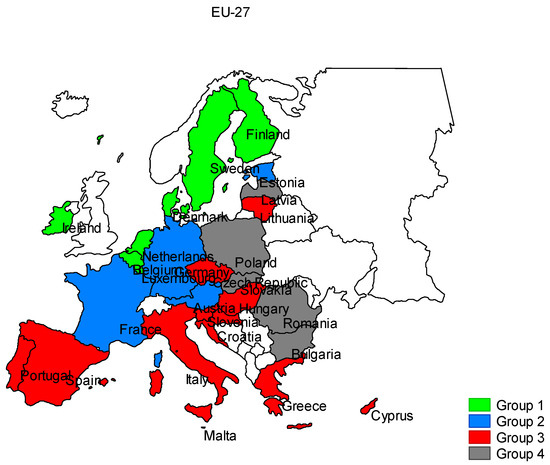
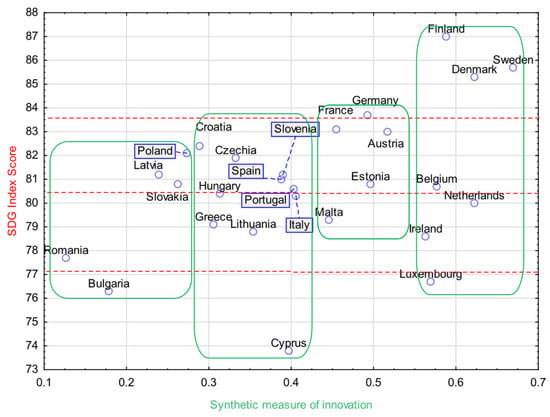
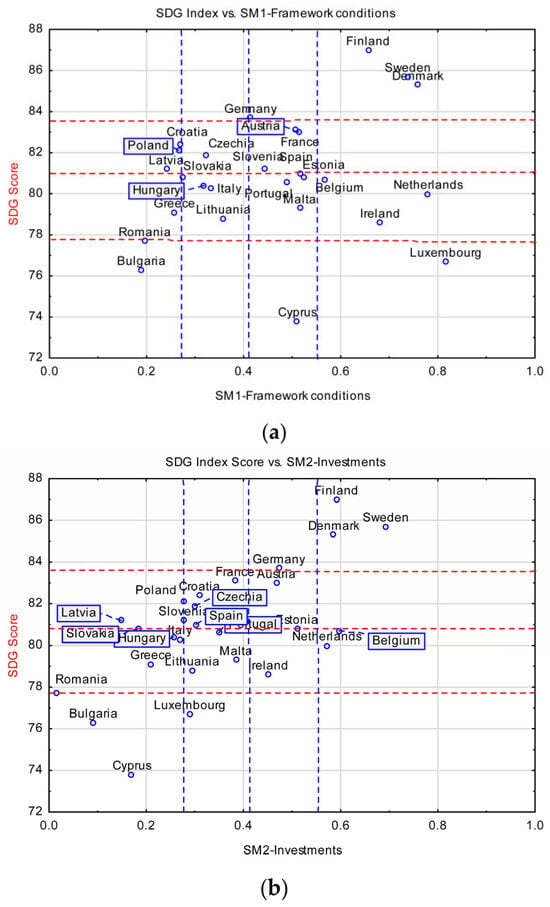
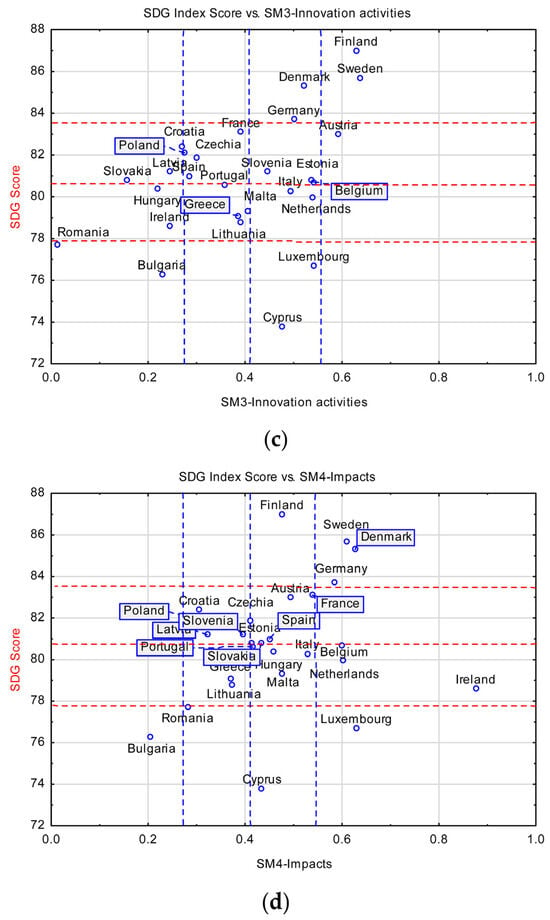
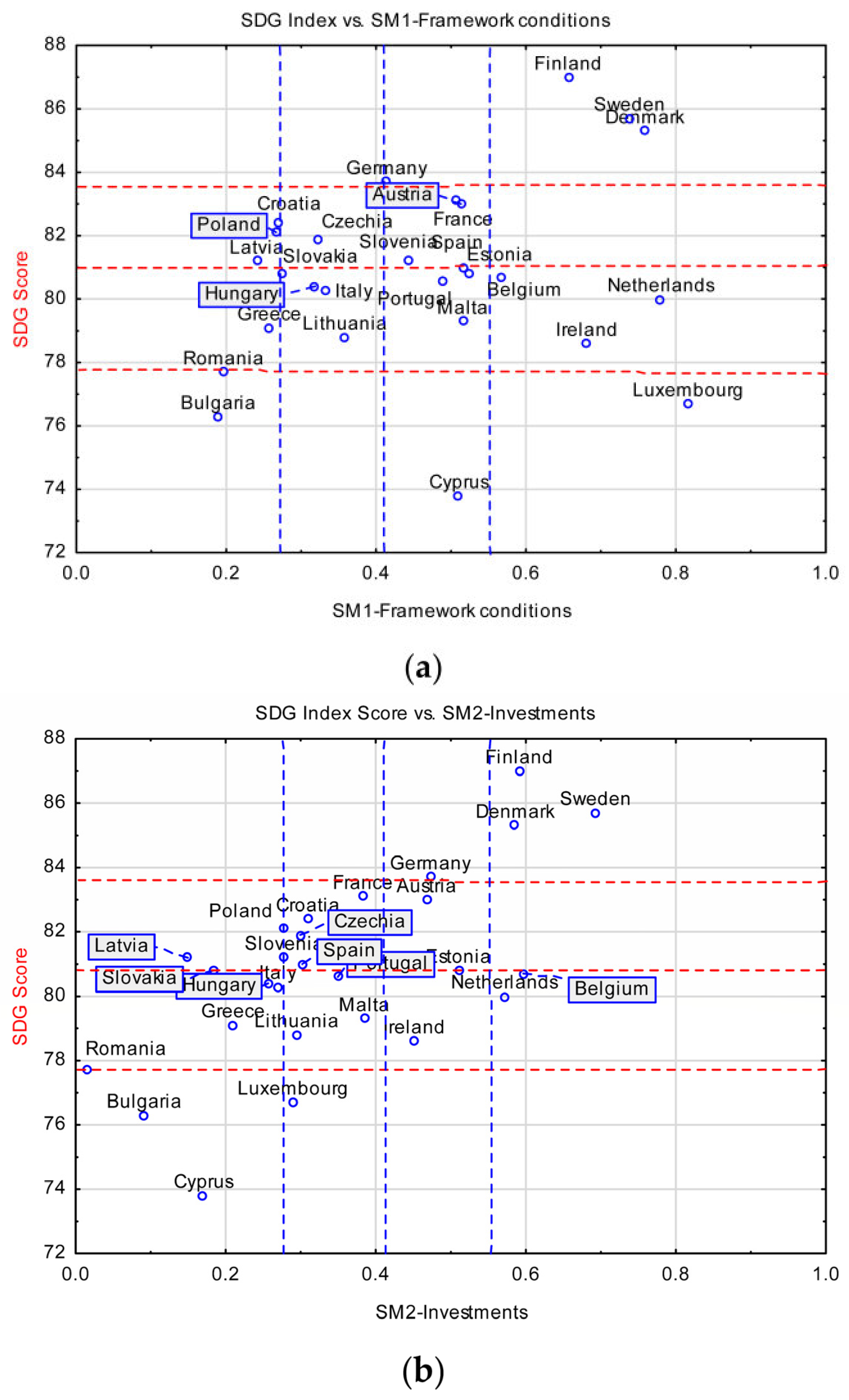
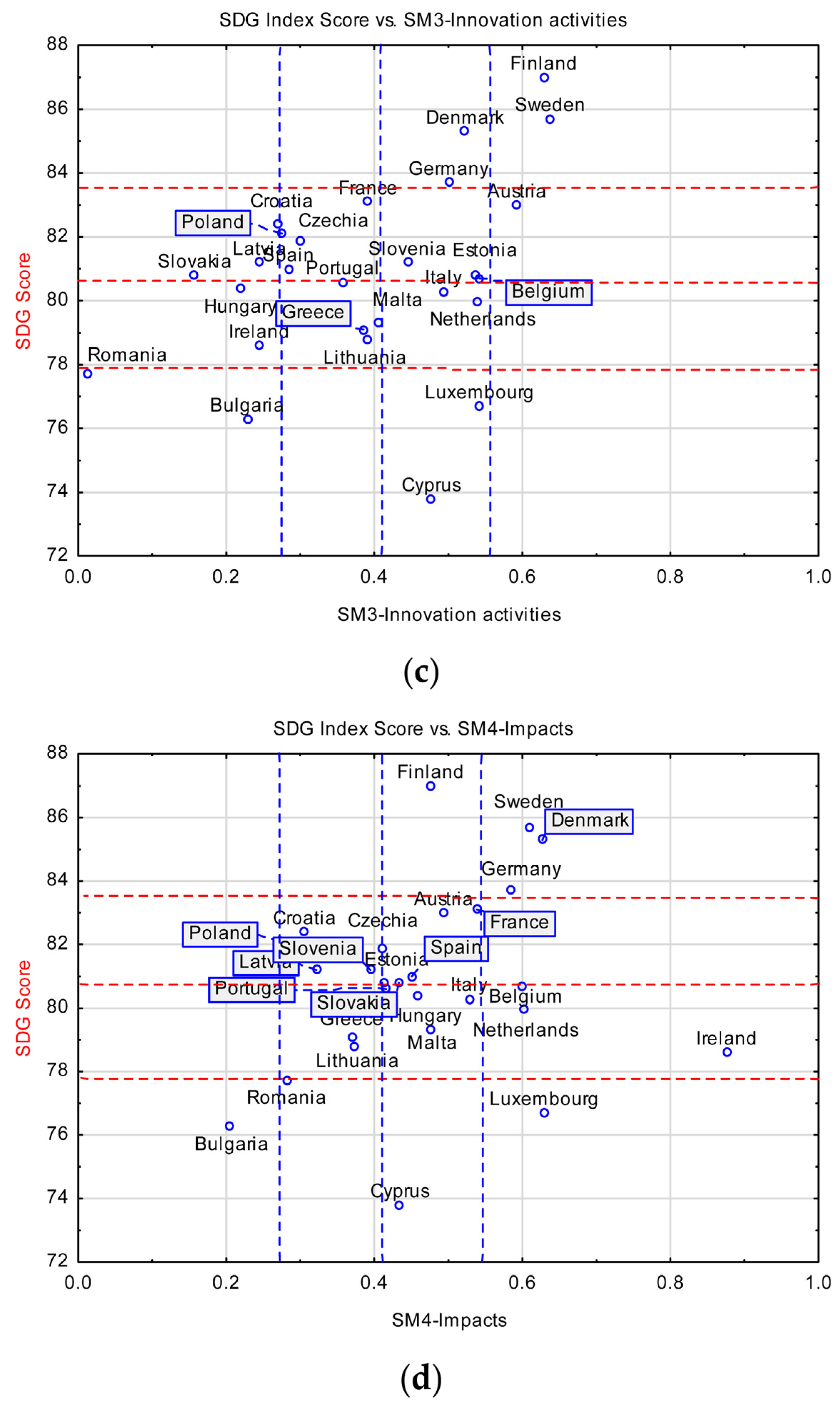

Disclaimer/Publisher’s Note: The statements, opinions and data contained in all publications are solely those of the individual author(s) and contributor(s) and not of MDPI and/or the editor(s). MDPI and/or the editor(s) disclaim responsibility for any injury to people or property resulting from any ideas, methods, instructions or products referred to in the content. |
© 2025 by the authors. Licensee MDPI, Basel, Switzerland. This article is an open access article distributed under the terms and conditions of the Creative Commons Attribution (CC BY) license.