


Abstract
(1) Background: Plantago major and Taraxacum officinale exhibit high tolerance to soil pollution and are recognised as bioindicators of soil quality. The objectives of the study were to investigate (i) the physicochemical and microbiological properties of rhizosphere soil beneath P. major and T. officinale in different land uses, (ii) the accumulation of elements, phenolic and organic acids in soil as well as in the plants, and (iii) the relationships between these parameters. (2) Methods: Samples were collected from three locations: the sediment retention area, the post-mining area, and the recreational area in May and September. (3) Results: Significant seasonal differences were observed in soil parameters, enzymatic activity, microbial abundance, and the contents of elements, organic acids, and phenolic acids between plant species and sampling areas, with changes reaching several hundred per cent. Correlations were found between dehydrogenase and organic matter, S, Al, Co, Cr, Fe, K, Mg, Mn, P; and phosphatases and Al, Co, Cr, Fe, Mg, Ni, and Mn; as well as between total phenolic content and phosphatases; syringic acid and dehydrogenase; and alkaline phosphatase and lactic and citric acids. (4) Conclusions: The results suggest that plant–soil interactions, in relation to land use, influence rhizosphere biochemistry, thereby impacting soil health and supporting ecosystem recovery.
1. Introduction
Plants differ in tolerance to heavy metals in the environment and have diverse defence and adaptive mechanisms, which determine their use in phytoremediation and biomonitoring of pollutants. To mitigate the negative impact of metals, plants use various defence mechanisms, e.g., they secrete metabolites that are capable of binding ions, which leads to their transformation into less toxic forms or immobilisation in the root zone. Exposure to toxic metals often leads to increased production of reactive oxygen species (ROS), and plants synthesise metabolites that neutralise and scavenge free radicals [1].
The harmful effects of metals on plants can also be limited through symbiotic interactions between plants and microorganisms [2]. Soil enzymatic activity and microbial abundance depend on both natural and anthropogenic factors, including species, root depth, pH, soil temperature, nutrient content, moisture, and soil type. Plants directly and selectively affect soil microorganisms through stimulating or inhibiting the growth of specific groups or species of fungi and bacteria [3,4]. Moreover, interactions between plants, microorganisms, and specific abiotic components determine nutrient cycling and the mobility of contaminants, thus influencing soil health [3,4,5]. Soil enzymatic activity, as well as the abundance and diversity of the microbiome, depend on the concentration of soluble carbon in the soil, including organic matter derived from root debris and metabolites secreted by plants. These processes serve as indicators of the overall soil health and reflect its quality [3,4,5]. Some organic compounds secreted by plants act as chemoattractants, attracting specific groups of microorganisms to the immediate vicinity of the roots [6].
In soil with an acidic pH, fungi begin to dominate, and these conditions are favourable for the synthesis of acid phosphatase [7,8]. In contrast, in alkaline conditions, bacteria and actinobacteria producing alkaline phosphatase play a key role [9]. In soil, dehydrogenases were also found, which are enzymes that provide information about the biologically active population of microorganisms [5].
Heavy metal contamination generally reduces microbial biomass and enzyme activity, particularly by decreasing the diversity and abundance of sensitive soil bacteria [10,11]. However, resistant bacteria can quickly adapt and increase in abundance, thus creating a specific bacterial community structure [12,13]. Low metal concentrations stimulate soil enzymatic activity, whereas high concentrations inhibit it [9,14]. Soils heavily contaminated with heavy metals are often poor environments with low plant diversity, occurring in uneven patches.
Some plant species are highly resistant to various pollutants and, like Plantago major and Taraxacum officinale, are recognised as bioindicators of environmental conditions [15,16]. Despite their proven tolerance to soil contamination, little is known about how seasonal variations and different levels of anthropogenic pressure affect the accumulation of elements and the biosynthesis of phenolic and organic acids in these species. Therefore, the study aimed to investigate seasonal changes in the physicochemical and microbiological properties of soil in three areas with different levels of anthropogenic pressure and to assess the accumulated content of elements, phenolic acids, and organic acids in soil as well as in P. major and T. officinale. It was hypothesised that site and sampling date influence the soil parameters, including the contents of C, N, and pH and the microbial activity of soil supporting both species. Moreover, P. major and T. officinale are hypothesised to differ in their ability to accumulate elements and biosynthesise organic and phenolic acids, suggesting different stress tolerance mechanisms. The analysis of correlations between soil parameters and phenolic and organic acids was conducted to gain a deeper understanding of the soil–plant interaction under various anthropogenic pressures. Previous studies have primarily focused on determining soil and stress-related parameters in plants at a single time point [17,18]. Conducting analyses at two-time points is an innovative approach to a better understanding of the adaptive capacity of the studied plants and interactions under environmental stress.
2. Materials and Methods
2.1. Material
Samples of dandelion (T. officinale), plantain (P. major) and rhizosphere soil beneath the species were collected in May and September from three sites in the coastal zone of water bodies differing in their genesis and degree of anthropogenic transformation.
Ten plants of both species were randomly selected from three points in each location. The plants were carefully dug up to prevent damage to their roots. Soil samples were collected from the uppermost soil horizons (0–30 cm) according to ISO 10381-1:2002 [19] and transferred to a plastic bag, which was then placed in a cool bag for transport. The plant samples were thoroughly cleaned and frozen in liquid nitrogen.
2.2. Study Area
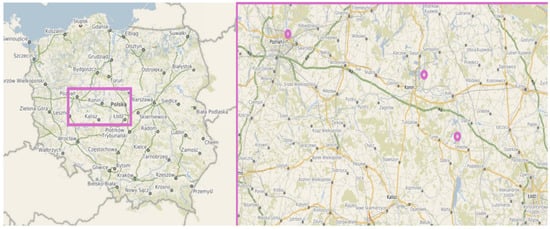
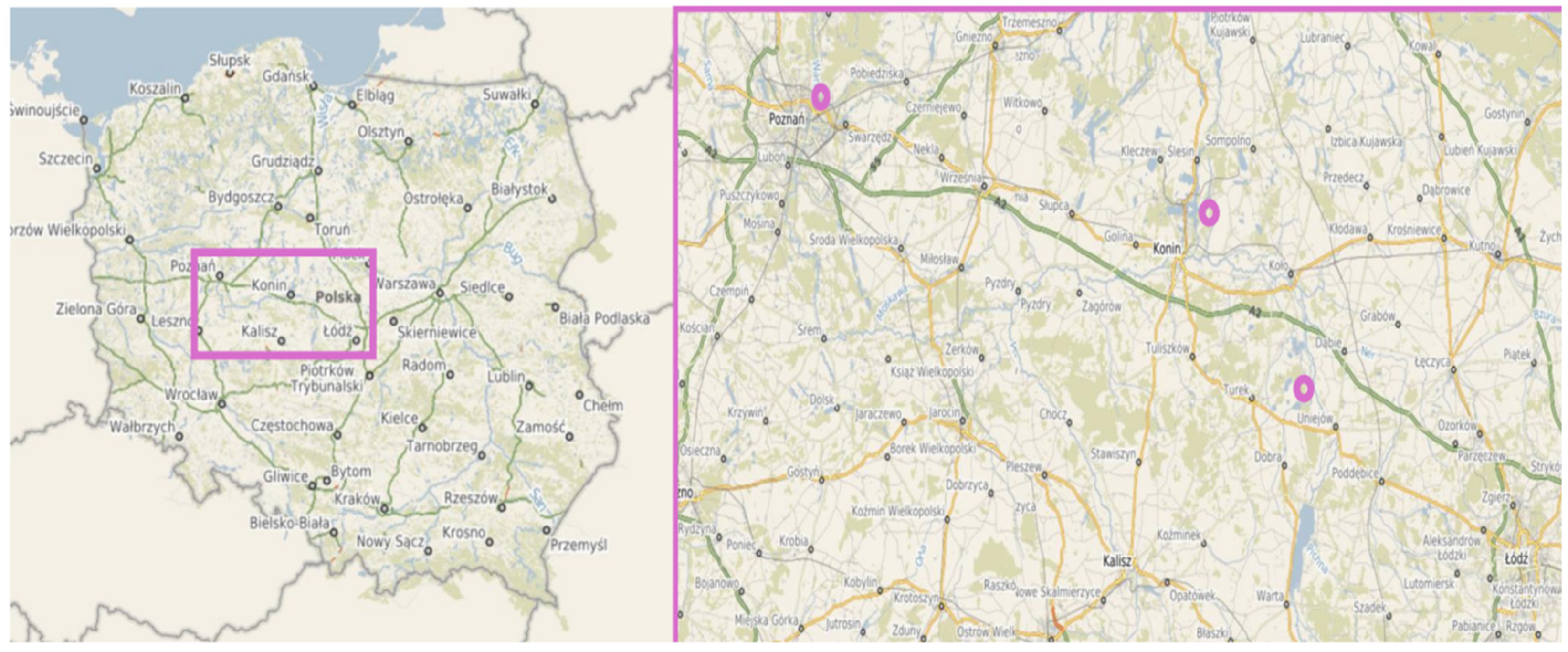
Samples were collected from three locations with varying degrees of anthropogenic pressure and soil composition (Figure 1): area 1—the Sediment Retention Area (SRA), located within a former mining area (52.00° N, 18.00° E); area 2—Post-Mining Area (PMA) a reservoir created by flooding a former opencast lignite mine (52.67° N, 18.25° E); area 3—Recreation Area (RA), a relatively natural site that currently serves as a recreational area. In the early 20th century, it was a sand and gravel extraction site (52.25° N, 16.52° E).
Figure 1.
Sampling sites (https://polska.e-mapa.net/) (accessed on 14 March 2025). Circles indicate the sampling locations.
2.3. Element Determination
The C and N concentrations were measured using an elemental analyser, the LECO CNS TrueMac Analyser (Leco Corporation, St. Joseph, MI, USA). The contents of elements (Al, As, Ca, Cd, Co, Cr, Cu, Fe, K, Mg, Mn, Na, Ni, Pb, P, and Zn) were determined after mineralisation in a mixture of concentrated nitric and perchloric acids at a ratio of 3:1 for plant samples and 2:1 for soil samples using ICP-OES (Thermo iCAP 6500 DUO, Thermo Fisher Scientific, Cambridge, UK). Before each series of sample measurements on a given day, the instrument was calibrated using a multi-point calibration curve with the following concentrations: 0.0, 0.5, 1.0, 2.0, and 5.0 ppm, prepared from a standard solution (1000 μg/mL in 5% HNO3, Agilent Technologies, Inc., Santa Clara, CA, USA). To ensure the accuracy and precision of the measurements, the instrument’s performance was regularly verified using a quality control (QC) sample—an internal standard solution with a known and constant concentration, prepared by the laboratory. The QC sample was analysed every 15 measurements within a given series.
2.4. Enzymatic and Microbiological Analysis
Soil samples were collected from a depth of 0 to 30 cm, sieved through a 2 mm sieve and stored at 4 °C before microbiological analysis. The number of colony-forming units (CFU) of the three major groups of microorganisms was determined using microbiological selective media using the plate method. The total heterotrophic bacteria population (HB) was determined on a ready-to-use Merck standard count agar medium after 5 days of incubation at 28 °C (Merck KGaA, Darmstadt, Germany). Actinobacteria (A) were cultured in the Pochon medium (28 °C for 7 days) [20] and fungi (F) in the Martin medium (24 °C for 7 days) [21]. Each analysis was performed in five replicates. The mean number of colonies was expressed as colony-forming units (CFU) per gram of dry soil weight. The activities of dehydrogenases (DhA), acid phosphatase (PhacA), and alkaline phosphatase (PhalA) were determined using a colourimetric method with a Rayleigh UV-1800 spectrophotometer. Dehydrogenase activity (DhA) was determined using the method proposed by Thalmann [22], with a 1% solution of triphenyl tetrazolium chloride (TTC) as the substrate. Dehydrogenase activity (DhA) was measured after a 24 h incubation of soil (at 30 °C, pH 7.4). The produced triphenyl formazan (TPF) was extracted with 96% ethanol and measured spectrophotometrically at a wavelength of 485 nm. The activities of acid phosphatase (PhacA) and alkaline phosphatase (PhalA) were determined following the procedure described by Tabatabai and Bremner [23], utilising a 0.8% solution of sodium p-nitrophenyl phosphate as the substrate. PhacA and PhalA activities were assayed after soil incubation (at room temperature) with 0.25 mL of toluene for 15 min. Then, 4 mL of buffer at pH 6.5 for acid phosphatase and pH 8 for alkaline phosphatase was added to the test samples, followed by the addition of 1 mL of pNPNa-p-nitrophenylphosphate sodium substrate. After a 1 h incubation at 37 °C, 1 mL of 0.5 M CaCl2 and 4 mL of 0.5 M NaOH were added to each test tube to stop the reaction. Then, the samples were filtered using paper filters (Munktell Ahlstrom, size 90 mm), and the absorbance was measured at λ = 400 nm.
2.5. Extraction of Organic and Phenolic Acids from Soil
Dry soil samples (50 g) were mixed with water adjusted to pH 2 using 36% HCl and orbitally shaken at room temperature for 12 h on an IKA KS 260 shaker (IKA-Werke GmbH & Co., KG, Staufen, Germany) [24]. Then, extracts were filtered using Whatman No. 42 filters (Global Life Sciences Solutions USA LLC, Wilmington, NC, USA) and subjected to three extractions with ethyl acetate (20 mL each, 5 min). The solvent volume was reduced to 5 mL using a rotary evaporator (Rotavapor R-300, Buchi, Switzerland) at 40 °C, transferred to a glass vial, and evaporated to dryness at room temperature. Before analysis, the residue was dissolved in 1 mL of deionised water.
2.6. Extraction of Organic and Phenolic Acids from Plants
Plant samples were homogenised in liquid nitrogen, mixed with 80% methanol containing 36% HCl (99:1, v/v) and sonicated for 30 min at 40 °C (Bandelin Sonorex DL 102 H, Berlin, Germany). Next, the samples were shaken for 7 h using an orbital shaker (IKA KS 260 shaker, IKA-Werke GmbH & Co., KG, Staufen, Germany), followed by centrifugation at 3600× g (Universal 320 R Hettich Zentrifugen, Tuttlingen, Germany) for 15 min at room temperature. Then, the samples were evaporated to dryness under a stream of nitrogen. Before analysis, the dried samples were dissolved in 1 mL of 80% methanol and filtered through a syringe filter (0.22 µm).
2.7. Total Phenolic Content
The methanolic extract was mixed with 1 mL of Folin–Ciocalteu phenol reagent, diluted with water (1:1, v/v). After 3 min, 1 mL of 20% Na2 CO3 was added to each extract. The mixture was incubated for 30 min in the dark at room temperature. The absorbance measurements were performed at λ = 765 nm using a Carry 300 Bio UV-Vis scanning spectrophotometer (Varian, Palo Alto, CA, USA). To quantify total phenolic (TP) content, a calibration curve for gallic acid as a standard was prepared over a range of 0.01 to 0.05 mg/mL (R2 = 0.991). The results were expressed as milligrams of gallic acid equivalent (GAE) per gram of dry matter (d.m).
2.8. Analysis of Organic and Phenolic Acids
Organic and phenolic acids were analysed using a Waters Acquity UPLC System (Waters, Milford, MA, USA) following the method described by Gąsecka et al. [25]. Separation of specific phenolic and organic acids was achieved using a Waters Acquity UPLC BEH C18 column (2.1 × 150 mm, 1.7 μm; Waters, Milford, MA, USA) at 35 °C with gradient elution using water and acetonitrile (both containing 0.1% formic acid) at a flow rate of 0.4 mL/min. The gradient programme was as follows: flow 0.4 mL/min—5% B (2 min), 5–16% B (5 min), 16% B (3 min), 16–20% B (7 min), 20–28% B (11 min); flow 0.45 mL/min—28% (1 min), 28–60% B (3 min); flow 5.0 mL/min—60–95% B (1 min), 65% B (1 min), 95–5% B (0.1 min); flow 0.4 mL/min—5% B (1.9 min). The identification of peaks was based on a comparison with the retention times of chemical standards. The detection was performed in a Waters Photodiode Array Detector (Waters Corporation, Milford, MA, USA) at λ = 280 nm (gallic acid, 4-hydroxybenzoic acid, protocatechuic acid, syringic acid, t-cinnamic acid, vanillic acid, and organic acids: acetic, citric, fumaric, lactic, malic, malonic, oxalix, quinic, suscinic) and λ = 320 nm (caffeic acid, chlorogenic acid, p-coumaric acid, ferulic acid, sinapic acid) using an external standard. The detection limits (DL) were calculated based on a signal to noise ratio of 3:1. The recovery rates of analysed compounds were determined to assess method accuracy and were as follows: gallic acid—92%; caffeic acid—86%; chlorogenic acid—92%; p-coumaric acid—89%; ferulic acid—91%; 4-hydroxybenzoic acid—96%; 2,5-DHBA—92%; protocatechuic acid—90%; vanillic acid—88%; sinapic acid—94%; syringic acid—94%; t-cinnamic acid—97%; acetic acid—95%; citric acid—90%; fumaric acid—95%; lactic acid—90%; malic acid—92%; malonic acid—97%; oxalic acid—87%; quinic acid—95%; and suscinic acid—100%.
2.9. Statistical Analysis
All analyses were performed in triplicate. The statistical analyses were performed with Statistica 13.3 (IBCO Software Inc., Palo Alto, CA, USA) and the programming language R (version 4.5.1, R Core Team, 2020, Vienna, Austria) in R Studio (version 2025.05.1, RStudio Team, 2020, Boston, USA). Multifactor analysis of variance (MANOVA) and post hoc Tukey tests were performed at a significance level of p = 0.05. A general linear model (GLM) was used to investigate the influence of various factors (plant (P), site (S) and term (T)) on the properties of soil and plant material. Spearman correlation coefficients were used to determine the relationships between the studied properties.
3. Results
3.1. Elemental Content in Soil and Plants, and Soil pH
Soil pH depended on site and interactions between the analysed factors (Table 1). For P. major, significant differences in pH were observed in the PMA between sampling dates (an increase of ~3.5%). For T. officinale, significant differences were observed in the SRA (a decrease of ~5%) and in the PMA (an increase of ~4.4%) between sampling dates (Table 1). The plant affected the C content in the soil, while the site affected the N and C contents, and the C/N ratio in the soil, and the term affected the N content and the C/N ratio in the soil (Table 1). A significant increase in the N and C contents was observed in September for P. major soil in the PMA and in the RA (up to twofold). For T. officinale soil in the RA, the N and C contents significantly increased in September, while the opposite trend was observed in the SRA (a decrease of approximately 2–3-fold). For plants, a significant effect of the plant on the N and C contents, as well as the term on the N content and the interaction between plant, site, and term on the C content in plants, was confirmed (Table 1). A significant increase in the N content was reported in September for both the SRA and PMA (approximately twice) in P. major and T. officinale. The obtained results indicated a strong influence of local environmental conditions on soil properties and nutrient assimilation by plants.
Table 1.
Nitrogen and carbon content (%) in the soil, plants, and pH value.
A significant influence of the site, term and plant as a single effect on all analysed metal contents, with some exceptions in soil, was confirmed (Table 2). The mixed-factor effect was only significant for the contents of Co, Mg, Mn, and Ni in the soil. The contents of Al, Co, Fe and Ni in the soil of P. major decreased in September, whereas the contents of Cu, P, and Pb increased at all sites.
Table 2.
The content of elements (mg/kg) in the soil.
For T. officinale soil, the reduction in Al, Co, Cr, Fe, K, Mg, and Na contents in September was confirmed. The highest concentrations of Al, Co, Cr, Fe, K, Mg, Mn, and Ni in the soil were confirmed in May at the RA for T. officinale.
The significant effect of plants on the contents of Al, Ca, Co, Fe, K, Mg, Mn, Ni, and Pb in plants was confirmed. The impact of site and term was confirmed for Ca, Cd, Cu, Mg, Na, P, Pb and Zn, whereas the mixed effect of the analysed factor was significant for the contents of Al, Ca, Cu, K, Mg, Na, P and Pb in plants (Table 3). P. major showed higher contents of some elements (even 2–4-fold for Al, Fe, Ni, Pb) with the highest contents of Al, Co, Fe, Mg, Ni in the SRA in May, and maximum contents of Ca, Cd, Fe, Mn, and Zn in RA in September. For T. officinale, the highest contents of Cu, P, and Pb in the PMA in September was confirmed. The results suggest that the plants differ in their ability to accumulate particular metals.
Table 3.
The content of elements (mg/kg d.m.) in plants.
3.2. Enzyme Activity and Microbial Characteristics of the Soil
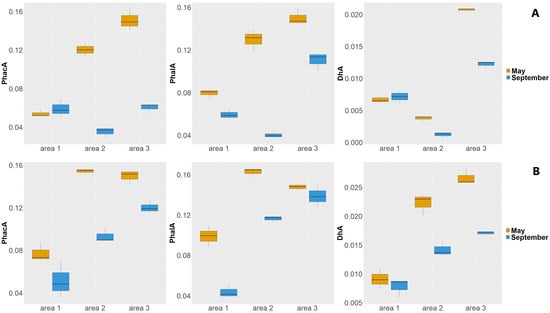
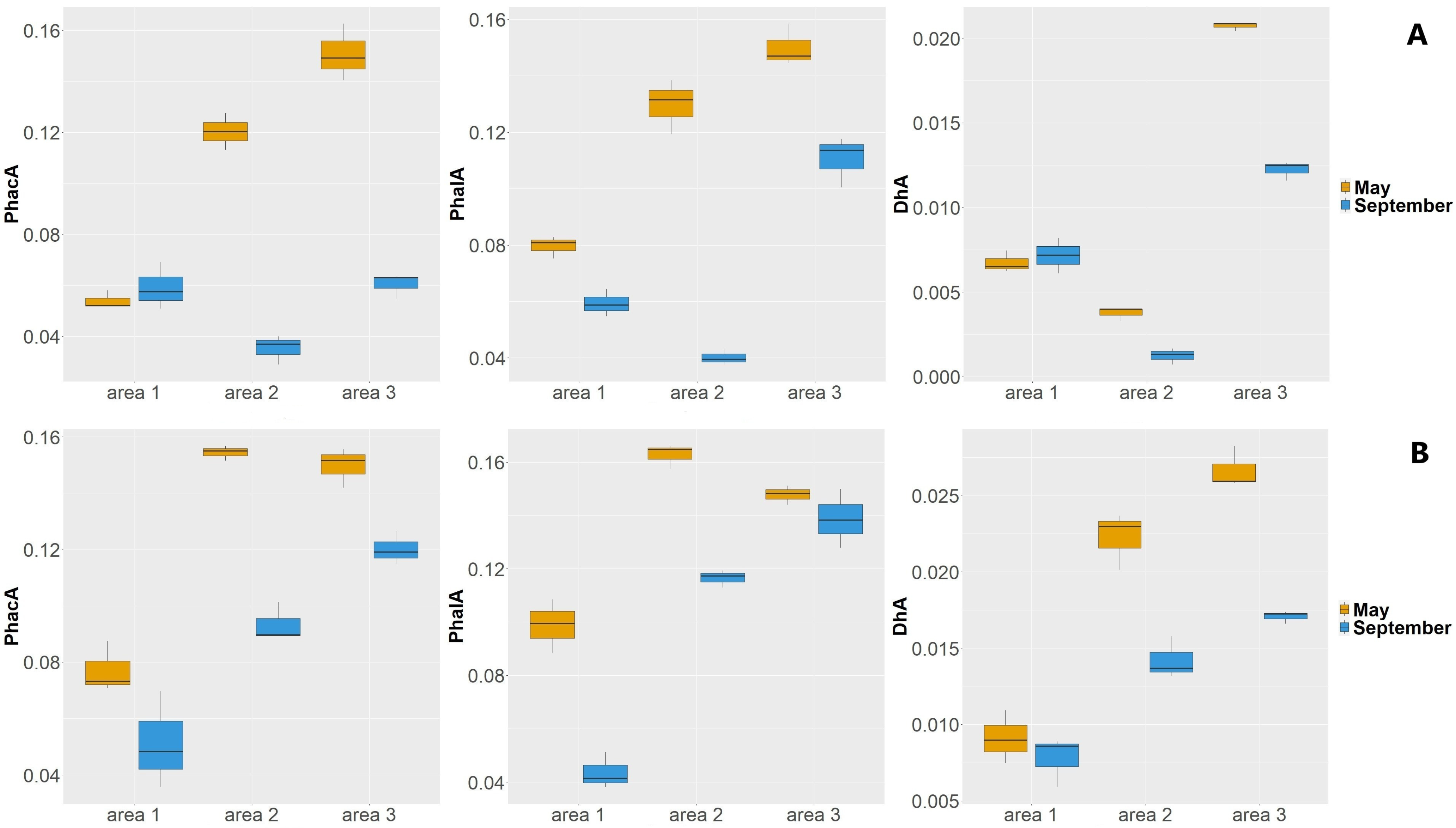
The results showed significant effects of plant species, site, and sampling term on enzymatic activity and microorganism characteristics (Table S1). The interaction between the factors was significant for phosphatase and the abundance of actinobacteria. Phosphatase activity was generally higher in May (even more than twice as high as in September) (Figure 2). The highest PhacA activity was observed in the PMA for T. officinale in May (0.154 µmol PNP g−1 d.m. soil h−1 and in the RA for both P. major (0.151 µmol PNP g−1 d.m. soil h−1) and T. officinale (0.150 µmol PNP g−1 d.m. soil h−1). PhalA activity reached the highest value (0.163 µmol PNP g−1 d.m. soil h−1) in May for T. officinale in the PMA (about 25% higher in May than in September). DhA activity was higher in May (approximately 36% higher than in September), except for the soil sample under plantain in the SRA (14% higher in September than in May). Dehydrogenase activity was higher in May, with the highest value for T. officinale in the RA (0.027 µmol TPF g−1 d.m. soil 24 h−1, which was 43% higher in May than in September) and in the PMA (0.024 µmol µmol TPF g−1 d.m. soil 24 h−1, which was about 36% higher in May than in September), and P. major in the RA (0.021 µmol TPF g−1 d.m. soil 24 h−1, about 43% higher in May than in September).
Figure 2.
Enzyme activity of soil: (A)—P. major. (B)—T. officinale; dehydrogenases (DhA), acid phosphatase (PhacA), and alkaline phosphatase (PhalA); area 1—the Sediment Retention Area (SRA); area 2—Post-Mining Area (PMA); area 3—Recreation Area (RA).
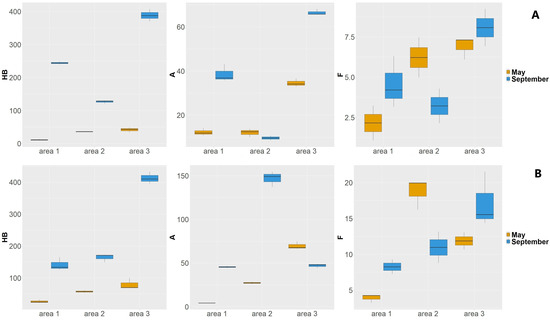
The abundance of microorganisms was higher in September, except in certain instances (Figure 3). The abundance of heterotrophic bacteria (HB) was highly variable, with the highest counts (412.83 × 10⁵ cfu g−1 d.m. soil) recorded in the RA under T. officinale (five times higher in September than in May). Fungal abundance (F) was less variable than that of other microorganisms. The abundance of actinobacteria (A) showed significant variability, with the highest counts (146.80 × 10⁵ cfu g−1 d.m. soil observed for T. officinale in September in the PMA (approximately five times more than in May).
Figure 3.
Microbial characteristics of soil: (A)—P.major; (B)—T. officinale, total heterotrophic bacteria population (HB), actinobacteria (A), and fungi (F); area 1—the Sediment Retention Area (SRA); area 2—Post-Mining Area (PMA); area 3—Recreation Area (RA).
3.3. Content of Low-Weight Organic Acids in the Soil and Plants
The content of oxalic acid in soil depended on the plant, site, and term, showing both main and interaction effects (Table 4). The malonic, lactic, and fumaric contents and the sum of all acids were affected by plant, site, and their interactions. The site influenced quinic and malic acids, while citric, succinic, and acetic acids were dependent on the term. For P. major plants, the sum of all determined organic acids in soil samples in the SRA decreased by approximately 37% over the season (from 20.25 to 12.70 µg/g). A similar trend was observed in the PMA, with the decrease of roughly 93% (from 289.61 µg/g to 19.96 µg/g), mainly due to the significant decline in fumaric, quinic, lactic, and citric acids (even below the detection limit). In contrast, in the RA, the sum of acids increased by approximately 397% (from 54.62 µg/g to 271.43 µg/g), which was due to significant increases in quinic, lactic, citric, malic, and fumaric acid contents.
Table 4.
The content of LMWOAs in the soil [µg/g d.m.] and GLM analysis results.
For T. officinale, the sum of organic acids in the soil at the SRA was significantly higher in September than in May (an increase of 722%), primarily due to significantly higher contents of acetic, oxalic, malic, and fumaric acids. In the PMA, a significant decrease (78%) in the sum of quantified acids was observed (from 51.46 µg/g in May to 11.42 µg/g in September), caused by significantly lower contents of quinic, citric, and malic acids. In turn, in the RA, the sum of the acids increased by approximately 114% (from 47.21 µg/g to 101.23 µg/g), mainly due to increases in the contents of quinic, citric, and malic acids, a trend opposite to that observed for the PMA locations.
Plant affected the contents of citric and malic acids, whereas site influenced the contents of lactic, citric, malic, and succinic acids in plants. The term only influenced the succinic acid content (Table 5). The interactions of the factors affected quinic, citric, acetic, malic, and succinic acids and the sum of acids.
Table 5.
The content of LMWOAs in the plants [µg/g d.m.] and GLM analysis results.
In the SRA (Table 5), the content of the sum of analysed acids in P. major increased by approximately 28% (from 480.03 µg/g in May to 614.52 µg/g in September), which was attributed mainly to a rise in the content of quinic (~65%) and fumaric acids (~136%) in September (from 43.22 to 71.42 µg/g and 166.08 to 392.24 µg/g, respectively). In the PMA, a significant increase in the sum of organic acid contents was also observed, by 150% (from 1411.62 µg/g to 3534.89 µg/g), which resulted from significant increases in the content of quinic, citric, and succinic acid, characterised (244%, 529%, and 238%, respectively). An inverse relationship was observed in the RA, where the sum of organic acids decreased by 59% (from 2549.77 µg/g in May to 1033.12 µg/g in September), primarily due to a several-fold decrease in the content of most of the determined acids.
For T. officinale in the SRA, the sum of organic acids increased by 314% from May to September (from 2120.53 to 8779.49 µg/g) due to significantly higher contents of quinic, fumaric, citric, and malic acids (Table 5). A similar trend was observed in the PMA, with an increase of 42% (from 366.46 to 518.45 µg/g). In contrast, in the RA, the sum of all determined organic acids decreased significantly by 83% (from 484.93 to 254.91 µg/g), because of a significant decrease in the contents of quinic, lactic, acetic, and malic acids.
3.4. Phenolic Profile and Content in the Soil and Plants
Total phenolic content (TP) in soil depended on term, site and plant-site-term-interactions (Table 6). For P. major, TP content ranged from 0.44 ± 0.03 to 1.19 ± 0.07 mg/g d.m. TP was higher in May than in September (even ~160% in the SRA). For T. officinale, TP content ranged from 0.28 ± 0.03 to 1.47 ± 0.07 mg/g d.m. Significant differences in TP content were observed only between May and September in the PMA. Protocatechuic and vanillic acids were quantified in P. major soil, with higher levels (even 4–5-fold) observed in May than in September. For T. officinale, only vanillic acid was detected, with higher levels observed in the SRA (more than three times higher) and RA (~seven times higher) in May (Table 6). The protocatechuic acid content varied significantly with plant species, area, and time, while the vanillic acid content depended on location, time, and their interaction.
Table 6.
The content of phenolic acid [µg/g d.m.] and TP content [mg/g d.m.] in the soil and GLM analysis results.
Plant species, sampling area, and time affected the content of some phenolic acids and total phenolic content in plants (Table 7). The interaction between the factors (P*S*T) was significant for protocatechuic, vanillic, caffeic, ferulic and sinapic acids. TP content in P. major ranged from 1.22 ± 0.12 to 25.06 ± 0.88 mg/g d.m., and was higher in May than in September, in the SRA (~8-fold) and PMA (more than twice). For T. officinale, TP content ranged from 1.86 ± 0.16 mg/g d.m., and was also higher in May, peaking in the SRA, and was similar in September across all areas. The phenolic acid profile of P. major included 2,5-DHBA, 4-HBA, vanillic, chlorogenic, ferulic, and sinapic acids across all samples. The content of 2,5-DHBA was higher in May than in September in the SRA (~17% higher) and PMA (~29%). The highest 4-HBA content was in May in the SRA (685.49 ± 51.54 µg/g d.m.). Vanillic acid increased in September in the PMA (478%) and in the RA (31%). Chlorogenic acid was the highest in the PMA (1149.39 ± 61.60 µg/g d.m.), rising in September in the PMA(~10%) and in the RA (~71%). Syringic and p-coumaric acids appeared only in the PMA and in the RA. Ferulic acid significantly decreased in September (approximately 4-fold decrease in the SRA). The content of sinapic acid significantly increased in the SRA (more than 600%). For T. officinale (Table 7), only syringic acid was detected in all samples, with higher levels in May (even ~1445% in the SRA). The most varied profile of phenolic acid, including protocatechuic, 4-HBA, vanillic, chlorogenic, caffeic, syringic, p-coumaric, ferulic, and sinapic acids, was confirmed in the SRA in May. In May, in the PMA, only chlorogenic, syringic, ferulic, sinapic, and t-cinnamic acids were quantified.
Table 7.
The phenolic acid content [µg/g d.m.] and TP content [mg/g d.m.] in the plant and GLM analysis results.
3.5. Correlations Between Analysed Parameters
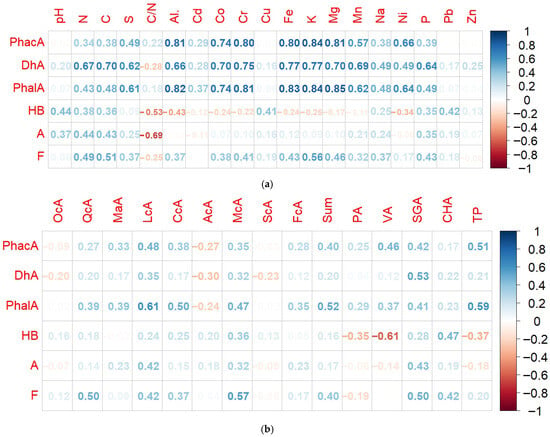
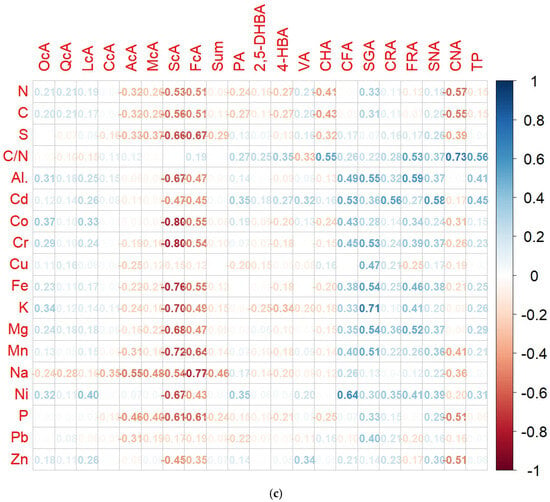
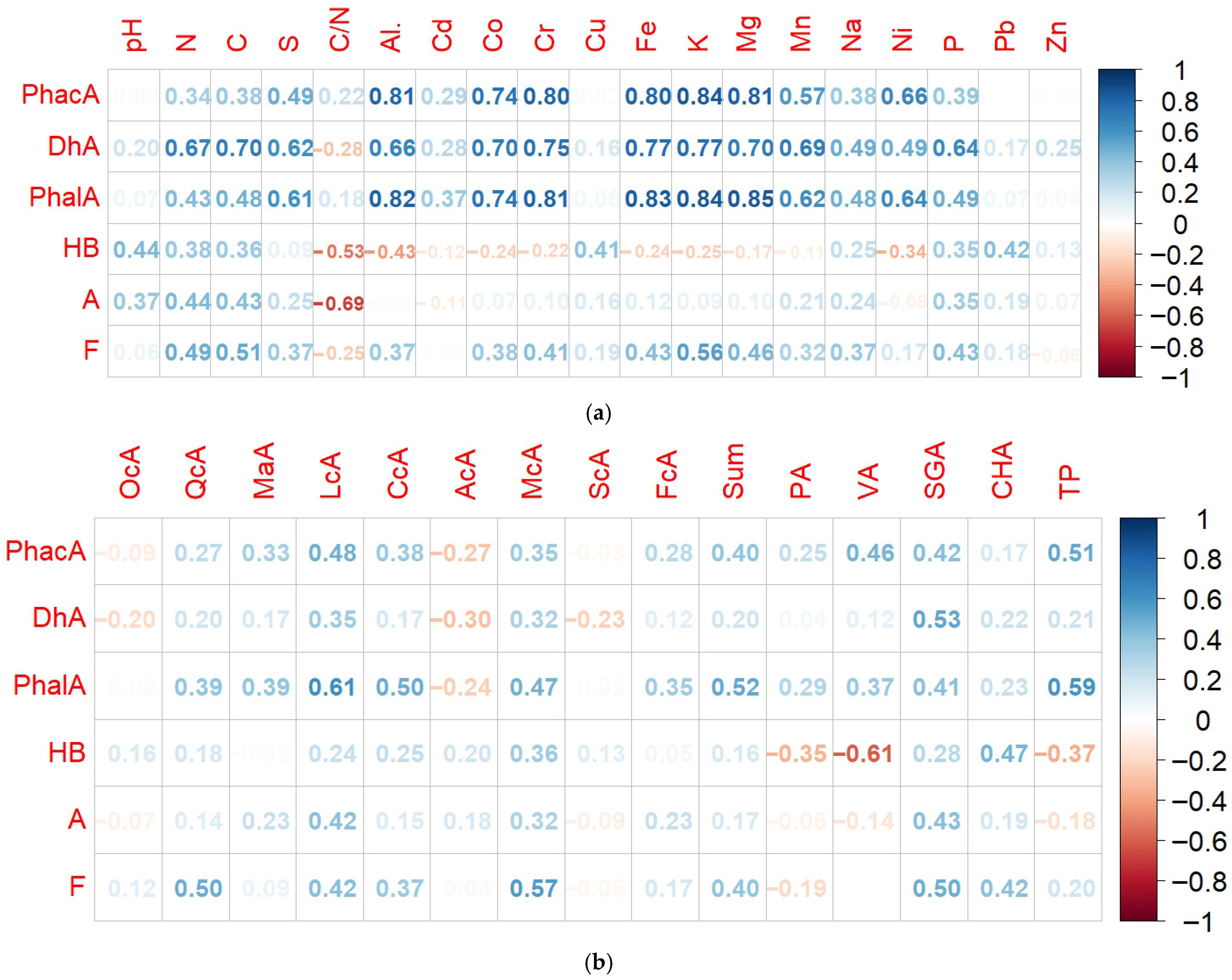
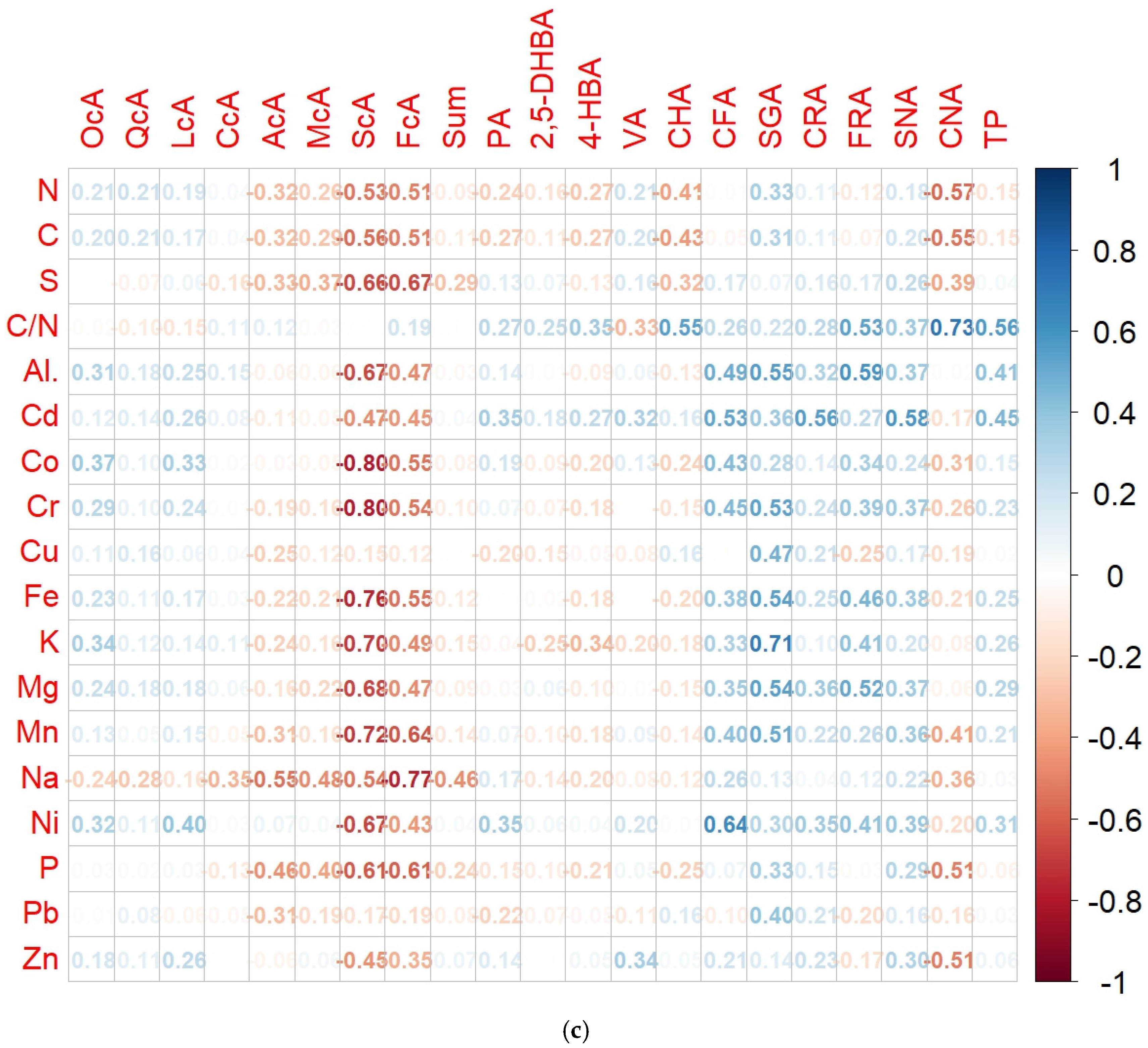
For dehydrogenase activity and organic matter (C and N), S, Al, Co, Cr, Fe, K, Mg, Mn, and P, strong positive correlations (r > 0.6) were found. Phosphatase activity was positively correlated with Al, Co, Cr, Fe, K, Mg, Ni, and Mn (Figure 4a). Negative correlations were confirmed between the abundance of microorganisms and the C/N ratio (Figure 4a). For total phenolic compounds and phosphatases, as well as syringic acid and dehydrogenases, and between alkaline phosphatase activity and lactic and citric acids, moderate positive correlations were confirmed (Figure 4b). Negative correlations were found between vanillic acid and total heterotrophic bacteria, as well as between vanillic acid and heterotrophic bacteria (Figure 4b). Significant positive correlations (r > 0.5) were found between caffeic acid and Cd and Ni, syringic acid and Al and Cr, ferulic acid and Al, and sinapic acid and Cd (Figure 4c). Strong negative correlations were confirmed between succinic acid and Co, Cr, and Mn, as well as moderate negative correlations with P, Mg, Al, Fe, and Ni (Figure 4c). Similar negative correlations were indicated between fumaric acid and S, Mn, P, and Na.
Figure 4.
Spearman correlations between (a) soil properties and microbiological traits; (b) microbiological traits and organic acids and phenolic compounds in the soil; and (c) the content of acids in the plant and soil properties.
4. Discussion
Soil pH changes are influenced by topography, climate, parent material, vegetation cover, and human activities [26]. In this study, RA was characterised by higher pH values than other locations, likely due to different land use patterns. The highest nitrogen content in RA soil was recorded in September. This may be related to the accumulation of organic compounds due to the limited mineralisation rates under lower temperatures and the production of both belowground and aboveground biomass. Changes in land use result in variations in the amount of organic matter supplied to the soil, which affects the composition of microorganisms and the rate of carbon decomposition [27,28]. Changes in land use lead to changes in the amount of organic matter delivered to soil, which in turn affects the composition of microorganisms and the rate of carbon decomposition [29,30]. From May to September, a decrease in the content of many elements in the soil was observed, which can be explained by their uptake and leaching by plants during the vegetation period. High uptake of some metals was reported earlier for P. major [17]. The strong resistance of plantain to metal pollution is partly related to genes responsible for metal tolerance [31]. Seasonal changes in metal content confirmed in P. major and T. officinale may be linked to longer accumulation time and changes in metal availability in soil caused by weather conditions (precipitation, soil drying), which may affect the mobility of elements. P. major showed a higher capacity to accumulate heavy metals such as Fe, Al, Pb, and Zn, which are important indicators of soil contamination. The obtained results confirm that the uptake of metals by some plants depends on the content of elements in the soil, environmental factors, and soil properties [32]. The differential accumulation of metals in both species at different locations and periods indicates their high ability to tolerate the presence of metals in soil and to adapt to growth in soils with other properties. These results suggest the potential use of the analysed species in the biomonitoring of contaminated soil.
This study revealed a significant effect of plant species on the abundance of actinobacteria and phosphatase activity. These findings may be related to the accumulation of plant-specific compounds in the soil, which serve as substrates for enzymatic reactions, or to differences in root structure, as root biomass and depth influence the spatial distribution of enzymatic activity. The study also confirmed that habitat type had a significant impact on phosphatase activity. These findings pointed out that habitat conditions, particularly the presence of metals in the soil, play a significant role in shaping rhizosphere processes. Enzymatic activity and the abundance of heterotrophic bacteria and actinobacteria varied with sampling time. Meteorological conditions, habitat, and vegetation were important parameters influencing the variability of microbial and enzyme activity. Typically, peak activity occurs in spring and summer due to rainfall and root growth, which stimulate microbial growth and enzyme secretion [33,34]. Drought followed by intensive irrigation has a significant impact on the structure of soil microbial communities, because changes in soil moisture content can be lethal to some organisms while being beneficial to the growth and development of others [35]. These organisms are particularly sensitive and decline in summer due to drought or high temperatures [34]. Dehydrogenases are good indicators of soil health and microbial activity. The low DhA activity observed in this study may be related to land use and low microbial populations in the pedon [36]. Dehydrogenases and phosphatases are highly sensitive to the presence of metals in soil [11,37,38]. Furthermore, the presence of heavy metals in soil may modify microbial diversity and activity, as some organisms (nitrifying, symbiotic, and actinobacteria) are sensitive to these elements [39]. The sensitivity of soil microorganisms to heavy metals differs between microbial groups. Fungi are generally more resistant than bacteria. The diversity and abundance of sensitive soil bacteria can decrease, while resistant bacteria can easily adapt and increase in abundance [40].
Fungi are more resistant to metals than bacteria or actinobacteria, likely due to the higher osmotic pressure in the cells of fungi, which helps them survive in stressful environmental conditions [41]. The source of enzymes is the soil microbiome, plant roots, and soil microorganisms; therefore, soil enzyme activity depends on the presence of plant cover and organic matter. In this study, strong positive correlations were found between dehydrogenase activity and total organic carbon and nitrogen. Previous studies showed that positive correlations between young plant roots and dehydrogenase activity confirm the beneficial effects of plants on the microbiome [42]. Organic matter also serves as a source of carbon and protects enzymes from metal toxicity [43,44]. Organic matter also strengthens soil aggregates, trapping metals, and enhances microbial activity, which can reduce and precipitate metals [45]. The C/N ratio plays an important role in the biological activity of soil, because it affects the transformation of organic matter and the abundance of microorganisms [46]. The present results confirmed that the presence of organic matter and plants has a significant influence on soil biochemical properties under metal conditions.
The organic acid content in the soil of T. officinale was more variable than in the soil of P. major and depended on site and time. Ubeynarayana et al. [47] found, in the rhizosphere of P. lancelota oxalic, fumaric and malic acids, whereas Martins et al. [48] quantified, in P. almogravensis and P. algarbiensis, citric, succinic, and malonic acids. The differences in organic acid concentration observed for T. officinale and P. major in the present study may be attributed to the effect of environmental conditions. The metabolites play a crucial role in mitigating environmental stress, particularly in response to changes in heavy metal and soil moisture levels. Malic, oxalic, acetic, fumaric, and citric acids occur as negatively charged anions that can form stable, bioavailable metal complexes (Cd, Al, Zn, Cu, Pb), thus influencing the uptake of metals by plants [47,49]. Higher metal concentrations may reduce the content of succinic and fumaric acid [48], as confirmed by negative correlations between succinic acid and some metals (Co, Cr, and Mn). Experimental evidence suggests that the biosynthesis and secretion of organic acids play a crucial role in the adaptive responses of plants to metal stress, as these compounds regulate plant metabolism and contribute to metal detoxification processes [48]. Moreover, oxalic, malic, and citric acids alleviate the effects of water stress [50]. Some acids, such as citric, oxalic, and succinic, which are secreted by microorganisms, also lower the pH of the environment, a key mechanism for phosphate solubilization [9,51,52]. Furthermore, citric and lactic acids enhance dehydrogenase activity and microbial metabolism [53].
The profiles of phenolic acids in both species depended on sampling time and site. Additionally, some phenolic compounds were correlated with specific groups of microorganisms in soil and enzymatic activity. These findings are consistent with previous studies [54,55,56]. It was also documented that phenolic compounds accumulate more in the above-ground parts than in the roots [56,57]. The results pointed out that phenolic compounds influence the structure and diversity of the soil microbial community. Phenolic acids act as defence mechanisms against pathogens and, moreover, deliver carbon for the microbiome, the functional structure of microbial communities, thereby indirectly affecting plant development [58,59]. Due to their allelopathic effects, phenolic compounds can modulate the growth of certain microorganisms, thereby influencing plant–microorganism interactions and biodiversity [4,60]. The presence of phenolic compounds in soil is related to the decomposition of litter and the secretion of these compounds by roots. The changes in phenolic content in soil are the effect of the growth phase and the response to environmental stress parameters (soil temperature, moisture, etc.) [61,62]. Furthermore, the correlations between the content of some phenolic acids and heavy metals in soil were confirmed in this study. The results may indicate the influence of the acids on the mobility and availability of some metals. Phenolic compounds are known for their antioxidant and chelating properties, which can mitigate the effect of metal-induced oxidative stress and affect the mobility of ions [63].
5. Conclusions
Despite certain limitations, including the number of sampling sites and the lack of analyses on metal bioavailability, the obtained results provide valuable insights into soil–plant interactions under various soil contamination conditions. P. major and T. officinale respond to changing environmental conditions by adopting different adaptive strategies based on the accumulation of metals, cooperation with soil microorganisms, and the synthesis and secretion of organic and phenolic acids. The obtained results indicate that changes in metal accumulation (including heavy metals), biomass, and microbiological activity, as well as acid accumulation, depend on the plant species, sampling terms, and land use. The interactions between soil chemical composition, enzymatic activity, and microorganism abundance, as well as the biochemical responses of plants, contribute to a better understanding of the adaptive strategies of the species. The results indicate that P. major and T. officinale are good candidates for use in bioindication and biomonitoring, due to their specific responses to variable soil parameters and element content. The findings suggest that interactions between plants and soil play an important role in biogeochemical processes occurring in the rhizosphere and influence soil health and ecosystem recovery. Compared with other commonly used bioindicator species, P. major and T. officinale are characterised by a wide ecological amplitude, high tolerance to environmental pollution, rapid physiological response, and the ability to accumulate metals. Furthermore, their wide distribution in the natural environment indicates their usefulness as reliable bioindicators in polluted environments.
Supplementary Materials
The following supporting information can be downloaded at: https://www.mdpi.com/article/10.3390/su18010129/s1, Table S1: GLM analysis results for enzymatic activity and characteristics of microorganisms.
Author Contributions
M.G.: Writing—original draft, Writing—review and editing, Methodology, Investigation, Formal analysis, Data curation, Conceptualisation; Z.M.: Writing—review and editing, Methodology, Investigation, Data curation; A.M.-P.: Writing—review and editing, Methodology, Investigation; E.B.: Writing—review and editing, visualisation, Supervision, Methodology, Investigation, Formal analysis; J.L.: Writing—review and editing, Methodology, Investigation. All authors have read and agreed to the published version of the manuscript.
Funding
This research received no external funding.
Institutional Review Board Statement
Not applicable.
Informed Consent Statement
Not applicable.
Data Availability Statement
The original contributions presented in this study are included in the article. The datasets generated during and/or analysed during the current study are available from the corresponding author on request.
Conflicts of Interest
The authors declare that they have no conflicts of interest.
References
- Panchal, P.; Miller, A.J.; Giri, J. Organic acids: Versatile stress-response roles in plants. J. Exp. Bot. 2021, 72, 4038–4052. [Google Scholar] [CrossRef] [PubMed]
- Mohamed, H.I.; Ullah, I.; Toor, M.D.; Tanveer, N.A.; Din, M.M.U.; Basit, A.; Sultan, Y.; Muhammad, M.; Rehman, M.U. Heavy metals toxicity in plants: Understanding mechanisms and developing coping strategies for remediation: A review. Bioresour. Bioprocess 2025, 12, 95. [Google Scholar] [CrossRef] [PubMed]
- Chen, Q.; Song, Y.; An, Y.; Lu, Y.; Zhong, G. Soil Microorganisms: Their role in enhancing crop nutrition and health. Diversity 2024, 16, 734. [Google Scholar] [CrossRef]
- Yusuf, A.; Li, M.; Zhang, S.Y.; Odedishemi-Ajibade, F.; Luo, R.F.; Wu, Y.X.; Zhang, T.T.; Ugya, A.Y.; Zhang, Y.; Duan, S. Harnessing plant–microbe interactions: Strategies for enhancing resilience and nutrient acquisition for sustainable agriculture. Front. Plant Sci. 2025, 16, 1503730. [Google Scholar] [CrossRef]
- Figas, A.; Tomaszewska-Sowa, M.; Siwik-Ziomek, A.; Kobierski, M. Phytoaccumulation of heavy metals in flowers of Tilia cordata Mill. and soil on background enzymatic activity. Forests 2025, 16, 991. [Google Scholar] [CrossRef]
- Boo, A.; Toth, T.; Yu, Q.; Pfotenhauer, A.; Fields, B.D.; Lenaghan, S.C.; Stewart, C.N.; Voigt, C.A. Synthetic microbe-to-plant communication channels. Synthetic microbe-to-plant communication channels. Nat. Commun. 2024, 15, 1817. [Google Scholar] [CrossRef]
- Basílio, F.; Dias, T.; Santana, M.M.; Melo, J.; Carvalho, L.; Correia, P.; Cruz, C. Multiple modes of action are needed to unlock soil phosphorus fractions unavailable for plants: The example of bacteria- and fungi-based biofertilizers. Appl. Soil Ecol. 2022, 178, 104550. [Google Scholar] [CrossRef]
- Daunoras, J.; Kačergius, A.; Gudiukaitė, R. The role of soil microbiota enzymes in soil health and activity changes depending on climate change and the type of soil ecosystem. Biology 2024, 13, 85. [Google Scholar] [CrossRef]
- Sang, Y.; Jin, L.; Zhu, R.; Yu, X.Y.; Hu, S.; Wang, B.T.; Ruan, H.H.; Jin, F.J.; Lee, H.G. Phosphorus-solubilizing capacity of mortierella species isolated from rhizosphere soil of a poplar plantation. Microorganisms 2022, 10, 2361. [Google Scholar] [CrossRef] [PubMed]
- Liu, H.; Wang, C.; Xie, Y.; Luo, Y.; Sheng, M.; Xu, F.; Xu, H. Ecological responses of soil microbial abundance and diversity to cadmium and soil properties in farmland around an enterprise-intensive region. J. Hazard. Mater. 2020, 392, 122478. [Google Scholar] [CrossRef] [PubMed]
- Papa, S.; Alvarez-Romero, M. Biological Activities in artificially heavy-metal-contaminated growing substrates. Soil Syst. 2023, 7, 111. [Google Scholar] [CrossRef]
- Goswami, A.; Adkins-Jablonsky, S.J.; Filho, M.M.B.; Shilling, M.D.; Dawson, A.; Heiser, S.; O’Connor, A.; Walker, M.; Roberts, Q.; Morris, J.J. Heavy metal pollution impacts soil bacterial community structure and antimicrobial resistance at the Birmingham 35th Avenue Superfund Site. Microbiol. Spectr. 2023, 11, e0242622. [Google Scholar] [CrossRef]
- Gillieatt, B.F.; Coleman, N.V. Unravelling the mechanisms of antibiotic and heavy metal resistance co-selection in environmental bacteria. FEMS Microbiol. Rev. 2024, 48, fuae017. [Google Scholar] [CrossRef]
- Opande, T.; Kong, M.; Feng, D.; Wen, Y.H.; Okoth, N.; Yatoo, A.M.; Khalil, F.M.A.; Elrys, A.S.; Meng, L.; Zhang, J. Edaphic factors mediate the response of nitrogen cycling and related enzymatic activities and functional genes to heavy metals: A review. Ecotoxicol. Environl. Saf. 2025, 290, 117766. [Google Scholar] [CrossRef]
- Cakaj, A.; Lisiak-Zielińska, M.; Hanć, A.; Małecka, A.; Borowiak, K.; Drapikowska, M. Common weeds as heavy metal bioindicators: A new approach in biomonitoring. Sci. Rep. 2023, 13, 6926. [Google Scholar] [CrossRef]
- Kano, N.; Hori, T.; Zhang, H.; Miyamoto, N.; Anak, D.E.V.; Mishima, K. Study on the behavior and removal of cadmium and zinc using Taraxacum officinale and Gazania under the application of biodegradable chelating agents. Appl. Sci. 2021, 11, 1557. [Google Scholar] [CrossRef]
- Tinkov, A.A.; Nemereshina, O.N.; Suliburska, J.; Gatiatulina, E.R.; Regula, J.; Nikonorov, A.; Skalny, A.V. Comparative analysis of the trace element content of the leaves and roots of three Plantago species. Biol. Trace Elem. Res. 2016, 173, 225–230. [Google Scholar] [CrossRef] [PubMed]
- Respondek, Z.; Isinkaralar, O.; Świsłowski, P.; Isinkaralar, K.; Rajfur, M. Biomonitoring with the use of the herbal plant Taraxacum officinale as a source of information on environmental contamination. Plants 2024, 13, 1805. [Google Scholar] [CrossRef] [PubMed]
- ISO 10381-1:2002; Soil Quality—Sampling—Part 1: Guidance on the Design of Sampling Programmes. International Organization for Standardization: Geneva, Switzerland, 2002. Available online: https://www.iso.org/standard/32423.html (accessed on 14 March 2025).
- Grabinska-Łoniewska, A. Laboratory Exercises in General Microbiology; Warsaw Technical University: Warsaw, Poland, 1999. [Google Scholar]
- Martin, J.P. Use of acid, rose bengal and streptomycin in the plate method for estimating soil fungi. Soil Sci. 1950, 69, 215–232. [Google Scholar] [CrossRef]
- Thalmann, A. Zur Methodik der Bestimmung der Dehydrogenaseaktivität im Boden mittels Triphenyltetrazoliumchlorid (TTC). Landwirtschaft. Forschung. 1968, 21, 249–258. (In German) [Google Scholar]
- Tabatabai, M.A.; Bremner, J.M. Use of p-nitrophenyl phosphate for assay of soil phosphatase activity. Soil Biol. Biochem. 1969, 1, 301–307. [Google Scholar] [CrossRef]
- Baziramakenga, R.; Simard, R.R.; Leroux, G.D. Determination of organic acids in soil extracts by ion chromatography. Soil Biol. Biochem. 1995, 27, 349–356. [Google Scholar] [CrossRef]
- Gąsecka, M.; Krzymińska-Bródka, A.; Magdziak, Z.; Czuchaj, P.; Bykowska, J. Phenolic compounds and organic acid composition of Syringa vulgaris L. flowers and infusions. Molecules 2023, 28, 5159. [Google Scholar] [CrossRef] [PubMed]
- Zhang, X.; Xiang, D.Q.; Yang, C.; Wu, W.; Liu, H.B. The spatial variability of temporal changes in soil pH affected by topography and fertilization. CATENA 2022, 218, 106586. [Google Scholar] [CrossRef]
- Chen, T.; Cheng, R.; Xiao, W.; Shen, Y.; Wang, L.; Sun, P.; Zhang, M.; Li, J. Nitrogen addition enhances soil nitrogen mineralization through an increase in mineralizable organic nitrogen and the abundance of functional genes. J. Soil Sci. Plant Nutr. 2024, 24, 975–987. [Google Scholar] [CrossRef]
- Li, X.; Wang, A.; Huang, D.; Qian, H.; Luo, X.; Chen, W.; Huang, Q. Patterns and drivers of soil net nitrogen mineralization and its temperature sensitivity across eastern China. Plant Soil 2023, 485, 75–488. [Google Scholar] [CrossRef]
- Yang, G.; Ma, Y.; Ma, X.; Wang, X.; Lu, C.; Xu, W.; Luo, J.; Guo, D. Changes in soil organic carbon components and microbial community following spent mushroom substrate application. Front. Microbiol. 2024, 15, 1351921. [Google Scholar] [CrossRef]
- Shoumik, B.A.; Al Khan, M.Z.; Błońska, E.; Lasota, J. Dynamics of soil organic carbon and total nitrogen in particulate and mineral-associated organic matter fractions under different continuous land use patterns across Europe. Agric. Ecosyst. Environ. 2025, 381, 109411. [Google Scholar] [CrossRef]
- Lyu, S.; Fang, Y.; Zhang, Y.; Liu, Z.; Deng, S. Nickel phytoremediation potential of Plantago major L.: Transcriptome analysis. Environ. Exp. Bot. 2024, 228, 106020. [Google Scholar] [CrossRef]
- Chen, X.; Ren, Y.; Li, C.; Shang, Y.; Ji, R.; Yao, D.; He, Y. Study on Factors Influencing the Migration of Heavy Metals from Soil to Vegetables in a Heavy Industry City. Sustainability 2024, 16, 11084. [Google Scholar] [CrossRef]
- Mencel, J.; Mocek-Płóciniak, A.; Kryszak, A. Soil Microbial Community and Enzymatic Activity of Grasslands under Different Use Practices: A Review. Agronomy 2022, 12, 1136. [Google Scholar] [CrossRef]
- Gomez, E.J.; Delgado, J.A.; Gonzalez, J.M. Influence of water availability and temperature on estimates of microbial extracellular enzyme activity. PeerJ 2021, 9, e10994. [Google Scholar] [CrossRef] [PubMed]
- Bogati, K.; Sewerniak, P.; Walczak, M. Effect of changes in soil moisture on agriculture soils: Response of microbial community, enzymatic and physiological diversity. Ecol. Quest. 2023, 34, 1–33. [Google Scholar] [CrossRef]
- Aponte, H.; Herrera, W.; Cameron, C.; Black, H.; Meier, S.; Paolini, J.; Tapia, Y.; Cornejo, P. Alteration of enzyme activities and functional diversity of a soil contaminated with copper and arsenic. Ecotoxicol. Environ. Saf. 2020, 192, 110264. [Google Scholar] [CrossRef]
- Hassan, W.; Zahra, Q.A.; Attia, K.A.; Bashir, S.; Fiaz, S.; Mohammed, A.A.; Mohy Ud Din, W.; Aslam, Z.; Hafez, Y.M.; Chen, Z. Assessing the impact of copper toxicity on soil ecosystems and barley growth: Identification of robust indicators. Environ. Monit. Assess. 2025, 197, 563. [Google Scholar] [CrossRef]
- Dotaniya, M.L.; Nagar, M.C.; Sharma, A.; Dotaniya, C.K.; Rajendiran, S.; Singh, V.B.; Dountaniya, R.K.; Saha, J.K. Management of acid and alkaline phosphatase, dehydrogenase activities by sugarcane industry waste under lead contamination—A case study of Indian Vertisol. PLoS ONE 2023, 18, e0286223. [Google Scholar] [CrossRef] [PubMed]
- Chaudhary, P.; Xu, M.; Ahamad, L.; Chaudhary, A.; Kumar, G.; Adeleke, B.S.; Verma, K.K.; Hu, D.-M.; Širić, I.; Kumar, P.; et al. Application of synthetic consortia for improvement of soil fertility, pollution remediation, and agricultural productivity: A Review. Agronomy 2023, 13, 643. [Google Scholar] [CrossRef]
- Sazykin, I.; Khmelevtsova, L.; Azhogina, T.; Sazykina, M. Heavy metals influence on the bacterial community of soils: A review. Agriculture 2023, 13, 653. [Google Scholar] [CrossRef]
- Gajewska, J.; Floryszak-Wieczorek, J.; Sobieszczuk-Nowicka, E.; Mattoo, A.; Arasimowicz-Jelonek, M. Fungal and oomycete pathogens and heavy metals: An inglorious couple in the environment. IMA Fungus 2022, 13, 6. [Google Scholar] [CrossRef]
- Woźniak, M.; Gałązka, A.; Siebielec, G.; Frąc, M. Can the biological activity of abandoned soils be changed by the growth of Paulownia elongate × Paulownia fortunei?—Preliminary study on a young tree plantation. Agriculture 2022, 12, 128. [Google Scholar] [CrossRef]
- Kandziora-Ciupa, M.; Nadgórska-Socha, A.; Barczyk, G. The influence of heavy metals on biological soil quality assessments in the Vaccinium myrtillus L. rhizosphere under different field conditions. Ecotoxicology 2021, 30, 292–310. [Google Scholar] [CrossRef]
- Sakin, E.; Yanardağ, İ.H.; Ramazanoğlu, E.; Yalçın, H. Enzyme activities and heavy metal interactions in calcareous soils under different land uses. Int. J. Phytoremediat. 2023, 2, 273–286. [Google Scholar] [CrossRef]
- Mohammad, S.J.; Ling, Y.E.; Halim, K.A.; Sani, B.S.; Abdullahi, N.I. Heavy metal pollution and transformation in soil: A comprehensive review of natural bioremediation strategies. J.Umm Al-Qura Univ. Appll. Sci. 2025, 11, 528–544. [Google Scholar] [CrossRef]
- Li, J.; Ren, T.; Li, Y.; Chen, N.; Yin, Q.; Li, M.; Liu, H.; Liu, G. Organic materials with a high C/N ratio: More beneficial to soil improvement and soil health. Biotechnol. Lett. 2022, 44, 1415–1429. [Google Scholar] [CrossRef]
- Ubeynarayana, N.; Jeyakumar, P.; Bishop, P.; Pereira, R.C.; Anderson, C.W.N. Effect of soil cadmium on root organic acid secretion by forage crops. Environ. Pollut. 2021, 268, 115839. [Google Scholar] [CrossRef]
- Martins, N.; Gonçalves, S.; Andrade, P.B.; Valentão, P.; Romano, A. Changes on organic acid secretion and accumulation in Plantago almogravensis Franco and Plantago algarbiensis Samp. under aluminium stress. Plant Sci. 2013, 198, 1–6. [Google Scholar] [CrossRef] [PubMed]
- De Castro, M.E.G.; Noel, M.A.; Vi, J.S.R.C. The role of organic acids in the uptake and storage of nickel in hyperaccumulator plant, Brackenridgea palustris ssp. foxworthyi (Elm.) PO Karis. J. Degrad. Min. Lands Manag. 2020, 8, 2411. [Google Scholar] [CrossRef]
- Shi, W.; Li, J.; Kan, D.; Yu, W.; Chen, X.; Zhang, Y.; Ma, C.; Deng, S.; Zhou, J.; Fayyaz, P.; et al. Sulfur metabolism, organic acid accumulation and phytohormone regulation are crucial physiological processes modulating the different tolerance to Pb stress of two contrasting poplars. Tree Physiol. 2022, 42, 1799–1811. [Google Scholar] [CrossRef] [PubMed]
- Bölscher, T.; Cardon, Z.G.; Arredondo, M.G.; Grand, S.; Griffen, G.; Hestrin, R.; Imboden, J.; Jamoteau, F.; Lacroix, E.M.; Castro, S.P.; et al. Vulnerability of mineral-organic associations in the rhizosphere. Nat. Commun. 2025, 16, 5527. [Google Scholar] [CrossRef]
- Paul, C.S.; Mercl, F.; Száková, J.; Tejnecký, V.; Tlustoš, P. The role of low molecular weight organic acids in the release of phosphorus from sewage sludge-based biochar. All Life 2021, 14, 599–609. [Google Scholar] [CrossRef]
- Macias-Benitez, S.; Garcia-Martinez, A.M.; Jimenez, P.C.; Gonzalez, J.M.; Moral, M.T.; Rubio, J.P. Rhizospheric organic acids as biostimulants: Monitoring feedbacks on soil microorganisms and biochemical properties. Front. Plant Sci. 2020, 11, 513422. [Google Scholar] [CrossRef]
- Luo, S.Q.; Zhao, C.; Yang, Z.N.; Di, S.J.; Zheng, Z.; Hu, J. Correlation analysis of nutrients, enzymes, and microbial biomass in soils with phenolics of Artemisia annua L. Pak. J. Agric. Sci. 2019, 56, 171–178. [Google Scholar] [CrossRef]
- Betancur, M.; Retamal-Salgado, J.; López, M.D.; Vergara-Retamales, R.; Schoebitz, M. Plant performance and soil microbial responses to irrigation management: A novel study in a calafate orchard. Horticulturae 2022, 8, 1138. [Google Scholar] [CrossRef]
- Soliman, M.A.; Galal, T.M.; Naeim, M.A.; Khalafallah, A.A. Seasonal variation in the secondary metabolites and antimicrobial activity of Plantago major L. from Egyptian heterogenic habitats. Egypt. J. Bot. 2022, 62, 255–273. [Google Scholar] [CrossRef]
- Zhu, Y.; Gu, W.; Tian, R.; Li, C.; Ji, Y.; Li, T. Morphological, physiological, and secondary metabolic responses of Taraxacum officinale to salt stress. Plant Physiol. Biochem. 2022, 189, 71–82. [Google Scholar] [CrossRef] [PubMed]
- Xu, X.; Dodd, A.N. Is there crosstalk between circadian clocks in plants and the rhizomicrobiome? BMC Biol. 2022, 20, 241. [Google Scholar] [CrossRef]
- Wu, H.; Wu, L.; Zhu, Q.; Wang, J.; Qin, X.; Xu, J.; Kong, L.; Chen, J.; Lin, S.; Khan, M.U.; et al. The role of organic acids on microbial deterioration in the Radix pseudostellariae rhizosphere under continuous monoculture regimes. Sci. Rep. 2017, 7, 3497. [Google Scholar] [CrossRef]
- Palermo, J.S.; Palermo, T.B.; Cappellari, L.R.; Balcke, G.U.; Tissier, A.; Giordano, W.; Banchio, E. Influence of plant growth-promoting rhizobacteria (PGPR) inoculation on phenolic content and key biosynthesis-related processes in Ocimum basilicum under Spodoptera frugiperda herbivory. Plants 2025, 14, 857. [Google Scholar] [CrossRef]
- Ziolkowska, A.; Debska, B.; Banach-Szott, M. Transformations of phenolic compounds in meadow soils. Sci. Rep. 2020, 10, 19330. [Google Scholar] [CrossRef] [PubMed]
- Misra, D.; Dutta, W.; Jha, G.; Ray, P. Interactions and regulatory functions of phenolics in soil-plant-climate nexus. Agronomy 2023, 13, 280. [Google Scholar] [CrossRef]
- Chen, Y.; Huang, L.; Liang, X.; Dai, P.; Zhang, Y.; Li, B. Enhancement of polyphenolic metabolism as an adaptive response of lettuce (Lactuca sativa) roots to aluminium stress. Environ. Pollut. 2020, 261, 114230. [Google Scholar] [CrossRef] [PubMed]

Disclaimer/Publisher’s Note: The statements, opinions and data contained in all publications are solely those of the individual author(s) and contributor(s) and not of MDPI and/or the editor(s). MDPI and/or the editor(s) disclaim responsibility for any injury to people or property resulting from any ideas, methods, instructions or products referred to in the content. |
© 2025 by the authors. Licensee MDPI, Basel, Switzerland. This article is an open access article distributed under the terms and conditions of the Creative Commons Attribution (CC BY) license.