1. Introduction
Gastronomy has emerged as a strategically significant domain within sustainable tourism, not merely as a functional component of consumption but also as a cultural and socio-symbolic system through which identities, values, and territorial narratives are produced and circulated [
1,
2]. As Sorato [
3] argues, food operates simultaneously as material practice and communicative form, rendering gastronomy a privileged site for examining how destinations construct meaning. This dual role becomes particularly salient in digital environments, where visuality, affect, and narrative framing shape destination imaginaries and influence visitors’ interpretations long before physical encounters occur.
In rural contexts, where intangible heritage and everyday practices constitute key sources of cultural distinctiveness, gastronomy provides a low-threshold mechanism for articulating authenticity and sustainability. In Romania, the “Gastro Local” network represents a significant example of mobilizing rural gastronomy within an organized framework, which highlights LGPs and traditional food practices. The “Gastro Local” network in Brașov County illustrates how micro-entrepreneurs and household-level producers mobilize traditional cuisine and localized knowledge to position themselves within broader regional identity discourses. Such configurations underscore an ongoing shift in tourism branding: from institutional, top-down narratives to decentralized, actor-driven communicative ecosystems. However, the way gastronomic experiences are communicated online and how these narratives contribute to regional branding remain insufficiently analyzed.
Despite growing interest in gastronomic experiences [
4,
5,
6,
7,
8] and digital place branding [
9,
10,
11], the two research streams have developed largely in isolation. Gastronomy studies focus mainly on offline experiential qualities such as taste, authenticity, and meaning, whereas digital branding studies emphasize narrative structures, visual communication, and online engagement. As a result, the field lacks a clear understanding of how offline gastronomic value is translated into online brand discourse, and how experiential cues are reconfigured into digital storytelling forms. This theoretical disconnect has produced a persistent research gap: the mechanisms linking symbolic, sensory, and cultural dimensions of gastronomy to the digital expression of destination identity remain insufficiently defined and empirically underexplored.
This gap is particularly evident in the limited integration of the Memorable Gastronomic Experience (MGE) framework [
12,
13] with the Online Destination Brand Experience (ODBE) framework [
14,
15]. Although both models are widely used, prior studies have treated them separately, examining either tourists’ experiential engagement with gastronomy or the digital stimuli shaping destination-brand perception. No research to date has explored how MGE components are systematically transformed into ODBE dimensions. Understanding gastronomy’s contribution to regional branding requires bridging these perspectives by examining how sensory, emotional, cultural, and environmental dimensions of MGE are translated into the visual, textual, and narrative stimuli described by ODBE. This study addresses this gap by applying an MGE × ODBE matrix to analyze how LGPs within the “Gastro Local” network transform place-based gastronomic experiences into digital narratives that support regional branding.
Previous work further shows that storytelling can shape and enhance memorable gastronomic experiences by translating sensory and cultural attributes into narrative meaning [
16], while social-media studies demonstrate how gastronomic experiences are reframed into digital brand narratives [
17]. Yet these insights remain fragmented and lack a shared methodological foundation. To address this fragmentation, the present study combines the two frameworks into a correspondence matrix. The study advances a methodological innovation capable of identifying which experiential dimensions are activated in digital storytelling and how they collectively shape the semiotic architecture of a regional brand.
Finally, the study contributes empirically by examining LGPs in the “Gastro Local” network as a distinctive context for understanding grassroots digital branding practices in rural environments. Unlike institutional or top-down branding initiatives, LGPs represent micro-scale, community-embedded providers whose digital communication intertwines everyday gastronomic practices with cultural, environmental, and emotional cues. This context enables the analysis of bottom-up branding processes, in which regional identity is shaped not through orchestrated campaigns but through the cumulative effect of decentralized, multimodal narratives produced by rural households. Building on this integrated perspective, the research is guided by the following questions:
RQ1. How do LGPs in the “Gastro Local” network communicate gastronomic and cultural experiences through social media?
RQ2. Which components of the MGE framework are most frequently represented in these online narratives?
RQ3. How are these experiential components translated into the ODBE dimensions (sensory, affective, intellectual, behavioural, social, spatio-temporal)?
RQ4. How do combinations of MGE × ODBE contribute to producing an authentic and emotionally resonant regional brand for Brașov County?
By addressing these questions, the study advances a more integrated understanding of how gastronomic storytelling operates within digitally mediated rural branding, offering theoretical clarification and methodological innovation relevant to contemporary debates on sustainable tourism communication.
2. Literature Review
The literature on gastronomy, destination branding, and digital communication provides the conceptual foundation for this study and directly informs its four research questions (RQ1–RQ4).
While RQ1 addresses how LGPs communicate gastronomic and cultural experiences through social media, RQ2 and RQ3 focus on how these narratives reflect the experiential dimensions proposed by the Memorable Gastronomic Experience (MGE) and Online Destination Brand Experience (ODBE) frameworks. RQ4 then synthesizes these perspectives by exploring how the intersection of MGE and ODBE (MGE × ODBE) contributes to the online branding of Brașov County as an authentic and sustainable gastronomic destination.
The following subsections contextualize these questions across five thematic domains: the cultural foundations of gastronomy, gastronomy as a branding tool, the experiential and narrative dimensions of food-based tourism, the role of online destination brand experience, and the implications for sustainability and regional identity.
2.1. Gastronomy Between Biological Necessity and Cultural Expression
Although gastronomy originates from a fundamental human need- to eat- it has evolved into a defining element of cultural identity, social interaction, and symbolic communication [
1,
2]. Food acts as a language through which societies express belonging, hierarchy, and values [
3]. Fischler [
18] conceptualizes gastronomy as a “cultural geography,” where ingredients, preparation methods, and serving rituals reflect historical, environmental, and social contexts.
From a semiotic perspective, Barthes (in Poulain [
19]) defined food as a system of signs, suggesting that eating is a communicative act—a form of cultural discourse. In this sense, gastronomy transcends its biological function and becomes a social art [
20], combining sensory pleasure, aesthetic expression, and symbolic meaning [
21].
UNESCO’s recognition of culinary traditions as part of the world’s intangible heritage reinforces this perspective, positioning gastronomy as a dynamic expression of cultural continuity. This symbolic and social weight explains why gastronomy has become central to place identity and, consequently, to tourism branding [
22]. Gastronomy is an identity vector, not just a tourist product. These sociological and semiotic perspectives are directly relevant for digital branding, as they clarify how gastronomic practices accumulate symbolic and experiential value that can be strategically rearticulated in online communication. This connection provides the conceptual basis for examining how rural providers translate offline meanings into digital narratives.
2.2. Gastronomy as an Instrument of Destination Branding
Gastronomic identity is an emerging concept with considerable explanatory power in understanding cultural and social dynamics [
23]. Building on its cultural dimension, gastronomy functions as a strategic vector in the construction of destination brands. When a destination lacks a well-defined and unified food identity, marketing it as a culinary attraction can become challenging. Effective destination branding calls for considering more than just one feature of its gastronomic character; it involves recognizing its many facets and ensuring they reflect the varied viewpoints of all stakeholders [
24].
To clarify the conceptual progression, the following section builds on the sociological foundations outlined above by examining how these symbolic and experiential attributes of food operate specifically within destination-branding processes. However, most of these studies tend to address gastronomic identity or branding mechanisms in isolation [
25,
26,
27], offering limited insight into how experiential dimensions interact with digital communication practices. This analytical fragmentation underscores the need for a more integrated framework capable of capturing the translation of gastronomic value into online brand expressions.
In a global tourism context characterized by experience-seeking and authenticity [
28,
29], local gastronomy has emerged as a differentiating factor capable of emotionally engaging visitors. Hall and Mitchell [
30] note that specific dishes can act as symbolic ambassadors for destinations, while Kumar [
29] argues that culinary tourism is increasingly used as a strategic tool to distinguish places within competitive global markets.
For destinations, food serves as both an identity marker and an economic driver [
31,
32]. Hjalager and Richards [
33] emphasize that authentic culinary experiences generate memorable moments that strengthen tourists’ emotional attachment to place. From a branding perspective, gastronomy thus supports symbolic differentiation, emotional storytelling, and sustainable value creation, key mechanisms in shaping a destination’s unique identity.
The World Food Travel Association [
34] describes gastronomic tourism as “the act of travelling for a taste of place to understand a culture,” emphasizing the interpretive nature of food experiences. From this perspective, food functions as a gateway to cultural understanding and as an authentic, multisensory experience that contributes to the destination brand narrative [
35,
36].
The “Gastro Local” network operates within this paradigm, positioning local gastronomy not only as an economic product but as a communication platform through which Brașov’s rural identity is expressed and promoted in digital spaces (RQ1).
2.3. Gastronomic Storytelling and Its Role in Digital Communication
Images of food, culinary activities, and local cultural elements have become standard tools for destinations promoting their gastronomy, whether through digital platforms like Instagram or traditional outlets such as brochures [
37]. Yet, these visual portrayals do not always succeed in conveying the authentic qualities of the featured dishes [
38,
39].
In a contemporary framework where there is a shift to experience-based activities [
6,
40], gastronomy becomes an experiential narrative, where taste, memory, and place converge. Perullo [
41] theorizes culinary storytelling as a process by which food becomes an “edible text” that communicates history, belonging, and identity. Harrington [
42] further argues that local gastronomy reflects the interaction between environment and culture, while Bessière [
43] highlights its role in transforming culinary practices into heritage resources.
These perspectives converge in the Memorable Gastronomic Experience (MGE) framework [
12,
13], which defines seven components of a memorable food-based experience: hedonism, novelty, local culture, relaxation, meaningfulness, involvement, and knowledge. Each captures a specific aspect of the tourist’s emotional and cognitive engagement with food. In the digital environment, these components become powerful narratives expressed visually, verbally, and symbolically in online brand storytelling (RQ2). Gastronomic narratives are channels through which experiential values become visible online. Nonetheless, these contributions seldom analyze the systematic ways in which experiential constructs are operationalized within digital environments, limiting our understanding of how gastronomic storytelling connects to broader destination branding dynamics.
2.4. Online Destination Brand Experience (ODBE)
The experience is multidimensional and is reflected in identifiable signals within online communication. Yet, despite its analytical utility, the ODBE framework has not been connected to experiential models in gastronomic tourism, leaving unexplored the ways in which food-based experiences are reinterpreted through digital brand stimuli. The Online Destination Brand Experience (ODBE) model [
14,
15] extends traditional branding concepts into the digital sphere by identifying six key dimensions of experience: sensory, affective, intellectual, behavioural, social, and spatio-temporal. These dimensions describe how users interact with destination content through both perception and emotion.
In gastronomic contexts, the ODBE dimensions manifest as sensory imagery (food photography), affective tone (nostalgia, warmth), intellectual engagement (cultural explanations), behavioural calls (visits, tastings), social connection (community involvement), and spatio-temporal anchoring (specific localities, seasons, or events).
By combining MGE and ODBE (MGE × ODBE), the present study investigates how experiential components (RQ2) intersect with digital communication modes (RQ3) to co-create an online brand identity. The destination brand is co-created, not merely communicated in a top-down manner. Taken together, these observations indicate a lack of integrative approaches capable of bridging experiential gastronomy with digital brand-expression research, a limitation that directly motivates the analytical model advanced in this study.
2.5. Gastronomy, Sustainability, and Regional Identity
The integration of gastronomy into digital place branding is deeply connected to sustainability objectives. According to UNWTO [
44], approximately 30% of tourist expenditure is related to food consumption, positioning gastronomy as a key driver of local economic resilience. Sustainable food tourism—emphasizing local ingredients, short supply chains, and cultural heritage—supports environmental, social, and educational goals [
45].
In this sense, networks like “Gastro Local” embody community-based branding ecosystems where small producers, hosts, and visitors co-create value. Through digital storytelling, these networks promote rural regeneration, reduce territorial inequalities, and strengthen emotional connections between people and places [
46,
47]. Local food networks play a central role in conveying regional authenticity. Hillel et al. [
48] explored how food, place, and community are interconnected in the narratives and practices of three host groups: farmers, local residents, and tourism operators. Each of these groups contributes significantly to shaping and sustaining a compelling gastronomic narrative.
This sustainability-oriented perspective reinforces the rationale for RQ4, which seeks to understand how gastronomic storytelling and online experience design together construct a coherent, authentic, and durable regional brand identity for Brașov County.
3. Materials and Methods
This study adopts a directed content analysis approach to examine how LGPs in Brașov County communicate gastronomic and cultural experiences on social media and how these narratives contribute to constructing an online regional brand. The research design combines qualitative interpretation of narrative patterns with descriptive quantitative analysis of coding frequencies, integrating insights from experiential tourism, digital communication, and place branding. The analytical model is grounded in the intersection of the Memorable Gastronomic Experience (MGE) framework and the Online Destination Brand Experience (ODBE) model, conceptualized as an MGE × ODBE grid used to translate offline experiential values into online branding cues.
The empirical setting consists of the “Gastro Local” network in Brașov County, part of the national program through which rural hosts prepare traditional meals with locally sourced ingredients in compliance with National Sanitary Veterinary and Food Safety Authority guidelines [
49]. The network has expanded considerably since 2019, becoming a national reference for community-based gastronomic tourism [
50].
Local Gastronomic Points (LGPs) represent a national initiative designed to support small-scale rural food producers by enabling them to offer locally sourced, home-prepared meals within a regulated framework. Although modest in scale, LGPs have become an important mechanism for valorising traditional culinary practices and strengthening rural development efforts in Romania. Within this broader landscape of gastronomic initiatives, the ‘Gastro Local’ network functions as a coordinated platform that aggregates these household providers and amplifies their visibility in digital environments [
51].
By 2023, over 7500 individuals had been trained to operate LGPs, reflecting the growing institutionalization of gastronomic entrepreneurship in Romania [
52]. For the present study, 26 LGPs were identified in Brașov County, of which 18 maintained active Facebook or Instagram pages. Posting activity was documented for all LGPs to ensure transparency regarding dataset composition. Among the active LGPs included in the sample, posting frequency ranged from 1 to 26 posts per provider, reflecting typical variation in digital engagement within decentralized rural networks. Several LGPs produced 20–26 posts, a larger group contributed 7–12 posts, while others generated 1–5 posts. The final dataset comprises 180 posts in total, without any single LGP supplying a disproportionate share of the material. This distribution indicates that the corpus reflects a diverse set of communicative practices rather than being dominated by a small subset of highly active producers. Such variation is considered an inherent characteristic of grassroots digital ecosystems and is acknowledged accordingly in the analytical design.
The corpus includes all relevant public posts published between January 2024 and October 2025, a period selected to capture an entire seasonal cycle and reflect the annual gastronomic rhythms of rural Brașov (e.g., Easter meals, summer farm activities, autumn harvests, winter traditions). Inclusion criteria required posts to present culinary practices or products, reference rural or local identity, and invite audience engagement. Administrative, purely promotional, or irrelevant posts were excluded. The final dataset consists of 180 posts, of which 178 originate from Facebook and 2 from Instagram, reflecting platform dominance in rural Romania.
Each post was archived manually and stored in Excel, which served as the primary environment for coding and descriptive frequency analysis. The analysis considered only the textual component of each post. This delimitation ensures methodological precision and prevents conflating multimodal stimuli with the textual indicators central to the MGE and ODBE frameworks. Coding relied exclusively on a deductive strategy based on the predefined categories of the MGE (seven components) and ODBE (six dimensions) frameworks. To ensure analytical consistency, only the dominant experiential dimension was retained for each post. Because most posts contained multiple cues, assigning multiple primary codes would have inflated category frequencies and distorted the MGE × ODBE co-occurrence matrix, undermining the statistical reliability of correspondence analysis. Selecting a single salient dimension thus ensured comparability across posts and clarified the main narrative logic used by LGPs. While this decision inevitably limits secondary experiential representation, it provides a more robust and interpretable foundation for identifying dominant experiential–branding patterns.
To ensure analytical consistency, each MGE component was operationalized into measurable indicators suitable for social media analysis (
Table 1). These definitions enabled systematic identification of experiential cues across textual and visual elements.
A similar operationalization was conducted for the ODBE dimensions, which were defined through observable visual and textual cues present in the posts (
Table 2). These indicators captured how experiential meanings are translated into online brand expressions.
These indicators jointly formed the basis of the MGE × ODBE analytical grid, enabling the systematic examination of how experiential values are mobilized within digital narratives.
Descriptive statistics were conducted in Excel to identify the most frequent experiential (MGE) and branding (ODBE) dimensions present in the dataset. To explore how these dimensions interact, a co-occurrence analysis was performed in SPSS (v.26) using crosstabulations of all MGE × ODBE combinations. This allowed identification of dominant narrative pairings—such as hedonic cues aligned with sensory imagery, or meaningfulness aligned with affective expressions—interpreted as signature communicative patterns within the “Gastro Local” branding ecosystem.
Validity and reliability were addressed through multiple procedures. The coding scheme was grounded in established theoretical models [
12,
14], and a pilot analysis of 20 posts was carried out to refine indicator clarity. Coding was primarily performed by the first author, while a second independent evaluator coded 10% of the corpus (18 posts). Intercoder reliability was assessed through Cohen’s kappa, yielding values between 0.76 and 0.84, which indicate substantial agreement. Coding discrepancies were discussed and resolved through consensus. Given the deductive nature of the coding scheme and the high operationalization of categories, intercoder reliability was assessed on 10% of the sample, a proportion commonly accepted in directed content analysis. Ethical standards were upheld: all data were publicly available, no personal information was processed, and examples cited in the analysis refer to LGPs generically (e.g., “a LGP in Vama Buzăului”) to avoid undue exposure.
Through this integrated methodological design—combining theory-driven coding, descriptive statistics, and co-occurrence analysis—the study offers a rigorous and replicable approach to understanding how experiential gastronomic values are translated into digital storytelling and contribute to shaping the online regional brand of Brașov County.
4. Results
The analysis of the 180 posts, numbered consecutively from LGP1 to LGP180, produced by the Local Gastronomic Points (LGPs) in the “Gastro Local” network reveals a highly layered structure of digital communication, in which gastronomic, environmental, social, and emotional cues are routinely combined within the same message. Rather than isolating single attributes of the visitor experience, LGPs construct dense, multisensory narratives that link food practices with landscape, conviviality, rural atmosphere, and temporality. This pattern was consistently observed across the corpus: references to “clean,” “natural,” or “traditional” dishes were frequently intertwined with depictions of fresh air, gardens, mountains, animals, or family gatherings, along with temporal anchors such as seasons, weekends, or holidays.
Illustrative examples underscore this multimodality. One post (LGP10) juxtaposes scenic descriptions (“fresh air,” “superb landscapes”) with authentic culinary promises (“real lunch with natural, clean ingredients”) and nearby attractions (e.g., waterfall, bison reserve). Another (LGP14) contrasts urban fatigue (“crowds,” “concrete,” “processed food”) with the sensory and affective appeal of the rural environment (“greenery as far as the eye can see,” “cooked like at grandma’s”), while simultaneously promoting family-friendly space and outdoor leisure. Similar aggregations appear in posts advertising accommodation (LGP25, LGP26), which integrate room offers, gastronomic elements, and nature-based activities; and in posts foregrounding local tradition, seasonal produce, and community conviviality (e.g., LGP89–92; LGP162–180). Across these examples, at least two or three experiential dimensions coexist, confirming that LGP communication is inherently multimodal.
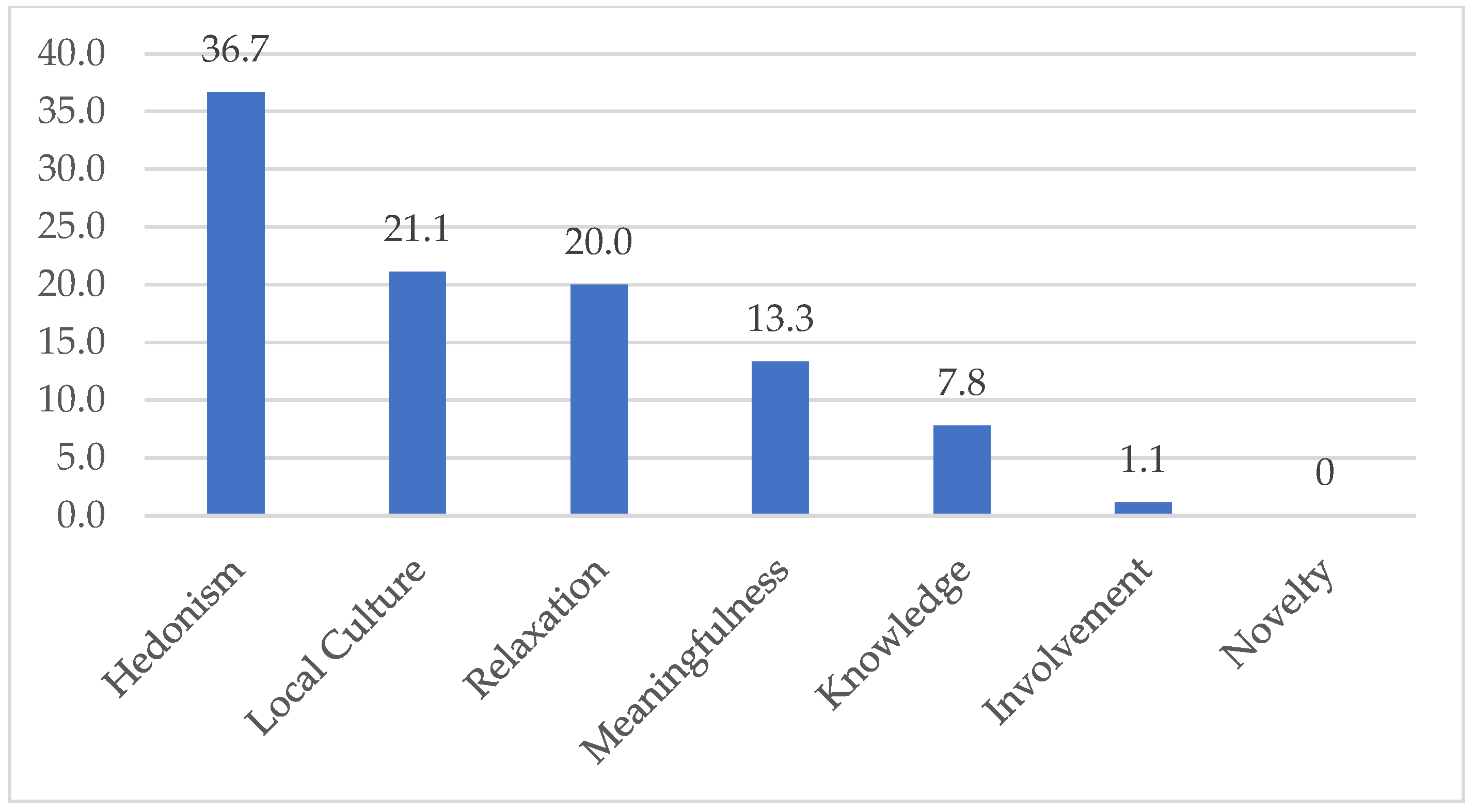
The dominant MGE components identified in the corpus were hedonism (36.7%), local culture (21.1%), and relaxation (20%). These components appeared consistently across the majority of LGP pages and reflect a strong emphasis on cultural grounding, emotional resonance, and sensory appeal within the digital communication of the network. The remaining components, meaningfulness (13.3%), knowledge (7.8%), and involvement (1.1%), were present but distributed unevenly, appearing more selectively depending on the nature of the activities and the communication style of individual operators as shown in
Figure 1.
Posts coded as Hedonism emphasize sensory pleasure and appetitive appeal, such as a message from LGP 162 inviting guests to “enjoy traditional dishes prepared with fresh, carefully selected local ingredients” or a message from LGP 41 describing each meal as “a celebration of authentic flavors and local traditions.”
Posts coded as Local Culture foreground heritage practices and cultural rootedness. For example, LGP82 presented freshly prepared pork dishes “in the spirit of Romanian tradition,” including a pork dish prepared “just as it once was,” emphasizing continuity with local customs.
Posts coded as Relaxation highlight comfort and the restorative rural atmosphere. One post from LGP13 invited visitors to enjoy winter activities, followed by “warming up by the fireplace with mulled wine and traditional dishes,” framing gastronomy within a relaxing experiential setting.
Posts coded as Involvement encourage guest participation, even through simple interactive cues such as “Enjoy your meal!” communicated by LGP2 to signal engagement and shared experience.
Posts coded as Meaningfulness evoke nostalgia and emotional resonance. Examples include statements such as “The taste of home, the one you cannot find anywhere else” (LGP47) and “The dessert of childhood: baked apples with cinnamon and honey” (LGP96), underscoring memory, warmth, and personal significance.
Posts coded as Knowledge provide informational content about ingredients, preparation methods, or local production practices. Examples include the use of #hranacurata (#cleanfood) with videos showing local raw materials (LGP27), demonstrations of preparing zacuscă (vegetable spread) tagged #GastroLocal (LGP179), and presentations of the wider agro-gastronomic context, such as videos of farm animals accompanied by tags like #AnimaleleDinGospodariaNoastră (#AnimalsFromOurFarm), #PreparateBio (#OrganicDishes), and #BucateGustoase (#TastyDishes) (LGP174).
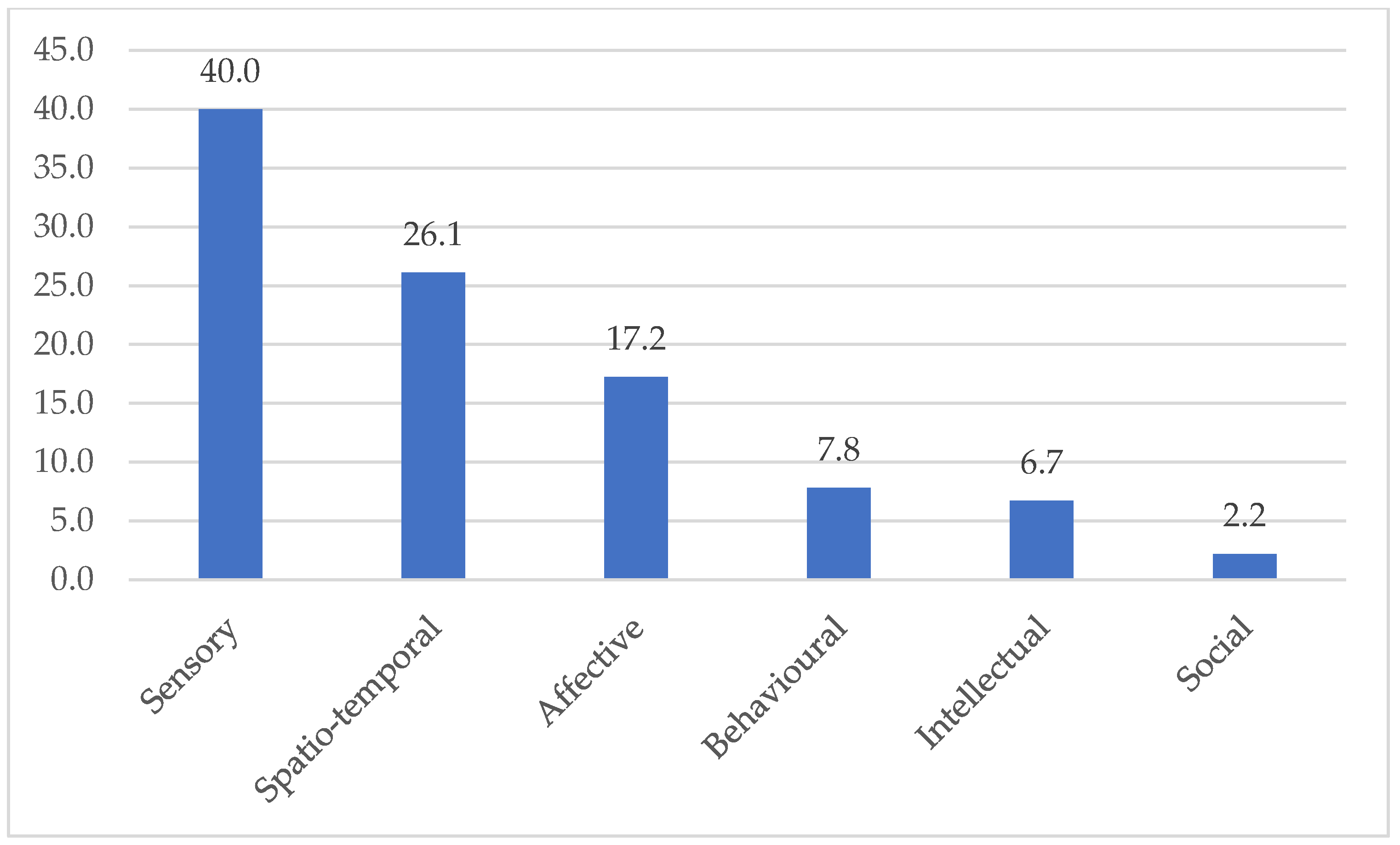
Regarding the ODBE dimensions, the most frequently represented category was sensory (40%), followed by spatio-temporal (26.1%), affective (17.2%), behavioural (7.8%), intellectual (6.7%), and social (2.2%) (
Figure 2).
To enhance analytical transparency and allow independent verification of the correspondence analysis, the full frequency distributions for all MGE and ODBE categories, together with the complete MGE × ODBE co-occurrence matrix, are presented in
Table 3.
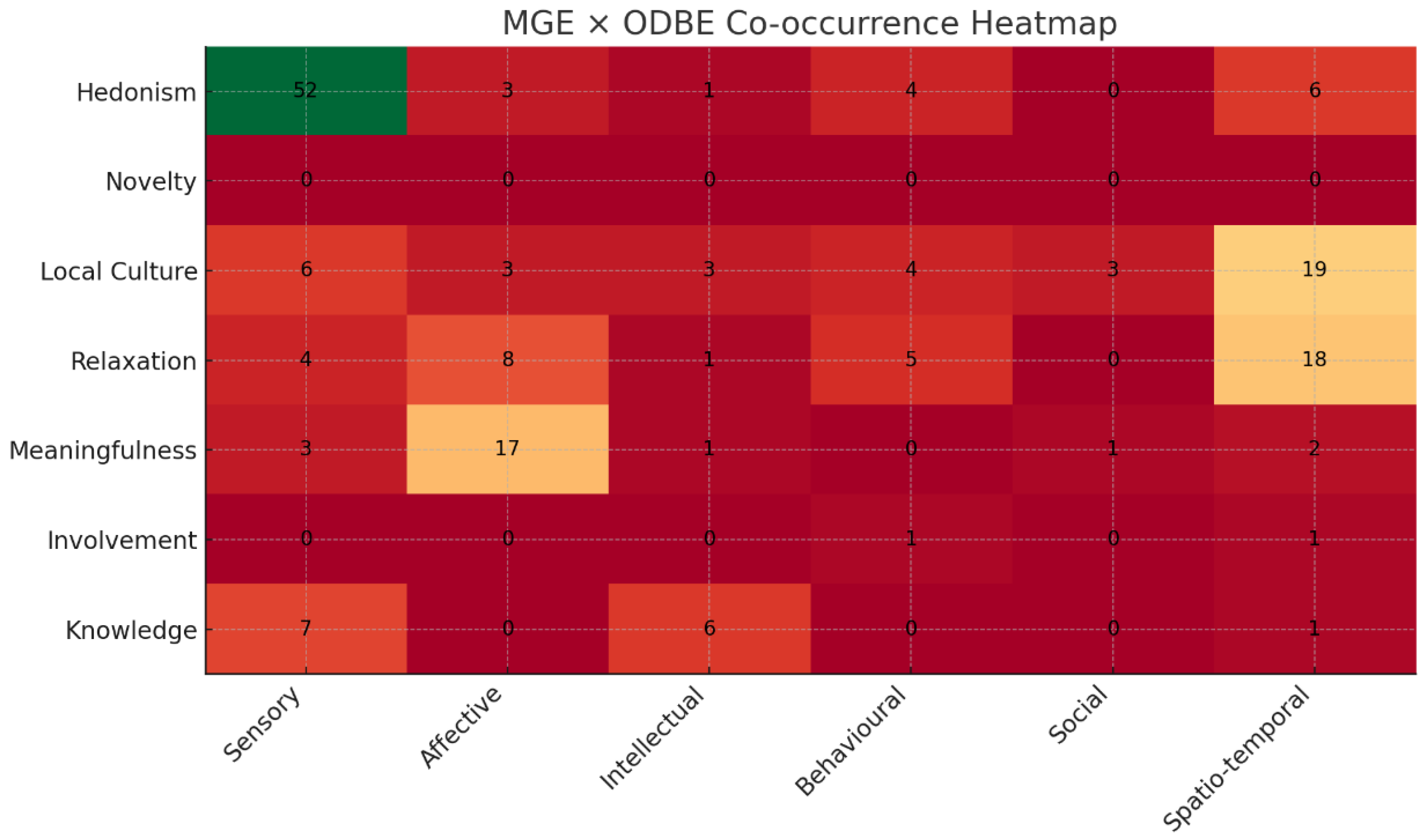
The heatmap (
Figure 3) reveals distinct patterns in how offline experiential values (MGE) are mobilized through specific dimensions of online destination brand expression (ODBE). Hedonism shows the strongest association with the sensory dimension (
n = 52), indicating that LGPs predominantly communicate pleasurable, affect-driven experiences through visually and sensorially rich content. Local Culture and Relaxation cluster primarily within the spatio-temporal dimension (
n = 19 and
n = 18, respectively), suggesting that these experiential values are conveyed through contextual cues that situate the visitor in a specific place and moment. Meaningfulness is most frequently linked to affective cues (
n = 17), reflecting the emotional framing of heritage, tradition, and personal significance. Other MGE dimensions display low or diffuse co-occurrence, signalling a more peripheral role in the online narrative.
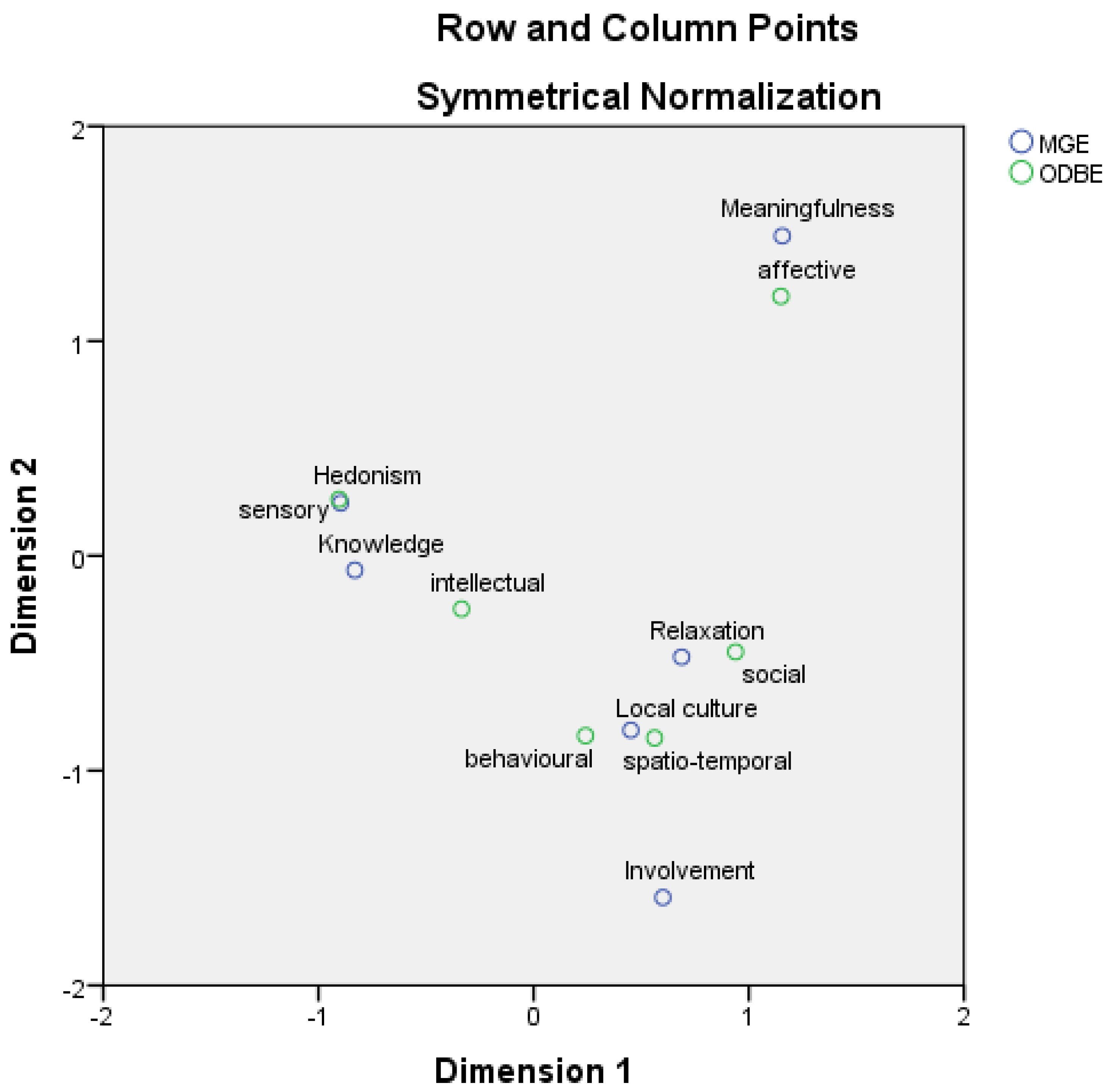
A correspondence analysis (CA) was conducted to model the latent relational geometry between the MGE and ODBE categories. The global chi-square associated with the CA solution (χ
2 = 173.58, df = 30,
p < 0.001) confirms the presence of a strong overall association suitable for geometric decomposition. The first two dimensions extracted by the CA procedure account for 75.5% of the total inertia, providing a robust and analytically stable basis for interpretation. These dimensions correspond to the principal statistical axes along which the variance in the MGE × ODBE contingency matrix is maximally expressed. Their purpose is to construct a reduced multidimensional space in which both experiential components (MGE) and online brand-expression cues (ODBE) can be jointly projected. It is important to note that these CA dimensions are methodological abstractions rather than substantive categories. Instead, they function as analytical coordinates that reveal latent proximities, oppositions, and clustering patterns among categories.
Figure 4 presents the symmetric correspondence map derived from this configuration, illustrating the emergent relational structure between MGE and ODBE elements.
The first principal axis (Dimension 1), which accounts for 46.4% of the total inertia, captures the dominant contrast in the dataset. This axis separates a sensory–knowledge pole, where Hedonism, Sensory and Knowledge cluster tightly, from a contextual–experiential pole, where Local Culture, Relaxation, Social and Spatio-temporal are grouped. This configuration suggests that LGPs tend to express hedonic and knowledge-oriented experiential values primarily through visually rich and sensorial cues, whereas cultural grounding and relaxation are communicated through references to place, setting and rural temporality.
The second principal axis (Dimension 2), explaining 29.1% of total inertia, differentiates emotionally charged experiential values from those more closely tied to everyday rural practices. Meaningfulness is positioned at the upper end of this axis, at a notable distance from other categories, indicating that posts coded as meaningful rely on a distinct narrative register, often emphasizing emotional resonance, memory, and symbolic significance rather than sensory or contextual cues. In contrast, categories located lower on the axis, including Involvement, Social and Behavioural, reflect more pragmatic, activity-related or socially embedded aspects of the experience.
Taken together, the two CA axes indicate that LGPs mobilize experiential values in two primary ways: (1) a sensory–knowledge pathway, where hedonic and informational cues are projected through strong visual and sensorial elements; and (2) a contextual–symbolic pathway, where cultural identity, relaxation and emotional significance are articulated through place-based references, social atmosphere and narrative depth. The isolated positioning of Meaningfulness and Involvement highlights their more specialized and less frequently activated communicative roles within the broader digital ecosystem of the network.
5. Discussion
The findings of this study reaffirm that gastronomy operates as a powerful semiotic system through which regional identity is articulated, a position consistent with longstanding interpretations of food as cultural expression and symbolic discourse [
1,
3,
18]. However, the digital practices observed across the “Gastro Local” network suggest a more complex dynamic than the literature typically acknowledges. Rather than merely reproducing cultural markers, LGPs actively curate multimodal narratives that fuse food, rurality, and emotion into coherent experiential assemblages. This directly informs RQ1, highlighting that online gastronomic communication in rural contexts is structurally multimodal, affectively charged, and anchored in spatial cues. Such integrated narrative construction goes beyond Perullo’s [
41] notion of the “edible text,” revealing the extent to which gastronomic storytelling functions as a synthetic representational strategy in digital place-branding ecosystems.
Against this backdrop, RQ2 examined the salience of MGE dimensions and provides empirical evidence for the predominance of Hedonism, Local Culture, and Relaxation. While this configuration aligns with expectations regarding rural gastronomic tourism [
43], its theoretical significance lies less in the imbalance itself and more in what this distribution reveals about the narrative priorities that structure rural digital communication. The systematic down-representation of Meaningfulness and Knowledge suggests that reflective, heritage-oriented, or educational dimensions are not structurally embedded in the current communicative repertoire. Rather than simply indicating a deficit, this pattern illustrates how certain experiential registers become backgrounded in digital environments, where immediacy, affective impact, and sensory appeal tend to be privileged. From a theoretical standpoint, this imbalance may signal a tension between experience-driven branding logics and the deeper cultural or pedagogical aims associated with sustainable rural gastronomy. This insight complements broader debates on the experiential economy [
40] by showing how rural food narratives selectively foreground some dimensions of heritage while relegating others to more occasional or situational roles.
These concerns become more salient when considering RQ3, which explored how offline MGE values are translated into ODBE cues. The systematic alignment of Hedonism with sensory imagery, Local Culture with spatio-temporal markers, and Meaningfulness with affective and social signals confirms that LGPs follow relatively stable semiotic translation patterns. Yet this consistency also exposes a structural dependence on sensory-dominant storytelling. While previous research emphasizes the role of visuality in online destination branding [
14,
15], the current findings show that such visual regimes risk reducing complex cultural meanings to aestheticized representations. Hall and Mitchell’s [
30] framing of gastronomy as a symbolic ambassador thus acquires a more ambivalent dimension: symbolic authority is maintained, but the narrative depth of gastronomic heritage may be compressed into affective shorthand.
The correspondence analysis deepens these observations, directly addressing RQ4. The two-axis configuration, sensory–hedonic vs. affective–symbolic and reflective–emotional vs. contextual–rural, demonstrates that the regional digital brand is structured through a dual logic: immediate experiential gratification and culturally charged spatial anchoring. While this structure aligns with the functional and emotional layers emphasized in rural tourism studies [
36,
52], it also reveals that the brand depends heavily on aesthetics and ambience rather than on explicit discursive elaboration of heritage. The recurrent pairing of traditional dishes with rural landscapes and communal warmth signals a form of narrative condensation: heritage is evoked but rarely explained. From a sustainability perspective, this raises critical reflections. Although the communication framework clearly supports responsible consumption, community resilience, and short supply chains [
45,
46], these values are conveyed primarily through experiential cues rather than explicit sustainability discourse. In practical terms, LGPs achieve sustainability signalling through atmospheres, seasonality, and place-based imagery, rather than through articulated narratives. This supports Kladou and Trihas [
47] argument that rural food networks can act as community-driven branding infrastructures, but it also underscores the need to broaden the semiotic repertoire if deeper cultural continuity is to be ensured.
Overall, the “Gastro Local” network illustrates how gastronomic storytelling in rural settings operates as a form of experiential sustainability branding, albeit with notable asymmetries. Sensory pleasure, spatial anchoring, and emotional resonance coalesce into a coherent regional identity, yet the reflective and interpretive dimensions of food heritage remain underdeveloped. As tourism continues to shift toward meaning-oriented consumption [
6], these asymmetries merit careful consideration, particularly for networks seeking to balance authenticity, sustainability, and narrative depth in competitive digital environments.
6. Conclusions
This study examined how rural gastronomic providers in Brașov County translate offline experiential values into online brand expressions, offering a focused analysis of the communicative mechanisms underlying sustainable gastronomic tourism. Using an integrated framework that combines MGE and ODBE coding with correspondence analysis, the results highlight a structured yet uneven relationship between experiential value creation and its digital articulation.
The findings reveal four central patterns. First, LGP communication is consistently multimodal: most posts combine gastronomic descriptors with environmental, social, emotional, and temporal cues, indicating that providers construct layered experiential narratives rather than single-attribute messages. This pervasive aggregation challenges simplified assumptions about rural digital storytelling and underscores the complexity of experience framing at the micro-provider level.
Second, the distribution of MGE and ODBE categories is markedly asymmetric. Hedonism, Local Culture, and Relaxation dominate experiential communication, while Meaningfulness, Knowledge, and Involvement remain peripheral. On the branding side, Sensory and Spatio-temporal cues appear disproportionately more frequently than Affective, Behavioural, Intellectual, or Social cues—suggesting a strong reliance on visual appeal and contextual anchoring, but a more limited mobilization of social or participatory dimensions.
Third, cross-coding patterns show that only a subset of experiential values is systematically translated into digital brand expressions. Hedonism overwhelmingly aligns with sensory cues, Local Culture and Relaxation with spatio-temporal references, and Meaningfulness with affective framing. However, due to severe sparsity in the contingency matrix, these associations must be interpreted descriptively rather than inferentially.
Finally, correspondence analysis identifies two dominant branding logics that structure the online identity of the network: a sensory–hedonic strategy centred on pleasure and visual intensity, and an affective–symbolic contextual strategy grounded in heritage, emotion, and rural temporality. Together, these strategies show how different experiential cues contribute to the formation of online narratives that support the visibility and distinctiveness of rural gastronomic practices. While the findings indicate patterns of coherence across providers, the interpretation remains exploratory given the variability in posting styles and the descriptive nature of the associations identified.
7. Implications
7.1. Theoretical Implications
This study contributes to the growing literature on gastronomic and digital place branding by demonstrating how experiential values are translated into coherent online narratives. The identification of two dominant axes- sensory–hedonic and affective–symbolic/contextual–rural- extends existing theoretical models that conceptualize food as both sensorial stimulation and cultural expression [
12,
41,
42]. This constitutes a concrete theoretical contribution, as it shows how these dimensions operate simultaneously within grassroots digital communication rather than in isolation, as often assumed.
The findings refine the understanding of Memorable Gastronomic Experiences (MGE) within rural contexts by showing that Hedonism plays a central structuring role in digital communication, anchoring both emotional and symbolic dimensions. This insight clarifies how dominant experiential values shape online narratives, extending prior MGE applications by empirically demonstrating their translation into branding cues. At the same time, broader implications for experiential sustainability branding are presented as potential directions rather than confirmed outcomes, as the current results remain descriptive rather than inferential. Finally, the methodological integration of MGE and ODBE through correspondence analysis offers a replicable analytical framework for future research on digital storytelling in tourism. This represents a methodological contribution of the study, while its applicability to other contexts should be treated as a direction for subsequent empirical exploration rather than a validated generalization.
7.2. Managerial and Practical Implications
For local gastronomic providers (LGPs), results underline the strategic value of combining sensory appeal, emotional resonance, and spatio-temporal anchoring in digital communication. Providers may enhance engagement by emphasizing high-quality visual content that conveys sensory pleasure, reflecting the dominance of Hedonism and Sensory cues in the dataset; integrating narratives of meaning, heritage, and family traditions, corresponding to the observed- but less frequent-use of Meaningfulness and Local Culture; and foregrounding temporal and contextual markers, which emerged as one of the most consistently deployed branding dimensions. Providers may also strengthen authenticity signals by selectively showcasing community involvement or short supply chains, acknowledging that Involvement appeared only marginally in the corpus and should therefore be used as a complementary rather than central communicative device. For destination management organizations (DMOs), findings suggest that “Gastro Local” functions as a grassroots branding ecosystem capable of strengthening regional identity. DMOs may leverage these authentic narratives to position Brașov as a sustainable rural gastronomic destination, drawing specifically on the two branding logics identified in the correspondence analysis: a sensory–hedonic strategy and an affective–symbolic/contextual strategy. This approach may foster collaboration between producers, policymakers, and tourism operators, while acknowledging that these strategies capture dominant communication patterns rather than the full diversity of provider practices.
8. Limitations
As an exploratory study, several limitations must be acknowledged. First, the analysis is based on a purposive dataset of Facebook and Instagram posts, which may not capture all communication channels used by rural providers. Second, correspondence analysis, while robust, cannot infer causality and relies on the quality and granularity of the coding process. Third, the study focuses on a single region; thus, findings may not be generalizable to other rural or gastronomic contexts with different cultural or environmental characteristics.
The fourth methodological limitation of this study concerns the decision to assign only one dominant MGE and one dominant ODBE code per post. Selecting a single salient dimension ensured comparability across posts and preserved the statistical clarity required for multivariate modelling. However, this approach inevitably reduces some of the narrative richness of the posts.
Additionally, the temporal dynamics of digital communication (seasonal peaks, algorithmic influences, changes in content strategy) were not examined in depth. Future longitudinal or comparative designs would provide more nuanced insights.
9. Future Research
Future research could expand this approach in several directions. First, comparative studies across different rural regions or countries could examine whether similar experiential axes emerge, thereby testing the universality of the sensory-hedonic and affective-symbolic patterns identified here. Second, integrating visitor-generated content (UGC) would enable the analysis of co-created meanings and the alignment—or misalignment -between provider narratives and visitors’ perceptions.
Third, longitudinal studies could explore how narratives evolve across seasons or in response to external disruptions (e.g., climate events, policy shifts, economic changes). Fourth, advanced multimodal methods—such as sentiment analysis, computer vision, or machine learning—could deepen understanding of how gastronomic storytelling contributes to sustainable destination branding within digital ecosystems.
Finally, future studies would benefit from incorporating multimodal analyses that examine not only textual content but also imagery, video, and platform-specific affordances, as well as investigations of visitor perceptions, since the present study captures only the producers’ perspective and not the audience’s reception of these digital narratives.