


Abstract
Following the drinking water crisis induced by harmful algal blooms in Lake Taihu in 2007, industrial restructuring and systematic pollution treatment projects were synchronously conducted to control pollutions in Lake Taihu basin. This paper conducts a systematic review of integrated pollution governance in the Lake Taihu Basin to conduct an exploration of sustainability in developing areas. Critical assessment of the conceptual frameworks and implementation strategies from the aspects of governance concept, technology application and environmental benefits have been made through multi-year water quality monitoring. The results showed that the total nitrogen (TN) and total phosphorous (TP) loads entering the lake decreased by 45.6% and 36.6% in 2008–2023, and the water quality of Lake Tiahu and all 15 major inflow rivers met or exceeded Grade III standards in 2024, according to the National Standard for Surface Water Quality. The lake ecosystem has showed signs of restoration via a decline in the extent and intensity of toxic cyanobacterial bloom. At same time, the local economics have been developed without halting due to the pollution governance, which demonstrates a feasible pathway for both pollution management and economic development. This synergistic governance with both soft and hard measures implemented in Lake Taihu basin has reference significance for other developing countries toward sustainability around the world.
1. Introduction
The world is facing an unprecedented challenge of maintaining the sustainability of our aquatic ecosystems in the face of widespread environmental degradation and biodiversity loss. Given this background, the 2030 Agenda for Sustainable Development Goals (SDGs) was launched by the United Nations in 2015, targeting 17 goals to end poverty, halt environmental destruction and boost well-being by 2030. The SDGs are a commitment undertaken by all nations (193 countries) [1]. In addition to the SDGs, the United Nations General Assembly proclaimed 2021–2030 as the Decade of Ecosystem Restoration in March, 2019 aimed at preventing, halting and reversing the degradation of ecosystems worldwide [2]. These ambitious global-scale programs reflect the urgent need to protect the environment and ensure ecosystem sustainability.
China’s rapid economic development over recent decades has come at considerable environmental cost, with pronounced degradation and biodiversity loss in many aquatic systems [3,4]. A recent national assessment reveals that while progress has been made on 13 SDGs, four goals—including SDG 12 (responsible consumption and production), SDG 13 (climate action), and critically SDG 14 (life below water)—have regressed, with water pollution being a common contributing factor [5]. The Lake Taihu Basin exemplifies this tension between socioeconomic development and ecological preservation in rapidly industrializing regions. Although the basin covers only about 0.4% of China’s land area, it supports roughly 10% of national economic output and hosts dense populations, urban centers, and industries [6]. Since the 1980s intensive development has produced heavy pollutant loads that drove progressive eutrophication and recurrent cyanobacterial blooms (Microcystis spp.), with serious impacts on drinking-water safety and ecosystem stability [6]. The 2007 large-scale bloom event, covering approximately 33% of the lake’s surface area, led to microcystin concentrations exceeding the WHO safety threshold of 1 μg/L, demonstrating multi-dimensional detrimental impacts, such as public health risks from contaminated drinking water supplies and economic disruptions across industries, particularly tourism-dependent sectors [6]. In response, comprehensive governance strategies have been systematically implemented since 2007, combining industrial restructuring with engineering interventions. Against a global context where algal blooms have affected 21,878 lakes over the past four decades, covering 11.7% of the total global lake area [7], the Taihu Basin’s restoration journey represents a critical real-world experiment. Establishing a viable pathway to reconcile intense socioeconomic activity with high-level ecological conservation in this intensively developed basin presents a pressing challenge—and offers a transferable framework for eutrophic lake management worldwide.
This study conducts a systematic review of integrated pollution governance measures in the Lake Taihu Basin, with three principal aims: (1) to critically assess the conceptual frameworks and implementation strategies of current governance approaches; (2) to quantitatively evaluate their environmental outcomes through multi-year monitoring data (2005–2024); (3) to derive evidence-based optimization pathways for both regional and global application.
2. Study Site and Data Collection
2.1. Description of Lake Taihu
Lake Taihu, the third-largest freshwater lake in China, covers an area of 2336 km2 with a mean depth of less than 3m. Its basin (~36,500 km2) drains a heavily urbanized and highly industrialized region in the Yangtze River Delta that supports over 40 million inhabitants. Its 172 influent rivers form a complex network that integrates pollutant discharges from numerous cities, industrial clusters, and farmlands across multiple jurisdictions (Jiangsu, Zhejiang, and Shanghai), defining a fundamental governance challenge. Principal inflows from the western and southwestern mountainous areas, deliver 60–80% of its total annual input (averaging 88 × 108 m3) [8], while the main outflow discharges through the Taipu River in the east. Nutrient-rich wastewater discharges concentrated along the northern and northwestern lakeshores are trapped in the northwestern bay by prevailing southeasterly summer monsoon winds, enhancing local nutrient retention and intensifying cyanobacterial bloom formation [9]. Since the 1990s, this shallow nutrient-impacted lake has experienced accelerated eutrophication accompanied by toxic cyanobacterial blooms (Microcystis spp.), especially in its highly eutrophic northern region [6].
2.2. Data Sources and Analytical Approach for Policy Assessment
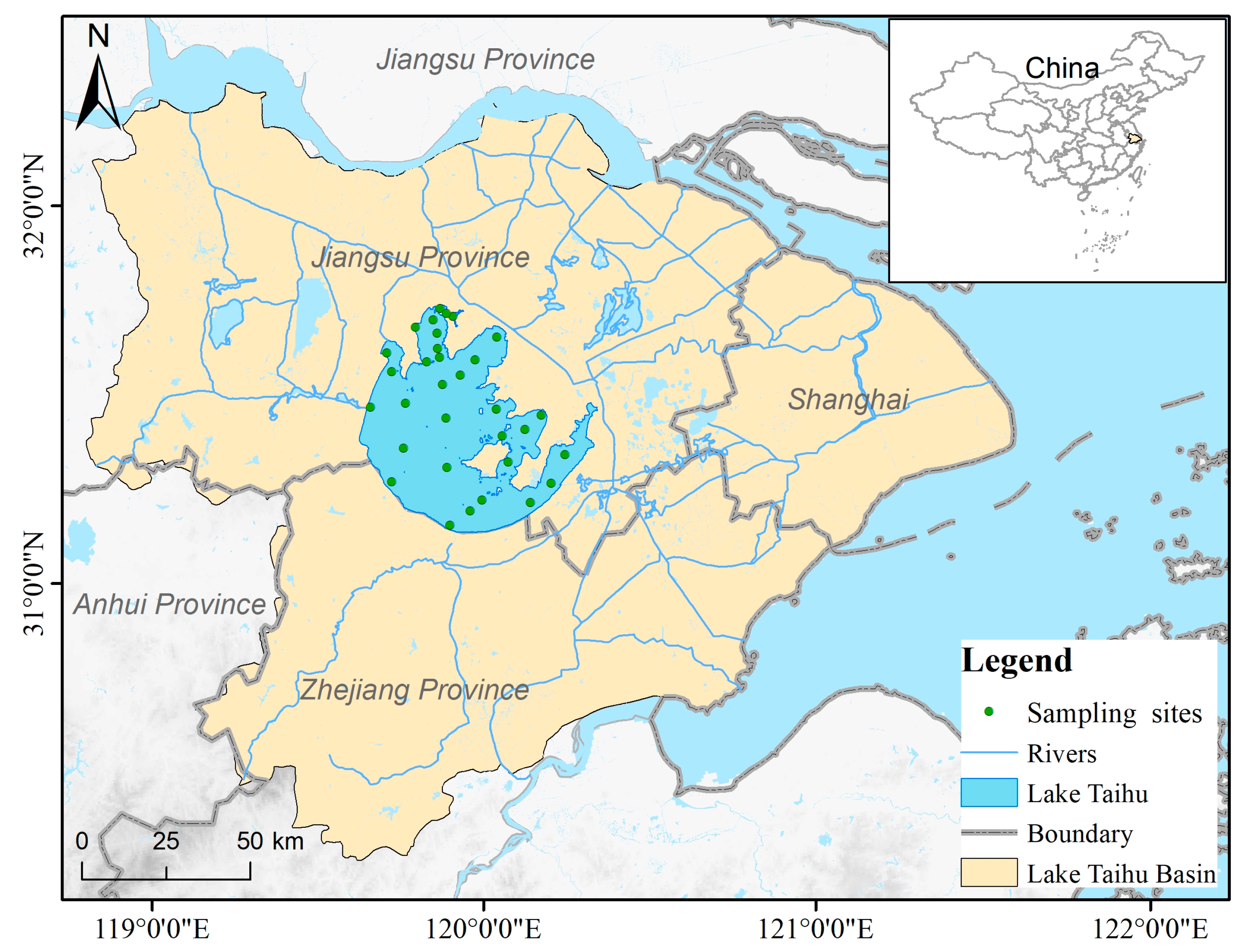
This study employs a retrospective policy assessment methodology [10,11], which relies on the systematic collection and trend analysis of long-term, official data to evaluate the effectiveness of the governance measures in Lake Taihu. All data related to lake restoration measures were provided by the Jiangsu General Office of Lake Taihu Water Pollution Prevention and Control, which is a leading agency in charge of Lake Taihu protection. Data about the number of shut-down of pollution enterprises, construction of wastewater collection pipeline and treatment plants, number of different sizes of livestock and poultry farming and following-up management measures, areas of wetland restoration and afforestation, removal area of fish-pen culture, volume of polluted sediment dredging and water diverted from Yangtze River, and wet weight of cyanobacteria scum salvage, were recorded annually by the relevant governmental agencies. The riverine input and output of nutrient load and discharge for each year were measured by Taihu Basin Authority, Ministry of Water Resources of China. The lake water quality was sourced from the monthly monitoring program of the Taihu Laboratory for Lake Ecosystem Research (TLLER), Chinese Academy of Science. The monitoring design encompasses 32 sampling sites, which are strategically distributed across the lake to represent different ecological functional zones, including the heavily polluted northwestern bay, the lake center and the eastern ecologically sensitive area (Figure 1). For this study, we analyzed the concentrations of total nitrogen (TN), total phosphorus (TP) and chlorophyll-a (Chla).
Figure 1.
The watershed of Lake Taihu Basin.
3. Main Governance Measures in Lake Taihu Basin
3.1. Formulation and Improvement of Laws, Regulations, and Policies
At the national level, China has managed water pollution by introducing a range of regulations (Table 1 and Table S1). These policies result in the enforcement of pollution prevention laws to be more operable, which directly led to the water quality improvement of rivers across the country [5,12]. Specifically for Lake Taihu basin, China has formulated water pollution prevention plans for Lake Taihu since the Ninth Five-Year Plan (1995–2000). In 2022, the National Development and Reform Commission, in collaboration with five other ministries, released the Master Plan for Comprehensive Water Pollution Management in the Lake Taihu Basin, which systematically proposed the guiding principles, objectives, and action measures for Taihu governance in the new era. The three administrative regions within the Taihu Basin—Jiangsu Province, Zhejiang Province, and Shanghai Municipality—have each promulgated localized regulatory frameworks (Table S1). Transboundary river and lake governance requires balancing multiple interests: upstream vs. downstream, left and right banks, and varying functional, administrative, and sectoral priorities. The Taihu Basin has emerged as a pioneer, establishing initiatives such as the Yangtze River Delta regional coordination mechanism for ecological and environmental protection, and the ecological green integration development demonstration zone. Notably, the basin was also among the first in China to pilot the interprovincial ecological compensation mechanism to better balance economic development and environmental protection [13].
Table 1.
Key measures and selected impacts in the integrated governance of Lake Taihu.
3.2. Integrated Management Measures Based on Laws and Regulations
Previous long-term studies examining lakes in Europe and North America have revealed that controlling external nutrient inputs has succeeded in mitigating eutrophication [14,15]. Following the 2007 drinking water crisis in Lake Taihu, the government initiated comprehensive remediation measures, including the following: Industrial restructuring: Immediate closure or relocation of lakeshore heavy polluters (chemical plants, dyeing facilities, shipyards); Regulatory enforcement: Rigorous implementation of environmental access controls; Standards upgrade: Adoption of stringent industrial wastewater discharge thresholds; Permit system: Nationwide rollout of pollutant discharge licensing protocols; Infrastructure development: Construction of centralized wastewater treatment plants in industrial zones; Monitoring enhancement: Deployment of real-time online surveillance systems.
In 2024, Jiangsu Province issued the “Catalogue of Prohibited and Restricted Industries and Products in the Lake Taihu Basin” to strengthen environmental access control and manage industrial pollution at the source. On one hand, all chemical enterprises within the first-level protection zones around Lake Taihu were eliminated, and nearly 60,000 “scattered, disordered, and polluting” enterprises were shut down or rectified. On the other hand, a comprehensive campaign was launched to inspect and regulate phosphorus-related enterprises, establishing a “phosphorus inventory” and “phosphorus ledger” system. These efforts led to the standardization and upgrading of some enterprises, relocation of others into industrial parks, and the closure of non-compliant ones. As a result, more than 20,000 phosphorus-related enterprises across the basin completed remediation, cumulatively reducing the use of raw phosphorus materials by over 4000 tons. Additionally, Jiangsu Province implemented a dual control system for both the total amount and concentration of pollutants discharged by enterprises. A unified discharge permit system was established to ensure emissions are legally permitted and regulated. Following the principles of “inspecting every outlet, testing every water body, tracing every pollution source, and treating every pollutant,” nearly 9000 sewage outlets that need rectification were identified through inspections. Through targeted rectification based on the “one outlet, one strategy” approach, prominent problems such as overflow, direct discharge, and mixed discharge had been solved [16]. While strengthening the comprehensive environmental management of enterprises, additional efforts were also made to reduce agricultural non-point source pollution, including soil testing promotion and formulated fertilization to minimize the use of chemical fertilizers and pesticides; encouraging the replacement of chemical fertilizers with organic alternatives; establishing livestock and poultry farming prohibition zones and standardizing the treatment of livestock wastewater; promoting eco-circular agriculture; constructing ecological buffer zones along the shoreline of Lake Taihu to reduce farmland runoff; and advancing centralized treatment facilities for rural domestic sewage to cover surrounding villages.
Management is the key to environmental pollution control. The implementation of various integrated management measures has enabled systematic and scientific control of pollution sources across the Lake Taihu Basin. Through scientifically planned industrial pollution prevention, agricultural runoff control, ecological restoration, and cross-regional collaborative governance, the water quality and ecological environment of Lake Taihu have been significantly improved. Official statistics indicate that since 2008, basin GDP more than doubled and the population grew by nearly 20 million, the basin has achieved both sustained socio-economic growth and marked pollutant reductions: total phosphorus and total nitrogen concentrations fell by 42.6% and 60.9%, respectively, compared with 2007. These results demonstrate that high-level ecological protection can proceed in tandem with high-quality socio-economic development.
3.3. Innovative Financing to Support Investment
Significant investment in the construction of wastewater treatment facilities and the resource utilization of waste was made in the Lake Taihu Basin, involving central government budgetary investments, provincial special funds, and local investments. Since 2008, a total of 149 provincial-level industrial pollution control projects have been implemented in the basin, with a total investment of 11.06 billion yuan. Jiangsu Province established a dedicated fund for comprehensive water environment management in the Lake Taihu Basin to support the construction of wastewater treatment facilities. The provincial government also coordinated the allocation of special urban and rural development funds to increase the urban sewage collection and treatment rate in the basin. Furthermore, through the “rewards instead of subsidies” mechanism, city and county governments were supported in tackling rural domestic sewage treatment. About 700 million yuan was invested in implementing a national demonstration project for the ecological restoration of abandoned historical mines in the water conservation areas of the basin. In 2019, Jiangsu Province additionally allocated 1.2 billion yuan to support key projects such as upgrading wastewater treatment standards, protecting drinking water sources, ecological dredging, and controlling agricultural non-point source pollution.
Financing mechanisms was innovated to support comprehensive pollution control in the Lake Taihu Basin, encouraging diverse social investment entities to participate in water pollution management and environmental infrastructure development. The region has promoted the socialization of environmental protection facility operations and the industrialization of pollution control. For social capital investing in building environmental infrastructure, local finance can provide financial support or loan interest subsidies in a certain proportion, and offer preferential policies such as land use, electricity, and water consumption. Jiangsu Province has innovatively introduced the “Environmental Infrastructure Loan”, which focused on financing for sewage collection and treatment, solid waste management, and other basic environmental capabilities. In 2023, interest subsidies of 70.07 million yuan were granted for 40 green bonds, with a cumulative issuance of 121 million yuan in “Environmental Protection Loans” and 405 million yuan in “Environmental Protection Guarantees”.
Eight EOD (Ecology-Oriented Development) projects were included in the national ecological and environmental protection financial support database, receiving a total of 12.69 billion yuan in bank credit. The EOD model is designed to achieve long-term symbiosis by deeply integrating industrial development with ecological restoration, thereby generating environmental returns on investment. While the Taihu Basin projects are still underway, the success of pioneering projects elsewhere in China demonstrates the model’s potential. A national pilot EOD project in Dongtou District, Wenzhou, for example, successfully translated ecological investments in mine and beach restoration into a vibrant tourism economy. The sector’s value reached 1.35 billion yuan in 2024, representing over 8% of local GDP [17]. This offers a compelling analogue for the Taihu initiatives, illustrating how the EOD model is structured to yield measurable environmental and economic co-benefits, thereby justifying the substantial bank credit allocated. While early public investment enabled rapid infrastructure rollout, the EOD model addresses long-term fiscal concerns by leveraging private capital. Its cost-effectiveness lies in a revenue feedback loop, where project success and investment returns are directly contingent upon achieving tangible environmental improvements, aligning financial and ecological goals for a higher long-term return [18].
3.4. Standardizing the Emissions Trading System
The Lake Taihu Basin was the first region in China to establish a pollution discharge rights trading system. As early as 2008, the Ministry of Finance, the Ministry of Environmental Protection, and the Jiangsu Provincial Government jointly launched a pilot program for the paid use and trading of major water pollutant discharge rights in Wuxi City. To advance the pilot program, the environmental protection, finance, and price departments in Jiangsu Province developed the “Pilot Program for the Paid Use of Major Water Pollutant Discharge Indicators in the Lake Taihu Basin and the Associated Charging Measures”, which set the initial price for the paid use of chemical oxygen demand (COD) emission rights at 4500 yuan per ton per year. This marked the end of the era of free use of environmental capacities in the basin. In 2010, Department of Environmental Protection, Department of Finance, and Price Bureau of Jiangsu Province jointly issued the “Interim Measures for the Management of Emission Rights Trading of Major Water Pollutants in the Lake Taihu Basin of Jiangsu Province”, which standardized the trading behavior of water pollutant emission rights. In 2022, the National Development and Reform Commission, the Ministry of Ecology and Environment, and the Ministry of Water Resources released the “Guiding Opinions on Promoting the Establishment of an Ecological Compensation Mechanism in the Lake Taihu Basin”, which called for a unified system for confirming and allocating pollutant emission rights, establishing a regional trading system, exploring trading models among different types of pollutants, and fostering the development of a emission rights trading market in the basin. According to data from the Jiangsu Public Resource Trading Platform, by the end of 2023, the Taihu Basin (within Jiangsu) had collected a total of 255 million yuan in paid pollutant discharge rights usage fees and recorded a total trading volume of 423 million yuan, covering key indicators such as COD, ammonia nitrogen, and total phosphorus. Additionally, leveraging its advantages in financial resources, Shanghai introduced an innovative “Water Service Trust”. The Shanghai Water Authority formulated the “Guidelines for the Management of Water Use Rights Trading in Shanghai (Trial)”, clarifying the responsibilities of all departments, standardizing trading elements, and launching product types under a registered trademark, “Shui Shan Liu” (meaning “benevolent flow of water”).
Despite these institutional advances, the implementation of the emissions trading system in the Taihu Basin continues to face several practical challenges. The absence of unified national-level technical guidelines and management measures has led to fragmented regulatory frameworks, hindering the development of a larger, more integrated interregional trading market. Concurrently, market liquidity is constrained by low trading enthusiasm among enterprises, pointing to deeper issues in market design and participant engagement that need to be addressed to enhance the scheme’s overall effectiveness [19].
3.5. Social Management Measures
A series of social measures aimed at enhancing public participation, strengthening social oversight, and improving the transparency and effectiveness of environmental governance was implemented in the Lake Taihu Basin. Provincial and city governments within the basin regularly hold special meetings to study and address prominent issues in Taihu governance, forming a unified governance force. A specialized network for monitoring information on agricultural non-point source pollution has been established, supporting decision-making and management systems and enhancing early warning, forecasting, and rapid response capabilities. Special publicity campaigns for water pollution prevention have been developed and implemented, with media outlets organized to promote successful practices and expose negative examples. Environmental protection training has been strengthened for officials at all levels as well as for enterprise leaders, raising their awareness and reinforcing their commitment to prioritizing environmental protection and effectively carrying out related work. Efforts have also been made to promote environmental integrity within enterprises, including the appointment of internal environmental supervisors. Volunteers have been mobilized to participate in governance activities in Lake Taihu. A wide range of environmental initiatives have been launched, including the development of eco-cities (or counties), model cities for environmental protection, environmentally friendly towns and villages, green enterprises, green communities, and green schools.
Public awareness of ecological compensation policies for the Taihu Basin has been strengthened through multiple channels, encouraging the enthusiasm and initiative of social entities in participating in the ecological protection. This is achieved by safeguarding the public’s rights to be informed, to participate, to express, and to oversee, enabling citizens to engage deeply in various environmental public affairs. A notable example occurred in April of this year, when the General Office of the Jiangsu Provincial People’s Congress publicly solicited opinions on urban and rural sewage treatment in the Taihu Basin. Furthermore, public monitoring platforms and social media channels enable residents to report issues like illegal discharges in real-time. For instance, in May, public reports concerning a large amount of Pomacea canaliculata found along a lakeshore prompted immediate government action, leading not only to their removal but also to a basin-wide investigation and the establishment of routine controls. Concurrently, non-governmental organizations (NGOs) and charitable organizations have become co-governors in Taihu’s ecological restoration. A prime example is the “Releasing Algae-Eating Fish to Purify Taihu” project, launched by the Suzhou Charity Federation in 2019 under the supervision of fishery authorities. By April 2025, the project had raised 268.1 million yuan through online donations, organized over 200 public release events, attracted more than 13 million individual donations, and released nearly 200 million fish fry into the lake. These figures not only reflect broad societal concern for Taihu’s ecology but also serve as a powerful testament to the practice of “whole-society participation in environmental protection.
3.6. Construction of Urban Sewage Pipeline and Centralized Wastewater Treatment Facilities
Before 2007, large-scale sewage pipeline systems and centralized wastewater treatment facilities were lacked in the Lake Taihu Basin. According to the “Regulations on the Management in the Lake Taihu Basin” [20], all domestic wastewater from towns at or above the county level and key administrative regions has been incorporated into public sewage networks and treated via centralized facilities since 2007. Suzhou, Wuxi, and Changzhou cities collectively built 105 new industrial wastewater treatment plants. Across the basin, there has been a total of 244 municipal wastewater treatment plants, with a combined daily treatment capacity of 8.48 million m3, achieving a 95.3% urban wastewater treatment rate [21]. In addition, provincial-level and above chemical industrial parks have implemented the “one enterprise, one pipe” policy, with open or dedicated pipelines for wastewater conveyance and real-time monitoring. A total of 14,486 pollution-emitting entities had established a networked monitoring systems for pollutant emissions, flow, electricity usage, and video surveillance—effectively achieving full coverage of emission monitoring and control. Rural domestic sewage collection and treatment coverage in the basin has reached 83.8%, far exceeding the national average. Meanwhile, promoting the resource utilization of wastewater and waste is critical for sustainable development. Significant strides have been made within the basin. For instance, in Jiangsu Province alone, 47 ecological wetlands have been established to polish treated tailwater from wastewater plants, enhancing reclaimed water reuse for industrial, urban greening, and ecological purposes. The comprehensive utilization rate of livestock and poultry waste has reached 95% across the basin. In rural areas, cities like Suzhou have adopted passive nutrient-recovery systems for decentralized sewage treatment, reducing construction costs by 30–60% and operational expenses by over 70% [22]. Treated effluent is safely reused for irrigation, and dried sludge is returned to farmland, forming a closed-loop system. Additionally, a pioneering resource recovery facility in Yixing co-ferments sludge, food waste, and cyanobacteria to generate 18,000 kWh of electricity daily, moving toward energy self-sufficiency. Despite these advances, operational challenges remain, including the high energy demand of aeration, costs of sludge dewatering and disposal, and long-term maintenance of pipelines and constructed wetlands. While resource recovery technologies offer promising pathways to mitigate these issues, their broader adoption and economic feasibility at scale require further optimization.
3.7. Treatment of Low-Concentration Sewage and Non-Point Source Pollution Within the Basin
Although point source pollution in the Lake Taihu Basin was treated to meet the State Wastewater Emission Standard (GB18918–2002, Standard A of the first class: COD = 50 mg/L, TN = 15 mg/L, TP = 0.5 or 1 mg/L), the nitrogen and phosphorus concentrations in the treated water remain significantly higher than the nutrient concentrations in Lake Taihu [23]. For such low-concentration wastewater, an economically feasible solution is to reduce discharge concentrations through enhanced purification by constructed wetlands, or to control nutrient runoff from farmland using eco-intercepting ditch systems [24]. It is important to note that constructed wetlands require significant long-term maintenance, including regular sediment dredging, aquatic plant harvesting, and hydraulic system management to sustain treatment efficiency. Furthermore, their implementation involves a land-use trade-off, as they occupy substantial areas in this highly developed and economically vibrant region, presenting a challenge for large-scale deployment. Jiangsu Province enforces the strictest discharge national standards for pond aquaculture tailwater within the first and second-level protection zones of Lake Taihu, and the standardized upgrades of over approximately 30,700 ha of large-scale aquaculture ponds in the basin have been completed. In 2023, the mechanized return-to-field rate for rice and wheat straw in the basin exceeded 83.3%, and the comprehensive utilization rate of straw and livestock/poultry manure reached 95%. To track the effectiveness of these measures on non-point source pollution, an integrated monitoring network has been established. This network combines automated water quality stations at key river sections, remote sensing for macro-scale assessment, and hydrological modeling to simulate pollutant transport and load from diffuse sources, particularly from agricultural fields [25,26]. Emission standards for urban sewage treatment plants were further heightened, with the first and second-level protection zones of Lake Taihu and a 1-km zone along the Southern Jiangsu Canal identified as key regions for differential pollution control.
3.8. Multiple Measures to Increase the Lake Environmental Capacity
With external nutrient inputs now better controlled, “internal loading” of phosphorus from sediments has emerged as the primary driver of eutrophication in many shallow lakes [27]. This phosphorus is derived from the aggravation of the anoxic condition of surface sediments and the increased settling and decomposition of organic matter. Consequently, reducing sediment phosphorus release via transfer treatment or in situ remediation has gained increasing attention in recent years. As an eco-engineering measure, sediment dredging directly removes historically polluted sediments, cutting off nutrient release into the water column and thereby alleviating phytoplankton proliferation [28]. Accordingly, Jiangsu Province has also adopted ecological dredging to remove polluted sediments in the northwest region of Taihu, where cyanobacterial blooms frequently occurred and hypoxia or anoxia often happened [29]. Sediment dredging was conducted in two phases during 2007–2021, and a third phase commenced in 2023, aiming to dredge an area of 29 km2 (18.04 million m2) over 60 months. In total, more than 37 million m3 of sediment had been dredged, removing approximately 29,000 tons of nitrogen and 24,000 tons of phosphorus.
Cyanobacteria salvaging has been applied since 2007. By collecting and removing cyanobacteria blooms, nitrogen and phosphorus levels within the lake were directly reduced. Annual cyanobacteria harvesting volumes decreased from over 2 million tons in previous years to 540,000 tons in 2023. Compared to 2007, the average, maximum, and cumulative surface areas of cyanobacterial blooms have decreased by 46.4%, 21.3%, and 72.5%, respectively. In Xinwu District of Wuxi City, annual cyanobacteria removal amount was 135,000 tons in 2020, 123,000 tons in 2021, and 72,000 tons in 2022, but dropped to virtually zero in 2023.
Simultaneously, water diversion and drainage projects—such as diverting water from the Yangtze River into the lake through the Wangyu and Xinmeng Rivers, and discharging water out of the lake via the Taipu, Zoumatang, and Xingou Rivers—have established a “two rivers in, three rivers out” water flow pattern. This system promotes circulation within the lake and around connected rivers, facilitating the removal of large quantities of TN, TP, and cyanobacteria, thereby effectively mitigating potential threats to water quality of Lake Taihu.
In addition to ecological dredging, bloom salvaging and water diversion, ecological restorations with artificial intelligence and environmentally friendly materials have been widely conducted inside the lake basin. In the eastern Taihu region, “eco-island” pilot zones have been developed in Longshan (Yixing County, Wuxi City), Xishan Island (Wuzhong District, Suzhou City), and Tianmu Lake (Liyang County, Changzhou City), where wetlands dominated by reeds have been restored to rehabilitate wetland ecosystems and biodiversity. Ecological safety buffer zones have been established and restored in water conservation areas and historically abandoned mining sites.
Moreover, in the treatment of internal and external source pollution in the Lake Taihu Basin, a series of technical measures have been adopted, including systematic governance, intelligent monitoring, ecological restoration, technological innovation, and cross-regional collaborative governance. A basin-wide automated monitoring platform, a water environment information-sharing system, and an integrated sky–ground–water environmental monitoring system have been established, enhancing the scientific and precise nature of governance.
4. Major Achievements of Pollution Management in Lake Taihu
4.1. Water Quality Changes in the Basin
The restoration of Lake Taihu demonstrates a phased governance strategy that systematically targeted major pollutant sources through tailored policy interventions. The initial focus, circa 2007–2010, was on controlling industrial point sources via regulations such as the Taihu Basin Water Pollution Prevention and Control Regulations (2007), which prompted the shutdown of nearly 60,000 “scattered, disordered, and polluting” enterprises and the implementation of the “one enterprise, one pipe” policy, significantly cutting discharges of COD, TN, and TP. Subsequently, around 2013–2015, national policies including the Regulation on Urban Drainage and Sewage Treatment spurred large-scale investment in wastewater infrastructure, expanding treatment capacity from 3.23 million tons/day in 2007 to 9.92 million tons/day in 2024 and drastically reducing nutrient inputs from urban populations. In parallel, efforts intensified against diffuse agricultural pollution following the Water Pollution Prevention and Control Action Plan (2015), through enterprise phosphorus regulation, widespread straw utilization (>95%), and improved livestock waste management, collectively curbing agricultural nutrient runoff.
According to “the health status report of Taihu Lake” from 2008 to 2023 [30], the TN and TP loads entering Lake Taihu via surrounding rivers showed a significant decrease trend. In 2008, the TN and TP loads entering the lake were 47,400 tons and 2200 tons, respectively, while it dropped to 25,800 tons of TN and 1400 tons of TP in 2023, which decreased by 45.6% and 36.6%, respectively, both hitting the lowest values since 2008. According to China’s national water quality standards (Grades I-V, excellent to heavily polluted), all 15 major inflow rivers met or exceeded Grade III water quality standards, with four of them reaching Grade II in 2003. From January to June 2024, water quality of Lake Tiahu met Grade III standards for the first time in 30 years, reaching the benchmark for a “good-quality lake” for the first time. The total phosphorus concentration in 2024 was 0.05 mg/L, and total nitrogen was 1.29 mg/L. The average water quality of the lake body was classified as Grade III, and the comprehensive trophic state index (TSI) was 52.0, indicating a mesotrophic state. Among the main water quality indicators, the permanganate index and ammonia nitrogen concentration remained at Grade II and Grade I levels, respectively. The total phosphorus concentration was 0.051 mg/L (Grade IV, the same as the previous year), and the total nitrogen concentration was 1.26 mg/L (Grade IV), a year-on-year decrease of 18.7%.
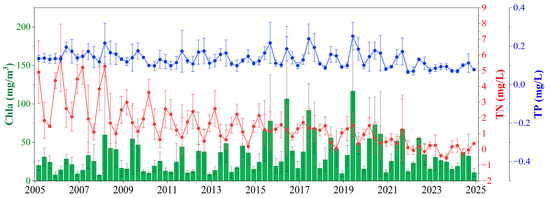
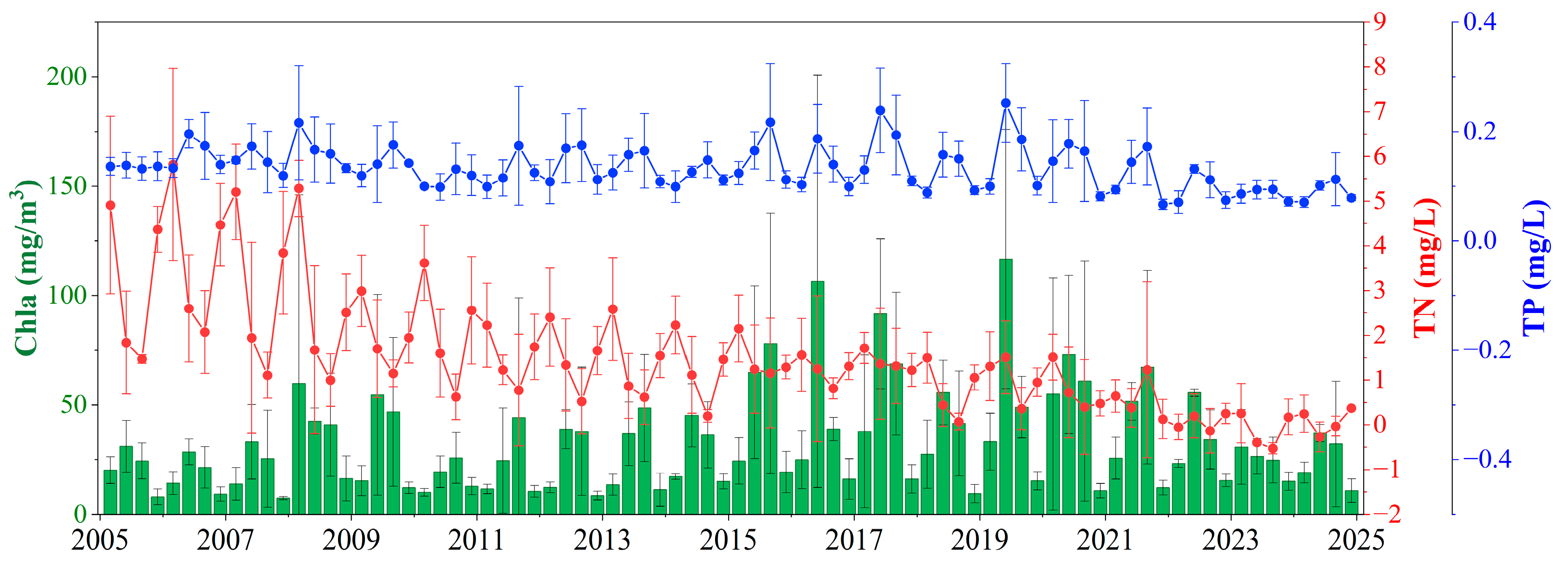
Long-term monitoring data from the national field station “TLLER” (Taihu Laboratory for Lake Ecosystem Research, referred as “Taihu Station” below) showed a decline in TN concentrations, and an increase first followed by a decrease for the concentrations of total phosphorus and Chla during 2007–2023 (Figure 2). Compared with the averaged value from 2005 to 2017, in many months of 2022–2023, the dissolved total phosphorus (DTP) concentration in the algal-prone northern Taihu area was lower than the DTP concentration threshold (0.03 mg/L) for cyanobacterial growth, and the average dissolved total nitrogen (DTN) concentration was lower than the saturation threshold (0.8 mg/L). The annual average cell abundance of -the key genus of cyanobacteria blooms-was only 1.04 × 10⁶ cells/L, and its biomass was 0.063 mg/L, both showing a 99% reduction compared with the multi-year average from 2007 to 2022. Among 2331 remote sensing images of cyanobacterial blooms in Lake Taihu collected from 2003 to 2023, those from 2023 showed a significant reduction in bloom intensity, with the annual average bloom area below 100 km2—a decrease of 55% compared with the average from 2007 to 2022. As a result, problems of drinking water safety caused by cyanobacterial outbreaks in the lake have now been effectively controlled.
Figure 2.
Long-term changes in water quality of Lake Taihu (seasonal averages with max–min ranges). The red and blue lines are concentrations of total nitrogen (TN) and total phosphorus (TP) of the whole lake; the green bar is the concentration of Chlorophyll-a (Chla). The data is from TLLER.
4.2. Changes in Ecosystem and Environment
The improvement in water quality in Lake Taihu had a positive impact on the local ecosystem, supported by an increase in aquatic biodiversity. These changes are reflected not only in the rise in the aquatic biodiversity index and species richness but also in the growth of the variety and quantity of fish, benthic organisms, and birds. In 2024, the aquatic biodiversity index of Lake Taihu reached 3.12, achieving the “excellent” grade for the first time. In 2023, 58 fish species were detected in the lake, with an average of 23 species per sampling point across 24 sites—doubling the number recorded at individual sites in 2020. Additionally, the number and variety of wild birds observed in Lake Taihu have continued to increase. In 2020, surveys in the area where fishing enclosures had been removed in East Taihu recorded 32 species of birds from 19 families and 7 orders. By 2022, that number had grown to 56 species from 30 families and 11 orders, including newly observed nationally protected (Class I and II) species and the return of environmentally sensitive species such as the Scarlet Minivet and the Crested Honey Buzzard, which had been absent for many years.
However, benthic organisms and aquatic vegetation have recovered more gradually, as these habitats have been subjected to long-term pressures from recurring cyanobacterial blooms and anthropogenic disturbances over the past two decades [31,32]. A 2020 survey of 57 monitoring sites across 49 eco-functional zones in the basin rated the overall ecological quality as “Grade IV (Fair)” on a five-tier scale (from Grade I, Excellent, to Grade V, Poor), with a compliance rate of only 40.8%—far below the water quality compliance rate of 81.6% [33]. Nevertheless, recent conservation efforts have initiated a positive shift in the benthic community, with increases in pollution-sensitive macroinvertebrates and the expanding distribution of the protected freshwater mussel Sinosolenaia carinata. By 2023, over 310 species of benthic animals, phytoplankton, and zooplankton were recorded, signaling ongoing ecological rehabilitation.
5. Discussion
5.1. Reconciling Environmental Governance and Economic Growth in the Lake Taihu Basin
The success of water pollution control and lake restoration in Lake Taihu stems primarily from the synergistic effects of soft and hard measures (Table 1). Soft measures include legislation, policies, innovative financing, and social participation, while hard measures encompass effluent diversion, wastewater treatment, wetland restoration, and in-lake nutrient/algal bloom control. This integrated governance has improved water quality and mitigated algal blooms, with far-reaching positive impacts on surrounding communities and local economies.
First, enhanced protection of drinking water sources has improved raw water quality and supply reliability, safeguarding public health in the region. Media oversight and public engagement have strengthened stronger environmental responsibility among residents, boosting governance effectiveness and awareness, and fostering consensus on sustainable development. Second, wetland restoration and the conversion of rivers into scenic recreational zones have enhanced the appeal of water-related attractions. Alleviation of public anxiety over cyanobacterial blooms has improved social well-being, quality of life, and tourism in adjacent cities. For instance, during the 2025 Spring Festival holiday, Wuxi City recorded total tourism revenue of 15.978 billion yuan (a 27% year-on-year increase), with major commercial enterprise sales up 11.7%, star-rated hotel occupancy rising to 62% (+11%), and homestay occupancy reaching 87% (+8.5%). Third, the Taihu region has achieved rapid economic growth over the past decade. Wuxi City exemplifies this: its GDP grew from 385.8 billion yuan (2007) to 835.9 billion yuan (2014) and 1.5456 trillion yuan (2023). Notably, Taihu Basin pollution governance has not hindered economic growth; instead, policy guidance and market mechanisms have promoted tourism collaboration among surrounding cities, spurring the development of Taihu-themed tourism products/routes, green consumption growth, regional economic integration, and competitiveness.
Strict environmental access controls and discharge standards have accelerated industrial restructuring and upgrading. Since the 13th Five-Year Plan (2015–2020), despite a 75.5% GDP growth and 32% urban resident population increase in the basin, wastewater discharge and emissions of COD, ammonia nitrogen, total nitrogen, and total phosphorus from six traditional industries (chemical engineering, electroplating, textile dyeing, papermaking, food processing, steel) have decreased by 69.4%, 74.2%, 69.8%, 68.4%, and 67.5%, respectively [16]. In 2024, strategic emerging industries accounted for 47.6%, 41.4%, and 43.8% of total industrial output in Wuxi, Suzhou, and Changzhou, respectively. The basin has also developed a high-end environmental protection industry, advancing pollution control equipment manufacturing, environmental monitoring, and intelligent regulatory systems. The governance process also entailed manageable socioeconomic costs, primarily transitional unemployment and community adjustments due to factory closures and relocations. These were addressed through government-led mitigation strategies such as worker retraining and equitable compensation. Crucially, the rapid growth of new, green industries has more than compensated for the initial disruptions, as evidenced by the rising share of strategic emerging industries in the regional economy, leading to a net gain in employment quality and economic resilience.
5.2. Challenges of Further Water Quality Improvement in Lake Taihu
5.2.1. Bottlenecks in Policy Measures
Historically, China has implemented a total pollutant load control strategy, with reduction targets assigned hierarchically by administrative region. However, these targets are not directly tied to water quality protection goals for downstream waters. Even with the adoption of water quality-targeted pollutant load reduction approaches, inconsistencies persist—including mismatches between wastewater discharge standards and receiving water quality objectives, as well as disunity between surface water quality standards for rivers and lakes. In the Taihu basin, for instance, point-source discharges effluents are typically treated to meet the State Wastewater Discharge Standard (GB 18918–2002, Class I-A), which permits TN concentrations of 15 mg/L and TP concentrations of 0.5–1 mg/L. Yet ecological studies indicated that in-lake TN and TP concentrations should be targeted at below 0.80 mg/L and 0.05 mg/L, respectively, to control harmful cyanobacterial blooms [34]. Even allowing for dilution contributions, the permitted effluent concentration remains an order of magnitude higher than the ecologically relevant in-lake threshold. Therefore, establishing emission standards and water quality targets based on sound ecosystem and human health criteria remains an emerging research priority in the Lake Taihu Basin.
There are still shortcomings in cross-regional collaborative governance and industrial restructuring in the Lake Taihu Basin. A comprehensive cross-boundary water environment co-governance mechanism has yet to be fully established. Key problems remain prominent, including unclear responsibilities and rights for the governance of interprovincial rivers and lakes, inconsistent objectives, and mismatched standards within the basin. Emerging high-tech industries in the region are still in the early stages of development, with relatively few industrial enterprises actively reducing emissions. Enterprises who contribute most pollutants have little enthusiasm for pollution control, because of a lack of clarity pertaining to responsibility, authority, and benefit to all involved stakeholders.
5.2.2. Limitations in Technical Implementation
Technical constraints hinder comprehensive pollution governance in the Taihu Basin. Incomplete urban rain–sewage diversion systems impede full sewage collection and treatment. In some cases, low influent concentrations at wastewater treatment plants (WWTPs), coupled with substandard operational and management practices, reduce treatment efficiency. While Grade I(A) discharge standards are already in place, they remain far higher than the thresholds required to control eutrophication and cyanobacterial blooms in Lake Taihu. Even with wetland purification technologies, limited land availability and high investment costs pose significant barriers [23]. Additionally, some water treatment technologies face practical constraints, including high operational costs, complex processes, and poor adaptability across different regions, which hinder broader adoption and application. These bottlenecks highlight the need for a critical evolution in technological strategy. Avenues for innovations such as the development of biofilm reactors, hybrid process trains, and nutrient-recovery systems are therefore being explored to create more robust, cost-effective, and space-efficient solutions for the basin’s specific challenges.
Recent intensification of extreme climate events has exacerbated cyanobacterial bloom recurrence [9], increasing the complexity of remediation. Despite the availability of diverse technologies, a lack of systemic integration undermines overall governance effectiveness. Furthermore, industrial and agricultural pollution are deeply intertwined: traditional industries (e.g., textile dyeing, chemical engineering, electronics) cluster densely in the basin, generating large volumes of industrial wastewater with suspected illegal discharges or leaks. Agricultural non-point source pollution—from fertilizers, pesticides, and livestock wastewater—accounts for over 60% of total pollution, and its diffuse nature complicates monitoring, collection, and treatment. Polluted sediment removal has stalled due to insufficient disposal space, and dredged sediments are often simply stockpiled near the lake due to limited treatment technologies.
5.2.3. Pressures on Economic Measures
The conflict between economic growth and environmental protection remains pronounced. Pollution control and ecological restoration require substantial, sustained financial investments with few short-term economic returns, placing significant fiscal pressure on local governments and enterprises. Industrial restructuring, including the upgrade of traditional industries and development of emerging sectors, is time-consuming and may even temporarily hinder regional economic growth. For example, retrofitting a sequencing batch reactor (SBR) to a multi-stage A/O process at one wastewater treatment plant in the basin significantly improved effluent quality but required a capital investment of 50.56 million yuan and increased the unit treatment cost from 1.03 RMB/m3 to 1.48 RMB/m3 [11]. This challenge is particularly severe in economically underdeveloped areas of the basin, where industrial restructuring faces greater obstacles, straining local governments’ ability to balance development and protection. Market mechanisms such as emissions rights and water use rights trading are still in the exploratory stage, with underdeveloped markets limiting the efficient allocation of environmental resources. Some economic measures also lack adequate policy support and complementary initiatives, objectively constraining their effectiveness.
As past broad-brush pollution control measures (applied regardless of sewage type, concentration, or scenario) reach diminishing returns, future water quality improvement will require refined, targeted governance approaches to restore cost–benefit efficiency.
6. Conclusions
Comprehensive pollution-control measures in the Lake Taihu Basin have yielded clear, quantifiable improvements. Basin-wide total nitrogen and phosphorus input loadings declined by 45.6% and 36.6%, supported by expanded wastewater treatment, upgraded sewer networks, and remediation of over 20,000 phosphorus-related enterprises. Ecological restoration has also advanced, with recent surveys documenting 58 fish species and a near-doubling of bird richness in East Taihu between 2020 and 2022, although benthic and macrophyte recovery remains slow. These outcomes reflect a governance framework integrating strict local regulation, basin-level coordination, outlet-specific enforcement, and diversified financing. Sustaining progress will require aligning nutrient-reduction targets with basin load allocations and enforceable permit limits, accelerating industrial green transformation, and prioritizing internal loading control and lakeshore wetland restoration to enhance self-purification capacity. The continued occurrence of cyanobacterial blooms, despite substantial investments, highlights the complexity and long recovery timescales of large eutrophic lakes. Experience from Taihu provides a transferable basis for other economies grappling with the complex challenge of balancing rapid development with the restoration of large, eutrophic lake systems.
Supplementary Materials
The following supporting information can be downloaded at: https://www.mdpi.com/article/10.3390/su172411192/s1, Table S1: List of laws, regulations, and policy documents related to water pollution governance in the Taihu lake basin.
Author Contributions
B.W.: data curation, software, writing—original draft preparation and editing. L.W.: conceptualization, methodology. B.Q.: writing—reviewing, validation. M.Z.: investigation, writing—charting. All authors have read and agreed to the published version of the manuscript.
Funding
This work was supported by the National Natural Science Foundation of China (grants 42220104010).
Institutional Review Board Statement
Not applicable.
Informed Consent Statement
Not applicable.
Data Availability Statement
The raw data supporting the conclusions of this article will be made available by the authors on request.
Conflicts of Interest
The authors declare no conflicts of interest.
References
- United Nations. Sustainable Development Goals: 17 Goals to Transform Our World. 2015. Available online: http://www.un.org/sustainabledevelopment/sustainable-development-goals/ (accessed on 6 August 2025).
- UNEP; FAO. The UN Decade on Ecosystem Restoration 2021–2030. 2020. Available online: https://wedocs.unep.org/bitstream/handle/20.500.11822/30919/UNDecade.pdf?sequence=11 (accessed on 10 September 2025).
- Wang, Q.; Yang, Z. Industrial water pollution, water environment treatment, and health risks in China. Environ. Pollut. 2016, 218, 358–365. [Google Scholar] [CrossRef] [Scilit] [PubMed]
- Chen, B.; Wang, M.; Duan, M.; Ma, X.; Hong, J.; Xie, F.; Zhang, R.; Li, X. In search of key: Protecting human health and the ecosystem from water pollution in China. J. Clean. Prod. 2019, 228, 101–111. [Google Scholar] [CrossRef] [Scilit]
- Xu, Z.; Chau, S.N.; Chen, X.; Zhang, J.; Li, Y.; Dietz, T.; Wang, J.; Winkler, J.A.; Fan, F.; Huang, B.; et al. Assessing progress towards sustainable development over space and time. Nature 2020, 577, 74–78. [Google Scholar] [CrossRef] [Scilit]
- Qin, B.; Wang, X.; Tang, X.; Feng, S.; Zhang, Y. Drinking Water Crisis Caused by Bloom in Lake Taihu: Eutrophication and Cyanobacterial Cause and Measurement. Adv. Earth Sci. 2007, 22, 896–906. [Google Scholar]
- Hou, X.; Feng, L.; Dai, Y.; Hu, C.; Gibson, L.; Tang, J.; Lee, Z.; Wang, Y.; Cai, X.; Liu, J.; et al. Global mapping reveals increase in lacustrine algal blooms over the past decade. Nat. Geosci. 2022, 15, 130–134. [Google Scholar] [CrossRef] [Scilit]
- Xu, H.; McCarthy, M.J.; Paerl, H.W.; Brookes, J.D.; Zhu, G.W.; Hall, N.S.; Qin, B.Q.; Zhang, Y.L.; Zhu, M.Y.; Hampel, J.J.; et al. Contributions of external nutrient loading and internal cycling to cyanobacterial bloom dynamics in Lake Taihu, China: Implications for nutrient management. Limnol. Oceanogr. 2021, 66, 1492–1509. [Google Scholar] [CrossRef] [Scilit]
- Qin, B.; Deng, J.; Shi, K.; Wang, J.; Brookes, J.; Zhou, J.; Zhang, Y.; Zhu, G.; Paerl, H.W.; Wu, L. Extreme climate anomalies enhancing cyanobacterial blooms in eutrophic Lake Taihu, China. Water Resour. Res. 2021, 57, e2020WR029371. [Google Scholar] [CrossRef] [Scilit]
- Øyri, S.F.; Bates, D.W.; Wiig, S. Comparison of external evaluation policies and regulations for quality improvement and safety of health services in Norway and the United States. Int. J. Health Gov. 2023, 28, 413–437. [Google Scholar] [CrossRef] [Scilit]
- Feng, S.; Zhang, W.; Jiang, L. Design of SBR Process for Upgrading and Reconstruction of WWTP under New Local Discharge Standard in Taihu Lake Basin. Water Purif. Technol. 2022, 41, 148–153. [Google Scholar]
- Ma, T.; Zhao, N.; Ni, Y.; Yi, J.; Wilson, J.P.; He, L.; Du, Y.; Pei, T.; Zhou, C.; Song, C.; et al. China’s improving inland surface water quality since 2003. Sci. Adv. 2020, 6, eaau3798. [Google Scholar] [CrossRef] [Scilit]
- Wang, J.; Cao, W.; Huang, L. Horizontal payment for ecosystem services mechanism in Taihu Lake basin based on water supply and demand service flow and spillover value accounting. Acta Ecol. Sin. 2024, 44, 955–965. [Google Scholar]
- Søndergaard, M.; Jeppesen, E.; Jensen, J.P.; Lauridsen, T. Lake restoration in Denmark. Lakes Reserv. Sci. Policy Manag. Sustain. Use 2000, 5, 151–159. [Google Scholar] [CrossRef] [Scilit]
- Schindler, D.W.; Carpenter, S.R.; Chapra, S.C.; Hecky, R.E.; Orihel, D.M. Reducing Phosphorus to Curb Lake Eutrophication is a Success. Environ. Sci. Technol. 2016, 50, 8923–8929. [Google Scholar] [CrossRef] [Scilit]
- Department of Ecology and Environment of Jiangsu Province. Report on Promoting the Prevention and Control of Industrial Pollution in the Taihu Lake Basin; Department of Ecology and Environment of Jiangsu Province: Nanjing, China, 2024. [Google Scholar]
- Li, H.; Wang, Y. Practices, Reflections and Suggestions on EOD Model Supporting Ecological Civilization Construction. Environ. Prot. 2025, 53, 17–20. [Google Scholar]
- Zhao, Y.; Wang, J. Research on the Innovation and Implementation Mechanisms of EOD Model Based on Value Chain. Environ. Prot. 2025, 53, 12–16. [Google Scholar]
- Ren, Y.; Chen, G.; Wang, Q.; Wen, Z.; Chen, F.; Hou, J. Progress and Challenges of the Emissions Trading Pilot Work in China. Chin. J. Environ. Manag. 2024, 16, 7–12. [Google Scholar]
- The State Council of the People’s Republic of China. Regulations on the Management in the Lake Taihu Basin; The State Council of the People’s Republic of China: Beijing, China, 2011. [Google Scholar]
- Qin, B.; Paerl, H.W.; Brookes, J.D.; Liu, J.; Jeppesen, E.; Zhu, G.; Zhang, Y.; Xu, H.; Shi, K.; Deng, J. Why Lake Taihu continues to be plagued with cyanobacterial blooms through 10 years (2007–2017) efforts. Sci. Bull. 2019, 64, 354–356. [Google Scholar] [CrossRef] [Scilit]
- Kang, Y.; Ye, F.; Wu, Z.; Wang, Q.; Yuan, Y.; Ye, D. Sustainable Domestic Sewage Reclamation: Insights from Small Villages and Towns in Eastern China. Processes 2025, 13, 435. [Google Scholar] [CrossRef] [Scilit]
- Qin, B. Shallow lake limnology and control of eutrophication in Lake Taihu. J. Lake Sci. 2020, 32, 1229–1243. [Google Scholar] [CrossRef] [Scilit]
- Yang, L.; Feng, Y.; Shi, W.; Xue, L.; Wang, S.; Song, X.; Chang, Z. Review of the advances and development trends in agricultural non-point source pollution control in China. Chin. J. Eco-Agric. 2013, 21, 96–101. [Google Scholar]
- Peng, Z.-d.; Li, S.-s.; Liu, Z.; Yang, H.-p.; Li, W.-x.; Zhuang, W.; Li, W.-j.; Hang, X.-s. Characteristics of Transboundary Non-Point Source Agricultural Pollution in the Taihu Valley. J. Ecol. Rural. Environ. 2016, 32, 458–465. [Google Scholar]
- Tian, Y.; Shen, J.; Feng, J.; Wang, T.; Jiao, Y.; Wang, X. Research advancements on agricultural non-point source pollution in major lake and reservoir watersheds of China: Status, sources, monitoring, and prospects. Ecol. Indic. 2025, 178, 113981. [Google Scholar] [CrossRef] [Scilit]
- Welch, E.B.; Cooke, G.D. Internal Phosphorus Loading in Shallow Lakes: Importance and Control. Lake Reserv. Manag. 2005, 21, 209–217. [Google Scholar] [CrossRef] [Scilit]
- Lürling, M.; Faassen, E.J. Controlling toxic cyanobacteria: Effects of dredging and phosphorus-binding clay on cyanobacteria and microcystins. Water Res. 2012, 46, 1447–1459. [Google Scholar] [CrossRef] [Scilit]
- Zhu, X.; Zhu, Y. Problems and countermeasures of controlling cyanobacteria bloom in Taihu Lake. J. Environ. Eng. Technol. 2019, 9, 714–719. [Google Scholar]
- Taihu Basin Authority of Ministry Of Water Resources. The Health Status Report of Taihu Lake (2008–2018). Available online: https://www.tba.gov.cn/slbthlyglj/sj/sj.html (accessed on 18 August 2025).
- Liu, J.; Hou, X.; Huang, H.; Chen, P.; Feng, L.; Ma, R. Transformation of aquatic vegetation in Chinese lakes from 1988 to 2023. Remote Sens. Environ. 2025, 330, 114999. [Google Scholar] [CrossRef] [Scilit]
- Zhao, X.; Zhang, Y.; Tang, H.; Zhang, Q.; Cui, C.; Qin, B. Water quality improvements and ecological inertia: A basin-wide assessment of ecosystem recovery in the Yangtze River system (2005–2022). Ecol. Indic. 2025, 176, 113700. [Google Scholar] [CrossRef] [Scilit]
- Li, D.; Li, X.; Lv, X.; Jiang, S.; Cai, K.; Gao, Z.; Wang, T.; Cai, Y. Analysis of aquatic community structure and water ecological quality in Taihu Lake Basin. Asian J. Ecotoxicol. 2023, 18, 271–279. [Google Scholar]
- Xu, H.; Paerl, H.W.; Qin, B.; Zhu, G.; Hall, N.S.; Wu, Y. Determining Critical Nutrient Thresholds Needed to Control Harmful Cyanobacterial Blooms in Eutrophic Lake Taihu, China. Environ. Sci. Technol. 2015, 49, 1051–1059. [Google Scholar] [CrossRef] [Scilit] [PubMed]


Disclaimer/Publisher’s Note: The statements, opinions and data contained in all publications are solely those of the individual author(s) and contributor(s) and not of MDPI and/or the editor(s). MDPI and/or the editor(s) disclaim responsibility for any injury to people or property resulting from any ideas, methods, instructions or products referred to in the content. |
© 2025 by the authors. Licensee MDPI, Basel, Switzerland. This article is an open access article distributed under the terms and conditions of the Creative Commons Attribution (CC BY) license (https://creativecommons.org/licenses/by/4.0/).