Abstract
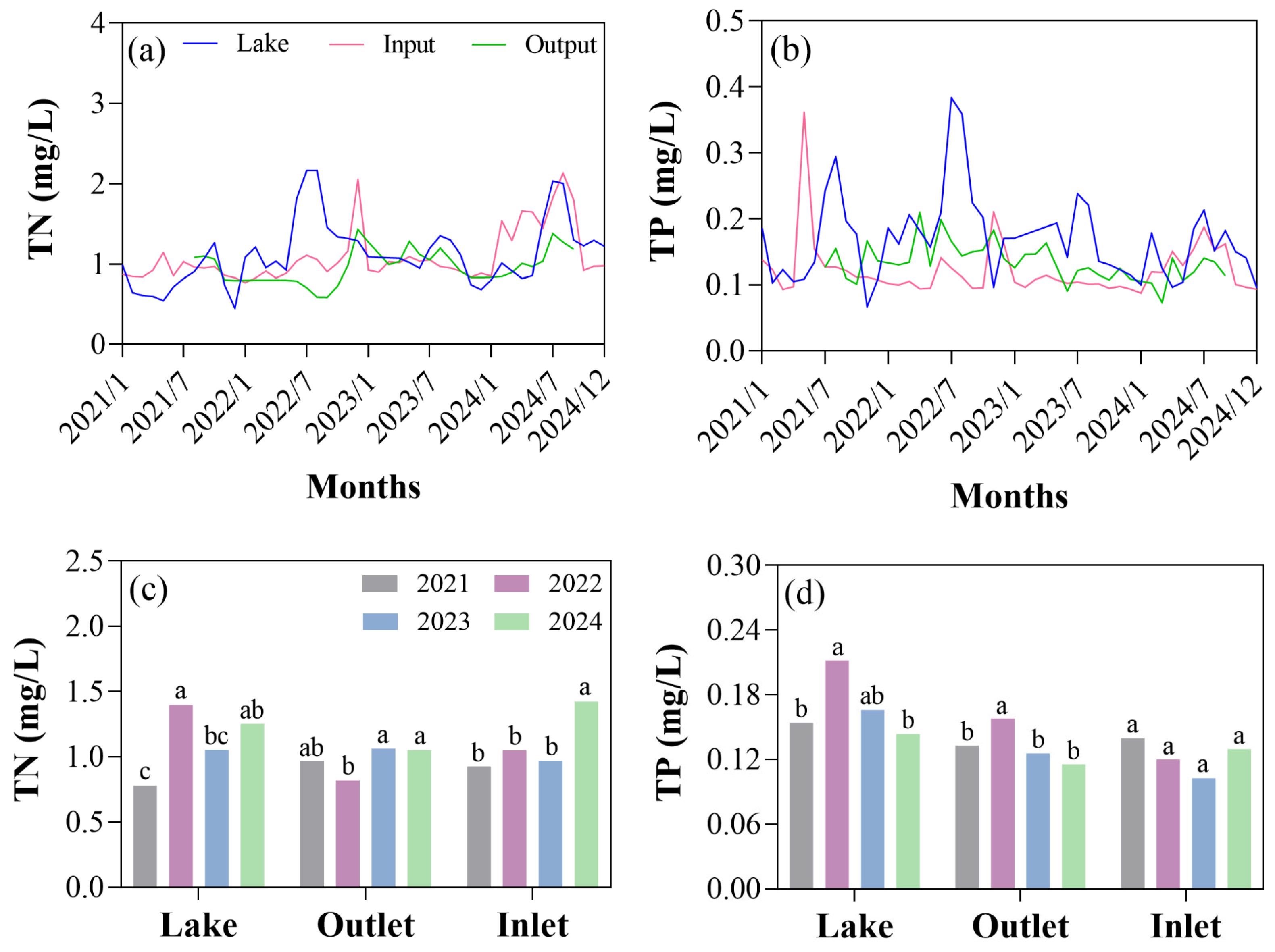
Shallow lakes are highly sensitive to hydrological changes and human activities; however, the effect of hydrological extremes on water quality dynamics remains unclear. In this study, we investigated hydroclimatic and water quality changes in Datong Lake (a typical shallow lake within the Yangtze River Basin) over the period 2021–2024, with the objective of detecting the dynamic response of lake water quality to its driving factors during extreme hydrological years. Our analysis suggested that precipitation, water level, and temperature of Datong Lake all fluctuated during the study period. Total nitrogen (TN) concentrations increased to 1.25 mg/L, 1.42 mg/L, and 1.05 mg/L in the lake, inlets, and outlet, respectively, driven largely by external nutrient inputs from agricultural and aquacultural activities. Precipitation and water level were significantly higher in the wet year (1051.15 mm and 27.26 m, respectively) than in the dry year (805.05 mm and 27.05 m, respectively). TN and total phosphorus (TP) concentrations at the river inlet were higher in wet years than in dry years, whereas TN and TP in the lake showed the opposite trend. Notably, both TN and TP were positively correlated with temperature, water level, and turbidity, and negatively correlated with dissolved oxygen and electrical conductivity. Among these drivers, turbidity emerged as key influential variable (R2 ranging from 0.18 to 0.41) in modulating lake water quality during extreme hydrological years, followed by temperature (R2 ranging from 0.11 to 0.17) and water level (R2 ranging from 0.12 to 0.13). These findings reveal that extreme hydrological shifts drive changes in lake water quality, underscoring the necessity of integrated management strategies to alleviate climate change impacts on shallow lake ecosystems.
1. Introduction
Lakes are critical ecosystems that support biodiversity, water resource security, and socioeconomic development [1,2,3]. However, lake ecosystems are impacted by numerous climatic and human-induced stressors, including dam construction, agricultural practices, industrial activities, and global changes during the Anthropocene, which have resulted in streamflow alterations and increased pollution [4,5]. Moreover, Projected increases in water use, shifts in temperature-precipitation regimes, and elevated frequency of extreme weather (e.g., flooding and extended droughts) are expected to amplify pressures on the water balance of lakes [3,6]. Degraded lakes contribute to cascading environmental risks, including the loss of aquatic biodiversity, compromised fisheries, and impaired ecosystem services [1]. Thus, monitoring water quality and hydroclimatic factors is crucial for understanding lake ecosystem dynamics and revealing the underlying patterns, driving forces, and interactions between environmental and anthropogenic changes.
Shallow lakes are exceptionally sensitive to human activity because of their limited depth, high sediment–water interchange, and long hydraulic retention times [1,7]. Anthropogenic drivers such as intensive aquaculture, agricultural runoff, and shoreline modification exacerbate eutrophication, triggering a regime shift from clear water to high nutrient levels [8,9]. Excessive nitrogen and phosphorus lead to frequent algal blooms, which not only reduce water transparency but also affect the survival of other aquatic organisms [10]. For example, the charophyte community in Lake Veluwemeer in the Netherlands disappeared because of eutrophication in the 1960s, which subsequently increased turbidity [11]. Charophytes are sensitive to elevated TN/TP. Hydrological extremes exacerbated this degradation. Wet years increased agricultural nutrient runoff, while dry years triggered sediment-based nutrient release processes that mirrored in Datong Lake’s nutrient dynamics. Hydrometeorological conditions control the water quality of shallow lakes. High temperatures can increase the water temperature in shallow lakes, accelerate the metabolic rate of aquatic organisms, and promote the growth and reproduction of algae [12]. In addition, high temperatures can reduce the solubility of dissolved oxygen (DO) in the water, resulting in decreased DO levels in the lake, which negatively impacts the survival of fish and other aerobic organisms [13]. Yuan et al. [14] also found that high water temperatures are related to DO and have a significant effect on fish mortality. Moreover, heavy rain can cause a sudden increase in surface runoff, resulting in enhanced water levels in shallow lakes and an influx of large amounts of external pollutants into the lake, which can increase the nutrient concentrations and turbidity of lake water [15]. Notably, increasingly frequent extreme events, such as severe heat waves, extreme precipitation, and rapid drought–flood transitions, act as ecological stressors that disrupt nutrient cycles, oxygen dynamics, and species interactions in lakes [16,17]. Thus, the underlying processes that trigger lake water quality variations during extreme events and their relationship with human activities should be elucidated.
Datong Lake, located in the Yangtze River Basin, is the largest inland lake in Hunan Province, China [18]. This shallow lake plays a crucial role in maintaining the regional ecological balance, provides habitats for diverse aquatic organisms, and supports local fisheries and agriculture [19]. However, in recent decades, Datong Lake has faced significant environmental challenges, primarily reduced water quality and ecological degradation [20]. The total phosphorus (TP) concentration has increased significantly, promoting the growth of algae and leading to a eutrophic state with reduced water transparency and DO levels [21]. Moreover, in recent years, the Yangtze River Basin has witnessed a substantial increase in the frequency of extreme climatic events, including heat waves, floods, and droughts, which have seriously impacted the ecological environment, agriculture, and human activity in the Datong Lake area [22,23,24]. Under continued climate change, the frequency and intensity of extreme events are likely to increase. As a compelling natural laboratory for shallow lake research, previous studies on Datong Lake have focused on different aspects, including the phytoplankton community structure and its relationship with environmental factors [25], and aquatic vegetation restoration and its effect on water quality purification [26]. However, researchers have not yet clarified the complex interactions between lake water quality, hydrological conditions, and pollutant inputs during hydrological extremes in Datong Lake; this knowledge is crucial for developing effective adaptation and mitigation strategies related to lake water quality.
The general sensitivity of shallow lakes to nutrient loading and climate change is well-documented [27,28]. However, previous studies have often focused on seasonal patterns or the effects of isolated events [23,29]. In contrast, the differential and dynamic responses of water quality to consecutive extreme hydrological years remain poorly quantified. Therefore, this study employs high-frequency water quality monitoring data to investigate the dynamic responses of water quality in Datong Lake during extreme hydrological years and explore the underlying driving factors. We hypothesized that: (1) water quality in Datong Lake would vary with different hydrological years; and (2) the relationship between water quality, pollutant fluxes, and hydroclimatic variables in different hydrological years would be different.
2. Materials and Methods
2.1. Study Area
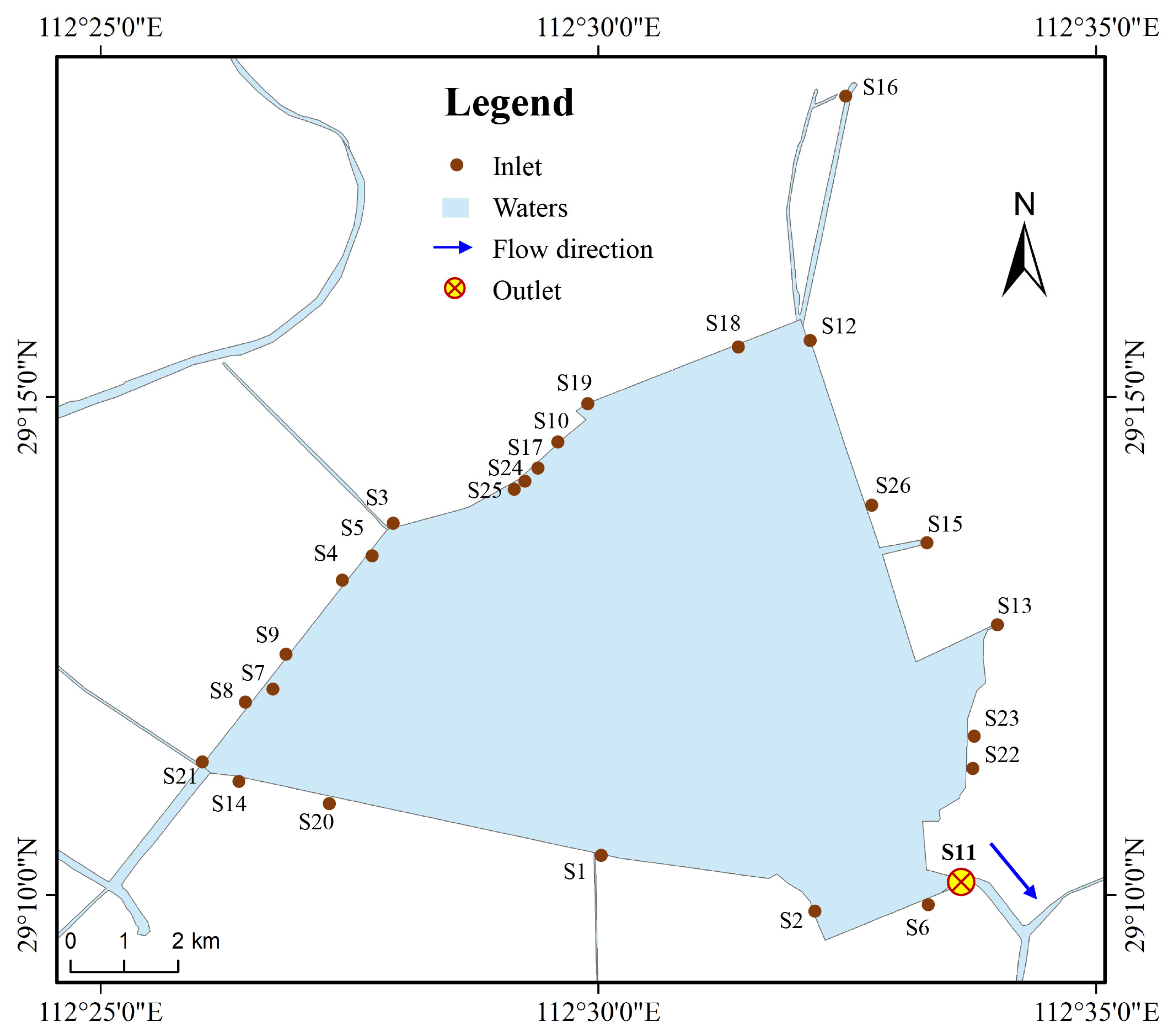
Datong Lake (112°17′–112°42′ E, 29°04′–29°22′ N) is an essential commodity grain base and inland aquaculture area in central southern China, with an area of approximately 82.67 km2 and a water storage capacity of 2.23 billion m3 [25] (Figure 1). Datong Lake has a subtropical monsoon climate with a mean annual temperature of 20.29 °C and mean annual relative humidity of approximately 81% (Table 1). Datong Lake lies at a lower elevation than its surrounding areas, forming a hydrological network where basin water systems and ditches converge, making the lake a “sink” for non-point-source pollution. Datong Lake has 26 electric inlet/outlet points. Among these, 25 sites were designated as inlet points, representing the major channels where external waters enter the lake. The remaining one site (Gate No. 11) served as the sole outlet point, from which water discharges from the lake. The spatial distribution of all these sampling sites is explicitly shown in Figure 1. Massive pollutant inputs and poor hydrodynamic conditions have deteriorated both the water quality and aquatic ecosystem of Datong Lake [30].
Figure 1.
Map of rivers entering Datong Lake through electric gates.
Table 1.
Water quality and hydrometeorological statistics for Datong Lake from 2021 to 2024. DO = dissolved oxygen, EC = electrical conductivity, CODMn = permanganate index, NH3-N = ammonia nitrogen, TP = total phosphorus, TN = total nitrogen, SE = standard error, C.I. = confidence interval.
2.2. Data Sources
In this study, 26 fixed sampling sites were selected, covering rivers draining out of (site No. 11) and discharging into (all other sites) Datong Lake. Field sampling was conducted daily between 2021 and 2024. Water quality data for Datong Lake, including total nitrogen (TN), TP, DO, electrical conductivity (EC), and turbidity, were obtained from the China National Environmental Monitoring Center (http://www.cnemc.cn/). Data on the precipitation, temperature, and water level of Datong Lake were obtained from the Bureau of Agriculture and Rural Affairs of Datong District. Daily water quality data for the rivers entering the lake from 2021 to 2024 were provided by the local government. Each survey was conducted at a fixed sampling site. All water sampling and analysis procedures strictly followed the guidelines of the Environmental Quality Standards for Surface Water of China (GB-3838-2002, Chinese Environmental Protection Agency, 2002) [26]. Vertically integrated water samples were collected using pre-cleaned plastic containers, which were immediately stored under refrigeration at 4 °C to preserve sample integrity prior to laboratory analysis. Concentrations of total nitrogen (TN) and total phosphorus (TP) were quantified via a continuous-flow analyzer. DO, EC, and turbidity were measured in situ using a multi-parameter water quality analyzer (YSI ProQuatro 600XL, Yellow Springs, Ohio, USA) with calibrated probes to ensure measurement accuracy. Measurement criteria for the data remained consistent and standardized across the entire recorded timeframe. Furthermore, rigorous quality control procedures were enforced by the surveying agencies, which guaranteed the reliability of the data before it was released. Based on the water quality data for individual water samples, annual water quality was calculated for Datong Lake by averaging all the values within a given year. This averaging method allowed us to rule out the water quality bias due to the unequal number of samples among the various sampling sites.
2.3. Statistical Analyses
Data normality was analyzed using the Shapiro–Wilk test before the analyses. Differences in hydrometeorological and water quality parameters between wet and dry years were determined using independent samples t-test (for normally distributed data) or the Mann–Whitney U test (for non-normal data). Regression analysis was used to explain the relationship between water quality and environmental variables in different hydrological years, with significance set to α = 0.05. Multicollinearity among independent variables was evaluated using the variance inflation factor (VIF), with a threshold of VIF < 5 indicating no significant multicollinearity. Variables that did not meet the assumptions of normality were log-transformed to approximate normal distribution where necessary. Principal component analysis (PCA) was conducted to identify the important driving factors of water quality, clustering of pollution characteristics, and possible sources of pollutants in different hydrological years. The PCA was based on a correlation matrix and included ten variables. Varimax rotation was applied to enhance the interpretability of the principal components. PCA was performed using CANOCO software (version 4.5) (Microcomputer Power, New York, NY, USA). The classification of extreme hydrological years was determined based on the annual precipitation during the study period. We employed a standardization method based on the conceptual framework of the Standardized Precipitation Index (SPI) to objectively identify different hydrological years [31]. Given the relatively short duration of the study, the annual precipitation for each year was converted to a Z-score, which represents the standard deviations it deviated from the mean annual precipitation. Years with a Z-score ≥ 0.5 were classified as wet years. Conversely, years with a Z-score ≤ −0.5 were classified as dry years [32]. The calculated mean annual precipitation for Datong Lake is 928.1 mm, with a standard deviation of 124.36 mm. The Z-scores from 2021 to 2024 were 1.09, −1.17, −0.81, and 0.89, respectively. Therefore, 2021 and 2024 were identified as wet years, while 2022 and 2023 were dry years. All mathematical and statistical computations were performed using R version 4.3.1.
3. Results
3.1. Hydroclimatic and Water Quality Variability
3.1.1. Hydrometeorology
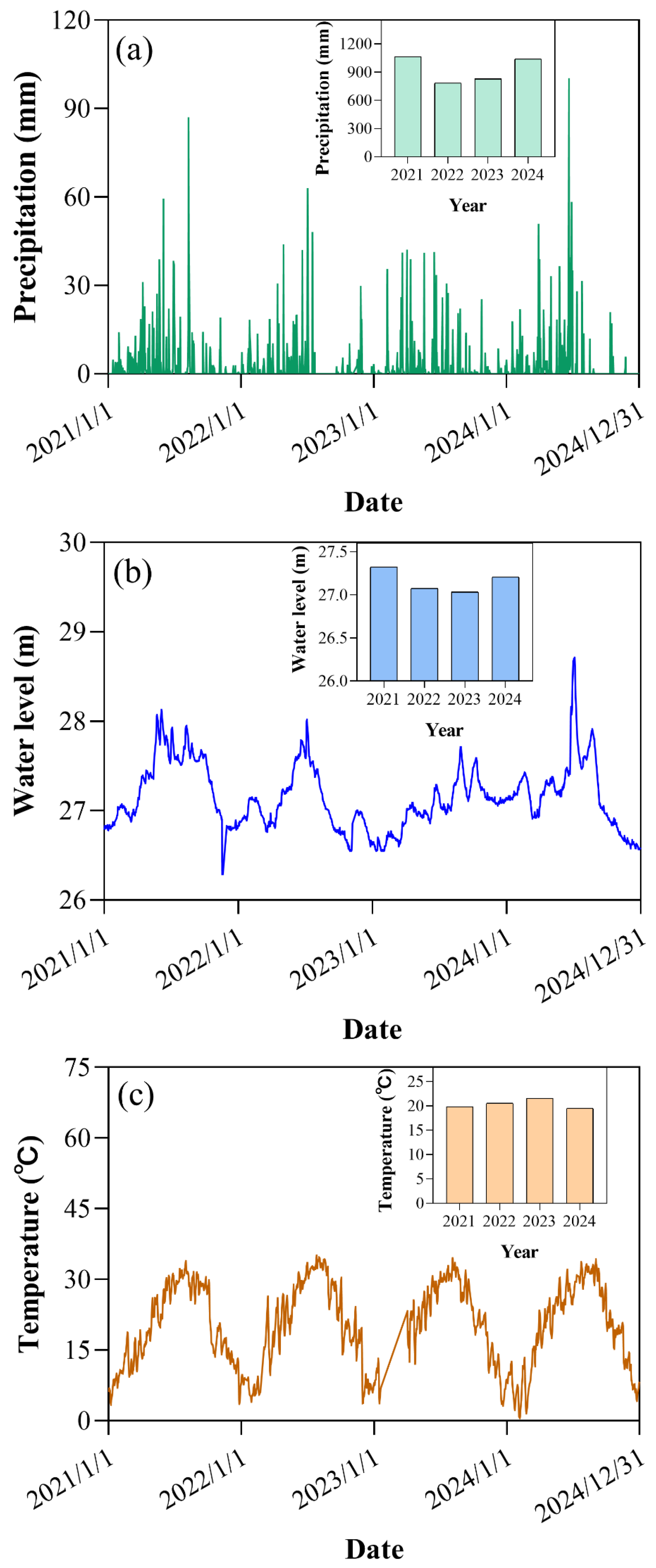
Daily precipitation in Datong Lake fluctuated during the study period, ranging from 0 to 100 mm (Figure 2a). The mean annual precipitation decreased from 1063.3 mm in 2021 to 827.5 mm in 2023, then increased to 1039.0 mm in 2024. The water level of Datong Lake exhibited inter-annual periodic variations, first increasing then decreasing within each year, with the mean annual precipitation ranging from 27.03 to 27.32 m (Figure 2b). Temperature also fluctuated over the study period, ranging from 0 to 35.1 °C (Figure 2c). However, temperature displayed the opposite trend to water level and precipitation, increasing from 19.85 °C in 2021 to 21.56 °C in 2023, then decreasing to 19.51 °C in 2024 (Figure 2c).
Figure 2.
(a) Precipitation, (b) water level, and (c) temperature variability during 2021–2024 in Datong Lake.
3.1.2. Water Quality
Throughout the study period, the TN of Datong Lake, the inlets, and the outlet showed similar trends, with values of 0.45–2.17 mg/L (lake), 0.77–2.14 mg/L (inlets), and 0.59–1.44 mg/L (outlet), respectively (Figure 3a). TN significantly increased from 2021 to 2024, to 1.25 mg/L, 1.42 mg/L, and 1.05 mg/L in the lake, inlets, and outlet, respectively (p < 0.05) (Figure 3c). TP concentrations in Datong Lake showed similar fluctuating trends to those of the inlets and outlet, although those of the lake and inlets fluctuated more intensely, with peak values of 0.38 mg/L and 0.36 mg/L for Datong Lake and the inlets, respectively (Figure 3b). The mean annual TP concentrations for the lake and outlet significantly decreased during the study period, by 0.01 mg/L and 0.02 mg/L, respectively (p < 0.05) (Figure 3d).
Figure 3.
(a) Monthly total nitrogen (TN) and phosphorus (TP) variability during 2021–2024; (b) Comparison of annual TN (c) and TP (d) in Datong Lake, its inlets and outlet. A different lowercase letter indicates statistical significance (p < 0.05).
3.2. Comparison of Hydroclimatic Conditions and Water Quality in Extreme Hydrological Years
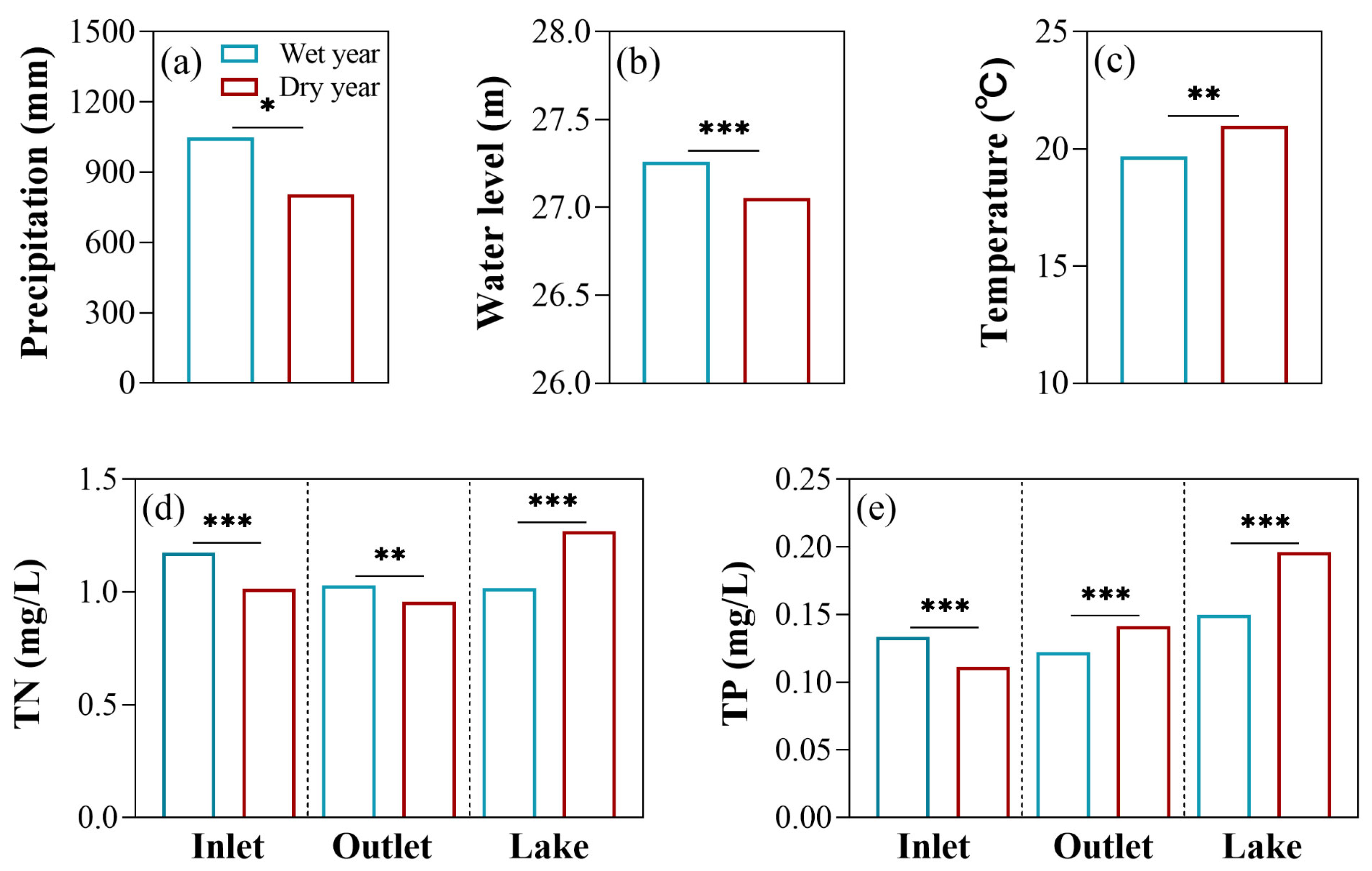
Precipitation and water level were significantly higher in the wet year than in the dry year, with values of 1051.15 mm (wet year) and 805.05 mm (dry year) for precipitation and 27.26 m (wet year) and 27.05 m (dry year) for water level (Figure 4a,b). The temperature of Datong Lake also differed significantly, from 19.68 °C in the wet year to 20.99 °C in the dry year (Figure 4c). TN concentration showed a significant difference between hydrological extremes, with higher values at the inlets and outlet (1.17 mg/L and 1.03 mg/L, respectively) in the wet year but lower values in the lake (1.01 mg/L) (Figure 4d). TP concentration in the inlets decreased significantly from 0.13 mg/L in the wet year to 0.11 mg/L in the dry year, whereas TP concentrations in the outlet and Datong Lake increased significantly from the wet year to the dry year (Figure 4e).
Figure 4.
Comparison of (a) precipitation, (b) water level, (c) temperature, (d) TN, and (e) TP between hydrological extremes in Datong Lake, inlets, and outlet. Asterisks indicate statistically significant differences between hydrological years (* p < 0.05, ** p < 0.01, *** p < 0.001).
3.3. Dynamic Response of Lake Water Quality to Extreme Hydrological Years
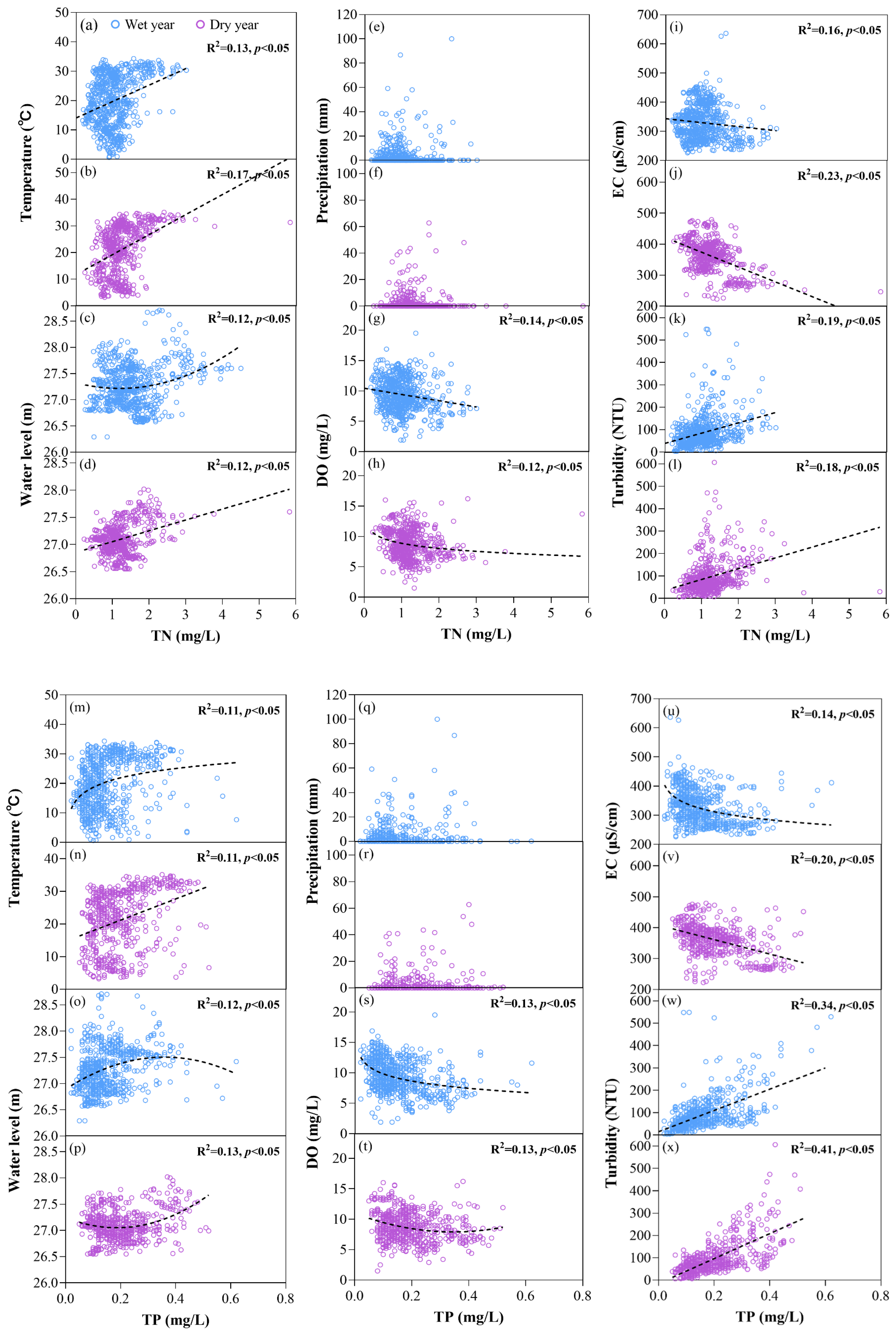
TN concentration was strongly correlated to temperature, water level, DO, EC, and turbidity in Datong Lake during the wet year (p < 0.05), with the R2 value ranging from 0.12 to 0.19 (Figure 5). A similar relationship was also detected between TP concentration and environmental variables in the wet year; that is, a positive relationship with temperature (p < 0.05, R2 = 0.11), water level (p < 0.05, R2 = 0.12), and turbidity (p < 0.05, R2 = 0.34), and a negative relationship with DO (p < 0.05, R2 = 0.13) and EC (p < 0.05, R2 = 0.14) (Figure 5). In the dry year, the TN concentration of Datong Lake varied linearly with temperature, water level, EC, and turbidity, with R2 values of 0.17, 0.12, 0.23, and 0.18, respectively; whereas the TP concentration exhibited inconsistent correlations with different environmental variables (Figure 5).
Figure 5.
Relationship between environmental variables and (a–l) TN concentration in the wet and dry years, and (m–x) TP concentration in the wet and dry years. TN, total nitrogen; TP, total phosphorus; DO, dissolved oxygen; EC, electrical conductivity.
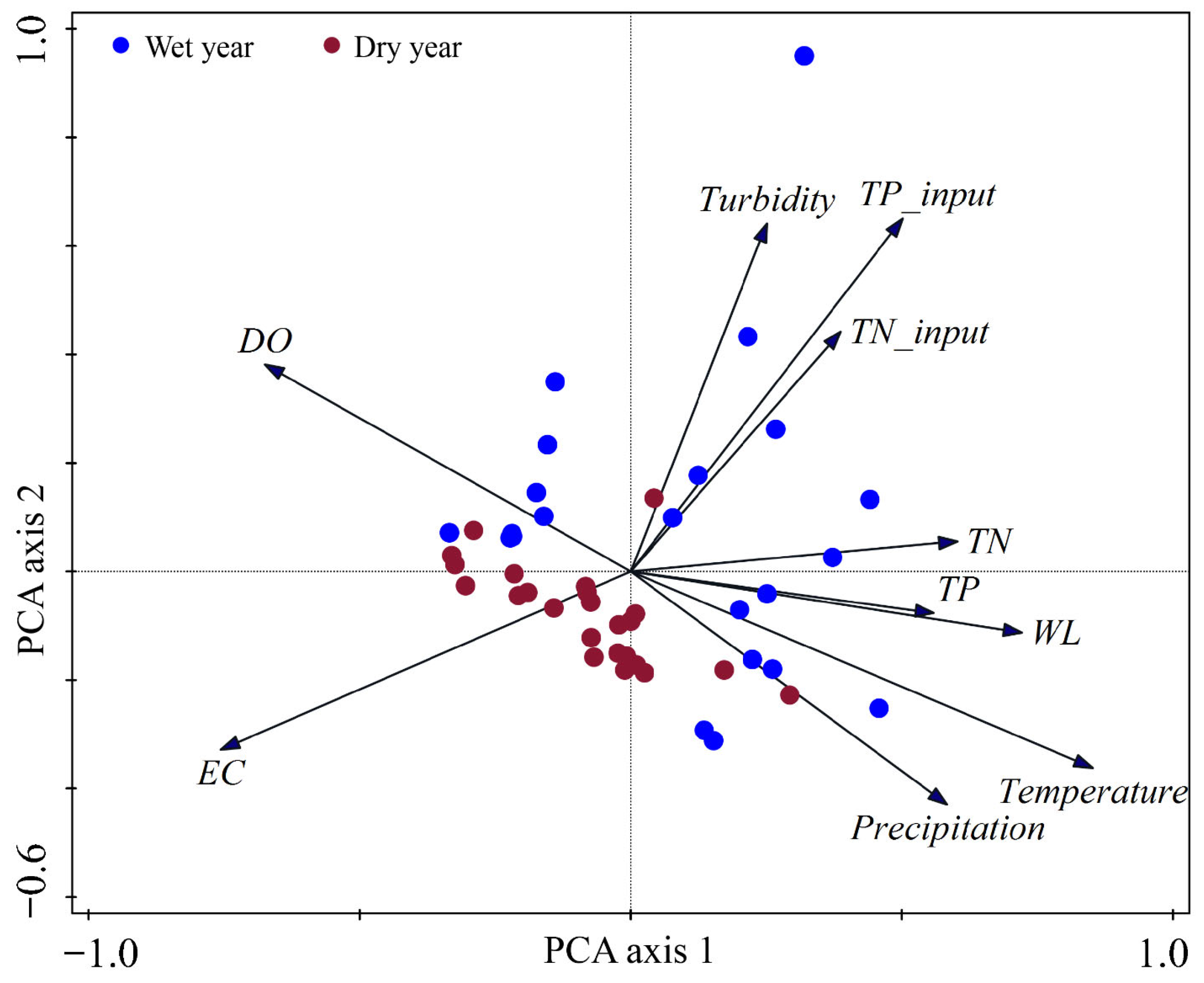
According to the PCA results for the different hydrological years, axes 1 and 2 explained 53.72% and 25.60% of the total variance, respectively. Both axes accounted for approximately 80.0% of the total variance and reflected the basic information of the original data (Figure 6). Axis 2 was positively correlated with TN and negatively correlated with TP. Two distinct clusters represented the wet- and dry-year assemblages, which were positioned on the negative and positive parts of the first axis, respectively. Tightly clustered samples collected during the dry year indicated low variability in the water quality assemblage, whereas the samples became more widely dispersed during the wet year. PC1 acts as a comprehensive environmental gradient, with strong loadings for temperature (0.85), WL (0.71), EC (−0.78) and DO (−0.72). This indicates that PC1 primarily differentiates environmental conditions characterized by high temperature and elevated water level from those with high EC and high DO. PC2 functions as a turbidity and nutrient input gradient, with strong loadings for turbidity (0.61) and TP_input (0.62), suggesting that PC2 is mainly driven by sediment resuspension and external phosphorus input. The clustering of dry-year and wet-year samples along these two gradients confirms that hydrological extremes regulate water quality by modifying both the comprehensive environmental conditions (PC1) and the turbidity–nutrient input dynamics (PC2) (Table 2).
Figure 6.
PCA of different hydrological years. TN, total nitrogen; TP, total phosphorus; DO, dissolved oxygen; EC, electrical conductivity; WL, water level.
Table 2.
PCA variable loadings for PC1 and PC2.
4. Discussion
4.1. Trends in Water Quality and Identification of Primary Nutrient Sources
The water quality in Datong Lake exhibited distinct trends, with TN concentrations generally increasing and TP concentrations gradually decreasing during the study period. This opposing trend in TN and TP suggests different sources and regulatory mechanisms for these key nutrients. The increasing TN trend may be primarily attributed to continuous nitrogen inputs from surrounding agricultural activities, aquaculture, and domestic sewage [33]. As an important commodity grain base and inland aquaculture area, Datong Lake receives significant nitrogen inputs from fertilizer application in agriculture and feed input in aquaculture [34]. The discharge of domestic sewage from surrounding areas also contributes to the nitrogen load in the lake. Karakoc et al. [35] also noted that nitrogen-containing pollutant loading served as the primary cause of water quality deterioration in Mogan Lake. Conversely, the decreasing trend in TP concentrations may be related to enhanced phosphorus removal measures or changes in phosphorus sources. Recent environmental management efforts, such as the control of phosphorus-containing detergents and the implementation of agricultural non-point-source pollution control measures, may have reduced external phosphorus inputs [36]. Additionally, internal phosphorus cycling mechanisms in lakes, such as adsorption by sediments or uptake by aquatic plants, may also contribute to reduced TP concentrations [37]. Datong Lake has many electric gates that control river flow into the lake. During periods of high water withdrawal (e.g., during farmland irrigation), the water levels of the rivers flowing into Lake Datong were high. Therefore, pollutant concentrations entering the lake via rivers vary periodically. For example, regular TN fluctuations at gates 2 and 7 were correlated with the pollution load of the lake. In addition, the pollution load is higher during the withdrawal period for activities such as farmland irrigation [18]. Notably, TP concentration in the lake is higher than that of its inlet and outlet, which indicated that in addition to being affected by external source pollutants, the release of phosphorus from the lake’s sediment is also an important factor influencing the lake’s water quality. As a shallow lake, pollutants in the sediment of Datong Lake are susceptible to the effects of temperature, light, and water disturbance, and thus, they can easily release phosphorus pollutants into the lake water, causing pollution. Therefore, the significant impact of internal pollutants released from lake sediments on the water quality of Datong Lake cannot be ignored.
4.2. Drivers of Water Quality Responses During Different Hydrological Extremes
The distinct fluctuations in precipitation, water level, and temperature across different hydrological years were revealed, which directly modulated nutrient concentrations and physicochemical parameters [38]. The observed correlations between water quality, temperature, and water level align with established hydrological principles. This nutrient–hydrology coupling becomes particularly critical in shallow systems, such as Lake Datong, where reduced water depths amplify solar radiation penetration, potentially accelerating internal nutrient recycling through sediment resuspension and mineralization processes [39]. In the wet year, TN concentration was strongly correlated with environmental variables, such as temperature, water level, DO, EC, and turbidity. The positive relationship between TN and temperature may be due to the enhanced metabolic activities of microorganisms and aquatic plants at higher temperatures, which can promote nitrogen release from sediments or organic matter decomposition [40]. A similar conclusion was confirmed in a study on the water quality of European lakes [41].
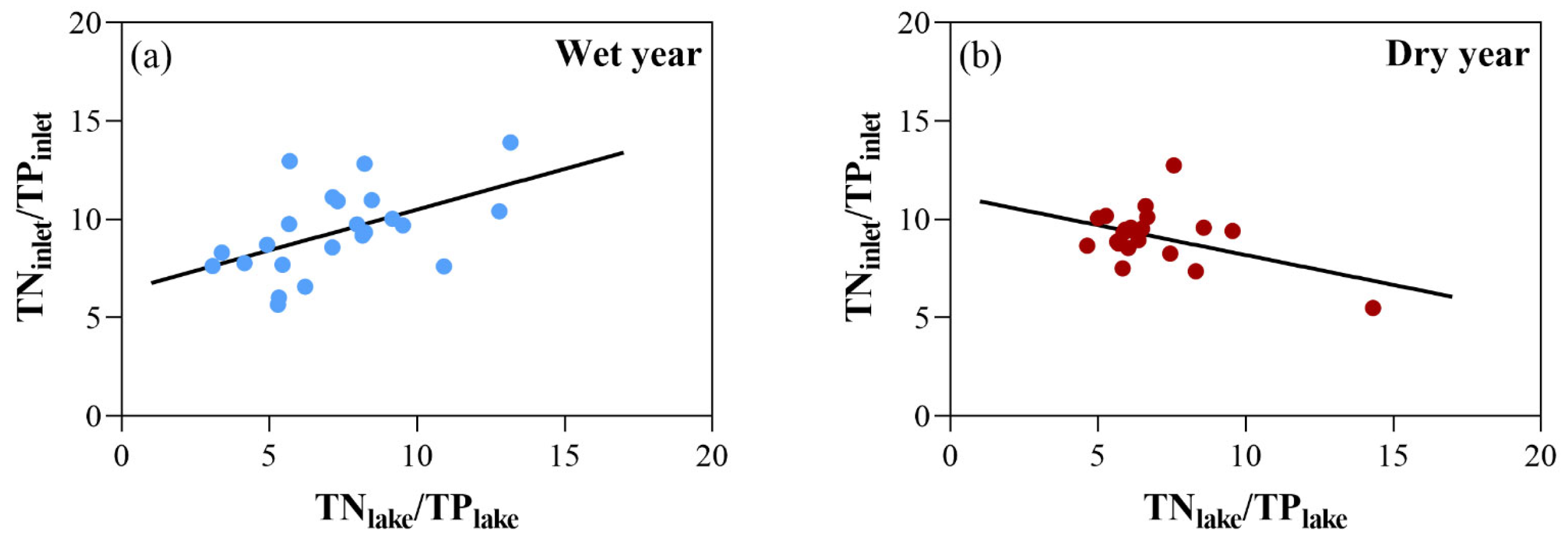
The positive correlation between lake TN and inlet TN suggests that increased water inflow during wet years may result in more nitrogen from external sources (Figure 7). This pattern aligns with the hydrological dynamics of wet years, where elevated water levels are typically accompanied by intensified surface runoff, thereby enhancing the transport of nitrogen-rich inputs from surrounding catchments, such as agricultural fertilizers, domestic sewage, and decomposed organic matter in soils into the aquatic system. Moreover, higher water levels can inundate riparian zones that accumulate nitrogen over drier periods, releasing stored nutrients into the water column through leaching and surface exchange processes, which further strengthens the linkage between water level rise and increased TN concentrations [42]. Lastly, the augmented water inflow associated with rising water levels may dilute the in-lake nitrogen pool to some extent, but the substantial influx of external nitrogen sources appears to override this dilution effect, leading to the observed positive correlation between TN and water level. Notably, the positive association between TP and temperature in the wet year may stem from enhanced microbial decomposition of organic phosphorus in sediments under warmer conditions, as higher temperatures accelerate the metabolic activities of microorganisms responsible for breaking down organic matter and releasing bioavailable phosphorus into the water column. Similarly, higher turbidity typically indicates greater sediment resuspension or input processes that carry adsorbed phosphorus on sediment particles into the water, directly contributing to elevated TP concentrations [43]. In contrast, the relationship between TP and DO shifts to a negative one, which could be attributed to the high oxygen demand of microbial communities involved in phosphorus release; as microorganisms decompose organic matter to mobilize phosphorus, they consume dissolved oxygen, leading to lower DO levels in tandem with higher TP concentrations [34].
Figure 7.
Correlation between the TN/TP ratio in the lake and the ratio of TN/TP inlets during the (a) wet year and (b) dry year.
In addition to hydrological forces, the morphometry of a shallow lake is a critical factor modulating its water quality response. The shallow depth of Datong Lake amplifies the influence of wind-induced wave activity on the sediment-water interface, facilitating frequent sediment resuspension [44]. Consequently, this persistent resuspension acts as a pivotal internal pump, continuously releasing bioavailable phosphorus and nitrogen stored in the sediments back into the water [45]. This morphometry-driven internal loading can sustain high turbidity and nutrient concentrations; potentially offsetting management efforts focused solely on external pollutant reduction [46]. Therefore, the combination of limited depth and significant fetch in Datong Lake creates a system inherently prone to internal nutrient recycling, which is a key component of its water quality dynamics during both wet and dry hydrological extremes.
Notably, organic matter in lake ecosystems, encompassing both dissolved organic matter (DOM) and sediment organic matter (SOM), acts as a dual mediator of TN and TP availability, with its effects being notably modulated by hydrological variability between wet and dry years [47]. In wet years, the substantial increase in rainfall intensifies surface runoff, facilitating the input of large quantities of terrestrial organic matter into Datong Lake. This allochthonous organic matter, such as humic and fulvic acid fractions, exhibits a strong capacity to bind inorganic nitrogen and phosphorus through surface functional groups. Such binding effects can temporarily reduce the concentration of bioavailable TN and TP in the water column, thereby mitigating the risk of nutrient pulses induced by heavy rainfall [48]. Concurrently, the input of terrestrial organic matter alters the redox conditions of the water-sediment interface. Denitrifying bacteria enhance nitrogen removal through denitrification, while phosphate-solubilizing bacteria facilitate the release of sediment-bound phosphorus, resulting in a complex balance of TN and TP concentrations in the water column. In contrast, dry years are characterized by reduced external organic matter input and enhanced endogenous organic matter decomposition. With decreased water level and increased water residence time, the dilution effect of organic matter is weakened, and the accumulated SOM in sediments undergoes intense mineralization under the combined influence of elevated temperature and aerobic conditions [49]. This decomposition process releases large amounts of nitrogen and phosphorus bound in organic matter into the water column, directly contributing to the increase in TN and TP concentrations observed in Datong Lake during dry years. Future research should integrate measurements of organic matter content, composition, and bioavailability to establish a more comprehensive understanding of nutrient cycling mechanisms in this lake ecosystem.
4.3. Implications for Water Quality Improvement in Shallow Lakes
Water quality degradation in shallow lakes represents a globally recognized environmental challenge that is persistently unaddressed and continues to impede goals of attaining sustainable lake ecosystems, which are influenced by both natural phenomena and human activities [1]. To translate these findings into actionable management strategies, tailored approaches must be developed to fit the specific context of the Datong Lake basin. First, controlling external nutrient loads requires the implementation of best management practices (BMPs) at the watershed scale. Given the dominance of agricultural and aquacultural activities in the region, the construction of constructed wetlands at the confluence of major electric gates (inlets) is highly recommended to intercept and treat nitrogen- and phosphorus-rich runoff [15]. This approach aligns with the “Action Plan for Prevention and Control of Water Pollution in the Yangtze River Basin”, which promotes natural infrastructure for pollution mitigation [50]. Second, the impacts of extreme hydrological events on water quality should be considered in water resource management and environmental protection strategies. During wet years, measures should be taken to reduce the influx of pollutants from surface runoff; for example, by constructing retention ponds or implementing vegetative buffer strips. During dry years, efforts should be made to maintain water levels and improve water circulation to enhance the dilution and self-purification capacity of lakes; in addition, targeted sediment dredging in areas with high nutrient release potential could be considered [16,17]. Third, the restoration and protection of aquatic vegetation can play an important role in improving water quality. Aquatic plants absorb nutrients, reduce sediment resuspension, and improve water transparency [51]. The results of this study show that the dynamic response of water quality to hydrological factors closely affects lake ecological functions. Therefore, the restoration of healthy aquatic ecosystems, including the establishment of diverse aquatic plant communities, is essential for maintaining good water quality [52].
Although previous studies have established general patterns of nutrient dynamics in shallow lakes, such as those in Europe and China [39,41,45]. However, the specific mechanisms by which consecutive and contrasting extreme hydrological years reorganize the dominant pathways of nutrient transport and internal cycling in shallow lake systems have not yet been fully quantified. By directly quantifying the differential responses of TN and TP to these extremes, this study provides a dynamic and mechanistic framework. This enables a more predictive understanding of how shallow lakes in similar climatic regions may respond to the increasing frequency of climatic extremes, thereby supporting more resilient and adaptive management strategies. Notably, a key limitation of this study is the lack of data to quantify internal and external nutrient contributions. Future work should integrate sediment nutrient flux measurements and isotopic tracing to explicitly apportion nutrient sources, which would refine management strategies targeting either external runoff or internal sediment release during different hydrological years.
5. Conclusions
This study provides critical insights into the impacts of hydrological extremes on water quality dynamics in shallow lakes, with Datong Lake employed as a case study. We demonstrate that water quality dynamics in Datong Lake are driven by a cascade of interactions between extreme hydrological shifts and nutrient cycles. We synthesize the key processes into a conceptual framework: TN exhibited an increasing trend, whereas total phosphorus TP showed a decreasing trend, indicating their differential responses to agricultural runoff, aquaculture activities, and management interventions. Hydrological extremes directly alter water levels and temperature, which in turn govern the dominant nutrient cycling pathways. Wet years facilitate external pollutant loading via surface runoff, whereas dry years favor internal pollutant release and nutrient concentration, amplified by the lake’s shallow depth which facilitates sediment resuspension and enhances nutrient biogeochemical cycle. This framework highlights that pollutant concentrations are governed by distinct hydrologically driven mechanisms, underscoring the necessity of nutrient management strategies adaptive to contrasting hydrological conditions. For instance, the intensification of climate change necessitates adaptive gate operations as a critical measure to balance agricultural productivity and ecological sustainability in shallow lake basins.
Author Contributions
Conceptualization, Y.X.; Writing—original draft, D.L.; Data curation, D.L.; Investigation, D.L.; Validation, D.L.; Methodology, M.G.; Formal analysis, M.G.; Writing—review and editing, Y.X.; Supervision, Y.X. All authors have read and agreed to the published version of the manuscript.
Funding
This study was supported by the National Key Research and Development Program (No. 2022YFC3204103), Water Conservancy Science Project of Hunan Province (No. XSKJ2024064-58, 59), Key Program of Science and Technology of the Ministry of Water Resources (No. SKS-2022079), Science and Technology Innovation Platform Project of Hunan Province (No. 2022PT1010), Science and Technology Project for Natural Resources in Hunan Province of China (No. 20230138ST), Science and Technology Cooperation Project of Hunan Province’s Innovation Ecosystem Construction Plan (No. 2023WK2003).
Institutional Review Board Statement
Not applicable.
Informed Consent Statement
Not applicable.
Data Availability Statement
Data will be made available on request.
Conflicts of Interest
The authors declare that they have no known competing financial interests or personal relationships that could have appeared to influence the work reported in this paper.
References
- Davidson, T.A.; Sayer, C.D.; Jeppesen, E.; Søndergaard, M.; Lauridsen, T.L.; Johansson, L.S.; Baker, A.; Graeber, D. Bimodality and alternative equilibria do not help explain long-term patterns in shallow lake chlorophyll-a. Nat. Commun. 2023, 14, 398. [Google Scholar] [CrossRef] [PubMed]
- van Vliet, M.T.H. Complex interplay of water quality and water use affects water scarcity under droughts and heatwaves. Nat. Water 2023, 1, 902–904. [Google Scholar] [CrossRef]
- Woolway, R.I.; Merchant, C.J. Worldwide alteration of lake mixing regimes in response to climate change. Nat. Geosci. 2019, 12, 271–276. [Google Scholar] [CrossRef]
- Pi, X.; Luo, Q.; Feng, L.; Xu, Y.; Tang, J.; Liang, X.; Ma, E.; Cheng, R.; Fensholt, R.; Brandt, M.; et al. Mapping global lake dynamics reveals the emerging roles of small lakes. Nat. Commun. 2022, 13, 5777. [Google Scholar] [CrossRef]
- Loewen, C.J.G. Lakes as model systems for understanding global change. Nat. Clim. Change 2023, 13, 304–306. [Google Scholar] [CrossRef]
- IPCC. Climate Change 2023: Synthesis Report; Lee, H., Romero, J., Eds.; IPCC: Geneva, Switzerland, 2023; pp. 35–115. [Google Scholar]
- Peng, X.; Zhang, L.; Li, Y.; Lin, Q.; He, C.; Huang, S.; Li, H.; Zhang, X.; Liu, B.; Ge, F.; et al. The changing characteristics of phytoplankton community and biomass in subtropical shallow lakes: Coupling effects of land use patterns and lake morphology. Water Res. 2021, 200, 117235. [Google Scholar] [CrossRef]
- Bayley, S.E.; Prather, C.M. Do wetland lakes exhibit alternative stable states? Submersed aquatic vegetation and chlorophyll in western boreal shallow lakes. Limnol. Oceanogr. 2003, 48, 2335–2345. [Google Scholar] [CrossRef]
- Andersen, T.K.; Nielsen, A.; Jeppesen, E.; Hu, F.N.; Bolding, K.; Liu, Z.W.; Sondergaard, M.; Johansson, L.S.; Trolle, D. Predicting ecosystem state changes in shallow lakes using an aquatic ecosystem model: Lake Hinge, Denmark, an example. Ecol. Appl. 2020, 30, e02160. [Google Scholar] [CrossRef]
- Lv, J.; Wu, H.; Chen, M. Effects of nitrogen and phosphorus on phytoplankton composition and biomass in 15 subtropical, urban shallow lakes in Wuhan, China. Limnologica 2011, 41, 48–56. [Google Scholar] [CrossRef]
- Recknagel, F.; Talib, A.; van der Molen, D. Phytoplankton community dynamics of two adjacent Dutch lakes in response to seasons and eutrophication control unravelled by non-supervised artificial neural networks. Ecol. Inform. 2006, 1, 277–285. [Google Scholar] [CrossRef]
- Huang, L.; Woolway, R.I.; Timmermann, A.; Lee, S.-S.; Rodgers, K.B.; Yamaguchi, R. Emergence of lake conditions that exceed natural temperature variability. Nat. Geosci. 2024, 17, 763–769. [Google Scholar] [CrossRef]
- Jane, S.F.; Hansen, G.J.A.; Kraemer, B.M.; Leavitt, P.R.; Mincer, J.L.; North, R.L.; Pilla, R.M.; Stetler, J.T.; Williamson, C.E.; Woolway, R.I.; et al. Widespread deoxygenation of temperate lakes. Nature 2021, 594, 66–70. [Google Scholar] [CrossRef] [PubMed]
- Yuan, Q.; Wang, Y.M.; Liang, R.F.; Feng, J.J.; Li, Y.; An, R.D.; Li, K.F. Field observations of the lethality characteristics of endangered and endemic fish under the stress of total dissolved gas supersaturation. River Res. Appl. 2021, 37, 1156–1167. [Google Scholar] [CrossRef]
- Wang, J.; Chen, J.; Jin, Z.; Guo, J.; Yang, H.; Zeng, Y.; Liu, Y. Simultaneous removal of phosphate and ammonium nitrogen from agricultural runoff by amending soil in lakeside zone of Karst area, Southern China. Agric. Ecosyst. Environ. 2020, 289, 106745. [Google Scholar] [CrossRef]
- Saber, A.; James, D.E.; Hannoun, I.A. Effects of lake water level fluctuation due to drought and extreme winter precipitation on mixing and water quality of an alpine lake, Case Study: Lake Arrowhead, California. Sci. Total Environ. 2020, 714, 136762. [Google Scholar] [CrossRef]
- Li, S.; Bush, R.T.; Mao, R.; Xiong, L.; Ye, C. Extreme drought causes distinct water acidification and eutrophication in the Lower Lakes (Lakes Alexandrina and Albert), Australia. J. Hydrol. 2017, 544, 133–146. [Google Scholar] [CrossRef]
- Hu, W.; Wei, W.; Ye, C.; Li, C.; Zheng, Y.; Shi, X.; Chang, M.; Chen, H. Determining the Optimal Biomass of Macrophytes during the Ecological Restoration Process of Eutrophic Shallow Lakes. Water 2021, 13, 3142. [Google Scholar] [CrossRef]
- Hu, W.; Li, C.-h.; Ye, C.; Chen, H.-s.; Xu, J.; Dong, X.-h.; Liu, X.-s.; Li, D. Effects of aquaculture on the shallow lake aquatic ecological environment of Lake Datong, China. Environ. Sci. Eur. 2022, 34, 19. [Google Scholar] [CrossRef]
- Chao, C.; Dong, L.; Yu, W.; Huang, R.; Qin, X.; Xie, Y.; Li, F. Competitive Outcomes Between Floating-Leaved and Submerged Plants Under Eutrophication Depend on Growth Form. Freshw. Biol. 2025, 70, e70050. [Google Scholar] [CrossRef]
- Zhang, C.; Xing, B.; Zuo, Z.; Lv, T.; Chao, C.; Li, Y.; Liu, C.; Yu, D. Drivers of organic carbon stocks in eutrophic lake sediments after reestablishment of submerged aquatic vegetation. Plant Soil 2024, 499, 639–653. [Google Scholar] [CrossRef]
- Su, B.D.; Huang, J.L.; Zeng, X.F.; Gao, C.; Jiang, T. Impacts of climate change on streamflow in the upper Yangtze River basin. Clim. Change 2017, 141, 533–546. [Google Scholar] [CrossRef]
- Ma, F.; Yuan, X.; Liu, X.Y. Intensification of drought propagation over the Yangtze River basin under climate warming. Int. J. Climatol. 2023, 43, 5640–5661. [Google Scholar] [CrossRef]
- Fang, J.; Kong, F.; Fang, J.Y.; Zhao, L. Observed changes in hydrological extremes and flood disaster in Yangtze River Basin: Spatial-temporal variability and climate change impacts. Nat. Hazards 2018, 93, 89–107. [Google Scholar] [CrossRef]
- Li, D.; Zhang, T.; Xiao, T.; Yu, J.; Wang, H.; Chen, K.; Liu, A.; Li, Z. Phytoplankton’ s community structure and its relationships with environmental factors in an aquaculture lake, Datong Lake of China. Chinses J. Appl. Ecol. 2012, 23, 2107–2113. (In Chinese) [Google Scholar] [CrossRef]
- Chao, C.; Lv, T.; Wang, L.; Li, Y.; Han, C.; Yu, W.; Yan, Z.; Ma, X.; Zhao, H.; Zuo, Z.; et al. The spatiotemporal characteristics of water quality and phytoplankton community in a shallow eutrophic lake: Implications for submerged vegetation restoration. Sci. Total Environ. 2022, 821, 153460. [Google Scholar] [CrossRef] [PubMed]
- Li, X.H.; Zhang, Q.; Hu, Q.; Zhang, D.; Ye, X.C. Lake flooding sensitivity to the relative timing of peak flows between upstream and downstream waterways: A case study of Poyang Lake, China. Hydrol. Process. 2017, 31, 4217–4228. [Google Scholar] [CrossRef]
- Stefanidis, K.; Varlas, G.; Vourka, A.; Papadopoulos, A.; Dimitriou, E. Delineating the relative contribution of climate related variables to chlorophyll-a and phytoplankton biomass in lakes using the ERA5-Land climate reanalysis data. Water Res. 2021, 196, 117053. [Google Scholar] [CrossRef]
- Li, Y.; Zhang, Q.; Liu, X.; Tan, Z.; Yao, J. The role of a seasonal lake groups in the complex Poyang Lake-floodplain system (China): Insights into hydrological behaviors. J. Hydrol. 2019, 578, 124055. [Google Scholar] [CrossRef]
- Li, Y.; Liu, Y.; Yu, S.; Xing, B.; Xu, X.; Yu, H.; Wang, L.; Wang, D.; Liu, C.; Yu, D. Vigilance against climate change-induced regime shifts for phosphorus restoration in shallow lake ecosystems. Water Res. 2025, 278, 123397. [Google Scholar] [CrossRef]
- Sun, J.; Bi, S.; Bashir, B.; Ge, Z.; Wu, K.; Alsalman, A.; Ayugi, B.O.; Alsafadi, K. Historical Trends and Characteristics of Meteorological Drought Based on Standardized Precipitation Index and Standardized Precipitation Evapotranspiration Index over the Past 70 Years in China (1951–2020). Sustainability 2023, 15, 10875. [Google Scholar] [CrossRef]
- Isia, I.; Hadibarata, T.; Jusoh, M.N.H.; Bhattacharjya, R.K.; Shahedan, N.F.; Bouaissi, A.; Fitriyani, N.L.; Syafrudin, M. Drought Analysis Based on Standardized Precipitation Evapotranspiration Index and Standardized Precipitation Index in Sarawak, Malaysia. Sustainability 2023, 15, 734. [Google Scholar] [CrossRef]
- Li, Y.; Liu, Y.; Wang, H.; Zuo, Z.; Yan, Z.; Wang, L.; Wang, D.; Liu, C.; Yu, D. In situ remediation mechanism of internal nitrogen and phosphorus regeneration and release in shallow eutrophic lakes by combining multiple remediation techniques. Water Res. 2023, 229, 119394. [Google Scholar] [CrossRef] [PubMed]
- Yan, Z.; Wu, L.; Lv, T.; Tong, C.; Gao, Z.; Liu, Y.; Xing, B.; Chao, C.; Li, Y.; Wang, L.; et al. Response of spatio-temporal changes in sediment phosphorus fractions to vegetation restoration in the degraded river-lake ecotone. Environ. Pollut. 2022, 308, 119650. [Google Scholar] [CrossRef] [PubMed]
- Karakoc, G.; Erkoc, F.U.; Katiricoglu, H. Water quality and impacts of pollution sources for Eymir and Mogan Lakes (Turkey). Environ. Int. 2003, 29, 21–27. [Google Scholar] [CrossRef]
- Shi, X.; Xiao, W.; Wang, Y.; Wang, X. Characteristics and Factors of Water Level Variations in the Dongting Lake during the Recent 50 Years. South-to-North Water Transf. Water Sci. Technol. 2012, 10, 18–22. [Google Scholar]
- Yan, Z.; Lv, T.; Liu, Y.; Xing, B.; Chao, C.; Li, Y.; Wu, L.; Wang, L.; Liu, C.; Yu, D. Responses of soil phosphorus cycling and bioavailability to plant invasion in river–lake ecotones. Ecol. Appl. 2023, 33, e2843. [Google Scholar] [CrossRef]
- Fukushima, T.; Setiawan, F.; Subehi, L.; Jiang, D.L.; Matsushita, B. Water temperature and some water quality in Lake Toba, a tropical volcanic lake. Limnology 2023, 24, 61–69. [Google Scholar] [CrossRef]
- Paerl, H.W.; Xu, H.; McCarthy, M.J.; Zhu, G.; Qin, B.; Li, Y.; Gardner, W.S. Controlling harmful cyanobacterial blooms in a hyper-eutrophic lake (Lake Taihu, China): The need for a dual nutrient (N & P) management strategy. Water Res. 2011, 45, 1973–1983. [Google Scholar] [CrossRef]
- Ferencz, B.; Toporowska, M.; Dawidek, J. Role of Hydrology in Cyanobacterial Blooms in the Floodplain Lakes. Water 2023, 15, 1547. [Google Scholar] [CrossRef]
- Paule-Mercado, M.C.; Rabaneda-Bueno, R.; Porcal, P.; Kopacek, M.; Huneau, F.; Vystavna, Y. Climate and land use shape the water balance and water quality in selected European lakes. Sci. Rep. 2024, 14, 8049. [Google Scholar] [CrossRef]
- Callbeck, C.M.; Ehrenfels, B.; Baumann, K.B.L.; Wehrli, B.; Schubert, C.J. Anoxic chlorophyll maximum enhances local organic matter remineralization and nitrogen loss in Lake Tanganyika. Nat. Commun. 2021, 12, 830. [Google Scholar] [CrossRef] [PubMed]
- Camarero, L.; Catalan, J. Atmospheric phosphorus deposition may cause lakes to revert from phosphorus limitation back to nitrogen limitation. Nat. Commun. 2012, 3, 1118. [Google Scholar] [CrossRef] [PubMed]
- Søndergaard, M.; Jensen, J.P.; Jeppesen, E. Role of sediment and internal loading of phosphorus in shallow lakes. Hydrobiologia 2003, 506, 135–145. [Google Scholar] [CrossRef]
- Zhu, M.; Zhu, G.; Li, W.; Zhang, Y.; Zhao, L.; Gu, Z. Estimation of the algal-available phosphorus pool in sediments of a large, shallow eutrophic lake (Taihu, China) using profiled SMT fractional analysis. Environ. Pollut. 2013, 173, 216–223. [Google Scholar] [CrossRef]
- Kang, L.; Zhu, G.; Zhu, M.; Xu, H.; Zou, W.; Xiao, M.; Zhang, Y.; Qin, B. Bloom-induced internal release controlling phosphorus dynamics in large shallow eutrophic Lake Taihu, China. Environ. Res. 2023, 231, 116251. [Google Scholar] [CrossRef]
- Li, X.; Ao, H.; Chen, K.; Wu, C. Nitrogen-phosphorus stoichiometry and Cladophora growth affected by grass-sourced dissolved organic matter in the littoral zone of the Qinghai Lake, China. J. Hazard. Mater. 2025, 495, 138847. [Google Scholar] [CrossRef]
- Lu, L.; Tang, N.; Zhu, Z.; Wang, R.; Gao, X.; Yan, M.; Hu, T.; Ma, H.; Li, G.; Li, W.; et al. Unraveling the interaction of dissolved organic matter and microorganisms with internal phosphorus cycling in the floodplain lake ecosystem. Environ. Res. 2025, 270, 120966. [Google Scholar] [CrossRef]
- Tang, S.; Gong, J.; Song, B.; Li, J.; Cao, W.; Zhao, J. Co-influence of biochar-supported effective microorganisms and seasonal changes on dissolved organic matter and microbial activity in eutrophic lake. Sci. Total Environ. 2024, 923, 171476. [Google Scholar] [CrossRef]
- Xia, J.; Li, Z.; Zeng, S.; Zou, L.; She, D.; Cheng, D. Perspectives on eco-water security and sustainable development in the Yangtze River Basin. Geosci. Lett. 2021, 8, 18. [Google Scholar] [CrossRef]
- Frost, P.C.; Hicks, A.L. Human shoreline development and the nutrient stoichiometry of aquatic plant communities in Canadian Shield lakes. Can. J. Fish. Aquat. Sci. 2012, 69, 1642–1650. [Google Scholar] [CrossRef]
- White, M.S.; Xenopoulos, M.A.; Hogsden, K.; Metcalfe, R.A.; Dillon, P.J. Natural lake level fluctuation and associated concordance with water quality and aquatic communities within small lakes of the Laurentian Great Lakes region. Hydrobiologia 2008, 613, 21–31. [Google Scholar] [CrossRef]
Disclaimer/Publisher’s Note: The statements, opinions and data contained in all publications are solely those of the individual author(s) and contributor(s) and not of MDPI and/or the editor(s). MDPI and/or the editor(s) disclaim responsibility for any injury to people or property resulting from any ideas, methods, instructions or products referred to in the content. |
© 2025 by the authors. Licensee MDPI, Basel, Switzerland. This article is an open access article distributed under the terms and conditions of the Creative Commons Attribution (CC BY) license (https://creativecommons.org/licenses/by/4.0/).