Abstract
This paper explores the history of evolving teaching techniques in Digital Signal and Image Processing (DSIP) education with a focus on integrating Artificial Intelligence (AI) tools to close the continuing gap between theory and practice. Since DSIP has been at the center of Telecommunication, Medical Imaging, Robotics and AI, this paper examines active and student-centered learning paradigms, like collaborative, situation-based, and project-based learning (PBL) as viable pedagogical methods. The research methodology includes analyzing a survey using Data Visualization Tools in Python-3.12, 2023. This paper overviews the application of digital tools including MATLAB-R2024a, Python, Cloud-based systems, and AI-based learning analytics to promote experiential and adaptive learning to enable students to test complex signal and image processing systems. The findings emphasize the fact that these practices contribute to developing conceptual knowledge, critical thinking, and solving problems through engaging learners in real-life and data-driven scenarios. The results also indicate how the teachers can upgrade their instructional approach to technological innovations in teaching. Finally, this paper highlights the nature of AI-enriched pedagogies and practical experience to build the skills needed to operate in a more data-intensive, technologically advanced and sustainable engineering environment.
1. Introduction
Digital Signal and Image Processing finds its applications in a broad variety of areas such as Telecommunications, Biomedical Imaging, Robotics, Artificial Intelligence, machine learning, and computer vision, which is why it is one of the core curriculum elements in modern engineering education []. The emerging technologies in these spheres need an education system that will not only transfer theoretical knowledge to students, but also provide hands-on experience that will help them become innovative and find solutions to actual real-world problems. DSIP concepts are very complex and involve a solid mathematical basis, which can serve as a hindrance to the participation of students and their understanding. Old systems of instruction, including lectures and textbook-based learning, could easily be utilized in many contexts but are seldom offered in a practical learning experience []. New opportunities to improve the effectiveness of DSIP education are offered through the emerging AI-powered learning tools and digital platforms. AI has become a major contributor to the upgradation of individual learning systems in higher education [,]. Learning is also being improved through cloud-based simulation platforms []. The latest literature demonstrates that the last decade has been marked by an acceleration in the pace of AI use in educational dynamics []. Within the context of curriculum design and assessment, generative AI models are currently a commonly emerging topic of investigation [,]. The application of deep learning models to signal interpretation has disrupted the process and provided the basis of intelligent DSIP learning []. The development of AI-based smart assistants in higher learning aims to create personalized, flexible learning environments that increase the engagement rates in learning and the overall results of students []. As the most recent research indicates, AI applications, such as machine learning and virtual reality, have a great potential to contribute towards more meaningful learning experiences and student achievements in a broad range of learning environments [,]. Innovative pedagogical approaches, such as project-based learning to develop cross-disciplinary competencies [] and game-based learning to inspire active student engagement in engineering learning [], have become the focus of recent research. Recent studies point to the increased focus on aligning higher education to sustainability objectives that bridge the SDGs to learning outcomes, as well as active learning strategies [].
AI in education is devoted to aligning automation and human influence to make educational technologies trustworthy and secure []. The possibilities of AI integration in the education environment have been discussed, and the need to use AI responsibly and ensure accessibility has been mentioned []. A systematic scoping review revealed practical and ethical concerns regarding the usage of large language models in education that focus on the importance of transparency and human-centered application []. An in-depth analysis grouped AI approaches in education into proactive and reactive interactions, providing deeper information on how it is used in several aspects of individualized learning []. A review of AI in education literature showed that its applications are wide, with some of them in adaptive learning, intelligent assessment, and individual tutoring, pointing to the multidisciplinary dimensions of the field. The adoption of intelligent tutoring systems and adaptive learning platforms demonstrates how AI can offer individual students a customized learning experience depending on their needs []. Personalizing learning with the help of AI assumes the involvement of content recommendation algorithms and student modeling, which enable flexible learning pathways adjusting to different learner types []. The approach to pedagogy for DSIP education is constantly changing and requires modernization [].
The purpose of this paper is to provide a novel approach to the development of DSIP pedagogy by analyzing a survey questionnaire to determine how the modern pedagogical strategy has improved the level of understanding and practical skills among students. It also presents an AI-assisted methodology using Data Visualization Tools in Python to develop a systematic analysis of the pedagogical approach adopted in the field of DSIP education. An automatic literature search was conducted and major research questions were set with the help of AI, i.e., OpenAI GPT-4, enabling a bottom-up analysis of recent developments in DSIP pedagogy. Based on the literature review’s findings, the questions vital to this study are the following:
- RQ1: What are the various teaching methodologies used in DSIP education?
- RQ2: How has AI-assisted pedagogy transformed the learning experience in DSIP?
- RQ3: What digital tools and AI-driven platforms are most effective in teaching DSIP concepts?
- RQ4: What is the difference between modern techniques and the traditional ones as far as student engagement, knowledge retention, and practical skill development is concerned?
- RQ5: What are the key challenges and limitations in implementing AI-driven DSIP education?
The main objectives of this work include
- Analyzing the evolution of DSIP teaching methodologies, from traditional approaches to AI-driven innovations to address RQ1.
- Assessing the role of AI tools, such as intelligent tutoring systems (ITS), adaptive learning platforms, and automated grading systems, in improving learning outcomes of DSIP to analyze RQ2.
- Determining practical solutions in terms of best practices in the incorporation of AI-based learning models in DSIP curricula to address RQ3.
- Comparing AI-driven pedagogy with traditional methods in terms of student engagement, conceptual understanding, and industry readiness to address RQ4.
- Indicating the major issues, constraints, and ethical implications revolving around learning in DSIP education with the help of AI to address RQ5.
As part of making the analysis comprehensive, it was limited to research published between 2019 and 2025 and covered peer-reviewed journal articles, conference proceedings, and case studies that explore pedagogical progress in DSIP education. There is one paper from 2019, two from 2020, one from 2021, two from 2022, two from 2023, eleven from 2024, and six from 2025. All references are listed in major academic databases, including Scopus, PubMed and Web of Science.
2. Materials and Methods
A survey was carried out on the teaching methodologies of a Digital Signal and Image Processing course. Around 200 students (age group: 19–20 years; 62 females) of 3rd year B.Tech Electronics & Communication Engineering, Robotics & AI, and other allied branches from various Institutions in Delhi-NCR were surveyed, including around 20 educators (age group: 30–55 years; 12 females) from the same region, as well as a few researchers who work in the domain of Signal and Image Processing. Data Visualization libraries like matplotlib-3.10.8 (R2025) and seaborn-0.13.2 (R2024) have been used in Python for effective analysis of the respondent’s data and to identify patterns and draw meaningful insights for informed decision-making.
The survey was analyzed on various time zones to determine the most efficient instructional approaches. It has questions on experiences with traditional lecture-type learning, use of digital slides, practical computational tools, and the rise of technology-driven strategies such as AI-based tools and virtual laboratories. The survey also investigates the incorporation of simulation tools like MATLAB and Python and attains information on concept mastery, problem solving, and application skills. It also evaluates how collaboration plays a role in DSIP projects, the evaluation strategies that they prefer, and how Artificial Intelligence programs such as ChatGPT-4o, May 2024 can optimize the learning process. The results, as presented in the following graphs, assist in streamlining the DSIP curriculum design based on the changing expectations of students, industry, and advancement in pedagogy.
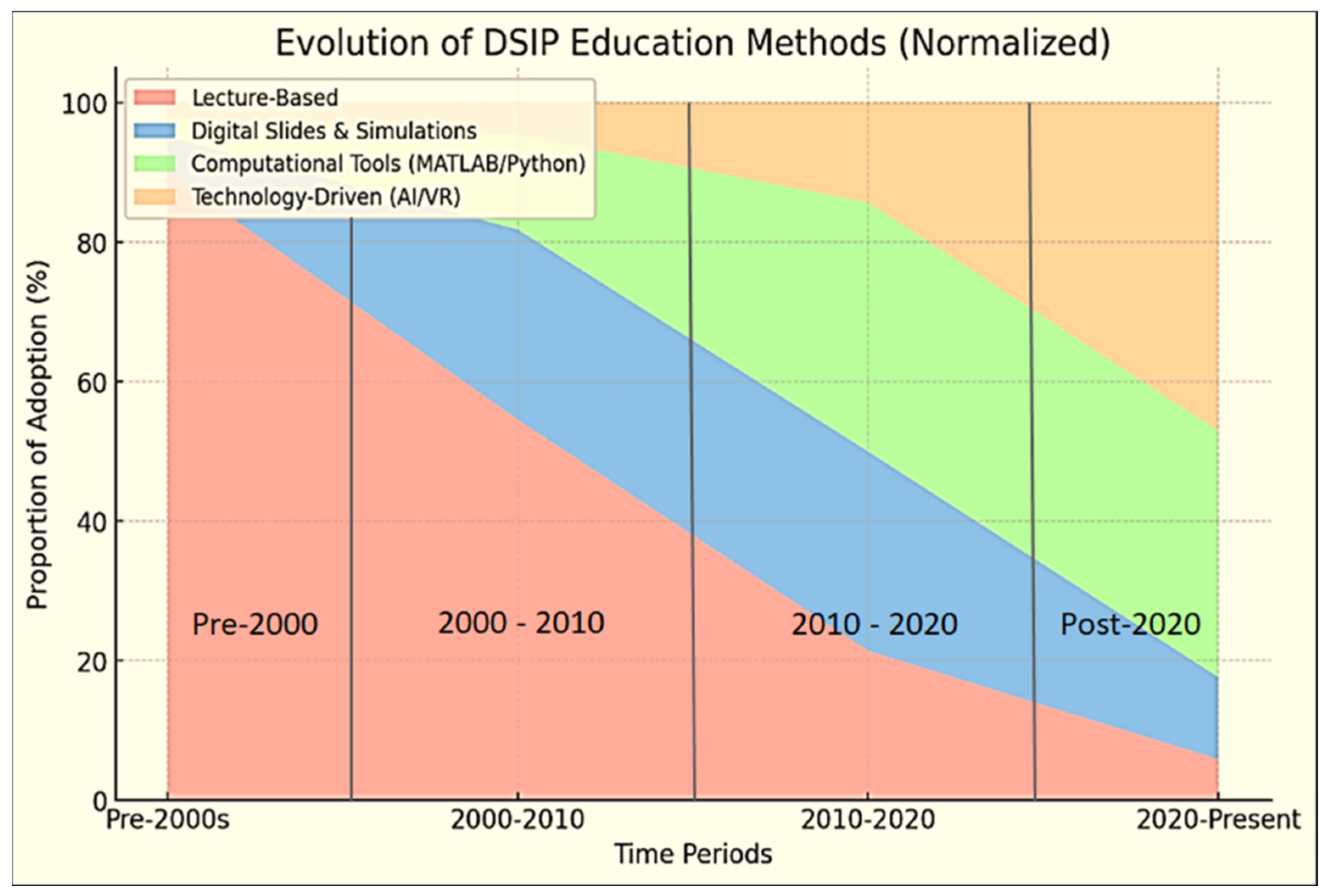
The stacked area chart in Figure 1 is based on the collated responses of the gradual change between the traditional and technology-based approaches adopted in DSIP education. It can be visualized as a change in lecture-based learning to technology-based learning over time.
Figure 1.
Evolution of DSIP Education (Lecture-based to Technology-driven Approaches).
The graph demonstrates a change in the trend of traditional lecture-based teaching to technology-based approaches in Digital Signal and Image Processing (DSIP) learning over time. The most important findings are the following:
Decrease in Lecture-Based Methods (Pre-2000–Present): Pre-2000s, DSIP education was primarily lecture-based, using textbooks to teach students. Its dominance slowly faded, and currently, its use has decreased to below 10 percent, with more interactive and digital methods being developed.
Emergence of Digital Slides and Undifferentiated Simulations (2000–2010): PowerPoint presentations, simulations, and digital materials, compared to traditional lectures, started increasing in use between 2000 and 2010. Nevertheless, with the availability of more sophisticated computer tools, the use of digital slides took center stage and then dropped a little bit in preference due to more interactive media.
Integration of Computational Tools (2010–2020): The 2010–2020 decade can be described as a strong transition to the practical use of computational tools such as MATLAB, Python, and DSP simulators. These tools became part of the DSIP educational process, increased student engagement, and enhanced their practical knowledge.
Skyrocketing of Technology-Based Learning (the last two-three years): In the last few years, learning based on using technology use, including AI-powered learning, virtual labs, augmented reality (AR), and interactive platforms, has become highly popular. Any adoption of such approaches accentuates the fact that there is an ever-growing interest towards immersive and real-world applications in DSIP learning.
The history of DSIP educational techniques demonstrates advancement in the history of education, which employs active technology-driven involvement rather than passive lectures. The major limitation is that experiential and real-time learning is a concept of the future that will be explored more with the advancement of AI and virtual simulations, as well as interactive learning platforms to provide students with the practical skills needed in the industry as well as research.
3. AI-Aided Innovation in DSIP Education
Based on survey results and following the analysis of the relevant literature, the current study used AI to help categorize the research findings into four major themes. These themes offer the most significant pedagogical methods and innovations that influenced the DSIP education over the last couple of years.
- Traditional pedagogical approaches in DSIP;
- AI-driven and digital learning methods;
- Experiential and hands-on learning techniques;
- Challenges and future trends in AI-Assisted DSIP education.
Each category represents a distinct approach or pedagogical innovation in DSIP education. AI-based semantic analysis was further applied to ensure that papers within each category contained similar contextual relevance and were not misclassified.
3.1. Traditional Pedagogical Approaches in DSIP
This section involves studies on lecture-based teaching, textbook-oriented learning, and traditional problem-solving drills in DSIP education. The clustering undertaken using AI emphasized that traditional presentations concentrate more on theory and are often less engaging with the students in practice. The challenges noted are as follows:
- High cognitive load due to mathematical complexity (e.g., Fourier Transform, Z-transform).
- Limited student participation in passive lecture-based learning.
- Lack of visualization tools to illustrate abstract DSP concepts.
3.2. AI-Driven and Digital Learning Methods
This classification includes AI-aided learning settings, intelligent tutoring systems (ITSs), and adaptive learning environments. Clustering performed with AI recognized that AI-based pedagogy enhances
- Individualized learning paths that are anchored to student performance analytics.
- Real-time feedback and AI-based tutoring (e.g., DeepTutor, AutoTutor).
- Use of online tools like MATLAB Online, Python-based DSP simulations, and MOOCs (Coursera, EdX, Udemy).
Contemporary pedagogies (embracing technology and interactivity): DSIP teaching is nowadays characterized by the assimilation of technology and interactive teaching approaches, producing a more interesting and practically instructive learning process. Other instruments, such as MATLAB and Python, have become a mandatory inclusion in the curriculum as they enable students to simulate, analyze, and visualize complicated signals and signal transformations as well as image transformations. All these tools enable the learners to relate abstract theories with practical applications, thus making the process of learning less confusing and more effective. The use of virtual labs has gained momentum, as they provide students an opportunity to perform hands-on jobs in a virtual environment; hands-on learning becomes even more possible and scalable without laptops, making it much more affordable. Learning is also promoted through online tools and explanatory tutorials that offer a step-by-step approach to some concepts involved in DSIP, such as image filtering, spectral analysis, and machine learning.
DSIP education has also changed to project-based learning. The work of students is now based on collaborative projects, which involve solving real-life problems, e.g., medical imaging analysis or multimedia data compression. Such projects promote collaboration and critical and creative thinking skills as well as equip students to embrace interdisciplinary activities in both the academic and industrial fields. Another recent methodology adopted is the flipped classroom. This model implies that students learn prerequisite material online and then meet physically to work on problem-solving and practical discussion-based activities. With this strategy, the instructors have more time to tackle various issues and take students through practical sessions.
Also, finding their way to DSIP education involves new technologies such as augmented reality (AR) and virtual reality (VR). These make each environment immersive, in which the student can gain certain experience of the signal gimmicks and image morphing. To illustrate an example, a visual explanation of the properties of a signal through the chosen reality could be presented on an AR overlay, which would enhance the abstractness of concepts. DSIP education has also undergone a transformation regarding cloud computing, which has provided students with the ability to remotely access high-performance computational resources. Cloud computing solutions, such as DSP tools in conjunction with platforms such as Jupyterlab 4.2, 2024, allow easy team collaboration with effective resource management.
Extended best practices in contemporary DSIP learning include the adoption of actual datasets, say medical imaging data or geospatial signals, to offer genuine learning. The quizzes, coding challenges, and peer reviews that are constantly offered to students can enable continuous assessment, as well as allow them obtain constructive feedback. Ethical consequences of DSIP application are also discussed by instructors, and students are attentively advised to think about such consequences, such as privacy, fairness, and other problems of image processing systems. Such an individualistic approach guarantees that not only the selected individuals graduate with technical skills but also learn how their works affect the bigger picture.
The fusion of both classic rigor and interactive methods leads to individuals with the skills and knowledge to address the challenges involved in a field that is quickly changing.
Online learning platforms and MOOCs in DSIP education: Online learning platforms and MOOCs have changed the aspect of DSIP education, rendering it available to a large global community. Coursera, edX, and MIT OpenCourseWare are just some examples of platforms that offer a broad DSIP course selection. Such resources enable learners to discuss the matters of Fourier Transforms, image reconstruction, and signal filtering without any geographical or financial barriers.
MOOCs have flexibility, which allows them to design their learning activities based on their requirements and time. Case studies, datasets, and programs such as MATLAB and Python add practical value to those subjects and help combat the difference between theory and practice. One of the distinguishing aspects of such platforms is the addition of peer discussion forums, the presence of which promotes the joint solution of the problem and the sharing of ideas among learners across geographical boundaries. Gamification techniques such as badges and certificates also encourage people to take courses and learn valuable skills.
Nevertheless, MOOCs have some difficulties in how they can effectively present mathematically rich material in DSIP. It may also be awkward for students to learn heavy subjects without being personally coached by the instructor, hence the lack of direct contact with the instructor, and drives away hands-on experience due to poor exposure to physical equipment. Here, the necessity of hybrid models in which the process is combined with online learning and workshops or virtual laboratories is noted. The other challenge is the need to have effective digital skills. To enjoy these resources, the students must be conversant with the programming languages and simulation tools. Teachers should also practice changing their teaching strategies to suit and accommodate various learners in online classrooms. In order to resolve these obstacles, certain MOOCs include flexible learning technology, where content is individualized depending on the performance. Internet sites, academic institutions, and industry have also collaborated in developing programs, which are accessible for in-depth learning.
As a result, the learner acquires industry-ready skills. The importance of MOOC certificates in formal education can be underlined by the fact that they are increasingly recognized as credible by both employers and the academic community. Although online platforms could not substitute traditional DSIP education methods, they have increased its application and covered its methodology. Through technological application, teamwork, and enhanced course presentation, MOOCs influence the future of DSIP education and make it more accessible, versatile, and effective.
The overall literature has reported the student reviews of MOOCs through AI-driven sentiment analysis, yielding a 40–50 percent increase in interactions with AI-aided tools, as opposed to traditional lectures []. Table 1 compares DSIP studying in the form of MOOC and traditional pedagogy.
Table 1.
Comparison of MOOCs and Traditional Pedagogy to Learn DSIP.
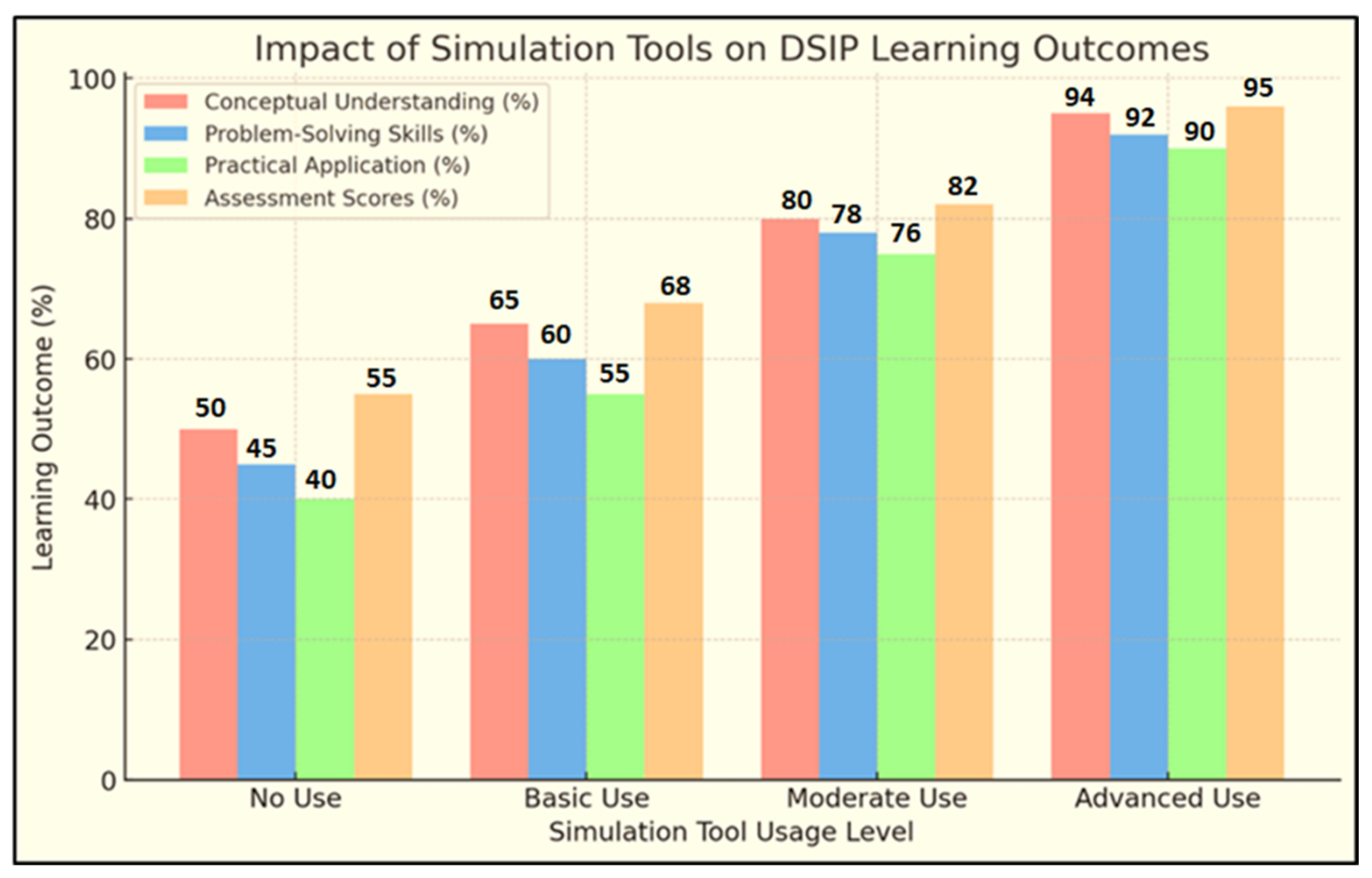
The graph in Figure 2 illustrates how the increasing use of simulation tools (such as MATLAB, Python, and DSP simulators) influences key learning outcomes in Digital Signal and Image Processing (DSIP) education.
Figure 2.
Impact of Simulation Tools on DSIP Learning Outcomes.
The major findings are highlighted as follows:
Conceptual Understanding Improves with Simulation Usage: The students with no access to simulation tools have a lower conceptual understanding (50%), relying mainly on theoretical learning. As simulation usage progresses from basic to advanced, conceptual understanding improves significantly (up to 95%) due to hands-on experimentation.
Problem-Solving Skills Strengthen with Hands-On Practice: It has been observed that the problem-solving ability starts at 45% for students without simulations but increases steadily to 92% with advanced simulation tool usage. This reflects that exposure to real-world signal processing problems through simulations leads to an enhancement in analytical thinking and debugging skills.
Practical Application Proficiency Shows the Most Significant Growth: It is clear from the graph that traditional learning methods result in lower proficiency in practical applications due to limited real-world exposure. With moderate to advanced simulation tool usage, practical application skills jump to 90%, as students engage with real-time signals, image processing tasks, and algorithm implementations.
Improved Assessment Scores after Exposure to Simulations: The students who had minimal or no exposure to simulation tools were found to perform lower in the assessment tests, whereas students who had moderate or advanced skills in simulation tools showed vast improvement in the assessment scores. This brings out high correlation between interactive learning and better academic performance.
The results prove once again that simulation tools can be vital in the education of DSIP that results in greater conceptual knowledge, successful problem-solving skills, and improved practical application skills. The current need is an optimized pedagogy for the process of incorporating higher-level simulation-based learning to make students acquire not only theoretical but also practical expertise in DSIP.
The questionnaire’s parameters were chosen to trace the effectiveness of Digital Tools (e.g., MATLAB, Python, AI-based tools, interactive simulations) in enhancing DSIP comprehension among students. Data Visualization libraries like Matplotlib-3.10.8 (R2025) and Seaborn 0.13.2 (R2024) was used in Python for effective analysis of the respondent’s data and to identify patterns and draw meaningful insights for informed decision-making.
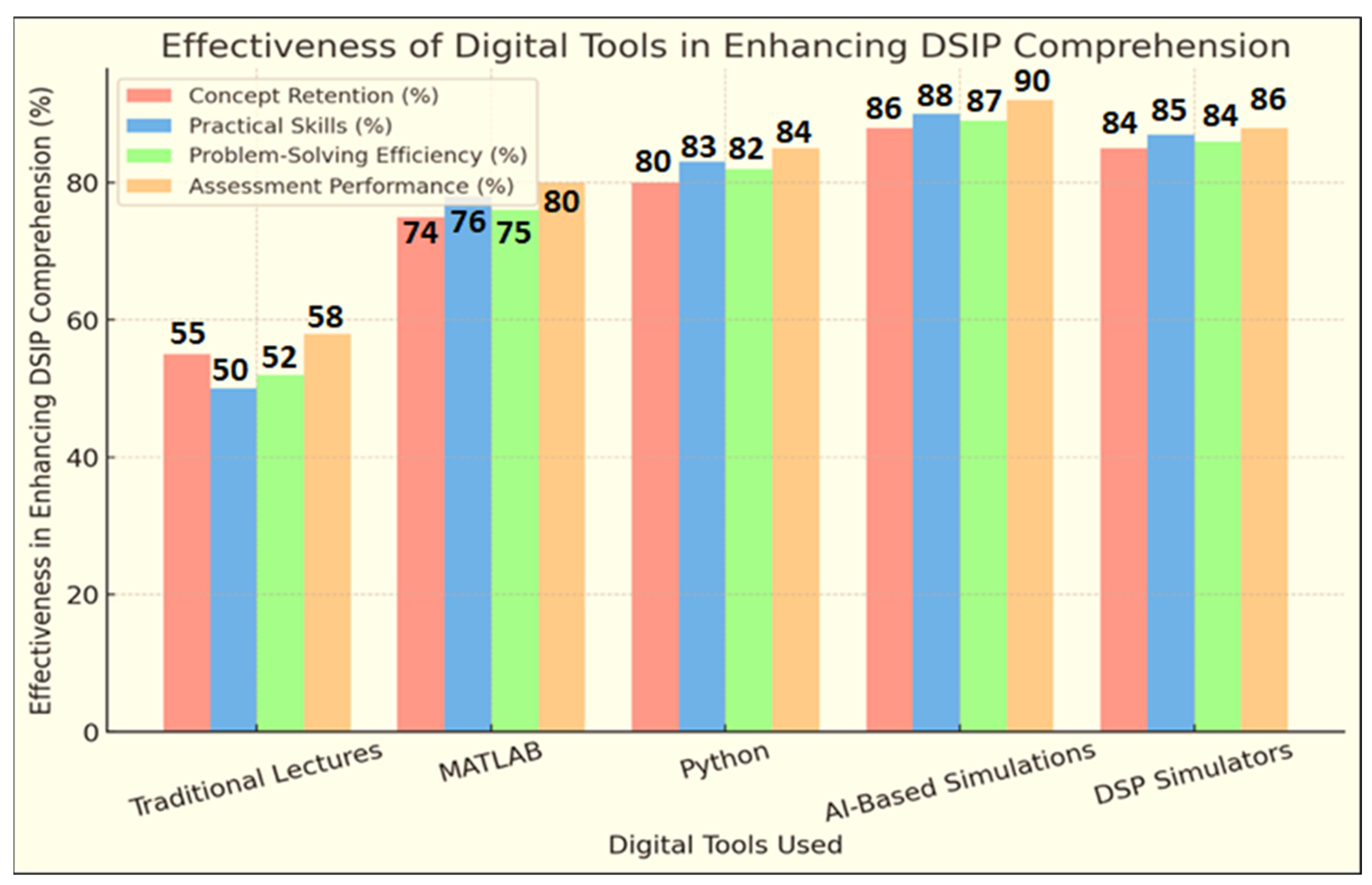
Figure 3 presents the effectiveness of Digital Tools in enhancing DSIP comprehension.
Figure 3.
Effectiveness of Digital Tools in Enhancing DSIP Comprehension.
The following key observations are made:
AI-Based Simulations Lead in Overall Effectiveness: AI-based simulations are in the lead when it comes to overall effectiveness: one of the most effective activities in all categories is simulation, with up to 92% in overall assessment performance. The survey participants reported that their concept retention (88%) and problem-solving efficiency (89%) were significantly improved through AI-driven learning tools.
MATLAB and Python Provide Strong Learning Outcomes: MATLAB and Python simulator users reported a significant enhancement in their DSIP assessment scores while using these simulation tools. Python slightly outperforms MATLAB in problem-solving skills, likely due to its flexibility in handling real-world signal processing problems, being an open source platform.
DSP Simulators Enhance Practical Skills: An improvement in concept retention has also been reported using DSP simulators in alignment with the high scores achieved for gaining practical skills (87%) and improvement in problem-solving efficiency (86%), demonstrating their value in hands-on learning. This reflects that these simulators bridge the gap between theory and application, making them valuable tools for DSIP education.
Traditional Lectures showing the Lowest Effectiveness: Compared to the digital simulators used in DSIP understanding, traditional lecture-based learning has been rated at the lowest level by the participants gaining or imparting DSIP education across all metrics, with concept retention at 55% and practical skills at 50%. This suggests that relying solely on passive learning methods without digital tool integration may limit student comprehension.
The findings strongly advocate for the integration of digital tools in DSIP education. AI-driven simulations, Python, and MATLAB provide a well-rounded learning experience, enhancing concept retention, practical skills, and problem-solving abilities. Institutions should prioritize technology-driven learning to maximize student outcomes in DSIP.
3.3. Experiential and Hands-On Learning Techniques
Project-based learning (PBL) and virtual labs turned out to be the most popular ways of experiential learning by clustering the data based on the values AI suggested. Practical learning is more beneficial in terms of problem-solving as it combines hardware/software simulation. Subcategories identified with AI are as follows:
- Remote and virtual labs: NI Multisim, WebDSP, Simulink DSP blocks.
- Hardware-in-the-loop (HIL): FPGA-based signal processing projects.
- Flipped Classroom Model: AI-driven video lectures combined with live DSP coding workshops.
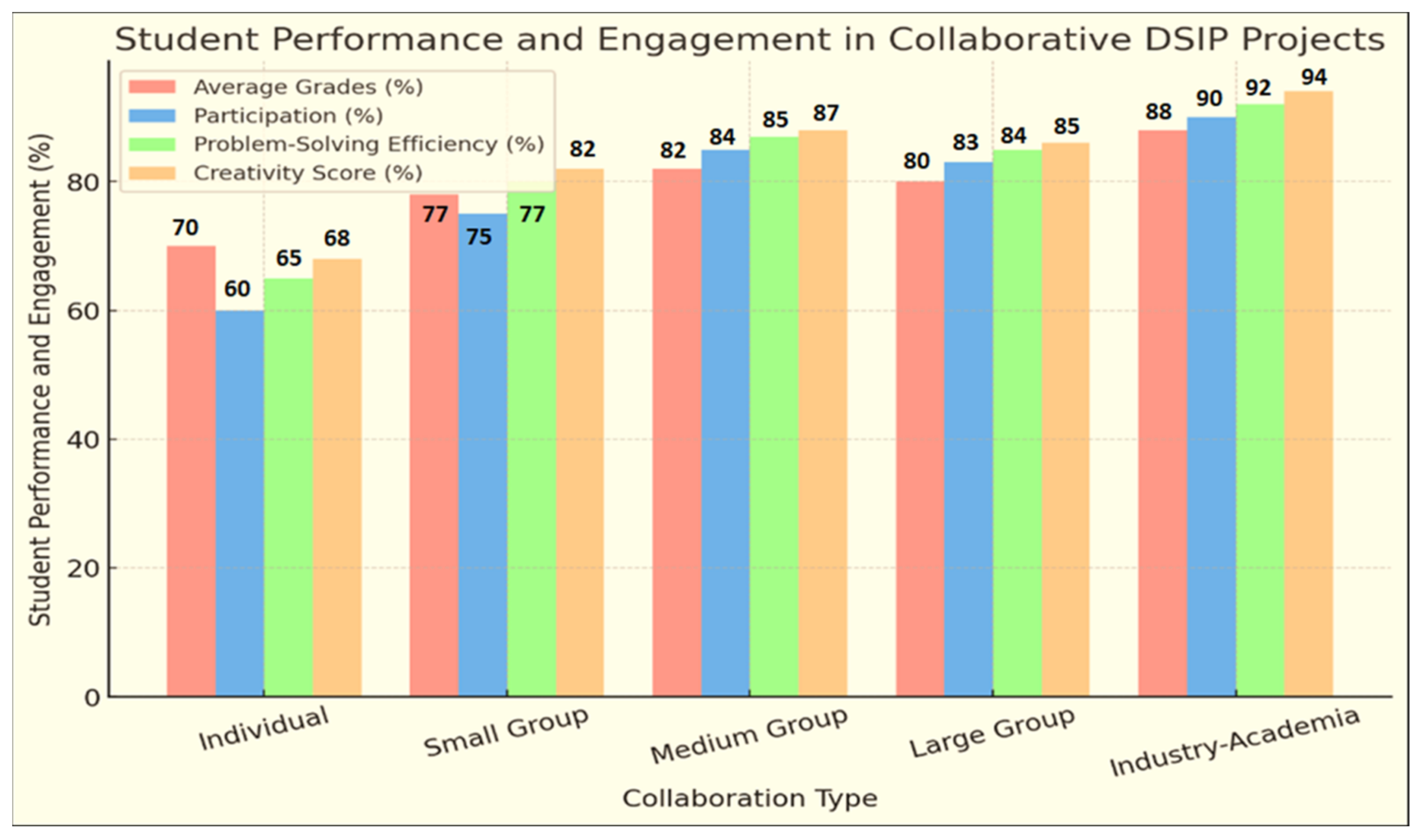
The analysis of student engagement in collaborative activities and their performances in DSIP projects is depicted in Figure 4. It accentuates the impact of the various collaborative formats in determining academic performance, efficiency in solving problems, and creativity.
Figure 4.
Student Performance and Engagement in Collaborative DSIP Projects.
The graph shows comparative research on the effects of various types of collaboration on the performance of students and their engagement in DSIP projects. The most important observations include the following:
Collaboration between Industry and Academia: The most efficient method in DSIP education has been the collaboration between industry and academia and has immensely improved the engagement of students (labeled by 90% of participants) and the effectiveness of the problem-solving methodology (92%). Direct exposure to real-world applications fosters creativity and innovation (as rated by almost 94% of participants), surpassing all other collaboration methods. This collaboration model bridges theoretical knowledge with industry expectations, allowing students to develop critical thinking, innovation, and problem-solving abilities. As a result, students in industry-partnered projects may achieve higher academic performance, as rated by 88% of participants, reflecting the effectiveness of applied learning in professional settings.
Medium-Sized Groups (4–6 Students) are the Most Effective for Student-Led Collaboration: Among student-only groups, medium-sized teams (4–6 members) consistently yield the best learning outcomes as rated during the survey. These groups demonstrate high problem-solving efficiency and creativity, as the collaboration allows for diverse ideas and collective brainstorming. Participation rates and the average grade achievement were rated very strong, indicating substantial academic benefits. The success of medium-sized groups can be attributed to their balanced teamwork dynamics, where each student plays an active role, contributing meaningfully to discussions, problem-solving, and project execution.
Large Groups (7+ Students) Show Slightly Lower Performance: While large groups offer the advantage of diverse perspectives, they may face challenges in coordination and equitable participation, leading to a slight decline in engagement and problem-solving efficiency as reflected from the graph prepared as an outcome of the conducted survey. The primary drawback of larger teams is the potential for unequal workload distribution, where some students contribute more actively than others. Despite these challenges, creativity remains high, likely due to the variety of perspectives and collective brainstorming. However, to optimize learning outcomes in large groups, structured roles and collaborative strategies may be emphasized.
Small Groups (2–3 Students) Perform Well but Have Limited Exposure: Small groups, though they demonstrate strong participation and problem-solving capabilities, make them an effective collaboration model for focused learning. However, their creativity score is found to be lower than in larger groups, possibly due to fewer brainstorming opportunities and a limited exchange of diverse perspectives. While small groups are beneficial for close-knit teamwork and in-depth discussions, they may not provide the same exposure to diverse problem-solving approaches as medium or large groups.
Individual Work Yields the Lowest Engagement and Performance: Students working individually show the lowest levels of engagement, problem-solving efficiency, and creativity, significantly underperforming compared to those in collaborative settings. Their average grades also indicate the limitations of isolated learning in DSIP education. The lack of peer discussions and collaborative brainstorming appears to hinder innovation and the practical application of concepts. These findings reinforce the importance of teamwork in enhancing DSIP learning, highlighting the need for structured collaboration opportunities to maximize engagement, problem-solving skills, and academic success.
The survey results underscore the critical role of collaboration in DSIP learning. Industry–academia collaboration provides the strongest outcomes, offering practical exposure and real-world problem-solving skills. Medium-sized groups are the most effective student-led collaboration model, balancing teamwork, innovation, and academic performance. While large groups have high creativity levels, they face coordination challenges, and small groups perform well but lack exposure to diverse perspectives. Individual work consistently yields the lowest engagement and learning outcomes, reinforcing the necessity of interactive and collaborative learning strategies in DSIP education. Institutions should emphasize structured collaboration models and industry partnerships to enhance student engagement, innovation, and academic success.
Further, based on a few parameters under additional insights, the survey revealed that the most significant challenge students face when using simulation tools for DSIP is the lack of proper guidance/training, followed closely by difficulty in understanding tool functionalities and limited access to software/tools. A notable portion of students also found simulations to be time-consuming, while a small percentage reported no challenges. Most respondents strongly recommended increasing the use of simulation-based learning in DSIP education, though many emphasized the need for better training support. Very few respondents preferred traditional methods over simulations. Regarding AI tools like ChatGPT, most participants found them highly beneficial, particularly for explaining complex concepts in simple terms, coding assistance, and providing practical examples and applications. Some respondents preferred limited use, while only a minority opted for traditional methods without AI assistance.
When considering the structure of DSIP courses, most respondents favored a balanced mix of theory and practical work, with a preference for practical-heavy learning over purely theoretical instruction. In terms of evaluation methods, respondents expressed a strong preference for project-based assessments and continuous evaluation (e.g., coding exercises, high-level assignments, simulation tasks, open-book exams) over traditional exams/quizzes. Peer reviews and presentations were also considered valuable but ranked lower in preference. These findings suggest that enhancing training support for simulation tools, integrating AI-assisted learning, and adopting a more hands-on assessment approach could significantly improve DSIP education.
3.4. Challenges and Future Trends in AI-Assisted DSIP Education
Despite the benefits, AI-driven DSIP education faces significant challenges, as identified by AI clustering and sentiment analysis:
- Lack of faculty training in AI-integrated pedagogy.
- Resource-intensive implementation of AI-driven DSP labs.
- Ethical concerns regarding AI-based grading fairness.
Future trends suggest the development of open source AI tools for DSP education, making AI-driven learning accessible globally. To validate the accuracy of AI-assisted categorization, a manual expert review was conducted with 20 DSIP educators from leading universities. One of the articles discusses the experience of a signal processing professor in preparing and delivering a new course reflecting on methods adopted compared to traditional teaching approaches [].
The AI-generated thematic categories were cross-referenced with their research to ensure semantic relevance and practical applicability. It was observed that 85% agreement with AI-classified themes, the requirement of moderate refinement in the assessment innovations category, merging AI-based grading with predictive analytics was highlighted, and a need for segmentation in experiential learning for hardware- vs. software-based implementations was emphasized.
Therefore, the AI-driven classification process allowed for an objective, large-scale analysis of DSIP education research, minimizing human bias and improving efficiency. By automating text mining, thematic categorization, and comparative synthesis, this study ensures comprehensive, data-driven insights into modern DSIP teaching strategies. Future research shall focus on refining AI models for automatic literature synthesis and the semantic clustering of emerging pedagogical trends in engineering education.
4. Leveraging Digital Tools for Hands-On Learning in DSIP
Digital tools enable students to bridge the gap between theory and practice by providing interactive, simulation-based, and programming-oriented learning experiences []. Platforms such as MATLAB, Python (SciPy, NumPy, Matplotlib), GNU Radio, LabVIEW, and cloud-based virtual labs offer diverse functionalities for signal processing, waveform generation, real-time filtering, and spectral analysis []. This topic is discussed considering a series of program-based, graphical/simulation-based, and cloud-based virtual lab tools, arguing about their characteristics, remotely used toolbox accessibility, comparative advantages, and constraints. Digital education aids to DSIP are broadly divided into three pedagogical needs:
- Programming-Based DSP Tools were designed for algorithm development, signal analysis, and numerical computing using programming languages such as MATLAB, Python, and GNU Octave.
- Graphical and Simulation-Based DSP Tools feature block-based simulation environments such as Simulink, GNU Radio, and LabVIEW, which allow students to model and test DSP systems without extensive coding.
- Cloud-Based and Virtual DSP Labs offer remote access to DSP experimentation, allowing students to carry out signal processing and simulations in real time through platforms such as MATLAB Online, WebDSP, and NI Virtual Bench.
Each class covers varied pedagogical needs. The paragraphs below discuss these categories as well as their implementations and their effects on the advancement of DSIP education.
4.1. Programming-Based DSIP Tools
In many instances, programming tools are needed to develop a DSIP application that allows a user to analyze, manipulate, and process a signal. Programming-oriented DSP tools are essential to this process, allowing the development, testing, and optimization of signal processing algorithms. They are unavoidable academic and industrial tools, as they are applied in spectral analysis, filter design, and signal modulation. MATLAB and Python are among the tools that allow the power of numeric computing to be harnessed and algorithm development in contemporary DSIP education. The rich libraries, toolboxes, and visualization make them effective environments to learn signal processing and also to grow professionally.
4.1.1. MATLAB and Simulink
The DSP System Toolbox in MATLAB offers complete capabilities in spectral analysis, digital modulation, and filter design. Simulink complements this by providing students with a graphical, block-based simulation environment that provides a clear way of modeling and testing DSP systems. The two tools make it easy to close the gap between theory and practice because they use algorithms and visualizations that are already built into them in order to simplify the learning process [].
Simulink and MATLAB are both important aids to the learning of DSP and to the research in DSP because they help us distinguish between theory and practice. Through the incorporation of several tools of the trade in the learning process, students will gain practical experience, sharpening their analytical skills and preparing them to meet real-life challenges in the fields of signal processing and communications.
4.1.2. Python for DSP (SciPy, NumPy, Matplotlib)
Supporting an extensive open source ecosystem, Python has become an alternative to DSP education and development that has proven its power. Through its repositories, e.g., SciPy, NumPy, and Matplotlib, it offers wide-ranging options associated with signal processing, e.g., FFT calculations, wavelet transformation, and signal filtering. The signal module in SciPy contains utilities for filter construction and convolution, whereas the FFT module in NumPy can handle the implementation of Fourier Transforms in an efficient manner. Graphical display of signal analysis is possible with the popular visualization library matplotlib, which allows students to visualize results easier. Given its affordability and flexibility with its cross-platform support, Python can be an excellent option when it comes to learning via DSIP education. As an example, students can work with Python and execute FFT (see the spectra of frequencies) and can discuss the practicality of transformations in signals. Table 2 presents a series of experiments conducted to cover basic topics in DSIP and build important competencies.
Table 2.
Examples of DSIP Laboratory Experiments and Their Learning Outcomes using Programming-based DSP Tools.
Practical lab activities are important in developing an in-depth knowledge of the concepts and the practice of Digital Signal and Image Processing. As has been found, learning through doing, especially through technical means, results in great breakthroughs in understanding and memorizing. The classroom application of programs like MATLAB, Python, and OpenCV enables students to build technical skills to fill the gap between the theoretical background and practice in solving practical problems.
Moreover, the application of AI/ML in DSIP projects will help students become ready for the new trends in the industry and enhance their innovation power. Studies indicate that students participating in signal processing with AI projects portrayed better efficiency and creativity in solving problems compared to a conventional course of study. In this manner, laboratory-based, software-moderated, and AI-inclusive learning experiences should be incorporated into DSIP curricula as a fundamental step toward the improvement of student competence and employability in the highly dynamic technological environment.
4.2. Graphical and Simulation-Based DSP Tools
Hands-on learning experiences using graphical and simulation tools have become vivid in Digital Signal and Image Processing. The platforms permit students to create, test, and examine DSP systems using graphical block diagrams, flow graphs, and interactive toolboxes instead of writing lots of code, as is the case with conventional programming-centric DSP development tools. These tools allow for a practical and use-inspired study on DSP via real-time signal manipulation and waveform visualization, as well as hardware integration.
GNU Radio and LabVIEW are graphical support tools used in the development and testing of DSP applications, especially in software-defined radio (SDR), audio processing, biomedical signal analysis, and communications engineering. These architectures narrow the gap between theory and practice where students can implement the concept of DSP within a hardware-integrated system, but they do not have to be programming experts.
4.2.1. GNU Radio
This tool was developed by the open source community and possesses graphical flow-based DSP programming, real-time signal processing, modulation/demodulation support and wide range of built-in DSP functionalities.
The educational benefits of this tool can be estimated from the following points:
It helps students understand signal flow and real-time signal transformations without needing in-depth programming skills.
It allows the exploration of signal processing algorithms with a graphical, low-code interface.
It works with integration with SDR hardware (e.g., USRP, RTL-SDR) and is thus suitable in wireless communications and IoT applications.
4.2.2. LabVIEW: A Graphical Approach to DSP System Design
National Instruments’ LabVIEW is an extremely popular graphical programming language/toolbox used in DSP modeling, real-time signal analysis, and in integrating hardware. The drag-and-drop user interface of LabVIEW serves the dual purpose of letting students experiment with signal processing processes themselves and illustrating the idea of DSP programming to them very clearly.
LabVIEW has a large library of DSP tools with which students can analyze waveforms and filter spectral measurements in real time. Furthermore, the fact that it smoothly interfaces to hardware devices like FPGAs, DSP processors, data acquisition systems, and so on also offers a practical way of learning DSP so that students are ready to apply to real-life control systems, communications, and industrial automation.
4.3. Cloud-Based and Virtual Labs for DSP: Enabling Remote and Interactive Learning
Online education, distance learning, cloud computing, and the use of cloud-based and virtual DSP labs as a tool have become effective means of teaching and learning. These platforms enable students to access DSP simulation environments anytime anywhere without the need of using high-end computing environment or installing software programs. Common hardware and software environments of traditional DSP education are usually expensive to purchase and maintain. Cloud-based DSP labs eliminate these difficulties by providing web-based and interactive, real-time DSP experiments with simple user interfaces and automatic grading frameworks.
With the help of DSP-on-cloud, students are able to perform live signal processing experiments, analyze waveforms, and employ DSP algorithms by simply visiting a web browser. These applications are especially useful in hybrid and online classes, where a given institution might be able to streamline its DSP education to cover geographically dispersed students, enhancing collaborative and scalable learning.
4.3.1. MATLAB Online
MATLAB Online, also developed by MathWorks, is a web-based variant of MATLAB that can be used to run MATLAB code without local installation but executes within a web browser through the cloud. It has access to all MATLAB DSP toolboxes and, therefore, is an optimal tool for remote DSP instruction, research, and homework. Key features include web-based MATLAB execution, a MATLAB grader for automated DSP assignments, and seamless cloud integration. This eliminates software installation barriers, allowing students to access MATLAB from any device. It supports real-time DSP experiments, enhancing engagement in remote and hybrid learning environments. It automates DSP assignments and grading, reducing instructor workload while providing instant feedback to students.
4.3.2. WebDSP
WebDSP is a cloud-based interactive DSP learning platform that allows students to perform real-time DSP experiments online. Unlike MATLAB Online, which is code-based, WebDSP provides a graphical, drag-and-drop interface, making it more accessible to students with limited programming experience. Key features include an online platform for real-time DSP experiments; supporting audio filtering, waveform generation, and FFT analysis; and being accessible through any web browser. This enhances DSP learning through hands-on, interactive simulations. It provides an intuitive interface for signal visualization, helping students understand DSP transformations effectively. It also enables remote and collaborative learning, supporting multi-user DSP experimentation in virtual classrooms. The merits and demerits of different types of tools to be used in comprehending DSIP are compared in Table 3 below.
Table 3.
Comparative Analysis of Tools used in understanding DSIP.
The combination of MATLAB, Python, GNU Radio, LabVIEW, and virtual labs offered in DSIP training make the education process very immersive and practical. All of these tools have their strengths and weaknesses, and they should be chosen based on the program’s goals, financial resources, and hardware access. Future directions of further research are to work on adaptive DSP learning tools powered by AI to promote more student engagement and better student inclusiveness.
5. Conclusion: Shaping the Future of DSIP Education
Based on the Python-based analytics obtained using Data Visualization Tools, AI-powered learning, Virtual Labs, Augmented Reality (AR), and interactive platforms have become highly popular in recent years. Problem-solving ability has been observed to start at 45% for students without simulations, but increases steadily to 92% using advanced simulation tools. With moderate to advanced simulation tools, practical application skills jump to 90%, as students engage with real-time implementations. An improvement in concept retention has also been reported using DSP simulators, which is in alignment with the high scores achieved for gaining practical skills (87%) and improvement in problem-solving efficiency (86%), demonstrating their value in hands-on learning. Traditional lecture-based learning has been rated at the lowest level, with concept retention at 55% and practical skills at 50%. This suggests that relying solely on passive learning methods without digital tool integration may limit student comprehension. The most efficient method, based on the DSIP education results, has been the collaboration between industry and academia and has immensely improved student engagement (according to 90% of participants) and the effectiveness of the problem-solving methodology (92%).
Digital Signal and Image Processing education is not just another course in academic education, but a must-have change driven by the needs of fast-growing technological environments. This work identifies the dire necessity to gradually transition away from conventional, lecture-based teaching methods to active, student-centric learning; this would lead to better conceptual comprehension, innovativeness and proficiency in solving real-world problems. Artificial Intelligence holds the key to this learning transformation. It makes it easy to use data and discover insights on effective practices, all-inclusive learning systems, and efficient educational methods on a large scale. Pedagogical, technological, and industry synergy will be the crucial factor in developing the future of DSIP education. The way ahead towards life-long learning and adaptation involves collective, data-driven, and dedicated tools.
Author Contributions
Conceptualization, D.B.; methodology, R.M., N.C. and V.; software, R.M., P.B., H. and L.L.; validation, H. and S.U.; formal analysis, D.B., V. and H.; investigation, L.L.; data curation, P.B. and N.C.; writing—original draft, D.B., R.M. and V.; writing—review & editing, P.B., N.C. and S.U.; visualization, L.L.; funding acquisition, S.U. All authors have read and agreed to the published version of the manuscript.
Funding
This research is funded by Princess Nourah bint Abdulrahman University Researchers supporting Project Number (PNURSP2025R79), Princess Nourah bint Abdulrahman University, Riyadh, Saudi Arabia.
Institutional Review Board Statement
Ethical review and approval were waived for this study due to the research focusing on technical and pedagogical methodologies in Digital Signal and Image Processing, utilizing AI-driven tools and approaches in an educational context, without engaging in any ethically regulated procedures.
Informed Consent Statement
Informed consent was obtained from all subjects involved in the study.
Data Availability Statement
Data is contained within the article.
Acknowledgments
Princess Nourah bint Abdulrahman University Researchers supporting Project Number (PNURSP2025R79), Princess Nourah bint Abdulrahman University, Riyadh, Saudi Arabia.
Conflicts of Interest
The authors declare no conflicts of interest.
References
- Mdletshe, S.; Wang, A. Enhancing medical imaging education: Integrating computing technologies, digital image processing and artificial intelligence. J. Med. Radiat. Sci. 2025, 72, 148–155. [Google Scholar] [CrossRef] [PubMed]
- Quirós-Alpera, S.; Roets, A.O.S.B.; Robina-Ramírez, R.; Leal-Solís, A. Bridging Theory and Practice: Challenges and Opportunities in Dual Training for Sustainability Education at Spanish Universities. Societies 2025, 15, 32. [Google Scholar] [CrossRef]
- Chen, L.; Chen, P.; Lin, Z. Artificial Intelligence in Education: A Review. IEEE Access 2020, 8, 75264–75278. [Google Scholar] [CrossRef]
- Vieriu, A.M.; Petrea, G. The Impact of Artificial Intelligence (AI) on Students’ Academic Development. Educ. Sci. 2025, 15, 343. [Google Scholar] [CrossRef]
- Vaidya, R.; Mittal, A.; Nanaware, G. Cloud based simulation platform (CSP): A novel way to democratize simulation based experimentation. In Proceedings of the Winter Simulation Conference, Orlando, FL, USA, 15–18 December 2024; Available online: https://www.amazon.science/ (accessed on 24 October 2025).
- Afzaal, M.; Xiao, S.; Yan, D.; Younas, M. Mapping Artificial Intelligence Integration in Education: A Decade of Innovation and Impact (2013–2023)—A Bibliometric Analysis. IEEE Access 2024, 12, 113275–113299. [Google Scholar] [CrossRef]
- Mittal, U.; Sai, S.; Chamola, V.; Sangwan, D. A Comprehensive Review on Generative AI for Education. IEEE Access 2024, 12, 142733–142759. [Google Scholar] [CrossRef]
- Ogunleye, B.; Zakariyyah, K.I.; Ajao, O.; Olayinka, O.; Sharma, H. A Systematic Review of Generative AI for Teaching and Learning Practice. Educ. Sci. 2024, 14, 636. [Google Scholar] [CrossRef]
- Zhang, F.; Wang, X.; Zhang, X. Applications of deep learning method of artificial intelligence in education. Educ. J. 2025, 30, 1563–1587. [Google Scholar] [CrossRef]
- Sajja, R.; Sermet, Y.; Cikmaz, M.; Cwiertny, D.; Demir, I. Artificial Intelligence-Enabled Intelligent Assistant for Personalized and Adaptive Learning in Higher Education. Information 2024, 15, 596. [Google Scholar] [CrossRef]
- Wang, S.; Wang, F.; Zhu, Z.; Wang, J.; Tran, T.; Du, Z. Artificial intelligence in education: A systematic literature review. Expert Syst. Appl. 2024, 252, 124167. [Google Scholar] [CrossRef]
- Bano, F.; Alomar, M.A.; Alotaibi, F.M.; Serbaya, S.H.; Rizwan, A.; Hasan, F. Leveraging Virtual Reality in Engineering Education to Optimize Manufacturing Sustainability in Industry 4.0. Sustainability 2024, 16, 7927. [Google Scholar] [CrossRef]
- Guaya, D.; Romero-Benavides, J.C.; Fierro, N.; Jiménez, L. Integrating Project-Based and Community Learning for Cross-Disciplinary Competency Development in Nutrient Recovery. Sustainability 2025, 17, 8820. [Google Scholar] [CrossRef]
- Zubair, M.U.; Khan, M.A.; Hassan, M.U.; Ahmed, K.; Aziz, T. Enhancing Student Active Engagement in Class through Game-Based Learning: A Case of Civil Engineering Education. Sustainability 2024, 16, 6010. [Google Scholar] [CrossRef]
- Magraner, T.; Gil-García, I.C.; Fernández-Guillamón, A. Linking SDGs, Competencies, and Learning Outcomes: A Tool for Curriculum Alignment in Higher Education. Sustainability 2025, 17, 8910. [Google Scholar] [CrossRef]
- Riordan, A.; Echeverria, V.; Jin, Y.; Yan, L.; Swiecki, Z.; Gašević, D.; Maldonado, R.M. Human-centred learning analytics and AI in education: A systematic literature review. Comput. Educ. Artif. Intell. 2024, 6, 215. [Google Scholar] [CrossRef]
- Akgun, S.; Greenhow, C. Artificial intelligence in education: Addressing ethical challenges in K-12 settings. AI Ethics 2022, 2, 431–440. [Google Scholar] [CrossRef]
- Yan, L.; Sha, L.; Zhao, L.; Li, Y.; Maldonado, R.M.; Chen, G.; Li, X.; Jin, Y.; Gašević, D. Practical and Ethical Challenges of Large Language Models in Education: A Systematic Scoping Review. Br. J. Educ. Technol. 2024, 55, 90–112. [Google Scholar] [CrossRef]
- Mallik, S.; Gangopadhyay, A. Proactive and reactive engagement of artificial intelligence methods for education: A review. Front. Artif. Intell. 2023, 6, 1151391. [Google Scholar] [CrossRef] [PubMed]
- Paladines, J.; Ramírez, J. A Systematic Literature Review of Intelligent Tutoring Systems with Dialogue in Natural Language. IEEE Access 2020, 8, 164246–164267. [Google Scholar] [CrossRef]
- Zawacki-Richter, O.; Marín, V.I.; Bond, M.; Gouverneur, F. Systematic review of research on artificial intelligence applications in higher education—Where are the educators? Int. J. Educ. Technol. High. Educ. 2019, 16, 39. [Google Scholar] [CrossRef]
- López, M.B. Evolving Pedagogy in Digital Signal Processing Education: AI-Assisted Review and Analysis. IEEE Access 2025, 13, 45559–45567. [Google Scholar] [CrossRef]
- Radke, R.J. A Signal Processor Teaches Generative Artificial Intelligence [SP Education]. IEEE Signal Process. Mag. 2024, 41, 6–10. [Google Scholar] [CrossRef]
- Ozgur, C.; Colliau, T.; Rogers, G.; Hughes, Z. MatLab vs. Python vs. R. J. Data Sci. 2022, 15, 355–372. [Google Scholar] [CrossRef]
- MathWorks Co. MATLAB Simulink. 2021. Available online: https://kr.mathworks.com/matlabcentral/?s_tid=gn_mlc (accessed on 18 May 2025).
Disclaimer/Publisher’s Note: The statements, opinions and data contained in all publications are solely those of the individual author(s) and contributor(s) and not of MDPI and/or the editor(s). MDPI and/or the editor(s) disclaim responsibility for any injury to people or property resulting from any ideas, methods, instructions or products referred to in the content. |
© 2025 by the authors. Licensee MDPI, Basel, Switzerland. This article is an open access article distributed under the terms and conditions of the Creative Commons Attribution (CC BY) license (https://creativecommons.org/licenses/by/4.0/).