Abstract
The global freight transportation industry has experienced exponential growth, significantly contributing to economic development. However, this expansion has also led to considerable environmental challenges, particularly due to the sector’s dependence on fossil fuels and inefficient logistical practices, resulting in high carbon emissions, air pollution, noise pollution, and resource depletion. The complex problems facing the freight transportation sector are directly impacting several United Nations Sustainable Development Goals (SDGs), particularly SDG 2, SDG 3, SDG 7, SDG 9, SDG 11, SDG 12, and SDG 13. This study addresses these challenges by first examining the direct contribution of sustainable freight transportation to the United Nations Sustainable Development Goals (SDGs). Building on this foundation, the paper explores the transformative potential of artificial intelligence (AI) to enhance sustainability in freight transportation. Focusing on advanced analytics, predictive modeling, and real-time optimization, AI provides opportunities to improve route planning, energy efficiency, and emission reduction, while supporting more resilient and sustainable logistics systems. The paper introduces a holistic framework, integrating AI seamlessly throughout the entire freight logistics process. To contextualize these insights, an empirical survey was conducted among Moroccan freight transportation companies, highlighting current practices, the perceived effectiveness of AI adoption, and the level of confidence in achieving long-term carbon neutrality targets. Finally, the paper introduces a practical framework for integrating AI into freight transportation systems, aligning technological innovation with sustainability goals, and offering actionable guidance for both industry stakeholders and policymakers.
1. Introduction
Freight transportation stands as a pivotal component within the realm of supply chain management, serving as the pillar of both social stability and economic growth [1]. The global expansion of populations and the dynamic nature of economic activities have led to a notable surge in the freight transportation sector [2]. However, the impact of this growth has been notably harmful to the environment, with the sector’s reliance on fossil fuels and inefficient logistical practices exacerbating environmental degradation and leading to climate change and global warming. It has been proved that the transportation sector represents the highest proportion of energy consumption worldwide [3].
Given its extensive influence on several Sustainable Development Goals (SDGs), sustainable transportation is essential for attaining the objectives outlined in the 2030 Agenda for Sustainable Development [4]. This paper aims to evaluate the direct contribution of sustainable freight transport in achieving SDGs.
In this context, artificial intelligence is increasingly recognized as a powerful means to address environmental challenges facing freight transportation [5]. AI technologies offer several capabilities, ranging from predictive analytics and autonomous vehicles to route optimization and energy management systems. By integrating the power of AI, stakeholders in the freight transportation sector can revolutionize their operations and minimize environmental impact.
Recent studies have demonstrated that AI applications can generate tangible sustainability benefits across freight. Up to 30% less carbon emissions can be produced through fleet management and dynamic route optimization using reinforcement learning [6,7]. It has been demonstrated that genetic algorithms reduce energy use and CO2 emissions by over 10% [4,8], while machine learning models facilitate the planning of low-carbon routes by providing precise emissions forecasts [9]. Predictive maintenance, hybrid ML–heuristic techniques, and AI-driven digital twin systems also enhance asset utilization, delivery timeliness, and fuel efficiency, lowering logistics costs by up to 20% and CO2 emissions by roughly 16% in many kinds of operational scenarios [6,10].
This paper delves into the pivotal role of AI in addressing environmental challenges within the freight transportation sector and proposes a holistic framework to guide this transformation. Our framework emphasizes the integration of AI technologies across various facets of freight transportation operations, leveraging AI’s capabilities to optimize efficiency, reduce emissions, and enhance sustainability.
The proposed framework connects three key pillars: Artificial Intelligence (AI), Sustainable Development Goals (SDGs), and Freight Transportation (FT). The framework was developed in two stages. First, it identifies the SDGs directly affected by freight transportation, particularly those related to health and well-being, clean energy, sustainable cities, responsible consumption, and climate action. Second, it maps the main AI applications in freight transport that can support the achievement of these goals. By linking AI, sustainability, and freight systems, the framework highlights AI’s pivotal role in reducing emissions, optimizing resources, and improving operational efficiency.
Moreover, this paper presents the result of an empirical study evaluating the maturity of freight transportation industries in Morocco in terms of AI adoption in the freight sector, its perceived effectiveness in advancing sustainability, and the main challenges and opportunities shaping the transition toward AI-driven sustainable logistics. This intersection offers a novel analytical perspective to guide both academic inquiry and policy action.
Four primary research questions are addressed in this framework:
In what ways do freight transportation activities directly affect the Sustainable Development Goals (SDGs)?
In accordance with these SDGs, how might artificial intelligence (AI) improve sustainable performance in the freight transportation industry?
How mature are Morocco’s freight transportation sectors now in terms of implementing AI and how successful do they think it is at enhancing sustainability?
What are the main obstacles and prospects impacting the incorporation of artificial intelligence into sustainable freight transportation tactics?
2. Sustainable Development Goals and Freight Transportation
The Sustainable Development Goals (SDGs) aim to foster inclusive global progress by prioritizing human rights and social equity. Reaching all 17 goals demands collective action and long-term commitment. Figure 1 outlines the 17 Sustainable Development Goals that form the global sustainability framework in this study; they serve as a foundation for identifying which goals are most influenced by freight transportation and how artificial intelligence can help advance them.
Figure 1.
Sustainable Development Goals.
The transport sector represents a key component of sustainable development by contributing directly to various SDGs. It supports almost all other sectors by enabling the movement of goods and services. Due to dynamic economic growth and continuous population increase, freight movements in global transportation networks have risen significantly [2]. Projections indicate that freight demand could triple by 2050 compared to 2020, leading to a direct impact on both environmental and social aspects [11].
The freight transport sector is particularly critical because it is considered as one of the most environmentally destructive activities for the environment as well as socially. Road freight alone accounts for about 40% of CO2 emissions in cities, a proportion that could double by 2050 in the absence of stronger climate policies [2]. Overall, the transportation industry is considered the major contributor of CO2 emissions and the biggest energy consumer, producing almost 24% of global emissions [12]. Yet, it also represents a major force behind country development, contributing to economic growth, social progress, competitiveness, and international relations [13].
Technological innovation plays a crucial role in transforming this sector, particularly through digital systems that improve route efficiency and reduce carbon emissions [14]. Meanwhile, fossil-fuel-powered vehicles remain a primary source of greenhouse gas (GHG) emissions [15]. The gradual adoption of electric vehicles (EVs), associated with policy commitments and technological advances, offers promising opportunities [16]. However, even with intensive mitigation efforts, transport-related CO2 emissions are expected to decrease by only 30% by 2050, which is insufficient to satisfy global climate targets. This highlights the urgent need for disruptive solutions and systemic change.
Achieving climate goals while preserving passenger and freight flow mobility depends on detaching transportation activity from CO2 emissions. The UN Sustainable Development Goals (SDGs) emphasize the crucial role of sustainable freight transport, with seven SDGs directly connected to it (Table 1).
Table 1.
UN SDGs and Transport-Related Targets. Source [16].
SDG 2 (Zero Hunger): Sustainable freight transport enhances access to markets for small-scale agricultural producers, improving productivity and income through better-managed perishable supply chains [17]. It also makes it easier for smallholders to access markets through improved infrastructure, efficient routing, and reduced extortion [18].
SDG 3 (Good Health): Sustainable freight transportation contributes to reducing traffic-related accidents and injuries, as well as minimizing pollution-related illnesses through cleaner and safer transport operations [19,20].
SDG 7 (Affordable and Clean Energy): The adoption of optimized logistics operations and the use of renewable energy in freight systems reduce both costs and carbon emissions [21]. Furthermore, using intermodal systems such as integrating rail instead of unimodal road freight increases energy efficiency and lowers overall consumption of energy [20]. In addition, the environmental effect of freight transportation can be significantly mitigated through the use of renewable energy-powered electric road systems (ERS) [19].
SDG 9 (Industry, Innovation, and Infrastructure): Investment in resilient and sustainable transport infrastructure fosters SDG9 by supporting innovation and long-term industrial growth. Modernizing ports, constructing durable logistics hubs, or improving freight railroads are some of the examples that promote innovation and long-term economic growth [22], this causality between transport infrastructures and economic development has been confirmed by [23].
SDG 11 (Sustainable Cities and Communities). Emphasizes urban resilience, where sustainable freight transport enhances SDG 11 by providing safe, accessible mobility options and reducing the environmental footprint of cities. In addition to providing fair access to transportation, initiatives like curbside management, parking restrictions, and improved public space allocation make cities more livable by reducing pollution, noise, and congestion [24].
SDG 12 (Responsible Consumption and Production): Government policies such as increasing fuel taxes and reducing fossil fuel subventions discourage the use of carbon-intensive freight operations [25]. Meanwhile, encouraging responsible production and consumption across supply chains helps reduce waste and improve overall efficiency. The implementation of digital technology, smart services, and multi-criteria decision support systems allows for real-time optimization of loads, storage, and routes. These technologies directly promote sustainable production and consumption [26]. Moreover, sustainable freight transportation models and decision support tools can help reduce environmental impact while improving efficiency in the logistics operations [27].
SDG 13 (Climate Action): Sustainable freight transport initiatives contribute to strengthening resilience and integrating climate considerations [19]. Since freight transportation is a major driver of global warming, using alternative fuels such as CNG contributes to both emission reduction and operational savings [28]. Additionally, the most effective decarbonization pathways involve lowering fuel carbon intensity through solutions like biofuels associated with carbon capture, as well as reducing freight demand through pricing mechanisms [29].
These studies demonstrate that implementing sustainable freight transportation initiatives, such as digitization, green technologies, and intermodal coordination, may support economic, social, and environmental goals, contributing directly to numerous SDGs.
3. Environmental Challenges in Freight Transportation
The expansion of the freight transportation system has generated numerous environmental challenges that must be addressed to ensure sustainability in business operations. One of the primary challenges is greenhouse gas emissions; this sector represents a significant contributor to greenhouse gas emissions, primarily from the combustion of fossil fuels in trucks, ships, and airplanes. These emissions contribute to climate change and global warming. Furthermore pollutants emitted by this industry including nitrogen oxides, particulate matter, and volatile organic compounds, can cause respiratory problems, poor air quality, and environmental deterioration [5].
Energy consumption represents another significant environmental challenge within the sector. Given its heavy dependence on fossil fuels, the freight transportation industry consumes substantial amounts of energy and non-renewable resources, with the majority of this consumption coming from trucks [30]. The excessive consumption of energy contributes to resource depletion and poses risks to energy security and sustainability.
Moreover, noise pollution is considered a notable environmental consequence of this industry, especially in urban areas, when operations related to trains, trucks and ships generate a high level of noise pollution, leading to negative impacts on human health and well-being [31].
In addition to the previously mentioned impacts, the inefficient logistical practices of the freight transportation industry exacerbate environmental issues due to inefficient route planning, overuse of packaging materials, and insufficient recycling initiatives.
In this context [32] has introduced a new indicator to measure the degree of environmental impact caused by freight movement, taking into consideration the quantity of goods transported, the effectiveness of freight transport within each country, and the ratio of carbon dioxide emissions to the volume of cargo transported per unit.
4. Artificial Intelligence for Sustainable Freight Transportation
4.1. Review of AI Applications in Sustainable Freight Transportation
Sustainable development goals (SDGs) emphasize the importance of sustainable transportation in achieving social, environmental, and economic growth [4]. The applications of Artificial intelligence “AI” have the potential to significantly enhance environmental sustainability in the freight transportation sector; by employing the power of AI technologies such as real time monitoring, predictive analytics, autonomous vehicles, route optimization and smart infrastructure, stakeholders can optimize operations and minimize resource consumption.
In this context, relevant studies have been presented in the literature exploring the pivotal role of AI in enhancing a sustainable transportation system. Ref. [33] considered ML as one of the main component of AI to promote a green maritime port operations, specially supervised and unsupervised learning method, in addition polynomial regression and neural networks offer potential for lowering greenhouse gas emissions, water contamination, and energy consumption. Ref. [34] focused on the potential of AI to improve environmental sustainability related to transport sector across different areas like renewable energy, electric vehicles and pollution monitoring. Ref. [35] assessed the feasibility of integrating AI into highway system. The result of the conducted study confirms the viability of this integration, leading to energy and cost saving and improving overall management.
4.2. Proposed Framework for AI Integration in Freight Transportation Sector to Enhance SDGs
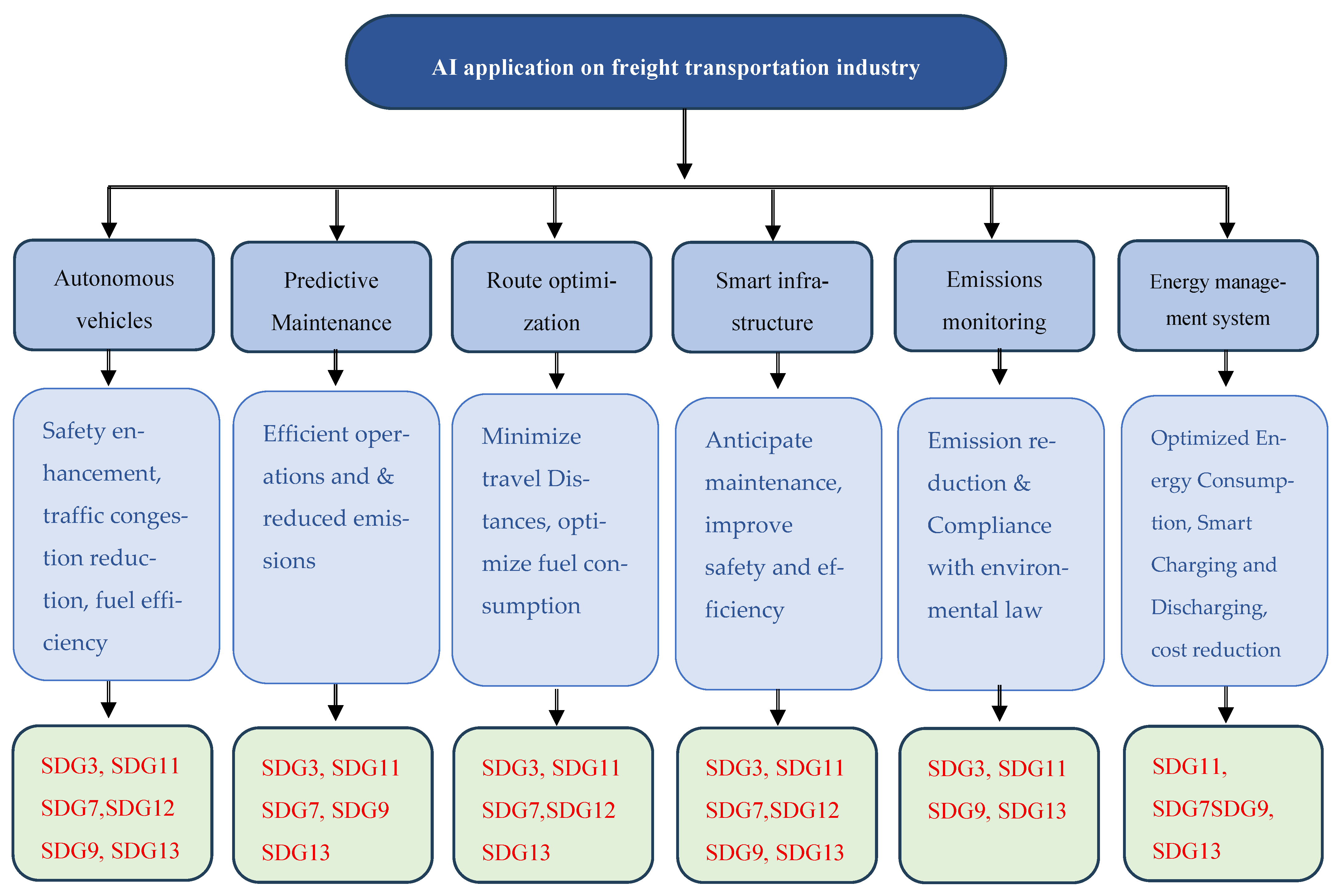
This study proposes a novel and integrative framework that bridges three major pillars: Artificial Intelligence (AI), Sustainable Development Goals (SDGs), and Freight Transportation (FT). Two steps were taken in the development of the framework. We started by identifying the primary SDGs that freight transportation exerts the biggest impact on, especially those related to well-being, clean energy, sustainable cities, responsible consumption, and climate action. Secondly, we identified the main AI usage in freight transportation that can help achieve these sustainable targets (Figure 2).
Figure 2.
Holistic Framework for AI Integration in Freight Transportation to Achieve SDGs.
This framework emphasizes how AI, sustainability, and freight transportation are interconnected, confirming AI as a crucial catalyst for minimizing emissions, enhancing resource utilization, and further improving the efficiency of operations. Since freight transportation continues to be one of the main drivers of energy use and greenhouse gas emissions, it is a key area for technical innovation to enhance sustainability.
Beyond the conceptual framework, this research provides a localized empirical contribution by focusing on Morocco as a pioneering case study. It measures the level of AI adoption maturity of the freight transportation sectors as well as their alleged effectiveness in accomplishing sustainability goals. The paper also identifies the primary challenges and chances impacting Morocco’s shift to AI-powered sustainable freight systems.
Through this intersection of AI, SDGs, and FT, this research presents an original analytical perspective that enhances academic research and helps policymakers and business executives in accelerating sustainable transformation.
Autonomous vehicles: deployment of autonomous cars-based AI algorithms for goods movement represents a transformative solution leading to emission reduction through better route planning, fuel efficiency through efficient driving methods and safety enhancement by minimizing human error [36,37]). Their deployment directly supports several Sustainable Development Goals (SDGs), particularly those related to sustainable cities, clean energy, responsible consumption, and climate action.
By eliminating human factors such as distraction, fatigue, and impairment, AVs can reduce traffic accidents by up to 90% when fully implemented [38], thus advancing SDG 3 (Good Health and Well-Being) through safer mobility. Through intelligent route optimization and reduced congestion, emissions, and noise, AVs foster cleaner and more efficient urban transport systems, aligning with SDG 11 (Sustainable Cities and Communities) [39,40].
From an energy perspective, AI-enabled mechanisms such as “slow steaming”—operating at reduced speeds to conserve energy—and platooning—where vehicles travel closely to minimize air resistance—contribute to SDG 7 (Affordable and Clean Energy) by reducing fuel consumption and improving efficiency [41]. These same mechanisms support SDG 12 (Responsible Consumption and Production) by optimizing resource use and minimizing waste across supply chain operations.
The adoption of AVs also support SDG 9 (Industry, Innovation, and Infrastructure) by stimulating new business models, such as automated logistics platforms operated by technology firms, and by necessitating new road infrastructure designs to accommodate lane-keeping and vehicle platooning systems [42]. Finally, AVs contribute significantly to SDG 13 (Climate Action) through emission reductions achieved via optimized routing, electrification, and eco-driving [43]. However, the scale of these benefits will depend on the level of market penetration, public acceptance of shared mobility, and integration with other modes [44].
Predictive maintenance (PDM): Predictive maintenance algorithms enable the identification of potential failures and facilitate proactive maintenance, consequently reducing downtime, minimizing resource waste, and promoting sustainable resource management [45,46].
In freight transportation, predictive maintenance supports several Sustainable Development Goals (SDGs). By detecting early signs of malfunction and preventing equipment breakdowns, PdM enhances safety for both workers and the public, thereby contributing to SDG 3 (Good Health and Well-Being) through reduced accidents and safer working environments [47]. Moreover, by ensuring that equipment operates at optimal performance levels, PdM optimizes fuel and energy consumption and prevents inefficiencies that lead to excessive emissions. These benefits directly advance SDG 7 (Affordable and Clean Energy) and SDG 13 (Climate Action) by promoting cleaner operations, higher energy efficiency, and lower greenhouse gas emissions [48].
From an industrial and infrastructural perspective, PdM contributes to SDG 9 (Industry, Innovation, and Infrastructure) by extending the lifespan of assets, enhancing infrastructure reliability, and fostering the transition toward smart logistics systems [49,50,51]. Additionally, by integrating predictive analytics into transport systems, PdM supports SDG 11 (Sustainable Cities and Communities) through improved fleet reliability, reduced congestion from unexpected breakdowns, and more efficient urban freight mobility.
Overall, AI-enabled predictive maintenance represents a critical step toward more sustainable and intelligent mobility systems, supporting both operational resilience and environmental performance in line with global sustainability objectives [52].
Route optimization: AI-driven route optimization algorithms are used to reduce travel times and increase productivity, leading to significant environmental advantages such as the optimization of traffic congestion, fuel consumption, and emissions by streamlining delivery routes [53].
From a sustainability perspective, route optimization contributes significantly to multiple Sustainable Development Goals (SDGs). By reducing unnecessary travel and optimizing delivery schedules, it enhances road safety and lowers accident risks, directly supporting SDG 3 (Good Health and Well-Being). Furthermore, by minimizing fuel consumption and facilitating the integration of cleaner energy solutions, such as electrified delivery fleets, route optimization promotes SDG 7 (Affordable and Clean Energy) [54].
At the urban level, optimized routing helps decrease congestion, emissions, and noise, leading to improved air quality and enhanced livability in cities—key objectives of SDG 11 (Sustainable Cities and Communities) [54]. It also fosters SDG 12 (Responsible Consumption and Production) by reducing resource waste through better load management and minimizing empty runs [54].
Crucially, the environmental benefits of route optimization align with SDG 13 (Climate Action), as AI-based routing systems have been shown to reduce CO2 emissions by 12–20% through improved operational efficiency and emission-aware planning [54]. Overall, the integration of route optimization technologies into freight operations represents a practical and scalable pathway toward decarbonized, resilient, and intelligent transport systems.
Smart infrastructure: based on sensors, data analytics, and AI algorithms to optimize the management of transportation facilities and assets, encompassing functions such as intelligent traffic management, automated inventory, and energy-efficient building management. Through the utilization of AI, smart infrastructure improves operational efficiency, lowers energy consumption, and fosters sustainability in freight transportation operations [55].
Within freight transportation, the integration of AI-driven smart infrastructure aligns directly with several Sustainable Development Goals (SDGs). By optimizing energy consumption, supporting electrification, and facilitating the integration of renewable energy into logistics operations, these systems advance SDG 7 (Affordable and Clean Energy) [56]. Moreover, through the deployment of intelligent management platforms, smart infrastructure reinforces SDG 9 (Industry, Innovation, and Infrastructure) by fostering innovation, improving efficiency, and promoting resilient industrial systems [56].
At the city level, AI-based infrastructure contributes to SDG 11 (Sustainable Cities and Communities) by enabling more sustainable and adaptive urban logistics—reducing congestion, limiting resource consumption, and improving service delivery for citizens [57]. Additionally, smart infrastructure powered by AI and IoT technologies supports SDGs 12 (Responsible Consumption and Production) and 13 (Climate Action) by promoting data-driven energy management, minimizing waste, and lowering greenhouse gas emissions. Through improved safety and operational control, these systems also contribute to SDG 3 (Good Health and Well-Being) by creating safer, cleaner, and more efficient transportation environments [58].
Emissions monitoring: Setting up AI-driven emission monitoring systems enables emissions tracking in real time with a precise measurement contributing to reduction of emissions from freight transportation activities while respecting compliance with environmental laws [59].
This technological advancement directly supports several Sustainable Development Goals (SDGs). By reducing harmful emissions and improving air quality, AI-driven monitoring contributes to SDG 3 (Good Health and Well-Being), protecting both workers and surrounding communities from air pollution and its associated health risks [10]. Furthermore, by providing accurate and timely data, these systems reinforce SDG 13 (Climate Action), enabling policymakers and companies to design targeted interventions that effectively reduce carbon emissions.
AI-enabled monitoring also supports SDG 11 (Sustainable Cities and Communities) by promoting cleaner urban mobility and improving overall air quality, fostering healthier and more sustainable living environments [60]. Additionally, the integration of such systems contributes indirectly to SDG 9 (Industry, Innovation, and Infrastructure) through the development of smarter and greener transport infrastructures that rely on data-driven decision-making [60].
Overall, AI-powered emission monitoring establishes a foundation for data-informed sustainability strategies, allowing freight operators and policymakers to track progress, enhance accountability, and accelerate the transition toward low-carbon logistics systems.
AI-Driven Energy Management Systems: AI plays a pivotal role in developing an energy management system in freight transportation sector. These systems optimize energy consumption and cut costs by utilizing real-time data from various sources, such as traffic conditions, energy prices, and vehicle sensors. In this context [61] proposed an energy efficiency monitoring system leading to an efficient management of freight electric vehicle charging, ensuring on-demand charging for connected EVs and reducing power consumption during peak hours.
In Addition [62] confirmed that Advanced algorithms and predictive analytics empower AI-powered energy management systems to forecast energy demand, optimize scheduling and routing, and implement smart charging and discharging practices for fleets of electric vehicles.
AI-driven innovations are transforming energy management within the freight sector by enabling intelligent grids, predictive optimization, and greater integration of renewable sources. These advancements not only enhance energy efficiency and lower emissions but also promote sustainable industrial development, thereby supporting SDGs 7 (Clean Energy), 9 (Industry and Innovation), 11 (Sustainable Cities), and 13 (Climate Action) [63]. Furthermore, AI plays a crucial role in facilitating the transition toward electric and hydrogen-powered freight vehicles, contributing to reduced emissions, efficient use of resources, and lower operational energy costs [64]. Beyond operational efficiency, AI applications also strengthen climate resilience by improving environmental forecasting, advancing clean energy technologies, and optimizing resource management for mitigation and disaster response efforts [64].
As a result, incorporating AI applications into freight transportation operations presents a transformative approach to enhance sustainability. Utilizing autonomous vehicles, predictive maintenance, route optimization, smart infrastructure, traffic management, energy efficiency measures, and emission monitoring, stakeholders can mitigate environmental impact and promote a more sustainable freight transportation system for the future.
4.3. Key AI Algorithms and Integration Approaches
The integration of Artificial Intelligence (AI) in freight transportation sector is rapidly developing, with a strong focus on its potential role for enhancing sustainability and achieving carbon neutrality. AI-driven technologies are progressively applied to support greener supply chains and reduce emissions.
To bring the proposed AI–sustainability framework into real-world context, this section highlights practical examples of how different AI techniques are being applied to freight transportation with measurable environmental benefits. Table 2 outlines representative AI applications, these applications range from digital twin technologies and optimization to reinforcement and machine learning. These case studies demonstrate how AI can be incorporated into transport management systems (TMS) and logistics workflows to drive sustainability.
Table 2.
AI applications with sustainability impact in the Fright transportation sector.
5. Empirical Study: Survey Insights from Moroccan Freight Companies
5.1. Methodology
This survey is concentrated on freight transportation companies in Morocco, recognizing their important role in the country’s progress to sustainability. In total, 65 companies participated in the survey, providing a mix of small, medium, and large operators that reflect the diversity of the sector. Data was collected using a structured survey that included qualitative and quantitative sections, the same methodology has been used by [68] to get detailed insights from the pertinent participants in the study. The questionnaire included Likert-scale questions to assess the level of AI adoption, carbon footprint tracking, and confidence in achieving long-term carbon neutrality targets. In addition, open-ended questions that explored specific challenges and opportunities to achieve carbon neutrality in this sector. By examining Moroccan freight operators, the study provides valuable insights into a sector that remains underrepresented in sustainability research, while connecting local practices to broader global climate goals.
5.2. Survey Results
The survey’s results are organized into four sections. Section 5.2.1 examines the level of AI adoption by freight transportation industries in Morocco to enhance their sustainability. Section 5.2.2 is related to AI effectiveness and its influence on operations and sustainability. Section 5.2.3 reviews carbon tracking and reporting practices in the freight transport industry. Section 5.2.4 describes the challenges and opportunities encountered along the way toward carbon neutrality.
5.2.1. AI Adoption for Carbon Neutrality
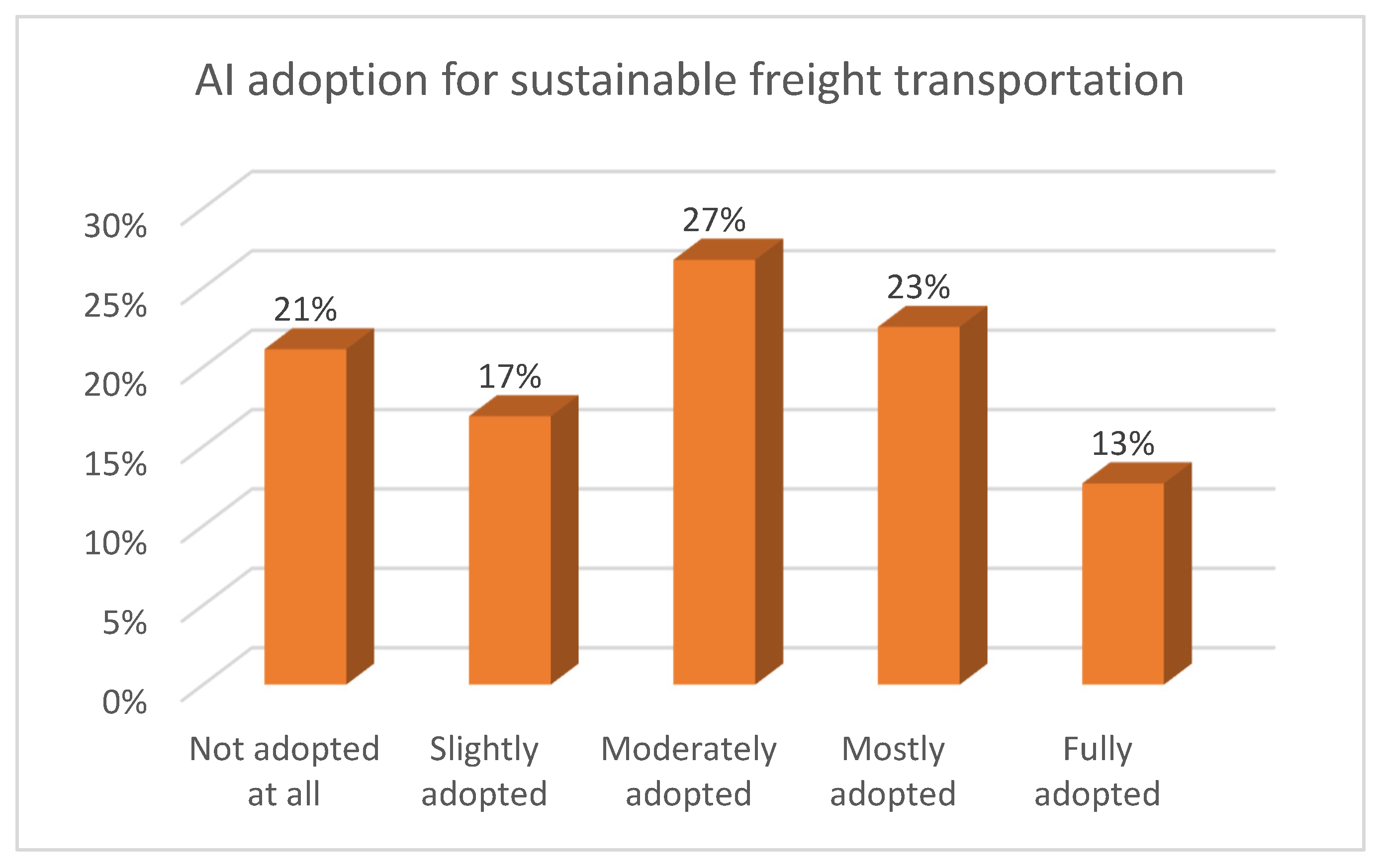
This section of the survey aimed to evaluate the adoption of AI as an emerging technology to track and manage carbon emissions (Figure 3). The descriptive result shows that AI adoption among involved fright transportation companies is moderate. More specifically, 27% of respondents said they had moderately implemented AI solutions, while almost 23% said they had mostly adopted them. There is an apparent gap in the sector’s level of digital readiness, still, 21% of the companies surveyed said they had not implemented AI at all. This non-adoption may be explained by factors such as limited digital infrastructure, resource constraints, lack of internal expertise, or the early stage of sustainability planning within some firms. These answers indicate that, while not yet at a fully matured stage, a significant percentage of freight transportation companies in Morocco are actively using AI in their environmental strategy.
Figure 3.
Level of AI Adoption among Freight Companies in Morocco.
To better understand how AI is being applied in this sector, a variety of applications with a significant environmental impact appeared among companies reporting active AI implementation. Several firms described using AI-based route optimization algorithms in their transport management systems (TMS or ETMS) to avoid empty truck trips and lower CO2 emissions. Others used machine learning algorithms to predict patterns in transport demand and determine the most efficient shipping routes using historical data. In addition.
In addition, respondents also emphasized the application of AI to fleet management for electric vehicles (EVs), where smart monitoring systems improve driver behavior, charging cycles, and vehicle performance while improving energy efficiency. One company reported that by using predictive analytics, its AI-driven systems helped reduce energy use by 15% over a period of a year. A further promising approach that has emerged is the use of AI for carbon scenario modeling and logistics simulation, which allows transportation companies to predict emission trajectories and develop mitigation plans in accordance with sector-specific decarbonization goals.
These real cases demonstrate the developing maturity of AI usage in the transportation industry, both in terms of improving logistical efficiency and as a strategic lever for achieving sustainable development. However, the survey revealed that some companies are still in early adoption stages, using simpler digital tools such as cloud-based monitoring or Excel simulations, reflecting the diversity in technological maturity across the sector.
Overall, these results highlight not only the active adoption of AI in certain companies but also the barriers and variability in adoption levels, providing insight into why a portion of firms (21%) have not yet implemented AI solutions.
5.2.2. The Effectiveness of AI Adoption in Achieving Carbon Reduction Goals
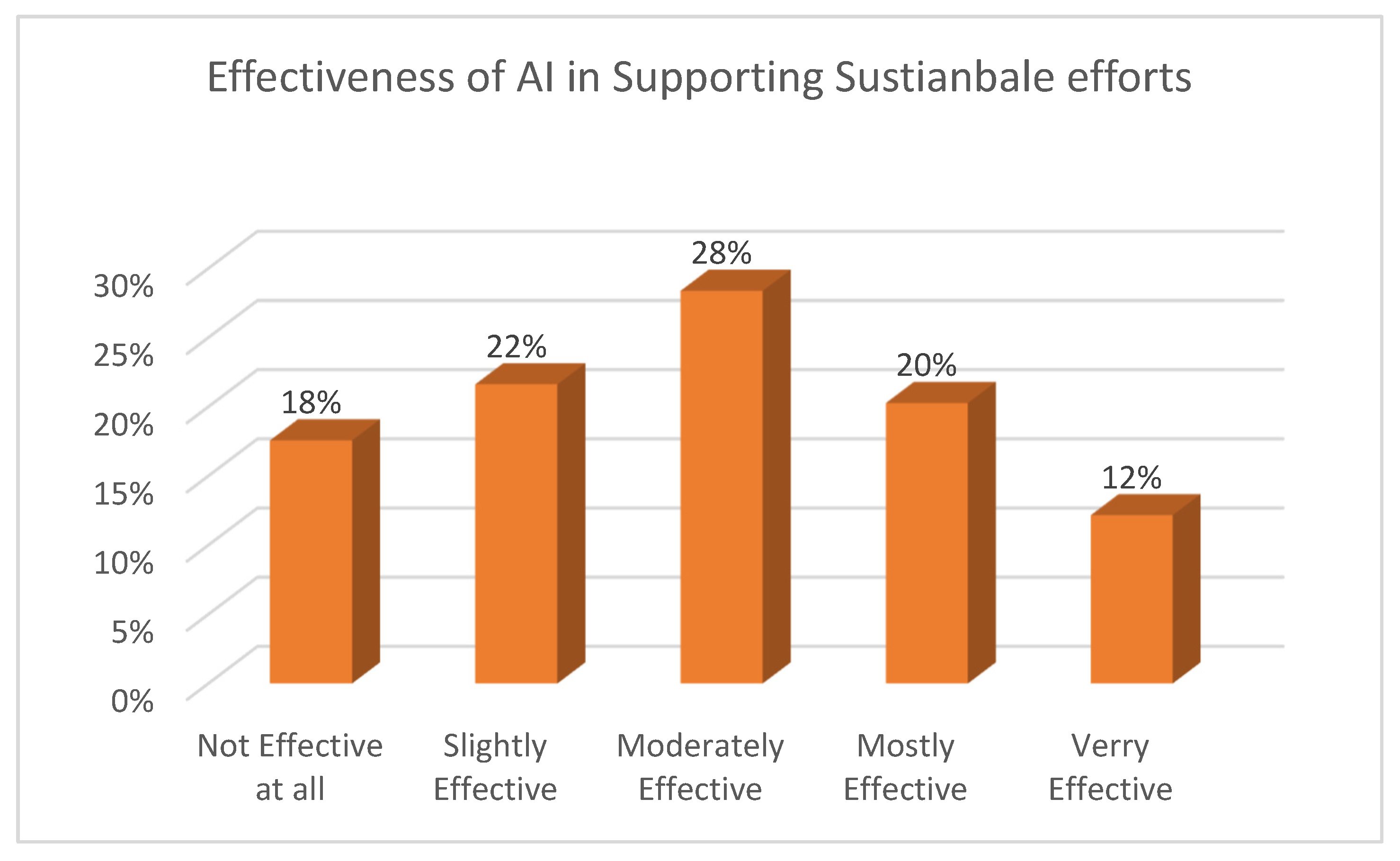
The majority of companies confirmed the significant impact of AI adoption on enhancing sustainable initiatives, with about 28% evaluating AI as moderately effective and 20% as mostly effective. In contrast, only 12% assessed AI as highly effective, while 18% reported it had no effectiveness at all (Figure 4).
Figure 4.
Perceived Effectiveness of AI in Freight Transportation.
According to these findings, although AI is becoming more widely recognized as an effective tool for enhancing transportation’s environmental performance, many businesses are either just starting to implement it or are having difficulties achieving its full operational value.
Respondents who reported a moderate to high effectiveness of AI emphasized how this technology may optimize transportation operation, enable decision-making based on data and reduce fuel consumption. Several AI applications have been highlighted, including predictive fleet management, route optimization, and smart energy management systems.
5.2.3. Carbon Footprint Monitoring and Reporting in Freight Transportation Sector
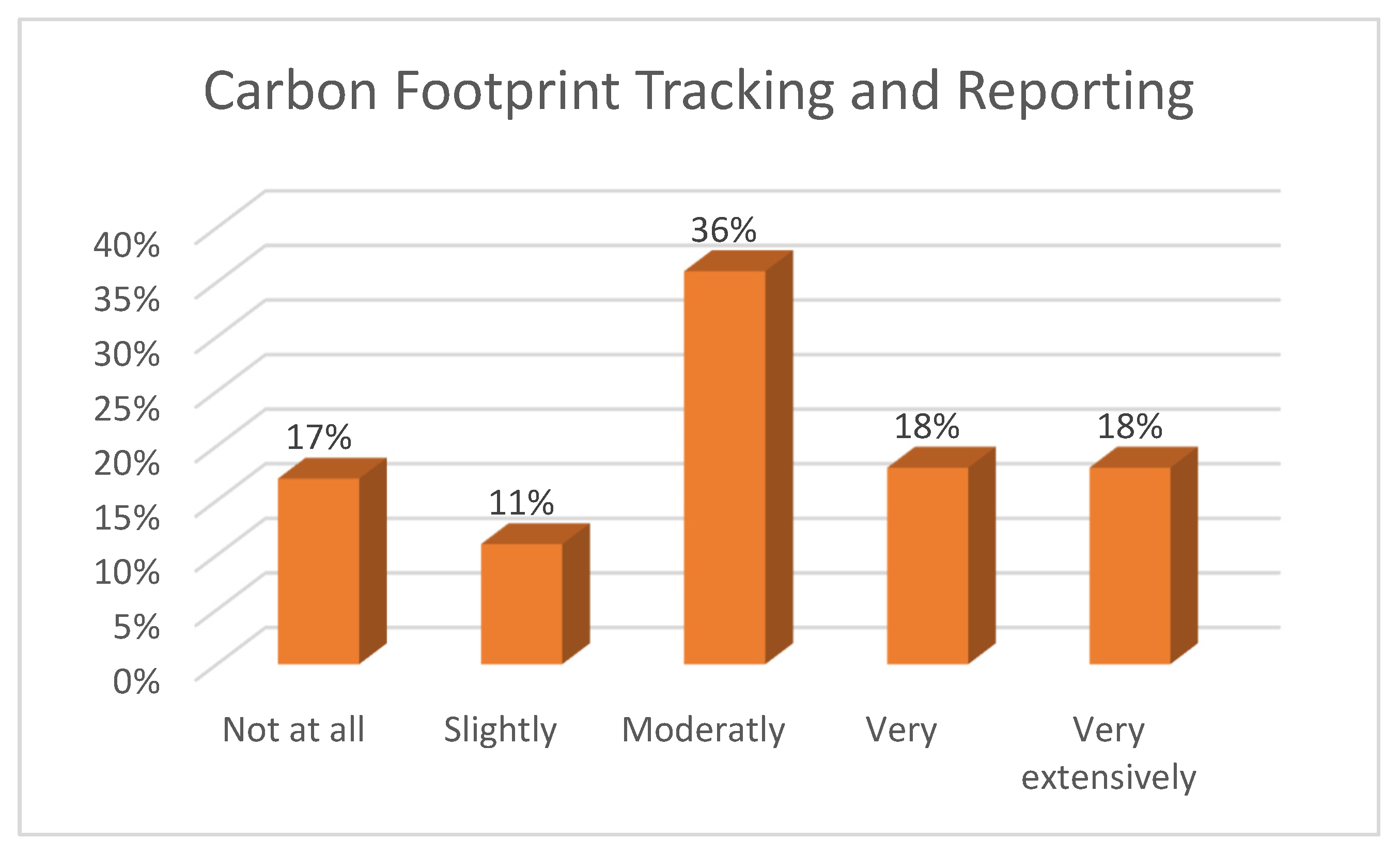
Monitoring and reporting carbon emissions represents the crucial starting point for improving environmental sustainability in the freight transportation sector. Our survey shows that about 36% of respondents are moderately involved in tracking and reporting their emissions, and an additional 18% reported doing so extensively. This finding indicates the growing awareness and responsibility toward climate issues. However, there is still more work to be accomplished, as 11% of respondents stated they make just minimal efforts to follow and manage their emissions, and over 17% acknowledged they don’t track them at all (Figure 5). This variation implies that even while there is growing progress, many suppliers still face difficulties when it comes to completely implementing carbon footprint management.
Figure 5.
Extent of Carbon Neutrality Tracking Among Freight Companies in Morocco.
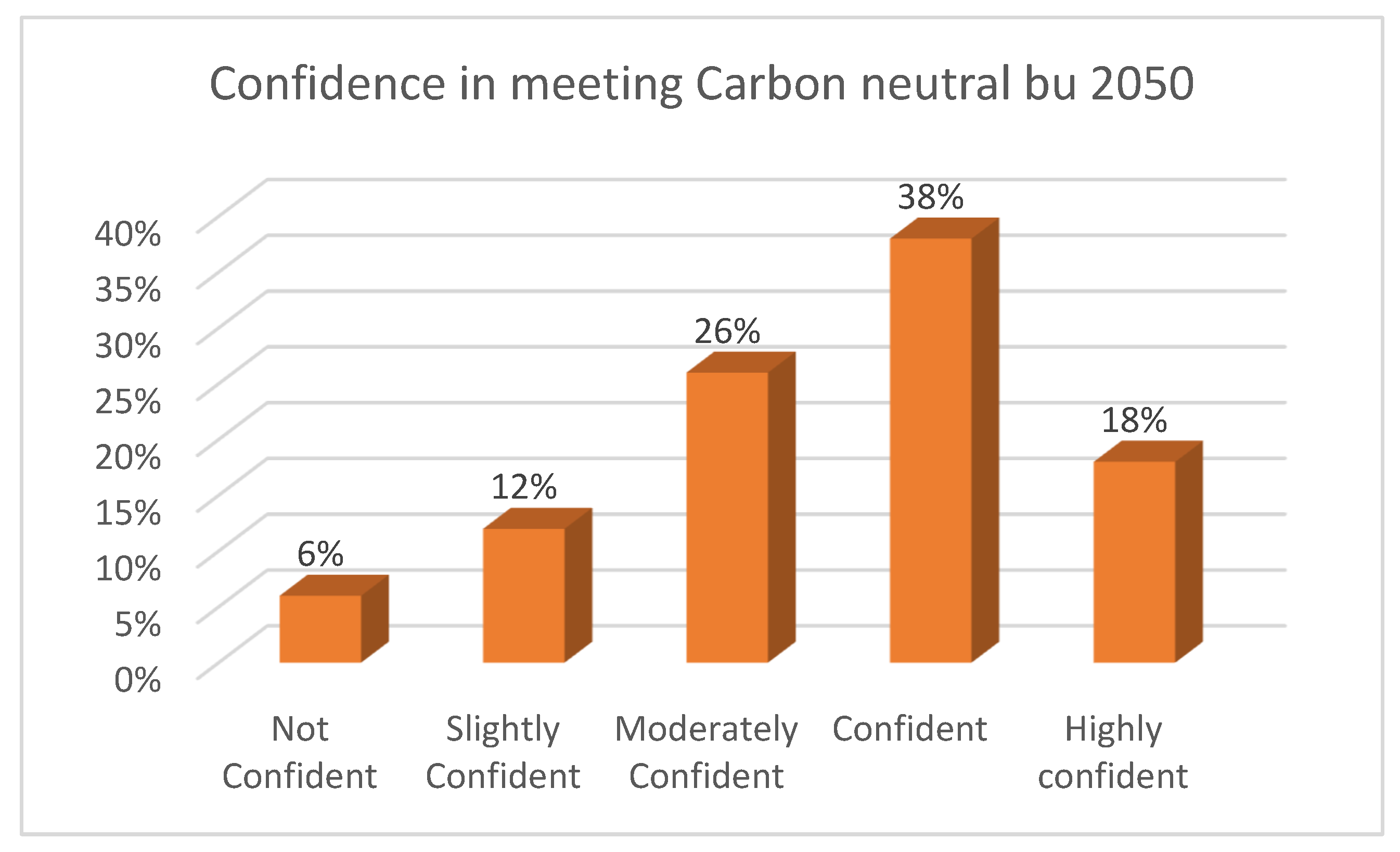
Regarding their confidence in achieving carbon neutrality goals by 2050, about 82% of respondents reported moderate to high levels of confidence, indicating that they are ready or at least, hopeful about their long-term decarbonization ambitions. However, a significant percentage of 18% of companies are only slightly confident or not confident at all about reaching this target due to current challenges related to planning, resources, or technological expertise (Figure 6).
Figure 6.
Compagnies confidence in Achieving Carbon Neutral Goals.
A closer examination of survey responses provides more insights into these confidence levels. Companies reporting high confidence often have defined decarbonization roadmaps, digital tools for carbon tracking, partnerships with green energy providers, and targets aligned with international standards. For example, some highly confident firms aim for net-zero by 2050 and set intermediate targets for 2030 and 2040, including electrification of fleets, renewable energy adoption, or sustainable aviation fuel integration.
Conversely, companies expressing low or slight confidence face multiple barriers: high costs of low-carbon technologies, lack of internal expertise, limited availability of renewable energy or green fuels, complex supply chains, and inconsistent carbon data across operations. Several respondents highlighted that Scope 3 emissions calculation and supplier engagement are particularly challenging, delaying full commitment and accurate reporting.
These different perspectives highlight the diversity of the freight industry’s climate action readiness. While some businesses are still in the early stages and struggle with different challenges, others are already setting out clear plans for being carbon neutral. Overall, the survey results demonstrate a clear link between technological maturity, and confidence in achieving carbon neutrality, explaining why a portion of firms remain less confident despite sector-wide sustainability ambitions.
5.2.4. Challenges in Achieving Carbon Neutrality Within Freight Transportation Sector
The survey results indicate that the majority of freight transportation companies are facing moderately to highly significant challenges to achieve the carbon neutrality target, with about 54%. Among the most significant obstacles mentioned were the high price of low-carbon technologies, the limited availability of alternative fuels, and the lack of technological readiness, especially with relation to fleet upgrades and emissions monitoring. In addition to that, the calculation of scope 3 emissions represents one of the major difficulties in this sector, this is mainly due to data availability and accuracy. Moreover, respondents also highlighted infrastructure limitations and the financial and operational risks associated with long-term investments in sustainability. All these findings show that although there is a rising commitment to becoming carbon neutral, it requires consistent collaboration, innovation, and regulatory support to overcome these associated organizational, technological, and economic obstacles.
6. Discussion
Given the complex and evolving nature of the logistics and supply chain sector, integrating AI-driven solutions provides both opportunities and challenges for improving freight transportation operations.
6.1. AI Adoption
Our survey results reveal a moderate level of AI adoption among Moroccan freight companies, consistent with international trends. Empirical research indicates that while the integration of AI for sustainability purposes is expanding globally, adoption intensity differs according to firm size, sector, and regional context. For example, ref. [69] found that among 240 surveyed companies in Serbia, including logistics firms—68% exhibited a medium AI adoption index, with adoption primarily influenced by factors such as years of technology use, business dependency on AI systems, and investment levels in AI infrastructure. Similarly, ref. [50] reported that by early 2025, approximately 1620 companies worldwide had adopted AI in logistics, with the U.S. (490) leading adoption, followed by India (170) and China (98), highlighting AI’s growing role in optimizing operations.
In the UK, ref. [70] observed that the adoption rate of AI and machine learning across logistics and mobility organizations stood at 55%, reflecting both growing interest and the specialized expertise required for deployment. Ref. [71] further demonstrated that strong leadership, customer pressure, and vendor support positively influence AI adoption, especially in SMEs. Similarly, ref. [64] emphasized the need for comparative studies examining organizational and cultural factors shaping AI implementation across industries.
6.2. AI Effectiveness
AI adoption enables freight transportation companies to improve decision-making, track emissions, and enhance overall efficiency, contributing to sustainability goals. Decision-making enhancement is among the most frequently cited benefits of AI use in logistics. AI-powered systems analyze large datasets, including traffic patterns, weather conditions, and demand forecasts, to guide managers in optimizing load planning and route selection, thereby reducing costs [72]. Moreover, AI can substantially lower labor costs and enhance warehouse productivity through automation [73].
When combined with complementary technologies such as IoT, big data analytics, and autonomous vehicles, AI fosters smart, data-driven logistics systems, improving efficiency and service reliability [74]. Empirical studies confirm these benefits: Ref. [70] found that 75% of logistics respondents reported improved operational efficiency, while 65% recognized positive environmental impacts following smart technology adoption.
Concrete results have also been reported on emissions reduction. For instance, ref. [75] observed a 30% decrease in CO2 emissions per route after implementing AI-driven logistics systems. Machine learning models have proven effective in predicting emissions and identifying greener transport combinations, as seen along the Izmir–Europe freight corridor [9]. Similarly, John G Russell (Transport company) in the UK achieved up to 30% reductions in carbon emissions through AI-based fleet optimization [6], while in China, AI applications in route planning led to 10% decreases in both emissions and energy consumption [8]. Ref. [76], for instance, demonstrated that targeted emission-reduction measures focusing on high-emission vehicles and routes rather than broad policies are more effective in cities like Rome, London, and Florence.
6.3. Carbon Emissions Tracking
Monitoring and reporting carbon emissions stand as a fundamental pillar of sustainability in the freight transportation sector. Our survey shows that Moroccan freight companies are tracking their emissions at a moderate level, indicating a growing awareness of their obligations related to climate change. The fact that a significant proportion of suppliers still struggle to implement regular and organized carbon footprint management, however, suggests that emission tracking is still in the early stages in the sector of freight transportation industry in Morocco. Aligned with our finding, ref. [77] noted that although global logistics firms are increasingly adopting standardized frameworks for carbon footprint calculation—such as the GHG Protocol, ISO 14064 [78], and EN 16258 [79]—many 3PL providers still restrict sustainability initiatives to conceptual stages [80]. This limited operationalization reflects both resource constraints and a lack of integration between environmental metrics and daily logistics processes.
However, there are successful cases. For example, ref. [81] documented that the Portuguese company Santos e Vale reduced its fleet’s carbon footprint by 20% in five years through systematic tracking and continuous performance monitoring. Such examples demonstrate that with consistent implementation and standardized reporting, AI-assisted carbon tracking can meaningfully contribute to emissions reduction and transparency in logistics operations.
6.4. Challenges and Barriers
Despite its promising potential, AI adoption in freight logistics remains constrained by several barriers, both technological and organizational. Ensuring system reliability and cybersecurity remains a significant concern, as disruptions in AI-based systems can have major repercussions for supply chains [73]. Additionally, AI implementation demands substantial financial investment due to system complexity, data infrastructure requirements, and ongoing maintenance [82].
Another major limitation concerns the Integration with existing Intelligent Transportation Systems (ITS), which is often limited to specific functions, calling for broader frameworks that can ensure interoperability and scalability [82]. Particularly SMEs face greater constraints due to a lack of expertise and infrastructure [70].
Finally, the absence of standardized methodologies for emission measurement further complicates AI-enabled sustainability efforts, as accurate tracking and transparent reporting remain inconsistent across regions [83].
Our survey findings confirm these challenges, with most respondents citing challenges related to technological readiness, financial impact, data availability, and supply chain partner engagement.
This convergence of theoretical insights and empirical observations underscores a dual reality: AI holds immense potential to enhance sustainability in freight transportation, yet its success depends on addressing organizational, financial, and structural barriers.
The proposed framework (Figure 2) is mainly supported by the empirical results, which also indicate the applicability of AI as a catalyst for sustainable freight transformation in the Moroccan environment. Applications like energy management, smart infrastructure, and carbon tracking, according to the findings, directly support the achievement of SDGs 7, 9, 11, and 13. Although the trends seen support the framework’s assumptions, the results also show that contextual obstacles like a lack of digital readiness and financial restrictions delay the adoption of AI. Overall, our results show that AI-driven freight systems hold significant potential to accelerate Morocco’s transition toward sustainable, low-carbon logistics.
The empirical results across AI adoption, perceived effectiveness, carbon neutrality, and carbon commitment suggest that companies with higher AI adoption tend to perceive their systems as more effective, while organizations actively tracking emissions report greater confidence in achieving carbon neutrality. These findings are consistent with prior studies showing that AI applications such as reinforcement learning, predictive analytics, and optimization algorithms, enhance operational efficiency and reduce carbon emissions [6,7,9,65].
A combination of policies and collaboration are required to assist more businesses in implementing AI and overcoming obstacles like exorbitant expenses and inadequate technological competence. Governments can offer financial support, pilot projects, and training programs to make AI easier to try and implement [71,84]. Additionally, businesses can collaborate with technology suppliers and other logistics partners to exchange best practices, tools, and information [70]. By taking these actions, businesses can more easily employ AI to enhance their operations and environmental performance.
7. Conclusions
This paper has shed light on the transformative potential of artificial intelligence (AI) in revolutionizing the freight transportation industry towards sustainable development and the achievement of transport-related Sustainable Development Goals (SDGs).
Exploring diverse AI applications such as predictive analytics, autonomous vehicles, route optimization, and energy management systems reveals their potential to address environmental challenges while enhancing operational efficiency.
The proposed framework presents and holistic approach to understanding the environmental impact of freight transportation and how AI applications can mitigate these impacts. It provides a holistic view of the various environmental indicators and AI interventions, offering stakeholders a clear roadmap for action.
The empirical survey of Moroccan freight transportation companies further strengthens this contribution, offering novel insights into the current levels of AI adoption, its perceived effectiveness, and the confidence of industry actors in meeting long-term carbon neutrality targets.
The paper offers scholars and practitioners practical suggestions for promoting sustainable logistics in Morocco and worldwide by connecting the adoption of AI to carbon neutrality and transportation-related SDGs.
Author Contributions
Conceptualization, R.B. and K.O.; Methodology, H.M., R.B. and K.O.; Validation, R.B.; Formal analysis, H.M.; Investigation, H.M.; Resources, H.M.; Data curation, H.M.; Writing—original draft, H.M.; Writing—review & editing, H.M., R.B. and K.O.; Supervision, R.B. All authors have read and agreed to the published version of the manuscript.
Funding
This research received no external funding.
Institutional Review Board Statement
Ethical review and approval were waived for this study, as confirmed by the Laboratory of Engineering Sciences, Ibn Tofail University (see attached Ethics Approval Exemption Certificate), because the research consisted of a non-interventional, anonymous survey targeting professional participants and did not involve sensitive personal data.
Informed Consent Statement
Informed consent was obtained from all subjects involved in the study.
Data Availability Statement
The original contributions presented in this study are included in the article. Further inquiries can be directed to the corresponding author.
Conflicts of Interest
The authors declare no conflicts of interest.
References
- Mani, V.; Gunasekaran, A.; Delgado, C. Enhancing Supply Chain Performance through Supplier Social Sustainability: An Emerging Economy Perspective. Int. J. Prod. Econ. 2018, 195, 259–272. [Google Scholar] [CrossRef]
- Fulzele, V.; Shankar, R. Performance Measurement of Sustainable Freight Transportation: A Consensus Model and FERA Approach. Ann. Oper. Res. 2023, 324, 501–542. [Google Scholar] [CrossRef]
- Grushevenko, D.; Kapustin, N. Modelling of Energy Consumption in the Transport Sector. In Proceedings of the Rudenko International Conference “Methodological Problems in Reliability Study of Large Energy Systems” (RSES 2021), Volzhsky, Russia, 13–17 September 2021. [Google Scholar] [CrossRef]
- Dhulasi Priya, S.; Saranya, K.G. Significance of Artificial Intelligence in the Development of Sustainable Transportation. Sci. Temper 2023, 14, 418–425. [Google Scholar] [CrossRef]
- Ellram, L.M.; Murfield, M.L.U. Environmental Sustainability in Freight Transportation: A Systematic Literature Review and Agenda for Future Research. Transp. J. 2017, 56, 263–298. [Google Scholar] [CrossRef]
- Abdullahi, I.; Larijani, H.; Liarokapis, D.; Paterson, J.; Jones, D.; Murray, S. A Data-Intelligence-Driven Digital Twin Framework for Improving Sustainability in Logistics. Appl. Sci. 2025, 15, 601. [Google Scholar] [CrossRef]
- Hussain, K.M. Revolutionizing Route Optimization Systems with Artificial Intelligence for a Smarter, Sustainable Logistics Ecosystem. Int. J. Comput. Sci. Mob. Comput. 2025, 14, 66–68. [Google Scholar] [CrossRef]
- Ke, H.; Xu, G.; Li, C.; Gao, J.; Xiao, X.; Wu, X.; Yan, Q. Optimization of China’s Freight Transportation Structure Based on Adaptive Genetic Algorithm under the Background of Carbon Peak. Environ. Sci. Pollut. Res. 2023, 30, 85087–85101. [Google Scholar] [CrossRef] [PubMed]
- Temizceri, F.T.; Kara, S.S. Towards Sustainable Logistics in Turkey: A Bi-Objective Approach to Green Intermodal Freight Transportation Enhanced by Machine Learning. Res. Transp. Bus. Manag. 2024, 55, 101145. [Google Scholar] [CrossRef]
- Aloui, A.; Hamani, N.; Delahoche, L. An Integrated Optimization Approach Using a Collaborative Strategy for Sustainable Cities Freight Transportation: A Case Study. Sustain. Cities Soc. 2021, 75, 103331. [Google Scholar] [CrossRef]
- Tjandra, S.; Kraus, S.; Ishmam, S.; Grube, T.; Linßen, J.; May, J.; Stolten, D. Model-Based Analysis of Future Global Transport Demand. Transp. Res. Interdiscip. Perspect. 2024, 23, 101016. [Google Scholar] [CrossRef]
- Kwilinski, A.; Lyulyov, O.; Pimonenko, T. Environmental Sustainability within Attaining Sustainable Development Goals: The Role of Digitalization and the Transport Sector. Sustainability 2023, 15, 11282. [Google Scholar] [CrossRef]
- Stanković, M. The Economic Importance of Transportation Sector. Knowl.-Int. J. 2021, 47, 143–146. [Google Scholar] [CrossRef]
- Fatorachian, H.; Kazemi, H.; Pawar, K. Digital Transformation for Sustainable Transportation: Leveraging Industry 4.0 Technologies to Optimize Efficiency and Reduce Emissions. Future Transp. 2025, 5, 34. [Google Scholar] [CrossRef]
- Sharma, A.; Strezov, V. Life Cycle Environmental and Economic Impact Assessment of Alternative Transport Fuels and Power-Train Technologies. Energy 2017, 133, 1132–1141. [Google Scholar] [CrossRef]
- International Transport Forum. ITF Transport Outlook 2019; OECD: Paris, France, 2019; ISBN 978-92-821-0388-3. [Google Scholar]
- Jouzdani, J.; Govindan, K. On the Sustainable Perishable Food Supply Chain Network Design: A Dairy Products Case to Achieve Sustainable Development Goals. J. Clean. Prod. 2021, 278, 123060. [Google Scholar] [CrossRef]
- Ajao, A. Effects of Freight Rates on Road Transportation of Agricultural Product in Southwest Nigeria. Niger. J. Logist. Transp. 2024, 15, 185–202. [Google Scholar] [CrossRef]
- Schulte, J.; Ny, H. Electric Road Systems: Strategic Stepping Stone on the Way towards Sustainable Freight Transport? Sustainability 2018, 10, 1148. [Google Scholar] [CrossRef]
- Gandhi, N.; Kant, R.; Thakkar, J.J.; Shankar, R. Prioritizing Solutions to Mitigate the Risks Due to Adoption of Intermodal Railroad Freight Transportation for Achieving Sustainable Development Goals. J. Clean. Prod. 2024, 435, 140535. [Google Scholar] [CrossRef]
- Centobelli, P.; Cerchione, R.; Esposito, E. Pursuing Supply Chain Sustainable Development Goals through the Adoption of Green Practices and Enabling Technologies: A Cross-Country Analysis of LSPs. Technol. Forecast. Soc. Chang. 2020, 153, 119920. [Google Scholar] [CrossRef]
- Lu, C.; Fang, Y.; Fang, J. A New Method to Evaluate the Coordination of Freight Transport and Economy for Sustainable Development. J. Innov. Knowl. 2022, 7, 100254. [Google Scholar] [CrossRef]
- Maparu, T.S.; Mazumder, T.N. Transport Infrastructure, Economic Development and Urbanization in India (1990–2011): Is There Any Causal Relationship? Transp. Res. Part A Policy Pract. 2017, 100, 319–336. [Google Scholar] [CrossRef]
- Kumar, A.; Anbanandam, R. Assessment of Environmental and Social Sustainability Performance of the Freight Transportation Industry: An Index-Based Approach. Transp. Policy 2022, 124, 43–60. [Google Scholar] [CrossRef]
- De Bruin, K.; Yakut, A.M. The Impacts of Removing Fossil Fuel Subsidies and Increasing Carbon Taxation in Ireland. Environ. Resour. Econ. 2023, 85, 741–782. [Google Scholar] [CrossRef]
- Bakioğlu, G. Prioritization of Digital Technology Applications in Intermodal Freight Transport Using CRITIC-Based Picture Fuzzy TOPSIS Method. Int. J. Automot. Sci. Technol. 2025, 9, 230–240. [Google Scholar] [CrossRef]
- Kumar, A.; Calzavara, M.; Velaga, N.R.; Choudhary, A.; Shankar, R. Modelling and Analysis of Sustainable Freight Transportation. Int. J. Prod. Res. 2019, 57, 6086–6089. [Google Scholar] [CrossRef]
- Khan, M.I.; Yasmin, T.; Shakoor, A. Technical Overview of Compressed Natural Gas (CNG) as a Transportation Fuel. Renew. Sustain. Energy Rev. 2015, 51, 785–797. [Google Scholar] [CrossRef]
- Muratori, M.; Smith, S.J.; Kyle, P.; Link, R.; Mignone, B.K.; Kheshgi, H.S. Role of the Freight Sector in Future Climate Change Mitigation Scenarios. Environ. Sci. Technol. 2017, 51, 3526–3533. [Google Scholar] [CrossRef]
- Vanek, F. Mode and Commodity Perspectives on U.S. Freight Energy Consumption and CO2 Emissions: Insights and Directions for Improvement. Int. J. Sustain. Transp. 2019, 13, 741–760. [Google Scholar] [CrossRef]
- Andrlík, B. Measuring Costs of Noise Pollution Generated by Freight Transport: Case of the Slovak and Czech Republic. Eur. Transp./Trasp. Eur. 2021, 1–18. [Google Scholar] [CrossRef]
- Boldizsár, A. Environmental Impact of Freight Transport–Freight Footprint as a New Freight Transport Indicator. Period. Polytech. Transp. Eng. 2023, 52, 18–23. [Google Scholar] [CrossRef]
- Mansoursamaei, M.; Moradi, M.; González-Ramírez, R.G.; Lalla-Ruiz, E. Machine Learning for Promoting Environmental Sustainability in Ports. J. Adv. Transp. 2023, 2023, 2144733. [Google Scholar] [CrossRef]
- Yadav, M.; Singh, G. Environmental Sustainability with Artificial Intelligence. EPRA Int. J. Multidiscip. Res. 2023, 9, 213–217. [Google Scholar] [CrossRef]
- Linke, R.; Wilke, J.K.; Öztürk, Ö.; Schöpp, F.; Kassens-Noor, E. The Future of the eHighway System: A Vision of a Sustainable, Climate-Resilient, and Artificially Intelligent Megaproject. J. Mega Infrastruct. Sustain. Dev. 2022, 2, 51–64. [Google Scholar] [CrossRef]
- Bhardwaj, V. AI-Enabled Autonomous Driving: Enhancing Safety and Efficiency through Predictive Analytics. Int. J. Sci. Res. Manag. 2024, 12, 1076–1094. [Google Scholar] [CrossRef]
- Rana, K.; Khatri, N. Automotive Intelligence: Unleashing the Potential of AI beyond Advance Driver Assisting System, a Comprehensive Review. Comput. Electr. Eng. 2024, 117, 109237. [Google Scholar] [CrossRef]
- Sever, T.; Contissa, G. Automated Driving Regulations–Where Are We Now? Transp. Res. Interdiscip. Perspect. 2024, 24, 101033. [Google Scholar] [CrossRef]
- Zhao, L.; Malikopoulos, A.A. Enhanced Mobility with Connectivity and Automation: A Review of Shared Autonomous Vehicle Systems. IEEE Intell. Transp. Syst. Mag. 2022, 14, 87–102. [Google Scholar] [CrossRef]
- Makahleh, H.Y.; Ferranti, E.J.S.; Dissanayake, D. Assessing the Role of Autonomous Vehicles in Urban Areas: A Systematic Review of Literature. Future Transp. 2024, 4, 321–348. [Google Scholar] [CrossRef]
- Monios, J.; Bergqvist, R. The Transport Geography of Electric and Autonomous Vehicles in Road Freight Networks. J. Transp. Geogr. 2019, 80, 102500. [Google Scholar] [CrossRef]
- Faisal, A.; Yigitcanlar, T.; Kamruzzaman, M.d.; Currie, G. Understanding Autonomous Vehicles: A Systematic Literature Review on Capability, Impact, Planning and Policy. J. Transp. Land Use 2019, 12, 45–72. [Google Scholar] [CrossRef]
- Jones, E.C.; Leibowicz, B.D. Contributions of Shared Autonomous Vehicles to Climate Change Mitigation. Transp. Res. Part D Transp. Environ. 2019, 72, 279–298. [Google Scholar] [CrossRef]
- Silva, Ó.; Cordera, R.; González-González, E.; Nogués, S. Environmental Impacts of Autonomous Vehicles: A Review of the Scientific Literature. Sci. Total Environ. 2022, 830, 154615. [Google Scholar] [CrossRef]
- Kansal, L.; Ediga, P. IoT-Enabled Predictive Maintenance for Sustainable Transportation Fleets. MATEC Web Conf. 2024, 392, 01189. [Google Scholar] [CrossRef]
- Ojeda, J.C.O.; De Moraes, J.G.B.; Filho, C.V.D.S.; Pereira, M.D.S.; Pereira, J.V.D.Q.; Dias, I.C.P.; Da Silva, E.C.M.; Peixoto, M.G.M.; Gonçalves, M.C. Application of a Predictive Model to Reduce Unplanned Downtime in Automotive Industry Production Processes: A Sustainability Perspective. Sustainability 2025, 17, 3926. [Google Scholar] [CrossRef]
- Ersöz, O.Ö.; İnal, A.F.; Aktepe, A.; Türker, A.K.; Ersöz, S. A Systematic Literature Review of the Predictive Maintenance from Transportation Systems Aspect. Sustainability 2022, 14, 14536. [Google Scholar] [CrossRef]
- Kliestik, T.; Nica, E.; Durana, P.; Popescu, G.H. Artificial Intelligence-Based Predictive Maintenance, Time-Sensitive Networking, and Big Data-Driven Algorithmic Decision-Making in the Economics of Industrial Internet of Things. Oeconomia Copernic. 2023, 14, 1097–1138. [Google Scholar] [CrossRef]
- Fan, Z.; Yan, Z.; Wen, S. Deep Learning and Artificial Intelligence in Sustainability: A Review of SDGs, Renewable Energy, and Environmental Health. Sustainability 2023, 15, 13493. [Google Scholar] [CrossRef]
- Saravanan, M.R.; Selvan, M.C.; Ajay, M.A. AI-Enabled Logistics: A Key to Achieving India’s Sustainable Development Goals. In Proceedings of the Artificial Intelligence in Logistics and Supply Chain Management: Ethical Implications in Automation, Transparency & Sustainability, Pollachi, India, 7 March 2025. [Google Scholar]
- Serradilla, O.; Zugasti, E.; Rodriguez, J.; Zurutuza, U. Deep Learning Models for Predictive Maintenance: A Survey, Comparison, Challenges and Prospects. Appl. Intell. 2022, 52, 10934–10964. [Google Scholar] [CrossRef]
- Leal Filho, W.; Mbah, M.F.; Dinis, M.A.P.; Trevisan, L.V.; De Lange, D.; Mishra, A.; Rebelatto, B.; Ben Hassen, T.; Aina, Y.A. The Role of Artificial Intelligence in the Implementation of the UN Sustainable Development Goal 11: Fostering Sustainable Cities and Communities. Cities 2024, 150, 105021. [Google Scholar] [CrossRef]
- Ge, X.; Jin, Y. Sustainability Oriented Vehicle Route Planning Based on Time-Dependent Arc Travel Durations. Sustainability 2023, 15, 3208. [Google Scholar] [CrossRef]
- Jahagirdar, S.; Jahagirdar, S.; Apandkar, A. Green Logistics and Sustainable Transportation: Ai-Based Route Optimization, Carbon Footprint Reduction, And the Future of Eco-Friendly Supply Chains. J. Inform. Educ. Res. 2025, 5, 3167–3183. [Google Scholar] [CrossRef]
- Kumar, A.; Sharma, S.; Goyal, N.; Singh, A.; Cheng, X.; Singh, P. Secure and Energy-Efficient Smart Building Architecture with Emerging Technology IoT. Comput. Commun. 2021, 176, 207–217. [Google Scholar] [CrossRef]
- Galkin, A.; Samchuk, G.; Kopytkov, D.; Thompson, R.G. Digital Twins in Logistics: A Comprehensive Bibliometric Analysis for Advancing Smart Cities and Sustainable Development. Discov. Sustain. 2025, 6, 853. [Google Scholar] [CrossRef]
- Pan, S.; Zhou, W.; Piramuthu, S.; Giannikas, V.; Chen, C. Smart City for Sustainable Urban Freight Logistics. Int. J. Prod. Res. 2021, 59, 2079–2089. [Google Scholar] [CrossRef]
- Kataria, A.; Rani, S.; Kautish, S. Artificial Intelligence of Things for Sustainable Development of Smart City Infrastructures. In Digital Technologies to Implement the UN Sustainable Development Goals; Leal Filho, W., Kautish, S., Wall, T., Rewhorn, S., Paul, S.K., Eds.; Springer Nature: Cham, Switzerland, 2024; pp. 187–213. ISBN 978-3-031-68427-2. [Google Scholar]
- Yavari, A.; Mirza, I.B.; Bagha, H.; Korala, H.; Dia, H.; Scifleet, P.; Sargent, J.; Tjung, C.; Shafiei, M. ArtEMon: Artificial Intelligence and Internet of Things Powered Greenhouse Gas Sensing for Real-Time Emissions Monitoring. Sensors 2023, 23, 7971. [Google Scholar] [CrossRef]
- Mohsen, B.M.; Mohsen, M. Reducing Emissions Through AI-Driven Multimodal Transport Optimization in IoT-Connected Environments. Int. J. Energy Res. 2025, 2025, 2399288. [Google Scholar] [CrossRef]
- Davydenko, L.; Davydenko, N.; Bosak, A.; Bosak, A.; Deja, A.; Dzhuguryan, T. Smart Sustainable Freight Transport for a City Multi-Floor Manufacturing Cluster: A Framework of the Energy Efficiency Monitoring of Electric Vehicle Fleet Charging. Energies 2022, 15, 3780. [Google Scholar] [CrossRef]
- Douaidi, L. Artificial Intelligence-Driven Optimization of Electric Vehicle Charging Infrastructure and User-Centric Experience. Ph.D. Thesis, Université Bourgogne Europe, Dijon, France, 2025. [Google Scholar]
- Hannan, M.A.; Al-Shetwi, A.Q.; Ker, P.J.; Begum, R.A.; Mansor, M.; Rahman, S.A.; Dong, Z.Y.; Tiong, S.K.; Mahlia, T.M.I.; Muttaqi, K.M. Impact of Renewable Energy Utilization and Artificial Intelligence in Achieving Sustainable Development Goals. Energy Rep. 2021, 7, 5359–5373. [Google Scholar] [CrossRef]
- Kulkov, I.; Kulkova, J.; Rohrbeck, R.; Menvielle, L.; Kaartemo, V.; Makkonen, H. Artificial Intelligence-Driven Sustainable Development: Examining Organizational, Technical, and Processing Approaches to Achieving Global Goals. Sustain. Dev. 2024, 32, 2253–2267. [Google Scholar] [CrossRef]
- Chowdhury, W.A. AI for Multimodal Transport Optimization: Integrating Air, Sea, and Land Logistics for Efficiency. J. Inf. Syst. Eng. Manag. 2025, 10, 1088–1092. [Google Scholar] [CrossRef]
- Rahiminia, S.; Mehrabi, A.; Jabbarzadeh, A.; Aghaee, M.P. A Hybrid Optimization Approach for Designing Sustainable Intermodal Freight Transport under Mixed Uncertainty. Socio-Econ. Plan. Sci. 2025, 98, 102146. [Google Scholar] [CrossRef]
- Pattanaik, V.; Singh, M.; Gupta, P.K.; Singh, S.K. Smart Real-Time Traffic Congestion Estimation and Clustering Technique for Urban Vehicular Roads. In Proceedings of the IEEE Region 10 Conference (TENCON), Singapore, 22–25 November 2016; pp. 3420–3423. [Google Scholar]
- Luqman, A.; Zhang, Q.; Talwar, S.; Bhatia, M.; Dhir, A. Artificial Intelligence and Corporate Carbon Neutrality: A Qualitative Exploration. Bus. Strat. Env. 2024, 33, 3986–4003. [Google Scholar] [CrossRef]
- Jankovic, S.D.; Curovic, D.M. Strategic Integration of Artificial Intelligence for Sustainable Businesses: Implications for Data Management and Human User Engagement in the Digital Era. Sustainability 2023, 15, 15208. [Google Scholar] [CrossRef]
- Fatorachian, H.; Kazemi, H. Leveraging Technology and Sustainability Practices for Smart Mobility and Green Logistics: A Dual-Theoretical Approach to Adoption Dynamics. Int. J. Sustain. Eng. 2025, 18, 2531890. [Google Scholar] [CrossRef]
- Soomro, R.B.; Al-Rahmi, W.M.; Dahri, N.A.; Almuqren, L.; Al-mogren, A.S.; Aldaijy, A. A SEM–ANN Analysis to Examine Impact of Artificial Intelligence Technologies on Sustainable Performance of SMEs. Sci. Rep. 2025, 15, 5438. [Google Scholar] [CrossRef]
- Selvi, M.V.; Upadhyay, P.; Revathi, A.; Punitha, N.; Saravanakumar, M. Enhancing Urban AI-Powered Transportation Systems with Machine Learning. In Urban Mobility and Challenges of Intelligent Transportation Systems; IGI Global Scientific Publishing: Hershey, PA, USA, 2025; pp. 363–382. [Google Scholar]
- Barua, L.; Zou, B.; Zhou, Y. Machine Learning for International Freight Transportation Management: A Comprehensive Review. Res. Transp. Bus. Manag. 2020, 34, 100453. [Google Scholar] [CrossRef]
- Xia, W.; Zhou, D.; Xia, Q.; Zhang, L. Design and Implementation Path of Intelligent Transportation Information System Based on Artificial Intelligence Technology. J. Eng. 2020, 2020, 482–485. [Google Scholar] [CrossRef]
- Parthasarathy, V. AI-Driven Carbon Footprint Tracking and Emission Reduction in Logistics Networks. J. Artif. Intell. Data Sci. Mach. Learn. 2024, 5, 47–56. [Google Scholar] [CrossRef]
- Böhm, M.; Nanni, M.; Pappalardo, L. Gross Polluters and Vehicle Emissions Reduction. Nat. Sustain. 2022, 5, 699–707. [Google Scholar] [CrossRef]
- Chen, L.; Msigwa, G.; Yang, M.; Osman, A.I.; Fawzy, S.; Rooney, D.W.; Yap, P.-S. Strategies to Achieve a Carbon Neutral Society: A Review. Environ. Chem. Lett. 2022, 20, 2277–2310. [Google Scholar] [CrossRef]
- Wintergreen, J. ISO 14064 International Standard for GHG Emissions Inventories and Verification; United States Environmental Protection Agency: Washington, DC, USA, 2007. [Google Scholar]
- Funk, B.; Niemeyer, P.; Gómez, J.M. (Eds.) Information Technology in Environmental Engineering: Selected Contributions to the Sixth International Conference on Information Technologies in Environmental Engineering (ITEE2013); Environmental Science and Engineering; Springer: Berlin/Heidelberg, Germany, 2014; ISBN 978-3-642-36010-7. [Google Scholar]
- Wong, E.Y.C.; Tai, A.H.; Zhou, E. Optimising Truckload Operations in Third-Party Logistics: A Carbon Footprint Perspective in Volatile Supply Chain. Transp. Res. Part D Transp. Environ. 2018, 63, 649–661. [Google Scholar] [CrossRef]
- Albuquerque, V.; Pereira, F.; Rocha, J.; Dias, M.S.; Ferreira, J.C. Sustainability Measurement in a Logistics Transportation Company. Transp. Res. Procedia 2023, 72, 48–55. [Google Scholar] [CrossRef]
- Abduljabbar, R.; Dia, H.; Liyanage, S.; Bagloee, S.A. Applications of Artificial Intelligence in Transport: An Overview. Sustainability 2019, 11, 189. [Google Scholar] [CrossRef]
- Guntuka, L.; Mukandwal, P.S.; Aktas, E.; Paluvadi, V.S.K. From Carbon-Neutral to Climate-Neutral Supply Chains: A Multidisciplinary Review and Research Agenda. Int. J. Logist. Manag. 2024, 35, 916–942. [Google Scholar] [CrossRef]
- Kirikkaleli, D.; Ali, K.; Zhang, Q.; Kirikkaleli, N.O. Environmental Sustainability in the USA: Role of Artificial Intelligence. Sustain. Futures 2025, 9, 100823. [Google Scholar] [CrossRef]
Disclaimer/Publisher’s Note: The statements, opinions and data contained in all publications are solely those of the individual author(s) and contributor(s) and not of MDPI and/or the editor(s). MDPI and/or the editor(s) disclaim responsibility for any injury to people or property resulting from any ideas, methods, instructions or products referred to in the content. |
© 2025 by the authors. Licensee MDPI, Basel, Switzerland. This article is an open access article distributed under the terms and conditions of the Creative Commons Attribution (CC BY) license (https://creativecommons.org/licenses/by/4.0/).