


Abstract
Implementing environmental protection taxes implies a shift in environmental policy from government enforcement to market incentives, fostering long-term sustainability. Based on institutional theory, this study explores the nonlinear impact of environmental taxes on corporate green innovation and its influencing mechanism, by considering the complex interaction between innovation offsets and environmental costs. Utilizing data from Chinese A-share listed companies on the Shanghai and Shenzhen stock exchanges during 2012 and 2023, the study reveals an inverse U-shaped relationship between environmental taxes and green innovation performance, within which corporate environmental responsibility functions as a mediator. Furthermore, the results also reveal that the relationship between environmental taxes and green innovation is positively moderated by the development level of regional green finance. In addition, the heterogeneity analyses show that the inverse U-shaped relationship is more pronounced among heavily polluting and large-scale firms, and firms in more marketized areas and areas with higher levels of intellectual property protection. The research enriches the literature on the dual-edged effects of environmental taxes anchored in green innovation and unpacks the internal mechanism of the effectiveness of environmental protection tax policy. It also provides practical implications for the design of tiered taxes and green finance policies aimed at achieving sustainable development.
1. Introduction
Environmental pollution is becoming a critical threat to global sustainability, an issue that has garnered urgent worldwide attention [1]. According to The Emissions Gap Report 2023 released by the United Nations Environment Program, 149 countries have submitted Nationally Determined Contributions (NDCs) since the Conference of the Parties 27th (COP27) [2]. Governments have been consistently developing and revising environmental policies to protect the sustainable environment. As for China, ecological civilization construction was added to the Constitution in 2018, and in the same year, a law concerning environmental protection taxes was formally implemented, replacing the regulations on levying sewage charges for entities discharging pollutants directly into the environment, implying a shift in environmental policy from government enforcement to market incentives [3]. The incentive impact lies in the principle of additional taxes and exemptions, that is, firms pay more taxes when they pollute more, and they can receive tax preference if they pollute less [4], which motivates firms to implement more green transformation practices and strive for low-pollution goals [5]. Green innovation is a crucial instrument for achieving sustainable development and keeping the low-carbon commitment [6], implying that firms are willing to face environmental tax reform by carrying out green innovation activities [7]. However, green transformation necessitates that firms introduce large-scale upgrading equipment and upgrade their production processes or technologies, which leads to increased environmental expenses and appropriates the resources and capital available for green R&D activities [8]. Thus, the debate has centered on whether the environmental tax has a beneficial or detrimental impact on green innovation.
Existing academic research has conflicting opinions. On the one hand, some studies suggested that environmental levies have a compensating influence on green innovation [9,10]. On the other hand, some studies proposed that environmental taxes may have an encroaching effect on green innovation [11]. Furthermore, some studies argued that there was a non-linear relationship between environmental taxes and green innovation [12,13,14]. The existing research findings have not led to a consensus because of variations in study methodologies and viewpoints, as well as regional variations in environmental policy [15,16]. Hence, it remains imperative to investigate whether the environmental tax will lead to an increase in the investment into environmental pollution remediation and appropriate scarce resources that are critical for green innovation, or instead inspire companies to engage in green R&D activities to counteract the expenses associated with environmental pollution control.
In addition, the empirical inconclusiveness and controversy mainly lie in the variation in internal characteristics of firms’ environmental commitments and the external environment that firms are embedded in [7]. Corporate environmental responsibility is the primary manifestation of environmental commitment, which can be activated by environmental tax reforms through economic incentives and institutional pressure, thereby channeling corporate efforts toward sustainability-oriented green innovation [17]. Green finance, including green credit, green bonds and related funding policies, represents the outcome and macro-level manifestation of the co-evolution of government institutions and the market environment [18]. Different green finance policies in diverse regions could lead to firms’ varying attitudes and awareness towards environmental protection, which could affect how the environmental tax works [19]. However, the combined effect of green finance policies and environmental taxes on green innovation and the indirect bridge effects of corporate environmental responsibility have received little attention in the existing research. Hence, the objective of this research is to investigate the non-linear impact of environmental taxes on the outcomes of green innovation, as well as its internal influencing mechanism.
To solve the above problems, this study constructs a moderated mediation model based on the institution theory and utilizes data from Chinese A-share listed companies for empirical testing. This study makes three contributions to the existing literature. First, this study focuses on the single regulator policy and environmental tax policy rather than generic regulation and explores the non-linear relationship between environmental taxes and green innovation performance based on the granularity of firm-level environmental tax data, which extends corporate sustainability research. Second, the main novelty of this study is to explore the indirect paths of corporate environmental responsibility in the non-linear relationship, which reveals that the internal mechanism through which environmental tax reform is effectively translated into corporate environmental awareness and green practices. Third, this study identifies green finance as a contextual moderator, offering new evidence on how financial systems interact with environmental policy to shape green innovation outcomes. In addition, the constructed comprehensive framework integrating environmental tax policy, corporate environmental responsibility, and green financial support offers a more nuanced understanding of how and under what conditions environmental taxes influence innovation.
The remaining sections of this paper are as follows: Section 2 constructs a theoretical framework and develops hypotheses. Section 3 describes the methodology, including samples, variables and estimation models. Section 4 provides the results, and Section 5 and Section 6 summarize the discussion and conclusions.
2. Literature Review and Hypothesis Development
2.1. Literature Review and Theoretical Framework
Environmental regulation is an important tool to stimulate firms to adopt environmental protection behaviors in the production process [20], and it is the most important environmental economic development policy in China and even in countries around the world. The law concerning the environmental protection tax, a special market incentive environmental regulation, provides detailed regulations on the taxpayers and taxation scope of the environmental tax [21]. Based on the innovation theory, existing research has focused on the institutional effects of environmental taxes, as well as their impact on green innovation from multiple perspectives such as regional and firm levels. Several studies have indicated that environmental taxes exert a compensatory effect on green innovation. Xie et al. (2023) discovered that corporate investment efficiency in heavily polluting industries was greatly enhanced by levying environmental protection fees [9]. Kesidou and Wu (2020) found that environmental taxes improved the degree of ecological technological innovation primarily through the anti-driving effect, meaning increased environmental management expenses [10]. Other studies suggested environmental taxes may exert an encroaching effect on corporate innovation. Zhang et al. (2022) discovered that environmental taxes had a suppressive influence on the volume and caliber of green patents by increasing investment in the environment and its renewal [11]. In addition, some studies suggested a non-linear relationship between environmental regulation and innovation performance also existed from the perspective of technology innovation or production innovation [12,13,14]. Song et al. (2020) [13] and Zhang et al. (2020) [14] find an inverted-U relationship between environmental regulation stringency and innovation from the city-level and region-level regulation views. Deng et al. (2022) find the positive spatial agglomeration effect of tax competition by combining the dynamic spatial Durbin model and the threshold panel model [12].
After a literature analysis and review, we find that most existing literature focuses on generic environmental regulation at macro levels to explore the relationship between environmental regulation and innovation [12,13,14]. There is a lack of research focusing on the single regulator policies, particularly from the perspective of environmental tax policy. Second, the existing literature identifies the indirect mechanisms through which environmental regulations exert a linear impact on innovation, considering innovation forms, innovation input and innovation capability [15,16]. Few studies have explored the indirect paths of responsible organizational characteristics on this relationship. Third, the existing literature focuses on contextual elements that influence the effects of environmental regulation from the perspectives of government subsidies and executive political experience [7]. On this basis, we construct a moderation mediating model to examine the non-linear relationship between environmental taxes and green innovation incorporating the mediating role of environmental responsibility and the moderating role of green finance.
Institutional theory suggests that institutions effectively constrain the consciousness and behavior of firms through regulatory, normative, and cognitive structures [20]. Based on the institutional theory, the implementation of environmental taxes may boost the willingness of firms to protect the environment, actively improve corporate environmental responsibility, and motivate their environmental protection behaviors [4]. The change in firms’ environmental consciousness and behaviors would lead to differences in their performance [22]. Prior studies suggest that proactive corporate environmental responsibility is a driver of innovation strategy by satisfying stakeholders’ expectations, improving firm reputation, reducing financing costs, and gaining competitive advantages [22,23]. Green innovation is one important measure for firms when protecting the environment, which could help improve their economic, social, and environmental performance [23]. Consequently, the imposition of an environmental tax could potentially influence an enterprise’s resolve to uphold environmental duties and its performance in green innovation. It is plausible that corporate environmental responsibility could mediate the connection between the environmental tax and the performance of green innovation.
According to institutional theory, the institutional context could regulate corporate behaviors, affecting the effects of institutional logic, including regulations, policies and rules [20]. The availability of innovation resources influences the environmental protection choice and behaviors of firms [7]. As emphasized by previous scholars, a well-developed financial system serves as a critical conduit for transforming regulatory pressure into tangible technological advancements, thereby fostering corporate innovation and responsibility [24], while green finance could offer financial support for firms to protect the environment actively [25]. In regions with different development levels of green finance, firms could make different environmental protection choices and carry out different environmental protection activities when faced with environmental taxes, meaning that the effects of environmental taxes on business environmental responsibility and green innovation performance could be influenced by regional green finance. Thus, the linkages between environmental taxes and corporate environmental responsibility, along with the relationships between environmental taxes and green innovation performance, may therefore be moderated by green finance.
2.2. Hypothesis Development
2.2.1. Environmental Tax and Corporate Green Innovation Performance
The environmental tax represents a market-oriented strategy for environmental sustainability, integrating the environmental management cost into the operational and production costs faced by businesses [25]. Reasonable environmental policies can encourage businesses to engage in technological advancements, whose profits will in turn compensate for the cost brought by the environmental tax, realizing the innovation compensation effect [11]. Nevertheless, an excessive environmental tax could lead to an increase in corporate costs and the encroachment of innovation resources, resulting in the cost encroachment effect [14].
From the regulatory view, levying environmental taxes increases the tax rate for taxable pollutant emissions [11], which increases the cost of environmental violations and puts pressure on corporate production and operation [4]. In order to minimize taxes for environmental pollution and increase earnings, firms choose to reallocate resources to upgrade equipment, develop new production techniques, or develop environmentally friendly products [5], which could improve their resource utilization efficiency and in turn improve green innovation performance [8]. From the normative view, the environmental tax has drawn the attention of society to corporate environmental issues [9]. In light of ethical considerations and public pressure, firms must proactively engage in environmental protection activities, including green R&D activities, and further improve their green innovation performance [19]. From the cognitive perspective, the levy of environmental taxes provides strategic guidance for firms’ development [26]. The government places a high level of emphasis on the preservation of the environment, which makes firms realize the importance of green transformation. However, relying solely on end-of-pipe treatment can not meet long-term development needs. Greening the production process and the products can address environmental pollution issues fundamentally [6]. Firms that invest and engage in green R&D activities can lower more uncertainty of environmental risk, resulting in greater corporate green innovation performance.
However, with the environmental tax increasing to a certain extent, firms face excessive tax burdens [27]. As a result, they may redirect capital originally used for innovation activities to cover environmental taxes and fees [28], which leads to a depletion of resources for innovation, a decrease in innovation activities, and a downturn in the achievements of green innovation [29]. As a result, the environmental tax will initially have an innovation compensation effect, improving green innovation performance. However, as its cost effect gradually increases and outweighs its innovation compensation effect, the environmental tax will have a negative effect on green innovation performance. Therefore, we propose the following hypothesis:
Hypothesis 1 (H1).
Environmental taxes have an inverse U-shaped curvilinear effect on corporate green innovation performance.
2.2.2. Mediating Impact of Corporate Environmental Responsibility
An environmental tax encourages firms to fulfill their environmental responsibility. Conversely, excessive environmental protection taxes can deplete resources meant for environmental responsibility [30].
In terms of regulation, the government has established legal protections for the implementation of environmental taxes by creating more stringent and unified collection standards, as well as a scientific and standardized institutional frameworks [17]. It not only strengthens the inspection and punishment of firms’ environmental pollution, but also further demonstrates the determination of the government for environmental governance [31]. This approach could effectively regulate firms’ environmental footprints, motivating them to take proactive measures of environmental protection and enhance their initiative in fulfilling environmental responsibilities [32]. From the normative standpoint, the reform of environmental taxes raises public attention to the environmental influence of firms [9], inducing firms to care more about their environmental protection behaviors to avoid harm to their reputation and the loss of market share caused by disclosure of unethical environmental behaviors [5]. As a result, firms would proactively engage in responsible corporate environmental activities to mitigate potential costs of poor environmental behaviors and enhance their green public image. From the cognitive standpoint, enforcement of an environmental tax not only indicates the direction for long-term development, but also effectively raises firms’ awareness of environmental protection [6]. Driven by environmental taxes, firms, whether under survival pressure or for the pursuit of long-term competitive advantage, are likely to engage in responsible environmental behaviors [22]. Nevertheless, when environmental taxes rise, the expense of environmental protection rises as well, undermining the investment made into corporate environmental responsibility and slowing the growth of such initiatives. Therefore, we propose the following hypothesis:
Hypothesis 2 (H2).
Environmental taxes have an inverse U-shaped curvilinear effect on corporate environmental responsibility.
From the regulatory view, an increase in environmental taxes represents the increasing demands of the government for firms to aggressively meet their environmental responsibilities [29]. Firms take on environmental responsibility in order to meet government environmental criteria and obtain regulatory permission, which may result in green subsidies and financial support, further influencing their green innovation performance [33]. From the normative view, an environmental tax increases the external public pressure on firms to actively fulfil their environmental responsibilities [26]. With the increasing corporate environmental responsibility, firms could gain more positive feedback from their stakeholders, including green raw materials, green technical support, and even extra consumer knowledge [34], which further enhances their green innovation capability. From the cognitive view, under the guidance of environmental taxes, firms undertake more environmental responsibility and actively protect the environment [6]. To win the trust of and receive resource support from their stakeholders, firms choose to invest funds in green technological innovation and the creation of green products to achieve substantial environmental protection. However, when the levy imposed for environmental purposes surpasses a specific limit, firms’ investments into environmental protection activities decrease due to the lack of sufficient capital [34], which further leads to a reduction of resources invested in green R&D activities and thus a decrease in green innovation performance. Therefore, environmental taxes can indirectly affect green innovation performance by influencing firms to exhibit differences in awareness and behaviors regarding their environmental responsibility. Therefore, we propose the following hypothesis:
Hypothesis 3 (H3).
Corporate environmental responsibility plays a mediating role in the inverted U-shaped relationship between environmental taxes and corporate green innovation performance.
2.2.3. Moderating Impact of Green Finance
In the regions with developed green finance, the full spectrum of environmental and economic policies pertaining to green finance is relatively well-established [35]. Green finance not only establishes financial limitations and places continual oversight on firms with environment-polluting behaviors, but also supplies sufficient capital and other support for sustainability [19].
When regional green finance development grows stronger, the regional environmental and economic policies may be relatively sound, and the allocation efficiency is higher [19]. When making investment and lending decisions, the financial institutions focus more on assessing whether the firm complies with environmental regulations and the project’s possible environmental effects [24]. It increases the demand for cleaner production and operation, and raises the barriers to enter green initiatives. In order to seize financing opportunities, firms must confront the institutional oversight, public supervision pressure and long-term survival challenges stemming from environmental protection taxes [36], undertake more environmental responsibilities, and engage in more environmental R&D activities to achieve substantial environmental protection, which will enhance the compensatory effect of environmental taxes on innovation. However, in regions with a low development level of green finance, firms face less financing pressure from environmental supervision [35]. Firms are more inclined to maintain steady development and the status quo [37]. There will be less of an impact from environmental protection levies, both positively and negatively, on corporate environmental responsibility or green innovation performance. That means, under the lower development level of regional green finance, firms are less willing to transform pressure from environmental taxes into more environmental responsibility and green innovation activities, which weakens the innovation compensation effect of environmental taxes.
Additionally, the regions with a higher degree of green finance also foster an environment that is more conducive to the decisions aligning with environmental development [36]. When more developed green finance policies are introduced, firms that fulfill the environmental requirements are more likely to obtain environmental subsidies and supportive financing policies [35]. Thus, in regions with advanced green finance development, companies that align with environmental standards are more likely to obtain financial backing and enjoy preferential policy treatment [25], which helps firms alleviate financial burdens from environmental taxes and carry out environmental protection activities and fulfill their environmental responsibilities, further increasing the innovation compensation effect of environmental taxes [37]. Consequently, in regions with more developed green finance, the inverted U-shaped relationship among environmental taxes, corporate environmental responsibilities, and green innovation performance becomes steeper.
However, in the regions with underdeveloped green finance, it is more difficult for local financial institutions to provide sufficient financial support for firms to protect the environment and mitigate the financial limitations encountered by companies in their research and development endeavors [36], which could lower firms’ awareness of environmental responsibility and their enthusiasm for green innovation, further weakening the innovation compensation effect of an environmental tax and enhancing its cost-encroaching effect. Consequently, the inverted U-shaped relationship among environmental taxes, corporate environmental accountability, and green innovation performance exhibits a smoother curve. Therefore, we propose the following hypotheses:
Hypothesis 4a (H4a).
The development level of regional green finance positively moderates the inverse U-shaped curvilinear relationship between environmental taxes and corporate green innovation performance.
Hypothesis 4b (H4b).
The development level of regional green finance positively moderates the inverse U-shaped curvilinear relationship between environmental taxes and corporate environmental responsibility.
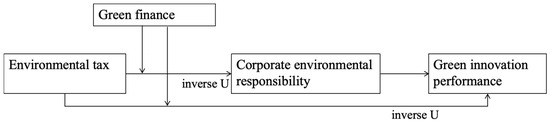
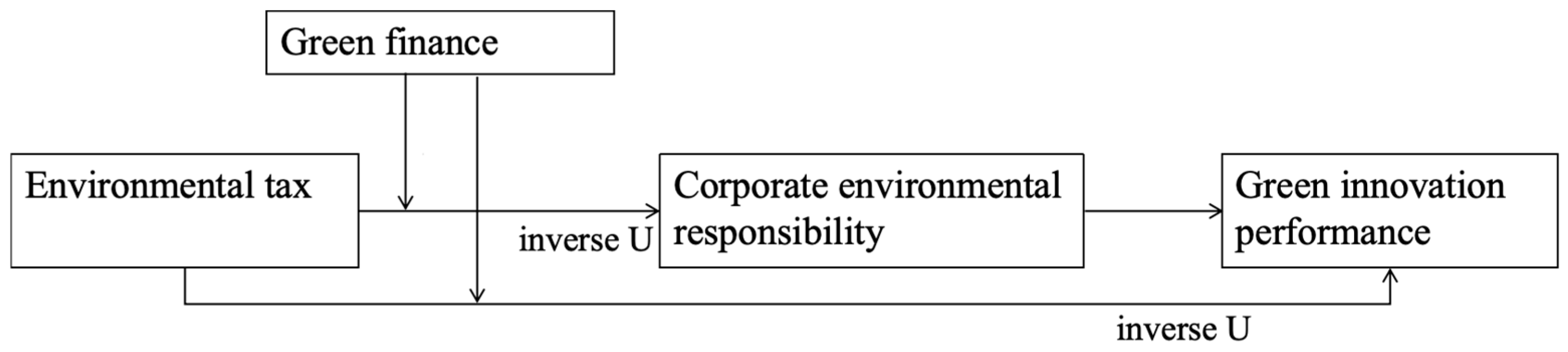
Based on these arguments, the conceptual model is formulated as Figure 1.
Figure 1.
Conceptual model.
3. Methodology and Analysis
3.1. Data and Samples
This study targeted A-share firms listed on both Shanghai and Shenzhen Stock Exchanges as samples. The Environmental Protection Tax Law of China was implemented in 2018. To examine both pre- and post-policy dynamics, our sample spans the period from 2012 to 2023. It is important to clarify the temporal structure of the key variables. The environmental tax, corporate environmental responsibility, and other contemporaneous control variables cover the period from 2012 to 2023, while the green innovation variable covers the period from 2013 to 2024.
To ensure data validity, we excluded financial and insurance firms, firms with missing key variables, and those with special treatment status (e.g., ST, *ST, PT). The final sample consisted of an unbalanced panel of 1570 firms, yielding 9801 firm-year observations. Green patent data were obtained from the Chinese Research Data Service Platform (CNRDS). Corporate environmental responsibility (CER) data were sourced from the Bloomberg database. Green credit and green insurance data came from the Economy & Public Policy Superior (EPS) database. Green securities data were drawn from the WIND database. Environmental tax data were collected through manual extraction from corporate annual reports, while all other variables were from the China Stock Market & Accounting Research (CSMAR) database.
3.2. Measurements
3.2.1. Dependent Variable
Corporate green innovation performance (GP). Given that invention patents embody novel products and methods, they contain the highest degree of technological sophistication and serve as a key indicator of a firm’s core competitiveness. According to Li et al. (2023) [7] and Zhang et al. (2022) [11], we used the annual number of green patents that a firm applied for as an indicator of its performance in green innovation.
3.2.2. Independent Variable
Environmental tax (ET). The environmental taxes follow the “polluter-pays” principle. Prior to 2018, firms paid discharge fees based on the type and quantity of pollutants emitted; after 2018, these were replaced by formal tax obligations under the Environmental Protection Tax Law. To ensure continuity in the corporate environmental regulatory burden across the policy transition, following Jin et al. (2024) [4] and Cao et al. (2024) [38], we measure ET as the natural logarithm of one plus the firm-level pollutant discharge fees for 2012–2017, and the natural logarithm of one plus the environmental protection taxes. To accommodate zero values in the raw tax data, we use the transformation ln(1 + fee/tax), which maps zero to zero and ensures all values are well-defined. It is noted that the pollutant discharge fees including only payments directly related to air, water, noise, and solid waste emissions and excludes other levies such as land use tax, mining royalties, or resource compensation fees, which are governed by separate legal frameworks and unrelated to pollution regulation. As these pollution-related payments and environmental taxes are mandatorily disclosed in the “taxes and surcharges” section of firms’ financial statements, our variable reflects a consistent and verifiable accounting record of firms’ environmental regulatory burden.
3.2.3. Mediating Variable
Corporate environmental responsibility (CER). Corporate environmental responsibility refers to a firm’s proactive commitment to managing its environmental impact through strategic initiatives in governance, disclosure, and sustainability performance, going beyond mere regulatory compliance such as tax payments. Drawing on the procedures of El Ghoul et al. (2018) [22] and Lioui and Sharma (2012) [33], the level of corporate environmental responsibility was measured by the environmental dimension score of the ESG index from the Bloomberg database. This score evaluates firms based on criteria including environmental policy, climate strategy, resource efficiency, waste management, biodiversity, risk oversight, and transparency in reporting. The Bloomberg database provides a composite ESG score and its component scores (i.e., environmental, social, and governance) for listed firms, following principles of usefulness, comparability, consistency, and industry-specific tailoring.
It is worth noting that corporate environmental responsibility, as measured in this study, differs fundamentally from environmental tax payments. While an environmental tax reflects a firm’s backward-looking compliance cost based on its actual pollution emissions, corporate environmental responsibility captures a forward-looking strategic commitment to sustainability, encompassing governance, transparency, risk management, and long-term environmental performance improvement—dimensions not captured by tax liability alone.
3.2.4. Moderating Variable
The development level of regional green finance (GF). Drawing on the studies by Lin et al. (2023) [19], the level of regional green finance development was assessed using a hybrid methodology that combines subjective and objective aspects. This assessment considered five distinct aspects: green lending, green bonds, green insurance policies, environmentally focused investments, and carbon finance activities. The extent of regional green lending was gauged by the interest from sectors with high energy consumption; the extent of green securities was gauged by the market valuation of energy-intensive industries; the prevalence of green insurance was gauged by the extent of agricultural insurance; the percentage of investment allocated to environmental pollution control was used to gauge the level of green investment; and the level of carbon finance was gauged by the degree of carbon emissions intensity. Subsequently, the entropy weighting technique was applied to ascertain the relative importance of these indicators. The specific methods are shown as follows:
Firstly, because the index units are not unified, the vector normalization method was used to preprocess the index data before using the entropy value method. The calculation formula is shown as follows:
where m denotes the total count of firms, n denotes the total count of the index, represents the j index initial value of the firm, and represents the processed corresponding value.
Secondly, we standardized the preprocessed data as follows:
Thirdly, we calculated the entropy value of the j index. The larger the entropy, the more chaotic, and the less information is known; the smaller the entropy, the more concentrated, and the more information is known.
Fourthly, we calculated the difference coefficient of the index . The smaller the difference, the less the influence of the index on the evaluation results.
Finally, we calculated the weight coefficient according to the difference coefficient. The weight is equal to the proportion of the differentiation degree of an individual index to the sum of the differentiation of all indexes.
With reference to the “China Green Finance Report (2014)” to determine the subjective weights, the subjective weights of the interest ratio of the high energy-consuming industry, market value proportion of the high energy-consuming industry, the share of investment allocated to pollution control, and the relative size of agricultural insurance were considered, and carbon emission intensities were 0.25, 0.125, 0.05, 0.05, and 0.1, respectively. Finally, the weights of the two were combined and averaged to obtain the final weight. Specifically, the final weight () was calculated as follows:
3.2.5. Control Variables
Drawing on Trumpp and Guenther (2017) [34] and Deng et al. (2022) [12], several control variables were chosen, and their descriptions are shown in Table 1.
Table 1.
Definition of control variables.
3.3. Model Construction
The PSM model was applied to construct a counterfactual framework to satisfy the common trend hypothesis, which decreases the differences in initial conditions of different firms [39]. The non-alternative one-to-one closest matching method was selected to find the matching control group for the treatment group of each year, in accordance with the methods of Becker and Ichino (2002) [39] and Rosenbaum and Rubin (1985) [40]. First, we generated random seeds and random numbers to ensure randomness when matching. Then, the variables of Size, Lev, ROA, ATO, and Age were selected as the covariates for matching. Finally, we matched and tested the covariate balance between the treatment and control groups using the psmatch2 command.
To address potential reverse causality and capture the dynamic response of green innovation to environmental taxes and corporate environmental responsibility, we adopted a lagged dependent variable specification. Specifically, green patent applications in year t + 1 are regressed on environmental taxes, corporate environmental responsibility, and other firm- and province-level covariates measured in year t.
where stands for the lagged one period of green innovation performance, stands for environmental tax, stands for corporate environmental responsibility, and Controls stands for the control variables. The fixed effects of the year and the industry are represented, respectively, by Year and Industry. is a random disturbance term.
4. Results
4.1. Descriptive Statistics
The descriptive statistics of the dependent variable, independent variable, and other variables after PSM matching are shown in Table 2. Table 2A reports the annual number of firm-year observations for each key variable, showing consistent data availability across years and full alignment between environmental taxes, green patents, green finance, and corporate environmental responsibility. The year-by-year counts are reported in Table 2B.
Table 2.
Descriptive statistics. (A) Descriptive statistics of variables. (B) Year-by-year count.
4.2. PSM Analysis
We performed a matching balancing test to guarantee the accuracy of the matching outcomes, and the findings are summarized in Table 3. The smaller the absolute value of the standard deviation, the better the match achieved [41]. According to Rosenbaum and Rubin (1985) [40], if the absolute value of the standard deviation after the match is less than 20%, the propensity score estimate is valid.
Table 3.
Results of the balance tests for the PSM matched samples.
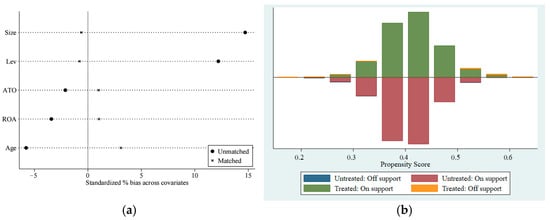
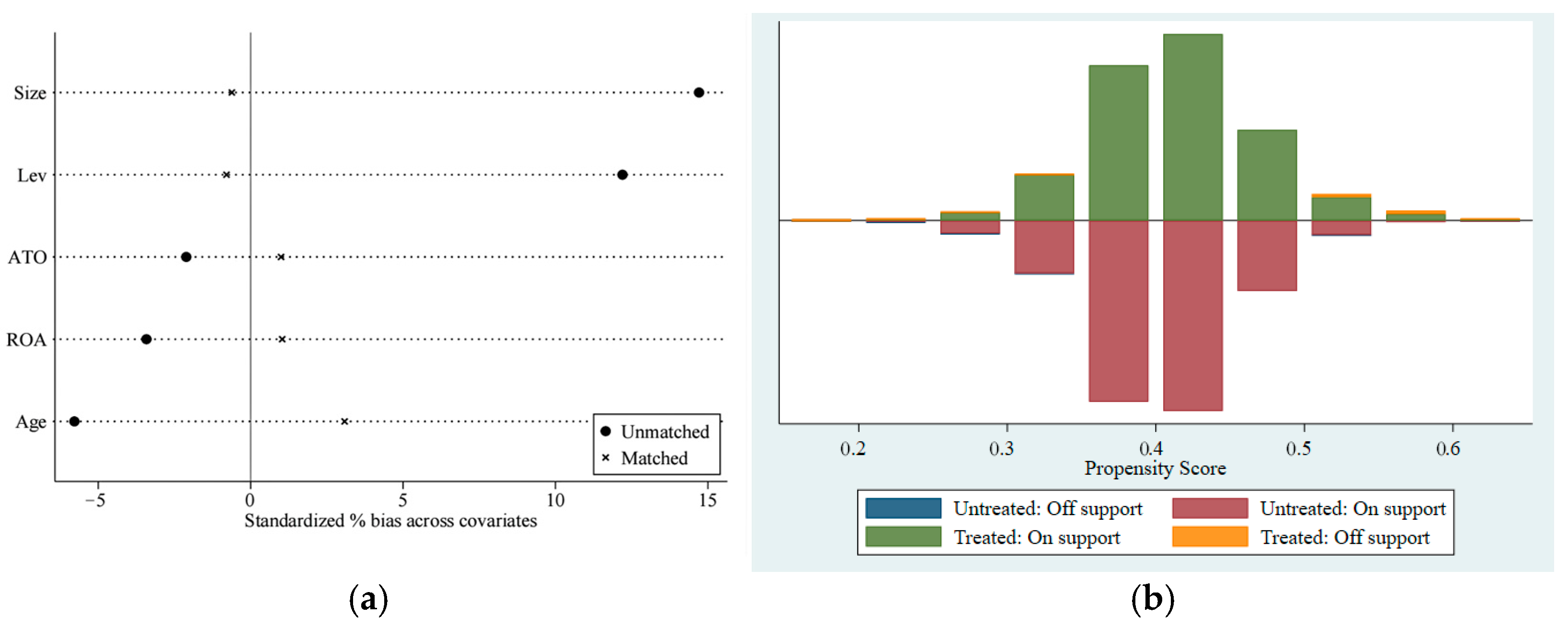
As shown in Figure 2, the study’s chosen matching variables and matching strategies make sense. After matching, the standardized bias for all covariates (Size, Lev, ROA, ATO, Age) falls below 5%. At the same time, t-tests show no significant differences between groups (p > 0.05), indicating that the treatment and control groups are well-balanced on observed characteristics. Furthermore, the entire control group falls within the normal range of values, with only a small fraction of the treatment group lying outside of it, and only a tiny number of samples are lost during matching. The substantial overlap in propensity score distributions (see Figure 2) further confirms that the common support condition is satisfied.
Figure 2.
(a) Absolute values of the standard deviation before and after matching. (b) Common range of values for propensity matching scores.
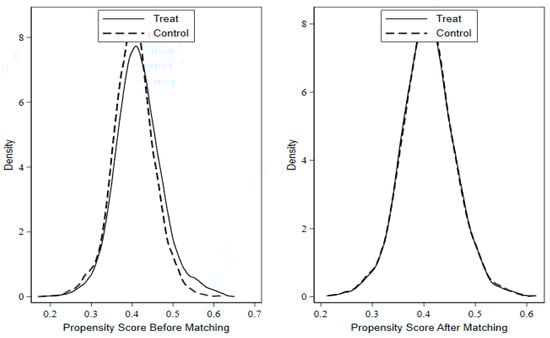
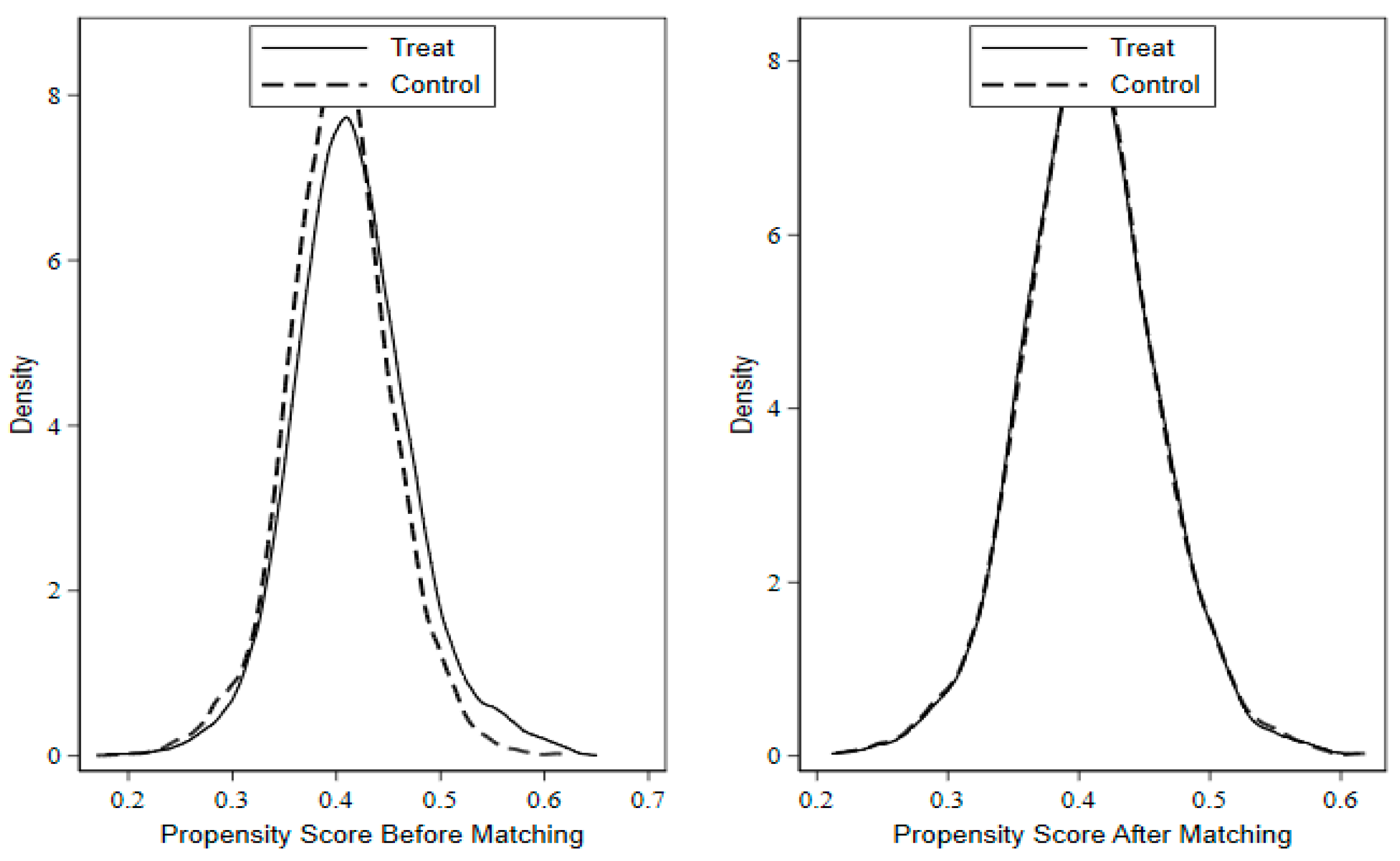
Figure 3 illustrates that the distribution of the control group is comparatively left-biased, while the probability distributions of the sample propensity score between these two groups differ before and after matching. After matching, the resulting probability distribution density function map is very close, indicating that PSM is effective.
Figure 3.
Comparison of kernel density distribution of score values before and after matching.
4.3. Benchmark Regression Results
4.3.1. Environmental Tax and Green Innovation Performance
To eliminate the dimensional differences between the different variables, we first standardized the variables. Subsequently, we performed a regression analysis based on the PSM method to explore the non-linear relationship between environmental taxes and green innovation performance. The determination between employing fixed-effects or random-effects models was informed by the outcomes of the Hausman test. The results significantly rejected the random-effects model. Thus, we mainly utilized the individual fixed-effects and high-dimensional fixed-effects models.
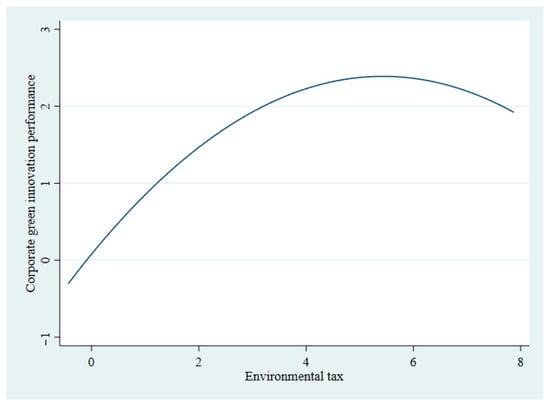
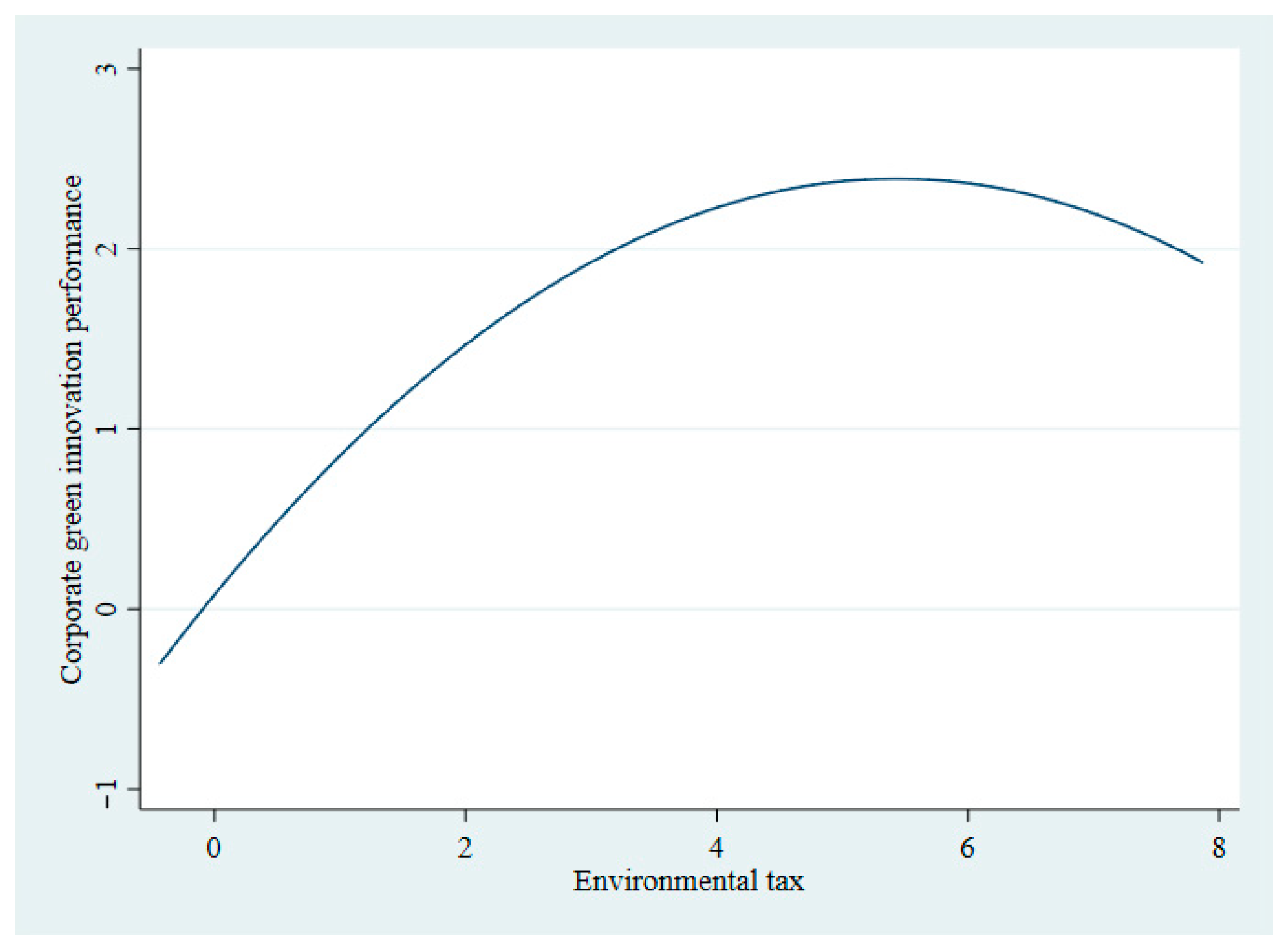
In column (1) and (2) of Table 4, the coefficients of environmental taxation are both significant and positive at the 1% statistical threshold, while the coefficients for its quadratic term are significantly negative at the same level, indicating that environmental taxation has an inverse U-shaped relationship with green innovation performance. The results in columns (3) to (5) indicate that this inverse U-shaped dynamic persists when accounting for individual fixed effects, year-industry, industry-province, and year-province models. Thus, Hypothesis 1 is verified, and the relationship diagram is depicted in Figure 4.
Table 4.
Regression results of PSM.
Figure 4.
The inverted U-shaped relationship diagram.
4.3.2. Environmental Taxation and Corporate Environmental Responsibility
As shown in column (5), the coefficients of environmental taxation and its quadratic item are significantly positive and negative at the statistical level of 1%, respectively. These express that environmental taxation has an inverse U-shaped curvilinear relationship with corporate social responsibility. Thus, Hypothesis 2 is verified. Furthermore, as shown in column (5), the positive coefficient on environmental taxation and the negative coefficient on its quadratic term indicate an inverted U-shaped relationship between environmental taxation and corporate environmental responsibility. On the basis of column (4), we incorporated environmental responsibility into column (6). The result shows that the coefficient of the dependent variable decreases from 0.237 to 0.214. In addition, the coefficient of the quadratic term of environmental taxation increases from −0.016 to −0.014. This suggests that the inverted U-shaped relationship between environmental taxation and corporate green innovation performance is mediated by corporate environmental responsibility, preliminarily supporting Hypothesis 3. The decline in R2 from 0.712 in column (4) to 0.624 in column (5) is expected, as column (5) reports results from a propensity score-matched sample with reduced observations. Although this lowers overall model fit, it improves group comparability and mitigates selection bias.
To assess the nonlinear mediation effect of corporate environmental responsibility, we used the SPSS 26.0 macro file MEDCURVE program according to the principle and procedure of Bananuka et al. (2020) [42]. We set the 95% confidence level and resampled 1000 times and used the bias-corrected bootstrapping method to obtain the confidence intervals. Following standard practice, the conditional indirect effects were evaluated at three levels of environmental taxation: one standard deviation below the mean (low), and one standard deviation above the mean (high). As shown in Table 5, the 95% confidence interval for mediation effects at all three levels (low, mean, and high) does not contain zero, which demonstrates that environmental taxation exerts a partial mediating influence on green innovation performance via environmental social responsibility The lower and upper limits of the confidence intervals are quite close, indicating that the estimates of the mediating effect are relatively stable and it is unlikely to be greatly influenced by random error. Thus, Hypothesis 3 is further verified.
Table 5.
The nonlinear mediation effect.
4.3.3. Further PSM-DID Analysis
The PSM method helps overcome individual heterogeneity, but the sample selection bias may still exist. The DID method is used to prevent endogenous problems and rectify biases arising from external factors when evaluating the impact of environmental taxation. The DID model was constructed as follows:
where i, j, r, and t represent company, industry, province, and year, respectively. In accordance with Hu et al. (2023) [43], we separated the sample into two groups: firms with a higher tax burden (treatment group) and those whose tax burden remained the same (control group). Treati equals 1 when representing higher tax burden firms and equals 0 when representing lower tax burden firms. Timei reflects whether the firm is affected by the environmental tax, and the value of 1 represents the year after the implementation of policy, that is, 2018 to 2022, while the value is 0 during 2013 and 2017. Finally, the model includes a set of fixed effects to account for province-year (), industry-year (), and province-industry () alternative variations to enhance the credibility of causal identification in policy evaluations. is the company fixed effects, which take into consideration how corporate-level factors that do not vary over time affect green innovation. To capture sector-specific regulatory pressures, we include industry fixed effects. Following CSRC (2012) and MEE guidelines, 18 industries are classified as heavily polluting. Including industry fixed effects helps mitigate potential endogeneity by absorbing time-invariant sector-level heterogeneity, such as regulatory intensity, technological norms, and policy exposure, that could otherwise confound the estimated tax–innovation relationship. The combination of the DID and PSM methods proposed by Luo et al. (2023) [41] helps to avoid selection and mixed bias issues as much as possible, which could be effectively estimated as the causal relationship between environmental taxation and green innovation performance.
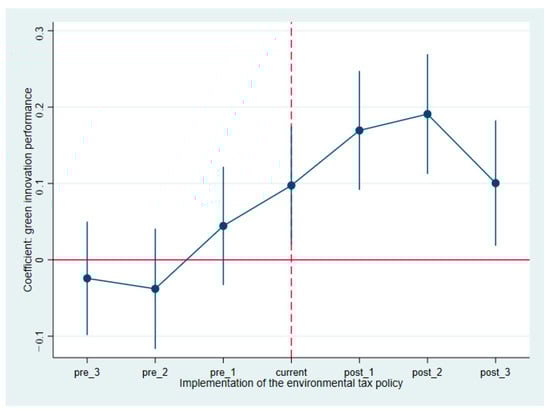
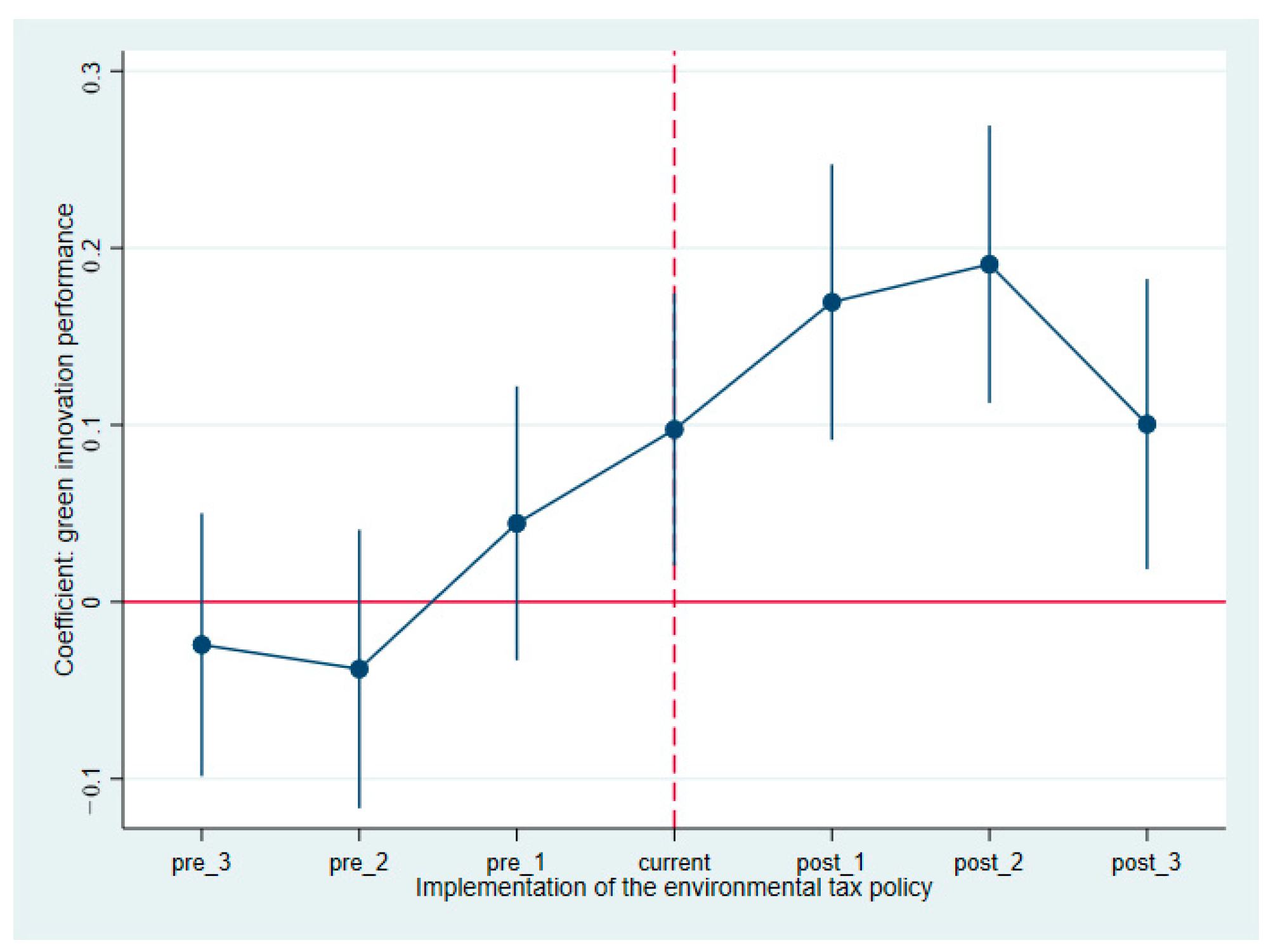
The convergence hypothesis, which states that the performance of green innovation and the changing trend in environmental taxation should be parallel, is a key premise of the PSM-DID method’s validity. Thus, we conducted the balance trend test first. As shown in Figure 5, the firms affected by environmental taxes and the unaffected firms show a parallel trend of change in green innovation performance before the implemented policy, meaning that, without policy intervention, their green innovation performance will develop along the same path. However, variations in green innovation performance may be readily seen when the policy is adopted, demonstrating that the PSM-DID method is feasible.
Figure 5.
Balance trend test.
We separated the data into two groups based on the environmental tax inflection point: those with higher taxes and those with lower taxes. Table 6 displays the regression results of PSM-DID. For the lower tax group, whose tax levels are below the inflection point, the coefficient of treated × time is considerably positive at the 1% level in columns (3) and (4), while for the higher tax group, the treated × time coefficient is considerably negative at the 1% level, indicating that as environmental taxes rise, green innovation performance initially rises and then falls. As shown in column (6) and column (7), the association between environmental taxes and company environmental responsibility is inverse U-shaped, consistent with the benchmark regression results.
Table 6.
Regression results of PSM-DID.
While the PSM-DID framework enhances comparability and controls for time-invariant unobservables, it may still be confounded by unobserved firm-level heterogeneity: for example, managerial foresight or long-term environmental strategy that influences both tax exposure and innovation behavior. To further strengthen causal identification, we adopt an instrumental variable (IV) approach in Table 6 following Lewbel (1997) [44], which exploits heteroskedasticity in the structural error term to generate internal instruments based on third-order moment restrictions. We justify this assumption through three arguments. First, all components of the instrument are predetermined or slowly evolving, and thus unlikely to be influenced by contemporaneous innovation decisions. Second, the instrument affects green innovation only through the firm’s own tax burden (exclusion restriction); there is no plausible direct channel by which the interaction term itself would influence R&D or patenting behavior. Third, we control for province-year and industry-year fixed effects, which absorb common shocks that could induce spurious correlation. The diagnostics confirmation model shows that the Kleibergen–Paap rk LM statistic is 31.140 (p = 0.000), rejecting under-identification, and the Kleibergen–Paap rk Wald F statistic is 31.511, indicating a strong instrument. The IV estimates confirm the pattern observed in the PSM-DID model, reinforcing the robustness of our findings against alternative sources of endogeneity.
4.4. Heterogeneity Tests
4.4.1. Heterogeneity Analysis of Pollution Level
Heterogeneity analysis reveals the different responses and strategies of different types of firms when facing environmental tax policy, as well as how these variances affect green innovation performance. The findings in Table 7 reveal that the inverted U-shaped link exists in both heavy and non-heavy pollution firms. In addition, the effect of environmental taxation on green innovation performance is more obvious for heavy pollution firms. Because of their greater pollution emissions throughout the production process, heavily polluting firms are usually faced with more severe environmental taxes. As a result, they are compelled to use green innovation as a means of reducing their pollution emissions and environmental taxes.
Table 7.
Heterogeneity analysis of pollution level.
This finding is consistent with the “strong version” of the Porter hypothesis [45], which posits that well-designed environmental regulations generate the greatest innovation incentives for firms under the highest compliance pressure. Heavy polluters face a steeper marginal cost for non-compliance, making green innovation not only a strategic necessity but also a cost-saving imperative [45]. The stronger inverse U-shaped relationship suggests that while moderate tax levels stimulate innovation through the compensation effect (e.g., efficiency gains and market differentiation), excessively high tax burdens may still overwhelm even these firms’ absorptive capacity, leading to diminishing returns. This underscores the importance of policy design that balances stringency with innovation feasibility.
4.4.2. Heterogeneity Analysis of Firm Size
Firm size represents diverse development operation modes and risk-taking abilities, resulting in the varying environmental behaviors when confronted with environmental policy. According to the median of total assets, we divided firms into the larger and smaller groups. Column (1) and column (2) of Table 8 reveal that the inverse U-shaped effect of environmental taxes on green innovation performance is more pronounced in larger firms. For one thing, larger firms possess a greater array of resources for innovation, pay more attention to maintaining their reputation, and actively carry out green innovation activities. For another thing, they have a better internal governance structure, higher awareness of the fulfilment of environmental responsibility, and more forward-looking decisions, which are beneficial to improving their green innovation performance.
Table 8.
Heterogeneity analyses of size, marketization, and intellectual property protection level.
From a resource-based view, larger firms are better positioned to convert environmental taxes into innovation due to their superior resource slack, established absorptive capacity, and heightened stakeholder pressure for environmental legitimacy [46]. In contrast, smaller firms typically lack the financial reserves and organizational bandwidth to strategically absorb such regulatory costs, resulting in a weaker innovative response.
4.4.3. Heterogeneity Analysis of Regional Market Development
Regional market development represents the level of economic and product market development, which impacts the extent to which environmental tax policies are implemented. Drawing from Nakagane et al. (2018) [47], we used China’s provincial marketization index publicly released by the National Economic Research as a proxy variable. Column (3) and column (4) in Table 8 indicate the inverse U-shaped effect of environmental taxes on green innovation performance is more pronounced when the firms are in more highly marketized areas. This may be due to the fact that in the regions with a higher degree of marketization, the market can more effectively optimize resource allocation and assist firms in developing green innovations.
In highly marketized regions, competitive pressures and efficient price signals incentivize firms to pursue innovation as a means of differentiation and efficiency enhancement. The market mechanism facilitates the rapid diffusion of green technologies and ensures that innovators can capture returns through superior performance or market share gains [48]. Additionally, well-developed factor markets (e.g., labor, capital, and technology) reduce transaction costs and improve access to complementary assets necessary for innovation. This institutional environment amplifies the compensation effect of environmental taxation by lowering the barriers to implementation of innovation and increasing the expected payoff, thereby strengthening the inverted U-shaped relationship.
4.4.4. Heterogeneity Analysis of Regional Intellectual Property Protection Level
Intellectual property (IP) protection in different regions may affect the wellness of green innovation. Accordingly, we referred to the research of Pun et al. (2022) [49], and utilized the formula to measure the level of regional IP protection, in which denotes the IP enforcement cases per province for the year, represents the granted patents within the region for the same year, indicates the national IP enforcement cases for the year, and signifies the total number of granted patents in a country every year. The results in column (5) and column (6) in Table 8 indicate the inverse U-shaped effect of environmental taxation on green innovation performance is more pronounced when the firms are in higher IP protection areas. This could be due to the fact that in the places with strong intellectual property protection, firms’ infringement costs are higher, increasing their motivation for generating green innovation.
Beyond deterring imitation, strong IP protection strengthens the compensation effect of environmental taxes by securing returns from green innovation. This assurance mitigates the free-rider problem, incentivizes high-risk R&D, and facilitates commercialization [50]. Consequently, robust IP regimes accentuate the inverted U-shaped relationship by simultaneously raising imitation costs for laggards and boosting expected returns for innovators.
4.5. Results of Moderating Effects
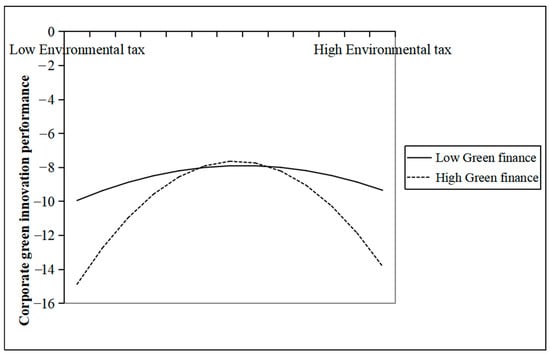
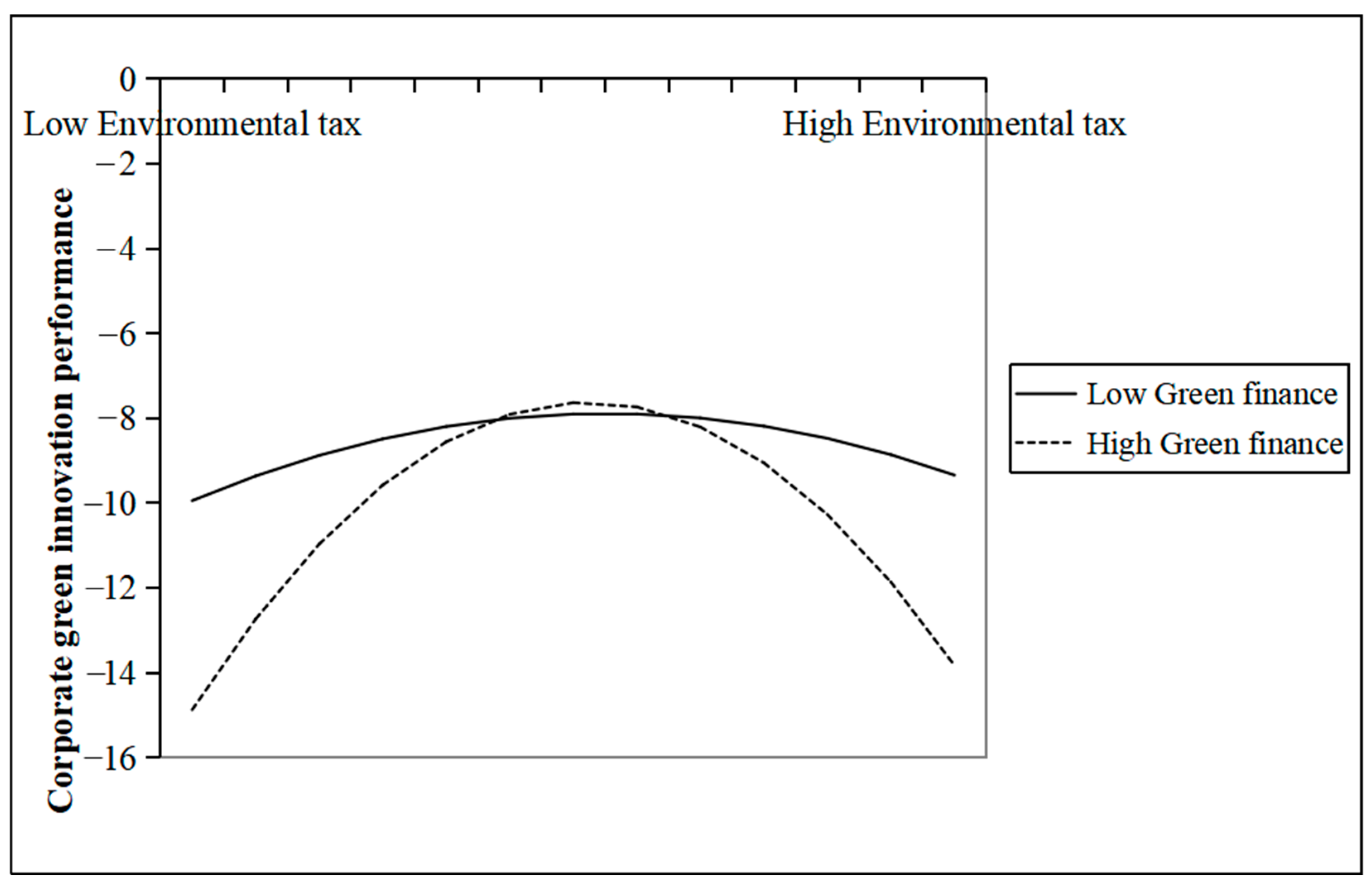
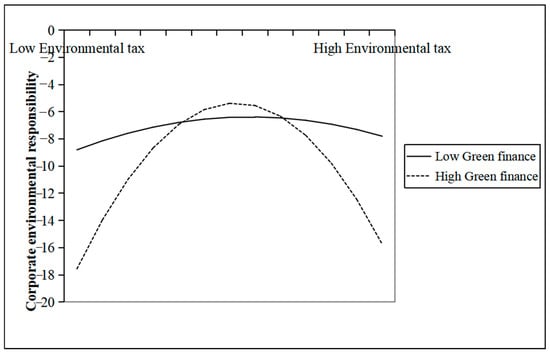
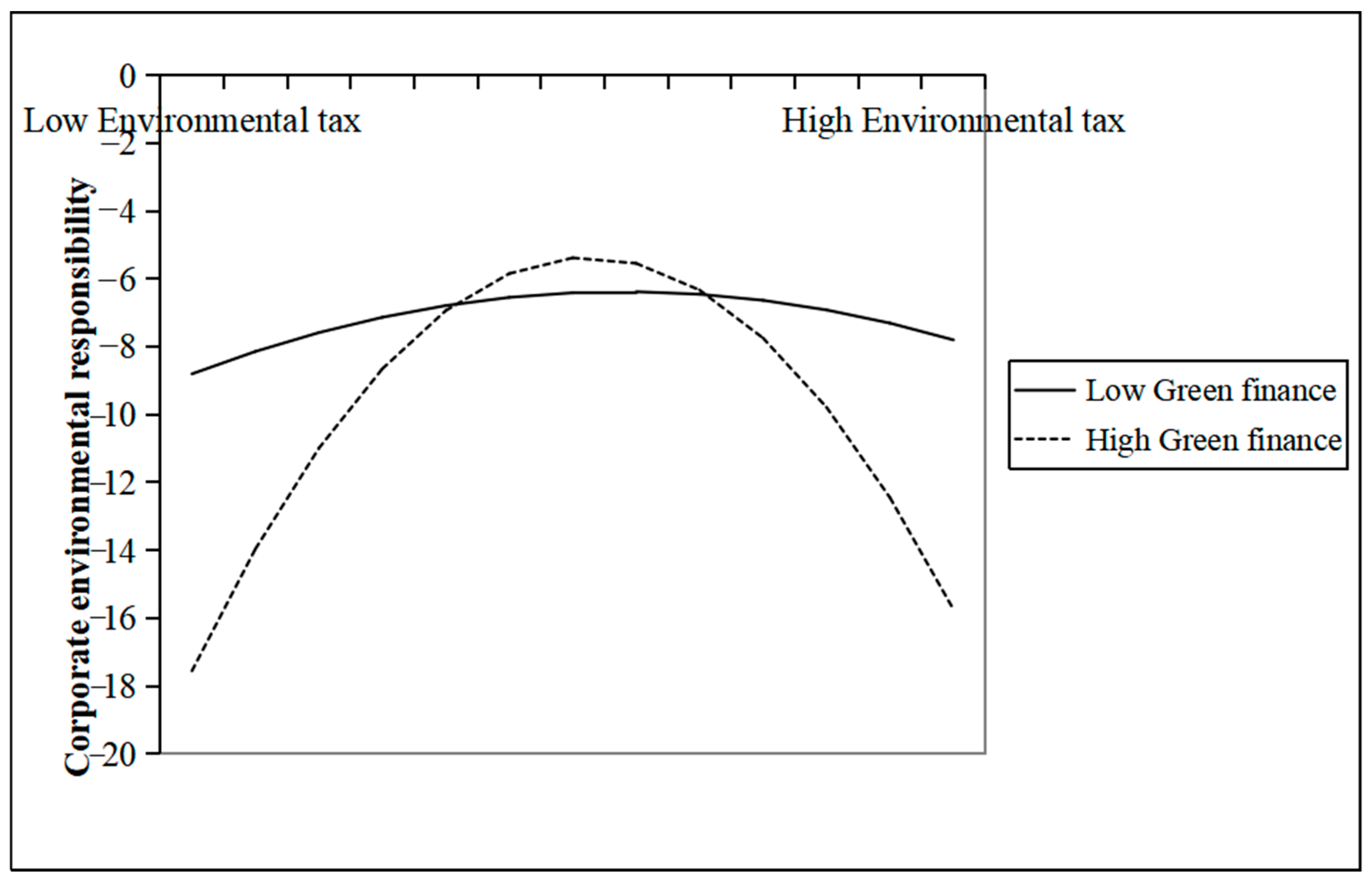
As evidenced in Table 9, column (1) presents a significantly positive coefficient for the interaction term of treated × time and regional green finance at the 1% statistical level. This suggests that the advancement of regional green finance enhances the connection between environmental taxation and green innovation performance. To be more precise, the inverse U-shaped relationship between environmental taxation and green innovation performance is more pronounced in regions with a more developed green finance sector compared to those with less development, thereby validating Hypothesis 4a. In column (2), the coefficient of the interaction term of treated × time and regional green finance is significantly positive at the 1% level. It proves that the development level of regional green finance can strengthen the inverse U-shaped relationship between environmental taxation and environmental responsibility, thereby supporting Hypothesis 4b. A summary of the testing results is shown in Table 10. The moderating effects of green finance in the relationship between environmental taxation and green innovation performance and the relationship between environmental taxation and corporate environmental responsibility are shown in Figure 6 and Figure 7.
Table 9.
Moderating effects of the development level of regional green finance.
Table 10.
A summary of the testing results.
Figure 6.
Moderating effect of regional green finance in the relationship between environmental taxation and green innovation performance.
Figure 7.
Moderating effect of regional green finance in the relationship between environmental taxation and corporate environmental responsibility.
4.6. Robustness Tests
To evaluate the robustness of the conclusions, we employed a one-period lag of the number of green patents granted. In line with the previous findings, the coefficients in columns (1) to columns (3) of Table 11 demonstrate that an inverse U-shaped relationship exists between environmental taxation and green innovation, while corporate environmental responsibility acts as a mediating factor. In addition, to more precisely depict the nonlinear relationship, we shortened the sample interval to 2018–2020 and retested the hypotheses. The results are shown in columns (4) to (6), which align with the initial findings.
Table 11.
Robustness test results.
Despite the PSM-DID and IV strategy mitigating endogeneity, reverse causality remains a concern. Firms with superior innovation or environmental management may strategically reduce emissions to lower their tax burden, which could downwardly bias OLS estimates. Thus, we implemented an IV approach using province-level environmental enforcement intensity, measured by the number of environment-related taxes in each province [51]. This approach differs fundamentally from Lewbel IV in both construction and source of exogenous variation. Crucially, the validity of this instrument depends on the exogeneity of policy discourse: that the content of these reports is not shaped by individual firms’ future green innovation outcomes. We provide four arguments in support. First, temporal precedence: government work reports are published at the beginning of each fiscal year, prior to the realization of firm-level outcomes, ensuring the instrument is predetermined. Second, aggregation level: the instrument is constructed at the province-year level, while the outcome is measured at the firm level, making it implausible that individual firms influence high-level policy language. Third, exclusion restriction: the keyword share affects green innovation only through its influence on the local enforcement intensity of environmental taxation, not directly. Fourth, we continue to include province-year and industry-year fixed effects to control for common shocks. The diagnostics confirm strong identification, which shows the Kleibergen–Paap rk LM statistic is 13.819 (p = 0.000), rejecting under-identification, and the first-stage F-statistic is 17.81, well above the conventional threshold. The variable of IV captures regional policy shocks exogenous to firm-level innovation. The IV-2SLS results in Table 12 reaffirm the inverse U-shaped effect of environmental taxes on green innovation, with magnitude and significance consistent with our baseline findings.
Table 12.
Robustness test of IV-2SLS.
5. Discussion
5.1. Result Discussion and Theoretical Contributions
First, this research reveals the nonlinear impacts of environmental taxation, a market-based environmental policy, on corporate innovation from the perspective of institutions. The finding reflects a balance between the cost burden of regulation and the innovation incentives predicted by the Porter Hypothesis [45]. Environmental taxation spurs green innovation at moderate levels, supporting the ‘weak’ Porter Hypothesis, but inhibits it when the tax burden becomes excessive. This inverted U-shaped effect highlights the importance of optimal policy intensity. The study of the elements that affect corporate green innovation performance is enhanced, and the application of institutional theory to the field of environmental protection tax policy is expanded. Second, this study indicates that corporate environmental responsibility mediates the relationship between environmental taxation and green innovation by taking into account changes in firms’ environmental attitudes in the context of a change in environmental regulations. The finding is aligned with the research that proactive environmental responsibility can enhance innovation capacity by improving firm reputation, internal culture, and stakeholder support [33]. This study is novel in that it has further discovered the processes of environmental tax effects mediated by corporate environmental awareness and green practices. It enriches the research on the internal influencing mechanism between environmental taxation and green innovation performance. Third, this study reveals an important context where environmental taxation works, that is, the implementation status of green finance policies in a region. It delimits the inverted U-shaped relationships among environmental taxation, corporate environmental responsibility, and green innovation performance, providing new insights for strengthening the innovation compensation impact and weakening the cost encroachment effect of environmental taxation. Therefore, it contributes to the existing body of research on the impact of environmental legislation on green innovation.
5.2. Practical Implications
Some practical recommendations are put forth in light of the study’s findings. From the perspective of governmental institutional design, first, to optimize the innovation incentives of environmental taxation, governments should prioritize the design of a precise and dynamic tax mechanism. Policymakers are advised to implement a differentiated and tiered tax rate structure tailored to industry-specific pollution intensity, technological capacity, and regional ecological carrying capacity. Concurrently, to solidify the innovation compensation effect, a transparent earmarking mechanism that directly channels environmental tax revenues into a green innovation fund is essential. For smaller, heavily polluting firms that are more vulnerable to cost pressures, policymakers should provide transitional tax relief or subsidized green technology upgrading programs, while firms themselves should prioritize low-cost, high-impact abatement technologies and seek access to green credit to alleviate financing constraints. Second, governments must implement top-level design to foster synergy between environmental and financial policies. Our heterogeneity analysis shows that the innovation-enhancing effect of environmental taxation is significantly stronger in regions with higher green finance development and better marketization. Therefore, policy integration should be regionally differentiated: In developed regions with mature green finance systems, authorities can prioritize linking environmental tax data with credit evaluation, e.g., using tax records as a signal for green loan eligibility or interest rate discounts, especially for firms on the rising side of the inverted U-curve. In underdeveloped regions with weak financial support, governments should first strengthen foundational mechanisms through fiscal incentives, such as subsidized interest rates or guarantee funds, to de-risk green lending and stimulate firm participation.
One practical approach is to use environmental tax data as a signal for green credit allocation. For example, firms facing higher tax burdens due to pollution emissions could be prioritized for green loans or eligible for lower interest rates, provided they reinvest in emission reductions or green technology development. This mechanism can be piloted in existing green finance reform zones by linking tax records from the State Taxation Administration with bank credit systems. Digital platforms can help automate eligibility screening and loan approval, reducing delays and administrative costs. Such a policy linkage ensures that regulatory pressure is accompanied by timely financial support, transforming environmental compliance into an opportunity for innovation.
5.3. Limitations
However, this study still has certain shortcomings that can be addressed in subsequent studies. Only a sample of Chinese A-share listed firms on the Shanghai and Shenzhen Stock Exchanges have been included in this study. More pertinent international data could be used for future research, or a comparison with foreign environmental protection policies could be performed to test the generality of the research findings. In addition, future research could also concentrate on a specific industry, such as the manufacturing industry, to further verify the results. Second, further research could be conducted to explore the effects of other types of environmental regulations, such as market-incentive, command-and-control, and public involvement rules on corporate green innovation performance.
6. Conclusions
This study establishes a moderated mediation model to investigate the non-linear impact of environmental taxes on the green innovation outcomes of corporations, especially its influencing mechanism and the moderating role of regional green finance during this mechanism utilizing listed Chinese A-share firms as the sample over the period from 2013 to 2024. It finds that environmental taxation exhibits an inverse U-shaped relationship with both green innovation performance and corporate environmental responsibility. Corporate environmental responsibility acts as a partial mediator in the linkage between environmental taxation and green innovation performance. In addition, the development level of regional green finance positively moderates the inverse U-shaped relationships among environmental taxation, environmental responsibility, and green innovation performance. Further analyses reveal that firms characterized by heavy pollution, larger size, and location in regions with higher marketization and intellectual property protection are more sensitive to environmental taxation.
These findings carry important implications for environmental governance. Rather than adopting a uniform or static tax rate, policymakers should design an adaptive environmental taxation system that accounts for heterogeneous firm capacities and sectoral conditions. One promising approach is to link environmental tax burdens with access to green finance, using tax data as a signal to guide credit allocation in a way that supports innovation rather than stifling it. Specifically, we propose the establishment of a threshold-based monitoring and early-warning mechanism, integrated within China’s existing ecological civilization evaluation framework. Such a system could leverage real-time enterprise data, on emissions, R&D intensity, profitability, and green patenting, to identify when firms approach the “tipping point” beyond which tax pressure begins to crowd out innovation. When thresholds are exceeded, automated alerts could trigger policy adjustments, such as temporary tax rebates, green credit support, or technical assistance, thereby preventing over-burdening while maintaining regulatory stringency.
Author Contributions
Conceptualization, Q.Z.; methodology, Q.Z.; writing—original draft preparation, Q.Z.; writing—review and editing, L.Q.; supervision, L.L. All authors have read and agreed to the published version of the manuscript.
Funding
This research was funded by China Postdoctoral Science Foundation General Funding Program, grant number 2023M730886, and Heilongjiang Provincial Postdoctoral Science Foundation General Funding Program, grant number LBH-Z22194.
Institutional Review Board Statement
Not applicable.
Informed Consent Statement
Not applicable.
Data Availability Statement
The data presented in this study are available on request from the corresponding author.
Acknowledgments
We acknowledge the Centre for Governance and Sustainability at the National University of Singapore Business School for providing data support on corporate environmental responsibility, which is sourced from the Bloomberg database. The authors have reviewed and edited the output and take full responsibility for the content of this publication.
Conflicts of Interest
The authors declare no conflicts of interest.
References
- Sharma, S.; Kundu, A.; Basu, S.; Shetti, N.P.; Aminabhavi, T.M. Sustainable environmental management and related biofuel technologies. J. Environ. Manag. 2020, 273, 111096. [Google Scholar] [CrossRef] [Scilit]
- Van Soest, H.L.; Aleluia Reis, L.; Baptista, L.B.; Bertram, C.; Després, J.; Drouet, L.; den Elzen, M.; Fragkos, P.; Fricko, O.; Fujimori, S. Global roll-out of comprehensive policy measures may aid in bridging emissions gap. Nat. Commun. 2021, 12, 6419. [Google Scholar] [CrossRef] [Scilit] [PubMed]
- He, X.; Jing, Q.; Chen, H. The impact of environmental tax laws on heavy-polluting enterprise ESG performance: A stakeholder behavior perspective. J. Environ. Manag. 2023, 344, 118578. [Google Scholar] [CrossRef] [Scilit] [PubMed]
- Jin, Y.; Wang, S.; Cheng, X.; Zeng, H. Can environmental tax reform curb corporate environmental violations? A quasi-natural experiment based on China’s “environmental fees to taxes”. J. Bus. Res. 2024, 171, 114388. [Google Scholar] [CrossRef] [Scilit]
- Liu, G.; Yang, Z.; Zhang, F.; Zhang, N. Environmental tax reform and environmental investment: A quasi-natural experiment based on China’s Environmental Protection Tax Law. Energy Econ. 2022, 109, 106000. [Google Scholar] [CrossRef] [Scilit]
- Song, W.; Yu, H. Green innovation strategy and green innovation: The roles of green creativity and green organizational identity. Corp. Soc. Responsib. Environ. Manag. 2018, 25, 135–150. [Google Scholar] [CrossRef] [Scilit]
- Li, X.; Zhang, G.; Qi, Y. Differentiated environmental regulations and enterprise innovation: The moderating role of government subsidies and executive political experience. Environ. Dev. Sustain. 2023, 26, 3639–3669. [Google Scholar] [CrossRef] [Scilit]
- Hille, E.; Althammer, W.; Diederich, H. Environmental regulation and innovation in renewable energy technologies: Does the policy instrument matter? Technol. Forecast. Soc. 2020, 153, 119921. [Google Scholar] [CrossRef] [Scilit]
- Xie, L.; Zuo, S.; Xie, Z. Environmental protection fee-to-tax and enterprise investment efficiency: Evidence from China. Res. Int. Bus. Finance. 2023, 66, 102057. [Google Scholar] [CrossRef] [Scilit]
- Kesidou, E.; Wu, L. Stringency of environmental regulation and eco-innovation: Evidence from the eleventh Five-Year Plan and green patents. Econ. Lett. 2020, 190, 109090. [Google Scholar] [CrossRef] [Scilit]
- Zhang, C.; Zou, C.F.; Luo, W.; Liao, L. Effect of environmental tax reform on corporate green technology innovation. Front. Environ. Sci. 2022, 10, 1036810. [Google Scholar] [CrossRef] [Scilit]
- Deng, Y.; You, D.; Wang, J. Research on the nonlinear mechanism underlying the effect of tax competition on green technology innovation-An analysis based on the dynamic spatial Durbin model and the threshold panel model. Resour. Policy 2022, 76, 102545. [Google Scholar] [CrossRef] [Scilit]
- Song, M.; Wang, S.; Zhang, H. Could environmental regulation and R&D tax incentives affect green product innovation? J. Clean. Prod. 2020, 258, 120849. [Google Scholar] [CrossRef] [Scilit]
- Zhang, J.; Kang, L.; Li, H.; Ballesteros-Pérez, P.; Skitmore, M.; Zuo, J. The impact of environmental regulations on urban Green innovation efficiency: The case of Xi’an. Sustain. Cities Soc. 2020, 57, 102123. [Google Scholar] [CrossRef] [Scilit]
- Hu, D.; Wang, Y.; Huang, J.; Huang, H. How do different innovation forms mediate the relationship between environmental regulation and performance? J. Clean. Prod. 2017, 161, 466–476. [Google Scholar] [CrossRef] [Scilit]
- Liu, L.; Cui, K. How does market-incentive environmental regulation affect enterprises green growth? The mediating role of R&D investment and innovation output. Heliyon 2024, 10, e30847. [Google Scholar]
- Jiang, X.; Li, G.; Fan, X. Environmental protection fee-to-tax and corporate environmental social responsibility: A test based on corporate life cycle theory. Sustainability 2023, 15, 2128. [Google Scholar] [CrossRef] [Scilit]
- Deng, W.; Kharuddin, S.; Ashhari, Z.M. Green finance transforms developed countries’ green growth: Mediating effect of clean technology innovation and threshold effect of environmental tax. J. Clean. Prod. 2024, 448, 141642. [Google Scholar] [CrossRef] [Scilit]
- Lin, Y.; Song, Q.; He, L. Can the green finance reform and innovation pilot policy promote green technology innovation? A novelty evidence from both polluting companies and city commercial banks in China. Environ. Dev. Sustain 2023, 27, 8403–8431. [Google Scholar] [CrossRef] [Scilit]
- Scott, W.R. Institutions and Organizations: Ideas, Interests, and Identities; Sage publications: Los Angeles, CA, USA, 2013; pp. 35–84. [Google Scholar]
- Depren, O.; Kartal, M.T.; Ayhan, F.; Kilic Depren, S. Heterogeneous impact of environmental taxes on environmental quality: Tax domain based evidence from the Nordic countries by nonparametric quantile approaches. J. Environ. Manag. 2023, 329, 117031. [Google Scholar] [CrossRef] [Scilit]
- El Ghoul, S.; Guedhami, O.; Kim, H.; Park, K. Corporate environmental responsibility and the cost of capital: International evidence. J. Bus. Ethics 2018, 149, 335–361. [Google Scholar] [CrossRef] [Scilit]
- Wang, J.; Zhang, S. Environmental Protection Tax, Green Innovation, and Environmental, Social, and Governance Performance. Financ. Res. Lett. 2024, 65, 105592. [Google Scholar] [CrossRef] [Scilit]
- Dressler, E.; Mugerman, Y. Doing the right thing? The voting power effect and institutional shareholder voting. J. Bus. Ethics 2023, 183, 1089–1112. [Google Scholar] [CrossRef] [Scilit]
- Hua, L. The impact of environmental taxation on the structure and performance of industrial symbiosis networks: An agent-based simulation study. Heliyon 2024, 10, 3. [Google Scholar] [CrossRef] [Scilit]
- Qi, Y.; Zhang, J.; Chen, J. Tax incentives, environmental regulation and firms’ emission reduction strategies: Evidence from China. J. Environ. Econ. Manag. 2023, 117, 102750. [Google Scholar] [CrossRef] [Scilit]
- Desheng, L.; Jiakui, C.; Ning, Z. Political connections and green technology innovations under an environmental regulation. J. Clean. Prod. 2021, 298, 126778. [Google Scholar] [CrossRef] [Scilit]
- Cai, W.; Ye, P. Local-neighborhood effects of different environmental regulations on green innovation: Evidence from prefecture level cities of China. Environ. Dev. Sustain. 2022, 24, 4810–4834. [Google Scholar] [CrossRef] [Scilit]
- Wang, L.; Long, Y.; Li, C. Research on the impact mechanism of heterogeneous environmental regulation on enterprise green technology innovation. J. Environ. Manag. 2022, 322, 116127. [Google Scholar] [CrossRef] [Scilit]
- Chu, T.; Wang, S. Environmental tax-for-fee reform and China’s urban green innovation: A local government behavior perspective. Environ. Impact Assess. 2025, 114, 107950. [Google Scholar] [CrossRef] [Scilit]
- Liu, S.; Zou, H.; Chen, X. Booster or barrier? Can ecological accountability system reform inhibit environmental violations? Evidence from quasi-natural experiment. Environ. Dev. Sustain. 2023, 26, 11703–11727. [Google Scholar] [CrossRef] [Scilit]
- Cui, G. How do environmental taxes affect the environmental investment of high-emission enterprises: Evidence from China. J. Environ. Manag. 2024, 370, 122629. [Google Scholar] [CrossRef] [Scilit]
- Lioui, A.; Sharma, Z. Environmental corporate social responsibility and financial performance: Disentangling direct and indirect effects. Ecol. Econ. 2012, 78, 100–111. [Google Scholar] [CrossRef] [Scilit]
- Trumpp, C.; Guenther, T. Too little or too much? Exploring U-shaped relationships between corporate environmental performance and corporate financial performance. Bus. Strateg. Environ. 2017, 26, 49–68. [Google Scholar] [CrossRef] [Scilit]
- Lv, C.; Bian, B.; Lee, C.-C.; He, Z. Regional gap and the trend of green finance development in China. Energy Econ. 2021, 102, 105476. [Google Scholar] [CrossRef] [Scilit]
- Lee, C.C.; Lee, C.C. How does green finance affect green total factor productivity? Evidence from China. Energy Econ. 2022, 107, 105863. [Google Scholar] [CrossRef] [Scilit]
- Huang, Y.; Chen, C.; Lei, L.; Zhang, Y. Impacts of green finance on green innovation: A spatial and nonlinear perspective. J. Clean. Prod. 2022, 365, 132548. [Google Scholar] [CrossRef] [Scilit]
- Cao, G.; She, J.; Cao, C.; Cao, Q. Environmental protection tax and green innovation: The mediating role of digitalization and ESG. Sustainability 2024, 16, 577. [Google Scholar] [CrossRef] [Scilit]
- Becker, S.O.; Ichino, A. Estimation of average treatment effects based on propensity scores. Stata J. 2002, 2, 358–377. [Google Scholar] [CrossRef] [Scilit]
- Rosenbaum, P.R.; Rubin, D.B. Constructing a control group using multivariate matched sampling methods that incorporate the propensity score. Am. Stat. 1985, 39, 33–38. [Google Scholar] [CrossRef] [Scilit]
- Luo, C.; Qiang, W.; Lee, H.F. Does the low-carbon city pilot policy work in China? A company-level analysis based on the PSM-DID model. J. Environ. Manag. 2023, 337, 117725. [Google Scholar] [CrossRef] [Scilit]
- Bananuka, J.; Kasera, M.; Najjemba, G.M.; Musimenta, D.; Ssekiziyivu, B.; Kimuli, S.N.L. Attitude: Mediator of subjective norm, religiosity and intention to adopt Islamic banking. J. Islam. Mark. 2020, 11, 81–96. [Google Scholar] [CrossRef] [Scilit]
- Hu, S.; Wang, A.; Du, K. Environmental tax reform and greenwashing: Evidence from Chinese listed companies. Energy Econ. 2023, 124, 106873. [Google Scholar] [CrossRef] [Scilit]
- Lewbel, A. Constructing instruments for regressions with measurement error when no additional data are available, with an application to patents and R&D. J. Econo. Society 1997, 65, 1201–1213. [Google Scholar]
- Ambec, S.; Cohen, M.A.; Elgie, S.; Lanoie, P. The Porter Hypothesis at 20: Can environmental regulation enhance innovation and competitiveness? Rev. Environ. Econ. Policy 2013, 7, 2–22. [Google Scholar] [CrossRef] [Scilit]
- Porter, M.E.; van der Linde, C. Toward a New Conception of the Environment–Competitiveness Relationship. J. Econo. Persp 1995, 9, 97–118. [Google Scholar] [CrossRef] [Scilit]
- Nakagane, K.; Mitsunami, K. Nexus between privatization and marketization during transition process: An experimental analysis based on China’s provincial panel data. J. Contemp. East Asia Stud. 2018, 7, 50–75. [Google Scholar] [CrossRef] [Scilit]
- Guo, Y.; Fan, L.; Yuan, X. Market competition, financialization, and green innovation: Evidence from China’s manufacturing industries. Front. Environ. Sci. 2022, 10, 836019. [Google Scholar] [CrossRef] [Scilit]
- Pun, H.; Hou, P. Combating copycatting from emerging market suppliers in global supply chains. Prod. Oper. Manag. 2022, 31, 3304–3319. [Google Scholar] [CrossRef] [Scilit]
- Hall, B.H.; Ziedonis, R.H. The patent paradox revisited: An empirical study of patenting in the US semiconductor industry, 1979-1995. RAND J. Econ. 2001, 32, 101–128. [Google Scholar] [CrossRef] [Scilit]
- Chen, Z.; Kahn, M.E.; Liu, Y.; Wang, Z. The consequences of spatially differentiated water pollution regulation in China. J. Environ. Econ. Manag. 2018, 88, 468–485. [Google Scholar] [CrossRef] [Scilit]

Disclaimer/Publisher’s Note: The statements, opinions and data contained in all publications are solely those of the individual author(s) and contributor(s) and not of MDPI and/or the editor(s). MDPI and/or the editor(s) disclaim responsibility for any injury to people or property resulting from any ideas, methods, instructions or products referred to in the content. |
© 2025 by the authors. Licensee MDPI, Basel, Switzerland. This article is an open access article distributed under the terms and conditions of the Creative Commons Attribution (CC BY) license (https://creativecommons.org/licenses/by/4.0/).