


Abstract
E-commerce platforms are rapidly transforming global consumer behavior, yet the psychological and demographic determinants of sustainable digital consumption remain underexplored. This study investigates how extraversion–introversion personality traits interact with demographic and socio-economic factors to influence e-commerce usage among Korean consumers, with implications for sustainable consumption practices. Based on data from the 13th Korea Media Panel Survey (2022), the results of this study indicate that extraverted individuals, women, younger consumers, higher-educated and higher-income groups, employed and unmarried individuals, those in larger households, and urban residents were more likely to engage in e-commerce, whereas introverts and older adults showed lower participation. These findings highlight the complex interplay between psychological dispositions and structural conditions in shaping digital consumption. This study advances theoretical understandings of the issue by integrating extraversion–introversion traits and demographic variables into a multidimensional framework of consumer behavior. Practically, it emphasizes the need for inclusive e-commerce design: socially interactive features for extraverts, information-rich streamlined interfaces for introverts, and enhanced accessibility for older or rural users. Policy implications include promoting digital literacy, reducing infrastructure inequalities, and implementing ethical, personality-informed personalization strategies to foster equitable and sustainable online commerce. This research contributes to sustainable consumer intelligence by demonstrating how psychological and contextual factors jointly influence e-commerce engagement.
1. Introduction
E-commerce platforms have fundamentally transformed consumer behavior patterns, creating new opportunities for sustainable consumption while raising questions about digital inclusion and equitable access. E-commerce refers to the digital process of buying and selling goods and services through the Internet and other electronic platforms [1,2,3]. Beyond traditional commercial activities, e-commerce platforms now serve as critical enablers of sustainable consumption by promoting environmentally friendly purchasing behaviors and reducing carbon footprints compared to conventional retail methods [4,5,6]. However, the relationship between individual psychological characteristics and actual sustainable consumption behaviors in digital environments remains inadequately understood, particularly regarding how personality traits influence consumers’ choices toward environmentally and socially responsible products and practices [7,8,9,10]. Moreover, e-commerce platforms can serve as enablers of social and economic sustainability by expanding market access for small businesses, reducing geographic inequalities in consumption opportunities, and supporting circular economy initiatives through digital resale and sharing services [4,5,6]. In this context, e-commerce also provides an important testing ground for sustainable consumer intelligence, defined as the cognitive, emotional, and social competencies that enable individuals not only to make adaptive purchasing decisions but also to align them with sustainable values in digital marketplaces. Understanding the psychological and demographic determinants of e-commerce usage is essential for developing consumer intelligence frameworks that promote sustainable development in digital markets.
Recent research in 2025 has highlighted the growing importance of AI-driven personalization in e-commerce platforms, with studies demonstrating how machine learning algorithms can promote sustainable customer behavior through targeted recommendations and dynamic pricing strategies [11,12]. Additionally, emerging research on digital consumer psychology has revealed new insights into how personality traits interact with technological interfaces to influence purchasing decisions in virtual and augmented reality shopping environments [13,14].
E-commerce platforms rely heavily on consumer-centric decision-making processes without direct seller interaction, making psychological factors particularly influential in purchasing behaviors [1,3,15,16]. This underscores the importance of understanding psychological and behavioral factors that influence consumer choices when formulating e-commerce strategies. From the consumer intelligence perspective, psychological and behavioral characteristics operate in conjunction with cognitive capabilities such as attention control, working memory, and digital literacy, collectively shaping how effectively consumers can navigate online marketplaces and make purchasing decisions aligned with environmental, social, and economic sustainability objectives [15,16,17]. Such persuasive strategies are shaped not only by extraversion–introversion characteristics but also by demographic variables such as gender, age, and culture [18,19,20]. Previous studies have shown that consumer purchasing behavior is affected by a combination of economic, social, and demographic attributes, as well as psychological variables including, extraversion–introversion traits, lifestyle, and self-image [2,21,22,23,24]. Therefore, as consumers increasingly engage with e-commerce platforms, identifying the factors that influence the sustainability of their online shopping behavior becomes essential. This understanding is critical for designing consumer intelligence frameworks that promote sustainable consumption in e-commerce ecosystems.
Among psychological factors, the extraversion–introversion dimension has emerged as particularly influential in digital consumer behavior. Among the various influencing factors, individual extraversion–introversion characteristics have drawn attention due to their significant role in shaping consumer preferences and decision-making processes [24,25,26,27,28] Extraversion–introversion represents a fundamental psychological dimension that influences how individuals interact with digital environments and make consumption decisions [17,22,23,26]. Critically, the connection between extraversion–introversion traits and sustainable consumption behaviors extends beyond mere platform usage to encompass specific eco-conscious purchasing patterns, product selection criteria, and engagement with sustainability-focused features of e-commerce platforms [29,30,31]. Jung, a prominent advocate of trait theory, proposed that psychological orientation can be classified into introversion and extraversion based on the direction of one’s psychological energy [22,23]. Extraverted consumers are more likely to engage in social commerce and impulse buying, while introverted consumers tend to prefer product comparisons and reviews, making more deliberate purchasing decisions [26]. In the framework of consumer intelligence, these tendencies not only influence the content and speed of information processing but also determine the adaptability of consumers when confronted with complex, ambiguous, or novel online purchasing situations. Understanding these introversion–extraversion traits within a systematic framework can uncover the deeper motivations behind consumer behavior, enhance marketing effectiveness, and contribute to the development of sustainable e-commerce practices tailored to diverse consumer needs. Integrating personality trait theory into e-commerce strategies can thus enrich our understanding of consumer behavior while offering practical insights into promoting sustainable consumption. Integrating extraversion–introversion theory into e-commerce strategies can thus enrich our understanding of consumer behavior while offering practical insights into promoting sustainable consumption.
Furthermore, cognition—encompassing processes such as attention, memory, and decision-making—plays a crucial role in mediating how extraversion–introversion characteristics translate into online purchasing behavior. Understanding the interplay between cognition and extraversion–introversion can provide a more nuanced view of consumer intelligence, conceptualized here as the integrated set of cognitive skills, emotional regulation abilities, and social reasoning processes that guide consumer behavior in digital commerce contexts, enabling more effective and sustainability-oriented consumption strategies [17].
Whereas previous studies have defined sustainable e-commerce behavior as consumer practices involving environmentally and socially responsible choices during online shopping [7,8], the present study acknowledges this conventional definition while recognizing that the pathway to sustainable consumption is mediated by broader e-commerce adoption patterns. We conceptualize sustainable e-commerce potential as the capacity for inclusive and equitable digital platform engagement that can facilitate environmentally and socially responsible consumption choices. This approach recognizes that sustainable consumption outcomes depend first on access to and effective use of e-commerce platforms, which is influenced by extraversion–introversion characteristics and demographic variables such as gender, age, education, income, employment, marital status, household size, and residence [32,33]. Extraversion–introversion characteristics have a significant impact on consumer motivations and decision making, a trend that was evident during the COVID-19 pandemic [34]. During the pandemic, e-commerce became a primary shopping channel out of national and social necessity [35]. Even in the post-pandemic era, e-commerce usage continues, indicating that consumer habits formed during the pandemic have persisted due to the accessibility and convenience of online shopping. This trend suggests that extraversion–introversion characteristics offer a useful lens for examining consumer dynamics and feedback loops within e-commerce systems and for understanding how different consumer intelligence profiles adapt to changes in the retail ecosystem over time [36,37].
In the context of e-commerce, numerous studies have demonstrated that extraversion–introversion characteristics influence a range of behaviors, including purchase frequency, product preferences, payment methods, and responses to marketing content [22,23,24,25]. However, the specific mechanisms through which these psychological characteristics translate into sustainable consumption behaviors—such as a preference for eco-labeled products, participation in circular economy initiatives, or responsiveness to sustainability-focused marketing messages—require more detailed empirical investigation [38,39]. These differentiated behaviors are gaining relevance in sustainability research, as tailored eco-friendly marketing strategies based on extraversion–introversion profiles can support the achievement of Sustainable Development Goals (SDGs) [40,41]. However, most existing research has focused on Western contexts [17], and there is a noticeable lack of empirical studies exploring the relationship between extraversion–introversion and e-commerce in non-Western countries such as Republic of Korea [42]. Republic of Korea is recognized as a digital powerhouse with high internet penetration, a technologically receptive consumer base, and a rapidly evolving digital infrastructure. Despite this, our understanding of how extraversion–introversion characteristics influence e-commerce behavior among Korean consumers remains limited. This study focuses on the core psychological dimension of extraversion versus introversion among Korean consumers and examines how demographic factors such as gender and age are associated with this relationship [42,43]. In addition, this study incorporates sociodemographic and economic factors such as education, income, and employment status to provide a multidimensional understanding of sustainable e-commerce practices.-Such an investigation contributes to understanding extraversion–introversion characteristics as psychological drivers of consumer choices in e-commerce use, depending on gender and age, while also mapping the distinct consumer intelligence profiles that emerge from the interaction of these traits with broader sociodemographic and economic variables [44,45,46].
To this end, this study utilizes data from the 13th Korea Media Panel Survey (2022), collected by the Korea Information Society Development Institute (KISDI) [47]. This dataset comprehensively captures digital behavior, media usage, and demographic information, making it well-suited for analyzing extraversion–introversion-based consumer behavior patterns at the population level [47]. By incorporating both psychological and demographic variables, this study aims to deepen our understanding of Korean consumers’ e-commerce behavior while facilitating comparative analysis with global trends in sustainable consumption.
Accordingly, this research aims to make the following academic contributions: (1) extending Jung’s theory of extraversion–introversion into the domain of sustainable e-commerce behavior; (2) providing empirical evidence from the under-researched Korean context using large-scale panel data; and (3) introducing consumer intelligence as a conceptual bridge linking extraversion–introversion characteristics, demographic variables, and sustainable consumption, thereby offering practical insights for companies seeking to develop extraversion–introversion-informed marketing strategies aligned with sustainability goals.
The following sections present the theoretical background, research hypotheses, and research model; detail the research methodology; analyze the findings; and discuss their implications for both theory and practice.
1.1. Theoretical Background
Carl Jung’s typology of introversion–extraversion represents one of the most influential frameworks in psychological research, providing a fundamental dimension for understanding individual differences in social orientation and energy direction [22,23]. According to Jung, introverted individuals focus on their internal world of thoughts, emotions, and experiences, preferring solitary contexts and often finding extensive social interaction draining. Extraverted individuals, in contrast, orient themselves toward the external world—people, objects, and events—drawing energy from social engagement and displaying outgoing, sociable traits [22,23].
Jung’s framework later became embedded within the Five-Factor Model (FFM)—also known as the Big Five—where extraversion is one of the five core psychological dimensions [37,48,49,50]. His work laid the foundation for modern psychological scales such as the NEO-PI-R, BFI-2, and TIPI, which measure introversion–extraversion through self-report surveys [37,48,49,50]. The Ten-Item Personality Inventory (TIPI) is a brief measure of the Big Five personality dimensions, specifically designed for research contexts where time constraints are critical [48,50]. The TIPI extraversion scale demonstrates robust psychometric properties and has been validated across multiple cultural contexts, including East Asian populations [48,50]. The TIPI extraversion scale consists of two items that assess sociability, assertiveness, and enthusiasm in social situations. Despite its brevity, TIPI has demonstrated adequate reliability and validity across diverse populations and cultural contexts [48,50]. In the Korean context, KISDI adapted the TIPI items to ensure cultural appropriateness while maintaining psychometric integrity. This study employs extraversion–introversion items from the Ten-Item Personality Inventory (TIPI), included in the Korea Media Panel Survey and adapted by KISDI.
In the e-commerce context, extraversion–introversion characteristics have practical implications for both consumer engagement and sustainability outcomes. The theoretical connection between extraversion–introversion and sustainable consumption behaviors is grounded in several key mechanisms: (1) information processing preferences, whereby introverted consumers may be more receptive to detailed environmental impact information, while extraverted consumers may respond better to social proof and community-based sustainability initiatives [51,52]; (2) decision-making styles, with introverts favoring the deliberate evaluation of product sustainability credentials and extraverts being more influenced by peer recommendations and social sustainability trends [53,54]; and (3) engagement patterns, whereby introverted consumers may prefer self-directed exploration of eco-friendly options while extraverted consumers may be more likely to participate in collaborative consumption and sharing economy platforms [55,56]. Introverted consumers may gravitate toward online shopping due to their preference for low-interaction purchasing environments, whereas extraverted consumers are more likely to engage in interactive activities such as writing reviews, sharing products on social media, and participating in live-stream shopping—behaviors that can amplify digital marketplace dynamics [22,23]. These differentiated patterns of engagement also shape sustainability pathways: introverted consumers may rely more heavily on product information and comparison, potentially fostering informed and deliberate purchases, while extraverted consumers can act as opinion leaders who diffuse sustainable consumption norms through social influence.
E-commerce platforms increasingly employ personalization strategies to enhance user experience, and extraversion–introversion characteristics can shape how these efforts are perceived. For instance, high-agreeableness individuals may prefer products aligned with social and environmental values, whereas high-openness individuals may respond favorably to innovative or eco-friendly product recommendations [48,49,50]. In this way, extraversion–introversion functions not only as a psychological driver of user behavior but also as a factor that can inform platform design and marketing strategies aimed at sustainable consumption [37,48,49,50].
Given the growing emphasis on sustainability in digital commerce, extraversion–introversion-informed approaches are gaining traction in marketing, user experience design, and policy-making [6,40,41]. Building on this perspective, the present study extends previous research by incorporating sociodemographic (gender, age, education) and economic (income, employment status) variables as moderators of the relationship between extraversion–introversion characteristics and e-commerce usage. This multidimensional approach contributes to a more holistic understanding of sustainable consumer intelligence and offers practical insights for fostering responsible, inclusive, and enduring e-commerce ecosystems.
1.2. Sustainability Indicators in E-Commerce Context
This study conceptualizes sustainability in e-commerce through multiple dimensions that reflect environmental, social, and economic considerations. Environmental sustainability indicators include the potential for reduced transportation emissions through consolidated deliveries, decreased physical retail space requirements, and digital transaction processing that minimizes paper usage [4,5,6]. Social sustainability aspects encompass digital inclusion, equitable access to goods and services regardless of geographic location, and the democratization of market participation for small businesses and individual sellers [4,5,6].
Economic sustainability indicators focus on the long-term viability of e-commerce adoption patterns, including cost-effectiveness for consumers, reduced transaction costs, and the creation of sustainable employment opportunities in the digital economy [4,5,6]. In this study, sustainable e-commerce behavior is operationalized through the lens of inclusive and equitable platform engagement, where different personality types (extraversion–introversion) can effectively participate in digital commerce according to their psychological preferences and demographic circumstances.
However, we acknowledge that this operationalization represents a foundational step toward understanding sustainable consumption rather than direct measurement of environmentally and socially responsible purchasing behaviors. The theoretical framework recognizes that sustainable consumption outcomes in e-commerce depend on multiple factors: (1) access to and effective use of digital platforms (the focus of this study), (2) availability of sustainable product options, (3) consumer awareness and motivation toward sustainability, and (4) platform features that facilitate sustainable choices [57,58,59]. This study addresses the first component by examining how psychological and demographic factors influence e-commerce adoption, which creates the necessary foundation for subsequent sustainable consumption behaviors.
The sustainability framework employed here recognizes that truly sustainable e-commerce systems must accommodate diverse consumer profiles, ensuring that both introverted and extraverted users can engage meaningfully with digital platforms while contributing to environmental and social sustainability goals through their consumption patterns [40,41].
1.3. Research Model
This study develops its hypotheses based on both theoretical foundations and empirical evidence. Drawing from Jung’s extraversion–introversion theory, particularly the constructs of extraversion and introversion that have been widely adopted in modern psychometric assessments. This study investigates whether extraversion–introversion characteristics are associated with e-commerce usage, and how these associations may differ by demographic and economic factors. In addition, this study situates these relationships within the context of sustainable consumption, examining how extraversion–introversion characteristics and structural variables jointly shape responsible and enduring online purchasing behaviors.
Although previous research has explored the influence of extraversion–introversion on online behavior, findings have been inconsistent, warranting further empirical examination. Extraverted individuals are more inclined toward interactive activities within digital ecosystems. They often explore emerging trends, write reviews of eco-friendly products, and exhibit higher levels of socially oriented sustainable consumption. Introverted consumers, in contrast, may prefer non-face-to-face shopping environments and may be less responsive to the sharing and participation features of digital platforms, potentially favoring deliberate and environmentally conscious purchasing decisions.
Based on Jung’s theoretical framework and empirical evidence from digital consumer behavior research, the following hypotheses are formulated to achieve the stated research objectives:
Hypothesis 1 (H1).
Among Korean consumers, individuals with higher levels of extraversion will demonstrate greater e-commerce usage compared to those with higher levels of introversion, reflecting their preference for interactive and socially oriented digital environments.
Hypothesis 2 (H2).
The relationship between extraversion–introversion characteristics (extraversion vs. introversion) and e-commerce usage will be moderated by sociodemographic factors (gender, age, education level, family size, marital status, residential area) and economic factors (occupational status, monthly personal income), influencing both the intensity and sustainability orientation of online shopping behaviors, with stronger effects observed in certain demographic and economic subgroups.
It is important to note that, while these hypotheses focus on e-commerce usage as the primary outcome, the implications for sustainable consumption are theoretical and require future empirical validation. This study’s contribution to sustainability research lies in identifying the psychological and demographic foundations that enable diverse consumer groups to access digital commerce platforms, which represents a necessary precondition for implementing sustainable consumption initiatives in e-commerce environments [60,61].
These hypotheses directly address the research objectives by (1) testing the applicability of Jung’s extraversion–introversion theory in the context of Korean e-commerce, (2) examining how demographic and economic factors interact with psychological characteristics to influence digital consumption patterns, and (3) providing an empirical foundation for developing consumer intelligence frameworks that promote sustainable and inclusive e-commerce practices.
Figure 1 illustrates the conceptual research model of this study.
Figure 1.
Conceptual research model.
This conceptual model illustrates the hypothesized relationships between extraversion–introversion characteristics and e-commerce usage among Korean consumers. The model demonstrates: (1) the direct effect of extraversion–introversion characteristics on e-commerce usage (H1, shown with black arrows), (2) the moderating roles of sociodemographic factors (gender, age, education level, marital status, household size, residential area) and economic factors (employment status, monthly personal income) on this relationship (H2, shown with blue arrows), and (3) the subsequent implications for sustainability dimensions encompassing environmental, social, and economic sustainability outcomes. The dotted line connecting e-commerce usage to sustainability dimensions indicates the theoretical pathway rather than empirically tested relationships, acknowledging that sustainable consumption outcomes require additional factors beyond platform usage. The research model is organized into distinct conceptual blocks: the main predictor (extraversion–introversion characteristics), two moderator blocks (sociodemographic and economic factors), the primary outcome (e-commerce usage), and the broader implications (sustainability dimensions). This framework is empirically tested using data from 1330 participants in the 2022 Korea Media Panel Survey through logistic regression analysis, with control variables including detailed age groups, education levels, income brackets, and geographic regions.
2. Materials and Methods
2.1. Study Design and Participants
This cross-sectional descriptive study involved secondary data analysis from the raw dataset of the 2022 Korea Media Panel Survey (KMPS), conducted by the KISDI [47,62]. By analyzing a nationally representative dataset, this study adopts a systems approach to understand the interplay between personality traits and e-commerce behavior within the Korean population.
The 2022 Korea Media Panel Survey includes 4537 integrated panel households nationwide, comprising 3510 households from KMPS11, established by the Information and Communications Policy Institute in 2011, and 1027 households from KMPS19, added in 2019. This data was collected through a follow-up interview survey conducted from 25 May to 28 August 2022, targeting approximately 10,800 household members aged 10 years and older.
For this study, the subjects analyzed were individuals aged 13 years or older who were selected from the KMPS22 dataset, consisting of 690 men and 640 women, totaling 1330 participants. In the KMPS22 dataset, individuals aged 13 and older were selected as the target group for this study, as 13 years old is considered the age of middle school enrollment in the Korean education system and is also an age at which individuals are active online.
2.2. The Korea Media Panel Survey
The KMPS was launched in 2010, initially focusing on panels in the metropolitan area and five major metropolitan cities [47,63]. It was expanded in 2011 to include panel households and members nationwide and completed its 13th year of surveying in 2022 [51,54].
The survey unit of the KMPS is the household, encompassing all individuals within each household over the age of 6. The target population includes all households residing in KMPS and all household members over the age of 6. This survey design ensures comprehensive coverage of the population, providing a systemic understanding of media usage behaviors across demographic groups. In the KMPS, individuals who left the household due to being under the age of six, death, military enlistment, forming a separate household, or living in a dormitory were excluded from the survey.
The sampling frame for the KMPS includes apartment and general survey zones, excluding islands, boarding facilities, special social facilities, tourist hotels, and non-Korean residents, based on the survey zones defined in the 2005 census. The survey aimed to sample 5000 households nationwide, with approximately 10 sample households selected per survey zone, leading to a primary extraction unit of 500 [47].
A stratified two-stage extraction method was used. The first extraction unit was the survey area, while the second extraction unit was households and individuals. The original panel was divided into 28 strata through regional stratification based on city/province divisions and eup/myeon/dong within each province. This stratified design enhances the representativeness of the survey by accounting for regional and demographic variability within the population.
Panel construction began in 2011 with 5109 households and 12,000 household members nationwide. The panel was updated in 2019, including 3556 households and 8428 members, with 1027 supplementary panels and 2436 household members added to address panel aging. Since 2019, the survey has been conducted on the integrated panel of 4537 households and household members aged 6 or older.
In the KMPS, weights are recalculated annually to adjust for unit non-response. As there are minimal non-responses or refusals to survey items, replacement for non-response items is not conducted separately. These methodological practices ensure the reliability and validity of the dataset for systems-oriented analysis.
The survey covers all 17 metropolitan and provincial regions nationwide. The survey method involves household visits using questionnaires and Tablet-aided Personal Interviews (TAPIs) [47]. The survey instruments include a structured questionnaire and a Media Diary [47]. The data collection process is conducted through household visits by trained interviewers, who administer face-to-face interviews and then provide self-administered questionnaires with instructions on how to complete them [47].
2.3. Tools for E-Commerce Usage and Personality Traits Survey
The 13th KMPS for the year 2022 was conducted using a TAPI questionnaire through household visit interviews by trained interviewers from 25 May to 28 August 2022 [47].
The tools for e-commerce and the personality traits extraversion–introversion survey were provided by the KMPS [63]. E-commerce usage was measured with a single item: “In the past year, have you used e-commerce platforms to purchase any products or goods?” The response options were “Yes” and “No.” While this single-item measure may appear limited, it provides a clear and direct assessment of actual e-commerce engagement behavior, which is appropriate for large-scale population surveys where brevity is essential [63]. This binary measure captures the fundamental distinction between e-commerce users and non-users, which is the primary focus of this study. Future research should consider multi-item scales to capture usage frequency, intensity, and specific platform preferences.
The extraversion–introversion survey consists of 14 items, revised and refined by KISDI from the Ten-Item Personality Inventory (TIPI), to measure individuals’ extraversion and introversion traits. Responses are rated on a scale from 1 to 5, indicating the degree of agreement. Individuals who scored 1 or 2 on each item were categorized as having an introverted orientation, while those who scored 4 or 5 were categorized as having an extroverted orientation. A score of 3 was considered neutral.
The following questions assess a person’s extraversion–introversion characteristics. “To what extent do you agree with the following statements? Please read both sides of each statement carefully and mark the position that most accurately reflects your psychological orientation. Your response should be based on your current perception of your personality psychological characteristics, rather than on what you expect or desire for yourself.” This approach aligns with a systemic perspective by considering individual psychological factors as integral components of broader e-commerce interactions. The Cronbach’s alpha value for the 14 items was 0.848. The survey instrument is provided in the Appendix A.
2.4. Data Analysis
Data analysis was conducted using IBM SPSS Statistics 28.0.1. Non-response adjustment weights were calculated as the reciprocal of the product of the response rates for the target household and subject, with non-response bias corrected accordingly [47]. The use of weighted data ensures the generalizability of findings, accounting for systemic biases in survey participation.
The cross-sectional individual weight of the integrated panel was derived by multiplying the cross-sectional individual weights [47]. To finalize the cross-sectional individual weights, data from the Future Population Projection report as of 2022, which includes projected populations by city, gender, and age group, were applied using the Raking Ratio Method [47]. The final weight was calculated using the formula: Final cross-sectional individual weight = provisional household weight × population information adjustment coefficient of 0.05 [47].
Differences in e-commerce usage based on sociodemographic characteristics, as well as extraversion–introversion characteristics, were analyzed using chi-square tests. The relationship between extraversion–introversion characteristics and e-commerce use was examined through multiple logistic regression analysis. To test for moderation effects as hypothesized in H2, interaction terms between extraversion–introversion characteristics and each demographic/economic variable were included in separate logistic regression models. Specifically, interaction coefficients (β) and their significance levels (p-values) were calculated for each extraversion–introversion × demographic factor interaction. Simple effects decomposition was conducted using the PROCESS macro for SPSS to examine the conditional effects of extraversion–introversion characteristics on e-commerce usage at different levels of each moderating variable (e.g., male vs. female, different age groups, income levels). The moderation analysis followed the procedure recommended by Hayes (2018), with bootstrap confidence intervals used to assess the significance of conditional effects [64].
In order to test the assumptions of regression analysis for the e-commerce usage index, multicollinearity, residual, and specificity were assessed. In relation to multi collinearity between the independent variables, correlations of −0.077–0.403 were found, and there were no explanatory variables greater than 0.80. The Durbin–Watson statistic was 1.813, ranging from 1.5–2.5, and there was no problem autocorrelation. Tolerance was at 0.91–0.97, and therefore less than 1.0. The variance inflation factor (VIF) was also found to be 1.03–1.09, and not more than 10, which is a criterion of multicollinearity. Therefore, it is concluded that the results obtained from regression analysis are reliable because all the assumptions of the regression equation had been met. For all tests, the confidence and significance levels were set at 95% and 0.05, respectively. Missing values were treated as significant, and statistical significance was determined based on a predefined p-value threshold. By employing rigorous statistical techniques, this study contributes to a systemic understanding of the interrelationships between extraversion–introversion characteristics, demographic factors, and e-commerce usage.
2.5. Ethical Considerations
The raw data used in this study were approved by the National Statistics Approval System (Approval No. 405001) and were downloaded from the Korea Information Society Development Institute (KISDI) website (http://www.kisdi.re.kr) (accessed on 8 February 2024) following the appropriate procedures [47,62]. Ethical approval ensures compliance with national regulations, reinforcing the credibility and transparency of the research process. The survey was conducted by the KISDI, a government-affiliated research institution, and adheres to strict ethical guidelines. The survey participants for e-commerce usage are individuals aged 13 and above, including minors. To safeguard the rights of minors, the KMPS follows national research ethics regulations, which include obtaining parental or guardian consent for participants under the age of 18. The dataset used in this study was anonymized and made publicly available, ensuring compliance with ethical standards and the protection of participants’ personal information.
3. Results
3.1. Sociodemographic and Economic Characteristics and E-Commerce Usage
The sociodemographic and economic characteristics of participants, along with differences in e-commerce usage based on these characteristics, are summarized in Table 1. The total sample comprised 1330 individuals (690 men and 640 women). Significant differences in e-commerce usage were observed across sociodemographic factors including gender, age, education level, family size, marital status, and residential area, as well as economic factors such as occupational status and monthly personal income (p < 0.001). These results highlight that structural and contextual variables, alongside individual characteristics, play a pivotal role in shaping online consumer engagement. Understanding these patterns is critical for designing sustainability-oriented digital marketing strategies and inclusive consumer education programs.
Table 1.
Differences in e-commerce usage among Korean population aged ≥ 13 years (2022).
3.2. Extraversion–Introversion Characteristics and E-Commerce Usage
The distribution of extraversion–introversion characteristics and corresponding differences in e-commerce usage are also presented in Table 1. Among participants, 27.3% were classified as introverted, 27.4% as extraverted, and 45.3% as neutral (ambivert). Significant differences in e-commerce engagement were observed according to extraversion–introversion characteristics (p < 0.001). Ambiverts exhibited the highest level of e-commerce participation, followed by extraverts and introverts, indicating that moderate psychological tendencies may facilitate adaptive and sustainable digital consumption behaviors. These findings underscore the interplay between psychological dispositions and consumer engagement, suggesting that extraversion–introversion-informed strategies can enhance sustainable consumption in online marketplaces.
3.3. Logistic Regression Analysis of E-Commerce Usage
Table 2 presents the results of logistic regression analyses examining the association between extraversion–introversion characteristics and e-commerce usage among the Korean population aged ≥ 13 years, adjusted sequentially for gender, age, educational level, income, occupational status, marital status, family size, and residential area. Extraversion was set as the referent group. Overall, introverted individuals were significantly less likely to engage in e-commerce compared to extraverts across most sociodemographic adjustments, although the magnitude of association varied depending on the covariates included.
Table 2.
Logistic regression on e-commerce usage and personality traits among the Korean population aged ≥ 13 years (2022).
Key findings include the following:
Unadjusted model: Introverted participants had 2.41 times higher odds of e-commerce engagement compared to extraverts (OR = 2.407, 95% CI: 1.761–3.29, p < 0.001). Neutral participants did not differ significantly from extraverts (OR = 0.928, 95% CI: 0.688–1.251, p = 0.623).
Adjusted for gender: Introverts maintained significantly higher odds (OR = 2.745, 95% CI: 1.989–3.789, p < 0.001), indicating that sex does not substantially modify the relationship between extraversion–introversion and e-commerce usage.
Adjusted for age: The association between introversion and e-commerce usage was no longer significant (OR = 0.883, 95% CI: 0.587–1.327, p = 0.550), while neutral participants showed lower odds compared to extraverts (OR = 0.555, 95% CI: 0.380–0.810, p = 0.002), suggesting that age plays a moderating role in online consumer engagement.
Adjusted for educational level: Introversion remained non-significant (OR = 1.025, 95% CI: 0.690–1.520, p = 0.904), whereas neutral orientations continued to show lower engagement than extraverts (OR = 0.558, 95% CI: 0.388–0.804, p = 0.002).
Adjusted for income, job, marital status, family size, and residential area: Introversion generally predicted higher e-commerce usage, particularly when controlling for income (OR = 1.869, p < 0.001), occupational status (OR = 2.01, p < 0.001), family size (OR = 2.466, p < 0.001), and residential area (OR = 2.193, p < 0.001). Neutral orientation remained largely non-significant in most models.
However, it is important to note that these sequential adjustments demonstrate descriptive differences across subgroups rather than true statistical moderation as hypothesized in H2. The proper test of moderation requires interaction terms and their statistical significance, which were not adequately demonstrated in this analysis. Future research should include formal interaction testing with extraversion–introversion × demographic interaction terms, their coefficients, p-values, and simple effects decomposition to properly establish moderation effects.
These results indicate that extraversion–introversion characteristics interact with sociodemographic and economic factors in shaping e-commerce behavior. Specifically, introverted individuals’ engagement varies depending on age, income, and living conditions, highlighting the need for tailored strategies to enhance inclusive and sustainable digital consumption.
4. Discussion
This study examined how extraversion–introversion characteristics based on Jung’s typology, along with demographic and socio-economic factors such as gender, age, education level, income, employment status, marital status, household size, and residential area, influenced e-commerce usage among Korean consumers in 2022—during the transition from the COVID-19 pandemic to an endemic phase. The findings support Hypothesis 1 and provide empirical evidence addressing the research goal, demonstrating that individuals with extroverted traits were significantly more likely to engage with e-commerce platforms than introverts. The e-commerce usage rate in Korea reached 74.3% in 2022, reflecting substantial growth in digital commerce adoption [65]. This highlights the increasing importance of understanding how psychological, demographic, and socio-economic factors collectively shape consumer engagement with e-commerce platforms to foster sustainable consumer intelligence.
Gender differences emerged as significant predictors of e-commerce participation. Significant gender differences were observed in e-commerce participation, with men being 33% less likely than women to engage. This finding is consistent with prior studies showing that women are generally more active online shoppers, especially in categories such as household goods, fashion, and daily necessities [35,66,67], while men remain more category-specific, focusing on electronics, hobbies, or automotive products [68,69,70]. Therefore, sustainable e-commerce strategies should account for gender-sensitive marketing approaches that appeal to male preferences, while also integrating extraversion–introversion characteristics to refine targeted marketing and promote sustainable consumption behaviors [71].
Age emerged as a decisive factor in e-commerce adoption, with consumers in their 30 s being the most active users and those aged 70 and older reporting the lowest participation. The odds of individuals in their 20 s using e-commerce were nearly 198 times higher than those aged 70+, revealing generational divides in digital literacy and trust. Similar findings have been reported in the EU, where e-commerce adoption was highest among consumers aged 25–54 [66]. Older adults may experience barriers such as limited digital literacy, concerns about privacy and security, or a preference for in-person shopping [72,73]. Addressing these barriers through inclusive platform design, enhanced accessibility features, and digital education initiatives targeting older consumers would help foster sustainable adoption across generations [74].
Extraversion–introversion characteristics further shaped participation. Extroverts were significantly more likely to engage in e-commerce compared to introverts, who showed 58% lower odds of usage. This aligns with previous studies linking extroversion to impulsive buying, social interactions, and responsiveness to online reviews or social commerce features [75,76]. In contrast, introverts engaged more selectively, focusing on efficiency rather than interaction, a finding consistent with earlier work [76,77]. Even after controlling for gender and age, introverts remained less likely to use e-commerce, suggesting that extraversion–introversion exerts an independent influence. This layered effect indicates that e-commerce behaviors result from the interplay of demographic and psychological factors [78,79]. Younger extroverts may quickly adapt to emerging digital platforms, whereas older introverts remain disengaged due to both digital and extraversion–introversion-related barriers [80,81,82]. These results emphasize the necessity of integrating psychological and demographic profiles to achieve nuanced segmentation strategies in digital commerce.
Education and income played critical roles in e-commerce adoption. Education and income also played critical roles. College graduates and those with postgraduate education were far more likely to participate than individuals with only elementary or middle school education, which reflects differences in digital literacy and openness to technology adoption [37,48,49,50]. Higher-income groups displayed significantly higher adoption rates, consistent with prior findings that disposable income enhances both purchasing power and access to digital resources such as broadband services, smartphones, or premium delivery memberships [48,49]. In contrast, low-income consumers reported significantly lower participation, reflecting structural inequalities in access and affordability.
Employment status proved to be another strong predictor, with employed individuals showing higher engagement, likely due to greater financial security, exposure to digital tools at work, and the need for time-efficient shopping solutions [37,48,49]. Marital status also influenced participation: unmarried and divorced individuals displayed relatively high levels of e-commerce usage, while widowed individuals had the lowest. This suggests that single and divorced consumers may turn to e-commerce for convenience and independence, whereas widowed individuals may face digital exclusion or reduced purchasing needs. Household size further reinforced these patterns, as families with three or more members showed the highest engagement, benefiting from the convenience of bulk purchases, while single-person households exhibited relatively low adoption [48,49,50].
Residential area added another layer of disparity. Urban residents demonstrated significantly higher e-commerce usage than rural residents, reflecting the continuing urban–rural digital divide in terms of infrastructure, broadband penetration, and delivery networks [37,48,49,50]. Addressing these inequalities is essential for ensuring that digital commerce develops sustainably and inclusively across the country.
Taken together, these findings have important implications for platform design and marketing. Socially interactive features such as live chat and real-time reviews may be particularly appealing to extroverts, while introverts may prefer streamlined, information-rich interfaces with minimal social interaction. However, it is important to acknowledge that, while these design implications may create more inclusive e-commerce environments, the direct connection to sustainable consumption behaviors requires further empirical investigation. This study’s findings provide a foundation for understanding how different consumer groups access and engage with e-commerce platforms, but the translation of this engagement into environmentally and socially responsible purchasing decisions represents a separate research question that warrants dedicated study [83,84]. Similarly, sustainable product promotion can be tailored to psychological and demographic profiles: introverts may respond best to data-driven, informative messaging, while extroverts are likely to engage more with gamified or community-based incentives. Gender- and age-sensitive strategies, such as curated recommendations for men, simplified navigation for older adults, and eco-friendly product bundles for higher-income or larger households can further support inclusive and sustainable digital adoption.
However, several important limitations must be acknowledged regarding the moderation analysis (H2). While this study demonstrated that extraversion–introversion–e-commerce relationships vary across different demographic subgroups through sequential logistic regression adjustments, this approach does not constitute a proper test of statistical moderation. True moderation analysis requires: (1) the inclusion of interaction terms (personality extraversion–introversion × demographic variables) in the regression models, (2) assessments of interaction coefficients and their statistical significance, (3) simple effects decomposition to examine conditional effects, and (4) proper interpretation of how the effect of extraversion–introversion on e-commerce usage changes across levels of moderating variables. The current analysis shows that different groups have different levels of e-commerce usage, but it does not demonstrate that the effect of extraversion–introversion characteristics actually varies between these groups, which is the essence of moderation. Future research should employ proper moderation analysis techniques to test H2 adequately.
This study has several strengths, including its use of a nationally representative dataset, statistical weighting for non-response, and the inclusion of multiple demographic and socio-economic variables. Nevertheless, several limitations should be acknowledged. The binary measure of e-commerce usage does not capture variations in frequency, intensity, or product category. The extraversion–introversion assessment was restricted to introversion and extroversion due to data limitations, leaving other relevant psychological dimensions unexplored. The cross-sectional design prevents causal inference, and factors such as digital trust and technological access were not directly measured. Most importantly, this study does not directly measure sustainable consumption behaviors but rather examines e-commerce adoption as a potential precondition for such behaviors. The theoretical leap from platform usage to sustainable consumption outcomes, while conceptually grounded, requires empirical validation through studies that specifically measure environmentally and socially responsible purchasing behaviors, product choices, and consumption patterns [85,86].
Future research should adopt longitudinal and cross-cultural approaches to examine behavioral shifts across time and different cultural contexts. Expanding the scope of psychological assessments and incorporating objective usage data would increase validity and depth. Experimental and machine learning–based studies could further explore whether tailoring platforms to extraversion–introversion and socio-demographic variables enhances sustainable consumer intelligence [11].
4.1. Theoretical Contributions
This study makes several important theoretical contributions to the understanding of e-commerce behavior and sustainable consumption. However, it is important to clarify that the theoretical contributions primarily concern the foundational understanding of e-commerce adoption patterns rather than direct evidence of sustainable consumption behaviors. First, it successfully extends Jung’s extraversion–introversion theory into the digital commerce domain, demonstrating that the fundamental psychological distinction between extraversion and introversion remains relevant in contemporary online shopping contexts.
The findings provide empirical support for extraversion–introversion theory in explaining consumer behavior patterns, particularly in non-Western cultural contexts that have been underexplored in previous studies. Second, this study contributes to sustainable consumption theory by proposing consumer intelligence as a conceptual bridge between individual psychological characteristics and potential sustainable purchasing behaviors. This theoretical framework offers a foundation for understanding how extraversion–introversion characteristics might be leveraged to promote environmentally and socially responsible consumption patterns in digital marketplaces, though empirical validation of this connection remains a priority for future research. Third, the research advances our understanding of the multidimensional nature of e-commerce adoption by demonstrating how psychological, demographic, and socio-economic factors interact to shape consumer behavior. This holistic approach provides a more nuanced theoretical foundation for future research in digital consumer behavior.
However, it is important to clarify that the theoretical contributions primarily concern the foundational understanding of e-commerce adoption patterns rather than direct evidence of sustainable consumption behaviors.
4.2. Practical Contributions
The practical implications of this research are significant for multiple stakeholders in the e-commerce ecosystem. For platform designers and developers, the findings suggest the need for extraversion–introversion-informed user interface design. Specifically, e-commerce platforms should consider implementing adaptive interfaces that cater to different psychological orientations: socially interactive features, real-time chat, and community-based recommendations for extraverted users, while providing information-rich, streamlined, and minimally interactive interfaces for introverted consumers.
For marketing professionals, this study highlights the importance of extraversion–introversion-based segmentation strategies. Marketing campaigns can be tailored to appeal to different psychological orientations, with extraverted consumers responding better to social proof, user-generated content, and gamified shopping experiences, while introverted consumers may prefer detailed product information, comparison tools, and data-driven recommendations.
However, practitioners should note that, while these strategies may improve platform accessibility and user engagement, their effectiveness in promoting actual sustainable consumption behaviors requires additional validation. The practical contributions of this study lie primarily in creating more inclusive digital commerce environments that could potentially facilitate sustainable consumption initiatives, rather than directly driving such behaviors. For policymakers, the research emphasizes the need for inclusive digital commerce policies that address demographic disparities in e-commerce adoption. Specific interventions should include digital literacy programs for older adults, infrastructure development for rural areas, and accessibility features for users with different technological capabilities and psychological preferences.
4.3. Limitations and Future Research
Most critically, this study does not measure actual sustainable consumption behaviors such as purchases of eco-labeled products, participation in circular economy initiatives, preference for sustainable brands, or responsiveness to environmental impact information.
Several limitations of this study warrant consideration for future research directions. First, the measurement of e-commerce usage was binary (yes/no), which does not capture the nuances of shopping frequency, purchase amounts, product categories, or engagement depth. Future studies should employ more sophisticated measures of e-commerce behavior that can differentiate between casual browsers and active purchasers, as well as examining specific sustainable consumption behaviors within e-commerce contexts. Most critically, this study does not measure actual sustainable consumption behaviors such as purchases of eco-labeled products, participation in circular economy initiatives, preference for sustainable brands, or responsiveness to environmental impact information. The connection between e-commerce adoption and sustainable consumption remains theoretical and requires dedicated empirical investigation. Second, the extraversion–introversion assessment was limited to this single psychological dimension due to data constraints. While this dimension is fundamental to psychological theory, future research should incorporate additional psychological characteristics from the Big Five model (conscientiousness, agreeableness, neuroticism, and openness to experience) to provide a more comprehensive understanding of how psychological factors influence e-commerce behavior. Third, the cross-sectional design limits causal inference. Longitudinal studies would be valuable for understanding how extraversion–introversion–e-commerce relationships evolve over time, particularly as technology advances and consumer habits change. Panel studies could also examine how major events (such as the COVID-19 pandemic) influence the relationship between extraversion–introversion characteristics and digital consumption patterns. Fourth, this study did not adequately test the proposed moderation effects (H2) using appropriate statistical techniques. Future research should employ proper moderation analysis methods, including interaction terms, simple effects decomposition, and conditional effects analysis to determine whether and how demographic and economic factors moderate the relationship between extraversion–introversion characteristics and e-commerce usage. Fifth, cultural factors may limit the generalizability of findings beyond the Korean context. Cross-cultural studies comparing extraversion–introversion–e-commerce relationships across different cultural contexts would enhance the external validity of these findings and contribute to a more universal understanding of digital consumer behavior.
Future research directions should also include the following: (1) experimental studies to establish causal relationships between extraversion–introversion characteristics and specific e-commerce behaviors; (2) qualitative research to understand the underlying mechanisms through which extraversion–introversion influences online shopping decisions; (3) investigations of emerging technologies such as virtual reality, augmented reality, and artificial intelligence in shaping extraversion–introversion-based consumer experiences; (4) examinations of sustainable consumption behaviors specifically, rather than general e-commerce usage; and (5) development and validation of extraversion–introversion-informed e-commerce design principles and their effectiveness in promoting sustainable consumption.
In summary, this study contributes to digital commerce research by showing that e-commerce adoption is shaped by a complex interplay of extraversion–introversion characteristics, demographic, and socio-economic factors. By demonstrating that extroversion significantly increases engagement, while gender, age, education, income, employment, marital status, household size, and residence further moderate usage, the findings provide multidimensional insights into consumer behavior. These insights highlight the need for inclusive, personalized, and sustainability-oriented digital commerce strategies that account for both psychological and structural determinants of participation.
5. Conclusions
This study demonstrates that e-commerce participation in Korea is jointly shaped by extraversion–introversion characteristics, gender, age, and socio-economic conditions. Specifically, extraverted individuals and younger women showed higher engagement, whereas introverted and older male users participated less. Education, income, and residential area further influenced usage, highlighting the multifaceted nature of digital inclusion.
The findings make a theoretical contribution by integrating psychological and demographic perspectives to reveal the foundations of e-commerce adoption, which represents a necessary precondition for sustainable consumption in digital environments. While this study does not directly measure sustainable consumption behaviors, it provides important insights into how different consumer groups access and engage with e-commerce platforms, creating the groundwork for future research on sustainability-oriented digital commerce. Practically, they underscore the need for personalized and inclusive e-commerce platforms—with socially interactive features for extraverts, simplified information-rich designs for introverts, and targeted strategies for different demographic groups.
From a policy perspective, improving digital literacy among older populations, bridging infrastructure gaps, and promoting ethical AI-driven personalization are essential to building sustainable and trustworthy digital ecosystems. Additionally, policies should consider tailored training programs and community-based digital initiatives to enhance inclusion for underserved populations.
To conclude, this study highlights the importance of understanding consumer diversity in e-commerce adoption as a foundation for developing sustainability-oriented digital commerce strategies. Future research should build upon these findings to examine how the psychological and demographic factors identified here translate into actual environmentally and socially responsible consumption behaviors in digital marketplaces.
Funding
This research received no external funding.
Institutional Review Board Statement
Not applicable.
Informed Consent Statement
Not applicable.
Data Availability Statement
There are restrictions on the availability of these data. The data were obtained from the raw dataset of the 2022 Korea Media Panel Survey (KMPS), conducted by the Korea Information Society Development Institute (KISDI), and are available at https://stat.kisdi.re.kr/kor/contents/ContentsList.html?subject=MICRO10&sub_div=D (accessed on 8 February 2024).
Acknowledgments
The author thanks KISDI for providing the raw dataset from the 2022 Korea Media Panel Survey.
Conflicts of Interest
The author declares no conflicts of interest.
Appendix A. Assessment Survey on Personality Traits (Extraversion–Introversion Characteristics)
- [Only respondents born before 31 December 2009 (aged 13 or older)] The following questions are about your personality.
- Please indicate how much you agree with each pair of statements by selecting a number from ① to ⑤.
- ※ Respond based on how you perceive your personality as it is now, not how you wish or expect it to be.
| Question No. | Left Statement | Level of Agreement | Right Statement | ||||
| ① | ② | ③ | ④ | ⑤ | |||
| ←→ | |||||||
| 1 | I am cautious. | ① | ② | ③ | ④ | ⑤ | I enjoy adventure. |
| >2 | I dislike change. | ① | ② | ③ | ④ | ⑤ | I like change. |
| >3 | I am well-prepared and thorough. | ① | ② | ③ | ④ | ⑤ | I am spontaneous and free. |
| >4 | I value rules and follow them well. | ① | ② | ③ | ④ | ⑤ | I dislike being bound by rules and don't follow them well. |
| >5 | I prefer being alone. | ① | ② | ③ | ④ | ⑤ | I prefer being with others. |
| >6 | I find attention. burdensome. | ① | ② | ③ | ④ | ⑤ | I enjoy receiving attention. |
| >7 | I do not enjoy talking with others and am passive during conversations | ① | ② | ③ | ④ | ⑤ | I enjoy talking with others and lead conversations. |
| >8 | I experience frequent emotional changes. | ① | ② | ③ | ④ | ⑤ | I do not experience emotional changes. |
| >9 | I get angry easily. | ① | ② | ③ | ④ | ⑤ | I rarely get angry. |
| >10 | I worry a lot. | ① | ② | ③ | ④ | ⑤ | I don’t worry much. |
| >11 | I get depressed easily. | ① | ② | ③ | ④ | ⑤ | I am generally optimistic. |
| >12 | I do not trust others easily. | ① | ② | ③ | ④ | ⑤ | I trust others easily. |
| >13 | I tend to stay home when nothing special is happening. | ① | ② | ③ | ④ | ⑤ | I enjoy various activities outside even when nothing special is happening. |
| >14 | I like traveling but don't travel often. | ① | ② | ③ | ④ | ⑤ | I travel whenever I have the time. |
References
- E-Commerce. Available online: https://www.britannica.com/money/e-commerce (accessed on 14 May 2024).
- Abas, W.A.W.; Waheed, M. The Influence of Anchor Characteristics on Purchasing Behavior: A Systematic Review. Migr. Lett. 2024, 21, 1038–1063. [Google Scholar]
- Hongyan, L.; Zhenyu, L. E-Commerce Consumer Behavior Information Big Data Mining. Int. J. Database Theory Appl. 2016, 7, 135–146. [Google Scholar] [CrossRef] [Scilit]
- Yue, H. Research on E-Commerce Data Standard System in the Era of Digital Economy from the Perspective of Organizational Psychology. Front. Psychol. 2022, 13, 900698. [Google Scholar] [CrossRef] [Scilit] [PubMed]
- Tian, Y.; Stewart, C. Encyclopedia of E-Commerce, E-Government, and Mobile Commerce; History of E-Commerce, IGI Global: Palmdale, PA, USA, 2006. [Google Scholar] [CrossRef]
- Oprescu, P.G. Influence of New Technologies in E-Commerce. Econ. Inform. 2019, 19, 23–33. [Google Scholar] [CrossRef] [Scilit]
- Sinem, S.; Yunus, D. Sustainable consumption behaviour: A conceptual assessment. Bus. Manag. Stud. Int. J. 2023, 11, 400–412. [Google Scholar] [CrossRef] [Scilit]
- Teofana, D.; Iliana, I.; Mina, A. Exploring factors affecting sustainable consumption behaviour. Adm. Sci. 2022, 12, 155. [Google Scholar] [CrossRef] [Scilit]
- Zhang, J.; Cao, A. The psychological mechanisms of education for sustainable development: Environmental attitudes, self-efficacy and social norms as mediators of pro-environmental behavior among university students. Sustainability 2025, 17, 933. [Google Scholar] [CrossRef] [Scilit]
- Salleh, M.S.M.; Misron, A.; Musa, N.C. Examining the mediating effects of perceived behavioral control and purchase intention on sustainable consumer behavior. Int. J. Acad. Res. Bus. Soc. Sci. 2024, 14, 2370–2385. [Google Scholar] [CrossRef] [Scilit]
- Pourmahdi, K.; Nyström, A.-G.; Majd, A. Machine learning promoting sustainable customer behavior and product pricing. In Technology, Work and Globalization; Springer Nature: Cham, Switzerland, 2025; pp. 299–324. [Google Scholar] [CrossRef] [Scilit]
- Muffato, V.; Miola, L.; Pazzaglia, F.; Meneghetti, C. Are explorers greener? Investigating the role of personality traits, connectedness to nature and attitudes toward exploring in various pro-environmental behaviors. Front. Psychol. 2025, 15, 1404095. [Google Scholar] [CrossRef] [Scilit]
- Özsalman, E.; Sever, S.; Çatı, K. The mediating role of hedonic consumption and materialism in the effect of the conscientiousness personality trait on environmentally conscious consumption. Kafkas Univ. J. Econ. Adm. Sci. 2024, 15, 483–513. [Google Scholar] [CrossRef] [Scilit]
- Hristova, V.; Haralampiev, K.; Vlaev, I. Affective commitment: A mediator between personality traits and pro-environmental behaviour. Filosofiâ 2024, 33, 45–58. [Google Scholar] [CrossRef] [Scilit]
- Zhang, Q.; Wang, Y.; Ariffin, S.K. Consumers purchase intention in live-streaming e-commerce: A consumption value perspective and the role of streamer popularity. PLoS ONE 2024, 19, e0296339. [Google Scholar] [CrossRef] [Scilit]
- Hien, N.N.; Vo, L.T.; Ngan, N.T.T.; Ghi, T.N. The tendency of consumers to use online travel agencies from the perspective of the valence framework: The role of openness to change and compatibility. J. Open Innov. Technol. Mark. Complex. 2024, 10, 100181. [Google Scholar] [CrossRef] [Scilit]
- Adaji, I.; Oyibo, K.; Vassileva, J. E-commerce shopping motivation and the influence of persuasive strategies. Front. Artif. Intell. 2020, 3, 67. [Google Scholar] [CrossRef] [Scilit] [PubMed]
- Phillips, D.M.; Stanton, J.L. Age-related differences in advertising: Recall and persuasion. J. Target. Meas. Anal. Mark. 2004, 13, 7–20. [Google Scholar] [CrossRef] [Scilit]
- Orji, R. The impact of cultural differences on the persuasiveness of influence strategies. In Proceedings of the 11th International Conference 2016 on Persuasive Technology, Salzburg, Austria, 5–7 April 2016; pp. 38–41. [Google Scholar]
- Kramer, T.; Spolter-Weisfeld, S. The effect of cultural orientation on consumer responses to personalization. Mark. Sci. 2007, 26, 246–258. [Google Scholar] [CrossRef] [Scilit]
- Wellbery, I.; Roth, F.S.; Fortmann, T. Beyond Retail Therapy: Can the relationship between affective data & consumer behavior be utilized to develop user-directed e-commerce personalization? In Proceedings of the International Conference on Human-Computer Interaction, Vancouver, BC, Canada, 9–14 July 2017; pp. 504–508. [Google Scholar]
- Hall, C.S.; Lindzey, G. Theories of Personality, 2nd ed.; John Wiley and Sons: New York, NY, USA, 1970. [Google Scholar]
- Heo, G.O. A Comparative Analysis of Consumer Behavior by stage of consumer purchasing behavior: Focusing on e-commerce and general transactions. J. Consum. Cult. 2003, 6, 45–76. [Google Scholar]
- Tseng, F.-C.; Huang, T.-L.; Cheng, T.C.E.; Teng, C.-I. Evaluating e-commerce website qualities: Personality traits as triggers. Internet Res. 2023, 33, 741–773. [Google Scholar] [CrossRef] [Scilit]
- Yi, M.R. Unveiling the live commerce consumer landscape: Focusing on personal characteristic factors. J. Internet Electron. Commer. Res. 2024, 24, 1–29. [Google Scholar] [CrossRef] [Scilit]
- Demirci, S.; Ling, C.J.; Lee, D.R.; Chen, C.W. How Personality traits affect customer empathy expression of social media ads and purchasing intention: A psychological perspective. J. Theor. Appl. Electron. Commer. Res. 2024, 19, 581–596. [Google Scholar] [CrossRef] [Scilit]
- Tsao, W.C.; Chang, H.R. Exploring the impact of personality traits on online shopping behavior. Afr. J. Bus. Manag. 2010, 4, 1800–1812. [Google Scholar]
- Bosnjak, M.; Galesic, M.; Tuten, T. Personality determinants of online shopping: Explaining online purchase intentions using a hierarchical approach. J. Bus. Res. 2007, 60, 597–605. [Google Scholar] [CrossRef] [Scilit]
- Shao, J.; Yi, F.; Liu, Z. The impact of big data-driven strategies on sustainable consumer behaviour in e-commerce: A green economy perspective. Sustainability 2024, 16, 10960. [Google Scholar] [CrossRef] [Scilit]
- Nadi, M.H.; Wasesa, M. Towards sustainable e-commerce: Consumer preferences for reducing packaging waste in Indonesia—A PLS-SEM analysis. J. Soc. Polit. Sci. 2024, 7, 123–136. [Google Scholar] [CrossRef] [Scilit]
- Li, S. The influence of sustainable promotion strategies on online shopping consumer decision-making from the perspective of behavioral economics. Financ. Econ. 2024, 2, 45–52. [Google Scholar] [CrossRef] [Scilit]
- Tolegenov, B.; Kassymova, G.; Kosherbayeva, A.; Aidarova, A. Digital transparency and consumer awareness: Digital platforms for educating consumers about product origins and sustainability. J. Al-Muzaraah’ah 2024, 12, 277–287. [Google Scholar] [CrossRef] [Scilit]
- Sharma, A.K.; Sharma, R. Assessing the influence of artificial intelligence on sustainable consumption behavior and lifestyle choices. Young Consum. 2024, 25, 678–695. [Google Scholar] [CrossRef] [Scilit]
- Paredes-Corvalan, D.; Pezoa-Fuentes, C.; Silva-Rojas, G.; Valenzuela Rojas, I.; Castillo-Vergara, M. Engagement of the e-commerce industry in the US, according to twitter in the period of the COVID-19 pandemic. Heliyon 2023, 9, e16881. [Google Scholar] [CrossRef] [Scilit] [PubMed]
- Mohd Noor, H.; Yaacob, M.A.; Omar, N. Do knowledge and personality traits influence women entrepreneurs’ e-commerce venture? Testing on the multiple mediation model. J. Entrep. Emerg. Econ. 2023, 16, 231–256. [Google Scholar] [CrossRef] [Scilit]
- Gao, S.; Meng, W. Development of a personalized recommendation system for e-commerce products for distributed storage systems. Comput. Intell. Neurosci. 2022, 2022, 4752981. [Google Scholar] [CrossRef] [Scilit]
- Hermes, A.; Riedl, R. Influence of personality traits on choice of retail purchasing channel: Literature review and research agenda. J. Theor. Appl. Electron. Commer. Res. 2021, 16, 3299–3320. [Google Scholar] [CrossRef] [Scilit]
- Manojkrishnan, C.G.; Arun, G. A study on environmental prosocial attitudes to green consumption values, openness to green communication and its relationship with buying behavior. Cogent Bus. Manag. 2024, 11, 2443050. [Google Scholar] [CrossRef] [Scilit]
- Jiang, Y.; Lee, K.-S.; Jin, C.-H.; Kan, C.W. Sustainable consumer behavior in the social exclusion context: Impact on upcycled product adoption and environmental sustainability metrics. Sustainability 2025, 17, 647. [Google Scholar] [CrossRef] [Scilit]
- Bologna, C.; De Rosa, A.C.; Viserta, V. Personality-based recommendation in e-commerce. In Proceedings of the UMAP Workshops, Rome, Italy, 10–14 June 2013. Business, Computer Science, Psychology. [Google Scholar]
- Jia, Y.; Xu, B.; Karanam, Y.; Voida, S. Personality-targeted gamification: A survey study on personality traits and motivational affordances. In Proceedings of the 2016 CHI Conference on Human Factors in Computing Systems, San Jose, CA, USA, 7–12 May 2016. [Google Scholar] [CrossRef] [Scilit]
- Key Trends to Watch in the Domestic E-Commerce Market in 2023. Available online: https://engine.roa.ai/articles/173337 (accessed on 8 March 2024).
- Lee, E.K.; Jun, J.O. A Study on the taxonomy of consumer’s habitual buying behavior. Korean J. Consum. Advert. Psychol. 2017, 4, 563–585. [Google Scholar] [CrossRef] [Scilit]
- Yoon, J.H.; Lee, E.H.; Cho, H.S.; Kim, J.H. Consumer buying behavior and satisfaction in electronic commerce: Focused on the comparison of social commerce and other forms of electronic commerce. J. Consum. Cult. 2015, 4, 164–191. [Google Scholar]
- Online Shopping Trends in April 2023. Available online: https://kostat.go.kr/board.es?mid=a10301010000&bid=241&act=view&list_no=425744&tag=&nPage=1&ref_bid= (accessed on 8 March 2024).
- Adaji, I.; Oyibo, K.; Vassileva, J. Effect of shopping value on the susceptibility of e-commerce shoppers to persuasive strategies and the role of gender. In Proceedings of the International Conference on Persuasive Technology, Limassol, Cyprus, 9–11 April 2019; pp. 270–282. [Google Scholar] [CrossRef] [Scilit]
- Overview of Korea Media Panel Survey. Available online: https://stat.kisdi.re.kr/kor/contents/ContentsList.html (accessed on 8 February 2024).
- Suwakool, T. Effects of M-Commerce Store Designs on M-Consumers: Extroversion and Introversion as Moderators. Ph.D. Dissertation, National University of Singapore, Singapore, 2022. ProQuest Dissertations Publishing: Ann Arbor, MI, USA, 2022; 30340112. [Google Scholar]
- Kalem, L. Chatbots’ Extroverted or Introverted Personality’s Influence on Consumers’ Purchase Intention Depending on Consumers’ Extroversion Extent. Master’s Thesis, Universidade Católica Portuguesa, Lisbon, Portugal, 2023. ProQuest Dissertations Publishing: Ann Arbor, MI, USA, 2023; 30860141. [Google Scholar]
- Sanayei, A.; Bazargan, N.A.; Ansari, A. The Impact of introversion/extroversion on online shopping intention (case study: Computer and cell phone accessories). In Proceedings of the 2016 10th International Conference on e-Commerce in Developing Countries: With Focus on e-Tourism (ECDC), Mashhad, Iran, 21–22 April 2016; IEEE: Piscataway, NJ, USA, 2016. [Google Scholar]
- Ballarotto, G.; Ghezzi, V.; Velotti, P. Feeling the nature to foster sustainability: The mediating role of (self) compassion. Sustainability 2025, 17, 351. [Google Scholar] [CrossRef] [Scilit]
- Tsimonis, G. Transforming consumption: The role of digital experiences, consumer spirituality, environmental beliefs and digital efficacy in driving sustainable choices. In Proceedings of the International Conference on Contemporary Marketing Issues, Heraklion, Greece, 10–12 July 2024; p. 7596. [Google Scholar] [CrossRef] [Scilit]
- Nguyen, K.H.; Tran, M.D. How minimalism drives green purchase intention in collectivist cultures. Sustainability 2025, 17, 332. [Google Scholar] [CrossRef] [Scilit]
- Zheng, C.; McKay, R.; Ciocirlan, C.E. Green waves: How leaders’ actions shape employee behaviours—A moderated mediation model of organizational green culture and personality traits. Int. J. Appl. Res. Manag. Econ. 2024, 7, 142–158. [Google Scholar] [CrossRef] [Scilit]
- Stoyanova, R.; Rartz, M.; Bushnyashki, J. Psychological perspectives on pro-environmental behaviour. Filosofiâ 2024, 33, 78–92. [Google Scholar] [CrossRef] [Scilit]
- White, K.; Habib, R.; Hardisty, D.J. How to SHIFT consumer behaviors to be more sustainable: A literature review and guiding framework. J. Mark. 2019, 83, 22–49. [Google Scholar] [CrossRef] [Scilit]
- Nielsen, K.S.; Clayton, S.; Stern, P.C.; Dietz, T.; Capstick, S.; Whitmarsh, L. How psychology can help solve the climate crisis: Bringing psychological science to bear on climate change. Am. Psychol. 2021, 76, 130–144. [Google Scholar] [CrossRef] [Scilit]
- Brick, C.; Lewis, G.J. Unearthing the “green” personality: Core traits predict environmentally friendly behavior. Environ. Behav. 2016, 48, 635–658. [Google Scholar] [CrossRef] [Scilit]
- Stern, P.C. New environmental theories: Toward a coherent theory of environmentally significant behavior. J. Soc. Issues 2000, 56, 407–424. [Google Scholar] [CrossRef] [Scilit]
- Bamberg, S.; Möser, G. Twenty years after Hines, Hungerford, and Tomera: A new meta-analysis of psycho-social determinants of pro-environmental behaviour. J. Environ. Psychol. 2007, 27, 14–25. [Google Scholar] [CrossRef] [Scilit]
- Thøgersen, J. Consumer behaviour and climate change: Consumers need considerable assistance. Curr. Opin. Behav. Sci. 2021, 42, 9–14. [Google Scholar] [CrossRef] [Scilit]
- Raw Data of the 13th Korea Media Panel Survey. Available online: https://stat.kisdi.re.kr/kor/contents/ContentsList.html?subject=MICRO10&sub_div=D (accessed on 8 February 2024).
- Questionnaire for the 13th Korea Media Panel Survey. Available online: https://stat.kisdi.re.kr/kor/contents/ContentsList.html?subject=SURV&sub_div=S (accessed on 8 February 2024).
- Hayes, A.F. Partial, conditional, and moderated moderated mediation: Quantification, inference, and interpretation. Commun. Monogr. 2018, 85, 4–40. [Google Scholar] [CrossRef] [Scilit]
- Statistical Report. Available online: https://stat.kisdi.re.kr/kor/board/BoardList.html?board_class=BOARD15&report_div=R (accessed on 29 January 2025).
- Roszko-Wójtowicz, E.; Deep Sharma, G.; Dańska-Borsiak, B.; Grzelak, M.M. Innovation-driven e-commerce growth in the EU: An empirical study of the propensity for online purchases and sustainable consumption. Sustainability 2024, 16, 1563. [Google Scholar] [CrossRef] [Scilit]
- Jeljeli, R.; Farhi, F.; Hamdi, M.E. The mediating role of gender in social media shopping acceptance: From the WOM perspective. Heliyon 2022, 8, e11065. [Google Scholar] [CrossRef] [Scilit] [PubMed]
- Sututemiz, N.; Saygili, M. Gender comparison in online shopping in terms of product classification and shopping motivations. J. Organ. Behav. Res. 2018, 3, 218–234. [Google Scholar] [CrossRef] [Scilit]
- Hasan, B. exploring gender differences in online shopping attitude. Comput. Hum. Behav. 2010, 26, 597–601. [Google Scholar] [CrossRef] [Scilit]
- Singh, C.; Dash, M.K.; Sahu, R.; Kumar, A. Investigating the acceptance intentions of online shopping assistants in e-commerce interactions: Mediating role of trust and effects of consumer demographics. Heliyon 2024, 10, e25031. [Google Scholar] [CrossRef] [Scilit]
- Tyagi, V.K. Gender Dynamics in Sustainable Consumption: An Empirical Study. SSRN 2024, SSRN 4801766. Available online: https://ssrn.com/abstract=4801766 (accessed on 11 August 2025).
- Wan, Y.; Nakayama, M.; Sutcliffe, N. The impact of age and shopping experiences on the classification of search, experience, and credence goods in online shopping. Inf. Syst. E-Bus. Manag. 2012, 10, 135–148. [Google Scholar] [CrossRef] [Scilit]
- Lian, J.W.; Yen, D.C. Online shopping drivers and barriers for older adults: Age and gender differences. Comput. Hum. Behav. 2014, 37, 133–143. [Google Scholar] [CrossRef] [Scilit]
- Selvakumar, J.J.; Pachiyappan, S.; Suganya, G.; Suja, S.; Nandhi, S.; Sampath, B. Investigating the relationship among demographic profiles and customer engagement cluster groups on mobile e-commerce applications. In Big Data in Finance: Transforming the Financial Landscape; Alareeni, B., Ed.; Springer Nature: Cham, Switzerland, 2025; Volume 1. [Google Scholar]
- Chen, H. Personalized recommendation system of e-commerce based on big data analysis. J. Interdiscip. Math. 2018, 21, 1243–1247. [Google Scholar] [CrossRef] [Scilit]
- Ramírez-Correa, P.E.; Grandón, E.E.; Arenas-Gaitán, J. Assessing differences in customers’ personal disposition to e-commerce. Ind. Manag. Data Syst. 2019, 119, 792–820. [Google Scholar] [CrossRef] [Scilit]
- Chang, Y.W.; Chien, S.Y.; Chan, Y.C.; Tsao, C.C. Human-robot interaction in e-commerce: The role of personality traits and chatbot mechanisms—A neuromarketing research. In Proceedings of the HRI ’24: Companion of the 2024 ACM/IEEE International Conference on Human-Robot Interaction, Boulder, CO, USA, 11–15 March 2024; pp. 312–316. [Google Scholar] [CrossRef] [Scilit]
- Hummel, T.D.; Vogel, T.; Maedche, A. The effect of personality traits and gender roles on consumer channel choices. In Proceedings of the 16th International Conference on Wirtschaftsinformatik, Essen, Germany, 9–11 March 2021. [Google Scholar]
- Adaji, I.; Oyibo, K.; Vassileva, J. The effect of gender and age on the factors that influence healthy shopping habits in e-commerce. In Proceedings of the 26th Conference on User Modeling, Adaptation and Personalization, Singapore, 8–11 July 2018; pp. 251–255. [Google Scholar] [CrossRef] [Scilit]
- Baubonienė, Ž.; Gulevičiūtė, G. E-commerce factors influencing consumers’ online shopping decision. Soc. Technol. Soc. Technol. 2015, 5, 74–81. [Google Scholar]
- Main, L.; Yongbo, S.; Binbin, S. Impact of introversion-extraversion personality traits on knowledge-sharing intention in online health communities: A multi-group analysis. Sustainability 2023, 15, 417. [Google Scholar] [CrossRef] [Scilit]
- Huang, Y.; Yu, D. Consumer personality, online social interaction, and deep online consumption behavior. Sci Rep. 2024, 14, 29357. [Google Scholar] [CrossRef] [Scilit]
- Goldstein, N.J.; Cialdini, R.B.; Griskevicius, V. A room with a viewpoint: Using social norms to motivate environmental conservation in hotels. J. Consum. Res. 2008, 35, 472–482. [Google Scholar] [CrossRef] [Scilit]
- Trudel, R. Sustainable consumer behavior. Consum. Psychol. Rev. 2019, 2, 85–96. [Google Scholar] [CrossRef] [Scilit]
- Fraj, E.; Martinez, E. Environmental values and lifestyles as determining factors of ecological consumer behaviour: An empirical analysis. J. Consum. Mark. 2006, 23, 133–144. [Google Scholar] [CrossRef] [Scilit]
- Barbarossa, C.; De Pelsmacker, P. Positive and negative antecedents of purchasing eco-friendly products: A comparison between green and non-green consumers. J. Bus. Ethics 2016, 134, 229–247. [Google Scholar] [CrossRef] [Scilit]

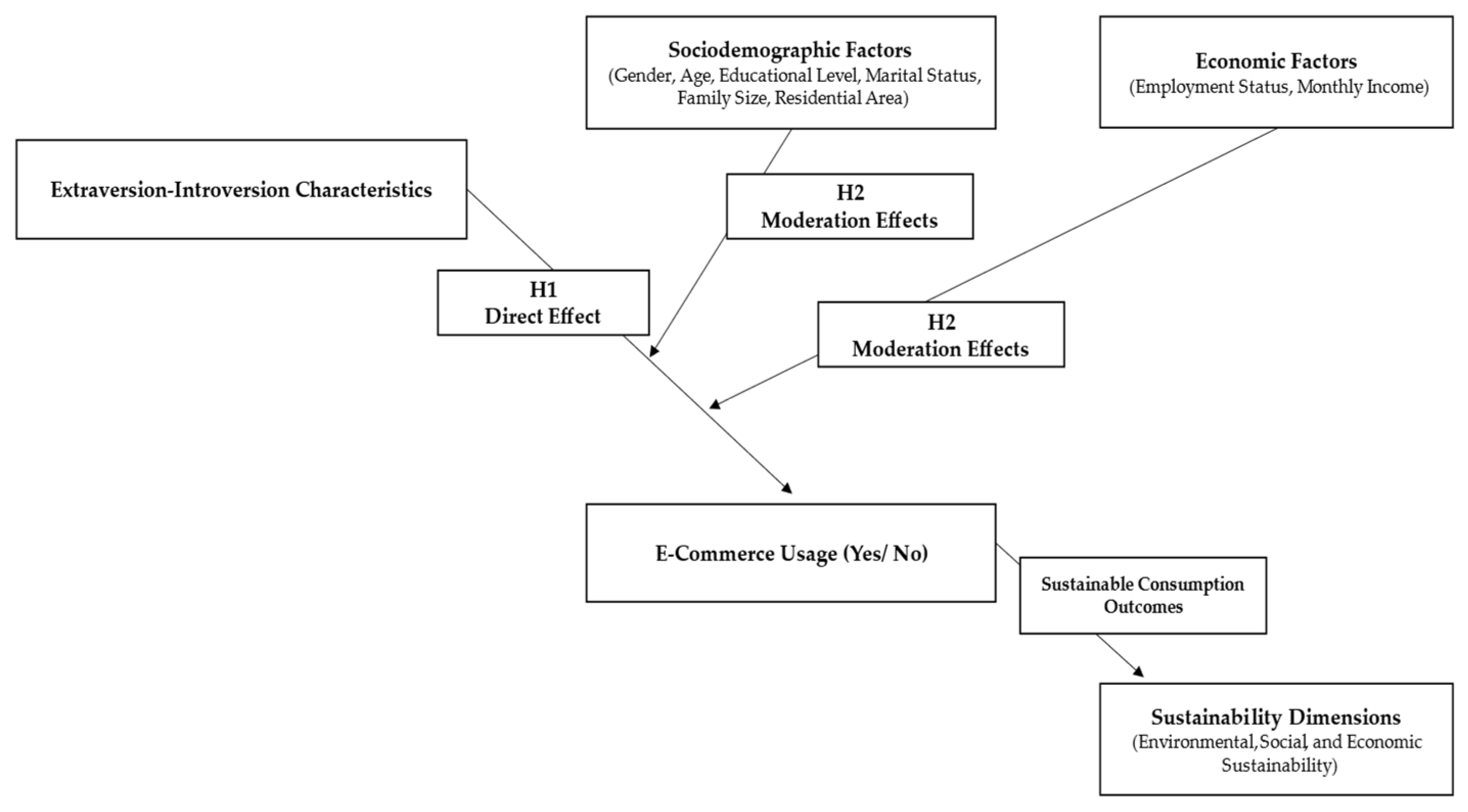

Disclaimer/Publisher’s Note: The statements, opinions and data contained in all publications are solely those of the individual author(s) and contributor(s) and not of MDPI and/or the editor(s). MDPI and/or the editor(s) disclaim responsibility for any injury to people or property resulting from any ideas, methods, instructions or products referred to in the content. |
© 2025 by the author. Licensee MDPI, Basel, Switzerland. This article is an open access article distributed under the terms and conditions of the Creative Commons Attribution (CC BY) license (https://creativecommons.org/licenses/by/4.0/).