You are currently viewing a new version of our website. To view the old version click .
Sustainability
  • Article
  • Open Access

7 May 2023

The Fractal Approach in the Biomimetic Urban Design: Le Corbusier and Patrick Schumacher

and
1
Department of Architecture, Faculty of Architecture, Near East University, Nicosia 99138, Turkey
2
Department of Architecture, Faculty of Engineering and Architecture, Altinbas University, Istanbul 34218, Turkey
*
Author to whom correspondence should be addressed.
This article belongs to the Special Issue Urban Climate Adaptability of Buildings: Theories, Methodologies and Cases

Abstract

Biomimetic design process approaches have been emphasized systematically as a result of works among disciplines of current technology and biological science. In order to find solutions for a decrease in biodiversity, pollution, and issues of the ecosystem, the nature experience shows itself in areas of biomimetic products, architecture, and urban designs in which nature-focused invasions are basically being imitated. Nature-focused designs have set their own framework by examining forms of different nature dynamics (scale, function, formation process) by presenting a sustainable environment. It can be seen that designs are made real by adhering to the resolution of forms, understanding, and interpretation of nature and by embracing fractal designs with the effort of creating a sustainable environment. In this study, emphasis was placed on revealed nature-based design approaches. The article addresses biomimetic design processes, reveals the role of fractal parameters in the design process, and examines the use of biomimetic approaches. By drawing attention to the importance of studying and understanding these internal dynamics, the contribution of natural inspiration and fractal concepts to the design process is examined. We examine research related to the concept of biomimetics, creation/development of conceptual proposals, and analysis of the established theoretical proposal through selected urban design examples in order to determine the respective overlaps between these areas. Our study takes the form of an analysis of the formal organization of living things together with a formal analysis focusing on the design principles. We try to analyze the design principles and the changes in the principles, and discuss the resulting data within the framework of these concepts. The urban designs of Le Corbusier and Patrick Schumacher, who are important names of the 20th century, were examined in line with the findings obtained in terms of biomimesis levels, namely, the organism level, behavior level, ecosystem level, and functional level. Comparisons of urban design approaches are made using the meta-analysis method with respect to findings obtained as a result of an examination of the golden ratio, modular system, fractal, and parameter concepts of urban design. For this reason, when the fractal concept, which is one of the dynamics of biomimetic-oriented nature, is handled with biomimetic levels and its contribution to the design processes is investigated, we are able to determine that it has important parameters in terms of sustainability. This study aims to contribute to the field of industrial products and urban design disciplines in architectural design.

1. Introduction

Designing is the process of forming and developing a plan for a new product, place, or area. The results of these processes are the design products. Design and process form a whole. Broadbent has revealed that four different ways are followed in the design processes. These are pragmatic design, iconic design, canonic design, and analogical design [1]. The parametric design falls within the design processes, with opportunities related to current digital technology. These concepts are sometimes abstract and sometimes concrete, representing a thought, an object, or a creature. The sociological and cultural changes in human life have shown differences in revealing the form within the design process. Therefore, the form has become a language symbolizing the community, culture, period, human, and thought.
Traditional urban plans use precise design systems that lack the flexibility to deal with the complexity and change that characterize contemporary urban societies. In order to design city plans with more flexibility, a design methodology based on shape grammar has been proposed, which can generate a variety of design solutions rather than a single rigid layout. In this approach, the plan is a design system that encodes a set of alternative solutions rather than a single specific solution. This methodology was developed based on an analysis of existing plans and a series of experiments carried out in the controlled environment of design studios. The results show that shape grammars produce urban plans with imprecise formal solutions while maintaining a coherent design language. Moreover, they provide a greater degree of freedom to future designers by providing explicit and implicit flexibility to plans. As a result, they are particularly well suited for this context [2].
From past to present, the relationship of humans with nature has had an interest in the imitation (mimesis) concept. It is possible to see movements inspired by nature and productions in various areas [1]. Movements inspired by nature have presented an analogic attitude towards structural and stylistic pursuits up to the 20th century. Our views towards nature have changed with the possibilities of biological science, developing technology, and environmental issues. These developed tendencies try to compromise with concepts of ecology and sustainability [2]. However, today’s designers are more interested in how creatures of nature live rather than how they look. Beginning in the 1990s, designs which were inspired, modeled, acquired, and implemented from the formations and structurings of creatures of nature came to terms with mimesis–imitation concepts. As a concept imitating the function and systems of nature, biomimetics expands horizons in terms of sustainability [3]. Biomimesis is more curious about the functions of the creatures in nature than about their forms. With regard to the fact that designs in nature are recyclable, nature-friendly, aesthetic, durable, and long-lasting and seek full efficiency with the least energy, they serve as a model for new horizons in technological works.
By considering both present and future generations, the new concepts comprised of macro- and micro-sizes for making the world a more livable place take their place in every process of our lives in line with trying to solve the issues with codes, order, mathematical data, dynamics, complexities, rhythm, and the balance of nature with today’s technologies [3,4]. By adhering to the biomimetic concept which becomes a current issue in industrial product designs, architectural fields, material science, nano-technology, robot technology, computer software, and transportation areas with this solution, the creatures of nature, and microscopic surveillance is possible to investigate the fractals. It is clear that the examined fractals have been a source of inspiration for various designs. Modern designs originate much more from natural resources. There are observable varieties in the design approaches to identifying the internal dynamics of nature. In addition, it can be seen that nature, process, and formation are always nested with evolution. The biomimetic concept can be seen as resulting from the examination of dynamics in nature contrary to the divergent sciences at the present time [3,4,5,6,7].
Urbanization is an important and continuous process for the economic development of a city. Although rapid urbanization provides a great employment opportunity for people in terms of life and job opportunities, threats in cities are increasing proportionally due to man-made and natural hazards. In urban design, understanding biomimesis and sustainability based on nature dynamics while facing the dangers in a rapidly developing and urbanizing world is an important issue. Therefore, this study aims to clarify the concept and improve the urban design based on fractal design in the context of biomimetics from the existing literature [8,9]. A systematic review of the literature suggests that there are interrelated paradigms such as biomimetics and fractal sustainability that emphasize the capacity of a system to move towards desired development paths. Resilient, ecological, and sustainable integration with nature is fundamentally about protecting social health and well-being in the context of a broader framework of environmental change. There are significant differences in emphasis and time scales, especially in the context of urbanization [10,11]. This study was conducted under four main components in the direction of biomimetic levels (Organism Level—imitation of living things; Behavior Level—imitation of the behavior of an organism; Ecosystem Level—ecosystem imitation; Functional Level—course, function) determined the basic indicators of biomimetic-fractal urban design. This study identified various indicators (module, measure, angle) under the dimensions (sustainable, fractal) of biomimetics related to urban design. These findings are fruitful in understanding the strategy of measuring and managing urban resilience and nature dynamics with fractal dimensions [12,13].
According to Benyus, the study of formations in nature and interdisciplinary studies brings together many branches of science; it has been observed that formation and formation are always living in it and are intertwined with evolution. It aims to bring nature from the front at every scale, to collect and organize groups of surface patterns, examine the scale, reveal the fractals of living things in nature, and be compatible with macro- and micro-diffusion design forms between the studied and the created.
Starting from the concept of mimesis in understanding and interpreting nature, working with the science of biology, and opening new horizons for the designs aimed at the analysis of fractal forms in nature with the possibilities that can be obtained, the principal contributions of the analogical and biological approaches of the approaches in nature were investigated. In line with these approaches, the fractal needs of living things in consumption designs and the meaning and interpretation of design are discussed. The study, which analyzes urban designs, provides different perspectives for interpretation in usage design. When we look at the solution proposals in nature in every behavior in the cost burden of the design effort, in its evaluation, and in the consumption of the search for solutions, all the biological aspects between the form and the meaning of the design are emphasized [14,15,16].
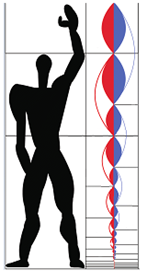
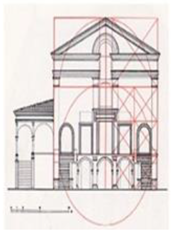
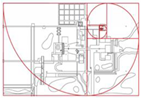
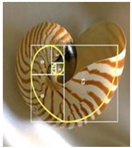
In the middle of the 20th century, Le Corbusier designed using the golden ratio, modular design, and serial arrangements in nature with the method he developed from the body, using the concept of mimesis, from the physical laws of living things. The results that Le Corbusier reached by observing nature with an analogical approach were examined in terms of fractal design in the concept of biomimetics. One of today’s contributors, Patrick Schumacher, analyzed urban fiction from natural forms with the biomimetic approach to analyze his designs. He used the same principles, such as the golden ratio, modular design, parameter, and serial structures found in nature.
In line with this biological purpose, this study continues with a design-specific meta-analysis. As a result of the research, the modernist designs of fractal urban designs, and Le Corbusier’s and Patrick Schumacher’s urban designs, realized modernist designs using today’s technology are discussed with the meta-analysis method and at the ecosystem level, which is one of the biomimetic levels, and their design approaches are compared.
In this direction, we compared one of the important names of the modernist period, Le Corbusier, with today’s modernist city protector Patrick Schumacher using the meta-analysis method to examine nature-oriented solutions to daily designs for hand use based on fractal sampling design applications and livable solutions for those living in cities. The aim was to reveal the examinations and design principles of usage designs by considering the nature of design principles differently. Le Corbusier, the groves connected to the environment of the world, the protected and the golden ratio, and/or the livable cities with the concepts they have in them, such as Fibonacci, are his visionary reflectors. Patrick Schumacher, on the other hand, created city versions consisting of complex processes and self-repetitive parts, using dynamics in nature and serial repetitions. Although the artifacts are different (grilled/organic), they can be experienced based on natural conditions or dynamics, where users provide their unity between the environment with fractal forms.
In the study, it is a fact that in the Le Corbusier and Patrick Schumacher biomimetic groups, the two guardians of the inhabitants of the hand accept that they use different nature codes. Although they have designed fractal city models by examining different levels of nature, it is possible that they are biomimetic-oriented as well. However, it is seen that they contribute to the business level, as they design livable, accessible, compact cities that allow biodiversity in usage design models by using different elevations and layouts in nature. This clearly demonstrates the argument that livable cities with a high quality of life can be designed as a result of the contribution to the ecosystem level.

2. Materials and Methods

In this study, data on the adaptation of the structural and fictional aspects of biomimetic-oriented designs to the design product were collected based on the concepts examined and designed using the text reading method as a result of literature research. The study includes qualitative and meta-analysis methods. As a result of the analysis, fractal codes in nature were analyzed and evaluated in line with the concept of biomimetics [5,17,18,19,20].
The conceptual framework of the research is formed as a result of the biological and technological systems of biomimetics. The created method is tested and evaluated through the information collected through a literature review.
As a result of the evaluations, a classification was made. The conceptual framework of the proposal includes the selection and examination of concepts from different disciplines, the evaluation of the created proposal, and the evaluation of the fractal dimensions of living things in nature, which are analyzed under the title of biomimetics in design, while adhering to biological data in order to limit the very wide subject area [6,8,19,20,21].
The urban designs of Le Corbusier and Patrick Schumacher, who are important names of the 20th century, were examined in line with the findings obtained in terms of biomimetic levels, organism level, behavior level, ecosystem level, and functional level. Comparisons of urban design approaches were made using the meta-analysis method with the findings obtained as a result of a mutual examination of the golden ratio, modular system, and fractal and parameter concepts in urban designs [21,22,23,24].

The Limitations of the Study

Today, efforts to make life and the environment sustainable envisage turning to nature, understanding the inner dynamics of nature, and benefiting from it. This situation is a reference of the architecture and urban design disciplines as well, and is specially handled with the concept of biomimetics and fractals. In this paper,
  • Le Corbusier and Patrick Schumacher’s designs are compared and discussed in terms of sustainability.
  • Today, with the change of orientation towards nature, the aim of creating a sustainable environment with the movement inspired by nature is being developed in the name of sustainability in design by considering the concept of biomimetics. In the formation of sustainable designs, which have become important today, biomimetic approaches, which are an innovative perspective instead of an analogical attitude, and fractal urban design, which is the geometry of nature, are both important.
Urban designs can be realized by adhering to the analysis of fractal forms and fiction created in line with understanding and interpreting nature and biomimetic approaches. Analyzing the fractal codes in nature can enable us to design holistic cities. Here, we engage in classification of the concept of biomimetics, examination of the research on the concept of biomimetics, and analysis to determine the overlap through selected urban design examples in the form of analyzing the formal organization of living things and making a formal analysis depending on the design principles, trying to analyze the changes in design principles and principles, and discussing the emerging data within the framework of its concepts [3,4].

3. Biomimetic Approaches

The fact that biomimetics is an inspiration for the designs of new generations has taken its place in the literature during the twentieth century, and has been the reason for studies in many different disciplines. Subject headings such as genetic science, communications technology, nanotechnology, space sciences, four-dimensional geometry, fractals, complex poli-hydrozoa, composite and smart materials, and portable structures change our perspectives toward nature. Learning methods for making use of nature have been developed with the progressions in information technologies. Biomimetic designs carry out design approaches by taking inspiration from nature and macro- and micro-sizes, which increase human life standards [17,20,25]. According to Jenine M. Benyus, there are three main application areas found in biomimetic architecture: Biomimesis–Biomimetics in Urban Design, Biomimetics in Product Design, and Biomimetics in Architectural Design [25,26,27].
With biomimetics, sustainable designs are being realized in product and architectural design by taking the functions of nature as an example. Both micro-sized and macro-sized items are being developed with the aim of creating a more livable environment. The organism level, behavior level, ecosystem level, and function level, along with design principles, are determined in today´s designs with the structuring process of-natural organisms of biomimetic approaches [4,28,29,30].
Biomimicry is a design framework with an increasing interest in sustainability in architectural and urban design practices. However, there is a significant lack of study and information regarding its practical application. In line with the possibilities provided by biomimetics, we analyzed projects examined with fractal modules using a meta-analysis approach. This example from the projects of Le Corbusier and Patrick Schumacher points to the attention drawn to biomimicry and fractals in their designed urban projects. Biomimicry has been applied in many fields, and has been mostly applied using macroscopic models such as ecosystems, plants, and animals [31,32,33,34].
Form, material, and the formation phase of the structure form the main parts of its design. As seen in biomimetic designs, parts of the form can be made by using the intelligence of the environment from the macro-scale to the micro-scale in all products that can be designed by researching the function added by the form nature. Sustaining the needs of life provides opportunities by producing solutions to today’s problems [35,36,37,38]. Reference is given to his designs by examining the solution of everything he can design in the dimensions of organism level, behavior level, ecosystem level, and functional level [39,40,41]. These principles are described in Table 1 as biomimetic levels.
Table 1. Biomimetic Levels [29].

4. Fractal and Urban Designers

The term ‘fractal’ comes from the Latin ‘fractus’, meaning shattered or broken. The Polish mathematician Benoit B. Mandelbrot first used this term as a new geometry system having an impact on mathematics, physics, chemistry, physiology, and fluid mechanics [21]. Fractal patterns are greater than the dimensions of the universe. The different sizes, patterns, lengths, and number of structures in nature provide eternal dimensions to all creatures. Therefore, the morphologies of all creatures are examined along with the absolute determination of mathematical data. The fact that the levels of irregular and shattered patterns in nature coincide with all scales plays an important role in being a fractal dimension concept [19,44,45,46].
Shape grammars are a system of simple visual rules used to transform one shape into another, including an initial state, a set of instructions, and a termination condition. They support the discovery of designs within an existing design language by providing tools to identify their generation or production of new design languages. Although their use is more prominent in architecture, shape grammars are increasingly used at the urban design scale due to software and hardware improvements that support their use for flexible urban planning [47,48].
Today, in our rapidly urbanizing world where cities are becoming hotspots for climate change [22], it is increasingly important to understand how cities work and how urban form affects people’s lives [49,50]. In order to create this understanding, climate change, urban sprawl, change of lands, the destruction of ecological systems, and the result of irreversible changes have become common features of the earth. This applies equally to urban areas that are a deeply interconnected part of the complex land system [10,51]. It takes a fractal perspective by reviewing what we currently know about the application of fractal form and function, an important aspect of complex systems, and what questions we can find answers to. Designing urban areas that provide shorter distances to amenities is an important factor for more walkable environments and is a critical aspect of climate-resilient urban planning, as it is generally accepted that areas with greater walkability discourage car use and reduce CO2 emissions [37,52,53].

4.1. Le Corbusier

A Swiss architect and a pioneer in modernism, Le Corbusier has designed everything which can be designed, including absolute architectural works, furniture designs, and urban designs. In his designs, he had the purpose to show the discipline of determination of events in the universe with various scientific regulations (the golden proportion). He defended the idea that one will always obtain the same results of a phenomenon within the same conditions and ingredients, and that one can always foresee this situation [22,23,24,54,55,56,57].

In Urban Designs

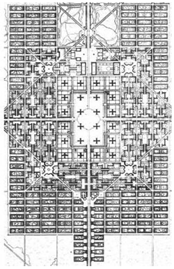
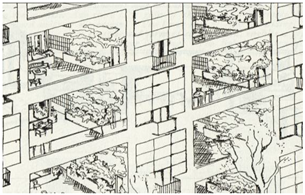
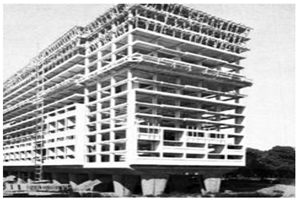
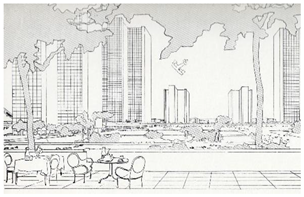
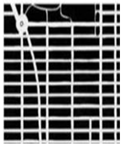
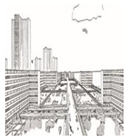
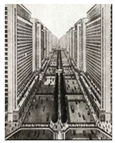
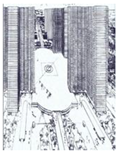
Le Corbusier presented the modern city of three million people as an alternative to the cities of its time. For him, the fact that the bad conditions of the cities formed with the effect of old cities and the industrialization in the 18th century caused physical and spiritual diseases was due to the structure of the cities. For this reason, he suggested the “Vertical Garden City”, which he believed could fight all physical and spiritual diseases in the modern city [7,23,38,58]. The modern city has been created in an imaginary area with a utopian approach. For him, basic principles which can form the skeleton of a modern city are reachable with corporate formulas by adhering to modular data. The cities which have been designed in line with these principles were accordingly applicable to special cases. The ideal city was separated into symmetric grills and square parcels. A separation of about 365 m between streets was due to the necessary distance for bus and train stations. A multi-story station that reflects the city center unites at the main highway station, with one coming North–South and the other East-West. The roads within the cities are disunited themselves; heavy goods at the bottom, average burden in the middle, and express traffic at the top [8,59,60,61].
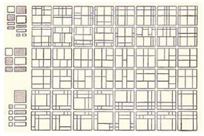
The urban plan aimed to form an image displaying the desire for combining the broken pieces of the discrete modern world. The real effect of the city is the rise of the current issue with a new concept of vertical gardens. The modular formula which has been formed for reaching the basic principles of ideal urban city planning was able to serve as a skeleton for any system. The modern city has a grill-patterned design. The city is divided in line with the modular system with the repetitions of grill ways and square parcels. The buildings are placed within a geometric order in the urban plan. Asymmetric balance has been built into the center of this plan, along with the formation of a sixth-floor skyline with another group, which can be seen as symbols reflecting the needs of humans, and these skylines have been built with self-repeating square parcels in the parks and green fields. Le Corbusier stresses the importance of solving the geometrical components with absolute mathematical tools, and the geometrical approach resembles the fractal urban design perception [51,62,63,64,65].
Designs have been considered which bring many different concepts forward with the purpose of finding solutions to problems that in the period of early modernism Table 2, Utopian approaches were considered by Le Corbusier with the purpose of creating cities that “respond to the physical and spiritual sides of humans”.
Table 2. Design Principles by Le Corbusier and Patrick Schumacher.

4.2. Patrick Schumacher

Patrick S. Schumacher is an architect and city planner, urban designer, and theoretical thinker of parametric design, which is a new flow containing innovative and experimental designs in modern architecture. Parametric city planning was first developed in the aviation and automotive industry based on the parametric design systems; it has been brought to city planning, in which it has developed in line with parametric design techniques and technology. This new generation allows large-scale urban planning. In his designs, Schumacher addresses morphologies by measuring their potential for solving systematic and technical issues [26,27,66,67].
Instead of drawing forms depending on the parametric design for being understood (conventional), Schumacher developed the information parametric designs in Frei Otto´s designs by bringing the suitability of the physical process together with nature regulations. It is said that this approach reflects complexity, daintiness, elegance, power, and beauty. According to Schumacher, all components within the reference system of parametric design are bound to each other and all components change in case of a single change of any component. He forms complexity by intensifying the relationship between areas and homogenization (serial repeating/fractal) in parametric designs and by protecting the readable links. Designs are realized by adapting them to modern life. In order to form an ideal city, the determined and/or principles function together with large-scale designs in line with logical steps and computer-driven parametric design techniques [26,27,54,68]. In urban design, AI has great potential to improve decision-making and various evaluation processes by performing complex iterations and making predictions quickly and accurately. Proximity plays a fundamental role in fostering urban dynamics, influencing city regulations and influencing the overall quality of life [69,70,71].
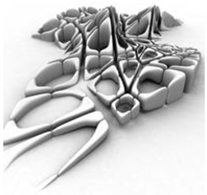
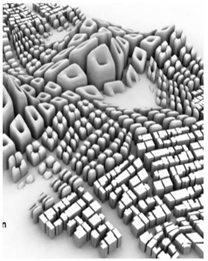
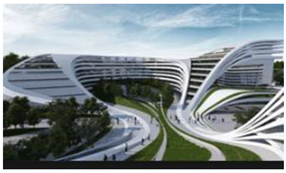
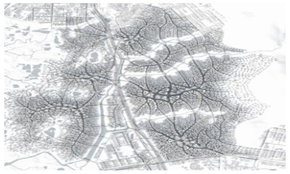
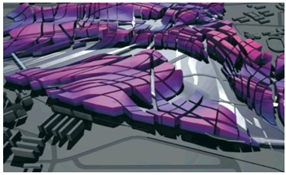
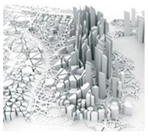
Digital cities are being designed as a result of the resolution of the nature codes by today´s technology with the effect of globalization. An urban sample is formed towards size, angle, and thickness, and receives parameters for the adapted balance in accordance with chosen area and determined problem. The possible problems in the formed city are determined in advance. More than one diverse urban model is being formed with the changed parameters over a single principle in line with the determined problems. Schumacher develops his concept by taking the natural events, environmental effects, and their performance as a model. By using the actions, formations, and continuity of nature as a base, the understanding of the systems brings a perspective to the scope of systems with fractal solutions. Biological growth and development reveal a geometry of serial repetitions/bifurcation and/or separation (fractal) as a result of repeating each other, of geometric forms having a complex appearance within an order with a repetition of natural events. The Thames Gateway Master Plan, prepared by Patrick Schumacher and his team in line with these principles, has been designed with the use of techniques and principles in digital parametric designs in the planning for developing new ways of solving problems in the master plan containing an area spanning over East London and divided in two by the Thames River. The built environment of the urban refresh field has been designed by considering urban development and the diacritical architecture of London [27,54,72].
The main building standards in the plan are thought to be designed as buildings consisting of flat slabs and urban blocks by taking inspiration from; individual villas, high-rise towers, plate-shaped buildings, and the typical block structure of London. These are in the making of four different geometric components (dot, line, plane, and volume) appropriate for the built environment. Schumacher has created his corporate idea in terms of possible styles of future developments and establishing a model according to the conditions. He has aimed to create a complex urban area combining different types of buildings (hybrid) with combinations of types of various building standards. Parameters connected to each other, building nets, and logical self-organization (troop formation) have been formed with parametric control techniques and city accession through parametric design facilities in the master plan. Flexibility has been given to the plan in order to cope with the fast-growing model [26,27,54,66,69,73]. The process was completed with a high number of repetitions of elements in virtual modeling resulting from the change of the given parameters.
Below, we address urban designs of Le Corbusier and Patrick Schumacher in line with the ecosystem level of the biomimetic levels.
  • Le Corbusier: ecosystem level
Based on absolute designs, he aimed to show this discipline with modular systems which are combined with the physical regulations of universal events. The design principles have been formed in line with the mathematical data (golden proportion/Fibonacci/fractal) with modular sizes using the proportional geometry of humans or laws of proportions. In line with these principles, he ensured a consolidation by uniting nature and humans and designed his plans in accordance with the principles (Table 2). In order to ensure the urban sprawl and the consolidation of nature and humans, he wanted to hinder vehicle usage of the urban community by leaving a large part of the city to green fields. The high density of urban life combines the advantages of Greenfield’s close-ness and low-density life. He suggests the preference of retarded cities by balancing the necessities of modern cities and population sizes in urban designs. The solution offered for problems in cities is the integration of humans, nature, and technology in future urban plans by adhering to the desire for the consolidation of humans and nature. According to Le Corbusier, a city should be alive, compact, and organized with the center. The fact that the center is reachable on foot in the designed cities ensures the continuity of aliveness. The compact city has been designed with the repetition of fractal geometries by adhering to the modular system. Although the designed cities are intense, he has designed urban utopias which are livable and in which the living quality of humans increases and pollution decreases, with a diversity of nature and increase of having no harm to the ecological balance by meeting all physical needs of human and protecting the ecosystem level of cities and built environments. The utopian approaches have changed in line with the possibilities of technology. The ideal city plan has never lost its purpose while encountering problems in metropolitan cities, and carries out its designs with different concepts and without ignoring all functions, which may improve conditions in the comfort levels of humans, open areas, and green fields in cities. Urban plans are being designed by taking the environmental performance, effects, and nature as a model as a result of the functioning of different disciplines all together with the dissolved absolute mathematical parameters.
  • Patrick Schumacher: ecosystem level
When approaching the urban designs of Patrick Schumacher ecologically, the parametric design brings together the appropriateness of physical processes to nature regulations. This approach forms spatial complexity with the protection of readable links by intensifying the relation between serial repetitions resulting from the interconnection of all components in its own reference system. The principles which are determined for the formation of an ideal city design of digital cities result from the resolution of natural codes and inspiration by nature. Schumacher develops his concepts by taking the natural events, environmental effects, and their performance as a model and uses the actions, formations, and continuity of nature as a base (Table 2). Biological growth and development reveal a fractal geometry of serial repetitions/bifurcation and/or separation (fractal) as a result of repeating geometric forms. The size or space is being designed with democratically collectivism by adhesion of human actions to social interaction relations without abusing the built environment. He forms its themes by drawing on the geological situation and morphology of cities. Within the topographical cross-layer, different and rich micro-sized areas are being created for the growth of troops and centrism in the city. The distribution ratio in the cities is being distributed based on the natural topographical structure and natural elements. The purpose is to prevent pollution with the wise use of the field and its protection. The coexistence of natural elements of cities and absolute forms of nature ensures flexible development. With flexibility, he tries to lower the chaos regarding the intensity of cities. In particular, he tries to lower vehicle usage to the minimum level, providing accessibility by locating the workplaces, structure areas, and green fields close to the center.
The cities developing while adhering to the needs of the twentieth century are being designed with the occurrence of fractal forms formed by the mathematical modeling of the universe, analysis of nonlinear systems, and repetitions of natural events. Table 2 deals with the fractal approaches of city plans presented by Le Corbusier and Patrick Schumacher. In Table 3, the Ecosystem Level of Urban Designs, Le Corbusier is discussed. Table 4, the ecosystem level of city plans Patrick Schumacher has been assessed. Table 5 and Table 6 show a comparative analysis of Le Corbusier and Patrick Schumacher.
Table 3. Ecosystem Level of Urban Designs by Le Corbusier.
Table 4. Ecosystem Level of Urban Designs by Patrick Schumacher.
Table 5. Comparative Analysis of Le Corbusier and Patrick Schumacher Designs in Fractal Approaches.
Table 6. Comparative Analysis of Le Corbusier and Patrick Schumacher Designs in Fractal and Ecosystem Approaches.
Le Corbusier, who offers a solution to the problems experienced by the cities brought by the period, is considered with the concept of biomimesis, which uses ways and dynamics of inspiration from nature (Table 1); it adheres to the functioning of the universe and the laws of physics, the golden ratio, the modular system, parameters, fractals, which are one of the dynamics and mathematical data of nature, and Fibonacci series. He developed the modular measure by adhering to the functioning of the universe and the laws of physics. With mathematical data (golden ratio/Fibonacci), the repeating ratios are the reflections of the laws of the universe. It is seen in biomimetic design approaches that sustainable designs use the codes of nature.
For Patrick Schumacher, although the city models designed by adhering to parametric design principles appear to be complex, the self-organizing complex situation of nature emerges with the modeling of biological growth and evolutionary developments. The mathematical modeling of the universe, the analysis of nonlinear systems, and the emergence of geometry-like fractal forms that occur with the repetition of forms with a complex appearance and a certain order formed by the repetition of events in nature have come to the fore, adhering to the needs of twentieth-century developing cities.
Sustainable city forms can be designed with the concept of biomimesis, and the fractal dimensions can be calculated by examining the constructions in nature. The result of the solution of the resulting systems with fractal geometry is the connection of urban spaces with integrated, low-deviation, and self-contained solutions as a result of the repetition of dimensions.
Two urban designers who lived in different times, Le Corbusier and Patrick Schumacher, have been discussed as the protectors of the ideal city and/or permanent approaches from the beginning of the 20th century to the present day, varying according to the characteristics of their designs and showing spreads at certain points (Table 5 and Table 6).
By bringing different disciplines together and looking at the designs they have obtained, they are inspired by nature and pave the way for sustainable urban designs as a result of the cooperation of technology and biology (Table 5 and Table 6).
  • Le Corbusier’s urban models deal with the rising area of biomimetics;
  • The purely thought-provoking structure of his designs aimed to show this doctrine with a modular system in which the control of the planet is combined with the physical structure of life in the universe.
  • Using the law of proportions or the proportional geometry of the human, he created the design components of the circles (golden ratio/Fibonacci/fractal) with modular dimensions.
  • Within the scope of these foundations, with the use of open-ground plans he ensured the integration of cities by combining nature and people within the cities and his designs adhered to these principles.
  • In order to reduce congestion and use of the cities of the period, the vertical gardens and the image to be designed in the city sits on the pilots, a large part of the city is green area, and pedestrians are removed from the use of private vehicles. Urban life combines the advantages of high limitations and the closeness of green spaces with low borders.
  • In urban designs, he proposes cities gradually by balancing the needs of the modern city with population ratios.
  • When Patrick Schumacher’s urban designs are considered using biomimetic levels:
  • Parametric design brings together the conformity of physical processes with the laws of nature. With this approach, it creates spatial complexity by preserving readable connections by intensifying the relationship between areas with serial repetition as a result of the interconnection of all elements within its own reference system.
  • The principles determined to create an ideal city design digital cities with logical steps, inspired by the function of nature and as a result of the analysis of nature’s codes.
  • In his urban designs, Schumacher develops the performance of the environment, its spontaneous formation, environmental effects, and natural phenomena and concepts.
  • It is based on mobility, formation, and continuity in nature. Cities are designed with fractal geometry as a result of the repetition of natural forms such as self-organizing evolution, biological growth, and development. He creates his themes by making use of the geological situation and morphology of the cities.
  • Dimension or space without exploiting the built environment; human movements are designed with the unique centrality of the urban space by adhering to the social interaction areas.
  • In order to increase the centrality and unity in the city, different and various rich areas are created on a micro-scale between the topographic layers with the harmony of the pure forms of nature and the topography of the land. The distribution ratio in cities are distributed according to the natural topographic structure and natural characteristics of the city. Cities that are formed in successive waves with topographical features are protected by preventing the deterioration of the environment through the logical use of the land.

5. Conclusions

The biomimetic-referenced fractal concept of development in urban design and the urban design approaches of Le Corbusier and Patrick Schumacher were compared with meta-analysis and their design approach processes were examined. In this context, in the present study, we:
  • Address the processes of design approaches, new approaches, and the main reference areas of these approaches;
  • Evaluate sustainability in terms of the organism level, behavior level, ecosystem level, and functional level, which are references to design based on the structural features of Biomimesis;
  • Compare Le Corbusier’s and Patrick Schumacher’s design approaches on the fractal element of Biomimesis;
  • Ask whether biomimesis as a design approach of nature studies in urban construction can create sustainable and ecological urban environments.
The conceptual framework created in the study was addressed by comparing the meta-analysis results on architectural and urban design examples. Urban design examples by Le Corbusier and Patrick Schumacher were examined. The design approaches of fractal codes in nature were analyzed by adhering to the analysis of fractal forms and the fiction created in line with these approaches. It is important to be able to design holistic cities by understanding and interpreting nature and biomimetics.
  • Does biomimesis, as a design approach of nature studies in urban construction, create sustainable and ecological urban environments?
The concept of biomimesis, which uses the dimensions of nature’s functions and scales, enables the examination of structures and dynamics in nature with the opportunities offered by biology and technology, modeling geometric forms in nature and fractal forms that can be modeled with parametric designs. As a result of considering the models and dynamics of nature, solutions should be produced for urban designs with fractal designs, with the creation of low-density, self-sufficient, repetitive spaces that do not exceed their own usage areas and can use self-sufficient energy resources. It is an inevitable fact that this will contribute to the levels of biomimesis by designing fractal models by focusing on the function added by the form rather than the form, based on the internal dynamics of the living thing in nature seen in biomimetic designs.
Based on the dynamics of nature in line with the solutions produced (adhering to fractal designs in biological growth, development, evolution, and self-organizing complex-looking geometric urban utopias; functional integrity between the protection of nature and urban technology, creating new systems and solutions with the functionality of nature, providing healthy, peaceful, safe, and harmonious lives with nature without waging war on the environment we live in, urban development by adhering to accessible distances in different cities, and reaching the main transportation axes), by adding repetitive models to ensure awareness it will be possible to prevent urban sprawl and to determine fractal models by adhering to a balanced population structure of urban models and using common living spaces more.
  • Contribution to the social environment
While biomimetic levels work on an organism or ecosystem, the form and process are the features of the organism that can imitate the ecosystem. It seeks to establish a framework as a means to increase the regenerative capacity of the built environment (repairing or restoring the functionality of damaged tissues and organs). It defines the evolved biomimetic varieties based on the framework and identifies an effective approach to improve the sustainability of the built environments. The framework under consideration applies to all approaches. With the examination of biomimetic technologies, it is clear that there is a level of imitation.
  • Is biomimesis a reference for the approaches of design disciplines?
Considering the biomimetic levels and compact city models with fractals, which are one of the dynamics of nature, the recycling of wastes is ensured by working like a living thing as a result of direct examination of the genetic material obtained from environmental samples (soil, water, human, etc.) at the organism level (imitation of living things) via the metagenomic method.
  • Urban design at biomimetic levels (Table 1)
The object designed in the dimension of behavior level (imitation of behavior and relationship) works like an ecosystem, as the ventilation systems work thermally, with the similarity of the material belonging to the living thing in nature, living style, and shelter conditions in the macro–micro scale. These are the organism, behavior, ecosystem, and functional levels. The organism level refers to a specific organism, such as a plant or animal, and may involve mimicking some or all of the organism. The ecosystem level (ecosystem mimicry), as the second level, mimics the behavior of living things, and is concerned with translating an aspect of how an organism behaves or the wider context. The third level, the behavioral level, is a common principle that allows all ecosystems to imitate and function successfully. It adapts itself as a part of the system in nature and functions like an ecosystem by converting renewable energy sources into energy that can be used by people, using the common components formed in line with the materials it offers in the dimension of the ecosystem. The fourth dimension consists of the functions of the levels, including all levels in the functional level (the path followed, function) dimension (imitation of living things, imitation of behavior and relationship, imitation of ecosystem). It has been seen that biomimesis levels take place in architectural design, industrial product design, and urban design, and in this context, its role in designs is discussed.
Cities that are designed with fractal form, which is one of the natural dynamics based on biomimetics, play an important role in ensuring the continuity of urban space and the interrelationships of urban parts. In this direction, instead of fraying or leaping form, it is possible to control growth and prevent spread by actualizing urban development with the fields accompanying existing urban areas. In the sustainability paradigm, protecting rural/natural areas with the compact urban model, reducing urban infrastructure and costs, increasing urban dynamism by decreasing car dependence and reducing private car use, and reducing house and urban energy use provide social sustainability with interlaced spaces based on bounds of combined usage.
  • Biomimetic-focused fractal cities designed with all levels of biomimetics taken together
By examining the growth phase of the determined creature, it is observed that each part grows differently from the other and produces dynamic shapes with fractal forms as it grows. Modules should be developed in the direction of the measurement to be determined based on living formations. Again, with the behavior level of the determined living formations, the material of the built environment should be integrated into the ecosystem so that it does not harm the environment. The design should be changed according to the needs of the day. It should aim to provide flexibility to the whole urban planning area, not just on the built environment between the modules. Within the use of organic gardens and terrace roof methods in the directions of measures that will be determined in built environments, the sustainability of living areas can be provided by enabling the protection and increase of biodiversity. It is possible to participate in urban areas as a structured environment that becomes self-sufficient by creating tropical areas with the terrace roof method, contributing to the ecosystem (flora and fauna), and which prevents carbon release by using clean energy
While the ideal city and/or city utopias which came up to the present day from the beginning of the 20th century vary according to the technology and to the needs of the period, they are merged at certain points. As a result, although they are designers of different periods, by selecting their paths, they have designed urban models that recognize sustainable, high-quality biodiversity. It is known that a second surface is created by designing houses and cities on the surface of the world by human beings. These two surfaces seem to have a dynamic interaction with each other.
In this study, we have emphasized that the analogical attitude is transformed by change, starting from the design processes. The biomimetic-referenced fractal concept of development in urban design and the urban design approaches of Le Corbusier and Patrick Schumacher were compared with meta-analysis and their design approach processes were examined. In this context, the present study has
  • Addressed the processes of design approaches, new approaches, and the main reference areas of these approaches;
  • Evaluated sustainability in terms of the organism level, behavior level, ecosystem level, and functional level, which are references to the design from the structural features of biomimesis;
  • Compared the design approaches of Le Corbusier and Patrick Schumacher in terms of their design approach to the fractal element of biomimesis;
  • Asked whether biomimesis, as a design approach of nature studies in urban construction, creates sustainable and ecological urban environments.
The conceptual framework created in the study was answered by comparing the results of the meta-analysis on architectural and urban design examples.

Author Contributions

Conceptualization, A.G. and A.K.; methodology, A.G. and A.K.; software, A.G.; validation, A.G. and A.K.; formal analysis, A.G.; investigation, A.G.; resources, A.G.; data curation, A.G.; writing—original draft preparation, A.G.; visualization, A.G.; writing—review and editing, A.K.; supervision, A.K. All authors have read and agreed to the published version of the manuscript.

Funding

This research received no external funding.

Institutional Review Board Statement

Not applicable.

Data Availability Statement

All data are available publicly as explained in the full article.

Conflicts of Interest

The authors declare no conflict of interest.

References

  1. Broadbent, G. Design in Architecture, Architecture and the Human Sciences; UnwinBrothers Limited, TheGreshamPress, OldWoking: Surrey, UK, 1977. [Google Scholar]
  2. Duarte, J.P.; Beirão, J. Towards a methodology for flexible urban design: Designing with urban patterns and shape grammars. Environ. Plan. B Plan. Des. 2011, 38, 879–902. [Google Scholar] [CrossRef]
  3. Benyus, J. Biomimicry; Harper Collins Book Publishers: New York, NY, USA, 2002. [Google Scholar]
  4. Ghyka, M. The Geometry of Art and Life; Dover Publications Inc.: New York, NY, USA, 1977. [Google Scholar]
  5. Golmankhaneh, A.K.; Sibatov, R.T. Fractal Stochastic Processes on Thin Cantor-Like Sets. Mathematics 2021, 9, 613. [Google Scholar] [CrossRef]
  6. Jiang, B. The Fractal Nature of Maps and Mapping; SE-801 76; Department of Technology and Built Environment, Division of Geomatics University of Gävle: Gävle, Sweden, 2014. [Google Scholar]
  7. Leach, N. Parametrics Explained. In Next Generation Building; Blatzer Science Publihers: Amsterdam, The Netherlands, 2014. [Google Scholar]
  8. Sarker, M.N.I.; Peng, Y.; Yiran, C.; Shouse, R.C. Disaster resilience through big data: Way to environmental sustainability. Int. J. Disaster Risk Reduct. 2020, 51, 101769. [Google Scholar] [CrossRef]
  9. Adinyira, E.; Oteng-Seifah, S.; Adjei-Kumi, T. A Review of Urban Sustainability Assessment Methodologies Emmanuel. In Proceedings of the International Conference on Whole Life Urban Sustainability and Its Asses, Glasgow, UK, 27–29 June 2007; pp. 1–8. [Google Scholar]
  10. Zellner, M.; Campbell, S.D. Planning for deep-rooted problems: What can we learn from aligning complex systems and wicked problems? Plan. Theory Pract. 2015, 16, 457–478.4. [Google Scholar] [CrossRef]
  11. Xun, Z.; Yuanchun, Y.; San, Y.; Yang, L.; Md Nazirul, I.S. Urban Resilience for Urban Sustainability: Concepts, Dimensions, and Perspectives. Sustainability 2022, 14, 2481. [Google Scholar]
  12. Toli, A.M.; Murtagh, N. The Concept of Sustainability in Smart City Definitions. Front. Built Environ. 2020, 6, 77. [Google Scholar] [CrossRef]
  13. Steven, D.T.; Barbara, B. Rapid Prototyping: An Alternative İnstructional Design Strategy. Available online: https://ocw.metu.edu.tr/mod/resource/view.php?id=3037 (accessed on 30 January 2023).
  14. Duany, A.; Zyberk, E.P. The Traditional Neighborhood and Urban Sprawl. In New Urbanism and Beyond. Designing Cities for the Future; Haas, T., Ed.; Rizoli International Publications: New York, NY, USA, 2009; pp. 64–66. [Google Scholar]
  15. Friedmann, J. The uses of planning theory: A bibliographic essay. J. Plan. Educ. Res. 2008, 28, 247–257. [Google Scholar] [CrossRef]
  16. Patricios, N.N. Urban design principles of the original neighbourhood concepts. Urban Morphol. 2002, 6, 21–36. [Google Scholar] [CrossRef]
  17. Gruber, P. Biomimetics in Architecture; Strauss GmbH: Morlenbach, Germany, 2011. [Google Scholar]
  18. Mckosky, M. Graphic Design + Biomimicry: Integrating Nature into Modern Design Practices. Ph.D. Thesis, Rochester Institute of Technology, Rochester, NY, USA, 2012. [Google Scholar]
  19. Lenau, T.A.; Orrù, A.M.; Linkola, L. Biomimicry in the Nordic Countries; Nordic Council of Ministers: Stockholm, Switzerland, 2018. [Google Scholar]
  20. Hargroves, J.K. Innovation inspired by Nature: Biomimicry, Industrial Ecology. 2006. Available online: https://www.researchgate.net/publication/285805738_Innovation_inspired_by_nature_Biomimicry (accessed on 7 September 2017).
  21. Mandelbrot, B.B.; Mandelbrot, B.B. The Fractal Geometry of Nature; W.H Freeman and Company: New York, NY, USA, 1983. [Google Scholar]
  22. Robson, C.; Luiz, A. Establıshıng Parameters for Urbanıty. In Eighth International Space Syntax Symposium; Greene, M., Reyes, J., Castro, A., Eds.; PUC: Santiago, Chile, 2012. [Google Scholar]
  23. Corbusıer, Le (Charles EdouartJeanneret) A Contemporary Cıty, From the City of Tomorrow and Its Planning. 1929. Available online: https://macaulay.cuny.edu/eportfolios/milsteinspring2013sandbox/files/2013/03/Le-Corbusier-from-The-City-of-Tomorrow-and-Its-Planning.pdf (accessed on 28 August 2016).
  24. Amit, T. Le Corbusıer’s Prıncıples of City Plannıng And Thelr Applıcatıon. In Vırtual Envıronments; Master of Planning, School of Planning and Architecture: New Delhi, lndia, 2001. [Google Scholar]
  25. Royal, E. Defining Biomimicry: Architectural Applications in System and Products. In UTSoA-Seminar in Sustainable Architecture; Center of Sustainable Development, School of Architecture, The University of Texas at Austin: Austin, TX, USA, 2015. [Google Scholar]
  26. Schumacher, P. Parametricism: A New Global Style for Architecture and Urban Design. Arch. Des. 2009, 79, 14–23. [Google Scholar] [CrossRef]
  27. Patrick, S. Parametricism as Style- Parametricist Manifesto London, Presented and discussed at the Dark Side Club1. In Proceedings of the 11th Architecture Biennale, Venice, Italy, 14 September–23 November 2008. [Google Scholar]
  28. Pedersen, Z.; Katharina, H. Biomimicry for Regenerative Built Environments: Mapping Design Strategies for Producing Ecosystem Services. Biomimetics 2020, 5, 18. [Google Scholar] [CrossRef]
  29. Pedersen, Z. Biomimetic Approaches to Architectural Design for Increased Sustainability. 2015. Available online: https://www.cmnzl.co.nz/assets/sm/2256/61/033-PEDERSENZARI.pdf (accessed on 22 May 2017).
  30. Bello, O.S.; Adegoke, K.A.; Oyewole, R.O. Biomimetic Materials in Our World: A Review. IOSR J. Appl. Chem. 2013, 5, 22–35. [Google Scholar]
  31. Bettencourt, L.M.A. Introduction to Urban Science: Evidence and Theory of Cities as Complex Systems. Introd. Urban Sci. 2021. [Google Scholar] [CrossRef]
  32. Valentina, P.; Carlo, S.; Francesco, R.; Carla, L. Organismal Design and Biomimetics: A Problem of Scale. Biomimetics 2021, 6, 56. [Google Scholar]
  33. Thomson, J.A. On growth and form. Nature 1917, 100, 21–22. [Google Scholar] [CrossRef]
  34. The Biomimicry Institute. Ask Nature: Innovation Inspired by Nature. 2018. Available online: https://asknature.org/ (accessed on 25 January 2021).
  35. Negin, I.; Brenda, V. Biomimetic Design for Building Energy Efficiency 2021. Biomimetics 2022, 7, 106. [Google Scholar]
  36. Perricone, V. Constructional Design of Organisms. Diid Ind. Des. Des. 2030 Saperi. 2020, 70, 96–103. Available online: https://www.researchgate.net/publication/352816849_Perricone_V_2020_Constructional_design_of_organisms_diid_disegno_industriale_industrial_design_Design_2030_Saperi_7020_96-103_ISBN_9788832080506 (accessed on 24 September 2021).
  37. Lima, F.T.; Brown, N.C.; Duarte, J.P. A grammar-based optimization approach for walkable urban fabrics considering pedestrian accessibility and infrastructure cost. Environ. Plan. B Urban Anal. City Sci. 2022, 49, 1489–1506. [Google Scholar] [CrossRef]
  38. Monteys, X. La Gran Máquina: La Ciudad en Le Corbusier; Colegio Oficial de Arquitectos de Cataluña, Demarcación de Barcelona: Barcelona, Spain, 1996. [Google Scholar]
  39. Samantha, H.; Cheryl, D.; Mark, G. Findings of Case-Study Analysis: System-Level Biomimicry in Built-Environment Design. Biomimetics 2019, 4, 73. [Google Scholar]
  40. Eduardo, B.; Estelle, C.; Chloé, L.; Kalina, R.; Philippe, C. Biomimicry in French Urban Projects: Trends and Perspectives from the Practice. Biomimetics 2021, 6, 27. [Google Scholar]
  41. Othmani, N.I.; Yunos, M.Y.M.; Ramlee, N.; Hamid, N.H.A.; Mohamed, S.A.; Yeo, L.B. Biomimicry Levels as Design Inspiration in Design. Int. J. Acad. Res. Bus. Soc. Sci. 2022, 12, 1094–1107. [Google Scholar] [CrossRef]
  42. Beggs, K.; Zarske, M.S.; Carlson, D. Biomimicry: Natural Designs, Integrated Teaching and Learning Program; College of Engineering, University of Colorado Boulder: Boulder, CO, USA, 2004. [Google Scholar]
  43. Lima, F. Urban Metrics: (Para) Metric System for Analysis and Optimization of Urban Configurations. Ph.D. Thesis, Federal University of Rio de Janeiro, Rio de Janeiro, Brazil, 2017. [Google Scholar]
  44. Stan, A. From Object to Field, Architectural Design, Architecture after Geometry, London: Offices, v.67, 1997.58. Archıtectural Association, AA DRL Documents 2. DRL TEN A Design Research Compendium, Londres: Architectural Association Publication Publications. 2008. Available online: https://books.google.com.au/books/about/Climate_Change_and_Cities.html?id=n-ZNDwAAQBAJ&redir_esc=y (accessed on 1 June 2017).
  45. Leach, N. Digital Cities. Archit. Des. 2009, 79, 6–13. [Google Scholar] [CrossRef]
  46. Branko, K. Architecture in the Digital Age: Design and Manufacturing, Scott Points: Exporing Principles of Digital Creavitity; Taylor & Francis: London, UK, 2005. [Google Scholar]
  47. Lima, F.; Brown, N.C.; Duarte, J.P. A Grammar-Based Optimization Approach for Designing Urban Fabrics and Locating Amenities for 15-Minute Cities. Buildings 2022, 12, 1157. [Google Scholar] [CrossRef]
  48. Fatemeh, J.; Dawn, C.P. An Overview of Fractal Geometry Applied to Urban Planning. Land 2022, 11, 475. [Google Scholar]
  49. Meyfroidt, P.; de Bremond, A.; Ryan, C.M.; Archer, E.; Aspinall, R.; Chhabra, A.; Camara, G.; Corbera, E.; De Fries, R.; Díaz, S.; et al. Ten facts about land systems for sustainability. Proc. Natl. Acad. Sci. USA 2022, 119, e2109217118. [Google Scholar] [CrossRef] [PubMed]
  50. Rosenzweig, C.; Solokei, W.; Romero-Lankao, P.; Mehrota, S.; Dhakal, S.; Ibraham, S.A. Urban Climate Science; Climate Change and Cities, Second Assessment Report of the Urban Climate Change Research; Cambridge University Press: New York, NY, USA, 2018; p. 1. [Google Scholar]
  51. Liscombe, R.W. The Ideal City; Department of Art History, Visual Art, and Theory University of British Columbia: Vancouver, BC, Canada, 2006. [Google Scholar]
  52. Kellert, R.S.; Heerwagen, J.; Mador, M. Biophilic Design; John Wiley & Sons: Hoboken, NJ, USA, 2008. [Google Scholar]
  53. Lagunes, M.L.; Castillo, O.; Valdez, F.; Soria, J.; Melin, P. A New Approach for Dynamic Stochastic Fractal Search with Fuzzy Logic for Parameter Adaptation. Fractal Fract. 2021, 5, 33. [Google Scholar] [CrossRef]
  54. Turner, J.S.; Rupert, C.S. Beyond biomimicry: What termites can tell us about realizing the living building. In Proceedings of the First International Conference on Industrialized, Intelligent Construction (I3CON) Loughborough University, Leicester, UK, 14–16 May 2008. [Google Scholar]
  55. Sennett, R. Construir y Habitar. In Ética para la Ciudad; Anagrama: Barcelona, Spain, 2019. [Google Scholar]
  56. Sequeira, M. Immeuble-villas de 1922 y las variants cartujas. In La Recherche Patiente. Le Corbusier. Cincuenta Años Después—Fifty Years Later; Torres Cueco, J., Mejía Vallejo, C.E., Eds.; TC Cuadernos, General de Ediciones de Arquitectura: Valencia, Spain, 2015; pp. 262–273. [Google Scholar]
  57. Corbusıer, L.; Ville Radiuse, L. Architecture d’ Aujourd’hui, Boulogne. The Studio, Londra, New York. 1935. Published by Editions de l′Architecture D′aujourd′hui, Boulogne, 1935. Available online: https://www.teachengineering.org/activities/view/cub_bio_lesson05_activity1 (accessed on 1 June 2017).
  58. Vincent, J.F.; Bogatyreva, O.A.; Bogatyrev, N.R.; Bowyer, A.; Pahl, A.K. Pahl, Biomimetics: Its practice and theory. J. R. Soc. Interface 2006, 3, 471–482. [Google Scholar] [CrossRef] [PubMed]
  59. National Geographic. Ideas for a Brighter Future, the Cities Issue; National Geographic Partners: Washington, DC, USA, 2019. [Google Scholar]
  60. Dıeleman, F.; Wegener, M. Compact City and Urban Sprawl. Available online: https://www.spiekermann-wegener.com/pub/pdf/Compact_city_BE.pdf (accessed on 1 June 2017).
  61. György, D. The Power of Limits; Shambhala Publications, Inc.: Boulder, CO, USA, 1981. [Google Scholar]
  62. Dzwierzynska, J.; Prokopska, A. Urban Planning by Le Corbusier According to Praxeological Knowledge. In World Multidisciplinary Earth Sciences Symposium; IOP Publishing: Bristol, UK, 2017. [Google Scholar]
  63. Quintana Guerrero, I.; O’Byrne Orozco, M.C. The void in Chandigarh’s Capitol Complex: A legacy at an Eastern scale. LC. Rev. Rech. Corbusier 2021, 3, 28–41. [Google Scholar] [CrossRef]
  64. Rodríguez Lora, J.A. El Urbanismo de Le Corbusier. Caracterización de sus Propuestas para Ciudades de Interior. Master’s Thesis, University of Seville, Seville, Spain, 2020. [Google Scholar]
  65. Medeıros, V. The Maps of the Modern City: Brasília and the Phases of a Fragmentary Urban Configuration. In Proceedings of the 10th International Space Syntax Symposium, London, UK, 13–17 July 2015. [Google Scholar]
  66. Marco, T.; Michela, B.; Ana, R.; Zeynep, T.; Martina, C.; Rossella, G. Transitional Morphologies and Urban Forms: Generation and Regeneration Processes—An Agenda. Sustainability 2021, 13, 6233. [Google Scholar]
  67. Jahnkassim, P.S.; Nawawi, N.M. Allusions to mughal urban forms in the monumentality of Chandigarh’s Capitol Complex. J. Archit. Urban. 2016, 40, 177–190. [Google Scholar] [CrossRef]
  68. DTI (Department of Trade and Industry). Biomimetics: Strategies for product design inspired by nature, a mission to the Netherlands and Germany. In Report of the DTI Global Watch Mission; DTI: Makati City, PH, USA, 2007. [Google Scholar]
  69. Batty, M. The Size, Scale, and Shape of Cities. Science 2008, 319, 769–771. [Google Scholar] [CrossRef] [PubMed]
  70. Escobedo, F.J.; Giannico, V.; Jim, C.Y.; Sanesi, G.; Lafortezza, R. Urban forests, ecosystem services, green infrastructure and nature-based solutions: Nexus or evolving metaphors? Urban For. Urban Green. 2019, 37, 3–12. [Google Scholar] [CrossRef]
  71. James, M. Utopian Design and Planinng; The University of British Colombia: Vancouver, BC, Canada, 1989. [Google Scholar]
  72. Peteınarelıs, A.; Yıannoudes, S. Algorıthmıc Thınkıng in Desıgn and Constructıon; Technical University of Crete: Chania, Greece, 2016. [Google Scholar]
  73. Da Silva, R.C.; do Eirado Amorim, L.M. Parametric Urbanism: Emergence, Limits and Perspectives of a New Trend in Urban Design Based on Parametric Design Systems. Trans. Anja Pratschke. In V 2010. Trans. Anja Pratschke. In V!RUS. N. 3. São Carlos: Nomads.usp. 2010. Available online: http://www.nomads.usp.br/virus/virus03/submitted/layout.php?item=2&lang=en (accessed on 1 June 2017).

Disclaimer/Publisher’s Note: The statements, opinions and data contained in all publications are solely those of the individual author(s) and contributor(s) and not of MDPI and/or the editor(s). MDPI and/or the editor(s) disclaim responsibility for any injury to people or property resulting from any ideas, methods, instructions or products referred to in the content.

Article Metrics

Citations

Article Access Statistics

Multiple requests from the same IP address are counted as one view.