


Abstract
Forests inhabit a large number of trees, shrubs, climbers, non-timber forest products and a number of wild edible fruits. These wild edible fruits are an indispensable constituent of human life and rich in vitamins, minerals, fibres, antioxidants, alkaloids, and phenolics. Many of them are good source of medicines. The present study was undertaken to document wild edible fruits of Arunachal Pradesh, India, and their socioeconomic importance in the sustainable rural economy. The study revealed that altogether 50 wild edible fruits belonging to 31 families are used against a number of ailments. They have a number of uses in the socioeconomic life of rural people such as constructional timbers, firewood, charcoal, fodder, fish poisoning, dyes, oils, etc. Although these fruits play an important role in the life of tribal people, these valuable species have been vanishing at a very fast rate. Therefore, promoting their sustainable use and increasing their abundance in different landscapes through the agroforestry system must immediately be undertaken. The claimed therapeutic values are to be critically studied and dynamic conservation of associated indigenous knowledge among local tribal communities should be carried out through policy interventions, implementation of farmer’s rights, and generation of awareness among the local people. Policy makers should immediately undertake strategic plans for both in situ and ex situ conservation of wild edible fruits that have ethno-medicinal values. In addition, the orally transmitted therapeutic values of wild edible fruits should be urgently documented to safeguard these valuable species from further extinction.
1. Introduction
Forests are an integral part of global sustainable development and provide renewable raw material, maintain biological diversity, mitigate climate change, protect land and water resources, improve air quality, and help alleviate poverty. Rural people depend on these forests to fulfil their sustainable livelihood and as a source of income for economic prosperity [1]. These forests inhabit a large number of trees, shrubs, herbs, climbers, as well as non-timber forest products including medicinal and aromatic plants and a good number of wild fruit plants. These wild fruits have been an indispensable constituent of rural people since ancient times. They still play an important role when food crops are scarce, ensuring food sovereignty and food security, and potentially contribute to wellbeing in vulnerable households [2]. It is also reported that one in six people on the planet rely on these wild fruits for their sustenance [3] and they are an open-source supply of food and nutrition [4,5]. Several studies have suggested that these fruits possess significant biologically active compounds, antioxidants, vitamins, and minerals [6]. In addition, the presence of secondary metabolites in these plants affords them a prominent place in traditional medicinal systems [7]. Some of these fruits are reported to have comparable or even higher nutritive values than so-called commercial fruits [8,9]. Due to the presence of a sufficiently high amount of minerals and vitamins, inclusion of these fruits in daily diet can reduce the risk of a number of diseases such as diabetes, cancer and coronary heart disease [10]. In addition, incorporation of these fruits in agricultural systems can also protect biological diversity as well provide adequate food security and boost the rural economy. Moreover, the world population is expected to surpass 9 billion by 2050, boosting global food demand by 50% compared to 2013 [11]. Thus, to meet the global food demand, proper identification, documentation, enumeration, and domestication of wild edible fruits become very much necessary [12].
Northeast India is one of the agrobiodiversity hot spots in the India gene centre and is full of ethnic and traditional diversity. Arunachal Pradesh, geographically the largest state in Northeast India, is commonly known as the Orchid state of India or paradise of the botanist, which translates to “land of the dawn-lit mountains”. The state has more than 26 major tribes and over 100 subtribes, with differences in their traditions and customs. The tradition, sociocultural life and custom of each tribe mostly depend on the biodiversity, forest, and wildlife of the state. The state falls within the 12 mega diversity “Hot Spots” in the world, having 20% of the species of the country’s fauna, 4500 species of flowering plants, 400 species of pteridophytes, 23 species of conifers, 35 species of bamboos, 20 species of canes, 52 rhododendron species and more than 500 species of orchids [13]. Most of the people in the state mainly depend on forests to earn their livelihood. The tribal people of the state depend on forests for food, fibre, fodder, in addition to ethnomedicines of the traditional healthcare system. In addition to other edible and non-edible plants in the forests, a number of wild fruits are also present, which the tribal people have been using since ancient times against a number of diseases in the traditional healthcare system. However, knowledge of the medicinal values of wild edible fruits has been transmitted from generation to generation orally without proper documentation [14]. In many villages, these fruits also offer a source of sustainable income and livelihood security [15]. As of now, with ever increasing population pressure and shrinkage of land as well as use of forest areas for development and constructional projects, these wild fruits are on the verge of extinction. Although these fruits have been used in folk medicines of the traditional healthcare system, traditional knowledge about the ethnomedicinal uses of these fruits have been losing their intrinsic value due to lack of proper documentation [16]. Therefore, it is high time for the scientific community to safeguard these valuable natural resources of forests by domestication as well as conservation efforts [17].
Keeping all this information in view, the present research work was carried out to enumerate the ethnomedicinal uses of the wild fruits in Arunachal Pradesh, India as well as of these fruits in the socioeconomic life of rural people.
2. Materials and Methods
Study Area
The present research was carried out to document the ethnomedicinal uses of wild fruits in the East Siang, Upper Siang, West Siang, and Lower Dibang valley districts of Arunachal Pradesh, India (Figure 1) in the traditional healthcare system of rural people as well as the uses of these species in the socioeconomic life of rural people. The study consists of survey, collection, identification, and enumeration of the species. The preliminary survey and collection of the wild edible fruits was conducted during 2017–2019. The method for the field work was followed as suggested by [18,19,20]. Questionnaires were prepared, and personal interviews were taken with the traditional healers of rural villages to collect the information about the ethnomedicinal uses of the fruits among rural people by following standard guidelines. A total of 38 individuals from 22 villages among different age groups (45–68 years) identified with the help of local administrators and community leaders were interviewed. Information on wild edible fruits, parts used and ethnomedicinal values against different kinds of diseases, methods of preparation, dosages, and durations of treatment were collected. The collected specimens were identified with the help of the literature and by using various floras and monographs including regional flora, the data collected were compared and cross checked with other recommended literature [21,22,23], and after proper identification, the plant specimens were processed and dried and herbarium specimens were prepared. Voucher specimens of the collected plant species were deposited in the department of Horticulture, Aromatic and Medicinal Plants, Mizoram University.
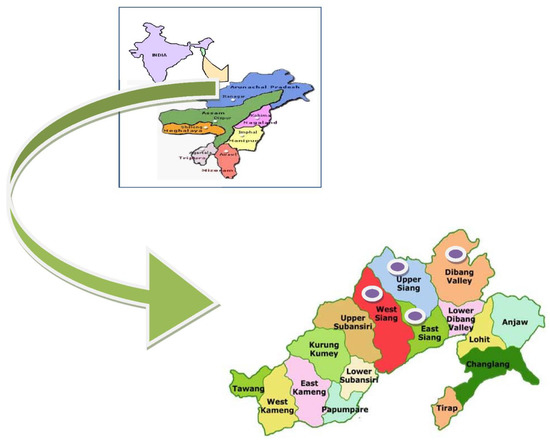
Figure 1.
Map of Arunachal Pradesh showing the study area.
Regarding the use of these fruits in the socioeconomic life of rural people, such as constructional timber, firewood, charcoal, fodder, dye, etc., people of different age groups were interviewed with the help of prepared questionnaires. Market surveys were conducted at rural markets and sellers were asked about market price, demand, season of availability, etc.
3. Results and Discussion
3.1. Ethnomedicinal Evaluation
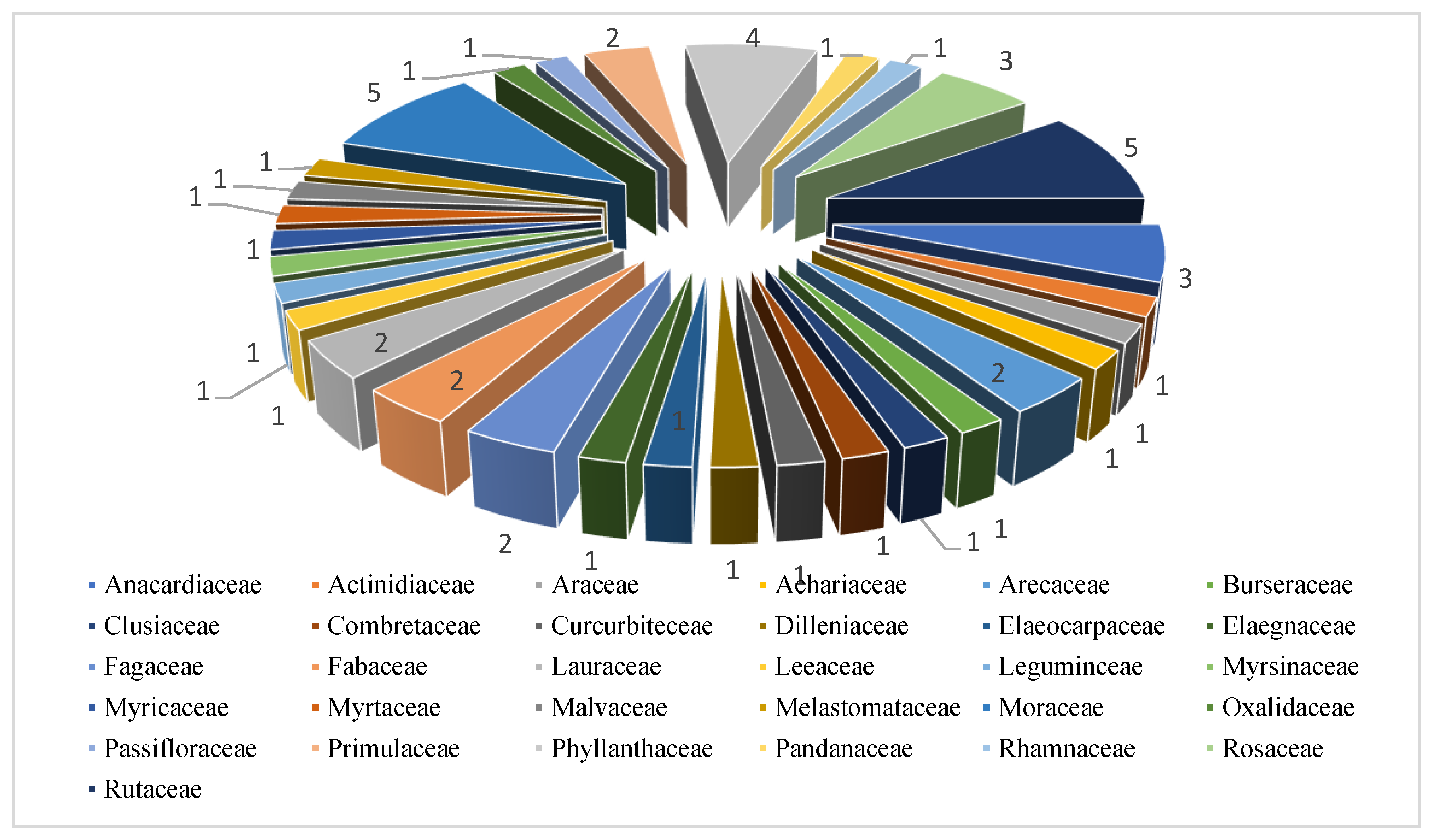
From the results of the present investigation, it is clear that a total of 50 wild edible fruits having ethnomedicinal uses exist (Figure 2). These fruits are represented by 31 families of which Moraceae and Rutaceae had the highest with five species, followed by Phyllantaceae with four species, Anacardiaceae and Rosaceae with three species, Arecaceae, Fabaceae, Fagaceae, Lauraceae, and Primulaceae each with two species and the rest were one all species each.
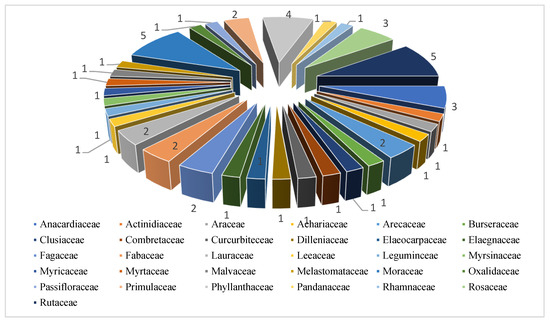
Figure 2.
Family wise representation of wild edible fruits of Arunachal Pradesh, India.
The uses of wild edible fruits of Arunachal Pradesh, India in the traditional healthcare system of rural people presented in Table 1.

Table 1.
Ethnomedicinal uses of wild edible fruits of Arunachal Pradesh, India.
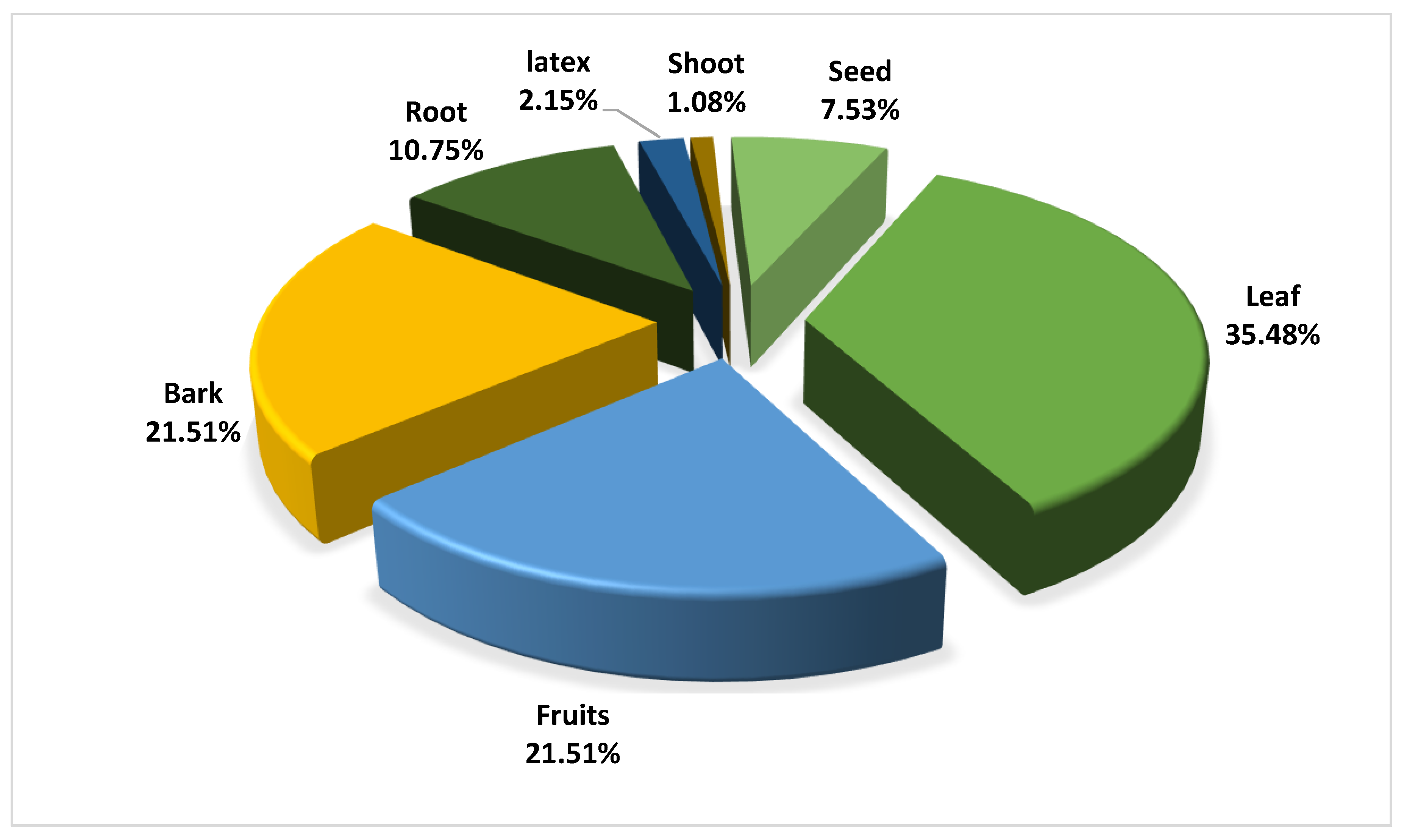
The data regarding the uses of different parts of the wild fruits plants in the traditional healthcare system are presented in Figure 3. The figure reveals that among the different plant parts, the most abundant part used was the leaf with 33 uses (35.48%), followed by fruits and bark with 20 (21.51%), roots with 10 (10.75%), seeds 7 (7.53%), latex 2 (2.15%) and shoot with 1 use (1.08%).
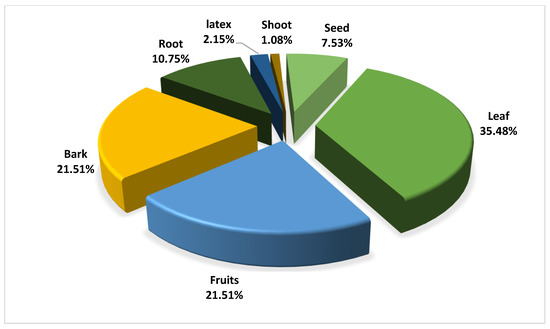
Figure 3.
Parts used percentage of wild edible fruits.
The therapeutic classification of wild fruits is presented in Table 2. The data presented in the table reveals that most of the wild fruits have ethnomedicinal uses in the traditional healthcare system of tribal people in Arunachal Pradesh, India. Among the different species studied in the present investigation, the greatest number of species were used in gastrointestinal disorders (31 spp.), followed by allergies (18 spp.), dermatological problems (7 spp.), respiratory ailments (7 spp.), minor ailments (5 spp.), cardiovascular disorders, mental and nervous disorders (4 spp. each), jaundice (3 spp.), ENT, antivenom/insect bites/stings/snake bites, bone diseases, food poisoning (2 spp. each), and urogenital problems and cancers (1 sp. each).
Table 2.
Therapeutic categorization of wild edible fruits.
3.2. Socio Economic Characterisation
3.2.1. Plants for Timber, Fodder, and Other Miscellaneous Purposes
Table 3 reveals the data regarding the socioeconomic uses of wild fruits of Arunachal Pradesh, India for constructional timber, firewood, charcoal, and fodder. In the state, most of the houses in the villages are made of wood and each household depends on trees available in forests or home gardens to construct their houses. Some of the wild fruit trees produce very good timbers for construction of houses in the villages. Among the different species of fruits, Phoebe cooperiana produces the best quality timber. In addition, timbers of Castanopsis hystrix, Syzygium cumini, Spondias pinnata, and Terminalia citrina are extensively used by the tribal people of the state. Moreover, timbers made from Saurauia roxburghii, Castanopsis indica, and Canarium strictum are moderately used by rural people for constructional works.
Table 3.
Wild edible fruit tree species used for constructional timbers (CT), firewood (FW), charcoal (C) and fodder (F).
In addition to use as constructional timbers as well as for making furniture, in the villages that are far from the city, people still cook their daily meals as well as pig feed with firewood. Since each and every family have a good number of pigs, they need a sufficient quantity of firewood every day to prepare pig feed. In villages, a significant quantity of firewood is consumed (4000–6000 kg/family/year). During the daytime, the men and women go to nearby forests and their home gardens to collect firewood. In addition to other forest trees, wild fruits are also a very good source of firewood. Fruits such as Castanopsis hystrix, Castanopsis indica, and Saurauia roxburghii produce the best quality firewood. Bischofia javanica and Syzygium cumini also produce very good quality firewood extensively used by rural people.
The livelihood of rural people still depends on domestic animals. Each and every household has different types of domestic animals including cows and goats. All these animals need fodder every day. Average fodder needed per family varies around 5000–8000 kg per year and these fodders come from agricultural fields, agroforestry trees and agricultural by-products. The leaves of wild fruits serve the purpose of fodder of each family. The leaves of Artocarpus heterophyllus, Ficus auriculata, and Ficus semicordata are very good fodder for these domestic animals.
People in this region still also use charcoal for different purposes such as for cooking and other needs. Some families even earn their livelihood by selling charcoal prepared from different trees. Fruit trees such as Tamarindus indica, Syzygium cuminii, Castanopsis hystrix, and Castanopsis indica produce the best quality charcoal used by rural people for various purposes.
3.2.2. Plants for Fish Poisoning
Arunachal Pradesh is a state that is crisscrossed by numerous rivers, riverine, and streams. Most of the villagers in rural areas generate their income by selling the fishes collected from the rivers. A good number of wild fruits have been used by rural people to catch fishes (Table 4). The freshly crushed or powered plant component is put into running streams and the toxic chemicals present in the plant kills the fishes present in the rivers. The quantities of plant material applied vary from species to species. Fruit species such as Gynocardia odorata, Myrica esculenta, and Zanthoxylum rhetsa were extensively used as fish poison. These species are mainly used to catch small-sized fishes in rivers as well as small streams and ponds. It is reported that chemicals present in the fruits affect the respiratory system of fishes [24]; however, there is no report available on the effect of such poisoning on the flesh quality of fish.
Table 4.
Wild fruits used for Fish poisoning.
3.2.3. Wild Fruits for Making Dyes
The handicraft industry of Arunachal Pradesh is very rich. The rural people mostly prepare handicrafts by using locally available materials. Some wild fruits in Arunachal Pradesh are also used for making dyes used in the local handicraft industries to colour traditional dresses of men and women (Table 5). The colour of such dyes has no negative effects on health and is long lasting. Wild fruits such as Baccurea ramiflora Bischofia javanica, Garcinia cowa, Myrica esculenta, and Ziziphus mauritiana produce very good-quality dyes used by rural people to make dyes in the handicraft industry.
Table 5.
Wild plant species used as dyes.
3.2.4. Wild Fruits and Their Value-Added Products
A large number of wild fruits are borne from the trees and most of the household have 2–3 wild fruit trees of. Because of this reason, during the peak season of fruiting, wild fruits are available in glut in the villages. Additionally, due to less market demand for raw fruits, most of them spoil during their fruiting season. To get rid of this problem, a number of value-added products can be prepared from these fruits and thus can save them from spoilage, and additionally the farmer can earn extra income. Table 6 represents the various value-added products prepared from the wild fruits of Arunachal Pradesh, India.
Table 6.
Locally prepared value-added products.
3.2.5. Miscellaneous Uses of Wild Edible Fruits
Table 7 depicts that most of the wild fruits have miscellaneous uses. Rural people use different plant parts of these fruits in their day-to-day life for various purposes. Leaves of Livistona jenkinsiana are used in making roofs of houses, which is a good replacement for thatch. Similarly, leaves of Saurauia roxburghii are used for some local ritual purposes. Wood of Phoebe cooperiana and Artocarpus heterophyllus is used for making homemade furniture. Phoebe cooperiana is used to make wooden containers that are generally used for the feeding of pigs and cows.
Table 7.
Wild plants of miscellaneous use.
3.2.6. Marketing Status of Wild Fruits
In Arunachal Pradesh, among 3–4 villages there is one local market or rural hat (a place used to sell various items by the owner). Rural people sell and buy their paddy, home garden produce, and other essential needs in these markets. Most of these hats are weekly. Observations were taken at five important local markets (hats) in the East Siang and Upper Siang districts to ascertain the availability and market prices of wild edible species (Table 8). A weekly survey revealed the simultaneous availability of an individual species in two markets; however, market prices varied between markets. In general, the wild fruits are collected by the rural men and women one day before market day from the forests as well as from home gardens and bring them to market by themselves or sell them through middlemen. Most of the fruits have good demand in the rural hats, which people buy either to consume raw or to produce value-added products. The availability of these fruits varies from fruit to fruit and their market price also varies from INR 20 to 40 per kg (USD 0.125–0.25 per pound) depending upon the type of fruit. Interviews with shop owners revealed that the availability of wild fruits has decreased compared to previous years.
Table 8.
Some wild edible fruits available at the weekly markets.
Wild edibles are collected from natural forests in the form of fruits, leaves, stems, roots, etc., and these plants still make up a good proportion of tribal diets throughout the world [25,26]. Traditionally, these species have met the nutritional requirements of local inhabitants [27]. In northeast India, a major portion of the population depends on a number of plants for their survival. They depend on wild edibles as a source of ethnomedicines as well as for use in their socioeconomic life such as the construction of houses, fuel wood, as well as miscellaneous uses [28,29,30].
In the present investigation, 50 wild edible fruits belonging to 31 families having medicinal values were altogether reported. Among the different families, Moraceae and Rutaceae were dominant with five species, followed by Phyllanthaceae, Anacardiaceae and Rosaceae, Arecaceae, Fabaceae, Lauraceae, Primulaceae, and Fagaceae. In terms of parts used, the most used were leaves (35.58%), followed by fruits and bark (21.51%), roots (10.73%), seeds (7.53%), latex (2.15%) and shoots (1.07%). Therapeutically, the reported wild edible fruits are used against 14 classes of diseases. Our present study is in close conformity with previous studies conducted in Arunachal Pradesh where the researchers proved that a number of plants in the state have been used as ethnomedicine by the tribal people of the state [31].
The local inhabitants of Arunachal Pradesh consume a large number of wild edible fruits as important parts of their diets. Most of the species are used for their fruits, seeds, leaves, shoots, flowers, and roots or rhizomes. Similar ratios and trends of usage for different plant parts are reported for the country of India [8,32]. Tribal people of the state collect these wild edible fruits from primary and secondary forests and most of these fruits are sold in the local markets or hats. These wild fruits, therefore, are helpful in alleviating a subsistence economy [27]. In addition to use as a source of medicine, a number of these species are also processed into value-added products, which reduce their spoilage during the on-season and can be stored for use in a lean period, also helping farmers maximise their income [33]. Consumption of wild plants provides substantial nutritional dietary benefits to tribal populations in remote areas. Some wild edible plants are rich in nutrient content and may even be superior to cultivated ones in this respect [34]. A varied diet of wild edible plants may also increase one’s sense of food palatability, which in turn may lead to an increase in food intake [35,36]. Due to the inaccessibility of many regions, wild plants can serve as an important supplement to conventional, domesticated crops.
The population density of these wild species is progressively decreasing, and their natural regeneration is often poor in natural habitats due to intense biotic and abiotic pressure. The pressure is further aggravated, as they are collected freely in large quantities from the backyard/forest for sale in the markets and used as fuel wood. Such uncontrolled exploitation of these naturally occurring wild genetic resources has led them to become rare to very rare and many may become extinct in the near future. Furthermore, this may lead to a narrowing of the genetic diversity and variability of these wild species. With the ever-increasing population, there is a great need to popularize and conserve these genetic resources in order to meet the future demand for human food, nutrition, medicine, and gene(s) sources for adapting to climate change.
Utilization of wild edible plants is an effective tool for the restoration of traditional knowledge systems inherent in tribal people. This can easily be achieved by a government-launched programme involving the local community on a care and share basis for the conservation of genetic resources of wild edible fruits. The necessary steps should also be taken for cultivation of important wild edibles in agroforestry systems. Undoubtedly, the traditional wisdom of controlled exploitation will constitute the traditional heritage of the people of Arunachal Pradesh, India. There is ample scope for studies on regeneration behaviour, population structure, and the status of such biological resources. Studies on the phonological characteristics of different species must be afforded due importance. The outcome of such studies will be useful in determining an appropriate conservation strategy.
4. Conclusions
Humans are the most intelligent species on the planet, as they devour plants and animals for their sustenance. Plants have long been a source of food, medicine, and other necessities for humankind. The tribal people of northeast India rely heavily on forests and the products they provide for their daily sustenance. This economically backward region of India is a treasure trove of wild edible fruit crops in India. Wild fruit species in northeast India have diverse social, economic, and scientific importance. Policymakers should conceive an extensive plan for the sustainable management of wild edible fruits and documentation, domestication, and value addition of all the available species. To safeguard the existing genetic diversity of these valuable species, sincere in situ conservation efforts are urgently required. Dynamic conservation of associated indigenous knowledge among local tribal and farmer communities can be carried out through policy interventions, implementation of farmer’s rights, and generating awareness among local people. Researchers, scientists, farmers, and entrepreneurs should work together to make these valuable species commercial crops for future. The phytochemical and nutritional profiles of the species in question can therefore constitute basic knowledge of food pairing with other ingredients to improve nutritional and sensory qualities, allowing key molecules responsible for functional properties to be enhanced. Bioprospecting and value addition of these valuable genotypes would further enhance the possibilities of utilizing rare genes to mitigate the challenges of climate change and biological stresses. Detailed research is also very much necessary to know the complete defence mechanisms of these wild edible fruits against several disease-causing pathogens. The present investigation is appropriate for encouraging researchers, pharmaceuticals, and policymakers to develop a plan for properly managing and utilizing these highly important wild edible fruits.
Author Contributions
Concept and experiment design: T.K.H. and R.N.; survey, personal interview, and collection of data: B.T.; compilation of data and preparation of draft manuscript: R.N. and E.L.; finalization of manuscript: T.K.H., K.U. and N.L. All authors have read and agreed to the published version of the manuscript.
Funding
This research received no external funding; research was carried out as part of M.Sc. research work. All the expenditures were borne by professor and student.
Institutional Review Board Statement
Not applicable.
Informed Consent Statement
Not applicable.
Data Availability Statement
The data supporting the finding of this study are available from the corresponding author, T.K.H., upon reasonable request.
Acknowledgments
The authors are thankful to the traditional health practitioners, local fruit sellers, rural women, youths, as well as forest officials of the East Siang, Upper Siang, West Siang, and Lower Dibang districts of Arunachal Pradesh, India who helped during the survey and identification of wild edible fruits.
Conflicts of Interest
The authors declare no conflict of interest.
References
- Biswas, S.C.; Kumar, P.; Kumar, R.; Das, S.; Misra, T.K.; Dey, D. Nutritional Composition and Antioxidant Properties of the Wild Edible Fruits of Tripura, Northeast India. Sustainability 2022, 14, 12194. [Google Scholar] [CrossRef]
- Motti, R. Wild Edible Plants: A Challenge for Future Diet and Health. Plants 2022, 11, 344. [Google Scholar] [CrossRef] [PubMed]
- Bhatt, I.D.; Rawat, S.; Badhani, A.; Rawal, R.S. Nutraceutical Potential of Selected Wild Edible Fruits of the Indian Himalayan Region. Food Chem. 2017, 215, 84–91. [Google Scholar] [CrossRef] [PubMed]
- Sardeshpande, M.; Shackleton, C. Wild Edible Fruits: A Systematic Review of an Under-Researched Multifunctional NTFP (Non-Timber Forest Product). Forests 2019, 10, 467. [Google Scholar] [CrossRef]
- Vira, B.; Wildburger, C.; Mansourian, S. Forests, Trees and Landscapes for Food Security and Nutrition: A Global Assessment Report. IUFRO World Ser. 2015, 33, 9–28. [Google Scholar]
- Yangdon, P.; Araki, T.; Rahayu, Y.Y.S.; Norbu, K. Ethnobotanical study of wild edible fruits in eastern Bhutan. J. Ethnobiol. Ethnomedicine 2022, 18, 27. [Google Scholar] [CrossRef]
- Semwal, P.; Painuli, S.; Jamloki, A.; Rauf, A.; Rahman, M.; Olatunde, A.; Hemeg, H.A.; Abu-Izneid, T.; Naz, S.; Bangar, S.P.; et al. Himalayan Wild Fruits as a Strong Source of Nutraceuticals, Therapeutics, Food and Nutrition Security. Food Rev. Int. 2022. [Google Scholar] [CrossRef]
- Sundriyal, M.; Sundriyal, R.C.; Sharma, E. Dietary Use of Wild Plant Resources in the Sikkim Himalaya, India. Econ. Bot. 2004, 58, 626–638. [Google Scholar] [CrossRef]
- Orech, O.R.; Christensen, D.L.; Larsen, T.; Friis, H.; Aagaarrd-Hansen, J. Estambale, B.A. Mineral content of traditional leafy vegetables from western Kenya. Int. J. Food Sci. Nut. 2007, 58, 595–602. [Google Scholar] [CrossRef]
- Chaudhuri, K.; Seal, T. Ethnobotanical importance and nutritional potential of wild edible fruits of Meghalaya state in India. J. Chem. Pharm. Res. 2014, 6, 680–684. [Google Scholar]
- FAO. The Future of Food and Agriculture: Trends and Challenges. Food and Agriculture Organization of the United Nations. 2017. Available online: https://www.fao.org/3/i6583e/i6583e.pdf (accessed on 1 November 2022).
- FAO. The State of the World’s Biodiversity for Food and Agriculture. Food and Agriculture Organization of the United Nations. 2019. Available online: https://www.fao.org/3/CA3129EN/CA3129EN.pdf (accessed on 1 November 2022).
- Available online: https://arunachalforests.nic.in/ (accessed on 1 November 2022).
- Hazarika, T.K.; Lalramchuana; Nautiyal, B.P. Studies on wild edible fruits of Mizoram used as Ethno-medicine. Genet. Res. Crop Evol. 2012, 59, 1767–1776. [Google Scholar] [CrossRef]
- Uprety, Y.; Poudel, R.C.; Shrestha, K.K.; Rajbhandary, S.; Tiwari, N.N.; Shrestha, U.B.; Asselin, H. Diversity of use and local knowledge of wild edible plant resources in Nepal. J. Ethnobiol. Ethnomed. 2012, 8, 16. [Google Scholar] [CrossRef] [PubMed]
- Hazarika, T.K.; Marak, S.; Mandal, D.; Upadhyaya, K.; Nautiyal, B.P.; Shukla, A.C. Wild and unexploited fruits of Indo-Burma hot spot, Meghalaya, Northeast India: Ethno-medicinal evaluation, Socio-economic Importance and Conservation Strategies. Genet. Res. Crop Evol. 2016, 63, 289–304. [Google Scholar] [CrossRef]
- Lyngdoh, N.; Piloo, N.; Gab, T.; Kumar, M.; Pandey, A.K. Wild edible fruits tree resources of Arunachal Pradesh, India, North East India. J. Appl. Nat. Sci. 2016, 8, 883–889. [Google Scholar] [CrossRef]
- Jain, S.K.; Rao, R.R. A Hand Book of Field and Herbarium Methods; Today and Tomorrows Printer and Publishers: New Delhi, India, 1977. [Google Scholar]
- Jain, S.K.; Goel, A.K. Manual of Ethnobotany; Jain, S.K., Ed.; Scientific Publishers: Jodhpur, India, 1995; pp. 142–153. [Google Scholar]
- Jain, S.K.; Mitra, R. Ethnobotany in India: Retrospect and Prospect, 1018; Jain, S.K., Ed.; Contribution to Indian Ethnobotany; Scientific Publishers: Jodhpur, India, 1991. [Google Scholar]
- Sharma, B.D.; Balakrishnan, N.P.; Rao, R.P.; Hajra, P.K. Flora of India Vol I–III; Botanical Survey of India, Calcutta; Deep Printers: New Delhi, India, 1993. [Google Scholar]
- Haridasan, K.; Rao, R.R. Forest Flora of Meghalaya; Bishen Singh Mahendrapal Singh: Dehradun, India, 1987; 937p, Volume 2. [Google Scholar]
- Haridasan, K.; Rao, R.R. Flora, Vegetation and Plant Resources of Garo Hills; Gassah, L.S., Ed.; Garo Hills and People; Omsons Publications: New Delhi, India, 1984; pp. 97–105. [Google Scholar]
- Lamba, S.S. Indian Pisicidal plants. Econ. Bot. 1970, 24, 134–136. [Google Scholar] [CrossRef]
- Neog, M.; Mohan, N.K. Minor and less known fruits of Assam. Indian Hortic. 1995, 39, 28–30. [Google Scholar]
- Samant, S.S.; Dhar, U. Diversity, endemism and economic potential of wild edible plants of Indian Himalaya. Int. J. Sustain. Develop. World Ecol. 1997, 4, 179–191. [Google Scholar] [CrossRef]
- Sundriyal, M. Distribution, Propagation and Nutritive Value of Some Wild Edible Plants in the Sikkim Himalaya. Ph.D. Thesis, H.N.B. Garhwal University, Srinagar, India, 1999. [Google Scholar]
- Sundrlyal, R.C.; Sharma, E. Anthropogenic pressure on tree structure and biomass in the temperate forest of Mamlay watershed in Sikkim. For. Ecol. Manag. 1996, 81, 113–134. [Google Scholar] [CrossRef]
- Hazarika, T.K.; Pongener, M. Potential wild edible fruits of Nagaland, North-east India and its significance in the livelihood and nutritional security of rural, indigenous people. Genet. Res. Crop Evol. 2018, 65, 199–215. [Google Scholar] [CrossRef]
- Hazarika, T.K.; Singh, T.S. Wild edible fruits of Manipur, India: Associated traditional knowledge and implications to sustainable livelihood. Genet. Res. Crop Evol. 2018, 65, 319–332. [Google Scholar] [CrossRef]
- Gangwar, A.K.; Ramakrishnan, P.S. Ethnobiologieal Notes on Some Tribes of Arunachal Pradesh, India, Northeastern India. Econ. Bot. 1990, 44, 94–105. [Google Scholar] [CrossRef]
- Arora, R.K.; Pandey, A. Wild Edible Plants of India: Conservation and Use; Indian Council of Agricultural Research, National Bureau of Plant Genetic Resources: New Delhi, India, 1996. [Google Scholar]
- Tamang, J.P.; Sarkar, P.K.; Hesseltine, C.W. Traditional fermented foods and beverages of Derjeeling and Sikkim: A review. J. Sci. Food Agril. 1988, 44, 375–385. [Google Scholar] [CrossRef]
- Sundriyal, M.; Sundriyal, R.C. Wind edible plants of the Sikkim Himalaya: Nutritive values of selected species. Econ. Bot. 2001, 55, 377–390. [Google Scholar] [CrossRef]
- Sharpe, B. Report on the Nutritional Anthropology Investigations; IRDP Serenge, Mpilea, Chinsali, Isoka, Kings College: London, UK, 1987. [Google Scholar]
- Ogle, B.A. Dietary use of wild plant resources in rural Swaziland. Proceeding of the Twelfth Plenary Meeting of Aetfat. Symp. VIII. Mitt. Inst. Allg. Bot. Hambg. Band 1990, 23b, 895–910. [Google Scholar]
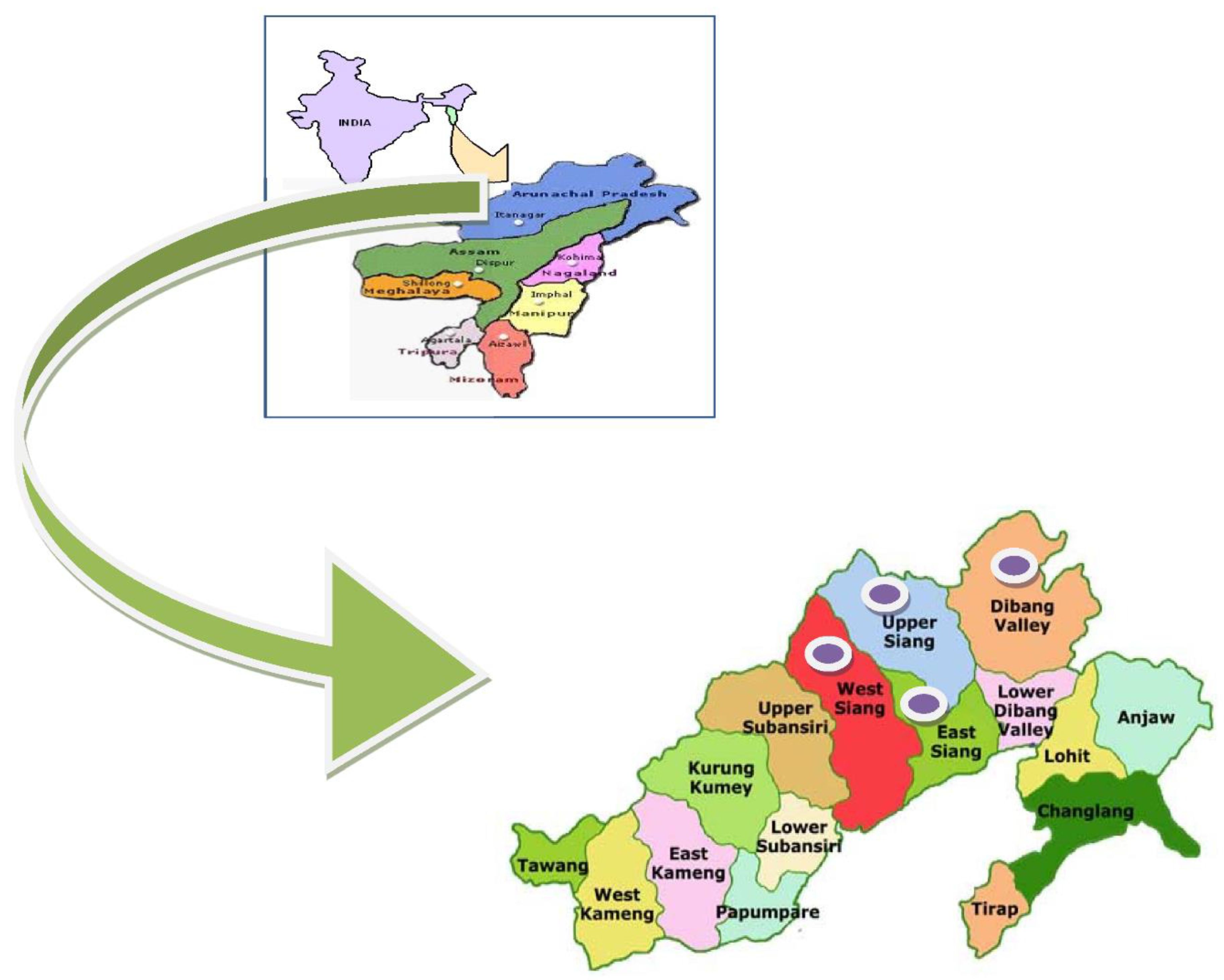
Publisher’s Note: MDPI stays neutral with regard to jurisdictional claims in published maps and institutional affiliations. |
© 2022 by the authors. Licensee MDPI, Basel, Switzerland. This article is an open access article distributed under the terms and conditions of the Creative Commons Attribution (CC BY) license (https://creativecommons.org/licenses/by/4.0/).