A Review on Rain Signal Attenuation Modeling, Analysis and Validation Techniques: Advances, Challenges and Future Direction

 ,
,  , , , ,
  , ,
, ,  , ,
, ,
Abstract
1. Introduction
- ▪
- An extensive, systematic review of rain attenuation models for the past 30 years (1990–2022) is provided.
- ▪
- A panoramic view of rain attenuation models and an exhaustive review of studies that have utilized these models is presented, including a taxonomy that followed the work of [47].
- ▪
- A comprehensive analysis of the total and specific attenuation based on various atmospheric conditions and other impairments, including the radome, is discussed.
- ▪
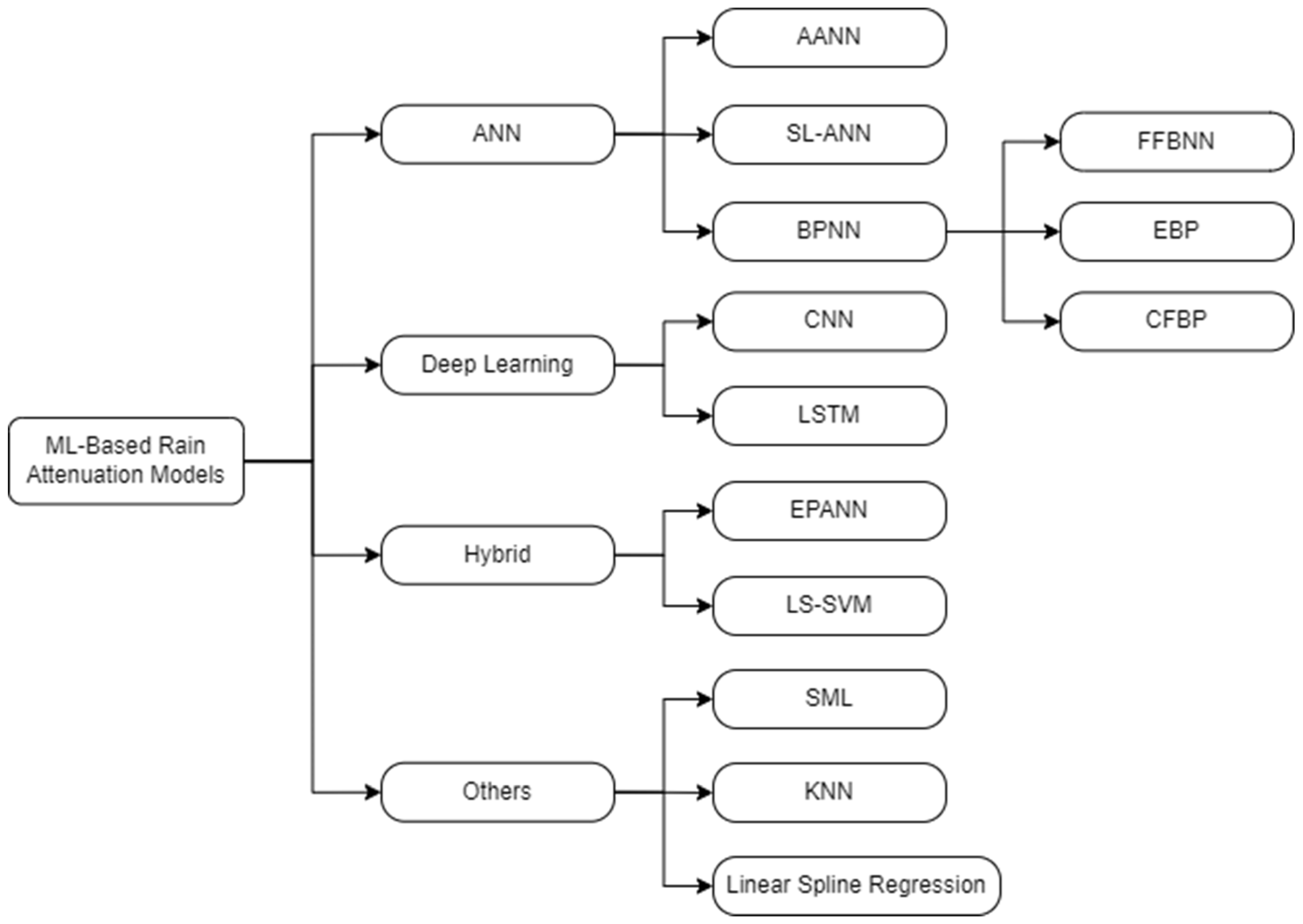
- An exhaustive review of rain attenuation prediction using machine learning models is presented, including a proposed taxonomy of these models.
- ▪
- An in-depth analysis and review of fade mitigation techniques is presented.
- ▪
- Critical open research issues and future research directions are identified for rain attenuation and elaborated.
2. Review of Previous Rain Attenuation Models
3. Background on Rain Attenuation
3.1. Theory of Rain Attenuation
3.2. Rain Attenuation Factors
3.2.1. Path Length
3.2.2. Frequency and Polarization
3.3. Different Sources and Procedures of Rain Rate Data Collection
3.3.1. Rain Data from Databases
3.3.2. Synthetic and Data-Logged Method of Rain Rate Estimation
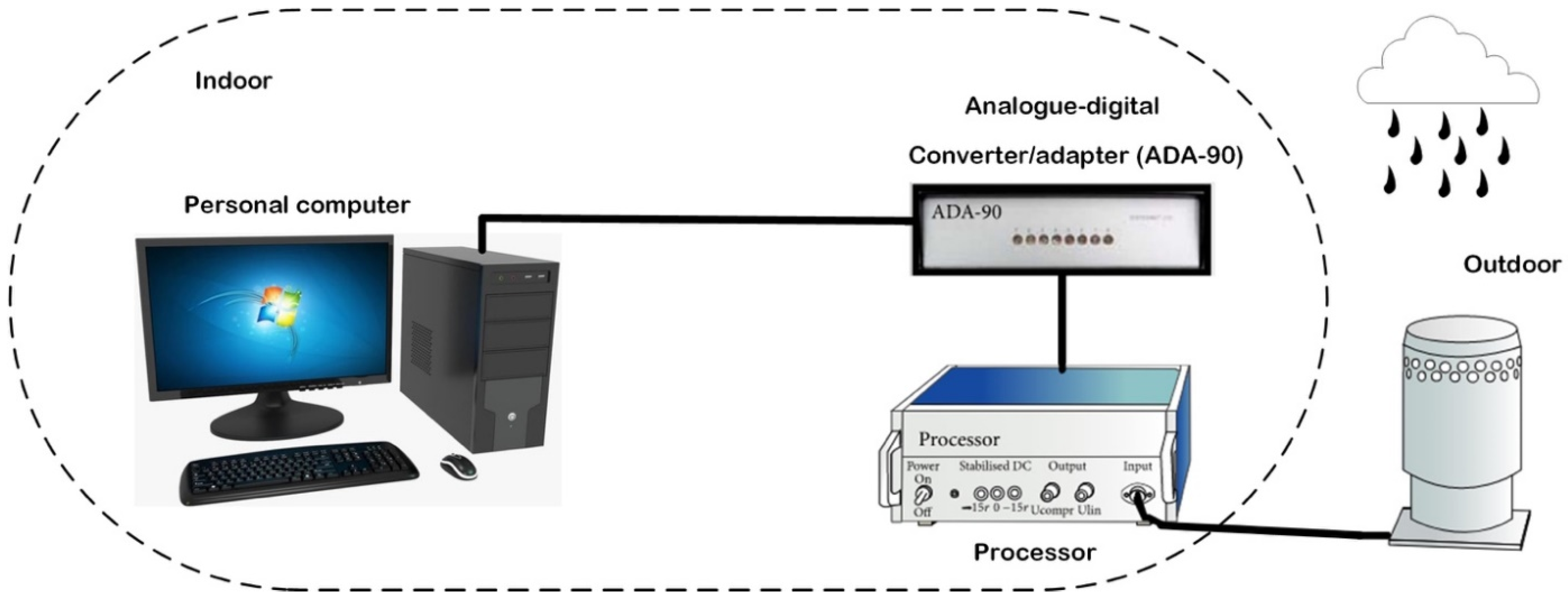
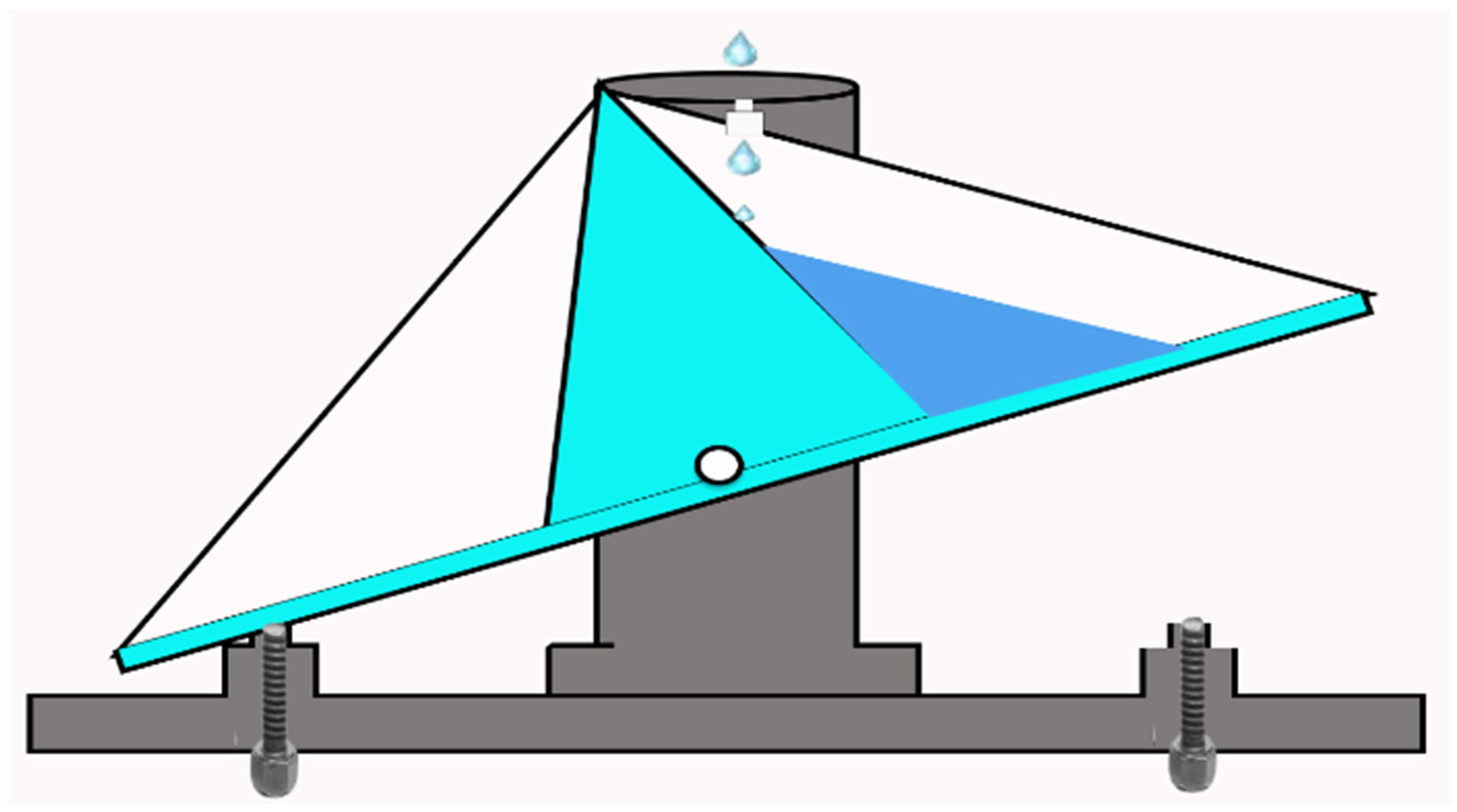
3.3.3. Experimental Setup
3.3.4. Spatial Interpolation Method for Rain Rate Prediction
3.4. Survey across Regions
4. Rain Attenuation Models
4.1. Empirical Models
4.1.1. Garcia Model
4.1.2. Crane Model
4.1.3. Mello Model
4.1.4. Moupfouma Model
4.1.5. Peric Model
4.1.6. Abdulrahman Model
4.1.7. Da Silva Model
4.1.8. Budalal Model

| Ref. | Objective of Research | Methodology Adopted | Method of Validation | Result Obtained | Year |
|---|---|---|---|---|---|
| [43] | To investigate and modify the ITU-R P.530-17 rain attenuation prediction model for terrestrial line-of-sight at short-distance for 26 and 38 GHz at mm-wave frequencies in Malaysia. | Two links operating at 26 and 38 GHz were used to collect weather data employing a Casella rain gauge for 1 year with a 1-min integration time and path length of 300 m. | The study validated the proposed model by employing two links operating at 25 GHz with a path length of 223 m in Japan and 75 GHz with a path length of 100 m in Korea. | The results reveal that all estimations are close to the suggested prediction model. | 2020 |
| [2] | To compare five different prediction models to find the optimal rain attenuation model for 5G in Malaysia. | The research utilized a 1-year precipitation data collected from a tipping bucket rain gauge over a link of 0.2 km path length operating at 6 and 28 GHz. | The rain attenuation was calculated from the product of the specific attenuation and the path length at a rain rate of 0.01% as shown below: | Results revealed that the modified Mello model estimated a lower value for the attenuation for low and high operating frequencies. | 2020 |
| [20] | To investigate the effect of rain on short-range fixed links, that is, building-to-building transmission. | Data utilized for this research were obtained using a PWS100 high-performance disdrometer at 25.84 and 77.52 GHz. | The ITU-R and DSD models were employed to predict the attenuation due to rain expressed mathematically as: | The results showed that the ITU-R model overestimates the attenuation for lower rain rates, whereas for higher rain rates it estimates lower attenuation than the DSD model. | 2019 |
| [21] | To investigate the effect of precipitation and wet antennas on millimeter-wave transmission links operating at 28 GHz and 38 GHz Line of Sight (LOS). | The study used a 700 m path length millimeter wave link operating at 28 and 38 GHz in central Beijing. A disdrometer and rain gauge was employed to measure rainfall and the received signal level was gathered every 15 s. | A power law equation was used to calculate the expected signal attenuation (theoretical) and then compared with the measured signal attenuation (practical): | Results showed that the measured signal attenuation was 1–1.5 dB greater than expected for 28 GHz, 1.6–2.5 dB greater than expected for 38 GHz due to the wet antenna, and a signal loss of 4.2 dB was recorded over the 700 m link. | 2019 |
| [62] | To investigate the effect of rain using real-world observations on mm-wave propagation at 26 GHz frequency. | The study used a microwave 5G radio link technology with a 1.3 km path length to collect measurements logged daily. Then, every year, MATLAB was utilized to process and analyze data. | Two ITU-R models—P.530-16 and P.838-3—were employed to measure the effect of rain on the propagation of electromagnetic signals. | Results showed that the specific attenuation at 0.01% was 26.2 dB/km at 120 mm/hr. The rain rate and the estimated rain attenuation across 1.3 km was 34 dB. | 2018 |
| [109] | Improve rain attenuation estimates for 5G wireless networks operating in heavy rain zones at 28 GHz and 38 GHz. | The study used 3-year raindrop size distribution data gathered in Kuala Lumpur, Malaysia, utilizing a “Joss-type” RD69 disdrometer, which comprised 100,512 rainy data with a 1-min integration time. | Gamma and normalized models were used to evaluate the performance and can respectively be expressed mathematically as: | The results demonstrated that the locally determined power laws appear to be the most accurate link between specific attenuation and rainfall intensity. | 2017 |
| [94] | To compare six alternative models to find the best rain attenuation model for higher microwave bands in Icheon, South Korea. | The study used 3-year rainfall data gathered via line-of-sight terrestrial links at 38 and 75 GHz, with path lengths of 3.2 and 0.1 km, respectively, and an average sampling rate of 1 min. | The relative error margin, , was employed to evaluate the models and can be expressed mathematically as: | The analytical results showed that the ITU-R P. 530-16 model predicted accurately for both 38 and 75 GHz, whereas the Abdulrahman model predicted accurately for just 38 GHz. | 2017 |
| [19] | To investigate the impact of rain on short-range radio networks operating at the 35 GHz mmWave frequency. | The measurement was experimentally obtained from a 35 GHz radio link with a path length of 230 m to measure rain-specific attenuation and rain rate distribution. | Experiments of rain attenuation at 103 GHz with a path length of 390 m at different rainfall rates were conducted to validate the rain rate distribution. | Results after comparison showed that Wellbul distribution for raindrops is following the experiments. | 2006 |
4.2. Statistical Models
4.2.1. ITU-R Model
4.2.2. Singh Model
4.3. Fade-Slope Model
4.3.1. Andrade Model
4.3.2. Chebil Model
4.4. Physical Models
4.4.1. Crane Two-Component (T-C) Model
4.4.2. Ghiani Model
4.4.3. Capsoni Model
4.5. Optimization-Based Models
4.5.1. Pinto Model
4.5.2. Livieratos Model
4.5.3. Develi Model
5. Total Attenuation
5.1. Propagation through Cloud
5.2. Propagation through Rain
5.3. Propagation through Atmospheric Gases
5.4. Propagation through Radome
5.5. Total Propagation Attenuation Loss
5.6. Review of Total Attenuation Models
6. Specific Attenuation
6.1. Specific Attenuation Model Due to Rainfall
6.2. Specific Attenuation Model Due to Atmospheric Gases
6.3. Specific Attenuation Due to Clouds
6.4. Review of Total Attenuation Models
7. Review of Different Methods of Model Validation
8. Machine Learning-Based Rain Attenuation Prediction Models
Aerial Communication
9. Fade Mitigation Techniques for 5G
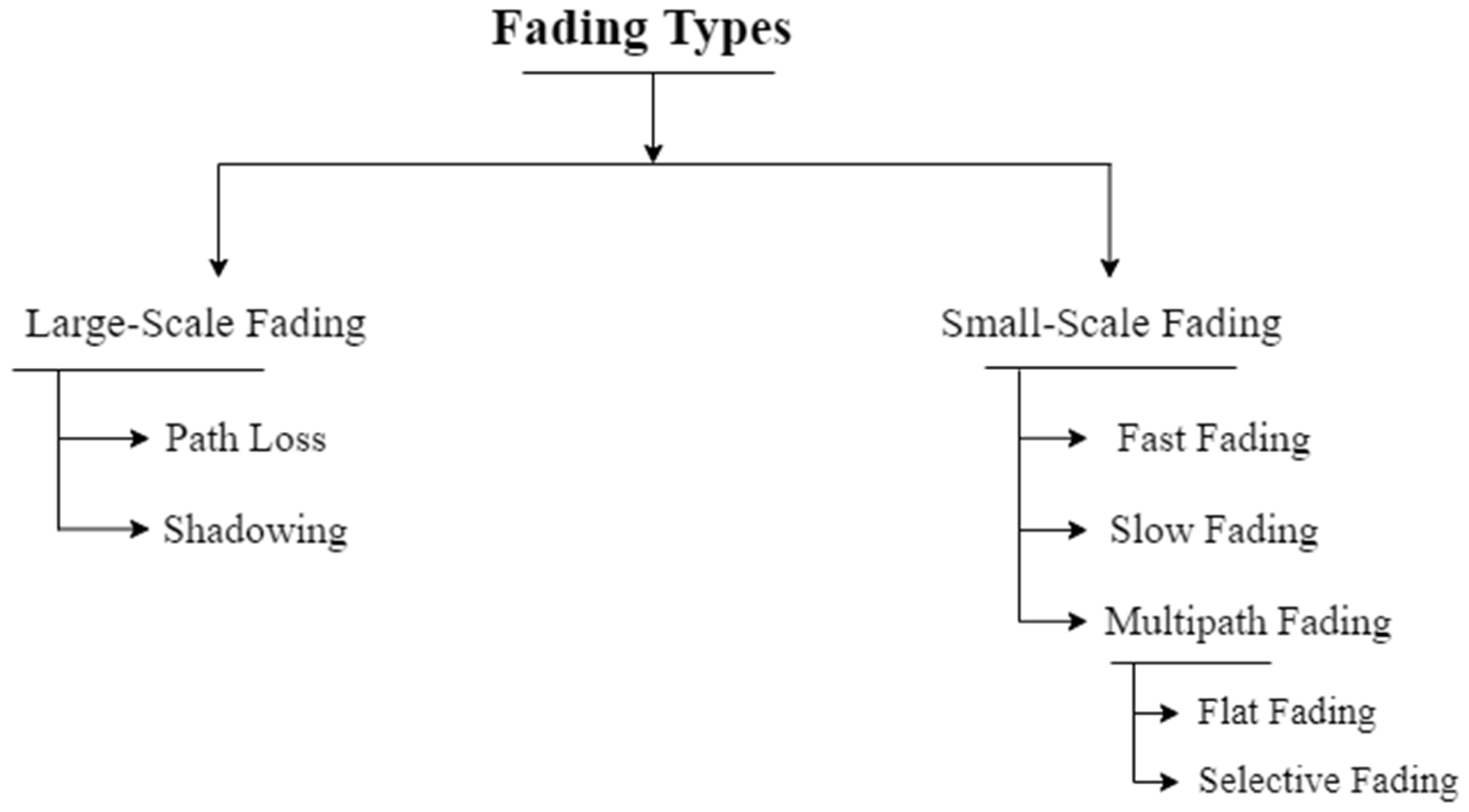
9.1. Types of Fading
9.1.1. Large-Scale Fading
- A.
- Path Loss
- B.
- Shadowing
9.1.2. Small-Scale Fading
- Multipath propagation
- 2.
- Speed of the mobile
- 3.
- Speed of surrounding objects
- 4.
- Transmission bandwidth of the signal
- A.
- Frequency selective fading: The signal is transmitted and received via multiple propagation paths, each with relative delay and amplitude variation. Multipath propagation occurs when different regions of the transmitted signal spectrum are attenuated differentially, resulting in frequency selective fading. The channel spectral response is not flat in this case, but exhibits dip or fade in response to reflections canceling particular frequencies at the receiver.
- B.
- Frequency non-selective fading: Frequency non-selective fading, also known as flat fading, occurs when all signal component frequencies experience nearly the same amount of fading. Such fading occurs when the transmitted signal’s bandwidth is less than the channel’s coherence bandwidth. If the symbol period of the signal is greater than the RMS delay spread of the channel, then the fading is flat.
- C.
- Slow fading: Slow fading can occur as a result of occurrences such as shadowing, which occurs when a significant object, for example, a mountain/hill or a billboard, obstructs the path of the signal between the source and destination. It occurs over time and alters the received signal mean value. It is mostly concerned with moving away from the source and observing the estimated decrease in the intensity of the signal.
- D.
- Fast fading: In this case, the signal suffers from frequency dispersion due to Doppler spreading, which causes distortion. Fast fading is based on the speed of the mobile and the bandwidth of the transmitted signal. Due to the rapid changes in the channel, which is more than the signal period, the channel alters in one period.
9.2. Power Control Technique (PCT)
9.3. Adaptive Waveform
9.4. Diversity Reception Techniques
9.5. Frequency Variation Correction Factor
9.6. Mitigation Techniques at Layer 2
9.6.1. Automatic Repeat Request (ARQ)
9.6.2. Time Diversity
9.7. Weakness of ITU-R Model for Rain Attenuation Research for 5G Networks and Beyond
10. Future Research Directions
10.1. Application of Machine Learning Techniques
- More novel AI-based models that can predict and particularly mitigate rain attenuation for the 5G network and beyond should be developed that are not solely based on temporal rain data.
- An efficient and simple AI-based path length reduction model should be developed which can be used to determine the most appropriate path correction factor.
- A novel and robust AI-based model should be proposed that can serve as a benchmark for the evaluation of other newly developed AI-based models at all frequency and rain rate ranges.
10.2. Regular Accessibility to Rain Data
10.3. Rain Attenuation Research for 5G and beyond UAV Communication Network
11. Conclusions
Author Contributions
Funding
Institutional Review Board Statement
Informed Consent Statement
Data Availability Statement
Acknowledgments
Conflicts of Interest
Abbreviations
| AC | Adaptive Coding |
| ACK | Acknowledgement |
| ACM | Adaptive Coding and Modulation |
| AM | Adaptive Modulation |
| ARQ | Automatic Repeat Request |
| ARS | Average Raindrop Size |
| BER | Bit Error Rate |
| BPNN | Back-Propagation Neural Network |
| CCDF | Complementary Cumulative Distribution Function |
| CDF | Cumulative Distribution Function |
| CI | Close-In |
| CMN | Commercial Microwave Network |
| CRAN | Centralized Radio Access Network |
| CRC | Cyclic Redundancy Check |
| CV | Convective |
| DBSG3 | Databank Study Group 3 |
| DEA | Differential Evolution Approach |
| DLPC | Downlink Power Control |
| DRR | Data Rate Reduction |
| DSD | Raindrop Size Distribution |
| DVD | Dimensional Video Disdrometer |
| EEPC | End-to-End Power Control |
| EIRP | Effective Isotropic Radiated Power |
| FD | Frequency Diversity |
| FEC | Forward Error Correction |
| FMT | Fade Mitigation Technique |
| GP | Gaussian Process |
| GPCC | Global Precipitation Climatology Centre |
| GRSME | Gaussian Root Mean Square Error |
| ITU | International Telecommunication Union |
| IDW | Inverse Distance Weighting |
| JW | Joss Waldvögel |
| LMDS | Local Multipoint Distributed Service |
| LOS | Line of Sight |
| mmWave | Millimeter-Wave |
| MPM | Millimeter-Wave Propagation Model |
| NACK | Negative Acknowledgement |
| NASA | National Aeronautics and Space Administration |
| NCC | Nigeria Communications Commission |
| NLOS | Non-Line of Sight |
| NOAA | National Oceanic and Atmospheric Administration |
| OBBS | Onboard Beam Shaping |
| PCT | Power Control Technique |
| PL | Path Length |
| PRRG | Point Radio Refractive Gradient |
| QAM | Quadrature Amplitude Modulation |
| QNMRN | Quasi-Newton Multiple Regression |
| RMS | Root Mean Square |
| RMSE | Root Mean Square Error |
| SatD | Satellite Diversity |
| SC-RSME | Spread-Corrected Root Square Mean Error |
| SD | Site Diversity |
| SL-ANN | Single-Layer Artificial Neural Network |
| SML | Supervised Machine Learning |
| SST | Synthetic Storm Technique |
| ST | Stratiform |
| TRMM | Tropical Rainfall Measuring Mission |
| ULPC | Uplink Power Control |
| Symbols | |
| and | Functions of frequency |
| Rain attenuation | |
| Average rain rate | |
| Attenuation due to cloud | |
| Losses due to path | |
| Effective aperture area | |
| Total attenuation due to water vapor and oxygen | |
| Attenuation loss due to non-line of sight | |
| Attenuation due to dry air (oxygen) | |
| Rain attenuation exceeded at p% of the time | |
| Attenuation due to radome | |
| Losses due to rain | |
| Attenuation due to water vapor | |
| Cn | Interpolation constant |
| Cell diameter | |
| Physical thickness of radome | |
| Physical thickness of water layer | |
| Rain drop size | |
| Mean error | |
| Electron energy of the molecule | |
| Vibrational energy | |
| Rotational energy | |
| Expected count in a cell | |
| Energy of the molecules | |
| Translational motion energy | |
| Frequency | |
| Oxygen or water vapor line shape factor | |
| Principal relaxation frequency | |
| Secondary relaxation frequency | |
| Fade-slope | |
| Gravitational acceleration | |
| Receiving antenna gain | |
| Transmitting antenna gain | |
| Equivalent height for dry air | |
| Equivalent height for water vapor | |
| Variation correction factor | |
| Proposed increment factor | |
| Imaginary unit | |
| Path length of the cell | |
| Path length of the debris | |
| Equivalent propagation path length | |
| Path length | |
| Actual path length | |
| Liquid water content | |
| Constant of proportionality | |
| Cloud liquid water-specific attenuation coefficient | |
| Free-space wavenumber | |
| Amount of information in the measurement set index | |
| Mie’s Coefficient | |
| Generation index | |
| Number of rain gauges | |
| Distribution for rain drop size | |
| Imaginary part of the frequency-dependent complex refractivity for oxygen | |
| Imaginary part of the frequency-dependent complex refractivity for water vapor | |
| Dry continuum due to pressure-induced nitrogen absorption and the Debye spectrum | |
| Observed count in a cell | |
| Pressure | |
| Total barometric pressure | |
| Cumulative probability of attenuation | |
| Probability of a cell | |
| Probability of debris | |
| Power density | |
| Mutation variable | |
| Outage percentage of an exact fade margin with no variation | |
| Outage percentage with the same fade margin in the variation frequency | |
| Probability that specific attenuation is exceeded | |
| Path reduction factor | |
| Average path reduction factor | |
| Rain rate for the cell | |
| Rain rate for the debris | |
| Effective rain rate for terrestrial links | |
| Rainfall | |
| Weighted sum of the rain gauges values | |
| Measured rain rate | |
| Mean measured rain rate | |
| Rain rate exceeded at %p of the time | |
| Predicted rain rate | |
| Mean predicted rain rate | |
| Peak intensity | |
| Rain rate | |
| Strength of the th oxygen or water vapor line | |
| Temperature | |
| Total attenuation | |
| Prediction time | |
| Thickness of water layer | |
| Percentage of time | |
| Length scale for the cell | |
| Length scale for the debris | |
| Weight of each rain gauge value | |
| Photon frequency | |
| Greek Letters | |
| Width parameter for the Debye spectrum | |
| Radius of the radome | |
| Complex dielectric permittivity constant | |
| Relative error margin | |
| Goodness-of-fit function | |
| Droplet’s complex permittivity | |
| Normal distribution function | |
| Elevation angle | |
| Standard deviation of the natural logarithm of the rain rate | |
| Fade-slope standard deviation | |
| Wavelength | |
| Conditional distribution of the fade-slope | |
| Rank correlation | |
| Distance from the center | |
| Conditional average radius | |
| Electrical thickness of water layer | |
| Electrical thickness of radome | |
| Kinematic viscosity of water | |
| Pearson goodness fit function | |
| Specific rain attenuation | |
| Average specific attenuation | |
| Cloud-specific attenuation coefficient | |
| Specific rain attenuation for vertical and horizontal polarization | |
| Specific attenuation due to oxygen | |
| Specific attenuation due to water vapor |
References
- Popoola, S.I.; Faruk, N.; Atayero, A.A.; Oshin, M.A.; Bello, O.W.; Mutafungwa, E. Radio Access Technologies for Sustainable Deployment of 5G Networks in Emerging Markets. Int. J. Appl. Eng. Res. 2017, 12, 14154–14172. [Google Scholar]
- Ulaganathen, K.; Rahman, T.B.A.; Islam, M.R.; Abdullah, K. Rain attenuation for 5g network in tropical region (Malaysia) for terrestrial link. Prog. Electromagn. Res. Lett. 2020, 90, 99–104. [Google Scholar] [CrossRef]
- Alabi, C.A.; Tooki, O.O.; Imoize, A.L.; Faruk, N. Application of UAV-Assisted 5G Communication: A Case Study of the Nigerian Environment. In Proceedings of the 2022 IEEE Nigeria 4th International Conference on Disruptive Technologies for Sustainable Development (NIGERCON), Lagos, Nigeria, 5–7 April 2022; pp. 1–5. [Google Scholar]
- Farayo, H.H.; Oloyede, A.A.; Faruk, N.; Garba, S.; Idris, A.; Hassan, H.A. Blended Learning Environments: An Exploratory Study of e-Learning Implementation in Nigeria Tertiary Institutions Due to COVID-19 Pandemic. In Proceedings of the 2022 IEEE Nigeria 4th International Conference on Disruptive Technologies for Sustainable Development (NIGERCON), Lagos, Nigeria, 5–7 April 2022; pp. 1–4. [Google Scholar]
- Rahman, M.M.; Khatun, F.; Sami, S.I.; Uzzaman, A. The Evolving Roles and Impacts of 5G Enabled Technologies in Healthcare: The World Epidemic COVID-19 Issues; Elsevier: Amsterdam, The Netherlands, 2022; Volume 14, p. 14. [Google Scholar]
- Oloyede, A.A.; Faruk, N.; Raji, W.O. COVID-19 lockdown and remote attendance teaching in developing countries: A review of some online pedagogical resources. Afr. J. Sci. Technol. Innov. Dev. 2022, 14, 678–696. [Google Scholar] [CrossRef]
- Fahm, A.O.; Azeez, A.L.; Imam-Fulani, Y.O.; Mejabi, O.V.; Faruk, N.; Abdulrahaman, M.D.; Lukman, A.O.; Oloyede, A.A.; Surajudeen-Bakinde, I.T. ICT enabled Almajiri education in Nigeria: Challenges and prospects. Educ. Inf. Technol. 2022, 27, 3135–3169. [Google Scholar] [CrossRef] [PubMed]
- Zeeshan, K.; Hämäläinen, T.; Neittaanmäki, P. Internet of Things for Sustainable Smart Education: An Overview. Sustainability 2022, 14, 4293. [Google Scholar] [CrossRef]
- Tang, Y.; Dananjayan, S.; Hou, C.; Guo, Q.; Luo, S.; He, Y. A Survey on the 5G Network and Its Impact on Agriculture: Challenges and Opportunities. Comput. Electron. Agric. 2021, 180, 105895. [Google Scholar] [CrossRef]
- Said Mohamed, E.; Belal, A.A.; Kotb Abd-Elmabod, S.; El-Shirbeny, M.A.; Gad, A.; Zahran, M.B. Smart Farming for Improving Agricultural Management. Egypt. J. Remote Sens. Sp. Sci. 2021, 24, 971–981. [Google Scholar] [CrossRef]
- Adediran, Y.; Opadiji, J.F.; Faruk, N.; Bello, O. On Issues and Challenges of Rural Telecommunications Access in Nigeria. Afr. J. Educ. Sci. Technol. 2016, 3, 16–26. [Google Scholar]
- Bello, O.W.; Opadiji, J.F.; Faruk, N.; Adediran, Y.A. Opportunities for Universal Telecommunication Access in Rural Communities: A Case Study of 15 Rural Villages in Nigeria’s Kwara State. Afr. J. Inf. Commun. 2016, 2016, 139–163. [Google Scholar] [CrossRef][Green Version]
- Ekpe, U.M.; Umoh, V.B.; Agbeb, N.S. Eliminating the Digital Divide in Nigeria: Policy Direction and 5G Deployment Methodology. In Proceedings of the 2021 1st International Conference on Multidisciplinary Engineering and Applied Science (ICMEAS), Abuja, Nigeria, 15–16 July 2021. [Google Scholar] [CrossRef]
- Faruk, N.; Bello, O.; Sowande, O.; Onidare, S.; Muhammad, M.; Ayeni, A. Large Scale Spectrum Survey in Rural and Urban Environments within the 50 MHz–6 GHz Bands. Measurement 2016, 91, 228–238. [Google Scholar] [CrossRef]
- Faruk, N.; Imam-Fulani, Y.; Sikiru, I.A.; Popoola, S.I.; Oloyede, A.A.; Olawoyin, L.A.; Surajudeen-Bakinde, N.T.; Sowande, A.O. Spatial variability analysis of duty cycle in GSM band. In Proceedings of the 2017 IEEE 3rd International Conference on Electro-Technology for National Development (NIGERCON), Owerri, Nigeria, 7–10 November 2017; Volume 3. [Google Scholar]
- Faruk, N.; Ramon, A.Q.; Popoola, S.I.; Oloyede, A.A.; Olawoyin, L.A.; Surajudeen-Bakinde, N.T.; Abdulkarim, A.; Adediran, Y.A. Spectrum Survey and Coexistence Studies in the TV, WLAN, ISM and Radar Bands for Wireless Broadband Services. In Proceedings of the CEUR Workshop Proceedings, Luxembourg, 27–29 November 2019; Volume 2544. [Google Scholar]
- Sowande, O.A.; Idachaba, F.E.; Ekpo, S.C.; Faruk, N.; Karimian, N.; Ogunmodimu, O.; Oloyede, A.A.; Olawoyin, L.A.; Abdulkareem, S.A. Design of a 3.8-GHz Microstrip Patch Antenna for Sub-6 GHz 5G Applications. In Proceedings of the 2022 IEEE Nigeria 4th International Conference on Disruptive Technologies for Sustainable Development (NIGERCON), Lagos, Nigeria, 5–7 April 2022; pp. 1–5. [Google Scholar]
- Sowande, O.; Idachaba, F.; Ekpo, S.; Faruk, N.; Uko, M.; Ogunmodimu, O. Sub-6 GHz 5G Spectrum for Satellite-Cellular Convergence Broadband Internet Access in Nigeria. Int. Rev. Aerosp. Eng. 2022, 15, 2. [Google Scholar] [CrossRef]
- Zhao, Q.; Jin, L. Rain attenuation in millimeter wave ranges. In Proceedings of the 2006 7th International Symposium on Antennas, Propagation & EM Theory, Guilin, China, 26–29 October 2006. [Google Scholar]
- Huang, J.; Cao, Y.; Raimundo, X.; Cheema, A.; Salous, S. Rain Statistics Investigation and Rain Attenuation Modeling for Millimeter Wave Short-Range Fixed Links. IEEE Access 2019, 7, 156110–156120. [Google Scholar] [CrossRef]
- Han, C.; Bi, Y.; Duan, S.; Lu, G. Rain Rate Retrieval Test from 25-GHz, 28-GHz, and 38-GHz Millimeter-Wave Link Measurement in Beijing. IEEE J. Sel. Top. Appl. Earth Obs. Remote Sens. 2019, 12, 2835–2847. [Google Scholar] [CrossRef]
- Zahid, O.; Huang, J.; Salous, S. Long Term Rain Attenuation Measurements at Millimeter Wave Bands for Direct and Side Short-Range Fixed Links. In Proceedings of the 2020 XXXIIIrd General Assembly and Scientific Symposium of the International Union of Radio Science, Rome, Italy, 29 August–5 September 2020; pp. 12–15. [Google Scholar] [CrossRef]
- Niu, Y.; Li, Y.; Jin, D.; Su, L.; Vasilakos, A.V. A survey of millimeter wave communications (mmWave) for 5G: Opportunities and challenges. Wirel. Netw. 2015, 21, 2657–2676. [Google Scholar] [CrossRef]
- Faruk, N.; Ayeni, A.A.; Adediran, Y.A. On the study of empirical path loss models for accurate prediction of TV signal for secondary users. Prog. Electromagn. Res. B 2013, 49, 155–176. [Google Scholar] [CrossRef]
- Faruk, N.; Popoola, S.I.; Surajudeen-Bakinde, N.T.; Oloyede, A.A.; Abdulkarim, A.; Olawoyin, L.A.; Ali, M.; Calafate, C.T.; Atayero, A.A. Path loss predictions in the VHF and UHF bands within urban environments: Experimental investigation of empirical, heuristics and geospatial models. IEEE Access 2019, 7, 7293–77307. [Google Scholar] [CrossRef]
- Faruk, N.; Abdulrasheed, I.Y.; Surajudeen-Bakinde, N.T.; Adetiba, E.; Oloyede, A.A.; Abdulkarim, A.; Sowande, O.; Ifijeh, A.H.; Atayero, A.A. Large-scale radio propagation path loss measurements and predictions in the VHF and UHF bands. Heliyon 2021, 7, e07298. [Google Scholar] [CrossRef]
- Chittimoju, G.; Yalavarthi, U.D. A Comprehensive Review on Millimeter Waves Applications and Antennas. J. Phys. Conf. Ser. 2021, 1804, 12205. [Google Scholar] [CrossRef]
- Adebowale, Q.R.; Faruk, N.; Adewole, K.S.; Abdulkarim, A.; Olawoyin, L.A.; Oloyede, A.A.; Chiroma, H.; Usman, A.D.; Calafate, C.T. Application of Computational Intelligence Algorithms in Radio Propagation: A Systematic Review and Metadata Analysis. Mob. Inf. Syst. 2021, 2021, 6619364. [Google Scholar] [CrossRef]
- Adebowale, Q.R.; Faruk, N.; Adewole, K.S.; Abdulkarim, A.; Oloyede, A.A.; Chiroma, H.; Sowande, O.A.; Usman, A.D.; Olayinka, I.F.Y.; Kassim, A.Y.; et al. Effect of Training Algorithms and Network Architecture on the Performance of Multi-Band ANN-Based Path Loss Prediction Model. In Proceedings of the 2022 IEEE Nigeria 4th International Conference on Disruptive Technologies for Sustainable Development (NIGERCON), Lagos, Nigeria, 5–7 April 2022; pp. 1–5. [Google Scholar]
- Isabona, J.; Kehinde, R.; Imoize, A.L.; Ojo, S.; Faruk, N. Large-scale Signal Attenuation and Shadow Fading Measurement and Modelling for Efficient Wireless Network Design and Management. In Proceedings of the 2022 IEEE Nigeria 4th International Conference on Disruptive Technologies for Sustainable Development (NIGERCON), Lagos, Nigeria, 5–7 April 2022; pp. 1–5. [Google Scholar]
- Ojo, J.S.; Ajewole, M.O.; Sarkar, S.K. Rain rate and rain attenuation prediction for satellite communication in Ku and Ka bands over Nigeria. Prog. Electromagn. Res. B 2008, 5, 207–223. [Google Scholar] [CrossRef]
- Seah, S.J.; Jong, S.L.; Lam, H.Y. Atmospheric impairments and mitigation techniques for high-frequency earth-space communication system in heavy rain region: A brief review. Int. J. Integr. Eng. 2019, 11, 159–168. [Google Scholar] [CrossRef]
- Isabona, J.; Imoize, A.L.; Rawat, P.; Jamal, S.S.; Pant, B.; Ojo, S.; Hinga, S.K. Realistic Prognostic Modeling of Specific Attenuation due to Rain at Microwave Frequency for Tropical Climate Region. Wirel. Commun. Mob. Comput. 2022, 2022, 8209256. [Google Scholar] [CrossRef]
- Isabona, J.; Imoize, A.L.; Ojo, S.; Lee, C.C.; Li, C.T. Atmospheric Propagation Modelling for Terrestrial Radio Frequency Communication Links in a Tropical Wet and Dry Savanna Climate. Information 2022, 13, 141. [Google Scholar] [CrossRef]
- Mello, L.d.; Pontes, M.; Fagundes, I.; Andrade, F.; Almeida, M. Rain attenuation in converging terrestrial links: Measurements and modeling. In Proceedings of the 8th European Conference on Antennas and Propagation, EuCAP 2014, The Hague, The Netherlands, 6–11 April 2014; pp. 3504–3505. [Google Scholar] [CrossRef]
- Livieratos, S.; Ioannidis, Z.; Savaidis, S.; Mitilineos, S.; Stathopoulos, N. A new prediction method of rain attenuation along millimeter wave links based on a bivariate model for the effective path length and weibull distribution. Prog. Electromagn. Res. C 2019, 97, 29–41. [Google Scholar] [CrossRef]
- Crane, R.K. Prediction of Attenuation by Rain. IEEE Trans. Commun. 1980, 28, 1717–1733. [Google Scholar] [CrossRef]
- Develi, I. Differential evolution based prediction of rain attenuation over a LOS terrestrial link situated in the southern United Kingdom. Radio Sci. 2007, 42, 1–6. [Google Scholar] [CrossRef]
- Moupfouma, F. Electromagnetic waves attenuation due to rain: A prediction model for terrestrial or L.O.S SHF and EHF radio communication links. J. Infrared Millim. Terahertz Waves 2009, 30, 622–632. [Google Scholar] [CrossRef]
- Mello, L.D.; Pontes, M.S. Unified method for the prediction of rain attenuation in satellite and terrestrial links. J. Microw. Optoelectron. Electromagn. Appl. 2012, 11, 1–14. [Google Scholar] [CrossRef]
- Ghiani, R.; Luini, L.; Fanti, A. A physically based rain attenuation model for terrestrial links. Radio Sci. 2017, 52, 972–980. [Google Scholar] [CrossRef]
- Livieratos, S.N.; Cottis, P.G. Rain attenuation along terrestrial millimeter wave links: A new prediction method based on supervised machine learning. IEEE Access 2019, 7, 138745–138756. [Google Scholar] [CrossRef]
- Budalal, A.A.H.; Islam, M.R.; Abdullah, K.; Rahman, T.A. Modification of Distance Factor in Rain Attenuation Prediction for Short-Range Millimeter-Wave Links. IEEE Antennas Wirel. Propag. Lett. 2020, 19, 1027–1031. [Google Scholar] [CrossRef]
- ITU-R. Recommendation ITU-R P.838-3: Specific Attenuation Model for Rain; International Telecommunication Union: Geneva, Switzerland, 2005; pp. 1–8. Available online: https://www.itu.int/dms_pubrec/itu-r/rec/p/R-REC-P.838-3-200503-I!!PDF-E.pdf (accessed on 31 May 2022).
- ITU-R. Recommendation ITU-R P.618-13 Propagation Data and Prediction Methods Required for the Design of Earth-Space Telecommunication Systems P Series Radiowave Propagation. 2017, Volume 13. Available online: http://www.itu.int/ITU-R/go/patents/en (accessed on 31 May 2022).
- Samad, M.D.A.; Choi, D.Y. Learning-assisted rain attenuation prediction models. Appl. Sci. 2020, 10, 6017. [Google Scholar] [CrossRef]
- Samad, M.A.; Diba, F.D.; Choi, D.Y. A Survey of Rain Attenuation Prediction Models for Terrestrial Links—Current Research Challenges and State-of-the-Art. Sensors 2021, 21, 1207. [Google Scholar] [CrossRef] [PubMed]
- Emiliani, L.D.; Agudelo, J.; Gutierrez, E.; Restrepo, J.; Fradique-Mendez, C. Development of rain-attenuation and rain-rate maps for satellite system design in the Ku and Ka bands in Colombia. IEEE Antennas Propag. Mag. 2004, 46, 54–68. [Google Scholar] [CrossRef]
- Pontes, M.S.; Da Silva Mello, L.; De Souza, R.S.L.; Miranda, E.C.B. Review of Rain Attenuation Studies in Tropical and Equatorial Regions in Brazil. In Proceedings of the 2005 IEEE Thailand 5th International Conference on Information, Communications and Signal Processing, Bangkok, Thailand, 6–9 December 2005; pp. 1097–1101. [Google Scholar]
- Sen, R.; Singh, M.P. Effect of rain on millimeter—Wave propagation—A review. AIP Conf. Proc. 2007, 923, 45–76. [Google Scholar] [CrossRef]
- Bhattacharya, R.; Das, R.; Guha, R.; Barman, S.D.; Bhattacharya, A.B. Variability of millimetrewave rain attenuation and rain rate prediction: A survey. Indian J. Radio Sp. Phys. 2007, 36, 325–344. [Google Scholar]
- Emiliani, L.D.; Luini, L.; Capsoni, C. Analysis and parameterization of methodologies for the conversion of rain-rate cumulative distributions from various integration times to one minute. IEEE Antennas Propag. Mag. 2009, 51, 70–80. [Google Scholar] [CrossRef]
- Joshi, S. A review on rain attenuation of radio waves. Int. J. Eng. Innov. Res. 2012, 4, 59–64. Available online: http://ijeir.org/administrator/components/com_jresearch/files/publications/IJEIR-SUMIT (accessed on 2 August 2022).
- Ulaganathen, K.; Rahman, T.A.; Rahim, S.K.A.; Islam, R.M. Review of rain attenuation studies in tropical and equatorial regions in Malaysia: An overview. IEEE Antennas Propag. Mag. 2013, 55, 103–113. [Google Scholar] [CrossRef]
- Kotamraju, S.K.; Korada, C.S.K. Precipitation and other propagation impairments effects at microwave and millimeter wave bands: A mini survey. Acta Geophys. 2019, 67, 703–719. [Google Scholar] [CrossRef]
- Christofilakis, V.; Tatsis, G.; Chronopoulos, S.K.; Sakkas, A.; Skrivanos, A.G.; Peppas, K.P.; Nistazakis, H.E.; Baldoumas, G.; Kostarakis, P. Earth-to-earth microwave rain attenuation measurements: A survey on the recent literature. Symmetry 2020, 12, 1440. [Google Scholar] [CrossRef]
- Chakraborty, S.; Chakraborty, M.; Das, S. Experimental Studies of Slant-Path Rain Attenuation over Tropical and Equatorial Regions: A Brief Review. IEEE Antennas Propag. Mag. 2021, 63, 52–62. [Google Scholar] [CrossRef]
- Samad, M.A.; Ahmed, M.R.; Rashid, S.Z. An overview of rain attenuation research in Bangladesh. Indones. J. Electr. Eng. Comput. Sci. 2021, 23, 902–909. [Google Scholar] [CrossRef]
- Samad, M.A.; Choi, D.Y. Scaling of rain attenuation models: A survey. Appl. Sci. 2021, 11, 8360. [Google Scholar] [CrossRef]
- Samad, M.A.; Diba, F.D.; Choi, D.Y. A survey of rain fade models for earth–space telecommunication links—Taxonomy, methods, and comparative study. Remote Sens. 2021, 13, 1965. [Google Scholar] [CrossRef]
- Busari, H.O.; Fakolujo, O.A. Rain Attenuation Prediction Models in Microwave and Millimeter Bands for Satellite Communication System: A Review. FUOYE J. Eng. Technol. 2021, 6, 1. [Google Scholar] [CrossRef]
- Shayea, I.; Rahman, T.; Hadri Azmi, M.; Islam, M.R. Real Measurement Study for Rain Rate and Rain Attenuation Conducted Over 26 GHz Microwave 5G Link System in Malaysia. IEEE Access 2018, 26, 19044–19064. [Google Scholar] [CrossRef]
- Singh, H.; Kumar, V.; Saxena, K.; Boncho, B.; Prasad, R. Proposed Model for Radio Wave Attenuation due to Rain (RWAR). Wirel. Pers. Commun. 2020, 115, 791–807. [Google Scholar] [CrossRef]
- ITU. Study Group 3 Databanks—DBSG3. 2022, Volume 6. Available online: https://www.itu.int/en/ITU-R/study-groups/rsg3/Pages/dtbank-dbsg3.aspx (accessed on 18 August 2022).
- Lwas, A.K.; Islam, M.R.; Chebil, J.; Habaebi, M.H.; Ismail, A.F.; Zyoud, A.; Dao, H. Rain attenuation analysis using synthetic storm technique in Malaysia. IOP Conf. Ser. Mater. Sci. Eng. 2013, 53, 12045. [Google Scholar] [CrossRef]
- Giannetti, F.; Reggiannini, R.; Moretti, M.; Adirosi, E.; Baldini, L.; Facheris, L.; Antonini, A.; Melani, S.; Bacci, G.; Petrolino, A. Real-time rain rate evaluation via satellite downlink signal attenuation measurement. Sensors 2017, 17, 1864. [Google Scholar] [CrossRef]
- Pickering, B.S.; Neely, R.R.; Harrison, D. The Disdrometer Verification Network (DiVeN): A UK network of laser precipitation instruments. Atmos. Meas. Tech. 2019, 12, 5845–5861. [Google Scholar] [CrossRef]
- Lam, H.Y.; Din, J.; Jong, S.L. Statistical and physical descriptions of raindrop size distributions in equatorial Malaysia from disdrometer observations. Adv. Meteorol. 2015, 2015, 253730. [Google Scholar] [CrossRef]
- Ahuna, M.N.; Afullo, T.J.; Alonge, A.A. 30-second and one-minute rainfall rate modelling and conversion for millimetric wave propagation in South Africa. SAIEE Afr. Res. J. 2016, 107, 17–29. [Google Scholar] [CrossRef]
- Alhilali, M.; Din, J.; Schönhuber, M.; Lam, H.Y. Estimation of millimeter wave attenuation due to rain using 2D video distrometer data in Malaysia. Indones. J. Electr. Eng. Comput. Sci. 2017, 7, 164–169. [Google Scholar] [CrossRef]
- Luini, L.; Roveda, G.; Zaffaroni, M.; Costa, M.; Riva, C.G. The Impact of Rain on Short {E} -Band Radio Links for 5G Mobile Systems: Experimental Results and Prediction Models. IEEE Trans. Antennas Propag. 2020, 68, 3124–3134. [Google Scholar] [CrossRef]
- Ibekwe, E.C.; Igwe, K.C.; Eichie, J.O. Rain attenuation prediction for 5G communication links in Minna, Nigeria. J. Phys. Conf. Ser. 2021, 2034, 12028. [Google Scholar] [CrossRef]
- Erbakanov, L.; Staneva, L.; Vardeva, I. Using a long time constant integrator in rainfall intensity measuring via acoustic method. In Proceedings of the 2018 20th International Symposium on Electrical Apparatus and Technologies (SIELA), Bourgas, Bulgaria, 3–6 June 2018; pp. 1–4. [Google Scholar] [CrossRef]
- Sokol, Z.; Szturc, J.; Orellana-Alvear, J.; Popová, J.; Jurczyk, A.; Célleri, R. The role of weather radar in rainfall estimation and its application in meteorological and hydrological modelling—A review. Remote Sens. 2021, 13, 351. [Google Scholar] [CrossRef]
- Hong, Y.; Tang, G.; Ma, Y.; Huang, Q.; Han, Z.; Zeng, Z.; Yang, Y.; Wang, C.; Guo, X. Remote Sensing Precipitation: Sensors, Retrievals, Validations, and Applications. In Observation and Measurement of Ecohydrological Processes; Springer: Cham, Switzerland, 2019; pp. 107–128. [Google Scholar] [CrossRef]
- Mandeep, J.S.; Tanaka, K. Effect of atmospheric parameters on satellite link. Int. J. Infrared Millim. Waves 2007, 28, 789–795. [Google Scholar] [CrossRef]
- Pitas, K.; Fiser, O. On rainfall type classification to improve rain attenuation prediction. In Proceedings of the 2020 30th International Conference Radioelektronika (RADIOELEKTRONIKA), Bratislava, Slovakia, 15–16 April 2020; pp. 1–4. [Google Scholar] [CrossRef]
- Samat, F.; Singh, M.J.; Sali, A.; Zainal, N. A Comprehensive Review of the Site Diversity Technique in Tropical Region: Evaluation of Prediction Models Using Site Diversity Gain of Greece and India. IEEE Access 2021, 9, 105060–105071. [Google Scholar] [CrossRef]
- Luini, L.; Riva, C.; Capsoni, C. On the accuracy of simplified models for water vapor attenuation prediction at Ka band and Q band. In Proceedings of the 2019 URSI Asia-Pacific Radio Science Conference (AP-RASC), New Delhi, India, 9–15 March 2019; pp. 1–4. [Google Scholar] [CrossRef]
- Choi, Y.; Kim, S. Rain-Type Classification from Microwave Satellite Observations Using Deep Neural Network Segmentation. IEEE Geosci. Remote Sens. Lett. 2021, 18, 2137–2141. [Google Scholar] [CrossRef]
- Alonge, A.A.; Afullo, T.J. Rainfall rate modeling for various rainfall types in South Africa. In Proceedings of the IEEE Africon ’11, Victoria Falls, Zambia, 13–15 September 2011; Volume 11. [Google Scholar] [CrossRef]
- Owolawi, P.A. Rainfall rate probability density evaluation and mapping for the estimation of rain attenuation in South Africa and surrounding islands. Prog. Electromagn. Res. 2011, 112, 155–181. [Google Scholar] [CrossRef]
- Ibiyemi, T.S.; Ajewole, O.; Ojo, J.; Obiyemi, O. Rain rate and rain attenuation prediction with experimental rain attenuation efforts in South-Western Nigeria. In Proceedings of the 2012 20th Telecommunications Forum (TELFOR), Belgrade, Serbia, 20–22 November 2012. [Google Scholar] [CrossRef]
- Semire, F.A.; Mohd-Mokhtar, R.; Akanbi, I.A. Validation of New ITU-R Rain Attenuation Prediction Model over Malaysia Equatorial Region. Mapan J. Metrol. Soc. India 2019, 34, 71–77. [Google Scholar] [CrossRef]
- De, A.; Maitra, A. Radiometric Measurements of Atmospheric Attenuation Over a Tropical Location. Radio Sci. 2020, 55, 10. [Google Scholar] [CrossRef]
- Maitra, A.; Chakraborty, S. Cloud liquid water content and cloud attenuation studies with radiosonde data at a tropical location. J. Infrared Millim. Terahertz Waves 2009, 30, 367–373. [Google Scholar] [CrossRef]
- Das, S.; Maitra, A.; Shukla, A.K. Rain attenuation modeling in the 10-100 GHz frequency using drop size distributions for different climatic zones in tropical India. Prog. Electromagn. Res. B 2010, 25, 211–224. [Google Scholar] [CrossRef]
- Patra, T.; Mitra, S.K. Rain Attenuation Predicted Model for 5G Communication in Tropical Regions. Int. J. Eng. Adv. Technol. 2020, 9, 1151–1158. [Google Scholar] [CrossRef]
- Abdulrahman, A.Y.; Rahman, T.A.; Rahim, S.K.A.; Islam, M.R.U. A new rain attenuation conversion technique for tropical regions. Prog. Electromagn. Res. B 2010, 26, 53–67. [Google Scholar] [CrossRef]
- Seah, S.J.; Jong, S.L.; Lam, H.Y.; Din, J. Rain fade margin of terrestrial line-of-sight (LOS) links for 5G networks in Peninsular Malaysia. Int. J. Microw. Wirel. Technol. 2022, 14, 750–760. [Google Scholar] [CrossRef]
- Rashid, M.; Din, J. Effects of reduction factor on rain attenuation predictions over millimeter-wave links for 5g applications. Bull. Electr. Eng. Inform. 2020, 9, 1907–1915. [Google Scholar] [CrossRef]
- Huang, J.; Gong, S.; Cai, B. The frequency scaling ratio factor of rain attenuation in Ka waveband along earth-space path in China. In Proceedings of the 2011 Second International Conference on Mechanic Automation and Control Engineering, Inner Mongolia, China, 15–17 July 2011; pp. 7831–7833. [Google Scholar] [CrossRef]
- Li, L.; Zhu, Y.J.; Zhao, B. Rain rate distributions for China from hourly rain gauge data. Radio Sci. 1998, 33, 553–564. [Google Scholar] [CrossRef]
- Shrestha, S.; Choi, D.Y. Rain attenuation statistics over millimeter wave bands in South Korea. J. Atmos. Solar-Terr. Phys. 2017, 152–153, 1–10. [Google Scholar] [CrossRef]
- Linga, P.H.; Iddi, H.U.; Kissaka, M. Contour Mapping for Rain Rate and Rain Attenuation in Microwave and Millimetre Wave Earth-Satellite Link Design in Tropical Tanzania. Tanzania J. Sci. 2020, 46, 982–987. Available online: https://www.ajol.info/index.php/tjs/article/view/201157/189680 (accessed on 2 July 2022).
- Ahuna, M.; Afullo, T.J.O.; Alonge, A. Rain attenuation prediction using artificial neural network for dynamic rain fade mitigation. SAIEE Afr. Res. J. 2019, 110, 11–18. [Google Scholar] [CrossRef]
- Onaya, J.; Akuon, P.O.; Kalecha, V.O. Rain attenuation prediction for terrestrial links at microwave and millimeter bands over Kenya. In Proceedings of the IEEE AFRICON Conference, Arusha, Tanzania, 13–15 September 2021; pp. 1–5. [Google Scholar] [CrossRef]
- Owolawi, P.A.; Malinga, S.J.; Afullo, T.J.O. Estimation of terrestrial rain attenuation at microwave and millimeter wave signals in South Africa using the ITU-R model. In Proceedings of the PIERS Proceeding, Kuala Lumpur, Malaysia, 27–30 March 2012. [Google Scholar]
- Ojo, J.S.; Owolawi, P.A. Development of one-minute rain-rate and rain-attenuation contour maps for satellite propagation system planning in a subtropical country: South Africa. Adv. Sp. Res. 2014, 54, 1487–1501. [Google Scholar] [CrossRef]
- Mulangu, C.T.; Afullo, T.J. Variability of the propagation coefficients due to rain for microwave links in southern Africa. Radio Sci. 2009, 44, 1–10. [Google Scholar] [CrossRef]
- Akobre, S.; Ibrahim, M.; Salifu, A.-M. Rain Rate and Rain Attenuation Geographical Map for Satellite System Planning in Ghana. Int. J. Comput. Appl. 2020, 177, 34–45. [Google Scholar] [CrossRef]
- Zarkadas, K.; Dimitrakopoulos, G. Rain Attenuation in 5G Wireless Broadband Backhaul Link and Develop (IoT) Rainfall Monitoring System. Int. J. Adv. Comput. Sci. Appl. 2021, 12, 1–8. [Google Scholar] [CrossRef]
- Christofilakis, V.; Tatsis, G.; Lolis, C.J.; Chronopoulos, S.K.; Kostarakis, P.; Bartzokas, A.; Nistazakis, H.E. A rain estimation model based on microwave signal attenuation measurements in the city of Ioannina, Greece. Meteorol. Appl. 2020, 27, 4. [Google Scholar] [CrossRef]
- Papatsoris, A.D.; Polimeris, K.; Lazou, A.A. Development of rain attenuation and rain rate maps for satellite communications system design in Greece. In Proceedings of the 2008 IEEE Antennas and Propagation Society International Symposium, San Diego, CA, USA, 5–11 July 2008; pp. 1–4. [Google Scholar] [CrossRef]
- Rimven, G.R.; Paulson, K.S.; Bellerby, T. Estimating One-Minute Rain Rate Distributions in the Tropics from TRMM Satellite Data (October 2017). IEEE J. Sel. Top. Appl. Earth Obs. Remote Sens. 2018, 11, 3660–3667. [Google Scholar] [CrossRef]
- Garcia-Lopez, J.A.; Casares-Giner, V. Modified Lin’s empirical formula for calculating rain attenuation on a terrestrial path. Electron. Lett. 1981, 17, 34–36. [Google Scholar] [CrossRef]
- Abdulrahman, A.Y.; Rahman, T.A.; Rahim, S.K.A.; Islam, M.R.; Abdulrahman, M.K.A. Rain attenuation predictions on terrestrial radio links: Differential equations approach. Eur. Trans. Telecommun. 2012, 23, 293–301. Available online: https://core.ac.uk/download/pdf/300401941.pdf (accessed on 31 August 2022). [CrossRef]
- Mello, L.A.R.d.; Pontes, M.S. Improved unified method for the prediction of rain attenuation in terrestrial and earth space links. In Proceedings of the SBMO/IEEE MTT-S International Microwave and Optoelectronics Conference Proceedings, Belem, Brazil, 3–6 November 2009; pp. 569–573. [Google Scholar] [CrossRef]
- Lam, H.Y.; Luini, L.; Din, J.; Alhilali, M.J.; Jong, S.L.; Cuervo, F. Impact of rain attenuation on 5G millimeter wave communication systems in equatorial Malaysia investigated through disdrometer data. In Proceedings of the 2017 11th European Conference on Antennas and Propagation (EUCAP), Paris, France, 19–24 March 2017; pp. 1793–1797. [Google Scholar] [CrossRef]
- Ghanim, M.; Alhilali, M.; Din, J.; Lam, H.Y. Rain attenuation statistics over 5G millimetre wave links in Malaysia. In Proceedings of the 2018 5th International Conference on Electrical Engineering, Computer Science and Informatics (EECSI), Malang, Indonesia, 16–18 October 2018; pp. 266–269. [Google Scholar] [CrossRef]
- Ajayi, G.O.; Feng, S.; Radicella, S.M.; Reddy, B.M. Handbook on Radiopropagation Related to Satellite Communications in Tropical and Subtropical Countries; International Centre for Theoretical Physics: Trieste, Italy, 1996. [Google Scholar]
- Olsen, R.L.; Rogers, D.V.; Hodge, D.B. The aRb Relation in the Calculation of Rain Attenuation. IEEE Trans. Antennas Propag. 1978, 26, 318–329. [Google Scholar] [CrossRef]
- Tharek, A.R.; Din, J. Rainfall drops size distribution measurements in Malaysia. In Proceedings of the URSI Commission F 1992 Symposium Wave Propagation and Remote Sensing, Ravenscar, UK, 8–12 June 1992. [Google Scholar]
- Ajayi, G.O.; Olsen, R.L. Modeling of a tropical raindrop size distribution for microwave and millimeter wave applications. Radio Sci. 1985, 20, 193–202. [Google Scholar] [CrossRef]
- Ong, J.T.; Shan, Y.Y. Rain drop size distribution models for Singapore—Comparison with results from different regions. In Proceedings of the Tenth International Conference on Antennas and Propagation, Edinburgh, UK, 14–17 April 1997. [Google Scholar] [CrossRef]
- Badron, K.; Ismail, A.F.; Islam, M.R.; Abdullah, K.; Din, J.; Tharek, A.R. A modified rain attenuation prediction model for tropical V-band satellite earth link. Int. J. Satell. Commun. Netw. 2015, 33, 57–67. [Google Scholar] [CrossRef]
- Zahid, O.; Salous, S. Long-Term Rain Attenuation Measurement for Short-Range mmWave Fixed Link Using DSD and ITU-R Prediction Models. Radio Sci. 2022, 57, 4. [Google Scholar] [CrossRef]
- Nissirat, L.; Alsamawi, A.; Shayea, I.; Azmi, M.; Ergen, M.; Rahman, T.A. Comparison of ITU Models’ Performance in Predicting Malaysia′s Tropical Rainfall Rate and Rain Attenuation at 26 GHz mm-Wave Propagation. TechRxiv 2021. [Google Scholar] [CrossRef]
- Seah, S.J. Characterization of Rain Attenuation Statistics for 5G Communication System in the Equatorial Region. Int. J. Adv. Trends Comput. Sci. Eng. 2020, 9, 157–162. [Google Scholar] [CrossRef]
- Al-Saman, A.M.; Cheffena, M.; Mohamed, M.; Azmi, M.H.; Ai, Y. Statistical Analysis of Rain at Millimeter Waves in Tropical Area. IEEE Access 2020, 8, 51044–51061. [Google Scholar] [CrossRef]
- Shayea, I.; Nissirat, L.A.; Nisirat, M.A.; Alsamawi, A.; Rahman, T.A.; Azmi, M.H.; Abo-Zeed, M.; Trrad, I. Rain attenuation and worst month statistics verification and modeling for 5G radio link system at 26 GHz in Malaysia. Trans. Emerg. Telecommun. Technol. 2019, 30, e3697. [Google Scholar] [CrossRef]
- Odokienko, O.; Merzlikin, A.; Pavlikov, V.; Ruzhentsev, N.; Sobkolov, A.; Tsopa, O.; Salnikov, D.; Zhyla, S. Cumulative distribution of rain rate and rain attenuation in Ukraine. In Proceedings of the 2019 3rd International Conference on Advanced Information and Communications Technologies, Lviv, Ukraine, 2–6 July 2019; pp. 62–66. [Google Scholar] [CrossRef]
- Akinwumi, S.A.; Omotosho, T.V.; Usikalu, M.R.; Ometan, O.O.; Adewusi, M.O.; Adagunodo, T.A. Study of Oxygen and Water Vapour Attenuation in West Africa. Inteciencia J. 2018, 43, 180–191. Available online: https://core.ac.uk/download/pdf/157741136.pdf (accessed on 25 June 2022).
- Diba, F.D.; Afullo, T.J. Estimation of rain attenuation over microwave and millimeter bands for terrestrial radio links in Ethiopia. In Proceedings of the IEEE AFRICON 2015, Addis Ababa, Ethiopia, 14–17 September 2015. [Google Scholar] [CrossRef]
- Obiyemi, O.O.; Ojo, J.S.; Ibiyemi, T.S. Performance analysis of rain rate models for microwave propagation designs over tropical climate. Prog. Electromagn. Res. M 2014, 39, 115–122. [Google Scholar] [CrossRef]
- Abdulrahman, A.Y.; bin Abdulrahman, T.; bin Abdulrahim, S.K.; Kesavan, U. Comparison of measured rain attenuation and ITU-R predictions on experimental microwave links in Malaysia. Int. J. Microw. Wirel. Technol. 2011, 3, 477–483. [Google Scholar] [CrossRef]
- Mandeep, J.S.; Hui, O.W.; Abdullah, M.; Tariqul, M.; Ismail, M.; Suparta, W.; Yatim, B.; Menon, P.S.; Abdullah, H. Modified ITU-R rain attenuation model for equatorial climate. In Proceedings of the 2011 IEEE International Conference on Space Science and Communication (IconSpace), Penang, Malaysia, 12–13 July 2011; pp. 89–92. [Google Scholar] [CrossRef]
- Andrade, F.; de Medeiros, Á.; da Silva Mello, L. Short-Term Rain Attenuation Predictor for Terrestrial Links in Tropical Area. IEEE Antennas Wirel. Propag. Lett. 2017, 16, 1325–1328. [Google Scholar] [CrossRef]
- Chebil, J.; Zyoud, A.H.; Habaebi, M.H.; Rafiqul, I.M.; Dao, H. Analysis of rain fade slope for terrestrial links. Indones. J. Electr. Eng. Comput. Sci. 2020, 18, 896–902. [Google Scholar] [CrossRef]
- Budalal, A.A.; Shayea, I.; Islam, M.R.; Azmi, M.H.; Mohamad, H.; Saad, S.A.; Daradkeh, Y.I. Millimeter-Wave Propagation Channel Based on NYUSIM Channel Model with Consideration of Rain Fade in Tropical Climates. IEEE Access 2022, 10, 1990–2005. [Google Scholar] [CrossRef]
- Ahuna, M.N.; Afullo, T.J. Fade Slope Prediction Model for Rain Storms over Sub-tropical Africa. In Proceedings of the IEEE AFRICON Conference, Accra, Ghana, 25–27 September 2019; pp. 1–4. [Google Scholar] [CrossRef]
- Nabangala, M.; Africa, S. Rainfall Attenuation Prediction Model for Dynamic Rain Fade Mitigation Technique Considering Millimeter Wave Communication. Researchspace 2018. Available online: https://researchspace.ukzn.ac.za/xmlui/handle/10413/17179 (accessed on 15 September 2022).
- Crane, R.K.; Shieh, H.-C. A two-component rain model for the prediction of site diversity performance. Radio Sci. 1989, 24, 641–665. [Google Scholar] [CrossRef]
- Capsoni, C.; Fedi, F.; Paraboni, A. A comprehensive meteorologically oriented methodology for the prediction of wave propagation parameters in telecommunication applications beyond 10 GHz. Radio Sci. 1987, 22, 387–393. [Google Scholar] [CrossRef]
- Amarasinghe, Y.; Zhang, W.; Zhang, R.; Mittleman, D.M.; Ma, J. Scattering of Terahertz Waves by Snow. J. Infrared Millim. Terahertz Waves 2020, 41, 215–224. [Google Scholar] [CrossRef]
- Omotosho, T.; Willoughby, A.; Akinyemi, M.; Mandeep, J.S.; Abdullah, M. One year results of one minute rainfall rate measurement at Covenant University, Southwest Nigeria. In Proceedings of the 2013 IEEE International Conference on Space Science and Communication (IconSpace), Melaka, Malaysia, 1–3 July 2013. [Google Scholar]
- Pinto-Mangones, A.D.; Torres-Tovio, J.M.; Pérez-García, N.A.; da Silva Mello, L.A.R.; Ruiz-Garcés, A.F.; León-Acurio, J. Improved ITU Model for Rainfall Attenuation Prediction of in Terrestrial Links. Adv. Intell. Syst. Comput. 2020, 1066, 531–541. [Google Scholar] [CrossRef]
- Hirano, T.; Hirokawa, J.; Ando, M. Estimation of rain rate using measured rain attenuation in the Tokyo tech millimeter-wave model network. In Proceedings of the 2010 IEEE Antennas and Propagation Society International Symposium, Toronto, ON, Canada, 11–17 July 2010; pp. 1–4. [Google Scholar] [CrossRef]
- Peric, M.V.; Peric, D.B.; Todorovic, B.M.; Popovic, M.V. Dynamic rain attenuation model for millimeter wave network analysis. IEEE Trans. Wirel. Commun. 2017, 16, 441–450. [Google Scholar] [CrossRef]
- ITU-R. Propagation Data and Prediction Methods Required for the Design of Earth-Space Telecommunication Systems; Recommendation ITU-R P.618-8; International Telecommunication Union: Geneva, Switzerland, 2015; Volume 12, pp. 1–24. [Google Scholar]
- Al-Saegh, A.M.; Sali, A.; Mandeep, J.S.; Ismail, A. Extracted atmospheric impairments on earth-sky signal quality in tropical regions at Ku-band. J. Atmos. Solar-Terrestrial Phys. 2013, 104, 96–105. [Google Scholar] [CrossRef]
- Ananya, S.T.; Islam, S.; Mahmud, A.R.; Podder, P.K.; Uddin, J. Atmospheric propagation impairment effects for wireless communications. Int. J. Wirel. Mob. Netw. 2020, 12, 45–61. [Google Scholar] [CrossRef]
- Al-Saegh, A.M.; Sali, A.; Mandeep, J.S.; Ismail, A.; Al-Jumaily, A.H.J.; Gomes, C. Atmospheric Propagation Model for Satellite Communications. In MATLAB Applications for the Practical Engineer; Intech Open: London, UK, 2014. [Google Scholar] [CrossRef]
- ITU-R. Recommendation ITU-R P.676-11. Attenuation by Atmospheric Gases. International Telecommunication Union. 2016, Volume 11, p. 24. Available online: http://www.itu.int/dms_pubrec/itu-r/rec/p/R-REC-P.676-11-201609-I!!PDF-E.pdf (accessed on 31 August 2022).
- Wahab, M. Radar radome and its design considerations. In Proceedings of the International Conference on Instrumentation, Communication, Information Technology, and Biomedical Engineering 2009, Bandung, Indonesia, 23–25 November 2009. [Google Scholar] [CrossRef]
- Qamar, Z.; Salazar-Cerreno, J.L.; Aboserwal, N. An ultra-wide band radome for high-performance and dual-polarized radar and communication systems. IEEE Access 2020, 8, 199369–199381. [Google Scholar] [CrossRef]
- Gorgucci, E.; Bechini, R.; Baldini, L.; Cremonini, R.; Chandrasekar, V. The influence of antenna radome on weather radar calibration and its real-time assessment. J. Atmos. Ocean. Technol. 2013, 30, 676–689. [Google Scholar] [CrossRef]
- Képeši, V.; Labun, J. Slabljenje radarskog signala zbog ograničene debljine kućišta. Nase More 2015, 62, 200–203. [Google Scholar] [CrossRef]
- Mancini, A.; Salazar, J.L.; Lebrón, R.M.; Cheong, B.L. A novel instrument for real-time measurement of attenuation of weather radar radome including its outer surface. Part II: Applications. J. Atmos. Ocean. Technol. 2018, 35, 975–991. [Google Scholar] [CrossRef]
- Frasier, S.J.; Kabeche, F.; Ventura, J.F.i.; Al-Sakka, H.; Tabary, P.; Beck, J.; Bousquet, O. In-Place Estimation of Wet Radome Attenuation at X Band. J. Atmos. Ocean. Technol. 2013, 30, 917–928. [Google Scholar] [CrossRef]
- Ojuh, O.; Isabona, J. Radio Frequency EMF Exposure due to Gsm Mobile Phones Base Stations: Measurements and Analysis in Nigerian Environment. Niger. J. Technol. 2015, 34, 809. [Google Scholar] [CrossRef][Green Version]
- Naseem, Z.; Nausheen, I.; Mirza, Z. Propagation Models for Wireless Communication System. Int. Res. J. Eng. Technol. 2008, 9001, 237–242. Available online: www.irjet.net (accessed on 31 August 2022).
- Luini, L.; Capsoni, C. Efficient calculation of cloud attenuation for earth-space applications. IEEE Antennas Wirel. Propag. Lett. 2014, 13, 1136–1139. [Google Scholar] [CrossRef]
- Milani, L.; Biscarini, M.; Marzano, F.S. Cloud Attenuation Stochastic Characterization from Ground-based Microwave Radiometric Data at Ka-band. In Proceedings of the Progress in Electromagnetics Research Symposium, Rome, Italy, 17–20 June 2019; pp. 3428–3433. [Google Scholar] [CrossRef]
- Luini, L.; Capsoni, C. Modeling high-resolution 3-D cloud fields for earth-space communication systems. IEEE Trans. Antennas Propag. 2014, 62, 5190–5199. [Google Scholar] [CrossRef]
- Olurotimi, E.O. Estimation of cloud attenuation over some coastal cities for satellite space links in South Africa. J. Phys. Conf. Ser. 2021, 1874, 12011. [Google Scholar] [CrossRef]
- Yuan, F.; Lee, Y.H.; Meng, Y.S.; Yeo, J.X.; Ong, J.T. Statistical Study of Cloud Attenuation on Ka-Band Satellite Signal in Tropical Region. IEEE Antennas Wirel. Propag. Lett. 2017, 16, 2018–2021. [Google Scholar] [CrossRef]
- Luini, L.; Riva, C.G. Improving the Accuracy in Predicting Water-Vapor Attenuation at Millimeter-Wave for Earth-Space Applications. IEEE Trans. Antennas Propag. 2016, 64, 2487–2493. [Google Scholar] [CrossRef]
- Luini, L.; Riva, C.; Emiliani, L. Communication: Attenuation induced by water vapor along Earth-space links: Selecting the most appropriate prediction method. IEEE Trans. Antennas Propag. 2017, 65, 3806–3808. [Google Scholar] [CrossRef]
- Luini, L.; Riva, C.G. A Simplified Model to Predict Oxygen Attenuation on Earth-Space Links. IEEE Trans. Antennas Propag. 2017, 65, 7217–7223. [Google Scholar] [CrossRef]
- Norouzian, F.; Du, R.; Gashinova, M.; Hoare, E.; Constantinou, C.; Lancaster, M.; Gardner, P.; Cherniakov, M. Signal reduction due to radome contamination in low-THz automotive radar. In Proceedings of the 2016 IEEE Radar Conference, RadarConf 2016, Philadelphia, PA, USA, 2–6 May 2016; pp. 1–4. [Google Scholar] [CrossRef]
- ITU-R. Recommendation P.840-6: Attenuation due to Clouds and Fog. Recomm. ITU-R, P.840-6. 2013, Volume 6. Available online: https://www.itu.int/dms_pubrec/itu-r/rec/p/R-REC-P.840-6-201309-I!!PDF-E.pdf (accessed on 24 July 2022).
- Zhao, Z.W.; Zhang, M.G.; Wu, Z.S. Analytic specific attenuation model for rain for use in prediction methods. Int. J. Infrared Millim. Waves 2001, 22, 113–120. [Google Scholar] [CrossRef]
- Ostrometzky, J.; Raich, R.; Eshel, A.; Messer, H. Calibration of the attenuation-rain rate power-law parameters using measurements from commercial microwave networks. In Proceedings of the Speech and Signal Processing ICASSP, Shanghai, China, 20–25 March 2016. [Google Scholar]
- Yusuf, A.A.; Falade, A.; Olufeagba, B.J.; Mohammed, O.O.; Rahman, T.A. Statistical Evaluation of Measured Rain Attenuation in Tropical Climate and Comparison with Prediction Models. J. Microwaves Optoelectron. Electromagn. Appl. 2016, 15, 123–134. [Google Scholar] [CrossRef]
- Lu, C.S.; Zhao, Z.W.; Wu, Z.S.; Lin, L.K.; Thiennviboon, P.; Zhang, X.; Lv, Z.F. A New Rain Attenuation Prediction Model for the Earth-Space Links. IEEE Trans. Antennas Propag. 2018, 66, 5432–5442. [Google Scholar] [CrossRef]
- ITU Acquisition, Presentation and Analysis of Data in Studies of Tropospheric Propagation. ITU-R Recomm. Rep. 2009, 13, 11.
- Abdulrahman, A.Y.; Rahman, T.A.; Rahim, S.K.A.; Islam, M.R.U. Empirically Derived Path Reduction Factor for Terrestrial Microwave Links Operating at 15 Ghz in Peninsula Malaysia. J. Electromagn. Waves Appl. 2011, 25, 23–37. [Google Scholar] [CrossRef]
- Islam, M.A.; Maiti, M.; Ghosh, P.K.; Sanyal, J. Machine Learning-Based Rain Attenuation Prediction Model. Lect. Notes Netw. Syst. 2021, 147, 15–22. [Google Scholar] [CrossRef]
- Ferdowsi, A.; Whitefield, D. Deep Learning for Rain Fade Prediction in Satellite Communications. In Proceedings of the 2021 IEEE Globecom Workshops (GC Wkshps) 2021, Madrid, Spain, 7–11 December 2021; pp. 1–6. [Google Scholar] [CrossRef]
- Kamoru, K.; Kolawole, K.K.; Mayowa, O.; Theophilus, E. Development of rain attenuation prediction in south west Nigeria on terrestrial link using artificial neural Network. Int. J. Commun. Inf. Technol. 2021, 2, 33–39. Available online: https://www.computersciencejournals.com/ijcit/article/31/3-1-1-298.pdf (accessed on 5 August 2022).
- Ayo, A.O.; Owolawi, P.A.; Ojo, J.S.; Mpoporo, L.J. Rain Impairment Model for Satellite Communication Link Design in South Africa using Neural Network. In Proceedings of the 2020 2nd International Multidisciplinary Information Technology and Engineering Conference, IMITEC 2020, Kimberley, South Africa, 25–27 November 2020; pp. 1–8. [Google Scholar] [CrossRef]
- Singh, H.; Kumar, V.; Saxena, K.; Bonev, B. An Intelligent Model for prediction of Attenuation caused by Rain based on Machine Learning Techniques. In Proceedings of the 2020 International Conference on Contemporary Computing and Applications, IC3A 2020, Lucknow, India, 5–7 February 2020; pp. 92–97. [Google Scholar] [CrossRef]
- Olatunde, I.D.; Babatunde, K.O.; Afolabi, D.O. Rain Attenuation Prediction in Nigeria Using Artificial Neural Network (ANN). Int. J. Electr. Electron. Sci. 2019, 6, 1–7. Available online: http://article.aascit.org/file/pdf/9150837.pdf (accessed on 5 August 2022).
- Thiennviboon, P.; Wisutimateekorn, S. Rain attenuation prediction modeling for earth-space links using artificial neural networks. In Proceedings of the 16th International Conference on Electrical Engineering/Electronics, Computer, Telecommunications and Information Technology (ECTI-CON), Pattaya, Thailand, 10–13 July 2019. [Google Scholar]
- Mpoporo, L.J.; Owolawi, P.A. Earth-Space Rain Attenuation prediction using Optimum Algorithm of Artificial Neural Networks. In Proceedings of the 2019 International Multidisciplinary Information Technology and Engineering Conference, IMITEC 2019, Vanderbijlpark, South Africa, 21–22 November 2019; pp. 1–6. [Google Scholar] [CrossRef]
- Mpoporo, L.J.; Owolawi, P.A.; Ayo, A.O. Utilization of Artificial Neural Networks for Estimation of Slant-Path Rain Attenuation. In Proceedings of the 2019 International Multidisciplinary Information Technology and Engineering Conference, IMITEC 2019, Vanderbijlpark, South Africa, 21–22 November 2019; pp. 1–7. [Google Scholar] [CrossRef]
- Kavya, K.C.S.; Kotamraju, S.K.; Rani, G.L. Prediction of Rain Attenuation using Artificial Neural Networks 1. Int. J. Pure Appl. Math. 2017, 117, 171–175. Available online: https://acadpubl.eu/jsi/2017-117-18-19/articles/18/25.pdf (accessed on 5 August 2022).
- Ahuna, M.N.; Afullo, T.J.; Alonge, A.A. Rainfall rate prediction based on artificial neural networks for rain fade mitigation over earth-satellite link. In Proceedings of the 2017 IEEE AFRICON: Science, Technology and Innovation for Africa, AFRICON 2017, Cape Town, South Africa, 18–20 September 2017; pp. 579–584. [Google Scholar] [CrossRef]
- Li, T.; Suzuki, K.; Nishioka, J.; Mizukoshi, Y.; Hasegawa, Y. Short-Term rainfall attenuation prediction for wireless communication. In Proceedings of the International Conference on Communication Technology Proceedings, ICCT, Hangzhou, China, 18–20 October 2015; pp. 615–619. [Google Scholar] [CrossRef]
- Zhao, L.; Zhao, L.; Song, Q.; Zhao, C.; Li, B. Rain attenuation prediction models of 60ghz based on neural network and least squares-support vector machine. In The Proceedings of the Second International Conference on Communications, Signal Processing, and Systems; Lecture Notes in Electrical Engineering; Springer: Berlin/Heidelberg, Germany, 2014; Volume 246, pp. 413–421. [Google Scholar] [CrossRef]
- Roy, B.; Acharya, R.; Sivaraman, M.R. Attenuation prediction for fade mitigation using neural network with in situ learning algorithm. Adv. Space Res. 2012, 49, 336–350. [Google Scholar] [CrossRef]
- Amarjit; Gangwar, R.P.S. Implementation of artificial neural network for prediction of rain attenuation in microwave and millimeter wave frequencies. IETE J. Res. 2008, 54, 346–352. [Google Scholar] [CrossRef]
- Yang, H.; He, C.; Zhu, H.; Song, W. Earth-space rain attenuation model based on EPNet-evolved artificial neural network. IEICE Trans. Commun. 2001, E84-B, 2540–2549. Available online: https://www.ieice.org/cs/isap/ISAP_Archives/2000/pdf/1D4-5.pdf (accessed on 5 August 2022).
- Lashari, H.N.; Ali, H.M.; Laghari, A. UAV Communication Networks Issues: A Review. Arch. Comput. Methods Eng. 2020. [Google Scholar] [CrossRef]
- Song, M.; Huo, Y.; Lu, T.; Dong, X.; Liang, Z. Meteorologically Introduced Impacts on Aerial Channels and UAV Communications. In Proceedings of the 2020 IEEE 92nd Vehicular Technology Conference (VTC2020-Fall), Victoria, BC, Canada, 18 November–16 December 2020. [Google Scholar] [CrossRef]
- Shalaby, A.M.; Othman, N.S. The Effect of Rainfall on the UAV Placement for 5G Spectrum in Malaysia. Electronics 2022, 11, 681. [Google Scholar] [CrossRef]
- Ippolito, L.J. Radiowave Propagation in Satellite Communications; Springer: Berlin/Heidelberg, Germany, 1986. [Google Scholar]
- Patra, T.; Sil, S. Frequency diversity improvement factor for rain fade mitigation technique for 50-90 GHz in tropical region. In Proceedings of the 2017 8th Industrial Automation and Electromechanical Engineering Conference, IEMECON 2017, Bangkok, Thailand, 16–18 August 2017; pp. 86–90. [Google Scholar] [CrossRef]
- Castanet, L.; Bolea-Alamanac, A.; Bousquet, M. Interference and fade mitigation techniques for Ka and Q/V band satellite communication systems. In Proceedings of the COST 272-280 Workshop, Noordwijk, The Netherlands, 26–28 May 2003. [Google Scholar]
- Panwar, V.; Kumar, S. Bit Error Rate (BER) Analysis of Rayleigh Fading Channels in Mobile Communication. Int. J. Mod. Eng. Res. 2012, 2, 796–798. Available online: http://www.ijmer.com/papers/vol2_issue3/AM23796798.pdf%5Cnpapers3://publication/uuid/01886817-9475-4270-85EF-B08D490B0C21 (accessed on 26 June 2022).
- Shrawankar, J.A.; Kulat, K.D. A study of influence of fast fading on the performance of mobile communication system. In Proceedings of the 2015 International Conference on Microwave, Optical and Communication Engineering (ICMOCE), Bhubaneswar, India, 18–20 December 2016. [Google Scholar]
- Thrimurthulu, V.; Sarma, N.S. Fading Mitigation Techniques in Wireless Mobile Communication Systems. Int. J. Eng. Technol. Sci. Res. IJETSR 2017, 4, 782–792. Available online: http://www.ijetsr.com/images/short_pdf/1496165373_ietep401_ijetsr2.pdf (accessed on 26 June 2022).
- Goldsmith, A.J.; Varaiya, P.P. Capacity of fading channels with channel side information. IEEE Trans. Inf. Theory 1997, 43, 1986–1992. [Google Scholar] [CrossRef]
- Akobre, S.; Daabo, M.I.; Salifu, A.M. Rain Fade Mitigation Technique Using Residue Number System Architecture on KU Band Satellite Communication Link. Electr. Comput. Sci. 2020, 8, 1–8. [Google Scholar] [CrossRef]
- Miller, A.R. Adaptive Coding and Modulation (ACM) in the CDM-625 Advanced Satellite Modem. Comtech EF Data Corporation. 2009. Available online: http://www.comtechefdata.com/files/articles_papers/wp-cdm625_acm_white_paper.pdf (accessed on 26 June 2022).
- Woldamanuel, E.M.; Diba, F.D. Enhanced adaptive code modulation for rainfall fade mitigation in Ethiopia. Eurasip J. Wirel. Commun. Netw. 2022, 2022, 8. [Google Scholar] [CrossRef]
- Yussuff, A.I.; Khamis, N.H. Rain Attenuation Modelling and Mitigation in The Tropics: Brief Review. Int. J. Electr. Comput. Eng. 2012, 2, 6. [Google Scholar] [CrossRef]
- Rafiqul, I.M.; Altajjar, M.L.; Habib, M.S.; Abdullah, K.; Rashid, M.M.; Bashar, K.L. Frequency diversity improvement factor for rain fade mitigation in Malaysia. In Proceedings of the 2015 IEEE International WIE Conference on Electrical and Computer Engineering, WIECON-ECE 2015, Dhaka, Bangladesh, 19–20 December 2015; pp. 159–163. [Google Scholar] [CrossRef]
- Anderson, J.B.; Mohan, S. Error Control Coding. In Source and Channel Coding: An Algorithmic Approach; Springer: Boston, MA, USA, 1991; pp. 77–197. [Google Scholar]
- Kumar, R.; Ghai, R. SAT-COMM—Fade Inteferance and Band Mitigation Analysis. J. Adv. Res. Electr. Electron. Eng. 2014, 1, 14–21. [Google Scholar] [CrossRef]
- Paul, K. Calculation of Rain Attenuation and Mitigate Using Macroscopic Diversity in Millimeter Wave & THz Radio Wireless Communication Systems. In A Collection of Contemporary Research Articles in Electronics, Communication & Computation; Mantech Publications: Uttar Pradesh, India, 2021; Volume 72, p. 72. [Google Scholar]
- Nwaogu, C.C.; Amadi, A.O.; Alozie, I.S. Mitigating Rain Attenuation on Wireless Communication Link Using Adaptive Power Control. In Proceedings of the Lecture Notes in Engineering and Computer Science, San Francisco, CA, USA, 22–24 October 2019; pp. 150–157. [Google Scholar]
- Omijeh, B.; Nwanekwu, J. Mitigation of Rain Attenuation in a Fixed Wireless Microwave Link Using an Adaptive Transmit Power Control (Atpc). Glob. Sci. J. 2018, 6, 290–302. Available online: https://www.globalscientificjournal.com/researchpaper/mitigation-of-rain-attenuation-in-a-fixed-wireless-microwave-link-using-an-adaptive-transmit-power-control.pdf (accessed on 6 August 2022).
- Rafiqul, I.M.; Lwas, A.K.; Habaebi, M.H.; Alam, M.M.; Chebil, J.; Mandeep, J.S.; Zyoud, A. Analysis of Time Diversity Gain for Satellite Communication Link based on Ku-Band Rain Attenuation Data Measured in Malaysia. Int. J. Electr. Comput. Eng. (IJECE) 2018, 8, 4. [Google Scholar] [CrossRef]
- Ulaganathen, K.; Rahman, T.A.; Islam, M.R.; Malek, N.A. Mitigation technique for rain fade using frequency diversity method. In Proceedings of the 2015 IEEE 12th Malaysia International Conference on Communications, MICC 2015, Kuching, Malaysia, 23–25 November 2015; pp. 82–86. [Google Scholar] [CrossRef]
- Csurgai-Horváth, L.; Frigyes, I. E-band terrestrial radio—Propagation and availability aspects. Infocommunications J. 2015, 7, 28–33. Available online: http://www.infocommunications.hu/documents/169298/1200813/InfocomJ_2015_1_5_Csurgai-Horvath.pdf (accessed on 2 July 2022).
- Hirata, A.; Yamaguchi, R.; Takahashi, H.; Kosugi, T.; Murata, K.; Kukutsu, N.; Kado, Y. Effect of rain attenuation for a 10-Gb/s 120-GHz-band millimeter-wave wireless link. IEEE Trans. Microw. Theory Tech. 2009, 57, 3099–3105. [Google Scholar] [CrossRef]
- Kim, J.H.; Jung, M.-W.; Yoon, Y.K.; Chong, Y.J. The measurements of rain attenuation for terrestrial link at millimeter Wave. In Proceedings of the 2013 International Conference on ICT Convergence (ICTC), Jeju, Korea, 14–16 October 2013; pp. 848–849. [Google Scholar] [CrossRef]
- Hong, E.; Lane, S.; Murrell, D.; Tarasenko, N.; Christodoulou, C. Terrestrial link rain attenuation measurements at 84 GHz. In Proceedings of the 2017 United States National Committee of URSI National Radio Science Meeting (USNC-URSI NRSM), Boulder, CO, USA, 4–7 January 2017; pp. 1–2. [Google Scholar] [CrossRef]
- Kvicera, V.; Grabner, M. Rain attenuation at 58 GHz: Prediction versus long-term trial results. Eurasip J. Wirel. Commun. Netw. 2007, 2007, 46083. [Google Scholar] [CrossRef][Green Version]
- Hong, E.S.; Lane, S.; Murrell, D.; Tarasenko, N.; Christodoulou, C.; Keeley, J. Estimating Rain Attenuation at 72 and 84 GHz from Raindrop Size Distribution Measurements in Albuquerque, NM, USA. IEEE Geosci. Remote Sens. Lett. 2019, 16, 1175–1179. [Google Scholar] [CrossRef]
- Shubhendu, S.S.; Vijay, J. Applicability of artificial intelligence in different fields of life. Int. J. Sci. Eng. Res. 2013, 1, 28–35. [Google Scholar]
- Stewart, S.D.; Watson, G. Applications of artificial intelligence. Simulation 1985, 44, 306–310. [Google Scholar] [CrossRef]

| S/N | Article Sources | URL | No. of Articles | Percentage (%) |
|---|---|---|---|---|
| 1 | Google Scholar | https://scholar.google.com/ | 6 | 37.50 |
| 2 | IEEE Explore | https://ieeexplore.ieee.org/ | 5 | 31.25 |
| 3 | MDPI | https://www.mdpi.com/ | 4 | 25.00 |
| 4 | Springer | https://www.springer.com/gp | 1 | 6.25 |
| 5 | ACM Digital Library | https://dl.acm.org/ | 0 | 0.00 |
| Total = | 16 | 100 |
| Ref. | Title of Publication | Objectives | Findings | Year |
|---|---|---|---|---|
| [48] | Development of rain-attenuation and rain-rate maps for satellite system design in the Ku and Ka bands in Colombia | To present the review of some of the most important rain-rate and rain-attenuation measurement campaigns. | The average deviation between models and measurements is approximately 30%, and no model is suitable for all climate zones of the world. | 2004 |
| [49] | Review of Rain Attenuation Studies in Tropical and Equatorial Regions in Brazil | To provide a review of rain attenuation research works based on measurements performed in tropical and equatorial regions of Brazil. | Based on the reviews, it was found that the available models are only suitable for temperate climates and not suitable for tropical and equatorial climates. | 2005 |
| [50] | Effect of Rain on Millimeter-Wave Propagation—A Review | To review the impact of rain on millimeter wave propagation. | The study briefly reviewed the Mie theory, various drop size distributions based on the point rain rate, cross-polarization, statistical models, rain attenuation models, and frequency and path length scaling for rain attenuation statistics. | 2007 |
| [51] | Variability of millimeter wave rain attenuation and rain rate prediction: A survey | To review the literature on rain attenuation and rain rate prediction methods proposed by researchers around the globe to evaluate the performance under varying meteorological and topographical conditions with a focus on the reports made in the Indian subcontinent. | Among the contending models, Garcia-Lopez’s model is suitable for predicting rain attenuation in the northern region of India due to its simplicity and less complexity. | 2007 |
| [52] | Analysis and parameterization of methodologies for the conversion of rain-rate cumulative distributions from various integration times to one minute | Review the main models used for converting rain statistics from various integration times to one minute. | Only conversion models with a maximum of two parameters are suitable for worldwide application, of which the Lavergnat-Gole model is recommended as the best for any integration times and climate regions. | 2009 |
| [53] | A Review on Rain Attenuation of Radio Waves | To understand rain attenuation occurrences, how they can be measured, and review all measurement methods developed so far. | Rain attenuation is mostly calculated using empirical formulations relating the rain rate with specific attenuation. This method is significant only when the frequency exceeds 5–10 GHz, and also, rain drop-based modeling is most accurate in terms of exactness. | 2012 |
| [54] | Review of Rain Attenuation Studies in Tropical and Equatorial Regions in Malaysia: An Overview | To review all previous research work related to rain-induced attenuation for microwave propagation in Malaysia’s tropical climate. | Rain rate value and the regression factor for the raindrop size distribution vary in Malaysia based on the region for measuring the rain attenuation. | 2013 |
| [55] | Precipitation and other propagation impairments effects microwave and millimeter wave bands: a mini survey | To review and discuss rain attenuation models developed worldwide using various measurement campaigns for microwave and millimeter wave frequencies. | The ITU-R model, when compared to other prediction models, either under- or over-estimates, especially for tropical region measurement sites. | 2019 |
| [32] | Atmospheric Impairments and Mitigation Techniques for High-Frequency Earth-Space Communication System in Heavy Rain Region: A Brief Review | To briefly review previous works on the atmospheric effects, particularly rain and clouds, on high-frequency satellite communication. | The study presented research works to distinguish scintillation from rain attenuation. Then discussed and reviewed different rain attenuation models and their characteristics in heavy rain regions. Also presented were cloud and water vapor attenuation models and then discussed the different propagation impairment mitigation techniques. | 2019 |
| [56] | Earth-to-Earth Microwave Rain Attenuation Measurements: A Survey on the Recent Literature | Research challenges and future trends are to conduct a systematic review of rainfall measurement using earth-to-earth microwave signal attenuation from backhaul cellular microwave links and experimental setup. | Microwave path attenuation is a promising and reliable method for estimating the rain rate. Also, factors such as the wet antenna effects and jitters caused by wind on antennas may lead to significant errors too. | 2020 |
| [57] | Experimental Studies of Slant-Path Rain Attenuation Over Tropical and Equatorial Regions: A Brief Review | Review and summarize the performance of various rain attenuation models validated against satellite signal measurement in tropical and equatorial regions. | Among the 33 models reviewed, none was suitable for all locations and percentage-exceedance levels. Still, the ITU-R and DAH models are suitable for low rain rates compared to other models. | 2021 |
| [58] | An overview of rain attenuation research in Bangladesh | To review rain attenuation research works, global research trends, and research scope in Bangladesh. | Rain attenuation models that can be used for tropical and subtropical regions cannot be directly used over Bangladesh without appropriate testing and verification. | 2021 |
| [59] | Scaling of Rain Attenuation Models: A Survey | To develop a rain attenuation scaling technique taxonomy and review research work according to the taxonomy and perform a comparative study on these techniques. | The study reviewed more than 17 rain attenuation scaling models. SAM model can estimate the spatial distribution when the rain rate and radio link are distributed uniformly. However, a more sophisticated spatial rainfall distribution is required. | |
| [47] | A Survey of Rain Attenuation Prediction Models for Terrestrial Links—Current Research Challenges and State-of-the-Art | To conduct a comprehensive review of the different rain attenuation prediction models for terrestrial links | This study reviewed 18 rain attenuation models based on the survey. It found that no rain prediction model can solely satisfy all the geographic locations and climatic variations over time. | |
| [60] | A Survey of Rain Fade Models for Earth–Space Telecommunication Links—Taxonomy, Methods, and Comparative Study | To review different slant path rain attenuation prediction models based on different aspects such as rain regions, rain structure, rainfall rate, elevation angle. | This study reviewed more than 23 rain attenuation models for satellite links, and it found that models work well for locations where they are developed and might not function well for other locations. | |
| [61] | Rain Attenuation Prediction Models in Microwave and Millimeter Bands for Satellite Communication System: A Review | To review the rain rate integration time, rain height, and rain attenuation models for microwave and millimeter bands satellite systems. | The study reviewed three classes of rain rate integration time conversion methods and then reviewed six rain attenuation prediction models for satellite-to-earth communication. |
| Ref. | Empirical Models | Statistical Models | Optimization-Based Models | Physical Models | Fade Slope Models | Mitigation Models | Machine-Learning Models |
|---|---|---|---|---|---|---|---|
| [48] | ✓ | ✓ | × | ✓ | × | × | × |
| [49] | ✓ | ✓ | × | × | × | × | × |
| [50] | ✓ | ✓ | × | ✓ | × | × | × |
| [51] | ✓ | ✓ | × | × | × | × | × |
| [52] | ✓ | ✓ | × | ✓ | × | × | × |
| [53] | × | ✓ | × | × | × | × | × |
| [54] | ✓ | ✓ | × | × | × | × | × |
| [55] | ✓ | ✓ | × | ✓ | × | × | × |
| [32] | × | ✓ | × | × | × | ✓ | × |
| [56] | × | ✓ | × | × | × | × | × |
| [57] | ✓ | ✓ | × | ✓ | × | × | × |
| [58] | × | × | × | × | × | × | × |
| [59] | × | ✓ | × | × | × | × | × |
| [47] | ✓ | ✓ | ✓ | ✓ | ✓ | × | × |
| [60] | ✓ | ✓ | × | ✓ | ✓ | × | ✓ |
| [61] | ✓ | ✓ | × | ✓ | × | × | × |
| Current Survey | ✓ | ✓ | ✓ | ✓ | ✓ | ✓ | ✓ |
| ITU Region | Country | Ref. | Model | Remarks | Location |
|---|---|---|---|---|---|
| Asia Region 3 | India | [85] | Millimeter-Wave Propagation model (MPM), ITU-R frequency scaling model | Data on radiometric measurements were presented in this study for atmospheric attenuation at a tropical location, demonstrating that water vapor, as well as rain rate, is an important cause of attenuation at Ka-band frequencies. | Kolkata/Tropical location |
| [86] | Salonen model | The obtained cumulative distribution of liquid water content deviates from ITU-R. The ITU-R model eventually overestimates cloud attenuation at a frequency below 50 GHz and underestimates at a frequency above 70 GHz. | Kolkata/Tropical location, India | ||
| [87] | Raindrop size distribution in five different locations in India was assumed to be lognormal distribution. | The dependency of the DSD on climatic conditions leads to attenuation disparity and indifferent location between ITR-R and DSD models. | Shillong (SHL), Ahmedabad (AHM), Trivandrum (TVM) for three years each, Kharagpur (KGP), and Hassan (HAS) for 2 years each | ||
| Malaysia | [88] | The ITU-R model was evaluated against the frequency diversity model. Also, a higher fade margin is used from 12 dB to 16 dB. | The developed model can minimize signal attenuation in heavy rainfall areas. Furthermore, the model is suitable for higher fade margins. | Southeast Asia | |
| [62] | The Abdul Rahman model, ITU-R model, modified Silva Mello model, modified Moupfouma model, and Lin model were compared for a horizontal variation of rainfall. | The results showed that all models estimated attenuation at 1 and 11 dB for both 6 and 28 GHz. | Johor Bahru, Malaysia | ||
| [89] | The method for converting rainfall data is suitable for satellite applications. The study utilized three prediction models. | The predicted results were good compared to direct observations and other tropical conditions. | 4-year data were collected at UTM, Skudai Campus, Malaysia | ||
| Asia Region 3 | [90] | 77 locations are used to determine the best fade margin for 5 GHz. ITU-R P.837-7, ITU-R P.530-17, and synthetic techniques were employed to get 1-min data and long-term rain attenuation. | The fade margin for 26 GHz is obtained to be 6.50 to 10 dB for 99.99 link network availability. However, at 28 GHz, the fade margin was determined to be 7 to 11 dB. | Peninsular Malaysia | |
| [91] | At 26 GHz, and distances of 0.3 and 1.3 km, the path reduction factor was compared using the ITU-R P-530-17, Abdulrahman, Lin, and da Silva Mello models. | The results obtained have shown that all the models accurately predicted the attenuation due to rain at 1.3 km. | Johor Bahru city in Malaysia | ||
| China | [92] | Numerical Method | In the Ka-band, rain attenuation and rain attenuation ratios outperform the ITU-R model in China. | 58 locations in China | |
| [93] | The cumulative lognormal and Gamma distributions of rain rates were compared to half-empirical conversion coefficients for China. | The study derives 1-min cumulative distributions from piecewise regression to a Gamma distribution through half-empirical conversion coefficients. It further compares the two distributions and concludes that Gamma outperformed the datasets. | Hourly rain rates from 333 rain gauge stations in China were taken in 1991 to study the point rain rate cumulative distributions | ||
| Korea | [94] | The study evaluated the performance of each of the following models: Abdulrahman, ITU-R P.530-16, Mello, Moupfouma models, Lin and differential equation. | The research proposed new prediction models based on the correlation between the theoretical and effective specific attenuation validated by employing two links at 38 and 75 GHz. The study also presented a 1-min rainfall rate derivation from higher integration time. | South Korea | |
| Africa Region 1 | Tanzania | [95] | 40-year data for 22 locations spread across the entire country were used in the study. Hybridization of Chebil and refined Moupfouma-Martin methods using data collected for 40 years across 22 locations. | The contour map of the rain rate and attenuation for Ka and Ku bands was developed using the Kriging interpolation technique at 0.1 and 0.01%. The maps indicated a higher rain rate in certain zones than the ITU estimates. | Tanzania’s locations include the Central Area, Lake Victoria basin, Northern Coast including the Unguja and Pemba Islands, Northern Highland, Southern Coast, South Highland, South-western, and Western Area |
| Rwanda | [96] | A backpropagation neural network (BPNN) was used for dynamic rain fading. Markov model was used to determine storms’ frequency of occurrence, and rain spikes for different rainstorms were analyzed using queueing theory. | The results have shown that the maximum rain rate in Rwanda ranges from 150 mm/hr and above with an 11.42% probability of occurrence. In addition, rain size diameter is critical in rain mitigation strategy development. | Butare (2.6078° S, 29.7368° E) | |
| Africa Region 1 | Kenya | [97] | The specific attenuation for both polarizations and the frequency ranging from 1 to 100 GHz was predicted using two years of experimental data. The ITU-R is a standard for rain attenuation. | According to the report, the western part of Kenya is more vulnerable to rain-induced network failures than the rest of the country. It also demonstrates that the horizontally polarized radio wave is weaker than its vertical counterpart. | Muranga, Kamusinga, Mukumu, Kebabii, and Habasweni, Kenya |
| South Africa | [98] | ITU-R | Findings from this research can be applied to network planning in South Africa for wireless networks such as microwave and millimeter broadband. The study demonstrates that rainfall attenuates terrestrial and satellite LOS connectivity in the SHF and EHF bands. | Data were collected at one-minute intervals over 2 years at 139.7 m above sea level by the Department of Electrical and Electronics and Computer Engineering of the University of KwaZulu-Natal | |
| [99] | ITU-R, Kriging Interpolation method. One-minute rain rate and rain attenuation contour maps models were developed for the selected locations. | The study provides useful results for terrestrial and satellite system designers to determine the appropriate EIRP and receiver point characteristics over the desired coverage area. | Eastern Cape, Free State, Gauteng, Kwazulu-Natal, Limpopo, Mpumalanga, Northwest, Northern Cape, Western Cape | ||
| [69] | A rain rate model has been developed suitable for 10 locations in South Africa, compared to the model proposed by ITU using a power-law regression model. | The research was carried out at three different frequencies: 12, 30, and 60 GHz for 30-sec, 1-min, and 5-min rain rates. The developed model provided detailed information on the specific attenuation for both micro- and millimeter-wave frequencies in South Africa. | The study locations are Upington, Polokwane, Mossel Bay, Mafikeng, Irin, East London, Durban, Cape Town, Bloemfontein, and Bethlehem | ||
| Botswana | [100] | The Mie scattering approach was utilized to predict specific rain attenuation, and many distributions, such as log-normal, were employed to forecast attenuation. | The results reveal that the extinction coefficients are more temperature dependent at lower frequencies for the lognormal distribution. Furthermore, at lower microwave frequencies, the absorption coefficient is high but declines exponentially with rain temperature. | 4 diverse locations in Botswana | |
| Nigeria | [33] | A 12-year experimental rainfall dataset was employed to develop a realistic predictive model for rain rate intensity levels was performed. | Results showed that horizontal polarization has a 12% higher rain attenuation than vertical polarization. | Lokaja, Kogi State, Nigeria | |
| [34] | Empirical attenuation model based on prognosis for earth-space communication frequency in a tropical savanna climate region. | The results indicated a consistent increase in the attenuation as the signal frequency increased where free space is more prevalent. The results also demonstrated that the effect of clouds and gases on signals is less when compared to rain. | Lokaja, Kogi State, Nigeria | ||
| Africa Region 1 | Ghana | [101] | The Moupfouma and ITU-R models for Kumasi were evaluated against the local 1-min measured. The inverse-distance weighting method and Arc GIS software were used to develop geographical maps. | The results from this study were employed to choose a best-suited estimation model for the 22 weather stations in Ghana. After that, the ITU-R model estimated the attenuation due to rain. | Kumasi, Ghana |
| North America Region 2 | USA | [102] | Two ITU-R—P.530 and P.838—standards were used to calculate the losses in 5 GHz with 99.9% link availability at 24 GHz, 28 GHz, and 38 GHz. | Attenuation is proportional to the rainfall rate, frequency, and polarization. | Palo Alto, California |
| Europe Region 2 | Greece | [103] | Power-law rain estimation model, global rain attenuation prediction models | The research proposed a rain estimation model for the S-band based on observations in a specialized and precise experimental setup, revealing that rain attenuation is non-negligible at frequencies above 6 GHz. | Ioannina, northwestern Greece |
| [104] | ITU-R P.618-9, ITU-R P.838-3, and ITU-R P.838-3, respectively, for Attenuation, Specific Attenuation, and Rain Height. | Six-year point rain data collected by the National Hellenic Meteorological Service (NHMS) was employed to derive statistics for 0.001%-time of the average year, which were then used to create precise maps of rain rate and attenuation to aid in the design of Greece’s satellite communications systems. | 12 locations were used in the study: Agrinio, Alexandroupoli, Hellinikon, Heraklion, Ioannina, Lamia, Larisa, Limnos, Milos, Pyrgos, Serres, and Chios | ||
| UK | [105] | Tropical rain measuring mission satellite to determine the rain rate distribution in the tropics. | The results have shown how the rain rate over 5 km was converted into 1 km square with the help of a correction factor. Finally, the results were compared with ITU-R DBSG3 and Ref. ITU-R P. 837-7. | 42 sites were used in the studies |
| Ref. | Objective of Research | Methodology Adopted | Method of Validation | Result Obtained | Year |
|---|---|---|---|---|---|
| [117] | To study rain attenuation for mmWave 5G applications utilizing long-term statistics across short-range fixed networks. | This study utilized 3 different experimental links to collect precipitation data. The first two links have a path length of 36 m operating at 25.84 and 77.54 GHz, while the third link has a path length of 200 m operating at 77.125 GHz. | The ITU-R and DSD models were employed to predict the attenuation due to rain expressed mathematically as: | The investigation revealed that the DSD required more than rainfall rates to estimate attenuation effectively, but the ITU-R P.530-18 performs better with a limited distance factor. | 2022 |
| [72] | To extensively provide analysis on the 1-min rain rate and attenuation forecast for 5G communication links by evaluating rainfall data at 26 GHz and 38 GHz propagation frequencies. | The study used a tipping bucket rain gauge connected to a data logger to collect 2-year rainfall data at the Bosso campus of the Federal University of Technology in Minna. | ITU-R P530-17 model was used to evaluate the rain rate at 0.01% and can be represented mathematically as: | Results showed that attenuation is directly proportional to both frequency and pathlengths; therefore, there would be a high-value attenuation for a path length above 1 km. Hence, there is a need to increase the output power above the computed attenuation value. | 2021 |
| [118] | To study the effectiveness of several ITU models in predicting rain rates and attenuation in Malaysia’s tropical climate with the worst month parameter estimation. | The study used three datasets from various times and locations in Malaysia that were collected over a Line-of-Sight scenario at 26 GHz and 1.3 km. | The work measured the performance of ITU models. The study utilized the absolute error at 0.01% and Root Mean Square Error (RMSE) model validation techniques. | Results showed that ITU-R 837-1 is more appropriate than other ITU-R models in predicting climate properties based on the absolute error and the computed RSME. ITU method 2 outperforms other ITU models. | 2021 |
| [91] | To evaluate the path adjustment factor of the ITU-R, Abdul-Rahman, Lin, and Mello models for rain attenuation estimation. | Two Ericsson links at 26 GHz and different distances of 1.3 km and 0.3 km were employed to collect data for two years at a sample period of one second. | The rain attenuation was calculated from the product of the specific attenuation and the path length at a rain rate of 0.01%, as shown below: | At a path length of 0.3 km, none of the models successfully predicted rain attenuation; however, at 1.3 km, all models accurately estimated the rain attenuation. | 2020 |
| [119] | To evaluate the statistics of the attenuation due to rain for 5G in heavy rain zones of equatorial Malaysia. | The research utilized 3-year data collected between the years 1992–1994 in Kuala Lumpur, Malaysia, with a 1-min sampling interval. | ITU-R model and the synthetic storm technique (SST) were employed to estimate the attenuation due to rain based on varying path lengths, frequency, and monsoon impacts. | The results showed that for 0.2 km, the estimated attenuation was less than 5 dB, implying that the shorter the distance between the base stations, the smaller the influence of rain attenuation, therefore improving the link’s performance. | 2020 |
| [71] | To study rain attenuation and its relationship to operational frequency and Drop Size Distribution (DSD). | A laser-based disdrometer was employed to collect rain data for 1 year over two radio links of 325 m operating at 73 and 83 GHz. | The work evaluates the accuracy of the prediction model. The measured data obtained from both links were compared to an ITU-R model. | Results showed that the SC EXCELL and Lin models accurately estimate short links irrespective of the frequency. | 2020 |
| [22] | To study the influence of the attenuation due to rain attenuation on both direct LOS and indirect NLOS side links for short-distance building-to-building transmission. | The study collected weather and channel data over two mmWave bands using a high-performance PWS100 disdrometer and a custom-made channel sounder, respectively, between 25.84 and 77.52 GHz. | The work utilized the rain rate, and the attenuation due to rain from both links was compared to an ITU-R model and the DSD model using Mie scattering. | The results show that the indirect NLOS side link experiences a greater amount of attenuation than the direct LOS link. | 2020 |
| [120] | To investigate the effect of rainfall intensity on radio propagation at 21.8 and 73.5 GHz in the K and E bands, respectively. | Two E-band links at 73.5 GHz with distances of 1.8 and 0.3 km and one K-band 21.8 GHz link at a distance of 1.8 km were utilized to obtain data at a sample interval of 15 min. | The empirical CDF for the highest rain attenuation was evaluated against the 1-min estimated rain attenuation CDF and also with some other prediction models. | The results obtained at a rain rate of 140mm/hr and time percentages of 0.03% and 0.01% showed that the E-band has 10 dB attenuation more than the K-band. | 2020 |
| [110] | To determine which rain attenuation models, ITU-R P.530-17 and Mello and Ghiani’s model, provide the accurate estimation for 5G networks in the tropical environment of Malaysia. | The research employed two experimental millimeter-wave links running at 26 and 38 GHz, with a path length of 301 m between antennas, as well as a data gathering system and a sample period of 1 s. | was employed, which is mathematically represented as: | The results showed that the ITU-R model gave the closest estimation to the measured attenuation; hence, it is best suited for tropical environments. | 2019 |
| [121] | To study the impact of the attenuation due to rain on 26 GHz mm-wave signal in a wet tropical location. | The study utilized a 5G microwave link operating at a 26.2 GHz frequency band as a test-bed with a path length of 1.3 km to continuously collect measurements for one year for a sampling interval of 1 min. | The linear regression method was used to calculate the rain rate of the worst month and the statistics of the rain attenuation: | The results showed that the ITU-R model inaccurately estimated the rain rate and attenuation up to a percentage value of 143% and 159%, respectively, for the study area. | 2019 |
| [122] | To investigate the rain attenuation cumulative distribution and rainfall rate in Ukraine. | The study utilized rainfall data collected for a time interval of 5 min with a 15 dB/km attenuation threshold for a 1 km horizontal channel operating at frequencies 28, 38, 60, and 94 GHz. | Radio-physical MPM model was used to determine the warm and worst months of the year. | The results showed that reliable communication at zenith-range and average angles of view is attainable for all studied frequency ranges with a 99.99% probability for a 1-year estimation term. | 2019 |
| [123] | To investigate various uplink and downlink frequency bands, the overall atmospheric absorption caused by dry air (oxygen) and water vapor on the earth-space path. | This study utilized 7-year meteorological data gathered from Atmospheric Infrared Sounder (AIRS) satellites between the years 2002 and 2009. | The Rec. ITU-RP 676 model was utilized to validate the results. | The results showed that there was 99.9% availability in C and Ku bands in West Africa with low fading between 0.04–0.09 dB and 0.01–1 dB, respectively. | 2018 |
| [84] | To validate a new ITU-R rain attenuation prediction model over Malaysia’s equatorial region. | The study utilized radar and rain gauge data obtained from MMD and DIDM over six different links in six distinct locations. | The proposed model was compared with four other rain attenuation models in terms of the RMS, standard deviation, and mean error. | Results showed that the new ITU-R model was able to address the problem of underestimation faced by the existing ITU-R model. | 2019 |
| [70] | To estimate the rain-specific attenuation of horizontally and vertically polarized millimeter waves using T-matrix calculations. | A 2-dimensional video disdrometer (DVD) was used in this research to collect 1-year rainfall data across terrestrial links operating at 38 GHz in Peninsular Malaysia. | The power-law fit relationship was used to compare the estimated values from the 2-DVD dataset with values from the ITU-R P.838-3: | The results showed that the power-law fit excellently corresponds with the local-laws fit. However, there are numerous inconsistencies with the ITU-R recommendation. | 2017 |
| [94] | To study how local environment propagation affects the slant path attenuation for both Ku and Ka bands. | This research utilized 3-year rainfall data collected using two experimental setups operating at dual-band frequencies of 12.25 and 20.73 GHz and 6 and 19.8 GHz, respectively. | Two ITU-R models were employed for analysis with experimentally derived coefficient sets. | The results demonstrated the importance of the regression coefficients for specific attenuation based on ITU-R recommendations. | 2017 |
| [124] | To investigate rain attenuation estimation in both millimeter and microwave bands in Ethiopia for terrestrial radio networks. | The study utilized two-year rain intensity data collected from Ethiopia’s national meteorological agency with a 15-min integration time for various year percentages. | The ITU-R model was also employed to estimate the rainfall attenuation for ten different sites around the country over terrestrial radio links. | According to the findings, Bahirdar and Dubti are expected to receive the most and least amount of rain attenuation, respectively. | 2015 |
| [125] | To study 1-min rain rate information collected over two years in Akure, Nigeria. | An electronic weather station and a self-emptying tipping spoon were employed to obtain measurements and gather rain data which were then stored using a data logger. | The work validates the result, the prediction error, RMSE, SC-RMSE, as well as the Spearman’s rank correlation were employed. | Findings revealed that no single model would provide a decent fit while outperforming all others. | 2014 |
| [126] | To highlight the disparity between recorded attenuation due to rain for tropical Malaysia as well as ITU-R projections. | Four links were employed, each operating at a different frequency, 14.6, 21.95, 26, and 38 GHz, with a path length of 300 m and a 1-min integration period. | The rain attenuation estimation of the ITU-R was evaluated against the measured rain attenuation CDF. | Results showed that the path length is proportional to the deviation, and the ITU-R prediction model was underestimated for tropical regions. | 2013 |
| [81] | To analyze one-minute rain data collected in South Africa from January to December 2009. | The study measured 1-min rain data using a JD RD-80 disdrometer for a total period of 1 year to obtain 729 rain rate samples. | The chi-squared statistics, as well as the root, mean square tests, were employed to validate the results accurately. | The results showed that the gamma model performed the best for the different classes of rain taken under consideration. | 2011 |
| [127] | To propose a modified ITU-R rain attenuation model in tropical climates, particularly for Malaysia. | The research utilized 3 years of rain rate and rain attenuation data obtained from satellite Super-C where frequency, cumulative rain rate, and elevation angle were the major parameters. | Comparison between the proposed model and the existing ITU-R model in terms of rain prediction errors such as RMS and percentage error. | Results showed that the proposed model performed better than the existing ITU-R model; hence, it is suitable for a tropical climate such as Malaysia. | 2011 |
| Ref. | Objective of Research | Methodology Adopted | Method of Validation | Result Obtained | Year |
|---|---|---|---|---|---|
| [130] | To investigates the propagation of the mm-waves at the 38 GHz link based on real measurement data in Malaysia. | The study used 1-year rainfall data gathered over a 38 GHz line-of-sight link with a path length of 300 m and a sample interval of 1 min. | The distributions of the attenuation due to rain was evaluated against the modified ITU-R distance-factor model at different time percentages to validate the accuracy of the model. | The results showed excellent correspondence between the modified model’s estimation and the measured rain fade in Malaysia as well as other available data from various locations. | 2022 |
| [90] | To examine the impact of attenuation due to rain for 5G in Malaysia and propose an optimal rain fade margin. | A tipping bucket rain gauge and RD-69 disdrometer were used to obtain three separate datasets for various periods. | , was used to validate the models and is represented mathematically as: | The results showed the optimum attenuation margin for 5G should range from 6.5 to 10 dB for a 26 GHz link and 7 to 11 dB at the 28 GHz link. | 2021 |
| [129] | To study the properties of the measured rain fade slope distribution for different attenuation levels. | Three experimental microwave links were employed for this study at 300 m. | To validate the model, the chi-square goodness-of-fit test was employed: | The results showed that the ITU-R model evaluated against relevant measured distributions could not be generalized for all cases. | 2020 |
| [131] | To study and evaluate fade slope for rainstorms with speeds greater than 40 mm/h at various rain type boundaries. | The study used 2-year rain-rate data from Durban, South Africa, using a RD-80 disdrometer and a 30-s sampling time. | The rate of change of attenuation, R, and the attenuation threshold, T, have a power-law relationship, which is given by: | The results revealed that the fade slope is related to the attenuation threshold and is affected by the type of rain. | 2019 |
| [21] | To study the effect of rain intensity on signal-level measurements for mm-wave radio links across short distances and quantify the fading bias to achieve a more accurate estimate of the rain rate over the link. | LOS scenarios were measured using backhaul networks during rainy days in Beijing, China. The reading was compared to local rain measurements from a disdrometer and a rain gauge. | At 25 GHz, a wet test revealed up to 4 dB loss due to the thickness of the water coating on the antenna. After the rain ended (one hour later), the attenuation was still higher due to the wet residue on the antenna. | It was concluded that if the received signal was monitored for longer, the fading pattern could be quantified. | 2019 |
| [132] | To research the impact of heavy rain on link performance to accurately estimate the attenuation using dynamic rain fade measures to sustain link connectivity. | The study utilized 17-year rainfall data collected using two different types of measurement tools, JW RD-80 disdrometer and rain gauge with three different sampling times. | The work aims to determine which dynamic fade mitigation to employ; the backpropagation neural network (BPNN) model was utilized to anticipate the condition of the link. The model was validated using rainfall events of variable magnitudes from several rainfall regimes. | The backpropagation neural network (BPNN) model predicted rain attenuation and outperformed other models in the decision-making process between rain fade mitigation approaches. | 2018 |
| Ref. | Objective of Research | Methodology Adopted | Method of Validation | Result Obtained | Year |
|---|---|---|---|---|---|
| [135] | To study the effect of the propagation properties of THz waves in falling snow and a snow layer. | Theoretical investigation between 100–400 GHz band between 0–20 °C. | Mie scattering theory is employed to fit the measured data. | Results showed THz wave suffers higher signal loss in snow than in the rain under an identical fall rate. | 2019 |
| [41] | To develop a model for predicting rain attenuation affecting terrestrial links based on a physical approach. | The research considered and utilized experimental data collected worldwide. | The relative error margin
was used to validate the models and can be expressed mathematically as: | Results obtained after analysis showed that the model able to predict the MultiEXCELL-derived rain attenuation statistics with very satisfactory accuracy but requires more validation. | 2017 |
| [136] | To provide 1-min rainfall rates for use in estimating the effect of rain on the propagation of radio waves through the earth-space in Malaysia. | The study used rainfall data from two TRMM satellite datasets and estimated thunderstorm ratio over 57 locations in Malaysia. | The percentage error metric was used to validate the results with several ground data sources from NOAA, GPCC, and NASA. | For Malaysia, the correlation coefficient was 0.79–0.89, and the average bias error between TRMM and GPCC was ±50 mm. | 2013 |
| Ref. | Objective of Research | Methodology Adopted | Method of Validation | Result Obtained | Year |
|---|---|---|---|---|---|
| [42] | To develop a novel rain attenuation prediction model using Supervised Machine Learning (SML) and the Gaussian process (GP) for regression. | The study used experimental data retrieved from the ITU-R databank, which includes 89 experimental links located in various countries with operational frequencies ranging from 7 to 137 GHz at 0.5 to 58 km. | A 5-fold Cross-validation approach was employed to evaluate the model. However, the RMS was calculated to compare the model to other models: | The model outperformed the four prediction models under consideration, including the ITU-R, Silva-Melo, Moupfouma, and Lin models. | 2019 |
| [138] | To estimate rain rate using measured rain attenuation for Tokyo Tech mmwave model network. | The study utilized a fixed wireless access link with an antenna having a high gain of 29 dBi, where rain rate data was recorded every 5 seconds. | The rain attenuation is calculated using the estimated clear-weather level. | From the measurement and estimation, it was shown that the error between them was between 0.1–0.3 dB. | 2010 |
| Model Category | Models | References | Parameters | |||||||
|---|---|---|---|---|---|---|---|---|---|---|
| Path Length | Frequency | Rain Rate | Polarization | Rain Rate Exceeded | Effective Path Length | Effective Rainfall Rate | Time Series | |||
| Empirical Models | Garcia | [106] | ✓ | ✓ | ✓ | ✓ | × | × | × | × |
| Crane | [37] | ✓ | ✓ | ✓ | ✓ | ✓ | × | × | × | |
| Mello | [40] | ✓ | ✓ | ✓ | ✓ | ✓ | ✓ | ✓ | × | |
| Moupfouma | [39] | ✓ | ✓ | ✓ | ✓ | ✓ | ✓ | × | × | |
| Perić | [139] | ✓ | ✓ | ✓ | ✓ | × | × | × | × | |
| Abdulrahman | [107] | ✓ | ✓ | ✓ | ✓ | ✓ | ✓ | × | × | |
| Da Silva | [108] | ✓ | ✓ | ✓ | ✓ | ✓ | ✓ | ✓ | × | |
| Budalal | [43] | ✓ | ✓ | ✓ | ✓ | ✓ | × | ✓ | × | |
| Statistical Models | ITU-R | [140] | ✓ | ✓ | ✓ | ✓ | ✓ | ✓ | × | × |
| Singh | [63] | × | ✓ | ✓ | ✓ | × | × | × | × | |
| Fade-Slope Models | Andrade | [128] | ✓ | ✓ | ✓ | ✓ | × | × | × | ✓ |
| Chebil | [129] | ✓ | ✓ | ✓ | ✓ | × | × | × | ✓ | |
| Physical Models | Crane T-C | [133] | ✓ | ✓ | ✓ | ✓ | × | × | × | × |
| Ghiani | [41] | ✓ | ✓ | ✓ | ✓ | × | ✓ | × | × | |
| Capsino | [134] | ✓ | ✓ | ✓ | ✓ | × | × | × | × | |
| Optimization-Based Models | Pinto | [137] | ✓ | ✓ | ✓ | ✓ | ✓ | × | ✓ | × |
| Livieratos | [42] | ✓ | ✓ | ✓ | ✓ | ✓ | × | × | × | |
| Develi | [38] | × | × | ✓ | × | × | × | × | ✓ | |
| Atmospheric Impairments | References | Parameter | |||||||||||
|---|---|---|---|---|---|---|---|---|---|---|---|---|---|
| Frequency | Distance | Temperature | Dielectric Constant | Pressure | Thickness | Polarization | Equivalent Height | Angle of Elevation | Rain Rate | Wavelength | Gain | ||
| Free Space | [152] | ✓ | ✓ | × | × | × | × | × | ✓ | × | × | ✓ | ✓ |
| Rain | [34] | ✓ | ✓ | × | × | × | × | ✓ | × | × | ✓ | ✓ | ✓ |
| Cloud | [142] | ✓ | × | ✓ | ✓ | × | ✓ | × | ✓ | ✓ | × | × | × |
| Atmospheric Gases | [144] | ✓ | × | ✓ | × | ✓ | × | × | ✓ | ✓ | × | × | × |
| Radomes | [150] | × | × | × | ✓ | × | ✓ | × | × | × | ✓ | × | × |
| Ref. | Freq. | Location | Method of Validation | General Comments/Findings | Year |
|---|---|---|---|---|---|
| [153] | 20–200 GHz | 14 locations in Europe (not specified) | The average error coupled with the RMS was used to validate the model’s accuracy. | The results show a very good prediction performance with an overall RMS of the approximation error of 3.4%, slightly dependent on the frequency between 60 and 170 GHz. | 2014 |
| [154] | 32 GHz | Cebreros, Spain | The cloud-specific attenuation contribution was modeled with a stochastic process well defined in both amplitude and time domains. | The time variations of the simulated stochastic process can simulate the behavior of a real cloud attenuation contribution in a good manner, even in the time domain. | 2019 |
| [155] | 30–300 GHz | Northern (Sodankyla, Finland) and Southern (Trapani, Italy) Europe | The average error coupled with the RMS was used to validate the model’s (SMOC) accuracy. | High-resolution three-dimensional cloud fields were developed using this model. Results showed that, when taking into account all sites, the average RMS of the error on the CCDF of the cloud liquid water content is equivalent to 0.09 mm, which demonstrated good agreement with the other estimation made using other data. | 2014 |
| [156] | 60 GHz and above | Durban and Cape Town in South Africa | This study utilized two separate sites and evaluated the coefficient of the specific attenuation against the water droplets at various temperatures as a function of the frequency. | Results based on several notable cloud characteristics revealed that specific attenuation coefficients and cloud attenuation increase with frequency, demonstrating the influence of the LWC on signals. | 2021 |
| [157] | 18.9 GHz | Nanyang Technological University (NTU), Singapore | The various models were validated using the yearly (2014 and 2015) cloud-induced attenuation CCDF. | The ITU-R model underestimates the cloud attenuation in tropical regions, according to the results of the yearly CCDF, which indicated that at 0.01%-time percentage, the attenuation due to cloud could range up to 4.2 dB in tropical regions. | 2017 |
| Ref. | Freq. | Location | Method of Validation | General Comments/Findings | Year |
|---|---|---|---|---|---|
| [158] | 20–100 GHz | 24 sites worldwide | The average error coupled with the RMS was used to validate the prediction accuracy following ITU-R standard P.311-15. | Results indicated that the model’s prediction accuracy improves significantly for the current recommendation and is less dependent on the operational frequency (20–100 GHz range) and the considered site. | 2016 |
| [159] | 1–350 GHz | 24 sites worldwide | The average and root mean square of the error figure were used to validate the prediction accuracy following ITU-R standard P.311-15. | The proposed method outperforms the other methods listed in ITU-R Annex 2 (P.676-10) Rec., according to the results of an evaluation against a large sample of radiosonde data. | 2017 |
| [160] | 10–350 GHz | 24 sites worldwide | The proposed model was evaluated against the RAOBS data sample for predicting the path oxygen attenuation in terms of the average estimation error as well as the RMS. | The obtained results demonstrated a very excellent level of accuracy in terms of overall prediction error and performance stability, which turns out to be slightly frequency-dependent and almost site-independent. | 2017 |
| [79] | 1–350 GHz | Spino d’Adda, Italy | The mean and root mean square values of the prediction error calculated every 5 s were used to validate the model’s accuracy. | Results indicated that version 11 of ITU-R P.676 significantly underestimates the attenuation due to gases, while the previous version is accurate enough to be used to estimate the tropospheric attenuation. | 2019 |
| [123] | 4–40 GHz | Nigeria, West Africa | The gaseous attenuation for West Africa was estimated and validated using the ITU-R P 676 model. | Results showed that C and Ku bands have low signal fade, whereas the Ka and V bands have higher signal fade for both oxygen and water vapor. Additionally, the western section of West Africa showed a larger increase in attenuation due to gas than the southern part of West Africa. | 2018 |
| Ref. | Freq. | Methodology Adopted | Method of Validation | General Comments/Findings | Year |
|---|---|---|---|---|---|
| [161] | 150–300 GHz | The research used a Stepped Frequency Radar (SFR) and a Frequency Modulated Continuous Wave (FMCW) Radar to collect measurements. | The measured results were compared to the Fresnel theory of transmission and reflection for multilayer structures in the study. | The obtained results were in good agreement with the theoretical model that explains the signal loss caused by layers of water on a radome. The results also revealed a significant correlation between consistent water layer thickness and signal reduction. | 2016 |
| [149] | 8–12 GHz (X-band) | An antenna was employed in the study as a time-domain reflectometer and probe. | A laboratory that measures the reflectance produced by radome panels at the X band was designed to evaluate the designed system. | The results revealed that when absorption is negligible, the novel instrument for characterizing the influence of a radome in dry and wet conditions can be used to provide reliable results. | 2018 |
| [146] | 1–14 GHz | The proposed multi-layer radome design methodology is based on multiple structures, a-sandwich, which was not employed in typical radomes with multilayers. | A radome with multilayers and ultra-wideband features operating between 1 to 14 GHz was proposed, constructed, and assessed to validate the proposed design methodology. | The results demonstrated a strong correspondence between the calculated and measured results with less than 0.1 dB absolute error for all scanning angles. | 2020 |
| [147] | 8–12 GHz (X-band) | The study used ARPA Piemonte polarimetric X-band radar (ARX) data and two validation procedures. | The first method estimated two-way wet radome losses using an empirical model based on self-consistency, whereas the other method evaluated the radar accumulations against the rainfall gauge measurements with and without radome adjustment. | Results obtained based on the rainfall comparisons showed that the self-consistency method is an efficient real-time correction of the effects introduced by a wet radome. | 2013 |
| Atmospheric Impairment | References | Parameters | |||||||||
|---|---|---|---|---|---|---|---|---|---|---|---|
| Frequency | Distance | Temperature | Pressure | Polarization | Drop Size Distribution | Rain Rate | Dielectric Permittivity | Effective Path Length | Density | ||
| Rain | [44] | ✓ | ✓ | × | × | ✓ | ✓ | ✓ | × | ✓ | × |
| Dry Air and Water Vapor | [144] | ✓ | ✓ | ✓ | ✓ | × | × | × | × | × | × |
| Cloud or Fog | [162] | ✓ | × | ✓ | × | × | × | × | ✓ | × | ✓ |
| Ref. | Objective of Research | Methodology Adopted | Frequency | Method of Validation | Year |
|---|---|---|---|---|---|
| [112] | To establish a repository of k and α values for the frequencies up to 1000 GHz. | Logarithmic regression was applied to Mie’s scattering calculations, Laws and Parsons, and Marshall–Palmer DSD on widespread and convective rain. | 1–1000 GHz | Comparison with direct measurement values. | 1978 |
| [163] | To establish a relationship between the regression coefficients of attenuation (a and b) and frequency. | The study employed the power law to estimate the relationship between the regression coefficients and the frequency analytically with a rain rate range of 5–100 mm/h. | 1–400 GHz | The work validates the model; the ITU-R database was utilized. However, to compare the model to other models, their absolute and relative errors were calculated and compared. | 2001 |
| [54] | To review works done in attenuation and investigate prediction models. | The study utilized the reduction factor and frequency scaling to predict total attenuation. | 15 GHz, 23 GHz, 26 GHz and 38 GHz | The ITU-R database is used to validate. | 2013 |
| [164] | To propose a novel methodology using standard equipment for the calibration in real-time of the power-law parameters. | Real measurements logged by CMNs and a standard rain gauge were employed to calibrate the parameters of the power law. | 10–100 GHz | Calibrated power-law parametric values were validated using the ITU-R values. | 2016 |
| [42] | To develop an enhanced rain attenuation prediction model with a universal perspective. | The study employed supervised machine learning (SML) to formulate enhanced models. | 30–300 GHz | measure is used to express the efficacy of the regression. | 2019 |
| Model Category | Models | References | Path Length (km) | Frequency (GHz) | Percentage of Time (%) | Rain Rate (mm/h) | Rain Rate (min) | Attenuation (dB) | Number of Years |
|---|---|---|---|---|---|---|---|---|---|
| Empirical Models | Garcia | [106] | 12–58 | 10.8–36 | 0.0001–0.1 | 140 | 1 | 10–60 | 2 |
| Crane | [37] | 0–22.5 | 11–36.5 | 0.001–2 | 140 | 5 | 10–60 | 24 | |
| Mello | [40] | 0.5–58 | – | 0.001–0.1 | 140 | – | – | – | |
| Moupfouma | [39] | 0.1 and 3.2 | 38 | 0.001–0.1 | 33 | 1 | 15.65–64.54 | 3 | |
| Perić | [139] | 2–4 | 80 | 0.001–0.1 | 30 & 45 | – | 15–30 | 2 | |
| Abdulrahman | [107] | 0.1 and 3.2 | 38 | 0.001–0.1 | 0–100 | 1 | 6.03–40.66 | 3 | |
| Da Silva | [108] | 0.5–58 | 7–137 | 0.001–0.1 | 140 | – | – | 81 | |
| Budalal | [43] | 0.3 | 25–75 | 0.001–10 | – | 1 | 10–50 | 1 | |
| Statistical Models | ITU-R | [140] | 0.1 and 3.2 | 75 | 0.001–0.1 | 0–100 | 1 | 3.22–15.71 | 3 |
| Singh | [63] | – | 10–100 | – | 10–300 | – | 5–60 | – | |
| Fade-Slope Models | Andrade | [128] | 12.8–43 | 14.52–14.55 | – | – | – | 1–30 | 1–2 |
| Chebil | [129] | 0.3 | 15–38 | – | – | 2 | 1–15 | 16 months | |
| Physical Models | Crane T-C | [133] | 1.3–58 | 7–82 | 0.001–0.1 | 140 | – | 1–30 | – |
| Ghiani | [41] | 1–20 | 10–50 | 0.001–0.1 | 54 | 1 | 0–15 | 1–10 | |
| Capsino | [134] | – | 12–18 | – | 4 | – | – | 59 | |
| Optimization-Based Models | Pinto | [137] | 0.5–58 | 1–100 | 0.001–0.1 | – | – | 0–70 | – |
| Livieratos | [42] | 0.5–58 | 7–137 | 0.001–0.1 | 4.5–230 | – | 0–50 | – | |
| Develi | [38] | 6.526 | 97 | 0.1–1 | 1.3–6.86 | – | 7.85–24.79 | 1 |
| Ref. | Validation Technique | Comments/Findings | Year |
|---|---|---|---|
| [165] | Percentage error and RMS | Four rain attenuation models were compared in terms of the percentage error and root mean square to evaluate the performance over six operational point-to-point microwave links. | 2014 |
| [71] | Mean Error and Mean RMS | It has been established that the enhanced synthetic storm technique shows better accuracy and reliability for rain attenuation prediction EHF on a statistical basis (direct) and event basis (frequency scaling). | 2020 |
| [41] | Mean Error and Mean RMS | The proposed model was tested against the Brazilian model and the ITU-R model. There is a need to include the dataset in the ITU-R DBSG3 database for optimal or superior accuracy of the rain attenuation. | 2017 |
| [168] | Mean Error and Mean RMS | This work proposed a novel model based on an exponential profile of the rain cell because the rain attenuation model consistently increases with both time percentage, rain rate, and elevation angle. Eventually the new model outperforms the previous models in terms of prediction and anomalous behavior. | 2018 |
| [39] | RMS | The proposed model can predict when rain attenuation would be exceeded on both SHF and EHF radio waves. | 2009 |
| [137] | RMS | Non-linear regression is used to derive a model for rain attenuation. The result was based on experiments in both temperate and tropical regions. Also, model finetuning was carried out using PSO. | 2019 |
| [94] | The goodness of fits and Pearson goodness of fits | Different matrices were used to evaluate the performance of the permanent models. Furthermore, ITU-R P.530-16 and Abdulrahman models outperform at 38 GHz. However, ITU-R P.530-16 yields a better estimate at 75 GHz with a lower error probability. | 2017 |
| [134] | Chi-square | The proposed rain, site diversity, and rain scattering predictions were developed, and the model was tested on data collected in Europe using a satellite SIRIO and OTS. The results were excellent, and the efficacy of the statistical method was developed. | 1987 |
| Ref. | Objectives | Methodology Adopted | Method of Validation | Comments/Findings | Year |
|---|---|---|---|---|---|
| [169] | To predict rain attenuation for multiple frequencies using a machine learning-based estimation approach and to compare with other models. | The study utilized a radiometer and laser precipitation monitor to obtain data for frequencies 22.234, 22.5, 23.034, 23.834, 25, 26.234, 28, and 30 GHz. | Minimum Mean Squared Error (MMSE) and Root Mean Square (RMS) were used to compare the proposed machine, the learning-based adaptive spline model, to the power-law model. | Results showed that the estimation values obtained by the proposed model are more accurate than those obtained by the power-law model. | 2021 |
| [170] | To propose a novel deep learning architecture that predicts future rain fade using satellite and radar imagery data as well as link power measurement. | The study chose 7 collocated locations for Echostar 19 and 24 and utilized data from the 4th quarter of 2018 to the 1st quarter of 2021. | The proposed model was compared with other machine learning-based approaches and evaluated in terms of accuracy, precision, recall, and f1-score for both long- and short-term prediction. | Results showed that the proposed model outperforms the other models in terms of accuracy, recall, precision, and f1-score, especially for long-term prediction. | 2021 |
| [171] | To accurately predict rain attenuation using Backpropagation Neural Network (BPNN) technique. | The study utilized data from three terrestrial microwave links operating at 23 and 38 GHz frequencies. | The proposed model was validated using 38 GHz fade slope data as well as a chi-square fitness test. | Results showed that the BPNN model is efficient for the prediction of rain attenuation in Nigeria. | 2021 |
| [172] | To compare various models and perform real-time prediction of rain attenuation data for the Earth–Space communication link (ESCL). | The study utilized 12-year data obtained from the South Africa Weather Service, where the data was split into two for training and testing the proposed network. | Comparison between the ANN rain-induced attenuation with existing models such as ITU-R and Moupfouma models were used to validate the performance of the model. | The result showed that the ANN-based model produced more accurate results with minimum errors than the ITU-R and Moupfouma models. | 2020 |
| [173] | To design a new model for calculating the specific attenuation due to rain at various rain rates using machine learning techniques | The study gathered data from the ITU-R model for defined values of a and b at different frequencies, which was used for the training of the model using Python. | A comparison between the proposed model and the ITU-R model was conducted. | Results showed that the accuracy obtained in the proposed model was approximately 97%. | 2020 |
| [96] | To predict rain rate and attenuation using a trained backpropagation neural network (BPNN) in the sub-tropical region of Durban, South Africa. | This study utilized a JWD RD-80 disdrometer to collect 4-year training and 1.5-year validation data for a sampling time of 30 s. | The performance of the trained BPNN was evaluated using the mean square error and TANSIG transfer function and validated using the 1.5-year data, then compared with the ITU-R model. | Results showed a relatively small margin of error between predicted rain attenuation exceeded at 0.01% of an average year. | 2019 |
| [174] | To show how ANN can be employed for rain attenuation prediction and to compare rain attenuation estimated by ANN with that of the ITU model in specific locations in Nigeria. | The study utilized 7-year data from 6 locations to train the ANN object, created using a feed-forward backpropagation neural network learning algorithm. | To test the prediction performance of the trained ANN, 3-year data were fed into it. Then to evaluate the ANN, a comparison with the ITU-R model was carried out in terms of the mean squared error. | Results showed that the predicted values of the ANN almost correspond with the calculated value of the ITU-R model with a mean squared error of less than 1 dB. | 2019 |
| [175] | To investigate rain attenuation models that used simple ANNs with a single hidden layer and propose a method for expanding databases. | The study utilized a stepwise methodology comprising 6 steps for the method of expanding databases, such as data selection, data validation, etc. | The physical consistency test was used to validate the results obtained. | Results showed that a simple ANN-based model could perform better than existing models if trained properly using a large database. | 2019 |
| [176] | To present an improved rain attenuation prediction in satellite communication using ANN models in four provinces of South Africa. | The study utilized 5-min integration time data obtained from the South Africa Weather Services based on 68.5E Intelsat 20 (IS-20) satellite footprint and a downlink frequency of 12.75 GHz. | A comparison was carried out between the ANN models, ITU-R model, and the SAM model in terms of Root Mean Square Error (RMSE) and Mean Square Error (MSE). | Results showed that the ANN models were able to estimate rain attenuation for all the selected locations accurately and outperformed both the ITU-R and SAM models. | 2019 |
| [42] | To develop a novel rain attenuation prediction model using Supervised Machine Learning (SML) and the Gaussian process (GP) for regression. | The study used experimental data retrieved from the ITU-R databank, which includes 89 experimental links located in various countries with operational frequencies ranging from 7 to 137 GHz at 0.5 to 58 km. | A 5-fold Cross-validation approach was employed to evaluate the model. However, the RMS was calculated to compare the model to other models: | The model outperformed the four prediction models under consideration, including the ITU-R, Silva-Melo, Moupfouma, and Lin models. | 2019 |
| [177] | To utilize Feedforward Backpropagation Neural Network as a technique for predicting rain attenuation in satellite links at higher frequency in South Africa. | The study utilized 5-min integration time rainfall data obtained from four provinces by the South Africa Weather Services (SAWS) over ten years. | Root Mean Squared Error (RSME) and Correlation Coefficient were used to evaluate the performance of the proposed model against three existing prediction models. | Results showed that the ANN model produced accurate results in all four provinces with minimum error and best correlation coefficient. | 2019 |
| [178] | To predict rain attenuation using the ANN model and perform a comparison with the ITU-R model. | The study utilized a Percival disdrometer to measure and record rain rate data at a 1-min integration time at 25 GHz. | A comparison between the ANN model and the ITU-R model was conducted. | Results showed the ANN model performed better than the ITU-R model. | 2017 |
| [179] | To develop a neural network-based rain attenuation prediction model (BPNN) that can predict the rain rate in advance. | The study utilized 4-year data obtained using JW RD-80 Disdrometer measurements with a sampling time of 30 s which was used to train and test the model. | The accuracy of the model was evaluated in terms of the Root Mean Square Error (RMSE) and the Mean Square Error (MSE) for different rainfall events. | Error analysis results produced a low value, confirming that the proposed BPNN model can be trained and used for rain attenuation prediction. | 2017 |
| [180] | To propose new machine learning methods using KNN and ANN for predicting short-term rain attenuation for ground wireless communications. | The study utilized time-series of rainfall radar maps data obtained from the JMA webpage to train the KNN and ANN objects. | Comparisons between the actual rain rate and the predicted rain rate, between ANN and KNN in terms of the total attenuation without distance, and finally between ANN and KNN in terms of moderate rainfall. | Results showed that the ANN method became less accurate than the KNN method after the comparison without distance, but both methods performed better than those proposed in the literature. | 2015 |
| [181] | To propose two novel rain attenuation prediction models based on BPNN and LS-SVM algorithms for 60 GHz millimeter wave. | The study randomly selected samples from experimental results used previously in research to establish a relationship between the rain intensity and rain attenuation, excluding other parameters. | A comparison between these proposed models and the ITU-R model was conducted in terms of accuracy and stability. | Results showed that BPNN outperforms the ITU-R model in terms of accuracy and stability, but the LS-SVM is a mode ideal model for rain attenuation prediction for 60 GHz frequency. | 2013 |
| [182] | To develop a method of short-term prediction of rain attenuation using an ANN with a self-adaptation technique to varying parameters. | This study utilized Ku band data obtained from 3 different locations in India for the testing and validation of the model. | To evaluate the performance of the model, a comparison between the proposed model and other short-term prediction models was carried out. | Results showed that the accuracy decreases with prediction interval but remains within an acceptable range. | 2012 |
| [183] | To develop an ANN method based on the extinction cross-section data for rain attenuation prediction in microwave and millimeter wave frequencies. | The study utilized extension cross section data obtained from Modified Prupacher-and-Pitter (MPP) using the Finite Element Method for frequencies ranging between 1–100 GHz. | The mean square error and correlation coefficient were used to evaluate the performance of the developed model. | Results showed that the ANN produces accurate results for estimating the extension cross-section of a raindrop, making it a suitable tool for predicting rain attenuation. | 2008 |
| [184] | To propose a new and better rain attenuation model known as EPNet-evolved artificial neural networks (EPANN). | The study utilized data obtained from the ITU-R (CCIR) databank, which contains earth-space rain attenuation measurement data which was used to train and test the proposed model. | A comparison between the proposed ANN and ITU-R models was conducted in terms of the prediction error. | Results showed that the proposed model is suitable for predicting rain attenuation and performs better than ANN and ITU-R models. | 2001 |
| References | BPNN | SL-ANN | FFBNN | KNN | EPANN | LS-SVM | Linear Spline Regression | CNN | LSTM | FFDTD | CFBP | AANN | EBP | SML |
|---|---|---|---|---|---|---|---|---|---|---|---|---|---|---|
| [184] | × | × | × | × | ✓ | × | × | × | × | × | × | × | × | × |
| [183] | × | ✓ | × | × | × | × | × | × | × | × | × | × | × | × |
| [182] | × | × | × | × | × | × | × | × | × | × | × | ✓ | × | × |
| [181] | ✓ | × | × | × | × | ✓ | × | × | × | × | × | × | × | × |
| [180] | × | × | × | ✓ | × | × | × | × | × | × | × | × | × | × |
| [179] | ✓ | × | × | × | × | × | × | × | × | × | × | × | × | × |
| [178] | × | ✓ | × | × | × | × | × | × | × | × | × | × | × | × |
| [42] | × | × | × | × | × | × | × | × | × | × | × | × | × | ✓ |
| [177] | × | × | ✓ | × | × | × | × | × | × | × | × | × | × | × |
| [176] | × | × | ✓ | × | × | × | × | × | × | ✓ | ✓ | × | ✓ | × |
| [175] | × | ✓ | × | × | × | × | × | × | × | × | × | × | × | × |
| [174] | ✓ | × | ✓ | × | × | × | × | × | × | × | × | × | × | × |
| [96] | ✓ | × | × | × | × | × | × | × | × | × | × | × | × | × |
| [173] | × | × | × | × | × | × | × | × | × | × | × | × | × | ✓ |
| [172] | × | × | ✓ | × | × | × | × | × | × | × | ✓ | × | × | × |
| [171] | ✓ | × | × | × | × | × | × | × | × | × | × | × | × | × |
| [170] | × | × | × | × | × | × | × | ✓ | × | × | × | × | × | × |
| [169] | × | × | × | × | × | × | ✓ | × | × | × | × | × | × | × |
| Ref. | Objective of Study | Methodology Adopted | Result Obtained | Year |
|---|---|---|---|---|
| [197] | To develop an adaptive coding-modulation scheme based on a neuro-fuzzy system to achieve the required BER performance and channel data. | The study used MATLAB to simulate and analyze the neuro-fuzzy inference system to choose the optimal modulation-coding rate pair. | The results indicated that a system with a low-order QAM scheme and a low-convolutional coding rate is efficient at sustaining the availability of the link in severe tropical regions. | 2022 |
| [202] | Using the Macroscopic Diversity Scheme, the work mitigates rain attenuation for mmWave (30–300 GHz) and THz frequency (above 300 GHz). | The study used the DSD model to estimate the attenuation due to rain, and then employed the macroscopic diversity technique to mitigate it. | The study concluded by utilizing macroscopic diversity. If a signal from a hub is attenuated by rain, a handover process takes place for another hub that is not affected by rain to take over the service. | 2021 |
| [203] | An adaptive per-link power control strategy based on a proportional-integral-derivative (PID) controller was used to reduce attenuation due to rain for a wireless communication link. | The study used three separate stations, each with MICAz as both the transmitter and receiver, to investigate the relationship between power transmitted and link quality. | Compared to other controller systems, the PID controller provides an optimal response for adaptive power control due to its shorter rising and setting time. | 2019 |
| [204] | To reduce attenuation due to rain for a wireless fixed link in Port Harcourt using the Adaptive Power Control (APC) technique. | The study utilized 5-year (2012–2016) rainfall readings for modeling, and mitigating rain attenuation analyzed using MATLAB software. | Results after analysis showed that 2014 was the worst year for rainfall with the highest attenuation, which was successfully mitigated by the ATPC technique. | 2018 |
| [205] | To mitigate rain attenuation for 12.255 GHz earth-to-satellite link using time diversity technique in Malaysia. | The research utilized 2-year data collected using a 2.4 m-size SUPERBIRD-C satellite transmitting at a frequency of 12.255 GHz. | The results showed that the gain recorded at 0.1% outage exceeded 6 dB, while at 0.01% outage the gain exceeded 8 dB for a time delay of 10 min. | 2018 |
| [189] | To develop an estimation model employing the frequency diversity correction for FMT between 50 and 90 GHz. | The study employed the ITU-R model to estimate the attenuation due to rain based on the calculated rainfall rate in the South-East Asia tropical region. | The results indicated that the improvement does not vary for frequencies up to 70 GHz but changes for frequencies above 70 GHz. | 2017 |
| [206] | To evaluate the influence of rain on lower and higher operating frequencies and to design a fade mitigation technique known as a switching circuit. | The study used a tipping bucket rain gauge to collect 1-year rainfall data utilizing an experimental link where the transmitter and receiver operate in two frequency bands, 5.8 GHz and 26 GHz. | Results showed a negligible impact of rainfall for the 5.8 GHz link, whereas the effect is much stronger for 26 GHz, hence switching to the lower band during heavy rain. | 2015 |
| [199] | To propose and develop a prediction model to reduce rain fade between 5 and 40 GHz, known as the frequency diversity improvement factor. | The study employed the ITU-R model to estimate the attenuation due to rain using measured rain rates in Malaysia. | Results showed that rapid improvement was observed within the frequency separation range of 5–15 GHz, but no improvement was observed for separation above 15 GHz. | 2015 |
| Ref. | Location | Time | Frequency (GHz) | Distance (m) | General Comments/Findings | Year |
|---|---|---|---|---|---|---|
| [94] | Korea | 3 yrs. | 38/75 | 100 | They developed a regression model to predict attenuation at 75 Hz, and the model was benchmarked with six existing models. | 2017 |
| [43] | Malaysia | 1 yr. | 26/38 | 300 | This research utilized the effective distance to calculate the error between measured and estimated attenuation. | 2020 |
| [71] | Italy | 4 months | 73/83 | 325 | The possibility of using existing models on attenuation predictions on the E band has been analyzed. | 2020 |
| [20] | United Kingdom | 1 yr. | 25.84/77.52 | 35 | Effects of rain on building to building along with wet antenna effects over a short range have been analyzed. | 2019 |
| [209] | Korea | 1 yr. | 73/83 | 500 | The ITU-R model was deemed unsuitable in Korea with a 100 mm/hr rain rate. | 2013 |
| [210] | Mexico | 3 months | 84 | 560 | Many experiments were carried out to determine the attenuation under standard conditions | 2017 |
| [208] | Japan | 10 months | 120 | 400 | In this case, the results obtained agreed with each other at a maximum rain rate (600 mm/hr). | 2009 |
| [211] | Czech Republic | 5 yrs. | 58 | 850 | It has been established that the annual average and worst month of the year disagreed with attenuation obtained by the ITU-R model. | 2007 |
| [212] | Albuquerque, United States of America | 1.5 yrs. | 72/84 | 1700 | Techniques for determining specific attenuation were presented since the ITU-R model inaccurately predicted attenuation in the area. | 2019 |
Publisher’s Note: MDPI stays neutral with regard to jurisdictional claims in published maps and institutional affiliations. |
© 2022 by the authors. Licensee MDPI, Basel, Switzerland. This article is an open access article distributed under the terms and conditions of the Creative Commons Attribution (CC BY) license (https://creativecommons.org/licenses/by/4.0/).
Share and Cite
Alozie, E.; Abdulkarim, A.; Abdullahi, I.; Usman, A.D.; Faruk, N.; Olayinka, I.-F.Y.; Adewole, K.S.; Oloyede, A.A.; Chiroma, H.; Sowande, O.A.; et al. A Review on Rain Signal Attenuation Modeling, Analysis and Validation Techniques: Advances, Challenges and Future Direction. Sustainability 2022, 14, 11744. https://doi.org/10.3390/su141811744
Alozie E, Abdulkarim A, Abdullahi I, Usman AD, Faruk N, Olayinka I-FY, Adewole KS, Oloyede AA, Chiroma H, Sowande OA, et al. A Review on Rain Signal Attenuation Modeling, Analysis and Validation Techniques: Advances, Challenges and Future Direction. Sustainability. 2022; 14(18):11744. https://doi.org/10.3390/su141811744
Chicago/Turabian StyleAlozie, Emmanuel, Abubakar Abdulkarim, Ibrahim Abdullahi, Aliyu D. Usman, Nasir Faruk, Imam-Fulani Yusuf Olayinka, Kayode S. Adewole, Abdulkarim A. Oloyede, Haruna Chiroma, Olugbenga A. Sowande, and et al. 2022. "A Review on Rain Signal Attenuation Modeling, Analysis and Validation Techniques: Advances, Challenges and Future Direction" Sustainability 14, no. 18: 11744. https://doi.org/10.3390/su141811744
APA StyleAlozie, E., Abdulkarim, A., Abdullahi, I., Usman, A. D., Faruk, N., Olayinka, I.-F. Y., Adewole, K. S., Oloyede, A. A., Chiroma, H., Sowande, O. A., Olawoyin, L. A., Garba, S., Imoize, A. L., Musa, A., Adediran, Y. A., & Taura, L. S. (2022). A Review on Rain Signal Attenuation Modeling, Analysis and Validation Techniques: Advances, Challenges and Future Direction. Sustainability, 14(18), 11744. https://doi.org/10.3390/su141811744