1. Introduction
Globally, environmental pollution resulting from the intensive use of fossil fuels has driven the search for sustainable solutions, with one of the main strategies being the transition to vehicles with cleaner technologies, such as hybrid and electric vehicles [
1]. This alternative aims not only to reduce polluting emissions, but also to mitigate the effects of climate change and protect public health [
2]. Locally, private vehicles in the city of Guayaquil produce approximately 136 tons of carbon monoxide, 1662 tons of carbon dioxide, and 12 tons of nitrogen oxides [
3]. In this global context, Latin American countries have begun to adopt these technologies. For example, studies conducted by Colombia’s Ministry of Energy demonstrated that these vehicles could reduce polluting emissions by up to 20% [
4]. Additionally, it was reported that in 2024, hybrid vehicle sales in Colombia increased by 27%, solidifying its position as the third-largest market in the region after Brazil and Mexico. In comparison, Ecuador showed lower adoption, with 12,726 units sold in the same year, despite an 80% growth compared to 2023 [
5].
In Ecuador, interest in clean vehicle technologies has been reflected in a sustained growth in the sales of hybrid and electric cars [
6]. Since the introduction of the Toyota Prius in 2005, measures have been implemented to incentivize their commercialization, including the elimination of Value Added Tax (VAT), Special Consumption Tax (ICE), and tariffs, which has reduced the acquisition cost by up to 35% [
7]. These efforts have yielded results: in July 2023, sales of hybrid and electric vehicles increased by 31% compared to the same month the previous year [
8]. In 2025 alone, 82% of the hybrid units sold were concentrated in the provinces of Pichincha, Guayas, and Azuay, confirming a market concentration trend [
9]. Recent studies confirm that the Ecuadorian automotive market has continued this upward trend in the commercialization of hybrid cars since 2023 [
10]. In that month alone, 1219 hybrid vehicles were sold, representing a 32% growth compared to January 2024 and accounting for 15% of total sales [
11]. This demonstrates that since 2023, there has been an upward trend in the use of new environmental technologies in mobility, although they remain limited to urban contexts [
12].
In particular, the city of Guayaquil has become one of the main hubs for the adoption of hybrid vehicles nationwide. In 2024, between 2800 and 3300 units were sold, accounting for approximately 9% to 11% of the local market [
13]. Although this figure demonstrates significant growth, internal combustion engine vehicles still dominated with a share of nearly 89%, reflecting that the transition toward cleaner mobility remains gradual. The evidence suggests that consumers continue to show a preference for conventional internal combustion technologies despite the health and environmental problems they cause [
14].
However, the adoption of hybrid vehicles in Guayaquil and in Ecuador as a whole remains limited. Technical, commercial, and social factors, as well as consumer unfamiliarity and economic accessibility gaps, hinder the widespread adoption of this technology [
15]. This situation reveals a disconnect between the available technological offerings and consumer purchasing decisions, which slows progress toward truly sustainable mobility [
16]. This study aims to analyze the technical and commercial factors that influence the acquisition of hybrid vehicles in Guayaquil. To achieve this, consumer perceptions are investigated, and technical aspects such as energy efficiency, range, and maintenance are evaluated through data collection tools and comparative analyses. Based on these results, strategic recommendations are proposed to strengthen the adoption of hybrid vehicles, targeting both dealerships and buyers, thereby contributing to the promotion of more sustainable mobility in the city.
From a theoretical perspective, this research promotes the adoption of clean technologies in emerging markets by integrating technical, commercial, and we note that Social Influence sits at the interface between socio-cultural norms and firm-activated market communications; in this study it is treated within the commercial domain due to our measurement design. It also contributes to understanding consumer behavior in contexts of technological innovation, expanding theories on innovation diffusion and decision-making in the automotive sector. Methodologically, the study employs a mixed-method approach, combining quantitative and qualitative techniques to gain a holistic understanding of the phenomenon. In the quantitative phase, structured surveys are administered to a representative sample of consumers with potential interest or capacity to acquire a hybrid vehicle. In the qualitative phase, semi-structured interviews are conducted with sales advisors, automotive technicians, dealership managers, and other key stakeholders in the automotive industry. Additionally, technical specifications of the best-selling hybrid models in the local market are examined and compared.
The purpose of this study is to analyze the technical and commercial factors that influence the acquisition of hybrid vehicles in the city of Guayaquil. To achieve this, the specific objectives are as follows: analyze commercial factors using data collection tools that provide insights into market behavior and consumer preferences; evaluate the technical factors that influence purchasing decisions through comparative analysis of technical specifications, considering variables such as energy efficiency and maintenance costs; and finally, propose strategic recommendations aimed at strengthening the adoption of hybrid vehicles. To specify the content of the instrument used to achieve the first objective, we conducted a PRISMA-guided scoping of the literature to identify candidate constructs, adapt item wordings, and inform the interview protocol; the link to the instrument is detailed in the Materials and Methods section Research Approach. This study serves as a technical-commercial report intended for both dealerships and potential buyers. This study focuses on hybrid vehicles available in the local market. Purely electric vehicles are excluded because their market presence during data collection was marginal and they require a distinct set of decision variables.
2. Materials and Methods
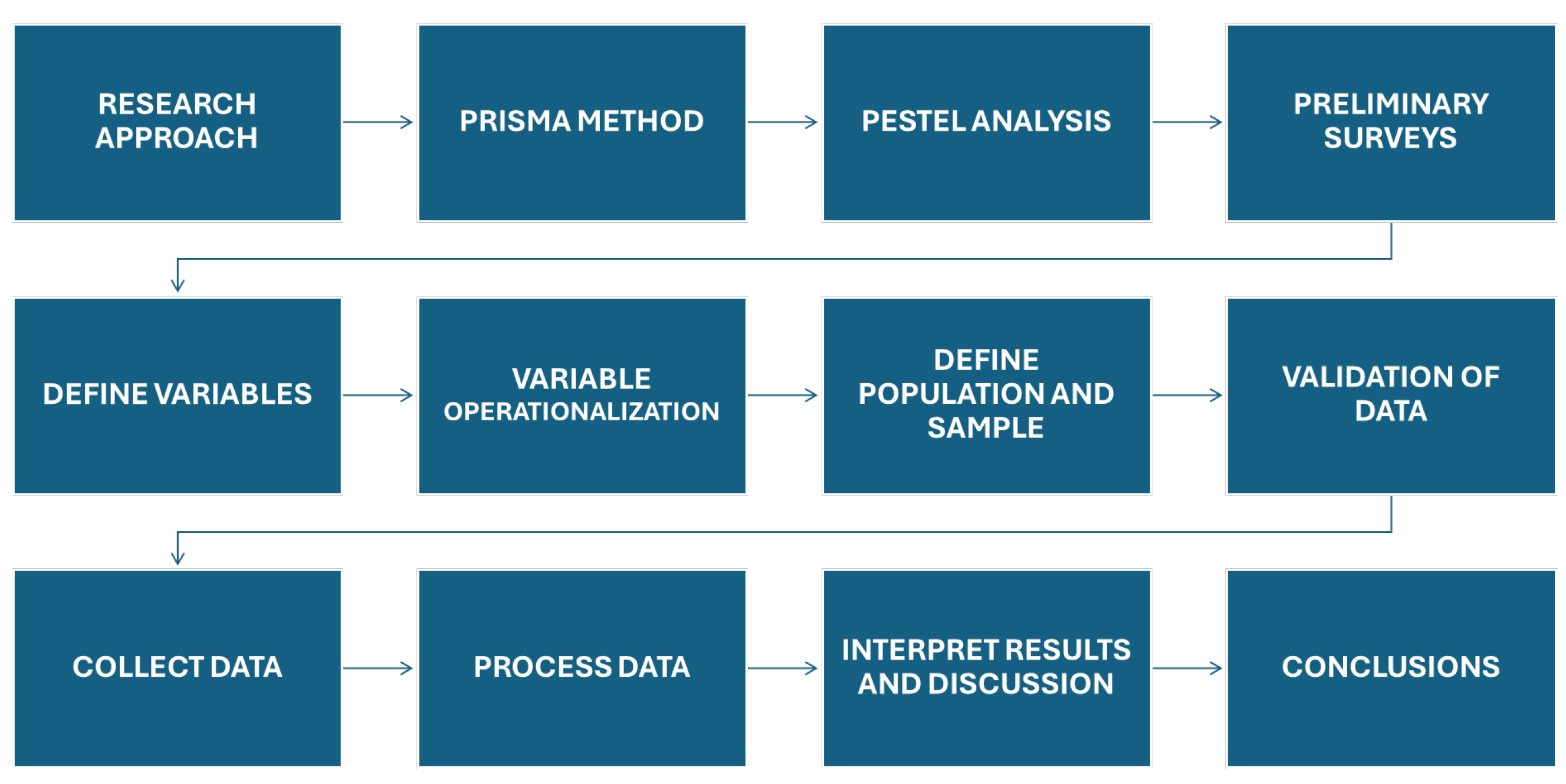
The methodological framework of this research was structured through a process map that systematizes each stage of the study, from the formulation of objectives to the interpretation of results (see
Figure 1). This map provides a comprehensive view of the research workflow, ensuring methodological coherence and traceability. It begins with the identification of the problem and the design of the mixed-methods approach, followed by data collection through surveys and interviews, data analysis using statistical and qualitative techniques, and finally the validation and integration of findings. This structured representation allowed for effective coordination between the quantitative and qualitative phases, ensuring consistency across instruments and analytical procedures.
2.1. Research Approach
This research adopts a mixed-methods approach, combining quantitative and qualitative methods to achieve a more comprehensive understanding of the technical and commercial factors influencing the commercialization of hybrid vehicles in the city of Guayaquil. From the quantitative perspective, structured surveys will be administered to current and potential consumers of hybrid vehicles in order to identify behavioral patterns, such as perceptions of technology, performance, and maintenance, as well as economic factors including purchase price, public policy, and Social Influence. On the other hand, the qualitative approach will involve conducting semi-structured interviews with representatives from selected dealerships (Renault, BYD, Ambacar, Hyundai, Ford, Suzuki, Mazda, Chery, Toyota, and Kia) and experts from the automotive sector. For the development of the theoretical framework, the PRISMA method (Preferred Reporting Items for Systematic Reviews and Meta-Analyses) was employed, which facilitates the systematic review of scientific literature through a structured four-stage process: identification, screening, eligibility, and inclusion.
The PRISMA-guided evidence synthesis served as a design input rather than a stand-alone review of effects. It informed the instrument in three ways:
Construct identification and prioritization: We extracted frequently reported determinants relevant to our context (e.g., purchase price/total cost of ownership, core technical attributes, charging and maintenance considerations, brand/after-sales aspects, and Social Influence).
Item wording and scaling: We adapted concise Likert-type items and anchors from prior usage to improve clarity and reduce respondent burden in the local setting.
Interview protocol: We aligned semi-structured prompts with the same construct set to enable qualitative triangulation of the survey results.
Table 1 maps each construct to the corresponding survey item(s) (
Appendix B) and interview questions.
2.1.1. Identification
In the identification phase of the PRISMA method, a systematic search was conducted in academic databases recognized for their scientific rigor and relevance to studies on sustainable mobility and vehicle technology [
17]. The databases consulted included Scopus, Web of Science, ScienceDirect, MDPI, SpringerLink, Elsevier, and ResearchGate, as well as the academic search engine Google Scholar to broaden thematic coverage. The search strategy was structured around keywords such as “electric vehicles,” “hybrid vehicles,” “sustainable mobility,” “charging infrastructure,” “purchase decision factors,” “vehicle technology,” “environmental impact of hybrid vehicles,” “technology adoption,” “public policies on electric mobility,” “automotive market Ecuador,” “purchase intention,” and “hybrid vehicles in Guayaquil,” both in Spanish and English. Language filters (Spanish and English) and publication period filters (2020–2025) were applied, selecting only peer-reviewed articles, case studies, systematic reviews, and scientific publications relevant to the Ecuadorian or regional context. This phase retrieved a total of 93 preliminary publications, which were classified and organized for subsequent analysis and refinement in the following PRISMA stages. Before the selection stage, 15 duplicate records appearing across multiple databases were removed. No automated software was used for filtering, so no records were marked as ineligible by automatic tools. Additionally, 5 records were discarded because they corresponded to non-scientific documents (such as news articles, opinion pieces, or non-peer-reviewed content) or lacked full-text access, preventing rigorous analysis. After this initial refinement, the selection phase proceeded with a total of 73 documents.
2.1.2. Selection
During the selection phase, the titles and abstracts of the 73 previously screened records were carefully examined to assess their relevance to the research objectives. Strict inclusion and exclusion criteria were applied to ensure the relevance and quality of the publications. Inclusion criteria considered studies published between 2020 and 2025 that addressed technical or commercial aspects of hybrid or electric vehicles, with a focus on the Ecuadorian or Latin American context, and that presented validated scientific methodology. Duplicates, non-peer-reviewed articles, studies with technological focuses unrelated to mobility, and those lacking significant data for analysis were excluded. As a result of this process, 28 records were discarded, leaving 45 studies to advance to the full-text retrieval phase for detailed evaluation. This stage allowed the analysis to focus on relevant scientific publications with high academic value, ensuring a solid foundation for the systematic review. Of the 45 studies selected for retrieval, 4 reports could not be fully obtained due to access restrictions, unavailability of full text, or inactive repository links. Although these documents initially met the inclusion criteria based on title and abstract, they were excluded from the eligibility phase because it was impossible to access their full content and verify methodological quality.
2.1.3. Eligibility
In the eligibility phase, a full-text review of the 45 retrieved studies was conducted. This thorough review allowed for a detailed evaluation of methodological quality, thematic relevance, and alignment with the research objectives. Aspects analyzed included the focus on technical and commercial factors related to hybrid vehicle acquisition, the geographic context (particularly Ecuador and Latin America), and the scientific rigor of each study. During this stage, articles that did not meet the defined criteria were excluded, such as studies with insufficient information, lack of methodological rigor, or absence of specific data relevant to the analysis. As a result, 41 studies were deemed suitable for inclusion in the qualitative synthesis of the systematic review. Reports were excluded for the following reasons:
Did not directly address technical or commercial factors of hybrid vehicles (n = 6).
Geographic context not relevant to the research (countries outside Latin America) (n = 3).
Insufficient methodological quality or not peer-reviewed (n = 4).
A total of 13 reports were excluded during this phase. Although these documents were retrieved in full text, they did not meet the specific eligibility criteria defined for this systematic review.
2.1.4. Inclusion
In the final inclusion phase, a total of 28 studies that fully met the established quality, relevance, and pertinence criteria were incorporated into the qualitative synthesis. These selected works provide valuable and up-to-date information on the technical and commercial factors influencing the acquisition of hybrid vehicles, with a special emphasis on the Ecuadorian and Latin American contexts. The included studies cover diverse topics such as purchasing decisions, public perception, charging infrastructure, environmental impact, public policies, and technical aspects, offering a comprehensive overview that supports the development of the theoretical framework and research analysis.
Figure 2 illustrates the PRISMA process for selecting academic texts used in the elaboration of the theoretical framework.
2.2. Data Collection
For the development of this study, a combination of preliminary surveys, descriptive statistics, and correlational analysis will be employed to obtain a comprehensive understanding of the technical and commercial factors influencing the purchase decision of hybrid vehicles in Guayaquil. The preliminary survey will be conducted with employees of dealerships in Guayaquil with the purpose of exploring initial perceptions about hybrid vehicles. The sample will be selected based on the observation of initial response patterns, identification of ambiguities in the items, and adjustment of the language to the target audience’s profile, in order to extract fundamental factors in the acquisition decision and to develop the final questionnaire.
The survey of technical factors considers aspects such as energy efficiency and maintenance.
Table 2 presents the results of the surveys based on these technical factors.
Table 3 shows the commercial factor survey, which considers the sale price, the value of the money, and government incentives.
2.3. Definition of Variables
First, a research question will be considered, which is:
How do technical and commercial factors influence consumers’ decisions to purchase hybrid cars in the city of Guayaquil?
The variables related to this question are
Technical factors influencing the purchase decision—The dimensions considered are: range, maintenance, technology and performance, charging infrastructure, and system durability.
Commercial factors influencing the purchase decision. The dimensions considered are: purchase price, financing and payment methods, product availability, and government policies.
An operationalization matrix is developed to define the study variables, their dimensions, indicators, and measurement scales. The factors influencing the purchase decision of hybrid vehicles were evaluated through a structured survey using Likert scales (1–5), including dimensions such as purchase intention, technical factors, and commercial factors, providing an ordinal basis for analysis. This facilitates the conversion of theoretical concepts into observable and measurable elements. The operationalization matrix can be seen in
Table 4.
The survey collected a total of 384 responses regarding Ecuadorians’ perceptions of hybrid vehicles. For the calculation of the sample size, the finite population formula described below was used:
Total population of Guayaquil (30–55 years): ∼900,000;
% with income >$1500: ∼25%;
Filtered population (N): 900,000 × 0.25 = 225,000 individuals.
To ensure content validity, the instrument was developed based on a documentary review of previous studies on consumer perception toward hybrid vehicles, Ecuadorian regulations, and the technical and commercial characteristics of this type of vehicle. Subsequently, the questionnaire was validated through expert judgment, involving professionals in automotive engineering, marketing, and statistics, who evaluated:
The clarity of the items.
The relevance of each question in relation to its corresponding dimension.
The coherence with the research objectives.
To assess the internal consistency of the questionnaire on the perception of hybrid vehicles, Cronbach’s alpha coefficient was calculated using the six survey items. Each item was coded on a 5-point Likert scale (1 = minimum value, 5 = maximum value), as presented in
Appendix B. Additionally, the following metrics were analyzed for each item:
Adjusted mean and standard deviation (to assess central tendency and dispersion).
Corrected item-total correlation (to measure the relationship between each item and the total score).
Squared multiple correlation (to determine how much of the item’s variance is explained by the others).
Cronbach’s alpha if item deleted (to identify potential redundancies).
Cronbach’s alpha for the six items was (95% CI: 0.80–0.86), indicating a high level of internal consistency. This value suggests that the instrument is reliable for measuring perceptions toward hybrid vehicles within the studied population.
Items with the greatest contribution: Items 3 (Performance, r = 0.60) and 4 (Maintenance savings, r = 0.58) showed the highest correlations with the total score, indicating that they contribute most to the construct’s consistency.
Marginal items: Item 6 (Price, r = 0.41) had the lowest correlation, but its removal would only increase the alpha to 0.84, a minimal change. Therefore, it is recommended to retain it to preserve content validity.
Table 5 demonstrates the Cronbach’s alpha validation for the applied questionnaire.
The maintenance cost item was designed as a scenario of stated importance based on local evidence (technical sheets, dealership service schedules, and expert input in Guayaquil). It targets routine maintenance (e.g., brake wear with regenerative braking, reduced engine-on time) over a 3–5-year horizon and excludes major battery replacement. We note that this relationship can vary across economies; the item therefore captures respondents’ perceived importance under the locally supported scenario rather than asserting a universal fact.
Purchase price is included as a core commercial driver identified in our literature scoping and local expert input. The price band used in the survey (USD 25,000–45,000) was calibrated from current market listings and dealership quotations for mainstream hybrid models available in Ecuador at the time of data collection. The purpose of the item is to elicit the importance of price within this locally relevant band; technical performance is held constant at typical segment levels for this question and is assessed separately through dedicated items.
We label the item in
Appendix B, Q2 as Social Influence. Although this construct is conceptually related to socio-cultural norms, in the present study it is treated under the commercial domain because it operationalizes market-facing communications (word-of-mouth, social media, influencers) and was the only item covering this dimension. This pragmatic classification reflects the scope of our instrument rather than a claim about the ontology of the construct.
The squared multiple correlation (R2) revealed that items 3 and 4 explain up to 45% and 42% of the shared variance with other items, respectively, reinforcing their relevance within the scale. In contrast, item 5 (Tax exemption) showed lower explanatory power (R2 = 0.28).
2.4. Sampling and Participants
Sample size was set using the finite-population formula (95% confidence, ) yielding for the filtered market (). Because recruitment used a convenience frame (auto show and dealerships), classical margins of error are design targets rather than inferential guarantees. Accordingly, we interpret results as associations within this sample rather than city-wide estimates.
We used a non-probability convenience sample at an auto show and local dealerships in Guayaquil. The resulting sample is 87.5% male (the remainder female or preferred not to answer). Given this frame, estimates reflect engaged, predominantly male consumers rather than the general population. All descriptive and inferential results are interpreted with this scope in mind.
2.4.1. Scope of Technologies
The instrument was designed for hybrid vehicles and calibrated to local purchasing conditions. Purely electric vehicles were not included because their market share was marginal at the time and their evaluation would require additional constructs (for example, charging access, public charging reliability, and range management) that fall outside the present scope.
2.4.2. Integration of Survey and Interviews
We followed a convergent design. The interview guide mirrored the survey constructs (price, public policies, technical attributes, maintenance, social influence). Integration occurs at the interpretation stage by aligning quantitative findings with qualitative themes to identify convergence, complementary detail, or clarifications. Interviews are used to explain mechanisms and boundary conditions rather than to re-estimate effects. A 5-point Likert format was retained after pretesting to minimize respondent burden in the event setting while preserving anchor clarity. Reliability remained high (Cronbach’s ). Future studies may compare 5- vs. 7-point formats in this context.
4. Results
The survey collected a total of 384 responses regarding Ecuadorians’ perceptions of hybrid vehicles, using the finite population formula [
29]. Key topics addressed included purchase intention, energy efficiency, maintenance costs, fiscal benefits, Social Influence, and economic barriers.
4.1. Demographic Profile
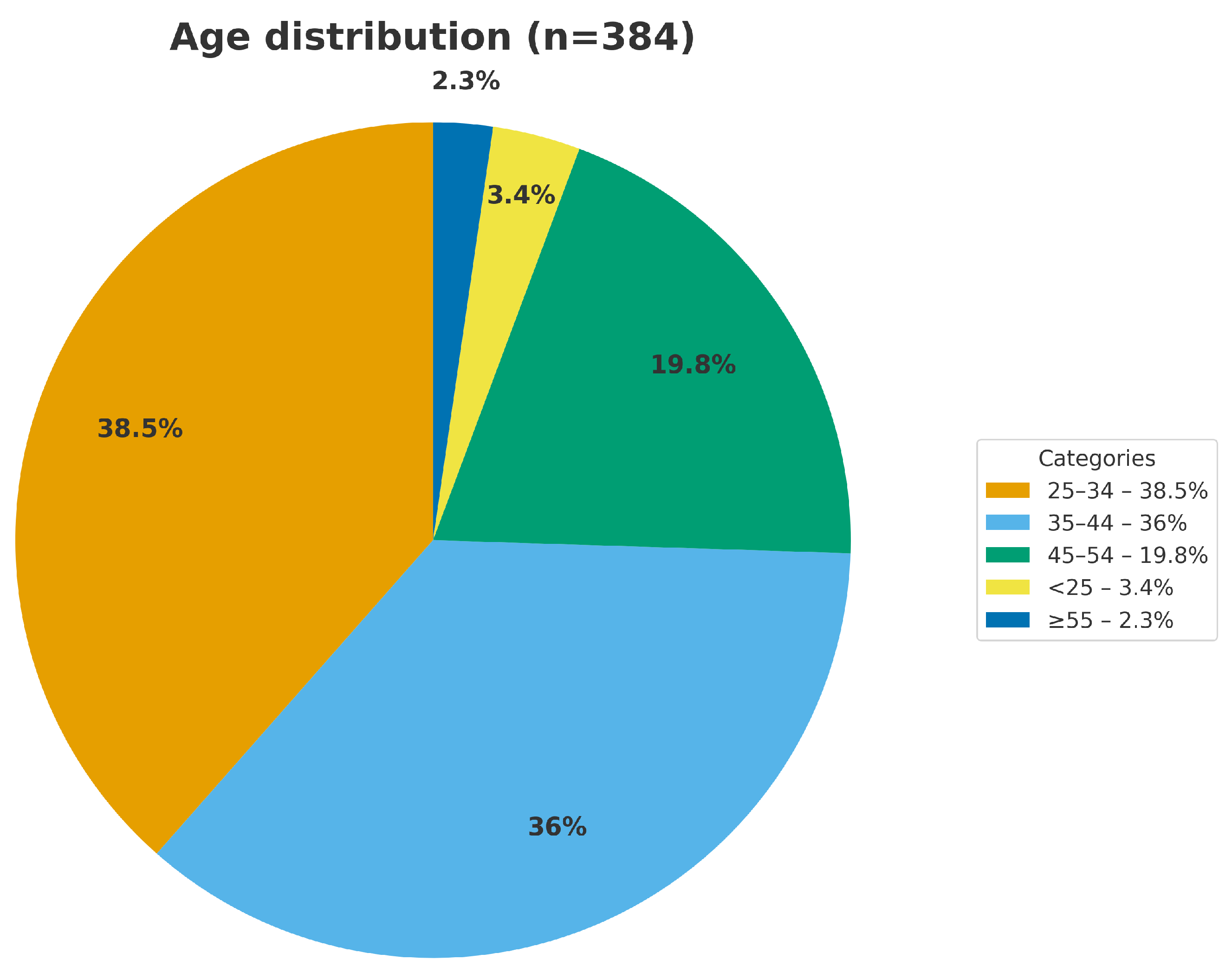
In terms of gender, the sample was predominantly composed of males (87.5%), followed by females (11.7%), and a small group who preferred not to respond (0.8%). Regarding age (see
Figure 4), this distribution indicates that interest in hybrid vehicles is concentrated among young adults in their productive years.
4.2. Purchase Intention of Hybrid Vehicles in Guayaquil
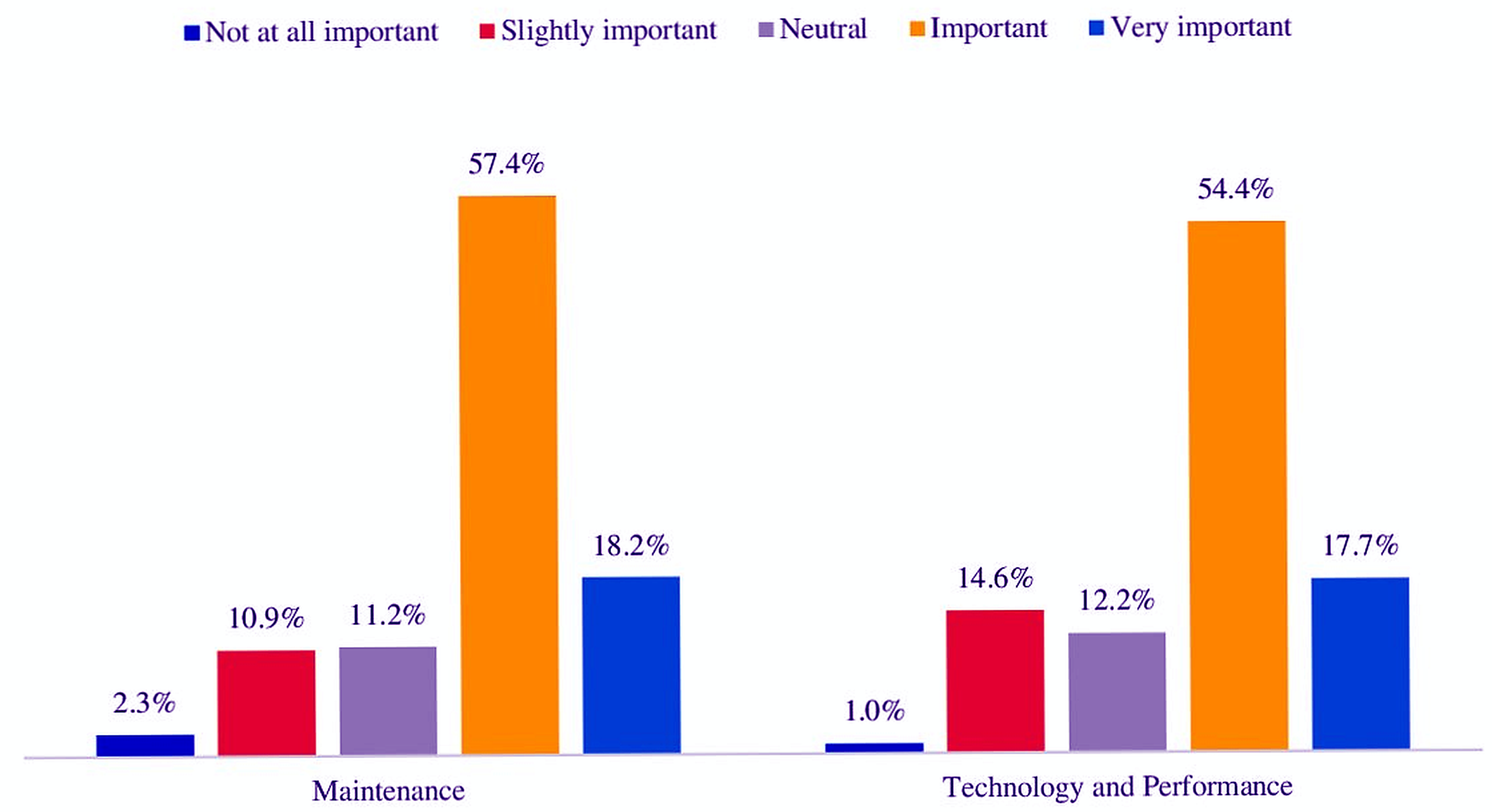
Figure 5 presents a consolidated analysis of the technical factors influencing preference for hybrid vehicles. In this case, the responses categorized as “important” and “very important” were combined, highlighting that maintenance emerges as the most relevant aspect (75.6%), reflecting the importance consumers place on long-term operating costs. This is closely followed by technology and performance (72.1%), demonstrating that attributes such as energy efficiency and performance are equally decisive. This narrow difference (3.5 percentage points) reveals that both factors serve as complementary pillars in the purchase decision.
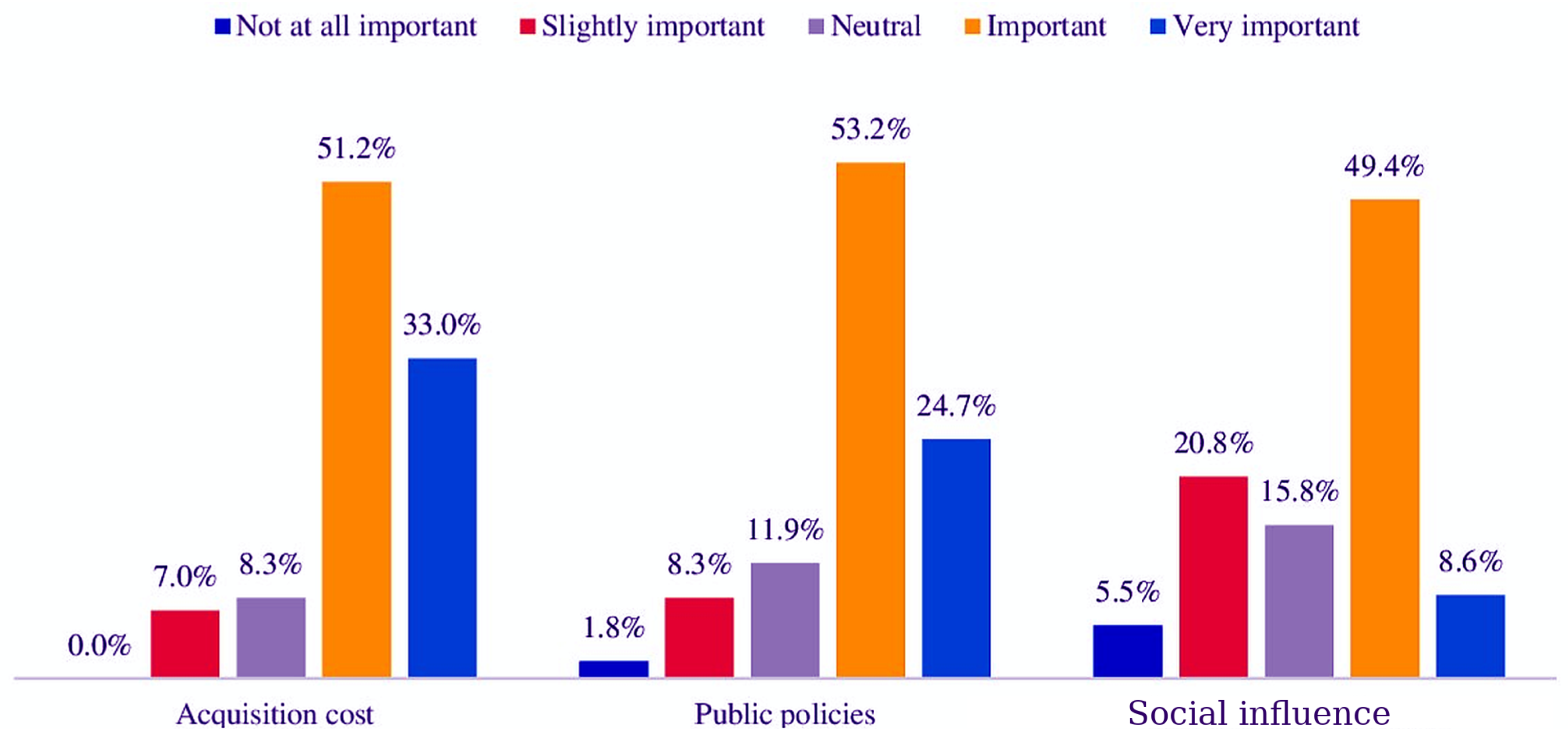
Figure 6 summarizes the commercial factors that determine the choice of hybrid vehicles, based on the combined responses marked as “important” and “very important.” The results reveal a clear hierarchy in consumer preferences: Price was the most frequently cited decisive factor (84.2%), indicating high stated salience across respondents, highlighting the market’s economic sensitivity; it is followed by public policies (77.9%), whose impact underscores the importance of government incentives; whereas Social Influence (58%), while still significant, shows comparatively lower influence.
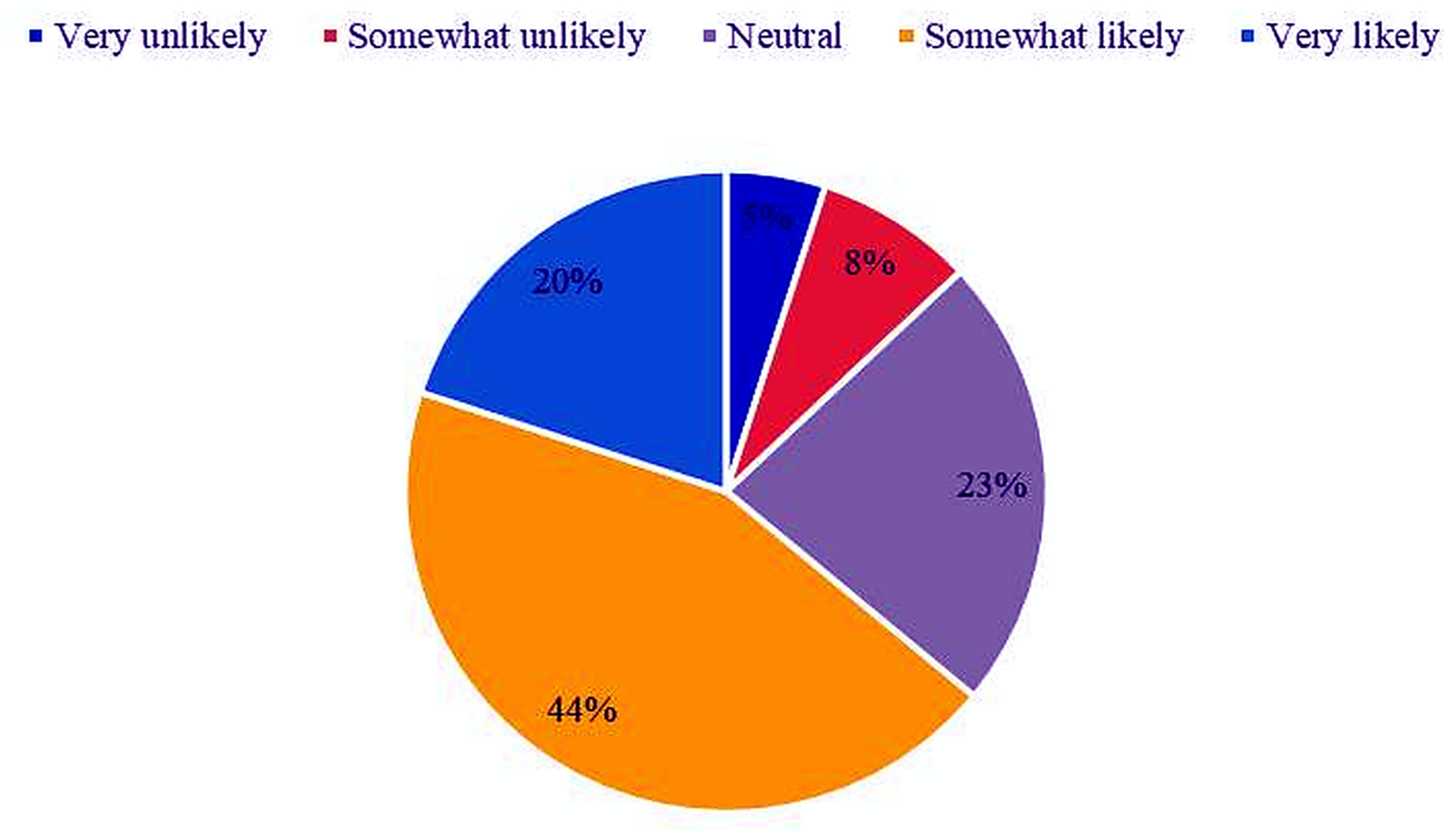
Figure 7 illustrates the purchase intention of potential users based on the previously described technical and commercial factors.
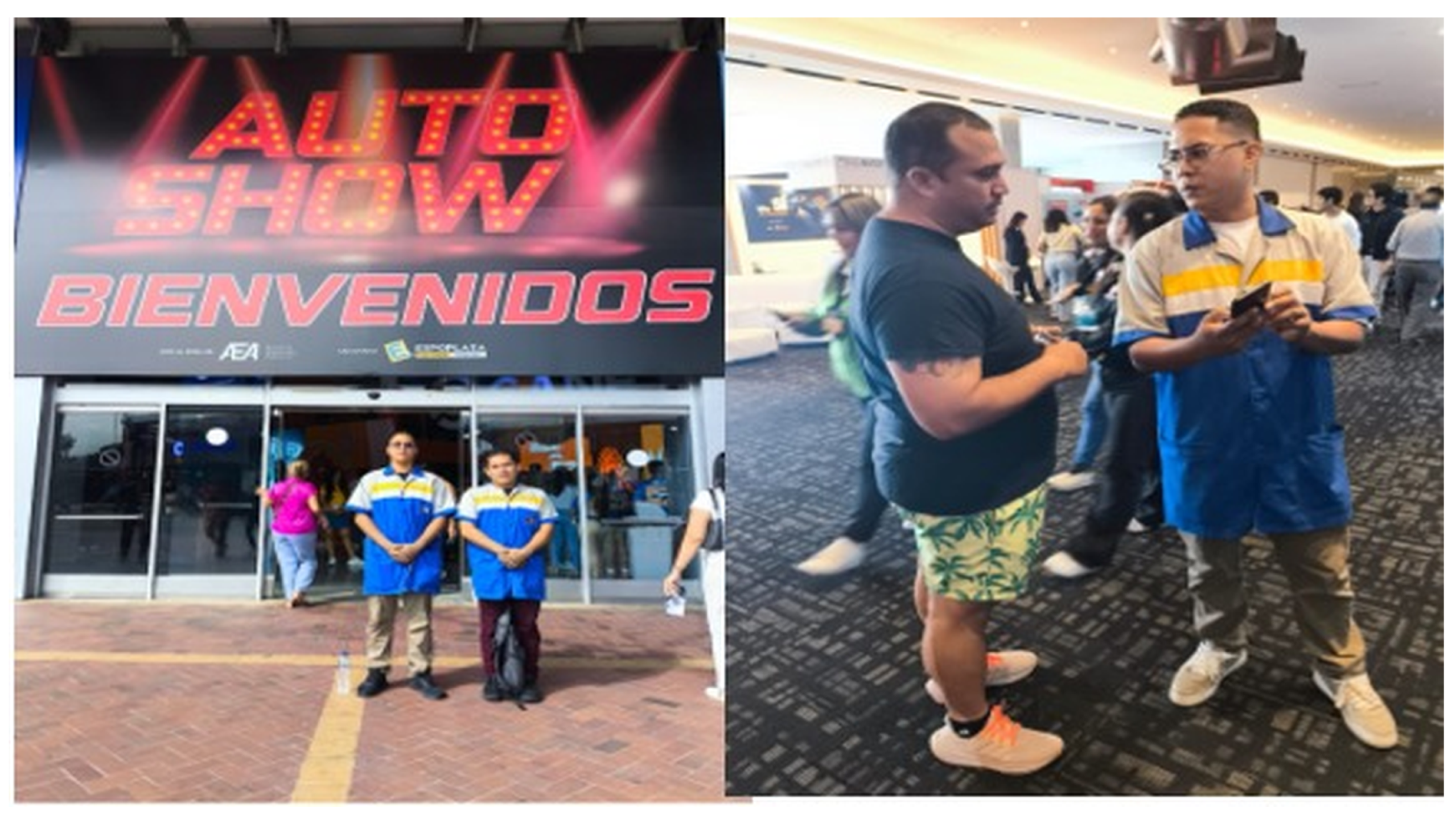
The comprehensive analysis revealed that among the 384 respondents, 51.5% expressed a favorable intention to purchase a hybrid vehicle in the short or medium term. In contrast, approximately 49.5% indicated an unfavorable stance toward acquiring such vehicles. Therefore, a high predisposition toward hybrid vehicles can be observed. It is important to note that the surveys were conducted during the event known as Auto Show 2025, as shown in
Appendix A.
4.3. Correlation Analysis and Strategic Relevance
This study employs a quantitative approach to measure the strength and direction of the relationships between critical factors such as energy efficiency, maintenance costs, government incentives, and consumers’ willingness to purchase hybrid vehicles. Through Spearman correlation analysis, the aim is not only to statistically validate these associations but also to derive key recommendations for stakeholders such as dealerships, public authorities, and manufacturers. In the Spearman correlation analysis, the commonly used ranges to interpret the strength of the association between variables are based on Cohen’s conventional guidelines for correlations [
30,
31]:
Weak or no correlation: between 0.00 and 0.30.
Moderate correlation: between 0.31 and 0.50.
Strong correlation: between 0.51 and 0.70.
Very strong correlation:
between 0.71 and 1.00. This is illustrated in
Table 7.
All bivariate Spearman rank correlations between each factor and purchase intention (
Appendix B, Q1;
) were computed in
Minitab version 22.4 (Minitab, LLC., Chicago, IL, USA) using the Correlation procedure with the Spearman option (two-sided, default settings).
p-values are those returned by Minitab and are reported to three decimals; values less than 0.001 are displayed as “<0.001” per reporting convention.
The most influential factors on purchase intention are technology and performance () and maintenance (), both showing strong statistical significance (). Additionally, Social Influence demonstrates a relevant impact (), highlighting the role of social networks and family in the decision-making process. In contrast, public policies and price exhibit more moderate correlations ( and , respectively). When examining how variation in each attribute relates to variation in stated purchase intention, price exhibits the weakest monotonic association among the analyzed variables (Spearman). In other words, despite being highly salient in self-reports, price behaves as a widely acknowledged prerequisite (a ceiling effect) rather than a strong discriminator of intention within this sample, whereas technical attributes show comparatively stronger associations.
4.4. Results of Interviews with Automotive Brand Representatives
To complement the data obtained through quantitative surveys, semi-structured interviews were conducted with twenty representatives from automotive brands that market hybrid vehicles in Ecuador that correspond to the same constructs analyzed in
Section 4.2 and
Section 4.3. For each construct we report a theme that explains or contextualizes the survey result. The interviews provided insight into commercial perspectives on purchase intention, customer profiles, market barriers, sales arguments, as well as awareness and perceived effectiveness of current public policies.
Table 8 presents a summary synthesizing the information gathered.
The analysis of interviews with twenty representatives from various automotive brands reveals a clear trend regarding the profile of customers interested in hybrid vehicles: they are mostly young adults and individuals from middle to high socioeconomic backgrounds, with a growing awareness of transportation efficiency and sustainability. However, a relevant niche is also identified among professional drivers, such as taxi operators, who are attracted by fuel and maintenance savings.
Regarding price, although some dealerships still perceive it as an initial barrier, most agree that customers view the investment positively when long-term savings and tax benefits are effectively communicated. The most frequently used sales arguments focus on autonomy, performance, integrated technology, and low operating costs—factors that have contributed to greater product acceptance in recent years. Overall, product availability is favorable, with most brands reporting immediate delivery or rapid restocking, except in isolated cases of high demand. This allows for efficient service to interested buyers.
Regarding government policies, although most interviewees consider them positive or sufficient, a structural communication issue is evident: in nearly all cases, customers are unaware of the tax benefits applicable to hybrid vehicles, which limits their ability to make informed decisions. In this context, sales advisors play a fundamental role in reinforcing these incentives during the purchasing process.
5. Discussion
Unlike global studies focused on countries with high electric-vehicle penetration, such as the United States or European nations, this research analyzes a Latin American market characterized by specific barriers, including limited charging infrastructure, lack of awareness about tax incentives, and a historical preference for internal-combustion vehicles. The results reveal that although consumers in Guayaquil value technical benefits (
–
), adoption is hindered by commercial and social factors such as price (
) and misinformation regarding public policies (only 23% of respondents were aware of existing incentives). This contrasts with findings in countries like Colombia and Mexico, where large-scale government programs have accelerated the transition [
7].
We emphasize that Social Influence, while conceptually linked to socio-cultural norms, is analyzed here as a commercial/market-communications signal given our single-item operationalization and the prominence of firm-activated channels (word-of-mouth amplification, social media, influencers) in this market.
While previous studies in Ecuador have primarily relied on surveys, this research combines statistical analysis (Spearman correlations) with interviews involving key stakeholders (dealerships), identifying gaps between consumer perception and marketing strategies. For instance, although maintenance is a top priority for buyers (75.6% relevance), dealerships tend to emphasize technological performance in their sales arguments, suggesting a disconnect in communication. The study highlights that, unlike in developed markets where environmental factors are decisive, tangible economic considerations prevail in Guayaquil. The strong correlation between technology and maintenance (
) supports the idea that consumers prioritize long-term savings over ecological benefits, aligning with findings from Peru but contradicting trends observed in Europe [
27].
Taken together, the evidence indicates a consistent pattern: consumers overwhelmingly report that price is decisive (84.2%), yet the factors that best differentiate purchase intention within the sample are technical attributes. This contrast reflects a ceiling effect for price (high salience, low variance), suggesting that price operates as a necessary threshold or “hygiene” condition, while technical features more strongly explain cross-respondent differences in intention.
Despite the significant contributions of this research, it is important to acknowledge its limitations. First, the sample showed a higher participation of male respondents, with 87.5% identifying as male, which may underrepresent the perspectives of women—key actors in household purchasing decisions. Additionally, the study focused exclusively on Guayaquil, limiting the generalizability of the findings to other regions of Ecuador that have different socioeconomic and geographic contexts, such as Quito, where factors like altitude may influence hybrid vehicle performance. However, it is worth noting that the dealerships involved operate at the national level, and Guayaquil is currently the most populous and commercially representative city in Ecuador. Another limitation was the omission of critical variables such as charging infrastructure, whose scarcity in the city is a known barrier to the adoption of this technology. These limitations suggest the need for future research with more gender-balanced samples, broader geographic coverage, and a focus on infrastructural and regulatory variables [
25].
In Guayaquil, dealership interactions and attendance at auto shows are predominantly male and men often hold the primary decision authority in vehicle purchases. As a result, our sample reflects the typical active-buyer profile of these channels. The findings should therefore be read as context-specific evidence of how technical and commercial factors are perceived within this prevailing market reality, rather than as a universal description of all household members. Future work will expand recruitment to channels that engage women and joint decision makers to complement and refine these insights.
Dealerships and manufacturers should focus on developing innovative and accessible financing schemes with extended terms (5–7 years) and preferential interest rates, especially targeting key groups identified as young professionals and taxi drivers. Furthermore, it is essential to continuously train sales advisors so they can effectively communicate not only the technical features of the vehicles but also the medium- and long-term return on investment in terms of fuel and maintenance savings.
6. Conclusions
This study on the factors influencing the acquisition of hybrid vehicles in Guayaquil reveals key findings for the business, academic, and political sectors. Using a mixed-methods approach, the most relevant determinants of purchase decisions were identified and analyzed through Spearman’s correlation coefficient. The results highlight that technical factors, specifically technology and performance and maintenance costs, exhibit a strong correlation with purchase intention, confirming that consumers prioritize long-term economic benefits such as fuel savings and lower repair expenses. These findings align with previous research in emerging markets, where operational profitability drives the adoption of sustainable technologies.
From a commercial perspective, the results indicate that although the initial purchase price remains a barrier, its impact can be mitigated through appropriate financing strategies and effective communication of cumulative savings. Public policies showed a positive effect, albeit limited by the low awareness potential buyers have regarding these benefits. This aspect represents a key opportunity for interventions from both the public and private sectors. From a theoretical standpoint, the research contributes to the diffusion-of-innovations model by integrating variables specific to the Ecuadorian context. The findings support the theory that the adoption of clean technologies depends on tangible economic factors, perceived value, and access to reliable information.
For the public sector, it is recommended to implement large-scale public education campaigns about the existing benefits and fiscal incentives, such as VAT exemptions and tariff reductions. These campaigns should utilize both digital and traditional media, with clear messages and practical examples of economic savings. Simultaneously, it is urgent to develop a network of charging stations at strategic locations throughout the city, starting with shopping centers, main roads, and high-traffic-density areas, following successful models implemented in other Latin American cities.
For future research, it is suggested to deepen the analysis of purchasing behavior by gender, particularly focusing on the role of women in family mobility decisions. It would also be valuable to evaluate the actual impact of recent public policies on cost reduction for consumers, as well as to conduct comparative studies between different Ecuadorian cities to identify regional best practices that could be replicated in Guayaquil.




 ,
,