The Role of Different Types of Cannabinoids in Periodontal Disease: An Integrative Review

 and
and
Abstract
1. Introduction
2. Materials and Methods
2.1. Eligibility Criteria
- P: Population (bacteria, cells, and other structures inherent in diseased and/or healthy periodontal tissue—from humans, mice, or rabbits)
- I: Intervention (natural, endogenous, and/or synthetic cannabinoids)
- O: Outcome (anti-inflammatory, antibacterial, or repair-related effects and prevention of soft and hard tissue damage).
2.2. Inclusion Criteria
2.3. Exclusion Criteria
2.4. Data Extraction and Analysis
3. Results
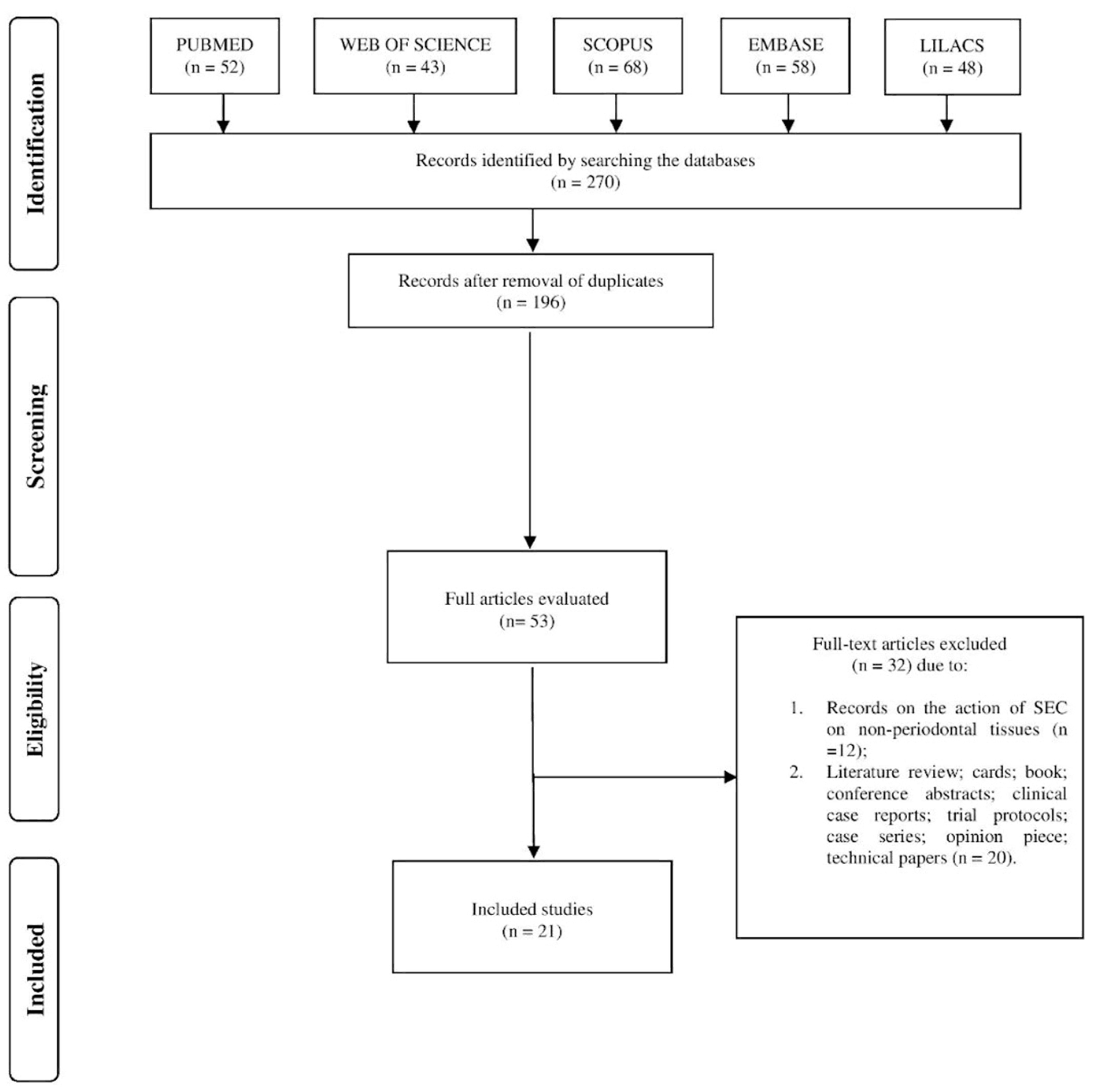
3.1. Selection of Studies
3.2. Characteristics of the Studies
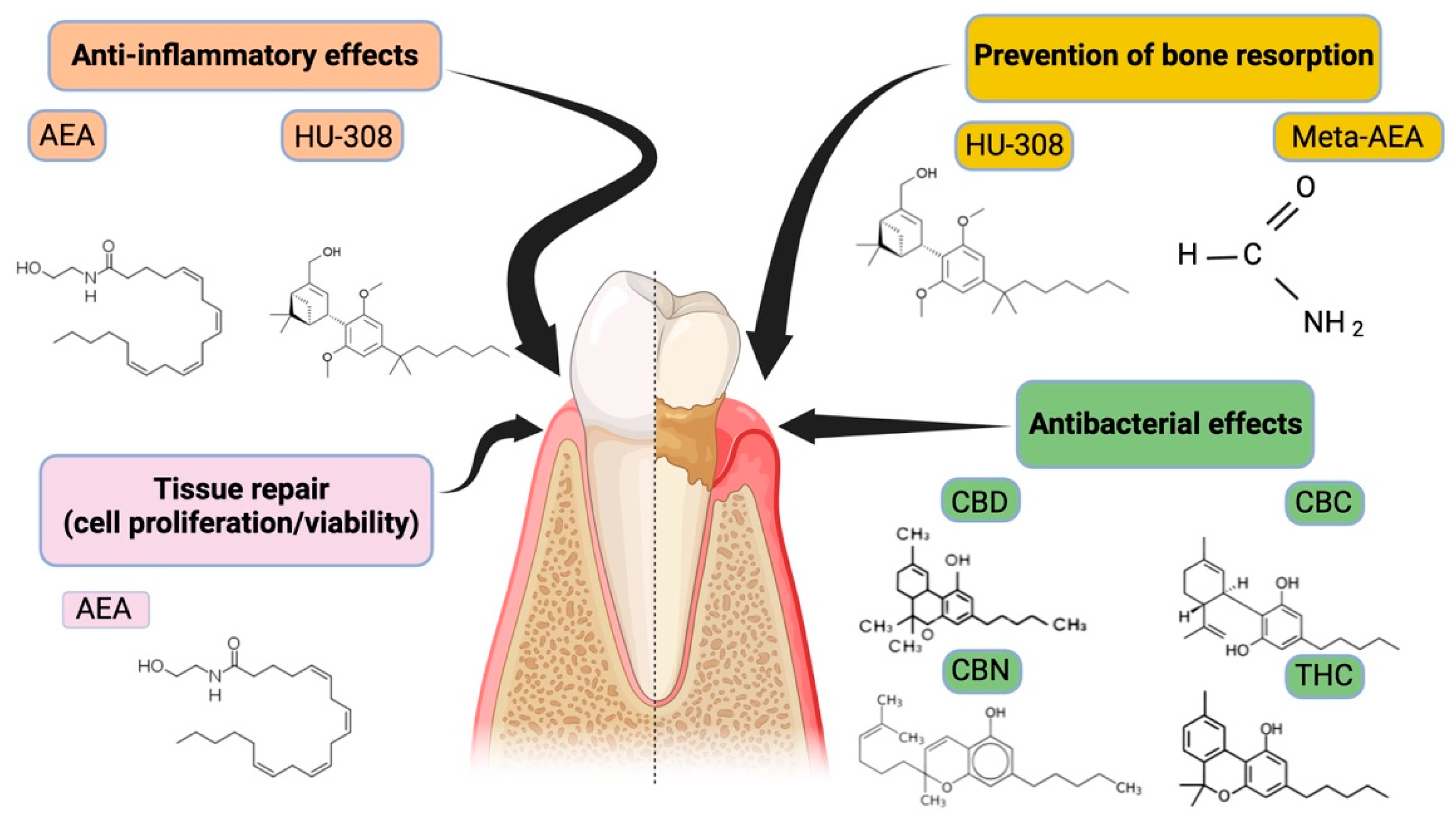
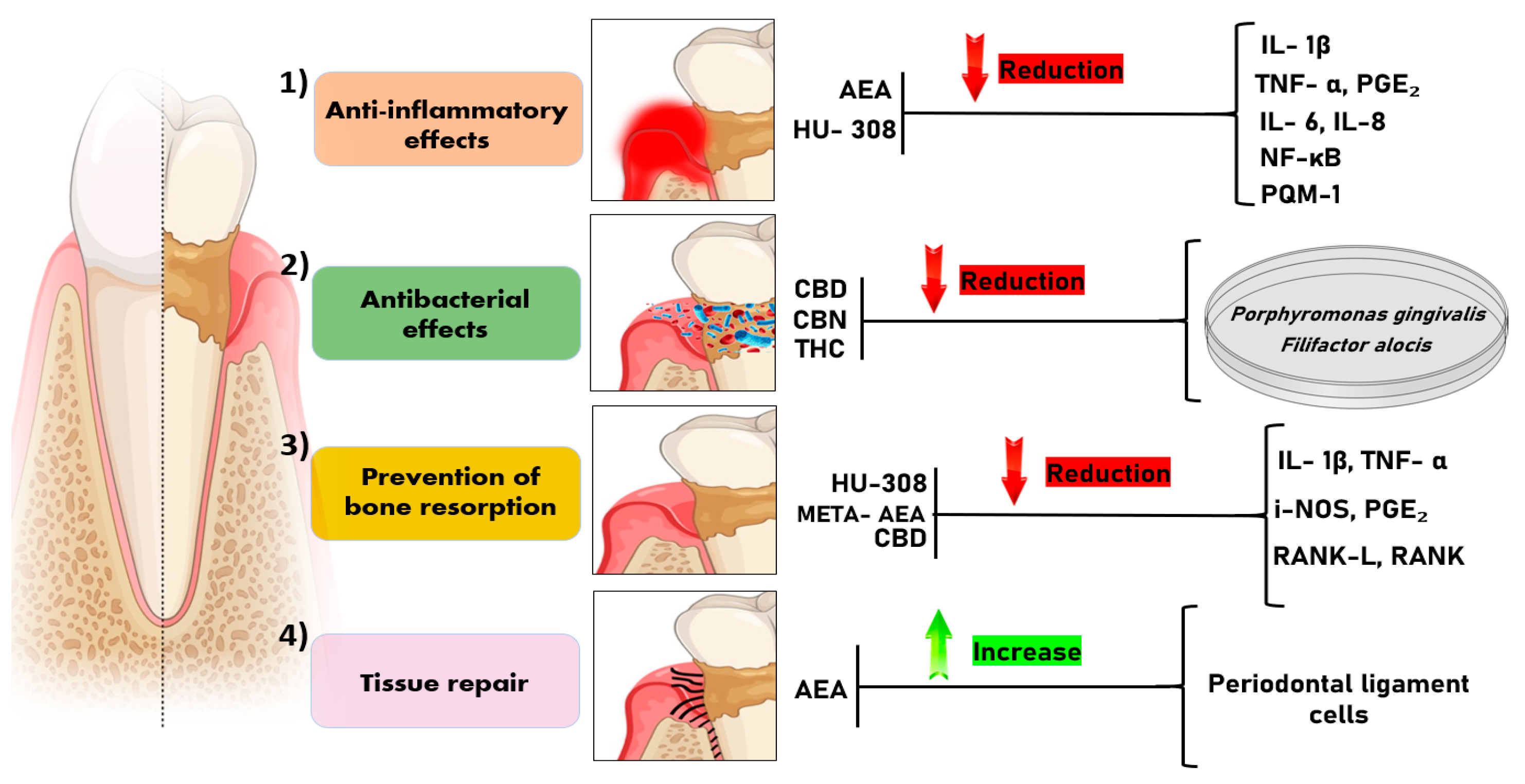
3.3. Prevention of Bone Resorption by Cannabinoids
3.4. Anti-/Pro-Inflammatory Effects of Cannabinoids
3.5. Tissue Repair (Cell Proliferation/Viability) by Cannabinoids
3.6. Antibacterial Effects of Cannabinoids
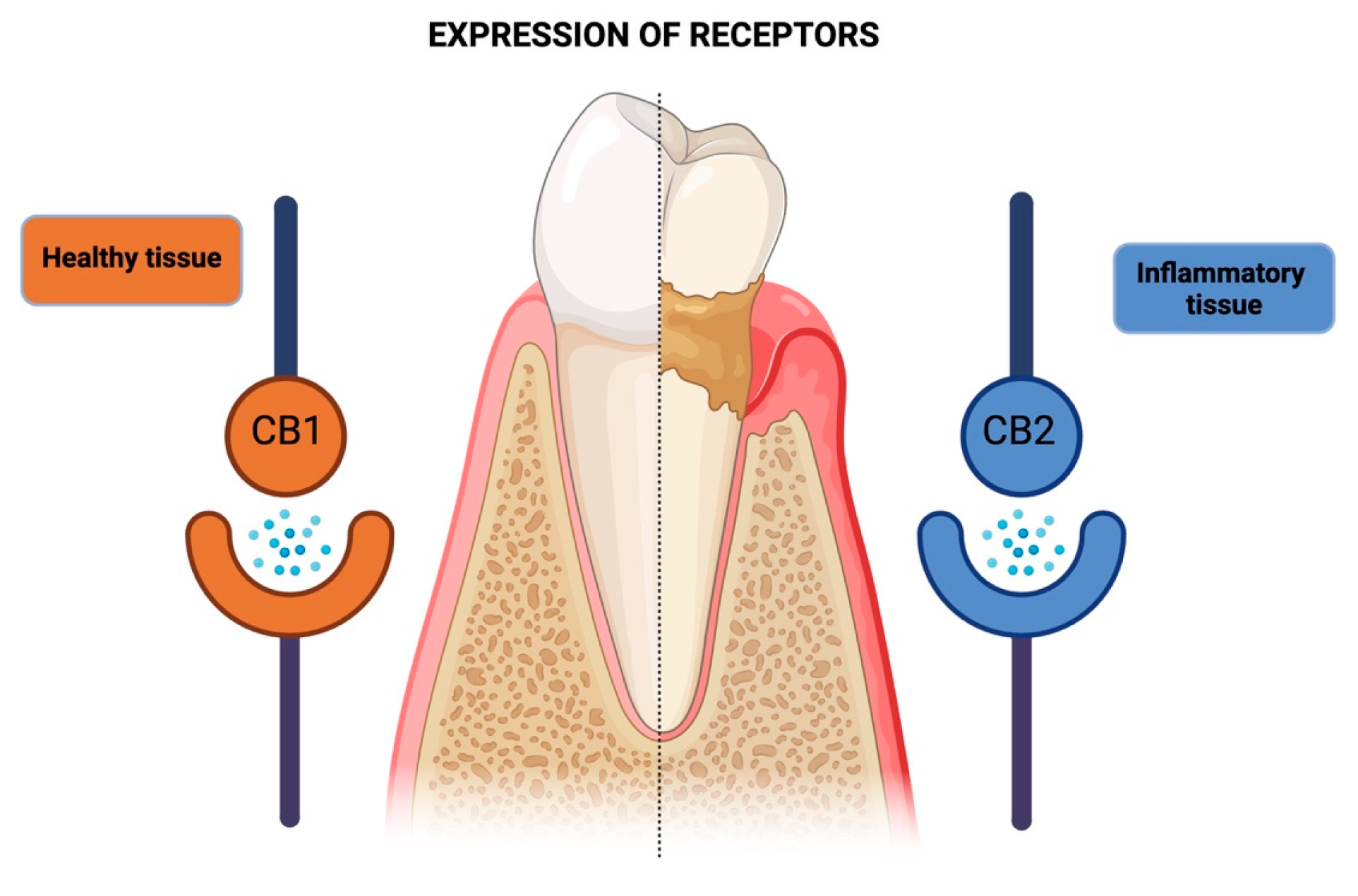
3.7. Expression of Receptors (CB1 and CB2)
4. Discussion
5. Conclusions
Author Contributions
Funding
Informed Consent Statement
Data Availability Statement
Conflicts of Interest
References
- Balta, M.G.; Papathanasiou, E.; Blix, I.J.; Van Dyke, T.E. Host Modulation and Treatment of Periodontal Disease. J. Dent. Res. 2021, 100, 798–809. [Google Scholar] [CrossRef] [PubMed]
- Chen, Q.; Liu, X.; Wang, D.; Zheng, J.; Chen, L.; Xie, Q.; Liu, X.; Niu, S.; Qu, G.; Lan, J.; et al. Periodontal Inflammation-Triggered by Periodontal Ligament Stem Cell Pyroptosis Exacerbates Periodontitis. Front. Cell Dev. Biol. 2021, 9, 663037. [Google Scholar] [CrossRef] [PubMed]
- Ossola, C.A.; Surkin, P.N.; Mohn, C.E.; Elverdin, J.C.; Fernández-Solari, J. Anti-Inflammatory and Osteoprotective Effects of Cannabinoid-2 Receptor Agonist HU-308 in a Rat Model of Lipopolysaccharide-Induced Periodontitis. J. Periodontol. 2016, 87, 725–734. [Google Scholar] [CrossRef] [PubMed]
- Carmona Rendón, Y.; Garzón, H.S.; Bueno-Silva, B.; Arce, R.M.; Suárez, L.J. Cannabinoids in Periodontology: Where Are We Now? Antibiotics 2023, 12, 1687. [Google Scholar] [CrossRef] [PubMed]
- David, C.; Elizalde-Hernández, A.; Barboza, A.S.; Cardoso, G.C.; Santos, M.B.F.; Moraes, R.R. Cannabidiol in Dentistry: A Scoping Review. Dent. J. 2022, 10, 193. [Google Scholar] [CrossRef] [PubMed]
- Ossola, C.A.; Surkin, P.N.; Pugnaloni, A.; Mohn, C.E.; Elverdin, J.C.; Fernandez-Solari, J. Long-term treatment with methanandamide attenuates LPS-induced periodontitis in rats. Inflamm. Res. Off. J. Eur. Histamine Res. Soc. 2012, 61, 941–948. [Google Scholar] [CrossRef] [PubMed]
- Abidi, A.H.; Abhyankar, V.; Alghamdi, S.S.; Tipton, D.A.; Dabbous, M. Phytocannabinoids regulate inflammation in IL-1β-stimulated human gingival fibroblasts. J. Periodontal Res. 2022, 57, 1127–1138. [Google Scholar] [CrossRef] [PubMed]
- de Melo Soares, M.S.; D’Almeida Borges, C.; de Mendonça Invernici, M.; Frantz, F.G.; de Figueiredo, L.C.; de Souza, S.L.S.; Taba, M.; Messora, M.R.; Novaes, A.B. Antimicrobial photodynamic therapy as adjunct to non-surgical periodontal treatment in smokers: A randomized clinical trial. Clin. Oral Investig. 2019, 23, 3173–3182. [Google Scholar] [CrossRef]
- Deutscher, H.; Derman, S.; Barbe, A.G.; Seemann, R.; Noack, M.J. The effect of professional tooth cleaning or non-surgical periodontal therapy on oral halitosis in patients with periodontal diseases. A systematic review. Int. J. Dent. Hyg. 2018, 16, 36–47. [Google Scholar] [CrossRef]
- Yan, Y.; Zhan, Y.; Wang, X.; Hou, J. Clinical evaluation of ultrasonic subgingival debridement versus ultrasonic subgingival scaling combined with manual root planing in the treatment of periodontitis: Study protocol for a randomized controlled trial. Trials 2020, 21, 113. [Google Scholar] [CrossRef]
- Graziani, F.; Karapetsa, D.; Mardas, N.; Leow, N.; Donos, N. Surgical treatment of the residual periodontal pocket. Periodontol. 2000 2018, 76, 150–163. [Google Scholar] [CrossRef] [PubMed]
- Abidi, A.H.; Alghamdi, S.S.; Dabbous, M.K.; Tipton, D.A.; Mustafa, S.M.; Moore, B.M. Cannabinoid type-2 receptor agonist, inverse agonist, and anandamide regulation of inflammatory responses in IL-1β stimulated primary human periodontal ligament fibroblasts. J. Periodontal Res. 2020, 55, 762–783. [Google Scholar] [CrossRef] [PubMed]
- Ossola, C.A.; Rodas, J.A.; Balcarcel, N.B.; Astrauskas, J.I.; Elverdin, J.C.; Fernández-Solari, J. Signs of alveolar bone damage in early stages of periodontitis and its prevention by stimulation of cannabinoid receptor 2. Model in rats. Acta Odontol. Latinoam. 2020, 33, 143–152. [Google Scholar] [CrossRef] [PubMed]
- Lowe, H.; Toyang, N.; Steele, B.; Bryant, J.; Ngwa, W.; Nedamat, K. The Current and Potential Application of Medicinal Cannabis Products in Dentistry. Dent. J. 2021, 9, 106. [Google Scholar] [CrossRef]
- Jäger, A.; Setiawan, M.; Beins, E.; Schmidt-Wolf, I.; Konermann, A. Analogous modulation of inflammatory responses by the endocannabinoid system in periodontal ligament cells and microglia. Head Face Med. 2020, 16, 26. [Google Scholar] [CrossRef]
- Navarro-Saiz, L.M.; Bernal-Cepeda, L.J.; Castellanos, J.E. Immune challenges upregulate the expression of cannabinoid receptors in cultured human odontoblasts and gingival fibroblasts. Acta Odontol. Latinoam. 2022, 35, 80–89. [Google Scholar] [CrossRef] [PubMed]
- Liu, C.; Qi, X.; Alhabeil, J.; Lu, H.; Zhou, Z. Activation of cannabinoid receptors promote periodontal cell adhesion and migration. J. Clin. Periodontol. 2019, 46, 1264–1272. [Google Scholar] [CrossRef]
- Pellegrini, G.; Carmagnola, D.; Toma, M.; Rasperini, G.; Orioli, M.; Dellavia, C. Involvement of the endocannabinoid system in current and recurrent periodontitis: A human study. J. Periodontal Res. 2023, 58, 422–432. [Google Scholar] [CrossRef]
- Zhang, F.; Özdemir, B.; Nguyen, P.Q.; Andrukhov, O.; Rausch-Fan, X. Methanandamide diminish the Porphyromonas gingivalis lipopolysaccharide induced response in human periodontal ligament cells. BMC Oral Health 2020, 20, 107. [Google Scholar] [CrossRef]
- Abidi, A.H.; Presley, C.S.; Dabbous, M.; Tipton, D.A.; Mustafa, S.M.; Moore, B.M., 2nd. Anti-inflammatory activity of cannabinoid receptor 2 ligands in primary hPDL fibroblasts. Arch. Oral Biol. 2018, 87, 79–85. [Google Scholar] [CrossRef]
- Gu, Z.; Singh, S.; Niyogi, R.G.; Lamont, G.J.; Wang, H.; Lamont, R.J.; Scott, D.A. Marijuana-Derived Cannabinoids Trigger a CB2/PI3K Axis of Suppression of the Innate Response to Oral Pathogens. Front. Immunol. 2019, 10, 2288. [Google Scholar] [CrossRef]
- Napimoga, M.H.; Benatti, B.B.; Lima, F.O.; Alves, P.M.; Campos, A.C.; Pena-dos-Santos, D.R.; Severino, F.P.; Cunha, F.Q.; Guimarães, F.S. Cannabidiol decreases bone resorption by inhibiting RANK/RANKL expression and pro-inflammatory cytokines during experimental periodontitis in rats. Int. Immunopharmacol. 2009, 9, 216–222. [Google Scholar] [CrossRef]
- Özdemir, B.; Shi, B.; Bantleon, H.P.; Moritz, A.; Rausch-Fan, X.; Andrukhov, O. Endocannabinoids and inflammatory response in periodontal ligament cells. PLoS ONE 2014, 9, e107407. [Google Scholar] [CrossRef]
- Rettori, E.; De Laurentiis, A.; Zorrilla Zubilete, M.; Rettori, V.; Elverdin, J.C. Anti-inflammatory effect of the endocannabinoid anandamide in experimental periodontitis and stress in the rat. Neuroimmunomodulation 2012, 19, 293–303. [Google Scholar] [CrossRef]
- Stahl, V.; Vasudevan, K. Comparison of Efficacy of Cannabinoids versus Commercial Oral Care Products in Reducing Bacterial Content from Dental Plaque: A Preliminary Observation. Cureus 2020, 12, e6809. [Google Scholar] [CrossRef]
- Vasudevan, K.; Stahl, V. Cannabinoids infused mouthwash products are as effective as chlorhexidine on inhibition of total-culturable bacterial content in dental plaque samples. J. Cannabis Res. 2020, 2, 20. [Google Scholar] [CrossRef]
- Kozono, S.; Matsuyama, T.; Biwasa, K.K.; Kawahara, K.; Nakajima, Y.; Yoshimoto, T.; Yonamine, Y.; Kadomatsu, H.; Tancharoen, S.; Hashiguchi, T.; et al. Involvement of the endocannabinoid system in periodontal healing. Biochem. Biophys. Res. Commun. 2010, 394, 928–933. [Google Scholar] [CrossRef]
- Rawal, S.Y.; Dabbous, M.K.; Tipton, D.A. Effect of cannabidiol on human gingival fibroblast extracellular matrix metabolism: MMP production and activity, and production of fibronectin and transforming growth factor β. J. Periodontal Res. 2012, 47, 320–329. [Google Scholar] [CrossRef]
- Yan, W.; Li, L.; Ge, L.; Zhang, F.; Fan, Z.; Hu, L. The cannabinoid receptor I (CB1) enhanced the osteogenic differentiation of BMSCs by rescue impaired mitochondrial metabolism function under inflammatory condition. Stem Cell Res. Ther. 2022, 13, 22. [Google Scholar] [CrossRef]
- Qian, H.; Zhao, Y.; Peng, Y.; Han, C.; Li, S.; Huo, N.; Ding, Y.; Duan, Y.; Xiong, L.; Sang, H. Activation of cannabinoid receptor CB2 regulates osteogenic and osteoclastogenic gene expression in human periodontal ligament cells. J. Periodontal Res. 2010, 45, 504–511. [Google Scholar] [CrossRef]
- Konermann, A.; Jäger, A.; Held, S.A.E.; Brossart, P.; Schmöle, A. In Vivo and In Vitro Identification of Endocannabinoid Signaling in Periodontal Tissues and Their Potential Role in Local Pathophysiology. Cell. Mol. Neurobiol. 2017, 37, 1511–1520. [Google Scholar] [CrossRef] [PubMed]
- Nakajima, Y.; Furuichi, Y.; Biswas, K.K.; Hashiguchi, T.; Kawahara, K.; Yamaji, K.; Uchimura, T.; Izumi, Y.; Maruyama, I. Endocannabinoid, anandamide in gingival tissue regulates the periodontal inflammation through NF-kappaB pathway inhibition. FEBS Lett. 2006, 580, 613–619. [Google Scholar] [CrossRef] [PubMed]
- Yan, W.; Cao, Y.; Yang, H.; Han, N.; Zhu, X.; Fan, Z.; Du, J.; Zhang, F. CB1 enhanced the osteo/dentinogenic differentiation ability of periodontal ligament stem cells via p38 MAPK and JNK in an inflammatory environment. Cell Prolif. 2019, 52, e12691. [Google Scholar] [CrossRef] [PubMed]
- Gurgel, B.C.d.V.; Borges, S.B.; Borges, R.E.A.; Calderon, P.D.S. COVID-19: Perspectives for the management of dental care and education. J. Appl. Oral Sci. 2020, 28, e20200358. [Google Scholar] [CrossRef]
- Ferreira, M.C.; Dias-Pereira, A.C.; Branco-de-Almeida, L.S.; Martins, C.C.; Paiva, S.M. Impact of periodontal disease on quality of life: A systematic review. J. Periodontal Res. 2017, 52, 651–665. [Google Scholar] [CrossRef] [PubMed]
- Kitaura, H.; Marahleh, A.; Ohori, F.; Noguchi, T.; Shen, W.R.; Qi, J.; Nara, Y.; Pramusita, A.; Kinjo, R.; Mizoguchi, I. Osteocyte-related cytokines regulate osteoclast formation and bone resorption. Int. J. Mol. Sci. 2020, 21, 5169. [Google Scholar] [CrossRef] [PubMed]
- Cheng, R.; Wu, Z.; Li, M.; Shao, M.; Hu, T. Interleukin-1β is a potential therapeutic target for periodontitis: A narrative review. Int. J. Oral Sci. 2020, 12, 2. [Google Scholar] [CrossRef] [PubMed]
- Whiting, P.F.; Wolff, R.F.; Deshpande, S.; Di Nisio, M.; Duffy, S.; Hernandez, A.V.; Keurentjes, J.C.; Lang, S.; Misso, K.; Ryder, S.; et al. Cannabinoids for medical use: A systematic review and meta-analysis. JAMA J. Am. Med. Assoc. 2015, 313, 2456–2473. [Google Scholar] [CrossRef]
- van Klingeren, B.; ten Ham, M. Antibacterial activity of Δ9-tetrahydrocannabinol and cannabidiol. Antonie Van Leeuwenhoek 1976, 42, 9–12. [Google Scholar] [CrossRef]



| PubMed, Web of Science, and Embase | Lilacs and Scopus |
|---|---|
| (Periodontics OR “Periodontal Diseases” OR “Periodontal Ligament” OR Periodontitis OR “Chronic Periodontitis” OR “Chronic Periodontitides” OR gingivitis) AND (Cannabinoids OR CBD OR “cannabigerolic acid” OR cannabinol OR cannabigerol OR cannabidiol OR cannabichromene OR Cannabite OR phytocannabinoid OR HU 308 OR anandamide (AEA) OR “β-Caryophyllene” OR methanandamide OR “Cannabinoid Receptor Agonists” OR “Agonist, Cannabinoid” OR “Cannabinoid Receptor” OR “Cannabinoid Receptor CB1” OR “Receptor, Cannabinoid, CB1” OR “Cannabinoid Receptor CB2” OR “Receptor, Cannabinoid, CB2” OR Endocannabinoid OR CB1 OR CB2 OR THC) AND (“Alveolar Bone Loss” OR “bone resorption” OR “bone healing” OR “gingival inflammation” OR Gingivitis OR Inflammation OR “Anti-Inflammatory Agents” OR “Anti Inflammatories” OR anti-inflammatories OR “Anti-Bacterial Agents” OR “Agent, Anti-Bacterial” OR Antibiotic OR Bactericide OR “Cell Proliferation” OR “Cellular Proliferation” OR “Cell Number Growth”) | (“Periodontal Diseases” OR “Periodontal Ligament”) AND (Cannabinol OR “Cannabinoid Receptor” OR Endocannabinoid) AND “Alveolar Bone Loss” OR Anti-inflammatories OR Bactericide OR “Cellular Proliferation” |
| Author, Year, Type of Study | Intervention, Dose- Administration | Objective | Methodology | Results | Conclusion |
|---|---|---|---|---|---|
| QIAN, 2010 [30] In vitro | Test: HU-308 Control: untreated CLPH | To investigate CB2 expression and the effect of its activation on osteogenic differentiation of CLPH. | CLPH were treated with HU-308 and the RT-PCR technique was used to identify the expression of RCB2 and the mRNA expressions of osteogenic and osteoclastogenic genes. | Bone resorption: The mRNA expression of osteogenic genes (Runx2 and OPN) increased significantly (p < 0.05) from 24 h of HU308 treatment, and increased over time. This was also observed for SPO, OC, FA, and COL I mRNA. Regarding the effect of HU-308 on osteoclastogenic genes, a significant increase in OPG mRNA expression was observed after 48 h, but a significant reduction in RANKL mRNA expression was seen after 24 h (p < 0.05). | Activation of CB2 through binding to HU-308 can enhance osteogenic differentiation in CLPH, in addition to contributing to alveolar bone metabolism through bone remodeling. |
| OSSOLA, 2020 [13] In vivo | Test: Rats with EP + HU 308 (500 ng/mL, 200 µL injectable per tooth) Control:
(LPS) rats | To evaluate the effects of HU 308 treatment on the oral health of rats subjected to early periodontitis. | Eighteen rats (six rats per group): (1) control; (2) rats with EP; and (3) rats with EP treated daily with HU 308 were evaluated for POA | Bone resorption: POA in maxillary and mandibular molars was significantly lower for HU 308-treated rats (2.50 mm; 4.52 mm), compared with untreated (3.02 mm and 5.22 mm) (p < 0.05). In healthy rats, POA in mandibular teeth was lower (p < 0.01) than that of the other groups. | HU 308 demonstrated a preventive effect in the treatment of POA in rats with EP. |
| NAPIMOGA, 2009 [22] In vivo | Group 1: Rats without EP + Saline Solution Group 2: Rats with EP + Saline Solution Group 3: Rats with EP + CBD (5 mg/kg, injectable for 30 days) | To evaluate the effect of systemic injection of CBD in rats submitted to EP. | CBD dissolved in 2% Tween 80 and saline solution. Solutions were prepared at a volume of 1 mL/kg for 30 days. | Bone resorption: CBD (5 mg/kg) significantly (p < 0.05) inhibited the volume of bone loss in the bifurcation region. Anti/Pro-inflammatory effect: CBD exhibited lower expression levels of RANK, RANK L, TNF-α, and IL-1β (p < 0.05), compared with animals that received saline as treatment. | CBD may control bone resorption and inflammatory response during the progression of experimental periodontitis in rats. |
| OSSOLA, 2012 [6] In vitro In vivo | In vitro Group 1: Control Group 2: LPS Group 3: LPS + Meta-AEA Group 4: Meta-AEA (500 ng/mL) In vivo: Group 1: Control Group 2: Serum injection Group 3: Rats with EP (LPS) Group 4: Rats with EP (LPS) + Meta-AEA—(500 ng/mL) | To evaluate the effect of treatment with the synthetic cannabinoid, Meta-AEA, on the progression of periodontitis in rats, with regard to anti-inflammatory activity and prevention of alveolar bone loss. | In vitro: gingiva from healthy rats were dissected and distributed into the 4 study groups In vivo: rats were divided and daily topical application of serum or Meta-AEA was performed at the LPS injection sites, during the 6 weeks of each experiment. | Bone resorption In vivo: EP + Meta-AEA animals compared with untreated EP animals showed significantly lower POA (p < 0.05) and lower expression of iNOS (p < 0.01) and TNF-α (p < 0.05). Anti/Pro-inflammatory In vitro: Meta-AEA + LPS significantly (p < 0.01) reduced TNF-α and PGE2 levels, compared with the LPS group. TNF-α levels were significantly higher for LPS (p < 0.001) and LPS + Meta-AEA (p < 0.01), compared with control. | The use of Meta-AEA, in vivo and in vitro, reduced the levels of proinflammatory cytokines, especially TNF-α. In vivo use significantly decreased alveolar bone loss and the amount of iNOS. |
| OSSOLA, 2016 [3] In vivo | Group 1: Control Group 2: 1% ethanol in saline solution Group 3: Rats with EP (LPS) + 1% ethanol in saline Group 4: Rats with EP (LPS) + HU-308—(500 ng/mL, 200 µL injectable per tooth) | To evaluate the anti-inflammatory, osteoprotective, and pro-homeostatic effects of HU308 treatment on the oral health of rats submitted to EP. | The animals were divided into the 4 groups and treated according to each type of intervention, during the 6 weeks of each experiment. | Bone resorption: Animals treated with HU 308 had lower POA in the buccal maxilla (1.4 mm vs. 1.8 mm p < 0.05) and lingual mandible (3.5 mm vs. 4.9 mm, p < 0.05), as well as higher inter root bone percentage (50% vs. 39%) (p < 0.01), when compared with the diseased rats that received saline. Anti/Pro-inflammatory effect: HU-308 treatment resulted in lower levels of iNOS, TNF-α, and PGE2, compared with the LPS group (p < 0.05). | HU-308 may exhibit anti-inflammatory, osteoprotective, and pro-homeostatic effects in oral tissues of rats with LPS- induced periodontitis. |
| ABIDI, 2020 [12] In vitro | Group: FLPHs Control Group: FLPHs + HU 308 (14 µM) Group: FLPHs + AEA (16 µM) Group: FLPHs + IL1β + AEA Group: FLPHs + IL1β + HU 308 | To understand the role of CB2 during periodontal inflammation and identify anti-inflammatory agents for drug development to treat periodontitis. | AEA and HU-308 were tested for effects on cytokines, chemokines, and angiogenic and vascular markers expressed by FLPHs, which were divided into groups according to the type of exposure: Control; AEA or HU 308; IL-1β + AEA or IL-1β + HU 308. | Anti/Pro-inflammatory effect: In FLPHs, AEA alone increased the expression of IFN-γ and IL-13, but this was not significant. In the AEA + IL-1β group, IFN-γ (p < 0.01), IL-6 (p < 0.0001), TNF-α (p < 0.05) were significantly increased, relative to IL-1β alone. In contrast, HU 308 treatment slightly increased IL-13 levels, while for HU 308 + IL-1β, compared with IL-1β, there were significant reductions for all other cytokines; IFN-γ, IL-1β, IL-2, IL6, TNF-α, FEC-GM. | AEA exhibited both pro- and anti-inflammatory properties in FLPHs, whereas HU 308 demonstrated only anti-inflammatory activity. |
| RETTORI, 2012 [24] In vitro | Test: AEA and/or CB1 antagonists (AM 251) and CB2 (AM 630) Control: Experimental Periodontitis + Stress + sterile saline solution (30 µL, injectable 2 times daily for 7 days) | To investigate the anti-inflammatory role of AEA in experimental periodontitis in rats. | Animals with EP and stressed received different treatment and were investigated for inflammatory response. | Anti/Pro-inflammatory effect: EP rats receiving only AEA had lower corticosterone levels (40 ng/mL) than the control group (60 ng/mL, p < 0.05). Similarly, TNF-α levels in the gingiva were lower in the AEA group (30 pg/mg) compared with the control group (45 pg/mg, p < 0.001) and the antagonist + AEA group (50 pg/mg p < 0.05). IL-1β levels in animals with EP were much lower in those receiving AEA (DOR% = 100), whereas antagonists alone had no effect (DOR% > 150). | The endocannabinoid AEA may decrease the inflammatory response in periodontitis even during stress. |
| NAKAJIMA, 2006 [32] In vitro | AEA (1, 5, and 10 µM) | To assess the levels of AEA in HRGC and CB1 and CB2 receptor expressions in gingival fibroblasts, and to identify the role of AEA in periodontitis. | Levels of AEA in the HGF and of CB1 and CB2 in gingival tissues or HGFs were assessed. | Anti/ pro-inflammatory effect: Amount of AEA in diseased FGH was 16.4 ± 9.30 ng and dose-dependently reduced LPS-induced IL-6, IL-8, PQM-1, and NF-K β production in FGH. While CB1 was expressed in all types of HGF, but especially in those from diseased patients, whereas CB2 was barely detected in health and highly expressed in disease. | AEA and its receptors, CB1 and CB2, are present in periodontal tissues and may regulate cellular pathways leading to the inflammatory response. |
| OZDEMIR, 2014 [23] In vitro | Test: AEA and 2 AG (0.1 to 20 µM) Control: Cells stimulated with DMEM + 1% SFB. | To determine the impact of AEA and 2-AG on CLPH response to P. gingivalis LPS exposure. | CLPH were cultured in DMEM (in the presence or absence of LPS) and further subjected to AEA and 2-AG. | Anti/pro-inflammatory effect: Treatment of these cells with 10 µM of 2-AG resulted in significant (p < 0.05) increase in IL-6 gene expression level compared with 1 µM concentration. While 10 µM of AEA induced a significant decrease (p < 0.05) in the gene expression levels of IL-6, IL-8, and PQM-1 stimulated by LPS compared with those of cells that did not receive AEA. Cell proliferation/viability: Only AEA demonstrated a significant increase (p < 0.01) in proliferation/viability of CLPHs in the presence of LPS, compared with the same group receiving lower concentrations of the substance. | AEA and 2-AG may play an important role in modulating periodontal inflammation. |
| ZHANG, 2020 [19] In vitro | Group 1: CLPH + Meta-AEA (0.03, 0.1, 0.3, 1, 3, 10, or 30 μM Group 2: CLPH + Meta-AEA (0.03, 0.1, 0.3, 1, 3, 10, or 30 μM) + LPS Group 3: untreated CLPH | To investigate the effect of Meta-AEA on the production of pro-inflammatory mediators in CLPH. | CLPH were cultured in DMEM (in the presence, or absence, of Meta-AEA) and some groups were also subjected to P. gingivalis LPS exposure. | Anti-/Pro-inflammatory effect: There was no significant effect of Meta-AEA (up to 10 μM) on gene expression levels and IL-6, IL-8, and PQM-1 protein production in healthy cells. In contrast, in CLPH exposed to bacterial LPS, gene expression and the protein production of IL-6, IL-8, and PQM-1 decreased significantly (p < 0.05) with 10 μM Meta-AEA. Cell proliferation/viability: Meta-AEA (up to 10 μM) exerted no significant effect, but significantly inhibited at a concentration of 30 μM, compared with the control. | Inflammatory response in CLPH may be influenced by ECS activation, since at certain concentrations, Meta-AEA may contribute to decrease interleukins. |
| RAWAL, 2012 [28] In vitro | Test: CBD (0.01–30 µM) Control: (DMEM + gentamicin + 1% MeOH) | To determine the effects of CBD on the fibrogenic and matrix degradation activities of human gingival fibroblasts. | Human fibroblasts were incubated in appropriate culture medium and exposed to CBD diluted in MeOH (1%). | Cell proliferation/viability: Compared with the control group: CBD (0.01–0.05 µM) increased the production of FTC-β by 40%, and CBD (2 µM) significantly decreased the production of MMP-1 (p < 0.05) and MMP-2 (p < 0.001). In addition, CBD ≥ 0.5 µM significantly increased fibronectin levels. | Low levels of CBD may contribute to fibrotic gingival enlargement by increasing the production of TGF-β and fibronectin in gingival fibroblasts, and high levels of this substance decrease the production and activity of MMP. |
| JÄGER, 2020 [15] In vitro | Test: AEA and PEA (50 µM) Control: untreated CLPH | To evaluate the impact of endocannabinoids AEA and PEA on the expression of inflammatory molecules in CLPH at rest and under simulated mechanical loading. | CLPH were cultured in DMEM and the test group was subjected to CII + exposure, or not, to AEA or PEA. Untreated samples served as control. | Anti/Pro-inflammatory effect: In CLPH, the centrifugation-induced inflammation (CII) + PEA group resulted in a significant increase in the expressions of inflammatory cytokines (IL-1β; IL-6; TNF-α) and of CB1 and CB2, compared with the control. CII + PEA reduced the expressions of these cytokines and of CB1 and CB2, compared with the control (p < 0.05), CII and CII + PEA. Regarding CLPH proliferation, AEA was able to partially inhibit the cell reduction caused by CII (p < 0.05, after 10 h, compared with CII), while PEA did not contribute to cell proliferation. | AEA revealed anti-inflammatory properties and contributed to preservation of cellular integrity. While PEA exacerbated the proinflammatory effects. |
| ABIDI, 2018 [20] In vitro | Test 1: AEA (16 µM) Test 2: HU-308 (7.3 µM) Test 3: SMM-189 (13 µM) Control: DMSO + Ethanol + dH2O | To evaluate the anti-inflammatory efficacy of AEA and HU 308 on IL-6 and PQM-1 in FLPH. | FLPH cultured in appropriate medium and exposed to LPS from P. gingivalis + TNF-α and/or IL-1β. In addition, these cells were exposed to HU-308, AEA, or SMM-189, while the control group was subjected to DMSO + alcohol + dH2O. | Anti/Pro-inflammatory effect: AEA alone increased IL-6 levels but significantly decreased in the groups exposed to AEA + TNF-α (p < 0.05) and AEA + IL-1β (p < 0.01), compared with TNF- α and IL-1β alone. Similarly, IL-6 levels were reduced in HU-308+LPS (p < 0.001); HU-308 + TNF-α (p < 0.05); and HU-308 + IL-1β (p < 0.0001) groups, compared with cells exposed to LPS; TNF-α; or IL-1β, respectively. Both AEA and HU308 reduced PQM-1 levels. | AEA and HU 308 had anti-inflammatory effects in PD, as they reduced IL-6 levels and PQM-1 in FLPH. But AEA may also exhibit pro-inflammatory responses. |
| GU, 2019 [21] In vitro | Test: CBD, CBN, and THC (0.0–10.0 µg/mL) Control: Samples not exposed to phytocannabinoids | To examine the influence of the main subtypes of marijuana-derived phytocannabinoids in association with oral pathogens: P. gingivalis, Filifactor allocis, and Treponema denticola. | Bacteria were grown in appropriate culture medium, in the presence or absence of phytoncabinoids. | Antibacterial effect: CBD, CBN, and THC (5–10 µg/mL) suppressed the growth of P. gingivalis and F. allocis, but not T. denticola. Anti/Pro-inflammatory effect: CBD suppressed the release of TNF-α, IL-6, IL-12 p40, and IL-8 from monocytes stimulated by LPS or by one of the 3 bacterial types. | Marijuana-derived phytocannabinoids can suppress bacterial growth and the release of pro-inflammatory cytokines. |
| STAHL, 2020 [25] In vitro | Test: CBD, CBC, CBN, CBG, (12.5%—Direct contact) Control: ACBG; Oral B, Colgate, Cannabite F | To compare the effectiveness of commercial oral hygiene products and cannabinoids in reducing the bacterial content of dental biofilm of patients with periodontal health and disease. | Dental biofilm from participants was collected and spread directly into Petri dishes, previously divided into 4 quadrants treated with cannabinoids or toothpaste (undiluted). | Antibacterial effect: The highest CMC occurred in the Oral B (29.8) and Colgate (30.6) treatments vs. CBG (3.5) and CBC (3.8), in the periodontitis patient samples. Overall, the CMC in the cannabinoid treatments was significantly lower than that recorded in any of the toothpastes tested. | Cannabinoids have the potential to be used as an effective antibacterial agent against bacteria associated with dental biofilm. |
| VASUDEVAN, 2020 [26] In vitro | Test: CBD-MW; CBG-MW Control: Product A (essential oils and alcohol) Product B (No fluoride alcohol) Positive control: 0.2% Chlorhexidine (30 µL wells and 15 µL disk-diffusion) | To evaluate the bactericidal activity of cannabinoid-infused mouthwashes against dental biofilm bacteria from patients with gingivitis and periodontitis. | An aliquot of biofilm collected from patients with PD was spread on plates containing wells or disk diffusion with rinses. After incubation, the diameter of the zone of inhibition was measured manually. | Antibacterial effect: The mean zones of inhibition of samples from all patients for CBD-MW (18.1 mm) and CBG-MW (17.7 mm) were similar to that of the 0.2% chlorhexidine group (16.8 mm). The CIM revealed bacterial growth from the 3rd dilution (Product A and B); 8th dilution (CBDMW and CBG-MW); and 10th dilution (0.2% chlorhexidine). | CBD-MW and CBG-MW showed similar or better bactericidal efficiency than the positive control (0.2% chlorhexidine). |
| KOZONO, 2010 [27] In vitro | Test: AEA and 2-AG | To elucidate the role of ECS in periodontal healing. | FCG was collected from patients undergoing periodontal surgery. In animals, EP was induced to assess CB1 and CB2 expression. HGFs were cultured and exposed, or not, to CB1 and CB2 antagonists and agonists (AEA). | Cell proliferation/viability: In the GFR of patients undergoing surgery, AEA levels were significantly increased after 3 days (p < 0.05), compared with pre-surgery, but 2-AG levels were virtually unchanged. AEA via CB1 and CB2 significantly increased (p < 0.05) the proliferation of HGFs, compared with the control. Expression of receptors: Upon EP, CB1 and CB2 were expressed in scar tissue cells, but in healthy tissue expression, expressions were low or absent. | ECS may have an important modulatory role in periodontal healing, through proliferation of gingival fibroblasts via upregulation of CB receptor expression and increased AEA levels at wound sites. |
| LIU, 2019 [17] In vitro | Test: 1 µM THC Control: HGFs not exposed to THC | To investigate the distribution of RCBs in periodontal tissues as well as the effects of HCT on cell adhesion and migration of periodontal fibroblasts to investigate its role in tissue regeneration and healing. | Localization of CB1 and CB2 in gingival tissue collected from rats was performed by immunohistochemistry. HGFs were also cultured in plates containing 6 wells, in which culture media with or without THC were deposited. | Cell proliferation/viability: Regarding the HGFs exposed to THC, a significant increase (p < 0.05) in the migration of these cells towards this cannabionoid was observed, compared with the control group, after 3 h. Receptor expression: CB1 was decreased in periodontal tissues, although its expression was higher in perivascular and immune cells (macrophages, lymphocytes, and dendritic cells). CB2 was identified at high levels in tissues, especially in the EJ, LP, TC, OA. | ECS may be a therapeutic target to treat periodontal diseases and induce periodontal regeneration. |
| NAVARRO-SAIZ, 2022 [16] In vitro | Test: 10 µM CBD Control: SH-SY5Y and monocyte-derived macrophages | To define the presence and activity of cannabinoid receptors in HGFs. | HGFs were cultured in appropriate culture medium and exposed or not to bacterial LPS. | Expression of receptors: CB1 and CB2 were detected in HGFs, especially upon exposure to inflammatory agents (LPS and POLY I:C). In addition, exposure of these cells to CBD resulted in a significant increase (p < 0.001) in intracellular calcium concentration, compared with unstimulated cells. | FGHs express higher amounts of CB1 and CB2 upon inflammatory stimuli and CBD may influence a higher calcium influx into these cells, which demonstrates its participation in cell biological activity. |
| KONERMAN, 2017 [31] In vivo In vitro | NA | To analyze the expressions of CB1 and CB2 in periodontal tissues, under physiological and inflammatory conditions. | Immunohistochemical staining for CB1 and CB2 was performed on biopsies of human and rat periodontal tissues, both diseased and healthy. Gene expressions of cannabinoid receptors in CLPH were investigated by quantitative methods | Expression of receptors: In healthy periodontal tissues, CB1 was significantly more expressed (13.5% ± 1.3 of total tissue fraction) compared with CB2 (7.1% ± 0.9) in LPH structures. In diseased LPH structures, CB1 expression decreased, while CB2 increased but without significant difference. | CB1 and CB2 are expressed in periodontal tissues with distinct expression changes in different inflammatory conditions. |
| YAN, 2019 [33] In vitro | Test 1: Meta-AEA (10 µM) Test 2: AM251 | To identify the role and mechanisms of CB1 in osteogenic differentiation of LP stem cells in an inflammatory environment. | CTLPH were stimulated by TNF-α and IFN-γ. In addition, the selective CB1 agonist (Meta-AEA) and its selective antagonist (AM251) were used. | Expression of receptors: CB1 blockade (via the antagonist AM251) inhibited in vitro CTLPH mineralization, compared with the control group (p < 0.05). Over the weeks, CB1 inhibition contributed to the reduction of bone sialoprotein. Meta-AEA, by binding to CB1, promoted greater in vitro mineralization of CTLPH (p < 0.01), compared with the untreated group. | CB1 can activate the osteogenic differentiation potential of CTLPH, under inflammatory conditions and Meta-AEA exposure. |
Disclaimer/Publisher’s Note: The statements, opinions and data contained in all publications are solely those of the individual author(s) and contributor(s) and not of MDPI and/or the editor(s). MDPI and/or the editor(s) disclaim responsibility for any injury to people or property resulting from any ideas, methods, instructions or products referred to in the content. |
© 2024 by the authors. Licensee MDPI, Basel, Switzerland. This article is an open access article distributed under the terms and conditions of the Creative Commons Attribution (CC BY) license (https://creativecommons.org/licenses/by/4.0/).
Share and Cite
Monteiro Viana, J.C.; da Silva Gomes, G.E.; Duarte Oliveira, F.J.; Marques de Araújo, L.N.; Teles, G.; Mourão, C.F.; de Vasconcelos Gurgel, B.C. The Role of Different Types of Cannabinoids in Periodontal Disease: An Integrative Review. Pharmaceutics 2024, 16, 893. https://doi.org/10.3390/pharmaceutics16070893
Monteiro Viana JC, da Silva Gomes GE, Duarte Oliveira FJ, Marques de Araújo LN, Teles G, Mourão CF, de Vasconcelos Gurgel BC. The Role of Different Types of Cannabinoids in Periodontal Disease: An Integrative Review. Pharmaceutics. 2024; 16(7):893. https://doi.org/10.3390/pharmaceutics16070893
Chicago/Turabian StyleMonteiro Viana, Jaiane Carmelia, Gabriela Ellen da Silva Gomes, Francisca Jennifer Duarte Oliveira, Lidya Nara Marques de Araújo, Guilherme Teles, Carlos Fernando Mourão, and Bruno César de Vasconcelos Gurgel. 2024. "The Role of Different Types of Cannabinoids in Periodontal Disease: An Integrative Review" Pharmaceutics 16, no. 7: 893. https://doi.org/10.3390/pharmaceutics16070893
APA StyleMonteiro Viana, J. C., da Silva Gomes, G. E., Duarte Oliveira, F. J., Marques de Araújo, L. N., Teles, G., Mourão, C. F., & de Vasconcelos Gurgel, B. C. (2024). The Role of Different Types of Cannabinoids in Periodontal Disease: An Integrative Review. Pharmaceutics, 16(7), 893. https://doi.org/10.3390/pharmaceutics16070893