Article

Wood Surface Changes of Heat-Treated Cunninghamia lanceolate Following Natural Weathering


1
Graduate School of Bioresource and Bioenvironmental Sciences, Faculty of Agriculture, Kyushu University, 744 Motooka, Nishi-ku, Fukuoka 819-0395, Japan
2
Laboratory of Wood Science, Faculty of Agriculture, Kyushu University, 744 Motooka, Nishi-ku, Fukuoka 819-0395, Japan
*
Author to whom correspondence should be addressed.
Forests 2019, 10(9), 791; https://doi.org/10.3390/f10090791
Submission received: 21 August 2019 / Revised: 6 September 2019 / Accepted: 9 September 2019 / Published: 11 September 2019
(This article belongs to the Special Issue Wood Protection and Preservation)

Abstract

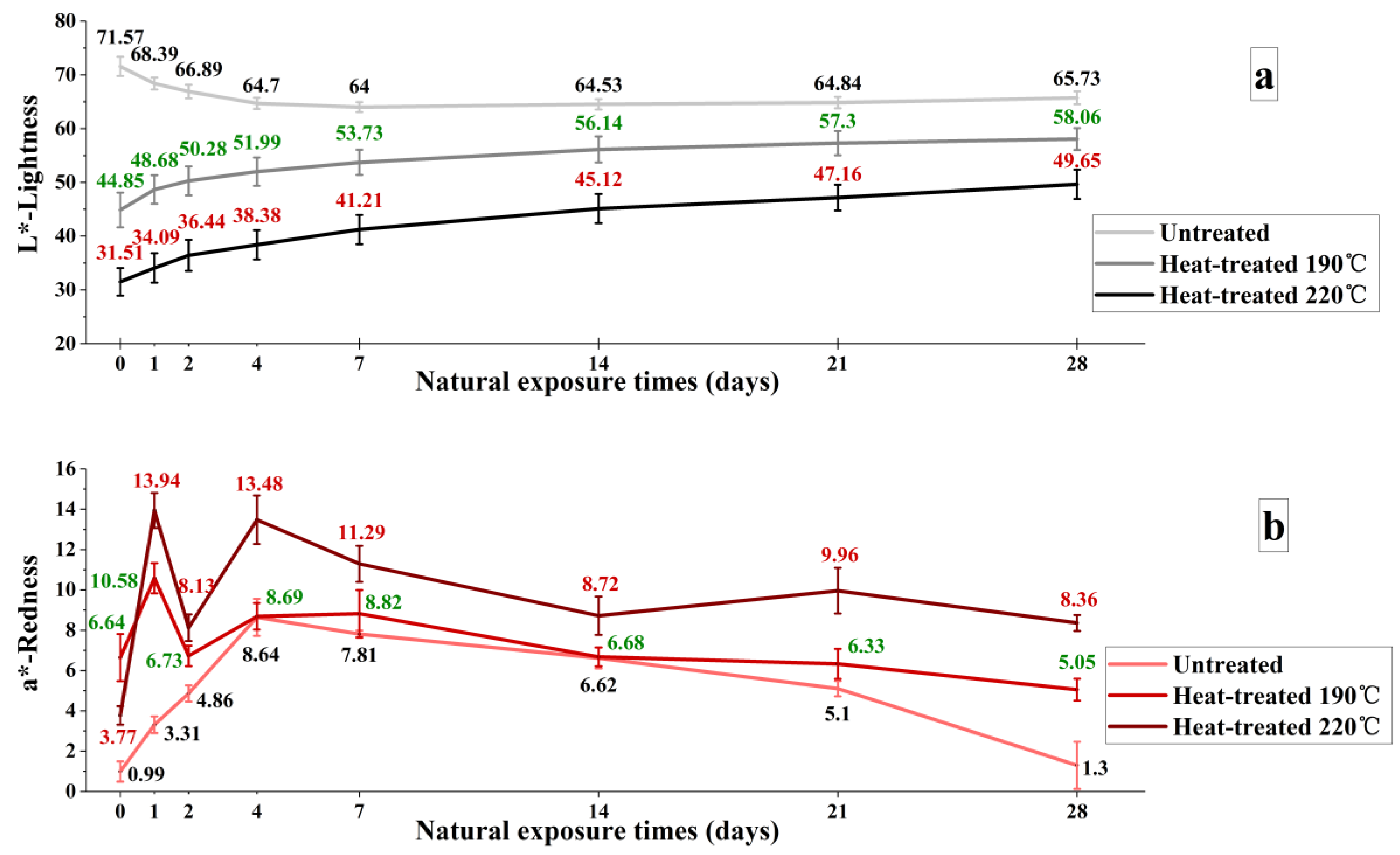
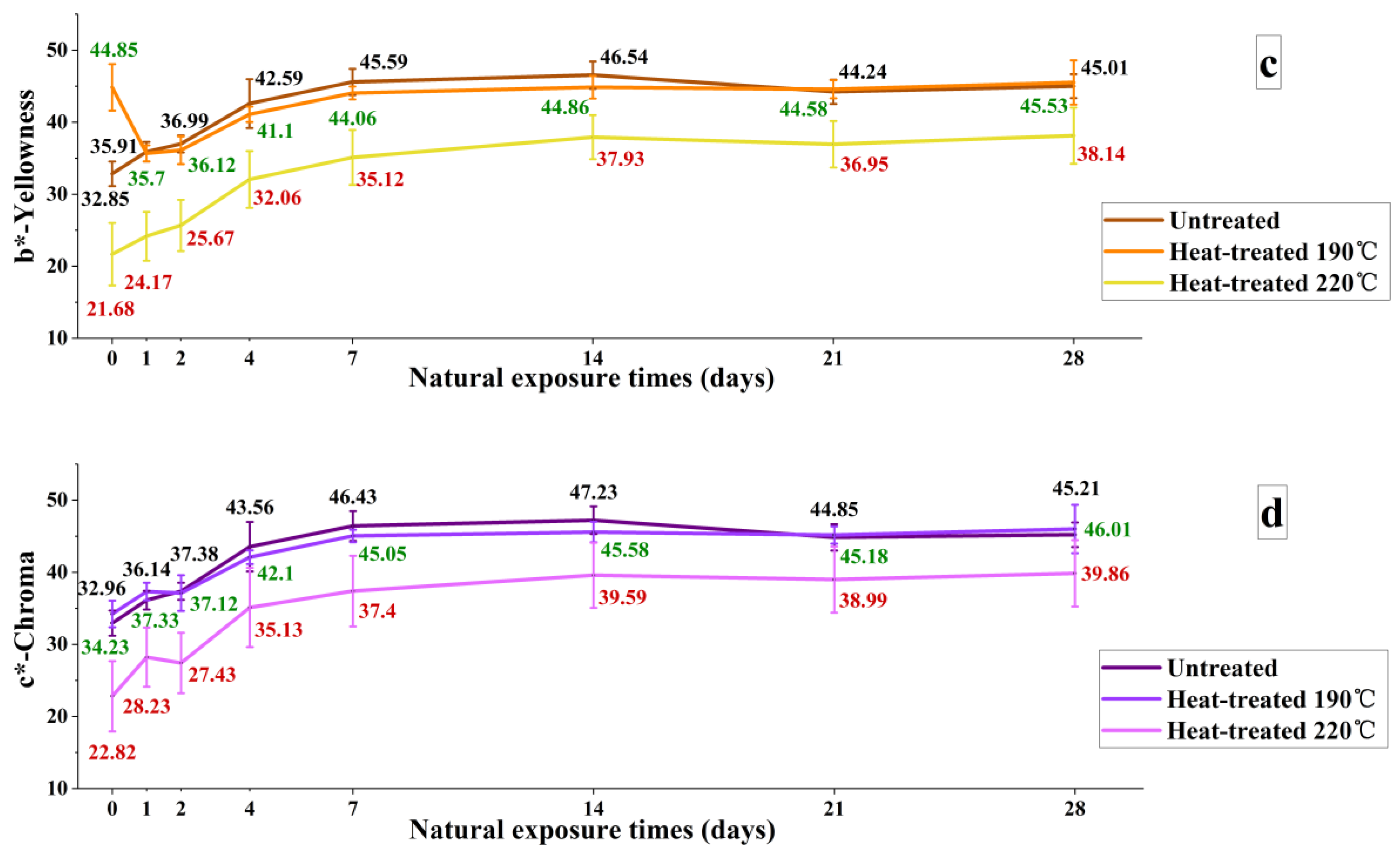
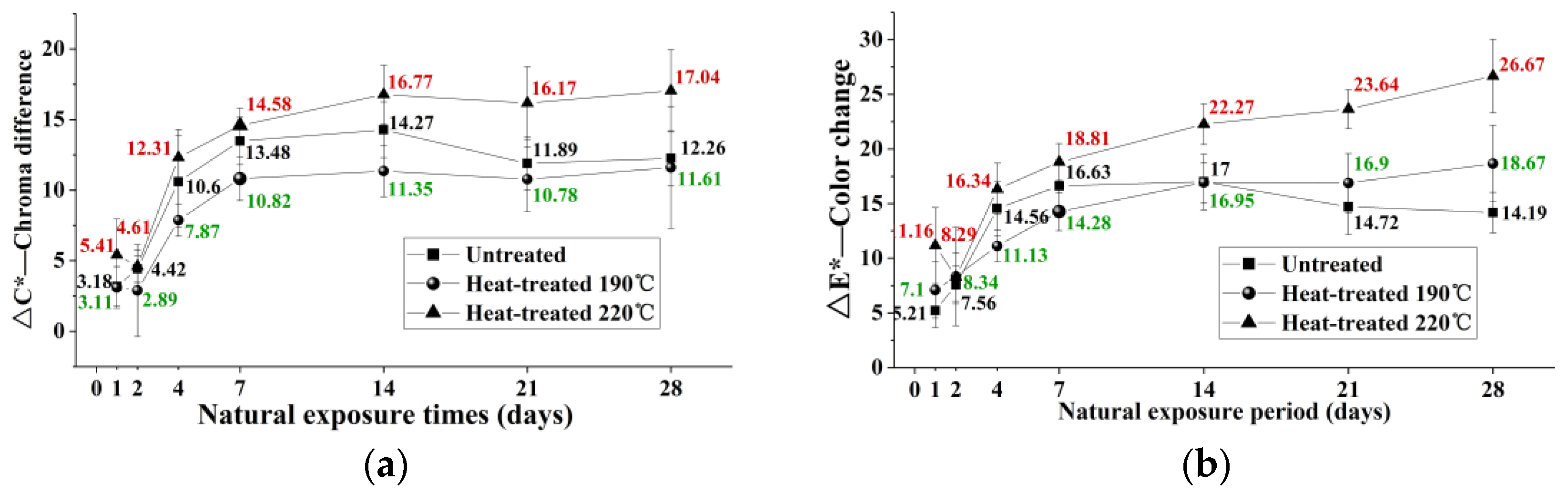
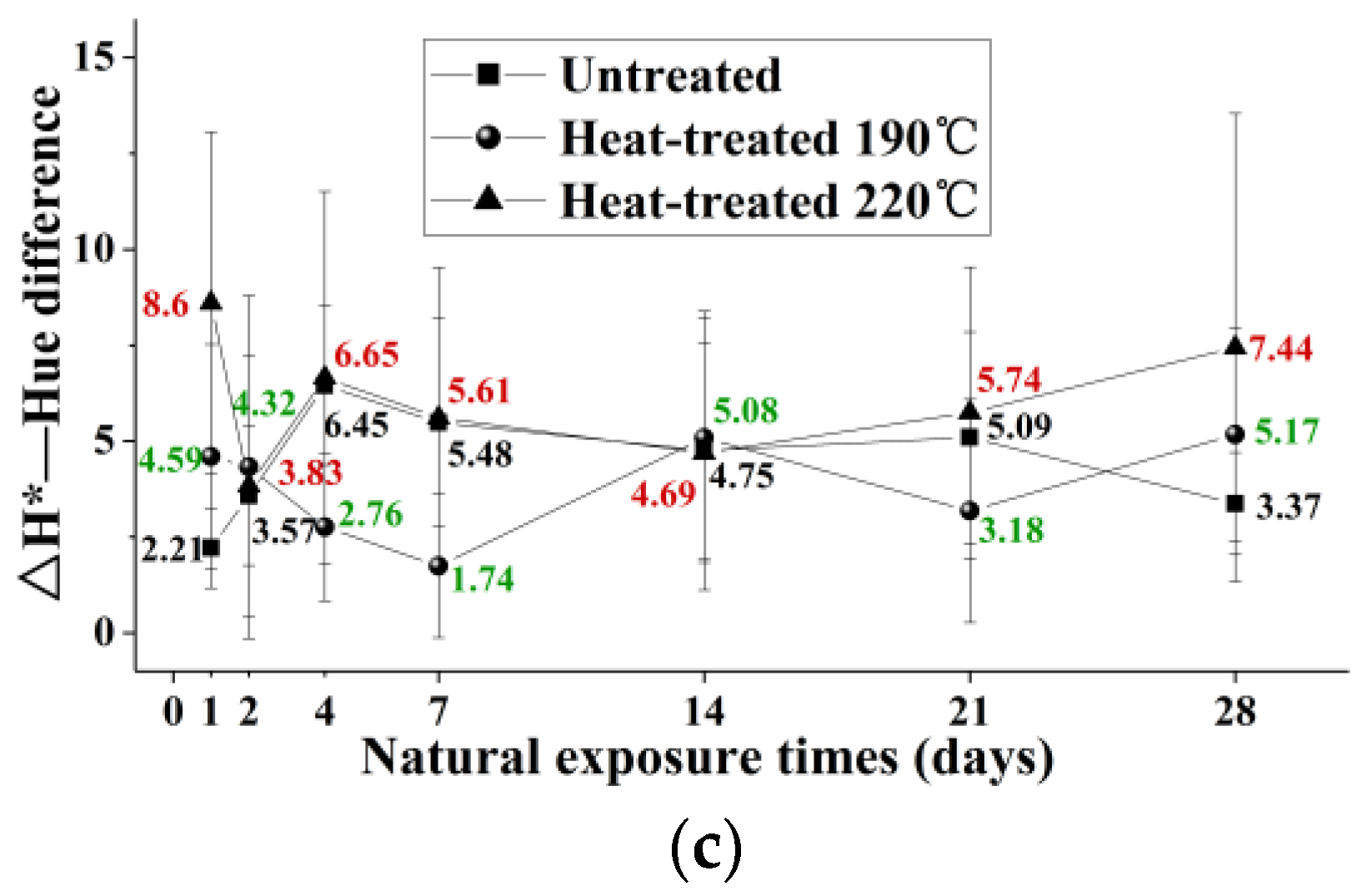
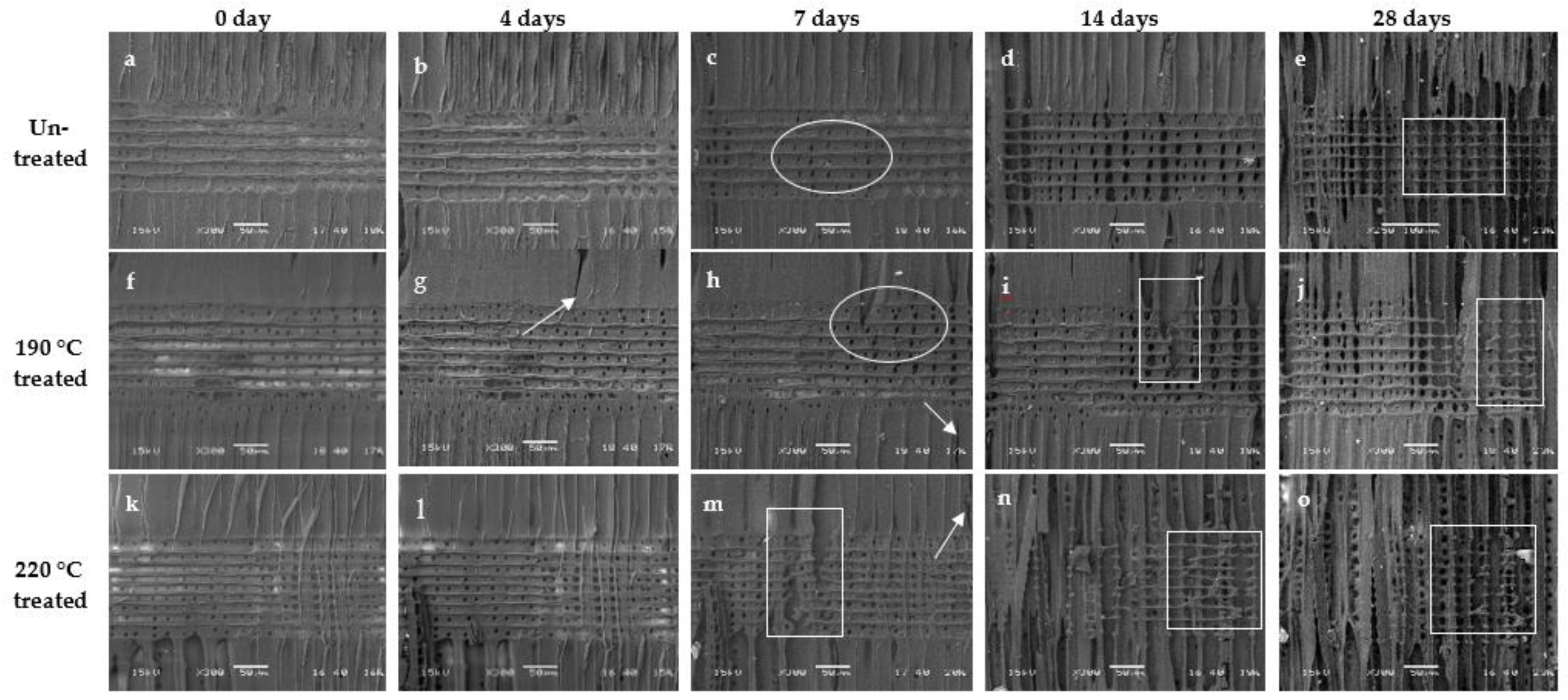
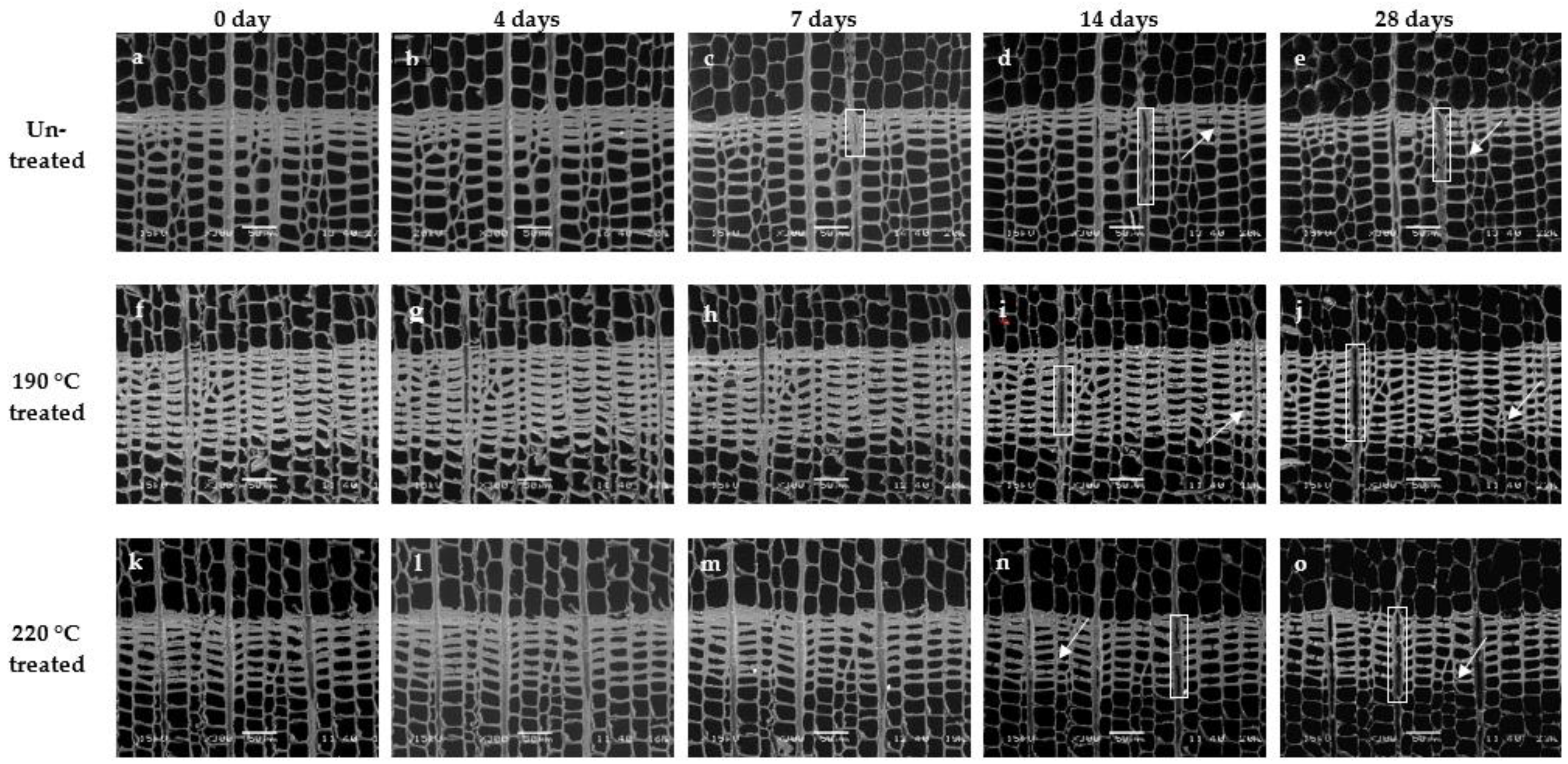
To quickly clarify the effect of heat treatment on weatherability of Cunninghamia lanceolate (Lamb.) Hook., we investigated the surface degradation under natural exposure. A comparison between heat-treated and untreated samples was taken based on surface color changes and structural decay at each interval. Over four weeks of natural exposure, multiple measurements were carried out. Results show that color change decreased in the order of 220 °C heat-treated > untreated > 190 °C heat-treated. The results also indicate that the wood surface color stability was improved via the proper temperature of thermal modification. Low vacuum scanning electron microscopy (LVSEM) results expressed that thermal modification itself had caused shrinking in the wood surface structure. From the beginning of the weathering process, the heat treatment affected the surface structural stability. After natural exposure, the degree of wood structure decay followed the pattern 220 °C heat-treated > 190 °C heat-treated > untreated. Therefore, when considering the impact on the structure, thermal modification treatment as a protective measure to prevent weathering was not an ideal approach and requires further improvement.
Keywords: natural weathering; heat-treated; color change; wood anatomical; Cunninghamia lanceolate natural weathering; heat-treated; color change; wood anatomical; Cunninghamia lanceolate