The Interplay Between Combustion and Component Thermal Loading in Next-Generation Marine Engines Employing Reactivity-Controlled Compression Ignition

 ,
,  , , , , and
Abstract
1. Introduction
Motivation, Goal, and Objectives of the Present Study
2. Methodology
Experimental Setup and Reference Experimental Data
3. Simulation Methods
3.1. Predictive Combustion Model
3.2. The One-Dimensional Engine Model and Model-Coupling Methodology
3.3. In-Cylinder Heat Transfer Modeling and Predictive Thermal Solver
4. The Scope of the Research
Model Calibration and Validation
5. Design of Simulations
6. Results and Discussion
6.1. Validation of the In-Cylinder Wall Thermal Solver
6.2. Combustion Modeling Accuracy with Predictive Wall Thermal Solver
6.3. Relevant Engine Performance Indicators
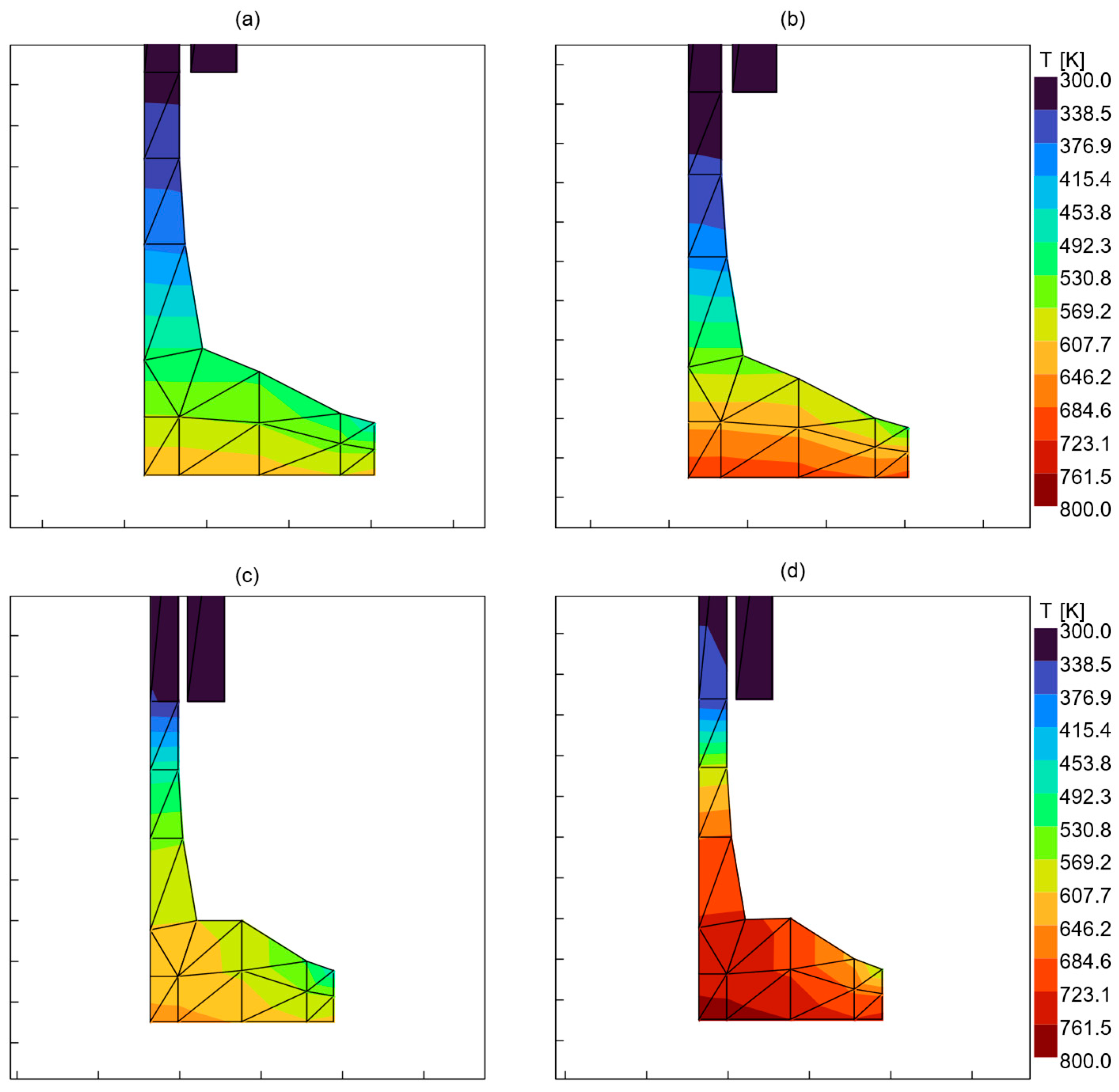
6.4. Thermal Loading of Engine CYLINDER Components in RCCI Combustion Regime
6.5. Piston Crown and Cylinder Head
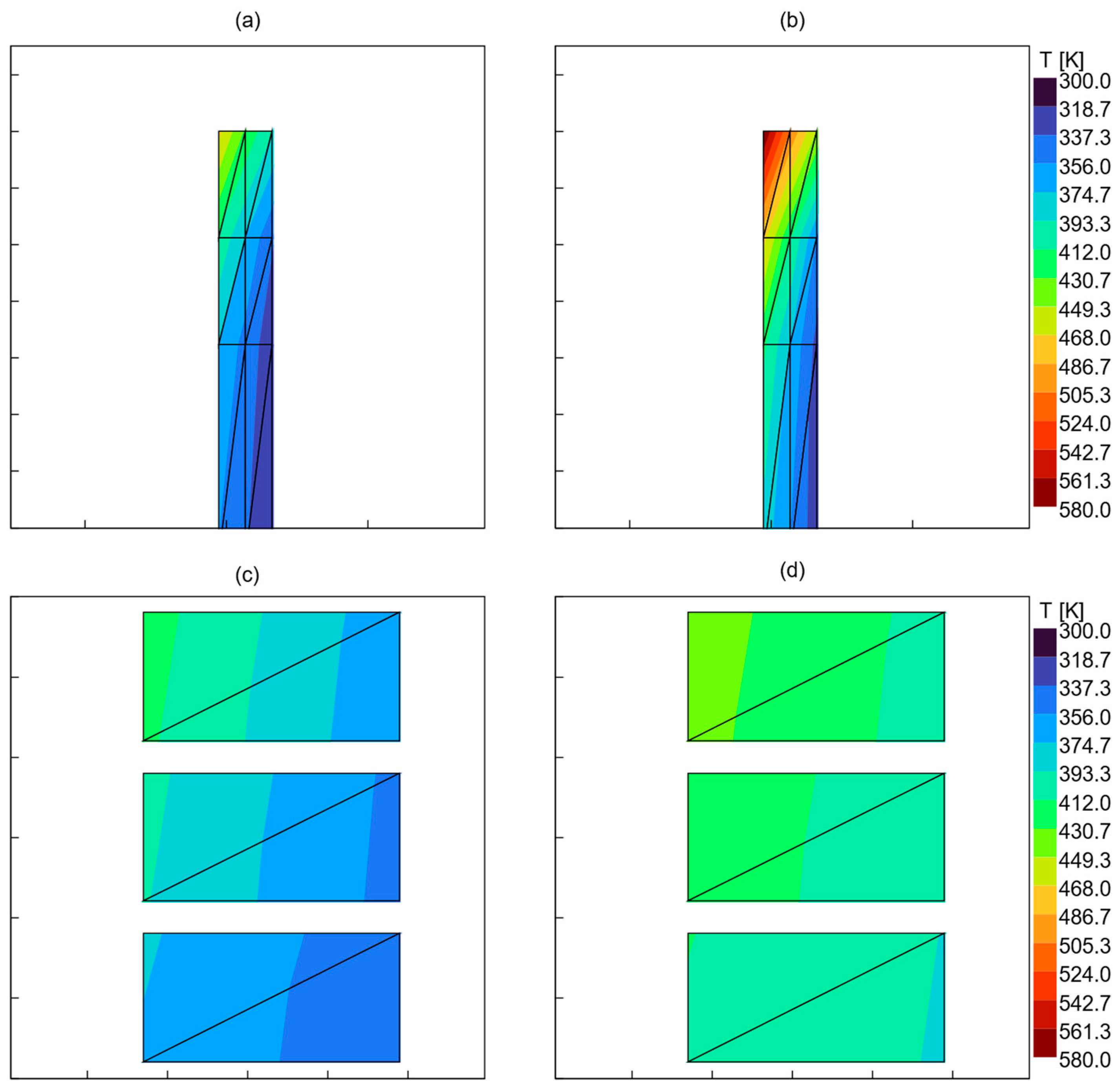
6.6. Intake and Exhaust Valves
6.7. Cylinder Liner and Piston Rings
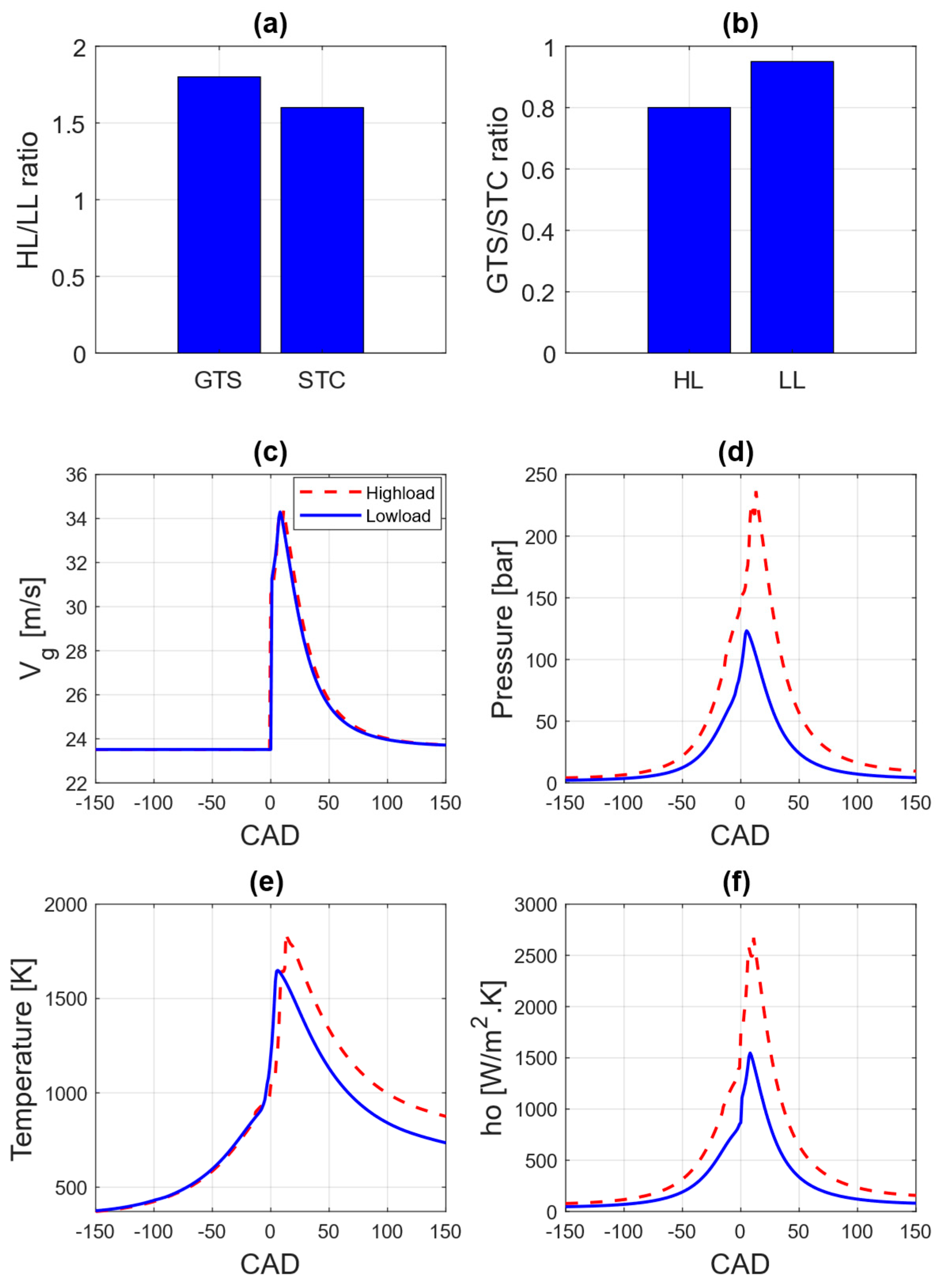
6.8. Heat Transfer Analysis
7. Improving RCCI Operation at Low Engine Loads by Cylinder Thermal Management
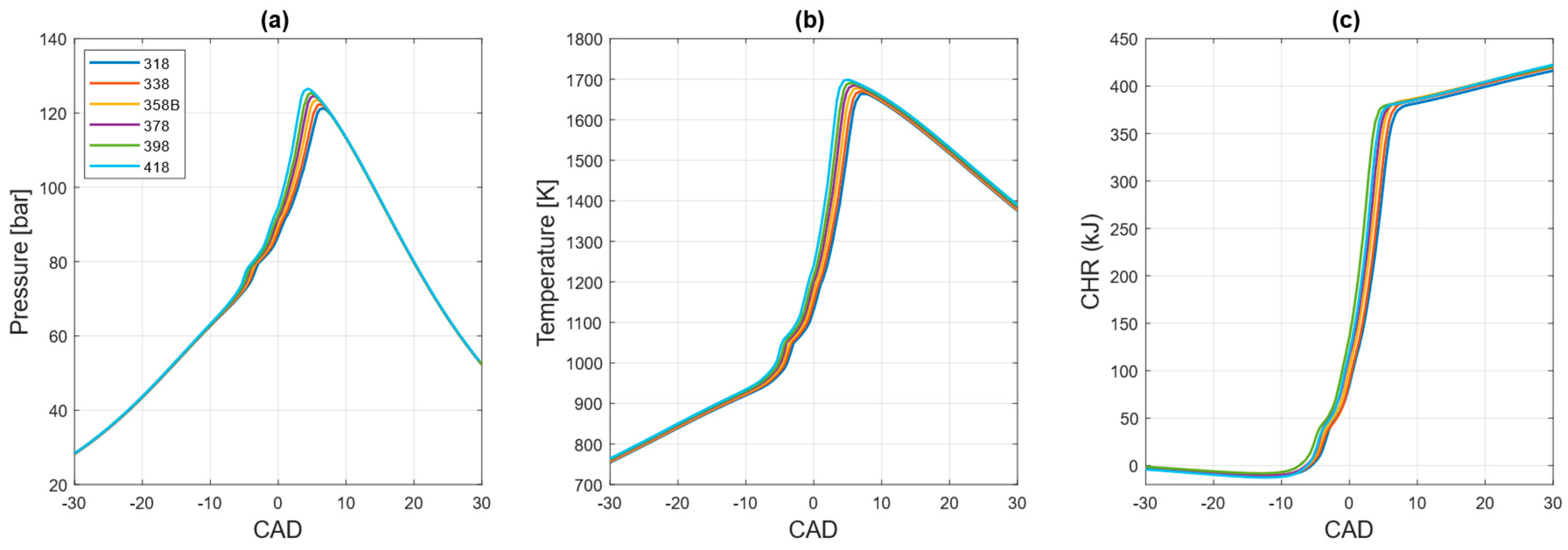
7.1. Effect of Coolant Temperature
7.2. Effect of Crankcase Oil Temperature
7.3. Reducing Thermal Loading at High Engine Loads with RCCI Combustion Control
8. Conclusions and Outlook
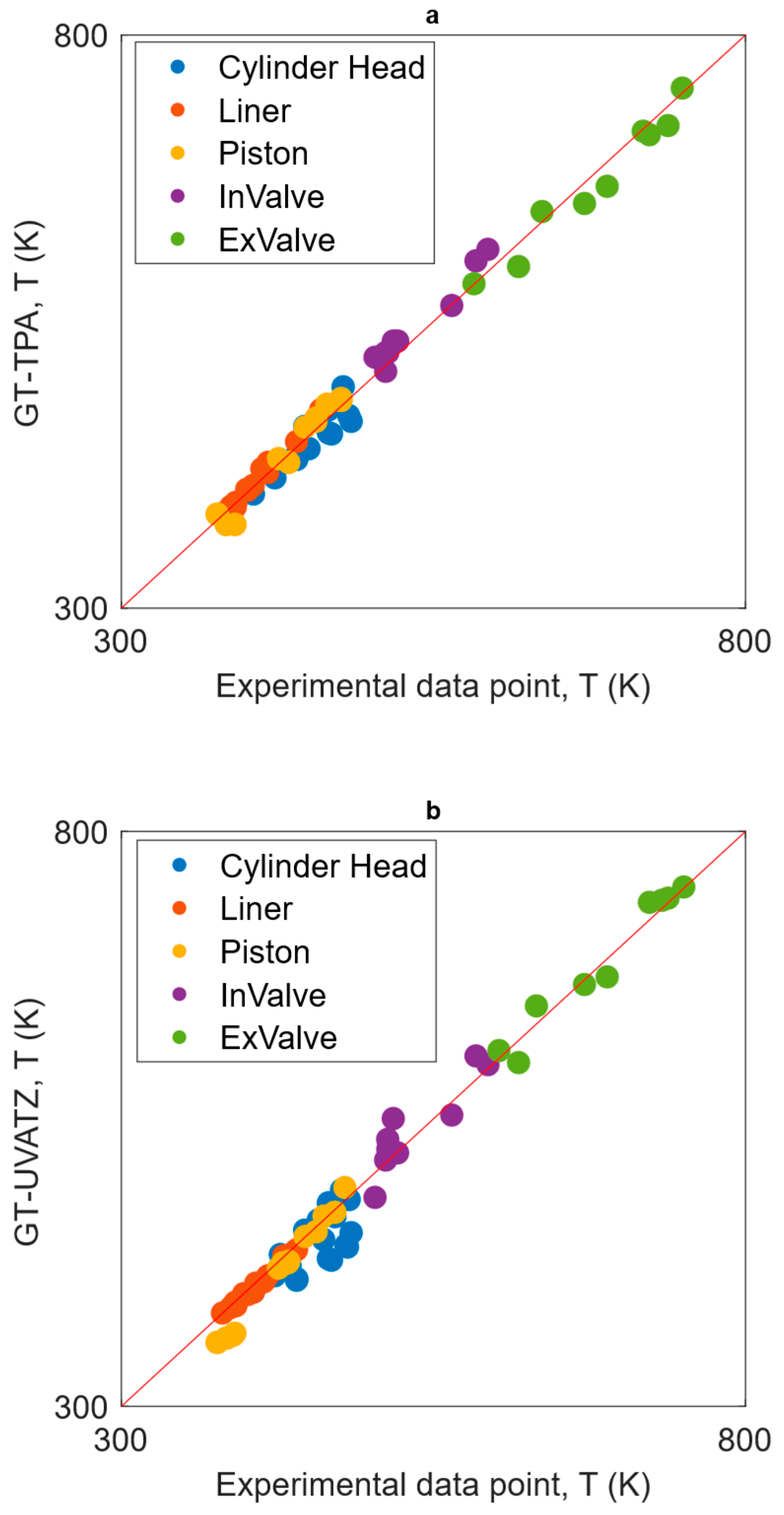
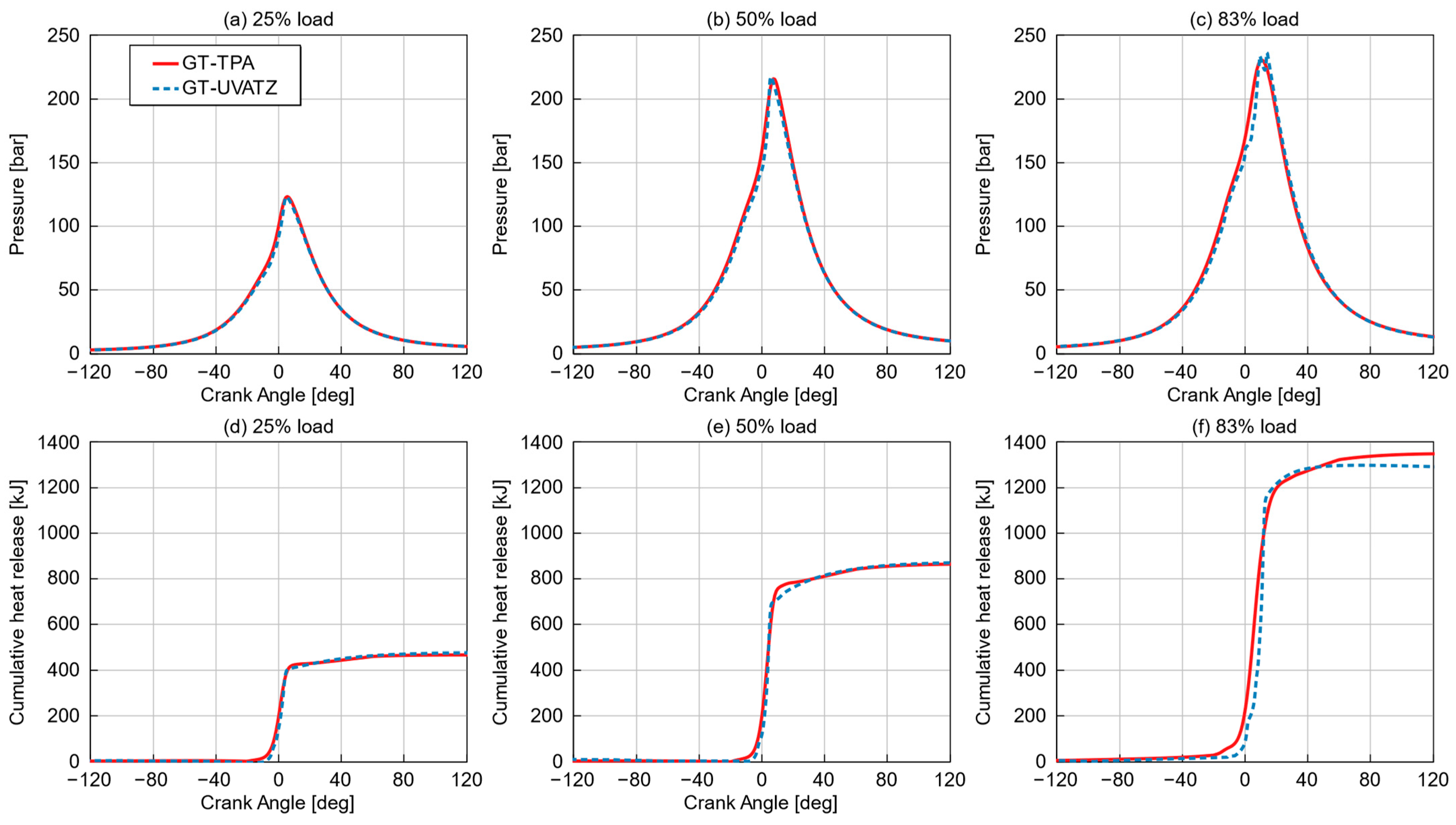
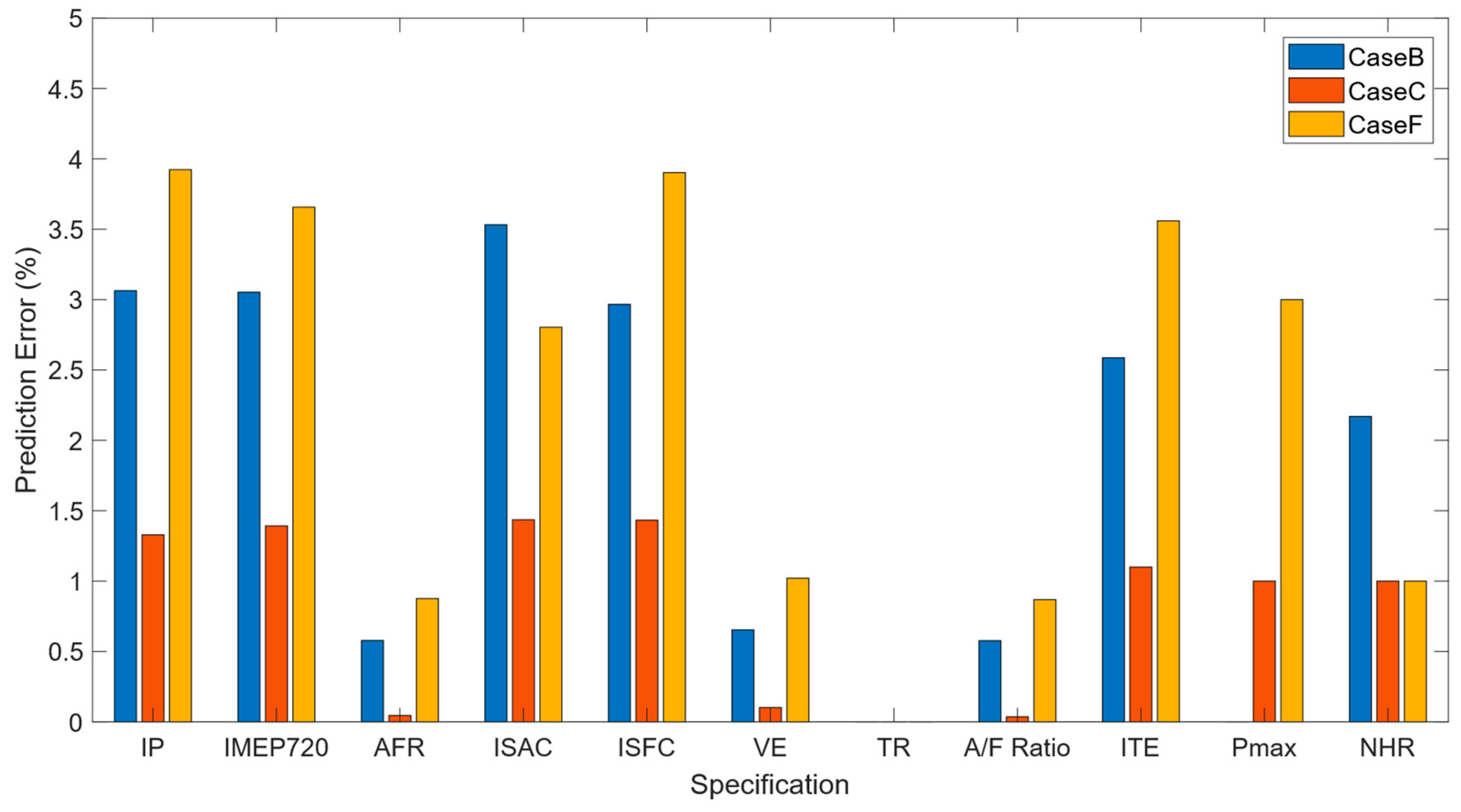
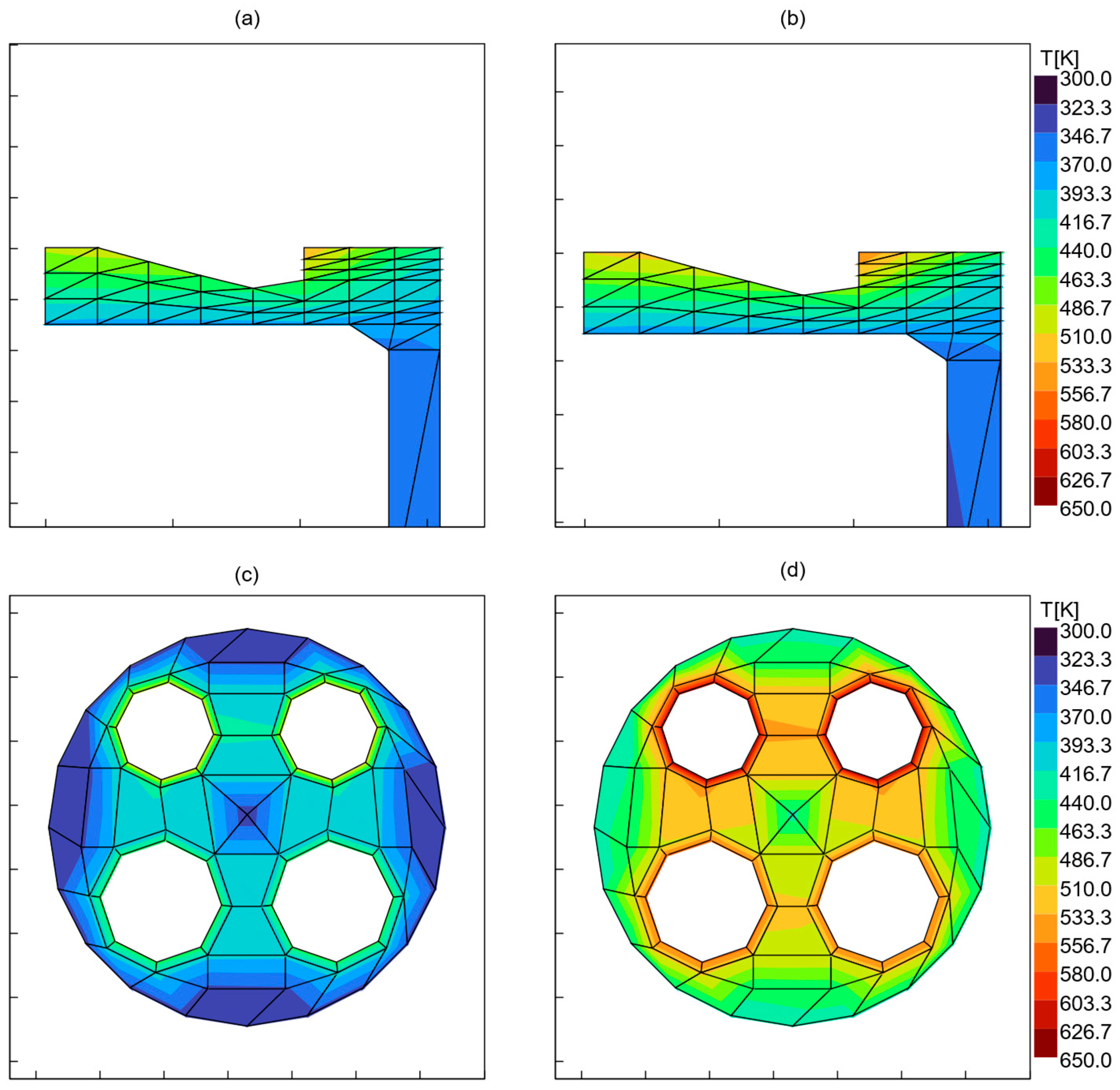
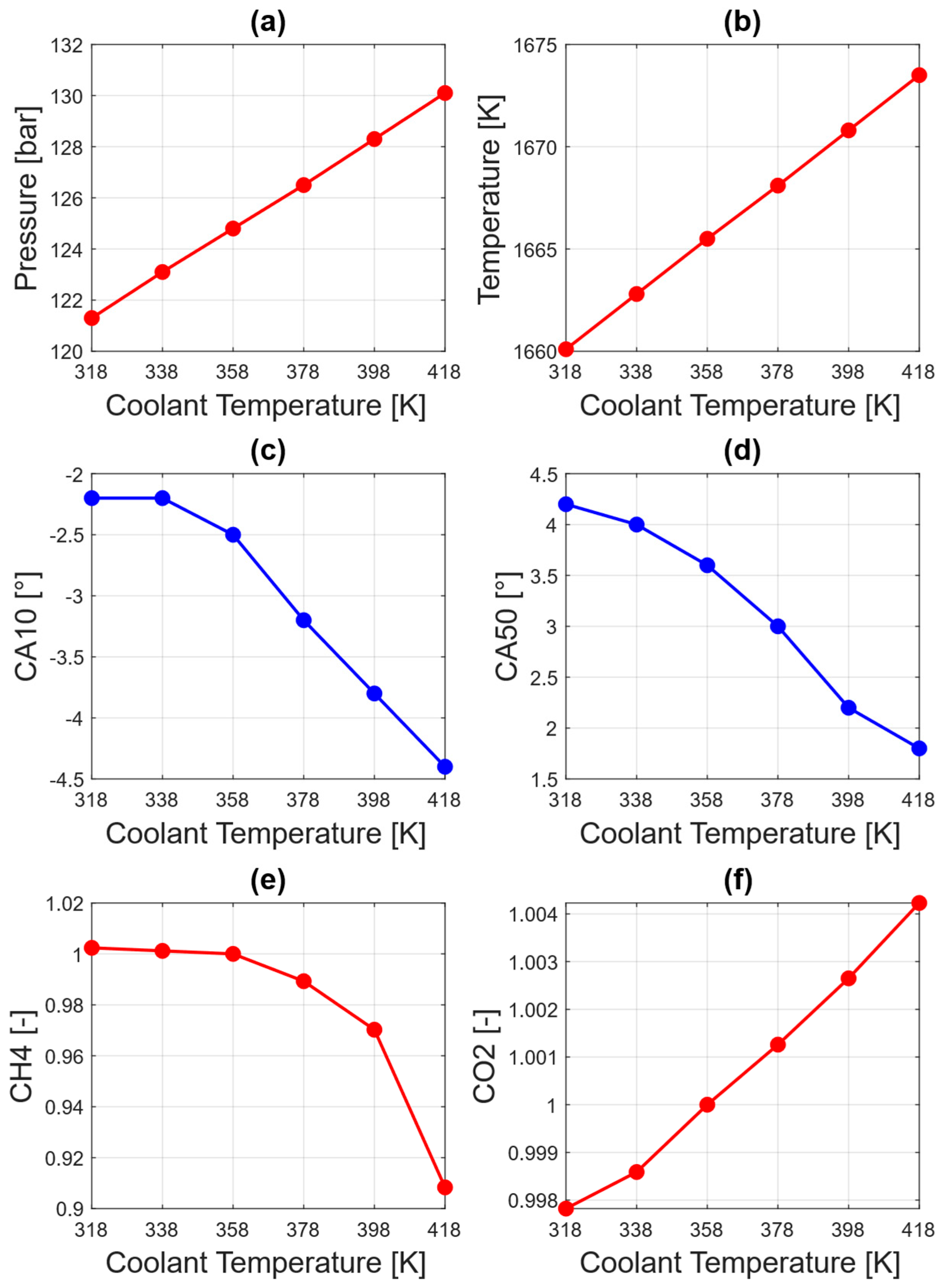
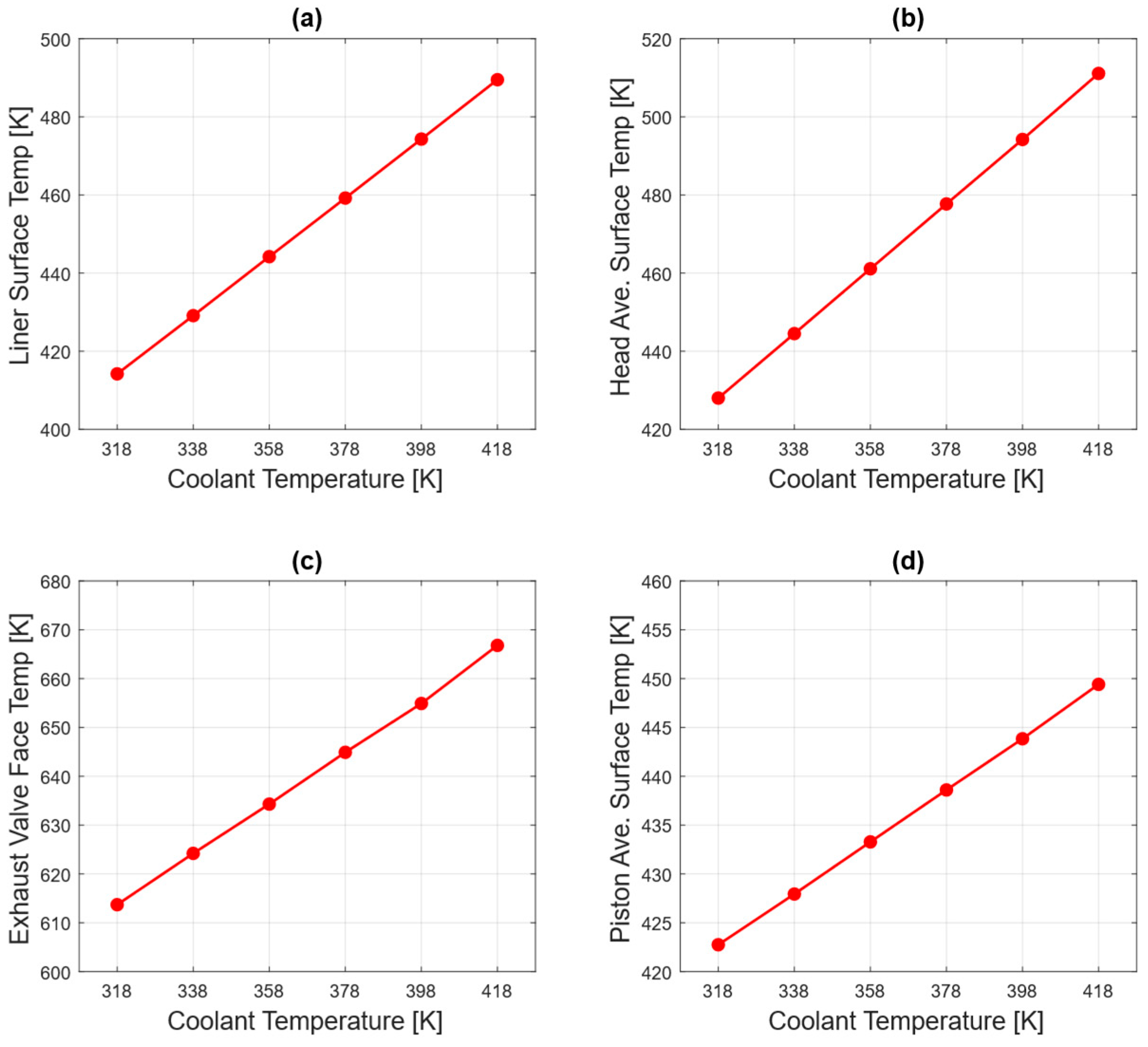
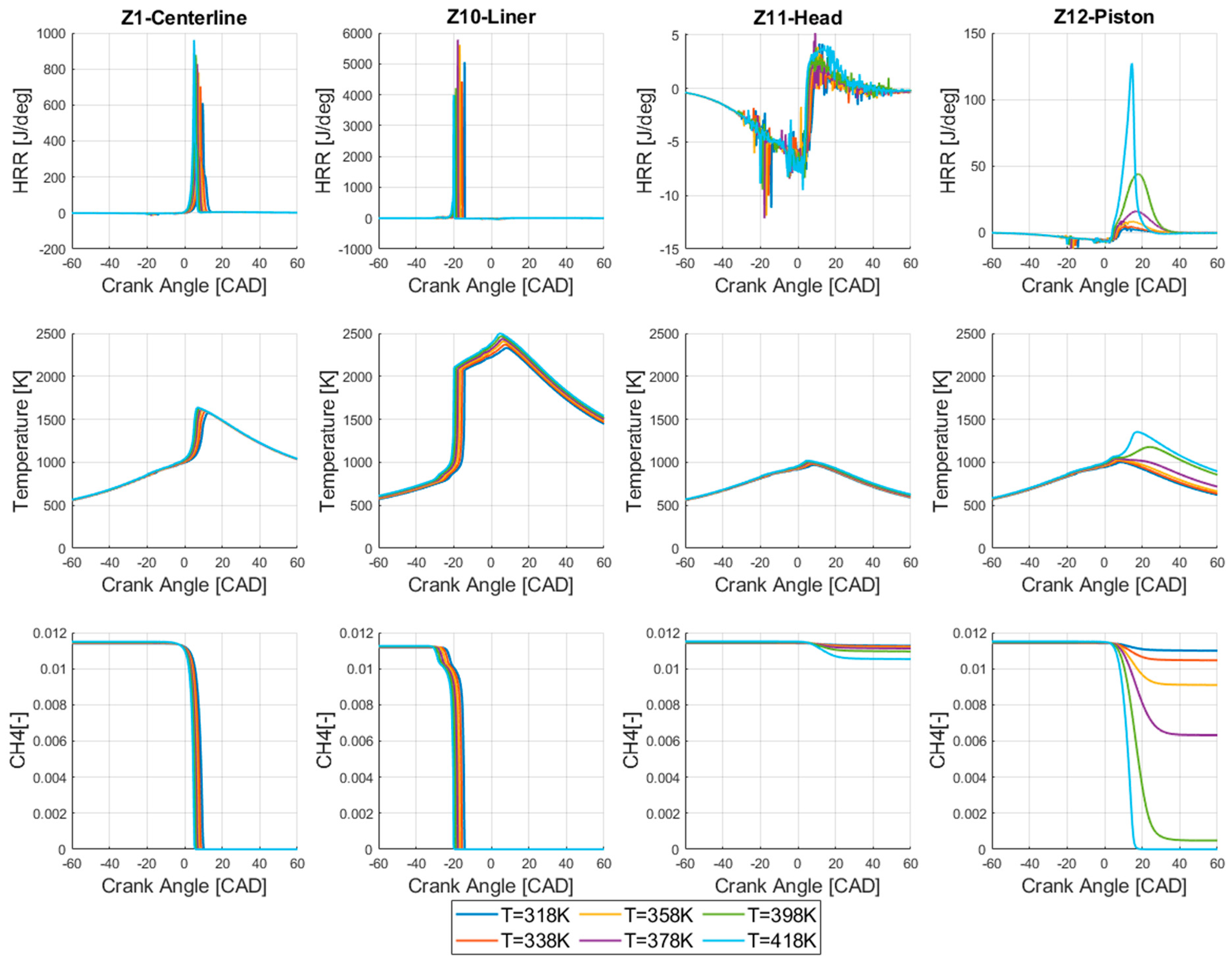
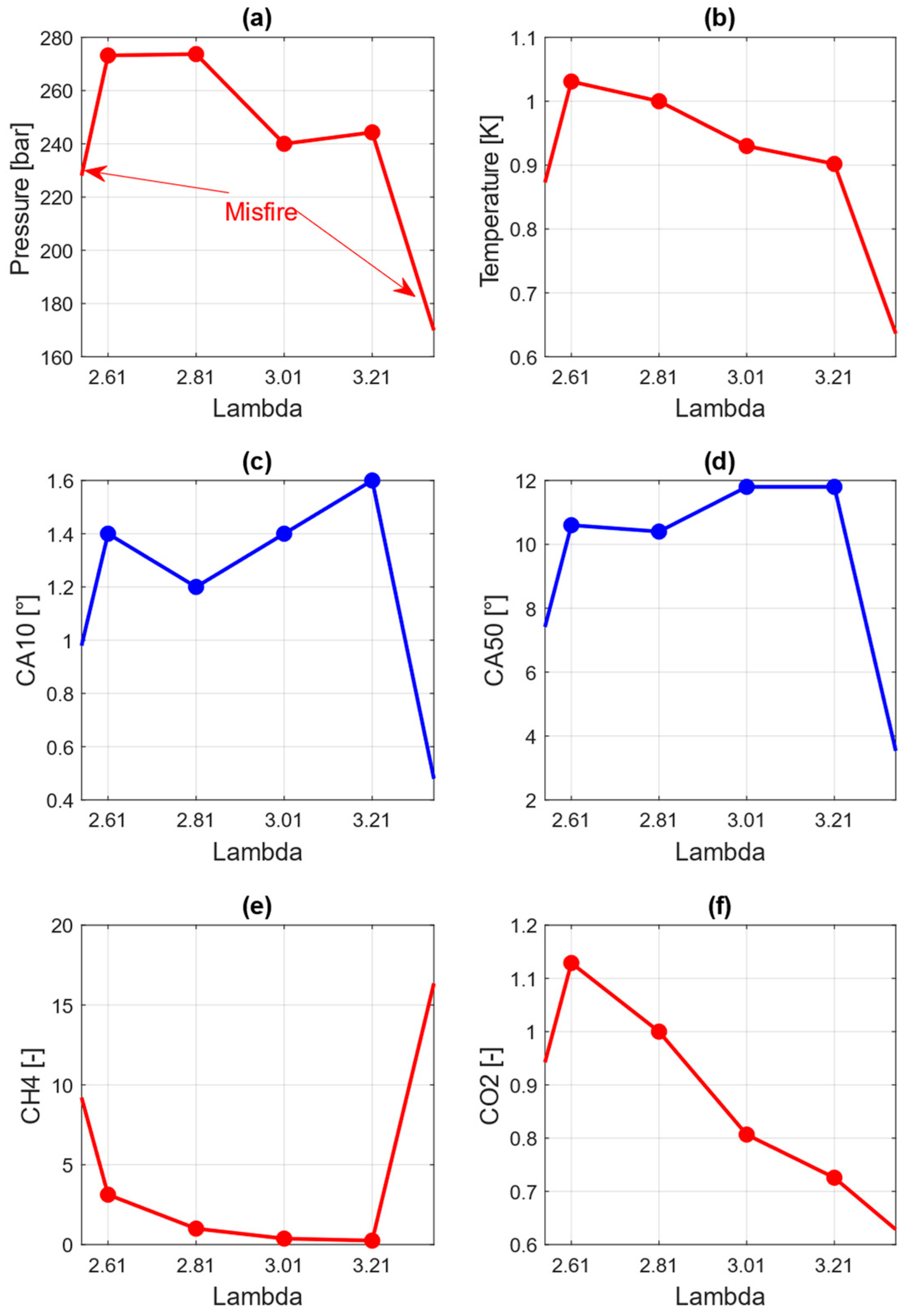
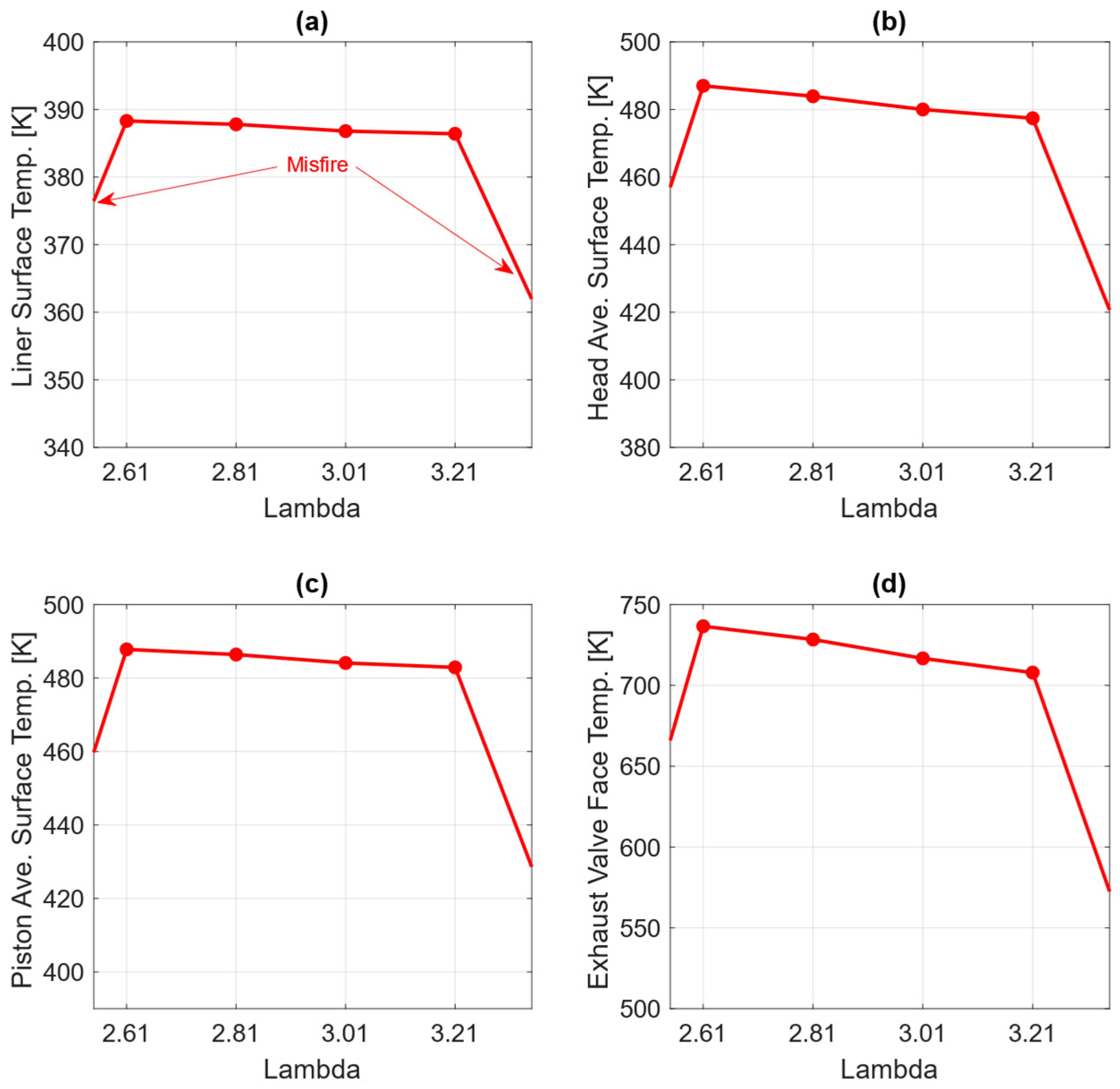
- The results revealed that RCCI operation induces large temperature differences across load ranges, creating challenges for both combustion stability at low load and thermal stress at high load. Low-load analysis showed that overcooling of cylinder head regions, rather than the liner, is a dominant contributor to methane slip and flame quenching. Conversely, high-load conditions produced substantial heat transfer and severe exhaust-valve temperatures, identifying hot-spot-induced pre-ignition as a key constraint for future RCCI fuel-flexibility strategies.
Outlook
Author Contributions
Funding
Data Availability Statement
Conflicts of Interest
Abbreviations
| Abbreviation | Full Term |
| A/F ratio | air-to-fuel ratio |
| aTDC | after top dead center |
| bTDC | before top dead center |
| BR | blend ratio |
| CA10/CA50 | crank angle at 10%/50% mass burned |
| CAD | crank angle degree |
| CFD | computational fluid dynamics |
| CH4 | methane |
| CHR | cumulative heat release |
| CO | carbon monoxide |
| CO2 | carbon dioxide |
| DF | dual-fuel |
| ECU | engine control unit |
| EVO | exhaust valve opening |
| FEM | finite element method |
| GT-Suite | Gamma Technologies Simulation Suite |
| H2 | hydrogen |
| HCCI | homogeneous charge compression ignition |
| HRF | high-reactivity fuel |
| HTC | heat transfer coefficient |
| IMEP | indicated mean effective pressure |
| ISAC | indicated specific air consumption |
| ISFC | indicated specific fuel consumption |
| ITE | indicated thermal efficiency |
| IVC | intake valve closing |
| LRF | low-reactivity fuel |
| LTC | low-temperature combustion |
| MZM | multi-zone model |
| NG | natural gas |
| RCCI | reactivity-controlled compression ignition |
| SOE | start of energizing |
| TDC | top dead center |
| TPA | three pressure analysis |
| TR | trapping ratio |
| UVATZ | University of Vaasa Advanced Thermo-kinetic multi-Zone |
| VE | volumetric efficiency |
| λ | lambda (air–fuel equivalence ratio) |
References
- Ahmad, Z.; Kaario, O.; Qiang, C.; Vuorinen, V.; Larmi, M. A parametric investigation of diesel/methane dual-fuel combustion progression/stages in a heavy-duty optical engine. Appl. Energy 2019, 251, 113191. [Google Scholar] [CrossRef] [Scilit]
- Kahila, H.; Wehrfritz, A.; Kaario, O.; Vuorinen, V. Large-eddy simulation of dual-fuel ignition: Diesel spray injection into a lean methane-air mixture. Combust. Flame 2019, 199, 131–151. [Google Scholar] [CrossRef] [Scilit]
- Mikulski, M.; Balakrishnan, P.R.; Hunicz, J. Natural gas-diesel reactivity controlled compression ignition with negative valve overlap and in-cylinder fuel reforming. Appl. Energy 2019, 254, 113638. [Google Scholar] [CrossRef] [Scilit]
- Li, J.; Yang, W.; Zhou, D. Review on the management of RCCI engines. Renew. Sustain. Energy Rev. 2017, 69, 65–79. [Google Scholar] [CrossRef] [Scilit]
- Kakoee, A.; Gharehghani, A. Comparative study of hydrogen addition effects on the natural-gas/diesel and natural-gas/dimethyl-ether reactivity controlled compression ignition mode of operation. Energy Convers. Manag. 2019, 196, 92–104. [Google Scholar] [CrossRef] [Scilit]
- Gharehghani, A.; Kakoee, A.; Andwari, A.M.; Megaritis, T.; Pesyridis, A. Numerical investigation of an RCCI engine fueled with natural gas/dimethyl-ether in various injection strategies. Energies 2021, 14, 1638. [Google Scholar] [CrossRef] [Scilit]
- Benajes, J.; Pastor, J.V.; García, A.; Monsalve-Serrano, J. The potential of RCCI concept to meet EURO VI NOx limitation and ultra-low soot emissions in a heavy-duty engine over the whole engine map. Fuel 2015, 159, 952–961. [Google Scholar] [CrossRef] [Scilit]
- García Valladolid, P.; Tunestål, P.; Monsalve-Serrano, J.; García, A.; Hyvönen, J. Impact of diesel pilot distribution on the ignition process of a dual fuel medium speed marine engine. Energy Convers. Manag. 2017, 149, 192–205. [Google Scholar] [CrossRef] [Scilit]
- Xia, L.; Willems, R.; de Jager, B.; Willems, F. Constrained Optimization of Fuel Efficiency for RCCI Engines. IFAC-PapersOnLine 2019, 52, 648–653. [Google Scholar] [CrossRef] [Scilit]
- Ansari, E.; Shahbakhti, M.; Naber, J. Optimization of performance and operational cost for a dual mode diesel-natural gas RCCI and diesel combustion engine. Appl. Energy 2018, 231, 549–561. [Google Scholar] [CrossRef] [Scilit]
- Paykani, A.; Garcia, A.; Shahbakhti, M.; Rahnama, P.; Reitz, R.D. Reactivity controlled compression ignition engine: Pathways towards commercial viability. Appl. Energy 2021, 282, 116174. [Google Scholar] [CrossRef] [Scilit]
- Paykani, A.; Kakaee, A.-H.; Rahnama, P.; Reitz, R.D. Progress and recent trends in reactivity-controlled compression ignition engines. Int. J. Engine Res. 2016, 17, 481–524. [Google Scholar] [CrossRef] [Scilit]
- Kokjohn, S.L.; Hanson, R.M.; Splitter, D.A.; Reitz, R.D. Fuel reactivity controlled compression ignition (RCCI): A pathway to controlled high-efficiency clean combustion. Int. J. Engine Res. 2011, 12, 209–226. [Google Scholar] [CrossRef] [Scilit]
- Mikulski, M.; Bekdemir, C. Understanding the role of low reactivity fuel stratification in a dual fuel RCCI engine—A simulation study. Appl. Energy 2017, 191, 689–708. [Google Scholar] [CrossRef] [Scilit]
- Wang, S.; Chong, C.T.; Józsa, V.; Chiong, M.-C. Investigation of NO emissions and chemical reaction kinetics of ammonia/methane flames under dual-fuel co-combustion mode at elevated air temperature conditions. Int. J. Hydrogen Energy 2024, 84, 968–981. [Google Scholar] [CrossRef] [Scilit]
- Park, K.H. Effect of cylinder wall temperature on marine engine combustion. JAMET 2023, 47, 309–316. [Google Scholar] [CrossRef] [Scilit]
- Vasudev, A.; Mikulski, M.; Balakrishnan, P.R.; Storm, X.; Hunicz, J. Thermo-kinetic multi-zone modelling of low temperature combustion engines. Prog. Energy Combust. Sci. 2022, 91, 100998. [Google Scholar] [CrossRef] [Scilit]
- Lashkarpour, S.M.; Khoshbakhti Saray, R.; Najafi, M. Multi-zone model for reactivity controlled compression ignition engine based on CFD approach. Energy 2018, 156, 213–228. [Google Scholar] [CrossRef] [Scilit]
- Komninos, N.P.; Rakopoulos, C.D. Heat transfer in hcci phenomenological simulation models: A review. Appl. Energy 2016, 181, 179–209. [Google Scholar] [CrossRef] [Scilit]
- Ekberg, K.; Leek, V.; Eriksson, L. Validation of an Open-Source Mean-Value Heavy-Duty Diesel Engine Model. In Proceedings of the 59th Conference on Simulation and Modelling (SIMS 59), Oslo, Norway, 26–28 September 2018; pp. 290–296. [Google Scholar] [CrossRef] [Scilit]
- Hautala, S.; Mikulski, M.; Söderäng, E.; Storm, X.; Niemi, S. Toward a digital twin of a mid-speed marine engine: From detailed 1D engine model to real-time implementation on a target platform. Int. J. Engine Res. 2022, 24, 4553–4571. [Google Scholar] [CrossRef] [Scilit]
- Stoumpos, S.; Theotokatos, G.; Mavrelos, C.; Boulougouris, E. Towards Marine Dual Fuel Engines Digital Twins—Integrated Modelling of Thermodynamic Processes and Control System Functions. J. Mar. Sci. Eng. 2020, 8, 200. [Google Scholar] [CrossRef] [Scilit]
- Sixel, E.J.; Hiltner, J.; Rickert, C. Use of 1-D simulation tools with a physical combustion model for the development of Diesel-Gas or Dual Fuel engines. In Proceedings of the 28th CIMAC World Congress on Combustion Engine Technology, Helsinki, Finland, 6–10 June 2016; pp. 6–10. [Google Scholar]
- Bekdemir, C.; Baert, R.; Willems, F.; Somers, B. Towards Control-Oriented Modeling of Natural Gas-Diesel RCCI Combustion; SAE International: Warrendale, PA, USA, 2015. [Google Scholar] [CrossRef] [Scilit]
- Hultqvist, A.; Engdar, U.; Johansson, B.; Klingmann, J. Reacting Boundary Layers in a Homogeneous Charge Compression Ignition (HCCI) Engine; SAE International: Warrendale, PA, USA, 2001. [Google Scholar] [CrossRef] [Scilit]
- Kakoee, A.; Vasudev, A.; Smulter, B.; Hyvonen, J.; Mikulski, M. A Predictive 1D Modeling Framework for Reactivity-Controlled Compression Ignition Engines, via a Chemistry-Based, Multizone Combustion Object; SAE International: Warrendale, PA, USA, 2023. [Google Scholar] [CrossRef] [Scilit]
- Kokjohn, S.L.; Musculus, M.P.B.; Reitz, R.D. Evaluating temperature and fuel stratification for heat-release rate control in a reactivity-controlled compression-ignition engine using optical diagnostics and chemical kinetics modeling. Combust. Flame 2015, 162, 2729–2742. [Google Scholar] [CrossRef] [Scilit]
- Jia, M.; Gingrich, E.; Wang, H.; Li, Y.; Ghandhi, J.B.; Reitz, R.D. Effect of combustion regime on in-cylinder heat transfer in internal combustion engines. Int. J. Engine Res. 2016, 17, 331–346. [Google Scholar] [CrossRef] [Scilit]
- Someya, S.; Okura, Y.; Munakata, T.; Okamoto, K. Instantaneous 2D imaging of temperature in an engine cylinder with flame combustion. Int. J. Heat Mass Transf. 2013, 62, 382–390. [Google Scholar] [CrossRef] [Scilit]
- Zhao, P.; Wang, L.; Chakraborty, N. Effects of the cold wall boundary on the flame structure and flame speed in premixed turbulent combustion. Proc. Combust. Inst. 2021, 38, 2967–2976. [Google Scholar] [CrossRef] [Scilit]
- Zhao, P.; Wang, L.; Chakraborty, N. Analysis of the flame–wall interaction in premixed turbulent combustion. J. Fluid Mech. 2018, 848, 193–218. [Google Scholar] [CrossRef] [Scilit]
- Zhang, Z.; Liu, F.; An, Y.; Gao, H.; Du, W.; Gao, Y.; Lou, J. Effect of wall surface temperature on ignition and combustion characteristics of diesel fuel spray impingement. Appl. Therm. Eng. 2018, 137, 47–53. [Google Scholar] [CrossRef] [Scilit]
- Tamadonfar, P.; Salomaa, V.-P.; Rintanen, A.; Karimkashi, S.; Zirwes, T.; Vuorinen, V.; Kaario, O. A numerical study on side-wall quenching of premixed laminar flames: An analysis of ammonia/hydrogen/air mixtures. Combust. Flame 2025, 275, 114100. [Google Scholar] [CrossRef] [Scilit]
- Poinsot, T.; Veynante, D. Theoretical and Numerical Combustion. Available online: https://elearning.cerfacs.fr/combustion/ (accessed on 19 December 2024).
- Ma, Z.; Henein, N.A.; Bryzik, W. A Model for Wear and Friction in Cylinder Liners and Piston Rings. Tribol. Trans. 2006, 49, 315–327. [Google Scholar] [CrossRef] [Scilit]
- Willems, R.; Willems, F.; Deen, N.; Somers, B. Heat release rate shaping for optimal gross indicated efficiency in a heavy-duty RCCI engine fueled with E85 and diesel. Fuel 2021, 288, 119656. [Google Scholar] [CrossRef] [Scilit]
- Leppänen, A.; Kumpula, A.; Vaara, J.; Cattarinussi, M.; Könnö, J.; Frondelius, T. Thermomechanical Fatigue Analysis of Cylinder Head. Raken. Mek. 2017, 50, 182–185. [Google Scholar] [CrossRef] [Scilit]
- Nanda, S.; Jia, B.; Smallbone, A.; Roskilly, A. Fundamental Analysis of Thermal Overload in Diesel Engines: Hypothesis and Validation. Energies 2017, 10, 329. [Google Scholar] [CrossRef] [Scilit]
- Wang, D.; Shi, Z.; Yang, Z.; Chen, H.; Wang, M.; Li, Y. Numerical analysis of heat transfer between a wall and diesel spray: Effect on ignition characteristics. Fuel 2023, 334, 126595. [Google Scholar] [CrossRef] [Scilit]
- Kikusato, A.; Kusaka, J.; Daisho, Y. A Numerical Study on Predicting Combustion Chamber Wall Surface Temperature Distributions in a Diesel Engine and Their Effects on Combustion, Emission and Heat Loss Characteristics by Using a 3D-CFD Code Combined with a Detailed Heat Transfer Model; SAE International: Warrendale, PA, USA, 2015. [Google Scholar] [CrossRef] [Scilit]
- Thermodynamics and Fluid Mechanics Group; Annand, W.J.D. Heat Transfer in the Cylinders of Reciprocating Internal Combustion Engines. Proc. Inst. Mech. Eng. 1963, 177, 973–996. [Google Scholar] [CrossRef] [Scilit]
- Hohenberg, G.F. Advanced Approaches for Heat Transfer Calculations; SAE International: Warrendale, PA, USA, 1979. [Google Scholar] [CrossRef] [Scilit]
- Woschni, G. A Universally Applicable Equation for the Instantaneous Heat Transfer Coefficient in the Internal Combustion Engine; SAE International: Warrendale, PA, USA, 1967. [Google Scholar] [CrossRef] [Scilit]
- Chang, J.; Güralp, O.; Filipi, Z.; Assanis, D.; Kuo, T.-W.; Najt, P.; Rask, R. New Heat Transfer Correlation for an HCCI Engine Derived from Measurements of Instantaneous Surface Heat Flux. SAE Trans. 2004, 113, 1576–1593. [Google Scholar]
- Eichmeier, J.U.; Reitz, R.D.; Rutland, C. A Zero-Dimensional Phenomenological Model for RCCI Combustion Using Reaction Kinetics. SAE Int. J. Engines 2014, 7, 106–119. [Google Scholar] [CrossRef] [Scilit]
- Neshat, E.; Saray, R.K. Effect of different heat transfer models on HCCI engine simulation. Energy Convers. Manag. 2014, 88, 1–14. [Google Scholar] [CrossRef] [Scilit]
- Mikulski, M.; Bekdemir, C.; Willems, F.P.T. Experimental validation of a combustion kinetics based multi-zone model for natural gas-diesel RCCI engines. In Proceedings of the 2016 Symposium for Combustion Control (SCC 2016), Aachen, Germany, 15–16 June 2016. [Google Scholar]
- Christiansen, C.A. Heat Transfer in Two-Stroke Diesel Engines for Large Ship Propulsion. Ph.D. Thesis, Technical University of Denmark, Lyngby, Denmark, 2012. [Google Scholar]
- Rakopoulos, C.D.; Mavropoulos, G.C. Experimental instantaneous heat fluxes in the cylinder head and exhaust manifold of an air-cooled diesel engine. Energy Convers. Manag. 2000, 41, 1265–1281. [Google Scholar] [CrossRef] [Scilit]
- Wilhelmsson, C.; Vressner, A.; Tunestål, P.; Johansson, B.; Särner, G.; Aldén, M. Combustion Chamber Wall Temperature Measurement and Modeling During Transient HCCI Operation; SAE International: Warrendale, PA, USA, 2005. [Google Scholar] [CrossRef] [Scilit]
- Broatch, A.; Olmeda, P.; Margot, X.; Escalona, J. New approach to study the heat transfer in internal combustion engines by 3D modelling. Int. J. Therm. Sci. 2019, 138, 405–415. [Google Scholar] [CrossRef] [Scilit]
- Torregrosa, A.; Olmeda, P.; Degraeuwe, B.; Reyes, M. A concise wall temperature model for DI Diesel engines. Appl. Therm. Eng. 2006, 26, 1320–1327. [Google Scholar] [CrossRef] [Scilit]
- Berni, F.; Fontanesi, S. A 3D-CFD methodology to investigate boundary layers and assess the applicability of wall functions in actual industrial problems: A focus on in-cylinder simulations. Appl. Therm. Eng. 2020, 174, 115320. [Google Scholar] [CrossRef] [Scilit]
- Kim, N.; Ko, I.; Min, K. Development of a zero-dimensional turbulence model for a spark ignition engine. Int. J. Engine Res. 2019, 20, 441–451. [Google Scholar] [CrossRef] [Scilit]
- Cho, S.; Song, C.; Kim, N.; Oh, S.; Han, D.; Min, K. Influence of the wall temperatures of the combustion chamber and intake ports on the charge temperature and knock characteristics in a spark-ignited engine. Appl. Therm. Eng. 2021, 182, 116000. [Google Scholar] [CrossRef] [Scilit]
- Salahi, M.M.; Mahmoudzadeh Andwari, A.; Kakoee, A.; Hyvonen, J.; Gharehghani, A.; Mikulski, M.; Lendormy, É. Novel Chemical Kinetics Mechanism for Robust Simulation of Multi-Component Fuel Blends in Engine Conditions; SAE International: Warrendale, PA, USA, 2024. [Google Scholar] [CrossRef] [Scilit]
- Zhang, H.; Cui, Y.; Liang, G.; Li, L.; Zhang, G.; Qiao, X. Fatigue life prediction analysis of high-intensity marine diesel engine cylinder head based on fast thermal fluid solid coupling method. J. Braz. Soc. Mech. Sci. Eng. 2021, 43, 327. [Google Scholar] [CrossRef] [Scilit]
- Patil, M.M.; Pise, A.; Gokhale, N. Simulation of Conjugate Heat Transfer (CHT) Between Engine Head and Cooling Medium of Diesel Engine; SAE International: Warrendale, PA, USA, 2015. [Google Scholar] [CrossRef] [Scilit]
- Wu, M.; Pei, Y.; Qin, J.; Li, X.; Zhou, J.; Zhan, Z.S.; Guo, Q.-Y.; Liu, B.; Hu, T.G. Study on Methods of Coupling Numerical Simulation of Conjugate Heat Transfer and In-Cylinder Combustion Process in GDI Engine; SAE International: Warrendale, PA, USA, 2017. [Google Scholar] [CrossRef] [Scilit]
- Yao, T.; Pei, Y.; Zhong, B.-J.; Som, S.; Lu, T.; Luo, K.H. A compact skeletal mechanism for n-dodecane with optimized semi-global low-temperature chemistry for diesel engine simulations. Fuel 2017, 191, 339–349. [Google Scholar] [CrossRef] [Scilit]
- Millo, F.; Caputo, S.; Cubito, C.; Calamiello, A.; Mercuri, D.; Rimondi, M. Numerical Simulation of the Warm-Up of a Passenger Car Diesel Engine Equipped with an Advanced Cooling System; SAE International: Warrendale, PA, USA, 2016. [Google Scholar] [CrossRef] [Scilit]
- Institution of Mechanical Engineers (IMechE). Vehicle Thermal Management Systems Conference and Exhibition (VTMS10); Woodhead Publishing: Cambridge, UK, 2011. [Google Scholar]
- Graziano, E.; Bruno, L.; Corrado, P.; Pierson, S.; Virelli, G. Set-Up and Validation of an Integrated Engine Thermal Model in GT-SUITE for Heat Rejection Prediction; SAE International: Warrendale, PA, USA, 2019. [Google Scholar] [CrossRef] [Scilit]
- Jay, D. CR development in the last decade in Wärtsilä. In Proceedings of the 28th CIMAC world congress, Helsinky, Finland, 6–10 June 2016; pp. 6–10. [Google Scholar]
- ISO 8217:2024; Petroleum Products—Fuels (Class F)—Specifications of Marine Fuels. International Organization for Standardization (ISO): Geneva, Switzerland, 2017.
- Åstrand, U.; Aatola, H.; Myllykoski, J.M. Wärtsilä 31—World’s Most Efficient Four Stroke Engine. In Proceedings of the 28th CIMAC Congress, Helsinki, Finland, 6–10 June 2016. [Google Scholar]
- Vasudev, A.; Kakoee, A.; Axelsson, M.; Almani, H.M.; Hyvönen, J.; Mikulski, M. Advancing autonomy of chemical kinetics based multizone models for reactivity controlled compression ignition engines. Energy Convers. Manag. 2024, 312, 118562. [Google Scholar] [CrossRef] [Scilit]
- GT-Suite. Engine Performance Application Manual; Gamma Technologies: Westmont, IL, USA, 2023. [Google Scholar]
- Heywood, J.B. Internal Combustion Engine Fundamentals; McGraw Hill: New York, NY, USA, 1988. [Google Scholar]
- Mikulski, M.; Ramesh, S.; Bekdemir, C. Reactivity Controlled Compression Ignition for clean and efficient ship propulsion. Energy 2019, 182, 1173–1192. [Google Scholar] [CrossRef] [Scilit]
- Benajes, J.; García, A.; Pastor, J.M.; Monsalve-Serrano, J. Effects of piston bowl geometry on Reactivity Controlled Compression Ignition heat transfer and combustion losses at different engine loads. Energy 2016, 98, 64–77. [Google Scholar] [CrossRef] [Scilit]
- Gu, C.; Wang, R.; Tian, T. Modeling the Fatigue Wear of the Cylinder Liner in Internal Combustion Engines during the Break-In Period and Its Impact on Piston Ring Lubrication. Lubricants 2019, 7, 89. [Google Scholar] [CrossRef] [Scilit]
- Rahmani, R.; Rahnejat, H.; Fitzsimons, B.; Dowson, D. The effect of cylinder liner operating temperature on frictional loss and engine emissions in piston ring conjunction. Appl. Energy 2017, 191, 568–581. [Google Scholar] [CrossRef] [Scilit]
- Apaydin, S.; Doner, N. Effects of piston cooling gallery geometry on temperature and flow in a heavy-duty diesel engine. Therm. Sci. Eng. Prog. 2024, 51, 102644. [Google Scholar] [CrossRef] [Scilit]
- Margot, X.; Quintero, P.; Gomez-Soriano, J.; Escalona, J. Implementation of 1D–3D integrated model for thermal prediction in internal combustion engines. Appl. Therm. Eng. 2021, 194, 117034. [Google Scholar] [CrossRef] [Scilit]
- Wei, Z.; Goehring, T.; Mioduszewski, M.; Luo, L.; Kotrba, A.; Rybarz, M.; Ellinghaus, K.; Pieszkalla, M. Failure mechanisms and modes analysis of vehicle exhaust components and systems. In Handbook of Materials Failure Analysis with Case Studies from the Aerospace and Automotive Industries; Elsevier: Amsterdam, The Netherlands, 2016; pp. 393–432. [Google Scholar] [CrossRef] [Scilit]
- Singh, A.P.; Kumar, V.; Agarwal, A.K. Evaluation of comparative engine combustion, performance and emission characteristics of low temperature combustion (PCCI and RCCI) modes. Appl. Energy 2020, 278, 115644. [Google Scholar] [CrossRef] [Scilit]
- Johnston, T.; Zeman, J.; Dempsey, A. Mixing-controlled compression ignition of ethanol using exhaust rebreathe at a low-load operating condition—Single cylinder experiments in a heavy-duty diesel engine. Int. J. Engine Res. 2024, 26, 741–764. [Google Scholar] [CrossRef] [Scilit]
- Vasudev, A.; Soleimani, A.; Hyvönen, J.; Mikulski, M. Feasible route towards decarbonising marine transport with flexible, Hydrogen—Enriched, Reactivity Controlled Compression Ignition mid-speed engines. Int. J. Hydrogen Energy 2025, 142, 1196–1210. [Google Scholar] [CrossRef] [Scilit]
- Huang, Z.; Zhu, T.; Wang, L.; Wang, L.; Ali, A.S.; Nassef, M.G.A.; Wang, T.; Ahmed, R.H. Experimental Analysis of Ammonia-Hydrogen Energy Ratio and Valve Overlap Angle on the Combustion and Emissions Characteristics in Dual-Fuel Internal Combustion Engines. SSRN 2025. [Google Scholar] [CrossRef] [Scilit]
- Rao, X.; Sheng, C.; Guo, Z.; Zhang, X.; Yin, H.; Xu, C.; Yuan, C. Effects of textured cylinder liner piston ring on performances of diesel engine under hot engine tests. Renew. Sustain. Energy Rev. 2021, 146, 111193. [Google Scholar] [CrossRef] [Scilit]
- Hunicz, J.; Yang, L.; Rybak, A.; Ji, S.; Gęca, M.S.; Mikulski, M. Comparison of diesel and hydrotreated vegetable oil as the high-reactivity fuel in reactivity-controlled compression ignition. Energy Convers. Manag. 2025, 323, 119264. [Google Scholar] [CrossRef] [Scilit]
- CASEMATE–Computationally Aided Systems Engineering for Marine Advanced Technology for the Environment. Available online: https://www.uwasa.fi/fi/tutkimus/hankkeet/casemate-computationally-aided-systems-engineering-marine-advanced-technology (accessed on 14 October 2022).
- Flexible Solutions for Maritime Transport and Off-Road Machinery. Available online: https://cleanpropulsion.org/ (accessed on 14 October 2022).



| Specification | Description |
|---|---|
| Displacement and nominal speed | 32.45 L/720 rpm |
| Stroke/bore | 1.39:1 |
| Air system | External air compressor with air temperature and pressure control (up to 10 bar) |
| High-reactivity fuel system | Common-rail 2.0 with twin needle injector and multi-injection capability |
| Low-reactivity fuel system | Low-pressure, multi-point, upstream of the intake valves |
| Valvetrain | Four valve ports; variable intake valve closure (VIC); fixed exhaust valve opening (EVO) |
| Emission system | Horiba Mexa-One (NOx, CO, THC, CO2, O2) AVL415S (FSN-soot) |
| Indicative system | AVL Indicom, cylinder pressure transducer Kistler 6124 A, 300 bar range, 30 pC/bar sensitivity. |
| Engine control | Rapid prototyping platform |
| Test fuels | ISO 8217 [65] compliant LFO/LNG (MN = 80) |
| Load Regime | Case | λ (–) | ΔBR from Ref [pp] | SOE [CA bTDC] | ΔTint [K] | Pint [bar] | Experimental Role |
|---|---|---|---|---|---|---|---|
| Low-load | A | ref + 1.8 | −41.9 | +65 | 0 | +0.5 | Validation |
| Part-load | B | ref + 1.0 | −10.9 | +65 | 0 | +1.3 | Calibration/Validation |
| Mid-load | C | ref + 0.5 | +1.9 | +50 | −5 | +3.7 | Calibration |
| Mid-load | D | ref + 0.8 | +2.4 | +65 | −5 | +3.5 | Validation |
| Mid-load | E | ref + 0.8 | +0.9 | +26 | −5 | +3.8 | Validation |
| High-load | F | ref + 0.1 | +0.9 | +50 | −7 | +6.3 | Investigation |
| Structure to Structure HTR Parameters | Initial Component Temperatures and Boundary Conditions | ||||
|---|---|---|---|---|---|
| Skirt to Cylinder HTR Coefficient | W/(m2-K) | 2500 | Head Initial Temperature | K | 745 |
| Ring to Piston HTR Coefficient | W/(m2-K) | 15,000 | Piston | K | 440 |
| Ring to Cylinder HTR Coefficient | W/(m2-K) | 30,000 | Cylinder | K | 430 |
| Valve to Seat HTR Coefficient | W/(m2-K) | 70,000 | Int. Valve 1 | K | 556 |
| Valve to Guide HTR Coefficient | W/(m2-K) | 10,000 | Exh. Valve 1 | K | 635 |
| Head Gasket Contact Resistance | (m2-K)/W | 1 × 10⁻⁶ | Cylinder Coolant Temperature | K | 358 |
| Head Gasket Material/Conductivity | W/(m-K) | 1.23 × 100 | Cylinder Coolant HTC | W/(m2-K) | 12,000 |
| Head Gasket Material/Density | kg/m3 | 1.00 × 100 | Head Coolant Temperature | K | 353 |
| Head Gasket Material/Specific Heat | J/kg-K | 2,500,000 | Head Coolant HTC | W/(m2-K) | 8000 |
| Head Gasket Thickness | mm | 2 | Coolant to Valve HTC | W/(m2-K) | 3000 |
| Ring/Engine Friction Ratio | [-] | 0.25 | Cylinder Oil Temperature | K | 353 |
| Skirt/Engine Friction Ratio | [-] | 0.25 | Cylinder Oil HTC | W/(m2-K) | 1000 |
| Head to Valve Contact Resistance | (m2-K)/W | 1.00 × 10⁻¹² | Piston Oil Temp. (Zone 1) | K | 333 |
| Piston Oil HTC (Zone 1) | W/(m2-K) | 10,000 | |||
| Campaign | Load/Case | λ [–] | BR [pp] | Tcool [K] | Tpist_oil [K] | Investigation Objective |
|---|---|---|---|---|---|---|
| Campaign 1 | 10–83% Case A–E | According to Table 1 | 358 | 333 | O1. Validate the new framework using comprehensive experimental data. | |
| Campaign 2 | 25% Case B | ref B | ref B | O2. Benchmark component thermal loading at different RCCI operating conditions. | ||
| 83% Case F | ref F | ref F | ||||
| Campaign 3 | 25% Case B | ref B | ref B | 318–418 | 333 | O3a. Determine the sensitivity of RCCI combustion to wall temperature, considering spatially diversified heat transfer paths. O3b. Examine the feasibility of coolant and oil circuit temperature control for reducing methane slip at low engine loads. |
| 358 | 313–373 | |||||
| Campaign 4 | 83% Case F | −0.2 ref F +1 | −0.34 ref F +0.31 | 358 | 333 | O4a. Determine the sensitivity of wall temperature to RCCI operating conditions. O4b. Examine the feasibility of coordinated airpath–combustion control for reducing thermal stress during high-load RCCI operations. |
Disclaimer/Publisher’s Note: The statements, opinions and data contained in all publications are solely those of the individual author(s) and contributor(s) and not of MDPI and/or the editor(s). MDPI and/or the editor(s) disclaim responsibility for any injury to people or property resulting from any ideas, methods, instructions or products referred to in the content. |
© 2025 by the authors. Licensee MDPI, Basel, Switzerland. This article is an open access article distributed under the terms and conditions of the Creative Commons Attribution (CC BY) license.
Share and Cite
Kakoee, A.; Golbaghi, K.; Cafari, A.; Vasudev, A.; Mehranfar, S.; Andwari, A.M.; Smulter, B.; Hyvönen, J.; Mikulski, M. The Interplay Between Combustion and Component Thermal Loading in Next-Generation Marine Engines Employing Reactivity-Controlled Compression Ignition. Energies 2026, 19, 83. https://doi.org/10.3390/en19010083
Kakoee A, Golbaghi K, Cafari A, Vasudev A, Mehranfar S, Andwari AM, Smulter B, Hyvönen J, Mikulski M. The Interplay Between Combustion and Component Thermal Loading in Next-Generation Marine Engines Employing Reactivity-Controlled Compression Ignition. Energies. 2026; 19(1):83. https://doi.org/10.3390/en19010083
Chicago/Turabian StyleKakoee, Alireza, Kian Golbaghi, Alberto Cafari, Aneesh Vasudev, Sadegh Mehranfar, Amin Mahmoudzadeh Andwari, Ben Smulter, Jari Hyvönen, and Maciej Mikulski. 2026. "The Interplay Between Combustion and Component Thermal Loading in Next-Generation Marine Engines Employing Reactivity-Controlled Compression Ignition" Energies 19, no. 1: 83. https://doi.org/10.3390/en19010083
APA StyleKakoee, A., Golbaghi, K., Cafari, A., Vasudev, A., Mehranfar, S., Andwari, A. M., Smulter, B., Hyvönen, J., & Mikulski, M. (2026). The Interplay Between Combustion and Component Thermal Loading in Next-Generation Marine Engines Employing Reactivity-Controlled Compression Ignition. Energies, 19(1), 83. https://doi.org/10.3390/en19010083