1. Introduction
Magnetically coupled coil systems constitute a fundamental technology used in numerous electrical and energy-conversion applications, including transformers, actuators, and electromechanical transducers [
1,
2,
3]. In recent years, their modern implementations have gained increasing importance in advanced power-electronics and wireless-power-transfer systems. In most conventional systems, the coils share a common ferromagnetic core that guides the magnetic flux and enhances coupling. However, when the coils are placed in air, the system operates as an air-core transformer, which is particularly relevant in wireless power transfer (WPT) and contactless energy transmission applications [
4,
5]. Air-core transformers are often used in modern WPT systems due to their reduced core losses and suitability for high-frequency operation [
6,
7]. In such systems, the coils may differ in geometry, winding structure, and conductor type (e.g., solid or Litz wire). Accurate modeling of these structures requires considering frequency-dependent resistance and inductance, which can impact the system’s quality factor [
8,
9,
10]. Recent developments demonstrate that coil geometry plays a crucial role in achieving high efficiency and misalignment tolerance in modern WPT systems. For example, star-shaped transmitter arrays have been introduced to enhance rotation tolerance of freely moving receivers [
4], while integrated receiving coils placed within drone landing gear structures allow reliable charging despite imperfect positioning during landing [
6]. In underwater applications, coaxial antipodal dual-DD coils have been proposed as highly misalignment-tolerant structures for autonomous underwater vehicles (AUVs) [
7]. Additional components, such as ferromagnetic flux concentrators or conductive shielding plates, are frequently employed to enhance magnetic coupling and minimize leakage flux. These design variations significantly affect energy transfer efficiency and distribution of electromagnetic field within the system. Because of the relatively weak magnetic coupling and the absence of a ferromagnetic core, air-core coil systems are typically supplied by power electronic converters operating at high frequencies. The analysis and design of such systems are complex and highly frequency-dependent. As a result, engineers and researchers continuously seek efficient and fast-converging modeling techniques that maintain high computational accuracy while reducing simulation time and computational cost. Depending on the purpose of analysis, circuit, field, or equivalent models are used. For steady-state investigations, simplified circuit models are commonly applied due to their low computational requirements. Recent studies have shown that such models are particularly useful for analyzing the influence of component mistuning in compensated WPT systems. For instance, mistuned Series–Series topologies in electric vehicle charging applications have been extensively investigated to assess their sensitivity to parameter deviations and resonance shifts [
5]. However, these models may fail to accurately represent the electromagnetic behavior of air-core transformers, particularly when frequency-dependent effects become significant. On the other hand, 2D and 3D field models provide excellent accuracy but are computationally expensive, especially when multiple frequency points must be analyzed. Equivalent circuit models, such as Cauer or Foster-type circuits [
11,
12,
13,
14], offer a balance between accuracy and computational efficiency. These ladder networks are particularly effective in synthesizing frequency-dependent characteristics of magnetic components [
15]. They enable wideband frequency analysis by mapping the system’s field behavior into a set of lumped parameters that vary smoothly with frequency. The key challenge in constructing such models lies in accurately determining the equivalent circuit parameters from field data. Various techniques have been proposed for this purpose, including model order reduction methods and rational function fitting approaches [
16,
17,
18]. In this study, the Padé via Lanczos method (PvL), one of the most effective model reduction techniques, is employed. This approach is based on the eigenvalue decomposition of the finite element method (FEM) matrices and allows for an efficient extraction of frequency-dependent parameters.
In this paper, a magnetically coupled air-core coil system (
Figure 1) is analyzed. The equivalent circuit parameters are determined using a combination of short-circuit and no-load (idle) simulations. Proprietary FEM-based software developed by the authors is used to derive the system matrices and to implement the Padé via Lanczos reduction procedure. The obtained self and mutual inductances, as well as resistances, are compared with results from a full-field FEM model. The comparison confirms that the proposed approach enables fast and accurate modeling of wireless energy transfer systems, making it a valuable tool for the design and optimization of energy-efficient WPT devices. The main motivation for this work was the need for a fast and accurate algorithm capable of determining equivalent circuit parameters—particularly those of Cauer and Foster structures—directly from electromagnetic field data while minimizing computational cost. Moreover, the proposed approach aims to deliver wide-band, high-fidelity results significantly faster than classical FEM-based procedures. The analyzed coil configuration corresponds to solutions commonly employed in laboratory and prototype wireless power transfer systems, where wideband impedance models are essential for the design, control, and optimization of power electronic converters.
The main contributions of our paper can be summarized as follows:
proposal of a novel, fast, and accurate wideband modeling approach for magnetically coupled air-core WPT coils,
successful application of the Padé via Lanczos method for model order reduction (MOR) to synthesize the Cauer ladder network equivalent circuit,
development of a robust methodology that links the Finite Element Method field results with the lumped-element circuit model across a broad frequency range,
provision of a detailed analysis and interpretation of the derived circuit parameters.
2. Model of a Magnetically Coupled Air-Core Coil System
For the design, analysis, and synthesis of systems with electromagnetic fields, including magnetically coupled air-core coils, numerical methods based on spatial discretization are commonly used [
19]. The most frequently employed method is the Finite Element Method (FEM). In this method, the field equations can be solved using two approaches: (a) approaches based on field formulations [
19], and (b) approaches utilizing electric and magnetic potentials. Field formulation methods are currently mainly used for the analysis of problems related to electromagnetic wave propagation and radiation. For solving electromagnetic field problems, methods based on potentials are widely employed [
19,
20].
Among the potentials used, scalar potentials, i.e., the magnetic potential Ω and the electric potential
V [
21,
22], as well as vector potentials, i.e., the magnetic vector potential
A [
19,
23] and the electric vector potentials
T and
T0 [
24,
25], are most applied. In electromagnetic systems, the equations for the magnetic and electric fields must be solved together, as they are mutually coupled fields [
14]. To analyze such systems, methods employing both magnetic and electric potentials are combined. In this study, due to the nature of the electromagnetic field analysis undertaken, the authors chose to implement the approach using potentials.
To determine the matrix equations for the multi-stage approach of FEM, necessary for calculating the parameters of Foster and/or Cauer equivalent circuits, a field model was developed. This model was implemented in proprietary software using a 2D edge-based FEM approach and the A–V formulation. The chosen method allowed for the consideration of the induced and eddy current effect in the conductors. In the developed software, the magnetic field distribution was determined using the magnetic vector potential A, while the description of current flow field employed the electric scalar potential V.
It should be noted that in the applied multi-stage approach of FEM the magnetic field distribution was not calculated directly from the vector potential
A, but from its edge values φ, i.e., the integrals calculated along the edges of the finite elements. Reference [
19] demonstrated that the edge values φ of the vector potential
A can be identified with the loop fluxes of the magnetic reluctance network, while the FEM equations for the
V formulation correspond to the nodal equations of the electric edge network, i.e., the conductance network [
19].
In this study, the authors considered a system of magnetically coupled air-core coils (
Figure 1) characterized by axial symmetry, for which a system of matrix equations was formed for the coupled reluctance and conductance networks as follows:
where
j is the imaginary unit, ω is the electrical angular frequency,
Rμ is the matrix of loop reluctances,
Ge is the conductance matrix in the region with conductors of windings,
zS is the matrix describing the coil distribution in the region with windings, and
kS is the matrix transforming the currents flowing in individual solid wires (turns) into the currents flowing in the coils of the considered system.
The unknowns in (1) are: (a) the vector φ, representing the complex values of loop fluxes, i.e., the edge values of the vector potential A, (b) the vector , representing voltage drops across individual turns, and (c) the vector , representing the currents in the coils of the system. The excitation for this system is taking place the vector of voltages applied to the windings of the studied object.
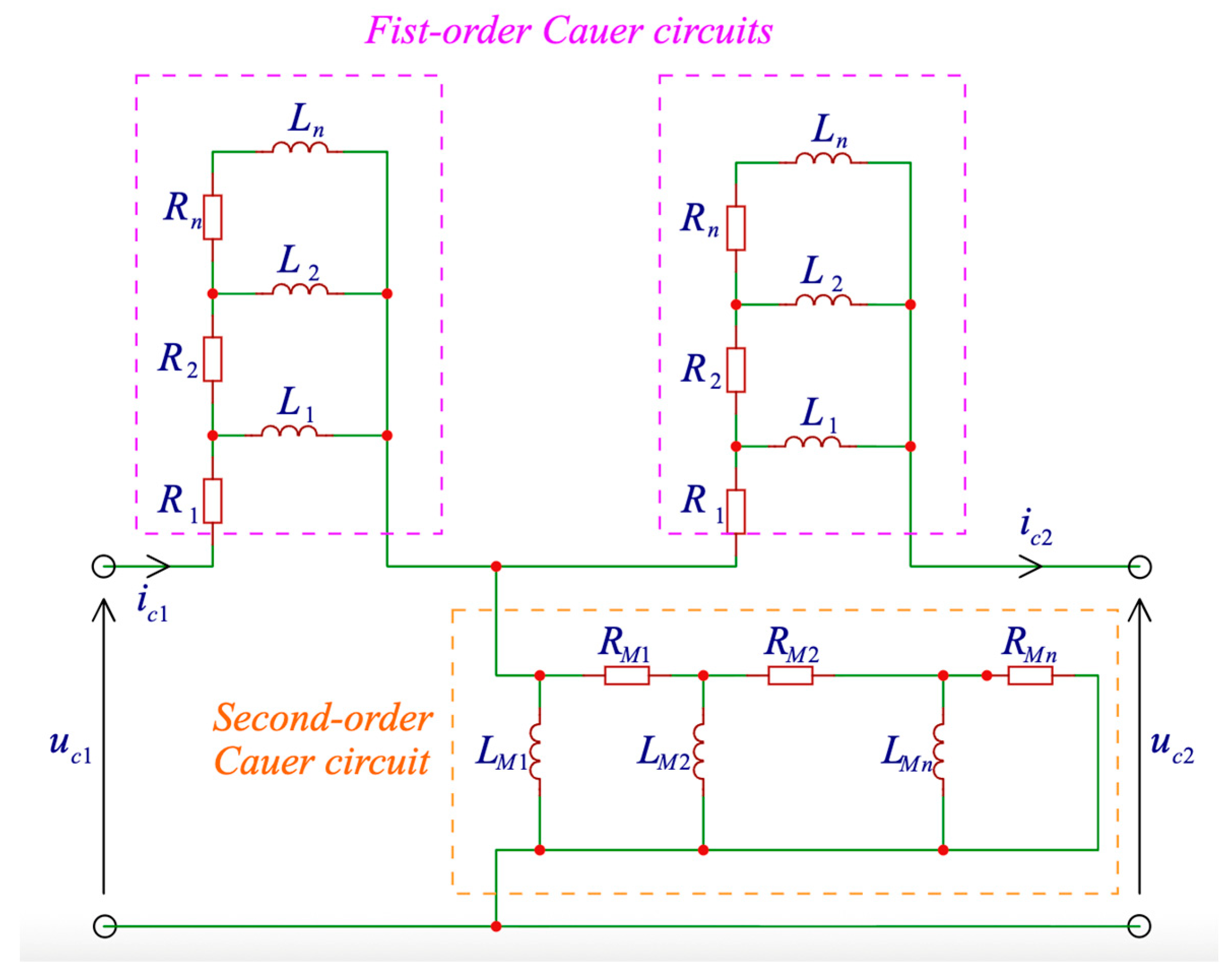
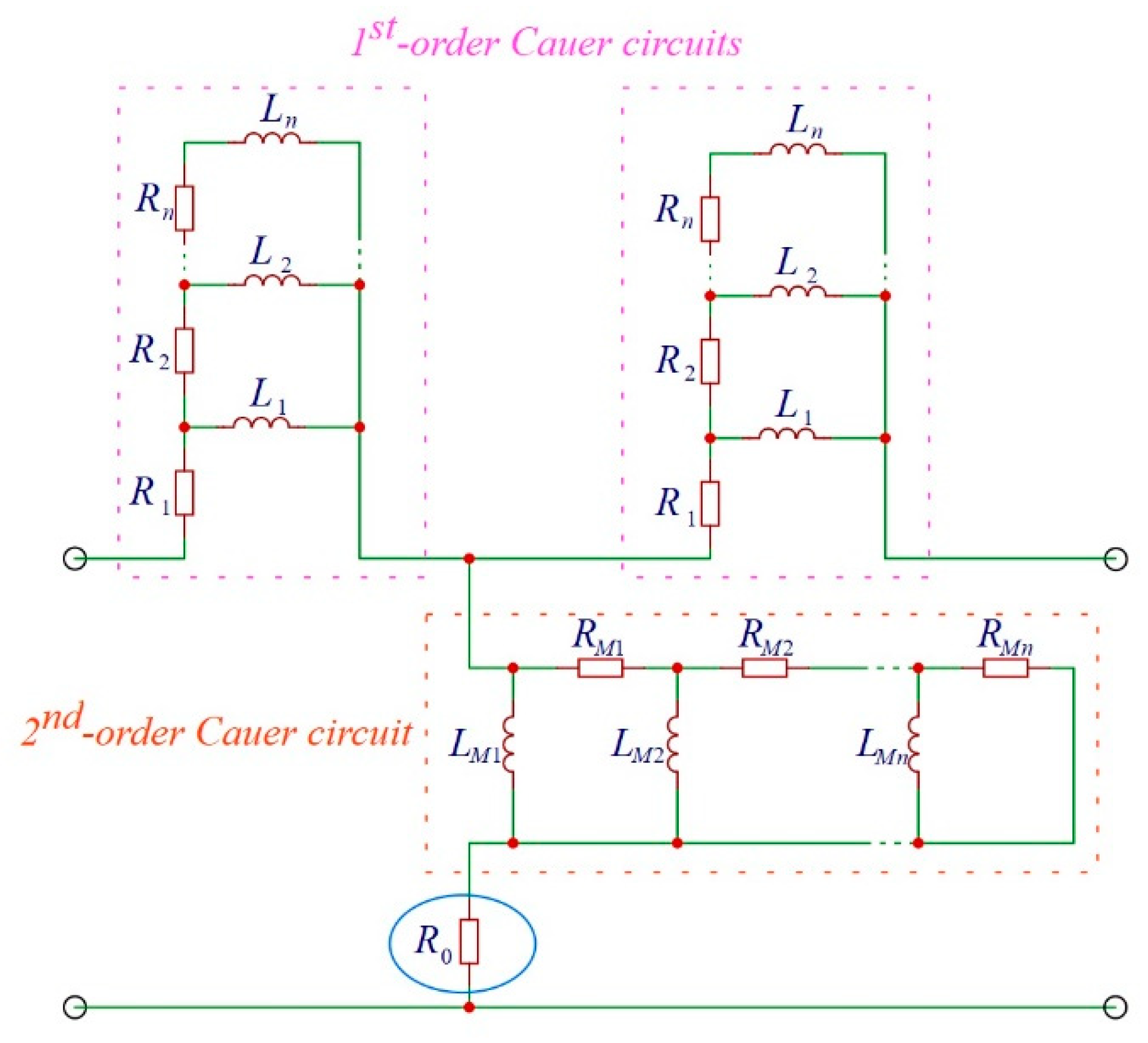
The above system of equations was used by the authors to determine the equivalent parameters of the Cauer circuits. The equivalent circuit of the magnetically coupled air-core coils using Cauer circuits, as applied in this study, is shown in
Figure 2.
3. Equivalent Model of Magnetically Coupled Air-Core Coils Using Cauer Circuits
In the analysis of the magnetically coupled coil system, the authors employed an equivalent model, i.e., a field-circuit model using Cauer equivalent circuits. To determine the parameters of the equivalent circuits, the Pade via Lanczos approach was applied, which first requires formulating the system of matrix equations describing the studied system, as presented in
Section 2 of this article. This system of equations was obtained based on the field model implemented in the author’s custom FEM software. In this study, the coupled coils were modeled perfectly coaxial components, which is consistent with the axisymmetric formulation of the electromagnetic field model. Consequently, the analysis does not include effects related to lateral misalignment, angular deviation, or other non-coaxial configurations. Such directionality-related phenomena, although highly relevant in many wireless power transfer applications, were intentionally excluded from the scope of this work, whose primary objective was to determine the equivalent circuit parameters for a defined reference geometry. Extending the methodology to systems with misaligned coils constitutes a natural direction for future research.
The model reduction method using the Pade via Lanczos approach was divided into seven steps. The starting point of the applied method is the FEM equations describing the studied system (1). In the Pade via Lanczos method, these Equation (2) are expressed in a simpler form:
where
b is a unit vector defined in [
26],
U is a vector representing the complex voltage values at the terminals of the considered system (here, the air-core transformer),
S and
G are coefficient matrices representing the real and imaginary components of the FEM equations, respectively; and
X is a vector representing the sought complex values of magnetic fluxes and currents in the windings.
In the applied method, Equation (3) must be supplemented with an equation representing the response of the studied system, namely:
where
l is a unit vector [
11,
26].
Next, by applying Laplace transform, the FEM equation system of (2) and (3) is converted into an operator form in the
s-domain:
Next, the system’s transfer function
H(
s) is determined. The function
H(
s) represents the frequency response of the considered circuit and is expressed as:
To determine the final form of the function
H(
s), it is necessary to define the expansion point
(
= 2π
fmax), which specifies the boundary value of the considered frequency range (0,
fmax), and the sigma point
(
, i.e., the point indicating the current search region. Taking into account the dependence between
and
, the function
H(
s) takes the following form:
where
,
and
I is the identity matrix.
Because matrix
A is a large
M ×
M matrix, computing all its eigenvalues and eigenvectors can be very time-consuming due to the potentially millions of FEM equations. To reduce computation time and still obtain the system’s frequency response, the Padé approximation combined with the Lanczos algorithm is used. After applying this approach, the function
H(
s0 +
σ) is transformed into the form:
where
.
In the proposed approach, the matrix
A of size
M ×
M is transformed into a tridiagonal Lanczos matrix
Tq of much smaller dimension
q ×
q (where
q <<
M). In this work, the modified Lanczos algorithm proposed by Y. Sato [
11,
26] was used to calculate the values of the matrix
Tq. Subsequently, in order to diagonalize the matrix
Tq, the QR algorithm was applied, after which the Lanczos matrix takes the form:
, and the function
assumes the form:
where
contains the
q eigenvalues of the matrix
Tq, while the values μ
j and ν
j are components of the vectors
µ and
ν; the matrix
Sq represents the eigenvectors of the Lanczos matrix
Tq. The function
obtained above is a function of the variable
s in the Laplace domain. In order to transform the Function (8) from the operator domain to the frequency domain, the substitution
should be applied. Then, the relation describing the system’s transfer function reduces to the following form:
The algorithm presented above enables a direct transformation of the FEM equations into a relationship describing the system admittance
Y(
jω). However, the parameters of the Cauer circuit are determined based on the known system impedance
Z(
jω), i.e.,
However, to obtain the final form of the impedance, one more transformation must be performed with respect to Formula (10), using the Euclidean Algorithm (EA) [
11]. To carry out this transformation, the impedance Z(
jω) should first be transferred into the Laplace domain, i.e.,
Z(
jω)→
Z(
s), and then Formula (10) should be converted into a rational function form, in which the numerator and denominator are polynomials of the form
P(s) and
Q(s) of orders
q and
q − 1, respectively, i.e.,:
The final stage of the transformation is the division of the polynomial P(s) by Q(s), resulting in one of the relationships describing the impedance and the parameters of the Cauer circuit, corresponding to: (a) a first-order, or (b) a second-order circuit.
The main objective of this study is to inform researchers involved in the modeling and analysis of magnetically coupled coils used in wireless power transfer systems about the method proposed by the authors for developing a broadband equivalent circuit of an air-core transformer using Cauer circuits.
To determine the lumped parameters (resistances and inductances) of the equivalent circuit of the system shown in
Figure 1, a classical approach was applied, in which their values were derived based on two operating states of the air-core transformer, namely: (a) the short-circuit state, and (b) the idle (i.e., open-circuit) state.
For the first of these states, the function
Z0(
jω) was determined, representing the impedance of the system as seen from the input terminals of the air-core transformer under the assumption that the current on the secondary side of the transformer is
ic2 = 0, i.e.,:
In turn, for the short-circuit analysis of the air-core transformer, the function
was determined, representing the impedance of the system as seen from the input terminals of the air-core transformer, while assuming in this case that the voltage on the secondary side of the transformer is
uc2 = 0, i.e.,:
The previously obtained functions
and
were then used to determine the parameters of the individual branches of the equivalent circuit. In this work, the relationship describing the impedance
for the horizontal branches of the equivalent circuit was calculated from:
while the impedance
, describing the parameters of the magnetizing branch of the applied equivalent circuit of the air-core transformer, was determined from:
The final stage involves determining the real and imaginary parts of the impedances and , which serve as the basis for calculating the actual parameter values of the Cauer circuits.
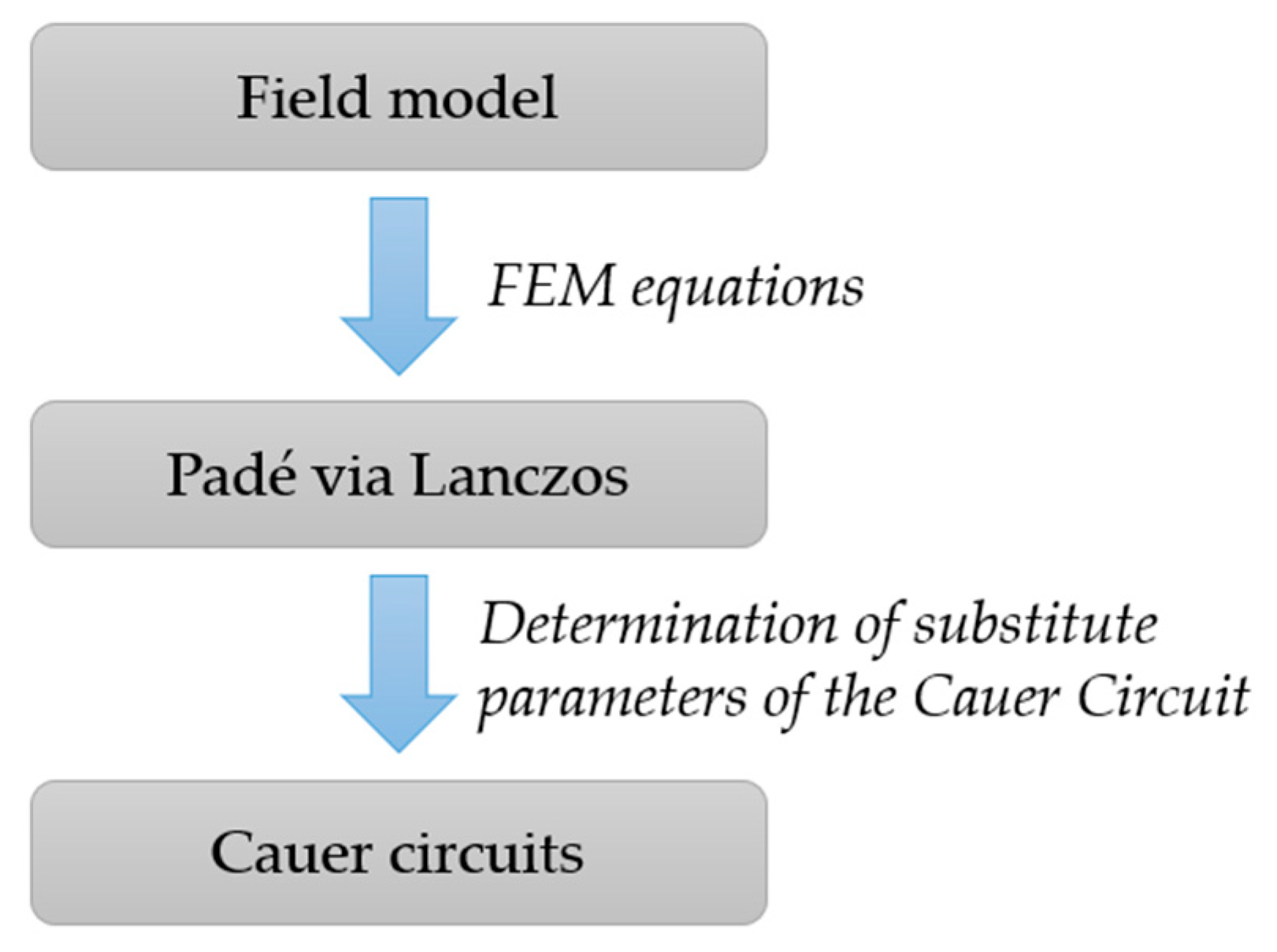
To provide a clear overview of the computational methodology and to enhance the reproducibility of the results, the complete workflow—linking the electromagnetic field analysis with the circuit synthesis—is illustrated in
Figure 3. This block diagram summarizes the transition from the FEM-based formulation to the final wideband equivalent circuit parameters derived using the Padé via Lanczos method.
4. Results
In this study, a system consisting of two identical flat circular planar coils forming an air-core transformer was analyzed. The dimensions of the coils are provided in
Table 1. In the analysis, it was assumed that the distance between the primary and secondary coils would be 5 mm. The windings of the coils were constructed from copper wire. A schematic view of the analyzed system is illustrated in
Figure 1.
For analyzing the system of magnetically coupled air-core coils, the authors have developed a custom field model. The number of elements in the discretization mesh of the studied system exceeded 100,000. The FEM model was discretized using second-order triangular elements to enhance solution accuracy. To ensure the reliability of the computed parameters, a mesh convergence study was performed. The analysis showed that refining the mesh beyond 100 thousand elements resulted in parameter changes of less than 1%. This level of discretization was therefore stable and sufficient, as further mesh refinement led to increased computational cost without noticeable accuracy improvement. The model accounted for the effect of induced and eddy current in the conductors of the studied coils. Using the author’s own software, a system of FEM matrix equations was formed, based on which, after applying the Pade via Lanczos method, the relationships describing the variation in the system’s resistance and inductance as a function of the supply frequency were plotted.
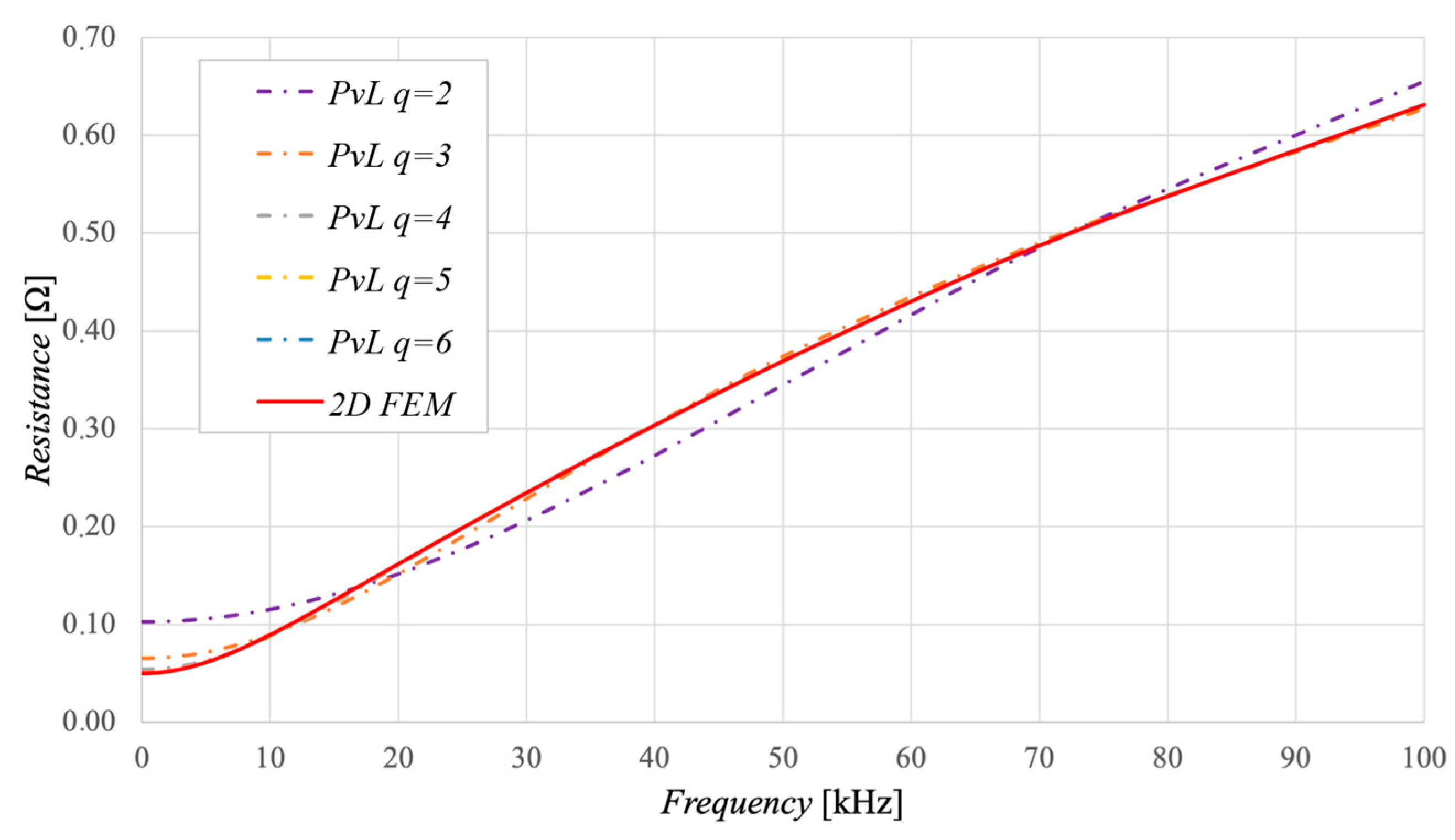
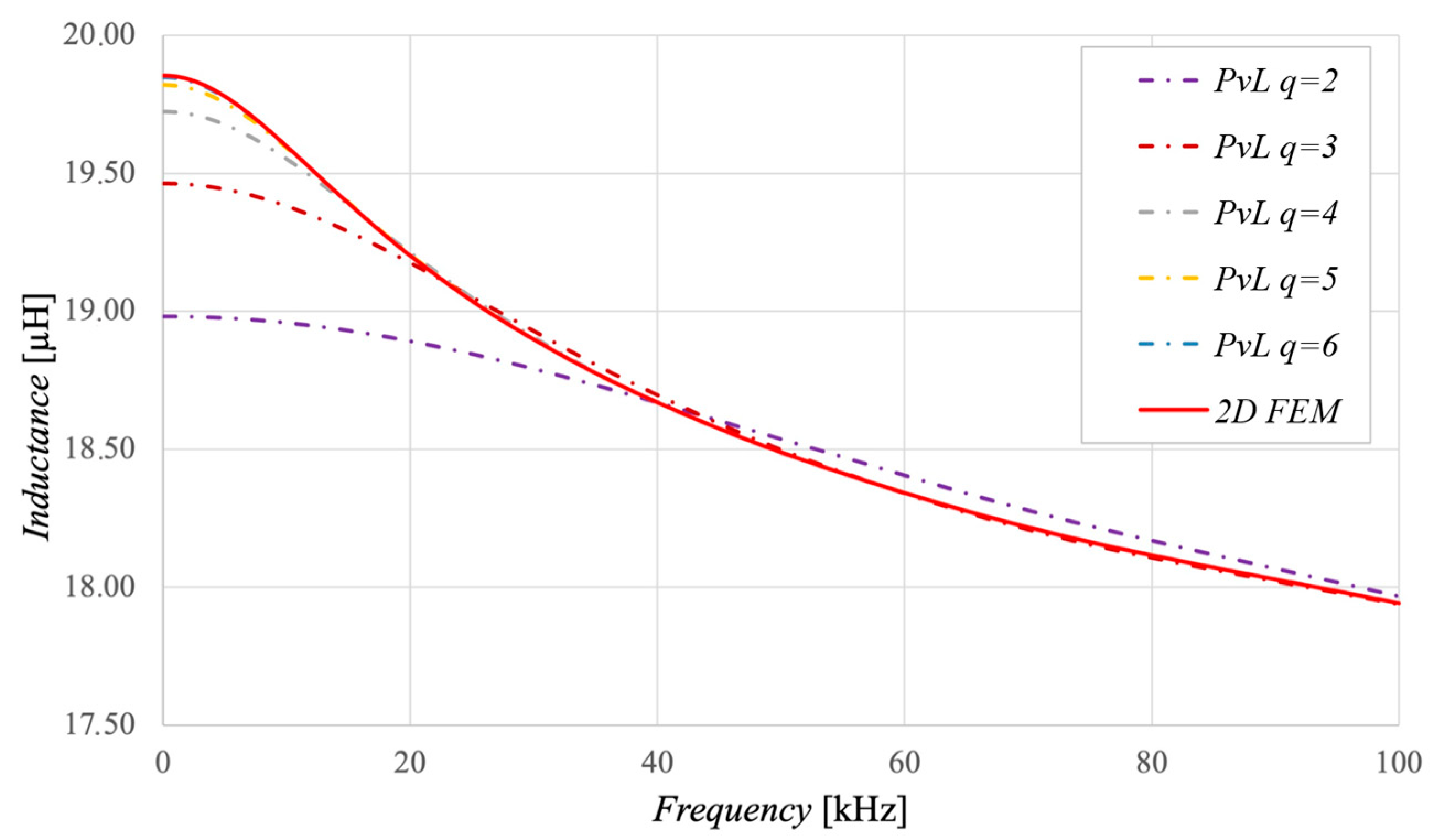
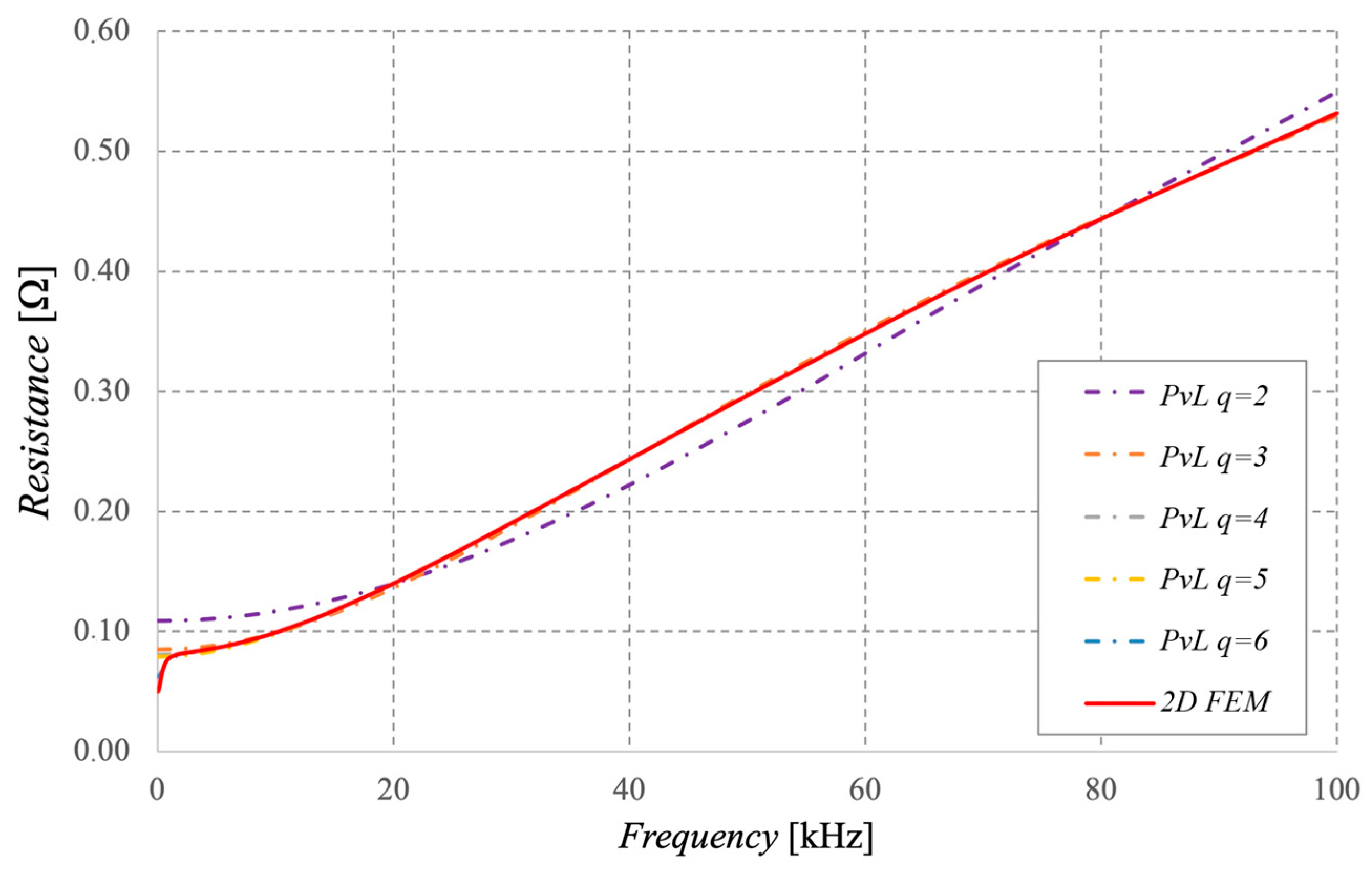
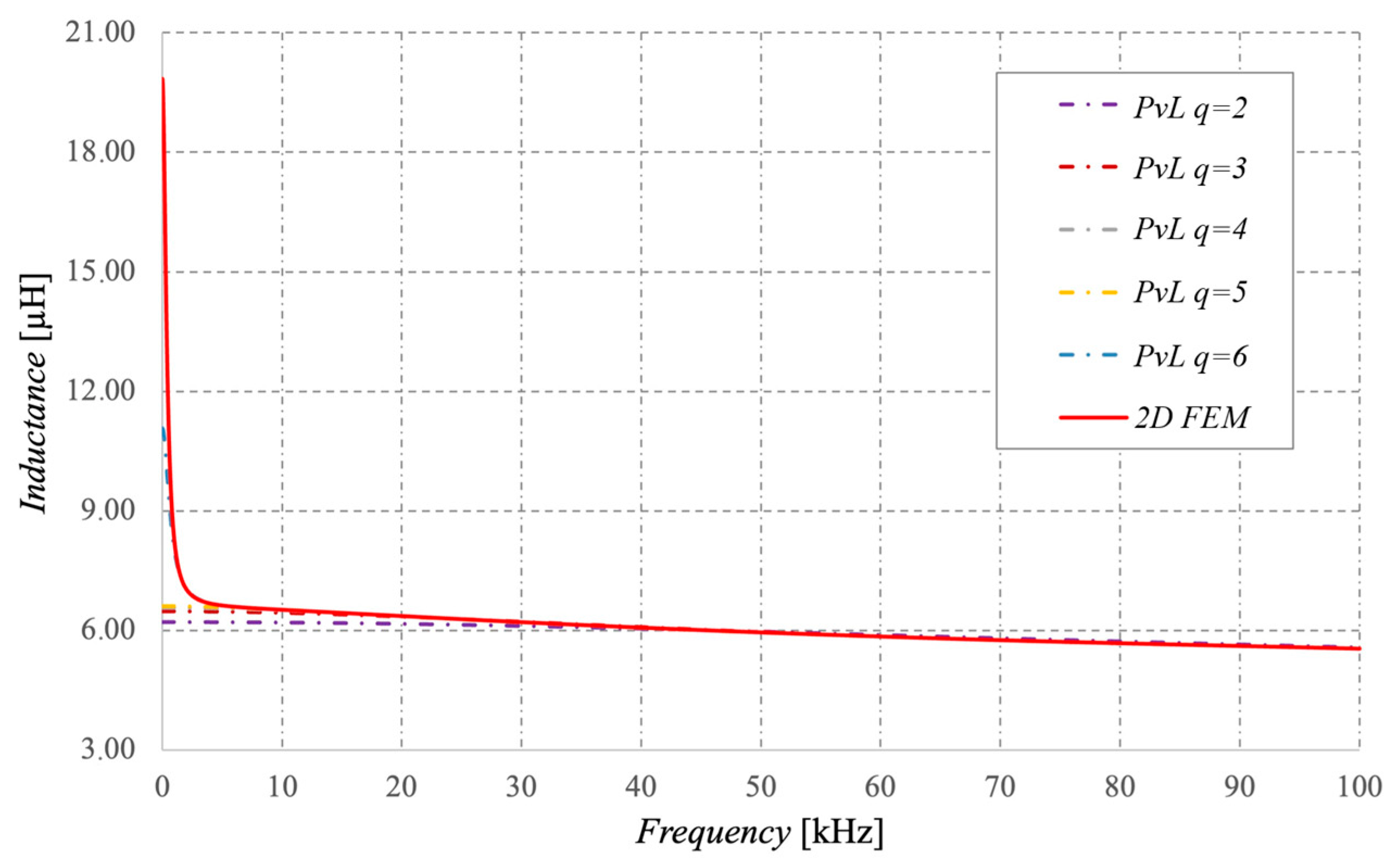
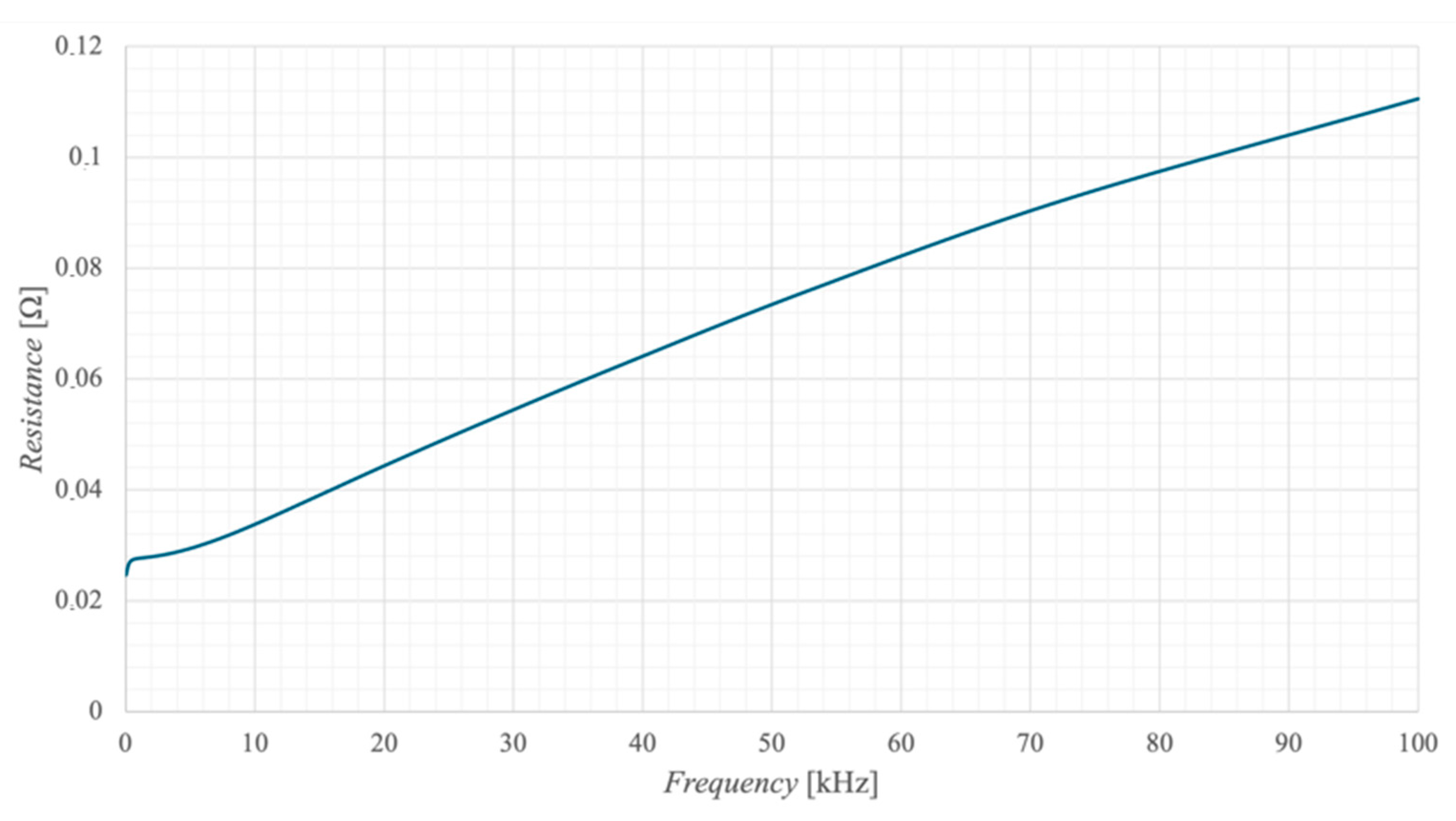
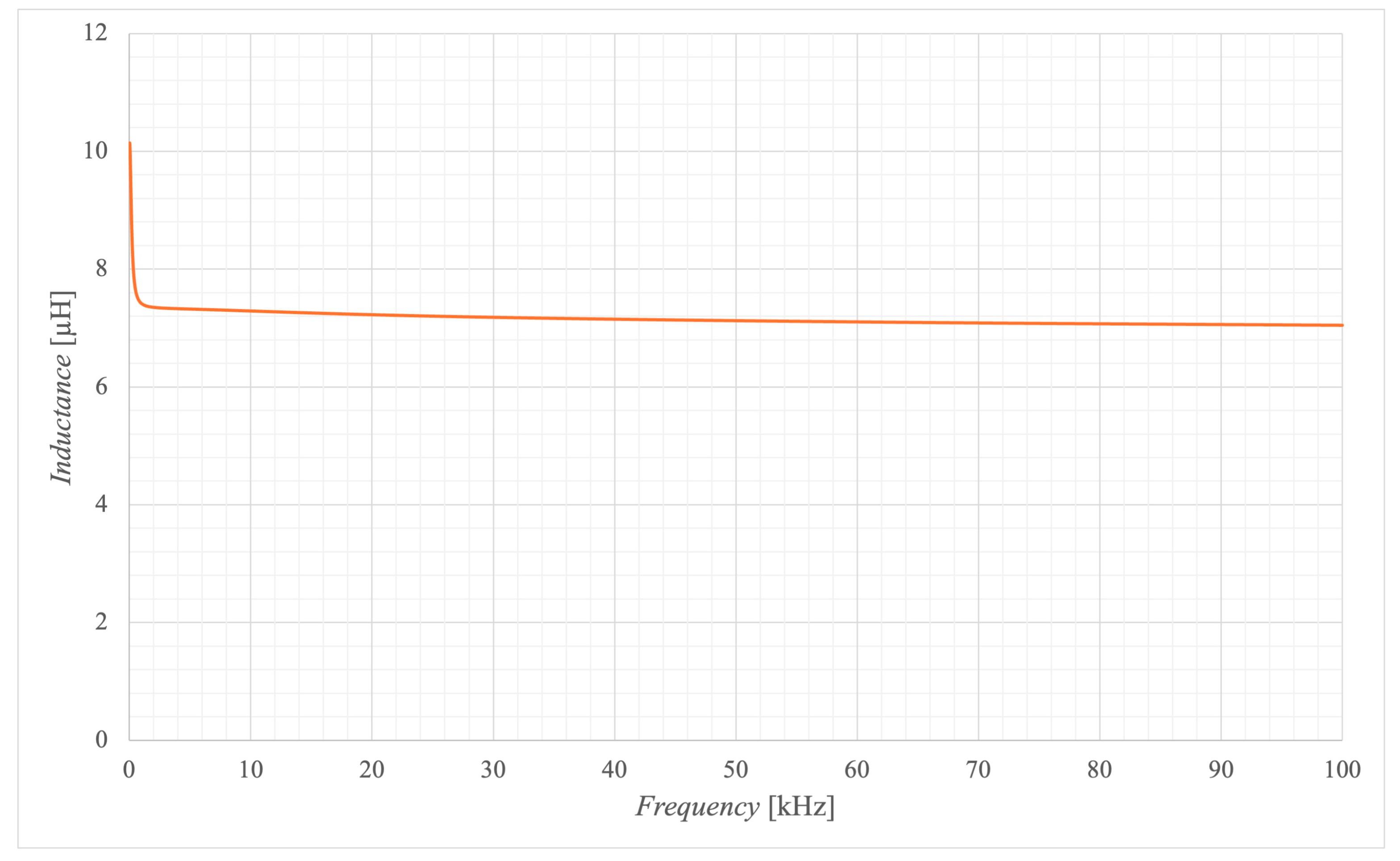
Calculations were performed using the classical approach for determining the parameters of the transformer equivalent circuit, i.e., for no-load and short-circuit conditions. The parameters of the horizontal branches were determined based on the short-circuit test of the magnetically coupled coils, while the parameters of the magnetizing branch were determined using the no-load and short-circuit tests. The numerical simulations were performed over a frequency sweep domain ranging from 10 Hz to 100 kHz. This specific bandwidth was selected to accurately characterize the wideband behavior of the laboratory test system developed by the authors, which is designed to operate at fundamental frequencies ranging from several kHz to 100 kHz. Furthermore, this domain encompasses the typical operating frequencies utilized in many medium-power inductive power transfer applications, ensuring that the proposed model is relevant for both the experimental verification and the design of real-world WPT systems. The system was powered by a sinusoidal AC source. The obtained resistance and inductance dependencies for the no-load and short-circuit conditions are illustrated in
Figure 4,
Figure 5,
Figure 6 and
Figure 7. The relationships describing resistances and inductances were defined based on the values of the functions representing the system impedance
Z0(
f) for the no-load condition and
Zz(
f) for the short-circuit condition, i.e., the impedances seen from the terminals of the transmitting coil.
In the calculations, the functions describing Z0(f) and Zz(f) were determined based on Relations (12) and (13) for different values of q, i.e., numbers representing the order of the dimensionless functions describing the given circuit.
Before proceeding to determine the parameter values of the Cauer equivalent circuits for horizontal and magnetizing branches of the magnetically coupled coils, to verification of the accuracy of reproducing the
Z0(
f) and
Zz(
f) dependencies as a function of
q–parameter, the relative difference between the results obtained from the full field model and the proposed Pade via Lanczos method was calculated. For this purpose, Relation (16) was used.
where
k denotes the number of samples in the frequency domain, and
ZMP(
f) and
ZME(
f) represent the values of the impedances
Z0(
f) and
ZZ(
f) obtained from the FEM model and the Pade via Lanczos method, respectively. The results are summarized in
Table 2.
The study noted (after conducting numerous numerical tests) that the optimal fit of the equivalent model occurs when the coefficient
[
12]. From
Table 2, it follows that the minimum number of branches in the equivalent circuit is
q = 6. Further increasing the number of branches leads to greater complexity in the calculation of the Lanczos matrix, and consequently, to an increase in the computation time. The average time required to determine the characteristics in this study was approximately 10 min. In addition to this quantitative assessment, further numerical experiments were conducted to evaluate the numerical stability of the PvL-based Cauer model with respect to the number of branches
q. These tests showed that for
q < 6, the reconstructed impedance characteristics exhibit noticeable deviations from the reference FEM solution, and the resulting equivalent circuit parameters are sensitive to small numerical perturbations in the Lanczos matrix decomposition. For
q ≥ 6, both the magnitude and phase of the impedances stabilize, and the reconstructed
Z0(
f) and
ZZ(
f) curves closely follow the full-field FEM model across the entire frequency range. Increasing q beyond this value does not provide meaningful improvement in accuracy and may even reduce numerical robustness due to the growth of the Hessenberg matrix and accumulation of round-off errors during the Lanczos iterations. Therefore,
q = 6 represents the optimal and numerically stable choice, providing a reliable compromise between accuracy, convergence of the PvL algorithm, and computational efficiency. This observation is consistent with earlier studies reported in [
27], where similar convergence behavior was observed for magnetically coupled inductive components.
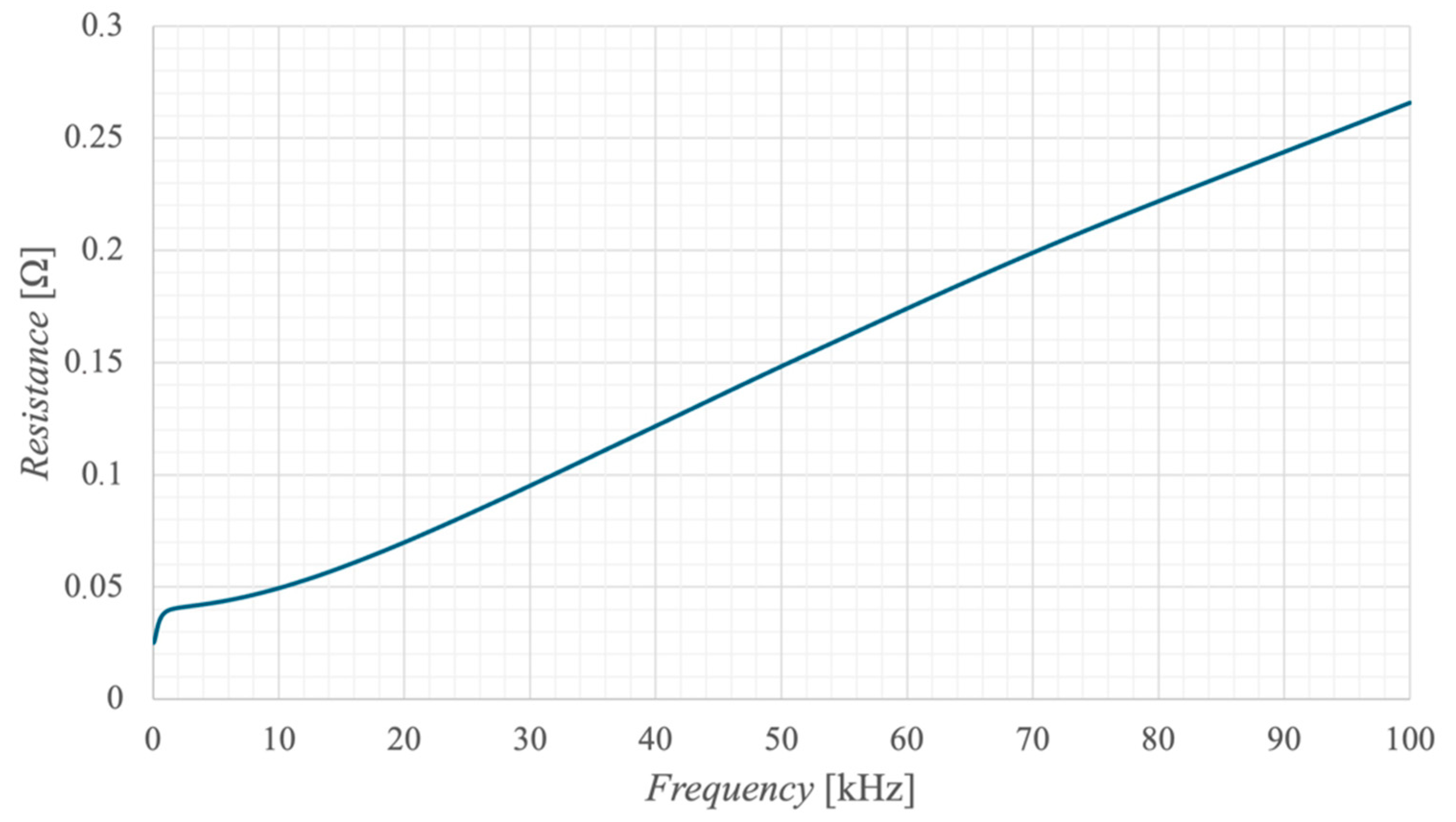
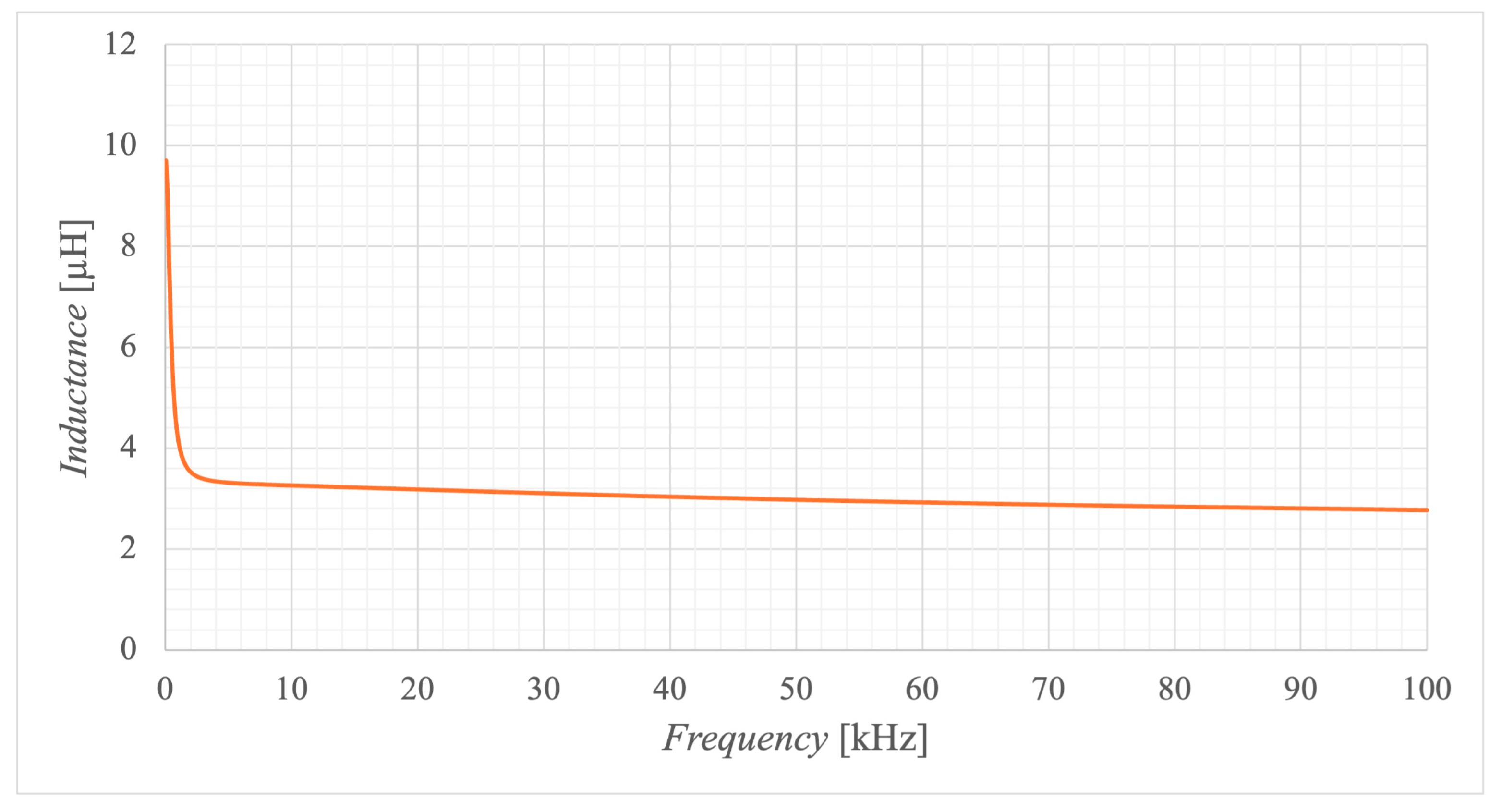
In the subsequent step, the fitting functions of the impedances
for the horizontal branches and
for the magnetizing branch were determined in the frequency domain using (14) and (15). The frequency-dependence of resistance and inductance characteristics derived from the functions
and
are presented in
Figure 8,
Figure 9,
Figure 10 and
Figure 11.
Using the obtained relationships describing the system’s impedances, the values of the equivalent parameters of the Cauer circuits were calculated, enabling the construction of lumped-parameter models of magnetically coupled air-core coils. The resulting values of the equivalent inductance parameters
LH and
LM as well as the resistances
RH and
RM of the Cauer circuits for the longitudinal and transverse branches, are summarized in
Table 3.
The authors, analyzing the parameters of the equivalent circuit, noted that the additional resistance
R0 should be considered. The value of
R0 is the difference between the real parts of the impedances
Z0 and
, according to Relation (15). Neglecting
R0 in the equivalent circuit can lead to discrepancies between the results obtained from the field model and the equivalent models. Due to the presence of
R0, the equivalent circuit of the system (
Figure 2) had to be modified to the form shown in
Figure 12 where additional resistance was included in the magnetizing branch. It should be noted that in the analyzed system, the resistance
R0 does not represent a physical loss component (such as hysteresis or shield losses) but is a result of the mathematical synthesis procedure necessary to minimize the approximation error of the equivalent circuit.