Thermal Energy Storage Possibilities in the Composite Trombe Wall Modified with a Phase Change Material


Abstract
1. Introduction
2. Materials and Methods
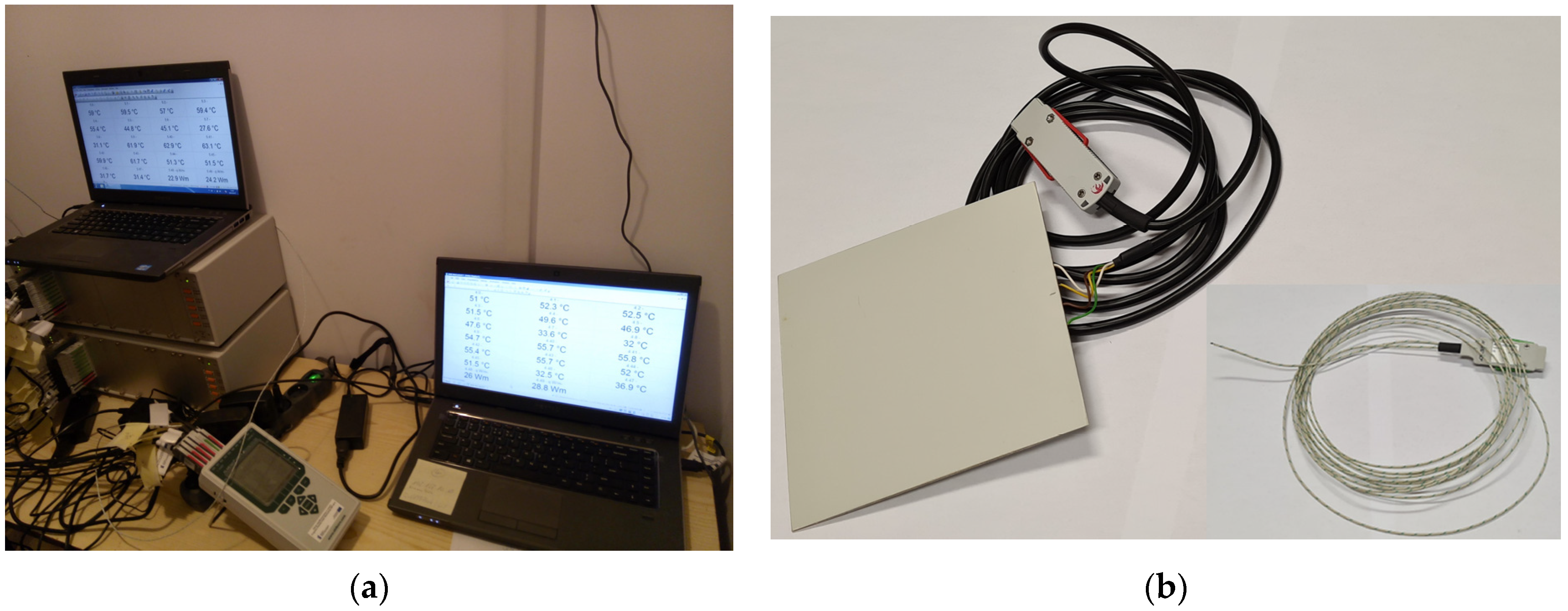
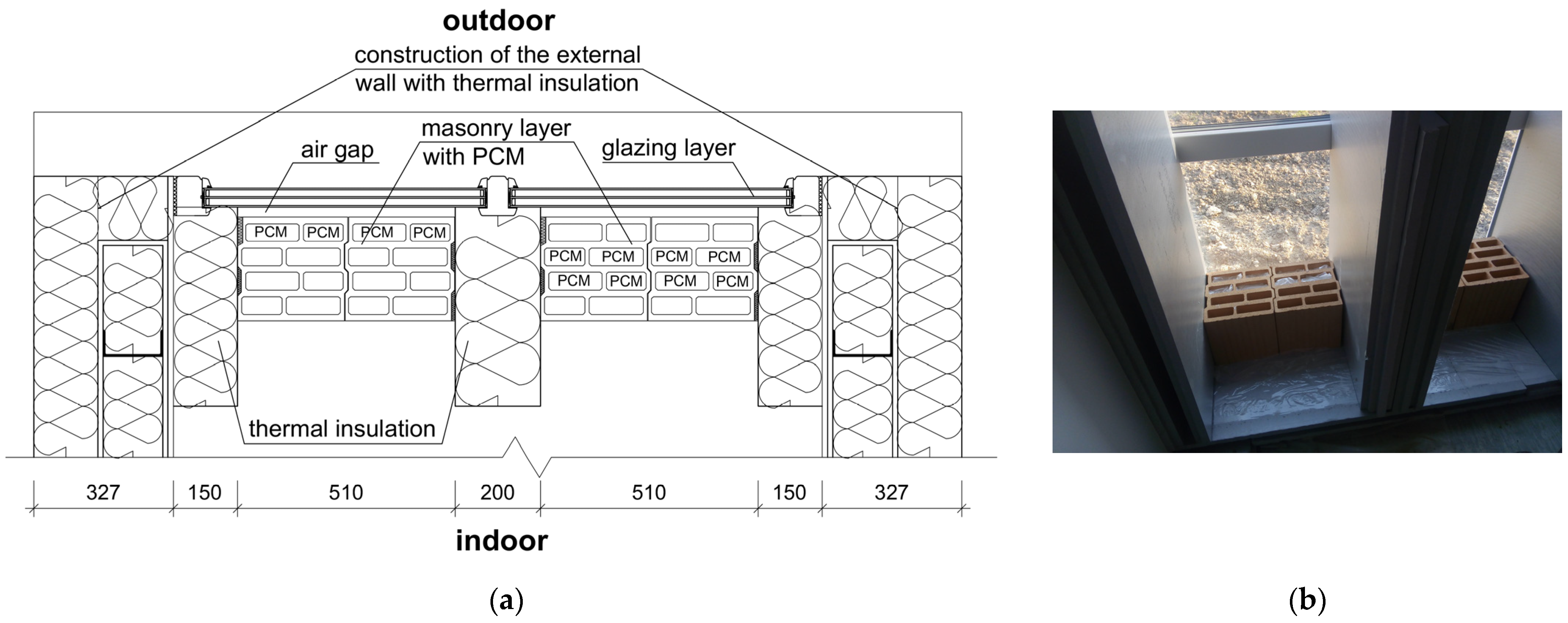
2.1. Research Stand
2.2. Materials
- Masonry, made of slotted ceramic blocks filled with PCM and brick flour, depending on the variant.
- Collector (collector frame and sets of insulating glass with assumed technical parameters).
2.2.1. Wall Elements
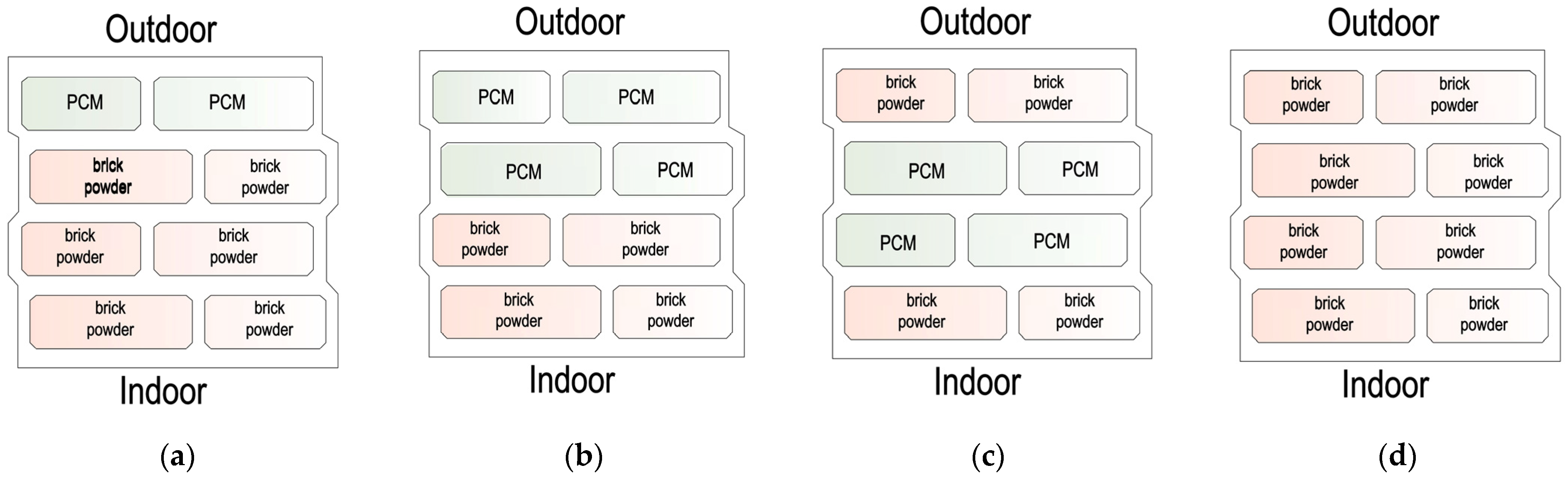
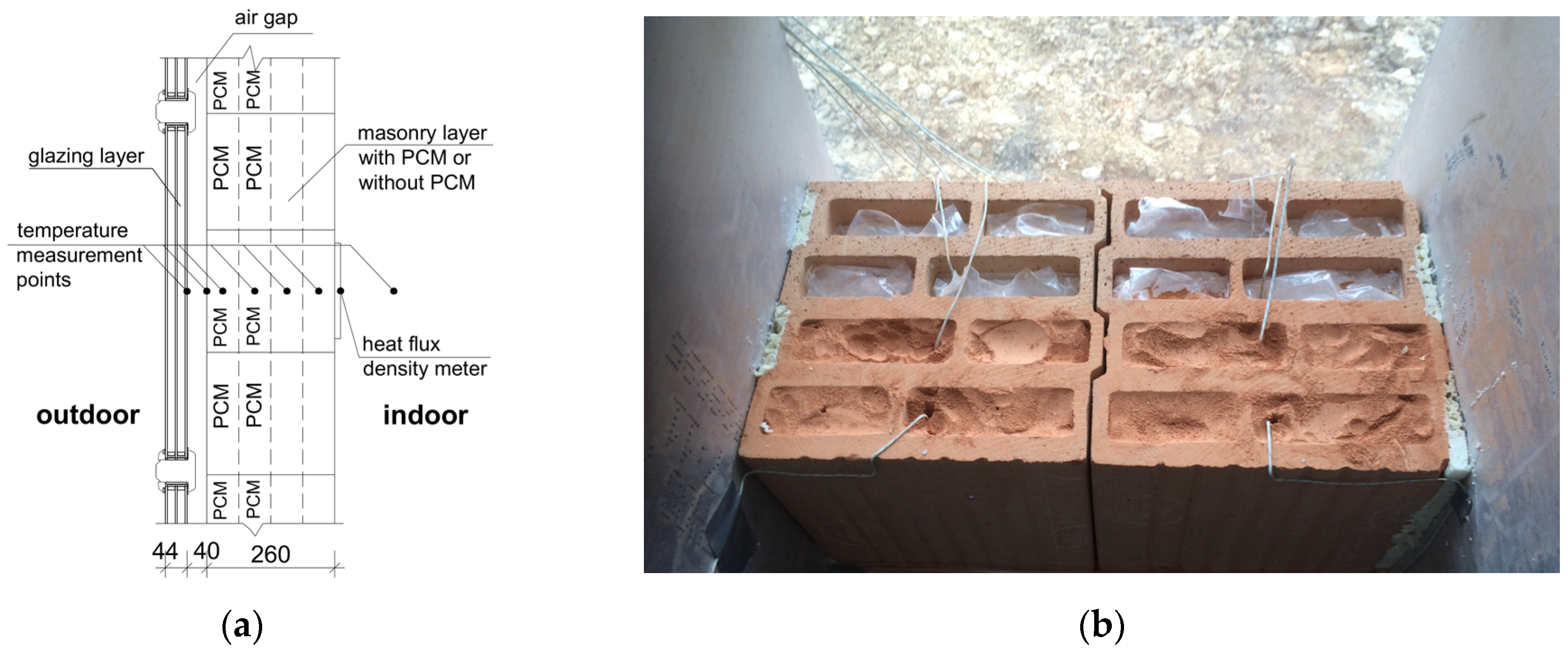
- Variant I (TSW-PCM1e)—one row of slots from the outside (1e) filled with PCM and the remaining slots filled with brick flour (Figure 3a).
- Variant II (TSW-PCM2e)—two rows of slots from the outside (2e) filled with PCM and the remaining slots filled with brick flour (Figure 3b).
- Variant III (TSW-PCM2c)—two middle rows of slots (2c) filled with PCM and the remaining slots filled with brick flour (Figure 3c).
- Variant IV (TSW-noPCM)—all slots filled with brick flour, reference partition (Figure 3d).
2.2.2. Phase Change Material (PCM)
2.2.3. Brick Flour
2.2.4. Glazing Units
2.3. Research Methodology
Analysis of Variance (ANOVA)—Kruskal–Wallis Test and Median Test
- Random variables are independent in the analysed groups.
- The variables analysed in this study are measurable.
- The distribution of variables in each analysed group is normal.
- There is homogeneity (uniformity) of variance in all analysed groups.
- k—number of trials.
- Rj—sum of ranks in the j-th trial.
- nj—number of cases in the j-th trial.
- N—number of cases in all combined trials.
- T = t3 − t.
- t—number of cases occurring in the associated outcome group.
3. Results
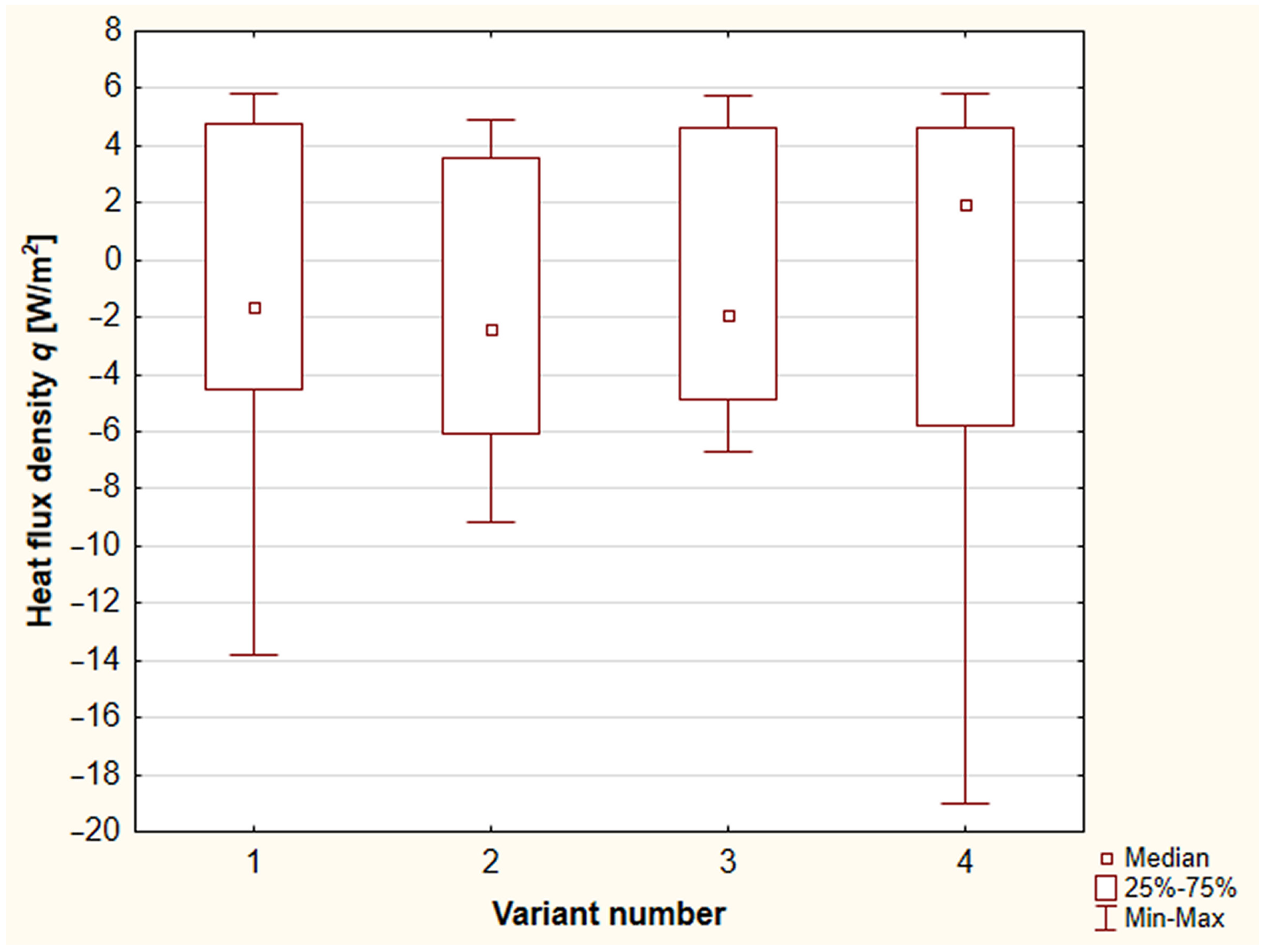
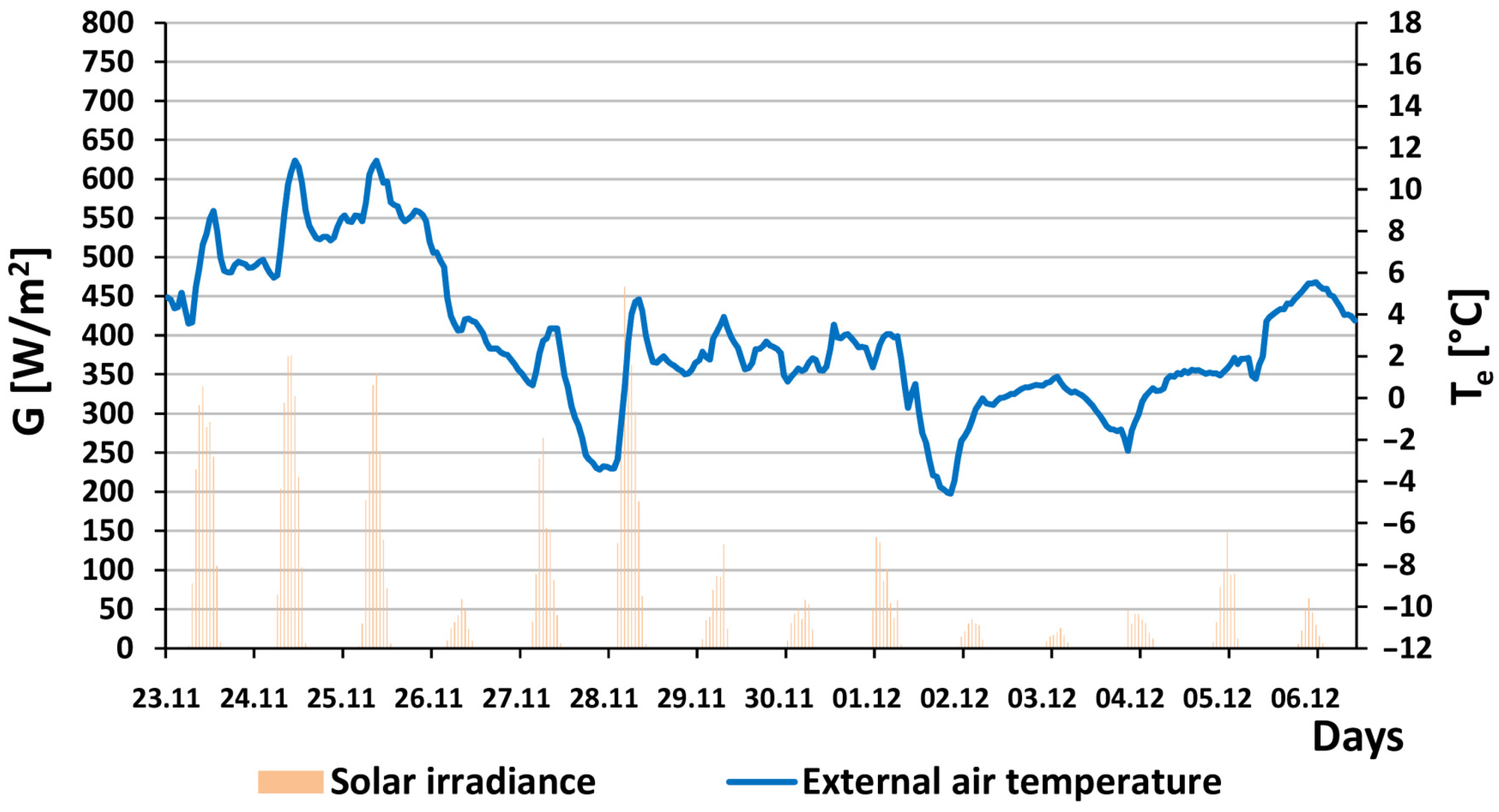
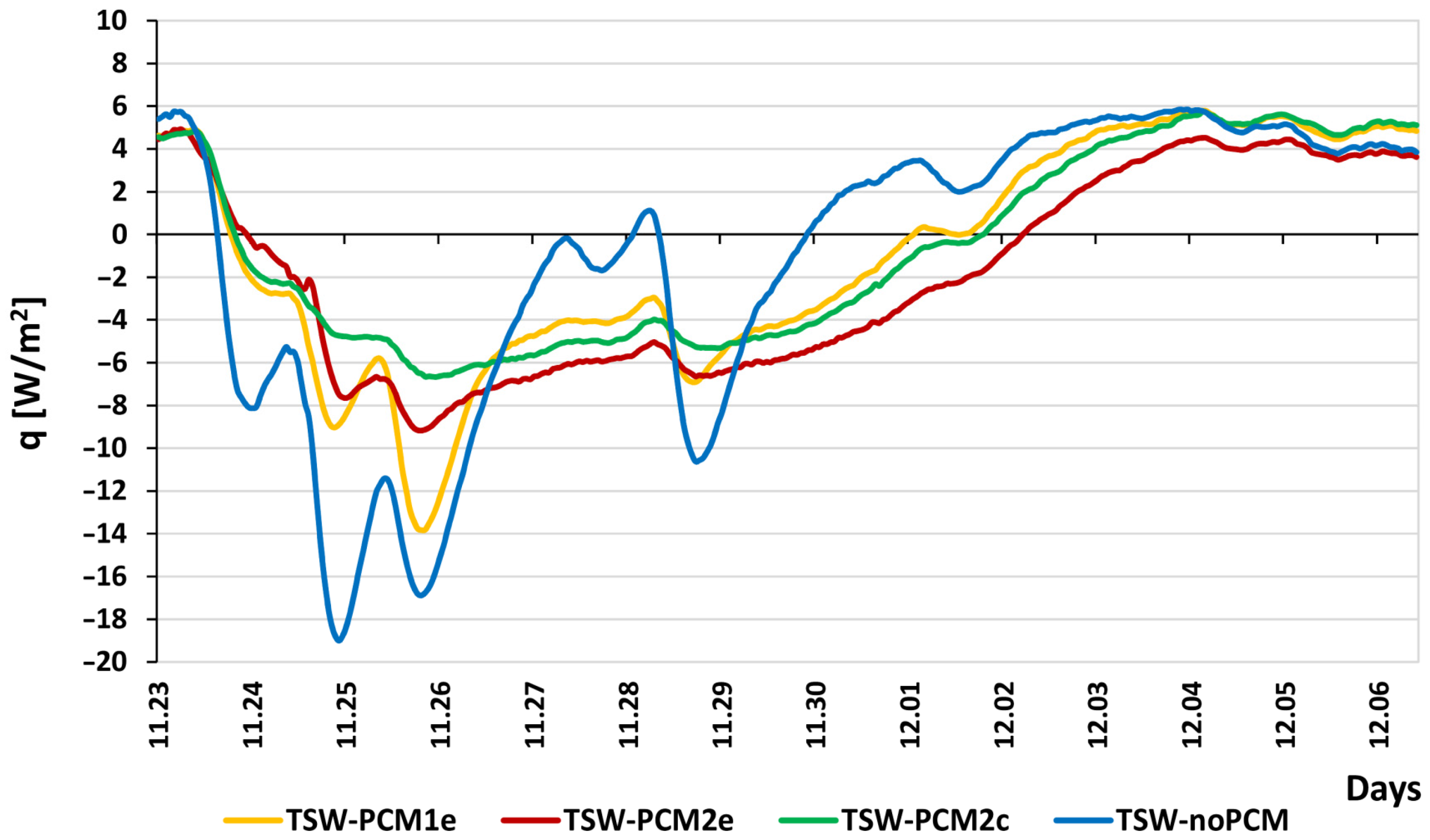
3.1. 23 November to 6 December
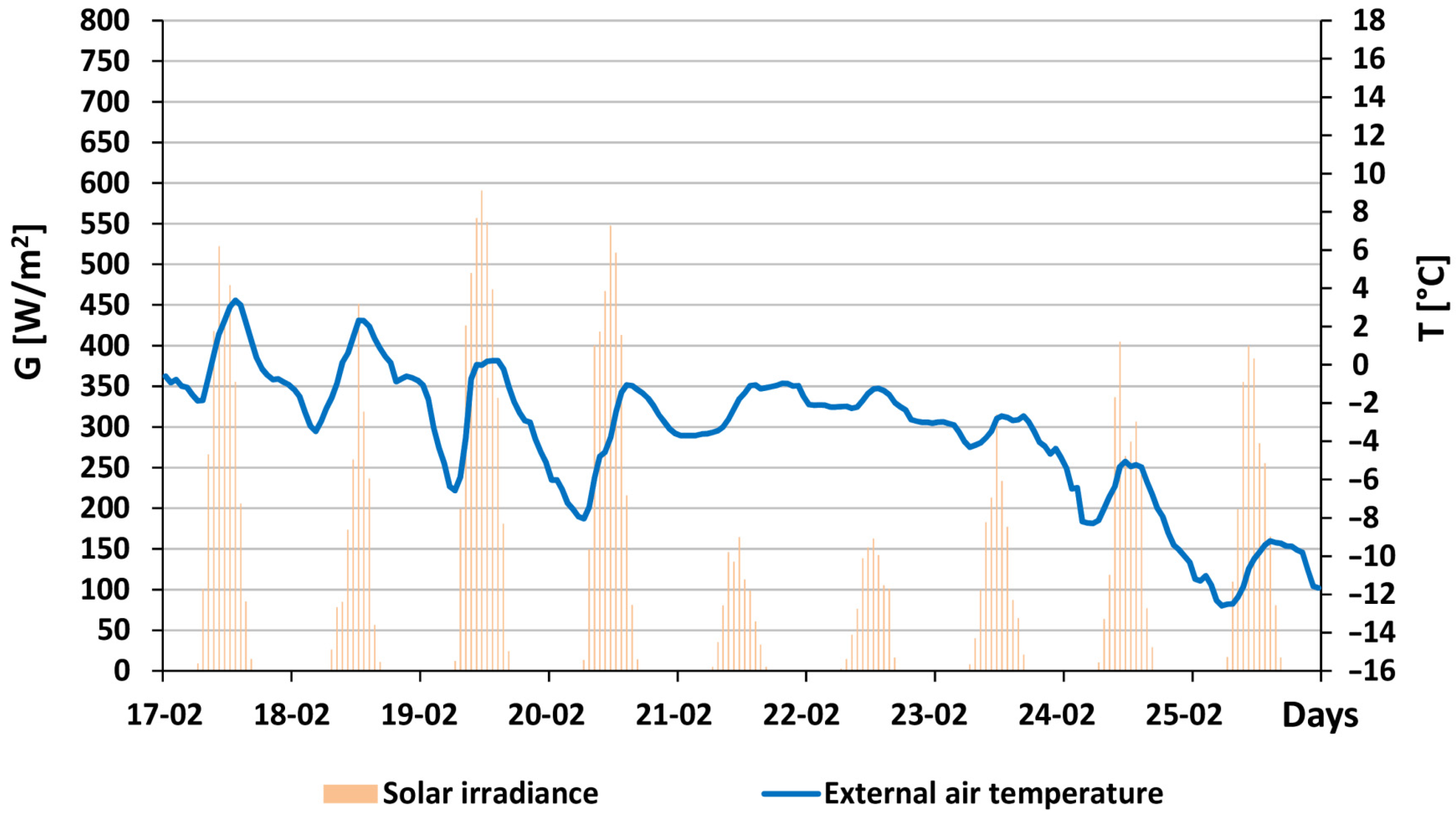
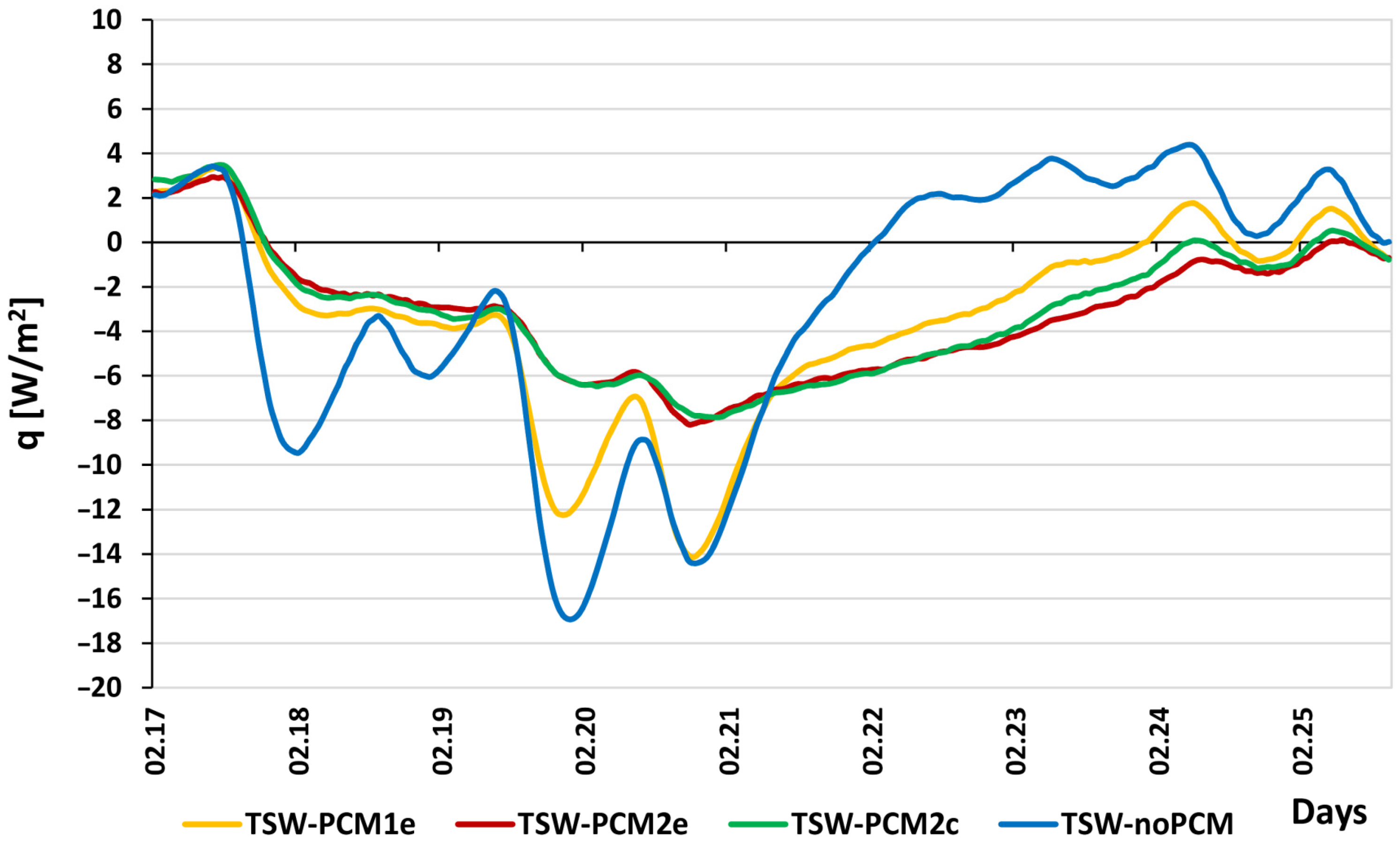
3.2. 17 to 25 February
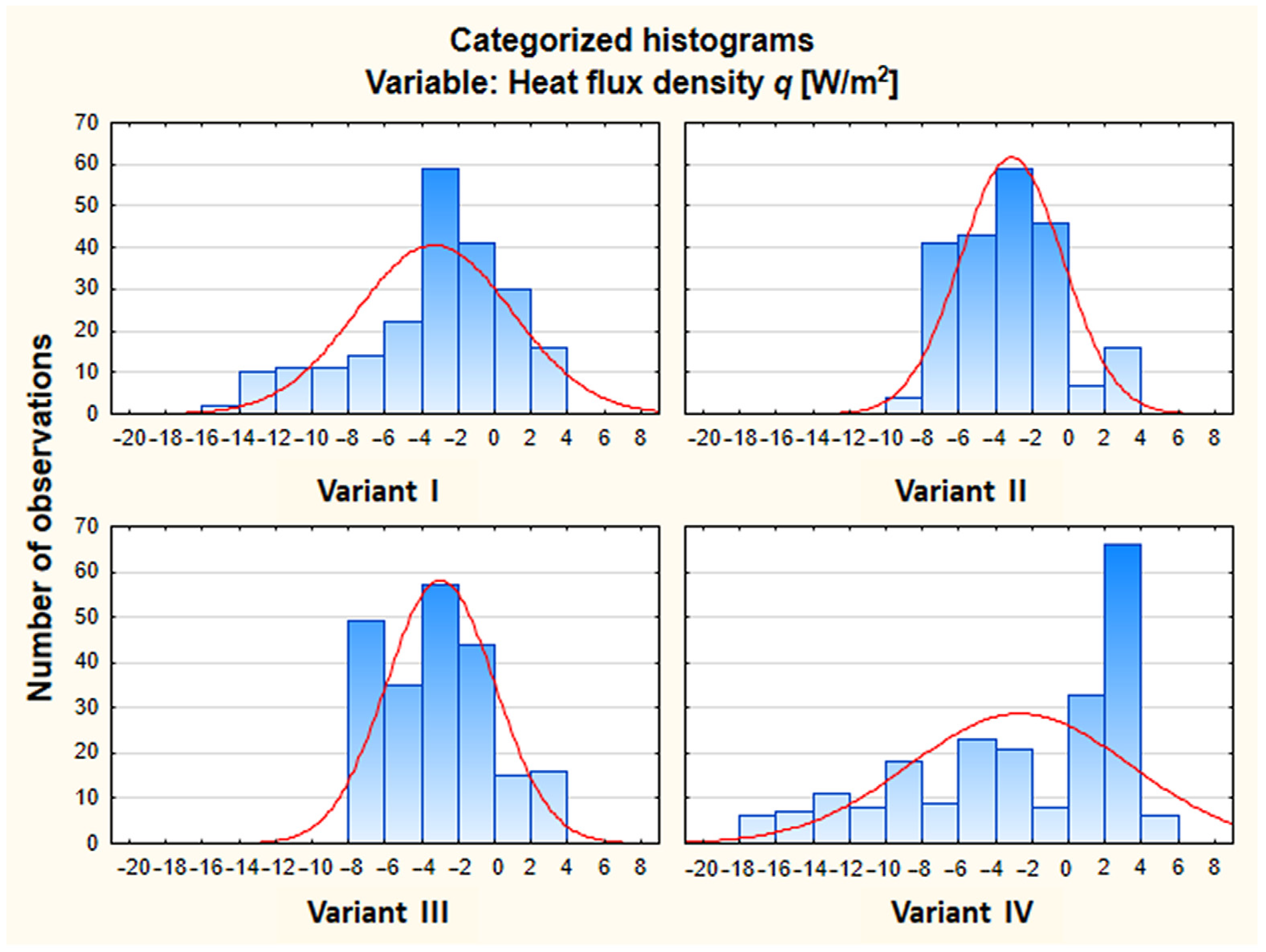
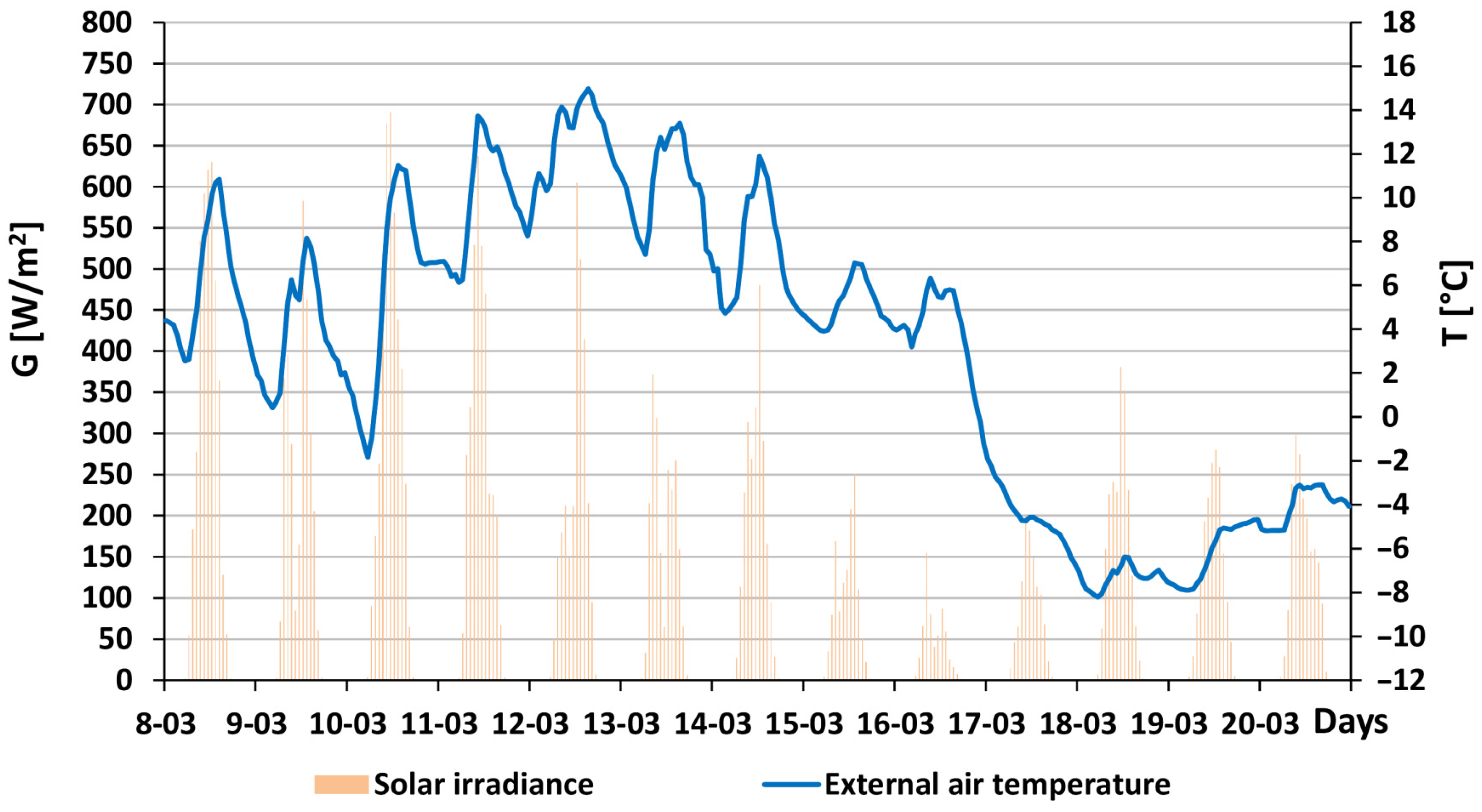
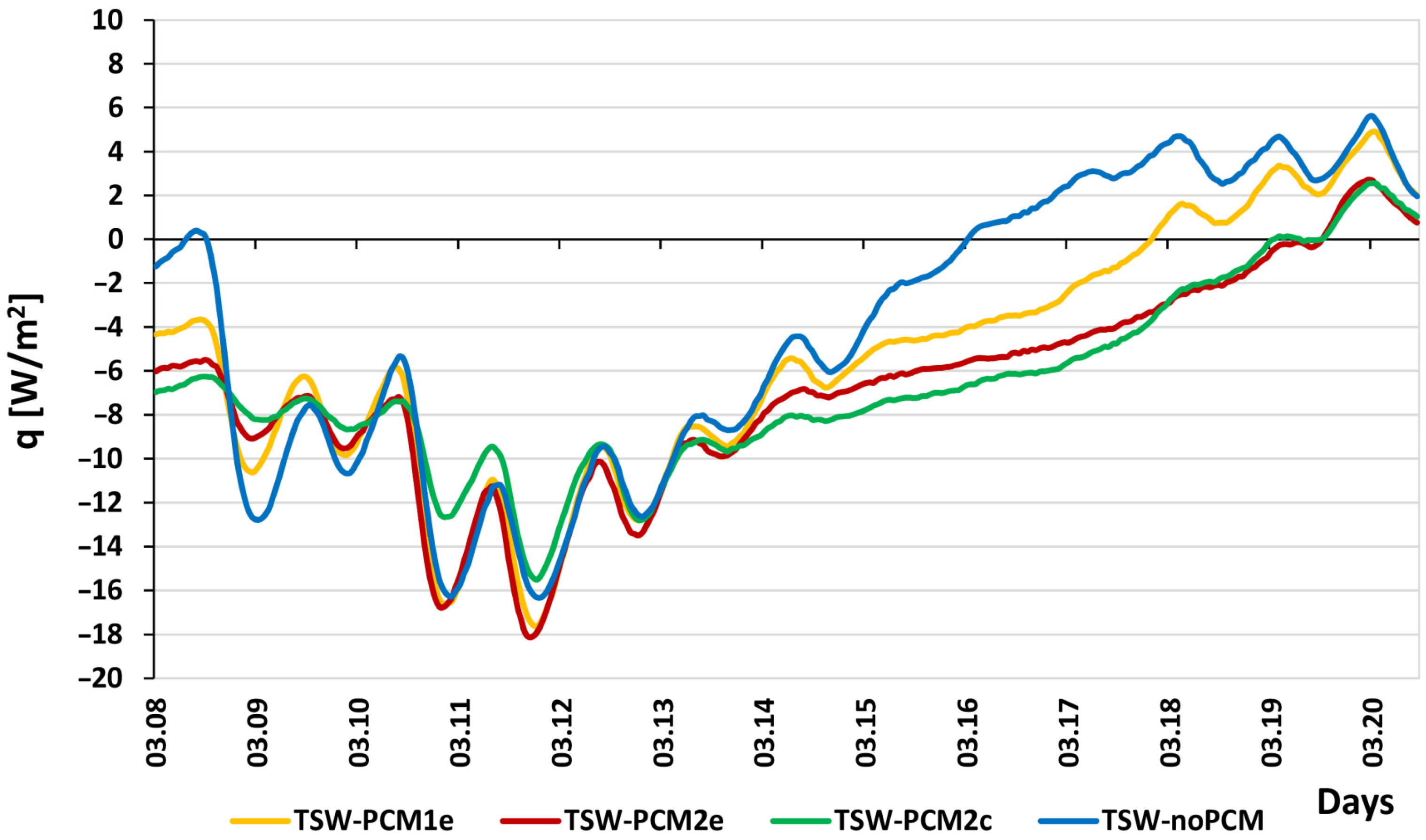
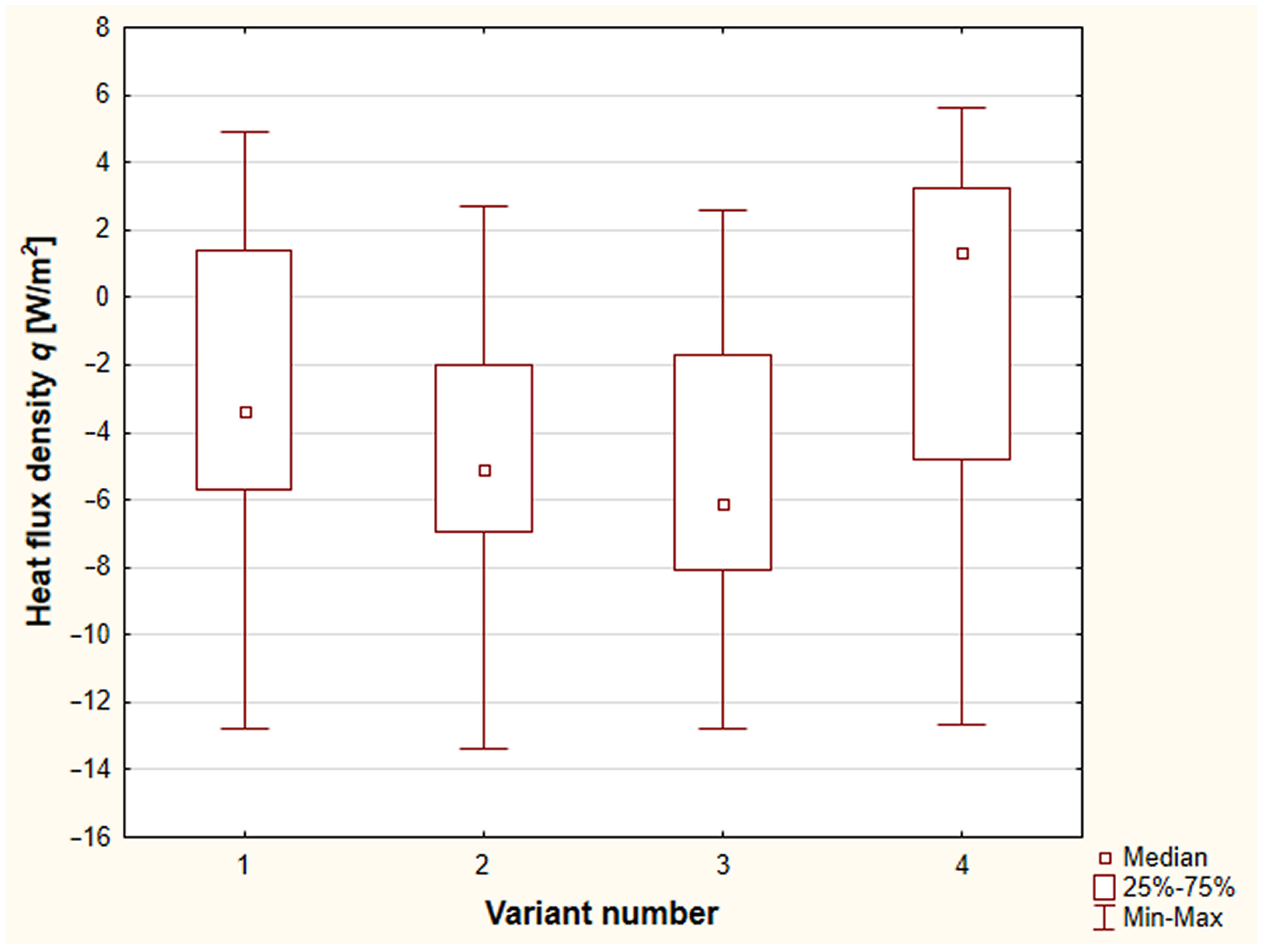
3.3. 8 to 20 March
4. Discussion
5. Conclusions
- At high sunlight and high outside temperature, there are no significant differences between TSW-PCM2e and TSW-PCM2c.
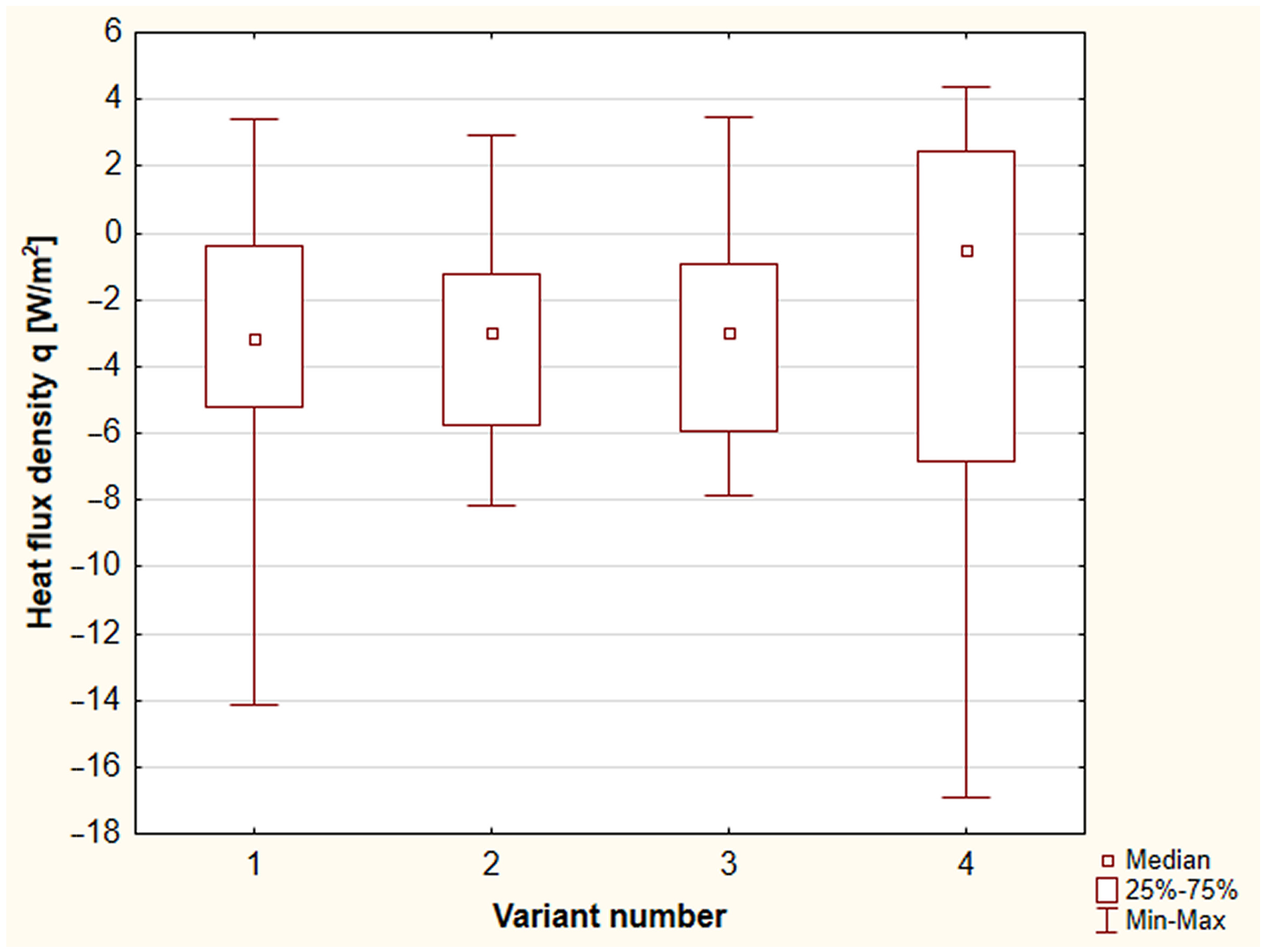
- At low solar radiation and average external temperatures and then cloudy days, there are differences in heat flow between TSW-PCM2e and TSW-PCM2c. TSW-PCM2e heats up faster during sunny days, and PCM solidifies faster from the outside during cloudy days.
- Regardless of weather conditions, the TSW-noPCM partition is the most dynamic in terms of heat flow both in the heating and cooling process.
- In high sunlight and low outside temperatures, TSW-noPCM and TSW-PCM1e heat up the fastest, while TSW-PCM2e and TSW-PCM2c do not show any differences between them. TSW-noPCM cools down the fastest.
- During sunny days, the TSW-PCM2c wall heats up the slowest because the thermal energy storage is located in the middle of the accumulation layer.
- The TSW-PCM2e wall has the greatest accumulation capacity, and its cooling time is the longest.
- For variable weather conditions, the optimal solution appears to be the walls of TSW-PCM2e and TSW-PCM2c.
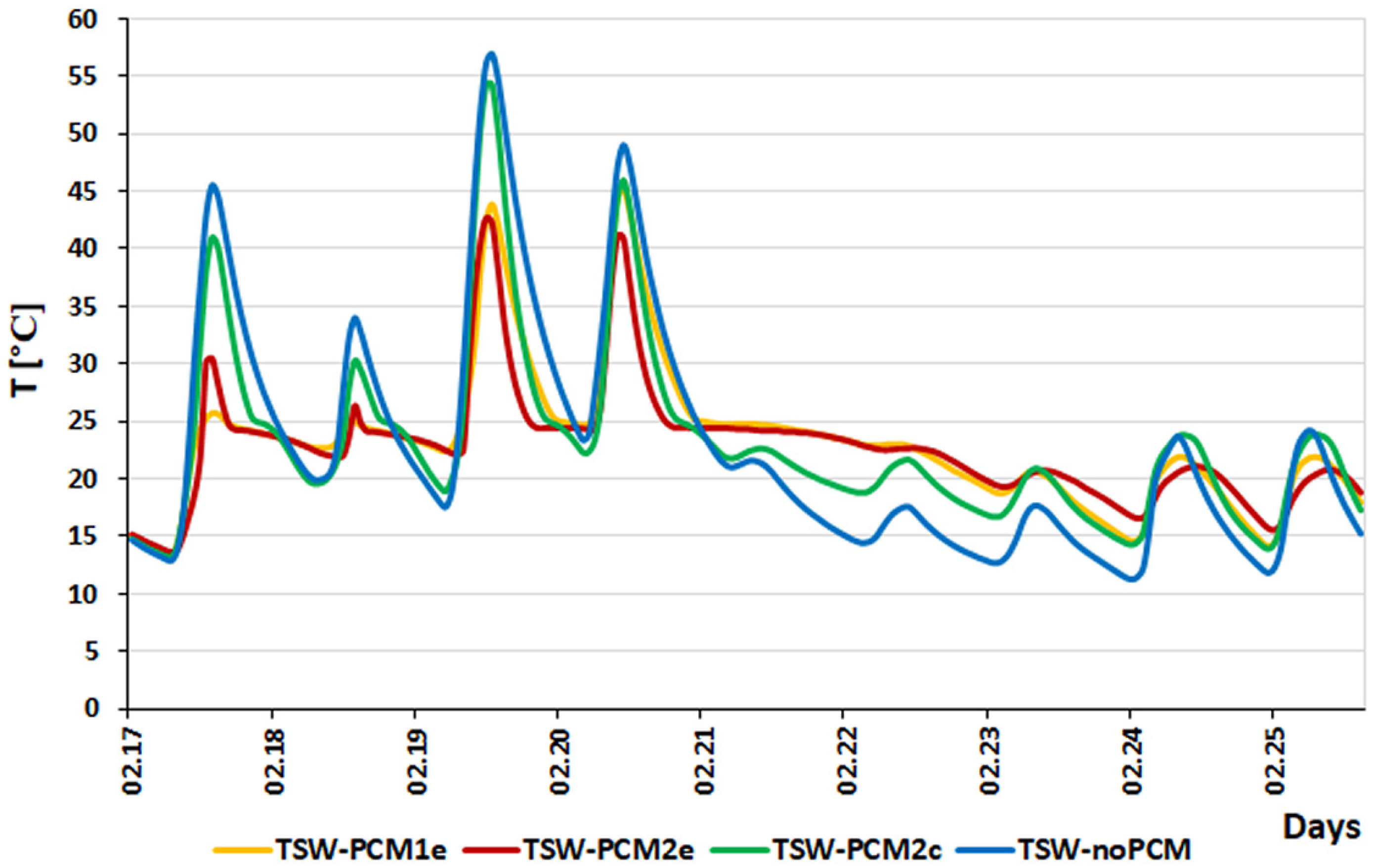
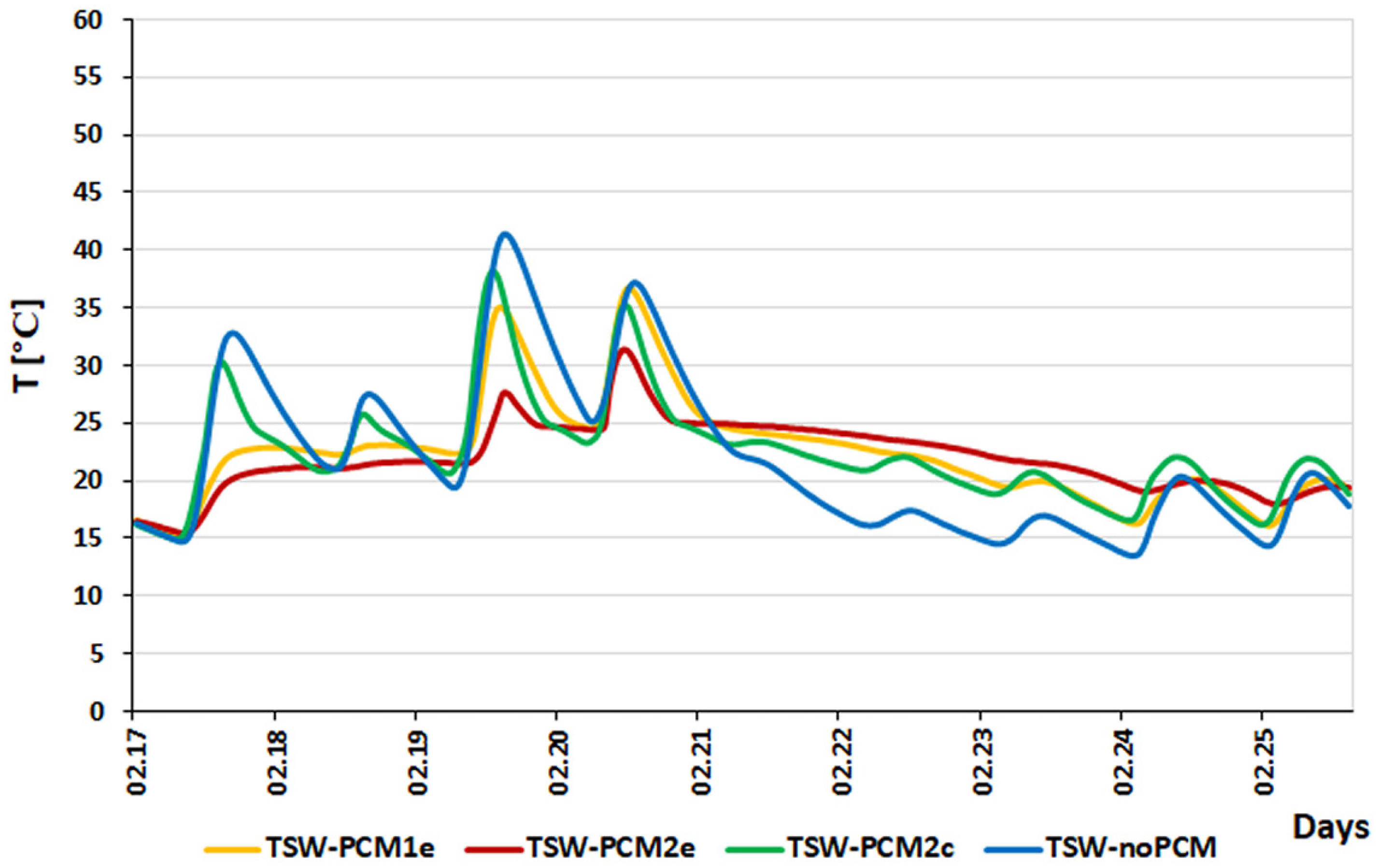
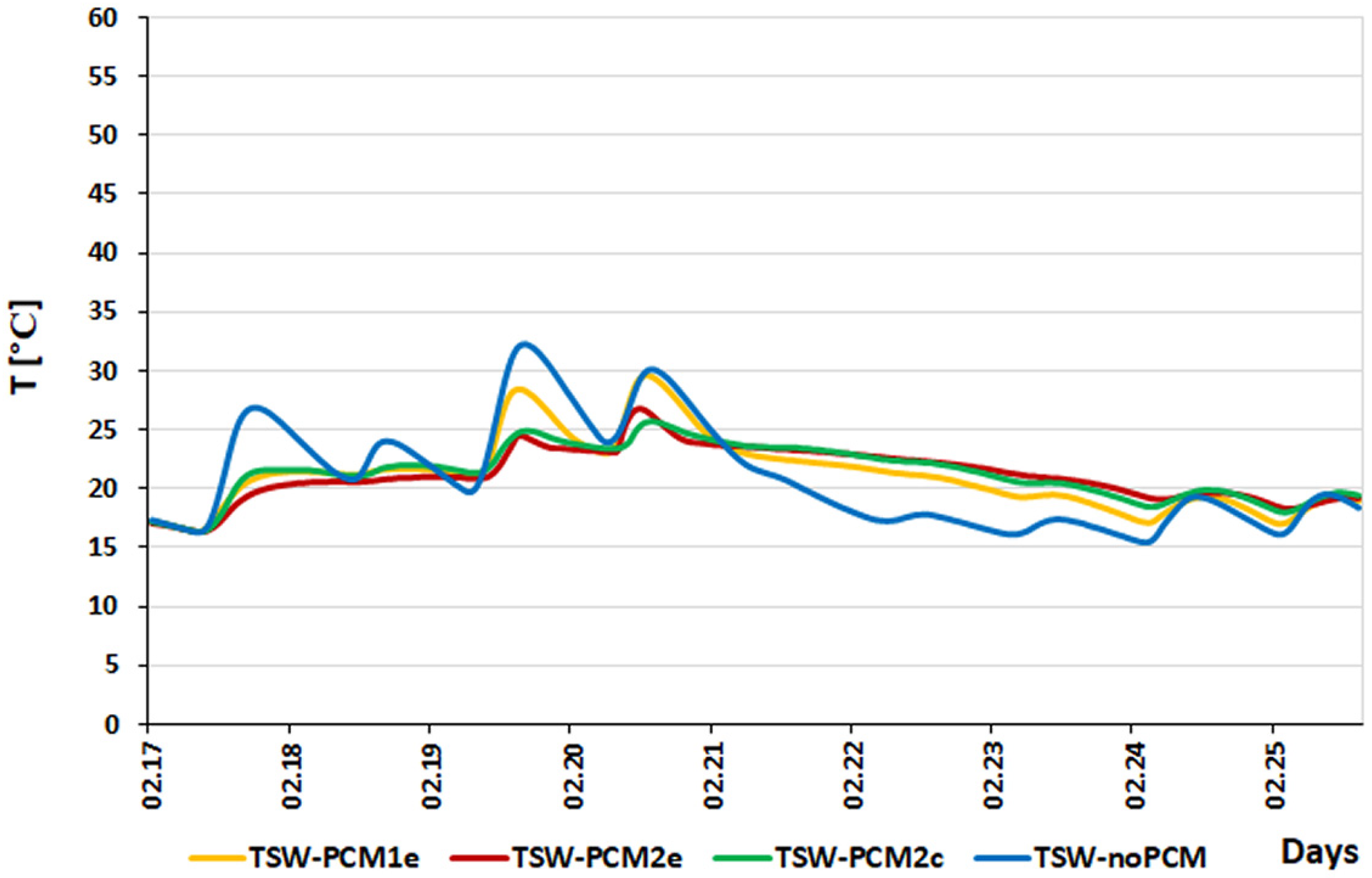
- Analysis of the temperature distribution in individual parts of the accumulation layer for the selected study period (from 17 to 25 February) showed that the phase change material undergoes a complete phase transformation at different times depending on the location of the PCM.
Author Contributions
Funding
Data Availability Statement
Conflicts of Interest
References
- Omeiza, L.A.; Abid, M.; Dhanasekaran, A.; Subramanian, Y.; Raj, V.; Kozak, K.; Mamudu, U.; Azad, A.K. Application of solar thermal collectors for energy consumption in public buildings—An updated technical review. J. Eng. Res. 2023; in press. [Google Scholar]
- Vahidhosseini, S.M.; Rashidi, S.; Hsu, S.-H.; Yan, W.-M.; Rashidi, A. Integration of solar thermal collectors and heat pumps with thermal energy storage systems for building energy demand reduction: A comprehensive review. J. Energy Storage 2024, 95, 112568. [Google Scholar] [CrossRef]
- Karaağaç, M.O.; Akıncı, B.; Ergün, A. Enhancing the performance of parabolic trough solar collectors: Cost-effective innovative designs for sustainable energy harvesting. Appl. Therm. Eng. 2024, 253, 123693. [Google Scholar] [CrossRef]
- Al-jarjary, A.S.; Ahmed, O.K.; Algburi, S. Enhancement methods for the performance of storage solar collectors: A brief review. Results Eng. 2024, 22, 102302. [Google Scholar] [CrossRef]
- Ayadi, B.; Al-Ebrahim, M.A.; Rajhi, W.; Abu-Hamdeh, N.H.; Nusier, O.K.; Pham, V.; Karimipour, A. Simultaneous use of renewable energies and phase change materials to reduce energy consumption in Saudi buildings: Examine the photovoltaic cells. Case Stud. Therm. Eng. 2024, 55, 104143. [Google Scholar] [CrossRef]
- Lis, M.; Antonov, V.; Olczak, P. Hybrid photovoltaic and energy storage system in order to enhance self-consumption energy—Poland case study. J. Energy Storage 2024, 91, 112096. [Google Scholar] [CrossRef]
- Yu, D.; Tan, X.; Liu, Z.; Li, D.; Wang, Z.; Yan, P.; Ni, J. Energy saving and carbon reduction schemes for hospital with photovoltaic power generation and system upgrading technology. Heliyon 2023, 9, e21447. [Google Scholar] [CrossRef]
- Guan, B.; Yang, H.; Li, H.; Gao, H.; Zhang, T.; Liu, X. Energy consumption characteristics and rooftop photovoltaic potential assessment of elevated metro station. SCS 2023, 99, 104928. [Google Scholar] [CrossRef]
- Lu, W. Dynamic Shading and Glazing Technologies: Improve Energy, Visual, and Thermal Performance. Energy Built Environ. 2024, 5, 211–229. [Google Scholar] [CrossRef]
- Xie, X.; Xu, B.; Fei, Y.; Chen, X.; Pei, G.; Ji, J. Passive energy-saving design strategy and realization on high window-wall ratio buildings in subtropical regions. Renew. Energy 2024, 229, 120709. [Google Scholar] [CrossRef]
- Xiao, Y.; Yang, Q.; Fei, F.; Li, K.; Jiang, Y.; Zhang, Y.; Fukuda, H.; Ma, Q. Review of Trombe wall technology: Trends in optimization. Renew. Sustain. Energy Rev. 2024, 200, 114503. [Google Scholar] [CrossRef]
- Faraj, K.; Khaled, M.; Faraj, J.; Hachem, F.; Castelain, C. Phase change material thermal energy storage systems for cooling applications in buildings: A review. Renew. Sustain. Energy Rev. 2020, 119, 109579. [Google Scholar] [CrossRef]
- Cabeza, L.F.; Castell, A.; Barreneche, C.; de Gracia, A.; Fernández, A.I. Materials used as PCM in thermal energy storage in buildings: A review. Renew. Sustain. Energy Rev. 2011, 15, 1675–1695. [Google Scholar] [CrossRef]
- Kośny, J.K.; Kossecka, E.; Brzezinski, A.; Tleoubaev, A.; Yarbrough, D.W. Dynamic thermal performance analysis of fiber insulations containing bio-based phase change materials (PCMs). Energy Build. 2012, 52, 122–131. [Google Scholar] [CrossRef]
- Tlili, I.; Alharbi, T. Investigation into the effect of changing the size of the air quality and stream to the trombe wall for two different arrangements of rectangular blocks of phase change material in this wall. J. Build. Eng. 2022, 52, 104328. [Google Scholar] [CrossRef]
- Marani, A.; Nehdi, M.L. Integrating phase change materials in construction materials: Critical review. Constr. Build. Mater. 2019, 217, 36–49. [Google Scholar] [CrossRef]
- Wang, X.; Li, W.; Luo, Z.; Wang, K.; Shah, S.P. A critical review on phase change materials (PCM) for sustainable and energy efficient building: Design, characteristic, performance and application. Energy Build. 2022, 260, 111923. [Google Scholar] [CrossRef]
- Sarbu, I.; Dorca, A. Review on heat transfer analysis in thermal energy storage using latent heat storage systems and phase change materials. Int. J. Energy Res. 2019, 43, 29–64. [Google Scholar] [CrossRef]
- Devaux, P.; Farid, M.M. Benefits of PCM underfloor heating with PCM wallboards for space heating in winter. Appl. Energy 2017, 191, 593–602. [Google Scholar] [CrossRef]
- Ismail, A.; Wang, J.; Salami, B.A.; Oyedele, L.; Otukogbe, G.K. Microencapsulated phase change materials for enhanced thermal energy storage performance in construction materials: A critical review. Constr. Build. Mater. 2023, 401, 132877. [Google Scholar] [CrossRef]
- Xia, L.; Zhang, P.; Wang, R.Z. Preparation and thermal characterization of expanded graphite/paraffin composite phase change material. Carbon 2010, 48, 2538–2548. [Google Scholar] [CrossRef]
- Al-Yasiri, Q.; Szabó, M. Incorporation of phase change materials into building envelope for thermal comfort and energy saving: A comprehensive analysis. J. Build. Eng. 2021, 36, 102122. [Google Scholar] [CrossRef]
- Żelazna, A.; Lichołai, L.; Krasoń, J.; Miąsik, P.; Mikušová, D. The Effects of Using a Trombe Wall Modified with a phase Change Material, from the Perspective of a Building’s Life Cycle. Energies 2023, 16, 7689. [Google Scholar] [CrossRef]
- Melcer, A.; Klugmann-Radziemska, E.; Lewandowski, W. Phase change materials. Properties, classification, advantages and disadvantages. Przemysł Chem. 2012, 91, 1000–1011. (In Polish) [Google Scholar]
- Al-Absi, Z.A.; Isa, M.H.; Ismail, M. Phase Change Materials (PCMs) and Their Optimum Position in Building Walls. Sustainability 2020, 12, 1294. [Google Scholar] [CrossRef]
- Rodriguez-Ubinas, E.; Ruiz-Valero, L.; Vega Sanchez, S.; Neila-González, F.J. Applications of Phase Change Material in highly energy-efficient houses. Energy Build. 2012, 50, 49–62. [Google Scholar] [CrossRef]
- Shchukina, E.; Graham, M.; Zheng, Z.; Shchukin, D. Nanoencapsulation of phase change materials for advanced thermal energy storage systems. Chem. Soc. Rev. 2018, 47, 4156. [Google Scholar] [CrossRef] [PubMed]
- Lamrani, B.; Johannes, K.; Kuznik, F. Phase change materials integrated into building walls: An updated review. Renew. Sustain. Energy Rev. 2021, 140, 110751. [Google Scholar] [CrossRef]
- Lachheb, M.; Younsi, Z.; Youssef, N.; Bouadila, S. Enhancing building energy efficiency and thermal performance with PCM-Integrated brick walls: A comprehensive review. Built Environ. 2024, 256, 111476. [Google Scholar] [CrossRef]
- Alawadhi, E.M. Thermal analysis of a building brick containing phase change material. Energy Build. 2008, 40, 351–357. [Google Scholar] [CrossRef]
- Hichem, N.; Noureddine, S.; Saifi, N.; Djamila, D. Experimental and Numerical Study of a Usual Brick Filled with PCM to Improve the Thermal Inertia of Buildings. Energy Procedia 2013, 36, 766–775. [Google Scholar] [CrossRef]
- Gao, Y.; He, F.; Meng, X.; Wang, Z.; Zhang, M.; Yu, H.; Gao, W. Thermal behavior analysis of hollow bricks filled with phase-change material (PCM). J. Build. Eng. 2020, 31, 101447. [Google Scholar] [CrossRef]
- Mahdaoui, M.; Hamdaoui, S.; Ait Msaad, A.; Kousksou, T.; El Rhafiki, T.; Jamil, A.; Ahachad, M. Building bricks with phase change material (PCM): Thermal performances. Constr. Build. Mater. 2021, 269, 121315. [Google Scholar] [CrossRef]
- Krasoń, J.; Lichołai, L. Thermal efficiency of a modified thermal storage wall containing phase change material in comparative test periods. E3S Web Conf. 2018, 49, 00059. [Google Scholar] [CrossRef]
- Lichołai, L.; Krasoń, J.; Miąsik, P.; Starakiewicz, A. Udział materiału zmienno-fazowego w pracy energetycznej przegrody kolektorowo-akumulacyjnej w przejściowych warunkach klimatycznych. J. Civ. Eng. Environ. Archit. (JCCEA) 2017, 64, 495–504. [Google Scholar] [CrossRef][Green Version]
- Alawadhi, E.M.; Alqallaf, H.J. Building roof with conical holes containing PCM to reduce the cooling load: Numerical study. Energy Convers. Manag. 2011, 52, 2958–2964. [Google Scholar] [CrossRef]
- Ben Hamida, M.B.; Nguyen, L.M.Q.; Hajjar, A.; Izadi, M.; Sheremet, M.A.; Alrasheedi, N.H.; Hajlaoui, K. Role of applying PCMs on thermal behavior of innovative unit roof enclosure. J. Energy Storage 2024, 77, 109918. [Google Scholar] [CrossRef]
- Ben Hamida, M.B.; Hajlaoui, K.; Almeshaal, M.A. A 3D numerical analysis using phase change material for cooling circular light emitting diode. Case Stud. Therm. Eng. 2023, 43, 102792. [Google Scholar] [CrossRef]
- PCM RT-Line. Available online: https://www.rubitherm.eu/en/index.php/productcategory/organische-pcm-rt (accessed on 15 September 2024).
- Textbook. Available online: https://www.statsoft.pl/textbook/stathome.html (accessed on 15 September 2024).
- Siegel, S. Nonparametric Statistics for the Behavioral Sciences; McGraw-Hill Book Company, Inc.: New York, NY, USA, 1956; pp. 184–193. [Google Scholar]






| Type of Glazing Set | Construction of the Set | Coefficient Ug | Coefficient g | Thickness of the Set |
|---|---|---|---|---|
| - | - | (W/m2K) | (%) | (mm) |
| G1 | LE 4/16Ar/4/16Ar/33.1LE+A(SSP G) 4 | 0.6 | 50 | 44 |
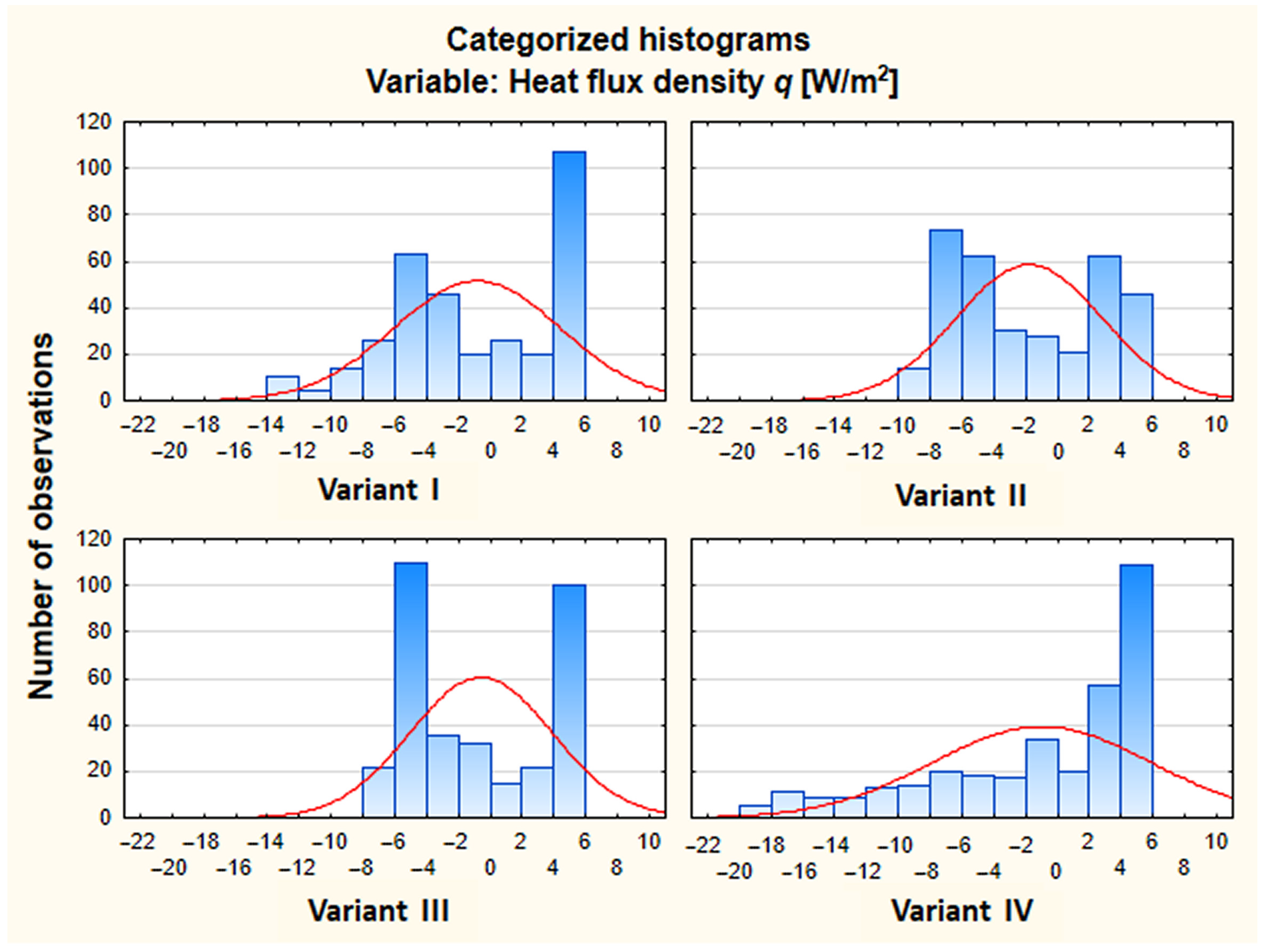
| Research Period: 23 November–6 December 2017 Dependent: Heat Flux Density qWi | p-Value for Multiple Comparisons. Independent (Grouping) Variable: Variant No. K-W Test: H (3, N = 1344) = 32.32604 p = 0.0000 | |||
|---|---|---|---|---|
| - | 1 R:700.17 | 2 R:568.60 | 3 R:706.95 | 4 R:714.28 |
| TSW-PCM1e | 0.000067 | 1.000000 | 1.000000 | |
| TSW-PCM2e | 0.000067 | 0.000023 | 0.000007 | |
| TSW-PCM2c | 1.000000 | 0.000023 | 1.000000 | |
| TSW-noPCM | 1.000000 | 0.000007 | 1.000000 | |
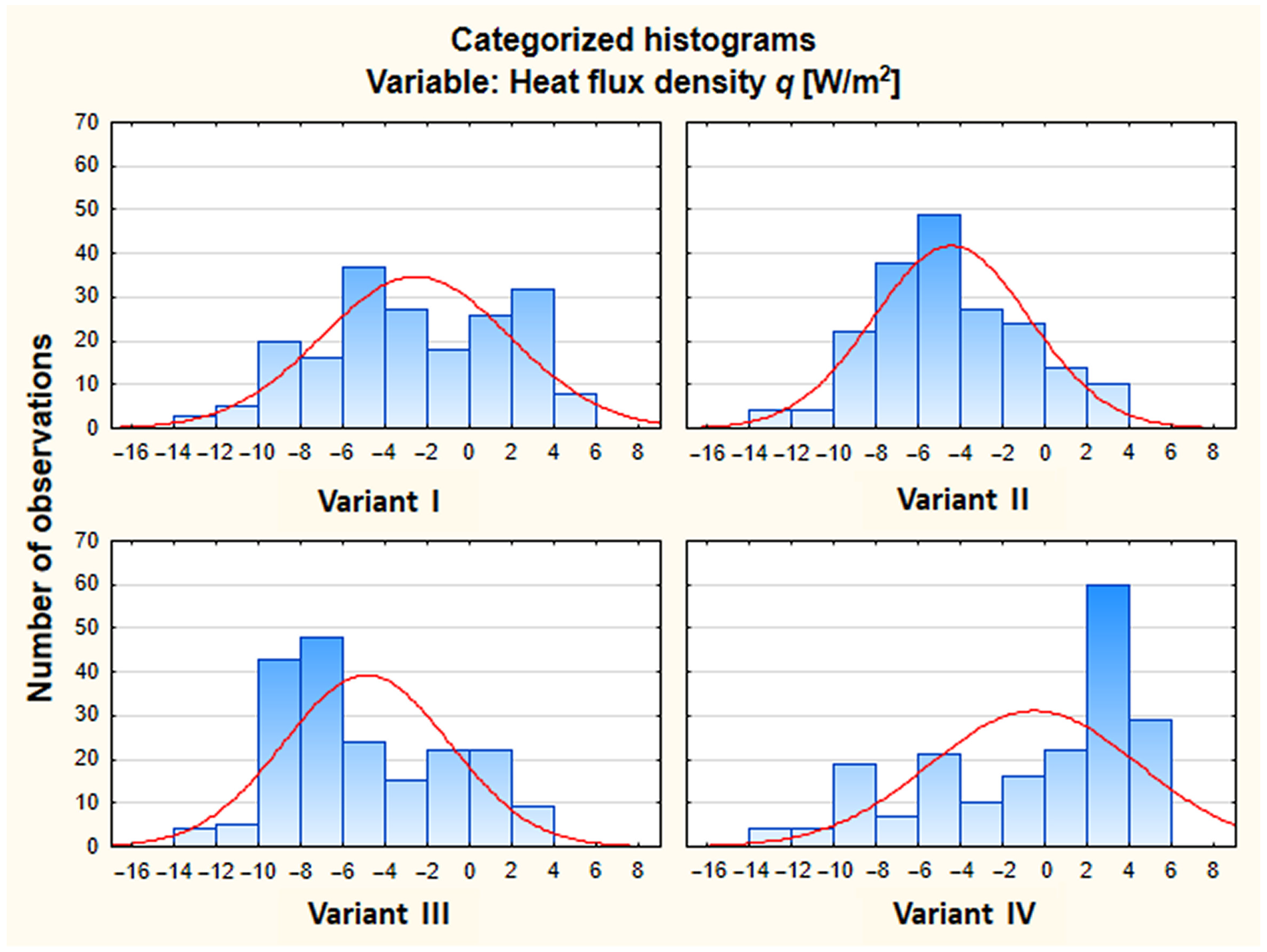
| Research Period: 17–25 February 2018 Dependent: Heat Flux Density qWi | p-Value for Multiple Comparisons. Independent (Grouping) Variable: Variant No. Test K-W: H (3. N = 864) = 12.42811 p = 0.0061 | |||
|---|---|---|---|---|
| - | 1 R:422.19 | 2 R:406.85 | 3 R:417.52 | 4 R:483.44 |
| TSW-PCM1e | 1.000000 | 1.000000 | 0.064521 | |
| TSW-PCM2e | 1.000000 | 1.000000 | 0.008556 | |
| TSW-PCM2c | 1.000000 | 1.000000 | 0.036292 | |
| TSW-noPCM | 0.064521 | 0.008556 | 0.036292 | |
| Research Period: 13–20 March 2018. Dependent: Heat Flux Density qWi | p-Value for Multiple Comparisons. Independent (Grouping) Variable: Variant No. Test K-W: H (3. N = 768) = 111.8052 p = 0.000 | |||
|---|---|---|---|---|
| - | 1 R:414.53 | 2 R:321.90 | 3 R:292.83 | 4 R:508.74 |
| TSW-PCM1e | 0.000257 | 0.000000 | 0.000190 | |
| TSW-PCM2e | 0.000257 | 1.000000 | 0.000000 | |
| TSW-PCM2c | 0.000000 | 1.000000 | 0.000000 | |
| TSW-noPCM | 0.000190 | 0.000000 | 0.000000 | |
Disclaimer/Publisher’s Note: The statements, opinions and data contained in all publications are solely those of the individual author(s) and contributor(s) and not of MDPI and/or the editor(s). MDPI and/or the editor(s) disclaim responsibility for any injury to people or property resulting from any ideas, methods, instructions or products referred to in the content. |
© 2025 by the authors. Licensee MDPI, Basel, Switzerland. This article is an open access article distributed under the terms and conditions of the Creative Commons Attribution (CC BY) license (https://creativecommons.org/licenses/by/4.0/).
Share and Cite
Krasoń, J.; Miąsik, P.; Starakiewicz, A.; Lichołai, L. Thermal Energy Storage Possibilities in the Composite Trombe Wall Modified with a Phase Change Material. Energies 2025, 18, 1433. https://doi.org/10.3390/en18061433
Krasoń J, Miąsik P, Starakiewicz A, Lichołai L. Thermal Energy Storage Possibilities in the Composite Trombe Wall Modified with a Phase Change Material. Energies. 2025; 18(6):1433. https://doi.org/10.3390/en18061433
Chicago/Turabian StyleKrasoń, Joanna, Przemysław Miąsik, Aleksander Starakiewicz, and Lech Lichołai. 2025. "Thermal Energy Storage Possibilities in the Composite Trombe Wall Modified with a Phase Change Material" Energies 18, no. 6: 1433. https://doi.org/10.3390/en18061433
APA StyleKrasoń, J., Miąsik, P., Starakiewicz, A., & Lichołai, L. (2025). Thermal Energy Storage Possibilities in the Composite Trombe Wall Modified with a Phase Change Material. Energies, 18(6), 1433. https://doi.org/10.3390/en18061433