Harnessing Shallow Geothermal Energy for Road Infrastructure: Advances, Challenges, and Future Perspectives

 ,
,  ,
,  and
and 
Abstract
1. Introduction
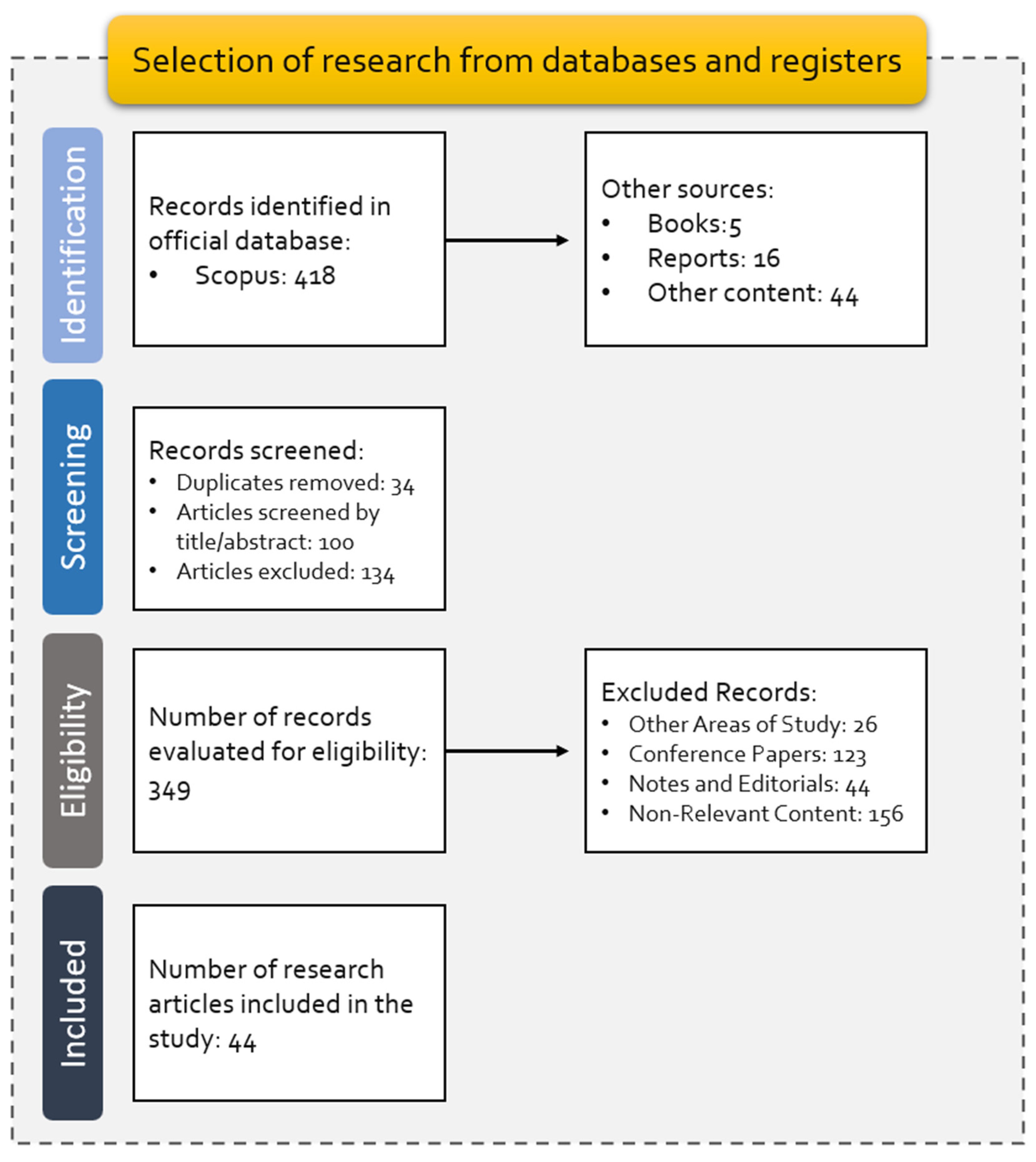
2. Research Methodology
2.1. Ice Formation and High Temperature Exposure on Road Surfaces
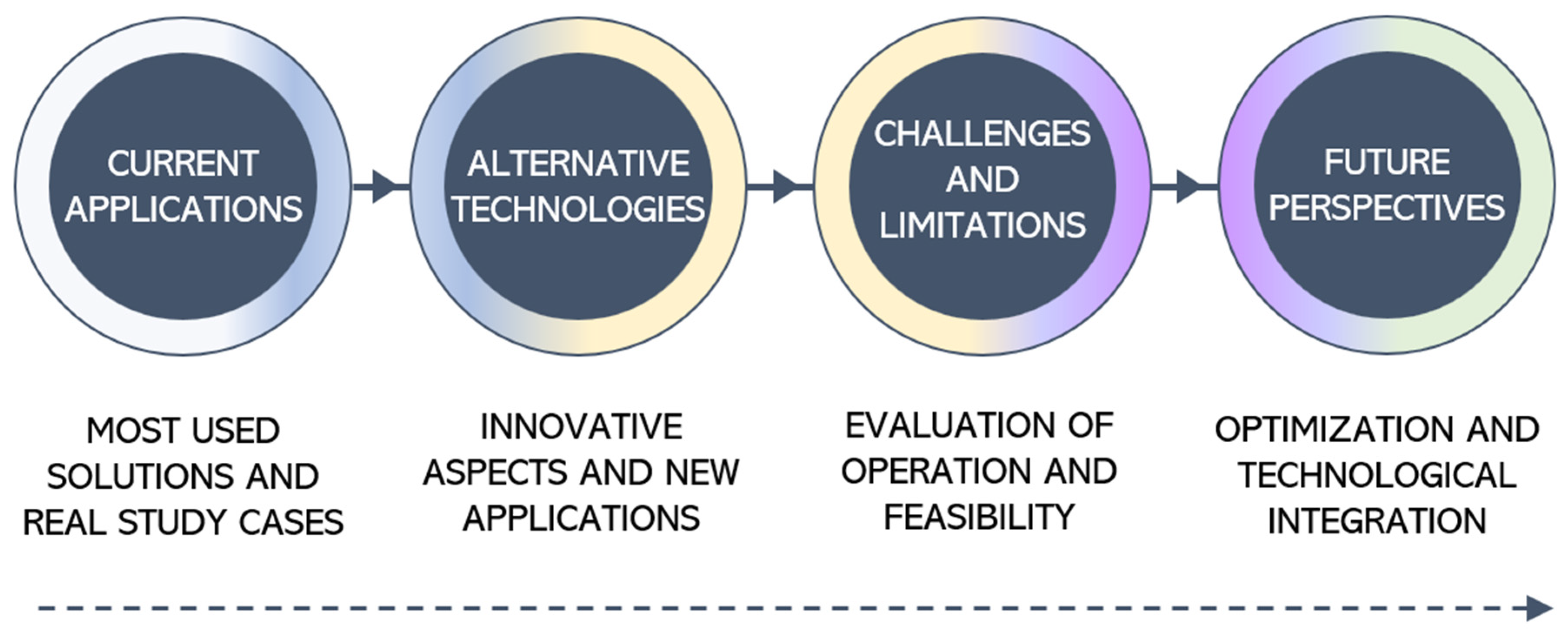
2.2. Workflow and Methodological Approach
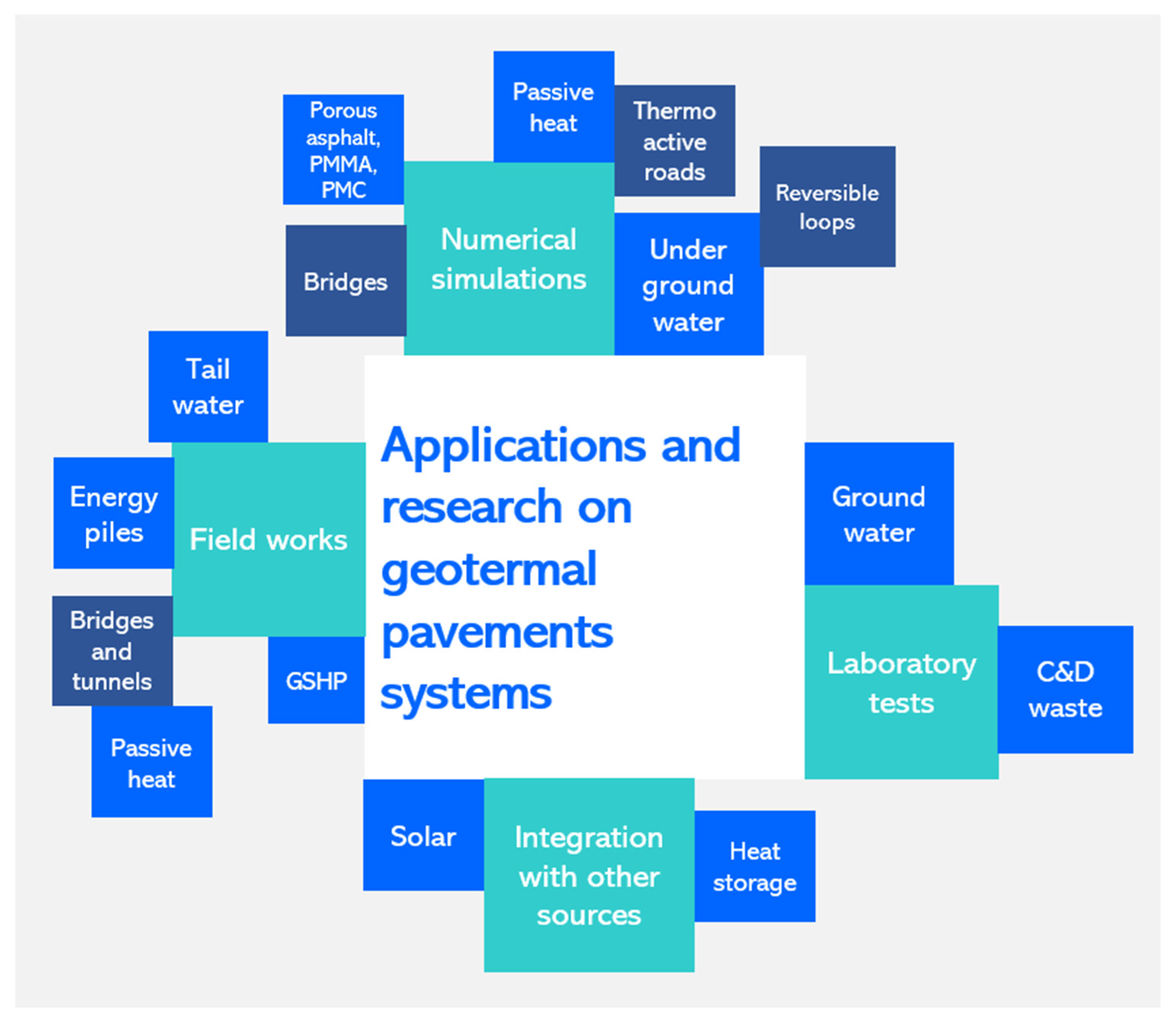
3. Applications and Studies of Geothermal Energy in Road Management
3.1. Field-Based Studies and Real-World Applications of Geothermal Pavements
3.2. Computational Modeling and Simulation Research on Geothermal Heated Pavements
3.3. Laboratory Testing and Modeling Framework for Geothermal Road Infrastructure
4. Discussion
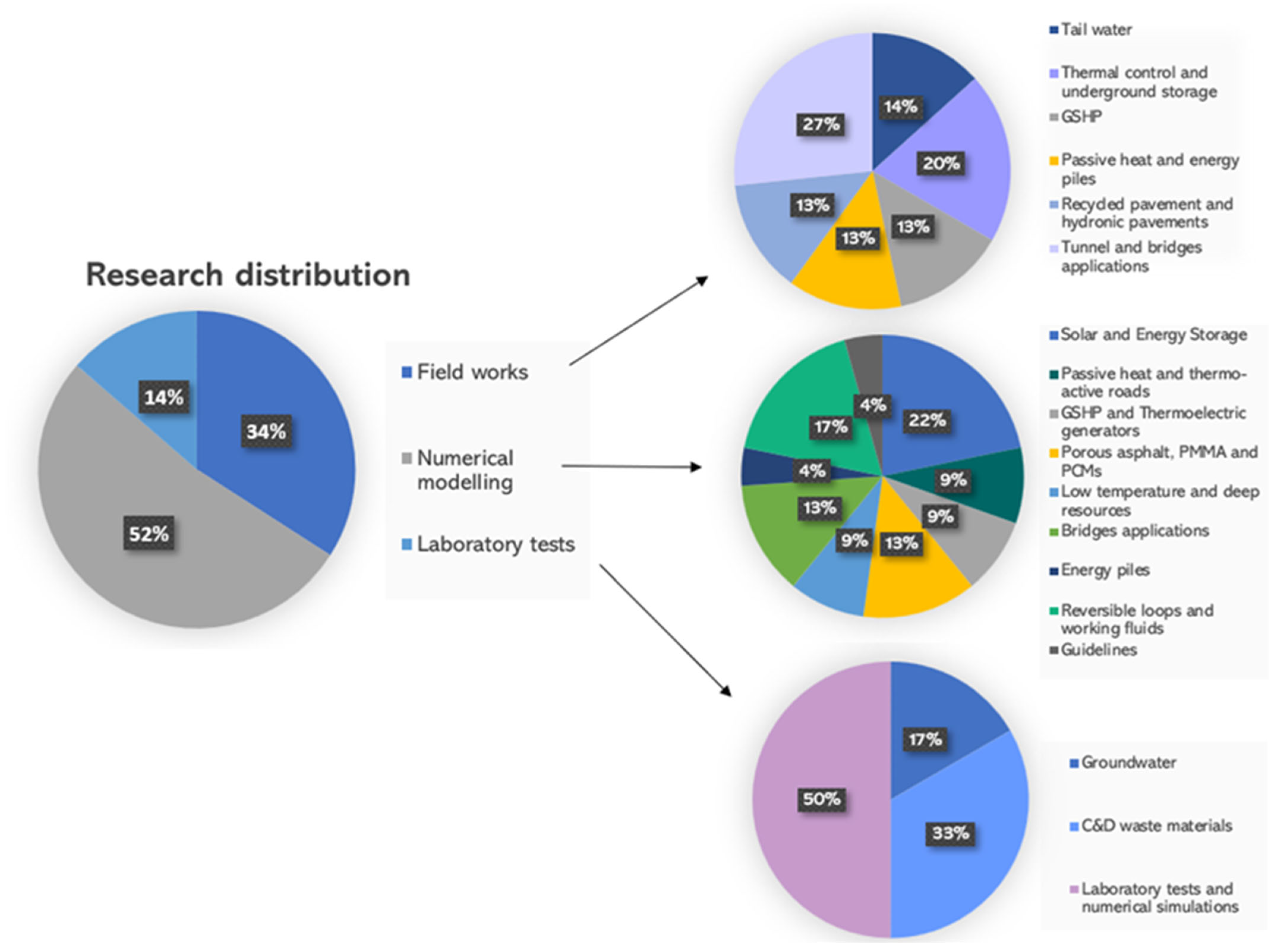
4.1. Study Distribution
4.2. Comparative Statistical Assessment
- Energy pile and bridge-based systems consistently achieve higher efficiency.
- GSHP and passive systems show greater sensitivity to operational parameters and local climate.
- Systems integrating solar energy or PCMs improve overall performance by enhancing energy storage and reducing external energy dependence.
- Laboratory and modelling studies provide relevant insights for design optimization, though real-world variability may affect performance.
4.3. Geographical, Climatic, and Temporal Analysis
- ▪ Severe-cold continental climates (NE China, northern Japan): systems face high operational demand due to deep frost penetration and prolonged sub-zero periods. Field studies highlight the need for higher fluid temperatures, deeper pipe burial, or hybridization strategies to maintain sufficient snow-melting performance [35,36,37].
- ▪ 1995–2010: early studies were primarily field-based, conducted in Japan (1995, 2009, 2010) and China (2006–2009). These works focused on small- to medium-scale feasibility of hydronic pavements, underground water circulation, and basic GSHP systems, emphasizing thermal performance and snow-melting efficiency. Research during this period had low to moderate technology readiness (TRL 2–4) and lacked integration with climate adaptation or cost analysis.
- ▪ 2011–2020: this period saw the expansion of both field and computational studies, with field experiments in Japan (2011), China (2020), and Northeast China (2020), and modelling studies in China, France, and the USA (2015–2019). Computational work introduced optimization of pipe depth, spacing, flow rate, and solar or PCM integration, as well as simulations for climate-dependent performance. Technology readiness advanced (TRL 4–6) with improved design guidance and energy efficiency considerations.
- ▪ 2021–2025: recent studies reflect a strong focus on large-scale and full-scale implementations, spanning China, Australia, Germany, Texas (USA), and South Korea. Field-based works applied energy piles, tunnel drainage systems, and bridge deck deicing; computational studies explored reversible thermosyphons, thermoelectric generators, and hybrid geothermal-solar systems; laboratory studies validated designs under controlled conditions and tested C&D waste pavements. These developments represent emerging approaches (TRL 5–7) and mature systems with proven field performance, highlighting technology translation, climate-technology matching, and practical applicability.
4.4. Techno-Economic Assessment and Investment Considerations
4.5. Challenges and Limitations
5. Conclusions
Author Contributions
Funding
Data Availability Statement
Acknowledgments
Conflicts of Interest
Abbreviations
| CMA | Calcium Magnesium Acetate |
| PRISMA | Preferred Reporting Items for Systematic Reviews and Meta-Analyses |
| GSHP | Ground Source Heat Pump |
| PMMA | Polymethyl Methacrylate |
| PCM | Phase Change Materials |
| DTS | Distributed Temperature Sensing |
| COP | Coefficient Of Performance |
| TEGs | Thermoelectric Generators |
| SGES | Shallow Geothermal Energy Systems |
| C&D | Construction and Demolition |
| CFD | Computational Fluid Dynamics |
| UTES | Underground Thermal Energy Storage |
References
- Kashfi, S.A.; Bunker, J.M.; Yigitcanlar, T. Understanding the effects of complex seasonality on suburban daily transit ridership. J. Transp. Geogr. 2015, 46, 67–80. [Google Scholar] [CrossRef] [Scilit]
- Riehm, M.; Gustavsson, T.; Bogren, J.; Jansson, P.E. Ice formation detection on road surfaces using infrared thermometry. Cold Reg. Sci. Technol. 2012, 83, 71–76. [Google Scholar] [CrossRef] [Scilit]
- Jin, M.; McBroom, D.G. Investigating Road Ice Formation Mechanisms Using Road Weather Information System (RWIS) Observations. Climate 2024, 12, 63. [Google Scholar] [CrossRef] [Scilit]
- Yu, H.; Li, Z.; Zhang, G.; Liu, P. A latent class approach for driver injury severity analysis in highway single vehicle crash considering unobserved heterogeneity and temporal influence. Anal. Methods Accid. Res. 2019, 24, 100110. [Google Scholar] [CrossRef] [Scilit]
- Tobin, D.M.; Reeves, H.D.; Gibson, M.N.; Rosenow, A.A. Weather conditions and messaging associated with fatal winter-weather-related motor-vehicle crashes. Weather Clim. Soc. 2022, 14, 835–848. [Google Scholar] [CrossRef] [Scilit]
- Sarnowski, M.; Kowalski, K.J.; Król, J.B.; Radziszewski, P. Influence of overheating phenomenon on bitumen and asphalt mixture properties. Materials 2019, 12, 610. [Google Scholar] [CrossRef] [Scilit]
- de Abreu, V.H.S.; Santos, A.S.; Monteiro, T.G.M. Climate change impacts on the road transport infrastructure: A systematic review on adaptation measures. Sustainability 2022, 14, 8864. [Google Scholar] [CrossRef] [Scilit]
- Hjort, J.; Streletskiy, D.; Doré, G.; Wu, Q.; Bjella, K.; Luoto, M. Impacts of permafrost degradation on infrastructure. Nat. Rev. Earth Environ. 2022, 3, 24–38. [Google Scholar] [CrossRef] [Scilit]
- Dhyani, A.; Choi, W.; Golovin, K.; Tuteja, A. Surface design strategies for mitigating ice and snow accretion. Matter 2022, 5, 1423–1454. [Google Scholar] [CrossRef] [Scilit]
- Kenzhebayeva, A.; Bakbolat, B.; Sultanov, F.; Daulbayev, C.; Mansurov, Z. A mini-review on recent developments in anti-icing methods. Polymers 2021, 13, 4149. [Google Scholar] [CrossRef] [Scilit]
- Honarvar Nazari, M.; Mousavi, S.Z.; Potapova, A.; McIntyre, J.; Shi, X. Toxicological impacts of roadway deicers on aquatic resources and human health: A review. Water Environ. Res. 2021, 93, 1855–1881. [Google Scholar] [CrossRef] [Scilit]
- Li, Z.; Zhu, A.; Zhan, Y.; Luo, Z.; Zhang, A.A. Novel asphalt pavement with directional heat conduction for melting of ice and snow in plateau and cold areas. Intell. Transp. Infrastruct. 2023, 2, liad010. [Google Scholar] [CrossRef] [Scilit]
- Anis, M.; Abdel-Raheem, M. A review of electrically conductive cement concrete pavement for sustainable snow-removal and deicing: Road safety in cold regions. Transp. Res. Rec. 2024, 2678, 50–71. [Google Scholar] [CrossRef] [Scilit]
- Mukherjee, A.; Benett, J.; Anyigor, K.T.; Olayinka, O.B.O.; Khalafallah, A.M.; Alencastro, J.; Butt, T.E. Solar roads–a new potential renewable energy for Great Britain. Environ. Technol. 2024, 45, 5956–5965. [Google Scholar] [CrossRef] [Scilit]
- Beddu, S.; Ahmad, M.; Kamal, N.L.M.; Mohamad, D.; Itam, Z.; Min, Y.H.; Zailani, W.W.A. A State-of-the-Art Review of Hydronic Asphalt Solar Collector Technology for Solar Energy Harvesting on Road Pavement. MATEC Web Conf. 2024, 400, 03007. [Google Scholar] [CrossRef] [Scilit]
- Levenberg, E.; Félix Adam, Q. Construction of an electrically heated asphalt road based on ribbon technology. Transp. Res. Rec. 2021, 2675, 652–663. [Google Scholar] [CrossRef] [Scilit]
- Abdel-Raheem, M.; Anis, M. Toward Sustainability: A New Construction Method for Electrically Heated Rigid Pavement Systems. Transp. Res. Rec. 2025, 2679, 281–303. [Google Scholar] [CrossRef] [Scilit]
- Gu, X.; Makasis, N.; Motamedi, Y.; Narsilio, G.A.; Arulrajah, A.; Horpibulsuk, S. Geothermal pavements: Field observations, numerical modelling and long-term performance. Géotechnique 2022, 72, 832–846. [Google Scholar] [CrossRef] [Scilit]
- Mohammadzadeh, A.; Ghasemi-Fare, O.; Sun, Z.; McGinley, M. Exploring the Use of Geothermal Piles as an Environmentally Sustainable Method to De-Ice Bridge Decks through Field-Scale Experiment. In Proceedings of the IEEE 8th Conference on Energy Internet and Energy System Integration, Shenyang, China, 29 November–2 December 2024; pp. 751–759. [Google Scholar]
- Mishima, O.; Stanley, H.E. The relationship between liquid, supercooled and glassy water. Nature 1998, 396, 329–335. [Google Scholar] [CrossRef] [Scilit]
- Shi, X.; Huang, J.; Yang, Z. Pavement treatments for sustainable winter road maintenance. In Sustainable Winter Road Operations; John Wiley & Sons: Hoboken, NJ, USA, 2018; pp. 402–422. [Google Scholar]
- Liu, J.; Liu, J.; Shi, X.; Honarvarnazari, M. Snow and Ice Treatment Products Evaluation; No. cmr 21-009, TR202002; Department of Transportation, Construction and Materials Division: Jefferson City, MO, USA, 2021. [Google Scholar]
- Kołodziejczyk, U.; Ćwiąkała, M. Evaluation of the efficiency of use of aggregates and chemical compounds for winter road maintenance. Civ. Environ. Eng. Rep. 2009, 3, 67–76. [Google Scholar]
- Fay, L.; Shi, X. Environmental impacts of chemicals for snow and ice control: State of the knowledge. Water Air Soil Pollut. 2012, 223, 2751–2770. [Google Scholar] [CrossRef] [Scilit]
- Terry, L.G.; Conaway, K.; Rebar, J.; Graettinger, A.J. Alternative deicers for winter road maintenance—A review. Water Air Soil Pollut. 2020, 231, 394. [Google Scholar] [CrossRef] [Scilit]
- Mulholland, E.; Feyen, L. Increased risk of extreme heat to European roads and railways with global warming. Clim. Risk Manag. 2021, 34, 100365. [Google Scholar] [CrossRef] [Scilit]
- Ibrahim, S.H.; Ibrahim, N.I.A.; Wahid, J.; Goh, N.A.; Koesmeri, D.R.A.; Nawi, M.N.M. The impact of road pavement on urban heat island (UHI) phenomenon. Civ. Eng. 2018, 9, 1597–1608. [Google Scholar] [CrossRef] [Scilit]
- Wang, Q.; Liu, K.; Wang, M.; Koks, E.; Wang, H. Exposure of Global Rail and Road Infrastructures in Future Record-Breaking Climate Extremes. Earth’s Future 2024, 12, e2023EF003632. [Google Scholar] [CrossRef] [Scilit]
- Mink, L.L. The Nation’s oldest and largest geothermal district heating system. GRC Trans. 2017, 41, 205–2012. [Google Scholar]
- Weber, J.; Ganz, B.; Schellschmidt, R.; Sanner, B.; Schulz, R. Geothermal energy use in Germany. In Proceedings of the World Geothermal Congress 2015, Melbourne, VIC, Australia, 19–25 April 2015; pp. 19–24. [Google Scholar]
- Yuhara, K.; Nomura, K. Surface Temperature Measured with Distributed Temperature Sensor on the Snow-melting Road by Flowing Water through the Underground Embedded Pipes. J. Geotherm. Res. Soc. Jpn. 1995, 17, 43–54. [Google Scholar]
- Wang, H.; Zhao, J.; Chen, Z. Experimental investigation of ice and snow melting process on pavement utilizing geothermal tail water. Energy Convers. Manag. 2008, 49, 1538–1546. [Google Scholar] [CrossRef] [Scilit]
- Wang, H.J.; Zhao, J. Experimental study on geothermal ice and snow melting process for roads. Acta Energiae Solaris Sin. 2009, 30, 177–181. [Google Scholar]
- Yoshitake, I.; Yasumura, N.; Syobuzako, M.; Scanlon, A. Pipe heating system with underground water tank for snow thawing and ice prevention on roads and bridge decks. J. Cold Reg. Eng. 2011, 25, 71–86. [Google Scholar] [CrossRef] [Scilit]
- Zhao, W.; Zhang, Y.; Chen, X.; Su, W.; Li, B.; Fu, Z. Experimental heating performances of a ground source heat pump (GSHP) for heating road unit. Energy Convers. Manag. X 2020, 7, 100040. [Google Scholar] [CrossRef] [Scilit]
- Zhao, W.; Zhang, Y.; Li, L.; Su, W.; Li, B.; Fu, Z. Snow melting on the road surface driven by a geothermal system in the severely cold region of China. Sustain. Energy Technol. Assess. 2020, 40, 100781. [Google Scholar] [CrossRef] [Scilit]
- Tan, Y.; Song, J.; Chen, Z.; Xiao, H. Experimental study on the influence of buried geothermal pipes on the temperature field of concrete roads. Adv. Civ. Eng. 2021, 2021, 9977400. [Google Scholar] [CrossRef] [Scilit]
- Baumgaertel, S.; Schweighofer, J.A.; Rohn, J.; Luo, J. The performance of geothermal passive heating and cooling for asphalt and concrete pavement. Dev. Built Environ. 2021, 7, 100051. [Google Scholar] [CrossRef] [Scilit]
- Chen, X.; Kong, G.-Q.; Liu, H.-L.; Jiang, Q.; Yang, T. Field Tests on Heat Transfer Efficiency of Bridge Deck Snow Melting and Deicing Using Energy Pile Heat Pump System. J. Highw. Transp. Artic. 2022. [Google Scholar]
- Cheng, C.P.; Li, S.Q.; Xu, X.Q.; Luo, X.P.; Liu, F. Investigation and Evaluation on Long-term Performance of Geothermal Recycled Pavement of Expressway in Guangdong Province. J. Wuhan Univ. Technol. (Transp. Sci. Eng. Ed.) 2023, 47, 365–369. [Google Scholar]
- Mustafa, M.; Moormann, C. Investigating the use of hydro-geothermal energy from tunnel drainage system for de-icing roads: Results from a pilot study. In Proceedings of the Symposium on Energy Geotechnics 2023, Delft, The Netherlands, 3–5 October 2023; pp. 1–2. [Google Scholar]
- Wu, X.; Ma, M.; Lu, J.; Su, L.; Yuan, X.; Chen, H.; Ishnazarov, O. A Passive Geothermal-Based Approach to Snow Melting Using Natural Circulation. Heat Transf. Eng. 2025, 1–15. [Google Scholar] [CrossRef] [Scilit]
- Deshmukh, A.; Puppala, A.J.; Bhaskar, P.; Yu, X.; Fakhrabadi, A.; Lei, G. Design and Performance of a Shallow Geothermal Energy–Supplemented Bridge Deicing System on an In-Service Bridge in North Texas. J. Geotech. Geoenviron. Eng. 2025, 151, 05025004. [Google Scholar] [CrossRef] [Scilit]
- Kugler, T.; Mustafa, M.; Moormann, C. Geothermal hydronic pavement heating and cooling systems using tunnel geothermal energy. Tunn. Undergr. Space Technol. 2025, 164, 106812. [Google Scholar] [CrossRef] [Scilit]
- Yu, X.; Puppala, A.J.; Fakhrabadi, A.; Deshmukh, A.; Lei, G.; Bhaskar, P. Use of Geothermal Energy for De-Icing Approach Pavement Slabs and Bridge Decks–Phase II; No. FHWA/TX-25/0-6872-01-1; University of Texas at Arlington: Arlington, TX, USA, 2025. [Google Scholar]
- Zhao, J.; Wang, H.; Chen, H.; Qu, H. Seasonal behavior of pavement in geothermal snow-melting system with solar energy storage. J. Tianjin Univ. 2006, 12, 319–324. [Google Scholar]
- Wang, H.; Zhao, J.; Chen, Z. Numerical study on heat-transfer behavior of the pavement in road snow-melting system with solar and geothermal energy. Acta Energiae Solaris Sin. 2007, 28, 608. [Google Scholar]
- Nagai, N.; Miyamoto, S.; Tsuda, T.; Yamahata, S. Experimental demonstrations and optimal design conditions of snow-melting system using geothermal and solar energy. In Proceedings of the ASME 2009 Heat Transfer Summer Conference Collocated with the InterPACK09 and 3rd Energy Sustainability Conferences, San Francisco, CA, USA, 19–23 July 2009; Volume 43581, pp. 767–771. [Google Scholar]
- Nagai, N.; Miyamoto, S.; Osawa, Y.; Igarashi, S.; Shibata, K.; Takeuchi, M. Numerical simulation of snow melting using geothermal energy assisted by heat storage during seasons. Trans. Jpn. Soc. Mech. Eng. Ser. B 2010, 76, 1090–1101. [Google Scholar] [CrossRef] [Scilit]
- Asfour, S.; Bernardin, F.; Mauduit, C.; Toussaint, E.; Piau, J.M. Hydrothermal study of roads with de-freezing surface, obtained by the circulation of a warm fluid in a bonding porous asphalt layer. In Proceedings of the 8th RILEM International Symposium on Testing and Characterization of Sustainable and Innovative Bituminous Materials, Ancona, Italy, 7–9 October 2015; Springer: Dordrecht, The Netherlands, 2015; pp. 545–556. [Google Scholar]
- Mauro, A.; Grossman, J.C. Street-heat: Controlling road temperature via low enthalpy geothermal energy. Appl. Therm. Eng. 2017, 110, 1653–1658. [Google Scholar] [CrossRef] [Scilit]
- He, X.; Abdelaziz, S.; Chen, F.; Yin, H. Finite element simulation of self-heated pavement under different mechanical and thermal loading conditions. Road Mater. Pavement Des. 2019, 20, 1807–1826. [Google Scholar] [CrossRef] [Scilit]
- Zhao, S.Y.; Su, X.S.; Chen, C. A Study on Geothermal Snow-melting Technology Based on Chemical PMMA Pavement. Chem. Eng. Trans. 2016, 55, 229–234. [Google Scholar]
- Han, C.; Yu, X.B. An innovative energy pile technology to expand the viability of geothermal bridge deck snow melting for different United States regions: Computational assisted feasibility analyses. Renew. Energy 2018, 123, 417–427. [Google Scholar] [CrossRef] [Scilit]
- Han, C.; Wu, G.; Yu, X.B. Performance analyses of geothermal and geothermoelectric pavement snow melting system. J. Energy Eng. 2018, 144, 04018067. [Google Scholar] [CrossRef] [Scilit]
- Johnsson, J.; Adl-Zarrabi, B. Modeling the thermal performance of low temperature hydronic heated pavements. Cold Reg. Sci. Technol. 2019, 161, 81–90. [Google Scholar] [CrossRef] [Scilit]
- Ho, I.H.; Li, S.; Abudureyimu, S. Alternative hydronic pavement heating system using deep direct use of geothermal hot water. Cold Reg. Sci. Technol. 2019, 160, 194–208. [Google Scholar] [CrossRef] [Scilit]
- Al-Atroush, M.E.; Marouf, A.; Aloufi, M.; Marouf, M. A novel application of the geothermal asphalt pavement: A feasible E-fuel source. Transp. Eng. 2023, 12, 100183. [Google Scholar] [CrossRef] [Scilit]
- Cao, X.; Kong, G.; Han, C. Feasibility assessment of implementing energy pile-based snowmelt system on a practical bridge deck in diverse climate conditions across China. Energy 2024, 290, 130317. [Google Scholar] [CrossRef] [Scilit]
- Cao, B.; Jin, F.; Rengaraju, S.; Al-Tabbaa, A. Climate resilience and energy harvesting of thermo-active roads. In Proceedings of the 5th International Conference on Transportation Geotechnics, Sydney, Australia, 20–22 November 2024; Springer Nature: Singapore; pp. 301–309. [Google Scholar]
- Gu, X.; Makasis, N.; Narsilio, G.A.; Arulrajah, A.; Horpibulsuk, S. Preliminary design guidelines for the thermal performance of geothermal pavements under different climatic conditions. Appl. Therm. Eng. 2025, 264, 125432. [Google Scholar] [CrossRef] [Scilit]
- Lyu, J.; Makasis, N.; Cui, L.; Cao, B. 3D numerical modelling and analysis of heat harvesting and pavement temperature regulation of a thermo-active road. Geomech. Energy Environ. 2025, 42, 100678. [Google Scholar] [CrossRef] [Scilit]
- Mohammadzadeh, A.; Ghasemi-Fare, O.; Sun, Z. Enhancing Infrastructure Resilience through Shallow Geothermal Energy: A Novel Approach to Mitigate Extreme Weather Impacts on Existing Bridges. In Geotechnical Frontiers 2025; American Society of Civil Engineers: Reston, VA, USA, 2025; pp. 404–413. [Google Scholar]
- Chen, X.; Huang, G.; Li, Q.; Yang, C. A novel geothermal pavement ice and snow melting system with reversible loop heat pipes to eliminate underground thermal imbalance. Appl. Therm. Eng. 2025, 269, 126052. [Google Scholar] [CrossRef] [Scilit]
- Cao, C.; Chen, Z.; Zheng, L.; Xiao, H.; Wang, Z.; Song, X. Graded heating operation strategy study of geothermal ice melting system considering the temperature gradient of bridge concrete structures. Appl. Therm. Eng. 2025, 264, 125424. [Google Scholar] [CrossRef] [Scilit]
- Chen, X.; Huang, G.; Li, Q. Simulation-based analysis of a novel geothermal pavement ice/snow melting system with reversible thermosyphons to eliminate soil thermal imbalance. J. Renew. Sustain. Energy 2025, 17, 023901. [Google Scholar] [CrossRef] [Scilit]
- Cui, W.; Chai, Y.; Asgarpour, S.; Yin, S. Thermal Performance Comparison of Working Fluids for Geothermal Snow Melting with Gravitational Heat Pipe. Fluids 2025, 10, 209. [Google Scholar] [CrossRef] [Scilit]
- Yuhara, K. Fundamental Investigation on the Construction of a Snow-melting System for Roads by means of Groundwater Flow through the Embedded Pipes. J. Geotherm. Res. Soc. Jpn. 1995, 17, 1–32. [Google Scholar]
- Arulrajah, A.; Ghorbani, B.; Narsilio, G.; Horpibulsuk, S.; Leong, M. Thermal performance of geothermal pavements constructed with demolition wastes. Geomech. Energy Environ. 2021, 28, 100253. [Google Scholar] [CrossRef] [Scilit]
- Baghban, H.; Arulrajah, A.; Narsilio, G.A.; Horpibulsuk, S. Assessing the performance of geothermal pavement constructed using demolition wastes by experimental and CFD simulation techniques. Geomech. Energy Environ. 2022, 29, 100271. [Google Scholar] [CrossRef] [Scilit]
- Motamedi, Y.; Makasis, N.; Gu, X.; Narsilio, G.A.; Arulrajah, A.; Horpibulsuk, S. Numerical investigation of geothermal pavements: Design optimisation & boundary conditions. Transp. Geotech. 2022, 37, 100843. [Google Scholar] [CrossRef] [Scilit]
- Lim, H.; Lee, S.; Lee, J. Effective snow removal devices for road pavement using geothermal heat pipe. Appl. Therm. Eng. 2025, 265, 125624. [Google Scholar] [CrossRef] [Scilit]



| Scientific Research | Subject | Objective | System Limitation |
|---|---|---|---|
| Surface temperature measured with distributed temperature sensor on the snow-melting road by flowing water through the underground embedded pipes [31] | Thermal control | To evaluate the effectiveness of a snow-melting road system using hot water circulating through underground embedded pipes, with the use of Distributed Temperature Sensing (DTS) technology to monitor the surface temperature of snow-melting roads, using single optical fiber. |
|
| Experimental investigation of ice and snow melting process on pavement utilizing geothermal tail water [32] | Tail water | Evaluation of using low-temperature geothermal tail water (around 40 °C) to melt snow and ice on concrete pavements, by conducting tests on a small-scale system simulating real urban road conditions. |
|
| Experimental study on geothermal ice and snow melting process for roads [33] | Tail water | To analyze the use of low-temperature geothermal tailwater for melting ice and snow on concrete pavements by observing the dynamic melting processes of crushed ice, solid ice, artificial snow, and natural snow under controlled conditions. |
|
| Pipe heating system with underground water tank for snow thawing and ice prevention on roads and bridge decks [34] | Underground water storage | To assess the integration of a hydronic heating network embedded within the pavement, utilizing groundwater stored in an underground tank as the heat source. The stored water is circulated through pipes beneath the road surface, transferring heat to melt snow and prevent ice formation. |
|
| Experimental heating performances of a ground source heat pump (GSHP) for heating road unit [35] | GSHP | To investigate the performance of a GSHP system used to heat a 5 × 5 m concrete road unit. The research examines the effects of water temperature and flow rate on road surface temperature and system efficiency, showing that higher water temperatures increase surface heating but reduce system Coefficient Of Performance (COP). |
|
| Snow melting on the road surface driven by a geothermal system in the severely cold region of China [36] | GSHP | To evaluate a full-scale hydronic snow melting system powered by a GSHP in Harbin, China, making emphasis to the energy consumption, as the average COP for the heat pump was 2.49 and 2.04 for the entire system, especially during prolonged cold periods. |
|
| Experimental study on the influence of buried geothermal pipes on the temperature field of concrete roads [37] | Thermal behavior | To analyze the thermal behavior of concrete pavements integrated with geothermal heating systems, by using two 1 × 2 × 0.45 m concrete road models equipped with buried geothermal pipes. |
|
| The performance of geothermal passive heating and cooling for asphalt and concrete pavement [38] | Passive heat | To examine the performance of passive geothermal heating and cooling systems in asphalt and concrete pavements in Erlangen, Germany, using a hydraulic system with an inlet temperature of 10 °C. |
|
| Field Tests on Heat Transfer Efficiency of Bridge Deck Snow Melting and Deicing Using Energy Pile Heat Pump System [39] | Geothermal energy pile | To evaluate the performance of a geothermal energy pile-based snow melting and deicing system for bridge decks. The results demonstrated that the system was effective in melting snow and preventing ice formation on the bridge deck, even under sub-zero temperatures. |
|
| Investigation and evaluation on long-term performance of geothermal recycled pavement of expressway in Guangdong province [40] | Recycled pavement | To assess the durability and effectiveness of a geothermal recycled pavement system implemented on an expressway in Guangdong Province, China. This system combines traditional recycled asphalt with embedded geothermal heating pipes to enhance pavement performance and sustainability. The geothermal recycled pavement demonstrates improved structural integrity and thermal performance compared to conventional pavements. |
|
| Investigating the use of hydro-geothermal energy from tunnel drainage system for de-icing roads: results from a pilot study [41] | Tunnel drainage | To evaluate a novel approach to road de-icing by utilizing hydro-geothermal energy from tunnel drainage systems. A pilot de-icing system at the Füssen tunnel used mountain water and embedded heat pipes to prevent ice on nearby roads. Modeling and monitoring showed that activating the system nine hours before snowfall effectively raised surface temperatures to prevent ice formation. |
|
| Experimental study on road deicing using circulated heating produced from geothermal fluid [42] | Hydronic pavement in asphalt | To experimentally evaluate a hydronic pavement heating system powered by geothermal fluid for preheating and deicing asphalt surfaces. It concludes that higher geothermal fluid temperatures improve ice melting but reduce the system’s COP, while colder ambient temperatures increase COP but may lower surface temperature fluctuations. |
|
| Design and Performance of a Shallow Geothermal Energy-Supplemented Bridge Deicing System on an In-Service Bridge in North Texas [43] | Full-scale bridge | To present the first documented operation of a geothermal energy-based deicing system on a full-scale bridge in North Texas. The performance analysis, based on winter weather events, demonstrates that the system effectively keeps the bridge deck ice-free, enhancing the sustainability of bridge deicing operations. |
|
| Geothermal hydronic pavement heating and cooling systems using tunnel geothermal energy [44] | Tunnel drainage | To evaluate the use of tunnel drainage water as a sustainable heat source for roads. The Geothermal hydronic pavement system circulates tunnel water through tubes under road surfaces, keeping roads ice- and snow-free in winter and reducing pavement deformations in summer. A large-scale pilot at Grenztunnel Füssen tested nine surface configurations, confirming the system’s efficiency and feasibility. |
|
| Use of Geothermal Energy for De-Icing Approach Pavement Slabs and Bridge Decks—Phase II [45] | Full-scale bridge | To test and optimize a geothermal bridge deck deicing system that can be installed onto in-service bridges in Texas. The schematic of the system generally involves embedding geothermal pipes or heat exchangers beneath or around the bridge deck. Heat from the subsurface is transferred to the surface to maintain temperatures above freezing, preventing ice formation. |
|
| Scientific Research | Type of Research | Objective | System Limitation |
|---|---|---|---|
| Seasonal behavior of pavement in geothermal snow-melting system with solar energy storage [46] | Integration with solar energy | To model by two-dimensional unsteady heat, a geothermal snow-melting system integrated with solar energy storage. Increasing pipe burial depth lowers ground surface temperature and heating flux, while higher winter fluid temperatures improve efficiency. In summer, solar radiation significantly affects heat extraction, emphasizing the role of solar integration. |
|
| Numerical study on heat-transfer behavior of the pavement in road snow melting system with solar and geothermal energy [47] | Integration with solar energy | To develop a two-dimensional transient model to assess a geothermal road snow-melting system with solar energy storage. Solar integration enhances sustainability and reduces external energy dependence. |
|
| Experimental demonstrations and optimal design conditions of snow-melting system using geothermal and solar energy [48] | Integration with solar energy | To evaluate the performance of a snow-melting system that combines geothermal heat from underground sources with solar energy collected during the day. The system is designed to store thermal energy during warmer periods and release it during colder months to prevent snow accumulation on surfaces such as parking lots and bridges. |
|
| Numerical simulation of snow melting using geothermal energy assisted by heat storage during seasons [49] | Energy Storage | To provide a numerical model to simulate a geothermal snow-melting system for roads that uses underground piles as heat exchangers combined with heat dissipation pipes near the pavement surface. |
|
| Hydrothermal study of roads with de-freezing surface, obtained by the circulation of a warm fluid in a bonding porous asphalt layer [50] | Porous asphalt | To investigate a road structure designed to prevent ice formation on the surface through the circulation of a warm fluid within a porous asphalt bonding layer. A 2D thermo-hydraulic model was developed for a three-layer asphalt pavement with a 2–3% transversal slope, evaluating how hydraulic and thermal properties affect surface temperature and determines the minimum fluid injection temperature needed to keep the pavement above freezing. |
|
| Street-heat: controlling road temperature via low enthalpy geothermal energy [51] | Passive heat | To model a system that involves embedding non-structural piles with high thermal conductivity into the ground beneath roadways. These piles exploit geothermal temperature gradients to transfer heat passively to the road surface, reducing temperature fluctuations and preventing ice accumulation without the need for external energy sources or working fluids. |
|
| Finite element simulation of self-heated pavement under different mechanical and thermal loading conditions [52] | GSHP and solar energy | To develop and optimize a pavement de-icing technique using buried small-diameter heat exchange loops powered by geothermal and solar energy, ensuring adequate thermal and mechanical performance to maintain ice-free road surfaces. |
|
| A study on geothermal snow-melting technology based on chemical PMMA pavement [53] | PMMA | To investigate a system that uses geothermal energy to melt snow on Polymethyl Methacrylate (PMMA) road surfaces. Heat from the ground is circulated through L-shaped pipes embedded beneath the pavement, transferring thermal energy to the surface. |
|
| An innovative energy pile technology to expand the viability of geothermal bridge deck snow melting for different United States regions: Computational assisted feasibility analyses [54] | PCMs | To evaluate the use of energy piles as a sustainable solution for snow removal on bridge decks, introducing the incorporation of Phase Change Materials (PCMs) into the concrete to improve thermal energy storage and system efficiency. |
|
| Performance Analyses of Geothermal and Geothermoelectric Pavement Snow Melting System [55] | GSHP and thermoelectric generator | To analyze an innovative and multifunctional design for a snow-melting system that combines a geothermal heat pump system with a thermoelectric generator. |
|
| Modeling the thermal performance of low temperature hydronic heated pavements [56] | Low temperature hydronic pavements | To simulate through a numerical model the thermal behavior of hydronic heated pavements operating at low temperatures (4–8 °C). The model aims to assist in the design and optimization of such systems for applications like snow melting and de-icing. |
|
| Alternative hydronic pavement heating system using deep direct use of geothermal hot water [57] | Deep geothermal hot water | To investigate the feasibility and performance of an alternative hydronic pavement heating system that uses deep geothermal hot water as the heat source. |
|
| A novel application of the geothermal asphalt pavement: A feasible E-fuel source [58] | Thermoelectric generators | To assess the integration of geothermal technology into asphalt pavements to simultaneously cool the surface and harvest energy. It is achieved by a pavement system with embedded thermoelectric generators (TEGs) that convert geothermal heat into electricity. Using geothermal pipes, phase change materials, and external cooling, the system reduced asphalt surface temperature by 40% and maintained a 40 °C thermal gradient. |
|
| Feasibility assessment of implementing energy pile-based snowmelt system on a practical bridge deck in diverse climate conditions across China [59] | Energy piles for bridges | To evaluate energy piles for bridge deck snow melting across China using climate data, energy balance principles, and numerical models. Results show that the system is feasible in most cities when real-time snow melting is not required, but fails in extreme climates, or areas with snowfall >1 mm/h, where it cannot meet immediate snow-melting demands. |
|
| Climate Resilience and Energy Harvesting of Thermo-Active Roads [60] | Thermo-active roads | To analyze the integration of Shallow Geothermal Energy Systems (SGES) into pavements to create thermo-active roads. This approach aims to regulate subgrade temperatures, enhance road resilience against extreme weather, reduce climate-related damage, and provide a sustainable method for energy harvesting. |
|
| A Passive Geothermal-Based Approach to Snow Melting Using Natural Circulation [42] | Natural fluid circulation | To introduce a geothermal snow melting system that operates entirely passively, eliminating the need for external power sources. This system utilizes natural circulation to transfer heat from deep underground sources to the road surface, effectively melting snow without mechanical or chemical interventions. |
|
| Preliminary design guidelines for the thermal performance of geothermal pavements under different climatic conditions [61] | Guidelines and recommendations | To propose a simplified method for designing geothermal pavements and evaluating their thermal performance in different climates. Using a validated finite element model, it highlights the importance of accurate solar radiation data and high subgrade thermal conductivity for system efficiency. |
|
| 3D numerical modelling and analysis of heat harvesting and pavement temperature regulation of a thermo-active road [62] | Thermo-active roads | To present a detailed three-dimensional finite-element model to simulate the thermal performance of a thermo-active road system. This system utilizes two sets of horizontally placed pipes at different depths to exchange heat between the pavement surface and the ground, enabling thermal energy storage in summer and extraction in winter to regulate pavement temperature. |
|
| Enhancing infrastructure resilience through shallow geothermal energy: a novel approach to mitigate extreme weather impacts on existing bridges [63] | Shallow geothermal in bridge | To propose a shallow geothermal strategy to enhance bridge resilience against extreme weather by preventing snow and ice accumulation. The system uses a network of geothermal or heat pipes beneath or around the bridge deck to transfer heat to the surface, maintaining temperatures above 0 °C. |
|
| A novel geothermal pavement ice and snow melting system with reversible loop heat pipes to eliminate underground thermal imbalance [64] | Reversible loop heat pipes | To develop and demonstrate a geothermal-based pavement de-icing system that uses reversible loop heat pipes to transfer heat efficiently between the subsurface and pavement, eliminating underground thermal imbalance while maintaining the surface free of ice and snow, improving energy efficiency, and ensuring the long-term sustainability of the system. |
|
| Graded heating operation strategy study of geothermal ice melting system considering the temperature gradient of bridge concrete structures [65] | Bridges structures | To develop and evaluate a graded heating operation strategy for a geothermal ice-melting system that takes into account the temperature gradient in bridge concrete structures, aiming to optimize heat distribution to ensure efficient snow and ice removal, minimize energy consumption, and reduce the risk of thermal damage or stress in the concrete. |
|
| Simulation-based analysis of a novel geothermal pavement ice/snow melting system with reversible thermosyphons to eliminate soil thermal imbalance [66] | Reversible thermosyphons | To analyze a novel geothermal pavement ice/snow melting system using reversible thermosyphons to mitigate soil thermal imbalance caused by conventional systems. Numerical simulations showed that without thermal storage, soil temperature at 4.5 m depth decreased by 1.9–2.9 °C compared to undisturbed soil. |
|
| Thermal performance comparison of working fluids for geothermal snow melting with gravitational heat pipe [67] | Working fluids | To investigate and compare the thermal performance of different working fluids used in gravitational heat pipes for geothermal snow-melting applications, with the aim of identifying the most efficient fluid to maximize heat transfer, improve system reliability, and enhance the overall effectiveness of geothermal pavement snow-melting systems. |
|
| Scientific Research | Type of Research | Objective | System Limitation |
|---|---|---|---|
| Fundamental investigation on the construction of a snow-melting system for roads by means of groundwater flow through the embedded pipes [68] | Groundwater | To explore a system that circulates groundwater through pipes embedded beneath road surfaces to prevent snow and ice accumulation. |
|
| Thermal performance of geothermal pavements constructed with demolition wastes [69] | C&D waste materials | To investigate the feasibility of utilizing Construction and Demolition (C&D) waste materials, specifically crushed brick and recycled concrete aggregate in the construction of geothermal pavements. |
|
| Assessing the performance of geothermal pavement constructed using demolition wastes by experimental and CFD simulation techniques [70] | C&D waste materials | To investigate the feasibility of utilizing C&D waste materials, such as recycled concrete aggregates and recycled asphalt pavement, in geothermal pavement systems by combining experimental testing with Computational Fluid Dynamics (CFD) simulations. The research involved constructing experimental models using copper pipes embedded within C&D materials to simulate the geothermal pavement system. |
|
| Geothermal pavements: field observations, numerical modelling and long-term performance [18] | Laboratory test and numerical simulation | To develop a detailed three-dimensional finite-element model to explore the thermal performance of geothermal pavement systems, by its validation with both data measured from a full-scale experiment undertaken in Adelaide, South Australia, and other published data. |
|
| Numerical investigation of geothermal pavements: Design optimization & boundary conditions [71] | Laboratory test and numerical simulation—long term evaluation | To combine field testing, numerical modelling for the long-term performance evaluation of geothermal pavements. It includes experimental pavement sections and numerical simulations to conclude that geothermal pavements can operate efficiently for decades without significant performance degradation, provided that heat extraction and injection are balanced seasonally. |
|
| Effective snow removal devices for road pavement using geothermal heat pipe [72] | Laboratory tests and numerical simulation—lab-scale heat pipe | To explore the use of geothermal heat pipes for snow removal on roads by a lab-scale heat pipe. Numerical simulations of 72 full-scale installation scenarios indicated that optimal performance is achieved when heat pipes are installed close to the pavement, spaced narrowly, and properly insulated to reduce heat loss. |
|
Disclaimer/Publisher’s Note: The statements, opinions and data contained in all publications are solely those of the individual author(s) and contributor(s) and not of MDPI and/or the editor(s). MDPI and/or the editor(s) disclaim responsibility for any injury to people or property resulting from any ideas, methods, instructions or products referred to in the content. |
© 2025 by the authors. Licensee MDPI, Basel, Switzerland. This article is an open access article distributed under the terms and conditions of the Creative Commons Attribution (CC BY) license (https://creativecommons.org/licenses/by/4.0/).
Share and Cite
Blázquez, C.S.; Maté-González, M.Á.; Vargas, S.A.C.; Herranz, D.H. Harnessing Shallow Geothermal Energy for Road Infrastructure: Advances, Challenges, and Future Perspectives. Energies 2025, 18, 6444. https://doi.org/10.3390/en18246444
Blázquez CS, Maté-González MÁ, Vargas SAC, Herranz DH. Harnessing Shallow Geothermal Energy for Road Infrastructure: Advances, Challenges, and Future Perspectives. Energies. 2025; 18(24):6444. https://doi.org/10.3390/en18246444
Chicago/Turabian StyleBlázquez, Cristina Sáez, Miguel Ángel Maté-González, Sergio Alejandro Camargo Vargas, and Daniel Herranz Herranz. 2025. "Harnessing Shallow Geothermal Energy for Road Infrastructure: Advances, Challenges, and Future Perspectives" Energies 18, no. 24: 6444. https://doi.org/10.3390/en18246444
APA StyleBlázquez, C. S., Maté-González, M. Á., Vargas, S. A. C., & Herranz, D. H. (2025). Harnessing Shallow Geothermal Energy for Road Infrastructure: Advances, Challenges, and Future Perspectives. Energies, 18(24), 6444. https://doi.org/10.3390/en18246444