1. Introduction
Climate change, driven primarily by manmade greenhouse gas emissions (GHGE), remains one of the most critical global challenges of the 21st century [
1]. According to the Intergovernmental Panel on Climate Change (IPCC), the Earth has already warmed by approximately 1.1 °C above pre-industrial levels [
2]; without immediate and sustained mitigation efforts, the threshold of 1.5 °C could be breached as early as 2030 [
3]. To address climate change and the pathway to net zero, more than 140 countries have committed to achieving net-zero carbon emissions by 2050 [
4,
5]. Achieving these climate targets necessitates radical transformation of the energy sector [
6], which is responsible for over 73% of global GHGE [
7]. Renewable energy (RE), such as wind [
8] and solar PV [
7], is widespread. New types such as geothermal [
9] and wave [
10] energy are emerging. Renewables’ deployment is accelerating, accounting for nearly 30% of global electricity generation in 2023, led by solar PV and wind [
11]. However, to support the intermittency of renewables and achieve full decarbonization across sectors, deeper integration of flexible, clean energy technologies is essential [
12]. Key economies including the EU, the US, China, and India have outlined aggressive decarbonization pathways [
13]. Specifically, these road maps for sustainable future energy pathways are centered on H
2-based circular economic subplans [
14]. Among other potential solutions, hydrogen stands out as a potential energy vector to accelerate the green energy transition [
15]. The global transition toward clean energy systems has intensified the demand for efficient, reliable, and responsive technologies capable of enabling renewable integration, decarbonization, and grid flexibility [
16]. Among these technologies, electrolyzers, fuel cells (FCs), and Battery Energy Storage Systems (BESSs) have emerged as pivotal components in next-generation energy infrastructures [
17]. Their ability to work synergistically in converting and storing renewable electricity, producing green hydrogen (H
2), and delivering dispatchable power makes them essential to the architecture of sustainable energy systems.
Among various H
2 production methods, water electrolysis powered by renewable sources producing “green hydrogen” is considered one of the most promising pathways for sustainable energy [
18]. Traditional electrolyzer technologies such as Alkaline Water Electrolysis (AWE) [
19] and Proton Exchange Membrane Water Electrolysis (PEMWE) [
20] have been widely developed but face notable limitations. Currently, alkaline technology has a Technology Readiness Level (TRL) of 9 and it is commercially used in industry; PEM, in contrast, is mainly used for medium and small applications (TRL = 6–8) [
21]. AWE suffers from low efficiency and gas crossover, while PEMWE, despite its high performance, relies heavily on costly precious metals and corrosion-resistant materials due to its acidic operating environment [
22]. In contrast, the Anion Exchange Membrane Electrolyzer (AEMEL) represents a next-generation solution merging the structural benefits of PEM with the cost-effectiveness of AWE [
23]. Operating under alkaline conditions, AEMELs allow the use of abundant and inexpensive catalysts like Ni, eliminating the need for expensive materials such as Pt or Ir [
24]. The membrane in AEMELs selectively conducts hydroxide ions (OH
−) while acting as a physical barrier to prevent gas mixing, enabling safe and efficient H
2 and O
2 generation [
25]. It reduces material costs and maintains mechanical integrity under moderate pressure, making AEMELs suitable for decentralized or modular green H
2 applications [
24,
25]. Although AEMELs are in the early stages of commercialization (TRL = 5–6 used in small commercial applications), they have demonstrated significant potential in reducing the cost of H
2 production and enabling broader deployment [
26]. Commercial systems like AEMEL by ENAPTER illustrate the emerging practical applications of this technology [
27]. As market interest grows, AEMELs are poised to become a key enabler in carbon-neutral hydrogen production [
28].
The cornerstone of utilizing H
2 as an energy carrier lies in the use of fuel cells (FCs), widely acknowledged as the most feasible solution for energy conversion [
29]. FCs directly transform the chemical energy stored in hydrogen and oxygen into electrical energy, emitting only heat and water as by-products [
30]. Among various FC types, the Proton Exchange Membrane Fuel Cell (PEMFC) has garnered significant attention due to its favorable characteristics, including fast response times, zero emissions, high conversion efficiency, and quick start-up capabilities [
31]. PEMFC systems are typically divided into two categories based on how oxygen is supplied to the cathode [
32]. Closed-cathode PEMFCs, which rely on compressors to supply oxygen, are commonly implemented in medium-scale (10–100 kW) to large-scale (>100 kW) applications such as electric vehicles, industrial transport systems, and heavy-duty machinery [
33]. Open-cathode PEMFCs utilize ambient air drawn by fans, exposing the cathode directly to environment [
34]. These are predominantly used in compact applications (below 10 kW), including portable power units, drones, range extenders, and light electric vehicles [
35]. Despite their range of applications, PEMFCs generally operate on comparable fundamental principles.
Despite the advantages of these technologies individually, their combined operation introduces new challenges in terms of integration, dynamic control, and predictive maintenance. These complexities necessitate advanced modeling and monitoring tools that can replicate real-world behavior with high fidelity. Digital twin (DT) technology has emerged as a transformative approach, offering real-time simulation, fault detection, and performance optimization by creating a virtual replica of physical systems [
36]. The concept of a DT for electrochemical energy systems is emerging as a powerful tool to enable real-time monitoring, prediction, and control of system behavior under varying operating conditions [
37]. AEMELs and PEMFCs are highly suitable candidates for DT integration due to their dynamic response characteristics and operational complexity [
38]. DT combines experimental data with physics-based or data-driven models to create a virtual real-time replica of the physical system, enabling predictive diagnostics, performance optimization, and fault detection [
39]. For AEMELs, a DT can track H
2 production rates, efficiency, and stack health under different loads and water management conditions. For PEMFCs, a DT can model voltage, current, power output, and thermal behavior in real time, accounting for effects such as flooding, degradation, or control logic [
40]. This dual DT framework supports the development of smart H
2-based energy systems by enabling precise interaction between generation (AEMEL) and consumption (PEMFC), which is critical for future integrated and autonomous energy networks.
1.1. Literature Review
1.1.1. AEM Electrolyzer Literature Survey
The AEMEL is an emerging electrolyzer type and the open-access literature is limited. Md Motakabbir Rahman et al. (2024) [
41] explored powering a three-cell, 50 cm
2 AEMEL using an open-source DC-DC converter integrated with solar PV and achieved >90% converter efficiency and an annual H
2 production of 5 kg (57,810 L). Bowen Yang et al. (2023) [
42] compared the H
2 production costs of ALK, PEM, and AEM. In the short term, the AEM cost was 23.85% higher than that of ALK; in the long term, the AEM cost was projected to be 24% lower than that of ALK. F. Moradi Nafchi et al. (2024) [
43] analyzed a solar-powered AEMEL system with hydrogen blending in natural gas. H
2 injection at a 10% vol reduced the LHV and Wobbe Index by 6% and 1.55%. The exergy cost of H
2-blended gas increased by 5.9%; eliminating the compressor reduced the hydrogen supply cost by 29.3%. Selvam Praveen Kumar et al. (2023) [
44] tested seawater electrolysis using an AEMEL with a HEMO@GO catalyst and reached 10 mA/cm
2 at overpotentials of −482 mV (HER) and 597 mV (OER). The fuel-cell output was 0.19 A at 3 V and 32 mL/h hydrogen at 2 V. Rushabh Kamalakar Kale et al. (2025) [
45] simulated three configurations of AEMWE-based systems. AEMWE plus AEMFC gave 45.5% net efficiency. Adding STU reduced it to 35.9%. Using solar PV gave an overall efficiency of 7.33–8.21%. Yoo Sei Park et al. (2023) [
46] optimized the ionomer content in the anode layer and achieved 1.44 A/cm
2 at 1.8 V, a 25% increase over a non-optimized cell. E. López-Fernández et al. (2022) [
47] used ionomer-free Ni–Fe/Ni electrodes with different GDLs and achieved 670 mA/cm
2 at 2.2 V (40 °C, 1.0 M KOH), maintaining 400 mA/cm
2 for 7 days in chronopotentiometry. Laura J. Titheridge et al. (2024) [
48]’s techno-economic model estimates the baseline Levelized Cost of Hydrogen (LCOH) at USD 5.79/kg for AEMWE, but projects that technical improvements and low-cost electricity could lower it to USD 1.29/kg, close to DOE targets. The projected cost is USD 2/kg and the optimal current density is 1.38 A/cm
2. Shing-Cheng Chang et al. (2024) [
49] simulated the effects of temperature, pressure, and electrolyte. Optimal efficiency reached 56.4% at 328 K and 30 bar. Energy efficiency improved when the operating temperature increased from 313 K to 353 K. Ceren Celebi et al. (2025) [
50] modeled PBI-based membranes and achieved 83.9% efficiency using a 25 µm membrane at 80 °C, 1 M KOH, and a 2 A/cm
2 current density. A 50 µm membrane gave 79.8% efficiency. Refer to
Table 1 for the extended literature.
1.1.2. PEM Fuel Cell Literature Survey
A. Alaswad et al. (2016) [
74] reviewed PEMFCs for transportation applications, identified major challenges including high cost, limited durability (due to membrane and flow plate degradation), and hydrogen infrastructure, and emphasized the need for platinum-free catalysts and durable materials to reduce cost and improve commercial viability. Simon T. Thompson et al. (2018) [
75] performed a cost analysis for an 80 kW
net automotive PEMFC stack. For large-scale production (100,000–500,000 units/year), the projected costs were USD 50/kW
net to USD 45/kW
net. The research identified USD 30/kW
net as the DOE target for ICEV cost competitiveness and outlined design improvements for cost reduction. Yakoub Zine et al. (2024) [
76] evaluated five MPPT algorithms on a 200 W PEMFC system. All achieved ~48% efficiency, but ANFIS performed the best in stability, convergence speed, and current fluctuation. This work showed that data-driven control methods significantly enhance PEMFC operating reliability and lifetime. Mingkai Wang et al. (2024) [
77] investigated CO poisoning and fault behaviors in PEMFCs running on impure hydrogen, showed self-recovery under anode water flooding and identified voltage behavior patterns for detecting fault type and location, and achieved a 100 ppm CO tolerance without added hardware. Badis Lekouaghet et al. (2025) [
78] proposed a human-inspired AISA algorithm for parameter estimation in three PEMFC models, achieving minimum SSEs: 7.64 × 10
−3, 1.29× 10
−2, and 2.29. They validated results across four additional stacks and outperformed GBO, POA, and HBA in convergence, stability, and runtime (as low as 0.5766 s). Mehdi Seddiq et al. (2025) [
79] simulated thermal shock (down to 10 °C) in PEMFCs. They observed a 15% drop in current density (from 9263 A/m
2 to 7709 A/m
2), with water saturation and oxygen drop affecting performance. The research aimed to improve thermal management strategies for aerospace use. Ponce-Hernández et al. (2025) [
80] developed a humidity diagnosis model using Nyquist-based impedance fitting. They achieved a 0.04% model error vs. 2.41% in commercial software, using two iterations, and showed precise monitoring of RH effects at 75%, 80%, and 100% for improved humidity control in PEMFCs. Miroslav Hala et al. (2024) [
81] modeled metallic bipolar plates with different channel shapes (trapezoidal vs. rectangular), and identified optimized geometry for stamped plates: 0.2 mm ground width, 0.4 mm rib width. This resulted in uniform flow and performance comparable to traditional milled plates. Ayoub Igourzal et al. (2024) [
82] designed a fault-tolerant power management system (PMS) for multi-stack PEMFC systems at lab scale. Optimization reduced the lifetime cost by 34% and extended stack life by 30% by incorporating durability and ageing in system sizing and operation. See
Table 1 for the extended literature.
1.1.3. Literature Survey for AEMEL and PEMFC Digital Twin Models
H. Naanani et al. (2025) [
83] reviewed DT applications across the hydrogen value chain, highlighting benefits such as real-time monitoring, predictive maintenance, and up to 12% efficiency gains in electrolyzers. The challenges noted include data quality, computational demand, and cybersecurity. Shaojie Liu et al. (2025) [
84] introduced a behavior-matching DT for PEM electrolyzers, reducing real-time error by 65% and improving accuracy under fluctuating renewable inputs. Sudarshan Chavan et al. (2017) [
85] used a MATLAB (R2024b (version 24.2))/Simulink model to show the impact of double-layer capacitance on PEMFC performance, especially at low loads. Zheng Zhou et al. (2024) [
86] developed a PEMWE DT focusing on thermal management, enabling sensor-less temperature monitoring to enhance large-scale system stability. Ming Zhang et al. (2023) [
87] proposed a DT-LSTM model for real-time remaining useful life (RUL) prediction of PEMFCs using minimal online data. Francisco Javier Folgado et al. (2023) [
88] developed and validated a digital replica of a six-cell PEM electrolyzer using an equivalent circuit model based on cell-specific internal resistance obtained via MATLAB curve fitting. A PLC–LabVIEW DAQ system supports accurate data collection, and the DR closely matches the experimental voltage, power, efficiency, and hydrogen production. The approach uses scalable commercial components, is computationally light, and can be applied to other electrolyzer designs. Future work includes model comparison, predictive control, and dynamic PEMEL modeling. Safa Meraghni et al. (2021) [
89] propose a data-driven DT prognostics method for predicting PEMFCs’ remaining useful life (RUL) by continuously updating a degradation model with real-time measurements. Using a stacked denoising autoencoder, the DT maps stack voltage to RUL and adapt to varying conditions, achieving over 0.9 accuracy even with limited data, supporting future predictive maintenance strategies.
1.2. Novelty and Contribution of the Paper
This paper is novel and state-of-the art under several key categories, thus filling numerous crucial research gaps and voids. The majority of the literature focuses solely on either the electrolyzer, FC, or BESS. In the literature, the majority of studies have focused on small lab/bench-scale experimental-level electrolyzers, FCs, and BESSs individually, while studies on system-level commercial electrolyzers, FCs, and BESSs as a unit base are scarce. Throughout the literature survey, no studies have conducted experimental analysis of the real-world, actual operation of a H2-based energy system comprising an AEMEL, PEMFC, and BESS. The current paper addresses this research gap by reporting a state-of-the-art H2-core system experimental analysis comprising an AEMEL, PEM fuel cell, H2 storage, and BESS combined energy system and DT models. In addition to stationary microgrid relevance, this integrated AEMEL–PEMFC–BESS configuration also reflects architectures used in vehicle-engineering applications, such as onboard hydrogen auxiliary power units, range-extender systems, and hybrid propulsion support. Therefore, the findings and DT models developed here hold practical significance not only for stationary energy systems but also for emerging hydrogen-mobility technologies.
1.2.1. AEMEL
Specifically, AEMELs are a new, emerging hot research topic with very limited research activities being performed within the domain of electrolyzers. In the major databases (Web of Science and SCOPUS), no studies were found addressing commercial-level AEMEL testing under real operating conditions without test/lab-scale simplifications and zero-assumptions set, such as the AEMEL unit which the authors analyzed and replicated as a digital twin model [
90]. However, apart from the manufacturer’s claims, real-world implementation and research-oriented dynamic testing of a particular AEM-type electrolyzer has not previously been performed strictly for the category of AEMELs. Since AEMELs are currently at TRL 4–5, this analysis stand outs as state of the art for experimental investigation of an AEMEL in real-world applications.
1.2.2. PEMFC
Most of the studies focused on parameter identification and modeling, degradation analysis and prognostics, thermal and environmental management, recycling and end-of-life strategies, electrochemical diagnostics, lab-scale experiments and system-level integration and applications, individual cell architectures, and dual-mode operation. Based on an extended literature survey, the authors found no recent studies (only two 18–15-year-old studies found on older-generation commercial PEM-FCs) conducted on commercial-level PEMFC units. Intuitively, tests and experiments conducted on a real-world test site for PEMFC operations have been particularly focused on understanding water-flooding phenomena, its preventive mechanism, and identification techniques through data interrogation. This paper will be the frontrunner by identifying and analyzing a modern commercial PEMFC unit and developing a DT that replicates its real-world behavior, operational constraints, and dynamic responses under varying environmental and load conditions.
1.2.3. Digital Twin (DT) Modeling
To date, most DT studies in the domain of H2 have focused on general PEM electrolyzers, alkaline systems, or theoretical frameworks, with limited attention to commercially relevant, experimentally validated DTs tailored to specific technologies (based on 1.1.3). Commercial PEMFC-DT modeling-related research studies are rare and very exceptional in the literature and we have not found any paper addressing AEMELs, PEM fuel cells, and experimental work combinedly adjoining them with DTs. According to the authors’ knowledge, this work is the first to develop and present two distinct, real-time DT models specifically for a commercial integrated AEMEL and a PEMFC, using real operational data from the test unit. It is worth noting that only a small number of publications have reported DTs for hydrogen-related equipment based on experimental data, with the majority of existing studies focusing on simulation-based or partially developed DT frameworks. As a result, experimentally supported DT research remains limited. The integration of real experimental equipment in this work therefore constitutes a significant contribution to the current state of the art.
1.2.4. Potential Contribution of AEMEL and PEMFC Digital Twins
Distinct DTs allow modular optimization and correctly decouple the generation side (AEMEL) from the consumption side (PEMFC), allowing independent modeling and performance enhancement utilizing AI combined with rule-based logic. DT combines ML prediction with real-world logic (constraints or shutdown simulation), coupling hybrid intelligence. Realistic boundaries and alerts set for both DTs replicate not just outputs but embedded safety logic, making them far more realistic than academic-only simulations. Both models are grounded in experimental data and incorporate manufacturer-specific operational constraints, enabling predictive performance evaluation, safety analysis, and diagnostic capability. Notably, the PEMFC-DT uniquely infers internal purging and thermal control behavior, offering rare insight into embedded system logic. Beyond their technical function, these DTs provide a cost-effective, low-risk alternative to physical testing, opening new doorways as valuable tools for education, research, and training. They allow users to explore system behavior, fault scenarios, and control strategies without the need for continuous operation of expensive, high-cost-of-maintenance hardware equipment. In addition, both DTs serve as virtual platforms for techno-economic analysis (TEA) [
91], enabling simulation of energy consumption, electro-hydrogen cost [
92], efficiency trends, and system responses under varying operational conditions, supporting applications such as scenario planning, feasibility studies, and policy evaluation for expanding H
2 deployment. DTs’ modular structure also allows for future integration into unified energy system simulations connecting generation and utilization stages within smart grid, microgrid, or hybrid renewable energy frameworks.
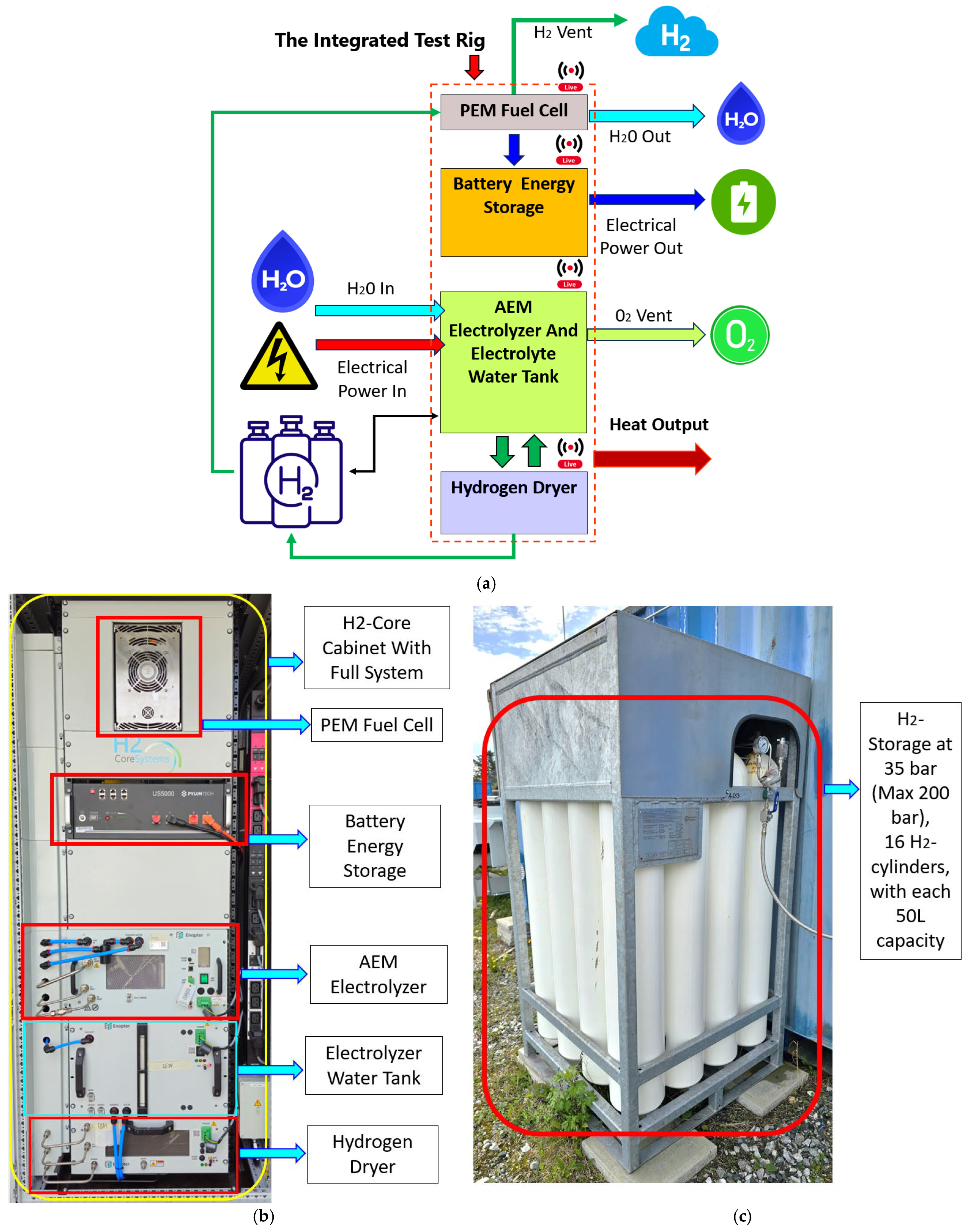
This paper presents a comprehensive experimental analysis of an AEMEL and PEMCL coupled with H2 storage and a BESS suitable for microgrid application. The rigorous experimental data were then utilized for a digital twin modeling framework of the AEMEL and PEM fuel cell for digital platform-based cost-effective operational analysis for educational, training, and simulation purposes. The study is grounded in empirical data obtained from real-world operation (test site Risavika, Norway), which serve as the foundation for training and validating the DT models. The DT approach adopted in this work not only captures the nonlinear dynamics and transient behaviors but also enables predictive insights that enhance operational reliability and system efficiency. Through this integrated experimental and modeling approach, the paper aims to contribute to broadening the uncharted understanding of real-world operations of a commercial AEMEL and PEMFC as the core of an integrated H2-based energy system, as well as expanding our understanding of operational round-trip of such systems, and thereby simultaneously advancing development of intelligent, data-driven modeling and analysis strategies for these systems through innovative DT models. The findings are intended to support the broader deployment of H2-based technologies and accelerate the adoption of smart energy systems capable of meeting future decarbonization goals, in alignment with key UN Sustainable Development Goals such as SDG 7 (Affordable and Clean Energy) and SDG 13 (Climate Action).
1.3. Progression of the Paper
Section 1 illustrates a brief introduction, extended literature survey on AEMEL and PEMFC physical systems, then AEMEL- and PEMFC-based DT models, the novelty of the study on AEMEL, PEMFC, and BESS, and the contributions of the paper.
Section 2 provides the experimental method, setup, description of AEMEL, PEMFC, and each unit of the H
2-core system, and mathematical modeling of AEMEL- and PEMFC-DTs architecture.
Section 3 presents the AEMEL and PEMFC experimental results and analysis, PEMFC water-flooding phenomena and prevention, AEMEL and PEMFC experimental results’ comparison with theoretical modeling and their variations, PEMFC efficiency comparison with the literature, system level performance, evaluation of the AEMEL and PEMFC-DT models, AEMEL efficiency variation with duty point, and round trip-evaluation of the total H
2 energy system. Finally,
Section 4 presents the conclusions.
4. Conclusions
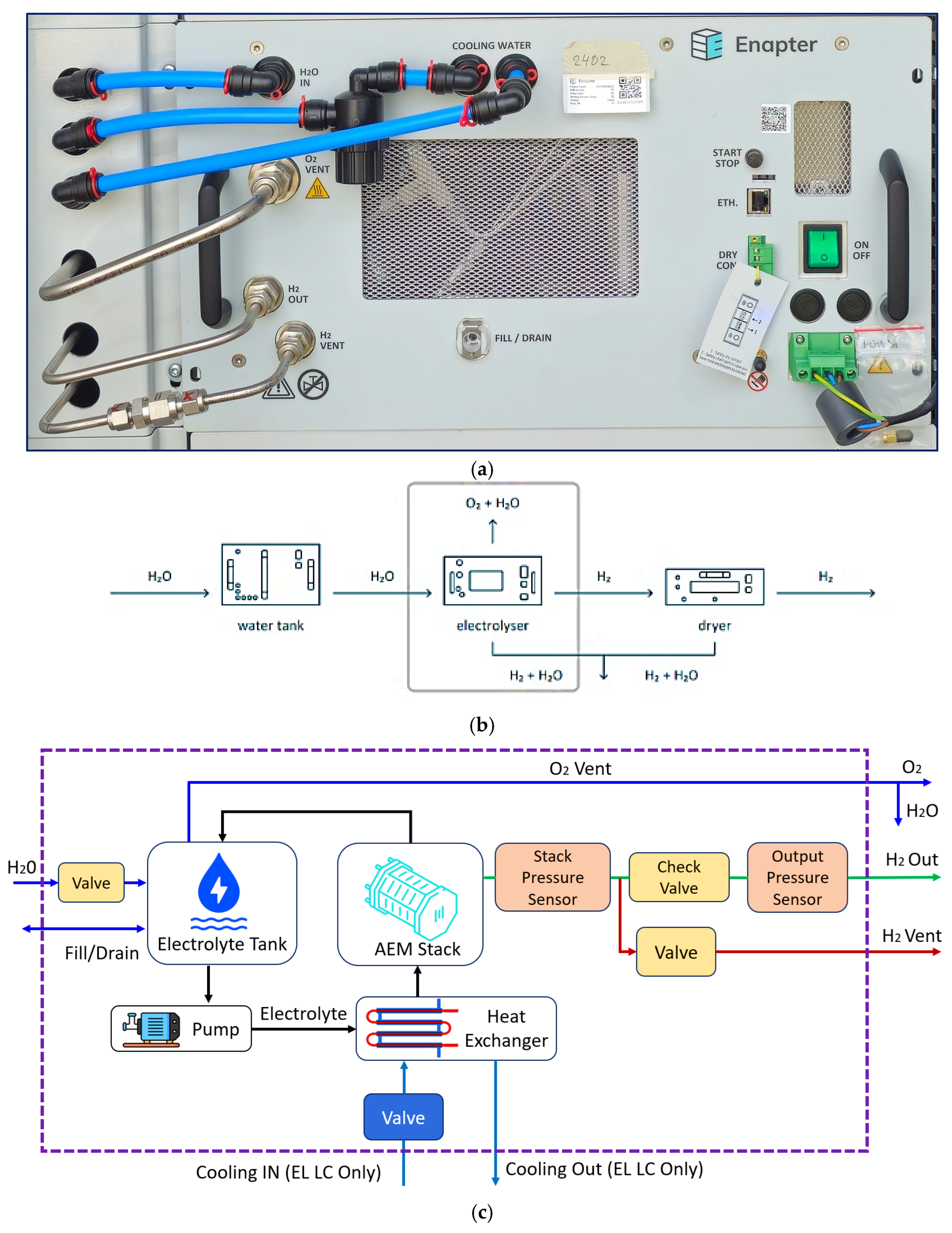
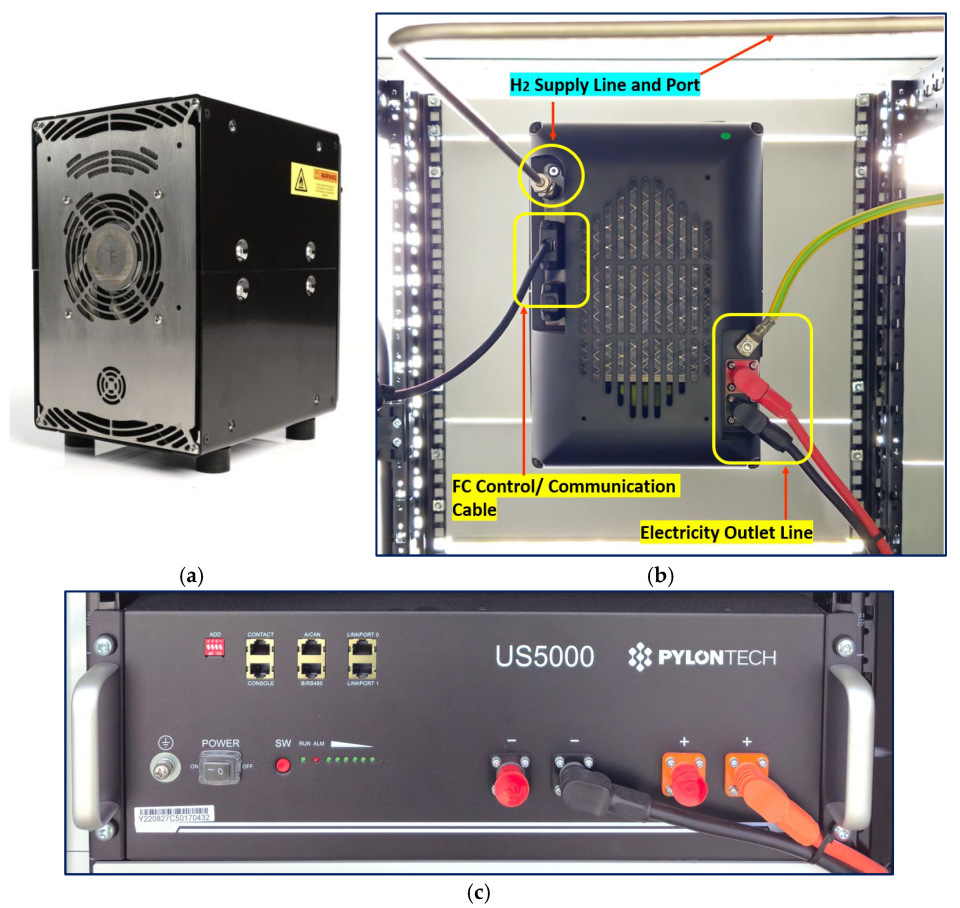
This paper presented a comprehensive experimental investigation and advanced digital twin (DT) modeling for an integrated hydrogen-based energy system comprising an AEMEL, a PEMFC, and a BESS. Experimental analysis was conducted on a commercial-scale AEMEL (Enapter EL 4.1) and a 1.0 kW PEMFC (IE-Lift 1T/1U), integrated with a 4.8 kWh lithium-ion battery pack, tested at the NORCE Risavika facility in Norway under real-world operating conditions.
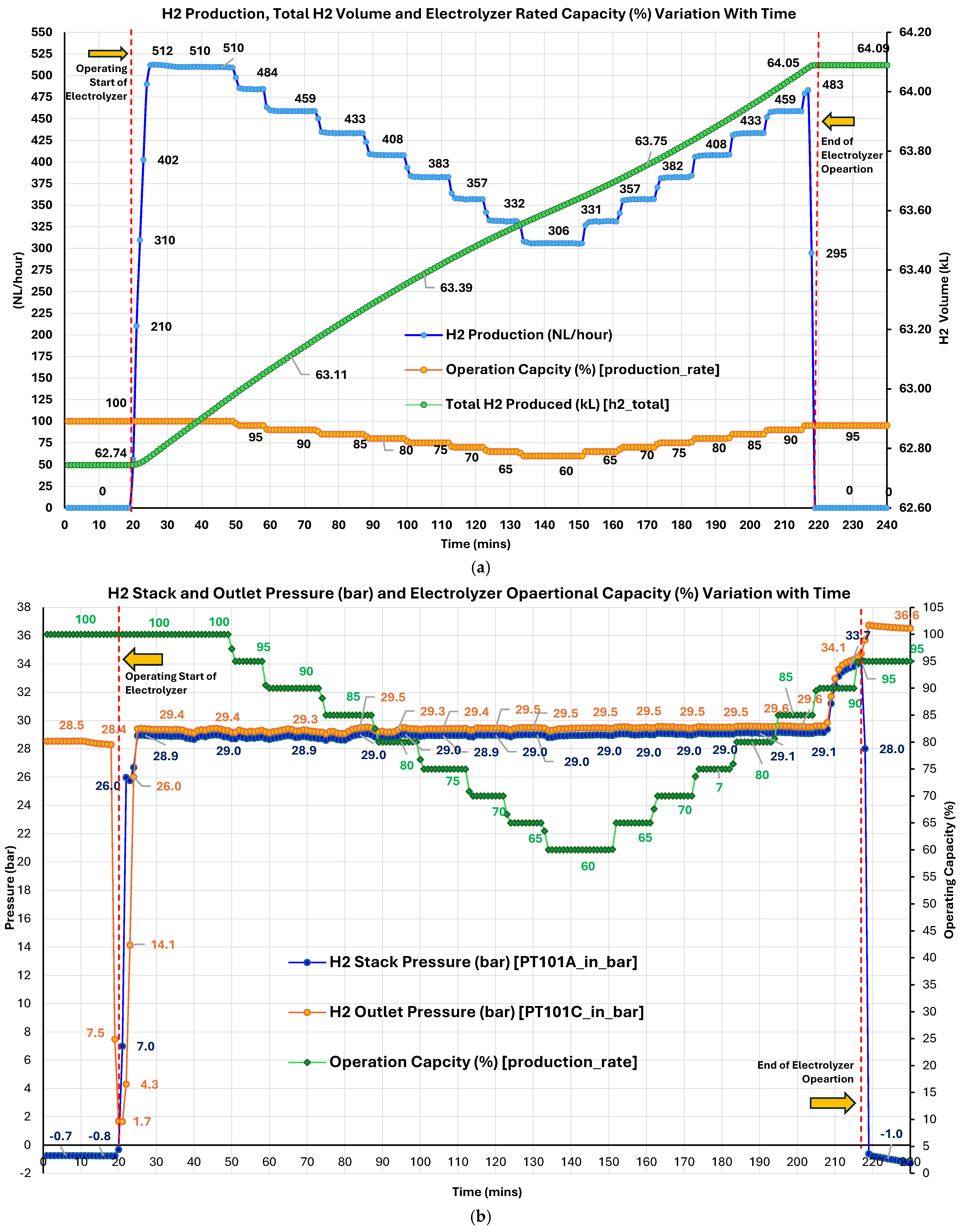
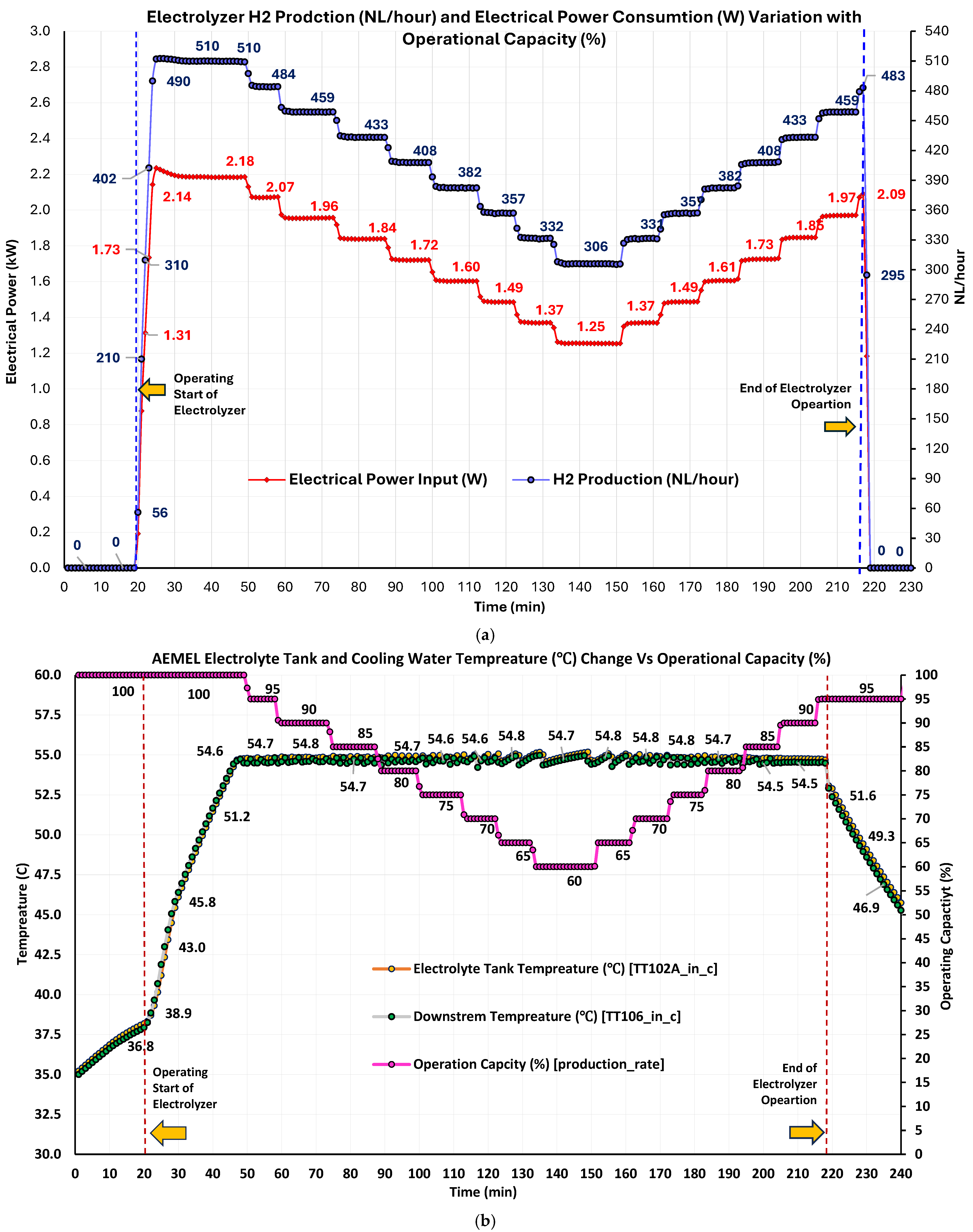
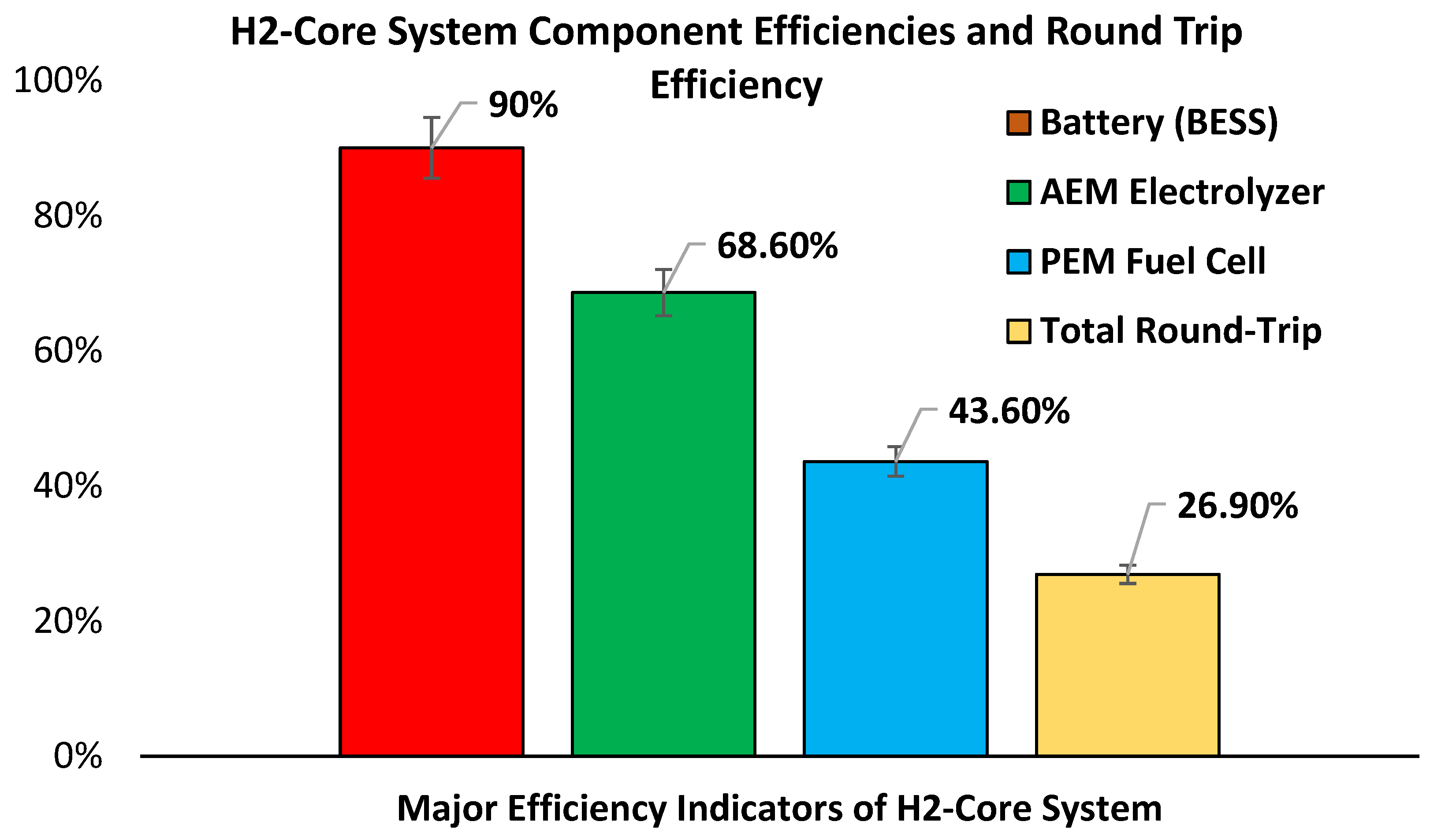
The AEMEL demonstrated excellent operational performance, achieving peak H2 production rates of 512 NL/h at full load (100%) and maintaining a stable output of 305–310 NL/h at 60% operational capacity. The electrical input power scaled linearly with capacity, ranging from 1.25 kW at 60% to 2.18 kW at 100%, yielding an SEC of 4.2 kWh/Nm3 and an ηAEMEL of 68.56%. Thermal management effectively stabilized the electrolyte and coolant temperatures within a narrow band (~0.3 °C), peaking at 54.8 °C under full load, confirming the robust design for thermal inertia and membrane protection. Experimental results validated the manufacturer’s specifications across multiple parameters, including outlet and stack pressures (28.9–29.6 bar) and startup time (~18–20 min to reach full operation).
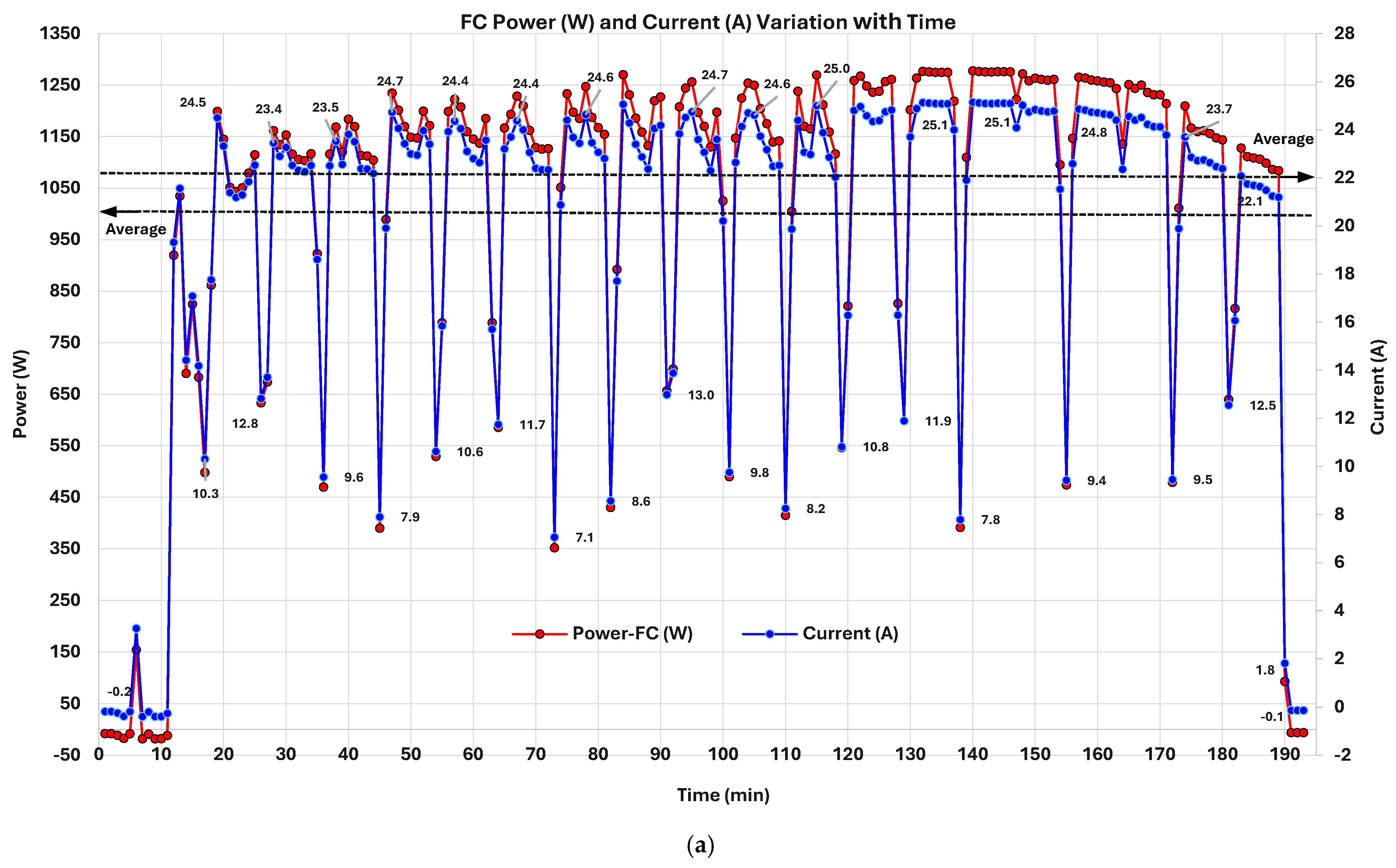
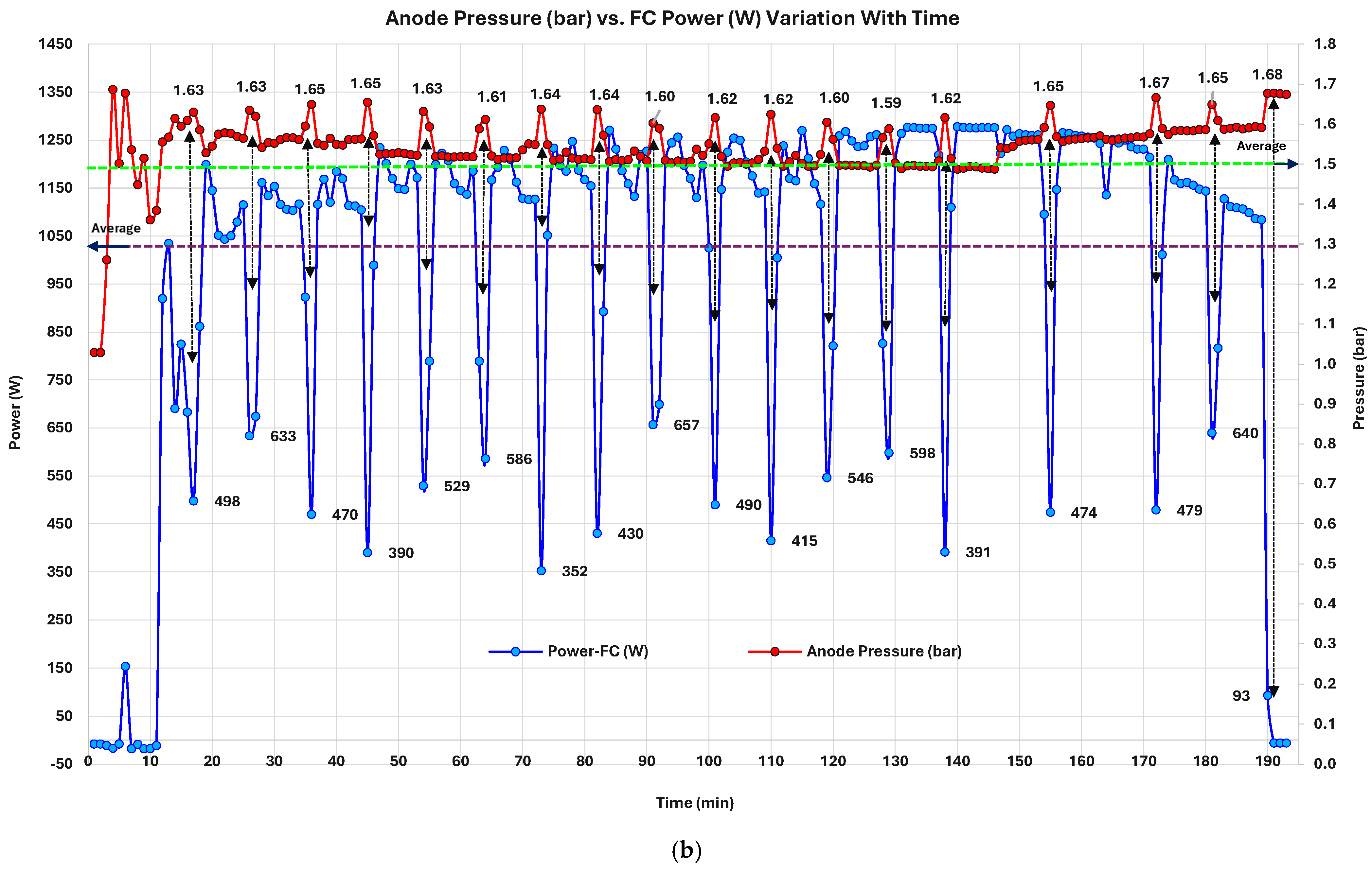
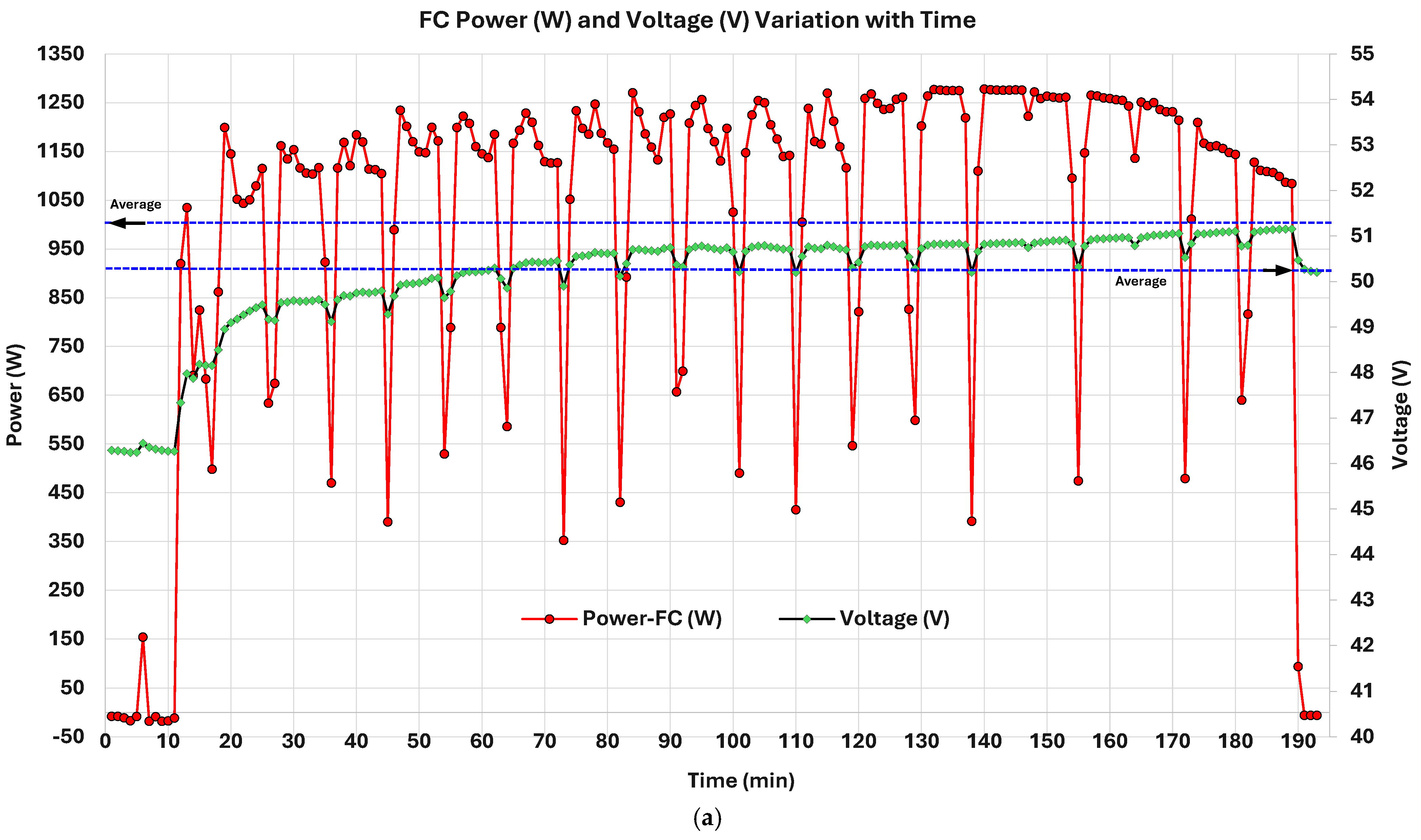
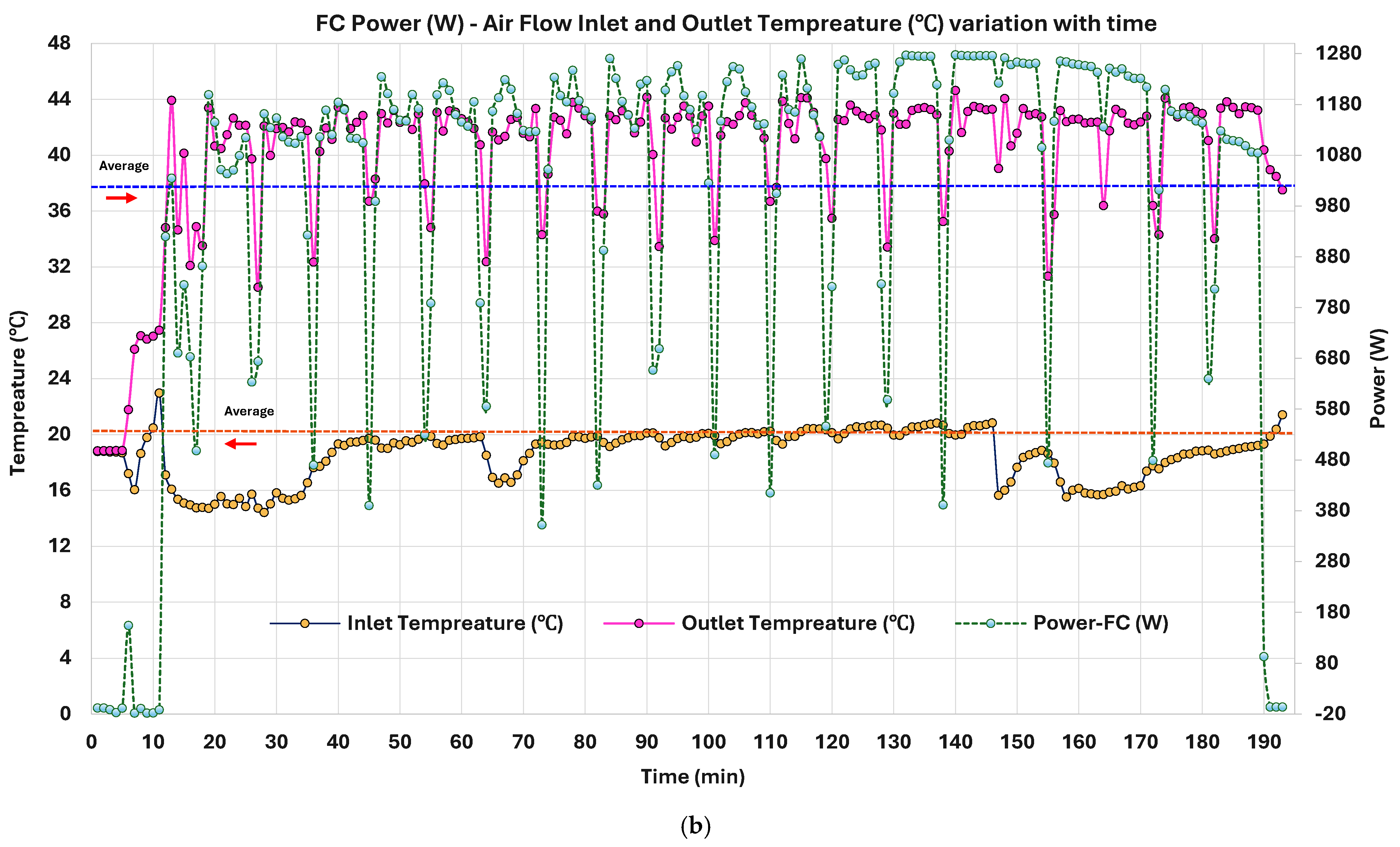
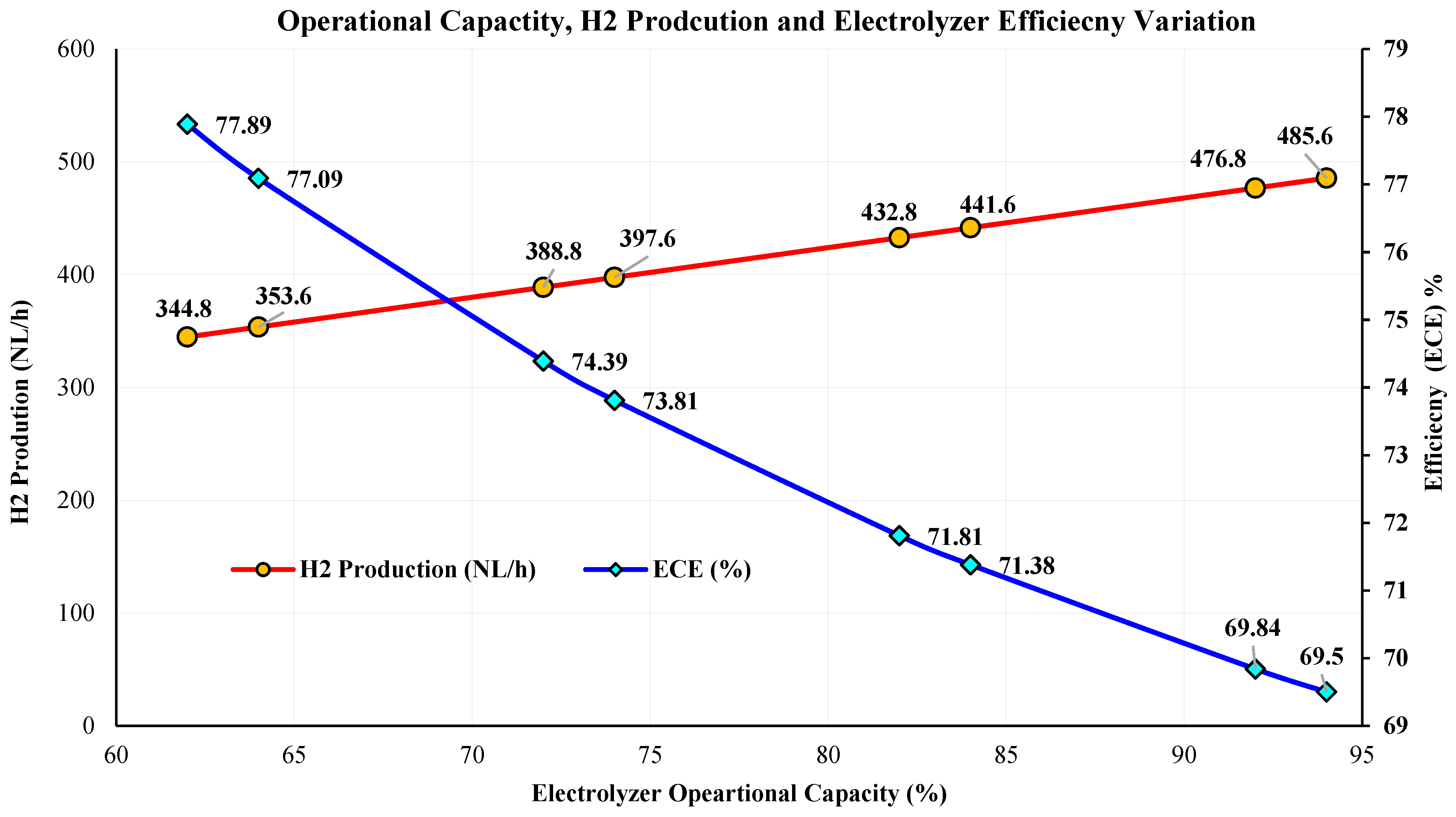
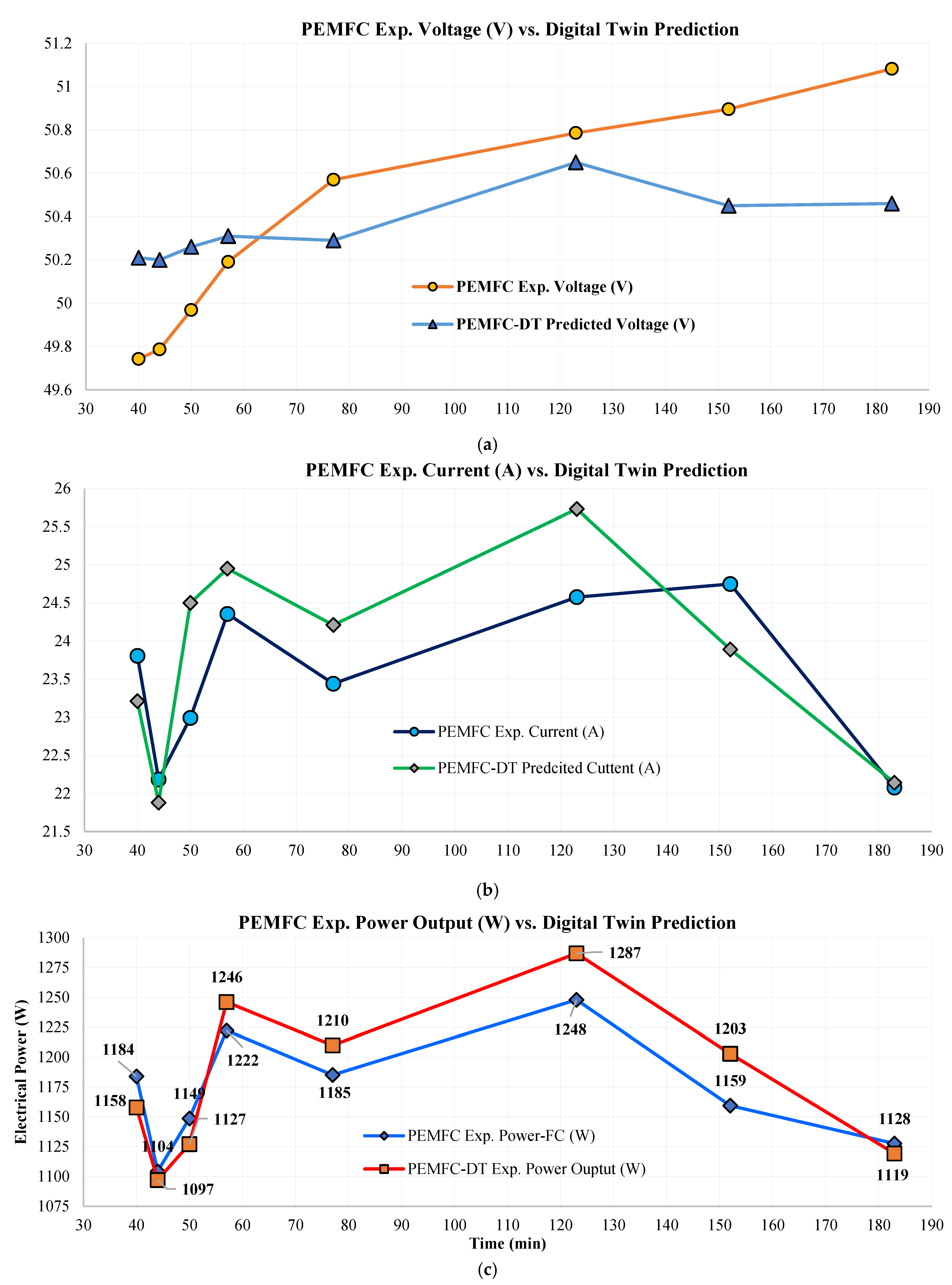
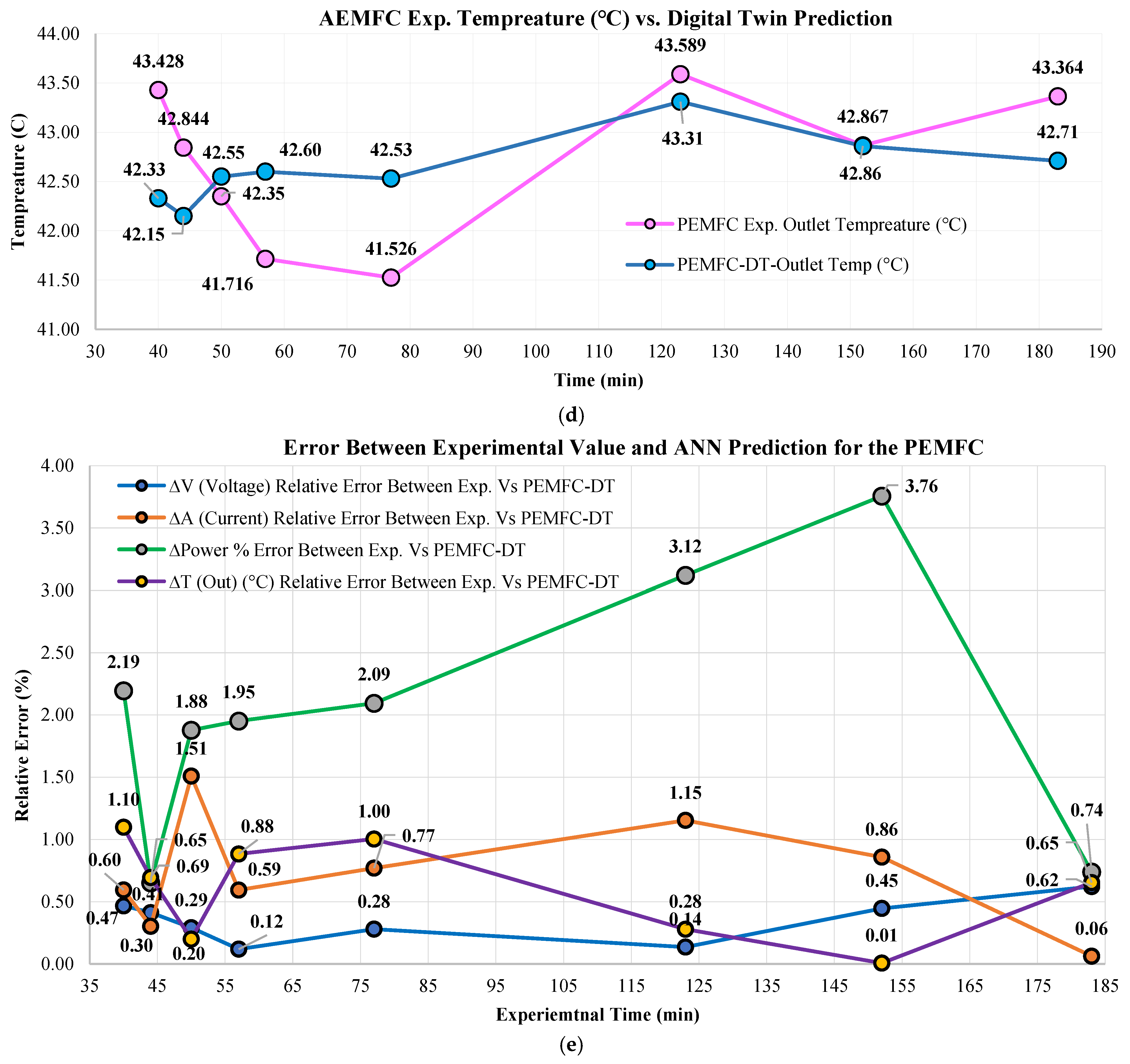
The PEMFC operated at 1.0 kW load for over 190 min, with an average power output of 1157.6 W, voltage of 50.53 V, and current of 22.9 A. The system managed cathode water flooding via a Performance Optimization Cycle (POC) through cyclical load shedding and forced H2 purging, reducing load intermittently. During the POC, the current dropped to 8–14 A and the power dipped to 350–600 W, before quickly recovering. The anode pressure remained consistently around 1.55 bar (increasing to 1.6 bar during the POC), indicating stable fuel supply and internal gas management. Thermal profiling showed a consistent outlet air temperature of 42.34 °C from the inlet of 18.67 °C, with a 23.67 °C thermal gradient, offering potential for low-grade WHR. The AEMEL-DT, built from empirical data and modeled via interpolation, produced accurate real-time predictions of H2 production, power input, and efficiency across the full capacity range. The deviations between the DT outputs and experimental results were consistently under 1.2%, with the highest predicted ECE at 77.89% for 62% capacity and the lowest at 69.50% for 94% capacity. The PEMFC-DT, developed based on ANN and physics-based hybrid architecture, predicted key operational metrics with high precision: voltage errors < 0.62 V, current errors < 1.51 A, power output deviations within ±2.5%, and temperature prediction errors < 1.1 °C. These DTs not only replicated physical behaviors but also embedded realistic constraints such as safety limits and dynamic response characteristics, enabling virtual testing and predictive control. The system-level H2 cycle analysis confirmed its practical operation logic. The AEMEL produced 0.04494 kg H2/h, requiring ~26.2 h to fill a 16-cylinder rack (1.178 kg capacity), while the PEMFC consumed ~0.336 kg H2 to fully charge the BESS over ~4 h 48 min. This allowed approximately 3.5 full battery charge cycles per hydrogen rack, delivering ~16.8 kWh of energy output. The complete ηRTE was 27%, reflecting expected losses through electrolysis, storage, fuel cell conversion, and battery charging.
This study offers a pioneering experimental analysis and digital replication of a commercial-scale H2 energy system integrating AEMEL, PEMFC, and BESS. It validates the system’s operational performance, identifies dynamic behaviors such as water flooding in PEMFCs, and provides high-fidelity DT tools for diagnostics, optimization, techno-economic assessments, and scenario analysis. The DTs offer a cost-effective and low-risk alternative to continuous hardware testing, becoming powerful tools for education, research, and training, allowing users to simulate fault conditions, explore control strategies, and assess performance without exploding O&M costs. The DTs’ modularity ensures seamless integration into broader simulations, connecting production (AEMEL) and utilization (PEMFC) layers. Future work will extend the DT framework by integrating degradation and aging models for both the AEMEL and PEMFC, enabling long-term performance prediction and supporting proactive maintenance strategies. The overall contributions support the expansion of hydrogen-based technologies in microgrids and smart energy systems, paving the way for more flexible, decarbonized, and intelligent energy infrastructures aligned with global net-zero ambitions.