1. Introduction
Drives based on permanent magnet synchronous motors (PMSMs) are currently one of the core technologies in modern electric drive systems, particularly in low- and medium-power applications such as robotics, household appliances, industrial automation, and electric mobility. PMSMs offer high energy efficiency, high power density, and excellent dynamic performance. Their ability to provide precise torque and speed control makes them especially attractive in systems where fast response and high controllability are required.
Although high-power PMSM drives are increasingly used in traction, aerospace, and large industrial systems, the majority of commercially deployed PMSM-based drives still operate in the sub-kilowatt to several-kilowatt range, where compact size, low losses, and high control accuracy are critical design factors. In all of these applications, reliable acquisition of feedback signals—particularly stator phase currents and rotor position—is essential for achieving stable and fault-tolerant operation of the field-oriented control (FOC) algorithm. During operation, however, various types of faults may occur, including demagnetization of rotor permanent magnets, stator winding failures, power converter malfunctions, and measurement sensor faults such as speed encoders, DC-link voltage sensors, or phase current sensors [
1,
2,
3,
4,
5].
One of the above-mentioned failures—stator current sensor malfunction—may lead to severe consequences, affecting the stability and reliability of the drive. Faulty operation of these sensors can also contribute to the degradation of other components, such as the motor. Common current sensor faults include measurement noise, signal loss, intermittent signal interruption, signal clipping, and variable gain [
1]. These issues lead to disturbances in the generated torque due to the torque controller operating on inaccurate current feedback [
6,
7,
8].
According to literature, current sensor fault detection methods are based on signal analysis, drive dynamic modeling, and artificial intelligence approaches [
2,
9,
10,
11,
12]. Signal analysis-based methods include solutions employing Cri markers, as discussed in [
1], and spectral analysis for identifying harmonic content of current signals [
13]. Model-based approaches include methods relying on relationships between stator current–induced harmonics and winding short circuits [
14], lookup tables [
15], and recursive least squares algorithms for PMSM drive fault diagnosis [
16]. Artificial intelligence approaches include detection methods using artificial neural networks [
2,
17].
In [
18], a real-time online method for compensating current sensor offset errors was proposed. The estimation is performed using a motor model without the need for any additional hardware also similar in [
19]. In [
20], an adaptive observer-based approach for diagnostic purposes was presented, which, according to the authors, is robust to machine parameter uncertainties and load variations.
Another interesting approach was demonstrated in [
12,
21], where the authors employed a Sliding Mode Observer (SMO) for detecting and reconstructing accurate current values in PMSM control. In [
22], a method for compensating current measurement sampling delay using a single current sensor was presented, while maintaining full motor control capability.
Additionally, several studies describe sensor fault detection techniques based on measured phase currents combined with motor models—such as the FDIE method—which enables isolation, detection, and estimation of both scaling gain and offset faults. This includes cases such as stuck sensors or broken-line faults, which may affect one or multiple current sensors either independently or simultaneously [
11,
23].
Some works also describe sensor fault detection methods based on measured phase currents combined with motor models, such as the FDIE method presented in [
11].
A frequently used current sensor is the Hall-effect sensor, where the magnetic field of a conductor determines current magnitude. Typical failure causes include core corrosion, cracking or breaking of the core, thermal degradation of ferrite magnetic properties, or disturbances in magnetic field orientation induced by mechanical shocks. Improper sensor placement may also cause serious malfunctions, leading to increased low-frequency harmonics in torque ripple [
5,
15,
24,
25].
A widely applied method for motor current measurement in drive systems uses sensors placed on two of the three motor phases. In practice, the principle that the sum of currents in a three-phase system with isolated neutral equals zero is used, enabling reconstruction of the third phase current. This solution provides a cost–accuracy compromise by eliminating the need for a third sensor, reducing costs and simplifying the system. Despite its popularity, this method is highly sensitive to offset and gain errors, which may cause significant estimation errors of the unmeasured phase current. Therefore, analyzing these errors is important—identification and compensation can substantially improve motor control accuracy, which is crucial in high-precision applications such as servo drives and electric vehicles. Timely detection and classification of faults allow software-based compensation of measurement errors, ensuring correct current-control algorithm performance, e.g., in field-oriented control (FOC). Typically, the current sampling frequency is synchronized with the PWM switching frequency of the inverter [
26]. Erroneous current measurements in current-controlled drive systems inevitably degrade control quality and, in some cases, may prevent proper drive operation. This paper presents and discusses the impact of typical current measurement path faults on the measured versus actual values of the
current component and emphasizes the usefulness of monitoring the current controller’s output signal for
as an effective indicator for fault detection, compared to direct observation of measured currents.
In contrast to the approaches reported in the literature, which mainly focus on model-based fault reconstruction, signal redundancy, or observer-based fault detection, the present study provides a quantitative analysis of the impact of current measurement path faults on the PMSM torque-producing current component (). The novelty of this work lies in evaluating the spectral and time-domain indicators—SNR, THD, and delay—derived from both measured () and actual () current signals, as well as from the controller output signal ().
This approach enables assessing how different fault scenarios, such as sensor gain errors or amplitude mismatches between current channels, affect the control signal behavior and system dynamics. Unlike previous studies that rely solely on direct current measurements or model estimations, this work demonstrates that the controller output signal () can serve as a reliable and sensitive indicator of current measurement faults, even under oscillatory conditions.
Thus, the proposed diagnostic perspective combines frequency-domain and control-response analysis to provide a new insight into sensor fault effects and detection in PMSM drives, offering a simple yet effective alternative to more computationally demanding model-based diagnostic methods.
2. Impact of Gain and Offset Errors on Motor Electromagnetic Torque
In practice, complete signal loss in current measurement channels is relatively rare. More frequently, degradation symptoms appear, such as gain variation or the presence of a DC component (offset). Effective diagnosis of such irregularities prevents the system from operating with a completely failed measurement channel, which could otherwise cause damage to the inverter, motor, or connected machinery. The most common initiating errors in measurement paths are offset and gain faults, which are the main subject of further discussion in this work.
2.1. Gain Error
Gain errors in current measurement paths primarily arise from inaccuracies in electronic components such as operational amplifiers, shunt resistors, analog-to-digital converters (ADC), and current sensors (e.g., current transformers or Hall-effect sensors). Their causes include component tolerances, temperature variations, aging, and electromagnetic interference [
3,
17,
24,
27]. Gain error manifests as a proportional distortion of the signal—the actual current may be consistently underestimated or overestimated across the entire measurement range. Such errors can have serious consequences: improper current regulation in the drive, increased motor heating, reduced efficiency, or even power device failure. In control systems requiring high precision, such as electric vehicles and industrial automation, gain errors can significantly degrade control quality, making their compensation or calibration an essential aspect of current measurement design.
For field-oriented control (FOC) of a PMSM, accurate measurement of phase currents is necessary. In practice, only two phases are measured, and the third is reconstructed as:
Calculation of the influence of gain error
in phase A under indirect measurement of phase C current is presented below.
After substitutions, we obtain
Park Transformation:
for PMSM (without magnetic saturation, without saliency)
—actual (physical) PMSM phase currents;
—measured phase A current with gain error;
—gain error in the phase A measurement channel (e.g., = 0.05 corresponds to +5%);
—errors of the current components after Clarke transformation;
—current components in the reference frame;
—current components in the reference frame;
—disturbance of the component directly affecting the torque;
θ—rotor electrical angle (e.g., angle of the rotating -axis relative to the -axis);
—constant flux linkage of the permanent magnets (along the -axis);
—number of pole pairs of the motor;
—error (disturbance) of the motor electromagnetic torque;
—amplitude of the phase current;
—electrical angular frequency ()
From the above considerations, it follows that
The impact of disturbances depends on the combination of errors in phases A and B.
The disturbance depends on the load.
The torque disturbance caused by a measurement error in a single phase is a periodic function with a period of π, which results in oscillations at twice the electrical supply frequency of the motor.
In the case of simultaneous gain errors affecting both current-measurement channels, the resulting behavior differs from the single-fault scenario. If the gain deviation is identical and symmetric in both channels, the estimated currents preserve their mutual balance, and no oscillatory component appears in the electromagnetic torque. The effect of such a fault manifests only as a shift in the DC component of the reconstructed variables, which may remain undetected by oscillation-based diagnostic methods. Torque ripple becomes observable only when the gain errors are asymmetric, i.e., when the amplification factors of the two channels differ. In this case, the imbalance between the reconstructed phase currents introduces a periodic disturbance component, making the fault detectable.
2.2. Offset Error
Another source of errors in current measurement systems is the voltage offset at the output of the current measurement channel—a nonlinearity manifested as a nonzero output signal under zero input current conditions. The causes of this effect include, among others:
Temperature drift of operational amplifiers commonly used in signal processing paths. Parameters such as input offset voltage and input bias current may vary significantly with temperature, leading to a shift in the signal’s zero point. Even a small drift, on the order of a few millivolts, can have a significant impact at low signal levels, especially in low-voltage systems.
If the measurement channels are not perfectly matched in terms of gain, offset, or bandwidth, asymmetry occurs, leading to errors in the reconstruction of the third phase current and distortion of current vector estimation in the αβ or d-q reference frames. Moreover, propagation time differences between channels can disturb synchronous sampling, resulting in real-time measurement errors.
Improperly selected components (e.g., amplifiers with excessive input offset voltage or low-quality passive elements) may introduce constant offset errors already at the design stage. In addition, incorrect system calibration—such as failing to account for offsets under operating conditions, omitting auto-zeroing after startup, or lacking software-based compensation—causes the control system to operate on erroneous data. As a result, this may lead to overloading of one stator winding, increased heating of power devices, mechanical vibrations, and even inverter instability.
Analogous to the case of gain error in the current measurement channel, the following section presents an analysis of its impact on the electromagnetic torque of the motor with indirect phase C current measurement.
The actual phase currents with indirect measurement of phase C current are:
Thus, let us apply the full form of the Clarke transformation matrix:
We substitute the vector with errors:
If the offset error affects only phase A (
), the equation for the torque disturbance takes the form:
From the above considerations regarding the impact of offset:
The effect of disturbances depends on the combination of errors in phases A and B.
The disturbance does not depend on the load.
It is a periodic function with a frequency matching the motor supply voltage.
The offset produces a pure torque ripple at the first harmonic, which is easier to filter or compensate. Scaling errors, on the other hand, can generate more complex harmonics, which are more difficult to detect and eliminate. Both types of disturbances have a significant impact on control quality, but their characteristics differ and can be additive.
3. Laboratory Measurements
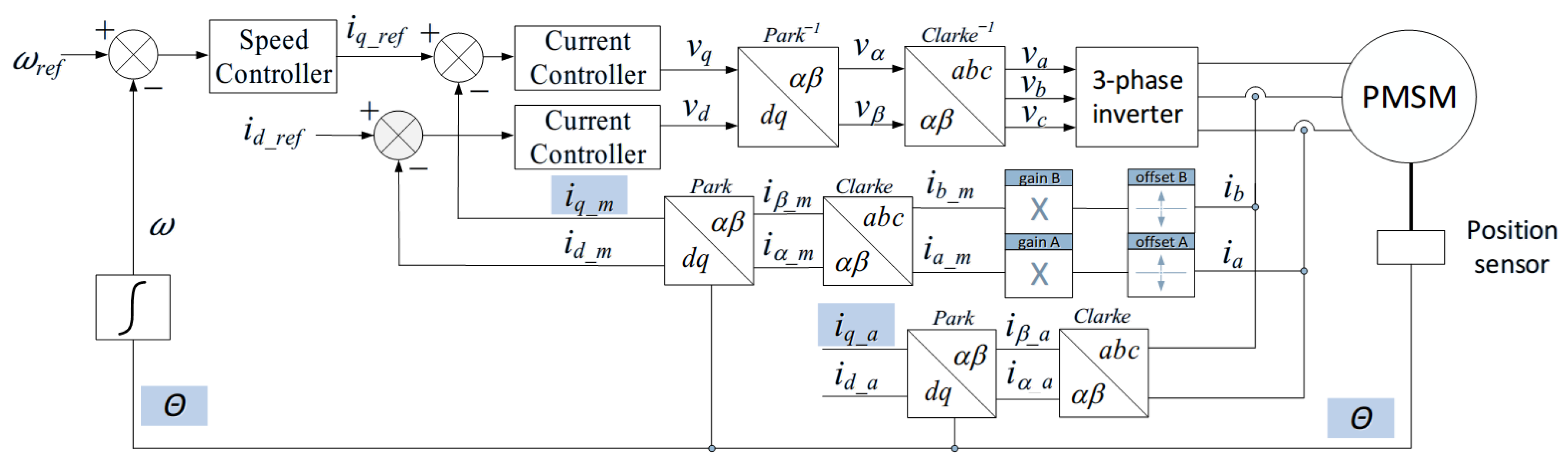
To perform measurements with predefined errors, a typical FOC system was used with modified software that allows for simultaneous computation for both the modified (error-injected) measurements and the correctly measured reference values. The schematic of such a system is shown in
Figure 1. Values with the subscript “m” correspond to measurements obtained from the faulty current measurement system, while values with the subscript “a” are correctly measured. All control actions in the system are based on the erroneously measured values.
To enhance the practical applicability of the study, data that are standardly measured and available in PMSM control systems using field-oriented control (FOC) were used. Utilizing these results does not require any expansion of the measurement system with additional hardware components.
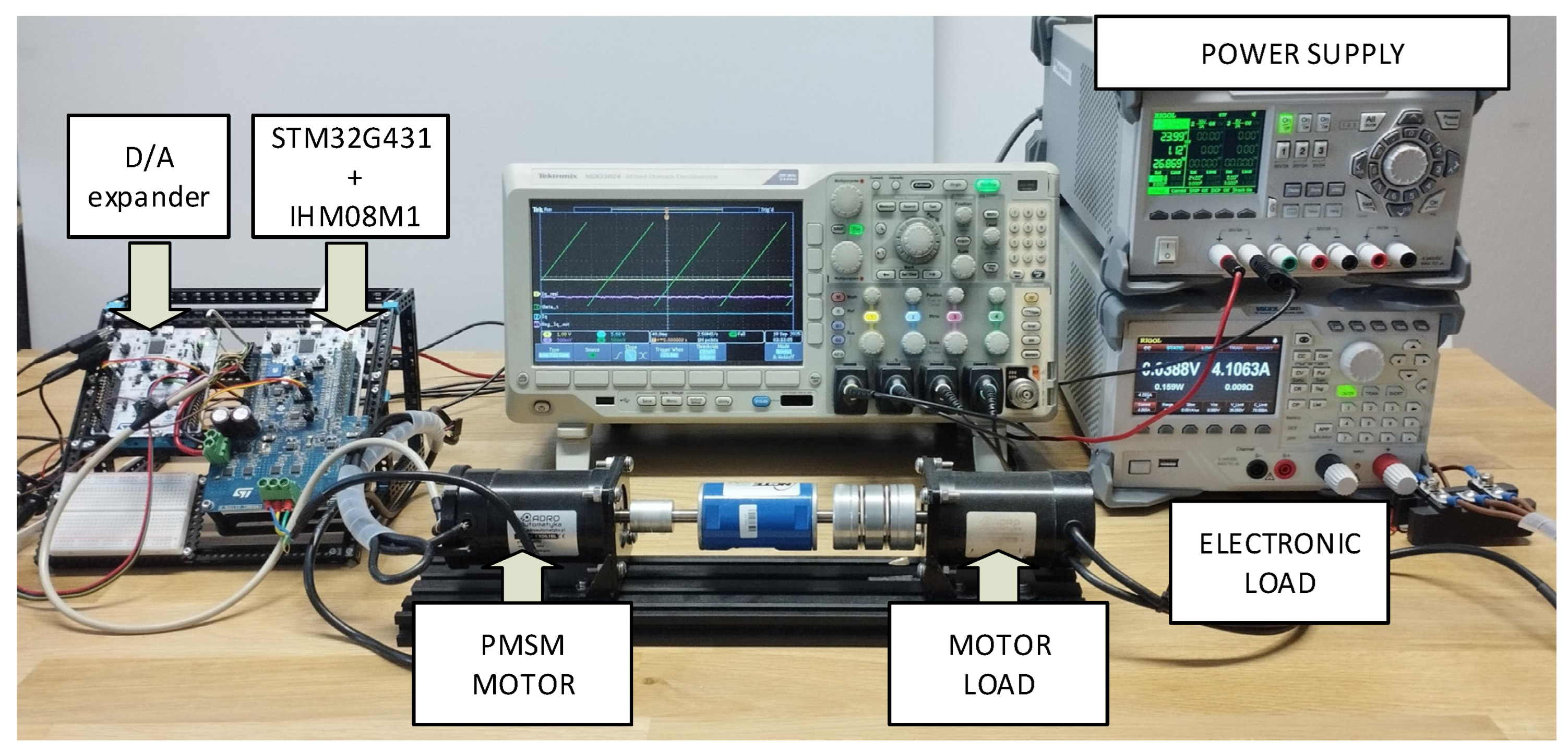
During measurements on the test bench (
Figure 2), it was decided to record the following signals: the rotor mechanical position angle
θ, the
current component measured by the drive system, the output value
generated by the controller for this component, and the actual
component calculated from correctly measured motor phase currents. This setup allows for analysis of the impact of potential faults on the operation of the real drive system. The gain modification and offset injection in the measured current signals are implemented in software through an algorithm executed in the control unit. The magnitude of the injected faults can be adjusted in real time using the STM Studio (STMicroelectronics, Geneva, Switzerland) interface, which allows parameter modification during system operation.
The key measurement and computation signals used in the analysis (, , θ) are transferred from the control system via high-speed digital-to-analog conversion using 12-bit DACs and recorded with Tektronix MDO3024 mixed-domain oscilloscope (Tektronix, Beaverton, OR, USA). Since the hardware platform provides only two DAC channels, an additional identical control module was used to output the remaining signals, allowing all four waveforms to be captured simultaneously. The data transmission rate between the modules was set to 2 Mbit/s to ensure that propagation delays do not introduce phase errors in the recorded signals.
The acquired data were processed and analyzed using the MATLAB/Simulink 2020b (MathWorks, Natick, MA, USA) environment.
The experiments were carried out on a permanent magnet synchronous motor (PMSM) with a rated power of 60 W and four pole pairs. The field-oriented control (FOC) algorithm was implemented on an ST Nucleo-G431RE development board together with the X-Nucleo-IHM08M1 power stage (STMicroelectronics, Geneva, Switzerland). The mechanical load was applied using a second PMSM, coupled to the test motor through a rectifier and an electronic load. The remaining configuration parameters are summarized in
Table 1.
As the primary scenario, faults were assumed to occur in only one phase current measurement channel, under the assumption that simultaneous failure of two independent measurement systems is unlikely, and analysis of such a scenario would negatively affect the ability to draw generalized conclusions. The measure for detecting a fault and identifying its cause is the amplitude of oscillations in the measured quantities, as well as the nature of their variation as a function of the rotor electrical or mechanical angle. These are values that PMSM control systems continuously measure and that can be subjected to numerical analysis. This analysis method is more effective when the oscillatory signals exhibit higher variability, as the influence of measurement noise is then significantly minimized. Therefore, it is purposeful to select data that show high sensitivity to the occurrence of anomalies in the measurement channel.
3.1. Gain Error in the Current Measurement Channel
In the first step, measurements were conducted to assess the impact of gain variation in the phase current measurement channels for phases A and B, assuming reconstruction of the phase C current. These measurements were carried out for different gain values and various load torques of the drive system.
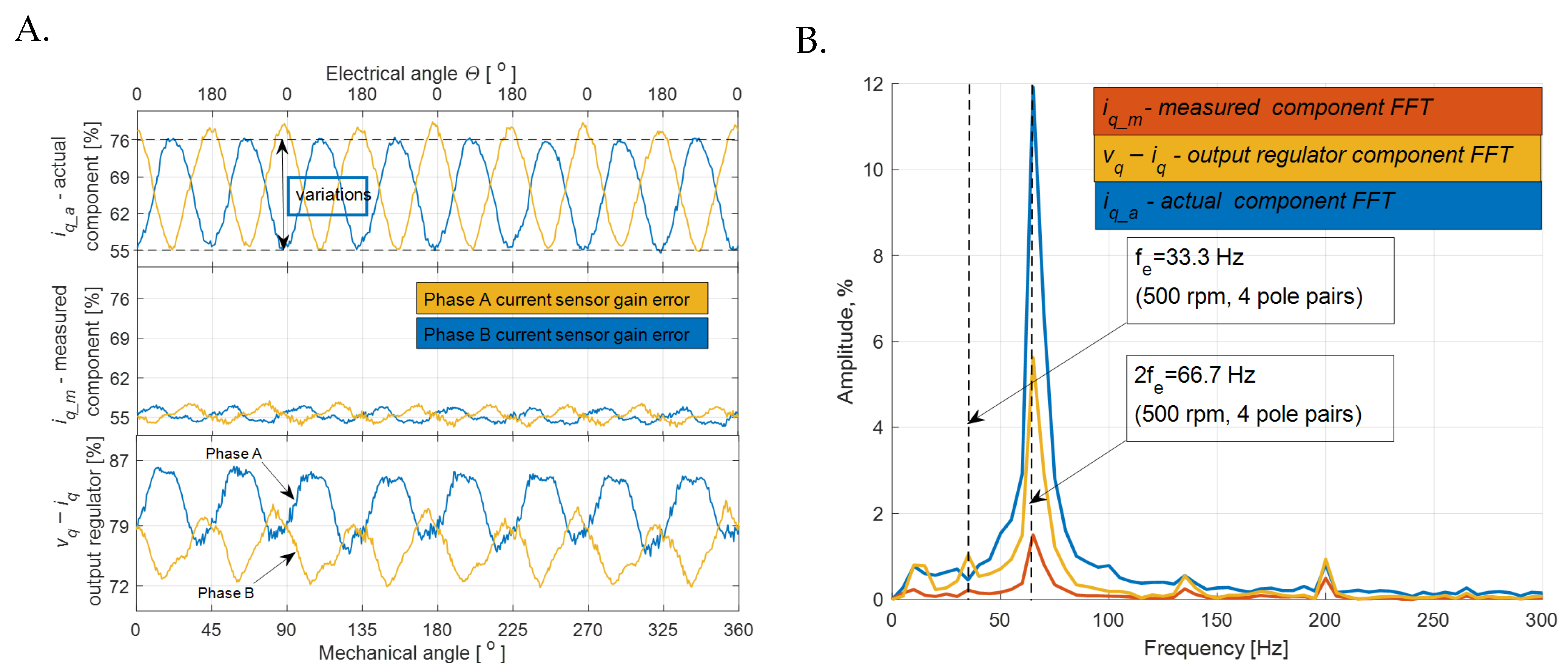
Measurements for the case of a current measurement system fault, involving a 30% reduction in gain relative to the nominal value in phases A and B, were performed at a motor load torque
, and
, where
denotes the electrical frequency of the motor, as shown in
Figure 3.
Table 2 summarizes the values of the signal-quality indicators—SNR, THD, and time delay—computed for the individual waveforms corresponding to different reference-amplitude levels. All parameters were obtained directly from the recorded measurement data and processed using MATLAB/Simulink, which was employed for signal conditioning, frequency-domain analysis, and correlation-based delay estimation. This quantitative comparison of the measured current
, the actual current
, and the regulator output
provides insight into how current-sensor gain errors affect the signals involved in the control loop. The results indicate that across all test conditions, the regulator output
consistently exhibits superior signal quality compared to the measured current
, particularly in terms of SNR and THD. This finding confirms that monitoring
offers a more sensitive and robust diagnostic indicator for detecting oscillations induced by faults in the current-measurement path.
Although the SNR of is only marginally higher (by approximately 0.8 dB) compared to the measured current , the improvement is consistent and, when combined with significantly better THD values and lower distortion around the fundamental frequency, confirms the superior diagnostic quality of .
Changing the gain of the current measurement channel introduces oscillations in the actual component, which is responsible for generating the motor electromagnetic torque. These oscillations arise because the current controller attempts to maintain the desired current value using an incorrect feedback signal. When the measurement system of the second current phase (phase B) is faulty, the torque oscillations exhibit a similar amplitude but an opposite phase compared to the fault in the phase A current measurement channel.
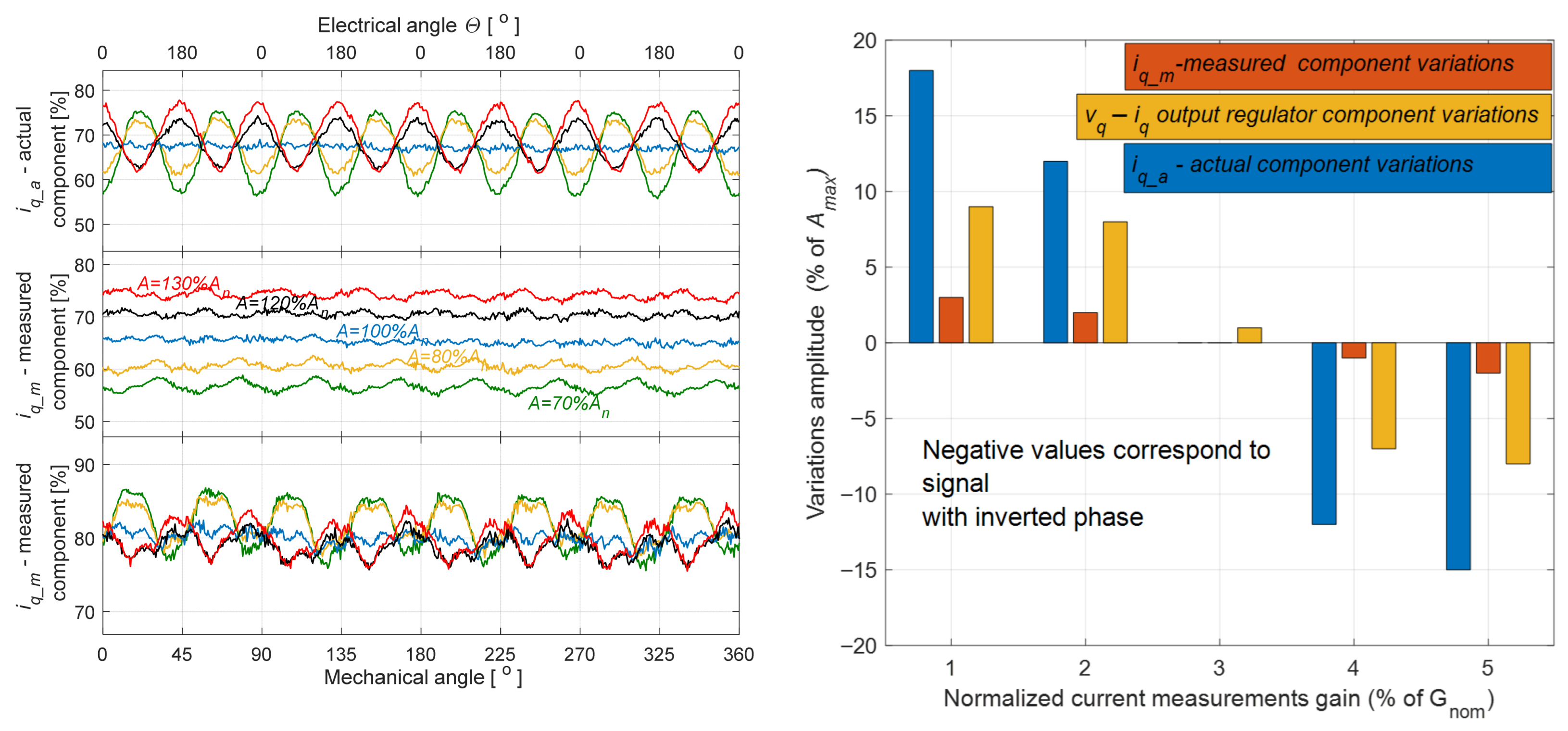
Figure 4 shows the
current component as a function of the rotor mechanical angle
θ for phase A current measurement channel gains varied from 70% to 130% of the nominal gain, at a constant load torque of
. The measurement was performed for a drive system operating in open-loop speed control, with the rotor speed maintained at 0.5
.
Table 3 presents the SNR, THD, and time-delay values obtained for different reference-amplitude levels of the test signal. Across all operating points, the actual current
maintains relatively stable SNR and THD values, except at the nominal amplitude, where both indicators deteriorate significantly. The measured current
shows consistently lower signal quality, with reduced SNR, significantly higher THD, and noticeable time delays between 5 and 6.8 ms, confirming the strong influence of the gain error introduced in the measurement path. In contrast, the regulator output
exhibits clearly superior diagnostic properties: its SNR and THD values remain consistently higher (i.e., better), and the delay is equal to zero for all amplitudes. These results indicate that monitoring
provides a more robust and reliable basis for detecting oscillations than direct analysis of the measured current.
Since the FOC method assumes current control at a setpoint, fluctuations in the signal measured by a faulty current measurement channel are corrected by the current controller and, in systems with high sampling frequency, may be difficult to capture using algorithms designed to detect measurement path faults.
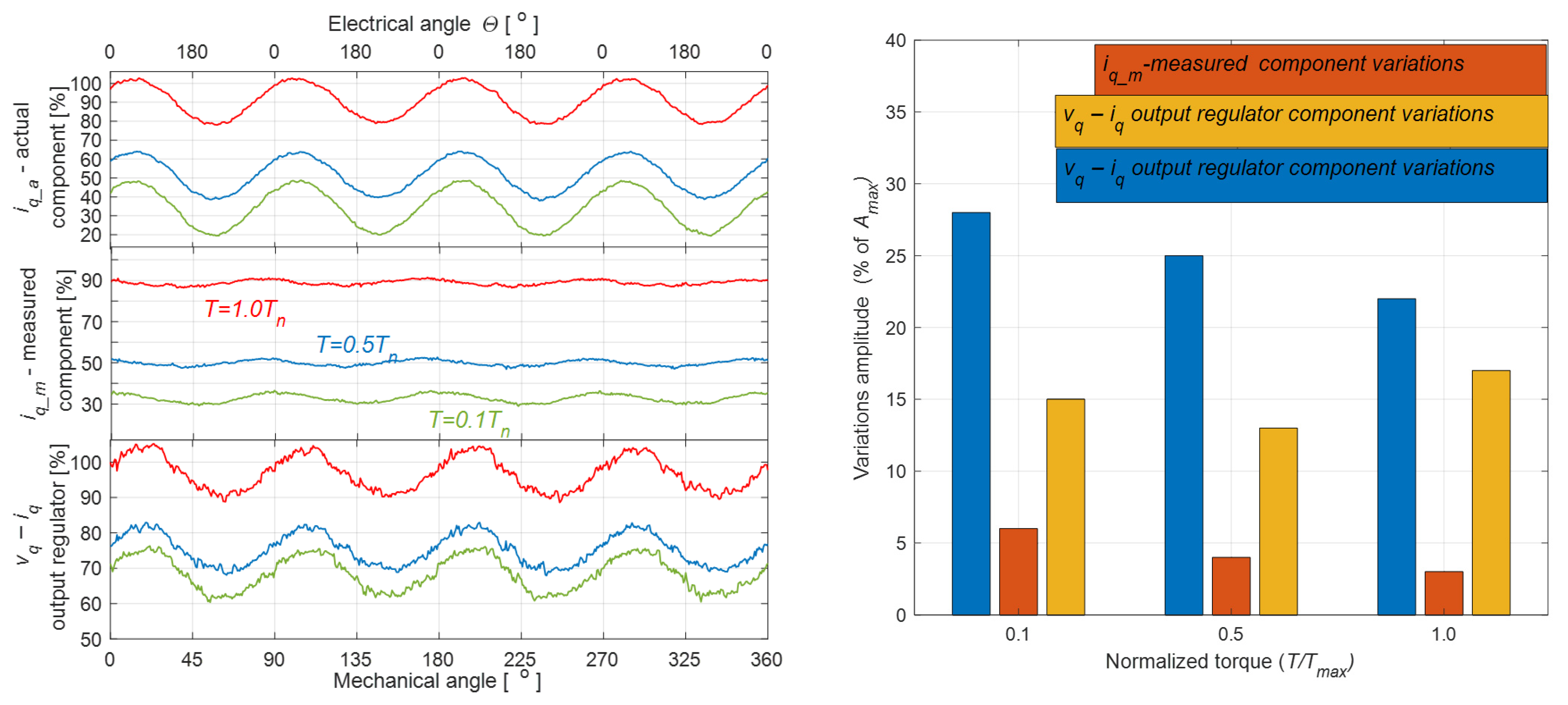
It is clearly observed that the amplitude of oscillations increases with the magnitude of the gain error in the phase current measurement channel. At the same time, the amplitude of oscillations at the output of the current component controller is significantly higher, which allows analysis of its waveform to detect and quantify the severity of the measurement path fault. According to the mathematical analysis of the phenomena and the resulting Equation (1), the torque disturbance caused by a measurement error in a single phase is a periodic function with a period of π, corresponding to oscillations at twice the electrical frequency—this is clearly visible in the experimental measurements. This confirms the previous mathematical considerations. When the gain in the measurement path exceeds 100% of the nominal value, the sign of the measured value oscillations changes—this also provides important diagnostic information.
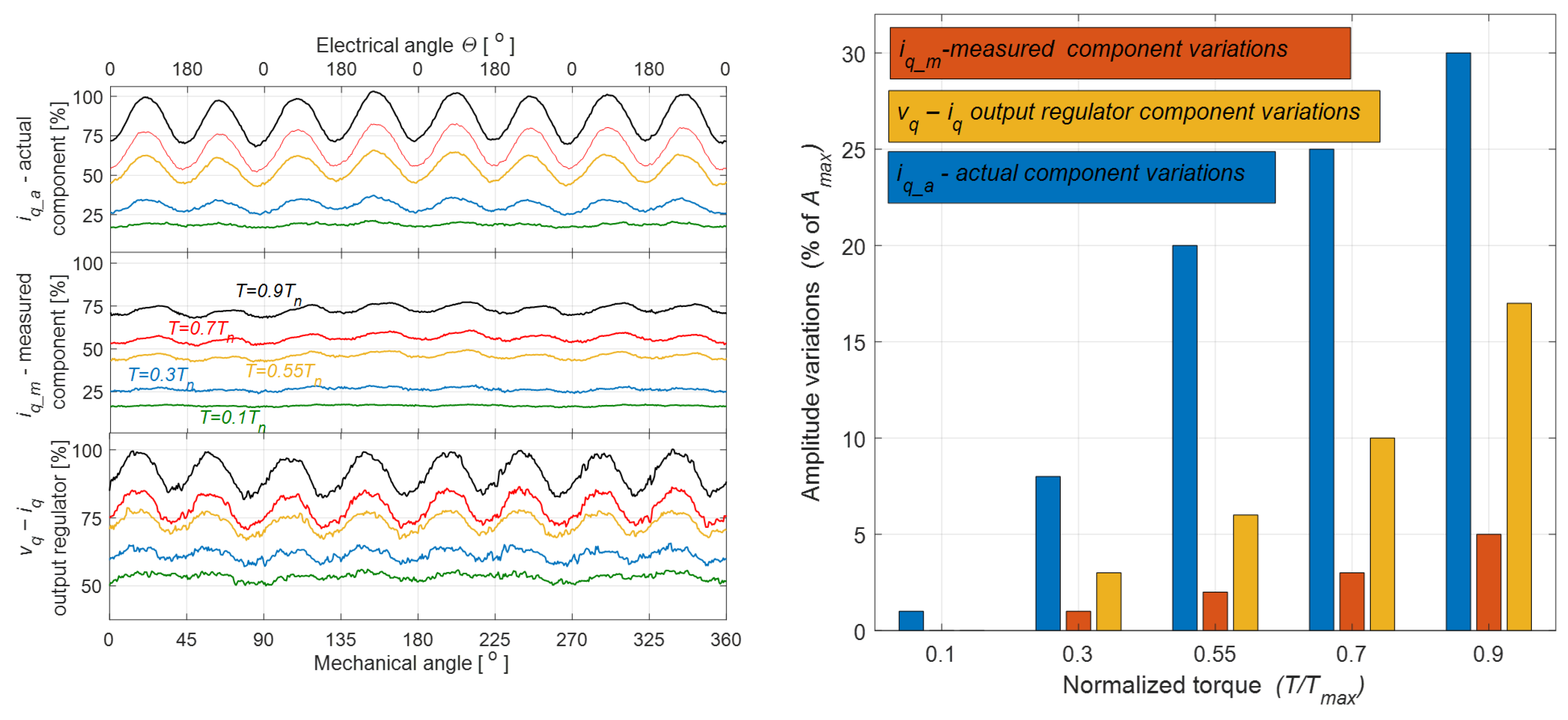
Measurements for the case of a current measurement system fault involving a 30% reduction in gain relative to the nominal value in phase A were performed for different motor load torques, as illustrated in
Figure 5.
A complementary set of results was obtained for several torque levels below the nominal value (
Table 4). In this operating range, the actual current
preserves good spectral quality for most torque settings, although both SNR and THD deteriorate noticeably at very low torque values, where the useful signal amplitude becomes comparable to the noise floor. The measured current
again exhibits systematically lower SNR and significantly higher THD, together with torque-dependent variations in delay reaching up to 11 ms, which confirms the strong influence of sensor gain errors on current reconstruction at different load conditions. As in the previous case, the regulator output
maintains the most stable characteristics, with zero delay and consistently superior SNR/THD values across the entire torque range. These results confirm that the diagnostic advantage of using
is preserved not only across different current amplitudes, but also across varying load levels.
From the measurements conducted with the current measurement channel gain reduced to 70% of the nominal value, it follows that the amplitude of oscillations in the measured values increases with the load of the drive system. At the same time, the amplitude of oscillations at the output of the current component controller is significantly higher, which allows analysis of its waveform to detect and quantify the severity of the current measurement path fault. According to the mathematical analysis of the phenomena and the resulting Equation (1), the torque disturbance caused by a measurement error in a single phase is a periodic function with a period of π, corresponding to oscillations at twice the electrical frequency —this is clearly visible in the experimental measurements. This confirms the previous mathematical considerations.
3.2. Offset Error in the Current Measurement Channel
In the second stage, measurements were carried out to assess the impact of offset variations in the phase current measurement channels for phase A and phase B, under the assumption that the current in phase C is reconstructed. The measurements were performed for different offset values and various load torque levels of the drive system.
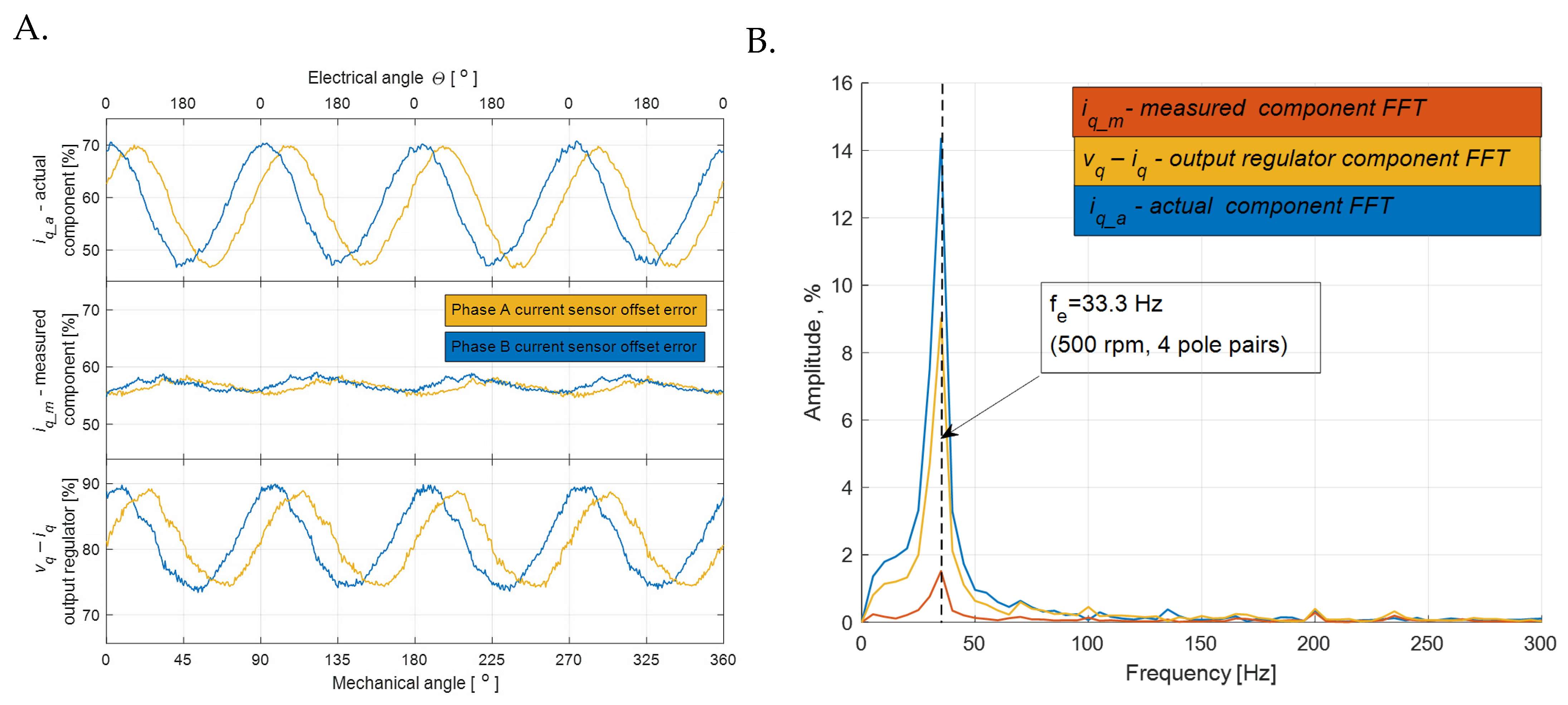
The test scenario simulating a failure of the current measurement circuit was conducted by introducing a +5% offset of the measurement range in phases A and B, with the motor load torque maintained at a constant value of , .
Table 5 summarizes the frequency-domain performance metrics obtained for the actual
, measured
, and regulator output
signals. In this case, the oscillations occur at the electrical frequency
, originating from an offset error introduced in one of the current sensors. The results confirm the same qualitative trend observed in previous analyses: the measured current exhibits the lowest signal quality, with significantly reduced SNR, markedly higher THD, and a substantial delay caused by the sensor error. In contrast, both the actual current and particularly the controller output maintain considerably better spectral characteristics, with
again providing the most stable and delay-free diagnostic indicator.
The waveforms shown in
Figure 6 for the measured values under modifications of the phase A and phase B measurement channels exhibit similar variability, but with a slight phase shift. This characteristic enables identification of the specific phase in which the fault occurred.
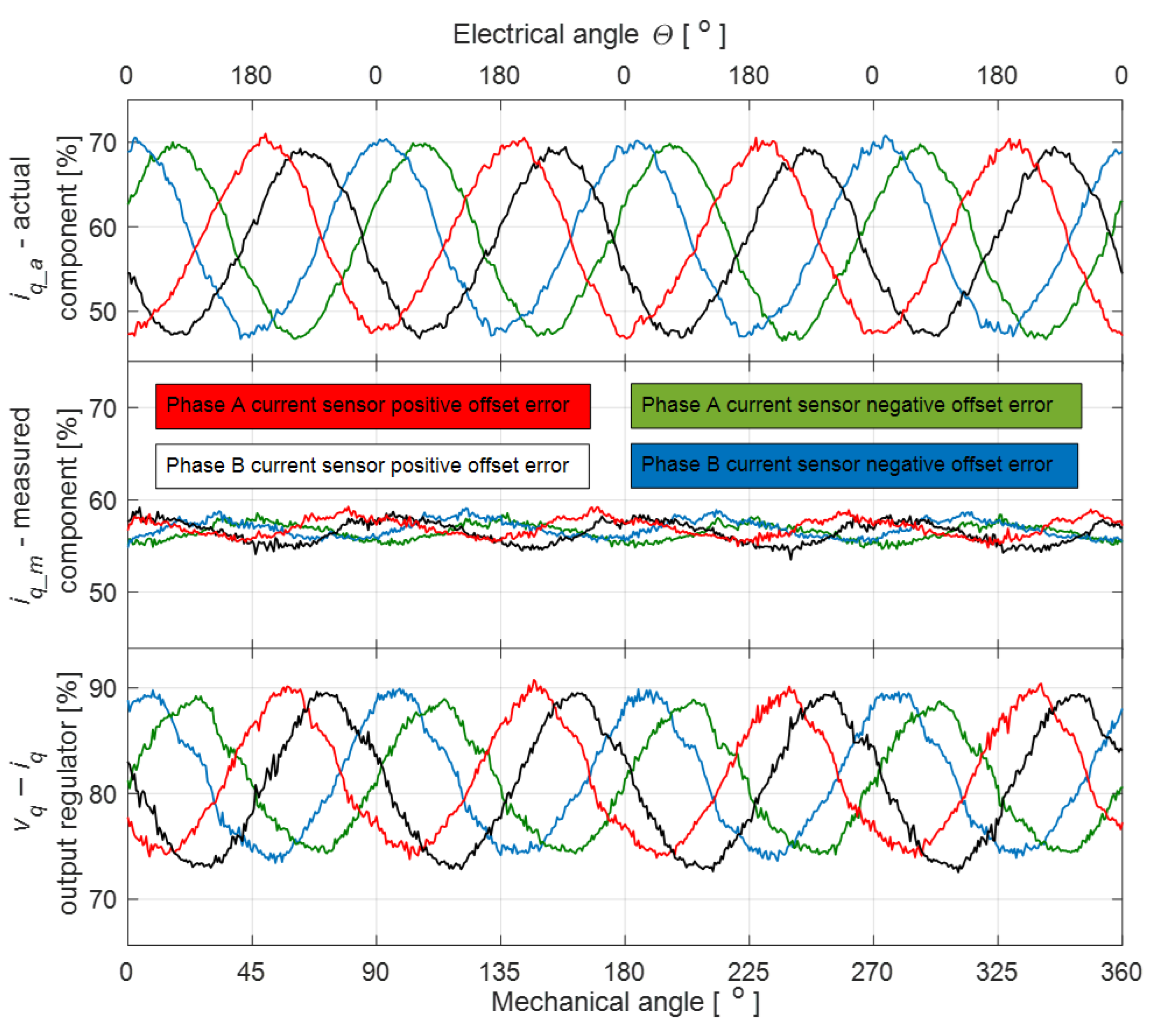
The waveforms shown in
Figure 7, corresponding to four different fault scenarios of the current measurement offset, clearly indicate that the signals differ slightly in amplitude—resulting from the constant deviation of the offset from the nominal value—while exhibiting significant phase differences. This behavior enables both the diagnosis of the source and the estimation of the magnitude of the fault.
Table 6 presents the frequency-domain performance metrics—SNR [dB], THD [dB], and time delay [ms]—for the actual
, measured
, and regulator output
values under various current-sensor offset conditions ranging from −8% to +8%. The results illustrate how increasing sensor offset affects the measured current quality, leading to higher THD, lower SNR, and significant delays.
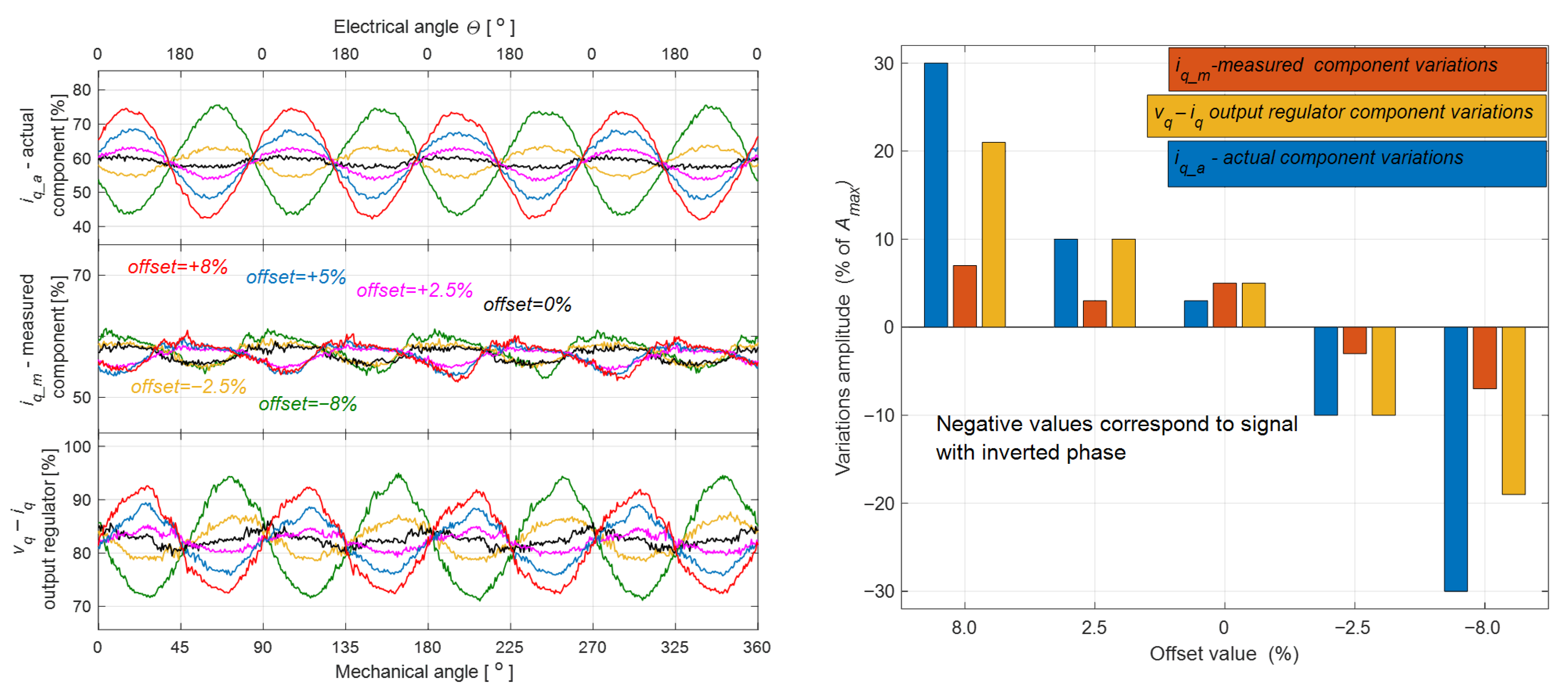
The recorded waveforms shown in
Figure 8, corresponding to five different fault scenarios of the current measurement offset, clearly demonstrate that the amplitude of variations is strongly dependent on the offset value in the analyzed channel. Furthermore, when the offset changes from negative to positive, the phase of the oscillations reverses.
Table 7 shows that across varying torque levels, the measured current
exhibits higher THD and variable delays, while the regulator output
consistently maintains stable SNR, lower THD, and zero delay, confirming its reliability for oscillation monitoring.
As shown by the analysis of the measurement waveforms in
Figure 9, the oscillation amplitude is almost independent of the load. This implies that fault detection can be performed even under no-load motor operation, which is consistent with the mathematical considerations leading to Equation (2). At the same time, the operation of the current controller makes diagnostics based on the variability of the
waveform as a function of the angle
θ significantly more difficult, since the amplitude of these oscillations is low and does not differ substantially from the values observed during the normal operation of a fault-free system.
4. Conclusions
The article demonstrates that the type of fault in the phase current measurement channel has a decisive impact on the actual drive torque
as a function of the motor shaft position. Its actual value cannot be determined directly due to the fault in the current measurement channel, so diagnostics must be performed indirectly through the analysis of data available to the control system. Since the current controller operates on erroneous values and aims to regulate the motor supply parameters to maintain the torque as close as possible to the setpoint, the periodically varying actual torque is reflected in a similar pattern in the output signals of the current component controllers (
Table 8).
The article shows that fault analysis of the measurement channel can be based on the analysis of the outputs of the current component controllers and their phase relative to the motor electrical or mechanical angle. The waveform and frequency of the controller output depend on the type of fault and its origin (the phase in which the incorrect reading occurred), while the amplitude of its oscillations depends on the magnitude of amplitude error and offset, and in the case of gain errors in the current measurement channel, also on the motor load torque. Using FFT analysis or more advanced machine learning methods allows detection of the fault, correct identification, and potentially compensation of the measurement error solely based on the electrical measurements performed by the drive system.
The analyses of SNR, THD, and time-delay across all test cases indicate that the measured current is significantly affected by sensor errors, resulting in lower signal quality and non-negligible delays. In contrast, the regulator output consistently provides higher SNR, lower THD, and zero delay, making it a reliable and robust indicator for detecting oscillations and monitoring the quality of the q-axis current in PMSM drives. These findings highlight the advantage of using over direct current measurements for diagnostic and control purposes.
Based on the mathematical considerations presented in the article and confirmed by experiments on a real system, it can be concluded that faults related to offset in the current measurement channel have a much stronger effect on the torque developed by the motor across the full load range than errors related to gain. This fact confirms the necessity of performing a specific calibration of the current measurement channel after inverter startup, which involves activating the lower transistors of the motor driver bridge and measuring the zero current value. The differences determined in this way between the readings in phases A and B provide the basis for determining the static offset error of the measurement channels and incorporating it into the calculation of values during normal motor operation.
The proposed analysis of the torque controller output eliminates the need for additional phase current measurement circuits, significantly simplifying the measurement setup and reducing investment costs to those associated with the development and implementation of appropriate detection algorithms. Fluctuations of the torque controller output when operating with a faulty measurement channel are significantly (even several times) larger than the fluctuations of the current component itself, which greatly enhances fault detection capabilities.
At the same time, it should be noted that the sudden occurrence of a fault triggers an immediate response from the drive system, which positively affects diagnostic capabilities but simultaneously has an immediate negative impact on the drive by causing torque oscillations. In extreme cases, these oscillations may damage the driven machine, drivetrain components, or, in the case of automotive applications, result in loss of traction. It is advisable to conduct similar studies concerning the motor flux controller, where oscillations of the controller output may have a different character and, in the case of gain errors in the measurement channel, may show a weaker dependence on load torque, which would positively affect detectability at low motor loads.
Another research direction is the development of a control method belonging to the family of vector-controlled fault-tolerant control (FTC) solutions for PMSM drives. The concept assumes analysis of measured current values only after prior verification of the measurement channel’s correctness. Based on this verification, the reference value database is updated, from which the spatial supply voltage vector is then generated. This approach allows for the maintenance of full functionality of vector control (FOC) while ensuring the drive system’s robustness against sudden faults in the current measurement channel.