


Abstract
One of the most important trends in today’s construction is energy efficiency. Nowadays, construction is undergoing a revolution thanks to modern technologies. Technological innovations not only speed up the construction process but also improve the quality, durability, and safety of the structure, ensure energy efficiency, as well as aesthetics and comfort of use. Modern technologies, such as photovoltaic panels and heat pumps, can produce their own electricity and heat for buildings’ own needs with minimal use of fossil fuels. This not only leads to economic benefits, but also has a positive impact on the environment. Furthermore, choosing the right materials is the key factor in sustainable construction. Concrete, steel and other traditional building materials, although durable, have a negative impact on the environment due to the high energy consumption during their production. This study employed a SWOT-TOWS analysis to determine the strengths, weaknesses, opportunities, and threats of the basic construction materials used for sustainable building. Its purpose was to compile all construction materials and evaluate them using the same technological, environmental, and socio-economic indicators. The results of the analysis allowed for the comparison of materials in terms of their usability in sustainable construction and provided the opportunity to determine strategies for their further application, thereby filling the research gap in this area. Taking into account care of the natural environment, the article presents current trends in modern sustainable construction in the world. Using SWOT analysis, the advantages and disadvantages of sustainable construction were indicated, and the economic, social, legal, environmental, and technological barriers to their development were discussed. Particular attention was paid to the use of pro-ecological technologies that reduce energy consumption and greenhouse gas emissions.
1. Introduction
Sustainable construction can be defined as the efficient use of resources [1] with green design [2]. Modern housing developments are constructed sustainably, that is, in a way that benefits residents as well as the environment [3]. Sustainable building is not just a philosophy but a practical approach to creating residential and commercial spaces in harmony with nature [4]. At the heart of this approach is the belief that it is possible to build in a way that simultaneously meets needs and protects the environment, promoting the health and well-being of people [5]. It is important that the design, construction and use of buildings take into account aspects such as the use of efficient energy, environmentally friendly technologies, the reduction of water consumption [6] and the choice of building materials that are both durable and environmentally friendly [7]. The idea of sustainable construction is to bring long-term benefits to the environment and to the current and future generations. The pursuit of the aforementioned goals is taken into account at the stages of designing, building and using the developments. Specific solutions are a very important part of sustainable construction, as they bring real benefits to residents and the environment. They are divided into two groups [8]: ecological [9] and well-being [10]. The group of green solutions includes renewable energy (e.g., photovoltaic panels) [11], light-colored roofing or roofs covered with extensive vegetation [12], rainwater collection systems, electric vehicle charging stations, solar benches, LED lighting, patios with greenery [8], etc. Equally important are other parameters ensuring a quality living environment for people [13], such as thermal and acoustic comfort [14], access to daylight [15], good ventilation, low levels of air pollution [16], and outdoor relaxation areas [17]. One of the pillars of sustainable construction is the building life cycle [18]. Buildings are to be designed so that they can be refurbished, recycled and remanufactured or returned to the production cycle [19].
To overcome today’s social and environmental challenges, sustainable building requirements are needed right from the design stage; however, entrepreneurs, policy makers and technical professionals continue to ignore them [20]. Organisational strategies, the level of sustainability maturity and the ability to change corporate values and beliefs play significant roles in this key movement. At the same time, external stakeholders, such as investors, banks, communities, suppliers, regulatory agencies and insurance companies, can impose certain behaviours on the market and influence change. In addition, organisations should build their sustainability strategy and implement sustainable project management [21]. The article is of a review nature. In its construction, in addition to the study of the subject literature, a number of other research methods, techniques, and tools were also used. Their application was two staged, initially involving the processing of materials and subsequently the systematisation of the collected results. To achieve the above objectives, the following research methods were used: comprehensive SWOT-TOWS analysis, analysis and synthesis, abstraction, organisation, grouping, comparisons, induction and deduction, interpretation, definition, and selection. The work also utilised the VOSviewer program, version 1.6.20, a spreadsheet for SWOT calculations, and graphic software. A detailed analysis was conducted on the literature related to the research subject, including monographs, scientific publications, and online resources. The issues discussed in the article are still open topics and require further research in this area, including the use of other (empirical) research methods. In general terms, the SWOT-TOWS analysis was conducted based on the literature data. The main objectives of this study are outlined below.
- presentation of current trends in sustainable construction and the direction of their development;
- indication of the main barriers to the development of sustainable construction in relation to potential benefits;
- comprehensive comparison of selected building materials (concrete, steel, wood, glass) in terms of their use in sustainable construction;
- indication of the strengths and weaknesses of individual construction materials as well as the opportunities and threats of their application in sustainable construction;
- based on the conducted SWOT-TOWS analysis, identification of the most advantageous construction materials in the context of applications in sustainable construction;
- indication of development strategies for individual construction materials in current socio-economic conditions.
Based on the current state of knowledge and the specified objective and research problem, the following research hypotheses have been formulated:
- It is assumed that the trend in sustainable construction is moving towards an increasing use of various technologies and the integration of innovative solutions with traditional ones, in order to enhance, among other things, energy efficiency and the use of recycled materials. The future of construction may be shaped by designs that incorporate the use of technologies, such as solar panels and smart energy management, as well as the introduction of green architecture (e.g., green roofs, rainwater management systems). These actions indicate the growing need to strive for more sustainable development in construction practices.
- It is assumed that the main barriers to sustainable construction are technological barriers. However, the main benefits of applying sustainable construction are ecological, and, consequently, also social.
- It is assumed that materials, such as metals (aluminium and steel), plastics (polycarbonate), and composites (e.g., carbon fibre, ceramic materials) have the greatest technological utility. The greatest ecological benefits are biodegradable materials (bioplastics), secondary materials (glass, paper, metal), and wood. However, the greatest social utility is recycling materials and those with low energy consumption in production (some types of ceramics).
- It is assumed that in the context of sustainable construction, wood and glass have the most strengths, while wood has the most threats.
- It is assumed that the material with the best properties in terms of the studied factors for sustainable construction is glass.
- It is assumed that an aggressive strategy concerns glass as a construction material, with strong expansion of opportunities and strengths.
2. Theoretical Background
Statistical Overview of Sustainable Construction
This paper includes a comprehensive literature review of sustainable construction using the popular science mapping tool VOSviewer [22]. The analysis was conducted using the Scopus database for the following keywords: “sustainable construction, wood, cement, steel, glass” (Figure 1, Figure 2 and Figure 3). Similar analyses for sustainable construction have been conducted by a number of researchers, including Araújo et al. [23], Zhang [21], S’anchez-Garrido [24], Shashi et al. [25], and Kazemi et al. [26]. The analysis shows that the issue of sustainable construction is relatively new, and in the analysed years of 1996–2025, the vast majority of publications [27] are from the last ten years, with cement dominating as a building material [28].
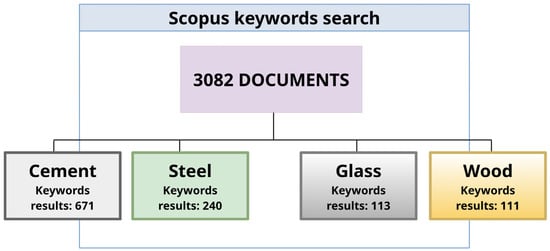
Figure 1.
Schematic of keyword search and refinement in Scopus.
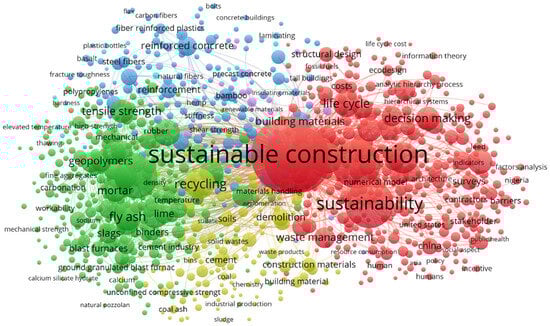
Figure 2.
VOSviewer network visualisation of terms associated with sustainable construction.

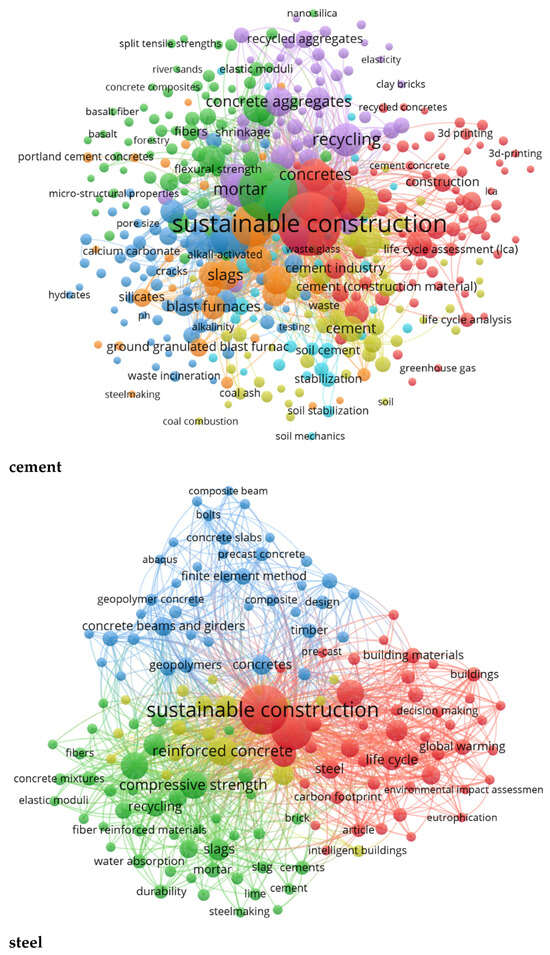
Figure 3.
VOSviewer network visualisation of terms associated with sustainable materials.
Bibliometric analysis has shown that the issues addressed in the article are current and scientifically significant, as evidenced by the high level of interest from researchers and numerous publications. At the same time, there is a research gap in areas such as the use of wood in sustainable construction, which has not yet been sufficiently explored, making the chosen topic promising for research and worthy of further investigation and broader analysis.
The co-occurrence of the studied keywords is shown in the form of connection maps. This was performed by finding keywords that showed concepts that appeared at least five times. The connection maps between the keywords were used to identify the main research clusters, marked in different colours in Figure 2 and Figure 3.
The conducted analysis of keyword co-occurrence showed that the majority of research clusters concern the issue of cement use in construction, while the fewest clusters were identified for wood, specifically, only three. The individual clusters, marked in different colours, represent groupings connected by a common feature, namely the keyword “sustainable construction”. The size of the point in Figure 2 and Figure 3 indicates the frequency of keyword occurrences; the larger the point, the more frequently the term appears. As the analysis shows, in each case examined, the dominant term is “sustainable construction”.
When analysing Figure 2, one can observe a dense network of connections between the keywords. Marked in red, the largest cluster mainly concerns the area of sustainable construction in the context of waste management in the construction industry and the life cycle of materials. The second dominant cluster is the one marked in green, primarily encompassing aspects related to recycling and the use of production waste, such as “fly ash”, in the production of building materials. The network of connections for individual building materials presented in Figure 3 showed that cement and steel are characterised by the densest and most complex network of connections, with clearly distinguished clusters, indicating the frequency of occurrence of these keywords in scientific publications. A significantly less dense network of connections is observed for glass and wood, as evidenced by the smaller number of clusters and the size of the points.
As already mentioned, the most common material used in construction is cement. However, the use of construction materials has seen the introduction of innovative solutions over the past few years. This article undertook actions aimed at systematising various groups of materials.
3. Innovative Solutions in the Use of Building Materials
The materials used in sustainable construction can be divided in several ways. One common division is to distinguish three groups of materials:
- Renewable materials can be included in the first group. These include materials of natural origin that can be renewed in a relatively short period of time. These include wood, bamboo, straw, mineral wool, flax, hemp and others.
- Recycled materials: These materials are recycled in waste processing, making it possible to use resources that already exist and reduce waste. Examples include steel [29], recycled concrete [29], recycled glass [30], recycled plastics and others.
- Materials with low environmental impact: This group includes materials that have a lower overall environmental impact than traditional building materials. These may include, for example, low-carbon materials (e.g., concrete with cement replacements [31]), low-embodied energy materials, such as stone, straw or burned wood, or materials produced in a more environmentally friendly manner [32]. This group also includes traditional materials that have been subjected to innovative solutions.
Innovative solutions in the use of the traditional building material of cement include the following:
- The use of cementitious materials containing iron-rich industrial waste (IWP) to support a nanophotocatalyst, such as titanium dioxide (TiO2), to produce a visibly active Fe—TiO2 composite exhibiting antibacterial properties [33].
- The use of recycled powder (RP) obtained from construction waste [34].
- The use of lithium slag (LS) as a precursor to geopolymer concrete, geopolymer technology uses alkali activators and aluminosilicate-rich materials, provides less environmental impact and shows performance comparable to traditional cement-based concrete, and most importantly contributes to a closed-loop economy in the construction industry [35].
- The use of recycled coarse aggregates (RCA) and construction and demolition waste (C&D) in sustainable concrete production [36].
- Cementitious mixtures, so-called “three-component” mixtures, consisting of mineral admixtures, limestone and clinker [37].
- The use of bauxite residue, commonly known as red mud, a byproduct of the Bayer process used in aluminium extraction, in concrete-based applications [38].
- The use of eggshell waste as a material to partially replace cement in clay and cement-based building materials; eggshell waste is among the most common agricultural waste from food processing plants [39].
- The use of various slags, including furnace slag, electric arc furnace slag (EAFS), steelmaking slag (SFS) and ground granulated blast furnace slag (GGBFS) in the development of sustainable building materials [2].
The important cement replacements are geopolymers, which are primarily used in the production of concrete containing a binder formed on the basis of aluminosilicates instead of classic cement. The main difference between the two binders is the type of chemical reaction that causes them to harden and turns the plastic concrete mix into a solid. Furthermore, geopolymer concretes demonstrate high compressive strength, very low shrinkage and low creep, as well as high resistance to acid and sulfate corrosion. The apparent advantage of geopolymer binder over OPC Portland cement is certainly the low carbon footprint, rapid strength gain and its high values. In practice, the use of geopolymer concretes is still very limited due to their high price, which is determined by the use of relatively large amounts of sodium hydroxide and aqueous silicate solutions [9,40,41]. There are many varieties of geopolymers, and recent studies have revealed that the incorporation of GO up to 1% can result in enhanced mechanical strength, durability, and reduced environmental impact.
The use of recycled glass (cullet), instead of sand and aggregate, is a solution to the shortage of river sand, which has so far been used as an ingredient in the concrete mix. In addition, finely ground glass has pozzolanic properties, which means that by binding with hydroxide, it improves the strength and durability of concrete and, by partially replacing cement in the mix, indirectly reduces CO2 emissions during cement production. An additive described in both Polish (PN-EN 15167-1:2006 [42]) and American (ASTM C989 [43]) standards is ground granulated blast furnace slag (GGBFS)—a byproduct of iron and steel production that can be ground into a fine powder and used as a cementitious material in concrete mixes [44]. The additive can improve the workability, strength and durability of concrete, and can reduce its heat of hydration, making it suitable for mass concrete applications. Materials such as geopolymers, fly ash, and glass are used in the latest technologies in 3D concrete printing (3DCP) that reduce costs, materials, and time, increase safety and minimise environmental pollution. In addition, 3D printing makes it possible to create complex and intricate designs [45] that were previously difficult to achieve with traditional methods, particularly in areas such as precast concrete project analysis [46], the study of the competitiveness of construction projects [47], cloud computing for sustainability of small construction projects [48] or modelling digital twins [49]. The papers [50,51] present selected CO2 capture technologies, such as amine scrubbing, calcium looping, oxyfuel combustion and direct separation, and their use in the production of concrete materials.
One of the many green alternatives aiming to replace structures made of energy-intensive materials [52] is modern wooden structures [53]. This type of construction is now very popular around the world [54] and is already part of the standard of living in many countries [55]. The potential inherent in the development of wood-based construction is currently not being fully exploited, so it is necessary to focus more on research and innovation in the wood construction sector (Figure 4).
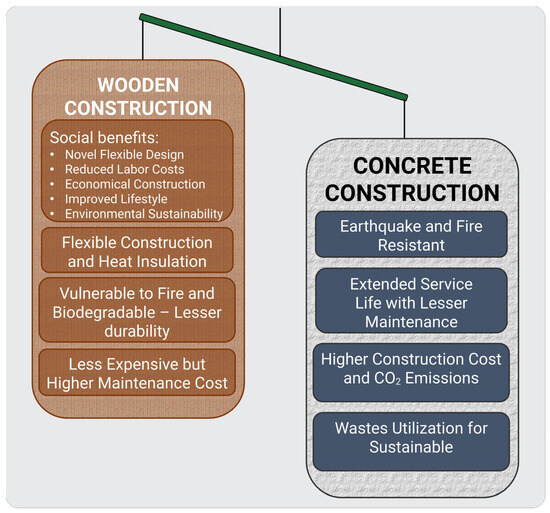
Figure 4.
Advantages of wood construction over traditional construction [55].
Current research conducted around the world addresses issues in the scope of innovation, indicating possible aspects of innovation for the construction sector and the innovation potential of various wood construction systems. In the work [53], the parameters of wood as a construction material were presented, the most important of which is “construction time” (5.6), which is positively correlated with “price” (4.9). The next important parameter is “thermal and technical properties” (5.4), while the least important parameters are “environmental footprint” (4.5), “energy balance during use” (4.5), and “lifetime” (4.4). The less important are “acoustic properties” (3.6) and “fire resistance” (3.2). In addition, the authors of the article [53] examined, from the point of view of the respondents, the advantages and disadvantages of wood as a construction material. The best rated were “impact on the environment” (100% of the respondents considered it an advantage), “renewable material”, “construction time”, “thermal-technical properties” and “energy balance” (according to the order of occurrence from 97% to 94%). The “price” parameter was considered an advantage by 72% of the respondents. The worst rated were “lifetime”, “acoustic properties” and “fire resistance” (from 67% to 52%). To sum up, wooden structures have great potential and are appreciated for their ecological character, lightness and speed of assembly; however, there are still concerns related to durability, acoustics and fire resistance. The market appears to be open to the development of this technology, although it requires a change in perception, legal support and technological innovations.
In addition to the standard uses of wood in construction, such as load-bearing structures, walls and ceilings, roofs, facades or interior finishes with wood, technologies are emerging to replace typical load-bearing structures in RES technologies, such as for wind turbines [56]. The effect of using such materials is a reduction in CO2 emissions i.e., significantly lowering the carbon footprint [37] associated with the investment [57].
In addition, when selecting materials in sustainable construction projects, it is important to take into account LCA and BIM, i.e., different levels of use of technologies for digital recording of physical and functional properties of a building, in parametric form. As part of the improvement of tools to support design processes, coupled with analysis methods such as LCA-BIM, are proposed [29].
The sustainable building initiatives that are underway around the world include the following:
- use of insulating biomaterials, such as products available in the region, i.e., agricultural waste [58], such as grain straw, hemp and olives [7];
- improving the efficiency of energy-efficient management of industrial buildings through the use of artificial intelligence [59];
- optimising [60] and retrofitting [61] existing buildings for energy conservation and decarbonisation throughout the life cycle [62];
- cool roofs and airflow-enhancing technologies can also be mentioned—they are efficient, passive cooling methods that reduce energy demand and improve comfort for building occupants [63].
Systematising and reviewing building materials with environmental aspects in mind are important topics that are gaining importance in the context of sustainable development and green building. It requires a holistic approach that takes into account the entire life cycle of materials and their impact on the environment. Promoting sustainable practices in construction can help reduce the negative impact on our planet and improve the quality of life of residents. The next section of the article presents several key points on this issue.
4. Environmental Aspects of Sustainable Construction
The path to sustainability is largely limited by the practices of the construction industry [11], which is a significant generator of waste and other anthropogenic emissions [64]. It follows that shifting to cleaner technologies and construction methods [65] by implementing innovations that minimise consumption of resources and anthropogenic pollutants, such as greenhouse gases (GHG), aerosols, carbon dioxide, sulfur oxide, nitrogen oxide, benzene and other emissions that adversely affect humans and the environment, will promote the achievement of the Sustainable Development Goals [66]. To ensure sustainability, it is imperative that the construction industry [67], as a centre of economic development, seek solutions that are cost-effective, pragmatic and inclusive [68]. There are many aspects through which modern construction supports sustainability and has a positive impact on the environment. The use of appropriate green technologies reduces greenhouse gas emissions [69]. This is influenced, among others, by the reduction in energy consumption in sustainable buildings, good insulation performance and other elements that characterise green construction [54]. In an era of shifting away from dependence on fossil fuels, the use of renewable energy sources is of utmost importance. As mentioned earlier, what is key to sustainable construction and sustainable development is the reduction in energy consumption through, among others, the efficient use of energy [18]. The essence is to design the building so as to provide maximum comfortable thermal conditions [70] with minimum energy consumption. In order to achieve such an effect, it is necessary to ensure adequate thermal insulation, airtightness of the building, eliminate thermal bridges and bring as much green energy into the building as possible. The energy efficiency of a sustainable building also depends on the entire life cycle of the building, not just the time of its target operation [71], beginning with the construction of the building, through its upkeep and maintenance, to its demolition [72].
Along with socioeconomic ones, the environmental aspects [73] are one of the main groups of indicators for sustainability of the construction sector [74].
Noteworthy is a study by Koengkan et al. [8], which examined the impact of environmentally friendly homes on the economic development of the Lisbon metropolitan area. In their study, they analysed data from 18 municipalities over the period of 2014–2020, using regression analysis with ordinary least squares (OLS) and fixed effects. The results indicate that national policies promoting residential energy efficiency have a positive impact on economic development. Policies, such as grants, loans and tax credits, encourage homeowners to invest in energy-efficient technologies, increasing household disposable income and contributing to economic growth. The study found that an increase in the number of new buildings has a positive impact on economic development, leading to job creation and increased demand for construction materials and services. In addition, building environmentally friendly homes can reduce energy consumption by lowering energy costs for homeowners and businesses, and ultimately stimulating economic growth.
In the next part of the article, a SWOT analysis for construction materials was conducted, aimed at helping to understand the strengths and weaknesses, as well as the opportunities and threats associated with the construction materials market.
5. SWOT-TOWS Analysis for Construction Materials
SWOT-TOWS analysis was chosen for its practicality, universality, and ease of assessment. It is a comprehensive method because it presents all internal and external factors influencing the developmental potential of a given area in a single matrix. SWOT-TOWS allows for focusing attention on the most significant strategic development factors. A significant advantage of this method is also its modern perspective on the given problem. The disadvantage of this method is the subjective assessment in selecting factors and determining their weights and significance. It depends on the state of the knowledge possessed and/or access to information.
The SWOT method is a very popular tool, but it is not without its limitations. Insufficient data, frequent lack of objectivity from researchers who are unable to properly assess strengths and weaknesses, or, for example, underestimating threats while focusing on strengths and opportunities—these are some of the issues that should be taken into account when using this method.
When preparing a SWOT analysis, it is also necessary to consider legal constraints that can sometimes affect the interpretation of research results, such as data protection and legal liability, as well as laws arising from violations of fair competition or intellectual property rights (which are not the subject of analysis in this article).
Due to growing concerns about environmental issues and resource and energy consumption in the construction sector, the development of “green buildings” which, as they are defined, result in a reduction in the negative environmental and human impacts, is becoming increasingly important. However, the escalation of sustainable construction faces a number of entry barriers and obstacles at the implementation stage. Undoubtedly, the first basic method useful in the broad analysis of sustainable construction in terms of its positive and negative aspects is benefit–cost analysis [75]. Various methods—both objective and subjective ones—are used for estimating these two quantities. Unfortunately, they are often subject to measurement error or a lack of proper conditions for conducting the study, which also results in a wide variation in the evaluation of the costs and benefits of sustainable construction in general. According to a study conducted by [76], the ambiguity of actual costs and benefits is a major obstacle to the development of green architecture. It should also be taken into account that, for example, green buildings, the costs that matter are different for investors than for unit owners or tenants. Construction costs are important for investors, while ongoing costs are important for users. Among others, this is the basis of the difficulty with specifying these figures. Methods of economic and non-economic analyses used in science and practice that seek to answer this nagging question of profitability and return, or the correlation between green strategies and green performance, also include, for example, interviews, surveys, statistical and economic analyses, experiments, and simulations, benchmarking, risk analysis, technological and ecological research, and other engineering studies [75].
Based on cost–benefit analysis and on research using the above methods, as well as theoretical considerations derived from this work, the advantages and disadvantages of sustainable construction, both measurable and non-measurable, can be presented in general terms. Measurable aspects provide an opportunity to quantify the impact of implementation of sustainable construction intentions. They concern indirect (long-term) benefits and costs as well as direct (short-term—immediately perceptible) ones. Due to the difficulty with accurately estimating the benefits and costs of sustainable construction, non-measurable aspects are also included in this discussion. They are not subject to quantitative estimation and are primarily concerned with the general and social scope. Accordingly, Table 1 shows the measurable advantages and disadvantages, while Table 2 shows the non-measurable advantages and disadvantages of sustainable construction.

Table 1.
The measurable advantages and disadvantages of sustainable construction.
Table 2.
The non-measurable advantages and disadvantages of sustainable construction.
The identified advantages and disadvantages of sustainable construction were listed in the form of benefits and barriers, divided into technological, ecological and socio-economic factors, as shown in Figure 5 and Figure 6.
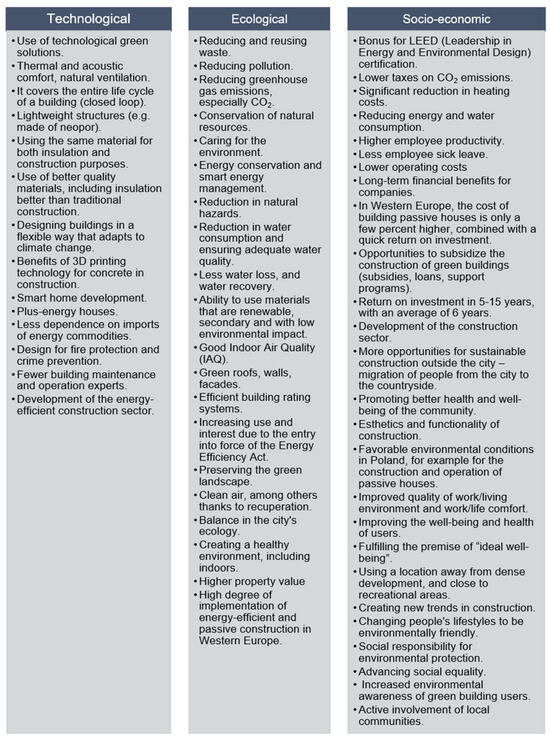
Figure 5.
Technological, environmental and socio-economic benefits of sustainable construction. Source: [69,75,76,77,78,79,80,82,83].
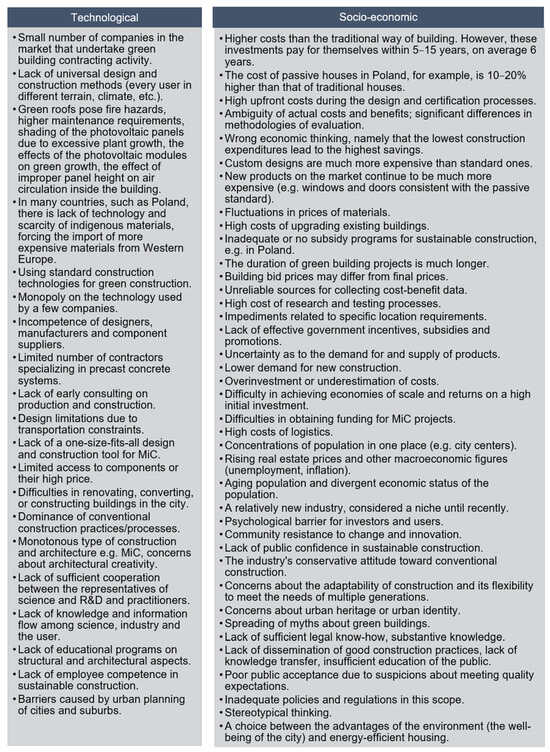
Figure 6.
Technological and socio-economic barriers to sustainable construction. Source: [69,75,76,77,78,79,80,82,83].
As can be seen from Table 1 and Table 2, this study identifies the most measurable advantages and non-measurable disadvantages of sustainable construction, in general. This means that in a holistic approach to the implementation and execution of “green construction”, the benefits far outweigh the costs. Nevertheless, a large number of socio-economic and technological barriers mean that this type of construction is still in its early stages. This is primarily due to the fact that the sustainable construction sector is still a new industry that the public is not fully convinced about, due to high initial costs, as well as a lack of knowledge and an information gap. However, analysing Table 3 and Table 4, it can be concluded that the dominant benefits relate primarily to ecological aspects and, consequently, social aspects. The scarcity of natural resources and the idea of a healthier and better life in a clean environment prevail over the stereotypical thinking of conventional construction as the only right and sustainable approach in this day and age. No environmental barriers to sustainable construction were noted.
Table 3.
Estimation of the weights of the respective factors in the SWOT-TOWS analysis for the construction material—glass.
Table 4.
Estimation of the weights of the respective factors in the SWOT-TOWS analysis for the construction material—concrete.
A detailed analysis of the benefits and barriers of sustainable construction, divided into social, technological, and ecological factors, constitutes a database for identifying potential opportunities and threats, as well as the strengths and weaknesses of construction materials, and, thus, for conducting a SWOT-TOWS analysis (strengths, weaknesses, opportunities, threats—threats, weaknesses, opportunities, strengths) [84,85] for the main construction materials (glass, steel, wood, concrete). When comparing materials, technological, environmental and socioeconomic indicators were taken into account, such as the production factors of water, energy, material (including its consumption) and its recyclability, human resources, waste and its management, land use and biodiversity, environmental impact, pollution (water, air, noise), costs, material life cycle, construction and public safety, people and their well-being and working and living comfort, impact on local resources, local responsibility, economics and innovation [73].
The rationale for choosing the SWOT-TOWS method was its versatility, practicality and simplicity in application [86]. The results of the SWOT-TOWS analysis carried out allow for comparison of the above-mentioned materials in terms of their best and most effective application in sustainable construction (Table 3, Table 4, Table 5 and Table 6). The SWOT-TOWS analysis takes into account technological, environmental, and socio-economic factors. The weighting scale used was in the 0–1 range (0—lowest importance of the factor, 1—highest importance of the factor), while the rating scale for the factor was in the 1–5 range (1—lowest rating of the factor, 5—highest rating of the factor).
Table 5.
Estimation of the weights of the respective factors in the SWOT-TOWS analysis for the construction material—steel.
Table 6.
Estimation of the weights of the respective factors in the SWOT-TOWS analysis for the construction material—wood.
Table 7, Table 8, Table 9 and Table 10 present the calculated values of individual factors from SWOT-TOWS analyses as a product of the weight and the assessment of a given factor.
Table 7.
Calculation matrix for glass.
Table 8.
Calculation matrix for concrete.
Table 9.
Calculation matrix for steel.
Table 10.
Calculation matrix for wood.
As Table 7 shows, the highest value in the SWOT-TOWS analysis for glass falls on factors W2, T1, O1, O3 and O5. Therefore, glass without a low-emission coating causes heat loss through low thermal insulating power, has high logistics costs, primarily of transportation, is synonymous with modern design and prestige, interior design and architecture in the broadest sense through spaciousness, minimalism and elegance, has increasing demand for reducing energy consumption, and creates warm and bright interiors that do not need to be additionally heated or illuminated—this, in turn, translates into better well-being of users.
As can be seen from Table 8, the highest value in the SWOT-TOWS analysis for concrete falls on factors O1, O2, T1, W1, W3, W6. Therefore, respectively, concrete has great architectural possibilities—freedom in the design of the body, large and long experience in the market—is the traditional method and construction trends are changing towards eco-friendly materials, has high energy consumption during production, produces high CO2 emissions, and generates large amounts of waste.
As shown in Table 9, the highest value in the SWOT-TOWS analysis for steel falls on the S2, S3, S4, and W3 factors, i.e., homogeneity of structure and invariability of mechanical properties over time (the possibility of very accurate calculations for and use of structures), durability, tensile strength, compressive and bending strength, and high shear strength, allowing the use of only small amounts of the material, recyclability—demolition elements can be reused, or they are a valuable raw material for the manufacture of new steel products— and high CO2 emissions.
As can be seen from Table 10, the highest value in the SWOT-TOWS analysis for wood falls on factors O6, O7 and O10. Therefore, respectively, wood achieves a reduction in labour costs, improved living conditions, comfort, well-being, and health considerations; wood naturally stabilises the microclimate indoors, has a better lifestyle, is pro-environmental, and is more in harmony with nature.
By analysing the above tables, the following can be noted:
- The highest number of strengths was identified for wood (15) and the lowest for steel (8), while the highest number of weaknesses was noted for steel (10) and the lowest for glass (4). In contrast, the most numerous opportunities for development are for wood (18) and the least numerous for steel (6). The highest number of risks was recorded for wood (8) and the lowest for glass (5).
- The largest sum of products of strengths is for steel (4.2), and the smallest for wood (2.71—among others, this is due to the very large number of factors identified), while the highest number of weaknesses is for steel (3.75) and the lowest is for wood (3.3). As for opportunities, the largest sum of products is undoubtedly for wood (4.77) and the smallest is for glass (3.7). The risks in the largest number of sums of the products of weights and ratings are for steel (4.1) and the smallest is for glass (3.55), as shown in Table 11.
Table 11. Summary of the number of factors in the SWOT-TOWS analysis for each construction material, with the sum of the products.
- Glass is characterised by having the greatest number of strengths and opportunities; concrete, of weaknesses and opportunities; steel, of strengths and threats; and wood, of weaknesses and opportunities.
- The most important strengths identified for glass are, first and foremost, 100% recycled raw material and a high degree of light transmittance. Weaknesses include high energy consumption during production and hardening. The most important opportunities are new methods of glass production that retain energy inside buildings and the architectural popularity of glass. The most important risks of glass include the generally high costs of production and logistics.
- The most important identified strengths of concrete are, first and foremost, high weathering resistance and corrosion resistance. The weaknesses include high energy intensity and harmful emissions. The most important opportunities are many architectural possibilities and a long tradition of use. The most important threats to concrete are the shift in construction trends to eco-friendly ones.
- The main strengths identified for steel are durability, strength and recyclability. Weaknesses include energy and emissions intensity as well as susceptibility to corrosion. The most important opportunities are all-weather performance and installation. Among the most important threats to steel is the change in construction trends to pro-environmental ones.
- The most important strengths identified for wood are mainly good thermal insulation, a long life cycle and renewability of resources. Weaknesses include low resistance to climatic conditions and lower heat capacity. The most important opportunities are structural soundness and improved living conditions. The most important risks of wood include the problem of raw material availability and higher investment costs compared to other construction materials.
- The analysis showed that the best construction material for sustainable construction is glass, due to the fact that it is a 100% recyclable raw material, and wood, due to the fact that it comes from renewable sources, stabilises the microclimate, and emits less carbon dioxide into the environment with low energy consumption. In turn, the material that does not perform well on its own in green construction is steel, due to its energy intensity and emission of harmful substances into the environment.
- Due to the specific character of each of the materials in question, their properties and manufacturing technology, as well as their established position in the construction market, the number and selection of factors for the SWOT-TOWS analysis varies. The determination of their significance and their evaluation are subjective (typical for SWOT).
The results of the SWOT-TOWS analysis classify the construction materials into one of four types, [93,94,95], namely:
- Aggressive (maxi–maxi) strategy, consisting of strong expansion and diversified development; it includes activities that take advantage of assets and opportunities generated by the environment.
- Conservative (maxi–mini) strategy, which involves maximizing the potential while minimizing the negative impact of the environment.
- Competitive (mini–maxi) strategy, which involves eliminating weaknesses while taking advantage of the emerging opportunities.
- Defensive (mini–mini) strategy, which involves eliminating weaknesses and avoiding threats.
As can be seen from Figure 7, glass has the most strengths and the fewest threats, concrete has the most opportunities and the fewest weaknesses, steel has the most strengths and the fewest weaknesses, and wood has the most opportunities and the fewest strengths. The most strengths are for steel, the most opportunities for wood, the most weaknesses for steel, and the most threats for steel.
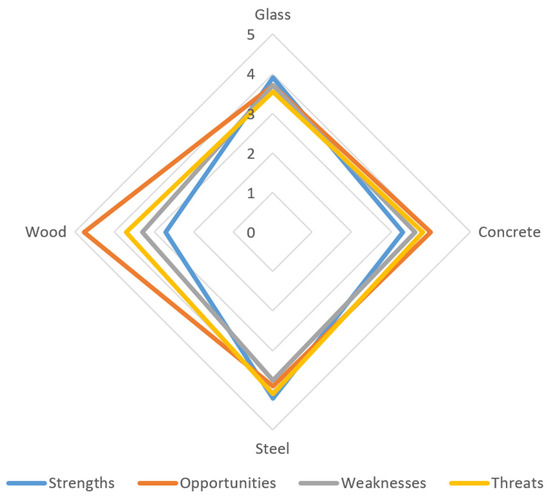
Figure 7.
SWOT-TOWS analysis results for construction material.
A graphical representation of the aforementioned strategies for the structural materials analysed is shown in Figure 8.
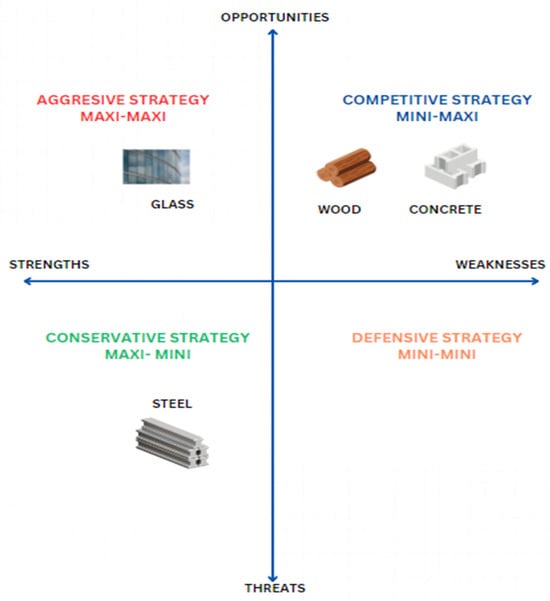
Figure 8.
Graphic interpretation of the strategy in the SWOT–TOWS analysis for construction materials, such as wood, glass, concrete and steel; own research based on [84].
Based on the analysis, the following strategy has been adopted for the selected construction materials to develop sustainable construction:
- Glass—aggressive strategy—focusing on the strengths and their further development, such as glass recycling, favorable energy balance, good sound insulation, high light transmittance, resistance to environmental factors, production of heating glass, durability and strength, and opportunities, including new energy-efficient methods of glass production, and the fact that glass has now become synonymous with modern design and prestige (very high popularity of glass).
- Steel—conservative strategy—focusing on the strengths of durability, strength, and recyclability of steel, and leveling the risks, mainly reducing the costs related to CO2 emissions and production.
- Wood—competitive strategy—focus on eliminating the weaknesses of wood, such as low fire resistance and resistance to climatic factors, and developing the opportunities, including improving living conditions, structural soundness, planting new forests, and developing research on innovative wood construction.
- Concrete—competitive strategy—focus on eliminating the weaknesses, including reducing technological breaks by changing the properties of concrete, reducing waste, reducing CO2 emissions and reducing energy consumption for production, and developing opportunities, such as supporting construction with semi-finished products and taking advantage of the economic attractiveness of concrete.
To summarise the section of the paper on the advantages and disadvantages of sustainable construction, barriers and benefits, strengths and weaknesses, opportunities and threats for selected construction materials, it should be noted that, due to the rapidly growing green building sector, these areas are bound to change. Hence, the issues considered in the article are still an open topic and require further research. In addition, in the near future, the presented SWOT analysis may also be slightly modified, taking into account the changing conditions of green construction, especially since this method is characterised by substantial subjectivity in the selection and evaluation of criteria and factors.
A SWOT analysis conducted this way can help companies develop strategies that take into account both internal and external factors influencing the construction materials market.
6. Summary
Based on the literature review that served to prepare the SWOT-TOWS analysis and the analysis itself, observations were made regarding barriers in sustainable construction. The social barriers to the transition to energy efficient construction can be distinguished, such as the lack of knowledge—legal, know-how, content and pros and cons and dissemination of good construction practices [80]—as well as barriers caused by urban planning of cities and suburbs, an aging population and impoverishment, creating less demand for new construction (socio-economic conditions of residential construction in Poznań [in Polish]) [96]. In many countries, trends related to reducing energy intensity dominate the current construction industry. Many building solutions are based on regional traditions, habits, and weather conditions, as well as on economic aspects related to the production of building materials and their subsequent operations. Nowadays, there are many options, especially technological, convincing investors to take measures to improve the energy efficiency of buildings. The construction industry is constantly evolving, and every year, there are more and more innovative solutions that improve the energy efficiency and functionality of buildings. Modern houses are often cheap and easy to maintain, functional, easy to furnish and, moreover, economical. The practical nature of building takes into account modern solutions, such as recovery of heat from recuperation, solar panels, photovoltaics, low-emission materials, and remote control systems for all installations in the house. The increasingly popular passive or energy-efficient houses (the difference between these two types of houses is due to the materials used and their thickness) have low energy requirements for heating the interiors. Both technologies are environmentally friendly. Concrete is often used as a construction material for energy-efficient and passive houses. In the near future, it is likely that people will prefer plus-energy houses, i.e., houses that not only have negligible operating costs [75] but also produce surplus energy.
- Modern construction is often based on building with innovative materials and solutions; however, for buildings to be energy efficient, they must meet specific technical conditions. The use of modern building technologies and materials with favorable properties involves the application of those that have a low heat transfer coefficient and provide good thermal insulation. This is undoubtedly associated with higher construction costs, but in the long run, achieving the expected energy standard of the building reduces operating costs.
- However, the lack of legal, economic, and ecological knowledge, know-how, and substantive knowledge of the advantages and disadvantages of new technologies and the dissemination of good construction practices means that, unfortunately, in many regions, this type of construction is not common these days.
- In the energy-efficient construction sector, there are many opportunities to implement innovative technologies and make economically [75] and practically viable decisions to reduce the energy intensity of a building as much as possible. The energy-efficient construction sector is now forcing huge changes in the existing legislation of construction activities (implementation of Directive 2010/31/EC on the energy performance of buildings, which introduces strict energy efficiency standards from 1 January 2021) through the introduction of the Energy Efficiency Act in Poland. European Union member states, including Poland, are obliged to promote in their markets buildings that are characterised by very low energy consumption, i.e., with very high energy performance, characterised by the use of the most efficient installation and construction technologies and the use of energy from renewable sources, producing it on site or close to the building (Social and Economic Conditionings of Knowledge Transfer in Passive Building Sector [in Polish], Graczyk A.M.) [80].
- The main economic and social barriers in the construction sector to the construction of energy-efficient homes include, in particular, inadequate knowledge transfer, lack of knowledge updating, and errors in communication and cooperation between construction companies and investors. There is also a lack of cooperation and sharing of experience and of widely available information on the technologies applied, of know-how and of the dissemination of good construction practices. In general, passive construction is considered to be several tens of percent more expensive than traditional construction [75], although this is not true. In addition, for the investor, the benefits of a passive building investment result in a higher market value of the building and a reduction in heating bills over the lifetime of the building.
- The paper (Social and Economic Conditionings of Knowledge Transfer in Passive Building Sector [in Polish], Graczyk A.M.) [80] identifies barriers, divided into social (directly related to the problems of communication in the company providing construction or installation services) and economic barriers (resulting from the lack of adequate environmental education of passive construction market players)
- Social barriers include interpersonal barriers, barriers due to a lack of awareness and communication skills, barriers due to a lack of communication channels, barriers related to the quality of information, barriers related to the communication atmosphere and organizational culture of the company or institution, discrepancies of intentions, and emotions.
- Among the most important barriers related to the transfer of information are those related to its quality. Any delays and discrepancies in the information provided and received can affect the timing and execution of the project, as can divergent intentions, lack of precise performance criteria and procedures, or undefined division of responsibilities.
- In general, interpersonal barriers are related to the perception of situations through the prism of stereotypes and a lack of experience. In order to perform passive house installations, new skills are needed, and entrepreneurs do not always direct their employees to appropriate training and do not always use knowledge gained from the experience of other companies. When making the decision about a passive design, an investor is not necessarily aware that the company has no experience in building such houses. Such a lack of knowledge of the principles of passive architecture at a later stage can lead to complaints and disputes. Sometimes, there are also barriers in the construction sector due to a lack of communication channels or a negative atmosphere in the organization. The fault may lie here with both the supervisor and the employee, who, for example, fail to perform tasks beyond their standard responsibilities. Lack of motivation, fear, and lack of confidence—these are factors that do not promote adequate employee engagement, which affects the quality of work.
- When building energy-efficient homes, economic barriers also sometimes arise. An investor cannot always afford to spend tens of percent more than for a traditional house [75]. Typically, building energy efficiently means using better insulating and quality materials; thus, to be able to compare the exact cost of building a passive building with a traditional one, one would have to focus on the same standard of construction, finishing, etc. It also happens that construction is overinvested or underestimated as a result of incomplete investor knowledge or the contractor’s mistakes.
- Other important factors influencing the investment and often posing a barrier include a lack of standardised solutions (custom architectural designs are much more expensive than standard ones [75]) or the availability of components (unfortunately, the availability of many of the materials necessary for the construction of a passive building is limited).
- In conclusion, because the energy-efficient construction sector is a fairly fresh branch of the construction market, even treated as a niche until recently, that sector is now becoming more popular, especially after the adoption of the Energy Efficiency Act. Companies that, until recently, provided services to customers interested in prestigious, and, therefore, expensive, green solutions, now, often thanks to national support instruments, have the opportunity to also be available to the average investor (individual household, not just a company or municipality).
Barriers caused by urban planning of cities and suburbs, an aging population and impoverishment reduce demand for new construction (socio-economic conditions of residential construction in Poznań [in Polish]) [96].
- Barriers caused by urban planning of cities and suburbs, an aging population and impoverishment reduce demand for new construction.
- In the context of demographic change and the challenges of sustainable development, housing is of crucial importance, especially since in many countries, including Poland, the exodus of people from the cities to the suburbs has been very significant in recent years [96].
- That is where the opportunities for sustainable construction come in. For many residents, owning their own home in the suburbs has become not only a symbol of social advancement and peace and quiet from the hustle and bustle of the city, but has also created an opportunity to level the playing field, especially as the problem of commuting to work or school has been solved by the spread of cars. In addition, more and more multi-family buildings are being built in the suburbs, which could be the opportunity for developers and builders to use sustainable construction.
- However, for many people living in cities, building or renovating a dwelling in terms of the sustainable green order is an insurmountable barrier. Housing construction in city centres targets a specific audience, often families with young children, singles, the elderly and twenty- and thirty-year-olds pursuing a career or studying. The housing offered to customers should meet certain requirements. Spatial infrastructure planning must also take into account demographic changes. Noteworthy is the fact that builders are now constructing higher-standard apartments and condos that include energy-efficient construction elements.
- Today, in many European cities, the housing stock is made up of large-panel estates that were constructed in the late 20th century. Thanks to thermal efficiency improvement and restoration of the surroundings (green areas, playgrounds), as well as due to the lack of valuable alternatives, such estates represent a specific segment of the housing market. In many areas, especially city centres, residents occupy units that are renovated, often historic, tenement houses. At the same time, the technical conditions of old buildings are not satisfactory, often failing to meet basic standards. Only between several and a dozen old tenement houses undergo comprehensive renovation each year, a fraction of what is needed. Infrastructure deficiencies, of course, affect not only individual apartments but also sometimes entire neighborhoods.
- The next barrier to energy-efficient redevelopment that is insurmountable in urban settings is unoccupied housing. In principle, the problems concern not only apartments where there is a frequent change of tenants (rentals) or inheritance proceedings, but also functional or service apartments and those included in the stock of the municipality. No one invests in these kind of premises, because their future status is unknown.
- Another reason why the development of home upgrades in terms of energy efficiency may be insufficient is the socioeconomic status of the population. People with college degrees mostly have better-paying jobs and have more responsible functions within society.
- These individuals also exhibit certain location preferences and have greater environmental awareness.
- Such people are more likely and willing, including for financial reasons, to build passive and energy-efficient houses. Unfortunately, a huge percentage of the population has a different economic predisposition, lower-paying jobs and generally an inferior social status, which makes modern implementations in their dwellings difficult.
- At the same time, young people often choose residential units in city centres for their own convenience. This is due to the accessibility of the city’s so-called goods, such as proximity to stores, schools, swimming, sports and recreation centres, widespread and easy transportation, cinemas, etc. The choice between the advantages of the environment and living in an energy-efficient home of one’s own is not so obvious.
- In conclusion, the lack of accessibility to many utilities, financial status, and the rising prices of materials are barriers that are difficult to overcome when building passive houses (in particular for young people). In addition, the infrastructural development of cities is often one of the primary determinants of quality of life, but it does not allow for energy-saving improvements in multi-family buildings and apartment blocks, which are typical for many urban centres.
- In many countries, the current construction industry is dominated by trends related to a variety of factors. Many building solutions are based on regional traditions, habits, and weather conditions, as well as on economic aspects related to the production of building materials and their subsequent operation.
- The technology of housing construction has a significant impact when considering the economic aspect for the investor. The future homeowner has several alternatives to traditional technology. Already at the initial stage of planning, the investor should predict the square footage, the number of floors and the technology for constructing the building, since it is these factors that affect the cost of the investment, the execution time and the durability of the building. In addition to the still most popular masonry technology, there are also modular technology, polystyrene house construction or timber frame houses/log cabins.
- Traditional construction in many countries (including Poland) uses masonry technology in erecting buildings. Despite the fact that other, perhaps more modern technologies, are gaining popularity, there is no indication that traditional architecture will cease to be the most popular in these regions. Traditional construction refers to brick houses, which usually have reinforced concrete foundations, masonry walls made of hollow blocks, bricks or other blocks, and a roof that is usually two- or four-sided, constructed on the basis of a wooden roof truss (depending on how the construction work is carried out, flat roofs are also used). Of course, traditional construction also has alternatives in the form of frame or modular technology that uses prefabricated components.
- The most commonly used building materials are autoclaved aerated concrete, ceramic, and sand lime silicates. Traditional architecture also uses traditional footings, and foundation walls are built of concrete or reinforced concrete or possibly a foundation plate.
- Innovative technologies also include polystyrene blocks filled with concrete as a building material. Easy installation of the respective blocks, which is a building material with a high degree of thermal insulation that does not require additional insulation, such as styrofoam, is a big advantage of this method.
7. Conclusions
In light of regulations and environmental challenges, particularly climate neutrality by 2050, many industries, including the construction sector, face the challenge of incorporating sustainable practices into their projects so that the project, once implemented, is not only economically beneficial but also has a positive impact on the environment and society [97]. Numerous studies and analyses are being undertaken around the world to estimate the impact of various factors on carbon emissions, construction waste, and project costs [46]. Sustainable construction is now one of six markets with the potential for innovation, fostering competitiveness and job creation in the European economy. It aims to increase the energy efficiency of buildings, the use of building products that meet environmental criteria and clean technologies. However, it is worth remembering that it begins with an analysis of the needs of the investor and users of the building, and ends with the commissioning of the building, settlement and completion of all work, and the dissolution of organizational structures related to the execution of the project [81]. At the current stage of development of construction technology, it is not possible to completely eliminate traditional engineering materials, such as concrete, steel (reinforced concrete) or glass, due to their structural properties (strength, durability, resistance to environmental factors, such as temperature and corrosion, among others) and economic attractiveness. Therefore, for these groups of materials, the conclusions from both the SWOT analysis (the first three conclusions) and the literature review are presented below.
- 1.
- As a result of the SWOT-TOWS analysis conducted under current conditions, the construction material that best meets the requirements of sustainable construction is glass. We have identified the greatest strengths and opportunities for further development in this area. The construction materials that recorded more opportunities than threats but fewer strengths than weaknesses are concrete and wood. None of the analysed materials exhibited a predominance of weaknesses and threats. Steel ranks in a position where strengths and threats dominate. The most developmental strategy, which focuses on strengths and growth opportunities, is the aggressive strategy, which is attributed to glass. On the other hand, the conservative strategy pertains to steel, while the competitive strategy concerns wood and concrete.
- 2.
- Based on the literature and SWOT-TOWS analysis, the following future research directions can be identified:
- the costs of sustainable construction;
- new trends in sustainable construction in changing socio-economic conditions;
- survey studies directed at society regarding the lack of interest and social concerns in this area.
The following limitations can be identified:
- lack of empirical research;
- restrictions regarding the choice of available construction materials;
- limited research on the effectiveness of using construction materials in the long-term process;
- article length restrictions;
- access to specific quantitative data;
- difficulties in comparing costs and benefits in a measurable aspect;
- possibilities for funding investments dedicated to sustainable construction, grants, etc.;
- availability of materials and legal regulations (e.g., wood).
- 3.
- The limitations of SWOT analysis boil down to the analysis of four construction materials—wood, concrete, steel, and glass—in terms of social, technological, and environmental factors. Other aspects and materials were not analysed. Furthermore, the analysis was based on literature data from the subject literature database, Scopus.
- 4.
- Filling the information gap, which has both scientific and practical dimensions in the field of sustainable construction, the authors attempted to address social concerns primarily arising from ignorance related to environmental, economic, and technological issues. Identifying the research gap is critical for the further development of modern solutions in the construction industry. Research in the field of sustainable construction focuses on designing and building structures that will be used in an environmentally friendly manner. Due to the multitude of factors affecting the construction industry in this matter, the authors have reviewed selected materials and technological possibilities on this topic; however, this is an issue that will be developed and continued in further publications.
- 5.
- The study’s findings contribute to the academic discourse and practical applications listed below:
- Didactic dimension—the article serves as a knowledge base for educational purposes.
- Practical dimension—identifying the strengths and weaknesses, opportunities, and threats of individual construction materials can serve as a basis for the broader application of these materials in construction and the development of the industry.
- Educational goal—expanding knowledge about ecology and raising public awareness about pro-ecological issues.
- The article can serve as a database and subject literature for other researchers and scientists, students, and practitioners.
To sum up, modern ways of building houses make it easier to construct energy-efficient and low-cost buildings. Excellent thermal insulation, as well as the use of collectors, solar panels, heat pumps, recuperation and a system to control the installation, allow us to create houses that are functional and comfortable for daily use.
Author Contributions
Conceptualization, M.Z., D.W., J.M. and S.B.; writing—original draft preparation, M.Z., D.W., J.M. and S.B.; writing—review and editing, M.Z., D.W., J.M. and S.B.; supervision, M.Z.; project administration, S.B. All authors have read and agreed to the published version of the manuscript.
Funding
This research received no external funding.
Data Availability Statement
Data are contained within the article.
Acknowledgments
Thanks to the Energies Editorial Office on fee waiver.
Conflicts of Interest
The authors declare no conflicts of interest.
References
- Baqershahi, M.H.; Ayas, C.; Ghafoori, E. Design Optimisation for Hybrid Metal Additive Manufacturing for Sustainable Construction. Eng. Struct. 2024, 301, 117355. [Google Scholar] [CrossRef]
- Meshram, S.; Raut, S.P.; Ansari, K.; Madurwar, M.; Daniyal, M.; Khan, M.A.; Katare, V.; Khan, A.H.; Khan, N.A.; Hasan, M.A. Waste Slags as Sustainable Construction Materials: A Compressive Review on Physico Mechanical Properties. J. Mater. Res. Technol. 2023, 23, 5821–5845. [Google Scholar] [CrossRef]
- Moghayedi, A.; Awuzie, B. Towards a Net-Zero Carbon Economy: A Sustainability Performance Assessment of Innovative Prefabricated Construction Methods for Affordable Housing in Southern Africa. Sustain. Cities Soc. 2023, 99, 104907. [Google Scholar] [CrossRef]
- Raza, M.H.; Khan, M.; Zhong, R.Y. Strength, Porosity and Life Cycle Analysis of Geopolymer and Hybrid Cement Mortars for Sustainable Construction. Sci. Total Environ. 2024, 907, 167839. [Google Scholar] [CrossRef]
- Dubey, M.K.; Raj, V.; Kumar, M.; Garg, V. Need for Rating System for Assessing Sustainability of Built Environment during Construction Stage. Total Environ. Res. Themes 2023, 7, 100061. [Google Scholar] [CrossRef]
- Gehlot, M.; Shrivastava, S. Sustainable Construction Practices: A Perspective View of Indian Construction Industry Professionals. Mater. Today Proc. 2022, 61, 315–319. [Google Scholar] [CrossRef]
- Antoun, M.; Issa, C.A.; Aouad, G.; Gerges, N. Sustainable Masonry Blocks: Olive Wood Waste as Substitute for Fine Aggregates. Case Stud. Constr. Mater. 2021, 15, e00590. [Google Scholar] [CrossRef]
- Koengkan, M.; Fuinhas, J.A.; Oliveira, F.P.; Ursavaş, U.; Moreno, N. Building a Sustainable Future: How Eco-Friendly Homes Are Driving Local Economic Development in Lisbon Metropolitan Area. Energies 2023, 16, 4855. [Google Scholar] [CrossRef]
- Maqbool, R.; Arul, T.; Ashfaq, S. A Mixed-Methods Study of Sustainable Construction Practices in the UK. J. Clean. Prod. 2023, 430, 139087. [Google Scholar] [CrossRef]
- Waqar, A.; Othman, I.; Saad, N.; Azab, M.; Khan, A.M. BIM in Green Building: Enhancing Sustainability in the Small Construction Project. Clean. Environ. Syst. 2023, 11, 100149. [Google Scholar] [CrossRef]
- Yang, Y.; Chen, F. Research on Energy-Saving Coupling Correlation of New Energy Buildings Based on Carbon Emission Effect. Sustain. Energy Technol. Assessments 2023, 56, 103043. [Google Scholar] [CrossRef]
- Feng, S.; Yao, L.; Feng, M.; Cai, H.; He, X.; He, M.; Bu, X.; Zhou, Y.; Zhang, T. Sustainable Regeneration of Waste Polystyrene Foam as Cooling Coating: Building Cooling Energy Saving, CO2 Emission Reduction and Cost-Benefit Prospective. J. Clean. Prod. 2024, 434, 140361. [Google Scholar] [CrossRef]
- Salah, M.; Elmasry, M.; Mashhour, I.M.; Amer, N. A Framework for Assessing Sustainability of Construction Projects. Clean. Eng. Technol. 2023, 13, 100626. [Google Scholar] [CrossRef]
- Amaral, R.E.C.; Brito, J.; Buckman, M.; Drake, E.; Ilatova, E.; Rice, P.; Sabbagh, C.; Voronkin, S.; Abraham, Y.S. Waste Management and Operational Energy for Sustainable Buildings: A Review. Sustainability 2020, 12, 5337. [Google Scholar] [CrossRef]
- Akadiri, P.O.; Chinyio, E.A.; Olomolaiye, P.O. Design of a Sustainable Building: A Conceptual Framework for Implementing Sustainability in the Building Sector. Buildings 2012, 2, 126–152. [Google Scholar] [CrossRef]
- Lin, Y.; Yuan, X.; Yang, W.; Chan, M.; Tian, L. Impact of Outdoor Particulate Matter 2.5 Pollution on Natural Ventilation Energy Saving Potential in Office Buildings in China. J. Build. Eng. 2023, 76, 107425. [Google Scholar] [CrossRef]
- Sánchez-Garrido, A.J.; Navarro, I.J.; Yepes, V. Multi-Criteria Decision-Making Applied to the Sustainability of Building Structures Based on Modern Methods of Construction. J. Clean. Prod. 2022, 330, 129724. [Google Scholar] [CrossRef]
- Xu, Y.; Yan, C.; Wang, G.; Shi, J.; Sheng, K.; Li, J.; Jiang, Y. Optimization Research on Energy-Saving and Life-Cycle Decarbonization Retrofitting of Existing School Buildings: A Case Study of a School in Nanjing. Sol. Energy 2023, 254, 54–66. [Google Scholar] [CrossRef]
- Dong, Q.; Xu, X.; Zhen, M. Assessing the Cooling and Buildings’ Energy-Saving Potential of Urban Trees in Severe Cold Region of China during Summer. Build. Environ. 2023, 244, 110818. [Google Scholar] [CrossRef]
- de Almeida Vittori Ferreira, M.; Morgado, C.d.R.V.; Estellita Lins, M.P. Organizations and Stakeholders’ Roles and Influence on Implementing Sustainability Requirements in Construction Projects. Heliyon 2024, 10, 1–13. [Google Scholar] [CrossRef]
- Zhang, K.; Qing, Y.; Umer, Q.; Asmi, F. How Construction and Demolition Waste Management Has Addressed Sustainable Development Goals: Exploring Academic and Industrial Trends. J. Environ. Manag. 2023, 345, 118823. [Google Scholar] [CrossRef] [PubMed]
- Otola, I.; Knop, L. A bibliometric analysis of resilience and business model using VOSviewer. Pol. J. Manag. Stud. 2023, 28, 255–273. [Google Scholar] [CrossRef]
- Araújo, A.G.; Pereira Carneiro, A.M.; Palha, R.P. Sustainable Construction Management: A Systematic Review of the Literature with Meta-Analysis. J. Clean. Prod. 2020, 256, 120350. [Google Scholar] [CrossRef]
- Sánchez-Garrido, A.J.; Navarro, I.J.; García, J.; Yepes, V. A Systematic Literature Review on Modern Methods of Construction in Building: An Integrated Approach Using Machine Learning. J. Build. Eng. 2023, 73, 106725. [Google Scholar] [CrossRef]
- Shashi; Centobelli, P.; Cerchione, R.; Ertz, M.; Oropallo, E. What We Learn Is What We Earn from Sustainable and Circular Construction. J. Clean. Prod. 2023, 382, 135183. [Google Scholar] [CrossRef]
- Kazemi, M.Z.; Elamer, A.A.; Theodosopoulos, G.; Khatib, S.F.A. Reinvigorating Research on Sustainability Reporting in the Construction Industry: A Systematic Review and Future Research Agenda. J. Bus. Res. 2023, 167, 114145. [Google Scholar] [CrossRef]
- Minde, P.; Bhagat, D.; Patil, M.; Kulkarni, M. A State-of-the-Art Review of Ferrocement as a Sustainable Construction Material in the Indian Context. Mater. Today Proc. 2023. [Google Scholar] [CrossRef]
- Althoey, F.; Ansari, W.S.; Sufian, M.; Deifalla, A.F. Advancements in Low-Carbon Concrete as a Construction Material for the Sustainable Built Environment. Dev. Built Environ. 2023, 16, 100284. [Google Scholar] [CrossRef]
- Llatas, C.; Quiñones, R.; Bizcocho, N. Environmental Impact Assessment of Construction Waste Recycling versus Disposal Scenarios Using an LCA-BIM Tool during the Design Stage. Recycling 2022, 7, 82. [Google Scholar] [CrossRef]
- Dadouch, M.; Belal, T.; Ghembaza, M.S. Valorization of Glass Waste as Partial Substitution of Sand in Concrete—Investigation of the Physical and Mechanical Properties for a Sustainable Construction. Constr. Build. Mater. 2024, 411, 134436. [Google Scholar] [CrossRef]
- Bahedh, M.A.; Jaafar, M.S. Ultra High-Performance Concrete Utilizing Fly Ash as Cement Replacement under Autoclaving Technique. Case Stud. Constr. Mater. 2018, 9, e00202. [Google Scholar] [CrossRef]
- Michalak, J.; Wysocki, J. Eco-Innovations in the Construction Materials Production Industry in Poland. Kwart. Nauk. o Przedsiębiorstwie 2023, 67, 23–38. (In Polish) [Google Scholar] [CrossRef]
- Tiwari, S.; Kumar, A.; Kaur, G. Visible Light-Responsive Photocatalytic-Based Sustainable Construction Material for Environmental Remediation. Ceram. Int. 2023, 49, 11076–11090. [Google Scholar] [CrossRef]
- Zhang, Z.; Liu, X.; Hu, R.; Liang, C.; Zhang, Y.; Ma, Z. Mechanical Behavior of Sustainable Engineered Cementitious Composites with Construction Waste Powder as Binder and Sand Replacement. Constr. Build. Mater. 2023, 404, 133185. [Google Scholar] [CrossRef]
- Khair, S.; Rahman, S.A.; Shaikh, F.U.A.; Sarker, P.K. Evaluating Lithium Slag for Geopolymer Concrete: A Review of Its Properties and Sustainable Construction Applications. Case Stud. Constr. Mater. 2024, 20, e02822. [Google Scholar] [CrossRef]
- Panghal, H.; Kumar, A. Enhancing Concrete Performance: Surface Modification of Recycled Coarse Aggregates for Sustainable Construction. Constr. Build. Mater. 2024, 411, 134432. [Google Scholar] [CrossRef]
- Amran, M.; Murali, G.; Makul, N.; Tang, W.C.; Eid Alluqmani, A. Sustainable Development of Eco-Friendly Ultra-High Performance Concrete (UHPC): Cost, Carbon Emission, and Structural Ductility. Constr. Build. Mater. 2023, 398, 132477. [Google Scholar] [CrossRef]
- Singh, V.; Bano, S.; Chauhan, V.B.; Pal, P.; Kumar, A.; Srivastava, J.B. Red Mud as a Sustainable Road Construction Material: An Experimental Investigation. Constr. Build. Mater. 2024, 411, 134549. [Google Scholar] [CrossRef]
- Ngayakamo, B.; Onwualu, A.P. Recent Advances in Green Processing Technologies for Valorisation of Eggshell Waste for Sustainable Construction Materials. Heliyon 2022, 8, e09649. [Google Scholar] [CrossRef]
- Shmlls, M.; Abed, M.A.; Horvath, T.; Bozsaky, D. Sustainability Framework of Recycled Aggregate Concrete Produced with Supplementary Cementitious Materials. Ain Shams Eng. J. 2023, 14, 102036. [Google Scholar] [CrossRef]
- Maciej Król, T.Z.B. Geopolimery w Budownictwie/Geopolymers in Construction. IZOLACJE. 2013. Available online: https://www.izolacje.com.pl/artykul/chemia-budowlana/163807,geopolimery-w-budownictwie (accessed on 27 September 2024). (In Polish).
- PN-EN 15167-1:2007; Ground Granulated Blast Furnace Slag for Use in Concrete, Mortar and Grout—Part 1: Definitions, Specifications and Conformity Criteria. Polish Committee for Standardization (PKN): Warsaw, Poland, 2007.
- ASTM C989/C989M-18a; Standard Specification for Slag Cement for Use in Concrete and Mortars. ASTM: West Conshohocken, PA, USA, 2022.
- Ahmad, J.; Kontoleon, K.J.; Majdi, A.; Naqash, M.T.; Deifalla, A.F.; Ben Kahla, N.; Isleem, H.F.; Qaidi, S.M.A. A Comprehensive Review on the Ground Granulated Blast Furnace Slag (GGBS) in Concrete Production. Sustainability 2022, 14, 8783. [Google Scholar] [CrossRef]
- Tabassum, T.; Ahmad Mir, A. A Review of 3d Printing Technology-the Future of Sustainable Construction. Mater. Today Proc. 2023, 93, 408–414. [Google Scholar] [CrossRef]
- Wong, R.W.M.; Loo, B.P.Y. Sustainability Implications of Using Precast Concrete in Construction: An in-Depth Project-Level Analysis Spanning Two Decades. J. Clean. Prod. 2022, 378, 134486. [Google Scholar] [CrossRef]
- Zhang, R.; Tang, Y.; Liu, G.; Wang, Z.; Zhang, Y. Unveiling the Impact of Innovation on Competitiveness among Construction Projects: Moderating and Mediating Role of Environmental Regulation and Sustainability. Ain Shams Eng. J. 2023, 15, 102558. [Google Scholar] [CrossRef]
- Waqar, A.; Husin Gultom, M.; Hannan Qureshi, A.; Evianti Tanjung, L.; Almujibah, H.R. Complexities to the Deployment of Cloud Computing for Sustainability of Small Construction Projects: Evidence from Pakistan. Ain Shams Eng. J. 2023, 14, 102559. [Google Scholar] [CrossRef]
- Kineber, A.F.; Singh, A.K.; Fazeli, A.; Mohandes, S.R.; Cheung, C.; Arashpour, M.; Ejohwomu, O.; Zayed, T. Modelling the Relationship between Digital Twins Implementation Barriers and Sustainability Pillars: Insights from Building and Construction Sector. Sustain. Cities Soc. 2023, 99, 104930. [Google Scholar] [CrossRef]
- Hanifa, M.; Agarwal, R.; Sharma, U.; Thapliyal, P.C.; Singh, L.P. A Review on CO2 capture and Sequestration in the Construction Industry: Emerging Approaches and Commercialised Technologies. J. CO2 Util. 2023, 67, 102292. [Google Scholar] [CrossRef]
- Gibbins, J.; Chalmers, H. Carbon Capture and Storage. Energy Policy 2008, 36, 4317–4322. [Google Scholar] [CrossRef]
- Ghobadi, M.; Sepasgozar, S.M.E. Circular Economy Strategies in Modern Timber Construction as a Potential Response to Climate Change. J. Build. Eng. 2023, 77, 107229. [Google Scholar] [CrossRef]
- Švajlenka, J.; Pošiváková, T. Innovation Potential of Wood Constructions in the Context of Sustainability and Efficiency of the Construction Industry. J. Clean. Prod. 2023, 411, 137209. [Google Scholar] [CrossRef]
- Kodai Kaje, B.; Katini, K.; Krelo Peter Kajeo, K.; Andrew Thomas, K. Indigenous House Construction of the Mao Nagas: A Sustainable Perspective. Mater. Today Proc. 2023. [Google Scholar] [CrossRef]
- Khan, M.; McNally, C. A Holistic Review on the Contribution of Civil Engineers for Driving Sustainable Concrete Construction in the Built Environment. Dev. Built Environ. 2023, 16, 100273. [Google Scholar] [CrossRef]
- EU Project Wooden Tower. Wooden Structured Telecommunications Tower for the Complete Mobile Network Coverage. 2019. Available online: https://cordis.europa.eu/project/id/876897 (accessed on 26 September 2024).
- Rimar, M.; Fedak, M.; Kulikov, A.; Kizek, J.; Smajda, M. A strategy for reducing carbon emissions in a city using a low-carbon strategy—A case study. MM Sci. J. 2023, 12, 7070–7075. [Google Scholar] [CrossRef] [PubMed]
- Liuzzi, S.; Sanarica, S.; Stefanizzi, P. Use of Agro-Wastes in Building Materials in the Mediterranean Area: A Review. Energy Procedia 2017, 126, 242–249. [Google Scholar] [CrossRef]
- Zhao, H. Intelligent Management of Industrial Building Energy Saving Based on Artificial Intelligence. Sustain. Energy Technol. Assessments 2023, 56, 103087. [Google Scholar] [CrossRef]
- Van de moortel, E.; Allacker, K. To What Extent Could Alternative Economic Models Increase Investment in the Renovation of and Reduce Energy Poverty in Social Housing in Flanders? Buildings 2023, 13, 3001. [Google Scholar] [CrossRef]
- Gabrielli, L.; Ruggeri, A.G. Developing a Model for Energy Retrofit in Large Building Portfolios: Energy Assessment, Optimization and Uncertainty. Energy Build. 2019, 202, 109356. [Google Scholar] [CrossRef]
- Apostolopoulos, V.; Mamounakis, I.; Seitaridis, A.; Tagkoulis, N.; Kourkoumpas, D.S.; Iliadis, P.; Angelakoglou, K.; Nikolopoulos, N. An Integrated Life Cycle Assessment and Life Cycle Costing Approach towards Sustainable Building Renovation via a Dynamic Online Tool. Appl. Energy 2023, 334, 120710. [Google Scholar] [CrossRef]
- Brousse, O.; Simpson, C.; Zonato, A.; Martilli, A.; Taylor, J.; Davies, M.; Heaviside, C. Cool Roofs Could Be Most Effective at Reducing Outdoor Urban Temperatures in London (United Kingdom) Compared with Other Roof Top and Vegetation Interventions: A Mesoscale Urban Climate Modeling Study. Geophys. Res. Lett. 2024, 51, 1–11. [Google Scholar] [CrossRef]
- Zhu, W.; Huang, B.; Zhao, J.; Chen, X.; Sun, C. Impacts on the Embodied Carbon Emissions in China’s Building Sector and Its Related Energy-Intensive Industries from Energy-Saving Technologies Perspective: A Dynamic CGE Analysis. Energy Build. 2023, 287, 112926. [Google Scholar] [CrossRef]
- Khan, A.N.; Mehmood, K.; Kwan, H.K. Green Knowledge Management: A Key Driver of Green Technology Innovation and Sustainable Performance in the Construction Organizations. J. Innov. Knowl. 2024, 9, 100455. [Google Scholar] [CrossRef]
- Adenle, A.A.; Azadi, H.; Arbiol, J. Global Assessment of Technological Innovation for Climate Change Adaptation and Mitigation in Developing World. J. Environ. Manag. 2015, 161, 261–275. [Google Scholar] [CrossRef] [PubMed]
- Ebolor, A.; Agarwal, N.; Brem, A. Sustainable Development in the Construction Industry: The Role of Frugal Innovation. J. Clean. Prod. 2022, 380, 134922. [Google Scholar] [CrossRef]
- Liu, C.; Song, Y.; Li, R.; Ma, W.; Hao, J.L.; Qiang, G. Three-Level Modular Grid System for Sustainable Construction of Industrialized Residential Buildings: A Case Study in China. J. Clean. Prod. 2023, 395, 136379. [Google Scholar] [CrossRef]
- Udomiaye, E.; Okon, I.U.; Uzodimma, O.C.; Patrick, N. Eco-Friendly Buildings: The Architect’s Perspectives Emmanuel Udomiaye, Ibok U. Okon, Odom Christopher Uzodimma and Ntaji Patrick Department of Architectural Technology, Akanu Ibiam Federal Polytechnic Unwana. Int. J. Civ. Eng. Constr. Estate Manag. 2018, 6, 14–26. [Google Scholar]
- Wuni, I.Y.; Shen, G.Q. Barriers to the Adoption of Modular Integrated Construction: Systematic Review and Meta-Analysis, Integrated Conceptual Framework, and Strategies. J. Clean. Prod. 2020, 249, 119347. [Google Scholar] [CrossRef]
- Barbhuiya, S.; Das, B.B. Life Cycle Assessment of Construction Materials: Methodologies, Applications and Future Directions for Sustainable Decision-Making. Case Stud. Constr. Mater. 2023, 19, e02326. [Google Scholar] [CrossRef]
- Maqbool, R.; Namaghi, J.R.; Rashid, Y.; Altuwaim, A. How Modern Methods of Construction Would Support to Meet the Sustainable Construction 2025 Targets, the Answer Is Still Unclear. Ain Shams Eng. J. 2023, 14, 101943. [Google Scholar] [CrossRef]
- Rajabi, S.; El-Sayegh, S.; Romdhane, L. Identification and Assessment of Sustainability Performance Indicators for Construction Projects. Environ. Sustain. Indic. 2022, 15, 100193. [Google Scholar] [CrossRef]
- Mahat, N.; Tah, J.; Vidalakis, C.; Khamaksorn, A.; Thinnukool, O.; Abd Malek, M.I. Data Identification of Determinants Affecting the Adoption of Sustainable Construction: The Perspective of Residential Building Developers. Data Brief 2021, 39, 107556. [Google Scholar] [CrossRef]
- Khoshbakht, M.; Gou, Z.; Dupre, K. Cost-Benefit Prediction of Green Buildings: SWOT Analysis of Research Methods and Recent Applications. Procedia Eng. 2017, 180, 167–178. [Google Scholar] [CrossRef]
- Hwang, B.G.; Tan, J.S. Green Building Project Management: Obstacles and Solutions for Sustainable Development. Sustain. Dev. 2012, 20, 335–349. [Google Scholar] [CrossRef]
- Golański, M. Selection of Building Materials in the Context of Energy Efficiency and Environmental Impact. Przegląd Bud. 2011, R. 82, 76–83. (In Polish) [Google Scholar]
- Płaziak, M.; Szymańska, A.I. Construction Sector in the Czech Republic and Poland: Focus on the Housing Segment in Selected Regions. Entrep. Bus. Econ. Rev. 2014, 2, 47–63. [Google Scholar] [CrossRef]
- Kylili, A.; Fokaides, P.A. Policy Trends for the Sustainability Assessment of Construction Materials: A Review. Sustain. Cities Soc. 2017, 35, 280–288. [Google Scholar] [CrossRef]
- Graczyk, A.M. Społeczne i Ekonomiczne Uwarunkowania Transferu Wiedzy w Zakresie Budownictwa Pasywnego/Social and Economic Conditionings of Knowledge Transfer in Passive Building Sector. Barom. Reg. 2014, 12, 111–117. (In Polish) [Google Scholar] [CrossRef]
- Miszewska, E.; Niedostatkiewicz, M. Selection of Strategic Analysis of Construction Projects in the Aspect of Sustainable Development. Przegląd Bud. 2020, 6, 24–28. (In Polish) [Google Scholar]
- Kumar Singh, A.; Kumar, V.R.P.; Dehdasht, G.; Mohandes, S.R.; Manu, P.; Pour Rahimian, F. Investigating the Barriers to the Adoption of Blockchain Technology in Sustainable Construction Projects. J. Clean. Prod. 2023, 403, 136840. [Google Scholar] [CrossRef]
- Bandeira Barros, L.; Knockaert, M.; Tenório Filho, J.R. Towards a More Sustainable Construction Industry: Bridging the Gap between Technical Progress and Commercialization of Self-Healing Concrete. Constr. Build. Mater. 2023, 403, 133094. [Google Scholar] [CrossRef]
- Krwawicz, M. Podstawy Organizacji i Zarządzania/Fundamentals of Organization and Management, 2020th ed.; Oficyna Wydawnicza Politechniki Warszawskiej: Warszawa, Poland, 2020; ISBN 978-83-8156-028-3. (In Polish) [Google Scholar]
- Xiao, H.; Li, Z.; Jia, X.; Ren, J. Waste to Energy in a Circular Economy Approach for Better Sustainability: A Comprehensive Review and SWOT Analysis. In Waste-To-Energy; INC: Hong Kong, China, 2020; ISBN 9780128163948. [Google Scholar]
- Puyt, R.W.; Lie, F.B.; Wilderom, C.P.M. The Origins of SWOT Analysis. Long Range Plan. 2023, 56, 102304. [Google Scholar] [CrossRef]
- Ince, C.; Tayançlı, S.; Derogar, S. Recycling Waste Wood in Cement Mortars towards the Regeneration of Sustainable Environment. Constr. Build. Mater. 2021, 299, 123891. [Google Scholar] [CrossRef]
- Wang, W.T.; Yang, H.; Xiang, C.Y. Green Roofs and Facades with Integrated Photovoltaic System for Zero Energy Eco-Friendly Building—A Review. Sustain. Energy Technol. Assess. 2023, 60, 103426. [Google Scholar] [CrossRef]
- Alsaffar, A.K.K.; Alquzweeni, S.S.; Al-Ameer, L.R.; Ali, A.H.; Mohamed, A.; Aldaihani, H.M.; Reham, A.; Al-Ansari, N.; Al-Hashimi, O.; Shubbar, A.; et al. Development of Eco-Friendly Wall Insulation Layer Utilising the Wastes of the Packing Industry. Heliyon 2023, 9, e21799. [Google Scholar] [CrossRef]
- Xue, J.; Li, H. Firms and Government Behaviors for Sustainable Buildings Energy-Saving. Adv. Mater. Res. 2012, 374–377, 14–17. [Google Scholar] [CrossRef]
- Park, B.R.; Chung, M.H. Analysis of the Additional Energy-Saving Potential of Residential Buildings after Mandatory Zero-Energy Buildings to Achieve Carbon Neutrality in South Korea. Build. Environ. 2023, 228, 109908. [Google Scholar] [CrossRef]
- Wu, Z.; Shi, X.; Fang, F.; Wen, G.; Mi, Y. Co-Optimization of Building Energy Systems with Renewable Generations Combining Active and Passive Energy-Saving. Appl. Energy 2023, 351, 121514. [Google Scholar] [CrossRef]
- Kowalik, K. Analiza SWOT-TOWS Jako Narzędzie Wyboru Strategii Funkcjonowania-Case Study The SWOT-TOWS Analysis as a Operational Strategy Selection Tool-Case Study. Arch. Eng. Knowl. 2020, 5, 3–5. [Google Scholar]
- Skotnicka-Zasadzień, B.; Zasadzień, M.; Grebski, W. Application of Tows/Swot Analysis As an Element of Strategic Management on the Example of a Manufacturing Company. Sci. Pap. Silesian Univ. Technol. Organ. Manag. Ser. 2023, 2023, 541–551. [Google Scholar] [CrossRef]
- Celik, M.S.; Akyar, D.A.; Ceylan, B.O. Navigating Environmental Sustainability in Ship Recycling Industry: Integrated SWOT-TOWS-ANP Approach. Ocean Eng. 2024, 295, 116906. [Google Scholar] [CrossRef]
- Radzimski, A. Uwarunkowania Społeczno-Ekonomiczne Budownictwa Mieszkaniowego w Poznaniu/Socio-Economic Conditions of Residential Construction in Poznań. Ph.D. Thesis, Faculty of Geographical and Geological Sciences, Adam Mickiewicz University, Poznań, Poland, 2009. (In Polish). [Google Scholar]
- Hussain, A.; Hussain, I. Sustainability Assessment for Construction Projects: A Cost-Sustainability Tradeoff Approach. J. Clean. Prod. 2023, 423, 138727. [Google Scholar] [CrossRef]
Disclaimer/Publisher’s Note: The statements, opinions and data contained in all publications are solely those of the individual author(s) and contributor(s) and not of MDPI and/or the editor(s). MDPI and/or the editor(s) disclaim responsibility for any injury to people or property resulting from any ideas, methods, instructions or products referred to in the content. |
© 2025 by the authors. Licensee MDPI, Basel, Switzerland. This article is an open access article distributed under the terms and conditions of the Creative Commons Attribution (CC BY) license (https://creativecommons.org/licenses/by/4.0/).