1. Introduction
The flow around bluff bodies is observed daily in natural phenomena and industrial applications. For this reason, in order to identify the flow characteristics, many researchers have studied different geometrical cross-sections in various applications, for instance, electric and heat transfer equipment, and aerodynamics and hydrodynamics of land or offshore architectural structures. Among them, several studies on wavy cylinders have been recently implemented and published to closely investigate the effect of rectified cylinder geometry on thermal characteristics. From a global perspective, two types of cylinder geometries are mainly taken into account for a detailed description and grouping hereafter, one for wavy cylinders and the other for wavy elliptic cylinders.
For wavy cylinders, Ahn et al. [
1] investigated the effect of undulation on fluid flow and forced convection heat transfer around wavy cylinders with different wavelengths, such as π/2, π/3 and π/4, with a fixed amplitude of 0.1 at a Reynolds number and a Prandtl number of 300 and 0.71, respectively. The fluid dynamics and heat transfer around these undulating cylinders are influenced by both the position along the spanwise direction and the wavelength. For a wavy cylinder with a half wavelength (λ/2), the averaged Nusselt number over time and the entire surface are greater than those of a smooth cylinder. Conversely, for cylinders with wavelengths of λ/4 and λ/3, the averaged Nusselt number is smaller compared to that of a smooth cylinder. While Ahn et al. [
1] performed their study at a Reynolds number of 300, Kim and Yoon [
2] extended the investigation at a higher Reynolds number of 3000 in the subcritical regime. Kim and Yoon [
2] also investigated the effect of wavelength (λ/Dm) on the flow and thermal field. They considered a wide range of wavelengths from 1.136 to 6.06 at a Reynolds number of 3000 in the subcritical regime and a Prandtl number of 0.7. They showed that the changes in the mean Nusselt number are correlated with the force coefficients. They found that the critical wavelength occurs at the transition of the point where the maximum Nusselt number is located, shifting from the node to the saddle.
Moon et al. [
3] studied the effect of asymmetric wavy (ASW) perturbation on forced convection heat transfer as a passive technique to control the force coefficients by means of a large eddy simulation at a Reynolds number of 3000. The ASW cylinder exhibits the lowest mean and fluctuation in the time- and total surface-averaged Nusselt number compared to the smooth (CY) and symmetric wavy (SW) cylinders. The Nusselt number, averaged over time and locally in the spanwise direction for the SW cylinder, exhibits region-dependent characteristics, with one region remaining invariant and another region showing an increase. The ASW cylinder shows increasing and decreasing performance at the short and long wavelengths, respectively.
Yoon et al. [
4] adopted the shape of a double-wavy (DW) cylinder as a geometrical perturbation to control the fluid flow and heat transfer at a Reynolds number and a Prandtl number of 3000 and 0.7, respectively. Among the different geometrical perturbations such as CY and SW, the ASW of a DW cylinder achieves the smallest mean drag and lift fluctuation in terms of not only the force coefficient but also the Nusselt number. The DW cylinder yields a reduced spanwise local Nusselt number across the span when compared to the SW and ASW cylinders. The wake alteration exhibited by the DW cylinder allows the attenuation in heat transfer.
Yoon et al. [
5] performed an initial research study on the forced convection heat transfer around a helically twisted elliptic (HTE) cylinder influenced by the structure and design of a daffodil stem. They also investigated the influence of Reynolds number on the system of the laminar flow by means of a numerical simulation at the range of Reynolds numbers of 60 ≤ Re ≤ 150 and a Prandtl number (
Pr) of 0.7. The HTE cylinder has much lower drag and lift fluctuation than a smooth cylinder. The variation in Nusselt number along the spanwise direction was discerned through an examination of the flow structures and the distribution of isotherms.
Yoon and Moon [
6] conducted a numerical evaluation of the performance of a variable-pitch helically twisted elliptic (VPHTE) cylinder at a Reynolds number of 3000. A comprehensive investigation, including a parametric study on the variable pitch ratio and simulations of both smooth and HTE cylinders for a comparative analysis, was conducted. The obtained results affirm the efficacy of the VPHTE disturbance as a passive flow control strategy for achieving drag reduction and suppressing lift fluctuations, which is in line with previous research findings. The VPHTE cylinder presents a relatively smaller value of total surface-averaged Nusselt number than the smooth and HTE cylinders, with a stabilized time series.
There have been more published studies on wavy elliptic cylinders than wavy cylinders. Kim and Yoon [
7] studied the forced convection heat transfer around a biomimetic elliptic cylinder inspired by a harbor seal vibrissa (HSV) by utilizing the technique of large eddy simulation at a Reynolds number and a Prandtl number of 500 and 0.7, respectively. The temporal trends of the surface-averaged Nusselt number demonstrated that the HSV contributed to the stable heat transfer behavior by significantly suppressing its fluctuation, whose characteristics aligned with the HSV’s distinctive ability to suppress lift fluctuation.
Kim and Yoon [
8] employed numerical methods to explore the influence of Reynolds number (Re) on the fluid flow and heat transfer characteristics of a biomimetic elliptical cylinder inspired by an HSV at Reynolds numbers ranging from 50 to 500 and a Prandtl number of 0.7. The findings confirm the effect of the distinctive geometry of the HSV in the low Reynolds number regime, demonstrating a reduction in drag and a suppression of lift fluctuation. The root-mean-square (RMS) amplitude of the fluctuating lift is exceedingly small due to the unsteady behavior of the HSV within this Reynolds number range.
Yoon et al. [
9] numerically investigated the influence of geometrical characteristics of an HSV on forced convection heat transfer at a Reynolds number of 500. Seven types of HSV geometries were defined to utilize and combine the minor-axis undulation, the major-axis undulation, the both-axis undulation and the offset angle. The inclusion of HSV features in all modified geometries results in a reduction in the time-averaged drag coefficient when compared to the mean drag coefficient of an elliptic cylinder. The authors concluded that it can be cautiously inferred that among the geometrical features of the HSV, the undulation along the major axis is a crucial factor influencing the forced convection heat transfer.
Yoon et al. [
10] studied the effect of wavelengths of a wavy elliptic cylinder with different aspect ratios on forced convection heat transfer. They defined four types of wake thermal structures, such as quasi-2D unsteady and steady structures, which are formed by short wavelengths, and complex 3D unsteady and steady structures, which are originated from long wavelengths. The surface distribution of the mean Nusselt number varied based on the characteristics of the thermal structures. In summary, the authors suggested that a streamlined shape plays a dominant role in stabilizing the forced convection as the aspect ratio (AR) decreases, irrespective of the wavelength.
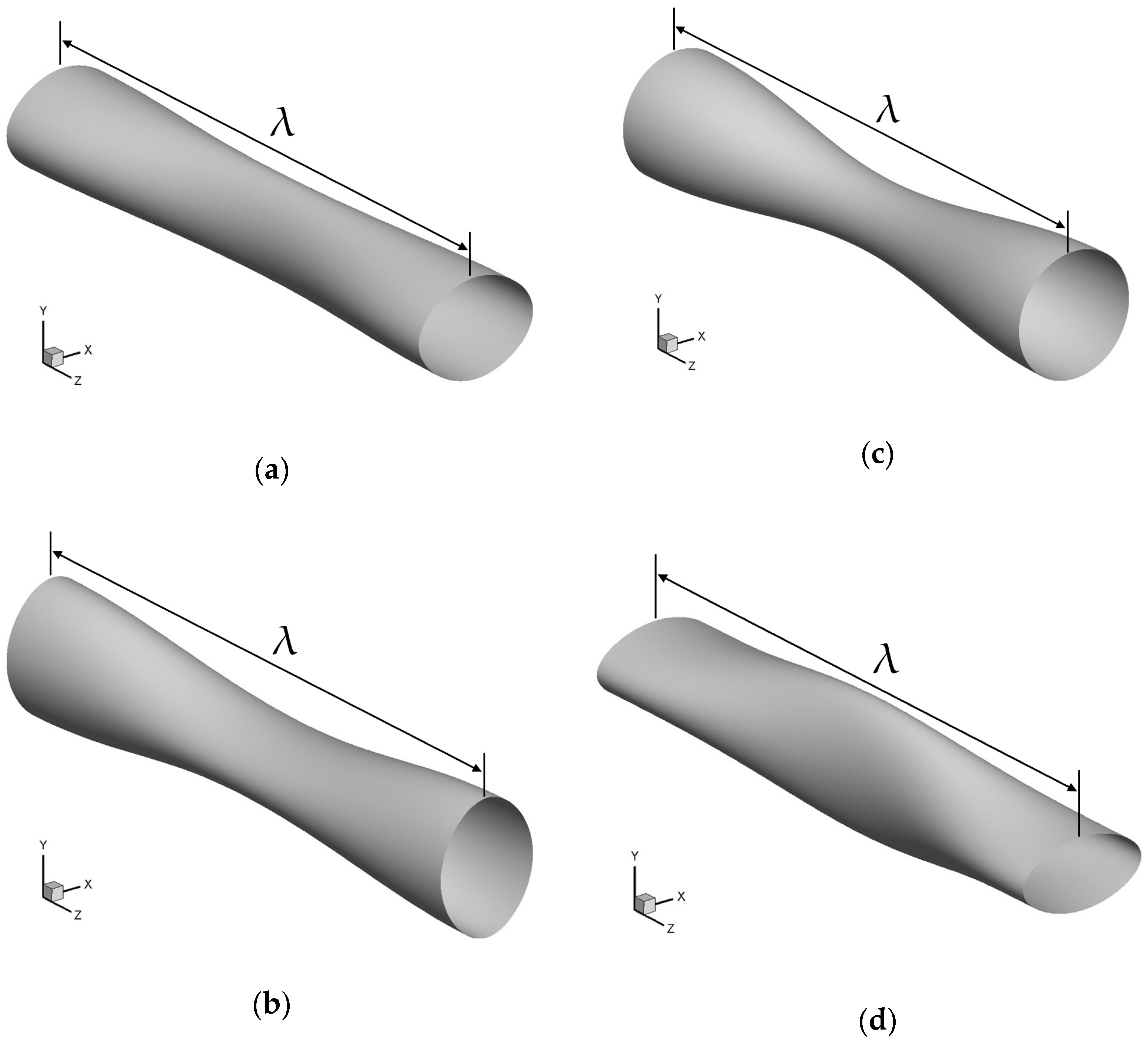
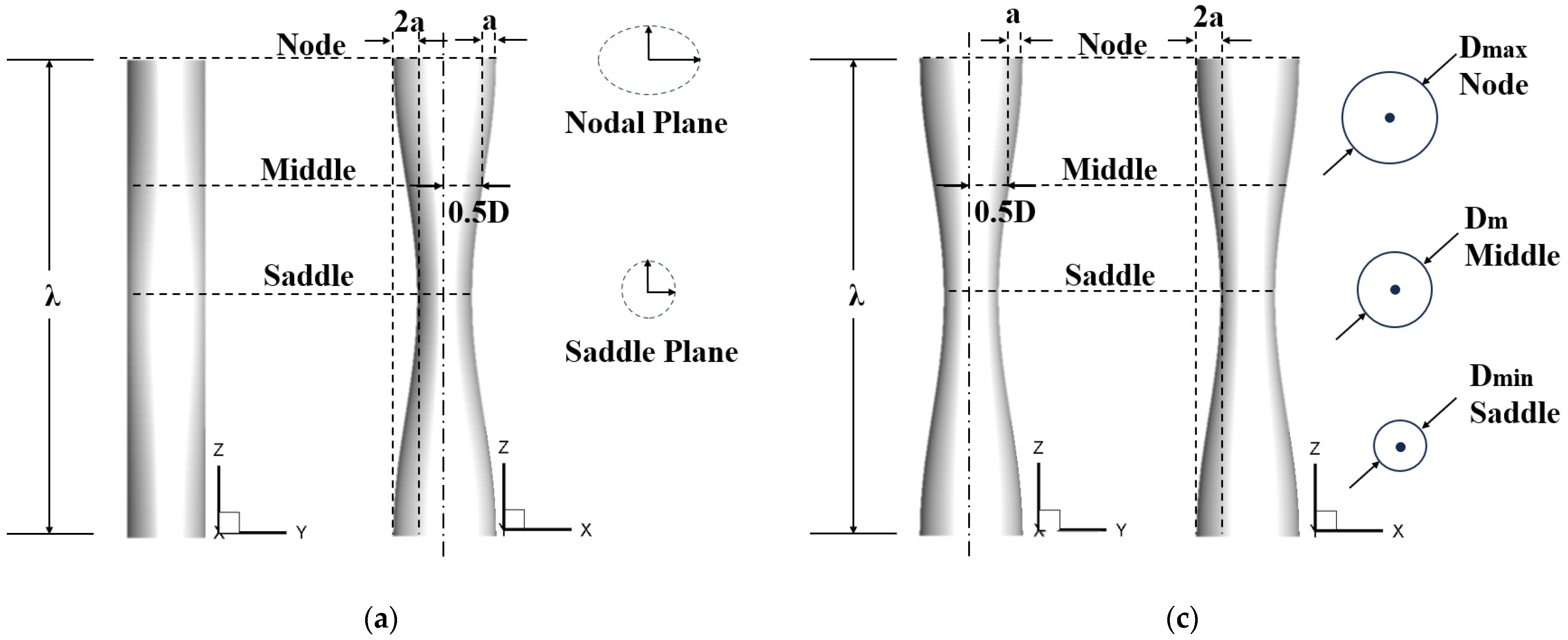
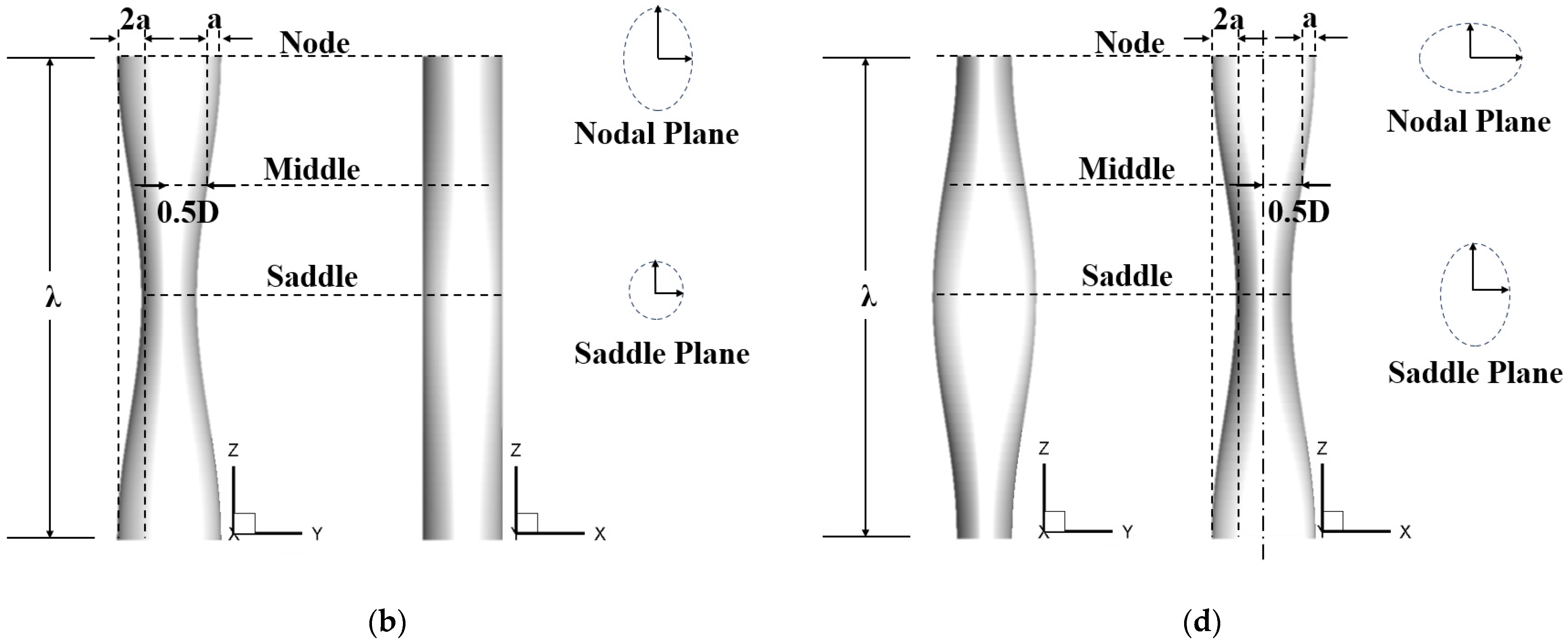
From a review of previous studies, it is found that there is no dedicated study that takes into account the specific types of undulated geometry disturbance to find the effect of heat transfer characteristics and the correlation between undulation geometries. Thus, four types of undulated cylinders with streamwise undulation (SU), transverse undulation (TU), in-phase undulation (IPU) and antiphase undulation (APU) are considered in this study to classify the undulation-axis effect on the wake of flow and the reduction in force coefficients.
The main objective of this study is to confirm whether a geometrical modification of wavy cylinders can well explained the structure of heat transfer around these wavy cylinders. Particularly, it is noted that the motivation for conducting this study is to clarify the thermal and heat transfer characteristics of the proposed undulated cylinders and to identify the correlation among the undulated cylinders with SU, TU, IPU and APU, even though the wavelength (λ) and amplitude (a) of each type are randomly selected and applied, with the combination of λ/Dm = 2.273 and a/Dm = 0.091 being considered as Case 1, while the combination of λ/Dm = 6.06 and a/Dm = 0.152 is considered as Case 2.
3. Results and Discussion
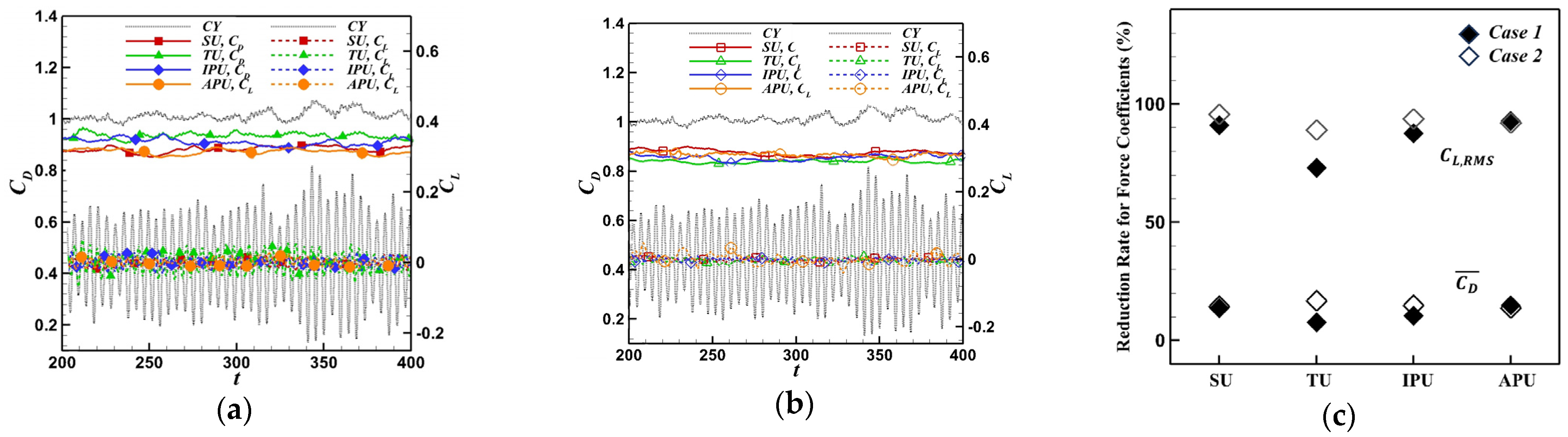
Figure 5a,b show the time histories of
and
f that correspond to Case 1 and Case 2, respectively. For both cases, a smooth cylinder was included to investigate (a)
and
for Case 1 and (b)
and
for Case 2 as an objective of the comparison basis. In addition, for a quantitative comparison of the force coefficients, the reduction rates of
and
of the undulated cylinders compared to those of a smooth cylinder are described in
Figure 5c. The reduction rates of
and
are defined as
and
/
, respectively, where
=
−
,
=
−
and the subscript of CY stands for a smooth cylinder.
For
in Case 1, the APU cylinder provides the smallest value among the different undulated cylinders, as shown in
Figure 5a. The APU cylinder presents the largest reduction rate of
at 14.8%, as shown in
Figure 5c. Otherwise, the TU cylinder achieves the largest value of
, resulting in the smallest reduction rate of 7.6% for
. The values of
for the SU and IPU cylinders are in between those of the APU and TU cylinders, as shown in
Figure 5a. The SU cylinder shows the second lowest value of
, leading to a 13.5% reduction rate of
as shown in
Figure 5c.
For
in Case 1, the APU cylinder also provides the smallest value among the various types of undulated cylinders, as described in
Figure 5a. Therefore, the APU cylinder presents the largest reduction rate of
at 92.9%, as shown in
Figure 5c. On the other hand, the TU cylinder also represents the largest value of
, resulting in the smallest reduction rate of 72.9% for
. The values of
for the SU and IPU cylinders are in between those of the APU and TU cylinders, as shown in
Figure 5a. The SU cylinder’s
is ranked as the second lowest value, resulting in a 91% reduction rate of
as shown in
Figure 5c.
For
in Case 2, the TU cylinder exhibits the smallest value among the different undulated cylinders, as illustrated in
Figure 5b, leading to the largest reduction rate of
at 16.8%, as shown in
Figure 5c, whereas the APU cylinder shows the largest value of
, resulting in the smallest reduction rate of 13.9% for
. The values of
for the SU and TU cylinders are in the middle of those of the TU and APU cylinders, as shown in
Figure 5b. The IPU cylinder shows the second lowest value of
, leading to a 14.9% reduction rate of
as shown in
Figure 5c.
For
in Case 2, the SU cylinder provides the smallest value among the different undulated cylinders, as described in
Figure 5b. Thus, the SU cylinder shows the largest reduction rate of
at 95.6%, as shown in
Figure 5c. By contrast, the TU cylinder presents the largest value of
, resulting in the smallest reduction rate of 89.1% for
. The values of
for the IPU and APU cylinders are in the middle of those of the SU and TU cylinders, as shown in
Figure 5b. The APU cylinder’s
is ranked as the second lowest value, leading to a 92% reduction rate of
, as shown in
Figure 5c.
The TU and IPU cylinders are significantly influenced by the wavelength and wave amplitude, with the reduction rates of force coefficients being the smallest in Case 1 and the drag reduction being the largest in Case 2. On the other hand, the SU and APU cylinders in this study are not strongly affected by the considered combinations of wavelength and wave amplitude.
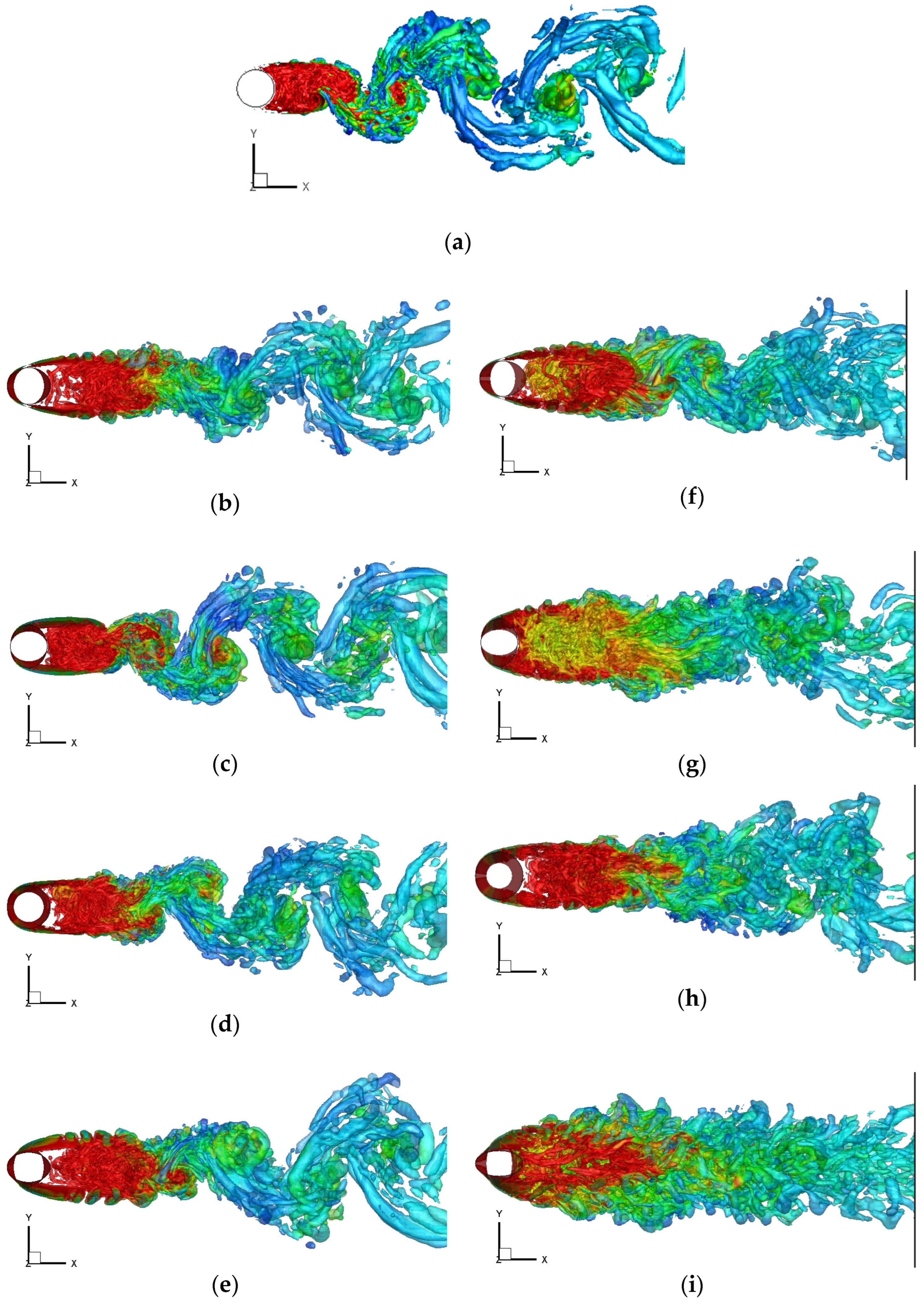
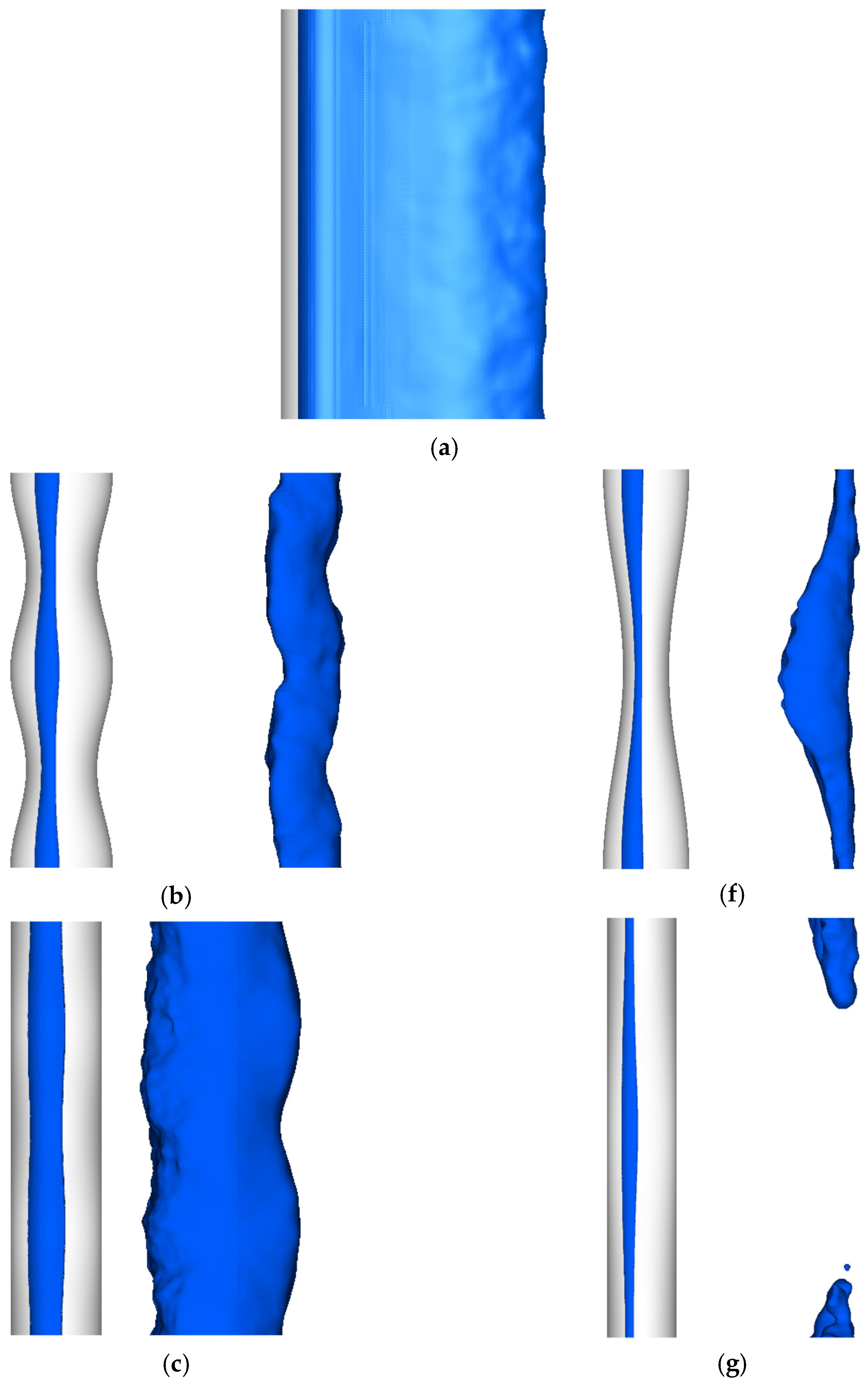
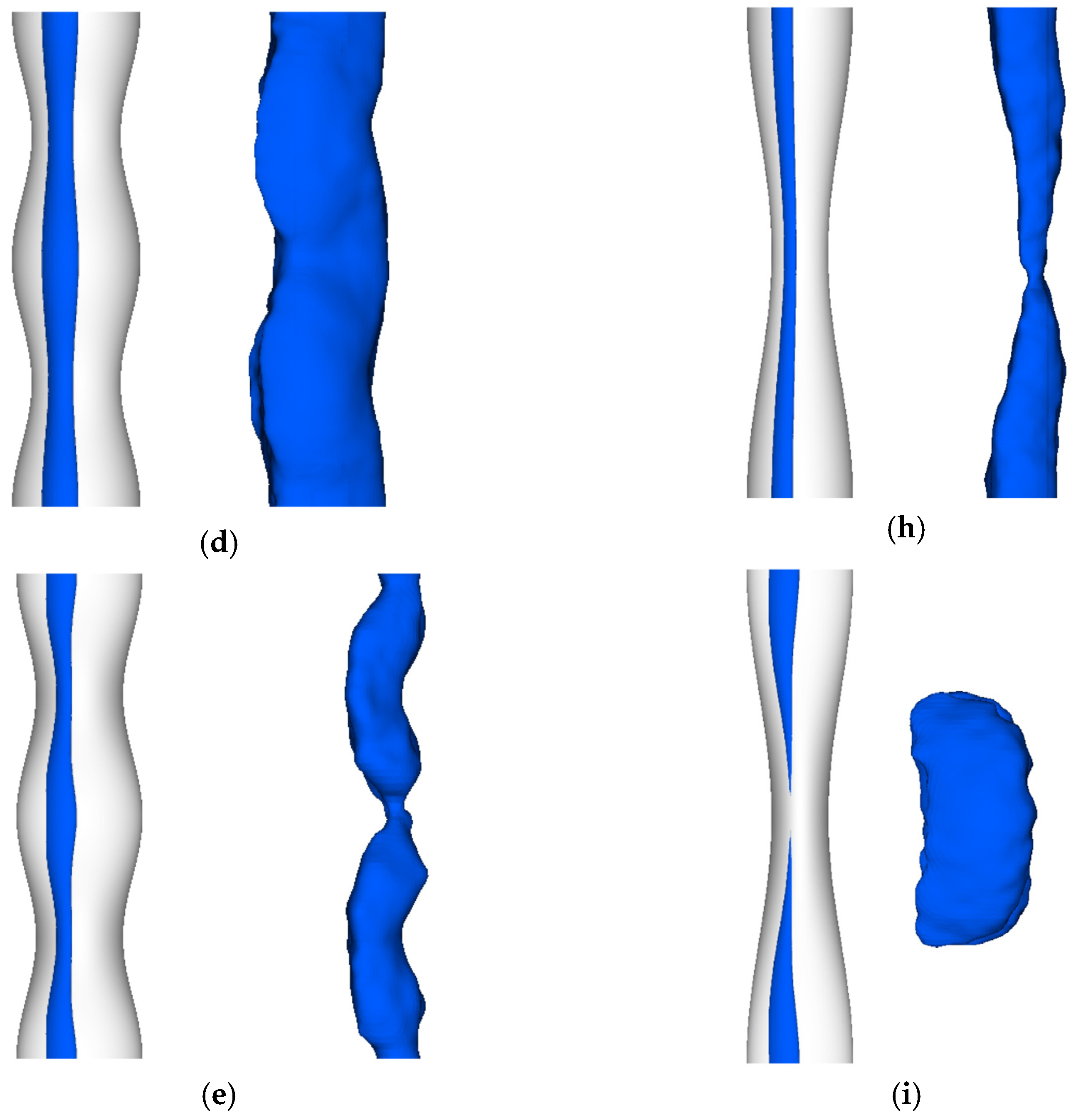
Figure 6 shows the 3D vortical structures as visualized through the utilization of the methodology proposed by Zhou et al. [
31]. Apart from the types of undulation, a smooth cylinder is also included as (a) CY in
Figure 6 for comparison. The vortical structures are identified by the negative of
, which is the second largest eigenvalue of
, where
and
are the strain-rate and rotation-rate tensors, respectively. To analyze the impact of flow structures on the thermal field, temperature contours were overlaid onto the vortical structures.
It is clearly depicted in
Figure 6a–e that the CY, SU, TU, IPU and APU cylinders in Case 1 show a clear visualization of Kármán vortices in the wake region. On the other hand, the corresponding undulated cylinders in Case 2 cause a further delay in the vortex roll-up and a greater suppression of vortex shedding than those in Case 1, as shown in
Figure 6a–e. Therefore, in general, the SU, TU, IPU cylinders in Case 2 contribute to a greater reduction in
and
fluctuations than those in Case 1.
More specifically, for Case 1, the vortical structure of the TU cylinder in
Figure 6c shows that vortex shedding occurs relatively early in the near-wake region, which is strongly associated with and is supported by the highest values of
and
as shown in
Figure 5a, corresponding to the lowest values for the reduction rates of
and
shown in
Figure 5c.
The vortical structure of the APU cylinder in
Figure 6e shows that the shear layer is further elongated and vortex shedding is more delayed, compared to the other undulated cylinders. These features of the wake structure are associated with the smallest values of force coefficients, which result in the largest reduction rates of
and
, as already observed in
Figure 5a,c, respectively.
In addition, the TU cylinder has the smallest zero-vorticity area, but the APU cylinder presents the largest area of zero vorticity, as shown in
Figure 6c,e, respectively, which also support the smallest and largest reduction rates of force coefficients of the TU and APU cylinders seen in
Figure 5a,c.
For Case 2, the SU cylinder forms the earliest rolling-up and vortex shedding among the undulated cylinders, as shown in
Figure 6f, which supports the largest value of
seen in
Figure 5b. The TU cylinder in
Figure 6g shows a weaker shear-layer elongation among the undulated cylinders in Case 2, which supports the largest value of
seen in
Figure 5b.
The APU cylinder in
Figure 6i presents the bluffiest near wake and an almost disappearance of vortex shedding, which support the lowest values of
and
seen in
Figure 5b. From the perspective of vorticity near each cylinder, the SU cylinder presents a wide area of zero vorticity, as shown in
Figure 6f, which supports the reduction rates of
and
seen in
Figure 5b,c.
Figure 7 presents the Cp contours in the x-z plane for all the undulated cylinders. A wide and close Cp distribution along a cylinder represents high values of
, for instance, (c) the TU cylinder in Case 1 and the (f) SU and (i) APU cylinders in Case 2 in
Figure 7, which is confirmed by (a) the
values for Case 1 and (b) the
values for Case 2 seen in
Figure 5. A narrow and far Cp distribution along a cylinder shows low values of
, for example, (e) the APU cylinder in Case 1 and (g) the TU cylinder in Case 2 in
Figure 7, which is also well matched with (a) the
values for Case 1 and (b) the
values for Case 2 seen in
Figure 5.
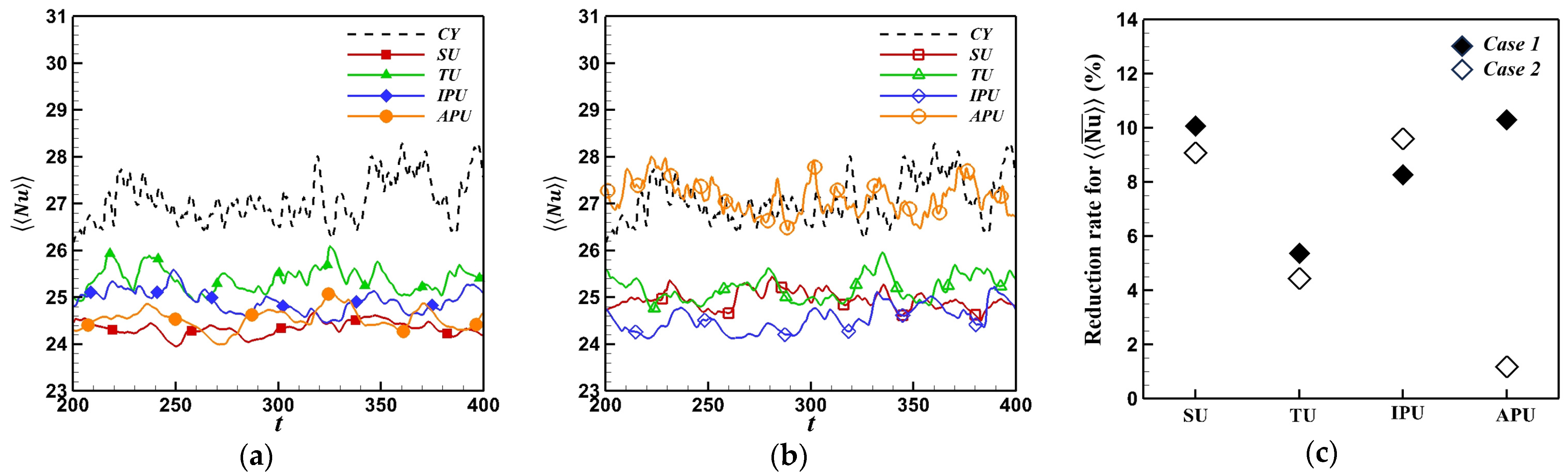
Figure 8 shows the time histories of the total surface-averaged Nusselt number for Case 1 and Case 2, respectively. It is evident in
Figure 8a,b that for Case 1 and Case 2, the values of
for the undulated cylinders are smaller than those for the smooth cylinder.
Among the undulated cylinders in Case 1, the TU cylinder has the largest value and the IPU cylinder has the next highest value of . The SU and APU cylinders reveal almost the same values of that are in between those of the TU and IPU cylinders.
For Case 2 in
Figure 8b, the APU cylinder presents a plot of
with the highest values over the entire time. The
s of the TU, SU and IPU cylinders are ranked next in order, but there is a big discrepancy between the APU cylinder and the other undulated cylinders.
The reduction rates of the time- and total surface-averaged Nusselt number (
) for the undulated cylinders in Case 1 and Case 2 are presented in
Figure 8c. The reduction rate of
is defined as
, where
=
−
, and the subscript of CY stands for a smooth cylinder. For Case 1, the APU and SU cylinders accomplish a considerable reduction in
in comparison with the smooth cylinder, as described in
Figure 8c, leading to approximately 10.3% and 10.1% attenuation in
compared to the smooth cylinder, respectively. The IPU cylinder is ranked next, with an 8.3% reduction rate for
. The TU cylinder shows the lowest value of 5.4% in the reduction rate among the cylinders in Case 1.
For Case 2, the TU cylinder still gives a low reduction rate of 4.4%. The s of the IPU and SU cylinders show the highest reduction rate of 9.6% and the second highest rate of 9.1%, respectively, which are comparable to the reductions rates for Case 1. Otherwise, the APU cylinder in Case 2 presents a considerably different to that in Case 1, resulting in the lowest reduction rate of 1.2 for . It is noted that the APU cylinder in Case 2 provides about the same compared to the smooth cylinder. Specifically, there is almost no attenuation in the heat transfer performance in comparison with the smooth cylinder.
In general, a disturbance of geometry in forced convection establishes a connection between the Nusselt number and force coefficients. This correlation prompts a reduction in
and
, which occurs concurrently with a decrease in
. In recent studies, geometric disturbances, such as through the use of a helically twisted elliptic cylinder [
5], a wavy cylinder [
2], an asymmetric wavy cylinder [
3], or a double-wavy cylinder [
4], have been examined for their impact on forced convection. These studies have indicated that a stable near wake is distinguished by a prolonged vortex formation length, a low vorticity, and a regime of zero vorticity. Consequently, an altered wake pattern caused by geometric disturbances plays a role in diminishing the mixing in the near wake, ultimately leading to a reduction in heat transfer.
However, the APU cylinder under the condition of Case 2 gives an inconsistent pattern with regard to the force coefficients and Nusselt number. Regardless of whether it is Case 1 or Case 2, the APU cylinder presents a significant reduction in and . But the APU cylinder reveals almost no reduction in . It means that a proper modification of geometry can achieve a reduction in force coefficients by maintaining the heat transfer performance.
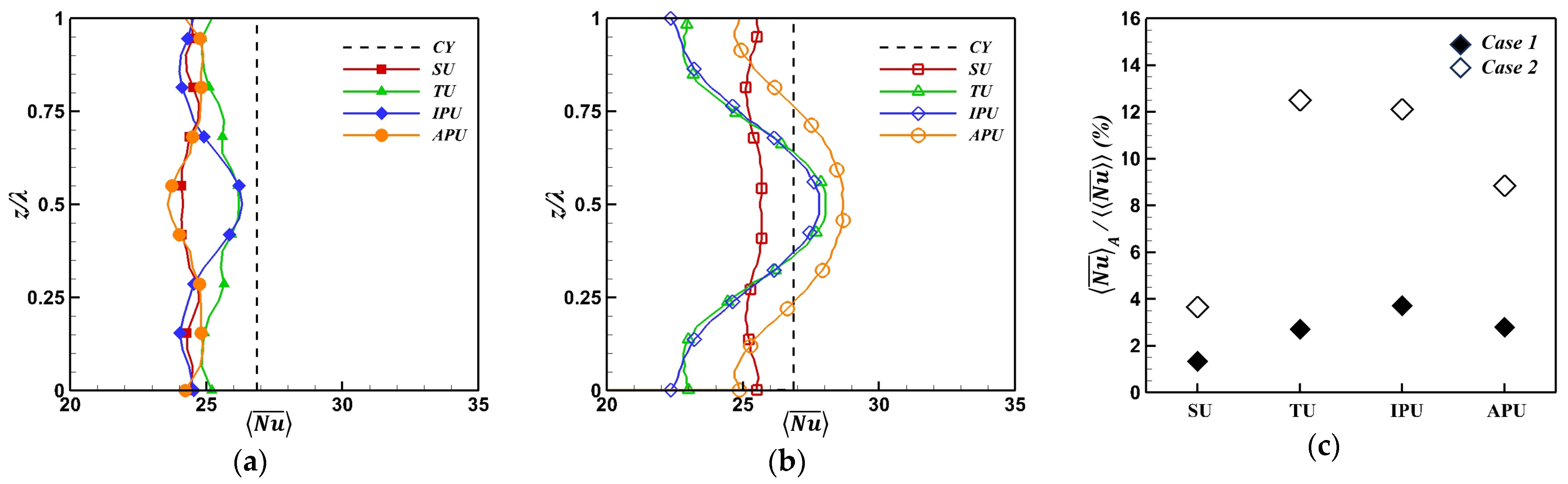
Figure 9a,b present the time- and spanwise local surface-averaged Nusselt number (
along the spanwise direction for the undulated cylinders in Case 1 and Case 2, respectively. In addition, the ratios of the amplitude of
to
) for the undulated cylinders are shown in
Figure 9c, where the amplitude of
is defined as
. The
for the smooth cylinder remains consistent along the spanwise direction due to the statistically homogeneous condition imposed by its two-dimensional geometry.
For Case 1, the values of
along the spanwise direction are smaller than those of the smooth cylinder, as shown in
Figure 9a, which supports that the values of
for all undulated cylinders in Case 1 are smaller than those of the smooth cylinder, as already shown in
Figure 8a,c. In addition, the undulated cylinders in Case 1 reveal a much weaker spanwise dependence of
on the spanwise direction than those in Case 2. Thus, the values of
for all undulated cylinders in Case 1 are smaller than those of the corresponding cylinders in Case 2, as shown in
Figure 9c.
For Case 2, the undulated cylinders provide about the same spanwise variation in . Specifically, as the cross-sectional area’s spanwise location shifts from z/λ = 0 to 0.5, experiences an increase, reaching its peak near z/λ = 0.5. As the position of the cross-sectional area progresses from z/λ = 0.5 to 1, there is a subsequent decrease in .
In contrast to Case 1, the undulated cylinders with TU, IPU and APU in Case 2 give locally larger values of
than the smooth cylinder, as shown in
Figure 9b. Particularly, the APU cylinder forms a wider spanwise range that exhibits larger values of
than the smooth cylinder, as shown in
Figure 9b, and the ratio of the amplitude is also the smallest, as shown in
Figure 9c. As a result, the APU cylinder in Case 2 has the smallest reduction rate of
among the undulated cylinders considered in this study, as already observed in
Figure 8c.
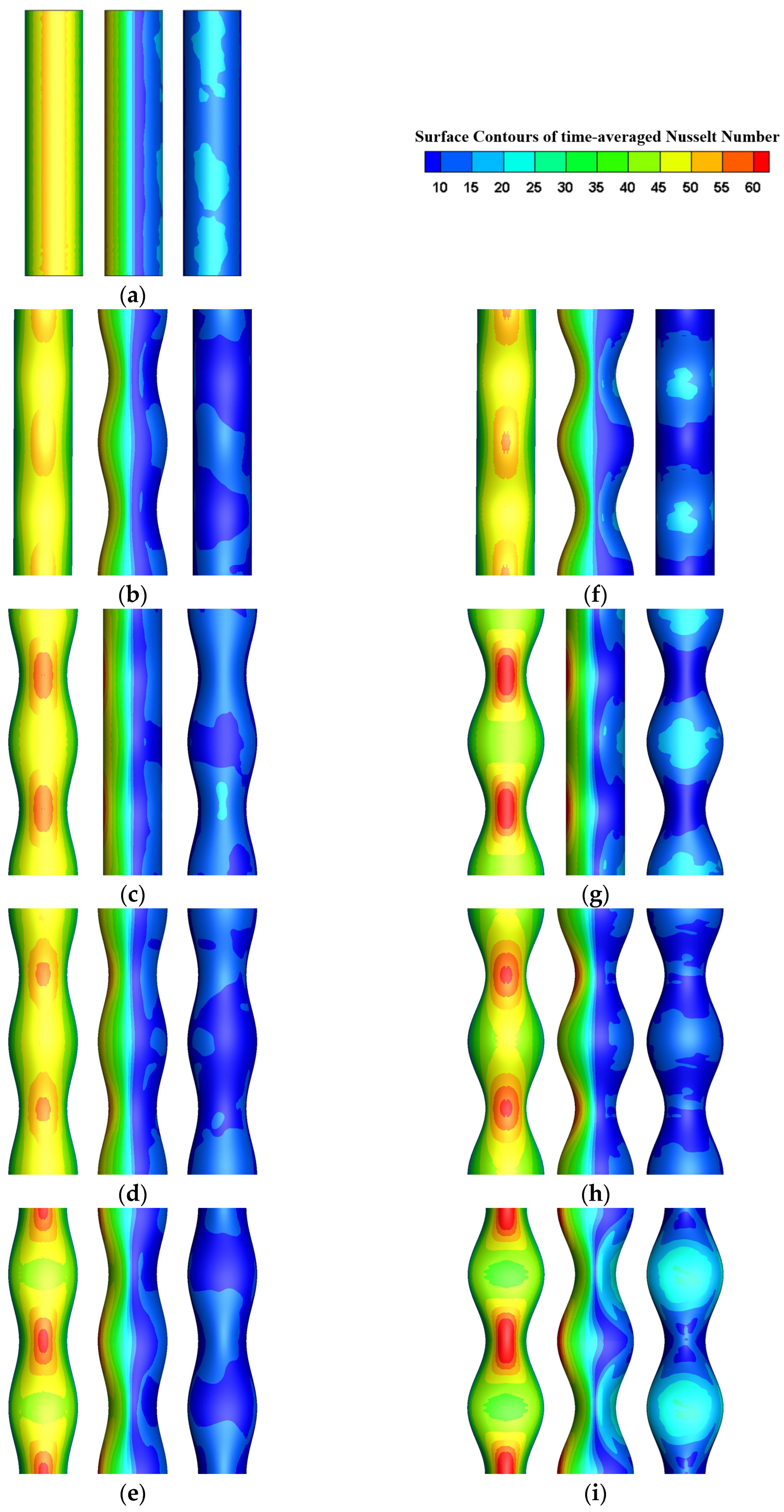
Figure 10 illustrates the distribution of the time-averaged local Nusselt number (
) across the surface from various perspectives for the different undulated cylinders in Case 1 and Case 2. In addition to the various undulation types, a smooth cylinder is also presented in
Figure 10a as CY for the purpose of comparison. This visualization aligns with the spanwise variation in
depicted in
Figure 9a,b. For more information, it is noted that the distribution of the time-averaged local Nusselt number is denoted as 2λ in
Figure 10, whereas the spanwise local Nusselt number is depicted as λ in
Figure 9.
For Case 1,
Figure 10a–e show the front, top and rear views of the 3D contours of
for the CY, SU, TU, IPU and APU cylinders.
From the front view, the SU and APU cylinders form a local maximum of
near the nodal position along the streamwise direction, as shown in
Figure 10b,e, respectively. In contrast, the TU and IPU cylinders form a local maximum of
near the saddle along the transverse direction, as shown in
Figure 9c,d for Case 1, respectively. Particularly, the front view of the SU cylinder exposes a diminished three-dimensional reliance of
on both the spanwise and transverse directions in comparison to other undulated cylinders, which contributes to the weakest variation in
seen in
Figure 9a,c.
From the top view, the SU cylinder shows that the sinusoidal profiles exhibit maximum and minimum deflection points at the nodes and saddles, respectively, as shown in the upstream side in the left half of the top view. Alternatively, for the downstream side, the local maximum and minimum of
emerge near the nodes and saddles, respectively, as shown in
Figure 10b. The TU cylinder shows a nearly 2D distribution of
except for the region near the rear stagnation point, as shown in the middle column of
Figure 10c.
The top view of the upstream side for the IPU cylinder depicts that the surface distribution of
showcases a 3D wavy formation, as illustrated in
Figure 10d. As the spanwise location of the cross-sectional area shifts from z/Dm = 0 to 0.5, the Nu of the IPU cylinder is larger and forms a denser distribution, which clearly explains the larger value of
near the saddle around z/Dm = 0.5, as depicted in
Figure 9a. The APU cylinder forms a more apparent wavy pattern of
compared to the IPU cylinder, not only in the upstream side but also in the downstream side, as illustrated in
Figure 10e.
For Case 2 in
Figure 10f–i, the configurations of
contours for the undulated cylinders are very similar with those for the corresponding undulated cylinders in Case 1. However, the distributions of
in Case 2 are more 3D-dependent than those in Case 1, regardless of the undulation type. In addition, the ranges of
in Case 2 are wider than those of
in Case 1. In particular, the distributions of
on the top and rear surfaces are more locally dependent, leading to the clear identification of the local maximum and minimum positions, as shown in
Figure 10f–i. Therefore, these strong 3D distributions of
in Case 2 cause a larger spanwise variation in
as seen in
Figure 9b,c.
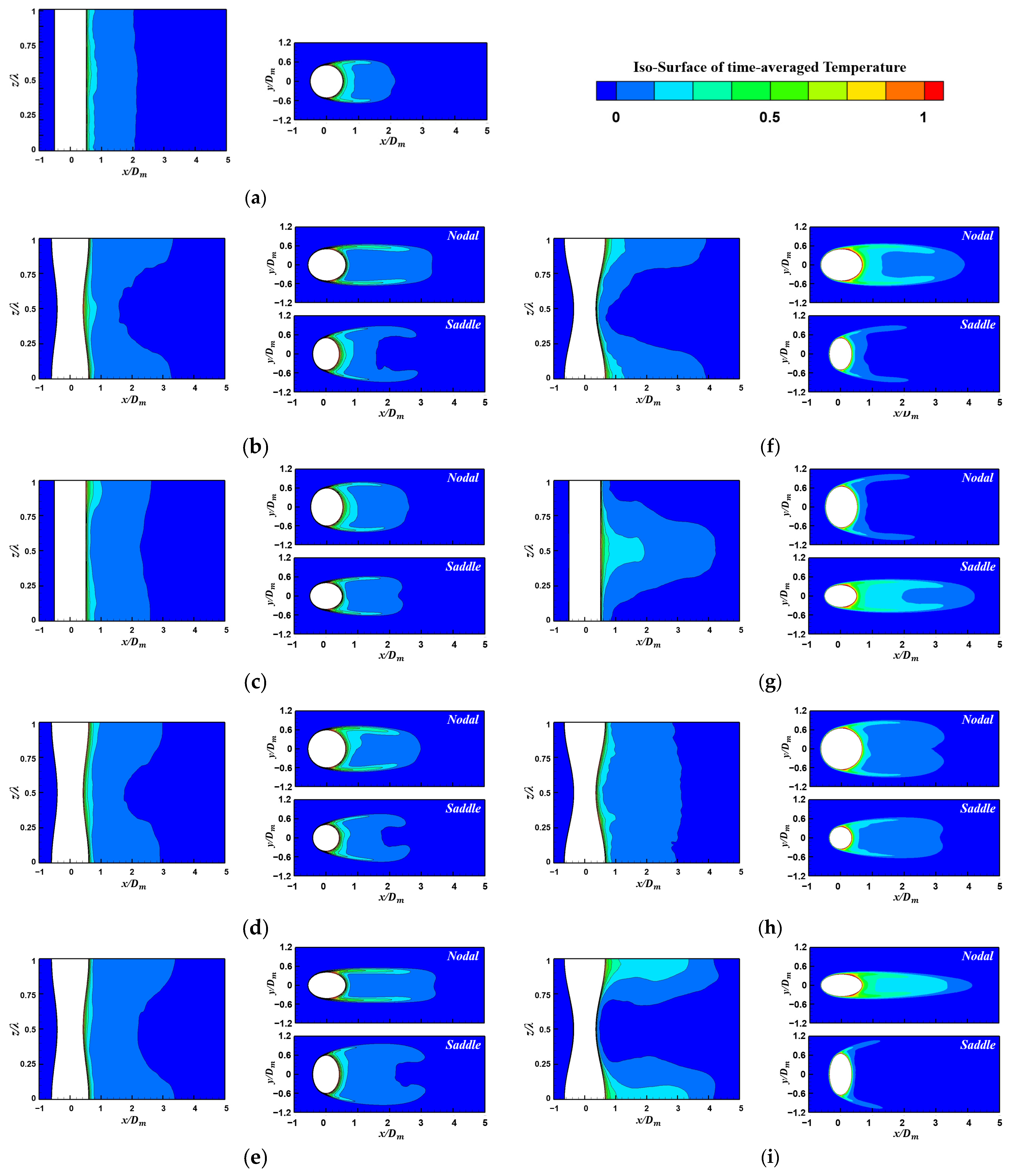
To identify the downstream and rear distributions of
observed in
Figure 10, the mean isotherms in the x-z plane at y = 0.0 and in the x-y plane at the nodes and saddles for the four different undulated cylinders are presented in
Figure 11. In addition to the various undulated cylinders, a smooth cylinder is also featured as (a) CY in
Figure 9 to serve as a basis for comparison. In general, the undulated cylinders in Case 1, as shown in
Figure 11b–e, form a weaker spanwise-dependent thermal boundary layer than those in Case 2, as shown in
Figure 11f–i.
In Case 1, the SU, IPU and APU cylinders form denser and coarser isotherms near the nodes and saddles, respectively, as shown in
Figure 11b,d,e, respectively. Therefore, thinner and thicker thermal boundaries appear near the nodes and saddles on the rear surface in the x-z plan. These local distributions of the isotherms in the x-z plane are consistent with the isothermal distributions in the x-y plane. The isotherms near the rear surface in the nodal plane for these undulated cylinders are much denser than those in the saddle plane, as shown in
Figure 11b,d,e, which explains the alternate appearance of locally large and small values of
near the nodes and saddles, as already depicted in
Figure 10b,d,e.
By contrast, the TU cylinder in Case 1 forms an opposite pattern of isothermal distribution when compared to the SU, IPU and APU cylinders. Specifically, the TU cylinder forms coarser and denser isotherms near the nodes and saddles, respectively, as shown in
Figure 11c, which explains the alternate appearance of locally small and large values of
near the nodes and saddles, as already shown in
Figure 10c.
In Case 2, the undulated cylinders form isotherm patterns opposite to those of the corresponding undulated cylinders in Case 1. Thus, the SU, IPU and APU cylinders form denser and coarser isotherms near the saddles and nodes in the x-z and x-y planes, as shown in
Figure 11f,h,i, respectively. Successively, the TU cylinder forms denser and coarser isotherms near the nodes and saddles, respectively, as shown in
Figure 11g.
Particularly, the APU cylinder in Case 2 causes a much wider region with a very thin isothermal boundary layer compared to the other undulated cylinders, which results in a wider region containing locally large values of
on the real surface, as shown in
Figure 10i. As a result, the
values of the APU cylinder become much larger through the wide region surrounding the saddle than those of the smooth cylinder, as already depicted in
Figure 9b showing the spanwise variation in the local surface-averaged Nusselt number.
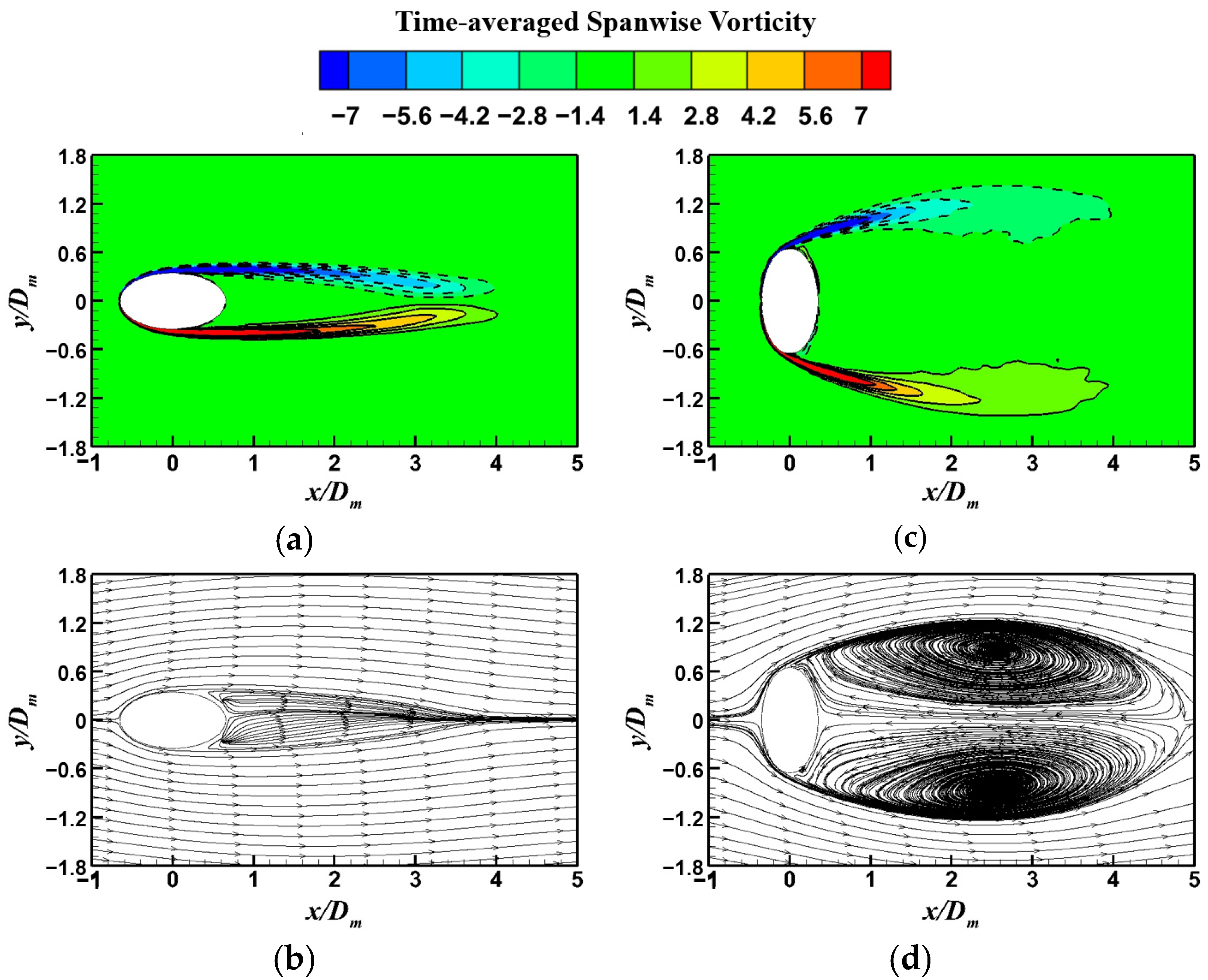
These strong 3D isothermal distributions for the APU cylinder in Case 2 can be associated with the wake flow structures. Thus, the distributions of the spanwise vorticity in the x-y plane at the nodes and the saddles are presented in
Figure 12. The spanwise vorticities in the nodal plane are constrained to a very narrow width, as shown in
Figure 12a. The upper and lower shear layers are very close to each other and are further elongated downstream. The corresponding streamlines within the upper and lower shear layers reveal almost no reverse flow in the nodal plane, as shown in
Figure 12b. Therefore, the isotherms near the nodes are very coarse due to the weak mixing effect, as already observed in
Figure 11i.
Otherwise, a large spanwise vortex pair occurs in the saddle plane, as shown in
Figure 12c,d. Thus, short and wide spanwise vorticities are formed in the wake. These strong revere flows contribute to the mixing effect, which causes the very dense isothermal distribution and corresponding thin thermal boundary layer near the saddle that are previously seen
Figure 11i. As a result, the APU cylinder presents larger
values near the saddle than the smooth cylinder, as already shown in
Figure 9b. Consequently, the APU cylinder in Case 2 provides about the same
values as those of the smooth cylinder, as depicted in
Figure 8 showing the time- and total surface-averaged Nusselt number.