



Exploring Flexibility Potential of Energy-Intensive Industries in Energy Markets



Abstract
1. Introduction
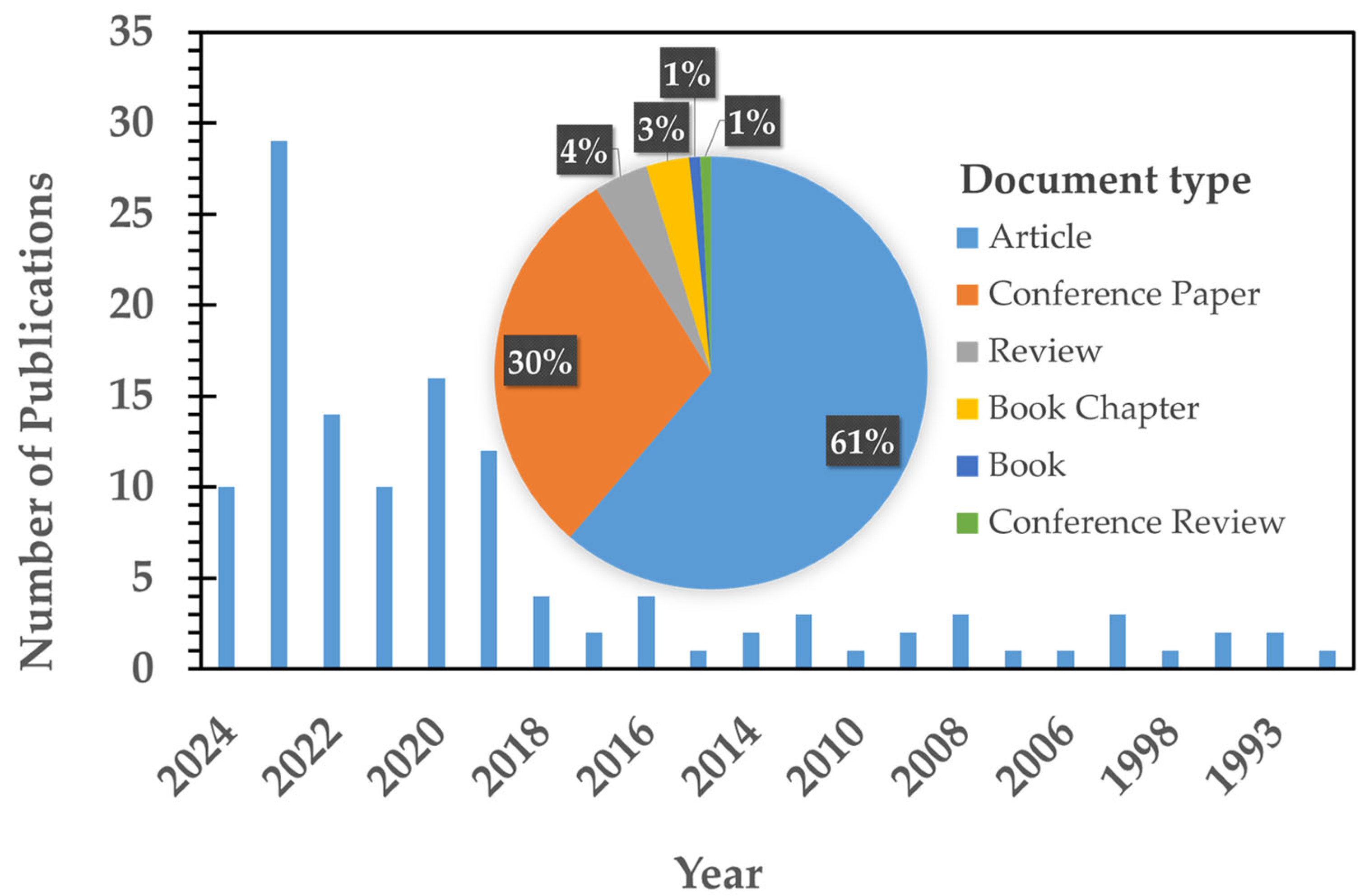
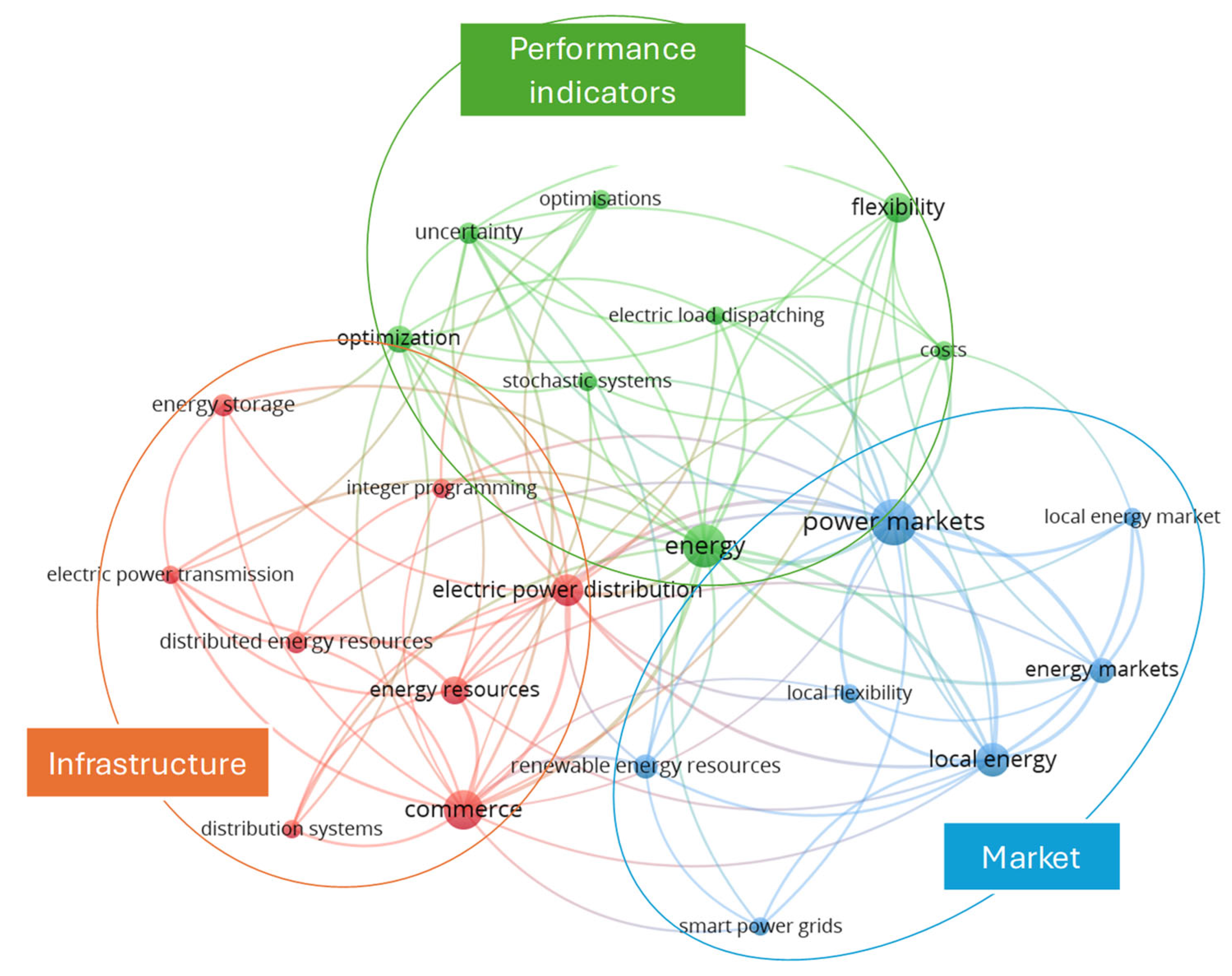
1.1. General Overview; Trends, Literature Mapping, and State-of-the-Art
1.2. Market Overview and Characterization
1.2.1. Electricity-Market Characterization
Resources of Flexibility in Electricity Markets
Flexibility Potential of Commonly Used Technologies in Industries
1.2.2. Natural Gas Market Characterization
1.2.3. District Heating Market Overview
1.3. Objectives and Scope
2. Methodology
2.1. Analysis of Explicit Demand Flexibility Remuneration Mechanisms by Country
2.2. Baseline Characterization: Consumption and Interaction with Energy Market
- electricity consumption [MWh];
- fuel consumption [MWh]: natural gas, gasoil, fuel oil, RDF, biodiesel;
- electric power generation [MWh];
- thermal energy generation [MWh].
2.3. Technological Resources for Implementing Flexibility Measures: Existing and New Technologies
2.4. Determination of Flexibility Potential
3. Results
3.1. Analysis of Explicit Demand Flexibility Remuneration Mechanisms by Country
3.2. Baseline Characterization: Consumption and Interaction with Energy Market
3.3. Technological Resources for Implementing Flexibility Measures: Existing and New Technologies
- Case 1: EII/Country—Paper Mill/Germany
- Case 2: EII/Country—Automotive/Türkiye
- Case 3: EII/Country—Steel/Bulgaria
3.4. Determination of Flexibility Potential
4. Discussion
5. Conclusions
Author Contributions
Funding
Data Availability Statement
Conflicts of Interest
References
- International Renewable Energy Agency. Sector Coupling in Facilitating Integration of Variable Renewable Energy in Cities. 2021. Available online: www.irena.org (accessed on 22 May 2024).
- Rathod, A.A.; Subramanian, B. Scrutiny of Hybrid Renewable Energy Systems for Control, Power Management, Optimization and Sizing: Challenges and Future Possibilities. Sustainability 2022, 14, 16814. [Google Scholar] [CrossRef] [Scilit]
- Zhang, S.; Hu, W.; Du, J.; Bai, C.; Liu, W.; Chen, Z. Low-carbon optimal operation of distributed energy systems in the context of electricity supply restriction and carbon tax policy: A fully decentralized energy dispatch strategy. J. Clean. Prod. 2023, 396, 136511. [Google Scholar] [CrossRef] [Scilit]
- International Renewable Energy Agency. Power System Flexibility for the Energy Transition, Part. 1: Overview for Policy Makers. 2018. Available online: www.irena.org (accessed on 28 May 2024).
- Cuce, E.; Harjunowibowo, D.; Cuce, P.M. Renewable and sustainable energy saving strategies for greenhouse systems: A comprehensive review. Renew. Sustain. Energy Rev. 2016, 64, 34–59. [Google Scholar] [CrossRef] [Scilit]
- Mselle, B.D.; Zsembinszki, G.; Borri, E.; Vérez, D.; Cabeza, L.F. Trends and future perspectives on the integration of phase change materials in heat exchangers. J. Energy Storage 2021, 38, 102544. [Google Scholar] [CrossRef] [Scilit]
- Khatami, R.; Parvania, M. Stochastic Multi-Fidelity Scheduling of Flexibility Reserve for Energy Storage. IEEE Trans. Sustain. Energy 2020, 11, 1438–1450. [Google Scholar] [CrossRef] [Scilit]
- Antoniadou-Plytaria, K.; Steen, D.; Tuan, L.A.; Carlson, O.; Mohandes, B.; Ghazvini, M.A.F. Scenario-Based Stochastic Optimization for Energy and Flexibility Dispatch of a Microgrid. IEEE Trans. Smart Grid 2022, 13, 3328–3341. [Google Scholar] [CrossRef] [Scilit]
- Hamrahi, M.; Mallaki, M.; Pirkolachahi, N.M.; Shirazi, N.C. Flexibility Pricing of Grid-Connected Energy Hubs in the Presence of Uncertain Energy Resources. Int. J. Energy Res. 2023, 2023, 6798904. [Google Scholar] [CrossRef] [Scilit]
- Kermani, A.Y.; Abdollahi, A.; Rashidinejad, M. Cyber-secure energy and flexibility scheduling of interconnected local energy networks with introducing an XGBoost-assisted false data detection and correction method. Int. J. Electr. Power Energy Syst. 2024, 155, 109683. [Google Scholar] [CrossRef] [Scilit]
- Reijnders, V.M.J.J.; van der Laan, M.D.; Dijkstra, R. Energy communities: A Dutch case study. In Behind and Beyond the Meter; Academic Press: Cambridge, MA, USA, 2020. [Google Scholar] [CrossRef] [Scilit]
- Hua, W.; Xiao, H.; Pei, W.; Chiu, W.-Y.; Jiang, J.; Sun, H.; Matthews, P. Transactive Energy and Flexibility Provision in Multi-microgrids Using Stackelberg Game. CSEE J. Power Energy Syst. 2023, 9, 505–515. [Google Scholar] [CrossRef] [Scilit]
- Talaeizadeh, V.; Shayanfar, H.; Aghaei, J. Prioritization of transmission and distribution system operator collaboration for improved flexibility provision in energy markets. Int. J. Electr. Power Energy Syst. 2023, 154, 109386. [Google Scholar] [CrossRef] [Scilit]
- Kirli, D.; Couraud, B.; Robu, V.; Salgado-Bravo, M.; Norbu, S.; Andoni, M.; Antonopoulos, I.; Negrete-Pincetic, M.; Flynn, D.; Kiprakis, A. Smart contracts in energy systems: A systematic review of fundamental approaches and implementations. Renew. Sustain. Energy Rev. 2022, 158, 112013. [Google Scholar] [CrossRef] [Scilit]
- Khojasteh, M.; Faria, P.; Lezama, F.; Vale, Z. A novel adaptive robust model for scheduling distributed energy resources in local electricity and flexibility markets. Appl. Energy 2023, 342, 121144. [Google Scholar] [CrossRef] [Scilit]
- Mufaris, M.; Baba, J. Voltage rise mitigation by use of customer-owned controllable load in distribution system with large penetration of photovoltaic systems. IEEJ Trans. Power Energy 2016, 136, 87–97. [Google Scholar] [CrossRef] [Scilit]
- European Council. Energy Price Rise Since 2021. Available online: https://www.consilium.europa.eu/en/infographics/energy-prices-2021/ (accessed on 18 July 2023).
- Eurostat. Electricity Prices for Non-Household Consumers—bi-Annual Data (from 2007 Onwards). Available online: https://ec.europa.eu/eurostat/databrowser/product/page/NRG_PC_205 (accessed on 23 February 2023).
- Hou, Q.; Zhang, N.; Du, E.; Miao, M.; Peng, F.; Kang, C. Probabilistic duck curve in high PV penetration power system: Concept, modeling, and empirical analysis in China. Appl. Energy 2019, 242, 205–215. [Google Scholar] [CrossRef] [Scilit]
- Witkowski, K.; Haering, P.; Seidelt, S.; Pini, N. Role of thermal technologies for enhancing flexibility in multi-energy systems through sector coupling: Technical suitability and expected developments. IET Energy Syst. Integr. 2020, 2, 69–79. [Google Scholar] [CrossRef] [Scilit]
- Meiers, J.; Frey, G. A Case Study of the Use of Smart EV Charging for Peak Shaving in Local Area Grids. Energies 2023, 17, 47. [Google Scholar] [CrossRef] [Scilit]
- Magni, C.; Peeters, R.; Quoilin, S.; Arteconi, A. Assessing the Flexibility Potential of Industrial Heat–Electricity Sector Coupling through High-Temperature Heat Pumps: The Case Study of Belgium. Energies 2024, 17, 541. [Google Scholar] [CrossRef] [Scilit]
- Bahloul, M.; Majumdar, A.; Daoud, M.; Khadem, S. Energy Storage System: A Potential ‘Flexibility Resources’ to Accelerate the Decarbonisation of Smart Grid Network. In Proceedings of the 12th Mediterranean Conference on Power Generation, Transmission, Distribution and Energy Conversion (MEDPOWER 2020), Paphos, Cyprus, 9–12 November 2020; Institution of Engineering and Technology: London, UK, 2021; pp. 14–20. [Google Scholar] [CrossRef] [Scilit]
- Dimitriadis, C.N.; Tsimopoulos, E.G.; Georgiadis, M.C. Optimal bidding strategy of a gas-fired power plant in interdependent low-carbon electricity and natural gas markets. Energy 2023, 277, 127710. [Google Scholar] [CrossRef] [Scilit]
- EuroHeat & Power. DHC Market Outlook Insights & Trends. 2023. Available online: https://www.cogenworld.org/wp-content/uploads/2023/11/CWT05_081123_Dr_Andrej_Jentsch_IEA-DHC.pdf (accessed on 21 February 2023).
- smartEn and DNV. Demand-Side Flexibility: Quantification of Benefits in the EU. 2022. Available online: https://www.dnv.com/publications/demand-side-flexibility-quantification-of-benefits-in-the-eu-232342/#:~:text=smartEn%20%E2%80%93%20Smart%20Energy%20Europe%20and,%25%20GHG%20target%20cost%2Defficiently (accessed on 21 February 2023).
- Li, H.; Pye, S. Assessing the benefits of demand-side flexibility in residential and transport sectors from an integrated energy systems perspective. Appl. Energy 2018, 228, 965–979. [Google Scholar] [CrossRef] [Scilit]
- Luo, Z.; Peng, J.; Tan, Y.; Yin, R.; Zou, B.; Hu, M.; Yan, J. A novel forecast-based operation strategy for residential PV-battery-flexible loads systems considering the flexibility of battery and loads. Energy Convers. Manag. 2023, 278, 116705. [Google Scholar] [CrossRef] [Scilit]
- Stavrakas, V.; Flamos, A. A modular high-resolution demand-side management model to quantify benefits of demand-flexibility in the residential sector. Energy Convers. Manag. 2020, 205, 112339. [Google Scholar] [CrossRef] [Scilit]
- de BRUYN, S.; Jongsma, C.; Kampman, B.; Görlach, B. Energy-Intensive Industries: Challenges and Opportunities in Energy Transition; Policy Department for Economic, Scientific and Quality of Life, Policies Directorate-General for Internal Policies: London, UK, 2020. [Google Scholar]
- Vlachokostas, C.; Papadopoulos, A.; Makris, D.; Alexopoulos, S.; Schruefer, J.; Hoegemann, D. Techno-economic assessment of a high temperature thermal storage integration into a sludge drying process in combination with PV electricity. In Proceedings of the 18th International Conference on Environmental Science and Technology, Athens, Greece, 30 August–2 September 2023; p. 30. [Google Scholar] [CrossRef] [Scilit]
- ENTSO-e. European Network of Transmission System Operators for Electricity DSR Market Design for Demand Side Response. 2015. Available online: https://www.entsoe.eu/2015/11/27/policy_paper_on_market_design_for_demand_side_response/ (accessed on 21 February 2023).
- Ministry of Energy and Ministry of the Environment and Water. Integrated Energy and Climate Plan of the Republic of Bulgaria 2021–2030 Republic of Bulgaria; Ministry of Energy and Ministry of the Environment and Water: Addis Ababa, Ethiopia, 2021.
- smartEn. The Implementation of the Electricity Market Design to Drive Demand-Side Flexibility. smartEn Monitoring Report. 2022. Available online: https://smarten.eu/wp-content/uploads/2022/03/The_implementation_of_the_Electricity_Market_Design_2022_DIGITAL.pdf (accessed on 21 February 2023).
- European Comission. Greece New Transitory Electricity Flexibility Remuneration Mechanism (TFRM); European Comission: Brussels, Belgium, 2018. [Google Scholar]
- Simoglou, C.K.; Biskas, N. Capacity Mechanisms in Europe and the US: A Comparative Analysis and a Real-Life Application for Greece. Energies 2023, 16, 982. [Google Scholar] [CrossRef] [Scilit]
- Ministry of Climate. Polish Implementation Plan; Ministry of Climate: Warsaw, Poland, 2020; pp. 35–64. Available online: https://unfccc.int/sites/default/files/resource/BR4%20POLAND.pdf (accessed on 21 February 2023).

| Energy Generation | Storage | Load Manageability |
|---|---|---|
| Installed Capacity [kW] | Storage Technology | Specific characteristics of processes and loads to be considered for participation in demand-side management. |
| Associated Energy Flow | Energy Storage Capacity [kWh] | Working Cycle |
| Annual Energy Generation [MWh] | Power Transfer Capacity [kW] | Decision Intervals |
| Energy Self-Consumption [%] | Operating condition: Charging/Discharging Process | Consumption Patterns |
| Sold to the grid. [%] | Idle Energy |
| Country | Capacity Mechanism | Interruptible Loads | ||
|---|---|---|---|---|
| Characteristics | Retribution | Characteristics | Retribution | |
| Bulgaria | DSR is remunerated through the wholesale market. There are programs for prosumers that can supply 5 MW to participate in programs such as Replacement Reserve (RR), Frequency Containment Reserves (FCR), and Frequency Restoration Reserves (FRR). There are no specific retribution mechanisms in terms of capacity and interruptibility scheme [33]. | |||
| Germany | Procurement methods vary regarding technology. Capacity reserve is procured in periods of 24 months. Industries interested in participating in this mechanism may not have participated in balancing market for the last three years. | Availability payments of EUR 68,000/MW per year [34]. | Required time response is 15 min for quickly interruptible loads and 350 Ms for immediately interruptible loads. Industries interested in participating may have availability of 120 quarter-hour blocks in one week. | EUR 500/MW per week capacity price and EUR 400/MWh in case of activation. |
| Greece | Transitory Remuneration Flexibility Mechanism (TRFM) was used until 2021 [35]. Permanent Capacity Remuneration Mechanism is being evaluated. Capacity minimum required is 1 MW. It requires a ramp of at least 8 MW/min and for response to be maintained for at least three hours [36]. | Pay-as-bid auctions. Average remuneration in 2020 was EUR 33,818.41/MW [35]. | Frequency of procurement was every three months and pay-as-cleared auctions. Interruptible contracts impose a minimum bid size of 2 MW. Two types of interruptible loads: Type 1. Reaction time: 5 min/Maximum duration: 48 h and 288 h per year. Type 2. Reaction time: 1 min/Maximum duration: 1 h and 36 h per year. | Average// Type 1: EUR 63,775/MW year. Type 2: EUR 44,912.5/MW year. |
| Italy | DSR is remunerated through the wholesale market. Industries do not receive direct capacity payments; the participation is rewarded in partial exemptions from the adequacy fees that customers should otherwise pay to the TSO. | Existing and new production units receive a premium equal to the lower value between the declared marginal price and their respective cap price. | Procurement through pay-as-cleared auctions. Loads above 1 MW can participate [34]. Ability to be interrupted by TSO within 200 ms. | Average. EUR 80,000/MW-year. Interruptible contracts pay per disconnection based on the spot price. |
| Poland | Minimum capacity is 2 MW but no more than 50 MW [37]. | The main auction for delivery year 2021 cleared at PLN 240.32/kW-year, while the additional auction for the same year cleared at PLN 286.01/kW-year | Minimum bid size to participate is 1 MW (can be achieved by aggregation). Availability for time response could vary between 30 min to 4 h. | Max prices offered by the contractors varied from PLN 12,900/MWh to PLN 13,121/MWh |
| Türkiye | Demand Side Reserve. Retribution is procured through bids by TSO. Industries interested in participating in this DSF mechanism in Türkiye must have an annual electricity consumption of at least 10 GWh and be connected directly to the transmission network. | Prices are established by TSO. | Minimum bid size to participate is 1 MW (cannot be achieved by aggregation). Consumers must be able to be interrupted in relays of 15 min. | Pay-as-bid auctions. |
| EII/Country | Baseline | Interaction with Energy Market | ||
|---|---|---|---|---|
| Parameter | Quantity | Unit | ||
| Paper mill/Germany | Electricity consumption paper mil | 346,341 | [MWh/year] | Electricity is purchased at a fixed price. In case of energy injection, they participate in balancing market (BM) through a balancing service provider (BSP). Current agreement with BSP establishes a tolerance of variation of electricity generation in terms of 10% per day. |
| Electricity consumption power plant | 44,935 | [MWh/year] | ||
| Fuel-oil consumption (during 2021) | 1144 | [m3/year] | ||
| RDF consumption | 385,200 | [Tn/year] | ||
| Automotive/Türkiye | Total electricity | 184,000 | [MWh/year] | Electricity is purchased in day-ahead and intraday markets. Electricity has fixed price in paint shop, TL 3.57/kWh. It is bought from company in a standard purchasing process. Natural gas price considered is TL 1.879/kWh. Aggregator manages demand strategy. Türkiye System Operator is the main owner of the ancillary services provision. Particular agreement for charging station EVs. |
| Total natural gas | 220,000 | [MWh/year] | ||
| Paint-shop electricity | 90,000 | [MWh/year] | ||
| Paint-shop natural gas | 191,520 | [MWh/year] | ||
| Biofuel/Greece | Total electricity | 900 | [MWh/year] | Electricity has fixed tariff established through a bilateral contract. As generators, they receive a benefit of EUR 225/MWh. The current production capacity is 2.1 MW, but only 2.0 MW are offered to the grid, the monthly energy injected into the grid is about 1440 MWh, obtaining an average of benefits of EUR 3.8 M per year. |
| Biogas production electricity consumption | 410 | [MWh/year] | ||
| Biodiesel production electricity Consumption | 85 | [MWh/year] | ||
| CHP1 auxiliaries electricity consumption | 203 | [MWh/year] | ||
| CHP2 auxiliaries electricity consumption | 203 | [MWh/year] | ||
| Diesel | 120 | [MWh/year] | ||
| Cement/Greece | Total electricity consumption | 100.6 | [GWh/year] | Electricity is purchased by a bilateral contract. It is a monthly based purchase directly from grid operators. |
| Kiln section electricity consumption | 27.8 | [GWh/year] | ||
| Steel/Bulgaria | Total electricity consumption | 479,200 | [MWh/year] | Part of electricity has fixed tariff. Another part is acquired in day-ahead and intraday market. The interaction is directly through a DSO in high voltage. |
| Average total deviation between real and forecasting consumption | 20.4 | [MWh/year] | ||
| Pharmaceutical/Italy | Electricity consumption | 77,700 | [MWh/year] | 50% of electricity is purchased in day-ahead market, so tariffs are fully variable (hourly spot price). The rest of the volume is purchased by a bilateral contract (PPA). Fixed price is different between peak hours and off-peak hours. There is the possibility of fixing slot of energy (at least 1 MW and 1 month). The supplier in this case is chosen by purchase tender. Participation in UVAM project offers power to provide ancillary services, receiving an average benefit of EUR 1456/MW per month. |
| Natural gas consumption | 262,000 | [MWh/year] | ||
| Polymers/Poland | Electricity consumption | 39,400 | [MWh/year] | Bilateral contracts with a fixed tariff that can suffer some changes during the year. The interaction is directly through DSO. |
| Natural gas consumption | 5700 | [MWh/year] | ||
| EII/Country | Technology Action | Installed Power [kWp] | Energy Generated [MWh/year] | Self-Consumption [%] | Sold to the Grid [%] | Constraints to Implement Flexibility |
|---|---|---|---|---|---|---|
| Paper mill/Germany | Steam turbine | 300,000 | 175,500 | 26 | 74 | The minimum load should not affect production; the priority is to ensure the steam supply for the paper mill. |
| Shell boilers | 28,000 | 700 | 100 | 0 | NG prices, % PCM load. Shell boilers cover steam peak demand from paper-mill plant. | |
| PV system | 500 | 500 | 100 | 0 | N/A | |
| Automotive/Türkiye | Solar wall | 5640 | 100 | 0 | Outside solar radiation and temperature. | |
| PV plant | 3680 | 3000 | 100 | 0 | N/A | |
| Biofuel/Greece | CHP | 3696 | 29,568 | 2 | 98 | The priority is biodiesel generation; production of biodiesel depends on the production demand from customers. Limited maximum capacity to interact with the network by regulation. |
| ORC | 150 | 600 | It will be decided considering the market conditions at the moment of the ORC operation. | Electricity generated depends on % of load of ORC which depends on heat generated from CHPs. Limited maximum capacity to interact with the network by regulation. The ORC turbine may react to upward and downward regulation signals from the power grid with ramp rates up to 15–30%/min. | ||
| Cement/Greece | TEG | 250 | 1860 | 100 | 0 | Process continued production. Low conversion efficiency. |
| Pharmaceutical/Italy | Biogas CHP | 576 | 2400 | 0 | 100 | Energy generated is derived from biogas production with process waste, so energy generated depends on schedule and production optimization. |
| Trigeneration system | 12,300 | 91,898 | 97 | 3 | Loads changes must not affect production, it depends on scheduling and production optimization. | |
| PV plant | 500 | 600 | 100 | 0 | Maximum capacity due to surface availability. No storage system associated with this technology. | |
| Heat Pump-Heating | 869.7 | 7018 | 0 | 100 | Availability to inject heating to DH grid. It depends on agreements. | |
| Heat Pump-Cooling | 1486 | 11,986 | 100 | 0 | N/A | |
| EII/Country | Storage Technology | Energy Carrier Used | Energy Storage Capacity [MWh] | Power Transfer Capacity [MW] | Operating Conditions | Constraints |
|---|---|---|---|---|---|---|
| Paper mill/Germany | PCM | Molten salt | 2.23 | 13 | Charging: during time of the paper plant’s normal operation or paper tear-offs. Discharging: thermal energy is used during peak load which occurs after production stops when the paper mill is restarted. | The destination of the thermal energy is defined for internal use in the plant. |
| Automotive/Türkiye | BESS system | Electricity | 0.10 | 0.05 | Charging process: from PV plant production or when prices are low. Discharging process: to charging EVs. | Charging process depends on PV Plant production. |
| Pharmaceutical/Italy | BESS system | Electricity | 0.49 | 0.40 | Charging: when grid prices are low or by CCHP already existing in the plant. Both possible. Discharging: when prices are high or when HP requires. | Charging process depends on CCHP electricity production. |
| Energy Consumption [MWh/year] | Peak Demand [MW] | Time Duration [min] | Operating Conditions | Constraints |
|---|---|---|---|---|
| 700 | 20 | 20 | Possibilities of previous irritations in the paper production | The storage capacity of PCM. Peak demand coverage is the priority. |
| Working Cycle [min] | Nº of Vehicles | Power Required of Charging Station [MW] | Peak Simultaneous Power Demand in 4 Charging Stations [MW] | Simultaneous Demand in 4 Charging Stations [MWh] | Operating Conditions | Constraints to Implement Flexibility |
|---|---|---|---|---|---|---|
| 10 min/vehicle | 5 vehicles per hour | 0.3 | 1.2 | In one hour: 1 | Vehicles consume 25 kWh during 10 min of charging. | It is not possible to interrupt the loading of vehicles once this action starts. There are 4 charging stations, each one capable of charging two vehicles at the same time. |
| 2 min other operations | 320 vehicles per day | In one day: 8 | Vehicles are delivered with 45% of battery according to shipment regulation |
| Process/Load | Working Cycle | Immediate Decision [min] | During Day [min] | Decision for Next Day [h] | Idle [kWh] | Consumption in 15 min Intervals [kWh] during Peak Production | Consumption Hourly [kWh] |
|---|---|---|---|---|---|---|---|
| Electric arc furnace 1-Melting shop | 1 h | 10 | 10 | 1 | 0 | 17,743 | 70,972 |
| Electric arc furnace 3-Melting shop | 1 h | 10 | 10 | 1 | 0 | 12,859 | 51,436 |
| LF1-Melting shop | 1 h | 10 | 10 | 1 | 0 | 16,333 | 65,332 |
| LF2-Melting shop | 1 h | 10 | 10 | 1 | 0 | 9558 | 38,232 |
| VD-Melting shop | 1 h | 0 | 0 | 1 | 0 | 4 | 16 |
| Plate Mill | Continuous | 15 | 60 | 4 | 250 | 580 | 2320 |
| Long Rolling Mill | Continuous | 15 | 60 | 4 | 6 | 32 | 128 |
| EII/Country | Explicit Demand Side Flexibility | Implicit Demand Side Flexibility | ||
|---|---|---|---|---|
| Distributed Generation (Participation in Balancing Market) | Capacity and Power-to-X (Resource-Adequacy Mechanisms) | Load Management (Based on RES Availability or Price Signals) | ||
| Paper mill/Germany | Yes, in case of energy injection. | N/A | Use of sensible heat stored in the PCM or use shell boilers fueled (price-signal based). | |
| Automotive/Türkiye | N/A | PV plant + BESS Systems | Charging station for EVs. Load shifting: 8 MWh-day; Peak shaving: 1.2 MW. | Possibility to integrate BESS system and charging station for EVs. |
| Biofuel/Greece | Upward and downward aFRR/mFRR balancing energy. | Current capacity to offer: 2 MW. Integration of CHP system (3.5 MW) and ORC (0.15 MW). Total potential to offer: 3.65 MW. | N/A | |
| Cement/Greece | Upward and downward aFRR/mFRR balancing energy using TEG system | N/A | N/A | |
| Steel/Bulgaria | N/A | N/A | Load Shifting 228.4 MWh | Use of estimated 228.4 MWh to avoid participating in intraday markets where energy prices may be higher. |
| Pharmaceutical/Italy | Upward and downward aFRR/mFRR balancing energy | Replicate previous participation (UVAM project) offering 10 MW during 4 h/day in a period defined (14:00–20:00 h). | N/A | Thermal energy generation (Heat pumps + CCHP) in DH market. BESS + heat pump charging schedules |
| Polymers/Poland | N/A | N/A | N/A | N/A |
Disclaimer/Publisher’s Note: The statements, opinions and data contained in all publications are solely those of the individual author(s) and contributor(s) and not of MDPI and/or the editor(s). MDPI and/or the editor(s) disclaim responsibility for any injury to people or property resulting from any ideas, methods, instructions or products referred to in the content. |
© 2024 by the authors. Licensee MDPI, Basel, Switzerland. This article is an open access article distributed under the terms and conditions of the Creative Commons Attribution (CC BY) license (https://creativecommons.org/licenses/by/4.0/).
Share and Cite
Luciani, L.; Cruz, J.; Ballestin, V.; Mselle, B.D. Exploring Flexibility Potential of Energy-Intensive Industries in Energy Markets. Energies 2024, 17, 3052. https://doi.org/10.3390/en17123052
Luciani L, Cruz J, Ballestin V, Mselle BD. Exploring Flexibility Potential of Energy-Intensive Industries in Energy Markets. Energies. 2024; 17(12):3052. https://doi.org/10.3390/en17123052
Chicago/Turabian StyleLuciani, Laureana, Juliana Cruz, Victor Ballestin, and Boniface Dominick Mselle. 2024. "Exploring Flexibility Potential of Energy-Intensive Industries in Energy Markets" Energies 17, no. 12: 3052. https://doi.org/10.3390/en17123052
APA StyleLuciani, L., Cruz, J., Ballestin, V., & Mselle, B. D. (2024). Exploring Flexibility Potential of Energy-Intensive Industries in Energy Markets. Energies, 17(12), 3052. https://doi.org/10.3390/en17123052

