


Legal and Political Barriers and Enablers to the Deployment of Marine Renewable Energy

 , and
, and 
Abstract
:1. Introduction
2. Materials and Methods
- EU policies and legislation
- National policies and marine spatial planning
- Administrative and licensing procedures
2.1. Questionnaire Methodology
- Providing an overview on respondents’ past and present experiences interacting with the regulatory framework concerning their project’s deployment, and
- Exploring respondents’ perceptions on what they consider to be key barriers and enablers to ocean energy deployment in the marine governance structure.
2.1.1. Stakeholder Identification
2.1.2. Questionnaire Structure Design
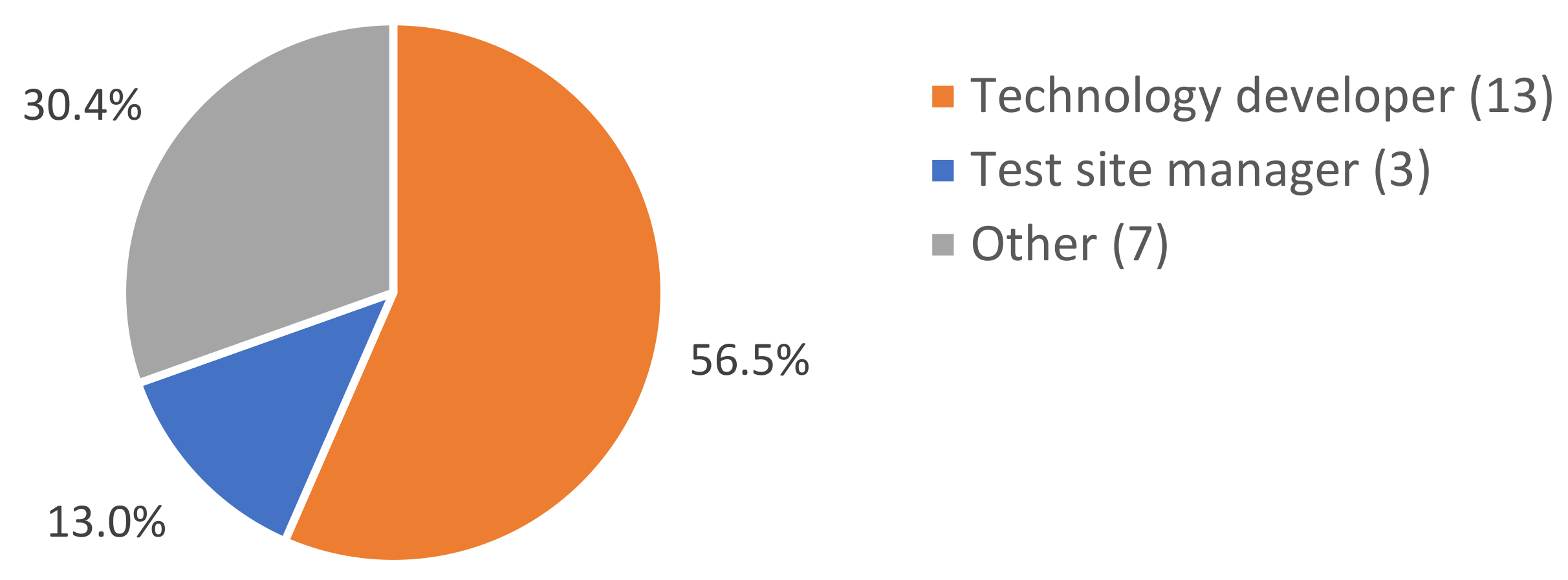
- General respondent information—required information regarding organisation name, role in the organisation, contact and group of stakeholders, latest experiences concerning number of regulators involved, timeline of the consenting process, and number of licenses required. This information aimed at assessing systematic preferences/biases of types of stakeholder characteristics towards certain barriers.
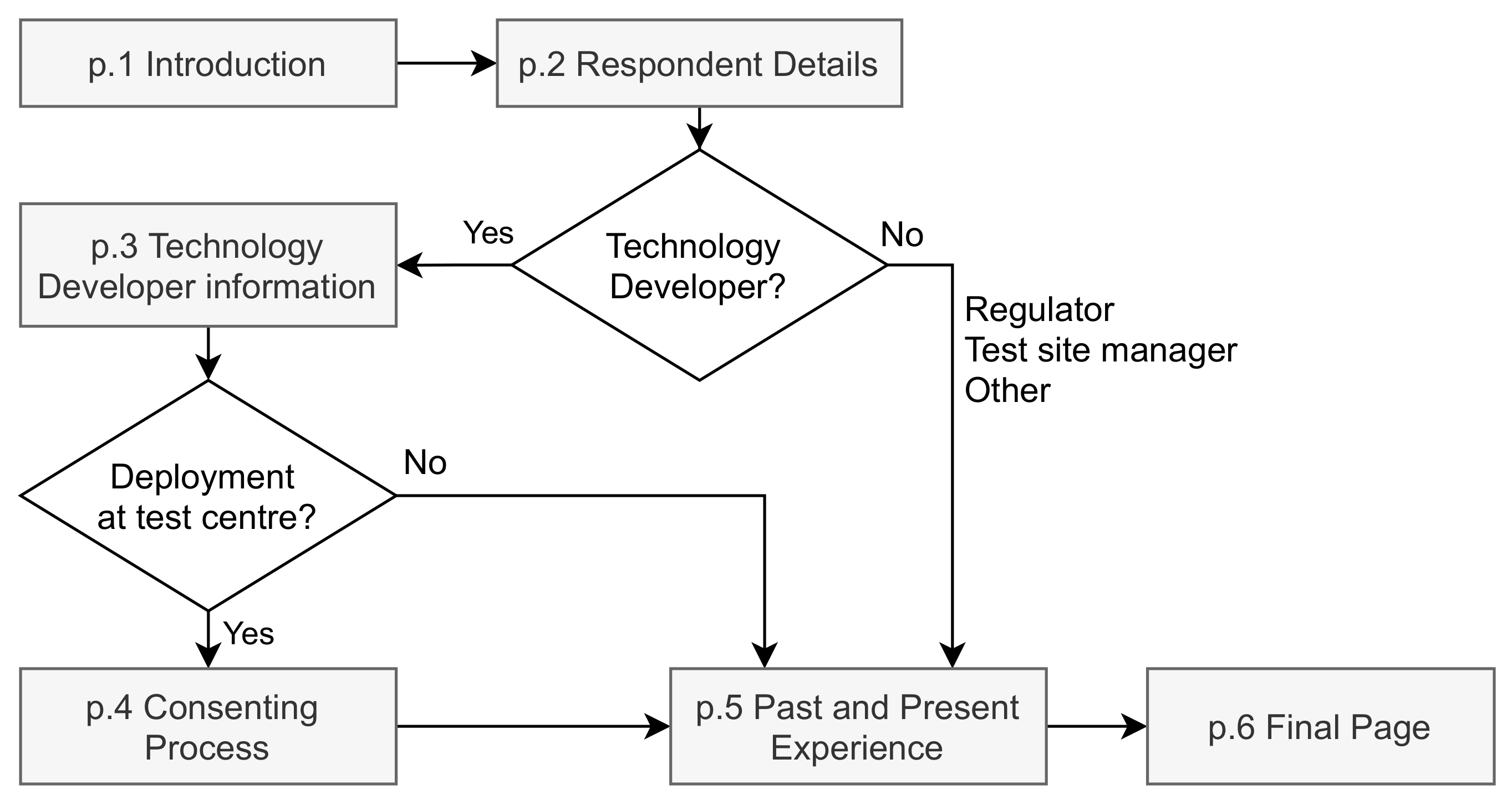
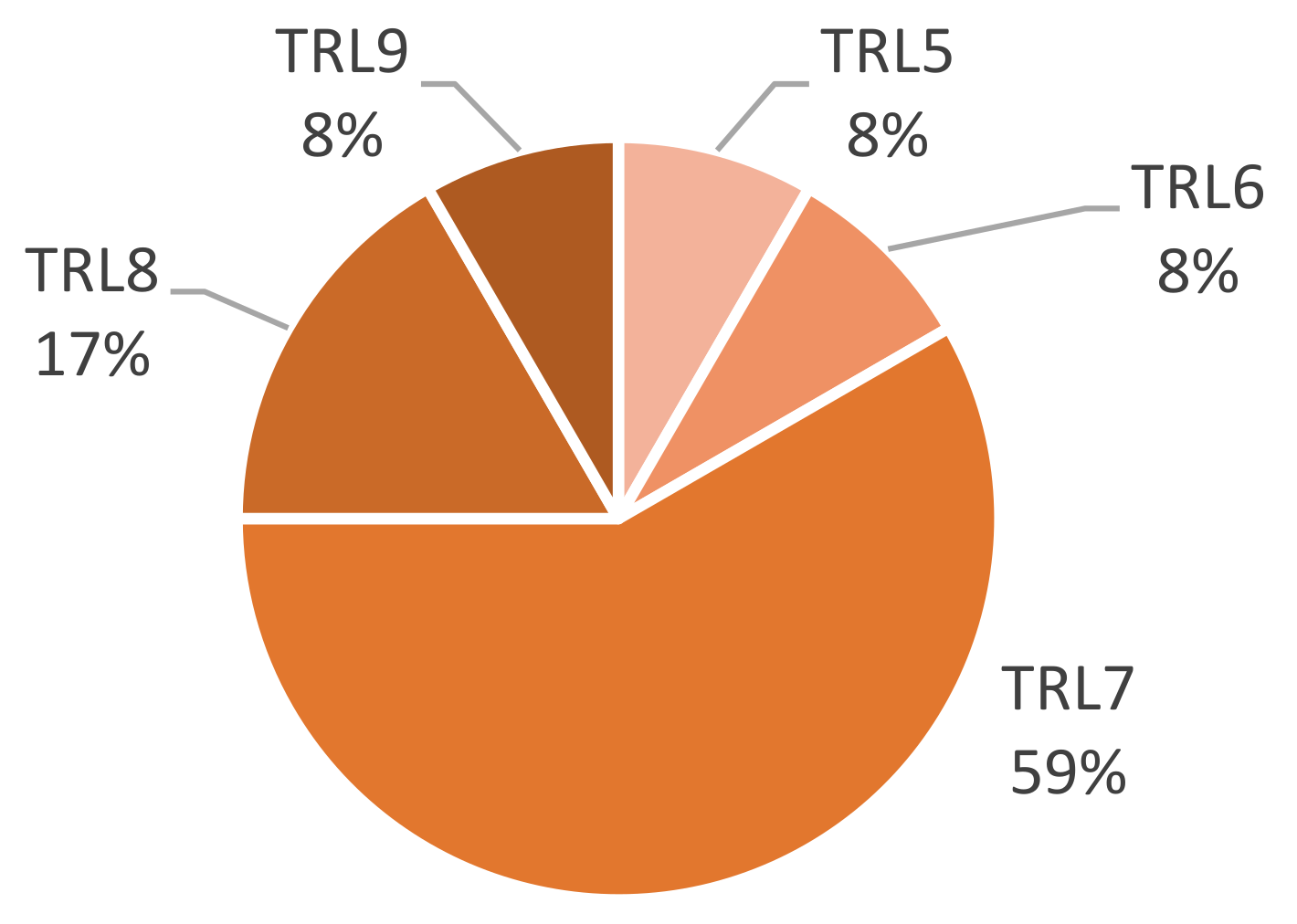
- Detailed respondent information—the questionnaire was designed to show different questions to respondents, depending on the stakeholder group they belong to (Figure 1 shows the different questionnaire routes). Technology developers were asked to answer questions related to their technology such as the name of the company, technology name and description, TRL, country of deployment, and whether it had been deployed in a test centre. Furthermore, technology developers that did not deploy in test centres were asked about how long the consenting process lasted and which permits were required.
- Past and present experience—constituted the main section of the questionnaire and evaluated respondents’ perceptions on barriers in the legal and political framework given a set of parameters such as national policies, administrative procedures, and integrated planning.
3. Review of Legal Frameworks and Licensing Procedures
3.1. EU Policies and Legislation
3.2. National Policies and Marine Spatial Planning
3.3. Licensing Procedures and Environmental Impact Assessment (EIA)
Licensing Process in Offshore Test Centers
4. Results—Barriers and Enablers to the Legal Framework
4.1. EU Policies and Legislation
- Transposition of EU legislation into national law. Often the way EU Directives have been translated into national legislation presents hurdles. This can be difficult to surpass where there is a lack of clarity on how these should be applied to ORE. Additionally, specificities and implementation vary across member states. Natura Directives promotes precaution and can weaken risk-based consenting such as Survey Deploy Monitor (SDM) methodology. Requirements from the Birds and Habitats Directives are leading countries such as Spain to avoid these designated sites. In France e.g., there are many designated sites, which makes it inevitable to overlap projects in such areas. In the UK, there is a perception that these Directives have been adapted too harshly and that the regulators’ interpretation is too strict, especially concerning the precautionary principle. According to the literature, several developers choose not to move forward when confronted with the requirement to conduct long-term monitoring and mitigation actions in compliance with the MSFD. The newly reviewed EIA Directive [36] does not include specific considerations on wave and tidal energy. EU legislation fails at requiring member states to report the status of receptors such as water bodies and seabed bathymetry (some obligations are in place for seabed mapping but with a focus in the presence of particular habitats and species), which hinders information gathering.
- Unrealistic ORE targets. Policies do not work well where policy makers and funding agencies have excessively high expectations regarding time and cost, which may come as a result from unrealistic ORE targets. For developers, this leads to significant pressures for fast deployment in short timescales, both at an economic and a political level, and to a race towards commercial readiness. Consequently, there is an incentive towards the development of end products, rather than engineering results. Although RED II approval was overall considered a success, the new target did not reach the 35% intended by some national governments in the European Parliament (including Portugal), which believe that the approved target is insufficient to reach the desired impact. Nevertheless, survey results show that ORE targets are seen as an international policy mechanism with enabling potential.
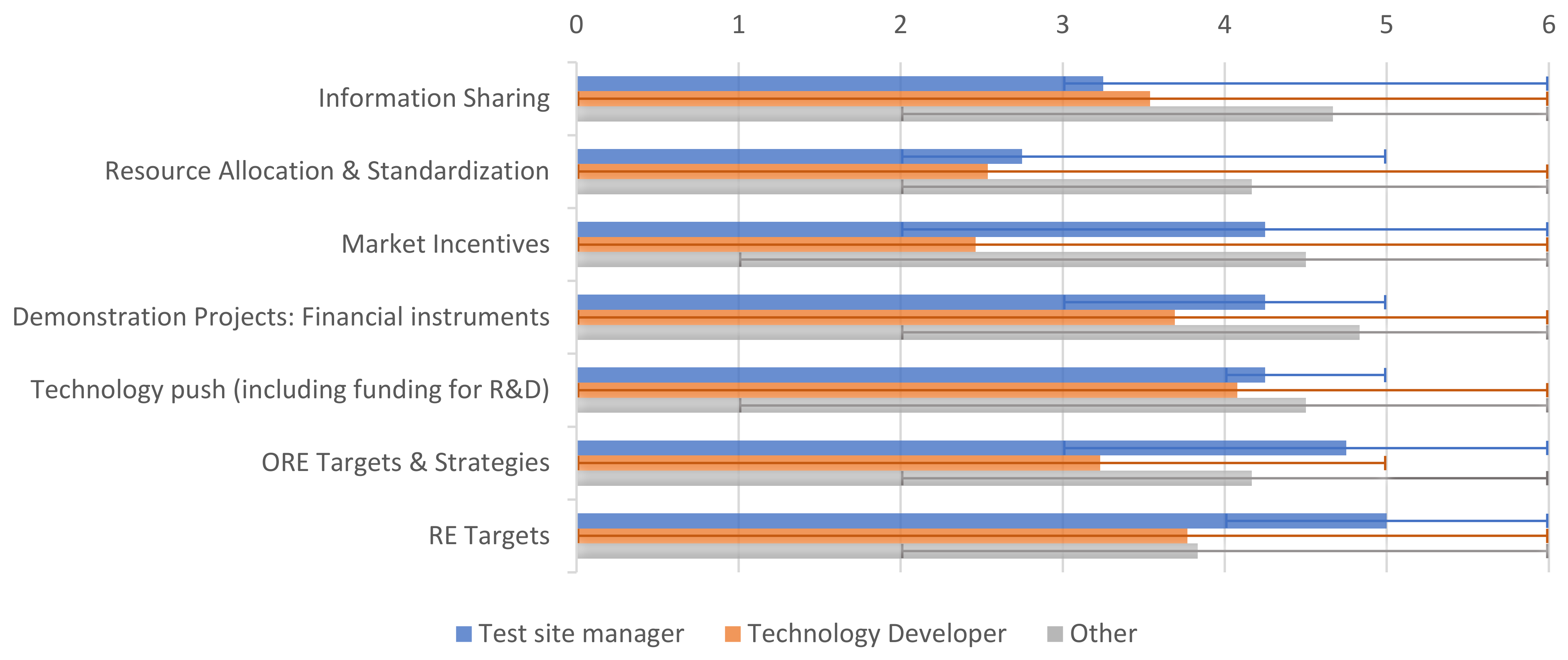
- Unsuitability of funding schemes. Optimistic deployment forecasts, which have pushed the sector to achieve large-scale deployments in the short-term, are possibly misaligned with the type, and level, of funding available to the ocean energy sector. There is a widespread concern about the suitability of certain funding mechanisms made available and their ability to realistically meet the level of expectation placed on the sector in terms of deployment capacity and performance. However, the allocation of funding support mechanisms is not suitable to allow initial deployments to take place [40]. Survey results show that technology developers feel Technology Push mechanisms (including funding for R&D) to be a significant barrier to project development (Figure 5). As one technology developer responded, “With no clear market, through grants or feed-in tariffs from EU or national funds, there will be no projects deployed”. There should be consideration for developers of small-scale technology that may also have array projects in the pipeline, as there is currently not a route to securing similar funding support as for the larger scale projects [41].
- Policies dedicated to the RE sector as a whole. The results suggest there are concerns over the development of the sector being hindered because of frequent not-fit-for-purpose policy support mechanisms to ORE in particular [42]. Political pressures arise from competition with other renewable energy sectors that may offer a more competitive and attractive cost for policymakers [43]. Where policies and regulatory regimes are applied at an aggregate level, the less-developed ocean energy sector cannot compete with, e.g., offshore wind. The literature points to the notion that tidal and wave energy are at different stages of development and would therefore need different models of financial support. Furthermore, positive feedback on the precommercial procurement model chosen by Wave Energy Scotland is repeatedly given. In both the cases, the scheme aims to trigger convergence, while spreading support to sustain competition [44]. Nevertheless, there is a general view that obstacles are being overcome, and public policies are slowly being put in place at international level to tackle barriers originated from risks and challenges associated to ORE development. A technology developer stated that “There is a significant number of European projects currently dedicated to marine energy projects”, while another mentioned that “At present, EU policies support the industry through capital and operating costs associated with construction and deployment, mainly for tidal energy.”
- Pressure into reaching large scale. The industry recognizes the need for large utility scale deployments as an essential part of meeting the EU ocean energy deployment targets. However, the ambition to quickly reach large-scale deployment has historically led to premature project failures in the ocean energy sector. Enhanced technology push support should help address the continued requirement for earlier stage R&D funding in the EU, in a structured manner. This will facilitate development of technologies and subsystems that may play a future role in cost reduction and performance improvement within ocean energy technologies. Pressure into reaching commercial readiness usually come in the form of financial pressures through the requirement to provide returns to investors.
- Benefits of information sharing. Openness about results, be it successes or failures, is essential to accelerate the commercial readiness of the sector. Hence the crucial role of platforms for information sharing. Experience shows that policies work well where funding policies are flexible. This is the case where they change quickly in response to industry needs (as in Scotland; see Section 3) or where agents work closely with industry. Policies also succeed when there is collaboration with universities and utilization of local resources (positive for market development). Shared information and experiences improve investor confidence, which in turn accelerates investment and commercialization. Nevertheless, there seems to be a lack of cooperation within the sector, i.e., on a public–private level, amongst industrial actors and between national and European funding authorities.
4.2. National Policies
- Unrealistic targets lead to loss of credibility: As previously mentioned, most countries active in the sector have set firm targets, which demonstrates their willingness to invest and develop the sector, but very few have specific policies to promote ocean energy uptake. Under the EU27 NREAP scheme, the ambitious targets set for renewable energy in 2020 are not substantiated with actual projects, as these targets were driven by the top-level member states’ energy policy. With recent adjustments to the 2020 deployment targets across various member states, deployment trajectories for the ORE sector have been drastically reduced compared to the earlier 2020 targets. Ocean energy technology must deliver on the updated targets; otherwise, there is a real risk that the sector could lose credibility amongst supply chain companies and policy makers. As one technology developer mentioned “There is no national or investor expectation to wave energy [in Denmark]”. On the other hand, some experts argue that National Renewable Energy Action Plans (NREAP)/National Energy and Climate Plan (NECP) targets, despite being realistic, could be set at a higher benchmark with a more encouraging policy framework.
- Lack of dedicated policy mechanisms: A rather insufficient number of governments have national research & innovation, market deployment, and market-based energy policies that are open to ocean energy. Learning costs cannot be funded exclusively by research or innovation grants. Alternative mechanisms currently in place for ocean energy translate in feed-in tariffs but are often absent or are not specific for ocean energy. As one test site manager put it, “At the moment, in Spain, there are no national policies to push renewables and the governmental lack of support tends to hinder this kind of projects”. Few countries use industry or supply chain initiatives specifically for ORE developments. Countries such as France, Ireland, Portugal, and the UK have implemented upfront capital and funding programs for the deployment of ocean energy projects [45]. Some respondents state that “There’s a lack of streamlined policies and market support for tidal stream energy at national level”. A technology developer emphasized this view by answering that “There are no clear and specific policies on different levels—municipal, governmental, and regional—for wave energy promotion”.
- Governance fragmentation and lack of motivation: Most countries have a fragmented governance structure with responsibilities spread across numerous Government departments, agencies, etc. There is little political appetite for greater integration e.g., in Ireland and Portugal. Moreover, policies may change according to government mandates and parties. “In some countries, the relevant organizations lack processes and are not able to clearly communicate the steps necessary for project execution”, as claimed by a technology developer. The long-term nature of ORE might lead to a lack of political will [46] and ambition regarding prioritization, strategy, and support to the sector. Additionally, “National policies are constantly changing, especially in the UK, which makes it very difficult for tech and project developers to plan for project and investors”, as backed up by a technology developer. As a result, no bold aims or targets are set, making it more difficult to push for action. Government motivation and investment is critical to making ocean energy technologies viable. Moreover, government commitments also encourage and support the larger contribution from public and private investors. Support from policy makers is crucial for the development of the sector. As a consultant in the sector mentioned, “National policies are very important to implement and/or promote initiatives to support the development of the ORE administrative and regulatory context as well as national financial incentives”. Very few countries have long-term government ambitions regarding prioritization, development strategy, and support.
- Insufficient national funding schemes: In Ireland, for example, developers highlight “difficulties with funding”, particularly the cost of testing devices in the lab and at sea. On the one hand, the Irish Government is unwilling to take environmental risk. On the other hand, national policy has been a significant driver for economic growth in the marine sector, and the recent revision of foreshore consenting through the publication of the MPDM Bill (Marine Planning and Development Management Bill (MPDM), General Scheme, Department of Housing, Planning and Local Government.2019) presents a significant opportunity to enable the ocean energy sector in the country [47]. The lack of national investments in Italy impairs the participation of Italian actors in co-funded EU programs and their access to co-funded financial instruments. One dampener relates to the unknown impact of Brexit on ocean energy and the general difficulty surrounding tariff supports and policy generally for renewable energy in the UK.
4.3. Administrative and Licensing Procedures
- Lack of a streamlined process: Overall, there is a lack of streamlined processes for the licensing and permitting of ocean energy projects. “The lack of streamlined admin between EU countries and UK countries as well as different organizations within one country adds significant administrative burden to our company,” according to one of the technology developers. On an international level, there is an absence of recognized performance assessment guidelines and standards, with few exceptions, e.g., in Portugal [48]. In some countries, guidance has been produced for offshore wind, but it is unclear to developers whether it can also apply to ocean energy. As one technology developer put it, “If consenting and insurance is required as if it was an offshore oil and gas installation, it is a showstopper for young companies”.
- Challenging interpretation of legislation: Lack of dedicated legislation for ORE leads to unsuccessful attempts to apply existing legislation to developments and responsibilities distributed among entities in the sector. This can make it difficult for a developer to interpret legislation and navigate the process. This poses a barrier as getting a clear view on who should be involved, at what stage and for what purpose, can be very time consuming. As a result, technology developers do not move forward with certain projects because of delays and extra costs, and financiers become reluctant to invest. This is backed up by several respondents (particularly technology developers): “Administrative procedures may compromise the timeline of approval with effects on investment availability”. A test site manager also shared concerns on the potential risks of this barrier: “The licensing procedure [in Spain] is long and hard to follow and, in the end, can last around five years, which could end hindering and even bringing down a project”. Exceptionally, in Portugal, all the consents required have been adapted to better suit wave energy developments, i.e., there is a specific law or instrument on every topic of the consenting process, which makes the laws easier to understand.
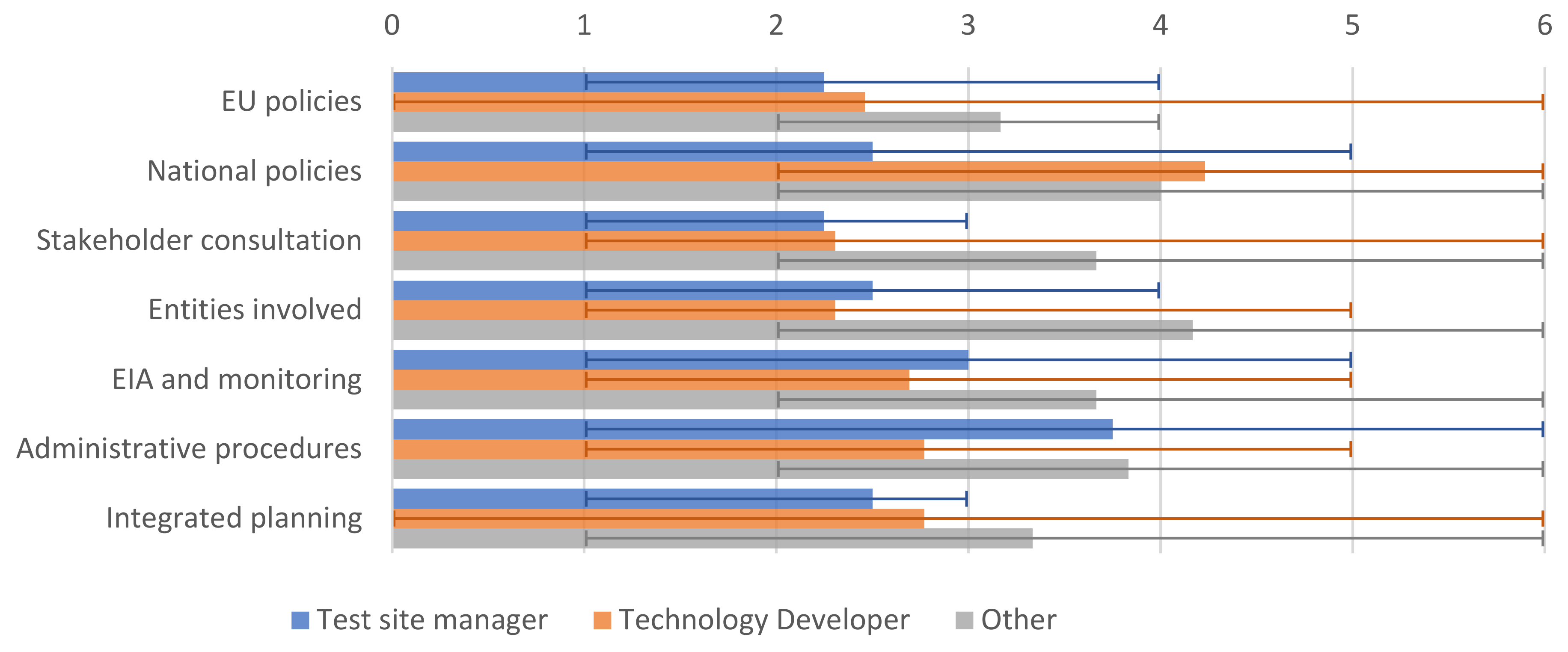
- Fragmented approach: Generally, countries that have complex jurisdictional arrangements and no dedicated legislation for ORE tend to have more entities involved, and a larger number of permits required. This fragmented approach in most countries suggests there is limited experience with one coordinating authority or a “one-stop shop” approach [41]. One successful exception could be the UK, which seems to be the most streamlined, operating a “one window” approach to the administration of consents. The consenting process for a 10-device farm in an EU country required a developer to submit 35 copies of the technical report to be then submitted to 35 different entities. In BiMEP, Spain, the consenting process took almost five years because of the number of authorities involved, and for many of them it was their first experience processing an application for an ORE: “We spent 5 years to obtain the permits for wave energy at BiMEP. And another 5 years to modify them including wind energy”. In Ireland, developers point at difficulties obtaining a foreshore license to test their devices in the sea, with a number of government entities involved in a process that can take years [47]. Another technology developer shared a similar experience: “We were supposed to install a demo system in a non-test site. Due to a very long consenting process we will probably have to re-locate to another location resulting in delay and extra costs”. These diverse experiences in the role of entities involved in the consenting process is illustrated by the respondents’ dispersed answers when ranking the topic, as shown in Figure 4.
- Lack of specified timeframes: A lack of specified timeframes for decision making hinders development as it can result in a lengthy process. If one stage is delayed, the developer cannot proceed to the next. “Depending on the country of deployment, the administrative procedures due to paperwork, translations, etc. can delay the whole project plan,” a technology developer mentioned. Criteria used to support decision making are unknown to the public and missing in several countries. As an example of good practice, Scotland has a policy target of deciding on an application within a certain timeframe, which is helpful to developers as they can plan and budget for their project more precisely. There are also fixed timeframes in Portugal, but these have had limited success in practice.
- The consenting process is in constant change: This is a commonly felt barrier, as the feedback provided through the survey’s open-ended questions show, that leads to hardship in following the updated procedures, which in turn hinders the development of the sector. Changes in government or internal restructuring can result in a loss of knowledge within the consenting authorities. The changing nature of the consenting process coupled with a lack of communication and cooperation between different government bodies affects the overall process efficiency and duplication of effort.
4.3.1. EIA Process
- Lack of data from previous experience: In other sectors, environmental impact assessments are based upon knowledge and data from past experiences. This allows regulators to put in place rules, based on pre-established risks, that prevent environmentally damaging projects from moving forward. However, to date, there have been few deployments for ocean energy, so this knowledge base is still being built. There is still no comprehensive body of evidence that regulators can use as a basis for consenting and licensing decisions. The lack of baseline databases for marine environments along with non-strict monitoring requirements (in amount and length) in countries like Ireland and France requires developers to submit up to two years’ worth of monitoring data. This poses a barrier to the implementation of risk-based methodologies such as the SDM approach in place in Scotland.
- Difficulty in predicting potential impacts: There is still a lack of understanding of the interactions of ocean energy devices with the environment. Monitoring potential impacts of these devices is likely to be extremely challenging given the relatively small spatial scale of existing sites, coupled with natural stochastic variation that will inevitably influence how animals use and respond to the marine environment. From a test site manager’s experience, “This usually requires developers to demonstrate that any potential impact is going to be mitigated even though there is no research on that so far”.
- Mismanagement of monitoring requirements: Insufficient guidance and legislation that addresses small scale and time-limited projects such as ocean energy projects is specially felt on EIA matters. Developers are often required to gather what they feel is unnecessary or duplicated information. At the same time, the precautionary and overly risk-averse approach adopted by regulators because of unfamiliarity with the sector [49] leads to EIA specifications based on “what” a consenting authority wants a developer to assess instead of “why” these issues need assessment. This results in developers being asked to study the effects of a small project as if it were a full-scale development. Conversely, the more available data there is in the beginning of the consenting process, the easier it is for the developer to go through the early stages of the consenting process. As a member from a Research & Technology organization states: “According to my experience, the administrative procedure in Spain is long and difficult. In one hand because marine renewable energy projects are not included in the EIA legislation. This forces the administration to undertake a long consultative procedure involving different stakeholders. During this procedure, different entities with different competencies and interests are involved”.
- Excessive EIA studies costs on developers: According to the literature, there is a general opinion that public funds are needed to enable deployment but also to partly cover costs associated with EIA studies that are currently entirely paid for by developers. The burden should therefore be shared between developers and governments from all EU member states interested in the output.
- Lack of integration with onshore EIA requirements: There is currently no single EIA procedure that includes both onshore and offshore elements. Consequently, and according to the survey results, some developers have experienced issues during the project’s onshore installations’ planning, which were paused by the local governments.
- Pre-application consultation benefits: In some countries like Portugal and Spain, the scoping phase is not strictly mandatory (in Spain for Annex I projects, the decision is left for the developer; for Annex II, it is mandatory). This means the developer and the competent authority meet for the first time when already submitting application for consenting. In other cases, like France and Ireland, pre-application consultation is compulsory (in Scotland, it is only compulsory for marine licenses but not for consenting application, but it is common practice), which allows developers to benefit from regulators’ expertise early in the process.
- Inefficiency of post-consent monitoring: There is growing evidence that post-consent monitoring programs often result in data-rich information-poor (DRIP) studies that are unable to meaningfully reduce scientific uncertainty and thereby provide information that can offer greater confidence to decision makers regarding future project proposals (or meaningfully inform future decision making).
- EIA in pre-designated areas: EIA occurs late in the project after the developer and the main characteristics of the project have been chosen, which makes it difficult to introduce changes in the project design accordingly.
4.3.2. Integrating Planning
- Early stage of MSP implementation: Marine spatial management is a critical issue to regulate potential conflicts with other maritime activities over the use of coastal space. As detailed previously, few countries are at an advanced stage of MSP implementation, but those that do rarely reflect ocean energy developments such as reserved and pre-allocated ones, or future needs of the sector. This could be attributed to a lack of communication with ocean energy representative entities. “…the lack of clear national policies and MSP for future marine renewable energy project developments makes more difficult the consenting procedures of this kind of projects”, as a respondent mentioned. A consultant in the sector stated that “MSP can help discussions among developers and other users and stakeholders on marine spatial occupation”.
- Lack of flexibility: There is a lack of flexibility in the planning system to incorporate changes in the technology or overarching project plan. “Marine spatial planning tends to over-generalize and be less fit for purpose at the local level”.
- Incompleteness of information: On the one hand, information on constraints in areas proposed for project development is not enough for a technology developer since they feel the need to specify the best areas. This approach empowers the developer with a higher level of certainty. Furthermore, there is a general belief that outcomes from the Strategic Environmental Assessment (SEA) process do not provide developers enough confidence regarding decision making on the most suitable areas for project development. On the other hand, investors do not have access to information in advance on the available areas for project development: differences between acceptable areas and sensitive areas that may pose additional regulatory hurdles.
- Effectiveness of pre-allocated zones: Technology developers show indecision on the effectiveness and helpfulness of MSP at its current level of development. There are mixed opinions on whether pre-allocated zones (excluding test centres) are advantageous since they have resulted in very few deployments. Existence of pre-allocated zones could make it more difficult to deploy in other areas of the sea. It is a particularly relevant concern since ocean energy has different technologies with differing/distinct operating environments. On the other hand, the designation of dedicated areas for ocean energy can lead to shorter consenting timelines and fewer risks and thus help advance the development of the sector.
4.3.3. Stakeholder Consultation
- Inappropriate stakeholder engagement: Ocean energy deployments can experience significant delays resulting from local communities’ opposition if stakeholders are not correctly engaged, as mentioned by one survey respondent: “Stakeholder consultation and entities involved: may compromise project execution and installation schedule if not done in a proper way (considering all stakeholders—being inclusive—and listen to stakeholders opinions trying to integrate their views in project decisions)”. This can be especially challenging in regions with strong fishery or tourism sectors. These tend to be more reluctant to embrace marine energy projects, which can compete for space with such activities. Issues potentially arise when consultation is not transparent and realistic enough about the desired achievements regarding effects of the project for the local community, be it employment schemes and local share of profits or potential negative environmental impact. However, it seems to be generally easier to secure participation at the regional level than the national level. Beyond 12 nm, marine users are international, and therefore it is more challenging to engage stakeholders in the planning and development process.
- Inadequate consultation: Informal consultation is seen as more constructive but tends to be focused only on high level groups, often excluding the public in general. For example, local government knowledge of relevant environmental impacts is often poor, leading to poorly supported opinions on negative impacts. They need more time and money to become familiar with the scientific state of the art knowledge of impacts. However, a technology developer that participated in the survey shared an opposite view based on their experience, “Proper stakeholder consultation at the local level has been an enabler—90+% of locals are supportive of what we do and the local benefits we bring”.
- Effective dissemination of the sector achievements: Sharing successes of the sector is crucial to increase stakeholder acceptance. Currently, not enough success stories about ocean energy projects are disseminated on a national level to the general public and consenting authorities. This does not help increasing acceptance of this relatively unfamiliar sector. Regulators, for example, are still unfamiliar with the ocean energy sector, which leads to a precautionary and “risk averse” approach to project consenting. A technology developer shared the same views, “We see the involvement of entities and stakeholders as a strength and not a barrier, and our technology has the advantage to be invisible, clean and silent so we have no problem”.
- Unsuitability of stakeholder consultation: Insufficient attention is often provided to the inter-personal elements of stakeholder consultations. Firstly, the inconvenience of timing and the location of consultations for stakeholder groups can lead to low attendance and engagement with the process. The unsuitability of the consultation methods to the audiences whose input is sought can be illustrated by e.g., the use of a limited range of communication media or by not selecting suitable people who are respected and trusted by individual target audiences. It can also be revealed through overformal procedures and under-use of informal and interactive consultation methods and lack of opportunities for regulators and developers to listen to stakeholder opinions [50]. Moreover, national strategies for stakeholder engagement are not always accepted at the local level.
4.4. Summary of Main Findings
5. Conclusions
Author Contributions
Funding
Institutional Review Board Statement
Informed Consent Statement
Data Availability Statement
Conflicts of Interest
References
- International Energy Agency. World Energy Outlook 1998. Paris. 1998. Available online: https://jancovici.com/wp-content/uploads/2016/04/World_energy_outlook_1998.pdf (accessed on 28 July 2021).
- International Energy Agency. World Energy Outlook 2019. OECD. 2019. Available online: https://www.iea.org/reports/world-energy-outlook-2019 (accessed on 28 July 2021).
- Available online: https://www.dtoceanplus.eu/Publications/Deliverables/Deliverable-D8.2-Analysis-of-the-European-Supply-Chain (accessed on 28 July 2021).
- European Commission. Press Release: Blue Growth Strategy to Create Growth and Jobs in the Marine and Maritime Sectors Gets Further Backing (June 2013). 2013. Available online: https://ec.europa.eu/commission/presscorner/detail/en/MEMO_13_615 (accessed on 28 July 2021).
- Burke, M.J.; Stephens, J.C. Political power and renewable energy futures: A critical review. Energy Res. Soc. Sci. 2018, 35, 78–93. [Google Scholar] [CrossRef]
- Zuindeau, B. Territorial Equity and Sustainable Development. Environ. Values 2007, 16, 253–268. [Google Scholar] [CrossRef]
- Uihlein, A.; Magagna, D. Wave and tidal current energy—A review of the current state of research beyond technology. Renew. Sustain. Energy Rev. 1070, 2016, 58–1081. [Google Scholar] [CrossRef]
- Outka, U. Environmental Law and Fossil Fuels: Barriers to Renewable Energy (15 August 2012). Vanderbilt Law Rev. 2012, 65, 1679. [Google Scholar]
- Boillet, N.; Guéguen-Hallouët, G. A Comparative Study of Offshore Renewable Energy Legal Frameworks in France and the United Kingdom. Ocean Yearb. Online 2016, 30, 377–416. [Google Scholar] [CrossRef]
- Bald, J.; Menchaca, I.; O’Hagan, A.M.; Le Lièvre, C.; Culloch, R.; Bennet, F.; Simas, T.; Mascarenhas, P. Risk-Based Consenting of Offshore Renewable Energy Projects (RICORE). In Evolution of Marine Coastal Ecosystems under the Pressure of Global Changes; Springer International Publishing: Berlin/Heidelberg, Germany, 2020; pp. 227–242. [Google Scholar]
- Ocean Energy Systems. Consenting Processes for Ocean Energy on OES Member Countries. 2015. Available online: https://tethys.pnnl.gov/sites/default/files/publications/OES-AnnexI-Report-2015.pdf (accessed on 28 July 2021).
- Painuly, J. Barriers to renewable energy penetration; A framework for analysis. Renew. Energy 2001, 24, 73–89. [Google Scholar] [CrossRef]
- Inês, C.; Guilherme, P.L.; Esther, M.-G.; Swantje, G.; Stephen, H.; Lars, H. Regulatory challenges and opportunities for collective renewable energy prosumers in the EU. Energy Policy 2020, 138, 111212. [Google Scholar] [CrossRef]
- Niquil, N.; Scotti, M.; Fofack-Garcia, R.; Haraldsson, M.; Thermes, M.; Raoux, A.; Le Loc’h, F.; Mazé, C. The Merits of Loop Analysis for the Qualitative Modeling of Social-Ecological Systems in Presence of Offshore Wind Farms. Front. Ecol. Evol. 2021, 9, 35. [Google Scholar] [CrossRef]
- Magagna, D. Ocean Energy Technology Market Report 2018. Luxembourg. 2018. Available online: http://dx.doi.org/10.2760/019719 (accessed on 9 August 2021).
- European Commission. Horizon2020 DTOceanPlus: Advanced Design Tools for Ocean Energy Systems Innovation, Development and Deployment. Available online: https://cordis.europa.eu/project/id/785921 (accessed on 9 August 2021).
- European Commission. Going Climate-Neutral by 2050: A Strategic Long-Term Vision for a Prosperous, Modern, Competitive and Climate-Neutral EU Economy. 2019. Available online: https://op.europa.eu/en/publication-detail/-/publication/92f6d5bc-76bc-11e9-9f05-01aa75ed71a1 (accessed on 28 July 2021).
- European Commission. Proposal for a Regulation of the European Parliament and of the Council Establishing the Framework for Achieving Climate Neutrality and Amending Regulation (EU) 2018/1999 (European Climate Law). 2020. Available online: https://www.europarl.europa.eu/doceo/document/A-9-2020-0162_EN.html (accessed on 28 July 2021).
- European Commission. Communication from the Commission—The European Green Deal. 2019. Available online: https://ec.europa.eu/info/publications/communication-european-green-deal_en (accessed on 28 July 2021).
- European Commission. Communication from the Commission to the European Parliament, the Council, the European Economic and Social Committee and the Committee of the Regions Strengthening Innovation in Europe’s Regions: Towards Resilient, Inclusive and Sustainable Growth at Ter. 2017. Available online: https://op.europa.eu/en/publication-detail/-/publication/b828d165-1c22-11ea-8c1f-01aa75ed71a1 (accessed on 28 July 2021).
- European Commission. Communication from the Commission to the European Parliament, the Council, the European Economic and Social Committee and the Committee of the Regions Regional Policy Contributing to Smart Growth in Europe 2020. 2010. Available online: https://op.europa.eu/en/publication-detail/-/publication/b828d165-1c22-11ea-8c1f-01aa75ed71a1 (accessed on 28 July 2021).
- European Commission. Research and Innovation. 2021. Available online: https://ec.europa.eu/regional_policy/en/policy/themes/research-innovation/ (accessed on 28 July 2021).
- Oceanera-net Cofund, Oceanera-net Cofund: Supporting Collaborative Innovation in the Ocean Energy Sector. 2021. Available online: https://www.oceancofund.eu/ (accessed on 10 January 2021).
- European Commission. Horizon 2020 Work Programme 2018–2020. 2020. Available online: https://ec.europa.eu/research/participants/data/ref/h2020/wp/2018-2020/main/h2020-wp1820-energy_en.pdf (accessed on 30 July 2021).
- Council of the European Union. Proposal for a Regulation of the European Parliament and of the Council Establishing Horizon Europe—The Framework Programme for Research and Innovation, Laying Down Its Rules for Participation and Dissemination. 2020. Available online: https://data.consilium.europa.eu/doc/document/ST-14239-2020-INIT/en/pdf (accessed on 30 July 2021).
- European Commission. Innovative Financial Instruments for First-of-a-Kind, Commercial-Scale Demonstration Projects in the Field of Energy; European Commission: Brussels, Belgium, 2016; Available online: https://op.europa.eu/en/publication-detail/-/publication/7fc3beff-2b55-11e9-8d04-01aa75ed71a1 (accessed on 10 August 2021). [CrossRef]
- European Commission. EU Budget: Commission Proposes a New Fund to Invest in the Maritime Economy and Support Fishing Communities. 2018. Available online: https://ec.europa.eu/commission/presscorner/detail/en/IP_18_4104 (accessed on 30 July 2021).
- European Commission. Proposal for a Directive of the European Parliament and of the Council on the Promotion of the Use of Energy from Renewable Sources (Recast); European Commission: Brussels, Belgium, 2017; Available online: https://op.europa.eu/en/publication-detail/-/publication/3eb9ae57-faa6-11e6-8a35-01aa75ed71a1/language-en (accessed on 10 August 2021).
- European Commission. Commission Notice—The ‘Blue Guide’ on the Implementation of EU Products Rules 2016 (Text with EEA Relevance), C/2016/1958; European Commission: Brussels, Belgium, 2016. [Google Scholar]
- OEE. Funding Research & Innovation. 2021. Available online: https://www.oceanenergy-europe.eu/policy-topics/research-innovation (accessed on 9 August 2021).
- Ocean Energy Forum. Ocean Energy Strategic Roadmap 2016, Building Ocean Energy for Europe; Ocean Energy Forum: 2016. Available online: https://webgate.ec.europa.eu/maritimeforum/sites/default/files/OceanEnergyForum_Roadmap_Online_Version_08Nov2016.pdf (accessed on 10 August 2021).
- European Commission. Communication from the Commission to the European Parliament, the Council, the European Economic and Social Committee and the Committee of the Regions an Eu Strategy to Harness the Potential of Offshore Renewable Energy for a Climate Neutral Future. 2020. Available online: https://eur-lex.europa.eu/legal-content/EN/TXT/?uri=CELEX%3A52020AE5038 (accessed on 28 July 2021).
- European Commission. Directive (EU) 2018/2001 of the European Parliament and of the Council of 11 December 2018 on the Promotion of the Use of Energy from Renewable Sources. 2018. Available online: https://eur-lex.europa.eu/legal-content/EN/TXT/?uri=uriserv:OJ.L_.2018.328.01.0082.01.ENG (accessed on 28 July 2021).
- European Commission. Directive 2008/56/EC of the European Parliament and of the Council of 17 June 2008 Establishing a Framework for Community Action in the Field of Marine Environmental Policy (Marine Strategy Framework Directive). 2008. Available online: https://eur-lex.europa.eu/legal-content/EN/LSU/?uri=CELEX:32008L0056 (accessed on 28 July 2021).
- European Commission. Directive 2014/89/EU of the European Parliament and of the Council of 23 July 2014 Establishing a Framework for Maritime Spatial Planning. 2014. Available online: https://eur-lex.europa.eu/legal-content/EN/TXT/?uri=CELEX:32014L0089 (accessed on 28 July 2021).
- European Commission. Directive 2014/52/EU of the European Parliament and of the Council of 16 April 2014 Amending DIRECTIVE 2011/92/EU on the Assessment of the Effects of Certain Public and Private Projects on the Environment (Text with EEA relevance). 2014. Available online: https://eur-lex.europa.eu/legal-content/EN/TXT/?uri=celex%3A32014L0052 (accessed on 28 July 2021).
- European Commission. Directive 2009/147/EC of the European Parliament and of the Council of 30 November 2009 on the Conservation of Wild Birds. 2009. Available online: https://eur-lex.europa.eu/legal-content/EN/TXT/?uri=CELEX%3A32009L0147 (accessed on 28 July 2021).
- Giannopoulos, N. Global Environmental Regulation of Offshore Energy Production: Searching for Legal Standards in Ocean Governance. Rev. Eur. Comp. Intl. Environ. Law 2018, 28, 289–303. [Google Scholar] [CrossRef]
- European Commission. Communication from the Commission to the European Parliament, the Council, the European Economic and Social Committee and the Committee of the Regions; European Commission: Brussels, Belgium, 2020; Available online: https://eur-lex.europa.eu/legal-content/EN/TXT/PDF/?uri=CELEX:52012DC0673&from=EN (accessed on 10 August 2021).
- European Commission. Study on Lessons for Ocean Energy Development; European Commission: Brussels, Belgium, 2017; Available online: https://op.europa.eu/en/publication-detail/-/publication/03c9b48d-66af-11e7-b2f2-01aa75ed71a1 (accessed on 10 August 2021).
- OES. Ocean Energy Policies: Lessons Learnt. In Workshop IV Report; OES: Smogen, Sweden, 2017. [Google Scholar]
- Available online: http://hdl.handle.net/10059/1935 (accessed on 10 August 2021).
- Available online: https://publications.jrc.ec.europa.eu/repository/handle/JRC104799 (accessed on 3 July 2021).
- Sannino, G.; Pisacane, G. Ocean Energy Exploitation in Italy: Ongoing R&D Activities. Rome, 2017. Available online: https://www.enea.it/en/publications/abstract/ocean-energy-italy (accessed on 4 August 2021).
- Bojars, E.; Fammler, H.; Ruskule, A.; Kuris, M.; Martin, G.; Kostamo, K.; Schmidtbauercrona, J.; Hemmingsson, M. Proposals for Optimisation of the Procedures on Offshore Wind Farm Environmental Impact Assessment. 2016. Available online: http://marmoni.balticseaportal.net/wp/wp-content/uploads/2011/03/Windfarm-EIA-recommendations_March-20161.pdf (accessed on 4 August 2021).
- MacGillivray, A.; Jeffrey, H.; Hanmer, C.; Magagna, D.; Raventos, A.; Badcock-Broe, A. Ocean Energy Technology: Gaps and Barriers. 2013. Available online: http://www.si-ocean.eu (accessed on 4 August 2021).
- OES. Strategic Plan 2017–2022. 2017. Available online: https://www.ocean-energy-systems.org/publications/oes-vision-strategy (accessed on 4 August 2021).
- Jesus, J.; Almodovar, M.; Simas, T. Licensing Guidance for Marine Renewable Energy Projects in Portugal (Mainland Coastal Waters); WavEC Publications: Lisbon, Portugal, 2016; p. 95. Available online: https://www.wavec.org/contents/reports/wavec-guide-web.pdf (accessed on 22 July 2021).
- Bennet, F.; Culloch, R.; Tait, A. Guidance on Effective Adaptive Management and Post-Consent Monitoring Strategies. Deliverable 5.2 & 5.4., RiCORE Project. 2016. Available online: https://ec.europa.eu/research/participants/documents/downloadPublic?documentIds=080166e5aa7e4156&appId=PPGMS (accessed on 4 August 2021).
- O’Hagan, A.M.; Nixon, C.; Mascarenhas, P. Marine Renewable Energy Licensing and Regulatory Systems—Workshop 2 Report. Deliverable 2.1., RiCORE Project. 2015. Available online: https://ec.europa.eu/research/participants/documents/downloadPublic?documentIds=080166e5a0d80251&appId=PPGMS (accessed on 4 August 2021).

| Policy Field | Examples | References |
|---|---|---|
| Governance regulation, 2050 long-term strategy | [17] |
| Strategic Energy Technology (SET) Plan, European Green Deal, Blue Growth Strategy, Energy Union | [18,19] |
| Horizon 2020, Horizon Europe, Ocean ERA-NET Cofund, InnoEnergy, NER300, InnovFin Energy Demo Projects (EDP) | [20,21,22,23,24,25] |
| FORESEA, OceanDemo, Blue Gift, Innovation Fund, InnovFin EDP, Blue Growth Investment Platform, Horizon Europe, European Maritime + Fisheries Fund | [19,26,27] |
| Innovation Fund, Revised | [28] |
| MET-certified | [29] |
| Ocean Energy Europe, ETIP Ocean, Marine Energy Alliance, Ocean Power Innovation: EU Policy fields for Ocean Energy Network | [30,31,32] |
| Revised Renewable Energy Directive (RED II), Marine Strategy Framework Directive (MSFD), Marine Spatial Planning (MSP) Directive, Environmental Impact Assessment (EIA) Directive, Birds and Habitats Directives | [33,34,35,36,37] |
| Country | Process Time Length | Licensing Authorities | Number of Consents |
|---|---|---|---|
| Denmark | 1–2 months (up to several years) | 1 | 3 |
| France | 1–4 years | 4 | 3 in 1 |
| Ireland | 4 years | 5 | 6 |
| Italy | >1 year | 1 | 1 |
| Norway | N/A | 1 | N/A |
| Portugal | 1–2 years | 4 | >4 |
| Spain | >2 years | 5 | >4 |
| Sweden | >1.5 years | >3 | >5 |
| England (UK) | 1–2 years | 4 | 4 |
| Wales (UK) | 1–2 years | 5 | 4 |
| Scotland (UK) | ~9 months | 1 | >3 |
| Northern Ireland (UK) | ~15 months | 5 | >9 |
| Country | Test Centres | Licensing Process |
|---|---|---|
| Denmark | DanWEC/other waters | Temporary permit |
| France | – | No specific regulation |
| Ireland | Galway Bay (¼ scale site) | Pre-consented |
| AMETS (full-scale site) | Individual developers to obtain a foreshore consent | |
| Portugal | Portuguese Pilot Zone, Ocean Plug | Trialing a one-stop-shop approach |
| Spain | BiMEP | Pre-consented |
| UK | EMEC, META, Wavehub, FabTEST | Pre-consented, provided certain conditions met |
| Norway | REC | Guidance drafting ongoing. Proposals to be assessed individually. |
| Area | Scope | Key Points |
|---|---|---|
| International |
|
| International, national |
|
| National |
|
| International, National |
|
| National |
|
| National |
|
| National |
|
| National |
|
| National |
|
| International, National |
|
Publisher’s Note: MDPI stays neutral with regard to jurisdictional claims in published maps and institutional affiliations. |
© 2021 by the authors. Licensee MDPI, Basel, Switzerland. This article is an open access article distributed under the terms and conditions of the Creative Commons Attribution (CC BY) license (https://creativecommons.org/licenses/by/4.0/).
Share and Cite
Apolonia, M.; Fofack-Garcia, R.; Noble, D.R.; Hodges, J.; Correia da Fonseca, F.X. Legal and Political Barriers and Enablers to the Deployment of Marine Renewable Energy. Energies 2021, 14, 4896. https://doi.org/10.3390/en14164896
Apolonia M, Fofack-Garcia R, Noble DR, Hodges J, Correia da Fonseca FX. Legal and Political Barriers and Enablers to the Deployment of Marine Renewable Energy. Energies. 2021; 14(16):4896. https://doi.org/10.3390/en14164896
Chicago/Turabian StyleApolonia, Maria, Rhoda Fofack-Garcia, Donald R. Noble, Jonathan Hodges, and Francisco X. Correia da Fonseca. 2021. "Legal and Political Barriers and Enablers to the Deployment of Marine Renewable Energy" Energies 14, no. 16: 4896. https://doi.org/10.3390/en14164896
APA StyleApolonia, M., Fofack-Garcia, R., Noble, D. R., Hodges, J., & Correia da Fonseca, F. X. (2021). Legal and Political Barriers and Enablers to the Deployment of Marine Renewable Energy. Energies, 14(16), 4896. https://doi.org/10.3390/en14164896

