
Abstract
A laboratory-scale analysis using coal from an underground mine was carried out, emulating a mixture from the gob area in an actual mine, consisting of waste, coal, and free space for the flow of air. Experimental tests and computational fluid dynamics modelling were done to define and verify the behavior of the collapsed region in a time-dependent analysis. In addition, the characteristics of coal were defined, regarding the self-combustion, combustion rate, and pollutants generated in each stage of the fire. The results achieved are useful for determining the behavior of the collapsed area in full-scale conditions and to provide valuable information to study different scenarios of a potential fire in a real sublevel coal mine regarding how the heat is spread in the gob and how pollutants are generated.
1. Introduction
The proper management of risk in underground mining, especially coal, is critical to avoid undesirable situations that could lead to tragic accidents, such as fires or explosions [1,2]. Many preventive and corrective measures have been proposed and developed over time [3], but there are still important fatalities in these types of activities [4]. Fires in coal mines depend on the intrinsic characteristics, either thermal or physical, of the available fuel sources (coal, wooden supports, and equipment, among others); the ventilation system implemented [5]; the size of the drifts and openings [6,7]; and the operational conditions [8]. As fuel sources are usually distributed throughout the mine, fire can affect a large part of the ventilation system, spreading substantial quantities of toxic pollutants along the entire mine [9]. The temperature of the air flowing through the working faces must be kept as low as possible, especially in deep coal mines. High workplace temperatures can have an important influence on potential fires. Zhu et al. [10] expose an interesting approach to predict the temperature.
Therefore, it is necessary to have detailed knowledge of the potential toxic products, in case of a fire, so as to apply adequate measures if necessary [11,12,13]. Laboratory tests and specific studies have been done to analyze fire behavior and smoke generation [14]. Computational fluid dynamics (CFD) analysis to identify fire evolution and coal characteristics is widely used [15,16], particularly with Fire Dynamics Simulator (FDS) software [13]. However, there are complicated areas, such as the gob, where it is impossible to access and know the real conditions in detail [17], as some of the coal parameters are difficult to define when modeling software is used, such as the chemical reaction of coal [18,19] or the effect of moisture [20], while safety issues related to the gob area are multiple, from ventilation to geomechanics, among others [21]. Airflow leakages from the drifts to the gob are especially important in the initiation of fires in this area [22].
Several attempts to define the characteristics have made by means of theoretical analysis lab equipment, such as examining the smoldering characteristics [23,24] and self-heating [25,26]. Here, we use a very interesting approach to study coal fires under lab conditions [8,23].
The aim of this study is to provide a deep understanding of the characteristics of coal regarding heating and combustion behavior in the gob area, in addition to knowing how flames spread by means of a CFD model. This information can be very useful to determine the potential environmental conditions in an underground coal mine.
2. Materials and Methods
2.1. Experimental Set-Up
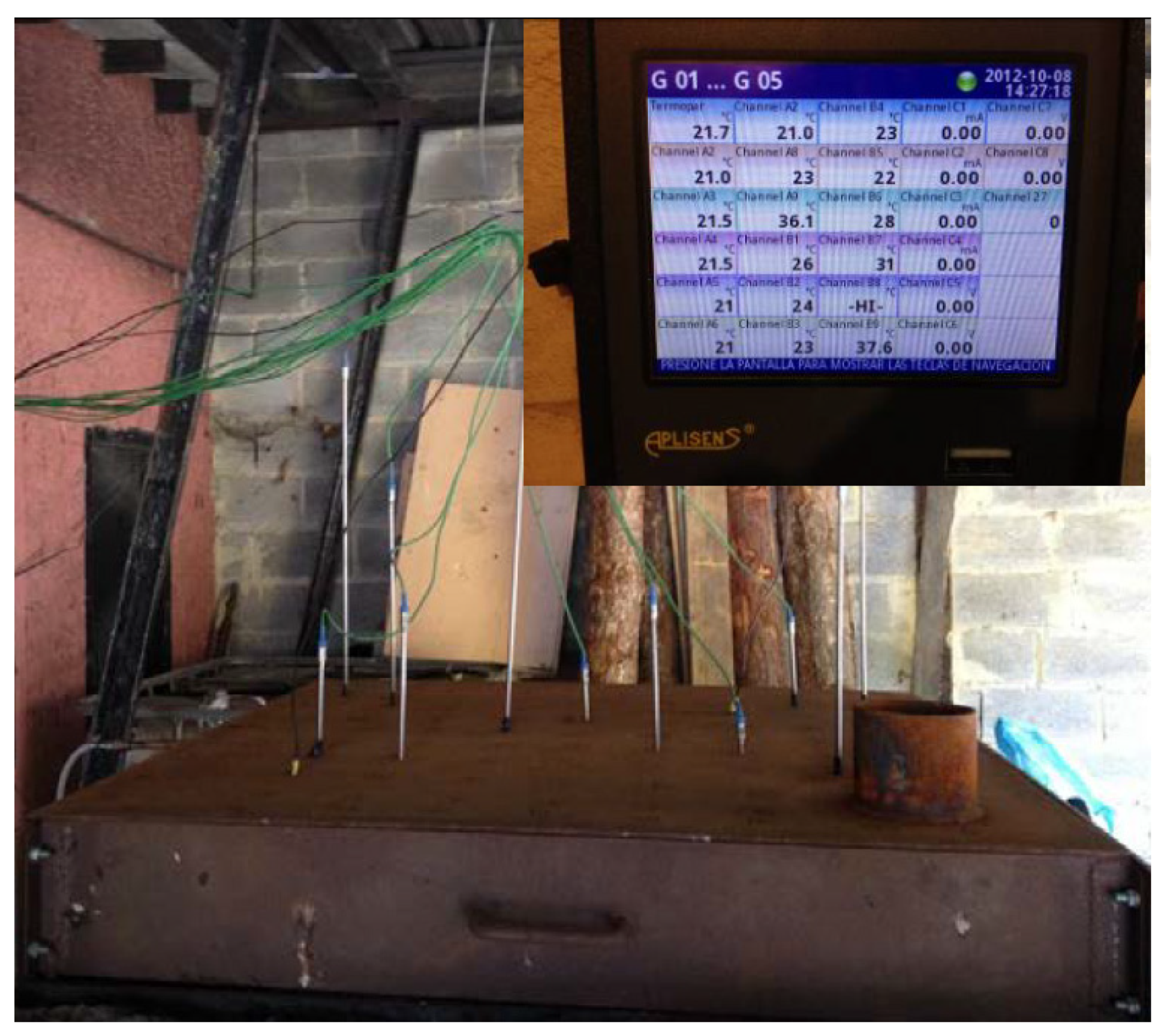
The types of coal and waste used came from the Pozo Candín mine, belonging to HUNOSA (Oviedo, Spain). The installation consisted of a metal chamber insulated with fireproof material and laterally closed with wood. Inside the metal cube, a volume of one cubic meter of hard coal mixed with waste material was introduced into it, with a similar proportion to the gob in a real mine (40% coal,) and a heterogeneous granulometry, with a majority of particles around 12–15 cm, which is within an order of magnitude comparable to previous research [9]. The characteristics of the coal used are gathered in Table 1, and the waste material was non-combustible sandstone and shale. A part of the collapsed area in the mine was simulated with this configuration. The sample was closed with a metal top cover, with a chimney for exhausting gases, as well as holes for the arrangement of the thermocouples used in the temperature control (Figure 1).
Table 1.
Characteristics of the coal samples used in the tests.
Figure 1.
Installation for the tests.
The test went through several phases until combustion was achieved, taking into account similar conditions to those developed in a real fire in an underground coal mining operation, namely:
- Monitoring the tendency of the coal to self-combust by injecting an air stream into the sample volume, with a flow rate ranging from 2.35 to 4.7 m3/h.
- Hot air, between 50 and 70 °C, was injected over the course of the experiment.
- Because of the difficulty of starting the expected self-combustion process, electrical resistance was introduced into the coal to cause ignition, producing a significant increase in temperature at the point where resistance was introduced, between 300 and 800 °C.
- The progress of combustion was observed over a certain period of time, and, finally, it was extinguished with water.
The characteristics of the coal used in the tests are gathered in Table 1, which were chosen from several samples of the coal available from Pozo Candín. All of the samples were analyzed by taking into account the following three conditions: gross sample (s/gross), dry sample (s/dry), and air-dried sample (s/sa).
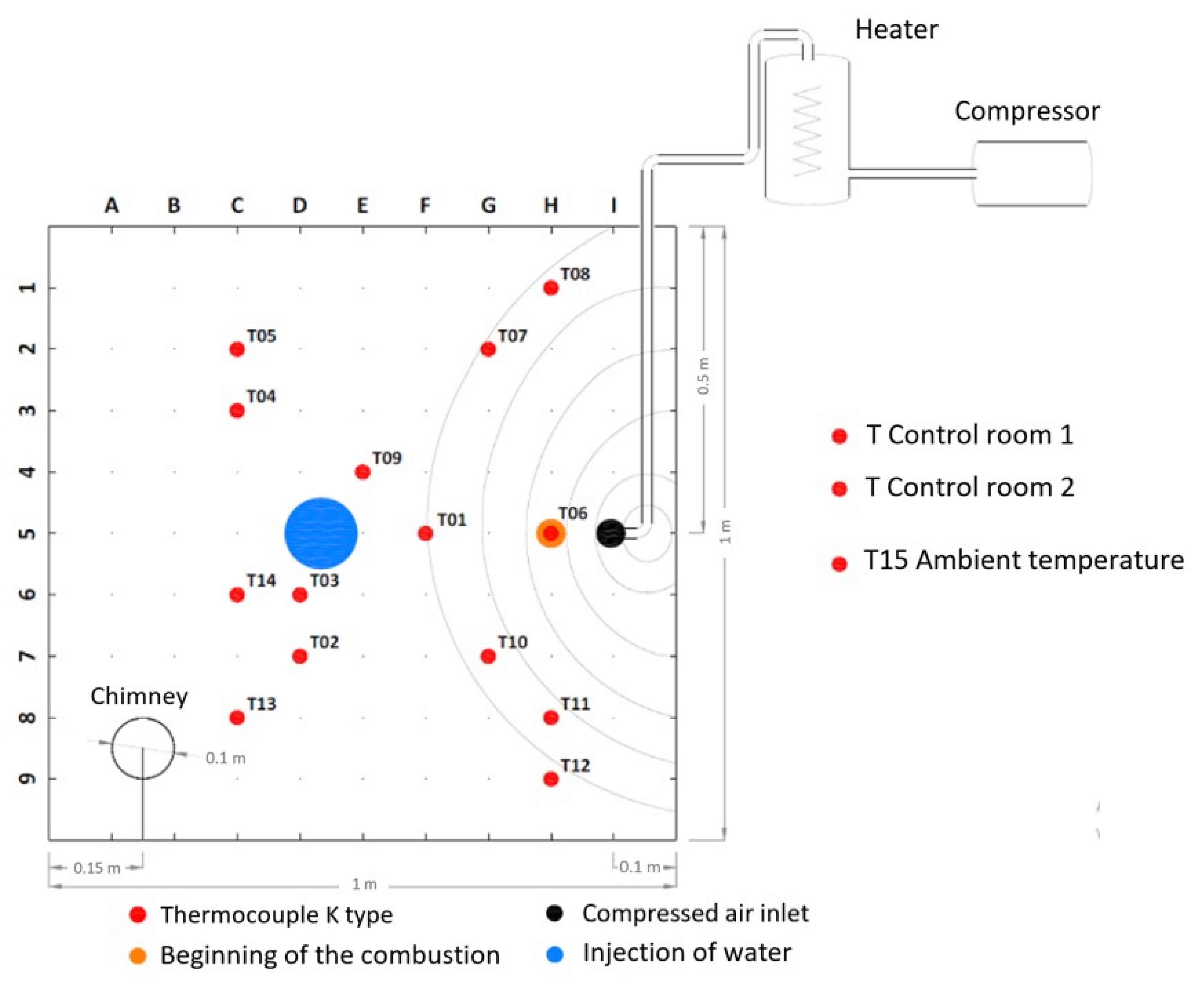
Fifteen K-type thermocouples were arranged to carry out temperature control during the test, and they were measured in degrees Celsius (°C). Thirteen of them were introduced into the mixture through the top cover and at different depths (Figure 2). The other two thermocouples were used to monitor the temperature in the air chamber, between the coal surface and the top cover, and in the local environmental conditions. Table 2 details the positions and depths of the sample collection. In addition, during the development of the test, several samples of combustion gases were taken. The compressor used, together with the heater, was able to provide an adjustable flow rate between 2.35 and 4.70 m3/h, at a high temperature. Water injection was used to extinguish the fire generated. The flue gas collection was carried out in the chimney, as shown in Figure 2.
Figure 2.
Plan view of the experiment setup.
Table 2.
Position and depth of the thermocouples installed.
2.2. CFD Analysis
The model used was initially based on the spontaneous heating of coal [27], providing heat in the initial stage. The gas flow was treated as a laminar flow in a porous medium, and spontaneous heating of the coal was modeled as a chemical surface reaction, namely, oxidation of coal, which took place in a porous medium on the surface of the coal. The Fire Dynamics Simulator (FDS) v5.3 was used to obtain the mesh and boundary conditions, as well as to solve the equations, while Smoke View (SMV) v5.3 was applied for viewing the results.
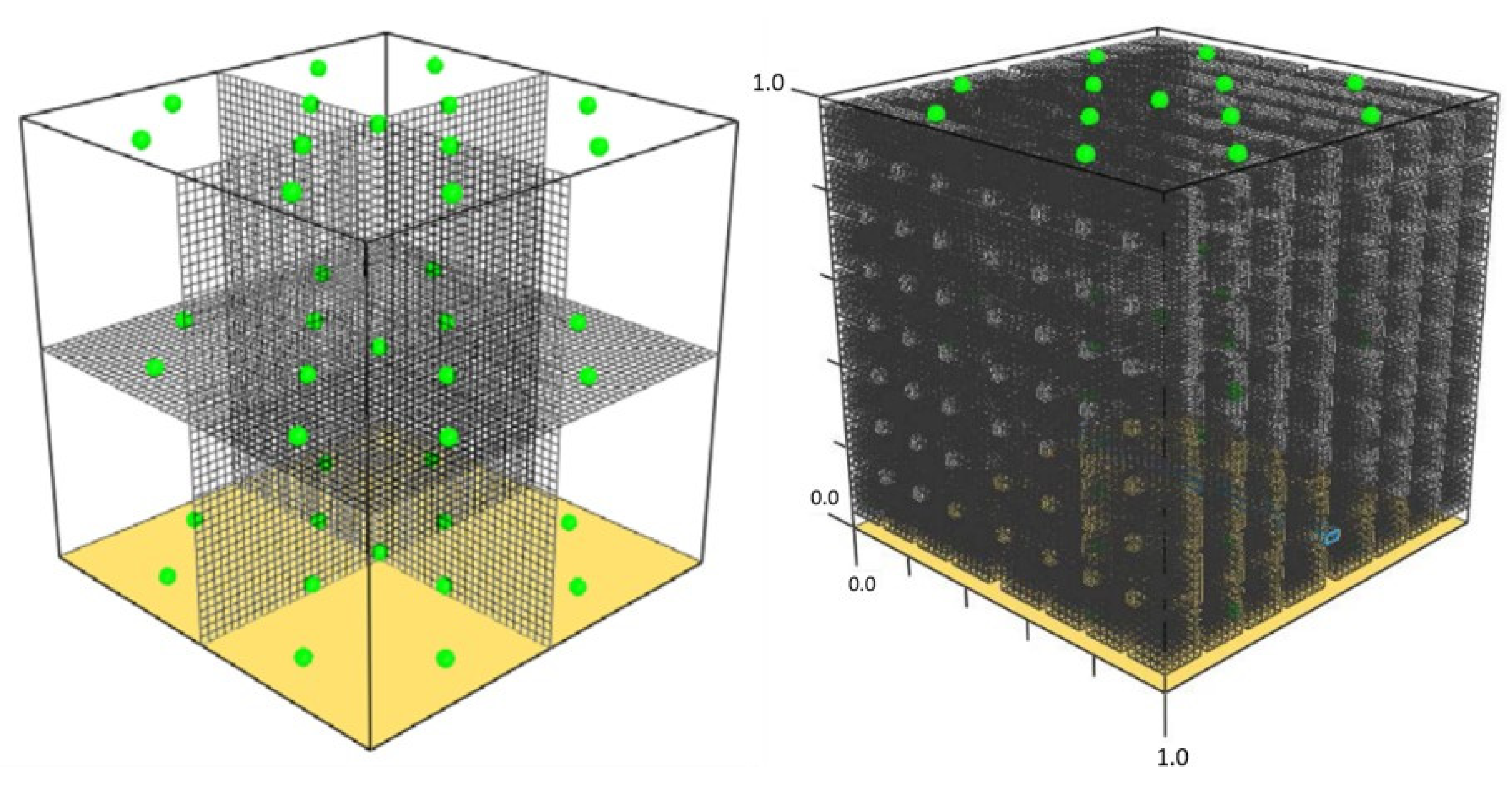
The study was carried out for an equivalent volume of coal of 1 m3 (1 × 1 × 1 m), with a cell size of 0.02 × 0.02 × 0.02 m, with a total of 216,000 cells. A preliminary analysis of the mesh with a smaller grid was done, obtaining very similar results.
The main environmental and temperature parameters were also included in the simulation, as well as the air supply system, making it similar to the airflow leakages in the collapsed area of a real mine. The supposed mixture of coal, waste, and air spaces, with a density of 1600 kg/m3, was taken into account. Figure 3 shows the meshing according to the X, Y, and Z planes of one of the models contemplated in this combustion study. The control points on the three orthogonal axes were marked on this mesh, with symmetry conditions, taking into account the sensors of the real scale tests.
Figure 3.
Mesh of the cube with the control points and the calculation subdivisions.
After several iterative simulations using the FDS software, the main values used for modelling the coal seam combustions and fires in the collapsed area were determined (Table 3).
Table 3.
Simulation conditions.
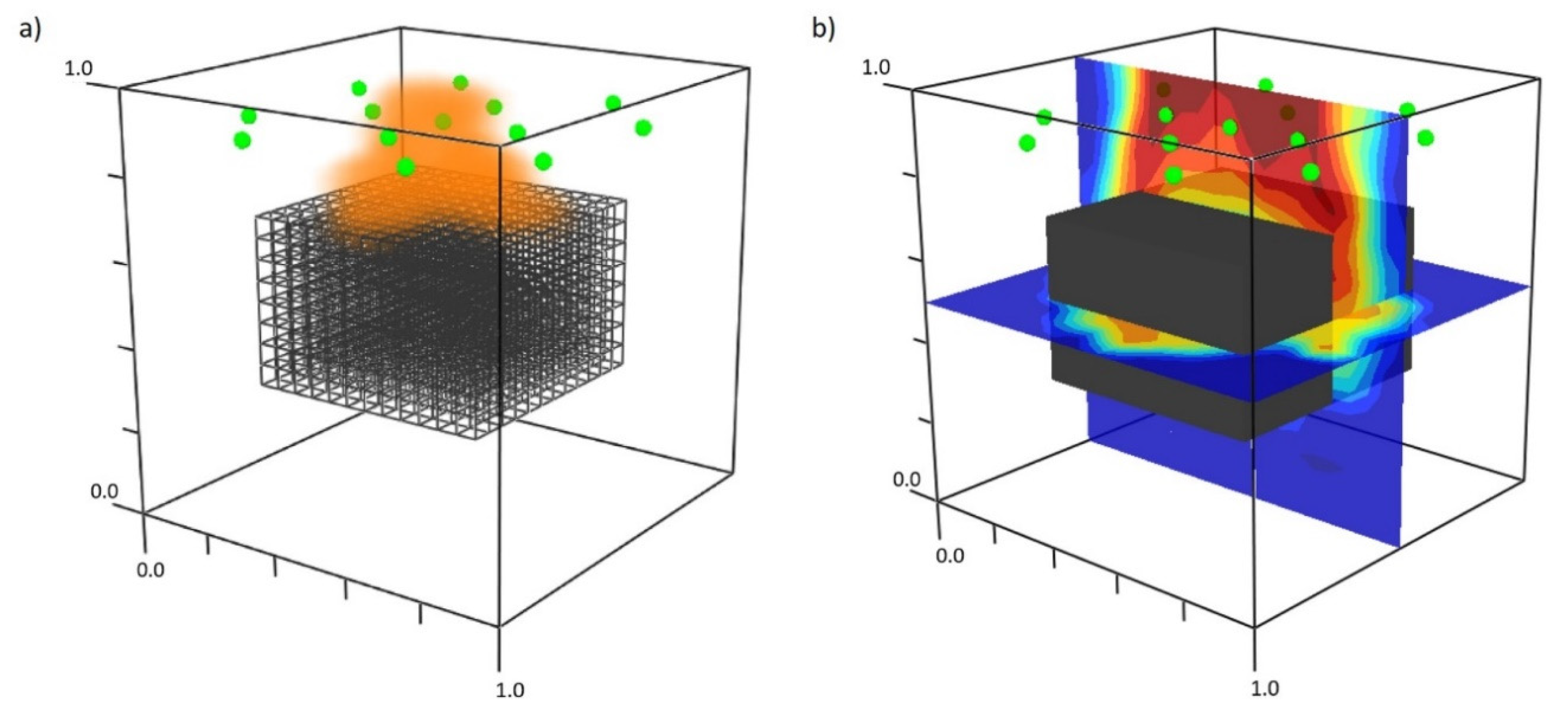
Based on the capacity of coal to react with oxygen as well as the characteristics from Table 3, a model with a single coal block was carried out in order to determine the characteristics of self-combustion. This model allowed for observing the self-heating of the carbon block and its subsequent combustion (Figure 4). This information is useful to define the characteristics of the combustible materials in subsequent simulations.
Figure 4.
(a) Model of the coal combustion at an early stage and (b) the combustion progress.
After several previous tests to determine each of the coal characteristics (Table 3), it was determined that the rate of coal consumption met the following axiom: the less dense, less absorbent, more conductive, less specific heat, less emissive, lower pre-exponential factor, and lower activation and reaction heat, the higher the proportion of fuel in its by-products and the final exothermic reaction. Therefore, it would burn in less time than another that has the opposite characteristics.
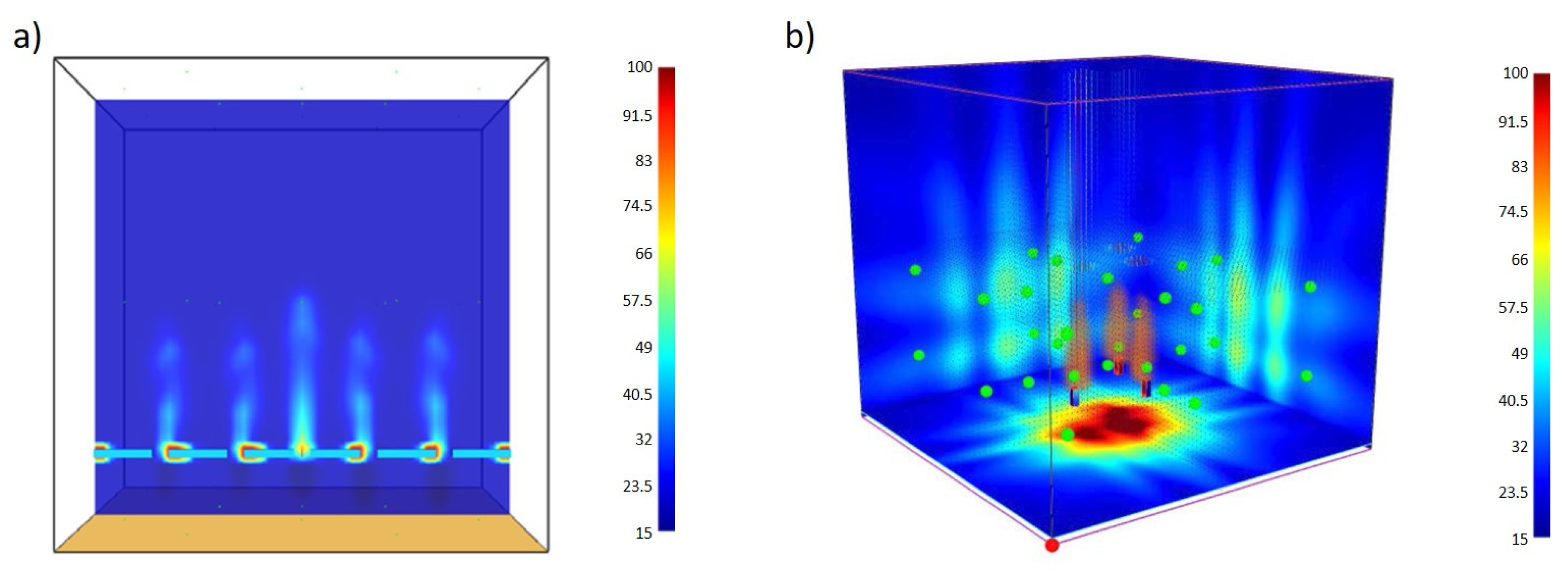
Planes that limited the calculation volume were left open and favored the exposure of coal to air, increasing the self-burning process. In one of the cases, a horizontal plane was also introduced to simulate a forced ventilation inlet in order to accelerate the combustion process due to the calculation limitations that would arise when modeling the behavior of the material over long periods of time. Figure 5 shows how the process is favored by injecting hot air and adding three points at a high temperature inside the coal block.
Figure 5.
Fire acceleration methods (a) hot air injection and (b) high temperature points in °C.
3. Results and Discussion
3.1. Real Data
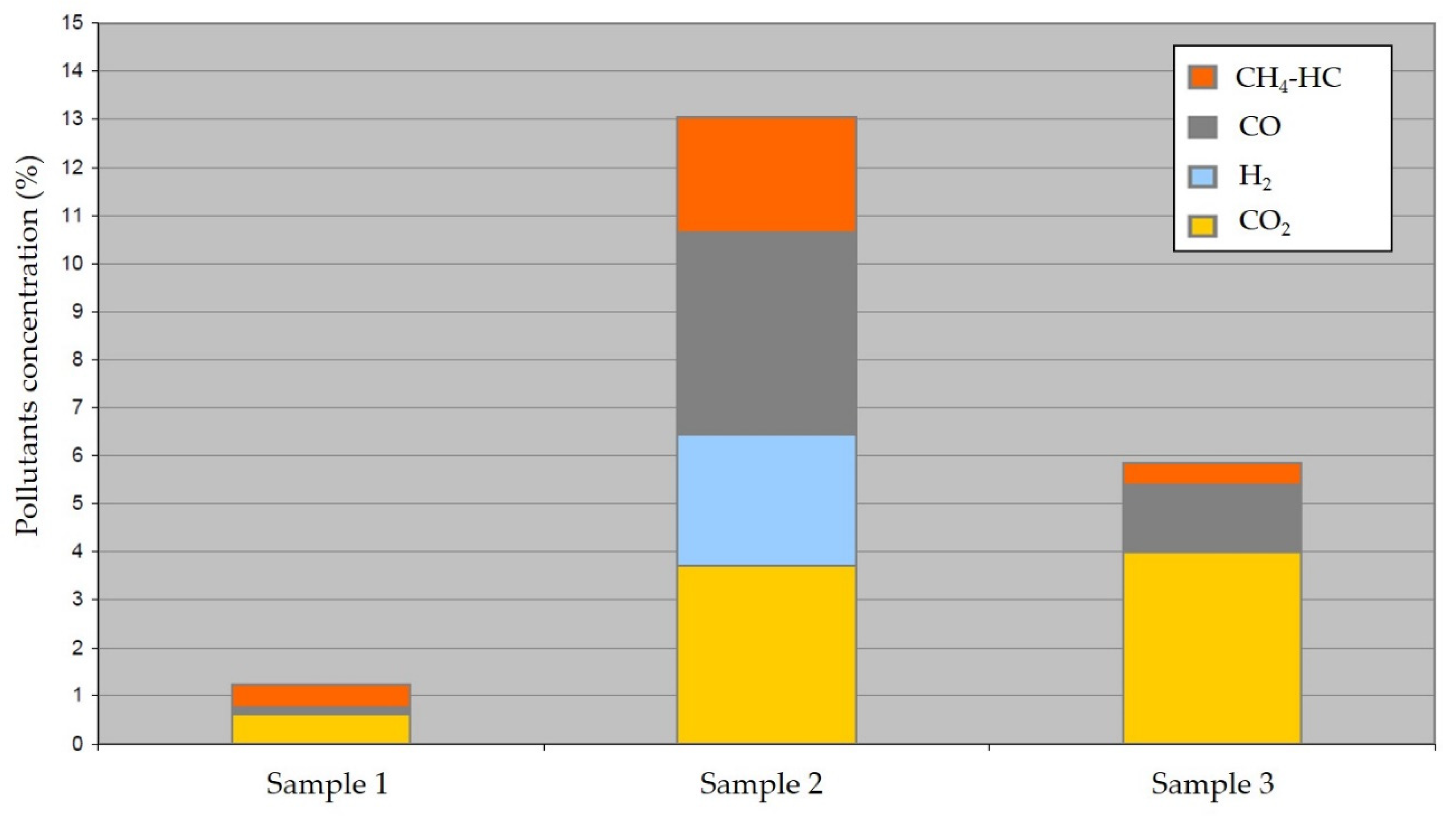
Several gas samples were collected in the combustion test. Figure 6 displays the results of the analyses, grouped by mean values, taking into account the following three groups: (a) Sample 1, heating of the coal; (b) Sample 2, after starting the combustion, with a small airflow; and (c) Sample 3, at the time of injecting a larger airflow.
Figure 6.
Pollutant concentrations in the different samples.
The temperature reached at the hot spot was 800 °C at the time of taking the first sample, while in the other thermocouples, the temperatures recorded were between 50 and 100 °C. This fact indicates a general heating of the mass of coal, promoting its oxidation and, therefore, the evolution of the gases (CO, CO2, and CH4). It is observed that the presence of CO2 was higher than the CO concentrations.
The second sample was taken after the start of the fire, when the temperature in the hot spot was around 250 °C, while in the rest of thermocouples it was around 100 °C. The flame was produced when the critical temperature was exceeded, being maintained over time by the supply of air. In this situation, the amounts of CO, CO2, and CH4 emitted increased, appearing to have a significant amount of H2.
The third sample was taken under fire conditions and with a continuous supply of air to the coal mass. Temperatures were between 750 and 1200 °C. At these temperatures, coal oxidation occurred, mainly through homogeneous reactions, with CO2 prevailing over CO, while also decreasing the presence of CH4 and H2.
The fire evolution throughout the tests, until the extinction phase, was only about 30 cm in the lateral extension. The main development was vertically, and, therefore, caused the cone to collapse. There was almost no influence of combustion from a distance of 50 cm, showing only a small increase in temperature. A reduction of the burned coal of 0.12 m3 was generated throughout the test. This behavior was consistent with previous research done in a real scale gob [5].
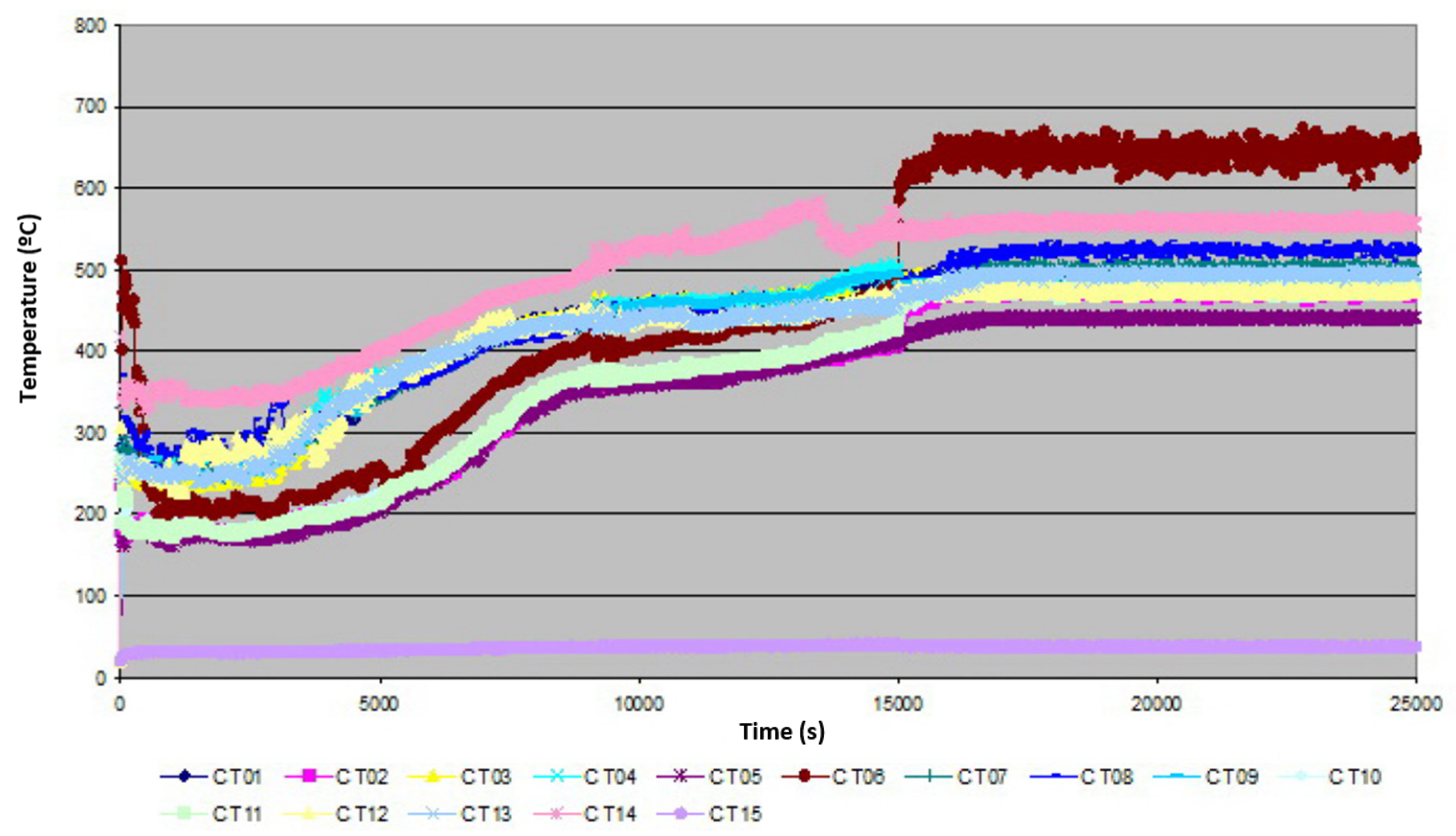
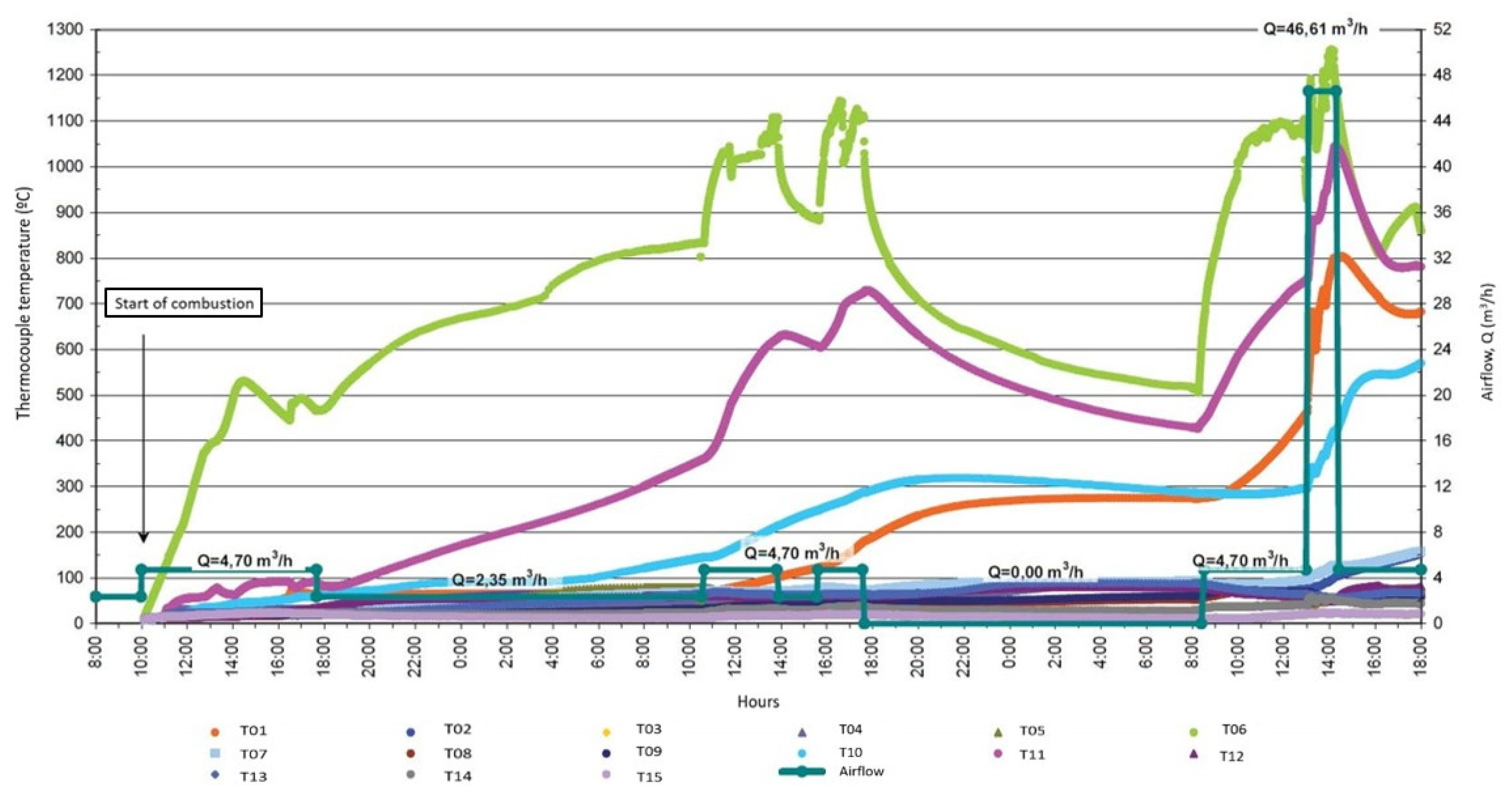
The actual evolution of the thermocouples over time during experimentation is shown below, taking into account the airflow added. As can be seen in Figure 7, the experiment had a total duration of 58 h.
Figure 7.
Temperature evolution over time in thermocouples during the experiment.
It was not possible to initiate self-combustion in this type of coal with the simple injection of compressed air, as the use of a hot spot of up to 800 °C was necessary. Furthermore, it was observed that the combustion only progressed when there was a sufficient supply of compressed air directly related to the inserted airflow. As the combustible material was burnt, a free space was generated, collapsing the mixture of coal and waste from above, reigniting the fire in areas where the temperature dropped. This phenomenon is crucial to define the fire behavior in the gob of a sublevel coal mine, which can have several sublevels. These conditions can be substantially different compared with a long wall method, because the fire can have a large column of combustible material if the fire is initiated in the gob zone at a low sublevel.
3.2. CFD Modelling
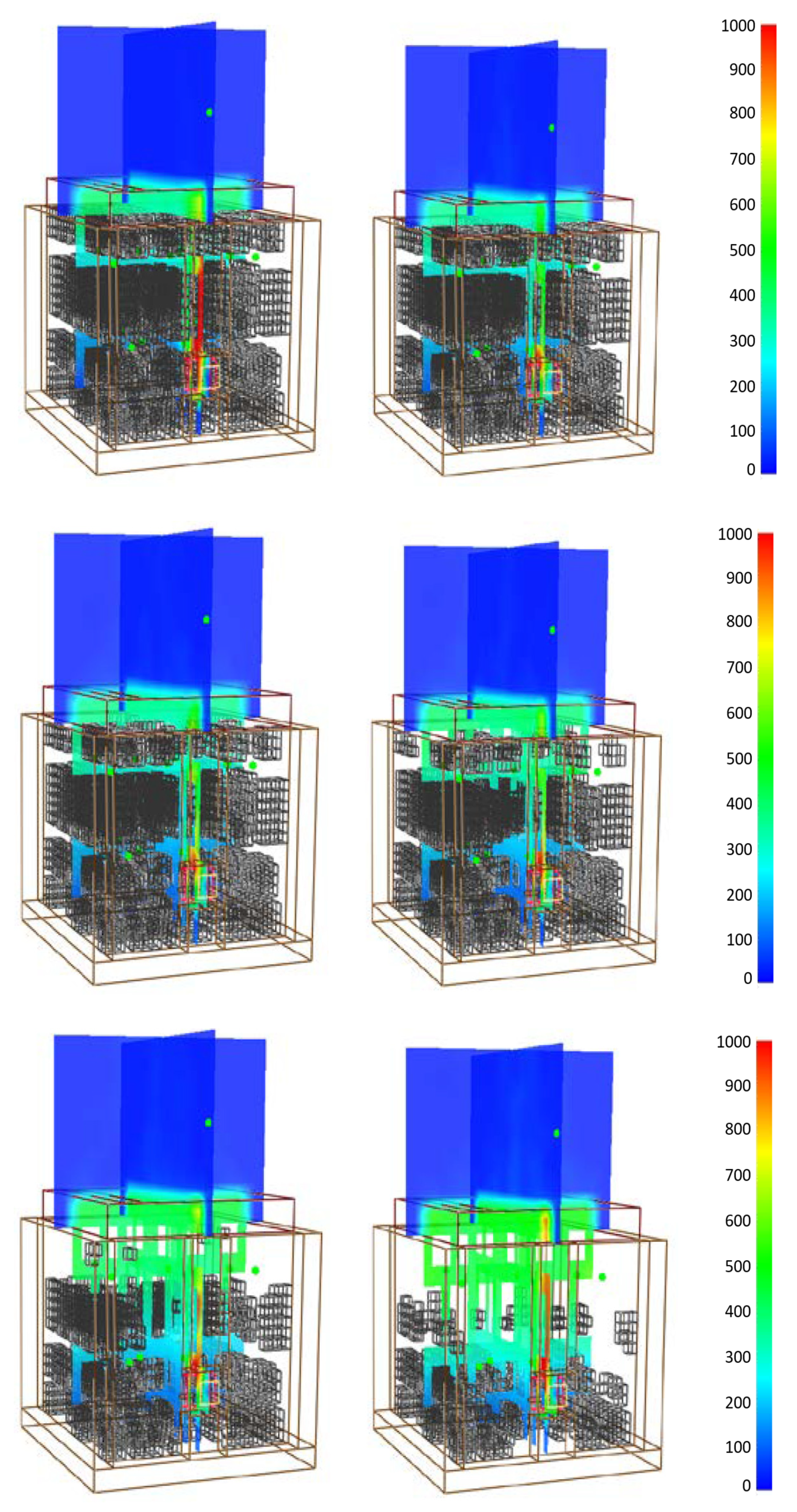
The evolution of combustion and temperature (°C) over time can be seen in Figure 8. The start of combustion was favored by including three sources of ignition, or hot spots, as in the real tests. The disappearance of coal was taken into account as it was consumed, emulating the process of collapse found in real conditions.
Figure 8.
Temperature evolution and combustion progress in the computational fluid dynamics (CFD)-Fire Dynamics Simulator (FDS) model, in °C.
The heat increase developed mainly in a vertical direction, reaching temperatures between 700 and 1000 °C in the hot spots and in its vertical axis, while temperatures between 300 to 600 °C were found in the upper part. On the other hand, the temperatures in the lower part remained below 300 °C, reaching similar conditions compared with the actual tests done. Therefore, the model suggests that considerable high temperatures can be found in upper drifts, which has been validated in a sublevel coal mine with a gob fire in the lower levels [5].
The temperature evolution in the different thermocouples can be seen in Figure 9. The beginning corresponds to the simulation four hours after the start of the experiment, showing the temperature evolution for an hour.
Figure 9.
Evolution of the temperatures simulated with FDS.
A similar trend was obtained between the simulated and measured temperatures, especially in the points located near the fire source. Further research should be done to achieve better adjustments in the thermocouples far from the ignition source. Furthermore, small variations found in the real tests were not obtained during the simulation.
4. Conclusions
An experimental procedure has been established to analyze the collapsed zone in an underground coal mine using a sublevel method reproduced at a laboratory scale, using a mixture of coal, waste, and air space where air leakages flow. This system can help to identify the behavior of a possible fire, together with the CFD model, which has been generated and validated from the experimental data.
The incidence of the coal characteristics has been determined in reference to its consumption speed and the pollutants generated under different conditions of temperature, airflow, and fire stage. This information is crucial to define the type and proportions of pollutants that can be found in the drifts of a coal mine, by determining the potential hazard and implications of a fire. The model obtained can be useful to predict, with enough accuracy, the temperatures in the gob and, subsequently, helps to know the related pollutants.
The airflow contribution has been observed to be the most critical factor for the continuation and increase of coal combustion. The development of the fire is carried out mainly vertically, with a horizontal development of only 30 cm from the focus of the fire, causing a collapse as the combustible material is burnt and relocated, initiating the fire again in areas where the temperature is relatively low. Combustion has no influence when it is 50 cm away from the focus. This information is important for a sublevel coal mine because of the large amounts of coal that can burn if the fire is placed at a low sublevel and if continuous collapses occur.
Author Contributions
Conceptualization, F.F.-A., A.M.C., A.B.-S., and M.B.; methodology, F.F.-A., A.M.C., and F.G.-F.; validation, F.F.-A., A.M.C., and F.G.-F.; formal analysis, F.F.-A., A.M.C., and M.B.; investigation, F.F.-A., A.M.C., F.G.-F., A.B.-S., and M.B.; writing (original draft preparation), F.F.-A., A.M.C., A.B.-S., F.G.-F., and M.B.; writing (review and editing), F.F.-A., A.M.C., A.B.-S. and M.B. All authors have read and agreed to the published version of the manuscript.
Funding
This research was funded by the Junta de Castilla y León (Spain), project LE167G18, as well as the European Union through the programs ECSC and RFCS, grant numbers 7220-PR/061 and RFCR-CT-2010-00005.
Acknowledgments
The authors would like to thank the AITEMIN Technology Center and its research staff, especially the León Center, as well as HUNOSA, where the experimental work was carried out.
Conflicts of Interest
The authors declare no conflict of interest.
References
- Carvel, R. A review of tunnel fire research from Edinburgh. Fire Saf. J. 2019, 105, 300–306. [Google Scholar] [CrossRef]
- Sanmiquel, L.; Bascompta, M.; Anticoi, H.F. Analysis of a historical accident in a Spanish coal mine. Int. J. Environ. Res. Public Health 2019, 16, 3615. [Google Scholar] [CrossRef]
- Medic-Pejic, L.; García Torrent, J.; Fernandez-Añez, N.; Lebecki, K. Experimental study for the application of water barriers to Spanish small cross section galleries. Dyna 2015, 82, 142–148. [Google Scholar] [CrossRef]
- Larry Grayson, R.; Kinilakodi, H.; Kecojevic, V. Pilot sample risk analysis for underground coal mine fires and explosions using MSHA citation data. Saf. Sci. 2009, 47, 1371–1378. [Google Scholar] [CrossRef]
- Fernández-Alaiz, F.; Castañón, A.; Gómez-Fernández, F.; Bernardo-Sánchez, A.; Bascompta, M. Analysis of the Fire Propagation in a Sublevel Coal Mine. Energies 2020, 13, 3754. [Google Scholar] [CrossRef]
- Edwards, J.C.; Hwang, C.C. CFD Modeling of Fire Spread along Combustibles in a Mine Entry; SME Annual Meeting; Society for Mining, Metallurgy, and Exploration, Inc.: Littleton, CO, USA, 2006; pp. 1–5. [Google Scholar]
- Hansen, R. Analysis of methodologies for calculating the heat release rates of mining vehicle fires in underground mines. Fire Saf. J. 2015, 71, 194–216. [Google Scholar] [CrossRef]
- Goffart, T.V.; Vasil’ev, A.A. Practical Issues of Safety in Coal Mines. Combust. Explos. Shock Waves 2019, 55, 500–506. [Google Scholar] [CrossRef]
- Trevits, M.A.; Yuan, L.; Teacoach, K.; Valoski, M.P.; Urosek, J.E. Understanding Mine Fires By Determining The Characteristics Of Deep-Seated Fires; SME Annual Meeting; NIOSH: Pittsburgh, PA, USA, 2009.
- Zhu, S.; Wu, S.; Cheng, J.; Li, S.; Li, M. An underground air-route temperature prediction model for ultra-deep coal mines. Minerals 2015, 5, 527–545. [Google Scholar] [CrossRef]
- Greuer, R.E. Modeling the movement of smoke and the effect of ventilation systems in mine shaft fires. Fire Saf. J. 1985, 9, 81–87. [Google Scholar] [CrossRef]
- Yuan, L.; Smith, A.C. Numerical study on effects of coal properties on spontaneous heating in longwall gob areas. Fuel 2008, 87, 3409–3419. [Google Scholar] [CrossRef]
- Fernández-Alaiz, F.; Castañón, A.M.; Gómez-Fernández, F.; Bascompta, M. Mine Fire Behavior under Different Ventilation Conditions: Real-Scale Tests and CFD Modeling. Appl. Sci. 2020, 10, 3380. [Google Scholar] [CrossRef]
- Sun, J.; Fang, Z.; Tang, Z.; Beji, T.; Merci, B. Experimental study of the effectiveness of a water system in blocking fire-induced smoke and heat in reduced-scale tunnel tests. Tunn. Undergr. Space Technol. 2016, 56, 34–44. [Google Scholar] [CrossRef]
- Guo, X.; Zhang, Q. Analytical solution, experimental data and CFD simulation for longitudinal tunnel fire ventilation. Tunn. Undergr. Space Technol. 2014, 42, 307–313. [Google Scholar] [CrossRef]
- Beckmann, A.M.; Mancini, M.; Weber, R.; Seebold, S.; Müller, M. Measurements and CFD modeling of a pulverized coal flame with emphasis on ash deposition. Fuel 2016, 167, 168–179. [Google Scholar] [CrossRef]
- Zhang, H.; Sanmiquel, L.; Zhao, Y.; Vintro, C. Researches and applications on geostatistical simulation and laboratory modeling of mine ventilation network and gas drainage zone. Process Saf. Environ. Prot. 2015, 94, 55–64. [Google Scholar] [CrossRef]
- Bustamante Rúa, M.O.; Daza Aragón, A.J.; Bustamante Baena, P. A study of fire propagation in coal seam with numerical simulation of heat transfer and chemical reaction rate in mining field. Int. J. Min. Sci. Technol. 2019, 29, 873–879. [Google Scholar] [CrossRef]
- Kong, B.; Li, Z.; Wang, E. An experimental study for characterization the process of coal oxidation and spontaneous combustion by electromagnetic radiation technique. Process Saf. Environ. 2018, 119, 285–294. [Google Scholar] [CrossRef]
- Wu, Y.; Zhang, Y.; Wang, J.; Zhang, X.; Wang, J.; Zhou, C. Study on the effect of extraneous moisture on the spontaneous combustion of coal and its mechanism of action. Energies 2020, 13, 1969. [Google Scholar] [CrossRef]
- Pan, W.; Zhang, S.; Liu, Y. Safe and Efficient Coal Mining Below the Goaf: A Case Study. Energies 2020, 13, 864. [Google Scholar] [CrossRef]
- Song, Z.Y.; Zhu, H.Q.; Tan, B. Numerical study on effects of air leakages from abandoned galleries on hill-side coal fires. Fire Saf. J. 2014, 69, 99–110. [Google Scholar] [CrossRef]
- Qi, G.; Lu, W.; Qi, X.; Zhong, X.; Cheng, W.; Liu, F. Differences in smoldering characteristics of coal piles with different smoldering propagation directions. Fire Saf. J. 2018, 102, 77–82. [Google Scholar] [CrossRef]
- Qi, G.S.; Wang, D.M.; Zheng, K.M. Smoldering combustion of coal under forced air flow: Experimental investigation. J. Fire Sci. 2016, 34, 267–288. [Google Scholar] [CrossRef]
- Hooman, K.; Maas, U. Theoretical analysis of coal stockpile self-heating. Fire Saf. J. 2014, 67, 107–112. [Google Scholar] [CrossRef]
- Wang, J.H.; Chao, C.Y.H.; Kong, W. Experimental study and asymptotic analysis of horizontally forced forward smoldering combustion. Combust. Flame 2003, 135, 405–419. [Google Scholar] [CrossRef]
- Yuan, L.; Smith, A.C. CDF modeling of spontaneous heating in a large-scale coal chamber. J. Loss Prev. Process Ind. 2009, 22, 426–433. [Google Scholar] [CrossRef]
© 2020 by the authors. Licensee MDPI, Basel, Switzerland. This article is an open access article distributed under the terms and conditions of the Creative Commons Attribution (CC BY) license (http://creativecommons.org/licenses/by/4.0/).