


Abstract
This study first analyzes the national and global infection status of the Coronavirus Disease that emerged in 2019 (COVID-19). It then uses the trend comparison method to predict the inflection point and Key Point of the COVID-19 virus by comparison with the severe acute respiratory syndrome (SARS) graphs, followed by using the Autoregressive Integrated Moving Average model, Autoregressive Moving Average model, Seasonal Autoregressive Integrated Moving-Average with Exogenous Regressors, and Holt Winter’s Exponential Smoothing to predict infections, deaths, and GDP in China. Finally, it discusses and assesses the impact of these results. This study argues that even if the risks and impacts of the epidemic are significant, China’s economy will continue to maintain steady development.
1. Background
With the increase in human activity, our natural environment has changed significantly. China’s epidemics stemming from wildlife will continue to rise in 2020. Unlike African swine fever which has a higher risk of occurrence and further transmission in wild boar populations, the risk of spreading bird flu, rabies, plague, and other zoonotic infectious disease pathogens to humans persists (Phoenix News n.d.). In December 2019, a new virus outbreak occurred and has not been under complete control. Therefore, we initiated research on this new pneumonia virus to predict its duration, infections, death toll, and the impact on China’s economy for risk assessment, based on intelligent information processing methods (Luo et al. 2020).
The novel coronavirus pneumonia (COVID-19) outbreak in Wuhan quickly spread throughout China and the world. As no drug has been developed for treating coronaviruses (Li and Clercq 2020), the outbreak causes a negative impact on economic development (Yue et al. 2020) and their social consequences (Liu et al. 2020; Wang et al. 2020).
From 31 December 2019 to 07:30 a.m. on 1 February 2020, the number of confirmed patients, deaths, and suspected patients increased day by day in China, as shown in Figure 1, with specific daily data presented in Table 1 (National Health Commission of the People’s Republic of China 2020).
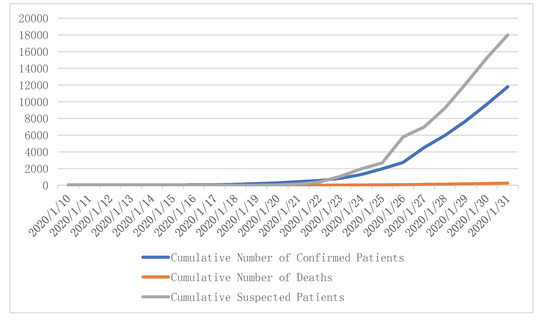
Figure 1.
Number of confirmed patients and deaths in the past month.

Table 1.
Number of confirmed patients and deaths in the past month.
The disease spread to all provinces, municipalities, and autonomous regions, with Hubei Province seeing the most serious outbreak. Figure 2 shows the number of confirmed patients (purple) and deaths (orange) in China (MedSci n.d.), with most deaths concentrated in Hubei Province.
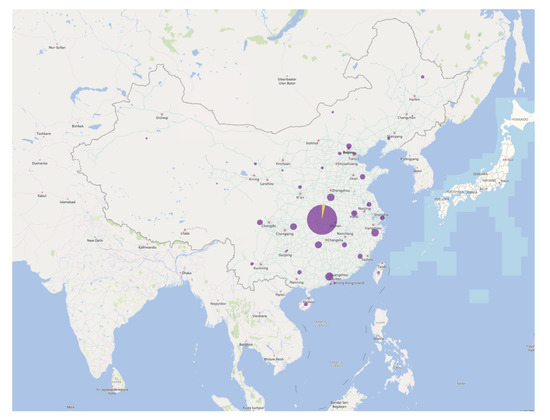
Figure 2.
Schematic diagram of the number of infected patients and deaths in China as of 07:30 a.m. on 1 February 2020.
Table 2 shows the number of infections and deaths in each province, municipality, and autonomous region as of 07:30 a.m. on 1 February 2020 (MedSci n.d.), with Hubei Province accounting for 96.23 percent of deaths (204/212) and 59.17 percent of confirmed patients (5806/9812).
Table 2.
Number of infected and deceased patients in all provinces, municipalities, and autonomous regions of China as of 07:30 a.m. on 1 February 2020.
The outbreak has also spread to other countries, including Thailand, Japan, Singapore, South Korea, Australia, Malaysia, the United States, Germany, France, the United Arab Emirates, Canada, Vietnam, the United Kingdom, Russia, Italy, Nepal, Cambodia, Sri Lanka, Finland, and India (Figure 3). Table 3 shows the number of people infected in each country (MedSci n.d.) as of 07:30 a.m. on 1 February 2020.
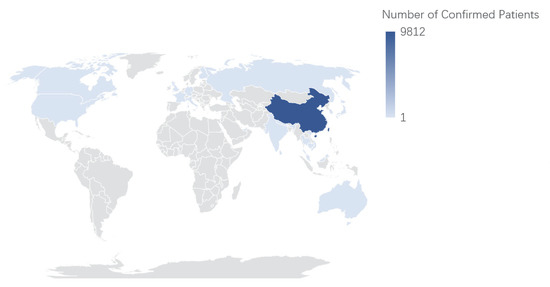
Figure 3.
Schematic diagram of the number of infected patients around the world.
Table 3.
Number of infected patients around the world as of 07:30 a.m. on 1 February 2020.
2. Methods and Results
The identification of risk factors is important and can be done by using various methods (He et al. 2019). This study has only predicted the duration, the number of infections and deaths, and the virus’s impact on the economy because the data on COVID-19 are limited. However, these three risk points are highly important. They not only provide useful public health and safety information but also useful insights to economics and policy making. This study used publicly available data from 20 January 2019 to 31 January 2020 to compare COVID-19 with severe acute respiratory syndrome (SARS) and make predictions. The predictions are mainly divided into the following three sections: duration, infections and deaths, and the impact on China’s economy.
2.1. Duration
The predicted duration was mainly based on the curve comparison. Firstly, this study drew the curves of the number of infected, dead, and cured people based on SARS data; then, it found the inflection point (IP) and Key Point (EP) based on the curve and data; finally, it computed the IP and EP of the COVID-19. A schematic diagram of the entire process is shown in Figure 4.
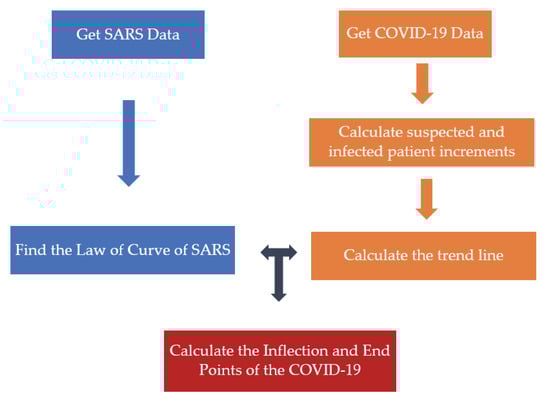
Figure 4.
Schematic diagram of the calculation method of the duration of COVID-19 (authors’ figure).
In the first step, this study compared the COVID-19 with SARS data to analyze and predict the time when the virus could continue to infect people. World Health Organization (WHO) data regarding the number of confirmed cases of SARS (2003), deaths, and recoveries are presented in Table 4, with the data on China’s SARS infection from 27 March 2003 to 11 July 2003 shown in Figure 5.
Table 4.
Number of confirmed cases of severe acute respiratory syndrome (SARS), deaths, and recoveries in China.
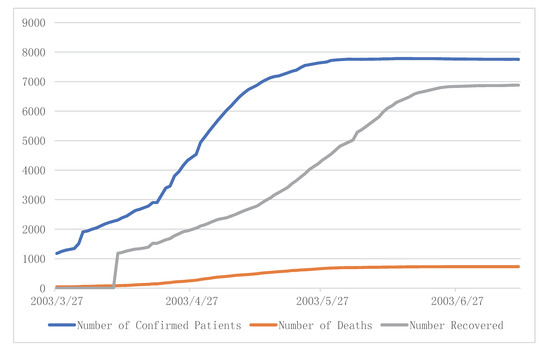
Figure 5.
Number of confirmed cases of SARS, deaths, and patients recovered in China.
By following the SARS data, we determined two key time points, one being the Inflection Point (IP). The IP is the time at which the infected person does not worsen significantly. This study argues that when the number of suspected cases increasing per day equals to the number of cases increasing daily, the condition stabilizes and reaches the IP. As per Table 5 and Figure 6, we predicted that the IP would appear on 8 February 2020, based on the Polynomial Method. According to the judgment of Professor Liubo Zhang, Director of the Center for Disinfection and Testing of the Chinese Center for Disease Control and Prevention, combined with media reports, we set the IP of SARS to 14 May 2003 (CCTV 2003; CNTV 2012; Zhejiang News 2017) and its KP (Key Point) to 11 July 2003. We then calculated that the KP of the COVID-19 was 19 February 2020.
Table 5.
Increasing daily numbers of infected and suspected patients of COVID-19 throughout January 2020 in China.
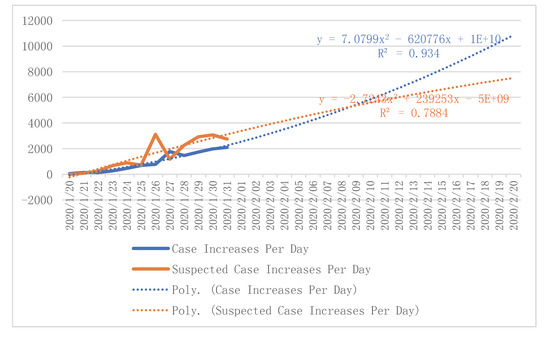
Figure 6.
Trend prediction of suspected case increases per day and number of cases increasing per day based on the Excel–Polynomial Method.
IP (COVID-19) = 39 days (31/12/2019–08/02/2020)
IP (SARS) = 194 days (01/11/2002–14/05/2003)
KP (SARS) = 252 days (01/11/2002–11/07/2003)
39/(194/252) = 50.65 days≈50 days (Data lags, fetches one day forward)
KP (COVID-19) = 50 days (2019/12/31–2020/02/19), the Key Point date is 19 February 2020.
Incubation period = 24 days (Wei-jie Guan et al. 2020)
Duration (COVID-19) = 50 + 24 = 74 days (31/12/2019–14/03/2020)
Therefore, our predicted duration was seventy-four days (up to 14 March 2020).
2.2. Infections and Deaths
Previous researchers (e.g., Myers et al. 2000; Ong et al. 2010; Tizzoni et al. 2012) have conducted work to forecast epidemic trends. Two concerns are usually investigated: one relating to geographic development and the other to time series. For the former, if the focus is on accuracy and generalization, the global epidemic and mobility model is popular for urban mobility tracking and forecasting with the prerequisite that transmission tracks of infectors should be timely and fully traced and kept. For example, when SARS occurred in 2003, according to the WHO summary, travel records of super-spreaders, including where they lived, which public transportations they had taken, and who had possibly had contact with them. However, the overwhelmed transportation system and huge population movement during the Chinese New Year holiday increased infectors or carriers of COVID-19 exponentially. That increased the difficulty for us to track all the infectors and carriers’ activities as compared to SARS in 2003. Therefore, we focused on the time series development of the new virus. Time series sequence development contains three components: trend, season, and cycle. The three factors should be considered equivalently. The Autoregressive Moving Average model (ARMA) and Autoregressive Integrated Moving Average model (ARIMA) are widely used to conduct time series analysis and prediction (forecasts) in finance, business, real estate and epidemics. ARIMA is based on ARMA by including integration. If the dataset rejects the stationary hypothesis, this proves that the dataset is stationary and that ARMA is the better choice to perform the prediction. Conversely, if it cannot reject the hypothesis, the dataset is not stationary, and therefore ARIMA should be adopted. The difference should be conducted multiple times on training data in ARIMA to ensure a stationary series for the next step (Li and Chau 2016; Mollison 1977; Riley 2007; Valipour et al. 2013; Nieto et al. 2018). The flowchart is shown in Figure 7.
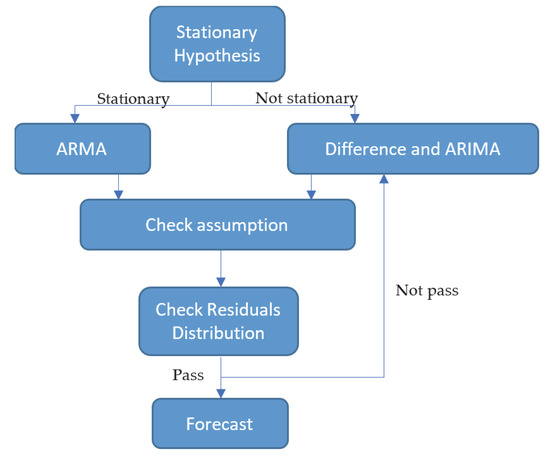
Figure 7.
Time series data analysis and prediction (forecasts) process for ARIMA and ARMA
Taking the number of patients as an instance, the P-value is 0.8. It indicates that we can reject the stationary hypothesis. For the analysis, we set
where are parameters,
is a constant, and the random variable is the white noise. stands for a time series. N stands for the length of .
In this case, we treated the growth of patients, deaths, or suspected cases as a series changing with time. Auto-covariance of the temporal series can be represented by:
To exempt the effect of scale of different samples, we introduced correlation based on covariance, where correlation is a scale-free measure compared with covariance.
Since we here compared elements of different time slots from the same time series, and used autocorrelation to measure the effect of previous performance on current data:
It is defined as describing the relationship between two elements on different time slots based on time intervals to find the pattern with time passing. However, ACF here is the correlation between the t element with the one of k lag. Actually, it is not just about and . Because is also affected by elements between them, e.g. . And these elements also have relevance with and . So we here introduced partial autocorrelation (PACF). It eliminates the influence of elements between and .
We then draw two plots on autocorrelation and partial autocorrelation.
Autocorrelation is shown as per Figure 8:
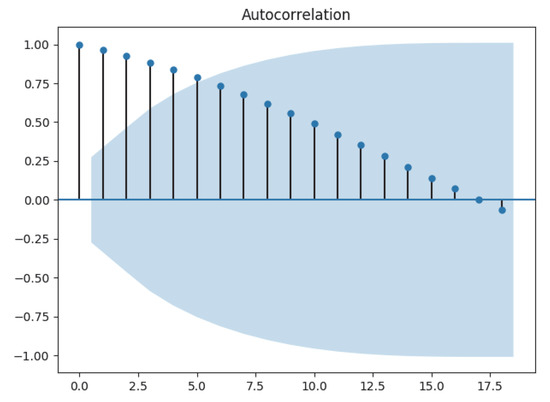
Figure 8.
Autocorrelation plot graph for patients’ dataset. k lag is set on x – coordinate and y is set on y. It shows that with time interval larger, the correlation goes down.
Partial autocorrelation is shown in Figure 9:
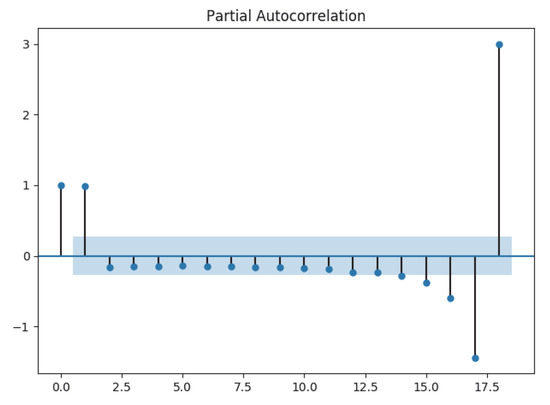
Figure 9.
Partial autocorrelation plot graph for the patients’ dataset. The lag between 0.0 to 1.25 and 17.0 towards 18.0 has relevance.
According to these two plots, we know that and , and the Akaike information criterion estimator is used to generate and again for verification, which are equal. Alternatively, we may use automatic parameter modification Python library to generate models (Pyramid_Arima), which is shown in Figure 10. Here p stands for the number of lag observations included in the model, also called the lag order, d is the number of times that the raw observations are differenced, also called the degree of differencing. And q is the size of the moving average window.
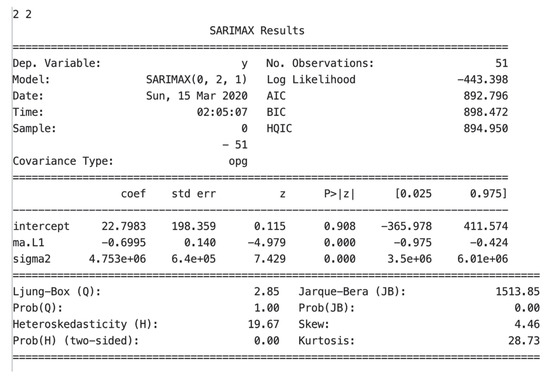
Figure 10.
Pyramid_Arima Python lib parameters autocorrection result.
There is no obvious low correlation after k lag either in PACF nor in ACF, so we used ARMA to do the prediction. To clarify, if there was clear correlation performance after k lag in ACF only, we used Moving Average (MA); if only in PACF we used Autoregression (AR). If neither shows correlation, we use ARMA. Under the ARMA condition, if the performance with time passing is stable, we used ARMA; if not stable, we used ARIMA to deal with random unstableness.
Through our calculations, we attained the forecast results for 20 March 2020; simultaneously, we assumed that after March 20, the condition would become stable, and the number would not have major changes. The results are shown in Table 6, Figure 11, Figure 12 and Figure 13.
Table 6.
Predicted number of patients and deaths.
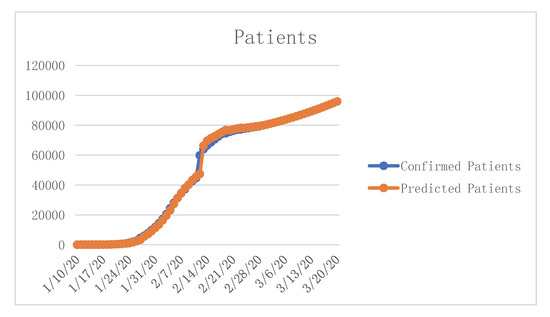
Figure 11.
Predicted number of patients.
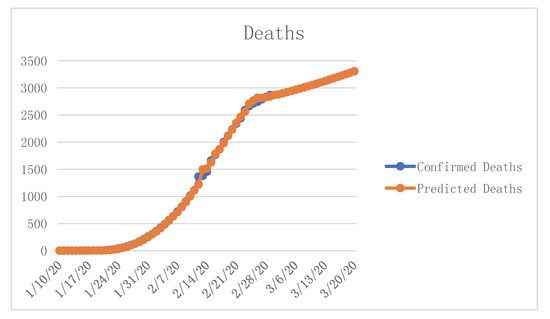
Figure 12.
Predicted number of deaths.
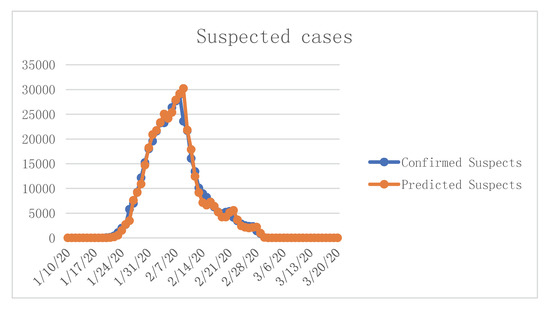
Figure 13.
Predicted number of suspects.
Our prediction results show that COVID-19 would be effectively controlled by 19 February 2020, the number of infected patients was expected to be 133,548, the number of deaths was expected to be 1517, and the case fatality rate (CFR) was 1.14 percent. After that, the number of infections and deaths would stabilize at these two values. The condition would gradually stabilize, more and more people would recover, and social production activities should begin to return to normal after 14 March 2020.
2.3. Impact on China’s Economy
Due to the complexity of China’s economic system, this study focused on COVID-19′s impact on workers’ income and the impact on China’s GDP. Individual’s income represents China’s microeconomy while GDP represents its macroeconomy. The impact on work is in the next section, which forecasts GDP.
To achieve these goals, we obtained GDP data for 2000–2019 from the (National Bureau of Statistics n.d.), as shown in Table 7.
Table 7.
China’s GDP by Quarter, 2000–2019.
Based on data from the National Bureau of Statistics of China, we have a rising trend of GDP for the past 2 decades (Figure 14). The question is that whether the trend keeps pace with the lag in the trade war and COVID-19.
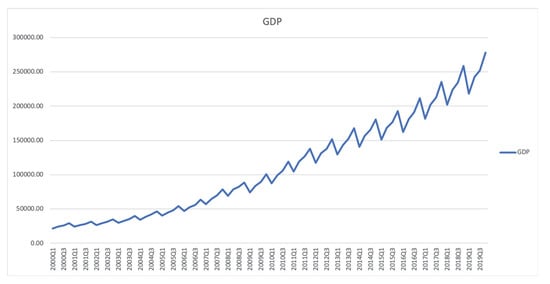
Figure 14.
2000–2019 GDP (in 100 million RMB) of the People’s Republic of China.
Figure 14 indicates that GDP kept rising as the trade war problem worsened in the second quarter of 2019. The increase in GDP reduced, possibly indicating worsening data pointing to the risk of a sharper decline, but soon recovered due to the People’s Bank of China’s (PBOC) efforts to help domestic companies, such as an increase in liquidity. However, in other areas of the world, for example the US, where the Federal Reserve has slashed broad borrowing costs since July, the PBOC has been trying to maintain gradual approaches. This is an effective means of constraining re-inflating debt bubbles.
In December 2019, the novel coronavirus epidemic broke out in the center part of China. This caused a fear of cascading spillovers of supply and demand, regardless of whether they would be peripheral or domestic. Katrina Ell, economist at Moody’s Analytics, has already expressed her gloomy view on China’s GDP with a forecast of 5.4 percent for 2020 (Bloomberg 2020).
Because the SARS outbreak had side effects on China’s economy, we labelled both 2003 and 2020 with the same features for data training (Table 8). Considering SARS affected four quarters (2002Q4, 2003Q1, 2003Q2, and 2003Q3), we forecast COVID-19 to be under control by 14 March, people will still need at least one or two months to restore confidence, so we calculated the figures according to a three quarters model (2019Q4, 2020Q1, and 2020Q2).
Table 8.
Epidemic label for GDP data training.
After exploring the stationary level, we concluded the statistical parameters shown in Table 9.
Table 9.
Hypothesis parameters.
GDP prediction is a complicated process as that is affected by many economic variables. Here we do not go deeply into the discussion on how these factors are accounted for when calculating GDP. We will explore the temporal relationships within the data.
Figure 14 shows that there is no clear trend. Normally in the economy or business industries, a cyclic performance is considered. Since we can see that there is a fixed season (seasonal = 4), and the cyclic is used to define an unfixed pattern, we confirm the performance of GDP distribution with no trend and seasonal = 4.
Therefore, we have two possible models:
- -
- Seasonal Autoregressive Integrated Moving-Average with Exogenous Regressors (SARIMAX)
- -
- Holt Winter’s Exponential Smoothing (HWES)
SARIMAX is an extension of SARIMA that includes the modeling of exogenous variables. In an economy, there are always exogenous variables that have no relationship within the data but are imported by peripheral effects. Here we treat epidemic and time as considerations of exogenous variables for regression. A summary of the SARIMAX model is shown in Figure 15:
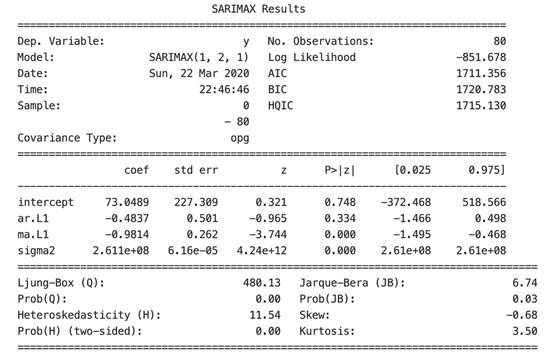
Figure 15.
Summary of SARIMAX results.
HWES contains three exponentially weighted linear functions of observations. One works at a prior time step of exponential smoothing. If the dataset contains neither trends nor seasonal trends, single exponential smoothing is used; if it contains trends, then double smoothing is considered; if seasonal with trends are observed, the triple exponential smoothing is used. The model summary is shown in Figure 16:
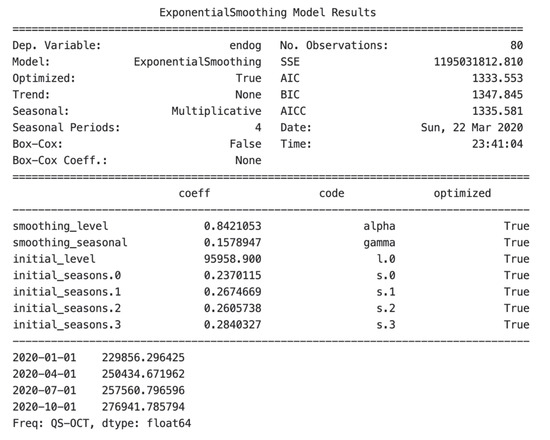
Figure 16.
Summary of HWEX.
This study used Python library stats models to explore both of the methods and the prediction of the GDP dataset as listed below, in Table 10 and Figure 17:
Table 10.
Predication results.
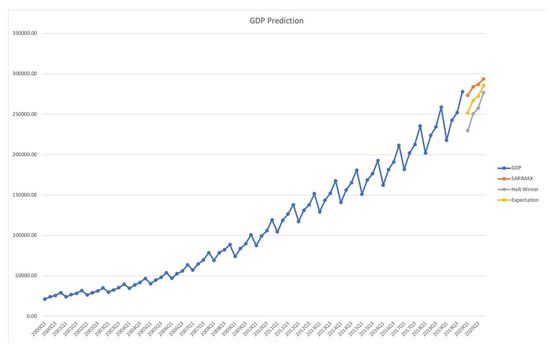
Figure 17.
GDP (in 100 million RMB) and the Three Predictions.
In addition, the graph of distribution is below in Figure 17:
3. Analysis of Duration, Number of Infections, and Deaths
Based on the previous analysis, we have summarized the covid-19 and SARS regarding their duration, number of infections, and deaths.
3.1. Duration
We compared the outbreak time and found that there was a high degree of similarity between the two viruses. The duration comparison of the two viruses is shown in Table 11. Regardless of the traditional epidemic model, we conclude that the transfection rate of COVID-19 is 57.87 times faster than that of SARS, as shown in Figure 18.
Table 11.
Duration comparison of SARS versus COVID-19.
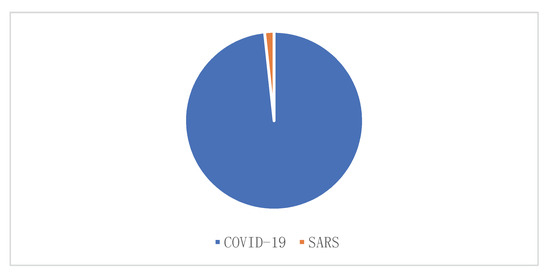
Figure 18.
Average number of cases in China (per day).
In 2020, there are 366 days, of which seventy-four will be affected by the COVID-19 virus. In comparison, SARS affected 191 days in 2003, as shown in Figure 19. In terms of duration, the COVID-19 is spreading rapidly, but it will probably not have a longer-lasting impact in China than SARS in 2003.
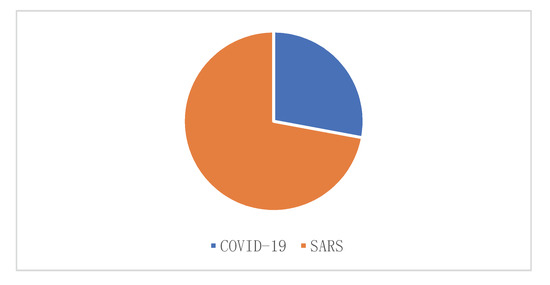
Figure 19.
Affected days.
3.2. Infections and Deaths
From 2002 to 2003, SARS also raged in China. According to World Health Organization (2003), the two viruses are highly similar in terms of area and duration of the outbreak, as shown in the comparison in Table 12 and Figure 20.
Table 12.
Comparison of SARS versus COVID-19.
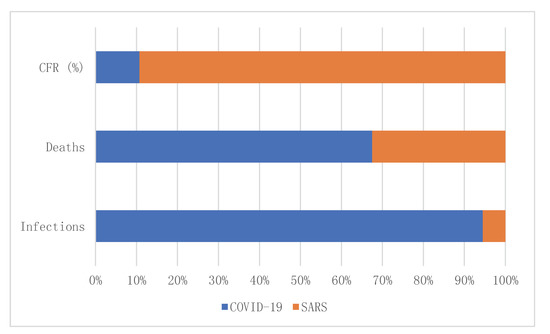
Figure 20.
Comparison of SARS versus COVID-19.
As mentioned, most deaths in China (96.23 percent) have been concentrated in Hubei Province. This study consulted the website of the Health Commission of Hubei Province (2020) for information regarding the thirty-two deceased patients in this study time period, which is shown in Table 13.
Table 13.
Patient information of the thirty-two deceased persons in Hubei Province.
The CFR of SARS is 8.34 times that of COVID-19. The number of infections and deaths from COVID-19 is 17.22 times and 2.09 times that of SARS, respectively. In terms of CFR, deaths, and infections, many more people have been infected by the new virus in 2019–2020, but the CFR is not high. The average age of the deceased was 71.3 years. The life expectancy of the deceased is 92.2 percent of the life expectancy of Hubei in 2020, 77.3 years (Health Commission of Hubei Province 2017), suggesting that the mortality rate of this disease may not be as alarming as expected.
In addition, except Hubei Province, the CFR in other provinces, municipalities, and autonomous regions is very low (close to 0 in Table 14), and we conjectured the relative high mortality rate in Hubei Province was caused by the following three factors:
Table 14.
Comparison of CFR between Hubei and non-Hubei provinces.
- (1)
- The infected people were in fear of this virus. This negatively affected the immune system. In addition, other factors such as tension between doctors and patients and the decline in patient care satisfaction also affected the mood of patients.
- (2)
- There were too many infected and suspected patients, and many of them were sent to hospitals. On the one hand, as there were insufficient hospital beds, cross-infection occurred.
- (3)
- There were many elderly people infected in Hubei Province. Many of them also had other underlying conditions and diseases (Health Commission of Hubei Province 2020).
In short, these factors resulted in relatively high mortality rate in Hubei Province.
4. Analysis of Impact on China’s Economy
We analyzed the impact of covid-19 on China’s economy from two aspects: different types of jobs and GDP growth rate.
4.1. Analysis Based on Job Type
Chinese jobs can be divided into four categories according to their occupational characteristics, and we analyzed them separately.
4.1.1. National Staff from Government Departments, Institutions, and State-Owned Enterprises
State departments are established and managed by the state, and wages are coordinated nationwide, so income will not be affected.
4.1.2. Private Enterprise Staff
(1) The adverse impact on private enterprises is relatively more serious. It includes catering, tourism, film, transportation, and other industries. These industries may have been completely closed in recent months.
(2) The income of employees in large and medium-sized private enterprises may be relatively stable because the capital flow of enterprises is usually stable and strong. However, some enterprises’ losses are serious when covid-19 in Europe and the US led to a substantial drop in the demand for goods and services. If covid-19 does not end shortly, these companies may have a liquidity problem..
(3) Small and micro-private companies may be severely damaged and unable to pay salary to their employees. Therefore, this outbreak may lead to bankruptcy or even wind up eventually.
4.1.3. Short-Term and Freelance Staff
Waiters, migrant workers, and live broadcasters are examples of short-term and freelance staff.
(1) Short-term and freelance workers, such as: waiters, migrant workers, may lose their jobs or experience salary reduction. Because jobs such as restaurant waiters cannot work from home, they must stop working during the outbreak.
(2) China is now a hot new market for freelance live broadcasters; the income of these broadcasters is also adversely affected. Their income is usually divided into two parts: the basic salary issued by the contracted company and the gift awarded by the audience (fans). For live broadcasters with fewer fans, the income may not be affected, most of them have not been signed by the platform, and normal live broadcast income is also very small. For live broadcasters with a large number of fans, the income has a greater impact. Because of the advent of the economic winter, the contracting company may face difficulties in cash flow, and because of the loss of income, fans will also reduce or even not give gifts.
4.1.4. Production Staff in Agriculture, Forestry, Animal Husbandry, and Fishery
As a result of the restrictions on their production activities, their income is expected to be affected to some extent, because most of these workers can guarantee self-sufficiency in their basic living.
4.1.5. Summary
In terms of basic living security, the impact may not be that high, but considering that many workers—especially the second, third, and fourth types of workers—may consider raising children or taking out mortgages, car loans, etc. their unstable income will have a rapid impact. In addition, the superior units and bosses of the second and third categories of staff may also cause difficulties for their employees’ lives if they face the problem of capital outages.
The income of national staff will not be affected. In the short term, the income of nonstate workers will drop significantly, the unemployment rate will increase; and the emerging market multinational enterprises cannot achieve improved innovation performance (Mi et al. 2020). However, with the full-scale construction and economic recovery, it is expected that income will gradually stabilize after 14 March 2020.
4.2. GDP
This calculated the economic growth rate of 7.9 percent in 2020, based on the previous forecast results (Table 15). Taking into account factors such as inflation and the real economic growth rate in 2019 (Ning 2020), this study expects the growth rate to be 6.7 percent in 2020. With the compression in recent months, economic development may have a retaliatory rebound.
Table 15.
Real economic growth rate in 2020.
5. Conclusions
Firstly, by analyzing the environment and situation in China and abroad, this study found that the epidemic is getting worse. Therefore, we obtained official data on infections, deaths, and suspected patients of the COVID-19 virus. Our results showed that the situation in Hubei Province, especially Wuhan City, became very serious. At the same time, the virus has gradually spread to the rest of the world.
Secondly, this study utilised a trend comparison method, ARMA and ARIMA, for data analysis and prediction. Through comparative analysis, we found that the key date of COVID-19 will be obtained on 19 February 2020, and the condition will be fully controlled on 14 March 2020. At the same time, we predicted the number of infections and deaths and the growth of GDP.
Third, this study analyzed the duration of the virus. Although it spreads quickly, it has a much shorter impact than the SARS period, at only seventy-five days. In addition, the number of infected people is estimated to be 133,548, and the death toll is 517. The CFR (%) is significantly lower than SARS.
Finally, this study analyzed the impact of COVID-19 on the economy. Through the analysis of different types of work, it is concluded that private enterprises and their employees, freelancers, as well as agricultural, forestry, animal husbandry, and fishery personnel are more severely affected. These results may be of interest to other countries with COVID-19 infections. Finally, our study predicts that the real GDP growth rate in China in 2020 will be 6.7 percent, which is better than expected.
Author Contributions
Conceptualization, X.-G.Y. and X.-F.S.; methodology, X.-G.Y. and S.H.; software, X.-G.Y. and S.H.; validation, M.J.C.C., X.-G.Y., and S.H.; writing—original draft preparation, X.-G.Y., X.-F.S., and S.H.; writing—reviewing and editing, M.J.C.C., R.Y.M.L., L.M., J.S.B., L.L., and K.D. All authors have read and agreed to the published version of the manuscript.
Funding
This research received no external funding.
Conflicts of Interest
The authors declare no conflict of interest.
References
- Bloomberg. 2020. China GDP Forecast Revised to 5.4% in 2020. Available online: https://www.bloomberg.com/news/videos/2020-02-05/our-china-gdp-forecast-revised-to-5-4-in-2020-says-moody-s-analytics-video (accessed on 5 February 2020).
- CCTV. 2003. Special Report on Prevention and Cure of SARS (14 May 2003). Available online: http://fr.cctv.com/lm/560/31/85961.html (accessed on 5 February 2020).
- CNTV. 2012. Heroes of SARS. Available online: http://news.cntv.cn/2012/09/29/ARTI1348893872515797.shtml (accessed on 5 February 2020).
- Guan, Wei-jie, Zheng-yi Ni, Yu Hu, Wen-hua Liang, Chun-quan Ou, Jian-xing He, Lei Liu, Hong Shan, Chun-liang Lei, David S.C. Hui, and et al. 2020. Clinical Characteristics of 2019 Novel Coronavirus Infection in China. medRxiv. [Google Scholar] [CrossRef]
- He, Han, Sicheng Li, Lin Hu, Nelson Duarte, Otilia Manta, and Xiao-Guang Yue. 2019. Risk Factor Identification of Sustainable Guarantee Network Based on Logistic Regression Algorithm. Sustainability 11: 3525. [Google Scholar] [CrossRef]
- Health Commission of Hubei Province. 2017. 13th Five-Year Plan for the Development of Health and Health in Hubei Province. Available online: http://wjw.hubei.gov.cn/bmdt/mtjj/mtgz/201910/t20191030_161998.shtml (accessed on 5 February 2020).
- Health Commission of Hubei Province. 2020. Health Commission of Hubei Province’s Report on Pneumonia of New Coronavirus Infection. Available online: http://wjw.hubei.gov.cn/fbjd/tzgg/ (accessed on 5 February 2020).
- Li, Rita Yi Man, and Kwong Wing Chau. 2016. Econometric Analyses of International Housing Markets. London: Routledge. [Google Scholar]
- Li, Guangdi, and Erik De Clercq. 2020. Therapeutic options for the 2019 novel coronavirus (2019–nCoV). Nature Reviews Drug Discovery. [Google Scholar] [CrossRef] [PubMed]
- Liu, Wei; Xiao-Guang Yue, and Paul B. Tchounwou. 2020. Response to the COVID-19 Epidemic: The Chinese Experience and Implications for Other Countries. International Journal of Environmental Research and Public Health 17: 2304. [Google Scholar] [CrossRef] [PubMed]
- Luo, Yu-Meng, Wei Liu, Xiao-Guang Yue, and Marc A. Rosen. 2020. Sustainable Emergency Management Based on Intelligent Information Processing. Sustainability 12: 1081. [Google Scholar] [CrossRef]
- MedSci. n.d. Real-Time Dynamics of Pneumonia Outbreak of New Coronavirus Infection. Available online: http://m.medsci.cn/wh.do (accessed on 5 February 2020).
- Mi, Lili, Xiao-Guang Yue, Xue-Feng Shao, Yuanfei Kang, and Yulong Liu. 2020. Strategic Asset Seeking and Innovation Performance: The Role of Innovation Capabilities and Host Country Institutions. Journal of Risk and Financial Management 13: 42. [Google Scholar] [CrossRef]
- Mollison, Denis. 1977. Spatial Contact Models for Ecological and Epidemic Spread. Journal of the Royal Statistical Society: Series B (Methodological) 39: 283–313. [Google Scholar] [CrossRef]
- Myers, Monica F., D. J. Rogers, J. Cox, Antoine Flahault, and Simon I. Hay. 2000. Forecasting disease risk for increased epidemic preparedness in public health. Advances in Parasitology 47: 309–30. [Google Scholar] [CrossRef] [PubMed]
- National Bureau of Statistics. n.d. Available online: http://data.stats.gov.cn (accessed on 5 February 2020).
- National Health Commission of the People’s Republic of China. 2020. Outbreak Notification. Available online: http://www.nhc.gov.cn/xcs/yqtb/list_gzbd.shtml (accessed on 5 February 2020).
- Nieto, PJ García, F. Sánchez Lasheras, E. García-Gonzalo, and F. J. de Cos Juez. 2018. PM10 Concentration Forecasting in the Metropolitan Area of Oviedo (Northern Spain) Using Models Based on SVM, MLP, VARMA and ARIMA: A Case Study. Science of the Total Environment 621: 753–61. [Google Scholar] [CrossRef] [PubMed]
- Ning, Jizhe. 2020. Ten Highlights of China’s Economic Operation. Qiushi 3. Available online: http://www.qstheory.cn/dukan/qs/2020-02/01/c_1125497444.htm (accessed on 5 February 2020).
- Ong, Jimmy Boon Som, I. Mark, Cheng Chen, Alex R. Cook, Huey Chyi Lee, Vernon J. Lee, Raymond Tzer Pin Lin, Paul Ananth Tambyah, and Lee Gan Goh. 2010. Real-time epidemic monitoring and forecasting of H1N1-2009 using influenza-like illness from general practice and family doctor clinics in Singapore. PLoS ONE 5: e10036. [Google Scholar] [CrossRef] [PubMed]
- Phoenix News. n.d. Five Consecutive Bird Flu Outbreaks in Hunan, Xinjiang, Major Animal Epidemic Situation Remains Serious. Available online: http://news.ifeng.com/c/7thkaALbJfC (accessed on 5 February 2020).
- Riley, Steven. 2007. Large-Scale Spatial-Transmission Models of Infectious Disease. Science 316: 1298–301. [Google Scholar] [CrossRef] [PubMed]
- Tizzoni, Michele, Paolo Bajardi, Chiara Poletto, José J. Ramasco, Duygu Balcan, Bruno Gonçalves, Nicola Perra, Vittoria Colizza, and Alessandro Vespignani. 2012. Real-time numerical forecast of global epidemic spreading: case study of 2009 A/H1N1pdm. BMC Medicine 10: 165. [Google Scholar] [CrossRef] [PubMed]
- Valipour, Mohammad, Mohammad Ebrahim Banihabib, and Seyyed Mahmood Reza Behbahani. 2013. Comparison of the ARMA, ARIMA, and the Autoregressive Artificial Neural Network Models in Forecasting the Monthly Inflow of Dez Dam Reservoir. Journal of Hydrology 476: 433–41. [Google Scholar] [CrossRef]
- Wang, Chuanyi, Zhe Cheng, Xiao-Guang Yue, and Michael McAleer. 2020. Risk Management of COVID-19 by Universities in China. Journal of Risk and Financial Managment 13: 36. [Google Scholar] [CrossRef]
- World Health Organization. 2002. Summary Table of SARS Cases by Country, 1 November 2002–7 August 2002. Available online: https://www.who.int/csr/sars/country/country2003_08_15.pdf?ua=1 (accessed on 5 February 2020).
- World Health Organization. 2003. SARS: Status of the Outbreak and Lessons for the Immediate Future, WHA 56. May 20. Available online: https://www.who.int/csr/media/sars_wha.pdf?ua=1 (accessed on 5 February 2020).
- Yue, Xiao-Guang, Xue-Feng Shao, Rita Yi Man Li, M. James C. Crabbe, Lili Mi, Siyan Hu, Julien S. Baker, and Gang Liang. 2020. Risk Management Analysis for Novel Coronavirus in Wuhan, China. Journal of Risk Financial Management 13: 22. [Google Scholar] [CrossRef]
- Zhejiang News. 2017. Anti-SARS 14th Anniversary Video Memory: Those Moments We May Have Forgotten. Available online: https://zj.zjol.com.cn/news/675120.html (accessed on 5 February 2020).
© 2020 by the authors. Licensee MDPI, Basel, Switzerland. This article is an open access article distributed under the terms and conditions of the Creative Commons Attribution (CC BY) license (http://creativecommons.org/licenses/by/4.0/).