Oral Environment of Esophageal Cancer Patients, the Incidence of Complications, and Long-Term Prognoses

 , and
, and
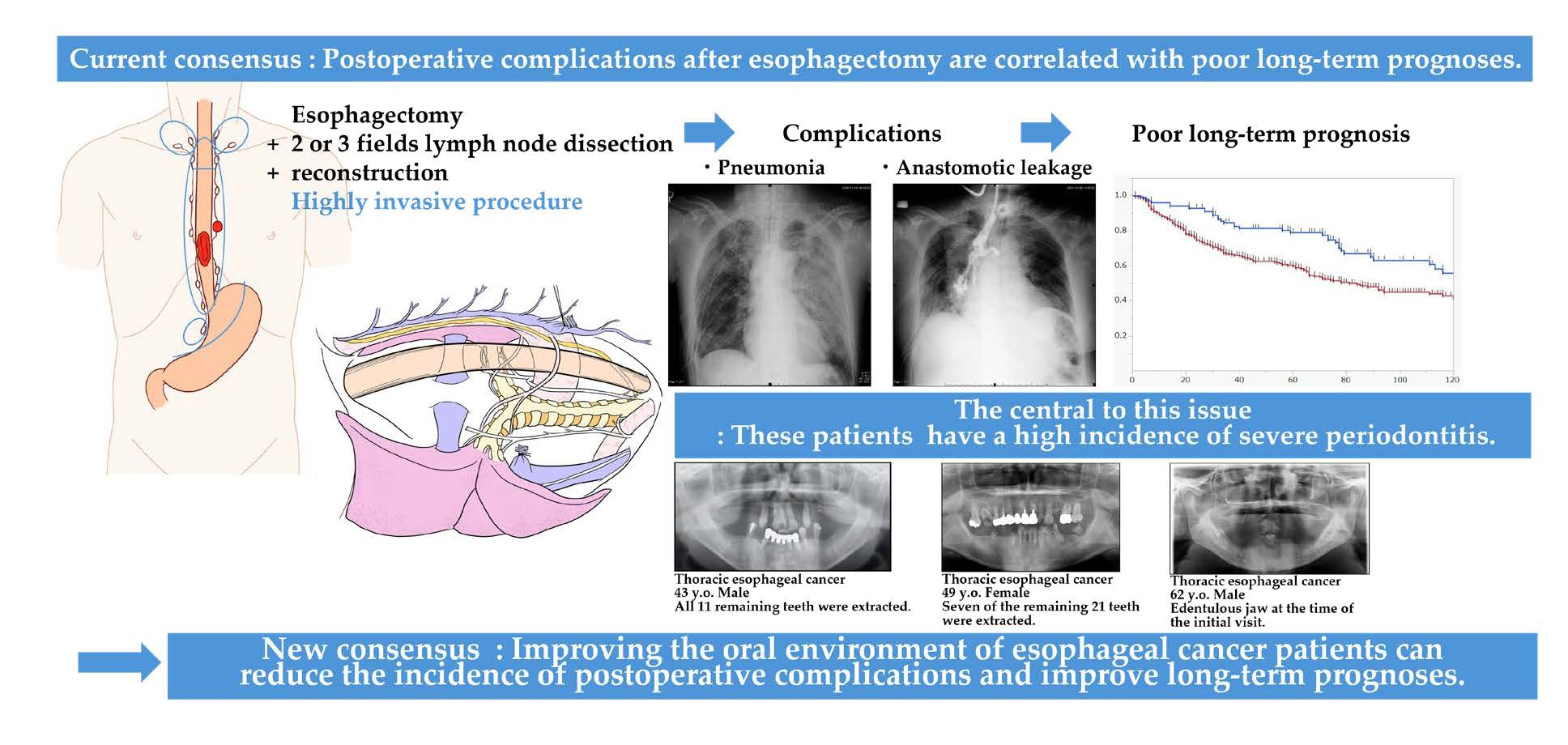
Simple Summary
Abstract
1. Introduction
2. Periodontal Disease in Esophageal Cancer Patients
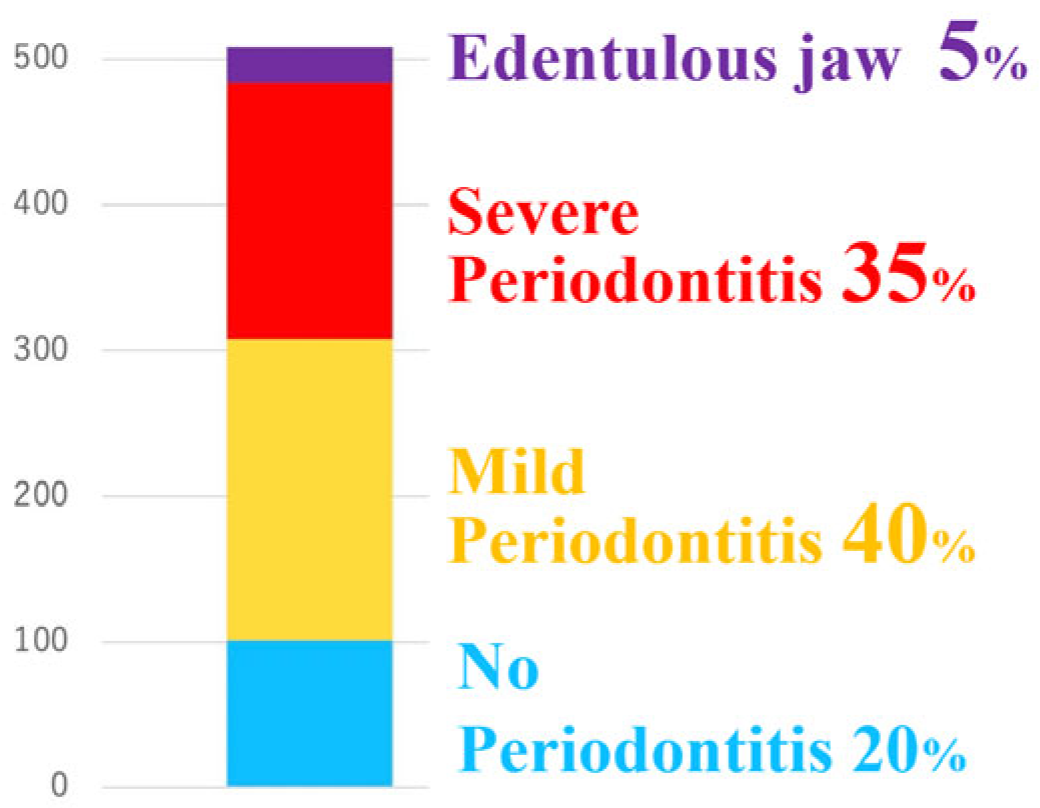
2.1. Esophageal Cancer Patients Have a High Incidence of Severe Periodontitis
2.2. Preoperative Oral Care Reduces Postoperative Pneumonia in Esophageal Cancer Patients
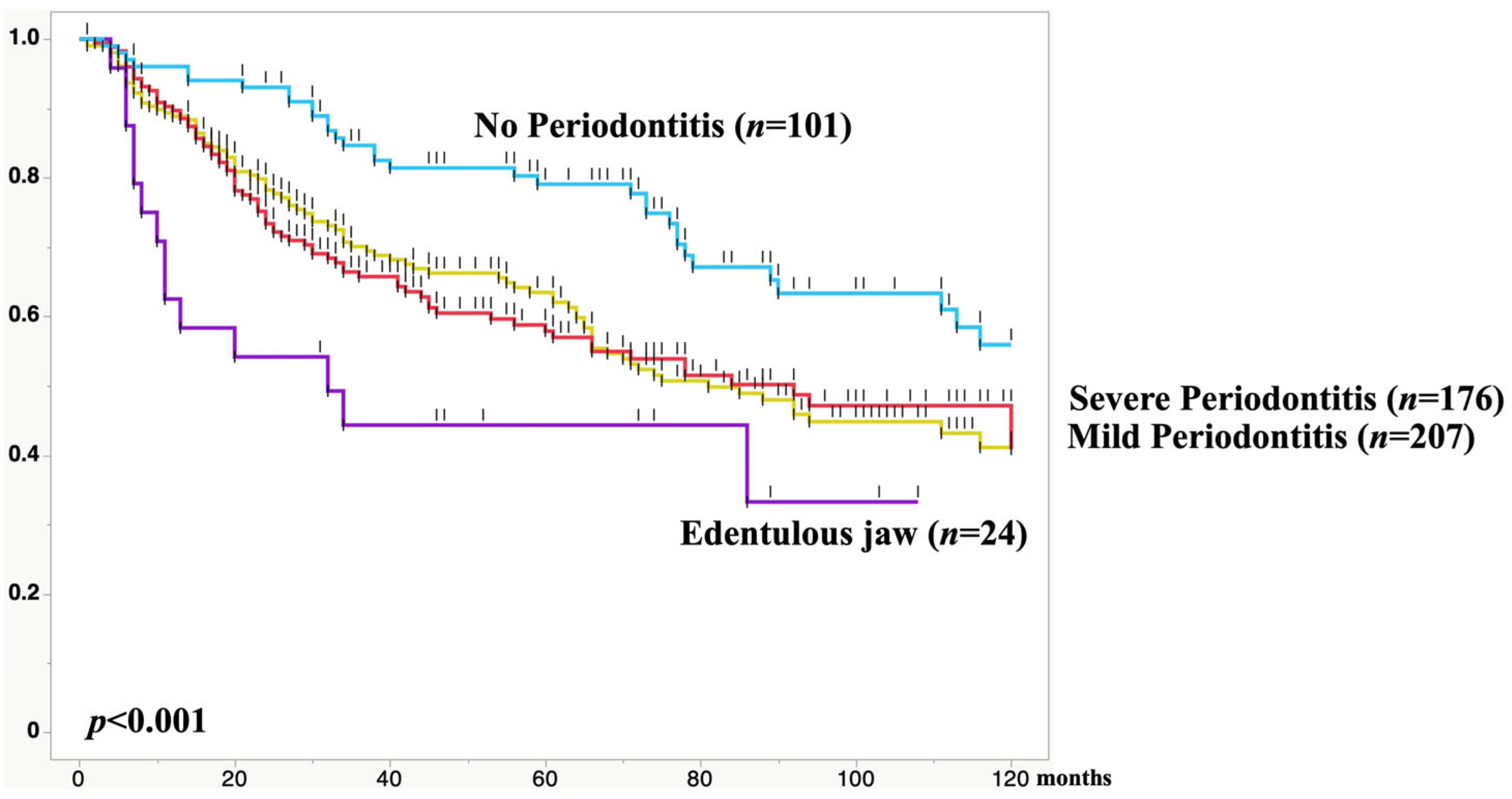
2.3. Severity of Periodontal Disease Is an Independent Risk Factor Affecting OS and DSS
3. Periodontal Disease Bacteria and Esophageal Cancer
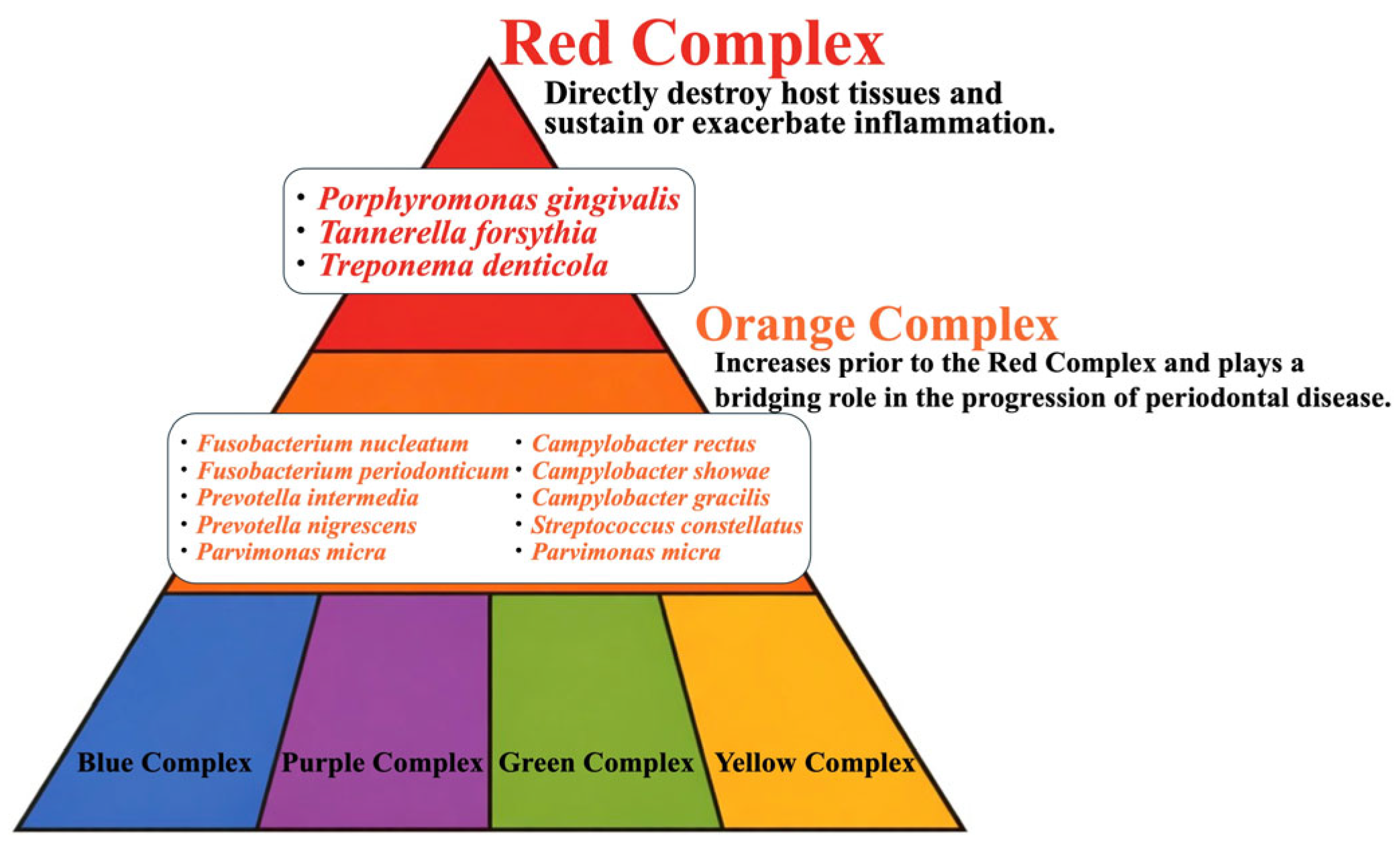
3.1. Periodontal Disease Bacteria Pyramid
3.2. Toll-like Receptor 4 Recognizes Lipopolysaccharide Released from Gram-Negative Bacteria
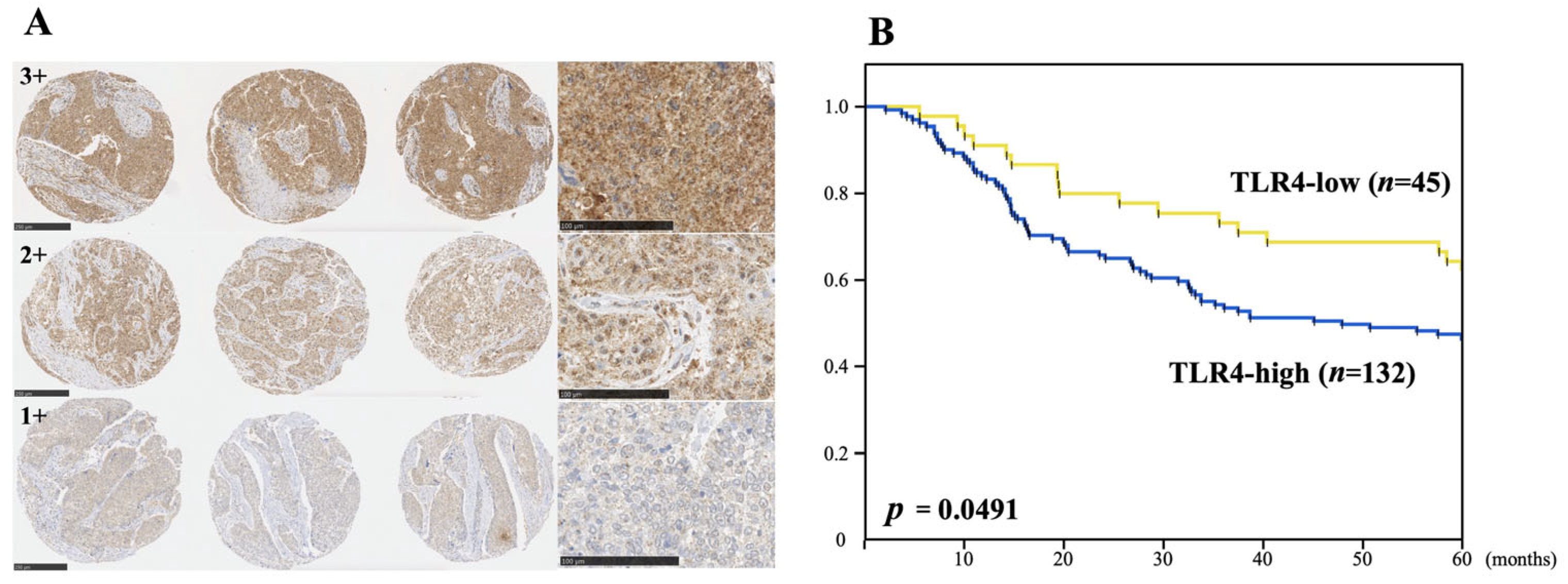
3.3. High TLR4 Expression in ESCC Predicts a Poor Prognosis
3.4. “Beneficial Bacteria” Are Gram-Positive Bacteria
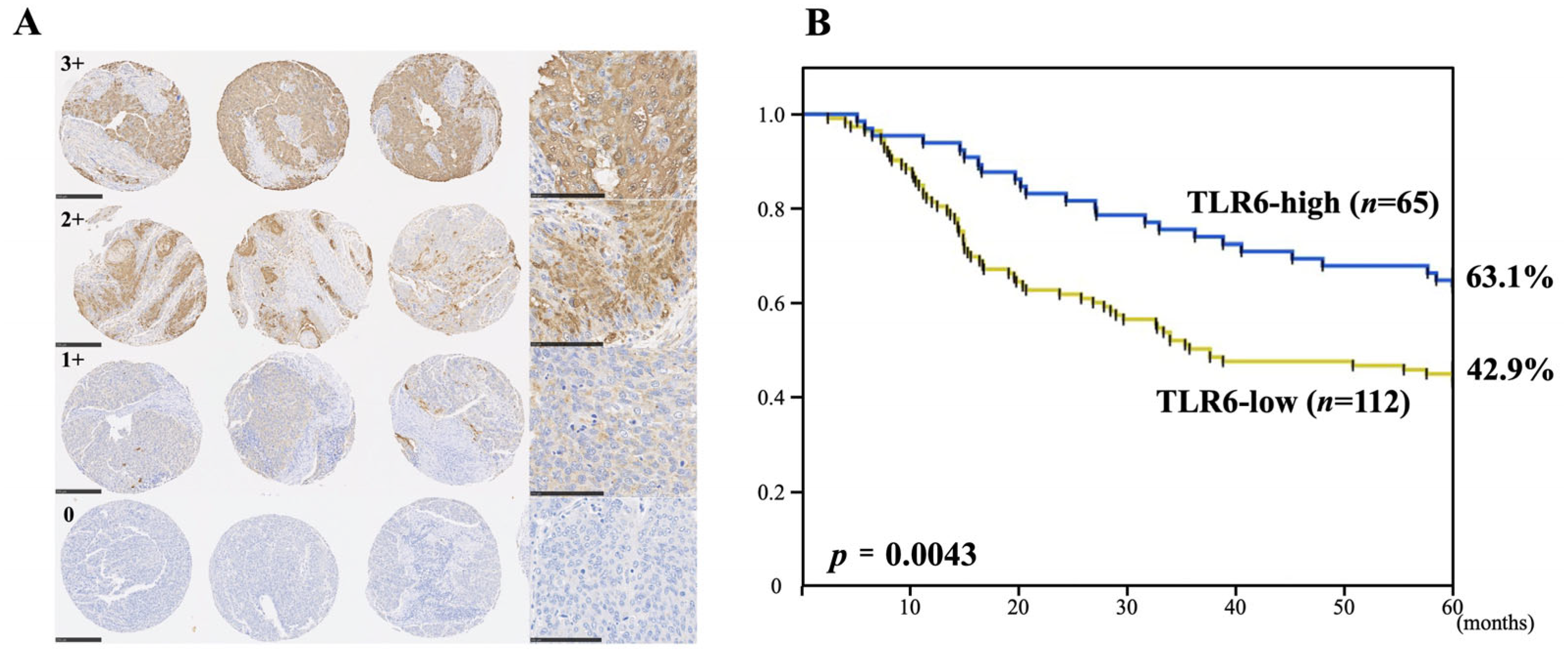
3.5. High TLR6 Expression in ESCC Predicts a Better Prognosis
4. How to Create Beneficial Bacteria Predominate Environment in the Mouth
4.1. How Can Esophageal Cancer Patients Create an Environment in Their Mouth Where Beneficial Bacteria Predominate?
4.2. Lacticaseibacillus rhamnosus L8020
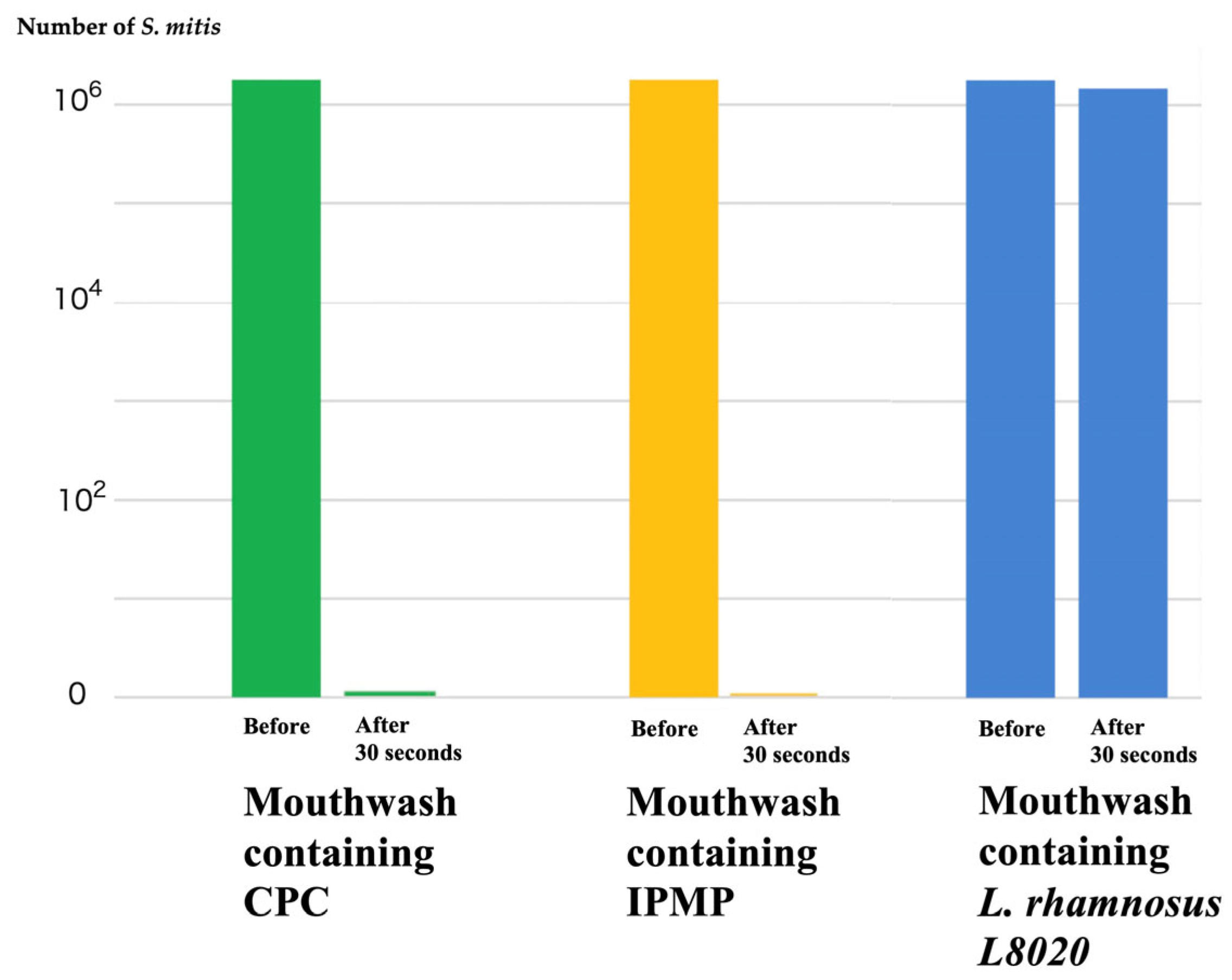
4.3. Clinical Intervention with Toothpaste and Mouthwash Containing L. rhamnosus L8020
5. Basic Research About Bacteria and ESCC Cell Proliferation
5.1. Periodontal Bacteria Promote the Proliferation of Esophageal Cancer Cells
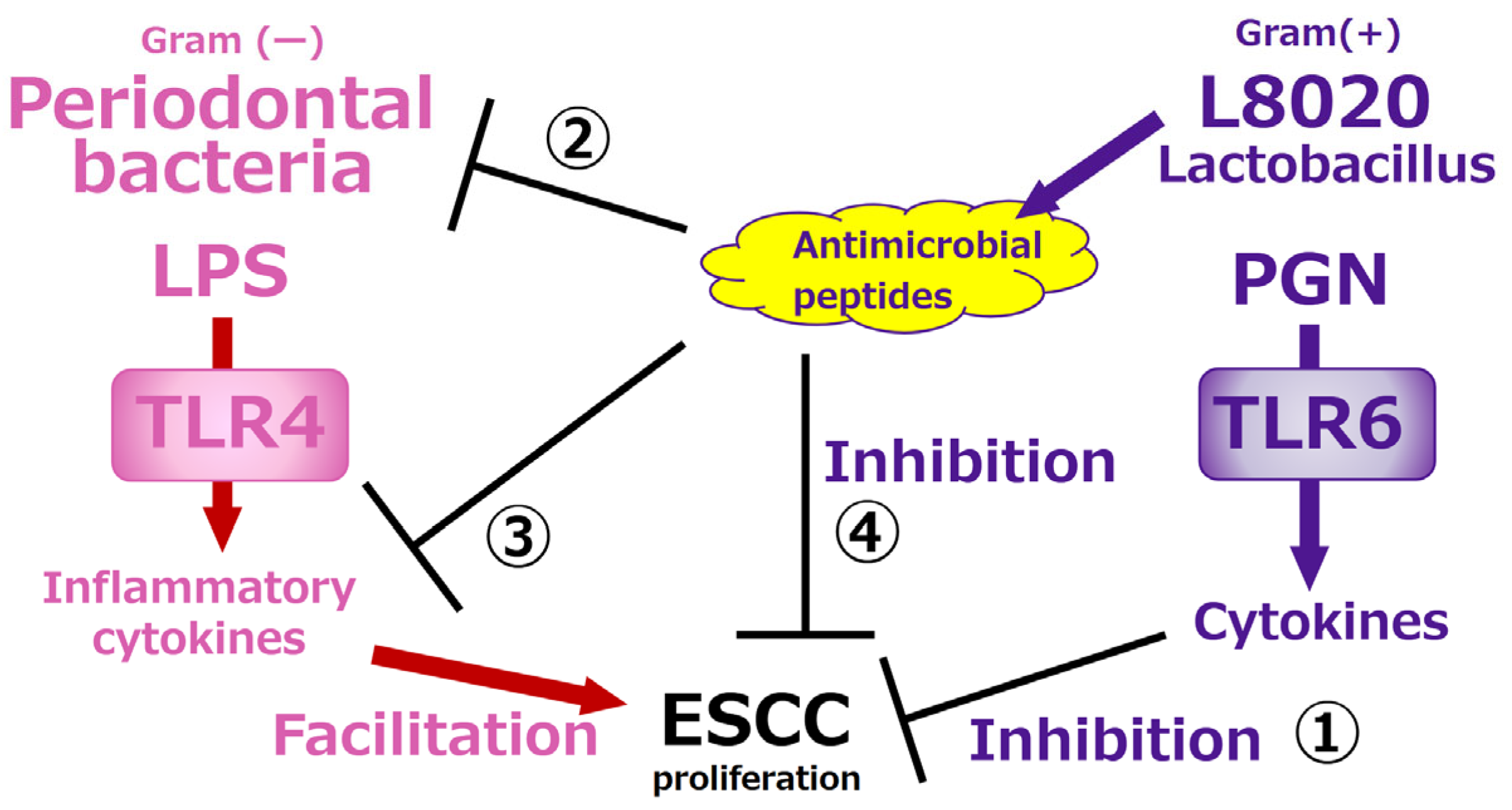
5.2. LPS Constituting the Cell Wall of Gram-Negative Bacteria Promotes ESCC Cell Proliferation
5.3. PGN Constituting the Cell Wall of Gram-Positive Bacteria Inhibits ESCC Cell Proliferation
5.4. The Ability of Specific Peptides Produced by L. rhamnosus L8020
6. Periodontal Disease Adversely Affects Numerous Systemic Diseases Other than Esophageal Cancer
7. Discussion
8. Conclusions
9. Future Directions
Author Contributions
Funding
Data Availability Statement
Conflicts of Interest
Abbreviations
| ESCC | esophageal squamous cell carcinoma |
| EAC | esophageal adenocarcinoma |
| LPS | lipopolysaccharides |
| PGN | peptidoglycan |
| CCL2 | C-C motif chemokine ligand 2 |
| CXCL10 | C-X-C motif chemokine ligand 10 |
| TLR4 | Toll-like receptor 4 |
| TLR6 | Toll-like receptor 6 |
References
- Takeuchi, H.; Miyata, H.; Ozawa, S.; Udagawa, H.; Osugi, H.; Matsubara, H.; Konno, H.; Seto, Y.; Kitagawa, Y. Comparison of Short-Term Outcomes Between Open and Minimally Invasive Esophagectomy for Esophageal Cancer Using a Nationwide Database in Japan. Ann. Surg. Oncol. 2017, 24, 1821–1827. [Google Scholar] [CrossRef] [Scilit]
- Goense, L.; van Rossum, P.S.; Tromp, M.; Joore, H.C.; van Dijk, D.; Kroese, A.C.; Ruurda, J.P.; van Hillegersberg, R. Intraoperative and postoperative risk factors for anastomotic leakage and pneumonia after esophagectomy for cancer. Dis. Esophagus 2017, 30, 1–10. [Google Scholar] [CrossRef] [Scilit]
- Fabbi, M.; Hagens, E.R.C.; van Berge Henegouwen, M.I.; Gisbertz, S.S. Anastomotic leakage after esophagectomy for esophageal cancer: Definitions, diagnostics, and treatment. Dis. Esophagus 2021, 34, doaa039. [Google Scholar] [CrossRef] [Scilit] [PubMed]
- Giulini, L.; Kemeter, M.; Farmaki, F.; Thumfart, L.; Hüttner, F.J.; Heger, P.; Koch, O.; Grechenig, M.; Weitzendorfer, M.; Emmanuel, K.; et al. Impact of anastomotic leak vs pneumonia on failure to rescue after transthoracic esophagectomy for cancer. J. Gastrointest. Surg. 2025, 29, 101936. [Google Scholar] [CrossRef] [Scilit] [PubMed]
- Kalata, S.; Singh, B.; Graham, N.; Fan, Z.; Chang, A.C.; Lynch, W.R.; Lagisetty, K.H.; Lin, J.; Yeung, J.; Reddy, R.M.; et al. Epidemiology of Postoperative Complications After Esophagectomy: Implications for Management. Ann. Thorac. Surg. 2023, 116, 1168–1175. [Google Scholar] [CrossRef] [Scilit] [PubMed]
- Ledda, A.L.; Tarantino, I.; Schiefer, S.; Ronellenfitsch, U.; Rebelo, A.; Sekulla, C.; Nienhüser, H.; Michalski, C.; Schmied, B.; Kleeff, J.; et al. Patterns of infectious complications and their implication on health system costs after esophagectomy for esophageal cancer: Real-world data from three European centers. Langenbecks Arch. Surg. 2025, 410, 138. [Google Scholar] [CrossRef] [Scilit]
- Maruyama, S.; Shoda, K.; Kawaguchi, Y.; Higuchi, Y.; Ozawa, T.; Nakayama, T.; Saito, R.; Izumo, W.; Takiguchi, K.; Shiraishi, K.; et al. Impact of postoperative infectious complications on long-term prognosis after esophagectomy. World J. Surg. 2025, 49, 253–261. [Google Scholar] [CrossRef] [Scilit]
- Booka, E.; Takeuchi, H.; Nishi, T.; Matsuda, S.; Kaburagi, T.; Fukuda, K.; Nakamura, R.; Takahashi, T.; Wada, N.; Kawakubo, H.; et al. The Impact of Postoperative Complications on Survivals After Esophagectomy for Esophageal Cancer. Medicine 2015, 94, e1369. [Google Scholar] [CrossRef] [Scilit]
- Gujjuri, R.R.; Kamarajah, S.K.; Markar, S.R. Effect of anastomotic leaks on long-term survival after oesophagectomy for oesophageal cancer: Systematic review and meta-analysis. Dis. Esophagus 2021, 34, doaa085. [Google Scholar] [CrossRef] [Scilit]
- Aiolfi, A.; Griffiths, E.A.; Sozzi, A.; Manara, M.; Bonitta, G.; Bonavina, L.; Bona, D. Effect of Anastomotic Leak on Long-Term Survival After Esophagectomy: Multivariate Meta-analysis and Restricted Mean Survival Times Examination. Ann. Surg. Oncol. 2023, 30, 5564–5572. [Google Scholar] [CrossRef] [Scilit]
- Bona, D.; Manara, M.; Bonitta, G.; Guerrazzi, G.; Guraj, J.; Lombardo, F.; Biondi, A.; Cavalli, M.; Bruni, P.G.; Campanelli, G.; et al. Long-Term Impact of Severe Postoperative Complications after Esophagectomy for Cancer: Individual Patient Data Meta-Analysis. Cancers 2024, 16, 1468. [Google Scholar] [CrossRef] [Scilit]
- Nozaki, S.; Sato, Y.; Takano, H.; Nomura, K.; Wakita, A.; Liu, J.; Nagaki, Y.; Sasamori, R.; Sasaki, Y.; Takahashi, T.; et al. Pretreatment periodontitis is predictive of a poorer prognosis after esophagectomy for esophageal cancer. Esophagus 2024, 21, 120–130. [Google Scholar] [CrossRef] [Scilit]
- Son, M.; Park, J.Y.; Kim, B.J.; Kim, J.G. Association of Oral Health and Periodontal Disease With Oesophageal Cancer: A Nationwide Population-Based Study. J. Clin. Periodontol. 2025, 52, 1673–1686. [Google Scholar] [CrossRef] [Scilit] [PubMed]
- Zhang, J.; Bellocco, R.; Sandborgh-Englund, G.; Yu, J.; Sällberg Chen, M.; Ye, W. Poor Oral Health and Esophageal Cancer Risk: A Nationwide Cohort Study. Cancer Epidemiol. Biomark. Prev. 2022, 31, 1418–1425. [Google Scholar] [CrossRef] [Scilit] [PubMed]
- Haque, T.; Bin Nabhan, A.; Akhter, F.; Nasser Albagieh, H. The analysis of periodontal diseases and squamous cell esophageal cancer: A retrospective study. Saudi Dent. J. 2023, 35, 714–719. [Google Scholar] [CrossRef] [Scilit] [PubMed]
- Abnet, C.C.; Kamangar, F.; Islami, F.; Nasrollahzadeh, D.; Brennan, P.; Aghcheli, K.; Merat, S.; Pourshams, A.; Marjani, H.A.; Ebadati, A.; et al. Tooth loss and lack of regular oral hygiene are associated with higher risk of esophageal squamous cell carcinoma. Cancer Epidemiol. Biomark. Prev. 2008, 17, 3062–3068. [Google Scholar] [CrossRef] [Scilit]
- Lo, C.H.; Kwon, S.; Wang, L.; Polychronidis, G.; Knudsen, M.D.; Zhong, R.; Cao, Y.; Wu, K.; Ogino, S.; Giovannucci, E.L.; et al. Periodontal disease, tooth loss, and risk of oesophageal and gastric adenocarcinoma: A prospective study. Gut 2021, 70, 620–621. [Google Scholar] [CrossRef] [Scilit]
- Sato, Y.; Motoyama, S.; Takano, H.; Nakata, A.; Liu, J.; Harimaya, D.; Todo, N.; Yoshino, K.; Sasaki, T.; Wakita, A.; et al. Esophageal Cancer Patients Have a High Incidence of Severe Periodontitis and Preoperative Dental Care Reduces the Likelihood of Severe Pneumonia after Esophagectomy. Dig. Surg. 2016, 33, 495–502. [Google Scholar] [CrossRef] [Scilit]
- Yamada, Y.; Yurikusa, T.; Furukawa, K.; Tsubosa, Y.; Niihara, M.; Mori, K.; Asoda, S.; Kawana, H.; Kitagawa, Y.; Nakagawa, T. The Effect of Improving Oral Hygiene through Professional Oral Care to Reduce the Incidence of Pneumonia Post-esophagectomy in Esophageal Cancer. Keio J. Med. 2019, 68, 17–25. [Google Scholar] [CrossRef] [Scilit]
- Kuriyama, K.; Sohda, M.; Watanabe, T.; Saito, H.; Yoshida, T.; Hara, K.; Sakai, M.; Kim, M.; Asami, T.; Yokoo, S.; et al. Resistance to Preoperative Oral Care Is Associated With Postoperative Pneumonia After Oesophageal Cancer Surgery. Anticancer Res. 2021, 41, 1507–1514. [Google Scholar] [CrossRef] [Scilit]
- Soutome, S.; Hasegawa, T.; Yamguchi, T.; Aoki, K.; Kanamura, N.; Mukai, T.; Yamazoe, J.; Nishikawa, M.; Isomura, E.; Hoshi, K.; et al. Prevention of postoperative pneumonia by perioperative oral care in patients with esophageal cancer undergoing surgery: A multicenter retrospective study of 775 patients. Support. Care Cancer 2020, 28, 4155–4162. [Google Scholar] [CrossRef] [Scilit]
- Soutome, S.; Yanamoto, S.; Funahara, M.; Hasegawa, T.; Komori, T.; Yamada, S.I.; Kurita, H.; Yamauchi, C.; Shibuya, Y.; Kojima, Y.; et al. Effect of perioperative oral care on prevention of postoperative pneumonia associated with esophageal cancer surgery: A multicenter case-control study with propensity score matching analysis. Medicine 2017, 96, e7436. [Google Scholar] [CrossRef] [Scilit]
- Jogiat, U.; Kirkland, M.; Verhoeff, K.; Bédard, E.L.R.; Kung, J.Y.; Turner, S.R. Oral care reduces incidence of pneumonia after esophagectomy: Systematic review and meta-analysis. Langenbecks Arch. Surg. 2023, 408, 209. [Google Scholar] [CrossRef] [Scilit]
- Watanabe, T.; Sohda, M.; Kim, M.; Saito, H.; Ubukata, Y.; Nakazawa, N.; Kuriyama, K.; Hara, K.; Sano, A.; Sakai, M.; et al. Preoperative evaluation of oral hygiene may predict the overall survival of patients with esophageal cancer. Esophagus 2023, 20, 99–108. [Google Scholar] [CrossRef] [Scilit] [PubMed]
- Socransky, S.S.; Haffajee, A.D.; Cugini, M.A.; Smith, C.; Kent, R.L., Jr. Microbial complexes in subgingival plaque. J. Clin. Periodontol. 1998, 25, 134–144. [Google Scholar] [CrossRef] [Scilit] [PubMed]
- Socransky, S.S.; Haffajee, A.D.; Ximenez-Fyvie, L.A.; Feres, M.; Mager, D. Ecological considerations in the treatment of Actinobacillus actinomycetemcomitans and Porphyromonas gingivalis periodontal infections. Periodontol. 2000 1999, 20, 341–362. [Google Scholar] [CrossRef] [Scilit] [PubMed]
- Hajishengallis, G.; Liang, S.; Payne, M.A.; Hashim, A.; Jotwani, R.; Eskan, M.A.; McIntosh, M.L.; Alsam, A.; Kirkwood, K.L.; Lambris, J.D.; et al. Low-abundance biofilm species orchestrates inflammatory periodontal disease through the commensal microbiota and complement. Cell Host Microbe 2011, 10, 497–506. [Google Scholar] [CrossRef] [Scilit]
- Holt, S.C.; Ebersole, J.L. Porphyromonas gingivalis, Treponema denticola, and Tannerella forsythia: The “red complex”, a prototype polybacterial pathogenic consortium in periodontitis. Periodontol. 2000 2005, 38, 72–122. [Google Scholar] [CrossRef] [Scilit]
- Abdulkareem, A.A.; Al-Taweel, F.B.; Al-Sharqi, A.J.B.; Gul, S.S.; Sha, A.; Chapple, I.L.C. Current concepts in the pathogenesis of periodontitis: From symbiosis to dysbiosis. J. Oral Microbiol. 2023, 15, 2197779. [Google Scholar] [CrossRef] [Scilit]
- Carrouel, F.; Viennot, S.; Santamaria, J.; Veber, P.; Bourgeois, D. Quantitative Molecular Detection of 19 Major Pathogens in the Interdental Biofilm of Periodontally Healthy Young Adults. Front. Microbiol. 2016, 7, 840. [Google Scholar] [CrossRef] [Scilit]
- Kawai, T.; Akira, S. The role of pattern-recognition receptors in innate immunity: Update on Toll-like receptors. Nat. Immunol. 2010, 11, 373–384. [Google Scholar] [CrossRef] [Scilit] [PubMed]
- Akira, S.; Uematsu, S.; Takeuchi, O. Pathogen recognition and innate immunity. Cell 2006, 124, 783–801. [Google Scholar] [CrossRef] [Scilit] [PubMed]
- Medzhitov, R.; Preston-Hurlburt, P.; Janeway, C.A., Jr. A human homologue of the Drosophila Toll protein signals activation of adaptive immunity. Nature 1997, 388, 394–397. [Google Scholar] [CrossRef] [Scilit] [PubMed]
- Fitzgerald, K.A.; Kagan, J.C. Toll-like Receptors and the Control of Immunity. Cell 2020, 180, 1044–1066. [Google Scholar] [CrossRef] [Scilit]
- Takeuchi, O.; Akira, S. Pattern recognition receptors and inflammation. Cell 2010, 140, 805–820. [Google Scholar] [CrossRef] [Scilit]
- Rock, F.L.; Hardiman, G.; Timans, J.C.; Kastelein, R.A.; Bazan, J.F. A family of human receptors structurally related to Drosophila Toll. Proc. Natl. Acad. Sci. USA 1998, 95, 588–593. [Google Scholar] [CrossRef] [Scilit]
- Duan, T.; Du, Y.; Xing, C.; Wang, H.Y.; Wang, R.F. Toll-Like Receptor Signaling and Its Role in Cell-Mediated Immunity. Front. Immunol. 2022, 13, 812774. [Google Scholar] [CrossRef] [Scilit]
- Poltorak, A.; He, X.; Smirnova, I.; Liu, M.Y.; Van Huffel, C.; Du, X.; Birdwell, D.; Alejos, E.; Silva, M.; Galanos, C.; et al. Defective LPS signaling in C3H/HeJ and C57BL/10ScCr mice: Mutations in Tlr4 gene. Science 1998, 282, 2085–2088. [Google Scholar] [CrossRef] [Scilit]
- Sato, Y.; Motoyama, S.; Wakita, A.; Kawakita, Y.; Liu, J.; Nagaki, Y.; Nanjo, H.; Ito, S.; Terata, K.; Imai, K.; et al. High TLR4 expression predicts a poor prognosis after esophagectomy for advanced thoracic esophageal squamous cell carcinoma. Esophagus 2020, 17, 408–416. [Google Scholar] [CrossRef] [Scilit]
- Willis, J.R.; Gabaldón, T. The Human Oral Microbiome in Health and Disease: From Sequences to Ecosystems. Microorganisms 2020, 8, 308. [Google Scholar] [CrossRef] [Scilit]
- Rajasekaran, J.J.; Krishnamurthy, H.K.; Bosco, J.; Jayaraman, V.; Krishna, K.; Wang, T.; Bei, K. Oral Microbiome: A Review of Its Impact on Oral and Systemic Health. Microorganisms 2024, 12, 1797. [Google Scholar] [CrossRef] [Scilit] [PubMed]
- Engen, S.A.; Rørvik, G.H.; Schreurs, O.; Blix, I.J.; Schenck, K. The oral commensal Streptococcus mitis activates the aryl hydrocarbon receptor in human oral epithelial cells. Int. J. Oral Sci. 2017, 9, 145–150. [Google Scholar] [CrossRef] [Scilit] [PubMed]
- Sedghi, L.; DiMassa, V.; Harrington, A.; Lynch, S.V.; Kapila, Y.L. The oral microbiome: Role of key organisms and complex networks in oral health and disease. Periodontol. 2000 2021, 87, 107–131. [Google Scholar] [CrossRef] [Scilit] [PubMed]
- Rezac, S.; Kok, C.R.; Heermann, M.; Hutkins, R. Fermented Foods as a Dietary Source of Live Organisms. Front. Microbiol. 2018, 9, 1785. [Google Scholar] [CrossRef] [Scilit]
- Sato, Y.; Wakita, A.; Maeda, E.; Nagaki, Y.; Sasamori, R.; Kemuriyama, K.; Nozaki, S.; Ito, S.; Terata, K.; Imai, K.; et al. High TLR6 Expression Status Predicts a More Favorable Prognosis after Esophagectomy for Locally Advanced Thoracic Esophageal Squamous Cell Carcinoma. Curr. Oncol. 2023, 30, 4724–4735. [Google Scholar] [CrossRef] [Scilit]
- Nikawa, H.; Tomiyama, Y.; Hiramatsu, M.; Yushita, K.; Takamoto, Y.; Ishi, H.; Mimura, S.; Hiyama, A.; Sasahara, H.; Kawahara, K.; et al. Bovine milk fermented with Lactobacillus rhamnosus L8020 decreases the oral carriage of mutans streptococci and the burden of periodontal pathogens. J. Investig. Clin. Dent. 2011, 2, 187–196. [Google Scholar] [CrossRef] [Scilit]
- Jia, X.; Liu, J.; He, Y.; Huang, X. Porphyromonas gingivalis secretion leads to dysplasia of normal esophageal epithelial cells via the Sonic hedgehog pathway. Front. Cell. Infect. Microbiol. 2022, 12, 982636. [Google Scholar] [CrossRef] [Scilit]
- Peters, B.A.; Wu, J.; Pei, Z.; Yang, L.; Purdue, M.P.; Freedman, N.D.; Jacobs, E.J.; Gapstur, S.M.; Hayes, R.B.; Ahn, J. Oral Microbiome Composition Reflects Prospective Risk for Esophageal Cancers. Cancer Res. 2017, 77, 6777–6787. [Google Scholar] [CrossRef] [Scilit]
- Shen, L.; Zhang, D.; Gao, S. Effect of Porphyromonas gingivalis infection on IFNGR1 palmitoylation in esophageal cancer cells. Nan Fang Yi Ke Da Xue Xue Bao 2023, 43, 1155–1163. [Google Scholar]
- Kong, J.; Liu, Y.; Qian, M.; Xing, L.; Gao, S. The relationship between Porphyromonas gingivalis and oesophageal squamous cell carcinoma: A literature review. Epidemiol. Infect. 2023, 151, e69. [Google Scholar] [CrossRef] [Scilit]
- Yoneya, T.; Sato, Y.; Nomura, K.; Wakita, A.; Nagaki, Y.; Sasamori, R.; Sasaki, Y.; Nozaki, S.; Takahashi, T.; Yamada, M.; et al. Porphyromonas gingivalis levels correlate with TLR4 expression status and prognosis after esophagectomy for advanced thoracic esophageal squamous cell carcinoma. Esophagus 2025, 22, 622–630. [Google Scholar] [CrossRef] [Scilit] [PubMed]
- Yamamura, K.; Baba, Y.; Nakagawa, S.; Mima, K.; Miyake, K.; Nakamura, K.; Sawayama, H.; Kinoshita, K.; Ishimoto, T.; Iwatsuki, M.; et al. Human Microbiome Fusobacterium Nucleatum in Esophageal Cancer Tissue Is Associated with Prognosis. Clin. Cancer Res. 2016, 22, 5574–5581. [Google Scholar] [CrossRef] [Scilit] [PubMed]
- Liu, Y.; Baba, Y.; Ishimoto, T.; Tsutsuki, H.; Zhang, T.; Nomoto, D.; Okadome, K.; Yamamura, K.; Harada, K.; Eto, K.; et al. Fusobacterium nucleatum confers chemoresistance by modulating autophagy in oesophageal squamous cell carcinoma. Br. J. Cancer 2021, 124, 963–974. [Google Scholar] [CrossRef] [Scilit] [PubMed]
- Kawasaki, M.; Ikeda, Y.; Ikeda, E.; Takahashi, M.; Tanaka, D.; Nakajima, Y.; Arakawa, S.; Izumi, Y.; Miyake, S. Oral infectious bacteria in dental plaque and saliva as risk factors in patients with esophageal cancer. Cancer 2021, 127, 512–519. [Google Scholar] [CrossRef] [Scilit]
- Sasamori, R.; Sato, Y.; Nomura, K.; Wakita, A.; Nagaki, Y.; Kemuriyama, K.; Sasaki, Y.; Nozaki, S.; Takahashi, T.; Terata, K.; et al. Lipopolysaccharide induces CCL2 through TLR4 signaling and promotes esophageal squamous cell carcinoma cell proliferation. Am. J. Cancer Res. 2024, 14, 3497–3512. [Google Scholar] [CrossRef] [Scilit]
- Sasaki, Y.; Sato, Y.; Nomura, K.; Wakita, A.; Nagaki, Y.; Sasamori, R.; Yoneya, T.; Takahashi, T.; Yamada, M.; Takahashi, M.; et al. Peptidoglycan induces CXCL10 production and inhibits esophageal squamous cell carcinoma proliferation. Am. J. Cancer Res. 2024, 14, 5874–5884. [Google Scholar] [CrossRef] [Scilit]
- Hasan, F.; Tandon, A.; AlQallaf, H.; John, V.; Sinha, M.; Gibson, M.P. Inflammatory Association between Periodontal Disease and Systemic Health. Inflammation 2025, 48, 3763–3775. [Google Scholar] [CrossRef] [Scilit]
- Huang, D.; Wang, Y.Y.; Li, B.H.; Wu, L.; Xie, W.Z.; Zhou, X.; Ma, B. Association between periodontal disease and systemic diseases: A cross-sectional analysis of current evidence. Mil. Med. Res. 2024, 11, 74. [Google Scholar] [CrossRef] [Scilit]
- Aizenbud, I.; Wilensky, A.; Almoznino, G. Periodontal Disease and Its Association with Metabolic Syndrome-A Comprehensive Review. Int. J. Mol. Sci. 2023, 24, 13011. [Google Scholar] [CrossRef] [Scilit]


Disclaimer/Publisher’s Note: The statements, opinions and data contained in all publications are solely those of the individual author(s) and contributor(s) and not of MDPI and/or the editor(s). MDPI and/or the editor(s) disclaim responsibility for any injury to people or property resulting from any ideas, methods, instructions or products referred to in the content. |
© 2026 by the authors. Licensee MDPI, Basel, Switzerland. This article is an open access article distributed under the terms and conditions of the Creative Commons Attribution (CC BY) license.
Share and Cite
Sato, Y.; Nikawa, H.; Wakita, A.; Nagaki, Y.; Takano, H.; Imai, K. Oral Environment of Esophageal Cancer Patients, the Incidence of Complications, and Long-Term Prognoses. Curr. Oncol. 2026, 33, 86. https://doi.org/10.3390/curroncol33020086
Sato Y, Nikawa H, Wakita A, Nagaki Y, Takano H, Imai K. Oral Environment of Esophageal Cancer Patients, the Incidence of Complications, and Long-Term Prognoses. Current Oncology. 2026; 33(2):86. https://doi.org/10.3390/curroncol33020086
Chicago/Turabian StyleSato, Yusuke, Hiroki Nikawa, Akiyuki Wakita, Yushi Nagaki, Hiroshi Takano, and Kazuhiro Imai. 2026. "Oral Environment of Esophageal Cancer Patients, the Incidence of Complications, and Long-Term Prognoses" Current Oncology 33, no. 2: 86. https://doi.org/10.3390/curroncol33020086
APA StyleSato, Y., Nikawa, H., Wakita, A., Nagaki, Y., Takano, H., & Imai, K. (2026). Oral Environment of Esophageal Cancer Patients, the Incidence of Complications, and Long-Term Prognoses. Current Oncology, 33(2), 86. https://doi.org/10.3390/curroncol33020086