



Next Issue
Volume 33, January
Previous Issue
Volume 32, November


Curr. Oncol., Volume 32, Issue 12 (December 2025) – 63 articles
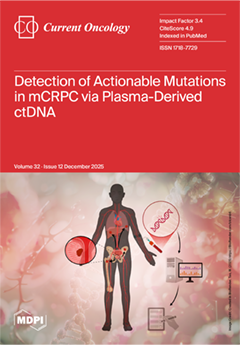
Cover Story (view full-size image): Metastatic castration-resistant prostate cancer (mCRPC) is an aggressive, treatment-resistant stage of prostate cancer. Detecting actionable genomic alterations can guide targeted therapies, such as PARP inhibitors for homologous recombination repair (HRR) defects and immune checkpoint inhibitors for mismatch repair deficiency (MMRd) or microsatellite instability-high (MSI-H) tumors. However, tissue biopsies are often invasive and challenging to repeat. Circulating tumor DNA (ctDNA) analysis offers a minimally invasive alternative for identifying clinically relevant mutations, providing real-time insights that can inform therapeutic decision-making. This review highlights the promise, limitations, and clinical impact of ctDNA profiling in mCRPC, underscoring the need for methodological refinement and clinical integration to fully realize its potential. View this paper
  • Issues are regarded as officially published after their release is announced to the table of contents alert mailing list.
  • You may sign up for e-mail alerts to receive table of contents of newly released issues.
  • PDF is the official format for papers published in both, html and pdf forms. To view the papers in pdf format, click on the "PDF Full-text" link, and use the free Adobe Reader to open them.
Order results
Result details
Section
Select all
Export citation of selected articles as:
12 pages, 215 KB  
Article
The Impact of Social Determinants of Health on Treatment Received in Patients with Stage I Lung Cancer in Ontario: A Population-Based Analysis
by Nader M. Hanna, Saad Shakeel, Gileh-Gol Akhtar-Danesh, Christian Finley and Noori Akhtar-Danesh
Curr. Oncol. 2025, 32(12), 713; https://doi.org/10.3390/curroncol32120713 - 18 Dec 2025
Viewed by 317
Abstract
Surgical resection is recommended for operable stage I non-small-cell lung cancer (NSCLC), while radiotherapy reserved for inoperable patients. Very comorbid patients may receive no treatment at all. Social determinants of health (SDOHs) may influence access to these treatments. We examined how SDOHs affect [...] Read more.
Surgical resection is recommended for operable stage I non-small-cell lung cancer (NSCLC), while radiotherapy reserved for inoperable patients. Very comorbid patients may receive no treatment at all. Social determinants of health (SDOHs) may influence access to these treatments. We examined how SDOHs affect treatment modality among these patients using a population-based retrospective cohort study using ICES data including adults with stage I NSCLC diagnosed between 2007 and 2023. Multivariable logistic regression assessed associations between SDOH and treatment received. Of 19,179 patients, 54.4% received only surgery, 15.8% received only radiotherapy, 27.5% received no treatment, and 2.3% received surgery and radiotherapy. Surgery was less likely in patients aged >80 versus <50 (OR 0.07, p < 0.001), patients with frailty (OR 0.38, p < 0.001), patients with ≥5 comorbidities (OR 0.21, p < 0.001), or those who were not rostered with a family physician (OR 0.59, p < 0.001). Recent immigrants were more likely to undergo surgery (OR 1.23, p = 0.035), as well as those in the highest neighbourhood income quintile (OR 1.45, p < 0.001). Surgery was less likely for those living 50–100 km from a cancer centre (OR 0.85, p = 0.004). Radiotherapy was more likely in patients aged >80 (OR 9.86, p < 0.001), those with ≥5 comorbidities (OR 2.23, p < 0.001), or those in the lowest household income quintile (OR 1.27, p = 0.009). Recent immigrants were less likely to receive radiotherapy (OR 0.69, p = 0.005). SDOHs independently influence treatment type for stage I NSCLC. Full article
(This article belongs to the Section Thoracic Oncology)
16 pages, 3937 KB  
Systematic Review
Familial Risk Factors in Thyroid Cancer Across Generations and Geographics: A Systematic Review and Meta-Analysis
by Madeleine B. Landau, Natalie J. Mikhailov, Amreena Singh, Ebtihag O. Alenzi, Baraah Abu Alsel, Mohammed M. Ismail, Manal S. Fawzy and Eman A. Toraih
Curr. Oncol. 2025, 32(12), 712; https://doi.org/10.3390/curroncol32120712 - 17 Dec 2025
Viewed by 526
Abstract
The increasing global incidence of thyroid cancer highlights the importance of accurately assessing risk factors, particularly those related to family history. Although having affected family members is widely recognized as a risk factor for thyroid cancer, the exact degree of risk and its [...] Read more.
The increasing global incidence of thyroid cancer highlights the importance of accurately assessing risk factors, particularly those related to family history. Although having affected family members is widely recognized as a risk factor for thyroid cancer, the exact degree of risk and its variation across types of familial relationships, parental gender, and geographic regions remain unclear. This systematic review and meta-analysis aimed to clarify the association between family history and thyroid cancer risk. We conducted a comprehensive literature search of PubMed, Web of Science, and Embase following PRISMA guidelines, identifying 13 studies from 503 initially screened. Statistical analyses were performed using random-effects models to estimate pooled odds ratios and risk ratios, with subgroup analyses to assess variations across population and relationship types. Our findings showed an approximately 4.5-fold higher risk of thyroid cancer in individuals with affected family members. Individuals with affected siblings were more likely to develop thyroid cancer while the risks associated with maternal and paternal family history were comparable in magnitude, with no statistical difference between them. Socioeconomic, educational, and lifestyle differences did not significantly influence risk, and geographic variations in familial risk could not be statistically confirmed by the subgroup analysis, in the context of high between-study heterogeneity. These results suggest that family history is a substantial risk factor for thyroid cancer, reinforcing the need for enhanced surveillance and screening strategies for those with a familial predisposition. Full article
(This article belongs to the Section Head and Neck Oncology)
Show Figures

Figure 1

10 pages, 824 KB  
Case Report
A Novel ATRIP Mutation Detected in an Iranian Family with Familial Clustering of Breast Cancer: A Case Report
by Neda Zamani, Mehar Chahal, Iman Salahshourifar, Reiyhane Talebian and Mohammad R. Akbari
Curr. Oncol. 2025, 32(12), 711; https://doi.org/10.3390/curroncol32120711 - 17 Dec 2025
Viewed by 249
Abstract
Purpose: ATRIP (ATR-interacting protein) is a critical partner of ATR (ataxia telangiectasia and Rad3-related). The ATR-ATRIP heterodimer plays an essential role in initiating homologous recombination repair (HRR) during replication stress and inducing double-stranded DNA breaks following unresolved stalled replication forks. Our team recently [...] Read more.
Purpose: ATRIP (ATR-interacting protein) is a critical partner of ATR (ataxia telangiectasia and Rad3-related). The ATR-ATRIP heterodimer plays an essential role in initiating homologous recombination repair (HRR) during replication stress and inducing double-stranded DNA breaks following unresolved stalled replication forks. Our team recently identified ATRIP as a novel breast cancer susceptibility gene candidate through whole-exome sequencing (WES) of familial breast cancer patients and healthy controls from the Polish founder population, with subsequent validation in both Polish and British cohorts. In the present study, we report for the first time the detection of a novel deleterious mutation in ATRIP among several members of an Iranian family with clustering of breast cancer who were negative for mutations in the already known breast cancer risk genes. Methods: Six family members underwent germline DNA testing by WES, following initial negative results from multigene panel testing. Candidate variants were confirmed by Sanger sequencing and assessed according to ACMG guidelines. Results: We detected a novel ATRIP frameshift mutation (NM_130384.3:c.1033delC) in four of six family members that were tested, including two individuals affected with breast cancer. No pathogenic variants were found in other known cancer susceptibility genes. Conclusions: This is the first report of a deleterious ATRIP mutation in an Iranian family with familial breast cancer, suggesting a potential role of ATRIP in hereditary breast cancer. Further studies are required to confirm the role of ATRIP in breast cancer susceptibility, refine risk assessment, and evaluate potential personalized therapeutic strategies. In the interim, genetic counseling for ATRIP mutation carriers should proceed with caution, given current limitations in clinical interpretation. Full article
(This article belongs to the Special Issue Advanced Research on Breast Cancer Genes in Cancers)
Show Figures

Figure 1

13 pages, 2619 KB  
Article
Magnetic Resonance of Pulmonary Nodules in Oncological Patients: Are We Ready to Replace Chest CT in Detecting Extrathoracic Cancer?
by Ronak Kundalia, Jessica Gemmell, Ian Griffin, Amanda Acevedo, Joice Prodigios, Sandro Bertani, Alysson Roncally Silva Carvalho, Rosana Souza Rodrigues, Hiren J. Mehta and Bruno Hochhegger
Curr. Oncol. 2025, 32(12), 710; https://doi.org/10.3390/curroncol32120710 - 16 Dec 2025
Viewed by 480
Abstract
Objective: This study aims to assess the accuracy of pulmonary nodule detection via MRI compared to the gold standard, CT, in patients with extrathoracic cancer. Materials and Methods: MRI of the chest was performed on oncological patients for staging extrathoracic cancer and subsequently [...] Read more.
Objective: This study aims to assess the accuracy of pulmonary nodule detection via MRI compared to the gold standard, CT, in patients with extrathoracic cancer. Materials and Methods: MRI of the chest was performed on oncological patients for staging extrathoracic cancer and subsequently compared to their CT. Only the largest nodule was considered in patients with multiple nodules. Nodule size and malignancy were recorded for each modality, as well as the presence of interstitial lung disease (ILD), adenopathy, cardiomegaly, pleural effusion, pericardial effusion, and vertebral fracture. All cases were read by two thoracic radiologists and any discrepancies were resolved by discussion. Results: A total of 154 patients with nodules were identified from 241 participants (mean age: 59 years [18–95]). Average nodule diameter was 11.5 mm (range: 3.9–29.1 mm; SD: 8.1 mm). MRI detected all nodules greater than 5 mm. Malignancy was detected in 37 nodules. The sensitivity, specificity, and accuracy values of MRI for all nodules were 93.51%, 100%, and 95.85%, respectively. For ground-glass nodules (n = 11), the values were 43.6%, 100%, and 65.0%, respectively. When compared to CT, long-axis diameter measured by MRI was underestimated by 9 ± 2.3% (p < 0.001). There was a strong correlation between measurements of CT and MRI (κ = 0.70–1.00). Furthermore, MRI accurately detected the presence of adenopathy (97.1%), cardiomegaly (99.17%), pleural effusion (98.34%), pericardial effusion (100%), and vertebral fracture (99.6%). Conclusions: These findings suggest that lung MRI accurately detects pulmonary nodules and other thoracic pathologies commonly observed in oncological patients. Lung MRI may serve as a substitute to CT for oncological patients undergoing routine extrathoracic surveillance, thereby decreasing radiation exposure. Full article
(This article belongs to the Section Thoracic Oncology)
Show Figures

Figure 1

13 pages, 3426 KB  
Article
Real-World Predictors of Survival in CDK4/6 Inhibitor-Treated Metastatic Breast Cancer: The Significance of ER Expression Level and Treatment Naivety
by Büşra Bülbül, Bekir Ucun, Can Cangür, İrem Turgut Yeğen, Orhan Önder Eren, Cengiz Yılmaz, Gürkan Gül, Atike Pınar Erdoğan, Ece Şahin Hafızoğlu, Erhan Gökmen, Oguzcan Ozkan, Murat Araz, Ahmet Oruç and Serkan Yıldırım
Curr. Oncol. 2025, 32(12), 709; https://doi.org/10.3390/curroncol32120709 - 16 Dec 2025
Viewed by 286
Abstract
Objective: CDK4/6 inhibitors constitute standard first-line therapy for hormone receptor (HR)-positive, HER2-negative metastatic breast cancer (MBC). We investigated real-world predictors of overall survival (OS), with particular focus on high ER expression (≥90%). Methods: In this multicenter, retrospective study, we analyzed 603 HR-positive/HER2-negative MBC [...] Read more.
Objective: CDK4/6 inhibitors constitute standard first-line therapy for hormone receptor (HR)-positive, HER2-negative metastatic breast cancer (MBC). We investigated real-world predictors of overall survival (OS), with particular focus on high ER expression (≥90%). Methods: In this multicenter, retrospective study, we analyzed 603 HR-positive/HER2-negative MBC patients treated with CDK4/6 inhibitors (ribociclib or palbociclib) between May 2020 and June 2024. We evaluated demographic, clinical, and pathological factors for their impact on OS using univariate and multivariate Cox regression analyses. Results: In univariate analysis, significantly longer OS was observed in endocrine therapy-naive patients (median OS: 51.0 vs. 33.3 months; p < 0.001), those without liver metastases (50.0 vs. 34.0 months; p = 0.019), bone-only metastases (57.7 vs. 40.5 months; p = 0.022), and PR-positive patients (50.0 vs. 36.0 months; p = 0.037). Patients with ER expression ≥90% showed a strong trend toward longer OS (49.0 vs. 41.0 months; p = 0.072). In multivariate analysis, endocrine therapy naivety (p = 0.045) and high ER expression (≥90%) (p = 0.031) emerged as independent predictors of superior OS. Conclusions: Our study identifies treatment naivety and exceptionally high ER expression (≥90%) as key independent predictors of prolonged OS in CDK4/6 inhibitor-treated MBC patients. These findings underscore the importance of early CDK4/6 inhibitor implementation and suggest that quantitative ER assessment may refine patient selection beyond conventional positivity thresholds. Full article
(This article belongs to the Section Breast Cancer)
Show Figures

Figure 1

12 pages, 1883 KB  
Review
Chest Wall Resection and Reconstruction Following Cancer
by Francesco Petrella, Andrea Cara, Enrico Mario Cassina, Lidia Libretti, Emanuele Pirondini, Federico Raveglia, Maria Chiara Sibilia and Antonio Tuoro
Curr. Oncol. 2025, 32(12), 708; https://doi.org/10.3390/curroncol32120708 - 16 Dec 2025
Viewed by 366
Abstract
The chest wall represents a complex musculoskeletal structure that provides protection to intrathoracic organs, mechanical support for respiration, and mobility for the upper limbs. Neoplastic diseases of the chest wall encompass a heterogeneous group of benign and malignant lesions, which may be classified [...] Read more.
The chest wall represents a complex musculoskeletal structure that provides protection to intrathoracic organs, mechanical support for respiration, and mobility for the upper limbs. Neoplastic diseases of the chest wall encompass a heterogeneous group of benign and malignant lesions, which may be classified as primary—originating from bone, cartilage, muscle, or soft tissue—or secondary, resulting from direct invasion or metastatic spread, most commonly from breast or lung carcinomas. Approximately half of all chest wall tumors are malignant, and their management remains a significant diagnostic and therapeutic challenge. Surgical resection continues to represent the mainstay of curative treatment, with complete en bloc excision and adequate oncologic margins being critical to minimize local recurrence. Advances in reconstructive techniques, including the use of prosthetic materials, biological meshes, and myocutaneous flaps, have markedly improved postoperative stability, respiratory function, and aesthetic outcomes. Optimal management requires a multidisciplinary approach involving thoracic and plastic surgeons, oncologists, and radiotherapists to ensure individualized and comprehensive care. This review summarizes current evidence on the classification, diagnostic evaluation, surgical strategies, and reconstructive options for chest wall tumors, emphasizing recent innovations that have contributed to improved long-term survival and quality of life in affected patients. Full article
(This article belongs to the Section Thoracic Oncology)
Show Figures

Figure 1

13 pages, 2006 KB  
Article
STAT2 Promotes Tumor Growth in Colorectal Cancer Independent of Type I IFN Receptor Signaling
by Jorge Canar, Madeline Bono, Amy Alvarado, Michael Slifker, Giovanni Sitia and Ana M. Gamero
Curr. Oncol. 2025, 32(12), 707; https://doi.org/10.3390/curroncol32120707 - 16 Dec 2025
Viewed by 463
Abstract
The role of Signal Transducer and Activator of Transcription 2 (STAT2) in cancer remains poorly understood. STAT2 is a key mediator of type I interferon (IFN) signaling, activating the expression of IFN-stimulated genes with antiviral and antiproliferative effects. However, emerging evidence suggests that [...] Read more.
The role of Signal Transducer and Activator of Transcription 2 (STAT2) in cancer remains poorly understood. STAT2 is a key mediator of type I interferon (IFN) signaling, activating the expression of IFN-stimulated genes with antiviral and antiproliferative effects. However, emerging evidence suggests that STAT2 can also promote tumor growth. Here, we show that high STAT2 mRNA expression in colon cancer tumors correlates with reduced overall survival in patients. In preclinical models, deletion of STAT2 in tumor cells suppressed tumor growth, whereas STAT2 overexpression enhanced tumor growth, supporting its pro-tumorigenic role. To determine whether this function depends on type I IFN receptor (IFNAR1) signaling, we generated IFNAR1 knockout (IFNAR1 KO) colon carcinoma cells and compared their growth with parental and STAT2-deficient (STAT2 KO) tumor cells. Loss of type I IFN signaling was confirmed by western blot and qPCR analyses. In vitro, IFNAR1 KO and STAT2 KO tumor cells proliferated at similar rates. However, in xenograft tumor transplantation models, IFNAR1 KO cells formed larger tumors while STAT2 KO tumor cells formed smaller ones compared to parental tumor cells. These findings indicate that STAT2 promotes colorectal cancer growth through mechanisms independent of IFNAR1 signaling. Full article
Show Figures

Graphical abstract

12 pages, 352 KB  
Article
Not All Cancer Survivors Respond to a 4-Week mHealth Exercise Fatigue Intervention: Who Are the Responders?
by Morgan Emmi, Myriam Filion, Yingwei Yao, Anna L. Schwartz, Diana J. Wilkie and Saunjoo L. Yoon
Curr. Oncol. 2025, 32(12), 706; https://doi.org/10.3390/curroncol32120706 - 15 Dec 2025
Viewed by 336
Abstract
Cancer-related fatigue (CRF) is prevalent and onerous for cancer survivors. Not all survivors respond equally to interventions, but the characteristics distinguishing responders and non-responders are often unknown. This secondary analysis study compared baseline characteristics for responders (CRF reduction ≥2 points), non-responders, and those [...] Read more.
Cancer-related fatigue (CRF) is prevalent and onerous for cancer survivors. Not all survivors respond equally to interventions, but the characteristics distinguishing responders and non-responders are often unknown. This secondary analysis study compared baseline characteristics for responders (CRF reduction ≥2 points), non-responders, and those lost to follow-up using data from a two-group pre-test/post-test trial of a four-week exercise intervention compared to usual care. Included were 278 adult cancer survivors, with a mean age of 52.2 ± 11.9, 65% (180/278) female, and 90% (250/278) Caucasian. Of these, 77 (28%) were responders, 153 (55%) were non-responders, and 48 (17%) were lost to follow-up. At baseline, participants completed the 6-item Schwartz Cancer Fatigue Scale, with responses from 1 (not at all) to 5 (extremely fatigued) and a total score ranging 6–30. In the intervention group, 35% (49/141) reported decreased fatigue, 24% (34/141) reported increased fatigue, 25% (35/141) had minimal change, and 16% (23/141) were lost to follow-up. In the control group, 20% (28/137) reported decreased fatigue, 39% (53/137) reported increased fatigue, 23% (31/137) had minimal change, and 18% (25/137) were lost to follow-up. Responders in both groups reported higher baseline fatigue than non-responders, with mean differences of 5.2 (95% CI: 3.6–6.8) and 5.4 (95% CI: 3.4–7.3) for intervention and usual care, respectively. Higher baseline fatigue was found in responders compared to non-responders, regardless of group assignment, suggesting that those with a greater fatigue burden may have derived more benefit from exercise for CRF or a regression to the mean effect. Full article
Show Figures

Figure 1

12 pages, 1962 KB  
Article
The Risk of Breast Cancer According to Mutation Type and Position in Carriers of a Pathogenic Variant in BRCA1
by Joanne Kotsopoulos, Adriana I. Apostol, Kelly Metcalfe, Dimitri Jorgji, Cezary Cybulski, Jacek Gronwald, Jan Lubinski, Pal Moller, Raymond H. Kim, Amber Aeilts, Teresa Ramón y Cajal, Tuya Pal, Louise Bordeleau, Beth Y. Karlan, Christian F. Singer, William D. Foulkes, Fergus J. Couch, Dana Zakalik, Robert Fruscio, Nadine Tung, Ping Sun, Alvaro N. Monteiro, Steven A. Narod and Mohammad R. Akbariadd Show full author list remove Hide full author list
Curr. Oncol. 2025, 32(12), 705; https://doi.org/10.3390/curroncol32120705 - 15 Dec 2025
Viewed by 280
Abstract
Background: Carriers of a pathogenic variant (PV) in BRCA1 face a high risk of breast cancer. This study estimated the risk of developing breast cancer according to mutation type and location. Methods: BRCA1 carriers with no personal history of breast cancer or bilateral [...] Read more.
Background: Carriers of a pathogenic variant (PV) in BRCA1 face a high risk of breast cancer. This study estimated the risk of developing breast cancer according to mutation type and location. Methods: BRCA1 carriers with no personal history of breast cancer or bilateral mastectomy were included. Detailed information on clinical and family history was collected by questionnaire. Survival analysis was used to estimate 15-year cumulative risk according to PV type and location. Results: A total of 3677 BRCA1 carriers were followed for a mean of 7.2 years (range 0.1–15.0 years); 481 incident breast cancers were documented. Overall, the 15-year cumulative incidence was 25%. Risk estimates varied by exon, ranging from 9% (exon 21) to 19% (exon 12) to 36% (exon 15); however, strata were small. Carriers of four founder mutations common in Eastern Europe (c.5263_5264insC, c.181T > G, c.66_67delAG and c.4034delA) experienced a lower-than-expected cancer risk (15.9–24.4%) compared to other PVs (28.8%) (p = 0.02). Conclusions: Although our data suggests some variability in penetrance based on specific BRCA1 PV, this was based on a large number of founder mutations. Breast cancer management strategies should continue to be based on comprehensive risk assessment. Full article
(This article belongs to the Special Issue Advanced Research on Breast Cancer Genes in Cancers)
Show Figures

Figure 1

15 pages, 505 KB  
Article
DonnaRosa Project: Exploring Informal Communication Practices Among Breast Cancer Specialists
by Antonella Ferro, Flavia Atzori, Catia Angiolini, Michela Bortolin, Laura Cortesi, Alessandra Fabi, Elena Fiorio, Ornella Garrone, Lorenzo Gianni, Monica Giordano, Laura Merlini, Marta Mion, Luca Moscetti, Donata Sartori, Maria Giuseppa Sarobba, Simon Spazzapan, Roberto Lusardi and Enrico Maria Piras
Curr. Oncol. 2025, 32(12), 704; https://doi.org/10.3390/curroncol32120704 - 14 Dec 2025
Viewed by 259
Abstract
Background: Healthcare communication often relies on complex digital infrastructures, yet clinicians increasingly adopt general-purpose Instant Messaging Apps (IMAs) such as WhatsApp® to meet unmet needs. DonnaRosa, an Italian community of breast cancer specialists founded in 2017, is a Community of Practice [...] Read more.
Background: Healthcare communication often relies on complex digital infrastructures, yet clinicians increasingly adopt general-purpose Instant Messaging Apps (IMAs) such as WhatsApp® to meet unmet needs. DonnaRosa, an Italian community of breast cancer specialists founded in 2017, is a Community of Practice (CoP), where experts exchange second opinions, guidelines, and trial opportunities. This paper examines its origins, practices, and implications. Methods: A mixed-methods design was applied: (1) qualitative analysis of chat logs to identify interaction patterns and rules; (2) a 2024 online survey of 54 members (92.5% response rate) exploring demographics, usage, and perceived value; (3) ongoing semi-structured interviews with founders and participants to reconstruct history, recruitment, and professional impact. Results: The group has grown through personal invitations, creating a friendly network of oncologists. Communication is concise, colloquial, and collegial. Activities focus on case discussions, reassurance, interpretation of guidelines, and exchange of research opportunities. This article presents data from an online survey conducted in 2024, showing that the group is widely used for second opinions, often consulted even on weekends and holidays, and perceived as a source of professional support and learning. Members report that participation frequently changes or refines their clinical judgement, especially when guidelines are incomplete or ambiguous. The community also promotes resilience, reduces professional isolation, supports informal collaboration in research projects, and encourages interaction on organisational and healthcare management issues. Conclusions:DonnaRosa illustrates how informal IMAs can evolve into robust infrastructures of care and professional solidarity, complementing formal systems. In the era of artificial intelligence, CoPs like DonnaRosa may become even more relevant: AI tools, especially large language models, can accelerate literature retrieval and data synthesis, while the CoP provides the critical, experience-based interpretation needed for safe and meaningful application. Such a dual infrastructure—technological and human—offers a promising path for oncology, where complexity requires both computational breadth and the depth of expert clinical judgement. Taken together, these findings and the evolving role of AI in clinical communication underscore the need for oncology societies to develop governance frameworks that ensure the safe, accountable, and clinically appropriate use of instant-messaging tools in professional practice. Full article
(This article belongs to the Section Breast Cancer)
Show Figures

Figure 1

16 pages, 638 KB  
Review
A Comprehensive Review of Margin Identification Methods in Soft Tissue Sarcoma
by Yasmin Osman, Jean-Philippe Dulude, Frédéric Leblond and Mai-Kim Gervais
Curr. Oncol. 2025, 32(12), 703; https://doi.org/10.3390/curroncol32120703 - 13 Dec 2025
Viewed by 357
Abstract
Soft tissue sarcomas (STS) are rare and heterogeneous tumors for which achieving complete tumor resection with negative surgical margins remains the cornerstone of curative treatment and a key predictor of survival. Current intraoperative resection margin status assessment techniques remain limited, as traditional intraoperative [...] Read more.
Soft tissue sarcomas (STS) are rare and heterogeneous tumors for which achieving complete tumor resection with negative surgical margins remains the cornerstone of curative treatment and a key predictor of survival. Current intraoperative resection margin status assessment techniques remain limited, as traditional intraoperative frozen section analysis is of limited accuracy for most STS histological subtypes. This comprehensive review evaluates current and emerging margin assessment techniques used intra-operatively during STS resection. A systematic search of PubMed and PubMed Central databases from 2000 to 2025 identified studies using fluorescence imaging, spectroscopy, and ultrasound-based modalities. Indocyanine green (ICG) fluorescence-guided surgery appeared to be the closest to widespread use, with the most clinical evidence showing potential to reduce positive margins. Use of acridine orange (AO) as a fluorescent dye also showed potential in decreasing local recurrences, but it remains in the experimental stage of research with little clinical data available. Raman spectroscopy has recently shown high accuracy in identifying STS from healthy tissue, but the impact of its use on patient outcomes has not been studied yet. Other techniques, such as diffuse reflectance spectroscopy (DRS), rapid evaporative ionization mass spectrometry (REIMS), optical coherence tomography (OCT), and intraoperative ultrasound (IOUS) yielded encouraging results but still require further prospective studies to validate their safety, reproducibility, and clinical utility in improving surgical precision and patient outcomes. Full article
(This article belongs to the Special Issue Sarcoma Surgeries: Oncological Outcomes and Prognostic Factors)
Show Figures

Figure 1

16 pages, 1006 KB  
Review
Should Fertility Preservation Be Offered to Young Women with Melanoma Receiving Immune Checkpoint Inhibitors? A SWOT Analysis
by Diego Raimondo, Michele Miscia, Antonio Raffone, Manuela Maletta, Linda Cipriani, Paola Valeria Marchese, Francesca Comito, Rossella Vicenti, Federica Cortese, Enrico Pazzaglia, Linda Bertoldo, Luigi Cobellis and Renato Seracchioli
Curr. Oncol. 2025, 32(12), 702; https://doi.org/10.3390/curroncol32120702 - 12 Dec 2025
Viewed by 420
Abstract
Immune checkpoint inhibitors (ICIs) have reshaped melanoma care, yielding durable remissions even in high-risk stages. As survival improves, fertility becomes a key survivorship concern for young women, yet the reproductive safety of ICIs remains insufficiently characterised. We performed a SWOT (Strengths, Weaknesses, Opportunities, [...] Read more.
Immune checkpoint inhibitors (ICIs) have reshaped melanoma care, yielding durable remissions even in high-risk stages. As survival improves, fertility becomes a key survivorship concern for young women, yet the reproductive safety of ICIs remains insufficiently characterised. We performed a SWOT (Strengths, Weaknesses, Opportunities, Threats) analysis synthesizing preclinical and clinical evidence to evaluate the rationale for fertility preservation (FP) prior to checkpoint inhibitor therapy. Preclinical models of PD-1/CTLA-4 blockade demonstrate ovarian immune activation, cytokine release (e.g., TNF-α), and follicular loss. Conversely, human data are limited to correlative analyses suggesting potential declines in ovarian reserve markers. In conclusion, while prospective studies are required to definitively quantify risk, proactive fertility preservation counselling should be routinely offered prior to treatment initiation to safeguard reproductive autonomy without compromising oncologic safety. Full article
(This article belongs to the Section Childhood, Adolescent and Young Adult Oncology)
Show Figures

Figure 1

8 pages, 981 KB  
Case Report
Post-Surgical Pyoderma Gangrenosum After Breast Cancer Surgery: A Multidisciplinary Case Report
by Raquel Diaz, Rebecca Allievi, Letizia Cuniolo, Maria Stella Leone, Ilaria Baldelli, Federica Toscanini, Giulia Buzzatti, Andrea Bellodi, Chiara Cornacchia, Federica Murelli, Francesca Depaoli, Cecilia Margarino, Chiara Boccardo, Marco Gipponi, Marianna Pesce, Simonetta Franchelli, Amandine Causse d’Agraives and Piero Fregatti
Curr. Oncol. 2025, 32(12), 701; https://doi.org/10.3390/curroncol32120701 - 12 Dec 2025
Viewed by 255
Abstract
Post-surgical pyoderma gangrenosum is a rare neutrophilic dermatosis that may occur after surgical procedures, mimicking a wound infection. Early recognition is crucial to prevent unnecessary debridement and worsening of lesions due to pathergy. We report the case of a 67-year-old woman who underwent [...] Read more.
Post-surgical pyoderma gangrenosum is a rare neutrophilic dermatosis that may occur after surgical procedures, mimicking a wound infection. Early recognition is crucial to prevent unnecessary debridement and worsening of lesions due to pathergy. We report the case of a 67-year-old woman who underwent nipple-sparing mastectomy for invasive breast carcinoma with immediate reconstruction using a tissue expander. In the early postoperative period, she developed an extensive sterile necrotic–ulcerative inflammation of the left breast, unresponsive to broad-spectrum antibiotics and repeated surgical revisions. Histopathology revealed an aseptic neutrophilic infiltrate, confirming the diagnosis of post-surgical pyoderma gangrenosum. The patient responded favorably to high-dose corticosteroid therapy, achieving complete wound healing and definitive reconstruction with a TRAM flap. This case highlights the importance of considering post-surgical pyoderma gangrenosum in the differential diagnosis of inflammatory postoperative complications in breast oncology surgery. Prompt diagnosis and early initiation of immunosuppressive therapy within a multidisciplinary approach are key to preserving tissues and ensuring optimal functional and aesthetic outcomes. Full article
(This article belongs to the Section Breast Cancer)
Show Figures

Figure 1

15 pages, 2061 KB  
Article
Mitotane-Induced Hypothyroidism and Dyslipidemia in Adrenocortical Carcinoma: Sex Differences and Novel Evidence from a Thyroid Cell Model
by Irene Tizianel, Arianna Beber, Alberto Madinelli, Mario Caccese, Susi Barollo, Loris Bertazza, Elena Ruggiero, Simona Censi, Caterina Mian and Filippo Ceccato
Curr. Oncol. 2025, 32(12), 700; https://doi.org/10.3390/curroncol32120700 - 12 Dec 2025
Viewed by 289
Abstract
Adrenocortical carcinoma (ACC) is a rare and aggressive cancer with limited treatment options, commonly managed with mitotane, which can cause serious side effects, including central hypothyroidism and dyslipidemia. This study aimed to evaluate the incidence, clinical features, and relationship between mitotane-induced central hypothyroidism [...] Read more.
Adrenocortical carcinoma (ACC) is a rare and aggressive cancer with limited treatment options, commonly managed with mitotane, which can cause serious side effects, including central hypothyroidism and dyslipidemia. This study aimed to evaluate the incidence, clinical features, and relationship between mitotane-induced central hypothyroidism and dyslipidemia in ACC patients, as well as to investigate mitotane’s direct toxic effects on thyroid cells. Thirty-eight ACC patients treated with mitotane for at least six months were monitored for thyroid function and lipid profiles. Central hypothyroidism developed in 50% of patients with normal baseline thyroid function, mostly women, who were at higher risk. Dyslipidemia occurred in 40% of patients, more frequently in men, and appeared earlier than hypothyroidism. In vitro experiments on rat thyroid cells demonstrated a dose-dependent toxic effect of mitotane on cell viability. No significant link was found between hypothyroidism and dyslipidemia risk. These findings reveal sex-specific susceptibilities to mitotane toxicity and provide novel evidence of direct mitotane-induced thyroid cell damage. This insight supports the need for careful thyroid and lipid profile monitoring during mitotane treatment and may inform the development of safer therapies for ACC. Full article
Show Figures

Graphical abstract

12 pages, 1141 KB  
Article
Bladder Preservation in Muscle-Invasive Bladder Cancer: A Population-Based Analysis from British Columbia
by Guliz Ozgun, Abraham Alexander, Gregory Arbour, Christian Kollmannsberger, Bernhard J. Eigl and Sunil Parimi
Curr. Oncol. 2025, 32(12), 699; https://doi.org/10.3390/curroncol32120699 - 11 Dec 2025
Viewed by 342
Abstract
Bladder cancer is the 5th most common cancer in Canada and a quarter of diagnosed patients have muscle-invasive bladder cancer (MIBC). Standard treatment options, systemic therapy and radical cystectomy (RC) are associated with high rates of adverse outcomes. Recently, trimodal treatment (TMT), a [...] Read more.
Bladder cancer is the 5th most common cancer in Canada and a quarter of diagnosed patients have muscle-invasive bladder cancer (MIBC). Standard treatment options, systemic therapy and radical cystectomy (RC) are associated with high rates of adverse outcomes. Recently, trimodal treatment (TMT), a bladder preservation strategy defined as maximal transurethral resection of bladder tumor (TURBT) and chemoradiation, has been considered an alternative per guidelines for select patients who prefer bladder preservation or those with comorbidities. Nevertheless, the uptake of bladder preservation strategies in Canada remains low. We conducted a retrospective evaluation in British Columbia (BC) to assess the real-world outcomes of bladder-sparing radiotherapy. Cohort treated with combined chemoradiotherapy (concurrent and/or adjuvant, neoadjuvant chemotherapy) showed numerical improvements across all evaluated endpoints, including disease-specific survival and progression-free survival, compared with radiation therapy alone, which is generally considered an inferior strategy. However, these differences did not reach statistical significance, contrasting with the literature. Despite the limitations posed by the small sample size and the study’s retrospective design, the findings highlight the pivotal role of appropriate patient selection in achieving meaningful therapeutic outcomes. Future studies integrating biomarker-driven strategies are needed to enhance outcomes through individualized treatment selection, particularly for older patients with multiple comorbidities. Full article
(This article belongs to the Section Genitourinary Oncology)
Show Figures

Figure 1

24 pages, 460 KB  
Review
Precision Care for Hereditary Urologic Cancers: Genetic Testing, Counseling, Surveillance, and Therapeutic Implications
by Takatoshi Somoto, Takanobu Utsumi, Rino Ikeda, Naoki Ishitsuka, Takahide Noro, Yuta Suzuki, Shota Iijima, Yuka Sugizaki, Ryo Oka, Takumi Endo, Naoto Kamiya and Hiroyoshi Suzuki
Curr. Oncol. 2025, 32(12), 698; https://doi.org/10.3390/curroncol32120698 - 11 Dec 2025
Viewed by 424
Abstract
Hereditary predisposition substantially shapes prevention and management across urologic oncology. This narrative review synthesizes contemporary, practice-oriented guidance on whom to test, what to test, how to act on results, and how to implement care equitably for hereditary forms of prostate cancer, renal cell [...] Read more.
Hereditary predisposition substantially shapes prevention and management across urologic oncology. This narrative review synthesizes contemporary, practice-oriented guidance on whom to test, what to test, how to act on results, and how to implement care equitably for hereditary forms of prostate cancer, renal cell carcinoma (RCC), urothelial carcinoma, pheochromocytoma/paraganglioma (PPGL), and adrenocortical carcinoma (ACC). We delineate between forms of indication-driven germline testing (e.g., universal testing in metastatic prostate cancer; early-onset, bilateral/multifocal, or syndromic RCC; reflex tumor mismatch repair (MMR)/microsatellite instability (MSI) screening in upper-tract urothelial carcinoma (UTUC); universal testing in PPGL; universal TP53 testing in ACC) and pair these strategies with minimum actionable gene sets and syndrome-specific surveillance frameworks. Key points include targeted prostate-specific antigen screening in BRCA2 carriers and the impact of BRCA/ATM variants on reclassification during active surveillance; major hereditary RCC syndromes with genotype-tailored surveillance and pathway-directed therapy (e.g., HIF-2α inhibition for von Hippel–Lindau disease); UTUC/bladder cancer in Lynch syndrome with tumor MMR/MSI screening, annual urinalysis (selective cytology), and immunotherapy opportunities in deficient MMR disease/MSI-H; PPGL management emphasizing universal germline testing, intensified surveillance for SDHB, cortical-sparing adrenalectomy, and emerging HIF-2α inhibition; and ACC care modified by Li–Fraumeni syndrome (minimization of radiation/genotoxic therapy with whole-body imaging surveillance). Testicular germ cell tumor remains largely polygenic, with no routine germline testing in typical presentations. Finally, we provide pre-/post-test genetic-counseling checklists and mainstreamed workflows with equity metrics to operationalize precision care and close real-world access gaps. Full article
(This article belongs to the Section Genitourinary Oncology)
Show Figures

Figure 1

28 pages, 714 KB  
Systematic Review
Impact of Multidisciplinary Team Care on Patient-Reported Outcomes in Patients with Lung Cancer: A Systematic Review
by Aastha Srivastava, Elizabeth Daniel, Vincent Lam, Ru Karen Kwedza, Shelley Rushton and Ling Li
Curr. Oncol. 2025, 32(12), 697; https://doi.org/10.3390/curroncol32120697 - 10 Dec 2025
Viewed by 534
Abstract
Background: Multidisciplinary team (MDT) care is now recognized as the most effective approach to managing lung cancer treatment. While MDTs aim to improve coordination, decision-making, and patient outcomes, their impact on patient-reported outcomes, particularly quality of life (QoL), remains unclear. Objective: This systematic [...] Read more.
Background: Multidisciplinary team (MDT) care is now recognized as the most effective approach to managing lung cancer treatment. While MDTs aim to improve coordination, decision-making, and patient outcomes, their impact on patient-reported outcomes, particularly quality of life (QoL), remains unclear. Objective: This systematic review aimed to examine how the involvement of a multidisciplinary team (MDT) in the care of patients with lung cancer affects patient-reported outcomes and to investigate the enablers and barriers for implementing and running MDT care in lung cancer management. Methods: We systematically searched Medline, Embase, Cochrane, and Scopus (up to March 2024) to identify studies comparing QoL outcomes in patients with lung cancer managed with and without MDT care. The review was conducted and reported in accordance with the PRISMA 2020 guidelines. Risk of bias was assessed using the CASP tool, and findings were synthesized narratively. QoL outcomes were grouped into physical, functional, emotional, and social domains, and quantitative and qualitative data were synthesized narratively due to heterogeneity across studies. Results: Eleven studies met the inclusion criteria, comprising a total of 10,341 patients, with 3760 in MDT groups and 6581 in non-MDT groups. The methodological quality of the studies varied, with 10 papers rated as moderate to high quality. The findings suggest that MDT care may contribute positively to emotional support, and physical well-being. Better patient satisfaction and communication in MDT settings. Limitation: Heterogeneity and the lack of standardized PRO tools in outcome measures and study design limited comparability. Conclusions: MDT care may have a beneficial impact on certain aspects of quality of life in patients with lung cancer, particularly emotional and physical well-being. However, more robust and standardized research is needed to determine the full extent of its benefits on patient-reported outcomes. Full article
(This article belongs to the Section Thoracic Oncology)
Show Figures

Figure 1

9 pages, 437 KB  
Article
Readability Optimization of Layperson Summaries in Urological Oncology Clinical Trials: Outcomes from the BRIDGE-AI 8 Study
by Ilicia Cano, Aalamnoor Pannu, Ethan Layne, Conner Ganjavi, Aditya Desai, Gus Miranda, Jie Cai, Vasileios Magoulianitis, Karan Gill, Gerhard Fuchs, Mihir Desai, Inderbir Gill and Giovanni E. Cacciamani
Curr. Oncol. 2025, 32(12), 696; https://doi.org/10.3390/curroncol32120696 - 10 Dec 2025
Viewed by 380
Abstract
Accessible health information is essential to promote patient engagement and informed participation in clinical research. Brief summaries on ClinicalTrials.gov are indented for lay people; however they are often written at a reading level that is too advanced for the public. This study evaluated [...] Read more.
Accessible health information is essential to promote patient engagement and informed participation in clinical research. Brief summaries on ClinicalTrials.gov are indented for lay people; however they are often written at a reading level that is too advanced for the public. This study evaluated the performance of a Generative Artificial Intelligence (GAI)-powered tool—Pub2Post—in producing readable and complete layperson brief summaries for urologic oncology clinical trials. Twenty actively recruiting clinical trials on prostate, bladder, kidney, and testis cancers were retrieved from ClinicalTrials.gov. For each, a GAI-generated summary was produced and compared with its publicly available counterpart. Readability indices, grade-level indicators, and text metrics were analyzed alongside content inclusion across eight structural domains. GAI-generated summaries demonstrated markedly improved readability (mean FRES 73.3 ± 3.5 vs. 17.0 ± 13.1; p < 0.0001), aligning with the recommended middle-school reading level, and achieved 100% inclusion of guideline-defined content elements. GAI summaries exhibited simpler syntax and reduced lexical complexity, supporting improved comprehension. These findings suggest that GAI tools such as Pub2Post can generate patient-facing summaries that are both accessible and comprehensive. Full article
Show Figures

Figure 1

15 pages, 2057 KB  
Article
Magnesium Depletion Score as a Prognostic Indicator in Endometrial Cancer: A Retrospective Cohort Study
by Aykut Turhan, Neslihan Özyurt and Müge Sönmez
Curr. Oncol. 2025, 32(12), 695; https://doi.org/10.3390/curroncol32120695 - 10 Dec 2025
Viewed by 298
Abstract
Magnesium is essential for cellular metabolism, and its deficiency has been associated with adverse outcomes in various cancers. The MDS, which considers factors such as diuretic and proton pump inhibitor use, alcohol consumption, and kidney function, is a practical indicator of Mg deficiency. [...] Read more.
Magnesium is essential for cellular metabolism, and its deficiency has been associated with adverse outcomes in various cancers. The MDS, which considers factors such as diuretic and proton pump inhibitor use, alcohol consumption, and kidney function, is a practical indicator of Mg deficiency. This retrospective cohort study assessed 200 patients with EC treated between 2010 and 2024 to explore the prognostic value of MDS. Patients were divided into low (0–1), intermediate (2), and high (≥3) MDS risk categories. Higher MDSs were significantly associated with older age, comorbid conditions, hypertension, diabetes, and reduced serum magnesium and vitamin D levels (all p < 0.001). Kaplan–Meier analysis revealed that patients with high MDSs experienced notably shorter overall and progression-free survival than those with lower scores. Multivariate Cox regression analysis identified age, tumor grade, lymphovascular invasion, and stage as independent prognostic factors, excluding those for MDS. These results indicate that although MDS is associated with comorbidities, biochemical deficiencies, and poorer unadjusted survival, it does not independently predict the prognosis of EC. The MDS could be a straightforward and cost-effective tool for identifying metabolically vulnerable patients, especially among the elderly, and merits further validation in prospective studies. Full article
(This article belongs to the Section Gynecologic Oncology)
Show Figures

Figure 1

7 pages, 2066 KB  
Case Report
Clinical Significance of Intratumoral Contrast Pooling on Contrast-Enhanced CT After Atezolizumab Plus Bevacizumab for Unresectable Hepatocellular Carcinoma
by Kiyoyuki Minamiguchi, Mariko Irizato, Ryota Nakano, Hideki Kunichika, Tetsuya Tachiiri, Ryosuke Taiji, Yuki Tsuji, Satoshi Yasuda, Hitoshi Yoshiji, Masayuki Sho and Toshihiro Tanaka
Curr. Oncol. 2025, 32(12), 694; https://doi.org/10.3390/curroncol32120694 - 9 Dec 2025
Viewed by 292
Abstract
Recent advances in systemic therapies have improved clinical outcomes for patients with unresectable hepatocellular carcinoma (uHCC), as shown in randomized phase 3 clinical trials. Given the availability of alternative systemic regimens, an early imaging biomarker of treatment efficacy is crucial to avoid delays [...] Read more.
Recent advances in systemic therapies have improved clinical outcomes for patients with unresectable hepatocellular carcinoma (uHCC), as shown in randomized phase 3 clinical trials. Given the availability of alternative systemic regimens, an early imaging biomarker of treatment efficacy is crucial to avoid delays in deciding whether to continue the current regimen or switch to another therapy. We report two cases of uHCC that demonstrated patchy pooling of contrast material within the tumor on early follow-up contrast-enhanced computed tomography after the initiation of atezolizumab combined with bevacizumab (AB therapy), an imaging feature consistent with the vascular lake-like phenomenon. In both cases, this imaging feature appeared at the first response assessment after several cycles, and each patient achieved a partial response as the best overall response per Response Evaluation Criteria in Solid Tumors version 1.1. Subsequently, each patient underwent or was considered for conversion therapy. The vascular lake-like phenomenon may represent an early imaging biomarker of treatment efficacy following AB therapy. Full article
(This article belongs to the Section Gastrointestinal Oncology)
Show Figures

Figure 1

18 pages, 479 KB  
Systematic Review
Outcomes of Anal Cancer Patients with Inflammatory Bowel Disease Treated with Curative Chemoradiotherapy: A Systematic Review of Current Evidence
by Benjamin Royal-Preyra and Melanie Boucher
Curr. Oncol. 2025, 32(12), 693; https://doi.org/10.3390/curroncol32120693 - 9 Dec 2025
Viewed by 482
Abstract
Anal canal squamous cell cancer (ASCC) is commonly treated with chemoradiotherapy (CRT). Inflammatory bowel disease (IBD) is a relative contraindication to pelvic radiotherapy due to toxicity concerns. Advances in treatment planning since the 2000s have resulted in lower radiation doses delivered to nearby [...] Read more.
Anal canal squamous cell cancer (ASCC) is commonly treated with chemoradiotherapy (CRT). Inflammatory bowel disease (IBD) is a relative contraindication to pelvic radiotherapy due to toxicity concerns. Advances in treatment planning since the 2000s have resulted in lower radiation doses delivered to nearby at-risk organs. We systematically reviewed the literature to answer the question “Do IBD patients with ASCC treated with CRT have different outcomes than non-IBD patients in the present era?”. We searched the Medline, Web of Science, Cochrane, ClinicalTrials.gov, and CINAHL databases for English-language articles published between 1 January 2001 and 1 January 2025. We included patients with ASCC treated curatively with CRT. This systematic review is registered in the PROSPERO international systematic review registry (CRD420251062114). A total of 220 unique articles were identified. Two reviewers independently screened titles and abstracts, which was followed by full-text screening. Eleven publications, comprising 24 patients, were included in the systematic review. The local recurrence rate following CRT was 25%, and 30% of patients had documented late toxicity. The included literature consists of case reports and small case series. Despite the limitations, our review shows toxicity, local control, and survival outcomes for IBD patients with ASCC treated with CRT that are comparable to those of non-IBD patients. Full article
(This article belongs to the Section Gastrointestinal Oncology)
Show Figures

Figure 1

18 pages, 1385 KB  
Review
Identification of Actionable Mutations in Metastatic Castration-Resistant Prostate Cancer Through Circulating Tumor DNA: Are We There Yet?
by Wensi Tao, Amanda Sabel and R. Daniel Bonfil
Curr. Oncol. 2025, 32(12), 692; https://doi.org/10.3390/curroncol32120692 - 8 Dec 2025
Viewed by 506
Abstract
Circulating tumor DNA (ctDNA) analysis has emerged as a powerful and minimally invasive approach for genomic profiling of metastatic castration-resistant prostate cancer (mCRPC), enabling real-time detection of tumor-derived mutations that guide therapy. Approximately 20% of mCRPC patients harbor alterations in homologous recombination repair [...] Read more.
Circulating tumor DNA (ctDNA) analysis has emerged as a powerful and minimally invasive approach for genomic profiling of metastatic castration-resistant prostate cancer (mCRPC), enabling real-time detection of tumor-derived mutations that guide therapy. Approximately 20% of mCRPC patients harbor alterations in homologous recombination repair (HRR) genes, most commonly BRCA1/2 and ATM, which are actionable with different poly-(ADP-ribose) polymerase inhibitors (PARPIs) used as monotherapy or in combination with androgen receptor signaling inhibitors (ARSIs). A smaller subset of patients with mismatch repair deficiency (MMRd) or microsatellite instability-high (MSI-high) tumors may benefit from immune checkpoint blockade with pembrolizumab. Different FDA-approved liquid biopsy assays detect these actionable alterations when tissue biopsies are unavailable or insufficient. This review summarizes current evidence on ctDNA-based genotyping in mCRPC, highlighting clinically actionable mutations, corresponding targeted therapies, and technical and analytical considerations for clinical implementation. By capturing DNA shed from multiple metastatic sites, ctDNA profiling provides a comprehensive view of tumor heterogeneity and enables serial monitoring of molecular evolution. Overall, ctDNA analysis represents a transformative advance in precision oncology, supporting personalized treatment selection and ongoing assessment of therapeutic response in mCRPC. Full article
(This article belongs to the Section Genitourinary Oncology)
Show Figures

Graphical abstract

16 pages, 2327 KB  
Article
Building Better Website Resources: What People Diagnosed with Sarcoma and Their Carers Want to Know
by Georgia K. B. Halkett, Jenny Davies, Chloe Maxwell-Smith, Connor Farnell, Mandy Basson, Tania Rice-Brading, Mariana S. Sousa, Janene Sproul, Helen M. De Jong, Haryana M. Dhillon, Joanna Elizabeth Fardell and Moira O’Connor
Curr. Oncol. 2025, 32(12), 691; https://doi.org/10.3390/curroncol32120691 - 8 Dec 2025
Viewed by 241
Abstract
Sarcomas are a group of aggressive cancers, primarily affecting the soft tissue or bone [...] Full article
Show Figures

Graphical abstract

18 pages, 1175 KB  
Review
The Role of Homologous Recombination Deficiency (HRD) in Renal Cell Carcinoma (RCC): Biology, Biomarkers, and Therapeutic Opportunities
by Alberto Bongiovanni, Pierfranco Conte, Vincenza Conteduca, Matteo Landriscina, Giuseppe Di Lorenzo and Francesco Cognetti
Curr. Oncol. 2025, 32(12), 690; https://doi.org/10.3390/curroncol32120690 - 7 Dec 2025
Viewed by 448
Abstract
Renal Cell Carcinoma (RCC) is a common malignancy, often diagnosed incidentally. In recent years, the prognosis of metastatic disease has been improved due to the development of immune checkpoint inhibitors (ICI) and tyrosine kinase inhibitors (TKI) as first-line treatments. However, when progression occurs, [...] Read more.
Renal Cell Carcinoma (RCC) is a common malignancy, often diagnosed incidentally. In recent years, the prognosis of metastatic disease has been improved due to the development of immune checkpoint inhibitors (ICI) and tyrosine kinase inhibitors (TKI) as first-line treatments. However, when progression occurs, the therapeutic options are limited. Understanding crucial biological pathways could lead to a greater understanding of the natural history of the disease, which could help to overcome the mechanism of resistance and to develop new treatments. The clinical significance of homologous recombination deficiency (HRD) in RCC remains to be investigated. To improve the knowledge about this topic, we conducted a narrative review to summarize the current evidence on HRD-related variations and signatures in RCC, together with their prognostic and predictive implications. Preliminary evidence indicates that canonical HRD variants (BRCA1/2) are infrequent in RCC, while broader DNA damage response (DDR) alterations like BAP1, PBRM1, ATM, and SETD2 are more prevalent. Elevated HRD genomic scores in clear-cell RCC correlate with a worse prognosis and an immunologically exhausted microenvironment. From a therapeutic point of view, PARP inhibitor monotherapy has exhibited initial efficacy in small cohorts with high levels of DDR mutation, yet remains investigational for RCC. Full article
(This article belongs to the Section Genitourinary Oncology)
Show Figures

Figure 1

18 pages, 433 KB  
Guidelines
Guidelines for Clinicians and Pathologists on Performing Skin Biopsies and Reporting on Suspected Cutaneous Squamous Cell Carcinoma
by May Chergui, Margaret Redpath, Chang Shu Wang, Alex Mlynarek, Khashayar Esfahani, Stephanie Thibaudeau, Khalil Sultanem and Joël Claveau
Curr. Oncol. 2025, 32(12), 689; https://doi.org/10.3390/curroncol32120689 - 4 Dec 2025
Viewed by 717
Abstract
Cutaneous squamous cell carcinoma (CSCC) is the second most common skin cancer after basal cell carcinoma. When squamous cell carcinomas in situ are included, nonmelanoma skin cancer incidence is nearly equal between CSCC and basal cell carcinoma. The incidence of CSCC has been [...] Read more.
Cutaneous squamous cell carcinoma (CSCC) is the second most common skin cancer after basal cell carcinoma. When squamous cell carcinomas in situ are included, nonmelanoma skin cancer incidence is nearly equal between CSCC and basal cell carcinoma. The incidence of CSCC has been increasing worldwide in recent decades, and despite the effectiveness of office-based therapies, patients with high-risk lesions associated with advanced CSCC face high rates of recurrence and mortality. This underscores the importance of accurate diagnoses and clear criteria to define high-risk lesions for prognosis and better treatment strategies. However, variability exists in CSCC registration practices internationally, and differences in pathology reporting likely contribute to an underestimate of the true burden of disease. Thus, there is a need to refine elements included in skin biopsy reports to provide a precise representation of the high-risk features of CSCC to improve patient care. In this review, a multidisciplinary group of Canadian experts discuss clinical considerations and provide key guidance and practical strategies surrounding skin biopsy techniques, completion of requisition forms, and dermatopathology reports for CSCC. This article summarizes the expert panel’s recommendations with the goal of improving diagnosis and pathological reporting of biopsy specimens to achieve better patient outcomes for CSCC. Full article
(This article belongs to the Section Dermato-Oncology)
Show Figures

Graphical abstract

16 pages, 1836 KB  
Article
Endoresection in Choroidal Melanoma: Outcomes of Intentional Incomplete Tumor Removal
by Alexander Anduaga-Beramendi, Marta Caminal-Caramés, Daniel Lorenzo, Estefanía Cobos, Milagros Mateos-Olivares, Pere Garcia-Bru, Rahul Morwani, Juan Santamaría, Olga Garcia-Garcia, Luis Arias and Josep M. Caminal
Curr. Oncol. 2025, 32(12), 688; https://doi.org/10.3390/curroncol32120688 - 4 Dec 2025
Viewed by 221
Abstract
To assess the outcomes of a modified surgical approach for the treatment of uveal melanoma involving endoresection with intentional residual tumor at the margins, combined with adjuvant ruthenium-106 brachytherapy. This technique aims to reduce surgical morbidity, while preserving visual function and maintaining effective [...] Read more.
To assess the outcomes of a modified surgical approach for the treatment of uveal melanoma involving endoresection with intentional residual tumor at the margins, combined with adjuvant ruthenium-106 brachytherapy. This technique aims to reduce surgical morbidity, while preserving visual function and maintaining effective local tumor control and survival. We conducted a retrospective observational study including 33 patients with choroidal melanoma treated between January 2017 and August 2024 at a single tertiary ocular oncology center in Spain. Patients underwent pars plana vitrectomy and endoresection leaving residual tumor followed by ruthenium-106 brachytherapy. Clinical, functional, and oncological outcomes were analyzed, including tumor recurrence, metastasis, visual acuity, complications, and cytogenetic findings. Kaplan–Meier analysis was used to estimate survival and recurrence rates. After a mean follow-up of 41.7 months, local tumor recurrence occurred in 2 patients (6.06%) and enucleation was performed in 1 patient (3.03%). Two patients (6.06%) developed metastases, with one disease-specific death, resulting in a 5-year survival rate of 97%. Visual acuity of 20/200 or better was preserved in 60.61% of patients. The most frequent complications were retinal detachment (36.36%) and macular edema (45.45%). Cytogenetic analysis showed a significant association between chromosome 1p loss and both recurrence and metastasis (p = 0.032). No cases of phthisis bulbi or severe hypotony were observed. This modified endoresection technique with intentional tumor residuals and adjuvant ruthenium-106 brachytherapy offers a safe and function-preserving option for selected patients with choroidal melanoma. It achieves good tumor control and visual outcomes, with a low rate of enucleation and metastasis. Further studies are required to validate its long-term efficacy. Full article
(This article belongs to the Section Dermato-Oncology)
Show Figures

Figure 1

13 pages, 212 KB  
Article
From Fear to Adaptation: The Journey of Patients with Liver Cancer Living with the Fear of Cancer Recurrence
by Eunjin Jo and Ka Ryeong Bae
Curr. Oncol. 2025, 32(12), 687; https://doi.org/10.3390/curroncol32120687 - 4 Dec 2025
Viewed by 349
Abstract
The study aimed to understand how patients with liver cancer experience and adapt to the fear of cancer recurrence, providing insights into psychological processes and strategies that can inform psycho-oncology research and interventions. In-depth interviews were conducted with 13 patients with liver cancer [...] Read more.
The study aimed to understand how patients with liver cancer experience and adapt to the fear of cancer recurrence, providing insights into psychological processes and strategies that can inform psycho-oncology research and interventions. In-depth interviews were conducted with 13 patients with liver cancer from December 2019 to February 2020 and analyzed using Colaizzi’s phenomenological method. Four theme clusters emerged: (1) “Inevitable reality of recurrence,” which highlighted the acceptance of recurrence; (2) “Amplified fears,” which reflected heightened emotional distress; (3) “Changes in daily life driven by fear,” which illustrated lifestyle changes driven by uncertainty; and (4) “Living with fear,” which described adaptive strategies and resilience. The findings highlight the need for targeted psycho-oncological approaches to address the fear of cancer recurrence in patients with liver cancer, supporting the development of resilience and enhancing their overall quality of life. Further research is essential to design tailored strategies that reduce psychological distress and promote long-term survivorship. Full article
(This article belongs to the Section Oncology Nursing)
17 pages, 539 KB  
Article
The Surveillance After Extremity Tumor Surgery (SAFETY) Pilot International Multi-Center Randomized Controlled Trial
by Hadia Farrukh, Patricia Schneider, Tess Hudson, Victoria Giglio, Ricardo Gehrke Becker, Samir Sabharwal, Kimmen Quan, Valerie Francescutti, Mira Goldberg, Sheila Sprague and Michelle Ghert
Curr. Oncol. 2025, 32(12), 686; https://doi.org/10.3390/curroncol32120686 - 4 Dec 2025
Viewed by 297
Abstract
Soft-tissue sarcomas (STSs) are rare malignancies predominantly found in the extremities. Surgery and radiation are standard treatments, but post-operative pulmonary surveillance, involving clinical visits and thoracic imaging, is crucial due to a high recurrence rate, most commonly to the lungs. Current pulmonary surveillance [...] Read more.
Soft-tissue sarcomas (STSs) are rare malignancies predominantly found in the extremities. Surgery and radiation are standard treatments, but post-operative pulmonary surveillance, involving clinical visits and thoracic imaging, is crucial due to a high recurrence rate, most commonly to the lungs. Current pulmonary surveillance guidelines lack robust evidence. The Surveillance AFter Extremity Tumor SurgerY (SAFETY) randomized controlled trial is designed to determine the impact of pulmonary surveillance frequency (every three versus six months) and chest imaging modality (CXR versus CT) on patient-important outcomes. The pilot phase assessed feasibility of patient enrolment, protocol adherence, and data quality, as well as aggregate outcomes at two years of follow-up. 100 patients were enrolled from 300 screened patients across 17 international sites. Minor protocol deviations were common. Follow-up, data completeness and data quality met the progression criteria of 85%. Of the 100 patients, 15 died, 21 had metastases, seven had local recurrence and 30 experienced at least one serious adverse event. This SAFETY trial study established feasibility of enrolment and data quality, and confirmed the need to emphasize protocol adherence in sarcoma care. The results of this trial are expected to provide crucial evidence to standardize STS pulmonary surveillance practices, ultimately improving patient management and expectations. Full article
(This article belongs to the Special Issue Sarcoma Surgeries: Oncological Outcomes and Prognostic Factors)
Show Figures

Figure 1

13 pages, 1168 KB  
Article
Predictive Relationships Between Death Anxiety and Fear of Cancer Recurrence in Patients with Breast Cancer: A Cross-Lagged Panel Network Analysis
by Furong Chen, Ying Xiong, Siyu Li, Qihan Zhang, Yiguo Deng, Zhirui Xiao, M. Tish Knobf and Zengjie Ye
Curr. Oncol. 2025, 32(12), 685; https://doi.org/10.3390/curroncol32120685 - 3 Dec 2025
Viewed by 396
Abstract
The aim of this study was to explore the longitudinal relationship between death anxiety (DA) and fear of cancer recurrence (FCR) in women newly diagnosed with breast cancer at baseline and 3 months post-discharge. A total of 426 women with breast cancer completed [...] Read more.
The aim of this study was to explore the longitudinal relationship between death anxiety (DA) and fear of cancer recurrence (FCR) in women newly diagnosed with breast cancer at baseline and 3 months post-discharge. A total of 426 women with breast cancer completed the Templer’s Death Anxiety Scale and the Fear of Cancer Recurrence Inventory at hospital discharge and 3 months later. Cross-lagged panel analysis (CLPA) was used to describe the relationship of the two variables (DA and FCR) over time and identify the optimal intervention symptom nodes for breast cancer patients in different stages. The findings suggest that the specific symptoms of DA, known as “cognition”, predict the subsequent symptom development for a variety of mental health problems in the network structure. The “Psychological distress” symptom in FCR is the most susceptible to other symptoms. In addition, death-related cognition may be a bridge symptom that connects the co-occurrence of DA and FCR. Death-related “time awareness” is the optimal symptom node for intervention in early-stage breast cancer patients, while it is “cognition” in advanced patients. The death-related cognition and emotional regulation of death may be the best target for interventions among breast cancer patients, considering their DA coincides with FCR. The best intervention for patients with early-stage breast cancer may be the time awareness of death, while it may be more effective for patients with advanced cancer to be educated about disease and death, as well as to enhance correct perception. Full article
(This article belongs to the Special Issue Pathways to Recovery and Resilience in Breast Cancer Survivorship)
Show Figures

Figure 1

11 pages, 584 KB  
Review
Breast Cancer Therapy by Small-Molecule Reactivation of Mutant p53
by Simon H. Slight and Salman M. Hyder
Curr. Oncol. 2025, 32(12), 684; https://doi.org/10.3390/curroncol32120684 - 3 Dec 2025
Viewed by 761
Abstract
Tumor suppressor p53 is essential for maintaining DNA stability and preventing cancer. Under normal conditions, the p53 protein is either degraded or bound to a negative regulator, rendering it inactive, but when DNA damage occurs, p53 is activated, causing cell cycle arrest and [...] Read more.
Tumor suppressor p53 is essential for maintaining DNA stability and preventing cancer. Under normal conditions, the p53 protein is either degraded or bound to a negative regulator, rendering it inactive, but when DNA damage occurs, p53 is activated, causing cell cycle arrest and allowing time for cellular repair. If, however, DNA damage is too severe, the cell undergoes apoptosis and is eliminated. Mutations in the p53 gene are linked to various types of cancer and are present in 30–40% of human breast cancers, leading to loss of tumor suppressor function and uncontrolled tumor growth. Moreover, in triple-negative breast cancer (TNBC), a particularly deadly form of the disease, the incidence of p53 mutations increases to 70–80%. Many p53 mutations occur in the DNA binding domain of the p53 gene, leading to accumulation of mutant p53 (mtp53) within the cell, and tumor development. Converting mtp53 back to its functional wild-type form (wtp53) is consequently a rational approach to preventing or even reversing tumor growth. Mechanisms of action of tumor suppressor p53 are widely discussed elsewhere; hence, we will focus on our own studies, using small molecule activators of mtp53 to combat breast cancer. We will show that specific small molecules, such as PRIMA-1 (p53 reactivation and induction of mass apoptosis), reactivate mtp53 in hormone-dependent human breast cancer cells. Furthermore, we will demonstrate the effectiveness of PRIMA-1 at arresting xenograft growth in an animal model and go on to show that the PRIMA-1 analog APR-246 effectively restores wtp53 tumor suppressor activity in TNBC cells. A brief overview of current clinical trials aimed at reactivating p53 to treat certain cancers is provided. Finally, we discuss the possible use of naturally occurring compounds, which are generally non-toxic, to reactivate mutant p53 and control TNBC progression. Full article
(This article belongs to the Section Breast Cancer)
Show Figures

Figure 1

Previous Issue
Next Issue
Back to TopTop
