


Highlights
Public health relevance—How does this work relate to a public health issue?
- Police officers face chronic occupational stress that poses substantial risks to mental health, organizational functioning, and long-term well-being.
- Understanding stress-suppression behaviors provides insight into why officers may delay or avoid seeking timely psychological support.
Public health significance—Why is this work of significance to public health?
- This study identifies core psychological and institutional barriers that prevent police officers from accessing counseling services, a gap that directly affects workforce resilience and public safety.
- Findings contribute to the growing body of public health research focusing on high-risk first responders, emphasizing the need for early intervention and trauma-informed support systems.
Public health implications—What are the key implications or messages for practitioners, policy makers and/or researchers in public health?
- Results highlight the importance of developing evidence-based mental health programs tailored to policing culture, including confidential and stigma-free counseling pathways.
- Policymakers and practitioners may use these insights to strengthen preventive mental health strategies, reduce burnout, and improve organizational support mechanisms within law enforcement agencies.
Abstract
(1) Background: With the increasing complexity of public safety duties, police officers are frequently exposed to high-pressure, high-risk environments. They face multiple stressors, including workload demands, societal expectations, supervisory pressure, and emergencies. Such factors can impair their mental health and emotional suppression capacity. (2) Methods: This preliminary qualitative investigation examines police officers’ perceptions of stress-related suppression processes through a literature review and semi-structured in-depth interviews with a small number of officers, employing qualitative content analysis. The research focuses on officers’ reported coping strategies, experiences with psychological counseling systems, and views on institutional mechanisms such as officer screening and emotional support structures. (3) Results: The findings reveal that participants reported generally lacking adequate emotional expression channels, leading to emotional dysregulation, outbursts, and burnout. Social support, supervisor attitudes, and flexible duty arrangements were perceived as key stress-mitigating resources. However, the utilization of current psychological counseling services remains low, primarily due to concerns regarding stigmatization and confidentiality. (4) Conclusions: This preliminary study recommends the development of a responsive mental health support framework for police agencies, emphasizing improvements in officer selection processes, mental health training, counseling accessibility, and organizational flexibility.
1. Introduction
Police work has long been recognized as a high-stress profession characterized by significant challenges, physical demands, mobility, temptations, and danger. Due to the wide range of service recipients, case complexity, and irregular working hours, police officers are frequently exposed to occupational violence and other potential risks. They often operate under conditions of elevated psychological stress, high exposure to violence, and a heightened risk of death [1]. Accordingly, policing is widely acknowledged in both practice and academia as a high-risk, high-stress occupation [2]. With pandemic prevention policies integrated into routine duties, police officers now bear additional responsibilities beyond maintaining public order and traffic control, such as pandemic containment and material distribution. These added duties have further increased workloads and psychological stress among police officers. Research indicates that stress-induced symptoms—such as insomnia, fatigue, and anxiety—are becoming increasingly prevalent [3]. Notably, frontline officers working under intense pressure may experience a deterioration of initially positive personality traits, e.g., enthusiasm for helping others and a strong sense of justice, which can manifest as emotional dysregulation and outbursts. Emotional dysregulation and outbursts hinder job performance and negatively impact emotional well-being and overall health [4].
Sources of stress in police work are multifaceted, including internal organizational pressure, challenges from the external social environment, inherent job risks, and personal psychological factors. When not effectively managed, stress can lead to a range of negative outcomes, including the deterioration of physical and mental health, personality changes, decreased work efficiency, and a disruption in family relationships [5]. This issue became particularly pronounced during the COVID-19 pandemic, during which rising infection rates significantly increased the psychological burden on frontline police officers. Studies show that compared to the general working population, frontline officers face higher psychological stress and are at greater risk for trauma, including posttraumatic stress disorder (PTSD) and secondary traumatic stress [6]. The SARS outbreak also revealed that numerous frontline workers in high-risk environments, such as nurses, experienced sleep disturbances and anxiety [7]. During COVID-19, officers tasked with quarantine enforcement and pandemic duties were frequently been subjected to public criticism, pressure from superiors, and emotional coercion from citizens, leading to pronounced emotional distress and psychological exhaustion [8].
Additionally, officers involved in major criminal cases and emergencies are more susceptible to emotional exhaustion and occupational burnout [9]. Prolonged exposure to stressors can result in depersonalization, reduced personal accomplishment, and emotional disturbances such as fear, grief, depression, and anxiety, often accompanied by guilt over failing to adequately protect the public [10]. When officers struggle with emotional regulation, it not only undermines their performance but also endangers their mental and physical health, weakens familial support systems, and threatens the stability of police operations [11]. Against this backdrop, there is a pressing need to better understand how police officers experience and cope with occupational stress, how stress influences their emotional regulation and inhibitory control in relation to aggressive behavior, and how existing counseling and organizational support mechanisms operate in practice. Therefore, the purpose of this study is to examine frontline officers’ stress experiences, emotional regulation and inhibitory control processes, and individual as well as organizational coping strategies, to explore their perceptions of current support systems, and to develop evidence-informed recommendations for screening, early intervention, and psychological support policies in police agencies.
2. Literature Review
Research suggests that frontline firefighters are more prone to sleep disorders and psychological distress, with a significant correlation observed between psychological stress and insomnia [12]. Similarly, emergency medical technicians (EMTs) and paramedics experience high rates of psychological distress, with studies indicating that depression and anxiety rates among EMS personnel are significantly higher than in other professions, and that approximately one-third meet diagnostic criteria for PTSD [13]. Given the similarities among the nature of police work, firefighting, and emergency medical services—all of which involve responding to emergencies and disasters, prolonged exposure to high stress, and unpredictable situations—police officers are similarly vulnerable. Without adequate mechanisms to release stress, frontline workers are likely to experience imbalances in physical and mental well-being, leading to problems across physiological, psychological, and behavioral domains.
2.1. Police Officers’ Responses to Stress
From a biological perspective, stress is defined as a reaction that occurs when an individual faces threats but lacks the immediate ability to respond [14]. Green et al. [15] found that early life stress (ELS) accounts for approximately 32% of mental health disorders and up to 44% of first-onset cases. Numerous studies also indicate that repeated exposure to ELS significantly increases the risk of mental health disorders and physical health issues [16,17,18,19,20,21,22,23]. Furthermore, ELS is associated with increased suicide risk. Dube et al. [24] reported that ELS accounts for up to 67% of the population attributable risk of suicide attempts. Anda et al. [25] and Brown et al. [26] found that adults who have experienced more than six ELS events may see their average lifespan reduced by approximately 20 years compared to those without such experiences.
Ivancevich and Matteson [27] categorized the concept of stress into three theoretical approaches:
2.1.1. Stimulus-Based Approach
This perspective views stressors as external events. When individuals face changes, they must expend effort to adapt and restore equilibrium. The psychological tension generated during this process comprises the stress response.
2.1.2. Response-Based Approach
According to Selye, stress arises from stimuli originating from various domains, including psychological, cultural, biological, and environmental sources. These stimuli trigger similar physiological responses, representing a nonspecific bodily adjustment process to stressors.
2.1.3. Interaction-Based Approach
Lazarus and Folkman [28] emphasized that stress results from the interaction between individuals and their environment. Whether a stress response occurs depends on an individual’s cognitive appraisal of the stimulus as threatening and their perceived ability and resources to cope with it. If an individual perceives the threat but believes they can handle it, a stress response may not arise [29].
Based on the above, stress is not only influenced by external events but also regulated by an individual’s internal resources, cognitive assessment, and coping abilities. For police officers, prolonged exposure to a high-pressure working environment without adequate support and release mechanisms can significantly affect their physical and mental health as well as their performance on duty.
2.2. Secondary Traumatic Stress on Police Officers
When handling major criminal cases or disaster scenes, frontline police officers are routinely exposed to potentially traumatic events that may result in acute psychological distress. This can lead to what is known as secondary traumatic stress. This refers to the indirect psychological trauma experienced by professionals who work directly with trauma-exposed populations—including police officers, emergency responders, mental health clinicians, and social workers—through prolonged exposure to victims, their stories, or related traumatic incidents. These experiences—particularly involving critically injured individuals, death scenes, or graphic details—can readily trigger internalized trauma processes in police officers [30]. As frontline responders, police officers are continually exposed to violent, chaotic, and devastating environments, making them highly susceptible to secondary trauma responses, accumulated stress, and emotional exhaustion.
When such trauma occurs, negative emotions may intensify gradually. Without effective emotional regulation mechanisms, this can lead to deteriorating physical and psychological health [31]. For instance, research has identified significant correlations between traumatic stress and conditions such as insomnia and sleep disturbances [32]. Emotional exhaustion is closely linked to diminished organizational commitment and an increased risk of suicide. These indirect trauma effects are considered latent high-risk occupational factors, presenting symptoms similar to those of primary trauma, including anxiety, insomnia, emotional suppression, chronic fatigue, and exhaustion [33].
Using the Job Demands–Resources Model, Pappa et al. [34] demonstrated that when job demands exceed an individual’s available resources, the risk of burnout and emotional exhaustion increases significantly. Kim [35] emphasized that excessive job demands can exacerbate the psychological exhaustion associated with secondary trauma. Although the COVID-19 pandemic has remained relatively stable in Taiwan [36], the overwhelming media coverage and prolonged exposure of police officers to high-risk pandemic-related duties and public scrutiny have led to heightened infection anxiety and internalized stress [37], resulting in issues such as insomnia and emotional burnout [38].
The connection between stress and physical illness has been a long-standing research focus. For instance, Wollf [39] investigated the relationship between stress and headaches; Engel [40] examined stress and ulcers, while LeShan [41] explored its correlation with cancer; Friedman and Rosenman [42] investigated its association with heart disease. These studies have consistently shown that when occupational stress exceeds an individual’s coping capacity and is left unresolved, it can trigger substantial physiological and psychological responses. Lazarus and Folkman [43] highlight that individuals who lack effective coping strategies in the face of stressors are more likely to resort to emotion-focused coping. While this type of coping may offer short-term emotional relief, it can exacerbate problems over time, leading to more severe psychological distress and psychosomatic disorders.
Research indicates that negative coping mechanisms such as denial, self-blame, and alcohol abuse may provide short-term stress relief while ultimately worsening stress symptoms and can develop into serious mental health issues or social dysfunction [43]. Therefore, establishing robust psychological support systems and coping training mechanisms for frontline police officers is essential to enhance their emotional resilience and occupational well-being.
2.3. Aggressive Behavior-Related Neural Mechanisms
Aggressive behavior is typically classified into two types based on motivation and response patterns: proactive and reactive aggression [44,45]. In this study, these forms of aggression are viewed as behavioral manifestations of broader emotional dysregulation processes rather than as independent constructs.
2.3.1. Proactive Aggressive Behavior
Proactive aggression is characterized by premeditated, goal-oriented, deliberate actions, often directed toward specific targets to obtain anticipated rewards, and can be regarded as a relatively less emotionally driven expression of dysregulated behavior. An example of this is predatory aggression. Such behavior is closely associated with activation of the prefrontal cortex (PFC) and is frequently accompanied by low levels of empathy and blunted sympathetic nervous system responses [46,47].
2.3.2. Reactive Aggressive Behavior
Reactive aggression arises from emotionally charged stimuli such as provocation, threats, or loss, and represents a prominent affective expression of emotional dysregulation. When an individual anticipates a reward but fails to receive it, frustration may ensue. The OFC then heightens the activity of the amygdala and hypothalamus, triggering neural responses linked to aggression. In contrast, when outcomes match expectations, the system’s activity diminishes, inhibiting aggressive reactions [46,48]. Studies also suggest that antisocial personality traits are significantly associated with proactive aggression, while psychopathic tendencies may be related to both proactive and reactive aggression [48].
2.3.3. Neurological Distinctions Between Aggression Types
Proactive aggression primarily relies on the regulatory functions of the prefrontal cortex; reactive aggression is associated with arousal in the limbic and hypothalamic systems, indicating a decline in prefrontal inhibitory control [46,47]. From the perspective of emotional dysregulation, this pattern reflects impaired top–down regulation of intense affective states. Reactive aggression is typically accompanied by intense sympathetic nervous system activation and emotional arousal, such as anxiety and anger [49].
2.3.4. Psychological and Neurological Features of Reactive Aggression
Reactive aggression is often linked to anger, difficulty with emotional regulation, and provocative stimuli. Studies have found a significant correlation between reactive aggression and high levels of expressed anger [50,51,52]. These findings indicate that reactive aggression can be understood as a clinically salient manifestation of broader emotional dysregulation processes. Moreover, neuropsychological impairments are associated with tendencies toward reactive aggression, including emotional dysregulation, poor impulse control, threat hypersensitivity, cognitive empathy deficits, and reduced self–other differentiation. These characteristics are considered potential mechanisms driving reactive aggression and reflect specific psychological and neural facets of emotional dysregulation [53].
3. Research Design and Methods
This study conducted semi-structured interviews with seven police officers from diverse backgrounds, encompassing a range of years of service, genders, and ranks among frontline personnel (see Table 1 for participant characteristics). The research design aimed to capture a breadth of practical experiences and perspectives, analyzing stress coping mechanisms within and beyond the institutional context. The objective was to investigate the psychological and physiological responses to stress, emotional regulation, and the need for organizational support, enriching the depth and scope of the study.

Table 1.
Participant Characteristics.
3.1. Semi-Structured Interview Design and Procedure
This study conducted semi-structured interviews with seven police officers from diverse backgrounds, encompassing a range of years of service, genders, and ranks among frontline personnel. The research design aimed to capture many practical experiences and perspectives, analyzing stress coping mechanisms within and beyond the institutional context. The objective was to investigate the psychological and physiological responses to stress, emotional regulation, and need for organizational support, enriching the depth and scope of the study. A purposive sampling strategy was adopted to recruit frontline officers who had substantial experience with stress-inducing duties (e.g., patrol, criminal investigation, pandemic-related enforcement, or emergency response) and who were willing to participate in in-depth interviews about their stress, emotional regulation, and help-seeking experiences. Within these inclusion criteria, the researcher deliberately sought variation in rank, years of service, gender, and assignment type in order to capture a range of perspectives across different positions in the organizational hierarchy. However, the sample was confined to specific counties/cities and therefore does not cover all units within the Ministry of the Interior system.
3.1.1. Conceptual Framework
Based on the psychological counseling strategies currently adopted by police agencies, this study comprehensively examined factors that contribute to police stress, key police traits that shape stress responses (e.g., personality characteristics, emotional regulation capacity, and prior traumatic exposure), and the existing psychological counseling mechanisms. We conducted a focus group discussion to examine both individual and organizational coping strategies for such stress. The goal was to provide recommendations and strategies for enhancing the relevant counseling systems. The conceptual framework of this study, which links police traits, external and internal stressors, counseling strategies, and outcomes in terms of stress coping and emotional regulation, is illustrated in Figure 1.

Figure 1.
Conceptual study framework.
- 1.
- Sources of stress: Psychological reactions and secondary traumatic stress
These include excessive workloads, sudden incidents, and pandemic-related duties; this elevates psychological stress levels and leads to insomnia, anxiety, and emotional exhaustion. Exposure to traumatic scenes or events may also trigger secondary traumatic stress.
- 2.
- Physical and mental health risks
Stress and secondary trauma increase the risk of physical and psychological conditions, such as depression, sleep disorders, and psychosomatic syndromes.
- 3.
- Aggressive behavior and neural mechanisms
Accumulated pressure and trauma may manifest as reactive or proactive aggression, each involving different neural structures (e.g., prefrontal cortex, amygdala, hypothalamus).
3.1.2. Data Analysis Method: Thematic Analysis
This study used thematic analysis as the primary method for qualitative data analysis, following the six-phase framework proposed by Braun and Clarke [54]. The steps are as follows:
- Familiarization with the data: The research team repeatedly read the interview transcripts to understand the context and meanings conveyed by the participants.
- Generating initial codes: Open coding was conducted based on the interview content, marking recurring phrases and key semantic elements.
- Searching for initial themes: Similar codes were grouped into thematic categories to develop an initial thematic structure.
- Reviewing themes: The relationship between themes and the original data was cross-checked to ensure consistency; duplicate themes were merged or refined.
- Defining and naming themes: Core concepts and boundaries of each theme were clarified and appropriately named to reflect their essence.
- Producing the report: The results were synthesized; representative quotes are included for interpretive analysis and discussion.
To enhance analytic rigor, the researcher and a research assistant independently coded an initial subset of transcripts and then compared their coding to discuss discrepancies and refine the codebook. After consensus was reached, the refined codebook was applied to the remaining transcripts, and emergent codes were iteratively incorporated through team discussions. During theme review, the researcher repeatedly moved back and forth between coded extracts and full transcripts to confirm that each theme was strongly grounded in multiple participants’ accounts rather than in single, isolated quotations. Negative cases and deviant views were also examined to avoid over-simplified or overly homogeneous interpretations. Taken together, these procedures were implemented to enhance the transparency, credibility, and analytic objectivity of the qualitative findings despite the small sample size.
3.1.3. Research Tools
The focus group interviews were used to comprehensively explore frontline officers’ experiences and coping mechanisms regarding cognitive conflict resolution, emotional regulation, and aggression management under stress. This study developed a semi-structured interview guide based on the research objectives and the following questions:
- What are the common practical difficulties and challenges police officers face when handling cases?
- What are the primary sources of stress experienced during emergency responses or routine duties?
- What behavioral responses commonly occur when emotional regulation fails?
- What mechanisms or support strategies does the organization adopt to handle or prevent violence-related incidents involving officers?
- How do officers typically relieve stress in their daily duties? What are common coping methods?
- What are the attitudes and actual practices of supervisors and organizational culture regarding “emotional regulation and stress coping among police officers”?
- What are the specific observations and recommendations regarding inter-agency coordination, personnel training, staffing, and legal frameworks related to stress management and emotional regulation for police officers?
The interview guide balanced openness and guidance, fostering diverse experience-sharing and in-depth discussions while serving as the foundation for subsequent data analysis.
3.1.4. Strategies for Ensuring Trustworthiness
We adopted the following strategies to ensure the reliability and validity of the collected data and analyses:
- Triangulation: Cross-verification using data from participants with diverse service years, genders, and ranks, as well as through collaboration between the researcher and a research assistant, enhances data richness and consistency.
- Peer review: Regular discussions between the researcher and a research assistant were conducted to verify the logic of coding and theme development.
- Reflexivity: The researcher maintained reflective journals to assess the potential impact of personal roles, values, and interpretive positions on data comprehension. These reflections were regularly discussed with the research assistant and explicitly considered when making analytic decisions, in order to minimize the influence of preconceptions on data interpretation.
- Member checking: Portions of the interview transcripts were reviewed and confirmed by participants to ensure that the narratives accurately reflected their original intentions, thereby enhancing data accuracy and representativeness. In addition, preliminary thematic summaries were shared with several participants, who provided feedback on whether the interpretations resonated with their experiences, leading to minor adjustments to theme boundaries and wording. These procedures were intended not only to enhance the overall credibility of the analysis, but also to make the influence of participants’ subjective perspectives more transparent and comparable across different cases.
3.1.5. Research Limitations
This study is exploratory in nature and employed a small-scale qualitative interview design. While it offers in-depth insights into the subjective experiences of police officers under stress, its limitations are as follows:
- Limited sample size: Only seven participants were interviewed, which restricts the generalizability of the findings and makes it challenging to represent the full spectrum of experiences among police personnel.
- Geographically concentrated sample: Participants were recruited from police departments in specific counties/cities. Regional factors may have influenced the participants’ experiences, limiting the ability to account for nationwide institutional variations.
- Risk of subjective interpretation: Qualitative analysis involves the researcher’s interpretation. Although triangulation and peer review were employed to enhance analytical validity, interpretations may still be influenced by the researcher’s positionality and cognitive biases. At the same time, officers with diverse ranks, years of service, and gender backgrounds were intentionally recruited to capture a range of experiences. The combination of triangulation, peer review, reflexive practice, and member checking was adopted to partially offset these limitations and to strengthen the robustness of the thematic patterns identified. In addition, officers’ personal experiences, emotional states at the time of the interview, and individual personality traits may have influenced how they chose to describe their stress and coping, and such subjective influences cannot be fully eliminated in a qualitative design, despite the use of triangulation, peer review, reflexivity, and member checking.
- Lack of longitudinal data: The study was based on a single round of interviews and did not track the dynamic changes in stress responses or coping mechanisms over time. To address these limitations, and in line with the reviewer’s suggestion to expand the sample in future studies, subsequent research will aim to include a larger and more diverse police sample and to broaden the geographic coverage to different regions and units, including specialized divisions such as criminal investigation, traffic, and riot control. Future studies may also adopt mixed-methods or longitudinal designs that combine qualitative interviews with standardized psychometric measures or repeated surveys, in order to further validate and generalize the present findings and to examine the dynamic relationships among stress exposure, emotional regulation, and aggressive behavior over time.
- A further limitation concerns the study’s temporal context. Data were collected during the COVID-19 pandemic, a period characterized by unprecedented operational challenges and heightened public health responsibilities that may have distinctively influenced officers’ experiences of occupational stress and emotional regulation. As such, the extent to which the findings generalize to non-pandemic policing environments warrants cautious interpretation and further empirical examination.
4. Research Findings and Discussion
4.1. Research Results and Analysis
Prior to presenting the detailed thematic findings, Figure 2 provides a word frequency overview of the interview data, generated using NVivo 14 software. The visualization highlights the prominence of terms such as “stress,” “pressure,” “work,” “emotion,” and “support” in participants’ accounts, offering an initial indication of the key conceptual domains addressed in the interviews. The following sections present the in-depth thematic analysis organized around these central concerns.
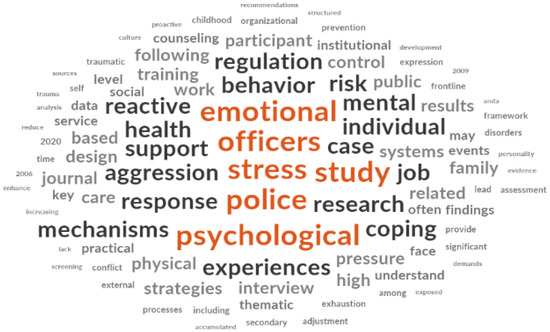
Figure 2.
Word frequency chart of interview data.
Facing Stress Challenges
- 1.
- Stress faced on duty
Due to the unique nature of their work, police officers are often under intense psychological stress. Routine tasks such as handling public reports, filling out paperwork, following orders from superiors, and engaging in crime prevention can foster considerable performance stress. Moreover, the stressors that frontline police officers face can vary depending on their personal aspirations for their role as police officers. As shown in Table 2, the thematic categories of stress faced on duty were derived from the interview data.
Table 2.
Thematic categories of stress faced on duty: stress faced on duty.
Summary:
The interview data reveal two primary dimensions of stress faced by frontline police officers:
- Discrepancy between public expectations and reality
- -
- The public holds high moral expectations for police officers, often conflicting with the limits of human capacity.
- -
- Media narratives tend to emphasize negative incidents, intensifying public criticism.
- Public interaction pressure
- -
- Officers often encounter doubt and confrontation during law enforcement.
- -
- Social media amplifies controversy, exacerbating psychological stress.
- -
- Police-citizen conflicts can erode public trust and morale.
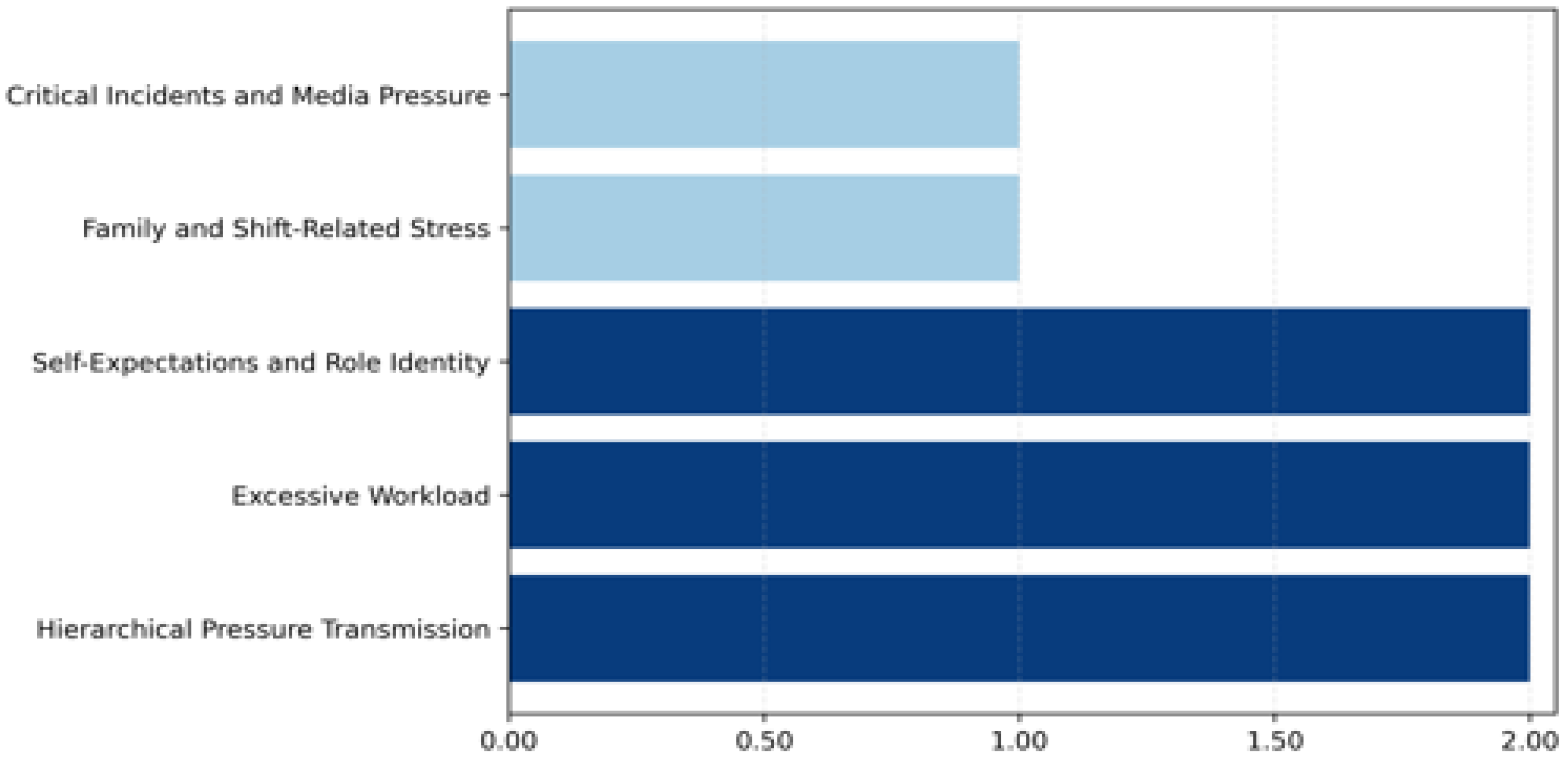
These findings underscore the multifaceted nature of occupational stress in policing, encompassing both societal expectations and direct public interactions. As shown in Figure 3, hierarchical pressure transmission, excessive workload, and self-expectations and role identity emerged as the most prominent stressors, while family- and shift-related stress and critical incidents and media pressure were comparatively less frequently emphasized.
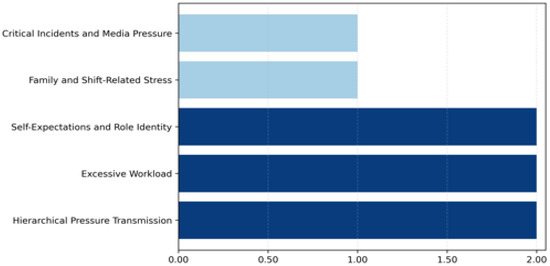
Figure 3.
Stress hotspots among police officers interviewed.
- 2.
- Role of CCTV in Police Investigations and the Associated Pressures on Police Officers
The effectiveness of closed-circuit television (CCTV) systems in crime prevention has long been a matter of scholarly contention. Nevertheless, within the realm of policing practice, CCTV plays an indispensable role in criminal investigations. Insights from this study’s focus group discussions reveal officers’ substantial dependence on CCTV footage during various stages of case investigation, particularly for evidence collection, suspect identification, and event reconstruction. However, investigative reconstruction becomes increasingly challenging when system coverage is insufficient or footage is improperly stored—especially in the absence of witnesses or physical evidence.
A salient finding emerging from the interviews concerns the lack of timely reporting by victims or other involved parties. Delayed notification frequently results in the automatic overwriting of crucial footage, thereby disrupting evidentiary continuity. Such delays substantially heighten investigative complexity and amplify the pressure placed on officers to reconstruct incident timelines and extract critical leads under conditions of evidentiary deficiency. Collectively, these CCTV-related constraints contribute to increased workloads, performance strain, and heightened psychological stress, underscoring the need for more systematic stress management and organizational support mechanisms within the policing context.As shown in Table 3, the thematic categories summarize the role of CCTV in police investigations and the associated pressures on police officers.
Table 3.
Thematic categories of stress faced on duty: role of CCTV in police investigations and the pressure on police officers.
Summary:
Over-reliance on surveillance footage fosters structural limitations in modern policing. Statistics indicate that in over 85% of criminal investigations, CCTV is regarded as the primary source of initial evidence.
However, this dependency has led to overlooking traditional investigative methods such as trace evidence collection, interview techniques, and intelligence networking. When surveillance coverage is lacking or image quality is poor, investigators often struggle to proceed effectively.
- 3.
- Stress management patterns
- Stress control and emotional dysregulation behaviors
When police officers are unable to cope effectively with work-related stress or lack appropriate channels to process it, stress often manifests through their behaviors as forms of emotional expression. Past quantitative studies have suggested that individual characteristics—such as locus of control, psychological traits, and emotional quotient (EQ)—shape how stress is perceived, how well officers adapt to their work, and the extent of social support they receive, with more negative traits amplifying perceived stressors and increasing the risk of maladaptive responses. Consistent with these insights, the interview data in this study indicate that officers may experience physical, psychological, or behavioral difficulties in adaptation, which are reflected in various patterns of stress internalization and externalization. As shown in Table 4, the thematic categories summarize patterns of stress control and emotional dysregulation behaviors identified in the interview data.
Table 4.
Thematic categories of stress faced on duty: stress control and emotional dysregulation behaviors.
- 4.
- Coping strategies
On the basis of the interview data, three main categories of coping strategies emerged, reflecting how officers respond to and manage work-related stress in their everyday practice. These categories encompass social support, professional support, and individual coping, and capture both formal and informal ways in which officers attempt to regulate emotions, maintain functioning, and adapt to organizational pressures. The following table summarizes these thematic categories, the associated subthemes, and illustrative insights from the interviews. As shown in Table 5, the thematic categories summarize the coping strategies police officers employ to manage work-related stress.
Table 5.
Thematic categories of stress faced on duty: coping strategies police officers employ.
5. Conclusions and Suggestions
5.1. Research Conclusions
In interpreting the findings, the analysis distinguished between incident-based acute stress, chronic organizational and workload-related stress, and secondary traumatic stress arising from repeated exposure to traumatic scenes and victims’ suffering, using these categories as analytical lenses to better understand officers’ perceived emotional regulation and aggressive responses.
The first significant finding of this study indicates that stress and emotional regulation may serve as crucial foundations for suppressing impulsive and aggressive behavior. This finding is consistent with research demonstrating that emotion regulation difficulties are significantly associated with aggressive behavior [55], and that deficits in inhibitory control are closely linked to emotion-driven impulsivity [56].
This insight holds potential for application in pre-service police education and early intervention training. Prior research has shown that training programs targeting inhibitory control and emotion regulation skills can effectively reduce impulsive behaviors and enhance self-regulation capacity [57]. For instance, training programs targeting inhibitory functions and emotion regulation skills may help reduce the risk of impulsive actions during duty and improve officers’ ability to manage emotionally charged encounters with the public [38].
The second key finding addresses the challenges police officers face in stress coping and emotional regulation. The study provides recommendations at the organizational level. Interviewees generally agreed that personal psychological traits and emotional regulation abilities should be considered during recruitment. Once employed, institutions should offer more flexible leisure options and stress-relief mechanisms to reduce the accumulation of negative emotions instigated by workplace stress.
Based on the findings, this study proposes the following practical applications:
- Screening mechanism for new recruits: We recommend the incorporating the assessments of emotional regulation abilities into the recruitment process to identify individuals prone to emotional dysregulation early while offering adequate psychological counseling and training resources.
- Intervention for officers exhibiting aggressive behavior: For officers who have exhibited violent or emotionally dysregulated behavior during duty, we recommend psychological and neurological evaluations (including neurologic imaging and other studies if indicated) along with follow-up counseling and behavioral adjustment training. These intervention strategies are derived from the existing literature and the present qualitative findings, and their effectiveness in real-world settings will need to be empirically evaluated in future quantitative or mixed-methods studies.”
- Monitoring and preventive measures for general officers: To understand the mental and emotional states of general officers, institutions should periodically conduct stress sampling and psychological stability assessments. This allows for timely support measures to strengthen resilience and workplace adaptability.
5.2. Research Suggestions
Based on the findings, this study proposes two primary areas of practical application: “Screening and Prevention Mechanisms” and “Stress Reduction and Support Strategies.” These suggestions are intended to guide police agencies in the planning of recruitment systems, training programs, and psychological support policies.
5.2.1. Enhancing Officer Selection and Impulse Control Prevention Mechanisms
Constructing a “Self-Control Capacity Screening Framework” is recommended to better understand officers’ ability to manage emotional conflict and behavioral reactions in situations involving provocation and pressure. This framework should incorporate emotional regulation training and appropriate psychological and behavioral assessment tool to prevent emotional dysregulation and aggression during high-stress duties. Future studies can further refine and validate this framework by integrating objective behavioral measures, psychometric instruments, and biophysiological indicators related to stress and inhibitory control.
5.2.2. Establishing a Stress Reduction and Psychological Support System for Officers
Given the high stakes, high tension, and uncertainty of police work, officers are prone to stress-induced reactions such as anxiety, depression, and emotional exhaustion. To address this issue, a multi-level institutional support strategy is proposed as follows:
- Institutional Care Mechanism
Drawing from pandemic response models, agencies could establish a “Mental Health Service Task Force” coordinated by senior administrative leaders. This task force would oversee mental health promotion for officers, ensure cross-departmental coordination, and implement timely response and support services.
- 2.
- Tiered Psychological Support Services
We recommend establishing various intervention programs, including preliminary physical and mental health screenings, supervisor interviews, psychological referrals, thematic seminars, and individual or group psychological support services. These services should include differentiated care based on officers’ risk levels (e.g., confirmed cases, close contacts, and those at high risk of stress).
- 3.
- Strengthening Supervisors’ Proactive Support Role
Supervisors should conduct regular visits to frontline units, express genuine concern for officers’ emotional and physical well-being, listen to their challenges, and ensure the availability of support resources. Such actions contribute to a sense of organizational care and psychological safety, thereby boosting morale and trust.
- 4.
- Improving Leave Policies and Stress-Relief Facilities
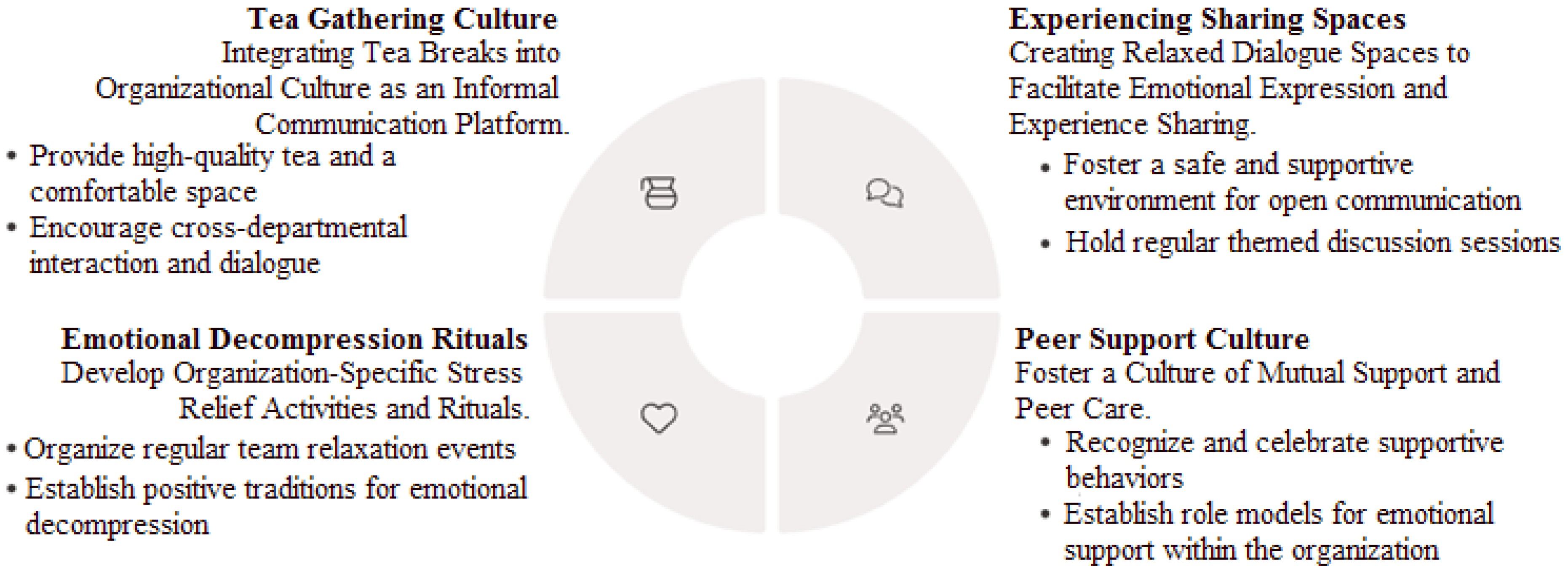
Recruitment and promotion systems should consider candidates’ psychological traits and stress adaptability. After employment, flexible leave policies and diverse recreational facilities (e.g., gym access, leisure spaces) should be provided to help officers decompress. For those showing signs of emotional distress, additional flexible or supplementary leave options should be offered to support their mental and physical recovery. As illustrated in Figure 4, culturally embedded informal support mechanisms play a complementary role in stress relief and recovery among police officers.
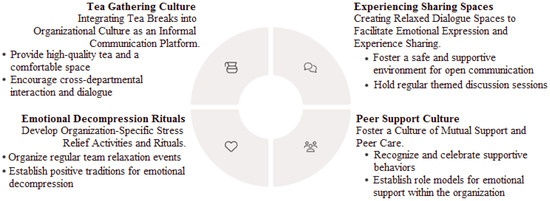
Figure 4.
Culturally embedded informal support mechanisms.
5.2.3. Future Work
Future research can further extend the present findings by combining qualitative insights with quantitative biophysiological indicators. The present study’s findings regarding stress, emotional regulation, and their effects on impulsive behavior among police officers could be significantly enhanced by incorporating real-time, ecologically valid measurement approaches. Recent advances in ecological momentary assessment (EMA) methodology offer promising avenues for future investigation. For instance, Bromet et al. (2020) [58] successfully employed EMA to track positive and negative affect in the daily lives of World Trade Center first responders with PTSD, demonstrating that real-time, repeated assessments can capture dynamic fluctuations in emotional states that retrospective self-reports often miss. This approach revealed that positive emotions were not uniformly inhibited across daily living even among responders with chronic PTSD, highlighting the importance of examining within-person variability in emotional experiences. Such findings underscore the value of moving beyond cross-sectional designs and retrospective recall to capture the temporal dynamics of stress, emotion regulation, and behavioral responses in police officers’ natural work environments. First, continuous or repeated measurements of heart rate variability (HRV) and heart rate—potentially integrated with EMA protocols—could be used to construct stress indices associated with different duty types, organizational contexts, and stages of police work. Combining physiological markers with real-time self-reports would enable researchers to identify moment-to-moment associations between autonomic arousal, subjective stress experiences, and emotion regulation attempts, thereby illuminating the temporal sequencing of stress-response processes. Future studies could also incorporate event-contingent EMA recordings to capture officers’ cognitive and emotional states immediately before, during, and after critical incidents, providing fine-grained data on how acute stressors impact decision-making in real-world policing contexts. Building on the approach demonstrated by Bromet et al. (2020) [58] with first responders, future research could deploy smartphone-based EMA protocols to assess police officers’ stress, emotional regulation strategy use, and behavioral outcomes multiple times daily over extended periods. Such designs would yield rich longitudinal data capable of capturing cumulative stress effects, identifying critical windows for intervention, and testing whether emotion regulation training—as suggested in our first major finding—produces measurable improvements in officers’ real-time coping capacity and well-being. In parallel, future investigations into the use of EEG, imaging, and functional imaging may further elucidate the neural mechanisms underlying stress-related decision-making and aggression-related behaviors. Finally, mixed-methods designs that integrate EMA, physiological monitoring, and qualitative interview narratives would make it possible to quantify autonomic nervous system activity, link it to officers’ subjective experiences of stress and coping, and empirically evaluate the effectiveness of the screening frameworks and intervention strategies proposed in this study.
6. Conclusions
In summary, this study provides a preliminary qualitative examination of frontline police officers’ experiences of occupational stress, emotional regulation, and coping processes, highlighting how individual traits, organizational stressors, and available support mechanisms intersect in everyday policing practice. By grounding the analysis in officers’ own narratives, the findings contribute context-specific insights into the challenges of stress coping and emotional regulation within contemporary police organizations and underscore the importance of organizational awareness and supportive environments.
These policy implications should be interpreted with caution and are intended to offer exploratory, context-specific insights rather than prescriptive recommendations, particularly given the qualitative design and limited sample size of the present study. Accordingly, they are best viewed as complementary to existing research, providing grounded perspectives from frontline officers rather than definitive guidance for policy implementation.
Funding
This research received no external funding.
Institutional Review Board Statement
The study was conducted in accordance with the Declaration of Helsinki and approved by the Institutional Review Board (IRB) of National Chung Cheng University (approval number: CCUREC110042901; approval date: 2 July 2025).
Informed Consent Statement
All participants provided written informed consent prior to their participation. Confidentiality and privacy were strictly maintained throughout the research process.
Data Availability Statement
The data presented in this study are available upon request from the corresponding author. The data are not publicly available due to privacy and ethical considerations.
Acknowledgments
The author would like to express sincere gratitude to all police officers who participated in this study for their valuable time, openness, and insightful contributions.
Conflicts of Interest
The author declares no conflicts of interest.
Abbreviations
| ELS | Early life stress |
| PFC | Prefrontal cortex |
| OFC | orbitofrontal cortex |
| CCTV | closed-circuit television |
| EQ | emotional quotient |
References
- Juang, Y.S.; Lo, S.C. Impact of leadership styles and working stress on job satisfaction—A case study of police divisions in Hsinchu county. Ling. Tung J. 2020, 46, 85–123. [Google Scholar]
- Lin, Y.C.; Wu, T.C.; Huang, C.Y. Research on the relationship between police work stress and leisure involvement, health status and quality of life—Take Madou police precinct of Tainan City as example. J. Sport. Health Leis. 2018, 9, 81–90. [Google Scholar]
- Chiu, S.C.; Chou, C.W. The Study on job burnout, personal accomplishment and job satisfaction of police officers during the period of COVID-19. J. Police Manag. 2022, 18, 217–237. [Google Scholar]
- Lu, W.S.; Hong, Y.H. A Research on work-family conflict of criminal investigation police officers. J. Police Manag. 2017, 13, 39–55. [Google Scholar]
- Sun, Y.H.; Chen, C.C. Policeman stressors and coping strategies. J. Police Manag. 2015, 10, 103–126. [Google Scholar]
- Lai, J.; Ma, S.; Wang, Y.; Cai, Z.; Hu, J.; Wei, N.; Wu, J.; Du, H.; Chen, T.; Li, R.; et al. Factors associated with mental health outcomes among health care workers exposed to coronavirus disease 2019. JAMA Netw. Open 2020, 3, e203976. [Google Scholar] [CrossRef]
- Xu, J.; Xu, Q.-H.; Wang, C.-M.; Wang, J. Psychological status of surgical staff during the COVID-19 outbreak. Psychiatry Res. 2020, 288, 112955. [Google Scholar] [CrossRef]
- Zhang, C.; Yang, L.; Liu, S.; Ma, S.; Wang, Y.; Cai, Z.; Du, H.; Li, R.; Kang, L.; Su, M.; et al. Survey of insomnia and related social psychological factors among medical staff involved in the 2019 novel coronavirus disease outbreak. Front. Psychiatry 2020, 11, 306. [Google Scholar] [CrossRef]
- dos Santos Santiago Ribeiro, B.M.; Scorsolini-Comin, F.; do Carmo Cruz Robazzi, M.L.; dos Santos, S.V.M.; de Souza Terra, F.; de Marchi Barcellos Dalri, R.d.C. Factors associated with Burnout Syndrome in police officers: A scoping review. Rev. Bras. De Enferm. 2024, 77, e20230444. [Google Scholar] [CrossRef]
- Ranta, R.S. Management of stress and burnout of police personnel. J. Indian Acad. Appl. Psychol. 2008, 34, 29–39. [Google Scholar]
- Sharp, M.L.; Solomon, N.; Harrison, V.; Gribble, R.; Cramm, H.; Pike, G.; Fear, N.T. The mental health and wellbeing of spouses, partners and children of emergency responders: A systematic review. PLoS ONE 2022, 17, e0269659. [Google Scholar] [CrossRef] [PubMed]
- Kaplan, G.R.; Frith, T.; Hubble, M.W. Quantifying the prevalence and predictors of burnout in emergency medical services. Ir. J. Med. Sci. 2024, 193, 1545–1556. [Google Scholar] [CrossRef] [PubMed]
- Chew, N.W.; Lee, G.K.; Tan, B.Y.; Jing, M.; Goh, Y.; Ngiam, N.J.; Yeo, L.L.; Ahmad, A.; Khan, F.A.; Napolean Shanmugam, G.; et al. A multinational, multicentre study on the psychological outcomes and associated physical symptoms amongst healthcare workers during COVID-19 outbreak. Brain Behav. Immun. 2020, 88, 559–565. [Google Scholar] [CrossRef] [PubMed]
- Liang, W.L. My Pet Stress Monster: An Illustrated Commentary. Master’s Thesis, Department of Visual Communication Design, Ming Chi University of Technology, New Taipei City, China, 2019. [Google Scholar]
- Greenberg, M.A.; Wortman, C.B.; Stone, A.A. Emotional expression and physical health: Revising traumatic memories or fostering self-regulation? J. Pers. Soc. Psychol. 1996, 71, 588–602. [Google Scholar] [CrossRef]
- Anda, R.F.; Croft, J.B.; Felitti, V.J.; Nordenberg, D.; Giles, W.H.; Williamson, D.F.; Giovino, G.A. Adverse childhood experiences and smoking during adolescence and adulthood. JAMA 1999, 282, 1652–1658. [Google Scholar] [CrossRef]
- Anda, R.F.; Felitti, V.J.; Bremner, J.D.; Walker, J.D.; Whitfield, C.; Perry, B.D.; Dube, S.R.; Giles, W.H. The enduring effects of abuse and related adverse experiences in childhood: A convergence of evidence from neurobiology and epidemiology. Eur. Arch. Psychiatry Clin. Neurosci. 2006, 256, 174–186. [Google Scholar] [CrossRef]
- Anda, R.F.; Felitti, V.J.; Walker, J.; Whitfield, C.; Bremner, J.D.; Perry, B.D.; Dube, S.R.; Giles, W.H. The relationship of adverse childhood experiences to adult health, well-being, social function, and health care. In The Impact of Early Life Trauma on Health and Disease: The Hidden Epidemic; Lanius, R., Vermetten, E., Pain, C., Eds.; Cambridge University Press: Cambridge, UK, 2007; pp. 77–87. [Google Scholar]
- Chapman, D.P.; Whitfield, C.L.; Felitti, V.J.; Dube, S.R.; Edwards, V.J.; Anda, R.F. Adverse childhood experiences and the risk of depressive disorders in adulthood. J. Affect. Disord. 2004, 82, 217–225. [Google Scholar] [CrossRef]
- Cutrona, C.E.; Wallace, G.; Wesner, K.A. Neighborhood characteristics and depression: An examination of stress processes. Curr. Dir. Psychol. Sci. 2006, 15, 188–192. [Google Scholar] [CrossRef]
- Dong, M.; Anda, R.F.; Felitti, V.J.; Dube, S.R.; Williamson, D.F.; Thompson, T.J.; Loo, C.M.; Giles, W.H. The interrelatedness of multiple forms of childhood abuse, neglect, and household dysfunction. Child Abus. Negl. 2004, 28, 771–784. [Google Scholar] [CrossRef]
- Edwards, V.J.; Holden, G.W.; Felitti, V.J.; Anda, R.F. Relationship between multiple forms of childhood maltreatment and adult mental health in community respondents: Results from the adverse childhood experiences study. Am. J. Psychiatry 2003, 160, 1453–1460. [Google Scholar] [CrossRef]
- Pirkola, S.; Isometsä, E.; Aro, H.; Kestilä, L.; Hamalainen, J.; Veijola, J.; Kiviruusu, O.; Lönnqvist, J. Childhood adversities as risk factors for adult mental disorders: Results from the Health 2000 Study. Soc. Psychiatry Psychiatr Epidemiol 2005, 40, 769–777. [Google Scholar] [CrossRef] [PubMed]
- Dube, S.R.; Anda, R.F.; Felitti, V.J.; Chapman, D.P.; Williamson, D.F.; Giles, W.H. Childhood abuse, household dysfunction, and the risk of attempted suicide throughout the life span: Findings from the adverse childhood experiences study. JAMA 2001, 286, 3089–3096. [Google Scholar] [CrossRef] [PubMed]
- Anda, R.F.; Butchart, A.; Felitti, V.J.; Brown, D.W. Building a Framework for global surveillance of the public health implications of adverse childhood experience. Am. J. Prev. Med. 2010, 39, 93–98. [Google Scholar] [CrossRef] [PubMed]
- Brown, D.W.; Anda, R.F.; Tiemeier, H.; Felitti, V.J.; Edwards, V.J.; Croft, J.B.; Giles, W.H. Adverse childhood experiences and the risk of premature mortality. Am. J. Prev. Med. 2009, 37, 389–396. [Google Scholar] [CrossRef]
- Ivancevich, T.M.; Matteson, M.T. Stress and Work: A Managerial Perspective; Scott, Foresman & Cony: Glenview, IL, USA, 1980. [Google Scholar]
- Lazarus, R.S.; Folkman, S. Stress, Appraisal, and Coping; Springer: New York, NY, USA, 1984. [Google Scholar]
- Compas, B.E.; Connor-Smith, J.K.; Saltzman, H.; Thomsen, A.H.; Wadsworth, M.E. Coping with stress during childhood and adolescence: Problems, progress, and potential in theory and research. Psychol. Bull. 2001, 127, 87–127. [Google Scholar] [CrossRef]
- Vîrgă, D.M.; Baciu, E.-L.; Lazăr, T.-A.; Lupșa, D. Psychological capital protects social workers from burnout and secondary traumatic stress. Sustainability 2020, 12, 2246. [Google Scholar] [CrossRef]
- Secosan, I.; Bredicean, C.; Crainiceanu, Z.P.; Virga, D.; Giurgi-Oncu, C.; Bratu, T. Mental health in emergency medical clinicians: Burnout, STS, sleep disorders. A cross-sectional descriptive multicentric study. Cent. Eur. Ann. Clin. Res. 2019, 1, 5. [Google Scholar] [CrossRef]
- Bride, B.E. Prevalence of secondary traumatic stress among social workers. Soc. Work. 2007, 52, 63–70. [Google Scholar] [CrossRef]
- Colombo, L.; Emanuel, F.; Zito, M. Secondary traumatic stress: Relationship with symptoms, exhaustion, and emotions among cemetery workers. Front. Psychol. 2019, 10, 633. [Google Scholar] [CrossRef]
- Pappa, S.; Ntella, V.; Giannakas, T.; Giannakoulis, V.G.; Papoutsi, E.; Katsaounou, P. Prevalence of depression, anxiety, and insomnia among healthcare workers during the COVID-19 pandemic: A systematic review and meta-analysis. Brain Behav. Immun. 2020, 88, 901–907. [Google Scholar] [CrossRef]
- Kim, Y.J. Secondary traumatic stress and burnout of North Korean refugees service providers. Psychiatry Investig. 2017, 14, 118–125. [Google Scholar] [CrossRef]
- Chu, D.C. Perceived stress and mental health during the pandemic of COVID-19: An examination of Taiwanese police officers. Polic. Soc. 2023, 33, 626–644. [Google Scholar] [CrossRef]
- Chiu, J.T.; Chou, P.P.; Wang, C.Y. Public service motivation, role stress, and job burnout of police officers during the COVID-19 pandemic in Taiwan. Polic. A J. Policy Pract. 2023, 17, paac055. [Google Scholar] [CrossRef]
- Hung, W.L.; Liu, H.T. Causal model analysis of police officers’ COVID-19 fear, resistance to organizational change, intolerance of uncertainty, secondary trauma, emotional exhaustion, and insomnia. Int. J. Environ. Res. Public Health 2022, 19, 10374. [Google Scholar] [CrossRef] [PubMed]
- Wollf, H.G. Stress and Disease; Charles, C., Ed.; Thomas Publisher: Springfield, IL, USA, 1953. [Google Scholar]
- Engel, G.L. Studies of ulcerative colitis. III. The nature of the psychologic processes. Am. J. Med. 1955, 19, 231–256. [Google Scholar] [CrossRef]
- Leshan, L. An emotional life-history pattern associated with neoplastic disease. Ann. N. Y. Acad. Sci. 1966, 125, 780–793. [Google Scholar] [CrossRef]
- Friedman, M.; Rosenman, R.H. Type A Behavior and Your Heart; Knopf: New York, NY, USA, 1974. [Google Scholar]
- Carver, C.S.; Scheier, M.E.; Weintraub, J.K. Assessing coping strategies: A theoretically based approach. J. Pers. Soc. Psychol. 1989, 56, 267–283. [Google Scholar] [CrossRef]
- Wahlund, K.; Kristiansson, M. Aggression and the brain: The role of the frontal lobes. Int. J. Law Psychiatry 2009, 32, 229–234. [Google Scholar]
- Roth, G.; Strüber, D. Neurobiological aspects of reactive and proactive violence in antisocial individuals. Prax. Rechtspsychologie 2008, 58, 587–600. [Google Scholar]
- Crowe, S.L.; Blair, R.J.R. The development of antisocial behavior: What can we learn from functional neuroimaging studies? Dev. Psychopathol. 2008, 20, 1145–1159. [Google Scholar] [CrossRef]
- Nelson, R.J.; Trainor, B.C. Neural mechanisms of aggression. Nat. Rev. Neurosci. 2007, 8, 536–546. [Google Scholar] [CrossRef]
- Blair, R.J.R.; Peschardt, K.S.; Budhani, S.; Mitchell, D.G.V.; Pine, D.S. The development of psychopathy. J. Child. Psychol. Psychiatry 2006, 47, 262–275. [Google Scholar] [CrossRef]
- Siegel, A.; Victoroff, J. Understanding human aggression: New insights from neuroscience. Int. J. Law Psychiatry 2009, 32, 209–215. [Google Scholar] [CrossRef]
- Hubbard, J.A.; Smithmyer, C.M.; Ramsden, S.R.; Parker, E.H.; Flanagan, K.D.; Dearing, K.F.; Relyea, N.; Simons, R.F. Observational, physiological, and self-report measures of children’s anger: Relations to reactive versus proactive aggression. Child. Dev. 2002, 73, 1101–1118. [Google Scholar] [CrossRef] [PubMed]
- Ostrov, J.M.; Houston, R.J. The utility of forms and functions of aggression in emerging adulthood: Association with personality disorder symptomatology. J. Youth Adolesc. 2008, 37, 1147–1158. [Google Scholar] [CrossRef]
- Sansone, R.A.; Sansone, L.A. Borderline personality and externalized aggression. Innov. Clin. Neurosci. 2009, 6, 16–20. [Google Scholar]
- Mancke, F.; Herpertz, S.C.; Bertsch, K. Aggression in borderline personality disorder: A multidimensional model. Personal. Disord. 2015, 6, 278–291. [Google Scholar] [CrossRef]
- Braun, V.; Clarke, V. Using thematic analysis in psychology. Qual. Res. Psychol. 2006, 3, 77–101. [Google Scholar] [CrossRef]
- Garofalo, C.; Velotti, P. Negative emotionality and aggression in violent offenders. J. Crim. Justice 2017, 51, 9–16. [Google Scholar] [CrossRef]
- Peckham, A.D.; Johnson, S.L. Cognitive control training for emotion-related impulsivity. Behav. Res. Ther. 2018, 105, 17–26. [Google Scholar] [CrossRef]
- Allom, V.; Mullan, B.; Hagger, M. Does inhibitory control training improve health behaviour? Health Psychol. Rev. 2016, 10, 168–186. [Google Scholar] [CrossRef]
- Bromet, E.; Contractor, A.A.; Dornbach-Bender, A.; Kleva, C.S.; Kotov, R.; Luft, B.; Ruggero, C.J.; Schuler, K.; Waszczuk, M. Positive and negative affect in the daily life of World Trade Center responders with PTSD: An ecological momentary assessment study. Psychol. Trauma: Theory Res. Pract. Policy 2020, 12, 75–83. [Google Scholar] [CrossRef]

Disclaimer/Publisher’s Note: The statements, opinions and data contained in all publications are solely those of the individual author(s) and contributor(s) and not of MDPI and/or the editor(s). MDPI and/or the editor(s) disclaim responsibility for any injury to people or property resulting from any ideas, methods, instructions or products referred to in the content. |
© 2026 by the author. Licensee MDPI, Basel, Switzerland. This article is an open access article distributed under the terms and conditions of the Creative Commons Attribution (CC BY) license.