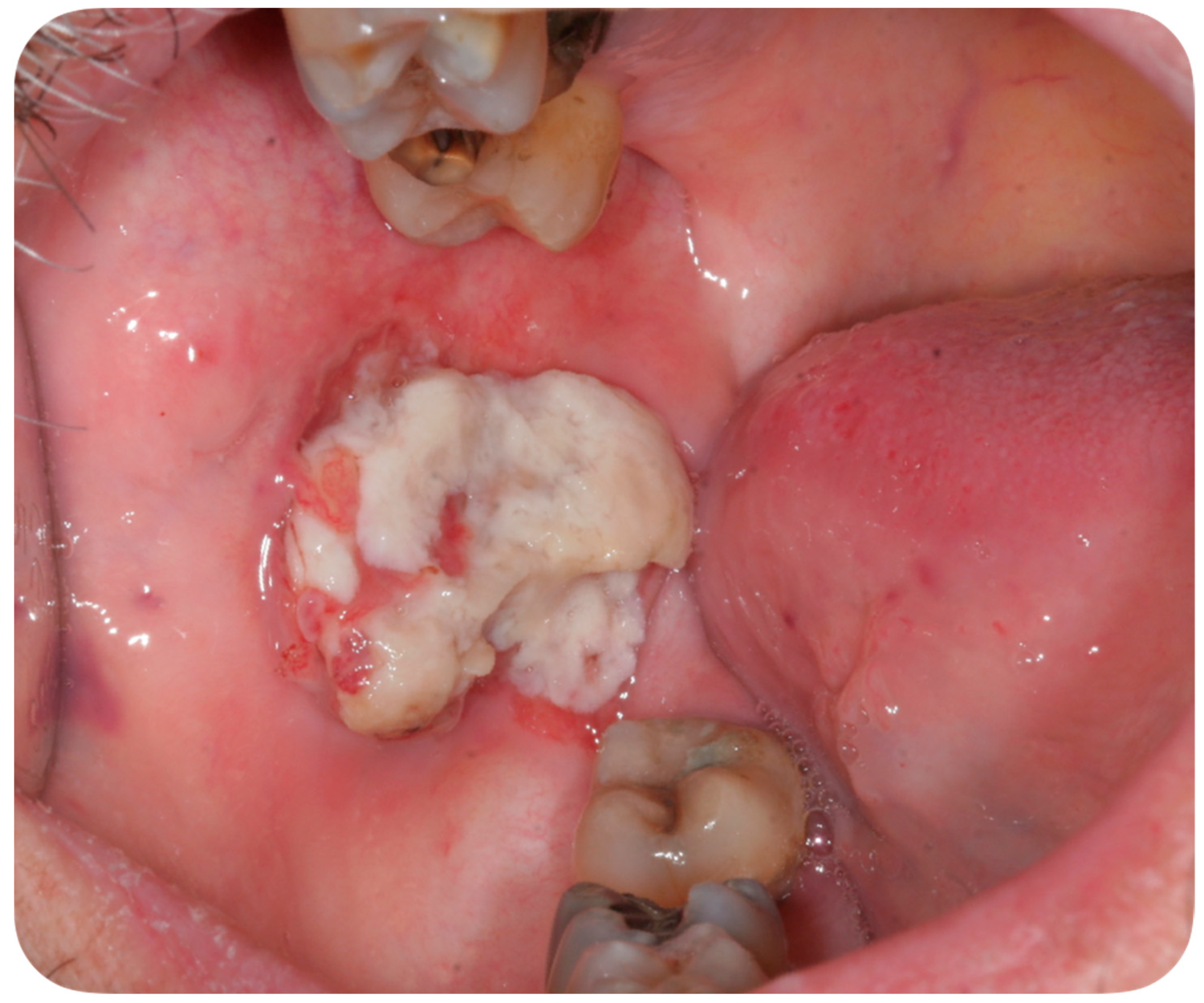
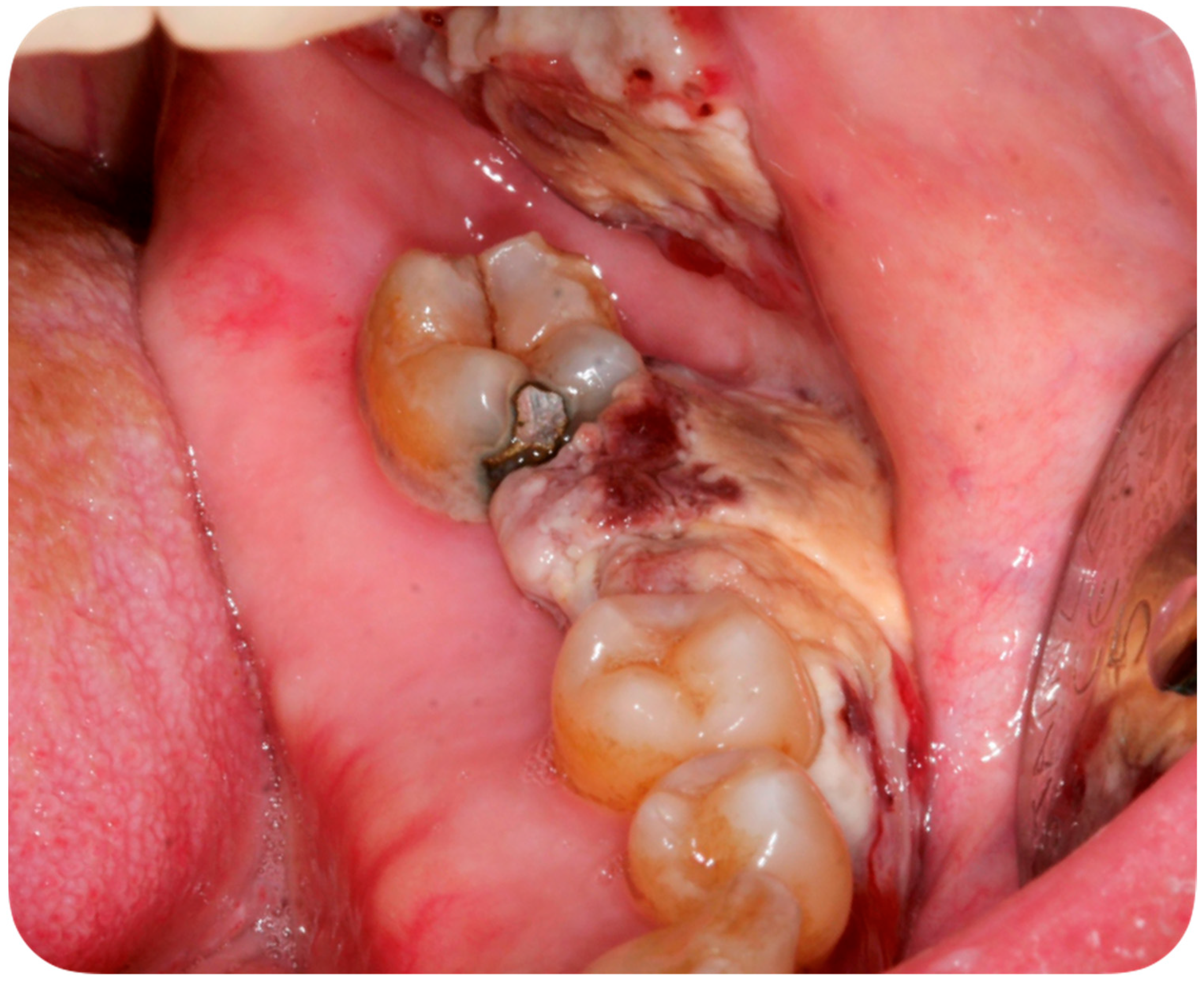
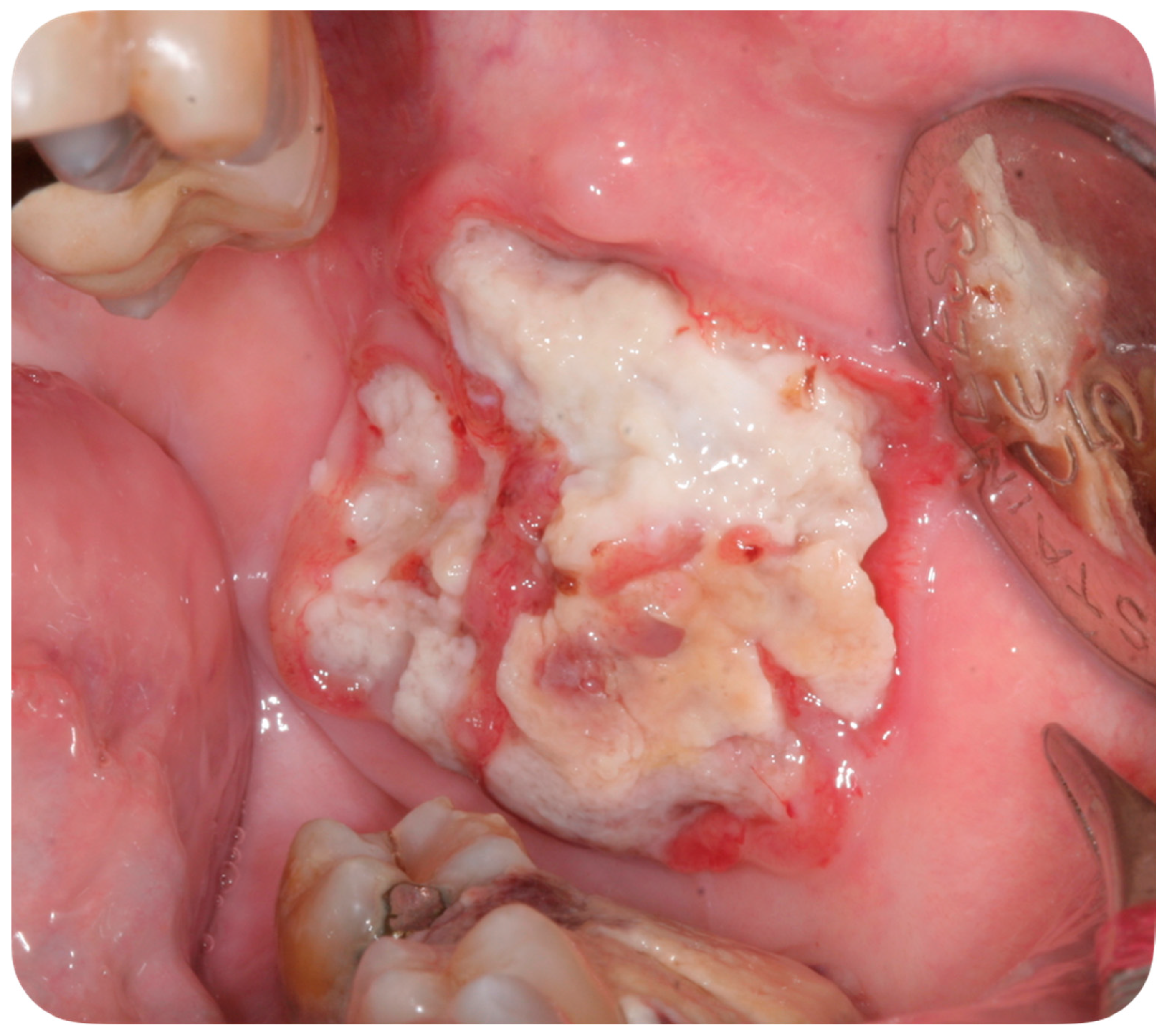
Saprochaete clavata Infection in Immunosuppressed Patients: Systematic Review of Cases and Report of the First Oral Manifestation, Focusing on Differential Diagnosis
 , ,
, ,  and
and
Abstract
1. Introduction
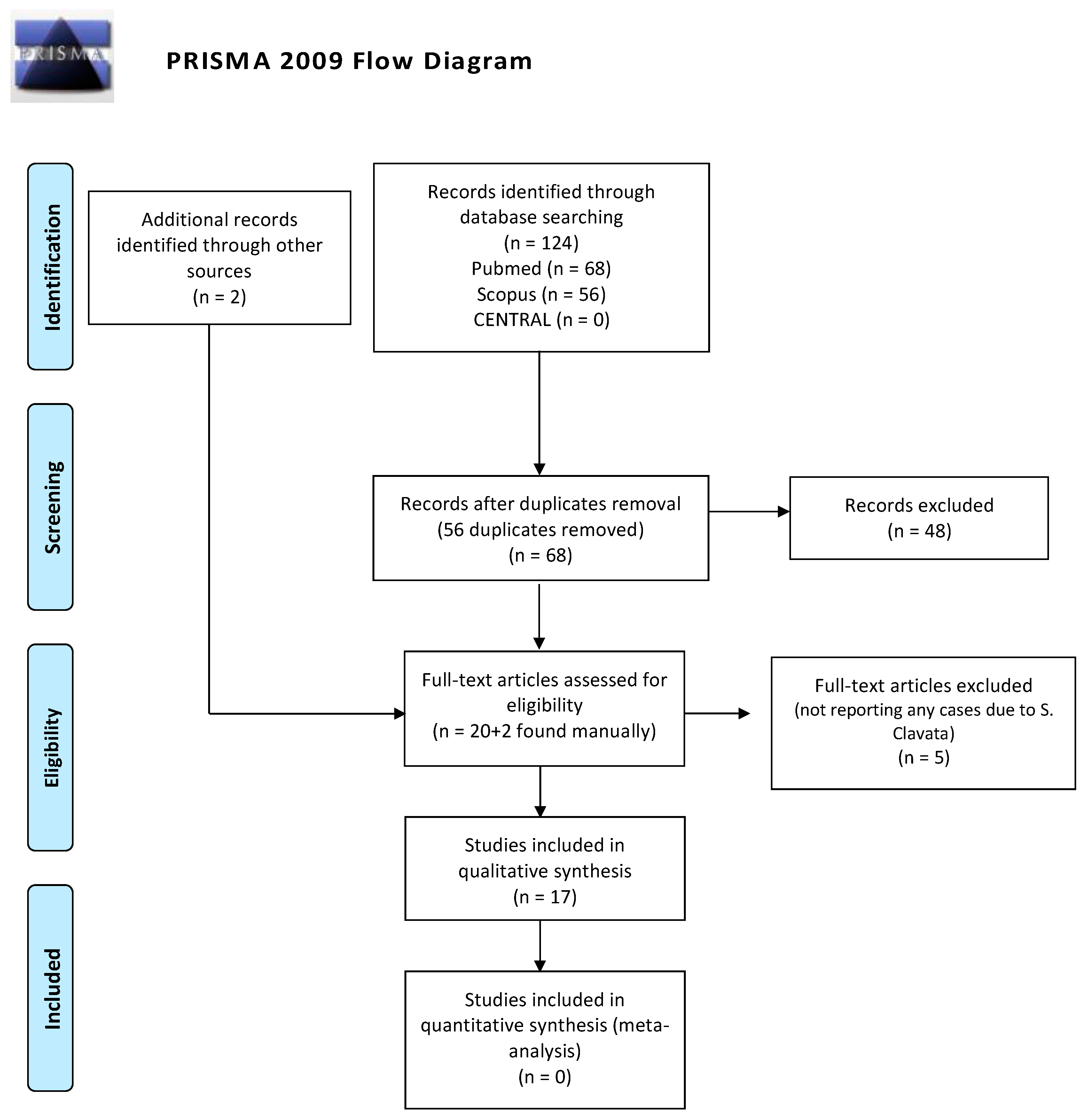
2. Methods
3. Results
4. Case Report
5. Discussion
6. Conclusions
Author Contributions
Funding
Informed Consent Statement
Data Availability Statement
Conflicts of Interest
References
- Miceli, M.H.; Kauffman, C.A. Isavuconazole: A new broad-spectrum triazole antifungal agent. Clin. Infect. Dis. 2015, 61, 1558–1565. [Google Scholar] [CrossRef] [PubMed]
- Armstrong-James, D.; Bicanic, T.; Brown, G.D.; Hoving, J.C.; Meintjes, G.; Nielsen, K. AIDS-related mycoses: Current progress in the field and future priorities. Trends Microbiol. 2017, 26, 428–430. [Google Scholar] [CrossRef] [PubMed]
- Girmenia, C.; Pagano, L.; Martino, B.; D’Antonio, D.; Fanci, R.; Specchia, G.; Melillo, L.; Buelli, M.; Pizzarelli, G.; Venditti, M.; et al. Invasive infections caused by Trichosporon species and Geotrichum capitatum in patients with hematologic Malignancies: A Retrospective Multicenter Study from Italy and Review of the Literature. J. Clin. Microbiol. 2005, 43, 1818–1828. [Google Scholar] [CrossRef]
- Del Principe, M.; Sarmati, L.; Cefalo, M.; Fontana, C.; De Santis, G.; Buccisano, F.; Maurillo, L.; De Bellis, E.; Postorino, M.; Sconocchia, G.; et al. A cluster of Geotrichum clavatum (Saprochaete clavata) infection in haematological patients: A first Italian report and review of literature. Mycoses 2016, 59, 594–601. [Google Scholar] [CrossRef]
- Deepa, A.; Nair, B.; Sivakumar, T.; Joseph, A. Uncommon opportunistic fungal infections of oral cavity: A review. J. Oral Maxillofac. Pathol. 2014, 18, 235–243. [Google Scholar] [CrossRef] [PubMed]
- Pottier, I.; Gente, S.; Vernoux, J.; Guéguen, M. Safety assessment of dairy microorganisms: Geotrichum candidum. Int. J. Food Microbiol. 2008, 126, 327–332. [Google Scholar] [CrossRef] [PubMed]
- Miceli, M.; Lee, S. Emerging moulds: Epidemiological trends and antifungal resistance. Mycoses 2011, 54, e666–e678. [Google Scholar] [CrossRef]
- Gadea, I.; Cuenca, E.M.; Prieto, E. Genotyping and antifungal susceptibility profile of Dipodascus capitatus isolates causing disseminated infection in seven hematological patients of a tertiary hospital. J. Clin. Microbiol. 2004, 42, 1832–1836. [Google Scholar] [CrossRef]
- Vaux, S.; Criscuolo, A.; Desnos Ollivier, M.; Diancourt, L.; Tarnaud, C.; Vandenbogaert, M.; Brisse, S.; Coignard, B.; Dromer, F. Geotrichum Investigation Group. Multicenter outbreak of infections by Saprochaete clavata, an unrecognized opportunistic fungal pathogen. Mbio 2014, 5, 02309–02314. [Google Scholar] [CrossRef]
- Stanzani, M.; Cricca, M.; Sassi, C.; Sutto, E.; De Cicco, G.; Bonifazi, F.; Bertuzzi, C.; Bacci, F.; Paolini, S.; Cavo, M.; et al. Saprochaete clavata infections in patients undergoing treatment for haematological malignancies: A report of a monocentric outbreak and review of the literature. Mycoses 2019, 62, 1100–1107. [Google Scholar] [CrossRef]
- El Zein, S.; Hindy, J.; Kanj, S. Invasive Saprochaete Infections: An Emerging Threat to Immunocompromised Patients. Path-Ogens 2020, 9, 922. [Google Scholar] [CrossRef]
- Favre, S.; Rougeron, A.; Levoir, L.; Pérard, B.; Milpied, N.; Accoceberry, I.; Gabriel, F.; Vigouro, S. Saprochaete clavata invasive infection in a patient with severe aplastic anemia: Efficacy of voriconazole and liposomal amphotericin B with adjuvant granulocyte transfusions before neutrophil recovery following allogeneic bone marrow transplantation. Med. Mycol. Case Rep. 2016, 11, 21–23. [Google Scholar] [CrossRef]
- Fernández-Ruiz, M.; Guinea, J.; Puig Asensio, M.; Zaragoza, Ó.; Almirante, B.; Cuenca-Estrella, M.; Aguado, J.M.; CANDIPOP Project, GEIH-GEMICOMED (SEIMC) and REIPI. Fungemia due to rare opportunistic yeasts: Data from a population-based surveil-lance in Spain. Med. Mycol. 2017, 55, 125–136. [Google Scholar] [CrossRef]
- Camus, V.; Thibault, M.; David, M.; Gargala, G.; Compagnon, P.; Lamoureux, F.; Girault, C.; Michot, J.; Stamatoullas, A.; Lanic, H.; et al. Invasive Geotrichum clavatum fungal infection in an acute myeloid leukaemia patient: A case report and review. Mycopathologia 2014, 177, 319–324. [Google Scholar] [CrossRef]
- Lacroix, C.; Brethon, B.; Boissel, N.; Desnos, M.; Leblanc, T.; Raffoux, E. Geotrichum clavatum an emerging pathogen responsible for invasive infection in two neutropenic leukemia patients. J. Chemother. 2007, 19, 81. [Google Scholar]
- Picard, M.; Cassaing, S.; Letocart, P.; Verdeil, X.; Protin, C.; Chauvin, P.; Iriart, X.; Cavalié, L.; Valentin, A.; Marchou, B.; et al. Concomitant cases of disseminated Geotrichum clavatum infections in patients with acute myeloid leukemia. Leuk. Lymphoma 2014, 55, 1186–1188. [Google Scholar] [CrossRef] [PubMed]
- De Almeida Júnior, J.; Sztajnbok, J.; da Silva, A.; Vieira, V.; Galastri, A.; Bissoli, L.; Litvinov, N.; del Negro, G.M.B.; Motta, A.L.; Rossi, F.; et al. Rapid identification of moulds and arthroconidial yeasts from positive blood cultures by MALDI-TOF mass spectrometry. Med. Mycol. 2016, 54, 885–889. [Google Scholar] [CrossRef] [PubMed]
- Esposto, M.; Prigitano, A.; Lo Cascio, G.; Ossi, C.; Grancini, A.; Cavanna, C.; Lallitto, F.; Tejada, M.; Bandettini, R.; Mularoni, A.; et al. Yeast-like filamentous fungi: Molecular identification and in vitro susceptibility study. Med. Mycol. 2018, 57, 909–913. [Google Scholar] [CrossRef] [PubMed]
- Liu, X.; Zhou, W.; Jiang, Y.; Kuang, L. Invasive fungal infection caused by Geotrichum clavatum in an acute leukemia child: First documented case from mainland China. JPN J. Infect. Dis. 2018, 72, 130–132. [Google Scholar] [CrossRef] [PubMed]
- Salguero Fernández, I.; Nájera Botello, L.; Orden Martinez, B.; Roustan Gullón, G. Disseminated fungemia by Saprochaete clavata. Enferm. Infecc. Microbiol. Clin. 2018, 37, 283–284. [Google Scholar] [CrossRef] [PubMed]
- Leoni, M.; Riccardi, N.; Rotulo, G.A.; Godano, E.; Faraci, M.; Bandettini, R.; Esposto, M.C.; Castagnola, E. Magnusiomyces clavatus infection in a child after allogeneic hematotopoetic stem cell transplantation: Diagnostic and therapeutic implications. Med. Mycol. Case Rep. 2018, 23, 65–67. [Google Scholar] [CrossRef]
- Buchta, V.; Bolehovská, R.; Hovorková, E.; Cornely, O.; Seidel, D.; Žák, P. Saprochaete clavata Invasive Infections—A New Threat to Hematological-Oncological Patients. Front Microbiol. 2019, 10, 2196. [Google Scholar] [CrossRef] [PubMed]
- Pavone, P.; Oliva, A.; Raponi, G.; Pugliese, F.; Martelli, S.; Celli, P.; Saccoa, F.; Vullo, V.; Mastroianni, C.M.; Russo, G. Disseminated fungal infection due to Saprochaete clavata in a kidney transplant recipient. J. Mycol. Med. 2019, 3, 278–281. [Google Scholar] [CrossRef]
- Wee, L.; Ling, H.; Chong, C.; Soe, M.; Koh, M. A rare case of purpuric rash caused by Saprochaete clavata in a pediatric patient with acute leukemia. Pediatr. Dermatol. 2019, 6, 990–991. [Google Scholar] [CrossRef] [PubMed]
- Lo Cascio, G.; Vincenzi, M.; Soldani, F.; De Carolis, E.; Maccacaro, L.; Sorrentino, A.; Nadali, G.; Cesaro, S.; Sommavilla, M.; Niero, V. Outbreak of Saprochaete clavata Sepsis in Hematology Patients: Combined Use of MALDI-TOF and Sequencing Strategy to Identify and Correlate the Episodes. Front. Microbiol. 2020, 11, 84. [Google Scholar] [CrossRef]
- Menu, E.; Criscuolo, A.; Desnos-Ollivier, M.; Cassagne, C.; D’Incan, E.; Furst, S.; Ranque, S.; Berger, P.; Dromer, F. Saprochaete clavata Outbreak Infecting Cancer Center through Dishwasher. Emerg. Infect. Dis. 2020, 26, 2031–2038. [Google Scholar] [CrossRef] [PubMed]
- Arendrup, M.C.; Cuenca-Estrella, M.; Lass-Flörl, C.; Hope, W.; EUCAST-AFST. EUCAST technical note on the EUCAST definitive document EDef 7.2: Method for the determination of broth dilution minimum inhibitory concentrations of antifungal agents for yeasts EDef 7.2 (EUCAST-AFST). Clin. Microbiol. Infect. 2012, 7, E246–E247. [Google Scholar] [CrossRef] [PubMed]
- Durán, G.; Seidel, D.; Vehreschild, M.; Hamprecht, A.; Kindo, A.; Raci, Z.; Demeter, J.; de Hoog, S.; Aurbach, U.; Ziegler, M.; et al. Invasive infections due to Saprochaete and Geotrichum species: Report of 23 cases from the FungiScope Registry. Mycoses 2017, 60, 273–279. [Google Scholar] [CrossRef]
- Camera, A.; Andretta, C.; Villa, M.; Volpicelli, M.; Picardi, M.; Rossi, M.; Rinaldi, C.R.; della Cioppa, P.; Ciancia, R.; Selleri, C.; et al. Intestinal toxicity during induction chemotherapy with cytarabine-based regimens in adult acute myeloid leukemia. Hematol. J. 2003, 4, 346–350. [Google Scholar] [CrossRef]
- Martino, R.; Salavert, M.; Parody, R.; Tomás, J.; Vázquez, L.; Jarque, I.; Prieto, E.; Sastre, J.L.; Gadea, I.; Pemán, J.; et al. Blastoschizomyces capitatus infection in patients with leukemia: Report of 26 cases. J. Clin. Infect. Dis. 2004, 38, 335–341. [Google Scholar] [CrossRef] [PubMed]
- Schuermans, C.; van Bergen, M.; Coorevits, L.; Verhaegen, J.; Lagrou, K.; Surmont, I.; Jeurissen, A. Breakthrough Saprochaete capitata infections in patients receiving echinocandins: Case report and review of the literature. Med. Mycol. 2011, 49, 414–418. [Google Scholar] [CrossRef] [PubMed][Green Version]
- Arendrup, M.; Boekhout, T.; Akova, M.; Meis, J.; Cornely, O. ESCMID and ECMM joint clinical guidelines for the diagnosis and management of rare invasive yeast infections. Clin. Microbiol. Infect. 2014, 20, 76–98. [Google Scholar] [CrossRef]
- Muriel, P.; Sophie, C.; Philippe, L.; Xavier, V.; Caroline, P.; Pamela, C. Concomitant cases of disseminated Geotrichum clavatum infections. Leuk. Lymphoma 2014, 55, 1029–2403. [Google Scholar]
- Naples, J.; Martin, A.; Sobelman, D.; Schoem, S. Unusual Fungal Lesion Presenting as a Neoplastic Pediatric Tongue Mass. Pediatrics 2017, 139, e20161345. [Google Scholar] [CrossRef]
- Jefferies, S.D.; Ord, R.A. An unusual presentation of oral syphilis. Br. J. Oral Maxillofac. Surg. 1985, 23, 376–380. [Google Scholar] [CrossRef]
- Forrestel, A.K.; Kovarik, C.L.; Katz, K.A. Sexually acquired syphilis: Laboratory diagnosis, management, and prevention. J. Am. Acad. Dermatol. 2020, 82, 17–28. [Google Scholar] [CrossRef]
- Sharma, S.; Bajpai, J.; Pathak, P.K.; Pradhan, A.; Singh, P.; Kant, S. Oral tuberculosis-Current concepts. J. Family Med. Prim. Care 2019, 8, 1308–1312. [Google Scholar] [PubMed]
- Kaplan, I.; Anavi, K.; Anavi, Y.; Calderon, S.; Schwartz-Arad, D.; Teicher, S.; Hirshberg, A. The clinical spectrum of Actinomyces-associated lesions of the oral mucosa and jaw-bones: Correlation with histomorphometric analysis. Oral Surg. Oral Med. Oral Pathol. Oral Radiol. Endod. 2009, 108, 738–746. [Google Scholar] [CrossRef]
- Alamillos-Granados, F.J.; Dean-Ferrer, A.; García-López, A.; López-Rubio, F. Actinomycotic ulcer of the oral mucosa: An unusual presentation of oral actinomycosis. Br. J. Oral Maxillofac. Surg. 2000, 38, 121–123. [Google Scholar] [CrossRef] [PubMed]
- Wang, H.W.; Balakrishna, J.P.; Pittaluga, S.; Jaffe, E.S. Diagnosis of Hodgkin lymphoma in the modern era. Br. J. Haematol. 2019, 184, 45–59. [Google Scholar] [CrossRef] [PubMed]
- Silva, T.D.; Ferreira, C.B.; Leite, G.B.; de Menezes Pontes, J.R.; Antunes, H.S. Oral manifestations of lymphoma: A systematic review. Ecancermedicalscience 2016, 10, 665. [Google Scholar] [CrossRef] [PubMed]
- Campo, E.; Swerdlow, S.H.; Harris, N.L.; Pileri, S.; Stein, H.; Jaffe, E.S. The 2008 WHO classification of lymphoid neoplasms and beyond: Evolving concepts and practical applications. Blood 2011, 117, 5019–5032. [Google Scholar] [CrossRef]
- Hosseinpour, S.; Mashhadiabbas, F.; Ahsaie, M.G. Diagnostic Biomarkers in Oral Verrucous Carcinoma: A Systematic Review. Pathol. Oncol. Res. 2017, 23, 19–32. [Google Scholar] [CrossRef]
- Sonalika, W.G.; Anand, T. Oral verrucous carcinoma: A retrospective analysis for clinicopathologic features. J. Cancer Res. Ther. 2016, 12, 142–145. [Google Scholar] [CrossRef]
- Almouhawis, H.A.; Leao, J.C.; Fedele, S.; Porter, S.R. Wegener’s granulomatosis: A review of clinical features and an update in diagnosis and treatment. J. Oral Pathol. Med. 2013, 42, 507–516. [Google Scholar] [CrossRef] [PubMed]
- Huang, M.L.; Wu, Y.Q.; Ruan, W.H. A rare case of pediatric Crohn’s disease and alveolar bone loss: A report and review. Transl. Pediatr. 2020, 9, 720–725. [Google Scholar] [CrossRef] [PubMed]
- Laube, R.; Liu, K.; Schifter, M.; Yang, J.L.; Suen, M.K.; Leong, R.W. Oral and upper gastrointestinal Crohn’s disease. J. Gastroenterol. Hepatol. 2018, 33, 355–364. [Google Scholar] [CrossRef]
- Badhey, A.K.; Kadakia, S.; Carrau, R.L.; Iacob, C.; Khorsandi, A. Sarcoidosis of the head and neck. Head Neck Pathol. 2015, 9, 260–268. [Google Scholar] [CrossRef]
- Dhawan, S.R.; Saini, A.G.; Singhi, P.D. Management Strategies of Melkersson-Rosenthal Syndrome: A Review. Int. J. Gen. Med. 2020, 13, 61–65. [Google Scholar] [CrossRef]
- Hartwick, R.; Batsakis, J. Sinus aspergillosis and allergic fungal sinusitis. Ann. Otol. Rhinol. Laryngol. 1991, 100, 427–430. [Google Scholar] [CrossRef]
- Dreizen, S.; Keating, M.; Beran, M. Orofacial fungal infections. Nine pathogens that may invade during chemotherapy. Postgrad. Med. 1992, 91, 349–364. [Google Scholar] [CrossRef]
- Benson-Mitchell, R.; Tolley, N.; Croft, C.; Gallimore, A. Aspergillosis of the larynx. J. Laryngol. Otol. 1994, 108, 83–85. [Google Scholar] [CrossRef] [PubMed]
- Ibáñez-Martínez, E.; Ruiz-Gaitán, A.; Pemán-García, J. Update on the diagnosis of invasive fungal infection. Rev. Esp. Quimioter. 2017, 30, 16–21. [Google Scholar]
- Latgé, J. Aspergillus fumigatus and aspergillosis. Clin. Microbiol. Rev. 1999, 12, 310–350. [Google Scholar] [CrossRef] [PubMed]
- Denning, D. Invasive aspergillosis. Clin. Infect. Dis. 1998, 26, 781–803. [Google Scholar] [CrossRef]
- Dreizen, S. Oral complications of cancer therapies. Description and incidence of oral complications. NCI Monogr. 1990, 9, 11–15. [Google Scholar]
- Cano, M.; Hajjeh, R. The epidemiology of histoplasmosis: A review. Sem. Resp. Inf. 2001, 16, 109–118. [Google Scholar] [CrossRef] [PubMed]
- Goldman, M.; Johnson, P.; Sarosi, G. Fungal pneumonias. The endemic mycoses. Clin. Chest Med. 1999, 20, 507–519. [Google Scholar] [CrossRef]
- Folk, G.A.; Nelson, B.L. Oral Histoplasmosis. Head Neck Pathol. 2017, 11, 513–516. [Google Scholar] [CrossRef]
- Fitzpatrick, S.; Cohen, D.; Clark, A. Ulcerated Lesions of the Oral Mucosa: Clinical and Histologic Review. Head Neck Pathol. 2019, 13, 91–102. [Google Scholar] [CrossRef]
- Rodríguez-Díaz, E.; Morán-Estefanía, M.; López-Avila, A.; Piris, J.; Fernández-Blasco, G.; García, J.I.; Armijo, M. Clinical expression of secondary syphilis in a patient with HIV infection. J. Dermatol. 1994, 21, 111–116. [Google Scholar] [CrossRef] [PubMed]
- Ahmed, S.; Ali, M.; Adegbite, N.; Vaidhyanath, R.; Avery, C. Actinomycosis of tongue: Rare presentation mimicking malignancy with literature review and imaging features. Radiol. Case Rep. 2019, 14, 190–194. [Google Scholar] [CrossRef]
- Valour, F.; Sénéchal, A.; Dupieux, C.; Karsenty, J.; Lustig, S.; Breton, P.; Gleizal, A.; Boussel, L.; Laurent, F.; Braun, E.; et al. Actinomycosis: Etiology, clinical features, diagnosis, treatment, and management. Infect. Drug Resist. 2014, 14, 183–189. [Google Scholar]
- Verma, A.; Stock, W.; Lait, M.; Ferrer, K.; Quinn, J.; Platanias, L. Actinomycosis presenting as an oral ulcer in a neutropenic patient. South Med. J. 2002, 95, 1105. [Google Scholar] [CrossRef]
- Marcoval, J.; Penín, R.M. Histopathological Features of Orofacial Granulomatosis. Am. J. Dermatopathol. 2016, 38, 194–200. [Google Scholar] [CrossRef] [PubMed]
- Dignass, A.; Van Assche, G.; Lindsay, J.O.; Colombel, J.F.; Danese, S.; D’Hoore, A.; Gassull, M.; Gomollón, F.; Hommes, D.W.; Michetti, P.; et al. The second European evidence-based consensus on the diagnosis and management of Crohn’s disease: Current management. J. Crohn’s Colitis 2010, 4, 28–62. [Google Scholar] [CrossRef] [PubMed]



| Study | N. of Cases | Country | Gender | Age | Underlying Disease | Clinical Form | Treatment | Outcome |
|---|---|---|---|---|---|---|---|---|
| Lacroix et al., 2007 [15] | 2 | France | M | 14 | AML | Disseminated | VCZ, Amph | Survived |
| M | 59 | AML | Disseminated | PCZ, Amph, 5-F | Survived | |||
| Picard et al., 2014 [16] | 3 | France | F | 46 | AML | Disseminated | VCZ, Amph | Died |
| M | 70 | AML | Disseminated, Pulmonary | Caspo | Died | |||
| F | 63 | AML | Disseminated | VCZ, Amph | Died | |||
| Vaux et al., 2014 [9] | 30 | France | M (15), F (15) | 63 (mean) | AML (21), ALL (6), Other (3) | Disseminated (26), Pulmonary (12), Diarrhea (18) | Ns | Died (24), Survived (6) |
| Camus et al., 2014 [14] | 1 | France | M | 32 | AML | Disseminated, Peritonitis, Hepatic Lesions | VCZ | Survived |
| Del Principe et al., 2016 [4] | 3 | Italy | F | 36 | AML | Pulmonary, Cholecystitis, Hepatosplenic abscesses | VCZ, Amph | Survived |
| F | 50 | Lymphoma | Disseminated, Pulmonary, Splenic infiltrated | VCZ, Amph | Died | |||
| M | 21 | AML | Splenic Abscesses | VCZ, Amph | Survived | |||
| Favre et al., 2016 [12] | 1 | France | M | 27 | AA | Disseminated | VCZ, Amph | Survived |
| De Almeida et al., 2016 [17] | 1 | Brazil | F | 6 | Other | Ns | VCZ, Amph | Died |
| 18 | Italy | M (11) F (6) Ns (1) | Ns | AML (8), Lymphoma (3), AA (2), Other (3), Ns (2) | Disseminated (18) | Ns | ||
| Esposto et al., 2018 [18] | Ns | |||||||
| Liu et al., 2018 [19] | 1 | China | M | 10 | ALL | Disseminated, Pulmonary | VCZ, Mica, Amph | Survived |
| Salguero-Fernandez et al., 2018 [20] | 1 | Spain | M | 47 | Lymphoma | Disseminated, Skin | Amph, 5-F | Died |
| Leoni et al., 2018 [21] | 1 | Italy | M | 6 | Other | Disseminated, Pulmonary, Skin, Renal | VCZ, Amph | Survived |
| Buchta et al., 2019 [22] | 11 | Czechia | M | 45 | AML | Disseminated | VCZ, Amph | Died |
| Czechia | F | 61 | AML | Disseminated | Amph | Died | ||
| Czechia | F | 63 | AML | Disseminated | VCZ, Amph | Survived | ||
| Czechia | F | 58 | AML | Disseminated, Pulmonary | VCZ, Amph | Died | ||
| Czechia | F | 50 | AML | Disseminated, Pulmonary | Amph | Died | ||
| Czechia | F | 66 | Lymphoma | Disseminated | VCZ, Mica | Died | ||
| Turkey * | F | 37 | AML | Disseminated | VCZ | Survived | ||
| Israel * | F | 17 | AML | Disseminated, Liver, Spleen, CNS | VCZ, Amph, 5-F | Survived | ||
| Spain * | M | 48 | Lymphoma | Disseminated, CNS, Liver, Pulmonary, Spleen | VCZ, Amph, 5-F | Died | ||
| Germany * | M | 55 | AML | Disseminated | VCZ, Amph | Survived | ||
| Serbia * | M | 19 | ALL | Disseminated, Pulmonary | Caspo | Died | ||
| Pavone et al., 2019 [23] | 1 | Italy | F | 54 | PCKD | Disseminated, Peritonitis | VCZ, Amph | Died |
| Wee et al., 2019 [24] | 1 | Singapore | M | 13 | ALL | Disseminated, Kidney, Liver, Skin | VCZ, Amph | Survived |
| Stanzani et al., 2019 [10] | 4 | Italy | M | 66 | Lymphoma | Pulmonary | VCZ | Survived |
| F | 48 | AML | Disseminated, Pulmonary, Liver, Spleen, Kidney | VCZ, Amph | Survived | |||
| M | 34 | Lymphoma | Disseminated | VCZ | Survived | |||
| M | 64 | AML | Disseminated, Pulmonary, Spleen, CNS | VCZ, Amph | Died | |||
| Lo Cascio et al., 2020 [25] | 7 | Italy | M (6) F (1) | 41.1 (mean) | AML (5), ALL (1), Lymphoma (1) | Disseminated (7), Diarrhea (3) | Amph (3), Echi (2), AZ (2) | Died (3) Survived (4) |
| Menu et al., 2020 [26] | 9 | France | M (6) F (3) | 57.8 (mean) | AML (4), Lymphoma (2), ALL (1), Other (2) | Disseminated (8), Pulmonary (3), Diarrhea (3) Digestive Symptoms (2) | VCZ (4), PCZ (3), Echi (2) | Died (5) Survived (4) |
| This study | 1 | Italy | M | 56 | AML | Oral Lesions | VCZ | Survived |
| Age | |
|---|---|
| Years | 51.8 (mean) |
| Gender | |
| Male | 57 |
| Female | 38 |
| Non-Specified | 1 |
| Country | Tot 96 |
| France | 46 |
| Italy | 35 |
| Czech | 6 |
| Other Countries (Spain, Germany, Brazil, Turkey, Israel, Serbia, China, Singapore) | 9 |
| Outcome | Total Number (mortality rate *) |
| Death | 47 (60.2%) |
| Survival | 31 (38.8%) |
| Clinical Entity | Etiology and Pathogenesis | Clinical Manifestation | Diagnosis | Reason for Exclusion during the Diagnostic Flow-Chart | ||
|---|---|---|---|---|---|---|
| Usual Features | Unusual Oral Presentation | Site | ||||
| Opportunistic Infections | ||||||
| Candidiasis [34] | C. Albicans and other C. spp. | Pseudomembranous Candidiasis: white, soft plaques, removable, sometimes burning sensation and altered taste. Acute erythematous candidiasis: Erythema, usually painful | Rapidly growing exophytic lesions | Buccal mucosa Palate Dorsal tongue | Microbiological culture | Usually do not comprise rapidly growing asymptomatic ulcerated swellings |
| Aspergillosis | Aspergillus spp. | Oral manifestations do not arise in immunocompetent hosts | Invasive form: swelling, ulceration, necrosis, usually painful | Paranasal sinuses Oropharynx Palate Dorsal Tongue | Microbiological culture | (a) Uncommon location of the lesions (b) Absence of symptoms (c) Microbiological culture |
| Histoplasmosis | H. Capsulatum | Histoplasmosis of the head and neck is rarely seen in immunocompetent patients | Rapidly growing asymptomatic oral ulceration with firm margins, single or multiple, nonhealing. | Tongue, Palate, Buccal mucosa | Microbiological culture and pathology | (a) Oral Histoplasmosis usually does not appear as a friable swelling (b) Medical history: no travels in US (c) Microbiological culture and pathology |
| Syphilis [35,36] | T. Pallidum | Primary syphilis indurated ulcer, asymptomatic. Secondary syphilis: red rash characterized by maculopapular areas, oral ulcers covered by membrane, or condyloma lata | Vascular proliferation, multiple ulcerated areas, hemorrhage | Lips, but any other site can be involved | Direct detection of T. pallidum and serologic testing (treponemal and non-treponemal tests, i.e., TPHA) | (a) Negative TPHA (b) Absence of characteristic systemic symptoms (secondary syphilis) (c) Pathology (absence of proliferative endarteritis and infiltration of plasma cells) |
| Tuberculosis [37] | Mycobacterium Tuberculosis | Oral lesions are uncommon and occur due to infected sputum or hematogenous spread | Chronic and indurated ulcer, non-healing extraction sockets, osteomyelitis, and mandibular swellings. | Tongue and palate but any mucosal surface can be involved. Bone of maxilla or mandible | Molecular tests (nucleic acid amplification test—Xpert MTB/RIF), Pathology, microbiological tests (mycobacterial growth indicator tube—MGIT) | (a) Pathology (absence of typical caseous tuberculous granulomas) (b) Clinical presentation: Tuberculosis oral lesions usually have an “infiltrating” feature more than exophytic |
| Actinomycosis [38,39] | Actinomyces spp. | Fibrosis, swellings, cutaneous draining sinus tracts | Ulcerations of the tongue and osteomyelitis. One reported case of involvement of floor of the mouth and buccal mucosa | Mandible and surrounding tissues. Salivary glands | Microbiological culture and pathology | Microbiological culture and pathology (absence of granulomatous inflammatory response) |
| Malignant Diseases | ||||||
| Lymphomas [40,41,42] | Heterogeneous malignant disease of the lymphatic system | Hodgkin’s lymphomas: very rare in the oral cavity. Non-Hodgkin’s lymphomas: rapidly growing asymptomatic ulcerated swellings, bone resorption, or bone loss | Pathologic fracture. Pain, numbness of the lip. | Tonsils, Salivary glands, maxilla, base of the tongue, Soft palate | Histopathological examination (presence of Reed-Stemberg cells for Hodgkin’s lymphomas), immunophenotyping, flow cytometry | Pathology and immunohistochemistry according to the lymphoma type |
| Verrucous Carcinoma [43,44] | Exophytic variant of oral squamous cell carcinoma | Plaque-like or exophytic mass typically white, with a warty, ulcerated, or papillary surface. Slow continuous growth rate. Usually painless | Bone involvement (especially if invasive transformation occurs) | Buccal mucosa, Gingiva | Pathology (well-differentiated epithelial cells mass extending into the connective tissue generally with a pushing appearance) | (a) Pathology (b) Rapid onset (c) Multiple lesions |
| Orofacial Granulomatosis | ||||||
| Wegener Granulomatosis [45] | Rare immune-based inflammatory necrotizing vasculitis of unknown cause | Strawberry gingivitis, sinusitis, oral ulceration | Facial paralysis, Labial mucosal nodules, Necrosis and perforation of the nasal septum or palate, Swelling and desquamation of the lips, Salivary gland enlargement, Arthralgia of the TMJ Tongue involvement | Gingiva but any mucosal surface can be involved. Rarely major salivary glands | Pathology Clinical diagnostic criteria Presence of proteinase-3 antineutrophil cytoplasm antibodies (PR3-ANCA) myeloperoxidase antineutrophil cytoplasm antibodies (MPO-ANCA) | (a) Pathology (absence of granulomatous lesions, with necrotizing vasculitis) (b) Absence of clinical diagnostic criteria (Oral ulcerations or nasal discharge, nodules on chest radiograph, abnormal urinary sediment, granulomatous inflammation upon biopsy) |
| Crohn’s Disease [46,47] | Chronic inflammatory disease of the gastrointestinal tract | Ulcers, diffuse or nodular swellings, cobblestone appearance of the mucosa, macules and plaques involving the gingiva | Angular cheilitis Alveolar bone loss | Lips Gingiva Buccal mucosa | Endoscopy Pathology | (a) Pathology (absence of classic non-caseating granulomas) (b) Absence of peculiar clinical features |
| Sarcoidosis [48] | Multisystem granulomatous disease of unknown cause that can affect any organ | Oral manifestations are uncommon and associated with salivary gland and lymph node involvement | Submucosal mass, ulcerations, nodular swellings, an area of granularity, or an isolated papule. Bone involvement | Salivary glands Buccal mucosa but any mucosal surface can be involved | Symptoms Radiology Elevated serum angiotensin-converting enzyme (ACE) levelsPathology | (a) Pathology (absence of classic non-caseating granulomas) (b) Absence of peculiar clinical features |
| Melkersson-Rosenthal Syndrome [49] | Rare disorder of unknown cause | Recurring facial paralysis, swelling of the lips, and a fissured tongue | Edema, ulcers, papules, swellings, cobblestone mucosal alterations, or focal areas of submucosal enlargement | Lips Tongue | Pathology Clinical diagnostic criteria | (a) Pathology (absence of classic non-caseating granulomas) (b) Absence of clinical diagnostic criteria (labial swelling, facial paralysis, and fissured tongue) |
Publisher’s Note: MDPI stays neutral with regard to jurisdictional claims in published maps and institutional affiliations. |
© 2021 by the authors. Licensee MDPI, Basel, Switzerland. This article is an open access article distributed under the terms and conditions of the Creative Commons Attribution (CC BY) license (http://creativecommons.org/licenses/by/4.0/).
Share and Cite
Lajolo, C.; Rupe, C.; Schiavelli, A.; Gioco, G.; Metafuni, E.; Contaldo, M.; Sica, S. Saprochaete clavata Infection in Immunosuppressed Patients: Systematic Review of Cases and Report of the First Oral Manifestation, Focusing on Differential Diagnosis. Int. J. Environ. Res. Public Health 2021, 18, 2385. https://doi.org/10.3390/ijerph18052385
Lajolo C, Rupe C, Schiavelli A, Gioco G, Metafuni E, Contaldo M, Sica S. Saprochaete clavata Infection in Immunosuppressed Patients: Systematic Review of Cases and Report of the First Oral Manifestation, Focusing on Differential Diagnosis. International Journal of Environmental Research and Public Health. 2021; 18(5):2385. https://doi.org/10.3390/ijerph18052385
Chicago/Turabian StyleLajolo, Carlo, Cosimo Rupe, Anna Schiavelli, Gioele Gioco, Elisabetta Metafuni, Maria Contaldo, and Simona Sica. 2021. "Saprochaete clavata Infection in Immunosuppressed Patients: Systematic Review of Cases and Report of the First Oral Manifestation, Focusing on Differential Diagnosis" International Journal of Environmental Research and Public Health 18, no. 5: 2385. https://doi.org/10.3390/ijerph18052385
APA StyleLajolo, C., Rupe, C., Schiavelli, A., Gioco, G., Metafuni, E., Contaldo, M., & Sica, S. (2021). Saprochaete clavata Infection in Immunosuppressed Patients: Systematic Review of Cases and Report of the First Oral Manifestation, Focusing on Differential Diagnosis. International Journal of Environmental Research and Public Health, 18(5), 2385. https://doi.org/10.3390/ijerph18052385