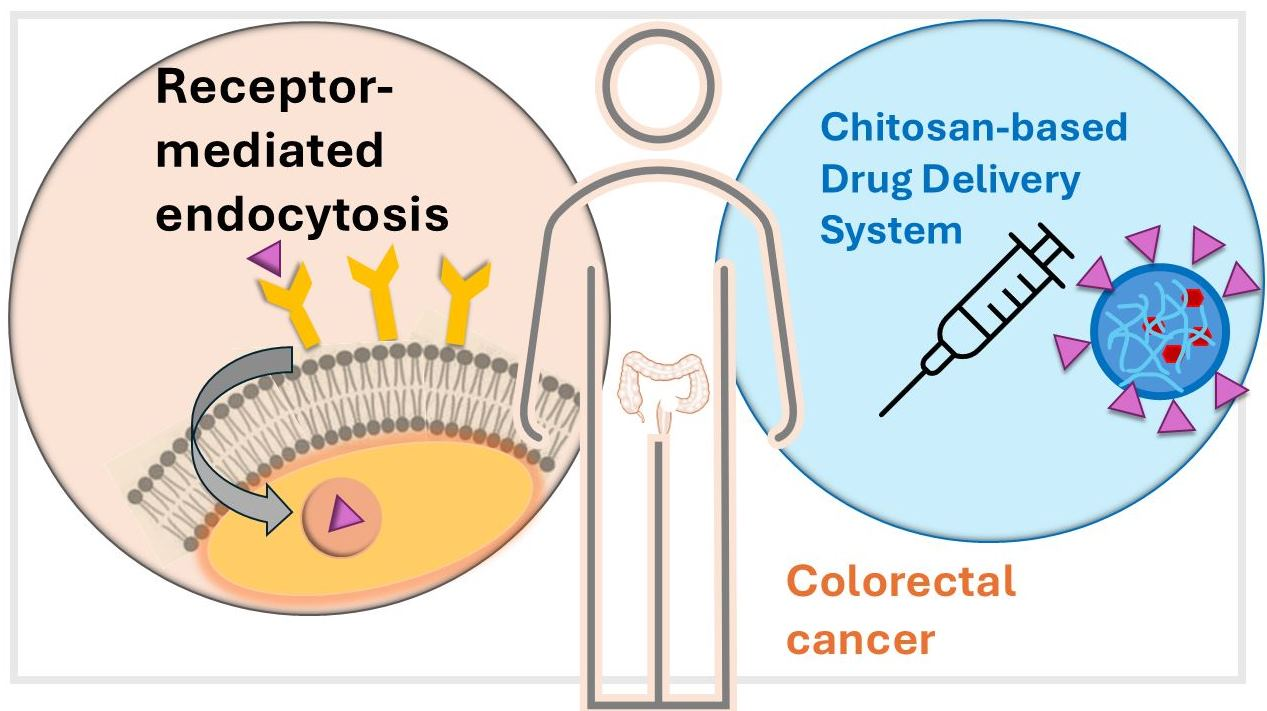

Chitosan-Based Drug Delivery Systems for Targeted Chemotherapy in Colorectal Cancer: A Scoping Review

 ,
,  , and
, and 
Abstract
1. Introduction
2. Review Results
2.1. Chitosan-Based DDS
2.1.1. Routes of Administration and Physiological Barriers
Oral CRC-Targeted Delivery
Intravenous Delivery and Systemic Barriers
2.1.2. Limitations, Evidence Quality, and Translational Barriers in Non-Targeted Chitosan-Based Drug Delivery Systems
2.2. Ligand-Modified CS-Based DDS
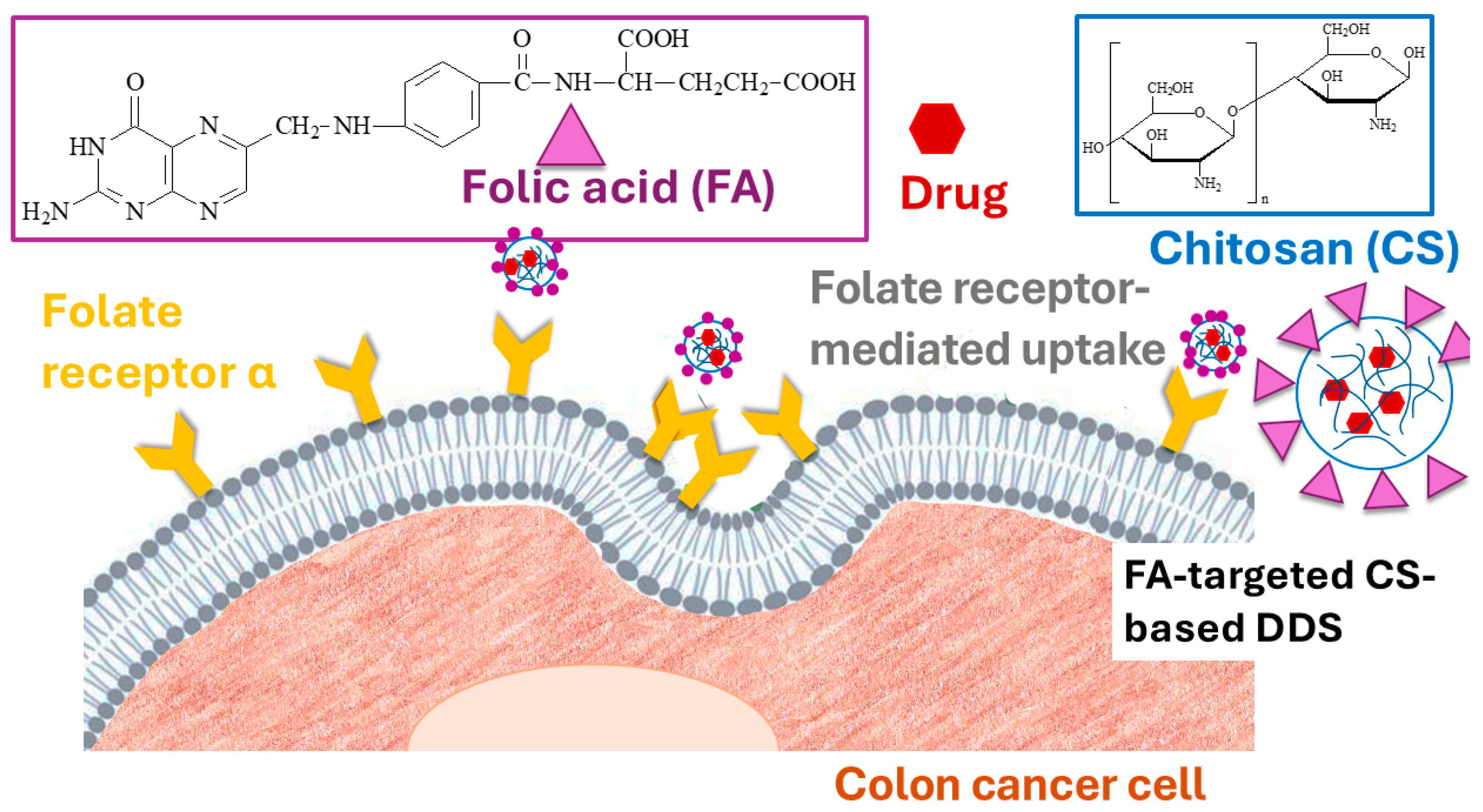
2.2.1. Folic Acid
2.2.2. Hyaluronic Acid
2.2.3. Galactose
2.2.4. Summary and Challenges of Ligand-Modified CS-Based DDS
2.3. Comparative Analysis: Non-Targeted vs. Ligand-Modified CS-Based DDS
2.3.1. Cellular Uptake and Cytotoxicity
2.3.2. Tumor Microenvironment Penetration
2.3.3. Toxicity Profile
2.3.4. Summary
3. Clinical Perspective
4. Materials and Methods
4.1. Search Strategy
4.2. Inclusion and Exclusion Criteria
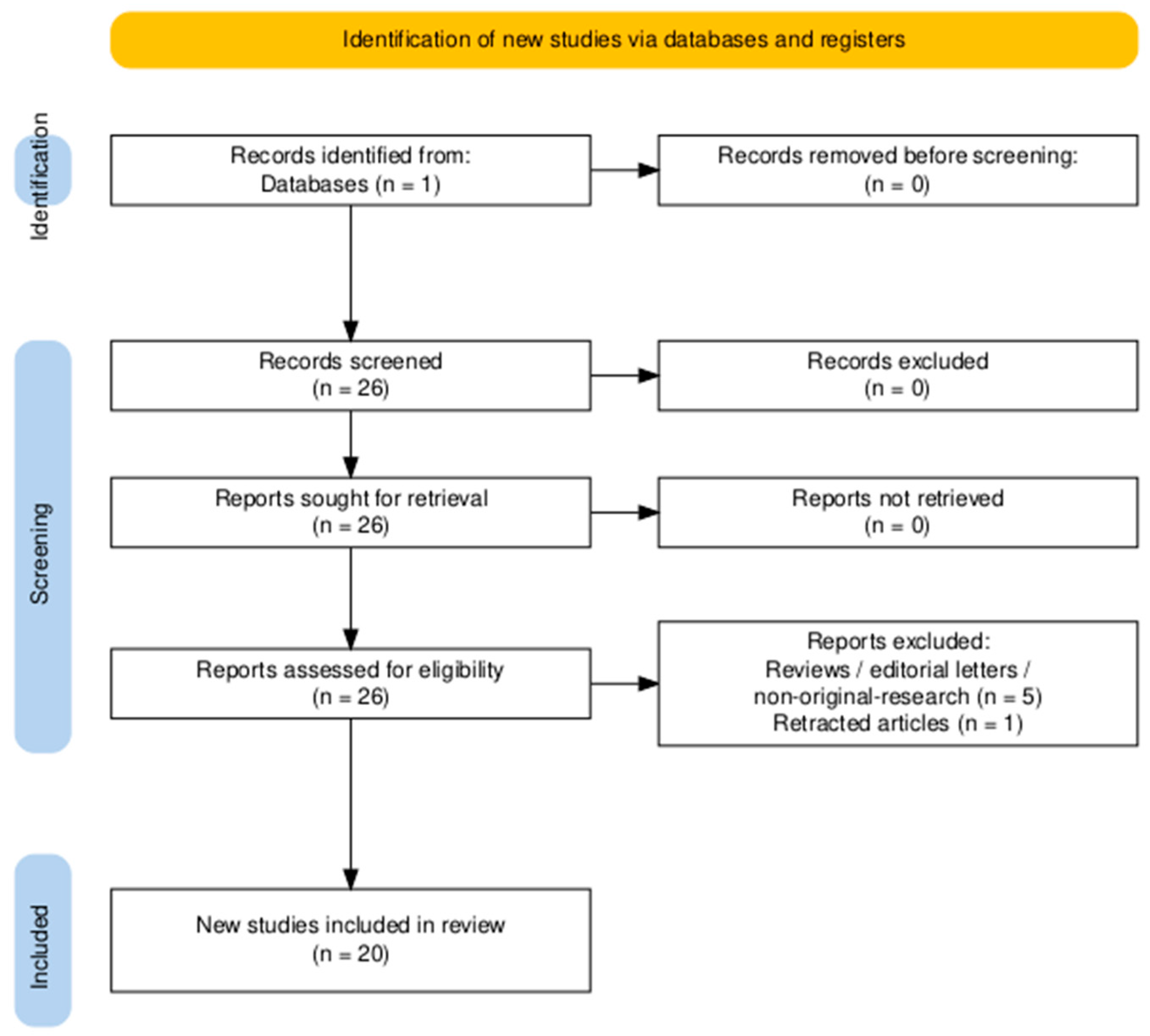
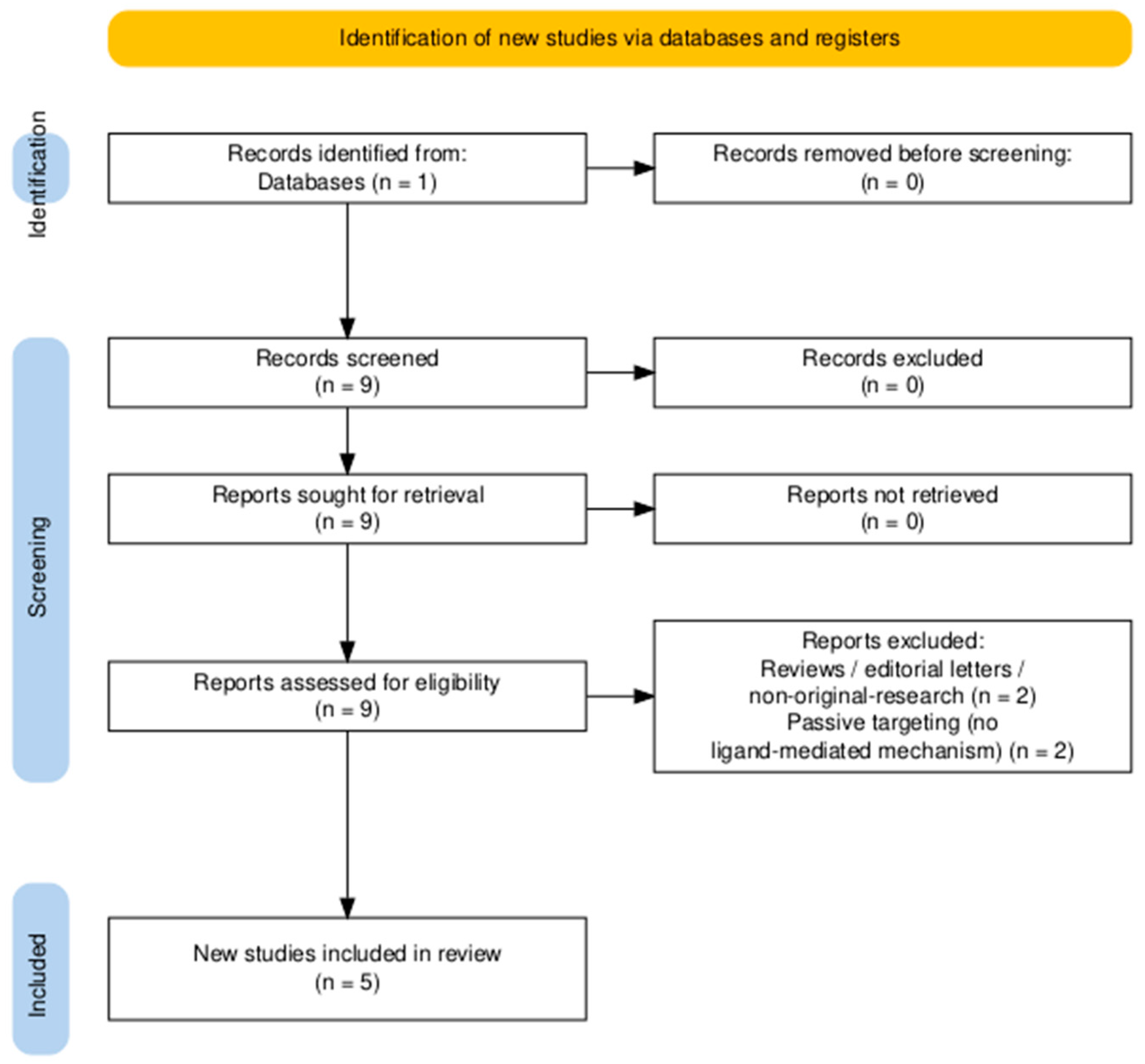
4.3. Data Screening and Extraction
5. Conclusions
Supplementary Materials
Author Contributions
Funding
Institutional Review Board Statement
Data Availability Statement
Conflicts of Interest
Abbreviations
| 5-FU | 5-Fluorouracil |
| AgNUs | Silver Nanourchins |
| ALG | Alginate |
| AO/EB | Acridine Orange/Ethidium Bromide |
| API | Apigenin |
| ASGPR | Asialoglycoprotein Receptor |
| AUC | Area Under The Curve |
| AuNCs | Gold Nanoclusters |
| BVC | Bevacizumab |
| CD31 | Cluster of Differentiation 31 |
| CD44 | Cluster of Differentiation 44 |
| CFU | Colony Forming Unit |
| CL | Cyqualone |
| Cl | Clearance |
| COL | Colchicine |
| CPT | Camptothecin |
| CPT-11 | Irinotecan |
| CRC | Colorectal Cancer |
| CRT | Calreticulin |
| CS | Chitosan |
| CTB | Capecitabine |
| CTX | Cetuximab |
| CUR | Curcumin |
| DAPI | 4′,6-Diamidino-2-phenylindole |
| DCQAs | Dicaffeoylquinic Acids |
| DCS | Deacetylated Chitosan |
| DDSs | Drug Delivery Systems |
| DiR | 1,1′-Dioctadecyl-3,3,3′,3′-tetramethylindotricarbocyanine iodide |
| DMH | 1,2-Dimethylhydrazine |
| ENC | Encorafenib |
| EPR | Enhanced Permeability and Retention |
| ES100 | Eudragit S100 |
| ETP | Etoposide |
| EV | Everolimus |
| FA | Folic Acid |
| FER | Ferulic Acid |
| FRα | Folate Receptor-α |
| FTD/TPI | Trifluridine/Tipiracil |
| Gal | Galactose |
| GCS | Galactosylated Chitosan |
| GEL | Gelatin |
| GI | Gastrointestinal |
| GP | Genipin |
| HA | Hyaluronic Acid |
| HCT-116 | Human Colorectal Carcinoma Cell Line |
| HCTO | Human Colon Tumor Organoids |
| HET CAM | Hen’s Egg Test On Chorioallantoic Membrane |
| HMGB1 | High-Mobility Group Protein B1 |
| HMW-HA | High Molecular Weight Hyaluronic Acid |
| HT-29 | Human Colorectal Adenocarcinoma |
| HUVEC | Human Umbilical Vein Endothelial |
| ICG | Indocyanine Green |
| IMT | Imatinib Mesylate |
| IP | Intraperitoneal |
| Kp | Partition Coefficient |
| L100 | Eudragit L100 |
| LF | Lactoferrin |
| LIU | Low-intensity Ultrasound |
| LMW-HA | Low Molecular Weight Hyaluronic Acid |
| LNA | Locked Nucleic Acid |
| M | miRNA |
| MCTS | MultiCellular Tumor Spheroid |
| MFI | Mean Fluorescence Intensity |
| MLT | Melatonin |
| MMP | Mitochondrial Membrane Potential |
| MPECs | Magnetic Polyelectrolite complexes |
| MPs | Microparticles |
| MRT | Mean Residence Time |
| MSNPs | Mesoporous Silica Nanoparticles |
| MTX | Methotrexate |
| NaCMC | Sodium Carboxymethylcellulose |
| NBSCS | N-benzyl-N,O-succinyl Chitosan |
| NCs | Nanoclusters |
| NIR | Near-infrared Radiation |
| NIVO | Nivolumab |
| NPs | Nanoparticles |
| OA | Oleic Acid |
| Oxa | Oxaliplatin |
| P | Pectin |
| PA | Phytic Acid |
| PBMCs | Peripheral Blood Mononuclear Cells |
| PECs | Polyelectrolite complexes |
| PEG | Polyethylene Glycol |
| PEM | Pembrolizumab |
| PGA | Polyglutamic Acid |
| PLGA | Poly(lactide-co-glycolide) |
| PLGA | Poly(lactic-co-glycolic acid) |
| PNPs | Polymeric Nanoparticles |
| PS | Potato Starch |
| PTE | Pteridine Ring |
| RES | Reticuloendothelial System |
| R-NG | Charge Reversible Nanogel |
| ROS | Reactive Oxygen Species |
| RS | Retrograded Starch |
| RSV | Resveratrol |
| RTCA | Real-Time Cell Analysis |
| SCF | Simulated Colonic Fluid |
| SGF | Simulated Gastric Fluid |
| SIF | Simulated Intestinal Fluid |
| SLNs | Solid Lipid Nanoparticles |
| SMV | Simvastatin |
| t1/2 | Half-life |
| TCS | Thiolated Chitosan |
| TME | Tumor Microenvironment |
| TNF-α | Tumor Necrosis Factor alpha |
| TPGS | D-α-Tocopheryl Polyethylene Glycol 1000 Succinate |
| TUNEL | Terminal Deoxynucleotidyl Transferase dUTP Nick End Labeling |
| US | Ultrasound |
| Vd | Volume Distribution |
| VEGF | Vascular Endothelial Growth Factor |
| Zn-NMOF | Zinc-based Nanoscale Metal–Organic Framework |
| β-CD | Beta-Cyclodextrin |
References
- Tsai, C.-C.; Wang, C.-Y.; Chang, H.-H.; Chang, P.T.S.; Chang, C.-H.; Chu, T.Y.; Hsu, P.-C.; Kuo, C.-Y. Diagnostics and Therapy for Malignant Tumors. Biomedicines 2024, 12, 2659. [Google Scholar] [CrossRef] [Scilit]
- Brown, J.S.; Amend, S.R.; Austin, R.H.; Gatenby, R.A.; Hammarlund, E.U.; Pienta, K.J. Updating the definition of cancer. Mol. Cancer Res. 2023, 21, 1142–1147. [Google Scholar] [CrossRef] [Scilit] [PubMed]
- Masucci, M.; Karlsson, C.; Blomqvist, L.; Ernberg, I. Bridging the divide: A review on the implementation of personalized cancer medicine. J. Pers. Med. 2024, 14, 561. [Google Scholar] [CrossRef] [Scilit] [PubMed]
- Smith, H.G.; Nilsson, P.J.; Shogan, B.D.; Harji, D.; Gambacorta, M.A.; Romano, A.; Brandl, A.; Qvortrup, C. Neoadjuvant treatment of colorectal cancer: Comprehensive review. BJS Open 2024, 8, zrae038. [Google Scholar] [CrossRef] [Scilit]
- Wolpin, B.M.; Meyerhardt, J.A.; Mamon, H.J.; Mayer, R.J. Adjuvant treatment of colorectal cancer. CA A Cancer J. Clin. 2007, 57, 168–185. [Google Scholar] [CrossRef] [Scilit] [PubMed]
- Kumar, A.; Gautam, V.; Sandhu, A.; Rawat, K.; Sharma, A.; Saha, L. Current and emerging therapeutic approaches for colorectal cancer: A comprehensive review. World J. Gastrointest. Surg. 2023, 15, 495. [Google Scholar] [CrossRef] [Scilit]
- Sung, H.; Ferlay, J.; Siegel, R.L.; Laversanne, M.; Soerjomataram, I.; Jemal, A.; Bray, F. Global cancer statistics 2020: GLOBOCAN estimates of incidence and mortality worldwide for 36 cancers in 185 countries. CA A Cancer J. Clin. 2021, 71, 209–249. [Google Scholar] [CrossRef] [Scilit]
- Dekker, E.; Tanis, P.J.; Vleugels, J.; Kasi, P.M.; Wallace, M. Colorectal cancer. Lancet 2019, 394, 1467–1480. [Google Scholar] [CrossRef] [Scilit]
- Elkomy, M.H.; Ali, A.A.; Eid, H.M. Chitosan on the surface of nanoparticles for enhanced drug delivery: A comprehensive review. J. Control. Release 2022, 351, 923–940. [Google Scholar] [CrossRef] [Scilit]
- Cao, S.; Deng, Y.; Zhang, L.; Aleahmad, M. Chitosan nanoparticles, as biological macromolecule-based drug delivery systems to improve the healing potential of artificial neural guidance channels: A review. Int. J. Biol. Macromol. 2022, 201, 569–579. [Google Scholar] [CrossRef] [Scilit]
- Neto, C.d.T.; Giacometti, J.A.; Job, A.E.; Ferreira, F.C.; Fonseca, J.L.C.; Pereira, M.R. Thermal analysis of chitosan based networks. Carbohydr. Polym. 2005, 62, 97–103. [Google Scholar] [CrossRef] [Scilit]
- Zawadzki, J.; Kaczmarek, H. Thermal treatment of chitosan in various conditions. Carbohydr. Polym. 2010, 80, 394–400. [Google Scholar] [CrossRef] [Scilit]
- Kolhe, P.; Kannan, R.M. Improvement in ductility of chitosan through blending and copolymerization with PEG: FTIR investigation of molecular interactions. Biomacromolecules 2003, 4, 173–180. [Google Scholar] [CrossRef] [Scilit] [PubMed]
- Wahba, M.I. Enhancement of the mechanical properties of chitosan. J. Biomater. Sci. Polym. Ed. 2020, 31, 350–375. [Google Scholar] [CrossRef] [Scilit] [PubMed]
- Qin, C.; Li, H.; Xiao, Q.; Liu, Y.; Zhu, J.; Du, Y. Water-solubility of chitosan and its antimicrobial activity. Carbohydr. Polym. 2006, 63, 367–374. [Google Scholar] [CrossRef] [Scilit]
- Sogias, I.A.; Khutoryanskiy, V.V.; Williams, A.C. Exploring the factors affecting the solubility of chitosan in water. Macromol. Chem. Phys. 2010, 211, 426–433. [Google Scholar] [CrossRef] [Scilit]
- Rhazi, M.; Desbrieres, J.; Tolaimate, A.; Alagui, A.; Vottero, P. Investigation of different natural sources of chitin: Influence of the source and deacetylation process on the physicochemical characteristics of chitosan. Polym. Int. 2000, 49, 337–344. [Google Scholar] [CrossRef] [Scilit]
- Szymańska, E.; Winnicka, K. Stability of chitosan—A challenge for pharmaceutical and biomedical applications. Mar. Drugs 2015, 13, 1819–1846. [Google Scholar] [CrossRef] [Scilit]
- Carrera, C.; Bengoechea, C.; Carrillo, F.; Calero, N. Effect of deacetylation degree and molecular weight on surface properties of chitosan obtained from biowastes. Food Hydrocoll. 2023, 137, 108383. [Google Scholar] [CrossRef] [Scilit]
- Yang, Y.M.; Zhao, Y.H.; Liu, X.H.; Ding, F.; Gu, X.S. The effect of different sterilization procedures on chitosan dried powder. J. Appl. Polym. Sci. 2007, 104, 1968–1972. [Google Scholar] [CrossRef] [Scilit]
- Kumar, A.; Vimal, A.; Kumar, A. Why Chitosan? From properties to perspective of mucosal drug delivery. Int. J. Biol. Macromol. 2016, 91, 615–622. [Google Scholar] [CrossRef] [Scilit]
- Rostami, E. Progresses in targeted drug delivery systems using chitosan nanoparticles in cancer therapy: A mini-review. J. Drug Deliv. Sci. Technol. 2020, 58, 101813. [Google Scholar] [CrossRef] [Scilit]
- Piotrowska, U.; Orzechowska, K. Advances in chitosan-based smart hydrogels for colorectal cancer treatment. Pharmaceuticals 2024, 17, 1260. [Google Scholar] [CrossRef] [Scilit]
- Tousian, B.; Ghasemi, M.H.; Khosravi, A.R. Targeted chitosan nanoparticles embedded into graphene oxide functionalized with caffeic acid as a potential drug delivery system: New insight into cancer therapy. Int. J. Biol. Macromol. 2022, 222, 295–304. [Google Scholar] [CrossRef] [Scilit]
- Mi, Y.; Chen, Y.; Gu, G.; Miao, Q.; Tan, W.; Li, Q.; Guo, Z. New synthetic adriamycin-incorporated chitosan nanoparticles with enhanced antioxidant, antitumor activities and pH-sensitive drug release. Carbohydr. Polym. 2021, 273, 118623. [Google Scholar] [CrossRef] [Scilit]
- Wang, F.; Li, J.; Tang, X.; Huang, K.; Chen, L. Polyelectrolyte three layer nanoparticles of chitosan/dextran sulfate/chitosan for dual drug delivery. Colloids Surf. B Biointerfaces 2020, 190, 110925. [Google Scholar] [CrossRef] [Scilit] [PubMed]
- Rajalakshmi, R.; Sivaselvam, S.; Ponpandian, N. Chitosan grafted Fe-doped WO3 decorated with gold nanoparticles for stimuli-responsive drug delivery systems. Mater. Lett. 2021, 304, 130664. [Google Scholar] [CrossRef] [Scilit]
- Sohail, R.; Abbas, S.R. Evaluation of amygdalin-loaded alginate-chitosan nanoparticles as biocompatible drug delivery carriers for anticancerous efficacy. Int. J. Biol. Macromol. 2020, 153, 36–45. [Google Scholar] [CrossRef] [Scilit] [PubMed]
- Chen, X.; Bremner, D.H.; Ye, Y.; Lou, J.; Niu, S.; Zhu, L.-M. A dual-prodrug nanoparticle based on chitosan oligosaccharide for enhanced tumor-targeted drug delivery. Colloids Surf. A Physicochem. Eng. Asp. 2021, 619, 126512. [Google Scholar] [CrossRef] [Scilit]
- de Oliveira Cardoso, V.M.; de Brito, N.A.P.; Ferreira, N.N.; Boni, F.I.; Ferreira, L.M.B.; Carvalho, S.G.; Gremião, M.P.D. Design of mucoadhesive gellan gum and chitosan nanoparticles intended for colon-specific delivery of peptide drugs. Colloids Surf. A Physicochem. Eng. Asp. 2021, 628, 127321. [Google Scholar] [CrossRef] [Scilit]
- Matos, B.N.; Pereira, M.N.; Bravo, M.d.O.; Cunha-Filho, M.; Saldanha-Araújo, F.; Gratieri, T.; Gelfuso, G.M. Chitosan nanoparticles loading oxaliplatin as a mucoadhesive topical treatment of oral tumors: Iontophoresis further enhances drug delivery ex vivo. Int. J. Biol. Macromol. 2020, 154, 1265–1275. [Google Scholar] [CrossRef] [Scilit] [PubMed]
- Liu, Q.; Tan, Z.; Zheng, D.; Qiu, X. pH-responsive magnetic Fe3O4/carboxymethyl chitosan/aminated lignosulfonate nanoparticles with uniform size for targeted drug loading. Int. J. Biol. Macromol. 2023, 225, 1182–1192. [Google Scholar] [CrossRef] [Scilit] [PubMed]
- Lohiya, G.; Katti, D.S. Carboxylated chitosan-mediated improved efficacy of mesoporous silica nanoparticle-based targeted drug delivery system for breast cancer therapy. Carbohydr. Polym. 2022, 277, 118822. [Google Scholar] [CrossRef] [Scilit]
- Huang, S.-J.; Wang, T.-H.; Chou, Y.-H.; Wang, H.-M.D.; Hsu, T.-C.; Yow, J.-L.; Tzang, B.-S.; Chiang, W.-H. Hybrid PEGylated chitosan/PLGA nanoparticles designed as pH-responsive vehicles to promote intracellular drug delivery and cancer chemotherapy. Int. J. Biol. Macromol. 2022, 210, 565–578. [Google Scholar] [CrossRef] [Scilit]
- Kesavan, S.; Meena, K.; Sharmili, S.A.; Govindarajan, M.; Alharbi, N.S.; Kadaikunnan, S.; Khaled, J.M.; Alobaidi, A.S.; Alanzi, K.F.; Vaseeharan, B. Ulvan loaded graphene oxide nanoparticle fabricated with chitosan and d-mannose for targeted anticancer drug delivery. J. Drug Deliv. Sci. Technol. 2021, 65, 102760. [Google Scholar] [CrossRef] [Scilit]
- Kandile, N.G.; Mohamed, H.M.; Nasr, A.S. Novel hydrazinocurcumin derivative loaded chitosan, ZnO, and Au nanoparticles formulations for drug release and cell cytotoxicity. Int. J. Biol. Macromol. 2020, 158, 1216–1226. [Google Scholar] [CrossRef] [Scilit] [PubMed]
- Idoudi, S.; Hijji, Y.; Bedhiafi, T.; Korashy, H.M.; Uddin, S.; Merhi, M.; Dermime, S.; Billa, N. A novel approach of encapsulating curcumin and succinylated derivative in mannosylated-chitosan nanoparticles. Carbohydr. Polym. 2022, 297, 120034. [Google Scholar] [CrossRef] [Scilit]
- Almeida, A.; Castro, F.; Resende, C.; Lucio, M.; Schwartz Jr, S.; Sarmento, B. Oral delivery of camptothecin-loaded multifunctional chitosan-based micelles is effective in reduce colorectal cancer. J. Control. Release 2022, 349, 731–743. [Google Scholar] [CrossRef] [Scilit]
- Samprasit, W.; Opanasopit, P.; Chamsai, B. Mucoadhesive chitosan and thiolated chitosan nanoparticles containing alpha mangostin for possible Colon-targeted delivery. Pharm. Dev. Technol. 2021, 26, 362–372. [Google Scholar] [CrossRef] [Scilit]
- Wu, D.; Zhu, L.; Li, Y.; Wang, H.; Xu, S.; Zhang, X.; Wu, R.; Yang, G. Superparamagnetic chitosan nanocomplexes for colorectal tumor-targeted delivery of irinotecan. Int. J. Pharm. 2020, 584, 119394. [Google Scholar] [CrossRef] [Scilit]
- Siles-Sánchez, M.d.l.N.; Fernández-Jalao, I.; Jaime De Pablo, L.; Santoyo, S. Design of chitosan colon delivery micro/nano particles for an Achillea millefolium extract with antiproliferative activity against colorectal cancer cells. Drug Deliv. 2024, 31, 2372285. [Google Scholar] [CrossRef] [Scilit]
- Bhattacharya, S. Fabrication and characterization of chitosan-based polymeric nanoparticles of Imatinib for colorectal cancer targeting application. Int. J. Biol. Macromol. 2020, 151, 104–115. [Google Scholar] [CrossRef] [Scilit] [PubMed]
- Wu, D.; Fu, K.; Zhang, W.; Li, Y.; Ji, Y.; Dai, Y.; Yang, G. Chitosan nanomedicines-engineered bifidobacteria complexes for effective colorectal tumor-targeted delivery of SN-38. Int. J. Pharm. 2024, 659, 124283. [Google Scholar] [CrossRef] [Scilit]
- Bhirud, D.; Bhattacharya, S.; Raval, H.; Sangave, P.C.; Gupta, G.L.; Paraskar, G.; Jha, M.; Sharma, S.; Belemkar, S.; Kumar, D. Chitosan nanoparticles of imatinib mesylate coated with TPGS for the treatment of colon cancer: In-vivo & in-vitro studies. Carbohydr. Polym. 2025, 348, 122935. [Google Scholar]
- Inphonlek, S.; Sunintaboon, P.; Léonard, M.; Durand, A. Chitosan/carboxymethylcellulose-stabilized poly (lactide-co-glycolide) particles as bio-based drug delivery carriers. Carbohydr. Polym. 2020, 242, 116417. [Google Scholar] [CrossRef] [Scilit]
- Alhakamy, N.A.; Fahmy, U.A.; Ahmed, O.A.; Caruso, G.; Caraci, F.; Asfour, H.Z.; Bakhrebah, M.A.; N. Alomary, M.; Abdulaal, W.H.; Okbazghi, S.Z. Chitosan coated microparticles enhance simvastatin colon targeting and pro-apoptotic activity. Mar. Drugs 2020, 18, 226. [Google Scholar] [CrossRef] [Scilit]
- Uner, B.; Akyildiz, E.O.; Kolci, K.; Eskiocak, O.; Reis, R.; Beyaz, S. Nanoparticle formulations for intracellular delivery in colorectal cancer therapy. AAPS PharmSciTech 2025, 26, 81. [Google Scholar] [CrossRef] [Scilit]
- Wu, D.; Li, Y.; Zhu, L.; Zhang, W.; Xu, S.; Yang, Y.; Yan, Q.; Yang, G. A biocompatible superparamagnetic chitosan-based nanoplatform enabling targeted SN-38 delivery for colorectal cancer therapy. Carbohydr. Polym. 2021, 274, 118641. [Google Scholar] [CrossRef] [Scilit]
- Raval, H.; Bhattacharya, S.; Bhirud, D.; Sangave, P.C.; Gupta, G.L.; Paraskar, G.; Jha, M.; Sharma, S.; Belemkar, S.; Kumar, D. Fabrication of lactoferrin-chitosan-etoposide nanoparticles with melatonin via carbodiimide coupling: In-vitro & in-vivo evaluation for colon cancer. J. Control. Release 2025, 377, 810–841. [Google Scholar] [PubMed]
- Dos Santos, A.M.; Meneguin, A.B.; Akhter, D.T.; Fletcher, N.; Houston, Z.H.; Bell, C.; Thurecht, K.J.; Gremião, M.P.D. Understanding the role of colon-specific microparticles based on retrograded starch/pectin in the delivery of chitosan nanoparticles along the gastrointestinal tract. Eur. J. Pharm. Biopharm. 2021, 158, 371–378. [Google Scholar] [CrossRef] [Scilit] [PubMed]
- Bhattacharya, S.; Joshi, A.; Beldar, V.; Mishra, A.; Sharma, S.; Khan, R.; Khan, M.R. Chitosan-Coated Silver Nanourchins for Imatinib Mesylate Delivery: Biophysical Characterization, In-Silico Profiling, and Anti-Colon Cancer Efficacy. Mol. Pharm. 2025, 22, 1983–2018. [Google Scholar] [CrossRef] [Scilit]
- Bhattacharya, S.; Page, A.; Shinde, P. Capecitabine loaded potato starch-chitosan nanoparticles: A novel approach for targeted therapy and improved outcomes in aggressive colon cancer. Eur. J. Pharm. Biopharm. 2024, 200, 114328. [Google Scholar] [CrossRef] [Scilit] [PubMed]
- Wezgowiec, J.; Tsirigotis-Maniecka, M.; Saczko, J.; Wieckiewicz, M.; Wilk, K.A. Microparticles vs. macroparticles as curcumin delivery vehicles: Structural studies and cytotoxic effect in human adenocarcinoma cell line (LoVo). Molecules 2021, 26, 6056. [Google Scholar] [CrossRef] [Scilit] [PubMed]
- Ciro, Y.; Rojas, J.; Di Virgilio, A.L.; Alhajj, M.J.; Carabali, G.A.; Salamanca, C.H. Production, physicochemical characterization, and anticancer activity of methotrexate-loaded phytic acid-chitosan nanoparticles on HT-29 human colon adenocarcinoma cells. Carbohydr. Polym. 2020, 243, 116436. [Google Scholar] [CrossRef] [Scilit] [PubMed]
- Cui, R.; Zhou, J.; Yang, W.; Chen, Y.; Chen, L.; Tan, L.; Zhang, F.; Liu, G.; Yu, J. Ultrasound-triggered nanogel boosts chemotherapy and immunomodulation in colorectal cancer. ACS Appl. Mater. Interfaces 2024, 17, 211–221. [Google Scholar] [CrossRef] [Scilit]
- Tan, K.F.; Chia, L.Y.; Maki, M.A.A.; Cheah, S.-C.; In, L.L.A.; Kumar, P.V. Gold nanocomposites in colorectal cancer therapy: Characterization, selective cytotoxicity, and migration inhibition. Naunyn-Schmiedeberg’s Arch. Pharmacol. 2025, 398, 8975–9003. [Google Scholar] [CrossRef] [Scilit]
- Sripetthong, S.; Eze, F.N.; Sajomsang, W.; Ovatlarnporn, C. Development of pH-Responsive N-benzyl-N-O-succinyl Chitosan Micelles Loaded with a Curcumin Analog (Cyqualone) for Treatment of Colon Cancer. Molecules 2023, 28, 2693. [Google Scholar] [CrossRef] [Scilit]
- Daugherty, A.L.; Mrsny, R.J. Transcellular uptake mechanisms of the intestinal epithelial barrier Part one. Pharm. Sci. Technol. Today 1999, 2, 144–151. [Google Scholar] [CrossRef] [Scilit]
- Maurya, R.; Vikal, A.; Patel, P.; Narang, R.K.; Kurmi, B.D. Enhancing oral drug absorption: Overcoming physiological and pharmaceutical barriers for improved bioavailability. AAPS PharmSciTech 2024, 25, 228. [Google Scholar] [CrossRef] [Scilit]
- Azzi, S.; Hebda, J.K.; Gavard, J. Vascular permeability and drug delivery in cancers. Front. Oncol. 2013, 3, 211. [Google Scholar] [CrossRef] [Scilit]
- Tilsed, C.M.; Fisher, S.A.; Nowak, A.K.; Lake, R.A.; Lesterhuis, W.J. Cancer chemotherapy: Insights into cellular and tumor microenvironmental mechanisms of action. Front. Oncol. 2022, 12, 960317. [Google Scholar] [CrossRef] [Scilit]
- Piotrowska, U.; Tsoi, J.; Singh, P.; Banerjee, A.; Sobczak, M. 3D Bioprinting and Artificial Intelligence for Tumor Microenvironment Modeling: A Scoping Review of Models, Methods, and Integration Pathways. Mol. Pharm. 2025, 22, 5801–5823. [Google Scholar] [CrossRef] [Scilit]
- Sharifi-Azad, M.; Fathi, M.; Cho, W.C.; Barzegari, A.; Dadashi, H.; Dadashpour, M.; Jahanban-Esfahlan, R. Recent advances in targeted drug delivery systems for resistant colorectal cancer. Cancer Cell Int. 2022, 22, 196. [Google Scholar] [CrossRef] [Scilit]
- Bhirud, D.; Bhattacharya, S.; Prajapati, B.G. Bioengineered carbohydrate polymers for colon-specific drug release: Current trends and future prospects. J. Biomed. Mater. Res. Part A 2024, 112, 1860–1872. [Google Scholar] [CrossRef] [Scilit] [PubMed]
- Sharma, S.; Bhattacharya, S.; Joshi, K.; Singh, S. A shift in focus towards precision oncology, driven by revolutionary nanodiagnostics; revealing mysterious pathways in colorectal carcinogenesis. J. Cancer Res. Clin. Oncol. 2023, 149, 16157–16177. [Google Scholar] [CrossRef] [Scilit]
- AbouAitah, K.; Hassan, H.A.; Swiderska-Sroda, A.; Gohar, L.; Shaker, O.G.; Wojnarowicz, J.; Opalinska, A.; Smalc-Koziorowska, J.; Gierlotka, S.; Lojkowski, W. Targeted nano-drug delivery of colchicine against colon cancer cells by means of mesoporous silica nanoparticles. Cancers 2020, 12, 144. [Google Scholar] [CrossRef] [Scilit]
- Ullah, S.; Azad, A.K.; Nawaz, A.; Shah, K.U.; Iqbal, M.; Albadrani, G.M.; Al-Joufi, F.A.; Sayed, A.A.; Abdel-Daim, M.M. 5-fluorouracil-loaded folic-acid-fabricated chitosan nanoparticles for site-targeted drug delivery cargo. Polymers 2022, 14, 2010. [Google Scholar] [CrossRef] [Scilit] [PubMed]
- Mokri, N.; Sepehri, Z.; Faninam, F.; Khaleghi, S.; Kazemi, N.M.; Hashemi, M. Chitosan-coated Zn-metal-organic framework nanocomposites for effective targeted delivery of LNA-antisense miR-224 to colon tumor: In vitro studies. Gene Ther. 2022, 29, 680–690. [Google Scholar] [CrossRef] [Scilit]
- Kumar, C.S.; Thangam, R.; Mary, S.A.; Kannan, P.R.; Arun, G.; Madhan, B. Targeted delivery and apoptosis induction of trans-resveratrol-ferulic acid loaded chitosan coated folic acid conjugate solid lipid nanoparticles in colon cancer cells. Carbohydr. Polym. 2020, 231, 115682. [Google Scholar] [CrossRef] [Scilit] [PubMed]
- Yang, B.; Mao, Y.; Zhang, Y.; Hao, Y.; Guo, M.; Li, B.; Peng, H. HA-coated PLGA nanoparticles loaded with apigenin for colon cancer with high expression of CD44. Molecules 2023, 28, 7565. [Google Scholar] [CrossRef] [Scilit]
- Liu, W.; Zhu, Y.; Wang, F.; Li, X.; Liu, X.; Pang, J.; Pan, W. Galactosylated chitosan-functionalized mesoporous silica nanoparticles for efficient colon cancer cell-targeted drug delivery. R. Soc. Open Sci. 2018, 5, 181027. [Google Scholar] [CrossRef] [Scilit] [PubMed]
- Abd El-Wahed, M.; Refat, M.; El-Megharbel, S. Synthesis, spectroscopic and thermal characterization of some transition metal complexes of folic acid. Spectrochim. Acta Part A Mol. Biomol. Spectrosc. 2008, 70, 916–922. [Google Scholar] [CrossRef] [Scilit] [PubMed]
- Hilgenbrink, A.R.; Low, P.S. Folate receptor-mediated drug targeting: From therapeutics to diagnostics. J. Pharm. Sci. 2005, 94, 2135–2146. [Google Scholar] [CrossRef] [Scilit] [PubMed]
- Hamed, E.; Attia, M.; Bassiouny, K. Synthesis, spectroscopic and thermal characterization of copper (II) and iron (III) complexes of folic acid and their absorption efficiency in the blood. Bioinorg. Chem. Appl. 2009, 2009, 979680. [Google Scholar] [CrossRef] [Scilit]
- Kola, A.; Valensin, D. NMR-Based Structural Insights on Folic Acid and Its Interactions with Copper (II) Ions. Inorganics 2024, 12, 248. [Google Scholar] [CrossRef] [Scilit]
- McMullon, G.T.; Ezdoglian, A.; Booth, A.C.; Jimenez-Royo, P.; Murphy, P.S.; Jansen, G.; van der Laken, C.J.; Faulkner, S. Synthesis and characterization of folic acid-conjugated terbium complexes as luminescent probes for targeting folate receptor-expressing cells. J. Med. Chem. 2024, 67, 14062–14076. [Google Scholar] [CrossRef] [Scilit] [PubMed]
- Ragab, M.S.; Soliman, M.H.; Sharaky, M.M.; Saad, A.; Shehata, M.R.; Shoukry, M.M.; Ragheb, M.A. Folate-based binuclear Mn (II) chelates with 2, 2′-bipyridine/1, 10-phenanthroline as targeted anticancer agents for colon cancer cells. Sci. Rep. 2025, 15, 27905. [Google Scholar] [CrossRef] [Scilit]
- Xia, W.; Low, P.S. Folate-targeted therapies for cancer. J. Med. Chem. 2010, 53, 6811–6824. [Google Scholar] [CrossRef] [Scilit]
- Iaconisi, G.N.; Lunetti, P.; Gallo, N.; Cappello, A.R.; Fiermonte, G.; Dolce, V.; Capobianco, L. Hyaluronic acid: A powerful biomolecule with wide-ranging applications—A comprehensive review. Int. J. Mol. Sci. 2023, 24, 10296. [Google Scholar] [CrossRef] [Scilit]
- Marinho, A.; Nunes, C.; Reis, S. Hyaluronic acid: A key ingredient in the therapy of inflammation. Biomolecules 2021, 11, 1518. [Google Scholar] [CrossRef] [Scilit]
- Yasin, A.; Ren, Y.; Li, J.; Sheng, Y.; Cao, C.; Zhang, K. Advances in hyaluronic acid for biomedical applications. Front. Bioeng. Biotechnol. 2022, 10, 910290. [Google Scholar] [CrossRef] [Scilit] [PubMed]
- Snetkov, P.; Zakharova, K.; Morozkina, S.; Olekhnovich, R.; Uspenskaya, M. Hyaluronic acid: The influence of molecular weight on structural, physical, physico-chemical, and degradable properties of biopolymer. Polymers 2020, 12, 1800. [Google Scholar] [CrossRef] [Scilit]
- How, K.N.; Yap, W.H.; Lim, C.L.H.; Goh, B.H.; Lai, Z.W. Hyaluronic acid-mediated drug delivery system targeting for inflammatory skin diseases: A mini review. Front. Pharmacol. 2020, 11, 1105. [Google Scholar] [CrossRef] [Scilit]
- Jia, Y.; Chen, S.; Wang, C.; Sun, T.; Yang, L. Hyaluronic acid-based nano drug delivery systems for breast cancer treatment: Recent advances. Front. Bioeng. Biotechnol. 2022, 10, 990145. [Google Scholar] [CrossRef] [Scilit]
- Salari, N.; Mansouri, K.; Valipour, E.; Abam, F.; Jaymand, M.; Rasoulpoor, S.; Dokaneheifard, S.; Mohammadi, M. Hyaluronic acid-based drug nanocarriers as a novel drug delivery system for cancer chemotherapy: A systematic review. DARU J. Pharm. Sci. 2021, 29, 439–447. [Google Scholar] [CrossRef] [Scilit]
- Huh, J.W.; Kim, H.R.; Kim, Y.J.; Lee, J.H.; Park, Y.S.; Cho, S.H.; Joo, J.K. Expression of standard CD44 in human colorectal carcinoma: Association with prognosis. Pathol. Int. 2009, 59, 241–246. [Google Scholar] [CrossRef] [Scilit] [PubMed]
- Wang, Z.; Tang, Y.; Xie, L.; Huang, A.; Xue, C.; Gu, Z.; Wang, K.; Zong, S. The prognostic and clinical value of CD44 in colorectal cancer: A meta-analysis. Front. Oncol. 2019, 9, 309. [Google Scholar] [CrossRef] [Scilit]
- Rayahin, J.E.; Buhrman, J.S.; Zhang, Y.; Koh, T.J.; Gemeinhart, R.A. High and low molecular weight hyaluronic acid differentially influence macrophage activation. ACS Biomater. Sci. Eng. 2015, 1, 481–493. [Google Scholar] [CrossRef] [Scilit] [PubMed]
- Battisegola, C.; Billi, C.; Molaro, M.C.; Schiano, M.E.; Nieddu, M.; Failla, M.; Marini, E.; Albrizio, S.; Sodano, F.; Rimoli, M.G. Galactose: A versatile vector unveiling the potentials in drug delivery, diagnostics, and theranostics. Pharmaceuticals 2024, 17, 308. [Google Scholar] [CrossRef] [Scilit]
- Pooresmaeil, M.; Namazi, H.; Salehi, R. Dual anticancer drug delivery of D-galactose-functionalized stimuli-responsive nanogels for targeted therapy of the liver hepatocellular carcinoma. Eur. Polym. J. 2022, 167, 111061. [Google Scholar] [CrossRef] [Scilit]
- Sharma, R.; Porterfield, J.E.; An, H.-T.; Jimenez, A.S.; Lee, S.; Kannan, S.; Sharma, A.; Kannan, R.M. Rationally designed galactose dendrimer for hepatocyte-specific targeting and intracellular drug delivery for the treatment of liver disorders. Biomacromolecules 2021, 22, 3574–3589. [Google Scholar] [CrossRef] [Scilit] [PubMed]
- D’Souza, A.A.; Devarajan, P.V. Asialoglycoprotein receptor mediated hepatocyte targeting—Strategies and applications. J. Control. Release 2015, 203, 126–139. [Google Scholar] [CrossRef] [Scilit] [PubMed]
- Ma, Y.; Chen, H.; Su, S.; Wang, T.; Zhang, C.; Fida, G.; Cui, S.; Zhao, J.; Gu, Y. Galactose as broad ligand for multiple tumor imaging and therapy. J. Cancer 2015, 6, 658. [Google Scholar] [CrossRef] [Scilit]
- Ramezani, S.; Parkhideh, A.; Bhattacharya, P.K.; Farach-Carson, M.C.; Harrington, D.A. Beyond colonoscopy: Exploring new cell surface biomarkers for detection of early, heterogenous colorectal lesions. Front. Oncol. 2021, 11, 657701. [Google Scholar] [CrossRef] [Scilit]
- Arksey, H.; O’Malley, L. Scoping studies: Towards a methodological framework. Int. J. Soc. Res. Methodol. 2005, 8, 19–32. [Google Scholar] [CrossRef] [Scilit]
- Haddaway, N.R.; Page, M.J.; Pritchard, C.C.; McGuinness, L.A. PRISMA2020: An R package and Shiny app for producing PRISMA 2020-compliant flow diagrams, with interactivity for optimised digital transparency and Open Synthesis. Campbell Syst. Rev. 2022, 18, e1230. [Google Scholar] [CrossRef] [Scilit] [PubMed]



| DDS | Drug | Drug Release Study | In Vitro Studies | In Vivo Studies | Ref. | ||
|---|---|---|---|---|---|---|---|
| Cytotoxicity | Cell Line | Animal Model | Effects | ||||
| CPT-loaded mPEG-CS-OA micelles | CPT | - | Empty micelles were non-toxic; CPT-loaded micelles reduced CPT toxicity (0.025–250 μg/mL; 24–72 h). Reduced metabolic activity and spheroid size in MCTS; enhanced cytotoxicity vs. free CPT. | PBMC Caco-2 HT29 HCT116 (2D and 3D MCTS) | C57BL/6 mice (pharmacokinetics study), NIH(S)II-nu/nu mice (HCT116 xenograft), AOM/DSS-induced CRC. | CPT-micelles delayed tumor growth, reduced volume by c.a. 50%; increased survival vs. free drug; confirmed tumor targeting. | [38] |
| CS/Alg NPs GP-CS/Alg NPs L100-GP-CS/ALG NPs TCS/Alg NPs GP-TCS/Alg NPs L100-GP-TCS/ALG NPs | α-Mangostin | Free drug showed complete release within 2–3 h. Non-crosslinked CS/ALG and TCS/ALG NPs released α-mangostin fully within 6–7 h and 5–6 h, respectively. At pH 1.2, CS/ALG NPs showed higher diffusion, while TCS/ALG NPs released more drug at pH 6.8–7.4. GP crosslinking slowed diffusion and degradation, resulting in similar sustained release for GP-CS/ALG and GP-TCS/ALG NPs across all pHs. L100 coating further reduced early release (<15% at pH 1.2; 35% at pH 6.8); at pH 7.4, 65% was released by 6 h and 80% by 8 h, indicating colon-targeted delivery. | Dose-dependent cytotoxicity toward HT-29; 12–15% viability at 400–600 µg/mL (24 h); apoptosis-related anti-tumor activity; blank CS/ALG and TCS/ALG NPs (0–600 mg/mL) non-toxic (NHF > 90% viability), α-mangostin-loaded NPs safe up to 300 µg/mL; NHF viability > 80%. | NHF HT-29 | - | - | [39] |
| CPT-11/Fe3O4/CS-PG A-PECs | CPT-11 | pH-dependent release: slow at pH 7.4 (plateau at 48 h), faster at pH 6.5 (complete in 24 h) and pH 5.0 (complete in 12 h), enabling targeted tumor delivery. | blank MPECs non-toxic up to 2400 µg/mL; CPT-11-loaded MPECs are more cytotoxic than free CPT-11 (IC50: 25.1 vs. 39.2 µM). | HUVEC HCT116 | BALB/c nude mice xenograft (HCT-116) | Real-time NIR imaging revealed strong tumor-localized fluorescence at 24–48 h for ICG/MPECs compared to weak signal for free ICG and non-MPECs indicating effective magnetic targeting with high tumor specificity and no systemic toxicity. | [40] |
| Ionic gelation NPs (LCS:TPP 5:1); Spray-dried MPs (CS:extract 6:1)CS MPs/NPs | Yarrow extract (chlorogenic acid, 1,5- and 3,5-DCQAs) | NPs: pH 2—chlorogenic acid 59.6% (5 min), 1,5-DCQA 20.8% (3 h); >75% phenolics retained after 3 h. pH 7.4—slightly lower release. MPs: chlorogenic acid 56.9% (3 h); DCQAs 9.6–37%; luteolin dihexoside 33%. After simulated GI digestion, 65–97% phenolics remained encapsulated. | IC50 values after 48 h of treatment with the extract: 78.6 µg/mL. | DLD-1 | - | - | [41] |
| IMT-PNPs NPs | IMT | IMT: c.a. 100% release at 12 h. IMT-PNPs: 86.45 ± 0.05% cumulative release over 84 h; initial burst (0–2 h) followed by sustained diffusion-controlled release; zero-order kinetics (r2 = 0.9985). | Dose-dependent cytotoxicity; placebo CS NPs slightly reduced viability (10–15%) due to intrinsic uptake by tumor cells; IMT-PNPs showed significantly higher cytotoxicity vs. free IMT (p < 0.0001 at 20 µg/mL). | CT-26 | - | - | [42] |
| CS-L-PGA-SN38 NPs/B. biffi | SN-38 | 20% release (120 h) without esterase presence and 70% release (120 h) with esterase; esterase-triggered; without apparent premature leakage in normal tissue. | Blank CS-L-PGA NPs (0.125–1.5 mg/mL) and 1.6 × 10⁵ to 1.6 × 10¹⁰ cfu/mL B. bifi had minimal impact on the cellular activities of HT-29 and HUVEC. B. bifi metabolites—dose-dependent cytotoxicity on HT-29 cells; IC50 = 0.57 µg/mL (free SN-38), 1.02 µg/mL (CS-L-PGA NPs), 1.26 µg/mL CS-L-PGA NPs/B. bifi) efficient cellular uptake and endocytosis-driven internalization. | HUVEC HT-29 | ICR mice HT-29 tumor xenograft model on BALB/c nude mice (biodistribution study). | Tumor inhibition 80% CS-L-PGA-SN38 NPs/B. bifi vs. 40% (CS-L-PGA-SN38 NPs); improved survival and body weight; reduced diarrhea and systemic toxicity; strong tumor localization; apoptosis confirmed by condensed nuclei; no organ damage, biosafety. | [43] |
| CS-IMT-NPs CS-IMT-TPGS-NPs | IMT | pH 5.5: 91.06 ± 5.31% (CS-IMT-NPs), 96.31 ± 3.19% (CS-IMT-TPGS-NPs); pH 6.8: 71.03 ± 3.89% and 86.06 ± 3.73%; pH 7.4: 79.89 ± 2.10% and 83.06 ± 2.90%. pH-sensitive sustained release behavior (no burst). Korsmeyer-Peppas model best fit (R2 = 0.9871/0.9745; n = 0.356–0.390): non-Fickian (anomalous) diffusion; sustained, predictable release under acidic pH. | CS-IMT-TPGS-NPs had a significantly lower IC50 value of 6.77 μg/mL, compared to free IMT at 13.77 μg/mL; reduced ROS to 22.85% with CS-IMT-TPGS-NPs in comparison to the free IMT and CS-IMT-NPs; and enhance uptake. | HCT116 | DMH-induced CRC model in Wistar rats. | Tumor volume reduced by 76.2% vs. 37.6% (IMT); fewer aberrant crypt foci; enhance cellular uptake; reduced ROS; improved colon-specific targeting and biocompatibility. | [44] |
| CUR loaded CS/NaCMC-PLGA | CUR | pH-dependent sustained release (pH 4.0: 43%, pH 7.4: 69% after 7 day). | CUR-NPs are less cytotoxic than the free drug, with dose-dependent cytotoxicity. | HCT116 | - | - | [45] |
| SMV-CS-ES100 MPs | SMV | pH-controlled, SMV released from MPs did not exceed 10% until 4 h (pH values 1.2 and 4.5). After 4 h at pH 7.4, SMV release increased dramatically reaching 100% within 24 h. | Induced strong dose-dependent antiproliferative and pro-apoptotic effects. Cell cycle analysis showed accumulation in G2/M and pre-G1 phases; pre-G1 increased from 2.1% (control) to 31.5% with SMV-CS-ES100 MPs, vs. 16.5% for free SMV. Enhanced apoptosis and cell death via mevalonate pathway inhibition and caspase-3 activation. | HCT116 | New Zeland male rabbits (iohexol radiography). | Real-time X-ray radiography showed colon-specific targeting with delivery to the colon at 6–9 h (post-dose). | [46] |
| BEV-CS-NPs | BEV | pH-dependent sustained release. At neutral pH, Higuchi-type diffusion is observed. Korsmeyer-Peppas model best fit; non-Fickian diffusion. BEV-CS-NP showed prolonged release. | IC50 = 633.0 ± 23.0 μg/mL (3–48 h exposure) IC50 = 336.4 ± 20.8 (7–6 day exposure) due to a probable degradation of CS-based NP. | Colon tumor organoids (HCTO) | Apcmin/+ mice on C57BL/6J | Moderately high tumor Kp (4.23) Prolonged colon retention, reduced liver and brain distribution and, reduced systemic toxicity. Pharmacokinetics: Vd = 2036 L, Cl = 577 L/h, t½β = 44.2 h. | [47] |
| CS/PGA-SN-38 PECs CS/PGA-SN-38 MPECs | SN-38 | Sustained release in PBS (pH 7.4); initial burst < 12 h (≤20% release); 75% after 72 h with esterase (PGA-SN-38 > 90%), enzyme-responsive, tumor-microenvironment-dependent release. | Blank MPECs (100–2000 μg/mL) showed negligible cytotoxicity in HUVECs and HCT-116 cells after 48 h. MPECs showed dose-dependent cytotoxicity on HCT-116. CS/PGA-SN-38 MPECs’ magnetic targeting ability and accumulation in the tumor cells via endocytosis. | HUVEC, HCT116 | HCT-116 colorectal xenograft model on BALB/c nude mice. | Enhanced tumor accumulation under magnetic field; a dose of 2.5 mg/kg equivalent SN-38 in MPECs resulted in up to 82% inhibition of tumor growth by day 22; 30% of improvement of tumor regression. No systemic toxicity. | [48] |
| ETP-CS-LF-MLT-NPs | ETP | Sustained release over 24 h; pH 5.5: 98.7%, pH 6.8: 70.7%, pH 7.4: 60.7%. Acidic pH enhanced release; no burst effect. The release followed the Korsmeyer–Peppas model (R2 = 0.9892, n < 1; Fickian diffusion). | IC50 (HCT-116): ETP = 419.8 μg/mL; ETP-CS-NPs = 53.7 μg/mL; ETP-CS-LF-NPs = 99.6 μg/mL; ETP-CS-LF-MLT-NPs = 25.4 μg/mL, 16× higher cytotoxicity vs. free drug; Wound healing assay: >94% closure at 24 h, enhanced migration and proliferation without toxicity; MMP reduction: strong mitochondrial depolarization (MFI = 30.5 vs. 65.8 control), indicating apoptosis induction. | HCT116 | Wistar rats (DMH-induced CRC model); Albino Wistar rats (PK and biodistribution; HET-CAM (egg model). | Hemolysis: 0.82% (NPs), 0.73% (ETP): non-hemolytic; no platelet aggregation. HET-CAM: 75.6% inflammation reduction, anti-angiogenic effect. Pharmacokinetics: 25.5× longer MRT vs. ETP, increased Cmax and AUC. Biodistribution: high in GI tract, strong colon uptake. Efficacy: reduced adenocarcinoma growth, improved histology, no toxicity (50 mg/kg, 14 days). | [49] |
| CS NPs-loaded RS/P MPs | 5-FU | pH-dependent sustained release: CS NPs: 91.1% release at pH 1.2 (120 min); CS NPs-loaded RS/P MPs (up to 420 min: 120 min at pH = 1.2; 240 min at pH = 6.8; up to 60 min at pH = 7.4). Release kinetics: CS NPs: Korsmeyer–Peppas model, non-Fickian diffusion. CS NPs-RS/P MPs: Weibull model (n > 1), complex mechanism. | - | - | Female BALB-c mice. | CS NPs: Rapid GI transit; partial accumulation in blood and kidneys. CS NPs-loaded RS/P MPs: Prolonged retention in cecum/colon; minimal systemic distribution. | [50] |
| IMT-CS-AgNUs | IMT | At pH = 6.8: IMT released 90% in 6 h and c.a. 100% in 12 h; IMT-CS-NPs released 70% in 6 h and c.a. 100% in 12 h; IMT-CS-AgNUs released c.a. 60% in 6 h and 85% in 12 h. | IC50: IMT 1.8 µM, IMT-CS-NPs 0.9 µM, IMT-CS-AgNUs 0.4 µM. Apoptosis (early/late %): IMT 17.5/12.9, NPs 24.7/18.3, AgNUs 35.2/29.8. ROS levels (AU): control 10k, IMT 20k, NPs 30k, AgNUs 40k. MMP loss (%): 47.3, 63.5, 78.2. CFU count (mL−1): 900, 300, 100. Ki67 expression decreased by 20%, 35%, and 55%, respectively. | HCT116 | Albino Wistar rats. | Ki67: IMT 20%, IMT-CS-NPs 35%, IMT-CS-AgNUs 55%; Zone of inhibition (P. mirabilis): 8.6, 12.6, 17.7 mm; Bacterial reduction at 72 h (%): F. nucleatum 29/44/76, E. coli 26/39/70, E. faecalis 22/37/60. Pharmacokinetics: high Cmax, AUC, t1/2 for IMT-CS-AgNUs; HET-CAM: vascular density reduced 25%, 45%, 70% (IMT, NPs, AgNUs). | [51] |
| CTB-PS-CS-NPs | CTB | Controlled release after 20 h; cumulative at 100 h: 100.23% ± 6.54 in PBS (pH 7.4); diffusion/erosion, reduced burst. | IC50: 24 h 10.10 ± 0.22 µg/mL; 48 h 5.20 ± 0.71 µg/mL. | HT-29 | Balb/c mice, DMH-induced CRC; IP 10 mg/kg. | Tumor size was reduced by 71.62% at 21 days; histology showed improvement; CD31 and VEGF expression decreased; IL-6, TNF-α, and VEGF levels were lowered; mild weight loss was observed. | [52] |
| ALG-CS-coated MPs | CUR | Minimal release in SGF; burst in SIF due to CS dissolution; remaining payload fully released within first 2 h in SCF; overall more prolonged release vs. macroparticles. | Empty carriers are non-cytotoxic (≥80% viability); CUR-loaded significantly reduces LoVo viability, strongest at 5 mg/mL. | LoVo (human colon adenocarcinoma). | - | - | [53] |
| ALG-CS-coated macroparticles | CUR | <2% release in SGF; strong release in SIF; rapid complete release in SCF during early phase. | Empty carriers are non-cytotoxic; less cytotoxic than uncoated and GEL-coated macroparticles; weaker effect than CS-MPs. | LoVo (human colon adenocarcinoma). | - | - | [53] |
| MTX-PA-DCS NPs | MTX | pH 7.4 PBS; initial burst 7%; slower release vs. free drug (MRT: free 0.8 h, NPs 1.1 h at 5 h); kinetics fit Korsmeyer–Peppas (non-Fickian/anomalous; diffusion + polymer relaxation). | Empty NPs non-cytotoxic; MTX-PA–DCS NPs > free MTX (marked viability reduction across 10–500 μg/mL). | HT-29 | - | - | [54] |
| Oxa-R-NGs | Oxa | US/pH-triggered controlled release; negative-to-positive charge reversal enhances tumor targeting (−9.5 to +10.4 mV from pH 7.4 to 6.5); minimal release at pH 7.4 (21.5%/24 h); faster release in acidic TME pH 6.5 (43.4%/24 h); LIU-induced ROS accelerates cargo liberation to 77.2%/24 h, confirming ultrasound-responsive disassembly. | IC50 = 6.5 μg/mL (CT26luc); Oxa-R-NGs inhibit more than free Oxa (57.0% vs. 46.5%); LIU + Oxa-R-NGs: 69.8% inhibition, 32.7% apoptosis; promotes M2 to M1 polarization (increased M1/M2 ratio). | CT26luc RAW264.7 | Nude BALB/c CT26 xenograft. | LIU + Oxa-R-NGs resulted in the slowest tumor growth (final volume: 828 ± 11 mm3 vs. controls), increased TUNEL-positive apoptosis, decreased CD31 expression, and elevated CRT and HMGB1 levels; no systemic toxicity was observed. | [55] |
| EV-β-CD-HA-CS-AuNCs | EV | pH-dependent release (24 h): PBS at pH 7.4, 6.5, 4.5. Sustained release with no burst. Higher cumulative release at pH 6.5 vs. 7.4 (p < 0.05) and highest at pH 4.5 (p < 0.05). | EV-β-CD-HA-CS-AuNCs: IC50 16 ± 1 vs. free EV 25 ± 3 µg/mL; slight carrier cytotoxicity; rapid uptake (1–2 h); more potent migration inhibition than EV (RTCA/scratch); non-toxic to MRC-5 (free EV dose-dependent toxicity). | Caco-2 MRC-5 | - | - | [56] |
| CL-NBSCS | CL | 40% (pH 1.2), 79% (pH 5.5), 85% (pH 6.8), 75% (pH 7.4); higher release at tumor/intestinal pH. | HT-29: IC50 = 3.4 ± 0.82 µg/mL vs. free CL: 10.6 ± 1.14 µg/mL; L929: IC50 = 24.3 ± 2.23 µg/mL; enhanced cellular uptake, increased early apoptosis, and G2/M cell cycle arrest observed. | HT-29 L929 | - | - | [57] |
| DDS | Ligand/ Receptor | Drug | Drug Release Study | In Vitro Studies | In Vivo Studies | Ref. | ||
|---|---|---|---|---|---|---|---|---|
| Cytotoxicity | Cell Line | Animal Model | Effects | |||||
| FA-CS-5-FU NPs | FA/FR | 5-FU | Sequential two-stage release test (first 2 h in pH 1.2 followed by up to 24 h in pH 6.5): FA-CS-5-FU-NPs released 17.02 ± 0.12% at 2 h (pH 1.2), and then 39.37 ± 3.00% at 2 h in pH 6.5, with an accumulative release of 96.57 ± 7.00% at 24 h; CS-5-FU-NPs released 14.50 ± 0.41% at 2 h (pH 1.2), and then 36.00 ± 2.45% at 2 h in pH 6.5, reaching 91.44 ± 7.45% at 24 h (p > 0.05). | IC50 of free 5-FU was 4.21 µg/mL, which was reduced to 3.43 µg/mL for CS-5-FU-NPs and 2.67 µg/mL for FA-CS-5FU-NPs. | Caco-2 | - | - | [67] |
| MCSFAL224 (Zn-NMOF@CS-FA loaded with LNA-anti-miR-224) | FA/FR | LNA-anti-miR-224 | 50% of LNA-anti-miR-224 released within first 6 h, indicating significant early-phase release. | MCSFAL224 reduced viability to 14.2% (72 h), induced sub-G1 arrest (19.5%) and late apoptosis (67.7%), with strong upregulation of BECLIN1 (34×), BAX (36×), mTORC1 (10×), and Caspase-9 (9×), indicating potent apoptotic and autophagic response. | HCT116 CRL1831 | - | - | [68] |
| CS-RSV-FER-FA-SLNs | FA/FR | RSV+ FER | 42.87 ± 3.97% (RSV) and 45.24 ± 4.17% (FER) after 48 h (pH 7.4) biphasic drug release: initial burst (surface drug desorption and diffusion) followed by sustained release from lipid matrix. | CS-RSV-FER-FA-SLNs showed an IC50 of 10 µg/mL (vs. 25 µg/mL for RSV-FER-SLNs); enhanced folate receptor-mediated uptake; induced apoptosis (AO/EB staining), mitochondrial depolarization (Rh-123, DAPI), and G0/G1 arrest (68.6%). Downregulation of Cyclin D1/E and CDK2/4/6; upregulation of Bax, p53, cytochrome C, caspase-3/9, indicating intrinsic apoptosis activation. | HT-29 NIH 3T3 | - | - | [69] |
| HA-PLGA-API-NPs | HA/ CD44 | API | The uncoated PLGA-API-NPs released over 70% of the API within 24 h; HA-PLGA-API-NPs required 48 h to release 68% of the API (pH 7.4). | HRT-18 (low CD44): >80% viability up to 100 μg/mL API. HT-29 (high CD44): viability decreased to 62.36% at 10 μg/mL; cellular uptake was significantly higher in HT-29 than in HRT-18 cells. | HT-29 HRT-18 | BALB/c nude (HT-29/HRT-18 xenograft) | Intravenous injection of DiR-labeled NPs: enhanced tumor accumulation vs. non-HA NPs; peak fluorescence at 8 h; minimal off-target distribution (weak heart/kidney signal); efficient active targeting and reduced systemic exposure. | [70] |
| 5-FU@MSNPs-NH2/GCS | Gal/ ASGPR | 5-FU | 5-FU@MSNPs-NH2, approximately 80% and 98% of 5-FU were released in pH 7.4 after 0.5 h and 1.5 h, respectively, Fickian diffusion (n ≈ 0.25, Korsmeyer–Peppas model); 5-FU@MSNPs-NH2/GCS: slower release, reduced fit to first-order kinetics. | Enhanced uptake in galectin-positive SW620 cells (83.2% uptake) via Gal-receptor recognition; GC capping improves targeting specificity; 5-FU@MSNPs-NH2/GCS shows higher cytotoxicity (72.5% inhibition at 10 mg/mL) vs. 5-FU@MSNPs-NH2 (56%) and free 5-FU; induces late apoptosis (24.4%) and necrosis (14.0%); mitochondrial depolarization confirmed (JC-1 staining). | SW620 | - | - | [71] |
| Ligand | Receptor | Expresion | Mechanism of Action | Effect |
|---|---|---|---|---|
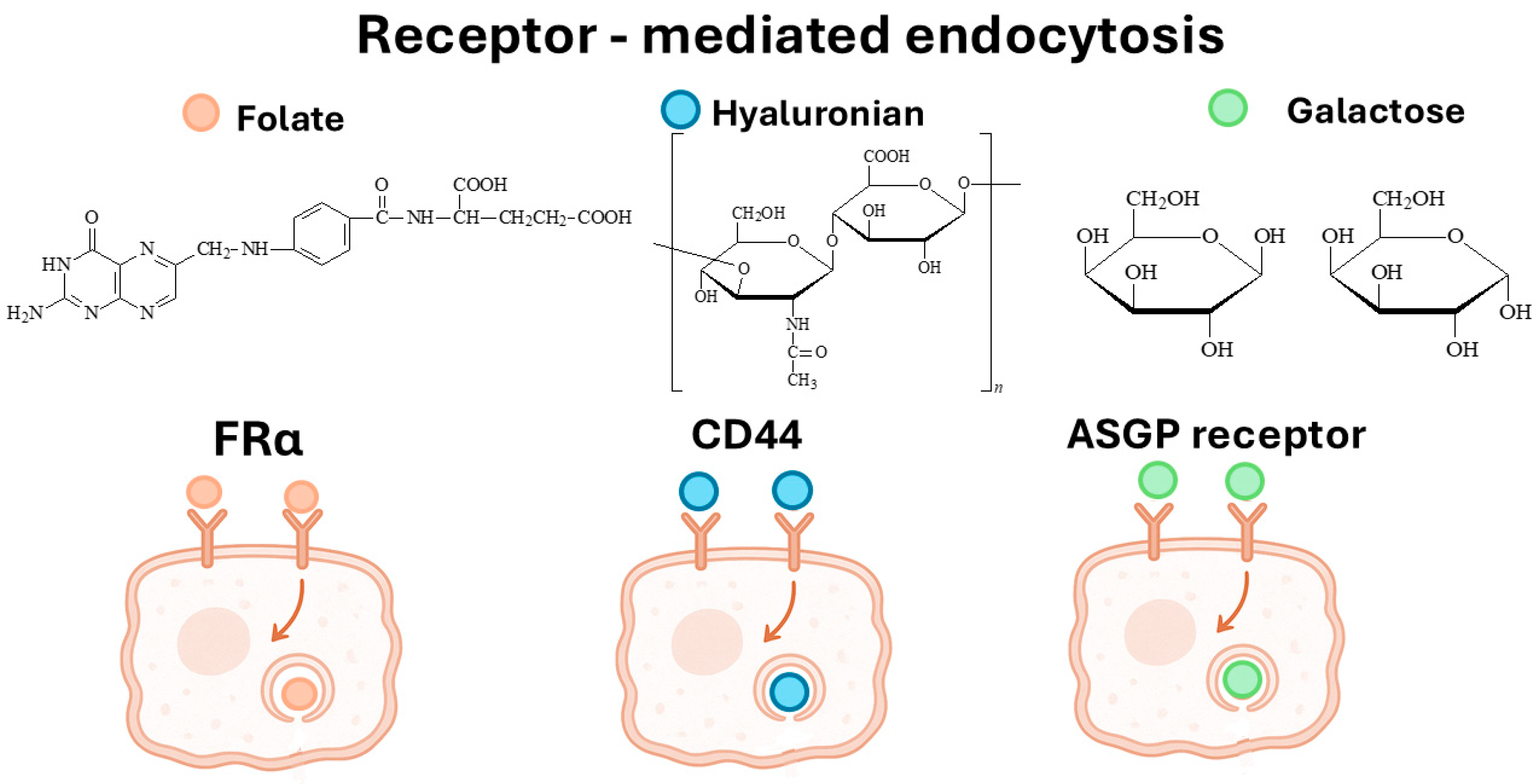
| Folic Acid | FR-α | Highly expressed in CRC; low in normal colon tissue | Binds with nanomolar affinity; triggering clathrin-mediated endocytosis | Improve uptake of drugs with poor permeability (e.g., 5-FU, IMT, polyphenols) improve uptake into FRα+ CRC cells, reduced off-target exposure; reduced systemic toxicity. |
| Hyaluronic Acid | CD44 | Overexpressed in CRC stem-like and metastatic cells. | Binds to CD44, receptor clustering, caveolae-/clathrin-mediated endocytosis. | Enhance tumor accumulation and retention; reduced cell migration and invasion; selective cytotoxicity in CD44+ CRC cells. |
| Galactose | ASGPR | Upregulated in CRC vs. normal mucosa | Recognizes Gal motifs on nanocarrier surface; receptor-mediated uptake. | Targeted internalization into ASGPR+ cells; selective cytotoxicity; reduced impact on healthy fibroblasts. |
| Feature | CS-Based DDSs | Ligand-Modified CS-Based DDSs |
|---|---|---|
| Release kinetics | Sustained, pH-dependent release | Dual-phase release; receptor-responsive or enzymatically modulated |
| Cytotoxicity | Moderate | Significantly higher |
| Cellular uptake | Passive diffusion, electrostatic interaction, or EPR effect | Receptor-mediated endocytosis (FRα, CD44, ASGPR) |
| TME penetration | Limited reporting; diffusion-driven; affected by mucosal barriers | Enhanced penetration via receptor interaction and mucoadhesion |
| Selectivity and Toxicity | Good; mild off-target cytotoxicity; good biocompatibility | Very high selectivity for receptor-positive CRC cells; minimal fibroblast toxicity |
| In vivo validation | Confirmed effectiveness in many studies | Limited in vivo validation |
Disclaimer/Publisher’s Note: The statements, opinions and data contained in all publications are solely those of the individual author(s) and contributor(s) and not of MDPI and/or the editor(s). MDPI and/or the editor(s) disclaim responsibility for any injury to people or property resulting from any ideas, methods, instructions or products referred to in the content. |
© 2025 by the authors. Licensee MDPI, Basel, Switzerland. This article is an open access article distributed under the terms and conditions of the Creative Commons Attribution (CC BY) license (https://creativecommons.org/licenses/by/4.0/).
Share and Cite
Piotrowska, U.; Szatko, J.; Nowakowska, A.; Klimaszewska, E.; Ogorzałek, M.; Sobczak, M. Chitosan-Based Drug Delivery Systems for Targeted Chemotherapy in Colorectal Cancer: A Scoping Review. Mar. Drugs 2025, 23, 467. https://doi.org/10.3390/md23120467
Piotrowska U, Szatko J, Nowakowska A, Klimaszewska E, Ogorzałek M, Sobczak M. Chitosan-Based Drug Delivery Systems for Targeted Chemotherapy in Colorectal Cancer: A Scoping Review. Marine Drugs. 2025; 23(12):467. https://doi.org/10.3390/md23120467
Chicago/Turabian StylePiotrowska, Urszula, Joanna Szatko, Aleksandra Nowakowska, Emilia Klimaszewska, Marta Ogorzałek, and Marcin Sobczak. 2025. "Chitosan-Based Drug Delivery Systems for Targeted Chemotherapy in Colorectal Cancer: A Scoping Review" Marine Drugs 23, no. 12: 467. https://doi.org/10.3390/md23120467
APA StylePiotrowska, U., Szatko, J., Nowakowska, A., Klimaszewska, E., Ogorzałek, M., & Sobczak, M. (2025). Chitosan-Based Drug Delivery Systems for Targeted Chemotherapy in Colorectal Cancer: A Scoping Review. Marine Drugs, 23(12), 467. https://doi.org/10.3390/md23120467