Plant-Derived Secondary Metabolites Modulating Inflammation-Driven Pathways in Hepatocellular Carcinoma: Preclinical Insights

 ,
,  , ,
, ,  , , ,
, , ,  ,
,  ,
,  and
and 
Abstract
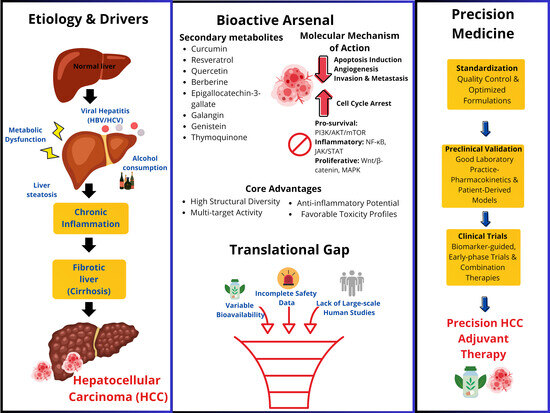
1. Introduction
2. Sequential Development of HCC
3. Different Cell Signaling Pathways Linked to HCC
Treatment of HCC
4. Secondary Metabolites of Plant Origin as Anticancer Agents
4.1. Epigallocatechin-3-Gallate (EGCG)
4.1.1. Primary Mechanistic Evidence in EGCG
4.1.2. Indirect Evidence and Secondary Mechanisms in EGCG
4.1.3. Experimental Models and Pathophysiological Relevance in EGCG
4.1.4. Dose, Bioavailability, and Translational Barriers in EGCG
4.2. Galangin
4.2.1. Primary Mechanistic Evidence in Galangin
4.2.2. Indirect Evidence and Secondary Mechanisms in Galangin
4.2.3. Experimental Models and Pathophysiological Relevance in Galangin
4.2.4. Dose, Bioavailability, and Translational Barriers in Galangin
4.3. Resveratrol
4.3.1. Primary Mechanistic Evidence in Resveratrol
4.3.2. Indirect Evidence and Secondary Mechanisms in Resveratrol
4.3.3. Experimental Models and Pathophysiological Relevance in Resveratrol
4.3.4. Dose, Bioavailability, and Translational Barriers in Resveratrol
4.4. Quercetin
4.4.1. Primary Mechanistic Evidence in Quercetin
4.4.2. Indirect Evidence and Secondary Mechanisms in Quercetin
4.4.3. Experimental Models and Pathophysiological Relevance in Quercetin
4.4.4. Dose, Bioavailability, and Translational Barriers in Quercetin
4.5. Others
4.6. Bidirectional Interaction Between MicroRNAs and Secondary Metabolites
4.7. Inflammation as a Unifying Mechanistic Framework Underlying Phytochemical Activity in HCC
4.7.1. Modulation of Inflammatory Cytokine Signaling
4.7.2. Regulation of Tumor-Associated Immune Cell Interactions
4.7.3. Effects on Hepatic Stellate Cells and Inflammation–Fibrosis Coupling
4.7.4. NF-κB and STAT3 as Central Inflammatory Signaling Nodes Targeted by Phytochemicals
5. Comparative Prioritization of Plant-Derived Secondary Metabolites for Clinical Translation in Hepatocellular Carcinoma
6. Limitations of the Review
7. Conclusions
Author Contributions
Funding
Institutional Review Board Statement
Informed Consent Statement
Data Availability Statement
Acknowledgments
Conflicts of Interest
Abbreviations
| α-AFP | α-fetoprotein |
| AFB1 | Aflatoxin B1 |
| AMPK | AMP-activated protein kinase |
| BBR | Berberine |
| Bax | Bcl-2-associated X protein |
| Bcl-2 | B-cell lymphoma 2 |
| cox2 | Cyclooxygenase-2 |
| DENA | Diethylnitrosamine |
| EGCG | Epigallocatechin-3-gallate |
| EMT | Epithelial-to-mesenchymal transition |
| ERK1/2 | Extracellular signal-regulated kinase 1/2 |
| FXR/SHP | Farnesoid X receptor/Small heterodimer partner |
| G6PC | Glucose-6-phosphatase catalytic subunit |
| GSK-3β | Glycogen synthase kinase-3 beta |
| GLP | Good laboratory practice |
| HCC | Hepatocellular carcinoma |
| HBV | Hepatitis B virus |
| HCV | Hepatitis C virus |
| HIF-1α | Hypoxia-inducible factor 1 alpha |
| IL-6 | Interleukin-6 |
| JAK/STAT | Janus kinase/Signal transducers and activators of transcription |
| MAPK | Mitogen-activated protein kinase |
| MDM2 | Mouse double minute 2 homolog |
| MLCK | Myosin light chain kinase |
| NASH | Non-alcoholic steatohepatitis |
| NF-κB | Nuclear factor kappa B |
| PDGFR | Platelet-derived growth factor receptor |
| PI3K/AKT/mTOR | Phosphatidylinositol 3-kinase/Protein kinase B/Mechanistic target of rapamycin |
| PK | Pyruvate kinase |
| PK/PD | Pharmacokinetics/Pharmacodynamics |
| PGC-1α | Peroxisome proliferator-activated receptor gamma coactivator 1-alpha |
| PRISMA | Preferred reporting items for systematic reviews and meta-analyses |
| PTEN | Phosphatase and tensin homolog |
| ROS | Reactive oxygen species |
| SIRT1 | Sirtuin 1 |
| SOR | Sorafenib |
| STAT3 | Signal transducer and activator of transcription 3 |
| TGF-β | Transforming growth factor beta |
| VEGF | Vascular endothelial growth factor |
| Wnt/β-catenin | Wnt/Beta-catenin signaling |
References
- Hatlen, M.A.; Schmidt-Kittler, O.; Sherwin, C.A.; Rozsahegyi, E.; Rubin, N.; Sheets, M.P.; Kim, J.L.; Miduturu, C.; Bifulco, N.; Brooijmans, N.; et al. Acquired On-Target Clinical Resistance Validates FGFR4 as a Driver of Hepatocellular Carcinoma. Cancer Discov. 2019, 9, 1686–1695. [Google Scholar] [CrossRef] [PubMed]
- Sia, D.; Villanueva, A.; Friedman, S.L.; Llovet, J.M. Liver Cancer Cell of Origin, Molecular Class, and Effects on Patient Prognosis. Gastroenterology 2017, 152, 745–761. [Google Scholar] [CrossRef]
- Global Cancer Observatory: Cancer Today. 2024. Available online: https://gco.iarc.who.int/today (accessed on 17 December 2025).
- Chen, L.; Zhang, J.; Peng, J.-y.; Yuan, Y.; Ding, Y.; Wang, Y.; He, X.-x. Global and Country-Level Analysis of Liver Cancer: Disease Burden and Recent Trends. Curr. Med. Sci. 2025, 45, 606–615. [Google Scholar] [CrossRef]
- Liver Cancer: Causes, Risk Factors, and Prevention. 2024. Available online: https://www.cancer.gov/types/liver/what-is-liver-cancer/causes-risk-factors (accessed on 17 December 2025).
- Venook, A.P.; Papandreou, C.; Furuse, J.; Ladrón de Guevara, L.L. The Incidence and Epidemiology of Hepatocellular Carcinoma: A Global and Regional Perspective. Oncologist 2010, 15, 5–13. [Google Scholar] [CrossRef]
- Waly Raphael, S.; Yangde, Z.; YuXiang, C. Hepatocellular Carcinoma: Focus on Different Aspects of Management. ISRN Oncol. 2012, 2012, 421673. [Google Scholar] [CrossRef]
- Kim, D.W.; Talati, C.; Kim, R. Hepatocellular Carcinoma (HCC): Beyond Sorafenib-Chemotherapy. J. Gastrointest. Oncol. 2017, 8, 256–265. [Google Scholar] [CrossRef]
- Straś, W.; Gotlib, J.; Małkowski, P.; Wasiak, D.; Śliwczyński, A.; Panczyk, M.; Tronina, O.; Brzozowska, M. Overall Survival in Patients with Hepatocellular Carcinoma Treated with Sorafenib: A Polish Experience. Med. Sci. Monit. 2021, 27, e931856. [Google Scholar] [CrossRef]
- Roxburgh, P.; Evans, T.J. Systemic Therapy of Hepatocellular Carcinoma: Are We Making Progress? Adv. Ther. 2008, 25, 1089–1104. [Google Scholar] [CrossRef]
- Grivennikov, S.I.; Greten, F.R.; Karin, M. Immunity, Inflammation, and Cancer. Cell 2010, 140, 883–899. [Google Scholar] [CrossRef] [PubMed]
- Golabi, P.; Fazel, S.; Otgonsuren, M.; Sayiner, M.; Locklear, C.T.; Younossi, Z.M. Mortality Assessment of Patients with Hepatocellular Carcinoma According to Underlying Disease and Treatment Modalities. Medicine 2017, 96, e5904. [Google Scholar] [CrossRef] [PubMed]
- Varoni, E.M.; Lo Faro, A.F.; Sharifi-Rad, J.; Iriti, M. Anticancer Molecular Mechanisms of Resveratrol. Front. Nutr. 2016, 3, 8. [Google Scholar] [CrossRef]
- Huezo, M.S.G.; Ávila, J.F.S.; Aguirre García, J. Mexican Consensus on the Diagnosis and Management of Hepatocellular Carcinoma. Rev. Gastroenterol. Mex. 2014, 79, 250–262. [Google Scholar] [CrossRef]
- Ramakrishna, G.; Rastogi, A.; Trehanpati, N.; Sen, B.; Khosla, R.; Sarin, S.K. From Cirrhosis to Hepatocellular Carcinoma: New Molecular Insights on Inflammation and Cellular Senescence. Liver Cancer 2013, 2, 367–383. [Google Scholar] [CrossRef]
- Carlessi, R.; Köhn-Gaone, J.; Olynyk, J.K.; Tirnitz-Parker, J.E.E. Mouse Models of Hepatocellular Carcinoma. In Hepatocellular Carcinoma; Tirnitz-Parker, J.E.E., Ed.; Codon Publications: Brisbane, Australia, 2019. [Google Scholar]
- Akateh, C.; Black, S.M.; Conteh, L.; Miller, E.D.; Noonan, A.; Elliott, E.; Pawlik, T.M.; Tsung, A.; Cloyd, J.M. Neoadjuvant and Adjuvant Treatment Strategies for Hepatocellular Carcinoma. World J. Gastroenterol. 2019, 25, 3704–3721. [Google Scholar] [CrossRef]
- Simile, M.M.; Bagella, P.; Vidili, G.; Spanu, A.; Manetti, R.; Seddaiu, M.A.; Babudieri, S.; Madeddu, G.; Serra, P.A.; Atzori, M.; et al. Targeted Therapies in Cholangiocarcinoma: Emerging Evidence from Clinical Trials. Medicina 2019, 55, 42. [Google Scholar] [CrossRef] [PubMed]
- Nault, J.C.; Zucman-Rossi, J. TERT Promoter Mutations in Primary Liver Tumors. Clin. Res. Hepatol. Gastroenterol. 2016, 40, 9–14. [Google Scholar] [CrossRef]
- Villanueva, A.; Luedde, T. The Transition from Inflammation to Cancer in the Liver. Clin. Liver Dis. 2016, 8, 89–93. [Google Scholar] [CrossRef] [PubMed]
- Bishayee, A. The Role of Inflammation in Liver Cancer. In Inflammation and Cancer; Advances in Experimental Medicine and Biology; Springer: Berlin/Heidelberg, Germany, 2014; Volume 816, pp. 401–435. [Google Scholar] [CrossRef]
- Yu, L.X.; Ling, Y.; Wang, H.-Y. Role of Nonresolving Inflammation in Hepatocellular Carcinoma Development and Progression. npj Precis. Oncol. 2018, 2, 6. [Google Scholar] [CrossRef] [PubMed]
- Llovet, J.M.; Kelley, R.K.; Villanueva, A.; Singal, A.G.; Pikarsky, E.; Roayaie, S.; Lencioni, R.; Loike, K.; Zucman-Rossi, J.; Finn, R.S. Hepatocellular Carcinoma. Nat. Rev. Dis. Primers 2021, 7, 6. [Google Scholar] [CrossRef]
- Breuhahn, K.; Gores, G.; Schirmacher, P. Strategies for Hepatocellular Carcinoma Therapy and Diagnostics: Lessons Learned from High-Throughput and Profiling Approaches. Hepatology 2011, 53, 2112–2121. [Google Scholar] [CrossRef]
- Thorgeirsson, S.S.; Grisham, J.W. Molecular Pathogenesis of Human Hepatocellular Carcinoma. Nat. Genet. 2002, 31, 339–346. [Google Scholar] [CrossRef]
- Wang, K.; Lim, H.Y.; Shi, S.; Lee, J.; Deng, A.; Xie, T.; Zhu, Z.; Wang, Y.; Pocalyko, D.; Yang, W.J.; et al. Genomic Landscape of Copy Number Aberrations Enables the Identification of Oncogenic Drivers in Hepatocellular Carcinoma. Hepatology 2013, 58, 706–717. [Google Scholar] [CrossRef] [PubMed]
- Wang, Y.; Lee, C.G. MicroRNA and Cancer—Focus on Apoptosis. J. Cell. Mol. Med. 2009, 13, 12–23. [Google Scholar] [CrossRef]
- Liu, J.; Fan, L.; Yu, H.; Zhang, J.; He, Y.; Feng, D.; Wang, F.; Li, X.; Liu, Q.; Li, Y.; et al. Endoplasmic Reticulum Stress Causes Liver Cancer Cells to Release Exosomal miR-23a-3p and Upregulate Programmed Death Ligand 1 Expression in Macrophages. Hepatology 2019, 70, 241–258. [Google Scholar] [CrossRef] [PubMed]
- Fornari, F.; Gramantieri, L.; Ferracin, M.; Veronese, A.; Sabbioni, S.; Calin, G.A.; Grazi, G.L.; Giovannini, C.; Croce, C.M.; Bolondi, L.; et al. miR-221 Controls CDKN1C/p57 and CDKN1B/p27 Expression in Human Hepatocellular Carcinoma. Oncogene 2008, 27, 5651–5661. [Google Scholar] [CrossRef]
- Gramantieri, L.; Fornari, F.; Ferracin, M.; Veronese, A.; Sabbioni, S.; Calin, G.A.; Grazi, G.L.; Croce, C.M.; Bolondi, L.; Negrini, M. MicroRNA-221 Targets Bmf in Hepatocellular Carcinoma and Correlates with Tumor Multifocality. Clin. Cancer Res. 2009, 15, 5073–5081. [Google Scholar] [CrossRef]
- Wang, Y.; Lee, A.T.; Ma, J.Z.; Wang, J.; Ren, J.; Yang, Y.; Tantoso, E.; Li, K.B.; Ooi, L.L.; Tan, P.; et al. Profiling MicroRNA Expression in Hepatocellular Carcinoma Reveals MicroRNA-224 Up-Regulation and Apoptosis Inhibi-tor-5 as a MicroRNA-224-Specific Target. J. Biol. Chem. 2008, 283, 13205–13215. [Google Scholar] [CrossRef]
- Wang, Y.; Ren, J.; Gao, Y.; Ma, J.Z.I.; Toh, H.C.; Chow, P.; Chung, A.Y.F.; Ooi, L.L.P.J.; Lee, C.G.L. MicroRNA-224 Targets SMAD Family Member 4 to Promote Cell Proliferation and Negatively Influence Patient Survival. PLoS ONE 2013, 8, e68744. [Google Scholar] [CrossRef]
- Yao, G.; Yin, M.; Lian, J.; Tian, H.; Lin, L.; Fei, S. MicroRNA-224 Is Involved in Transforming Growth Factor-β–Mediated Mouse Granulosa Cell Proliferation and Granulosa Cell Function by Targeting Smad4. Mol. Endocrinol. 2010, 24, 540–551. [Google Scholar] [CrossRef] [PubMed]
- Gramantieri, L.; Ferracin, M.; Fornari, F.; Veronese, A.; Sabbioni, S.; Liu, C.G.; Calin, G.A.; Giovanni, C.; Ferrazzi, E.; Grazi, G.L.; et al. Cyclin G1 Is a Target of miR-122a, a MicroRNA Frequently Down-Regulated in Human Hepatocellular Carcinoma. Cancer Res. 2007, 67, 6092–6099. [Google Scholar] [CrossRef]
- Lou, Z.; Gong, Y.Q.; Zhou, X.; Hu, G.H. Low Expression of miR-199 in Hepatocellular Carcinoma Contributes to Tumor Cell Hyperproliferation by Negatively Sup-pressing XBP1. Oncol. Lett. 2018, 16, 6531–6539. [Google Scholar] [CrossRef]
- Lee, J.; Kemper, J.K. Controlling SIRT1 Expression by MicroRNAs in Health and Metabolic Disease. Aging 2010, 2, 527–534. [Google Scholar] [CrossRef]
- Kota, J.; Chivukula, R.R.; O’Donnell, K.A.; Wentzel, E.A.; Montgomery, C.L.; Hwang, H.W.; Chang, T.C.; Vivekanandan, P.; Torbenson, M.; Clark, K.R.; et al. Therapeutic MicroRNA Delivery Suppresses Tumorigenesis in a Murine Liver Cancer Model. Cell 2009, 137, 1005–1017. [Google Scholar] [CrossRef] [PubMed]
- Wang, B.; Hsu, S.H.; Frankel, W.; Ghoshal, K.; Jacob, S.T. STAT3-Mediated Activation of MicroRNA-23a Suppresses Gluconeogenesis in Hepatocellular Carcinoma by Down-Regulating Glucose-6-Phosphatase and Peroxisome Proliferator-Activated Receptor Gamma Coactivator 1 Alpha. Hepatology 2012, 56, 186–197. [Google Scholar] [CrossRef]
- Bergamini, C.; Leoni, I.; Rizzardi, N.; Melli, M.; Galvani, G.; Coada, C.A.; Giovanni, C.; Monti, E.; Liparulo, I.; Valenti, F.; et al. miR-494 Induces Metabolic Changes through G6PC Targeting and Modulates Sorafenib Response in Hepatocellular Carcinoma. Cancer Res. 2023, 83, 145. [Google Scholar] [CrossRef]
- Llovet, J.M.; Zucman-Rossi, J.; Pikarsky, E.; Sangro, B.; Schwartz, M.; Sherman, M.; Gores, G. Hepatocellular Carcinoma. Nat. Rev. Dis. Primers 2016, 2, 16018. [Google Scholar] [CrossRef]
- Villanueva, A.; Chiang, D.Y.; Newell, P.; Peix, J.; Thung, S.; Alsinet, C.; Tovar, V.; Roayaie, S.; Minguez, B.; Sole, M.; et al. Pivotal Role of mTOR Signaling in Hepatocellular Carcinoma. Gastroenterology 2008, 135, 1972–1984. [Google Scholar] [CrossRef] [PubMed]
- Xue, Y.; Ruan, Y.; Wang, Y.; Xiao, P.; Xu, J. Signaling Pathways in Liver Cancer: Pathogenesis and Targeted Therapy. Mol. Biomed. 2024, 5, 20. [Google Scholar] [CrossRef]
- Alexia, C.; Fallot, G.; Lasfer, M.; Schweizer-Groyer, G.; Groyer, A. An Evaluation of the Role of Insulin-Like Growth Factors and Type I IGF Receptor Signaling in Hepatocarcinogenesis and Resistance to Drug-Induced Apoptosis. Biochem. Pharmacol. 2004, 68, 1003–1015. [Google Scholar] [CrossRef]
- Aravalli, R.N.; Steer, C.J.; Cressman, E.N. Molecular Mechanisms of Hepatocellular Carcinoma. Hepatology 2008, 48, 2047–2063. [Google Scholar] [CrossRef]
- Hu, T.H.; Huang, C.C.; Lin, P.R.; Chang, H.W.; Ger, L.P.; Lin, Y.W.; Changchien, C.S.; Lee, C.M.; Tai, M.H. Expression and Prognostic Role of Tumor Suppressor Gene PTEN/MMAC1/TEP1 in Hepatocellular Carcinoma. Cancer 2003, 97, 1929–1940. [Google Scholar] [CrossRef] [PubMed]
- Kudo, M. Signaling Pathway and Molecular-Targeted Therapy for Hepatocellular Carcinoma. Dig. Dis. 2011, 29, 289–302. [Google Scholar] [CrossRef] [PubMed]
- He, G.; Karin, M. NF-κB and STAT3: Key Players in Liver Inflammation and Cancer. Cell Res. 2011, 21, 159–168. [Google Scholar] [CrossRef] [PubMed]
- Yu, H.; Pardoll, D.; Jove, R. STATs in Cancer Inflammation and Immunity: A Leading Role for STAT3. Nat. Rev. Cancer 2009, 9, 798–809. [Google Scholar] [CrossRef]
- Yoshikawa, H.; Matsubara, K.; Qian, G.S.; Jackson, P.; Groopman, J.D.; Manning, J.E.; Harris, C.C.; Herman, J.G. SOCS-1, a Negative Regulator of the JAK/STAT Pathway, Is Silenced by Methylation in Human Hepatocellular Carcinoma and Shows Growth-Suppression Activity. Nat. Genet. 2001, 28, 29–35. [Google Scholar] [CrossRef]
- Ma, Q.; Yu, J.; Zhang, X.; Wu, X.; Deng, G. Wnt/β-Catenin Signaling Pathway: A Versatile Player in Apoptosis and Autophagy. Biochimie 2023, 22, 57–67. [Google Scholar] [CrossRef]
- Herencia, C.; Martínez-Moreno, J.M.; Herrera, C.; Corrales, F.; Santiago-Mora, R.; Espejo, I.; Barco, M.; Almadén, Y.; de la Mata, M.; Rodríguez-Ariza, A.; et al. Nuclear Translocation of β-Catenin during Mesenchymal Stem Cell Differentiation into Hepatocytes Is Associated with a Tumoral Phenotype. PLoS ONE 2012, 7, e34656. [Google Scholar] [CrossRef]
- Jemal, A.; Siegel, R.; Xu, J.; Ward, E. Cancer Statistics, 2010. CA Cancer J. Clin. 2010, 60, 277–300. [Google Scholar] [CrossRef]
- Zhang, Q.; Cheng, G.; Qiu, H.; Zhu, L.; Ren, Z.; Zhao, Z.; Zhang, T.; Liu, L. The p53-Inducible Gene 3 Involved in Flavonoid-Induced Cytotoxicity through the Reactive Oxygen Species–Mediated Mitochondrial Apoptotic Pathway in Human Hepatoma Cells. Food Funct. 2015, 6, 1518–1525. [Google Scholar] [CrossRef]
- Hogen, R.; Barry, T.; Subramanian, V. Expanding Indications for Liver Transplantation in the Treatment of Hepatocellular Carcinoma. Curr. Oncol. 2024, 31, 4753–4761. [Google Scholar] [CrossRef]
- Mondal, S.; Bandyopadhyay, S.; Ghosh, M.K.; Mukhopadhyay, S.; Roy, S.; Mandal, C. Natural Products: Promising Resources for Cancer Drug Discovery. Anti-Cancer Agents Med. Chem. 2012, 12, 49–75. [Google Scholar] [CrossRef]
- Terrault, N.A.; Francoz, C.; Berenguer, M.; Charlton, M.; Heimbach, J. Liver Transplantation 2023: Status Report, Current and Future Challenges. Clin. Gastroenterol. Hepatol. 2023, 21, 2150–2166. [Google Scholar] [CrossRef] [PubMed]
- Galuppo, R.; Ramaiah, D.; Ponte, O.M.; Gedaly, R. Molecular Therapies in Hepatocellular Carcinoma: What Can We Target? Dig. Dis. Sci. 2014, 59, 1688–1697. [Google Scholar] [CrossRef]
- Marrero, J.A.; Kulik, L.M.; Sirlin, C.B.; Zhu, A.X.; Finn, R.S.; Abecassis, M.M.; Roberts, L.R.; Heimbach, J.K. Diagnosis, Staging, and Management of Hepatocellular Carcinoma: 2018 Practice Guidance by the American Association for the Study of Liver Diseases. Hepatology 2018, 68, 723–750. [Google Scholar] [CrossRef]
- Schlachterman, A.; Craft, W.W., Jr.; Hilgenfeldt, E.; Mitra, A.; Cabrera, R. Current and Future Treatments for Hepatocellular Carcinoma. World J. Gastroenterol. 2015, 21, 8478–8491. [Google Scholar] [CrossRef]
- Tabrizian, P.; Jibara, G.; Shrager, B.; Schwartz, M.; Roayaie, S. Recurrence of Hepatocellular Cancer after Resection: Patterns, Treatments, and Prognosis. Ann. Surg. 2015, 261, 947–955. [Google Scholar] [CrossRef] [PubMed]
- Burak, K.W.; Sherman, M. Hepatocellular Carcinoma: Consensus, Controversies, and Future Directions—A Report from the Canadian Association for the Study of the Liver Hepatocellular Carcinoma Meeting. Can. J. Gastroenterol. Hepatol. 2015, 29, 178–184. [Google Scholar] [CrossRef] [PubMed]
- Sapisochin, G.; Bruix, J. Liver transplantation for hepatocellular carcinoma: Outcomes and novel surgical approaches. Nat. Rev. Gastroenterol. Hepatol. 2017, 14, 203–217. [Google Scholar] [CrossRef]
- Alves-Silva, J.M.; Romane, A.; Efferth, T.; Salgueiro, L. North African medicinal plants traditionally used in cancer therapy. Front. Pharmacol. 2017, 8, 383. [Google Scholar] [CrossRef]
- Berasain, C.; Avila, M.A. The EGFR signalling system in the liver: From hepatoprotection to hepatocarcinogenesis. J. Gastroenterol. 2014, 49, 9–23. [Google Scholar] [CrossRef]
- Tariq, A.; Sadia, S.; Pan, K.; Ullah, I.; Mussarat, S.; Sun, F.; Abiodun, O.O.; Batbaatar, A.; Li, Z.; Song, D.; et al. A systematic review on ethnomedicines of anti-cancer plants. Phytother. Res. 2017, 31, 202–264. [Google Scholar] [CrossRef]
- Buendia, M.A.; Neuveut, C. Hepatocellular carcinoma. Cold Spring Harb. Perspect. Med. 2015, 5, a021444. [Google Scholar] [CrossRef]
- Mollazadeh, H.; Hosseinzadeh, H. The protective effect of Nigella sativa against liver injury: A review. Iran. J. Basic. Med. Sci. 2014, 17, 958–966. [Google Scholar] [CrossRef] [PubMed]
- Seca, A.M.; Pinto, D.C. Plant secondary metabolites as anticancer agents: Successes in clinical trials and therapeutic application. Int. J. Mol. Sci. 2018, 19, 263. [Google Scholar] [CrossRef] [PubMed]
- Cabrera, C.; Artacho, R.; Giménez, R. Beneficial Effects of Green Tea—A Review. J. Am. Coll. Nutr. 2006, 25, 79–99. [Google Scholar] [CrossRef]
- Alam, M.; Gulzar, M.; Akhtar, M.S.; Rashid, S.; Zulfareen; Tanuja; Shamsi, A.; Hassan, M.I. Epigallocatechin-3-gallate therapeutic potential in human diseases: Molecular mechanisms and clinical studies. Mol. Biomed. 2024, 5, 73. [Google Scholar] [CrossRef]
- Mukhtar, H.; Ahmad, N. Tea polyphenols: Prevention of cancer and optimizing health. Am. J. Clin. Nutr. 2000, 71, 1698S–1702S. [Google Scholar] [CrossRef] [PubMed]
- Ahmad, N.; Feyes, D.K.; Nieminen, A.L.; Agarwal, R.; Mukhtar, H. Green tea constituent epigallocatechin-3-gallate and induction of apoptosis and cell cycle arrest in human carcinoma cells. J. Natl. Cancer Inst. 1997, 89, 1881–1886. [Google Scholar] [CrossRef]
- Hashimoto, O.; Nakamura, A.; Nakamura, T.; Iwamoto, H.; Hiroshi, M.; Inoue, K.; Torimura, T.; Ueno, T.; Sata, M. Methylated-(3″)-epigallocatechin gallate analog suppresses tumor growth in Huh7 hepatoma cells via inhibition of angio-genesis. Nutr. Cancer 2014, 66, 728–735. [Google Scholar] [CrossRef]
- Kuo, P.L.; Lin, C.C. Green tea constituent (−)-epigallocatechin-3-gallate inhibits Hep G2 cell proliferation and induces apoptosis through p53-dependent and Fas-mediated pathways. J. Biomed. Sci. 2003, 10, 219–227. [Google Scholar] [CrossRef]
- Shirakami, Y.; Shimizu, M.; Adachi, S.; Sakai, H.; Nakagawa, T.; Yasuda, Y.; Tsurumi, H.; Hara, Y.; Moriwaki, H. (−)-Epigallocatechin gallate suppresses the growth of human hepatocellular carcinoma cells by inhibiting activation of the vascular endothelial growth factor-vascular endothelial growth factor receptor axis. Cancer Sci. 2009, 100, 1957–1962. [Google Scholar] [CrossRef]
- Tanaka, H.; Miyoshi, H.; Chuang, Y.C.; Ando, Y.; Takahashi, T. Solid-phase synthesis of epigallocatechin gallate derivatives. Angew. Chem. Int. Ed. Engl. 2007, 46, 5934–5937. [Google Scholar] [CrossRef]
- Nishikawa, T.; Nakajima, T.; Moriguchi, M.; Jo, M.; Sekoguchi, S.; Ishii, M.; Takashima, H.; Katagishi, T.; Kimura, H.; Minami, M.; et al. A green tea polyphenol, epigallocatechin-3-gallate, induces apoptosis of human hepatocellular carcinoma, possibly through inhibition of Bcl-2 family proteins. J. Hepatol. 2006, 44, 1074–1082. [Google Scholar] [CrossRef]
- Shimizu, M.; Shirakami, Y.; Sakai, H.; Tatebe, H.; Nakagawa, T.; Hara, Y.; Weinstein, I.B.; Moriwaki, H. EGCG inhibits activation of the insulin-like growth factor (IGF)/IGF-1 receptor axis in human hepatocellular carcinoma cells. Cancer Lett. 2008, 262, 10–18. [Google Scholar] [CrossRef]
- Wang, L.; Li, P.; Feng, K. EGCG adjuvant chemotherapy: Current status and future perspectives. Eur. J. Med. Chem. 2023, 250, 115197. [Google Scholar] [CrossRef]
- Zhou, H.; Fu, L.X.; Li, L.; Chen, Y.Y.; Zhu, H.Q.; Zhou, J.L.; Lv, M.X.; Gan, R.Z.; Zhang, X.X.; Liang, G. The epigallocatechin gallate derivative Y6 reduces the cardiotoxicity and enhances the efficacy of daunorubicin against human hepatocellular carcinoma by inhibiting carbonyl reductase 1 expression. J. Ethnopharmacol. 2020, 261, 113118. [Google Scholar] [CrossRef] [PubMed]
- Chen, H.; Landen, C.N.; Li, Y.; Alvarez, R.D.; Tollefsbol, T.O. Enhancement of Cisplatin-Mediated Apoptosis in Ovarian Cancer Cells through Potentiating G2/M Arrest and p21 Upregulation by Combinatorial Epigallocatechin Gallate and Sulforaphane. J. Oncol. 2013, 2013, 872957. [Google Scholar] [CrossRef]
- Capasso, L.; De Masi, L.; Sirignano, C.; Maresca, V.; Basile, A.; Nebbioso, A.; Rigano, D.; Bontempo, P. Epigallocatechin Gallate (EGCG): Pharmacological Properties, Biological Activities and Therapeutic Potential. Molecules 2025, 30, 654. [Google Scholar] [CrossRef]
- Talib, W.H.; Awajan, D.; Alqudah, A.; Alsawwaf, R.; Althunibat, R.; Abu AlRoos, M.; Al Safadi, A.a.; Abu Asab, S.; Hadi, R.W.; Al Kury, L.T. Targeting Cancer Hallmarks with Epigallocatechin Gallate (EGCG): Mechanistic Basis and Therapeutic Targets. Molecules 2024, 29, 1373. [Google Scholar] [CrossRef] [PubMed]
- Khan, N.; Mukhtar, H. Tea Polyphenols in Promotion of Human Health. Nutrients 2018, 11, 39. [Google Scholar] [CrossRef] [PubMed]
- Lee, M.J.; Maliakal, P.; Chen, L.; Meng, X.; Bondoc, F.Y.; Prabhu, S.; Lambert, G.; Mohr, S.; Yang, C.S. Pharmacokinetics of tea catechins after ingestion of green tea and (−)-epigallocatechin-3-gallate by humans. Cancer Epidemiol. Biomark. Prev. 2002, 11, 1025–1032. [Google Scholar]
- Roowi, S.; Stalmach, A.; Mullen, W.; Lean, M.E.; Edwards, C.A.; Crozier, A. Green tea flavan-3-ols: Colonic degradation and urinary excretion of catabolites by humans. J. Agric. Food Chem. 2010, 58, 1296–1304. [Google Scholar] [CrossRef]
- Li, N.; Taylor, L.S.; Mauer, L.J. Degradation kinetics of catechins in green tea powder: Effects of temperature and relative humidity. J. Agric. Food Chem. 2011, 59, 6082–6090. [Google Scholar] [CrossRef]
- Dube, A.; Nicolazzo, J.A.; Larson, I. Chitosan nanoparticles enhance the intestinal absorption of the green tea catechins (+)-catechin and (−)-epigallocatechin gallate. Eur. J. Pharm. Sci. 2010, 41, 219–225. [Google Scholar] [CrossRef]
- Zou, Q.Y.; Wu, H.F.; Tang, Y.L.; Chen, D.Z. A new labdane diterpene from the rhizomes of Alpinia officinarum. Nat. Prod. Res. 2016, 30, 1–6. [Google Scholar] [CrossRef]
- Zou, W.W.; Xu, S.P. Galangin inhibits the cell progression and induces cell apoptosis through activating PTEN and caspase-3 pathways in reti-noblastoma. Biomed. Pharmacother. 2018, 97, 851–863. [Google Scholar] [CrossRef]
- Zhang, H.T.; Luo, H.; Wu, J.; Lan, L.B.; Fan, D.H.; Zhu, K.D.; Chen, X.Y.; Wen, M.; Liu, H.M. Galangin induces apoptosis of hepatocellular carcinoma cells via the mitochondrial pathway. World J. Gastroenterol. 2010, 16, 3377–3384. [Google Scholar] [CrossRef] [PubMed]
- Gwak, J.; Oh, J.; Cho, M.; Bae, S.K.; Song, I.S.; Liu, K.H.; Jeong, Y.; Kim, D.E.; Chung, Y.H.; Oh, S. Galangin suppresses the proliferation of β-catenin response transcription-positive cancer cells by promoting adenomatous polyposis coli/axin/glycogen synthase kinase-3β-independent β-catenin degradation. Mol. Pharmacol. 2011, 79, 1014–1022. [Google Scholar] [CrossRef] [PubMed]
- Wu, C.; Chen, J.; Chen, C.; Wang, W.; Wen, L.; Gao, K.; Chen, X.; Xiong, S.; Zhao, H.; Li, S. Wnt/β-catenin coupled with HIF-1α/VEGF signaling pathways involved in galangin neurovascular unit protection from focal cerebral ischemia. Sci. Rep. 2015, 5, 16151. [Google Scholar] [CrossRef]
- Zhang, X.L.; Yu, H.; Xiong, Y.Y.; Ma, S.T.; Zhao, L.; She, S.F. Resveratrol down-regulates myosin light chain kinase, induces apoptosis and inhibits diethylnitrosamine-induced liver tumorigenesis in rats. Int. J. Mol. Sci. 2013, 14, 1940–1951. [Google Scholar] [CrossRef]
- Zou, Y.; Li, R.; Kuang, D.; Zuo, M.; Li, W.; Tong, W.; Jiang, L.; Zhou, M.; Chen, Y.; Gong, W.; et al. Galangin Inhibits Cholangiocarcinoma Cell Growth and Metastasis through Downregulation of MicroRNA-21 Expression. BioMed Res. Int. 2020, 2020, 5846938. [Google Scholar] [CrossRef]
- Palachai, N.; Supawat, A.; Kongsui, R.; Klimaschewski, L.; Jittiwat, J. Galangin’s Neuroprotective Role: Targeting Oxidative Stress, Inflammation, and Apoptosis in Ischemic Stroke in a Rat Model of Permanent Middle Cerebral Artery Occlusion. Int. J. Mol. Sci. 2025, 26, 1847. [Google Scholar] [CrossRef]
- Yu, S.; Gong, L.S.; Li, N.F.; Pan, Y.F.; Zhang, L. Galangin (GG) combined with cisplatin (DDP) to suppress human lung cancer by inhibition of STAT3-regulated NF-κB and Bcl-2/Bax signaling pathways. Biomed. Pharmacother. 2018, 97, 213–224. [Google Scholar] [CrossRef]
- Tufail, M.; Jiang, C.H.; Li, N. Altered metabolism in cancer: Insights into energy pathways and therapeutic targets. Mol. Cancer 2024, 23, 203. [Google Scholar] [CrossRef]
- Yoshida, G.J. Metabolic reprogramming: The emerging concept and associated therapeutic strategies. J. Exp. Clin. Cancer Res. 2015, 34, 111. [Google Scholar] [CrossRef]
- Cigliano, A.; Liao, W.; Deiana, G.A.; Rizzo, D.; Chen, X.; Calvisi, D.F. Preclinical Models of Hepatocellular Carcinoma: Current Utility, Limitations, and Challenges. Biomedicines 2024, 12, 1624. [Google Scholar] [CrossRef] [PubMed]
- Luo, Q.; Zhu, L.; Ding, J.; Zhuang, X.; Xv, L.; Chen, F. Protective effect of galangin in concanavalin A-induced hepatitis in mice. Drug Des. Dev. Ther. 2015, 9, 2983–2992. [Google Scholar] [CrossRef]
- Wang, Y.; Lin, B.; Li, H.; Lan, L.; Yu, H.; Wu, S.; Wu, J.; Zhang, H. Galangin suppresses hepatocellular carcinoma cell proliferation by reversing the Warburg effect. Biomed. Pharmacother. 2017, 95, 1295–1300. [Google Scholar] [CrossRef] [PubMed]
- Zhang, W.; Tang, B.; Huang, Q.; Hua, Z. Galangin inhibits tumor growth and metastasis of B16F10 melanoma. J. Cell. Biochem. 2013, 114, 152–161. [Google Scholar] [CrossRef]
- Sundi, P.R.I.O.; Thipe, V.C.; Omar, M.A.; Adelusi, T.I.; Gedefa, J.; Olaoba, O.T. Preclinical human and murine models of hepatocellular carcinoma (HCC). Clin. Res. Hepatol. Gastroenterol. 2024, 48, 102418. [Google Scholar] [CrossRef]
- Otake, Y.; Hsieh, F.; Walle, T. Glucuronidation versus oxidation of the flavonoid galangin by human liver microsomes and hepatocytes. Drug Metab. Dispos. 2002, 30, 576–581. [Google Scholar] [CrossRef]
- Xu, Y.X.; Wang, B.; Zhao, X.H. In vitro effects and the related molecular mechanism of galangin and quercetin on human gastric cancer cell line (SGC-7901). Pak. J. Pharm. Sci. 2017, 30, 1279–1287. [Google Scholar]
- Feng, W.-H.; Zhang, H.-H.; Zhang, Y.; Sun, M.; Niu, J.-L. Determination of galangin in rat plasma by UPLC and pharmacokinetic study. J. Chromatogr. B 2015, 998–999, 26–30. [Google Scholar] [CrossRef]
- Baur, J.A.; Sinclair, D.A. Therapeutic potential of resveratrol: The in vivo evidence. Nat. Rev. Drug Discov. 2006, 5, 493–506. [Google Scholar] [CrossRef] [PubMed]
- Bhattacharya, S.; Perris, A.; Jawed, J.J.; Hoda, M. Therapeutic role of resveratrol against hepatocellular carcinoma: A review on its molecular mechanisms of action. Pharmacol. Res.-Mod. Chin. Med. 2023, 6, 100233. [Google Scholar] [CrossRef]
- Elbe, H.; Esrefoglu, M.; Vardi, N.; Taslidere, E.; Ozerol, E.; Tanbek, K. Melatonin, quercetin and resveratrol attenuates oxidative hepatocellular injury in streptozotocin-induced diabetic rats. Hum. Exp. Toxicol. 2015, 34, 859–868. [Google Scholar] [CrossRef]
- DeWaal, D.; Nogueira, V.; Terry, A.R.; Patra, K.C.; Jeon, S.M.; Guzman, G.; Au, J.; Long, C.P.; Antoniewicz, M.R.; Hay, N. Hexokinase-2 depletion inhibits glycolysis and induces oxidative phosphorylation in hepatocellular carcinoma and sensitizes to metformin. Nat. Commun. 2018, 9, 446, Correction in Nat Commun. 2018, 9, 2539. [Google Scholar] [CrossRef] [PubMed]
- Karabekir, S.C.; Özgörgülü, A. Possible protective effects of resveratrol in hepatocellular carcinoma. Iran. J. Basic Med. Sci. 2020, 23, 71–78. [Google Scholar] [CrossRef]
- Aluyen, J.K.; Ton, Q.N.; Tran, T.; Yang, A.E.; Gottlieb, H.B.; Bellanger, R.A. Resveratrol: Potential as anticancer agent. J. Diet. Suppl. 2012, 9, 45–56. [Google Scholar] [CrossRef]
- Burns, J.; Yokota, T.; Ashihara, H.; Lean, M.E.; Crozier, A. Plant foods and herbal sources of resveratrol. J. Agric. Food Chem. 2002, 50, 3337–3340. [Google Scholar] [CrossRef]
- Li, Y.; Duan, S.; Jia, H.; Bai, C.; Zhang, L.; Wang, Z. Flavonoids from tartary buckwheat induce G2/M cell cycle arrest and apoptosis in human hepatoma HepG2 cells. Acta Biochim. Biophys. Sin. 2016, 46, 460–470. [Google Scholar] [CrossRef] [PubMed]
- Lee, R.H.; Cho, J.H.; Jeon, Y.J.; Bang, W.; Cho, J.J.; Choi, N.J.; Seo, K.S.; Shim, J.H.; Chae, J.I. Quercetin induces antiproliferative activity against human hepatocellular carcinoma (HepG2) cells by suppressing speci-ficity protein 1 (Sp1). Drug Dev. Res. 2015, 76, 9–16. [Google Scholar] [CrossRef]
- Carrasco-Torres, G.; Baltiérrez-Hoyos, R.; Andrade-Jorge, E.; Villa-Treviño, S.; Trujillo-Ferrara, J.G.; Vásquez-Garzón, V.R. Cytotoxicity, oxidative stress, cell cycle arrest, and mitochondrial apoptosis after combined treatment of hepatocarcinoma cells with maleic anhydride derivatives and quercetin. Oxidative Med. Cell. Longev. 2017, 2017, 2734976. [Google Scholar] [CrossRef]
- Granado-Serrano, A.B.; Martín, M.A.; Bravo, L.; Goya, L.; Ramos, S. Time-course regulation of quercetin on cell survival/proliferation pathways in human hepatoma cells. Mol. Nutr. Food Res. 2008, 52, 457–464. [Google Scholar] [CrossRef] [PubMed]
- Granado-Serrano, A.B.; Martín, M.A.; Bravo, L.; Goya, L.; Ramos, S. Quercetin modulates NF-κB and AP-1/JNK pathways to induce cell death in human hepatoma cells. Nutr. Cancer 2010, 62, 390–401. [Google Scholar] [CrossRef]
- Boots, A.W.; Haenen, G.R.; Bast, A. Health effects of quercetin: From antioxidant to nutraceutical. Eur. J. Pharmacol. 2008, 585, 325–337. [Google Scholar] [CrossRef]
- Newman, D.J.; Cragg, G.M. Natural products as sources of new drugs from 1981 to 2014. J. Nat. Prod. 2016, 79, 629–661. [Google Scholar] [CrossRef]
- Li, S.; Tan, H.Y.; Wang, N.; Zhang, Z.J.; Lao, L.; Wong, C.W.; Feng, Y. The role of oxidative stress and antioxidants in liver diseases. Int. J. Mol. Sci. 2015, 16, 26087–26124. [Google Scholar] [CrossRef]
- Yu, X.; Xu, Y.; Zhang, S.; Sun, J.; Liu, P.; Xiao, L.; Tang, Y.; Liu, L.; Yao, P. Quercetin attenuates chronic ethanol-induced hepatic mitochondrial damage through enhanced mitophagy. Nutrients 2016, 8, 27. [Google Scholar] [CrossRef]
- Zhao, J.L.; Zhao, J.; Jiao, H.J. Synergistic growth-suppressive effects of quercetin and cisplatin on HepG2 human hepatocellular carcinoma cells. Appl. Biochem. Biotechnol. 2014, 172, 784–791. [Google Scholar] [CrossRef] [PubMed]
- Wu, L.; Li, J.; Liu, T.; Li, S.; Feng, J.; Yu, Q.; Zhang, J.; Chen, J.; Zhou, Y.; Ji, J.; et al. Quercetin shows anti-tumor effect in hepatocellular carcinoma LM3 cells by abrogating JAK2/STAT3 signaling pathway. Cancer Med. 2019, 8, 4806–4820. [Google Scholar] [CrossRef]
- Yu, C.P.; Qiu, R.G.; Shi, L.; Liang, J. Celecoxib and quercetin induce apoptosis in human hepatocarcinoma. Biomed. Res. 2017, 28, 3465–3470. [Google Scholar]
- Sun, M.; Zhang, Z.; Chen, C.; Zhong, J.; Long, Z.; Shen, L.; Huang, H.; Lu, J. Exploring the potential mechanisms of sorafenib resistance in hepatocellular carcinoma cell lines based on RNA sequencing. Cancer Cell Int. 2023, 25, 91. [Google Scholar] [CrossRef]
- Chang, Y.F.; Chi, C.W.; Wang, J.J. Reactive oxygen species production is involved in quercetin-induced apoptosis in human hepatoma cells. Nutr. Cancer 2006, 55, 201–209. [Google Scholar] [CrossRef] [PubMed]
- Hasan, A.M.W.; Al Hasan, M.S.; Mizan, M.; Miah, M.S.; Uddin, M.B.; Mia, E.; Yana, N.T.; Hossain, M.A.; Islam, M.T. Quercetin promises anticancer activity through PI3K-AKT-mTOR pathway: A literature review. Pharmacol. Res.-Nat. Prod. 2025, 7, 100206. [Google Scholar] [CrossRef]
- Song, X.; Chen, Y.; Sun, Y.; Lin, B.; Qin, Y.; Hui, H.; Li, Z.; You, Q.; Lu, N.; Guo, Q. Oroxylin A, a classical natural product, shows a novel inhibitory effect on angiogenesis induced by lipopolysaccharide. Pharmacol. Rep. 2012, 64, 1189–1199. [Google Scholar] [CrossRef]
- Zhu, R.; Zeng, G.; Chen, Y.; Zhang, Q.; Liu, B.; Liu, J.; Chen, H.; Li, M. Oroxylin A accelerates liver regeneration in CCl4-induced acute liver injury mice. PLoS ONE 2013, 8, e71612. [Google Scholar] [CrossRef]
- Hu, Y.; Yang, Y.; You, Q.D.; Liu, W.; Gu, H.Y.; Zhao, L.; Zhang, K.; Wang, W.; Wang, X.T.; Guo, Q.L. Oroxylin A induced apoptosis of human hepatocellular carcinoma cell line HepG2 was involved in its antitumor activity. Biochem. Biophys. Res. Commun. 2006, 351, 521–527. [Google Scholar] [CrossRef]
- Liu, W.; Mu, R.; Nie, F.F.; Yang, Y.; Wang, J.; Dai, Q.S.; Lu, N.; Qi, Q.; Rong, J.J.; Hu, R.; et al. MAC-related mitochondrial pathway in oroxylin-A-induced apoptosis in human hepatocellular carcinoma HepG2 cells. Cancer Lett. 2009, 284, 198–207. [Google Scholar] [CrossRef]
- Zhao, K.; Zhou, Y.; Qiao, C.; Ni, T.; Li, Z.; Wang, X.; Guo, Q.; Lu, N.; Wei, L. Oroxylin A promotes PTEN-mediated negative regulation of MDM2 transcription via SIRT3-mediated deacetylation to sta-bilize p53 and inhibit glycolysis in wt-p53 cancer cells. J. Hematol. Oncol. 2015, 8, 41, Correction in J. Hematol. Oncol. 2019, 12, 143. https://doi.org/10.1186/s13045-015-0137-1. [Google Scholar] [CrossRef]
- Germoush, M.O.; Mahmoud, A.M. Berberine mitigates cyclophosphamide-induced hepatotoxicity by modulating antioxidant status and inflammatory cytokines. J. Cancer Res. Clin. Oncol. 2014, 140, 1103–1109. [Google Scholar] [CrossRef]
- Wang, N.; Feng, Y.; Zhu, M.; Tsang, C.M.; Man, K.; Tong, Y.; Tsao, S.W. Berberine induces autophagic cell death and mitochondrial apoptosis in liver cancer cells: The cellular mechanism. J. Cell. Biochem. 2010, 111, 1426–1436. [Google Scholar] [CrossRef]
- Yang, X.; Huang, N. Berberine induces selective apoptosis through the AMPK-mediated mitochondrial/caspase pathway in hepatocellular carcinoma. Mol. Med. Rep. 2013, 8, 505–510. [Google Scholar] [CrossRef]
- Choi, M.S.; Oh, J.H.; Kim, S.M.; Jung, H.Y.; Yoo, H.S.; Lee, Y.M.; Moon, D.C.; Han, S.B.; Hong, J.T. Berberine inhibits p53-dependent cell growth through induction of apoptosis of prostate cancer cells. Int. J. Oncol. 2009, 34, 1221–1230. [Google Scholar] [CrossRef]
- Zhang, R.; Wang, N.; Fan, B.; Zhang, J. Potentiation of sorafenib’s action by berberine via suppression of the mTOR signaling pathway in human hepatoma cells. Nutr. Cancer 2025, 77, 553–565. [Google Scholar] [CrossRef]
- Li, Y.S.; Wu, L.P.; Li, K.H.; Liu, Y.P.; Xiang, R.; Zhang, S.B.; Zhu, L.Y.; Zhang, L.Y. Involvement of nuclear factor κB (NF-κB) in the downregulation of cyclo-oxygenase-2 (COX-2) by genistein in gastric cancer cells. J. Int. Med. Res. 2011, 39, 2141–2150. [Google Scholar] [CrossRef] [PubMed]
- Coutinho, A.J.; Pinheiro, M.; Neves, A.R.; Pinto, M.M.M. Therapeutic potential of genistein: Preclinical studies, clinical evidence, and nanotechnology application. Curr. Med. Chem. 2023, 30, 2480–2517. [Google Scholar] [CrossRef]
- Fang, S.C.; Hsu, C.L.; Lin, H.T.; Yen, G.C. Anticancer effects of flavonoid derivatives isolated from Millettia reticulata Benth in SK-Hep-1 human hepatocellular carci-noma cells. J. Agric. Food Chem. 2010, 58, 814–820. [Google Scholar] [CrossRef] [PubMed]
- Yeh, T.C.; Chiang, P.C.; Li, T.K.; Hsu, J.L.; Lin, C.J.; Wang, S.W.; Peng, C.Y.; Guh, J.H. Genistein induces apoptosis in human hepatocellular carcinomas via interaction of endoplasmic reticulum stress and mi-tochondrial insult. Biochem. Pharmacol. 2007, 73, 782–792. [Google Scholar] [CrossRef]
- George, J.; Banik, N.L.; Ray, S.K. Genistein induces receptor and mitochondrial pathways and increases apoptosis during BCL-2 knockdown in human ma-lignant neuroblastoma SK-N-DZ cells. J. Neurosci. Res. 2010, 88, 877–886. [Google Scholar] [CrossRef] [PubMed]
- Wang, S.D.; Chen, B.C.; Kao, S.T.; Liu, C.J.; Yeh, C.C. Genistein inhibits tumor invasion by suppressing multiple signal transduction pathways in human hepatocellular carcinoma cells. BMC Complement. Altern. Med. 2014, 14, 26. [Google Scholar] [CrossRef]
- Wang, S.; Chen, W.; Dong, C.; Wu, J.; Zheng, M.; Ma, Y.; Xue, Y. Exploring the mechanism of genistein in treating hepatocellular carcinoma through network pharmacology and molecular docking. Oncologie 2024, 26, 799–811. [Google Scholar] [CrossRef]
- Lin, Y.; Chen, K.; Zhu, M.; Song, W.; Wu, G.; Pan, A. Atractylenolide II regulates the proliferation, ferroptosis, and immune escape of hepatocellular carcinoma cells by inacti-vating the TRAF6/NF-κB pathway. Naunyn Schmiedebergs Arch. Pharmacol. 2024, 397, 7697–7710. [Google Scholar] [CrossRef] [PubMed]
- Gu, M.; Chen, Z.; Chen, Y.; Li, Y.; Wang, H.; Feng, Y.R.; Zheng, P.; Huang, C. Unlocking the potential of atractylenolide II: Mitigating non-alcoholic fatty liver disease through farnesoid X receptor–endoplasmic reticulum stress interplay. J. Pharm. Anal. 2025, 15, 101318. [Google Scholar] [CrossRef] [PubMed]
- Ma, Z.J.; Lu, L.; Yang, J.J.; Wang, X.X.; Su, G.; Wang, Z.L.; Chen, G.H.; Sun, H.M.; Wang, M.Y.; Yang, Y. Lariciresinol induces apoptosis in HepG2 cells via mitochondrial-mediated apoptosis pathway. Eur. J. Pharmacol. 2018, 821, 1–10. [Google Scholar] [CrossRef]
- Ma, Z.J.; Wang, X.X.; Su, G.; Yang, J.J.; Zhu, Y.J.; Wu, Y.W.; Li, J.; Lu, L.; Zeng, L.; Pei, H.X. Proteomic analysis of apoptosis induction by lariciresinol in human HepG2 cells. Chem. Biol. Interact. 2016, 256, 209–219. [Google Scholar] [CrossRef] [PubMed]
- Fathy, M.; Nikaido, T. In vivo modulation of iNOS pathway in hepatocellular carcinoma by Nigella sativa. Environ. Health Prev. Med. 2013, 18, 377–385. [Google Scholar] [CrossRef]
- Echegaray Rodríguez, J.R.; Echegaray González, P.; Mosquera, A.; Gerrikaetxebarria, J. Fitoterapia y sus aplicaciones. Rev. Esp. Podol. 2011, 21, 2258–2267. [Google Scholar]
- Tekbas, A.; Huebner, J.; Settmacher, U.; Dahmen, U. Plants and surgery: The protective effects of thymoquinone on hepatic injury—A systematic review of in vivo studies. Int. J. Mol. Sci. 2018, 19, 1085. [Google Scholar] [CrossRef]
- Pan, Z.; Zhuang, J.; Ji, C.; Cai, Z.; Liao, W.; Huang, Z. Curcumin inhibits hepatocellular carcinoma growth by targeting VEGF expression. Oncol. Lett. 2018, 15, 4821–4826. [Google Scholar] [CrossRef]
- Meybodi, S.M.; Rezaei, P.; Faraji, N.; Jamehbozorg, K.; Ashna, S.; Shokri, F.; Goleij, P.; Moradi, S.; Kashian, M.; Arefnezhad, R.; et al. Curcumin and its novel formulations for the treatment of hepatocellular carcinoma: New trends and future perspectives in cancer therapy. J. Funct. Foods 2023, 108, 105705. [Google Scholar] [CrossRef]
- Bort, A.; Sanchez, B.G.; Spínola, E.; Mateos-Gómez, P.A.; Rodríguez-Henche, N.; Díaz-Laviada, I. The red pepper’s spicy ingredient capsaicin activates AMPK in HepG2 cells through CaMKKβ. PLoS ONE 2019, 14, e0211420. [Google Scholar] [CrossRef]
- Scheau, C.; Badarau, I.A.; Caruntu, C.; Mihai, G.L.; Didilescu, A.C.; Constantin, C.; Neagu, M. Capsaicin: Effects on the pathogenesis of hepatocellular carcinoma. Molecules 2019, 24, 2350. [Google Scholar] [CrossRef]
- Lv, L.; Zhang, W.; Li, T.; Jiang, L.; Lu, X.; Lin, J. Hispidulin exhibits potent anticancer activity in vitro and in vivo through activating ER stress in non-small-cell lung cancer cells. Oncol. Rep. 2020, 43, 1995–2003. [Google Scholar] [CrossRef] [PubMed]
- Singh, A.; Chaitanya, M.V.N.L.; Tatiparthi, R.; Lakshmi, M.A.; Dwarampudi, L.P.; Ramaswamy, S.; Mazumder, A.; Singh, A.; Kumar, S. The pharmacological spectrum of hispidulin: A thorough systematic review and meta-analysis. Cell Biochem. Biophys. 2025, 83, 4367–4386. [Google Scholar] [CrossRef]
- Abou El Naga, R.N.; Azab, S.S.; El-Demerdash, E.; Shaarawy, S.; El-Merzabani, M.; Ammar, e.-S.M. Sensitization of TRAIL-induced apoptosis in human hepatocellular carcinoma HepG2 cells by phytochemicals. Life Sci. 2013, 92, 555–561. [Google Scholar] [CrossRef]
- Li, D.; Cao, D.; Cui, Y.; Sun, Y.; Jiang, J.; Cao, X. The potential of epigallocatechin gallate in the chemoprevention and therapy of hepatocellular carcinoma. Front. Pharmacol. 2023, 14, 1201085. [Google Scholar] [CrossRef]
- Zhong, X.; Huang, S.; Liu, D.; Jiang, Z.; Jin, Q.; Li, C.; Da, L.; Yao, Q.; Wang, D. Galangin promotes cell apoptosis through suppression of H19 expression in hepatocellular carcinoma cells. Cancer Med. 2020, 9, 5546–5557. [Google Scholar] [CrossRef] [PubMed]
- Kuo, P.L.; Chiang, L.C.; Lin, C.C. Resveratrol-induced apoptosis is mediated by p53-dependent pathway in Hep G2 cells. Life Sci. 2002, 72, 23–34. [Google Scholar] [CrossRef] [PubMed]
- Notas, G.; Nifli, A.P.; Kampa, M.; Vercauteren, J.; Kouroumalis, E.; Castanas, E. Resveratrol exerts its antiproliferative effect on HepG2 hepatocellular carcinoma cells, by inducing cell cycle arrest, and NOS activation. Biochim. Biophys. Acta 2006, 1760, 1657–1666. [Google Scholar] [CrossRef]
- Feng, C.Y.; Cai, C.S.; Shi, X.Q.; Zhang, Z.J.; Su, D.; Qiu, Y.Q. Resveratrol promotes mitophagy via the MALAT1/miR-143-3p/RRM2 axis and suppresses cancer progression in hepatocel-lular carcinoma. J. Integr. Med. 2025, 23, 79–92. [Google Scholar] [CrossRef]
- Tili, E.; Michaille, J.J.; Alder, H.; Volinia, S.; Delmas, D.; Latruffe, N.; Croce, C.M. Resveratrol modulates the levels of microRNAs targeting genes encoding tumor-suppressors and effectors of TGFβ signaling pathway in SW480 cells. Biochem. Pharmacol. 2010, 80, 2057–2065. [Google Scholar] [CrossRef]
- Tili, E.; Michaille, J.J. Resveratrol, microRNAs, inflammation, and cancer. J. Nucleic Acids 2011, 2011, 102431. [Google Scholar] [CrossRef]
- Liu, L.; Cao, Y.; Chen, C.; Zhang, X.; McNabola, A.; Wilkie, D.; Wilhelm, S.; Lynch, M.; Carter, C. Sorafenib blocks the RAF/MEK/ERK pathway, inhibits tumor angiogenesis, and induces tumor cell apoptosis in hepatocellular carcinoma model PLC/PRF/5. Cancer Res. 2006, 66, 11851–11858. [Google Scholar] [CrossRef]
- Al Ageeli, E. Dual roles of microRNA-122 in hepatocellular carcinoma and breast cancer progression and metastasis: A comprehensive review. Curr. Issues Mol. Biol. 2024, 46, 11975–11992. [Google Scholar] [CrossRef] [PubMed]
- Mousavinejad, S.N.; Takhshid, M.A.; Salami, S.; Khorsand, M.; Asgari, F.; Sirati-Sabet, M. The effect of quercetin on the expression of miR-21 and miR-34a-5p on HeLa and CaSki cell lines. Jundishapur J. Nat. Pharm. Prod. 2024, 19, e152682. [Google Scholar] [CrossRef]
- Fosso, E.; Leo, M.; Muccill, L.; Mandrone, V.M.; Di Meo, M.C.; Molinario, A.; Varricchio, E.; Sabatino, L. Quercetin’s dual mode of action to counteract the Sp1-miR-27a axis in colorectal cancer cells. Antioxidants 2023, 12, 1547. [Google Scholar] [CrossRef] [PubMed]
- Gali-Muhtasib, H.; Hmadi, R.; Kareh, M.; Tohme, R.; Darwiche, N. Cell death mechanisms of plant-derived anticancer drugs: Beyond apoptosis. Apoptosis 2015, 20, 1531–1562. [Google Scholar] [CrossRef] [PubMed]
- Yang, X.; Jiang, W.; Kong, X.; Zhou, X.; Zhu, D.; Kong, L. Genistein restricts the epithelial–mesenchymal transformation and stemness of hepatocellular carcinoma via upregulating miR-1275 to inhibit the EIF5A2/PI3K/Akt pathway. Biology 2022, 11, 1383. [Google Scholar] [CrossRef]
- Chiyomaru, T.; Yamamura, S.; Fukuhara, S.; Hidaka, H.; Majid, S.; Saini, S.; Arora, S.; Deng, G.; Shahryari, V.; Chang, I.; et al. Genistein up-regulates tumor suppressor microRNA-574-3p in prostate cancer. PLoS ONE 2013, 8, e58929. [Google Scholar] [CrossRef]
- Han, R.; Chen, X.; Li, Y.; Zhang, S.; Li, R.; Lu, L. MicroRNA-34a suppresses aggressiveness of hepatocellular carcinoma by modulating E2F1, E2F3, and caspase-3. Cancer Manag. Res. 2019, 11, 2963–2976. [Google Scholar] [CrossRef]
- Ma, J.; Cheng, L.; Liu, H.; Zhang, J.; Shi, Y.; Zeng, F.; Miele, L.; HSarkar, F.; Xia, J.; Wang, Z. Genistein down-regulates miR-223 expression in pancreatic cancer cells. Curr. Drug Targets 2013, 14, 1150–1156. [Google Scholar] [CrossRef] [PubMed]
- Zaman, M.S.; Shahryari, V.; Deng, G.; Thamminana, S.; Saini, S.; Majid, S.; Chang, I.; Hirata, H.; Ueno, K.; Yamamura, S.; et al. Up-regulation of microRNA-21 correlates with lower kidney cancer survival. PLoS ONE 2012, 7, e31060, Correction in PLoS ONE 2012, 7. https://doi.org/10.1371/journal.pone.0031060. [Google Scholar] [CrossRef]
- Li, N.; Men, W.; Zheng, Y.; Wang, H.; Meng, X. Oroxin B induces apoptosis by down-regulating microRNA-221 resulting in the inactivation of the PTEN/PI3K/AKT pathway in liver cancer. Molecules 2019, 24, 4384. [Google Scholar] [CrossRef]
- Li, H.F.; Wu, Y.L.; Tseng, T.L.; Chao, S.W.; Lin, H.; Chen, H.H. Inhibition of miR-155 potentially protects against lipopolysaccharide-induced acute lung injury through the IRF2BP2-NFAT1 pathway. Am. J. Physiol. Cell Physiol. 2020, 319, C1070–C1081. [Google Scholar] [CrossRef]
- Gao, G.; Bian, Y.; Qian, H.; Yang, M.; Hu, J.; Li, L.; Yu, L.; Liu, B.; Qian, X. Gambogic acid regulates the migration and invasion of colorectal cancer via microRNA-21-mediated activation of phospha-tase and tensin homolog. Exp. Ther. Med. 2018, 16, 1758–1765. [Google Scholar] [CrossRef]
- Li, M.; Zhang, M.; Zhang, Z.L.; Liu, N.; Han, X.Y.; Liu, Q.C.; Deng, W.J.; Liao, C.X. Induction of apoptosis by berberine in hepatocellular carcinoma HepG2 cells via downregulation of NF-κB. Oncol. Res. 2017, 25, 233–239. [Google Scholar] [CrossRef] [PubMed]
- Wang, N.; Zhu, M.; Wang, X.; Tan, H.Y.; Tsao, S.W.; Feng, Y. Berberine-induced tumor suppressor p53 up-regulation gets involved in the regulatory network of MIR-23a in hepatocellular carcinoma. Biochim. Biophys. Acta 2014, 1839, 849–857. [Google Scholar] [CrossRef]
- Lü, Y.; Han, B.; Yu, H.; Cui, Z.; Li, Z.; Wang, J. Berberine regulates the microRNA-21-ITGΒ4-PDCD4 axis and inhibits colon cancer viability. Oncol. Lett. 2018, 15, 5971–5976. [Google Scholar] [CrossRef]
- Wei, S.; Zhang, M.; Yu, Y.; Lan, X.; Yao, F.; Yan, X.; Chen, L.; Hatch, G.M. Berberine attenuates development of the hepatic gluconeogenesis and lipid metabolism disorder in type 2 diabetic mice and in palmitate-incubated HepG2 cells through suppression of the HNF-4α miR122 pathway. PLoS ONE 2016, 11, e0152097. [Google Scholar] [CrossRef]
- Ye, E.A.; Steinle, J.J. miR-146a attenuates inflammatory pathways mediated by TLR4/NF-κB and TNFα to protect primary human retinal micro-vascular endothelial cells grown in high glucose. Mediat. Inflamm. 2016, 2016, 3958453. [Google Scholar] [CrossRef]
- Chen, J.; Wu, F.X.; Luo, H.L.; Liu, J.J.; Luo, T.; Bai, T.; Li, L.Q.; Fan, X.H. Berberine upregulates miR-22-3p to suppress hepatocellular carcinoma cell proliferation by targeting Sp1. Am. J. Transl. Res. 2016, 8, 4932–4941. [Google Scholar]
- Li, S.; Cai, X.; Chen, L.; Lin, M.; Zhu, Z.; Xiao, H.; Nie, P.; Chen, Q.; Yang, X. Inhibition of hepatocellular carcinoma growth via modulation of the miR-221/SOX11 axis by curcumin and berberine. PeerJ 2023, 11, e16593. [Google Scholar] [CrossRef]
- Mahmoudi-Lamouki, R.; Kadkhoda, S.; Hussen, B.M.; Ghafouri-Fard, S. Emerging role of miRNAs in the regulation of ferroptosis. Front. Mol. Biosci. 2023, 10, 1115996. [Google Scholar] [CrossRef] [PubMed]
- Yang, F.; Li, Q.J.; Gong, Z.B.; Zhou, L.; You, N.; Wang, S.; Li, X.L.; Li, J.J.; An, J.Z.; Wang, D.S.; et al. MicroRNA-34a targets Bcl-2 and sensitizes human hepatocellular carcinoma cells to sorafenib treatment. Technol. Cancer Res. Treat. 2014, 13, 77–86. [Google Scholar] [CrossRef] [PubMed]
- Tian, X.F.; Ji, F.J.; Zang, H.L.; Cao, H. Activation of the miR-34a/SIRT1/p53 signaling pathway contributes to the progress of liver fibrosis via inducing apoptosis in hepatocytes but not in hepatic stellate cells. PLoS ONE 2016, 11, e0158657. [Google Scholar] [CrossRef]
- Mao, B.; Xiao, H.; Zhang, Z.; Wang, D.; Wang, G. MicroRNA-21 regulates the expression of BTG2 in HepG2 liver cancer cells. Mol. Med. Rep. 2015, 12, 4917–4924. [Google Scholar] [CrossRef]
- Rhim, J.; Baek, W.; Seo, Y.; Kim, J.H. From molecular mechanisms to therapeutics: Understanding microRNA-21 in cancer. Cells 2022, 11, 2791. [Google Scholar] [CrossRef]
- Hu, J.; Xu, Y.; Hao, J.; Wang, S.; Li, C.; Meng, S. miR-122 in hepatic function and liver diseases. Protein Cell 2012, 3, 364–371. [Google Scholar] [CrossRef]
- Ofir, M.; Hacohen, D.; Ginsberg, D. miR-15 and miR-16 are direct transcriptional targets of E2F1 that limit E2F-induced proliferation by targeting cyclin E. Mol. Cancer Res. 2011, 9, 440–447. [Google Scholar] [CrossRef] [PubMed]
- Ge, J.; Hao, R.; Rong, X.; Dou, Q.P.; Tan, X.; Li, G.; Li, F.; Li, D. Secoisolariciresinol diglucoside mitigates benzo[a]pyrene-induced liver and kidney toxicity in mice via miR-101a/MKP-1-mediated p38 and ERK pathway. Food Chem. Toxicol. 2022, 159, 112733. [Google Scholar] [CrossRef]
- Al-Malki, A.L.; Sayed, A.A.R. Thymoquinone attenuates cisplatin-induced hepatotoxicity via nuclear factor kappa-β. BMC Complement. Altern. Med. 2014, 14, 282. [Google Scholar] [CrossRef]
- Ghazwani, M.; Zhang, Y.; Gao, X.; Fan, J.; Li, J.; Li, S. Anti-fibrotic effect of thymoquinone on hepatic stellate cells. Phytomedicine 2014, 21, 254–260. [Google Scholar] [CrossRef]
- Ke, X.; Zhao, Y.; Lu, X.; Wang, Z.; Liu, Y.; Ren, M.; Lu, G.; Zhang, D.; Sun, Z.; Xu, Z.; et al. TQ inhibits hepatocellular carcinoma growth in vitro and in vivo via repression of Notch signaling. Oncotarget 2015, 6, 32610–32621. [Google Scholar] [CrossRef]
- Tadros, S.A.; Attia, Y.M.; Maurice, N.W.; Fahim, S.A.; Abdelwahed, F.M.; Ibrahim, S.; Badary, O.A. Thymoquinone suppresses angiogenesis in DEN-induced hepatocellular carcinoma by targeting miR-1-3p. Int. J. Mol. Sci. 2022, 23, 15904. [Google Scholar] [CrossRef]
- Zhou, X.; Wang, F.; Wu, H.; Chen, X.; Zhang, Y.; Lin, J.; Cai, Y.; Xiang, J.; He, N.; Hu, Z.; et al. Thymoquinone suppresses the proliferation, migration and invasiveness through regulating ROS, autophagic flux and miR-877-5p in human bladder carcinoma cells. Int. J. Biol. Sci. 2021, 17, 3456–3475. [Google Scholar] [CrossRef] [PubMed]
- Khan, Y.S.; Farhana, A.; Mohammed, G.E.; Osman, A.A.; Alsrhani, A.; Shahid, S.M.; Kuddus, M.; Rasheed, Z. Thymoquinone upregulates microRNA-199a-3p and downregulates COX-2 expression and PGE2 production via deactivation of p38/ERK/JNK-MAPKs and p65/p50-NF-κB signaling in human lung cancer cells. Biology 2025, 14, 1348. [Google Scholar] [CrossRef] [PubMed]
- Kumar, P.; Kadakol, A.; Shasthrula, P.K.; Mundhe, N.A.; Jamdade, V.S.; Barua, C.C.; Gaikwad, A.B. Curcumin as an adjuvant to breast cancer treatment. Anticancer Agents Med. Chem. 2015, 15, 647–656. [Google Scholar] [CrossRef]
- Farhangi, B.; Alizadeh, A.M.; Khodayari, H.; Khodayari, S.; Dehghan, M.J.; Krori, V.; Heidarzadeh, A.; Khaniki, M.; Sadeghiezadeh, M.; Najafi, F. Protective effects of dendrosomal curcumin on an animal metastatic breast tumor. Eur. J. Pharmacol. 2015, 758, 188–196. [Google Scholar] [CrossRef] [PubMed]
- Chen, J.; Xu, T.; Chen, C. The critical roles of miR-21 in anti-cancer effects of curcumin. Ann. Transl. Med. 2015, 3, 330. [Google Scholar] [CrossRef]
- Zhou, C.; Hu, C.; Wang, B.; Fan, S.; Jin, W. Curcumin Suppresses Cell Proliferation, Migration, and Invasion Through Modulating miR-21-5p/SOX6 Axis in Hepatocellular Carcinoma. Cancer Biother. Radiopharm, 2020; Advance online publication. [Google Scholar] [CrossRef]
- Dou, H.; Shen, R.; Tao, J.; Huang, L.; Shi, H.; Chen, H.; Wang, Y.; Wang, T. Curcumin suppresses colon cancer proliferation by inhibiting Wnt/β-catenin pathways via miR-130a. Front. Pharmacol. 2017, 8, 877. [Google Scholar] [CrossRef] [PubMed]
- Chen, X.; Tan, M.; Xie, Z.; Feng, B.; Zhao, Z.; Yang, K.; Hu, C.; Liao, N.; Wang, T.; Chen, D.; et al. Inhibiting ROS-STAT3-dependent autophagy enhanced capsaicin–induced apoptosis in human hepatocellular carcinoma cells. Free Radic. Res. 2016, 50, 744–755. [Google Scholar] [CrossRef] [PubMed]
- Zhang, S.S.; Ni, Y.H.; Zhao, C.R.; Qiao, Z.; Yu, H.X.; Wang, L.Y.; Su, J.Y.; Du, C.; Zhang, J.H.; Dong, L.Y.; et al. Capsaicin enhances the antitumor activity of sorafenib in hepatocellular carcinoma cells and mouse xenograft tumors through increased ERK signaling. Acta Pharmacol. Sin. 2018, 39, 438–448. [Google Scholar] [CrossRef] [PubMed]



| Related Pathway | Gen/Target (Expression) | Related miRNAs (Expression) | Study Model |
|---|---|---|---|
| PI3/AKT [27,28] | PTEN | ↑ miR-21 miR-23a | In vivo (mice) e in vitro (RAW264.7, mTHP-1 cells) |
| PI3/AKT and Bcl-2 [29,30] | ↑ CDKN1B/p27 ↑ CDKN1C/p57 Bmf | ↑ miR-221 | In vitro, cell line Hep3B, SNU398, SNU449 In vitro, cell line SNU449, SNU398, Hep3B, HepG2 |
| TGF-β [31,32,33] | SMAD4 | ↑ miR-224 | In vitro, cell line HCT116 |
| p53 [34] | Ciclina G | ↓ miR-122a | In vitro, cell line HEP3B, SNU449 |
| IRE1α/XBP1 [35] | XBP1 Ciclina D | ↓ miR-199a | In vitro, cell line Hep3B2.1-7 |
| FXR/SHP [36,37] | ↓ SIRT1 | ↑ miR-34a | In vitro, cell line HepG2 |
| IL-6/STAT3 [38] | G6PC PGC-1α | miR-23a | In vivo (mice) |
| HIH-1a [39] | G6PC | miR-494 | In vivo (mice) e in vitro |
| Metabolite | Dominant Mechanistic Category | Main Mechanisms | Related miRNAs | Critical Synthesis |
|---|---|---|---|---|
| EGCG [15,71,72,73,74,75,76,77,78,85,86,87,88,89,160,161] | Inflammation-driven transcriptional regulation and survival signaling | Modulation of ERK1/2, PI3K/AKT/mTOR, NF-κB, p53, and VEGF; inhibition of COX-2 and Bcl-2; activation of caspases-9/-3; suppression of IGF-1R, ERK, STAT3, Akt, and GSK-3β | ↑ miR-548m ↑ miR-194 ↓ miR483-3p ↑ miR16 | Preclinical evidence as a modulator of relevant inflammatory pathways in HCC. Evidence based on simplified experimental models. Low bioavailability limits its direct clinical application. Greatest value is translational/adjuvant, not as an immediate clinical therapy. |
| Galangin [90,91,92,93,94,97,101,102,103,105,106,162] | Mitochondrial apoptosis and metabolic stress | Reversal of the Warburg effect; decreased glucose uptake; regulation of pyruvate kinase and glycolytic enzymes; activation of caspases-3/-8/-9; mitochondrial pathway involving Bax, cytochrome c, and AIF | ↓ miR-675 | Preclinical in vitro evidence supports mitochondrial pro-apoptotic activity, but absence of in vivo and PK data limits translational potential. |
| Resveratrol [10,108,113,114,163,164,165,166,167] | Metabolic reprogramming and stress response | Mitochondrial activation (cytochrome c, Smac/Diablo); decreased hexokinase-2; negative regulation of MLCK; cell arrest in face G1 and G2/M, ↑ p21, p53, Bax, iNOS and eNOS expression | ↑ miR-143-3p ↑ miR-663 ↓ miR-21 | Anti-inflammatory and antioxidant effects that reduce tumor “fitness” rather than directly inducing cell death. High in vitro doses versus low oral bioavailability. Lack of PK/PD optimization and formulation strategies. More plausible as a chemopreventive or adjuvant agent than as monotherapy. |
| Quercetin [116,117,118,119,120,121,123,124,125,126,127,128,168,169,170,171] | Cell-cycle arrest and microenvironment modulation | Modulation of AKT/ERK; activation of caspase-3 and p38; regulation of Bcl-2; G2/M arrest (↑ p53, p21; ↓ cyclins/CDKs); increased ROS; EMT inhibition; involvement of JAK–STAT and VEGFR/PDGFR pathways. ↓ anti-apoptotic proteins (Sp1 and Sp1 regulatory protein) | ↑ miR-122 ↑ miR-34a ↓ miR-21 ↓ miR-27a | Modulation of the fibrotic and inflammatory tumor microenvironment. Low bioavailability and rapid metabolism. Dose-dependent toxicity and CYP-mediated drug interactions. Need for advanced formulations. |
| Genistein [140,141,142,143,144,145,146,172,173,174,175,176,177] | Cell-cycle control and anti-invasive signaling | Activation of caspases-9/-3 and Fas/FasL pathways; caspase-2 activation; downregulation of MMP-9 and EGFR; inhibition of NF-κB/AP-1; G2/M arrest; strong binding to CDC25C and MELK; ↑ E-cadherin, ↑ -catenin, ↓ N-cadherin, and Vimentin ↓ intrahepatic metastasis due to ↓ EMT, which was correlated with ↓ NFAT1α | ↑ miR-1275 ↑ miR-574-3p ↑ miR-34a ↓ miR-223 ↓ miR-21 | Reduction in oxidative stress and hepatic inflammation. Modulation of the carcinogenic “soil” (fibrosis, chronic liver damage). Estrogenic and potential endocrine effects. Most plausible role in chemoprevention or adjuvant settings. |
| Oroxylin A [130,131,132,133,134,178,179,180] | Glycolytic reprogramming and p53 stabilization | Suppression of Bcl-2 and procaspase-3; regulation of glycolytic metabolism via the SIRT3–PTEN–MDM2 axis; stabilization of p53. ↑ Bax protein, ↑ MAC-related mitochondrial apoptosis | ↓ miR-221 ↓ miR-155 ↓ miR-21 | Reprogramming of tumor glycolytic metabolism. Antiangiogenic and hepatoprotective effects. p53-independent activity strengthens clinical relevance; still lacks clinical PK/PD data. |
| Berberine [135,136,137,138,139,181,182,183,184,185,186,187] | Energy stress signaling and mitochondrial apoptosis | Caspase-dependent mitochondrial apoptosis via AMPK; CD147 downregulation; regulation of p53/MDM2; mTOR inhibition; increased ROS, Suppression of e NF-kB | ↑ miR-23a ↓ miR-21 ↑ miR-122 ↑ miR-146a ↑ miR-22-3p | Inhibits proliferation and enhances ROS-mediated tumor stress. Synergistic with vincristine and SOR via AMPK/mTOR inhibition. Strong adjuvant potential; interactions and dosing need clinical definition. |
| Atractylenolide II [147,148,188] | Inflammation–metabolism coupling and stress adaptation | Regulation of the TRAF6/NF-κB pathway; activation of the FXR–SERCA2–eIF2α axis; reduction in ER stress, lipogenesis, and inflammation. Ferroptosis and apoptosis. | ↓ miR-541-3p | Chemopreventive effects in NAFLD-HCC, reducing ER stress and inflammation. Strong relevance for HCC prevention in metabolic liver disease. |
| Lariciresinol [149,150,189,190,191,192,193,194,195] | Mitochondrial apoptosis | S-phase cell-cycle arrest; loss of mitochondrial membrane potential; cytochrome c release; activation of caspases-9/-3 and PARP; decreased Bcl-2/Bax ratio | ↑ miR-34a ↓ miR-21 ↑ miR-122 ↑ miR-16 ↓ miR-101a | Absence of in vivo and pharmacokinetic validation. |
| Thymoquinone [151,152,153,196,197,198,199,200,201] | Anti-inflammatory, antioxidant, and antifibrotic regulation | Reduction in MDA, LPO, and NO; increase in GSH, GPx, CAT, and GST; inhibition of TNF-α, IL-1β, IL-6, and COX-2; inhibition of hepatic stellate cells; AMPK activation; G1/S arrest (↑ p21); inhibition of Bcl-2, Notch, and NF-κB | ↑ miR-1-3p ↑ miR-877-5p ↑ miR-375 ↑ miR-199a-3p | Potent antioxidant, anti-inflammatory, and anti-fibrotic effects. Strong hepatoprotective activity. Improves tolerability of surgery and chemotherapy; favorable safety profile. |
| Curcumin [154,155,187,202,203,204,205,206] | Multi-node inflammatory and metabolic modulation | Modulation of PI3K/AKT/GSK-3β, Wnt/β-catenin, NF-κB, and AMPK; reduction in ROS (↑ GSH, Nrf2); inhibition of hepatic stellate cells, VEGF, IL-6, and HIF-1α; mitochondrial apoptosis, autophagy, and pyroptosis | ↓ miR-21 ↓ miR-21-5p ↓ miR-130 ↓ miR-221 | Anti-fibrotic effects via hepatic stellate cell inhibition. Poor bioavailability; requires advanced delivery systems. |
| Capsaicin [156,157,207,208] | Stress-activated signaling and angiogenesis inhibition | TRPV1 activation (↑ Ca2+); AMPK activation; inhibition of PI3K/AKT/mTOR, STAT3, EGFR, and NF-κB; ER stress; caspase-3 activation; decreased Bcl-2 and IAPs; VEGF suppression; dose-dependent ROS effects | ↑ miR-34a | Dose-dependent ROS effects. Synergistic with SOR; may overcome resistance. |
| Hispidulin [158,159] | ER stress-mediated apoptosis and redox regulation | ER stress; mitochondrial apoptosis; modulation of AMPK/mTOR; activation of Nrf2/HO-1; reduction in TNF-α, IL-1β, and iNOS | --- | Strong anti-inflammatory effects. Broad preclinical support; limited in vivo and clinical data. |
| Metabolite | Level of Evidence | Bioavailability Barriers | Key Inflammation-Driven Pathways | Synergy with Approved Therapies | Safety/PK Concerns | Translational Priority | Rationale for Prioritization |
|---|---|---|---|---|---|---|---|
| EGCG | In vitro + In vivo | High | NF-κB, STAT3, PI3K/AKT | Potential | Hepatotoxicity at high doses | High | Consistent anti-inflammatory effects across models; safety concerns limit dosing |
| Curcumin | In vitro + In vivo | High | NF-κB, AMPK, Wnt/β-catenin | Yes (SOR) | Poor oral bioavailability | High | Strong mechanistic rationale but severe formulation limitations |
| Quercetin | In vitro + In vivo | Moderate | AKT/ERK, JAK/STAT | Yes (SOR) | Dose-dependent toxicity | High | Broad pathway targeting but variable reproducibility |
| Berberine | In vitro + In vivo | Moderate | AMPK, mTOR, NF-κB | Yes (SOR) | Drug–drug interactions (CYP) | High | Metabolic and inflammatory modulation with interaction risks |
| Resveratrol | In vitro + In vivo | High | STAT 3, NF-κB, metabolic pathways | Potential | Rapid metabolism, low plasma levels | Moderate–High | Pathway convergence but limited systemic exposure |
| Galangin | In vitro | Moderate | Metabolic reprogramming | Not reported | Poor solubility | Moderate | Exploratory relevance, limited validation |
| Lariciresinol | In vitro | Unknown | Mitochondrial apoptosis | Not reported | Unknown | Low–Moderate | Limited preclinical evidence suggests anti-inflammatory activity via PI3K/AKT modulation; however, validation is restricted to exploratory in vitro and limited in vivo studies, with insufficient pharmacokinetic data, resulting in low translational priority. |
| Hispidulin | In vitro | Unknown | ER stress, AMPK/mTOR | Not reported | Unknown | Low–Moderate | Anti-inflammatory and pro-apoptotic effects through NF-κB/STAT3 and ER stress pathways but limited in vivo validation and scarce pharmacokinetic data constrain its translational prioritization. |
Disclaimer/Publisher’s Note: The statements, opinions and data contained in all publications are solely those of the individual author(s) and contributor(s) and not of MDPI and/or the editor(s). MDPI and/or the editor(s) disclaim responsibility for any injury to people or property resulting from any ideas, methods, instructions or products referred to in the content. |
© 2026 by the authors. Licensee MDPI, Basel, Switzerland. This article is an open access article distributed under the terms and conditions of the Creative Commons Attribution (CC BY) license.
Share and Cite
Mendoza-Calderón, S.A.; Cruz Luis, H.I.; Pérez-Campos Mayoral, L.; Vásquez-Martínez, I.P.; Pérez-Campos, E.; Bazán Salinas, I.L.; Ruiz-Rosado, J.d.D.; Nájera-Segura, N.S.; Jarquín González, E.E.; Aragón Ayala, J.E.; et al. Plant-Derived Secondary Metabolites Modulating Inflammation-Driven Pathways in Hepatocellular Carcinoma: Preclinical Insights. Curr. Issues Mol. Biol. 2026, 48, 172. https://doi.org/10.3390/cimb48020172
Mendoza-Calderón SA, Cruz Luis HI, Pérez-Campos Mayoral L, Vásquez-Martínez IP, Pérez-Campos E, Bazán Salinas IL, Ruiz-Rosado JdD, Nájera-Segura NS, Jarquín González EE, Aragón Ayala JE, et al. Plant-Derived Secondary Metabolites Modulating Inflammation-Driven Pathways in Hepatocellular Carcinoma: Preclinical Insights. Current Issues in Molecular Biology. 2026; 48(2):172. https://doi.org/10.3390/cimb48020172
Chicago/Turabian StyleMendoza-Calderón, Sergio Arael, Holanda Isabel Cruz Luis, Laura Pérez-Campos Mayoral, Itzel Patricia Vásquez-Martínez, Eduardo Pérez-Campos, Irma Leticia Bazán Salinas, Juan de Dios Ruiz-Rosado, Nahui Samanta Nájera-Segura, Efrén Emmanuel Jarquín González, Jeanet Elizabeth Aragón Ayala, and et al. 2026. "Plant-Derived Secondary Metabolites Modulating Inflammation-Driven Pathways in Hepatocellular Carcinoma: Preclinical Insights" Current Issues in Molecular Biology 48, no. 2: 172. https://doi.org/10.3390/cimb48020172
APA StyleMendoza-Calderón, S. A., Cruz Luis, H. I., Pérez-Campos Mayoral, L., Vásquez-Martínez, I. P., Pérez-Campos, E., Bazán Salinas, I. L., Ruiz-Rosado, J. d. D., Nájera-Segura, N. S., Jarquín González, E. E., Aragón Ayala, J. E., Torres Flores, C., Rodríguez, S. P., Hernández-Huerta, M. T., & Cabrera-Fuentes, H. A. (2026). Plant-Derived Secondary Metabolites Modulating Inflammation-Driven Pathways in Hepatocellular Carcinoma: Preclinical Insights. Current Issues in Molecular Biology, 48(2), 172. https://doi.org/10.3390/cimb48020172