1. Introduction
Chronic insomnia has emerged as a growing public health challenge worldwide [
1]. Its pathological features are not only reflected in core symptoms such as sleep onset latency and sleep maintenance disturbances, but they also exhibit a significant association with elevated cardiovascular disease risk via intricate pathophysiological pathways [
2,
3]. Epidemiological evidence consistently indicates that patients with insomnia and objectively reduced sleep duration show a significantly higher incidence of hypertension compared with the general population, underscoring the important role of sleep quality in cardiovascular risk management [
4,
5]. Current clinical management of insomnia relies primarily on two approaches: cognitive behavioral therapy for insomnia (CBT-I) and pharmacotherapy [
6]. However, the widespread adoption of CBT-I is limited by practical constraints, including the need for specialized training and challenges in maintaining long-term patient compliance [
7]. In contrast, existing first-line therapeutic agents [
8], including benzodiazepine receptor agonists and dual orexin antagonists, are associated with drawbacks such as tolerance, daytime sedation, and potential cognitive impairment with prolonged use, which may restrict their clinical utility [
9]. Notably, melatonin (MT) and cannabinoids (CBD), owing to their unique neuroendocrine regulatory mechanisms and sleep-wake cycle regulation properties, have offered a novel research paradigm [
10] for the development of innovative therapeutic agents for insomnia. These compounds have emerged as research frontiers in sleep medicine and pharmacology in recent years.
As an indoleamine hormone synthesized and secreted by the pineal gland, MT regulates circadian rhythms by activating MT1/MT2 receptors [
11]. Exogenous supplementation of MT has been confirmed to exert a dose-dependent effect in shortening sleep latency. Further pharmacological studies have revealed multiple biological activities of MT [
12], including free radical scavenging, immune response modulation, and inhibition of inflammatory factor release. Cannabidiol [
13], a non-psychoactive and non-addictive component in
Cannabis plants, modulates the 5-hydroxytryptamine 1A receptor (5-HT1A) signaling pathway by regulating the endocannabinoid system (ECS) [
14]. It has demonstrated significant anxiolytic [
15] and sleep-promoting effects [
16] in animal models. Recent studies have shown that, compared with single-drug administration, the combined administration of CBD and MT in insomnia models of rats and mice significantly prolongs slow-wave sleep duration (
p < 0.05) [
17]. This observation suggests the potential existence of a synergistic effect or pharmacokinetic (PK) interaction between the two compounds [
18].
It is known that melatonin (MT) is primarily metabolized via CYP1A1/1A2 to form 6-hydroxymelatonin (6-HMT) [
19,
20], whereas CBD is metabolized via CYP2C9/2C19 to 7-hydroxy-CBD [
21,
22,
23], with no competitive interaction observed between the two compounds in their respective metabolic pathways. However, in vitro studies have confirmed that CBD exerts a concentration-dependent inhibitory effect on CYP1A1/2 enzymes [
24], and no direct evidence currently exists regarding whether CBD modulates MT’s clearance rate. Given the observed benefits of co-administration in improving sleep in preclinical studies, the following issues require in-depth investigation: (1) Whether CBD modulates MT’s bioavailability by inhibiting CYP1A-mediated first-pass metabolism of MT; (2) Whether the synergistic effect of MT-CBD co-administration arises from PK interactions or is primarily driven by pharmacodynamic synergy; (3) Whether interspecific differences in metabolic enzyme activity lead to variations in the nature and mechanism of their interaction during co-administration.
To address the aforementioned research questions, the following steps will be implemented: first, systematically characterize the ADME (Absorption, Distribution, Metabolism, and Excretion) properties of CBD-MT co-administration through in vivo animal experiments; second, quantitatively analyze the regulatory mechanism of CBD on the intestinal absorption and metabolic conversion of MT using MDCK/PEPT1/2 cell models and liver microsomes incubation systems; finally, establish a inhibition based static model to predict the magnitude of CBD-MT interation in humans. This study is expected to provide critical evidence to support the clinical translation of the combined therapeutic regimen involving the natural compounds CBD and MT.
3. Discussion
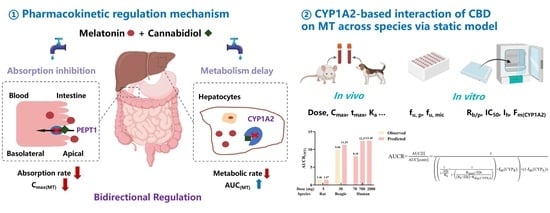
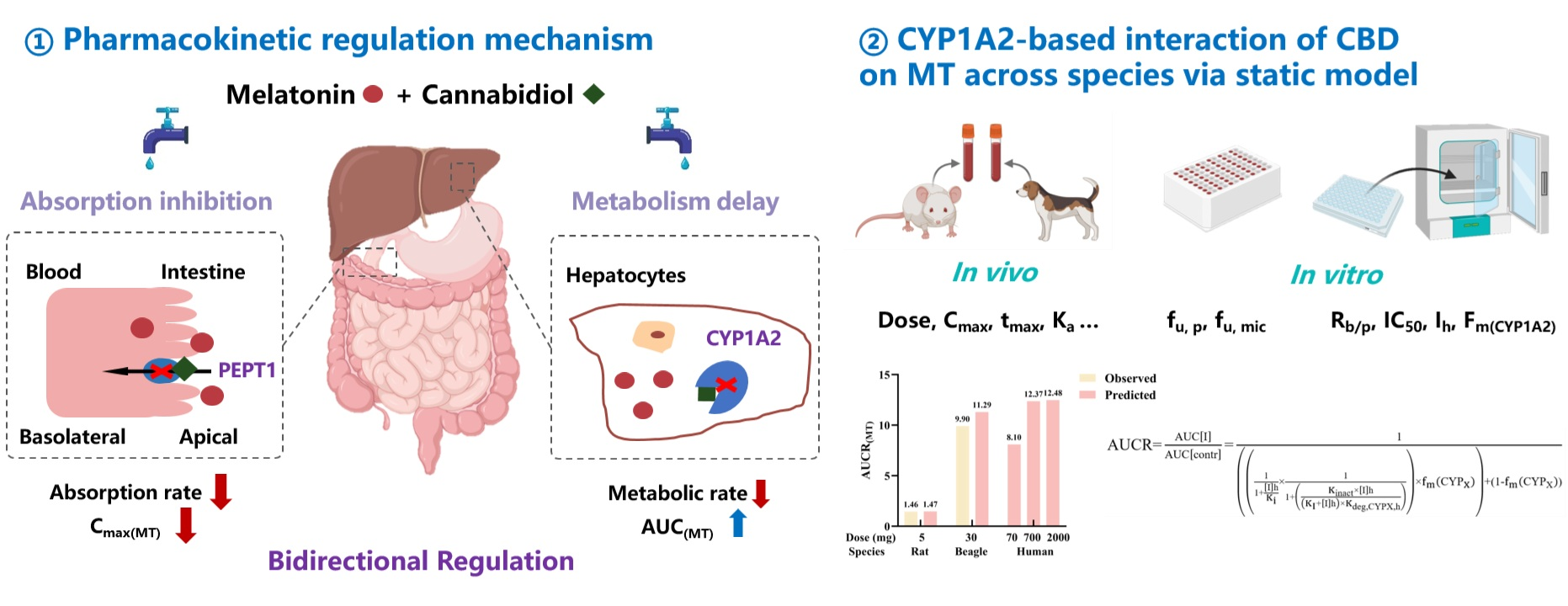
This study systematically investigates the pharmacokinetic interactions and underlying mechanisms of CBD and MT during co-administration. It is the first to demonstrate that CBD sustains more stable plasma concentrations of MT after oral dosing via a dual mechanism: concurrent inhibition of PEPT1-mediated active intestinal absorption of MT and CYP1A2-dependent hepatic metabolic degradation of MT. In contrast, MT has negligible impact on CBD’s pharmacokinetic profile.
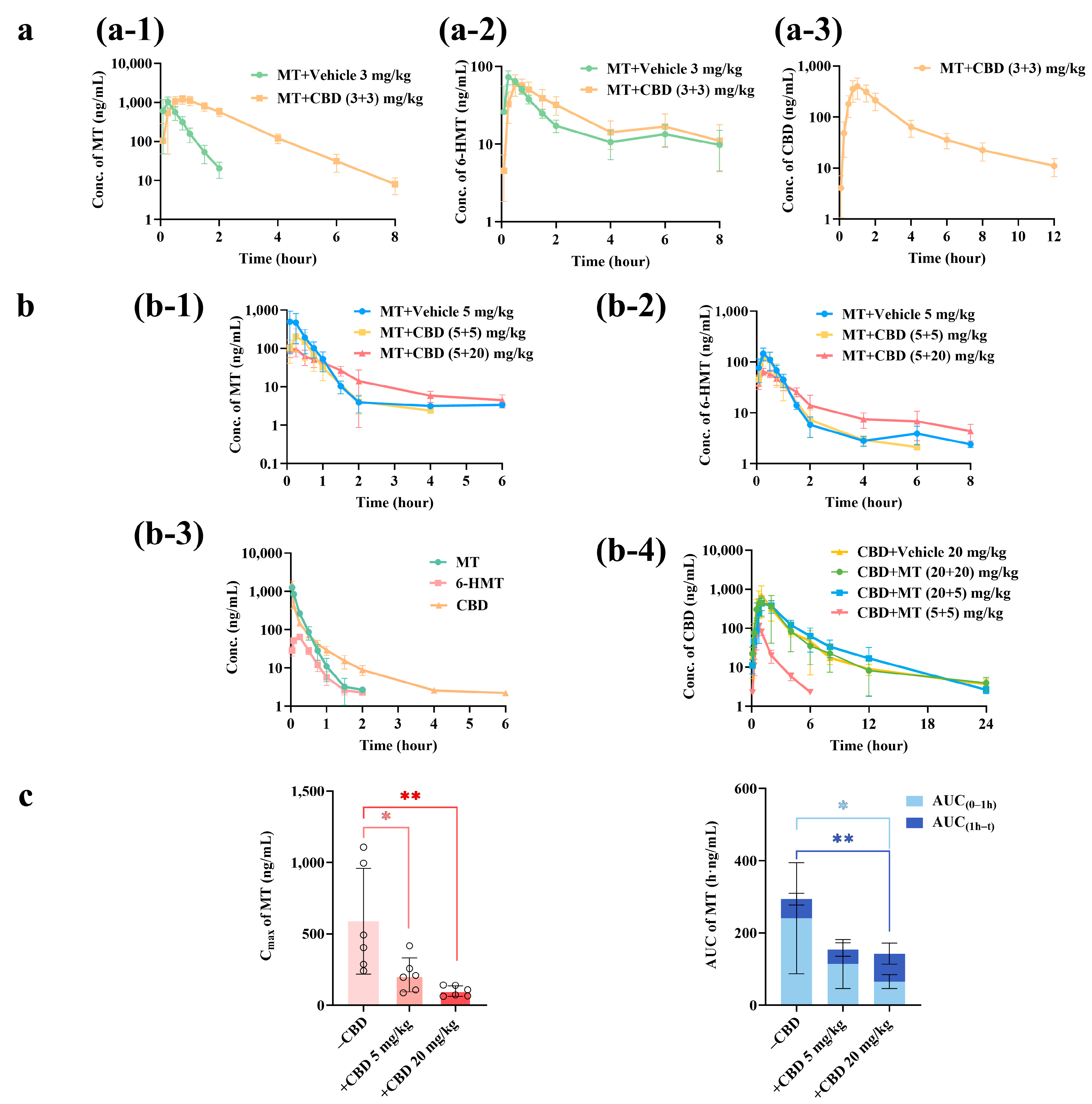
First, in the pharmacokinetic studies in rats and beagles, MT displayed consistent profiles of rapid absorption and rapid elimination across both species-a feature that may contribute to MT’s ability to facilitate sleep initiation yet limit its efficacy in sustaining sleep. Notably, notable interspecies differences emerged in the effects of CBD on MT pharmacokinetics during co-administration: in rats, as CBD dose increased, the Cmax of MT initially decreased in a dose-dependent manner, whereas exposure during the distribution and elimination phase increased with the CBD dose. Although MT’s total exposure was reduced (declining to 45% at the high CBD dose), plasma concentrations remained more stable overall, and the MRT was prolonged (increased to 1.98-fold at the high CBD dose). In contrast, in beagles, co-administration of CBD increased the Cmax of MT (up to 1.3-fold at the high CBD dose) and markedly enhanced MT’s total exposure, with AUC increasing to 4.2-fold.
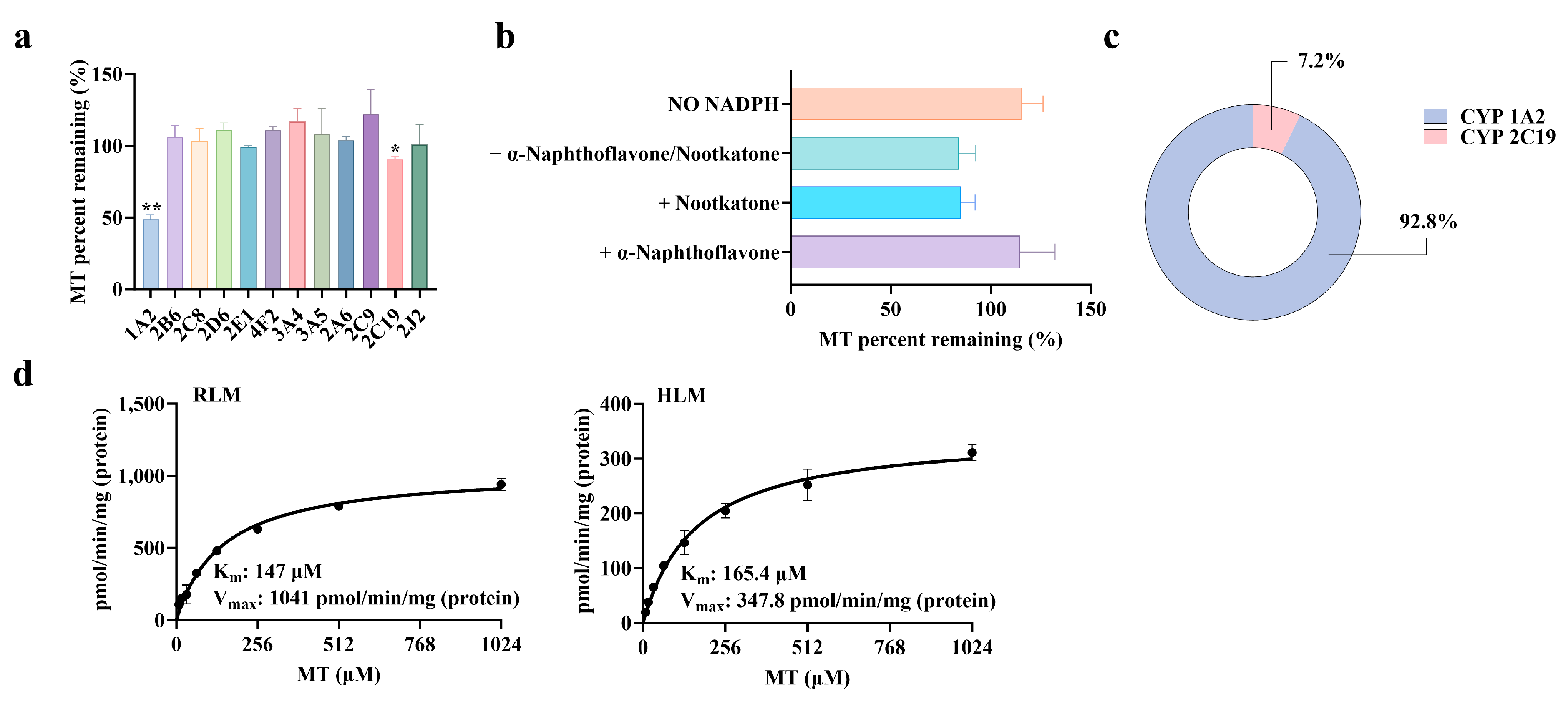
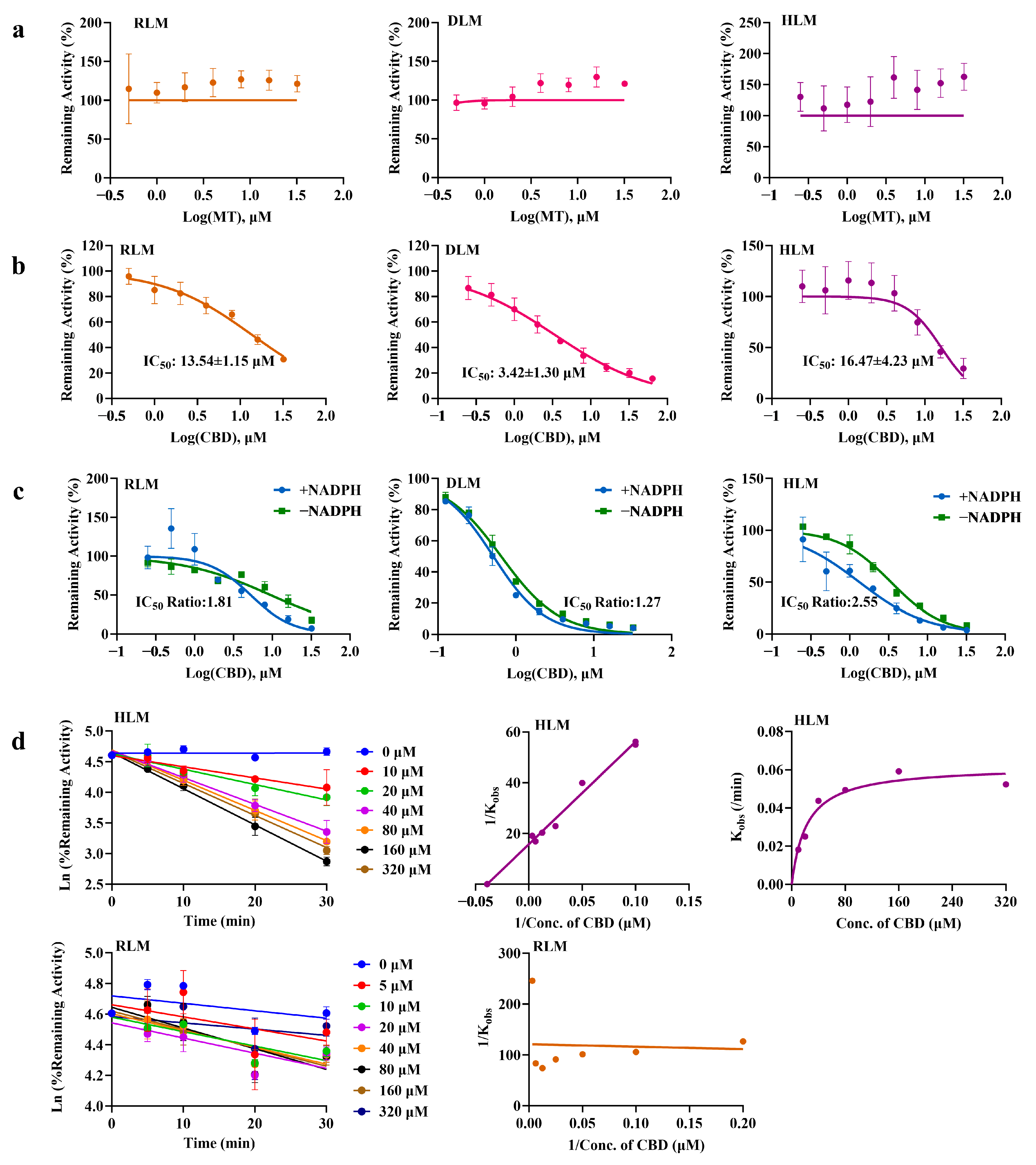
To investigate the mechanisms underlying CBD-induced alterations in MT pharmacokinetic properties and the associated interspecies differences, a series of in vitro experiments was conducted. First, in the metabolic enzyme phenotyping assay, we confirmed that CYP1A2 is the primary metabolic enzyme mediating MT 6-hydroxylation, with a quantified metabolic contribution ratio of 92.8%. In hepatic microsomal enzyme kinetic experiments, although the Km value for the MT 6-hydroxylation was comparable between rat and human hepatic microsomes, the maximum reaction rate (Vmax) in rats was significantly higher than that in humans, which explains the rapid elimination profile of MT in rats. Second, the inhibitory effect of CBD on MT metabolism was compared in hepatic microsomes from different species. Although CBD has been confirmed to inhibit CYP1A2, its inhibitory effect on MT metabolism has not been previously reported. In beagle hepatic microsomes, CBD exerted a relatively strong competitive inhibitory effect on MT (IC50 = 3.36 μM), whereas its inhibitory effect was weaker in other species (13.54–36.45 μM). Further pre-incubation experiments revealed that the inhibitory effect of CBD on MT 6-hydroxylation exhibited time-dependent characteristics only in human hepatic microsomes, manifesting as mechanism-based irreversible inhibition (KI = 25.63 μM, Kinact = 0.063/min), while no such effect was observed in other species. These interspecies differences in CBD-induced inhibition of MT metabolism, observed in rat and beagle dog hepatic microsomal experiments, can explain the discrepancy in their in vivo co-administration outcomes.
In rats, the complex alterations in MT pharmacokinetic profiles induced by CBD may involve regulation of MT intestinal absorption, in addition to CYP1A2 inhibition. Intestinal epithelial cells express a variety of transporters, primarily including uptake transporters that mediate efficient absorption of glucose, amino acids, and peptides, and efflux transporters that reduce the absorption of toxic substances. Given that CBD co-administration decreases MT absorption, it may inhibit MT’s active uptake. Considering the high expression of PEPT1 on the apical membrane of intestinal epithelial cells [
31,
32] and the amphiphilic properties of MT (which are similar to those of PEPT1 substrates), it was hypothesized that PEPT1 may serve as a key transporter mediating the intestinal absorption of MT. To verify this mechanism, the effect of CBD on MT uptake into cells was investigated in MDCK cells expressing PEPT1. PEPT1 is a transporter in intestinal epithelial cells that actively uptakes small peptides and certain drugs through an H
+-coupled mechanism [
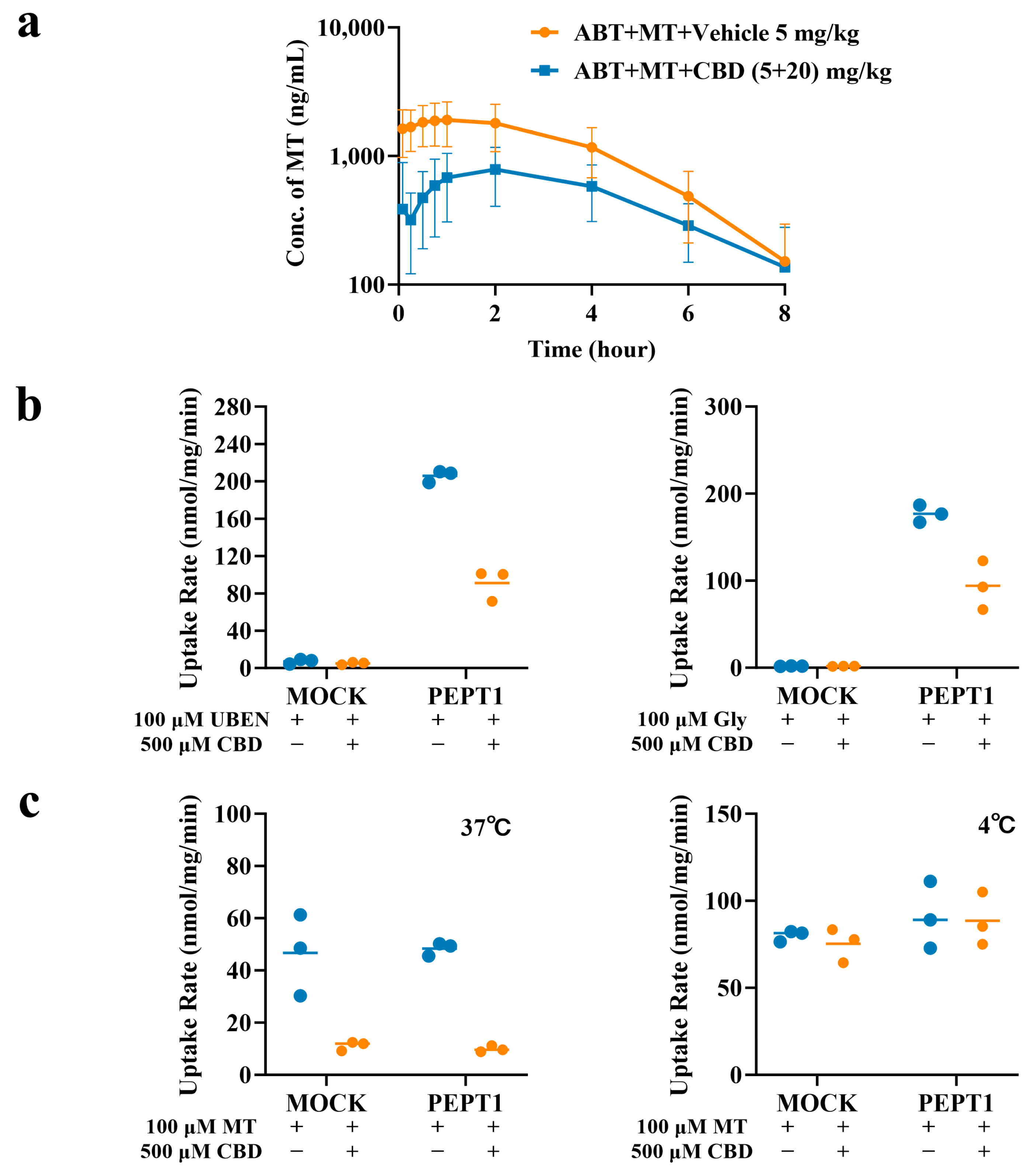
33]. Under acidic conditions, CBD exhibited an inhibitory effect on the active uptake of classical substrates (UBEN and Gly) via PEPT1 [
33,
34], indicating that CBD is a PEPT1 inhibitor. Further comparisons of CBD’s effects on MT uptake under 4 °C (inhibiting active transport) and 37 °C (permitting active transport) conditions confirmed that CBD can suppress PEPT1-mediated active uptake of MT. Literature reports indicate that PEPT1 transporters are present in the pineal gland of rats, with expression exhibiting distinct circadian rhythms, suggesting that endogenous melatonin is a substrate of PEPT [
35,
36]. In MOCK-MDCK cells, CBD also significantly reduced the uptake rate of MT. This phenomenon is presumably attributed to the fact that MDCK cells (derived from canine renal epithelial cells) may endogenously express PEPT2 (a transporter also involved in MT active transport), and CBD may exert inhibitory effects on PEPT2 as well. The specific mechanism underlying this observation requires further investigation. To further validate that CBD inhibits not only CYP1A2-mediated MT metabolism but also PEPT1-dependent MT uptake, a study was conducted in rats to evaluate CBD’s effect on MT following chemical inhibition of CYP enzymes. Post intragastric administration of ABT to rats, in vivo MT exposure increased by 33-fold when MT was administered alone, indicating that ABT potently inhibited CYP1A2 activity. Under this condition, co-administration of CBD with MT resulted in a downward shift of the overall plasma concentration–time curve, with C
max and AUC reduced by 2.3-fold and 2.29-fold, respectively. These results suggest that in the absence of CYP enzyme-mediated metabolic interference, CBD primarily decreases MT absorption rate and extent by inhibiting the intestinal PEPT1 transporter. Notably, studies have reported significant differences in the expression levels and functional activities of intestinal drug transporters between rodents and canines [
37]—a factor that may explain the interspecies differences in CBD’s regulatory effect on MT absorption.
Differences in the pharmacokinetic behaviors of CBD and MT co-administration between rats and beagle dogs, when integrated with in vitro metabolic enzyme inhibition data, reveal significant species-specific differences in the pharmacological effects of their co-administration. Consequently, pharmacokinetic-based DDI data derived from animal studies cannot be reliably extrapolated to humans. Furthermore, efficacy findings from animal models may also fail to predict outcomes in humans. Furthermore, given the inherent coupling of pharmacokinetics and pharmacodynamics (PK-PD), efficacy observations obtained from animal models may also be unable to accurately predict clinical outcomes in humans, particularly considering the species-dependent variations in both drug disposition (e.g., transporter/enzyme activity) and target-mediated responses identified in this study.
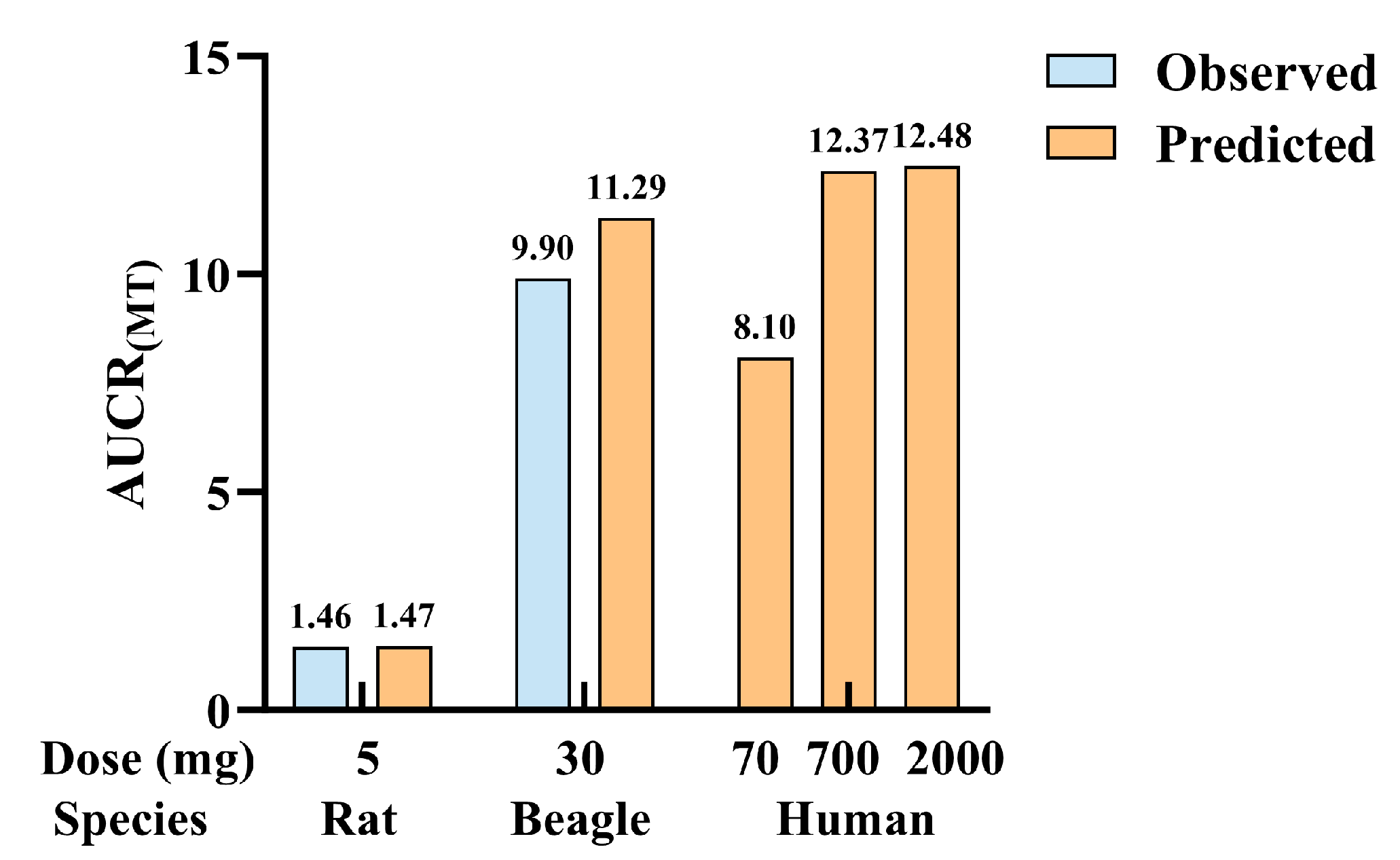
To preliminarily assess the potential in vivo DDI between CBD and MT in humans and its clinical relevance, quantitative in vitro–in vivo extrapolation (IVIVE) was performed using a static model. To improve the accuracy of IVIVE predictions, we determined cross-species parameters of CBD and MT, including R
b/p and f
up, to calculate the free CBD concentration at the liver inlet. Human-derived data were acquired from the literature [
30]. Given that CBD exerts a mixed mode of competitive and noncompetitive inhibition toward MT metabolism in human liver microsomes, both inhibition modes were integrated into the static prediction model. Considering the weak CYP1A2-mediated inhibitory effect of CBD on MT in rats, as well as the confounding effect of intestinal PEPT1 inhibition during the absorptive phase, we only quantified changes in MT exposure during the distribution–elimination phase. Static model predictions revealed that the inhibitory effect of CBD on MT metabolism in humans (expressed as AUCR) could reach 12.48-fold, a magnitude of effect with potential clinical relevance. Noting that the therapeutic plasma concentration of CBD in humans typically spans from 1 to 10 μM, our findings suggest that dosage adjustments of MT may provide a reference for dosage adjustment considerations in potential future clinical trials of CBD-MT combination therapy.
Despite the valuable findings of this study, several limitations should be acknowledged: First, the CBD doses employed in animal experiments may not fully encompass the clinically relevant concentration range, which could restrict the translational relevance of the observed in vivo DDI patterns. Second, the specific contribution of the PEPT1 transporter to MT’s intestinal absorptive process in humans, as well as its associated quantitative parameters (e.g., transport efficiency, fraction absorbed via PEPT1), has not been directly verified, limiting the accuracy of extrapolating intestinal absorption regulation mechanisms to the human population. Additionally, this study only investigated the impact of CBD on the pharmacokinetics profiles of MT; given that CBD itself exhibits sleep-regulating properties, the direct influence of their co-administration on MT’s pharmacodynamic effects (e.g., sleep initiation/sustainment efficacy) remains to be further elucidated.
Future research could be expanded in the following directions: Using PEPT1 gene knockout animal models to directly validate the role of this transporter in MT’s absorption, thereby quantifying its contribution to overall MT bioavailability. Exploring the regulatory effect of long-term CBD administration on the pharmacokinetics of MT, as chronic exposure may induce adaptive changes in metabolic enzymes (e.g., CYP1A2) or transporters (e.g., PEPT1) that differ from acute co-administration. Conducting clinical studies to evaluate the pharmacokinetic characteristics of the CBD-MT combination regimen in humans, with simultaneous monitoring of PD endpoints (e.g., sleep latency, slow-wave sleep duration), was done to establish PK-PD correlations and guide rational dosage regimens.
In summary, this study offers both distinct theoretical insights and practical implications. At the theoretical level, it is the first to systematically elucidate the key role of the PEPT1 transporter in MT’s intestinal absorption while defining the scientific mechanism by which CBD regulates MT pharmacokinetics via dual pathways: concurrent inhibition of PEPT1-mediated intestinal absorption and CYP1A2-dependent metabolic clearance of MT. This finding addresses a critical gap in understanding regulatory crosstalk in MT disposition by CBD, providing novel perspectives on pharmacokinetic-based drug–drug interactions between CBD and MT. Practically, the results establish a key pharmacokinetic rationale for the development of CBD-MT combination formulations. Given MT’s inherent PK limitations (e.g., rapid absorption and elimination), the study suggests that optimizing the CBD-MT compatibility ratio may mitigate such defects—for instance, by prolonging MT’s mean residence time (MRT) and stabilizing its plasma concentrations, thereby laying a foundation for improving the clinical efficacy and safety of the combination regimen.
4. Materials and Methods
4.1. Materials
The FRESCO21 centrifuge, multifunctional microplate reader, and Pierce® BCA Protein Quantification Kit were purchased from Thermo Fisher Scientific (Waltham, MA, USA). The T-214 electronic analytical balance was purchased from Denver Instrument Co., Ltd. (Denver, CO, USA). The LC-MS/MS-8060 triple quadrupole liquid chromatography-tandem mass spectrometer was from Shimadzu Corporation (Tokyo, Japan). The homogenizer and controlled constant temperature shaking incubator were purchased from IKA-Werke GmbH & Co. KG (Staufen, Germany). The microscope was purchased from Nikon Corporation (Tokyo, Japan). The CO2 incubator was purchased from Shanghai Puhexi Health Medical Devices Co., Ltd. (Shanghai, China).
Melatonin (≥98%) and Hank’s buffer were purchased from Beijing Solarbio Science & Technology Co., Ltd. (Beijing, China). Melatonin-D4 and MES buffer were obtained from Shanghai Macklin Biochemical Technology Co., Ltd. (Shanghai, China). 6-Hydroxymelatonin (≥98%) was purchased from Shanghai Rhawn Chemical Technology Co., Ltd. (Shanghai, China). Cannabidiol (≥98%) was acquired from Wuhan Zhongbiao Technology Co., Ltd. (Wuhan, China). Ubenimex was purchased from Shanghai Jizhi Biochemical Technology Co., Ltd. (Shanghai, China). Gly-Sar and castor oil were obtained from Shanghai Yuanye Bio-Technology Co., Ltd. (Shanghai, China). 1-Aminobenzotriazole was purchased from Beijing Wokai Biotechnology Co., Ltd. (Beijing, China). DMSO, bovine serum albumin, and PBS buffer were obtained from Sigma-Aldrich (St. Louis, MO, USA). Formic acid was purchased from Beijing J&K Scientific Co., Ltd. (Beijing, China). Ammonium acetate was acquired from Sinopharm Group Co., Ltd. (Shanghai, China). Purified water was purchased from Hangzhou Wahaha Group Co., Ltd. (Hangzhou, China). Penicillin-streptomycin, DMEM medium, and fetal bovine serum were obtained from Thermo Fisher Scientific (Waltham, MA, USA). Liver microsomes were purchased from XenoTech (Lenexa, KS, USA). Recombinant CYP enzymes were acquired from Bioreclamation-IVT Holdings (Wilmington, DE, USA). NADPH was purchased from Beijing Dingguo Changsheng Biotechnology Co., Ltd. (Beijing, China). α-Naphthoflavone and nootkatone were obtained from Tokyo Chemical Industry Co., Ltd. (Tokyo, Japan). Phenacetin, bupropion, and coumarin were purchased from Selleck Chemicals (Houston, TX, USA). Amodiaquine, S-mephenytoin, and astemizole were acquired from Toronto Research Chemicals (Toronto, ON, Canada). Dextromethorphan and ketoconazole were purchased from USP (Rockville, MD, USA).
The MDCK and MOCK cell lines stably overexpressing PEPT1 were transfected by Hanheng Biotechnology Co., Ltd. (Shanghai, China). SPF-grade Sprague-Dawley (SD) rats (weighing 200–220 g) were obtained from Beijing Vital River Laboratory Animal Technology Co., Ltd. (Beijing, China); beagles were sourced from Beijing Mars Biotechnology Co., Ltd. (Beijing, China). The experimental protocol was approved by the Animal Care and Use Committee of Academy of Military Medical Sciences (IACUC-DWZX-2024-505).
4.2. Pharmacokinetics of CBD and MT in Beagle Dogs
Twelve male healthy adult beagles (weighing 10 ± 2 kg) were randomly divided into two groups. They were given a single intragastric administration of 3 mg/kg MT alone and a combination of MT and CBD at (3 + 3) mg/kg [
17], respectively. The drugs were dissolved in a physiological saline solution containing 5% castor oil, with an administration volume of 2 mL/kg. Blood samples were collected at the time points of pre-administration and 0.083, 0.25, 0.5, 0.75, 1, 1.5, 2, 4, 6, 8, and 12 h post-administration. Approximately 100 μL of venous blood were collected into heparin sodium anticoagulant tubes and placed on ice. Within 1 h, the whole blood samples were centrifuged at 2500×
g for 10 min at 4 °C, and the plasma was collected and stored in a −40 °C refrigerator for subsequent detection. The established LC-MS/MS method was used for quantitative analysis of MT, 6-HMT, and CBD in samples [
38].
4.3. Pharmacokinetics of CBD and MT in Rats
Twenty-four male Sprague-Dawley (SD) rats (weighing 200 ± 20 g) were randomly divided into four groups, which were administered a single dose as follows: MT 1 mg/kg via intravenous injection, MT 5 mg/kg, MT + CBD (5 + 5) mg/kg, and MT + CBD (5 + 20) mg/kg via intragastric administration [
17]. The drugs were dissolved in the same manner as described previously, with an administration volume of 5 mL/kg for all groups. Blood samples were collected at the time points of pre-administration and 0.033 (only for the intravenous administration group), 0.083, 0.25, 0.5, 0.75, 1, 1.5, 2, 4, 6, 8, and 12 h post-administration. Approximately 50 μL of venous blood were collected into heparin sodium anticoagulant tubes and placed on ice. Within 1 h, the whole blood samples were centrifuged at 2500×
g for 10 min at 4 °C, and the plasma was harvested and stored in a −40 °C refrigerator for subsequent analysis.
4.4. Effect of CBD on the Pharmacokinetics of MT After Co-Administration with ABT
Twelve SD rats were randomly divided into two groups. Both groups were first given an intragastric administration of 1-aminobenzotriazole (ABT) at a dose of 200 mg/kg. Two hours later, they were administered an intragastric dose of MT 5 mg/kg and MT + CBD (5 + 20) mg/kg, respectively. ABT was dissolved in physiological saline, while MT and CBD were dissolved in physiological saline containing 5% castor oil. The administration volume for all groups was 5 mL/kg. Blood samples were collected at the time points before MT administration and at 0.083, 0.25, 0.5, 0.75, 1, 2, 4, 6, and 8 h after MT administration. Approximately 50 μL of venous blood were collected into heparin sodium anticoagulant tubes and placed on ice. The sample processing and storage methods were the same as described previously.
4.5. Inhibition of PEPT1-Mediated MT Uptake by CBD
MDCK-PEPT1 cells were seeded into 24-well plates at a density of approximately 5 × 10
5 cells per well. When the cell confluency reached 60–70%, the culture medium was aspirated, and the cells were rinsed twice with HBSS pre-warmed to 37 °C. After removing the liquid in the wells, each well was filled with MES buffer (pH: 6.3) or MES buffer containing CBD, followed by pre-incubation at 37 °C for 30 min. The buffer was then aspirated, and MES buffer containing positive substrates (100 μM UBEN or 100 μM Gly) [
34,
39], MES buffer containing 100 μM MT, and MES buffer containing CBD (100 μM UBEN + 500 μM CBD, 100 μM Gly + 500 μM CBD, 100 μM MT + 500 μM CBD) were added, respectively. After incubation at 37 °C for 10 min, the buffer was aspirated, and ice-cold HBSS was immediately added to terminate the reaction, followed by rinsing three times. After drying the residual liquid, 200 μL of pure water were added to each well, and the cells were lysed by repeated freezing–thawing in liquid nitrogen three times. The cell lysates were collected, and the protein content was determined by the BCA method. After protein precipitation, the concentrations of UBEN, Gly, and MT were detected by LC-MS/MS. Meanwhile, a group of experiments for MT uptake under 4 °C conditions was designed, with other conditions consistent with those of the 37 °C incubation group.
4.6. Determination of Whole Blood/Plasma Ratio and Protein Binding
Fresh whole blood from different species (rat, beagle dog, and human) was pre-incubated at 37 °C for 5 min, then spiked with working solutions of CBD or MT to a final concentration of 1 μM (with organic solvent content less than 0.1%). After incubation for 20 min, a portion of the whole blood was centrifuged at 2500× g for 10 min at 4 °C to separate plasma; another portion of the whole blood was subjected to three cycles of freeze–thawing and ultrasonicated for 10 min to disrupt cells. Equal volumes of plasma and whole blood samples were added to the whole blood and plasma specimens, respectively, followed by protein precipitation with acetonitrile containing an internal standard (IS). A rapid equilibrium dialysis (RED) device was used to determine the protein binding rates of CBD and MT with liver microsomes from different species, as well as rat plasma, beagle dog plasma, and human plasma. The RED inserts were placed in the matching incubation plate: 200 µL of drug-containing matrix were added to the sample chamber, and 400 µL of PBS buffer (pH: 7.4) were added to the buffer chamber. After incubation in a constant-temperature shaking incubator for 6 h (37 °C), samples from the sample chamber and buffer chamber were diluted 1:1 with PBS or matrix, respectively, and proteins were precipitated with acetonitrile containing IS.
4.7. CYP Phenotyping of MT
Recombinant enzyme method [
40]: Working solution containing MT was added to humanized recombinant enzymes expressing different subtypes (rCYP1A2, 2A6, 3A4, 3A5, 2B6, 2C8, 2C9, 2C19, 2D6, 2E1, 2J2, 4F2) and pre-incubated at 37 °C for 5 min, followed by the addition of pre-incubated NADPH to initiate the reaction. The incubation system contained 100 mM PBS, 5 mM MgCl
2, rCYP at a final concentration of 20 pmol/mL, 1 mM NADPH, and 1 μM MT (with DMSO content < 0.1% and organic solvent content < 1% in the system) [
41]. At 0, 5, 15, 30, and 60 min, 20 μL of the incubation solution were withdrawn and added to 180 μL of ice-cold acetonitrile (containing 10 ng/mL MT-D4 as internal standard) to terminate the reaction. All samples were prepared in triplicate, with simultaneous setup of negative control groups (empty vector) and positive control groups. The positive substrates included: phenacetin, coumarin, midazolam, testosterone, bupropion, amodiaquine, diclofenac, S-mephenytoin, dextromethorphan, chlorzoxazone, astemizole, and lauric acid.
Chemical inhibitor method [
42,
43]: Based on the results of the recombinant enzyme assay, positive inhibitors of CYP1A2 and CYP2C19 were used for validation. Working solutions of MT and α-naphthoflavone (CYP1A2 inhibitor) or nootkatone (CYP2C19 inhibitor) were added to the human liver microsome solution and pre-incubated at 37 °C for 5 min, followed by the addition of pre-incubated NADPH to initiate the reaction. The incubation system contained 100 mM PBS, 5 mM MgCl
2, liver microsomes at 0.5 mg/mL, 1 mM NADPH, 1 μM MT, and 1 μM α-naphthoflavone or 300 μM nootkatone (with DMSO content < 0.1% and organic solvent content < 1%). At 0, 5, 15, and 30 min of incubation, 20 μL of the incubation mixture were withdrawn and added to 180 μL of ice-cold acetonitrile (containing 10 ng/mL MT-D4) to terminate the reaction. All samples were prepared in triplicate, with simultaneous setup of negative controls (without NADPH) and positive control groups.
4.8. Enzymatic Kinetics Study on 6-Hydroxylation of Melatonin
Serial concentrations of MT working solutions were added to human or rat liver microsome working solutions and pre-incubated at 37 °C for 5 min, followed by the addition of co-preincubated NADPH working solution. The final concentrations of MT in the incubation system were 8, 16, 32, 64, 128, 256, 512, and 1024 μM, with a final NADPH concentration of 1 mM and a liver microsomal protein concentration of 0.5 mg/mL. After 15 min of incubation, 20 μL aliquots of the incubation mixture were transferred to 180 μL of ice-cold acetonitrile (containing internal standard MT-D4) to terminate the reaction. The content of 6-HMT was determined by LC-MS/MS.
4.9. Investigation on the In Vitro Metabolic Effect of MT on CBD
Liver microsomes (human, rat, and beagle) containing working solutions of MT and CBD were pre-incubated at 37 °C for 5 min. The reaction was initiated by adding pre-incubated NADPH. The system contained liver microsomes at 0.5 mg/mL and NADPH at 1 mM (both diluted in PBS containing MgCl2). For human liver microsomes, MT concentrations were 0, 0.25, 0.5, 1, 2, 4, 8, 16, and 32 μM; for rat and beagle liver microsomes, MT concentrations were 0, 0.5, 1, 2, 4, 8, 16, and 32 μM (DMSO content < 0.1%, organic solvent content < 1%). The concentration of CBD was 1 μM. After incubation (5 min for rat liver microsomes, 15 min for human and beagle liver microsomes), 20 μL of the incubation mixture were added to 180 μL of ice-cold acetonitrile (containing 10 ng/mL MT-D4) to terminate the reaction. All samples were prepared in triplicate. The content of CBD was determined by LC-MS/MS.
4.10. Competitive Inhibition of CBD on MT 6-Hydroxylation
Liver microsomes (human, rat, and beagle) containing CBD and MT at various concentrations were pre-incubated at 37 °C for 5 min, followed by the addition of pre-incubated NADPH to initiate the reaction. The final incubation system contained 100 mM PBS, 5 mM MgCl2, 0.5 mg/mL liver microsomal protein, and 1 mM NADPH. The concentrations of CBD in rat and human liver microsomes were 0, 0.25, 0.5, 1, 2, 4, 8, 16, and 32 μM, respectively, while those in beagle liver microsomes were 0, 0.25, 0.5, 1, 2, 4, 8, 16, 32, and 64 μM (with DMSO content < 0.1% and total organic solvent content < 1% in the system). The final concentration of MT was 1 μM. After 30 min of incubation for all species, 20 μL of each sample were mixed with 180 μL of ice-cold acetonitrile (containing 10 ng/mL MT-D4) to terminate the reaction. All samples were prepared in triplicate, and the content of 6-HMT was determined by LC-MS/MS.
4.11. Time-Dependent Inhibition of CBD on MT 6-Hydroxylation Using the IC50 Shift Method
The time-dependent inhibitory effect of CBD on the 6-hydroxylation of MT was investigated using the IC
50 shift method [
44,
45]. Different concentrations of CBD were pre-incubated with human, rat, or beagle dog liver microsomes at 37 °C for 5 min. The reaction was initiated by adding pre-warmed NADPH (control groups lacked NADPH). The final incubation mixture contained 100 mM PBS, 5 mM MgCl
2, liver microsomes (0.5 mg/mL), 1 mM NADPH, and 0.2% BSA. The CBD concentrations in rat and human liver microsomal incubations were 0, 0.25, 0.5, 1, 2, 4, 8, 16, and 32 μM. Concentrations in beagle dog microsomal incubations were 0, 0.125, 0.25, 0.5, 1, 2, 4, 8, 16, and 32 μM. After a 30 min incubation, the MT solution was added to achieve a final concentration of 2 μM. After a further 30 min incubation, 20 μL of aliquots were removed and added to 180 μL of ice-cold acetonitrile (containing 10 ng/mL MT-D4 as internal standard) to terminate the reaction by vortexing for 1 min. All samples were prepared in triplicate. The concentration of 6-HMT was quantified using LC-MS/MS.
4.12. Mechanism-Based Inhibition of CBD on MT 6-Hydroxylation
Different concentrations of CBD were added to human and rat liver microsome incubation solutions, followed by pre-incubation at 37 °C for 5 min. The reaction was initiated by adding the NADPH working solution that had also been pre-incubated for 5 min. The primary incubation system contained 100 mM PBS, 5 mM MgCl2, 1 mg/mL liver microsomal protein, 1 mM NADPH, 0.2% BSA, and CBD at final concentrations of 0, 10, 20, 40, 80, 160, and 320 μM (with DMSO content < 0.1% and total organic solvent content < 1% in the system). After pre-incubation for different durations (0, 5, 10, 20, 30 min), 10 μL of the incubation mixture were transferred to a secondary incubation system containing 148 μL PBS and 2 μL MT working solution (final MT concentration: 200 μM). An additional 40 μL of NADPH were added, and the mixture was incubated for 30 min. Subsequently, 20 μL of the sample were mixed with 180 μL of ice-cold acetonitrile (containing 10 ng/mL MT-D4) and vortexed for 1 min to terminate the reaction. All samples were prepared in triplicate, and the content of 6-HMT was determined by LC-MS/MS.
4.13. Project the Magnitude of CBD on MT In Vivo Exposure Based on Static Model
The inhibition intensity of CBD on the in vivo metabolism of MT, expressed as AUCR, is defined as the ratio of AUC[I] (AUC when co-administered with the inhibitor) to AUC[contr] (AUC without the inhibitor). A mathematical model describing the mixed inhibition (competitive and irreversible inhibition) of hepatic metabolic enzymes was used to predict the potential for DDI between CBD and MT. AUCR was calculated according to the following formula [
45]:
Wherein, in Formula (1), C
inlet,max,u represents the calculation method for the free concentration of CBD at the liver inlet after oral administration of CBD; the calculation result is substituted into [I]h in Formula (2). For human data [
30], the value of 3.55 μM after oral administration of 2000 mg CBD reported in the literature was adopted. K
a is the oral absorption rate of CBD; it is assumed that the absorption rate is equal to the elimination rate at t
max, and 90% of the absorption is completed after five absorption half-lives, so K
a is 0.693/(t
max/5) [
46]. F
a is the absorption fraction of CBD after oral administration, and F
g is the fraction of CBD escaping first-pass intestinal metabolism. In Formula (2), K
deg,CYPX,h represents the degradation rate of CYP1A2 in the liver, with the value of 0.018/h reported in the literature [
28,
47]. f
m(CYP1A2) is the contribution fraction of CYP1A2-mediated metabolism of MT. f
u,p is the free fraction of CBD in plasma, R
b/p is the whole blood-to-plasma partition ratio, and Q
h is the hepatic blood flow. All parameters used for DDI prediction are listed in
Table 6.
To exclude interference from PEPT1 during the absorption phase and more accurately predict the role of CYP enzymes, the observed AUCR values for MT exposure during the elimination phase in animals were calculated using dog AUCR(0.75h-t) and the rat AUCR(1h-t). These values were used to validate the model, and finally, the intensity of DDI induced by CBD on MT in humans was predicted.
4.14. LC-MS/MS Methodology for the Quantitation of CBD, MT, and 6-HMT
In this research, samples were obtained from in vivo blood collections of different species, in vitro cell experiments, and incubation experiments. The steps for processing different matrix samples are as follows: extract 20 μL of the sample and then incorporate 180 μL of acetonitrile solution containing MT-D4 at a concentration of 10 ng/mL. Subsequently, the resultant mixture was vortexed for 1 minute and centrifuged at 4 °C for 10 min at 18,800×
g. The supernatant was then collected for further LC-MS/MS analysis to determine the concentrations of CBD, MT, and 6-HMT [
38]. The calibration curves for CBD, MT, and 6-HMT were linear over the concentration range of 2 to 1000 ng/mL. The lowest limit of quantification (LLOQ) was established at 2 ng/mL. All calibration curves exhibited excellent linearity with correlation coefficients (r
2) ≥ 0.995, meeting the bioanalytical validation requirements. Methodological validation data are provided in
Supplementary Materials Figures S1 and S2 and Tables S1–S6.
Determination of CBD, MT, and 6-HMT in biological samples by high-performance liquid chromatography (HPLC-30AD) was coupled with a tandem triple quadrupole mass spectrometer (Shimadzu 8060). Kromasil 100-5-C8 (2.1 × 50 mm) was selected for the separation of samples. The mobile phase consisted of solvent A (water with 0.1% formic acid and 5 mM ammonium acetate) and solvent B (methanol with 0.1% formic acid). For CBD, MT, and 6-HMT, chromatographic separation was achieved on a Kromasil 100-5-C8 (2.1 × 50 mm). The column temperature was set at 40 °C. The two eluents were 0.1% formic acid and 5 mM ammonium acetate in water (A) and 0.1% formic acid in methanol (B). The mobile phase was delivered at a flow rate of 0.5 mL/min using a gradient of A and B as follows: 0.0–0.5 min: 5% B; 0.5–1.5 min: 5–95% B; 1.5–3.0 min: 95% B; 3.0–3.1 min: 95–5% B; 3.1–4.0 min: 5% B. CBD, MT, 6-HMT, and internal standard MT-D4 were detected by positive electrospray ionization (ESI) ion source with multiple reaction monitoring (MRM) transitions of m/z 315.15 to 193.10, m/z 233.15 to 174.10, m/z 249.15 to 158.14, and m/z 237.20 to 178.20, respectively. The main mass spectrometry detection parameters were: dry gas 10 L/min, heated gas 10 L/min, collision gas 270 kPa, ion source temperature 300 °C, desolvation temperature 250 °C, and heating module temperature 400 °C.
4.15. Data Analysis
Pharmacokinetic parameters: GraphPad Prism 10.1 software was utilized to draw the curves. Noncompartmental analysis was selected to calculate the major PK parameters, including clearance (CL), volume (V), half-life (t
1/2), peak concentration (C
max), and area under the curve (AUC), using WinNonlin 8.1. Bioavailability (F) was calculated following Formula (3).
SPSS 29.0.2.0 software was used to perform unpaired t-tests on the pharmacokinetic parameters (including Cmax and AUC) of MT in the MT alone group and the MT combined with CBD group, aiming to analyze the effect of CBD on the in vivo exposure of MT and 6-HMT. Similarly, the effect of MT on the pharmacokinetics of CBD was statistically analyzed using the same method. A p-value < 0.05 was considered statistically significant, and p < 0.01 was regarded as statistically highly significant.
Cell uptake assessment: The concentration of the analyte in cells was corrected using the protein concentration of the cell lysate in each well.
The uptake rate (U, pmol/mg/min) of the compound was calculated following Formula (5).
where C
lysate is the amount of drug in the cell lysate (ng); P is cellular protein content (mg); t is incubation time (min).
The uptake ratio of the compound was calculated following Formula (6)
where U
MOCK is the uptake rate in MOCK-MDCK cells (pmol/mg/min).
The inhibition ratio was calculated following Formula (7)
According to the ICH M12 Drug Interaction Studies, when the uptake ratio (UR) is ≥2 and the inhibition ratio by a selective inhibitor is ≥50%, it indicates that the compound is a substrate of the transporter.
Enzymatic kinetic parameters: The enzymatic kinetic parameters (Km and Vmax) of MT in rat or human liver microsomes were calculated using the Enzyme-Menten module of Graphpad Prism 10.1 software.
Competitive inhibition and time-dependent inhibition assays: The production of 6-HMT without inhibitors was set as 100%. The 6-HMT production at different CBD concentrations was compared with that in the zero-concentration group. With the residual CYP enzyme activity as the vertical axis and the logarithm of CBD concentration as the horizontal axis, GraphPad Prism 10.1 was used to plot the 6-HMT production rate curves for different CBD concentration groups, and the IC50 values were calculated.
Irreversible inhibition assays: A semi-logarithmic curve was generated by plotting residual enzyme activity against pre-incubation time. The observed CYP enzyme inactivation rate (K
obs) was derived from the initial slope of the linear regression. The Lineweaver-Burk double reciprocal curve (1/K
obs vs. 1/I) described by Formula (8) was used to determine K
I and K
inact: K
inact was estimated from the reciprocal of the Y-intercept, and K
I was obtained from the negative reciprocal of the X-intercept.




 ,
,