Development of a Dual Photoacoustic–Ultrasound Imaging System: Current Status and Future Perspectives


Abstract
1. Introduction
2. PAUS Principle and Signal Processing
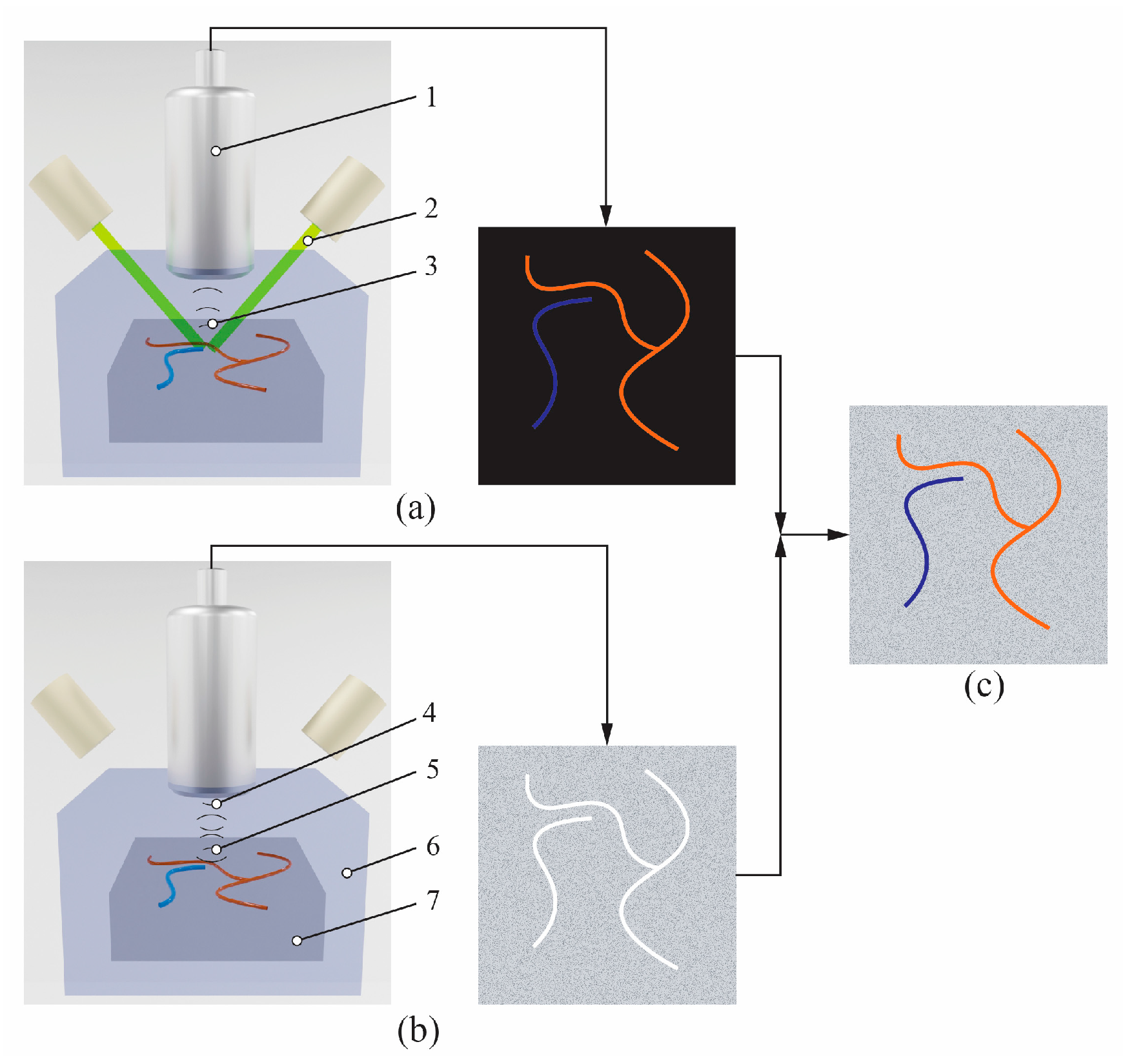
2.1. PAUS Principle
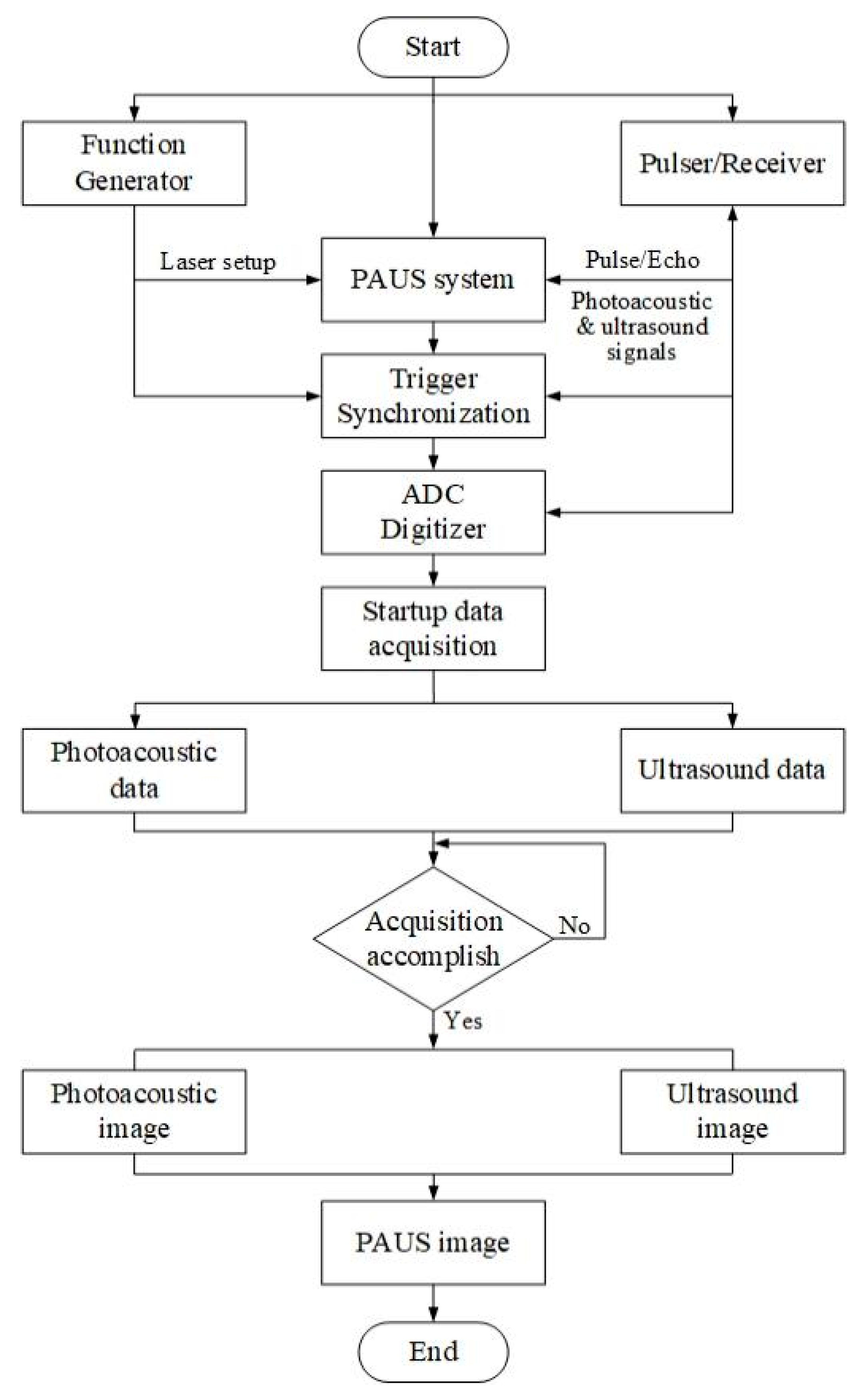
2.2. PAUS Signal Processing
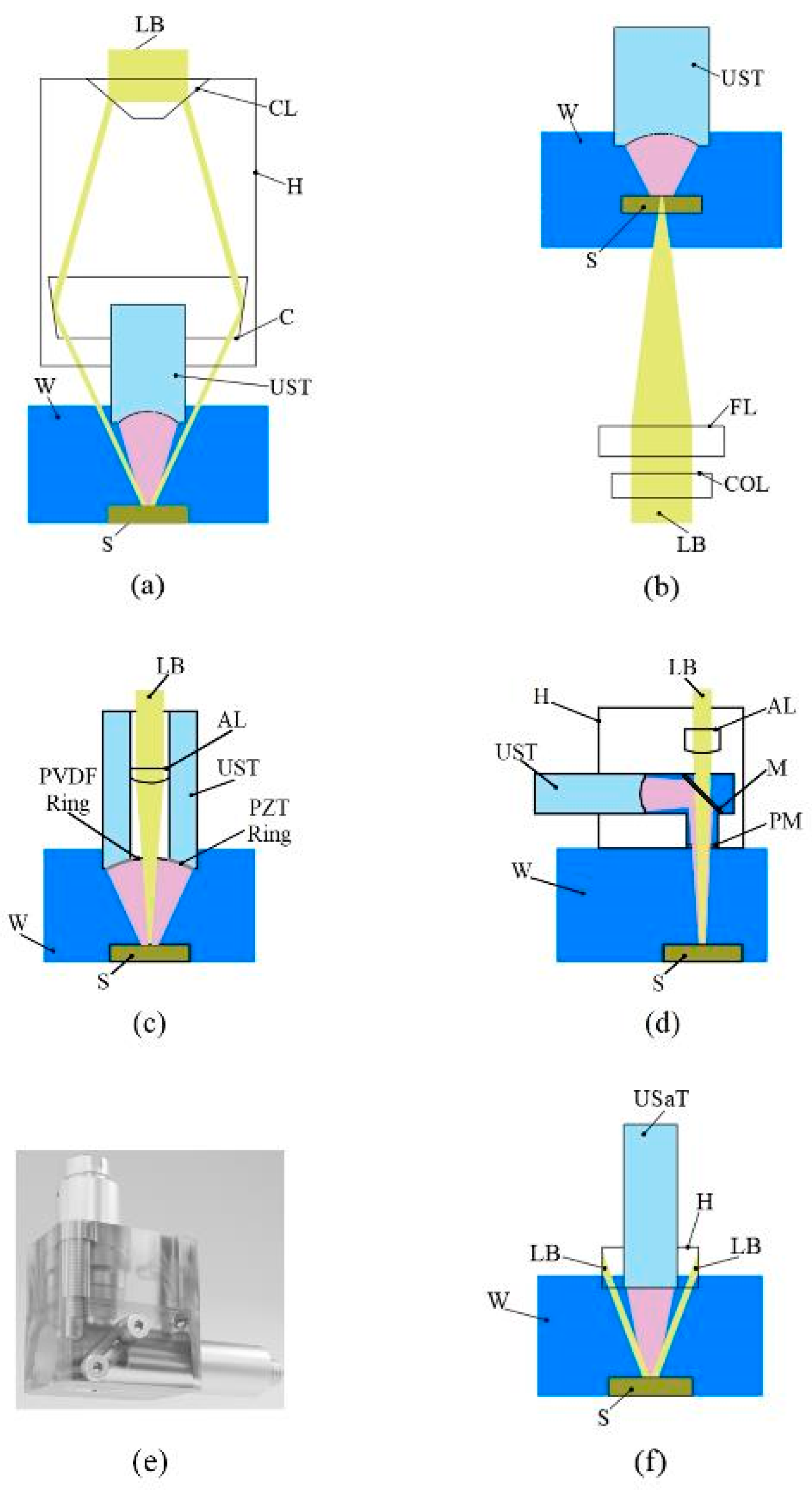
3. Design of PAUS Probe
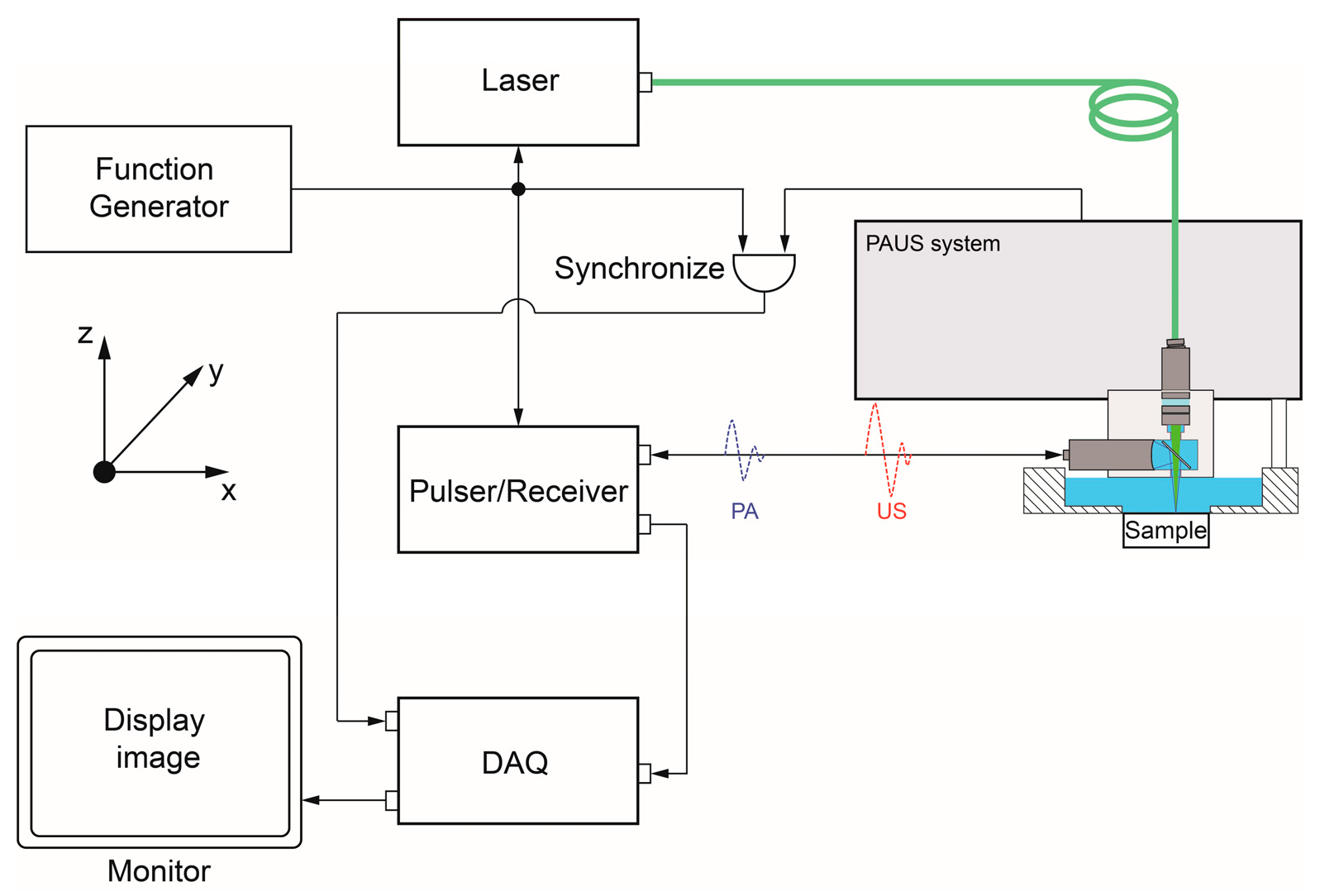
4. Design the Scanning Mechanism of the PAUS System
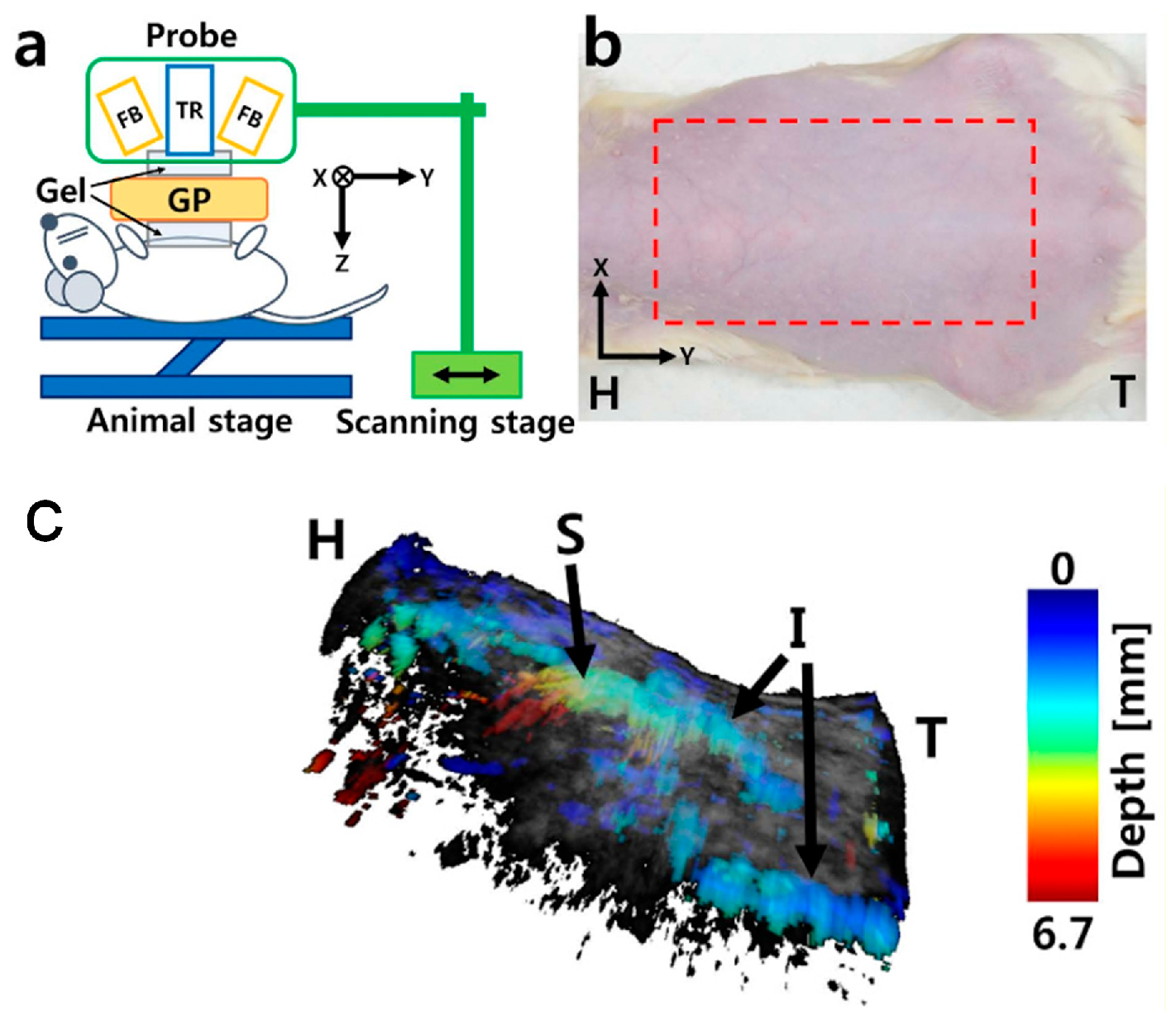
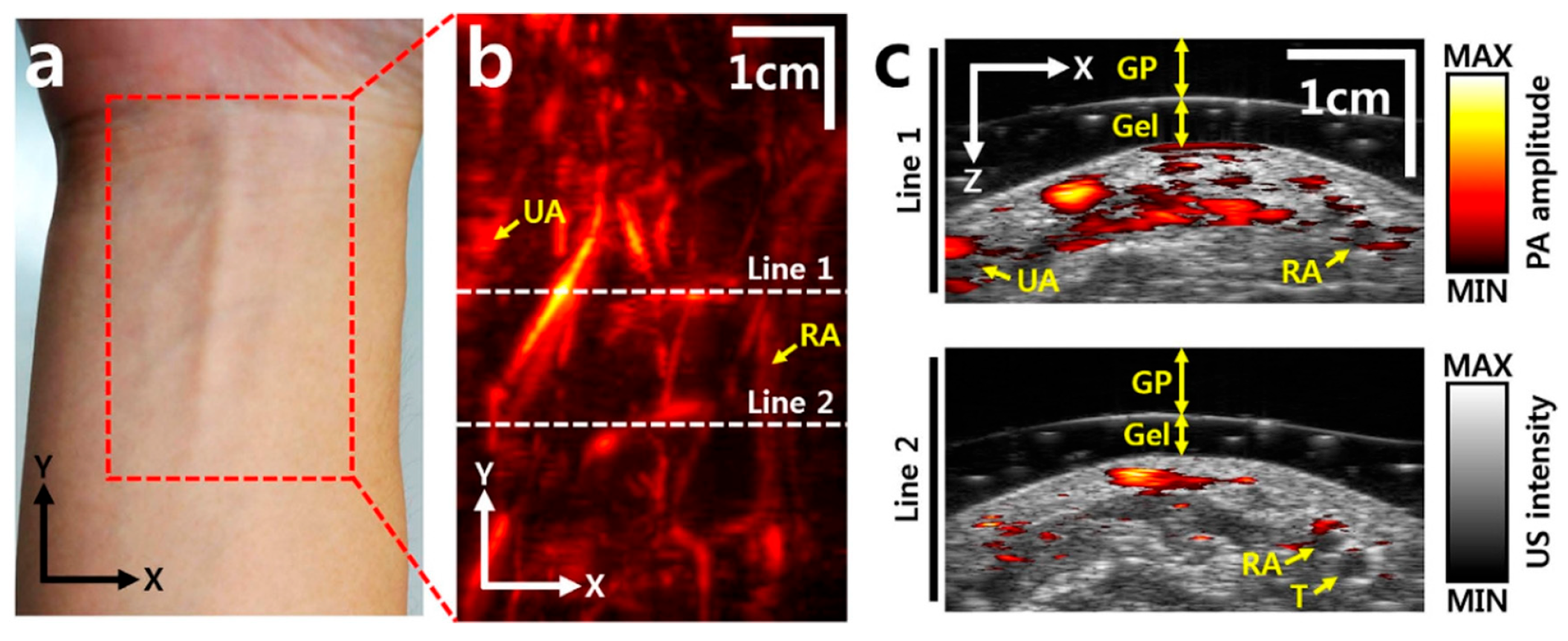
4.1. PAUS System Motion Based on Motion Stage
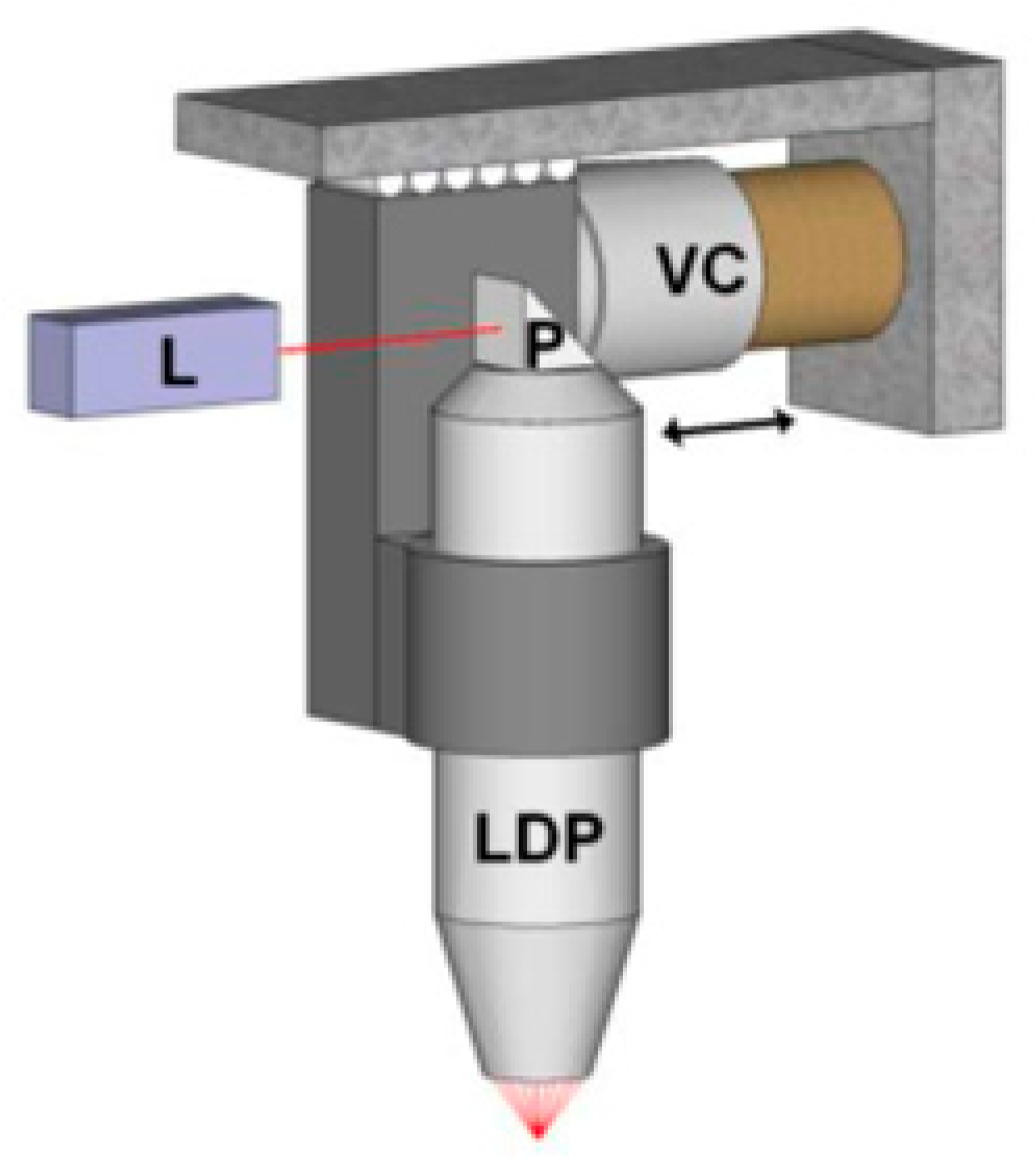
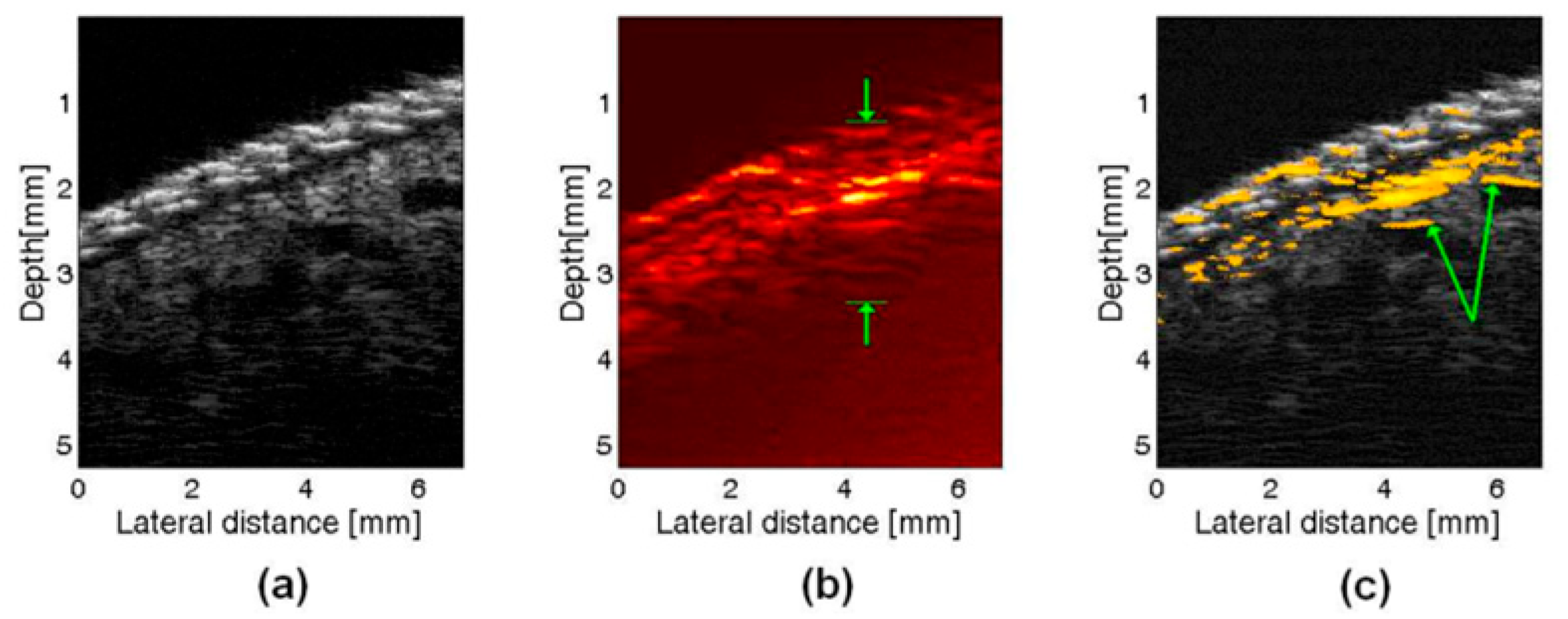
4.2. PAUS System Motion Based on a Voice Coil Mechanism
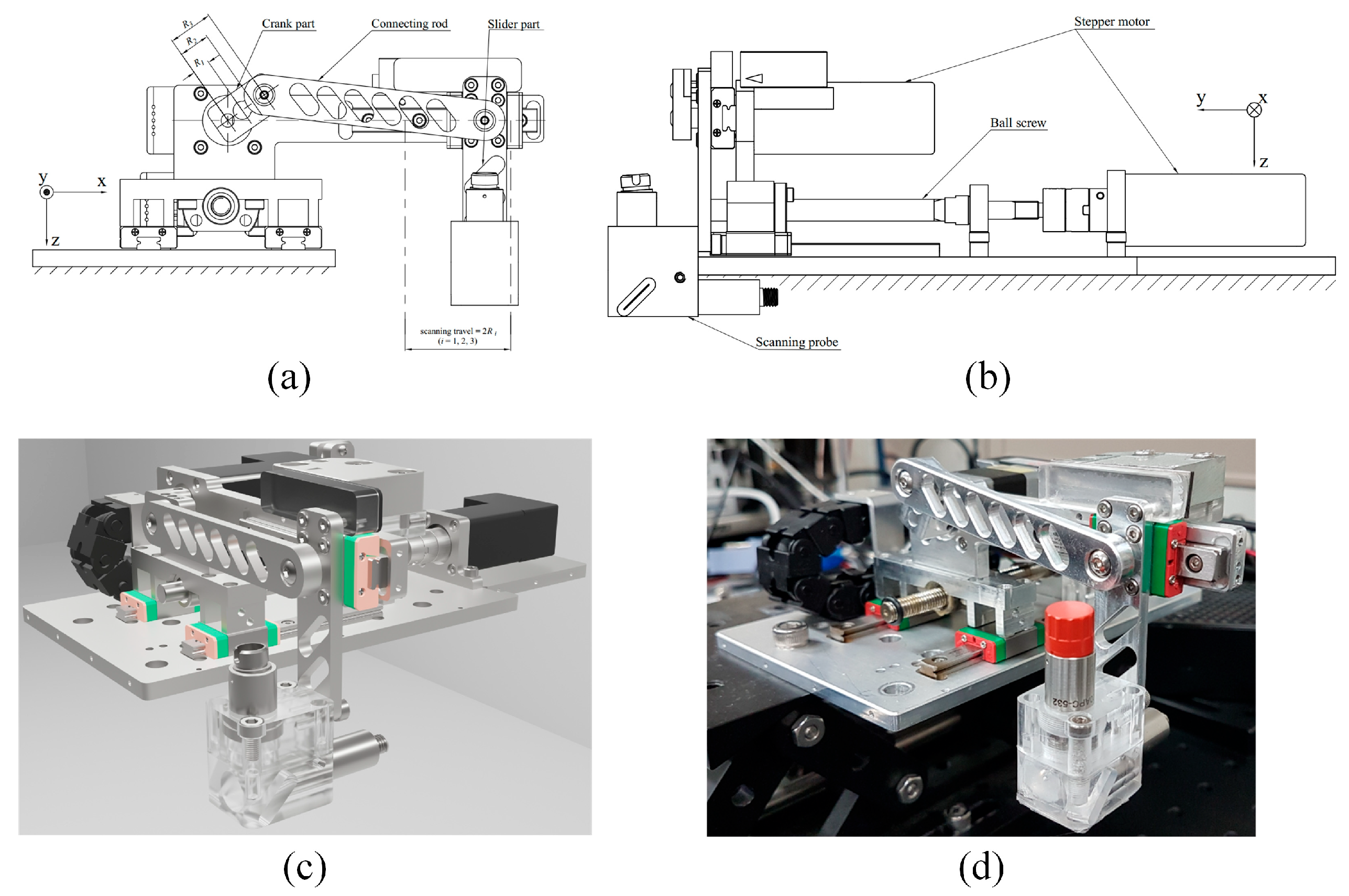
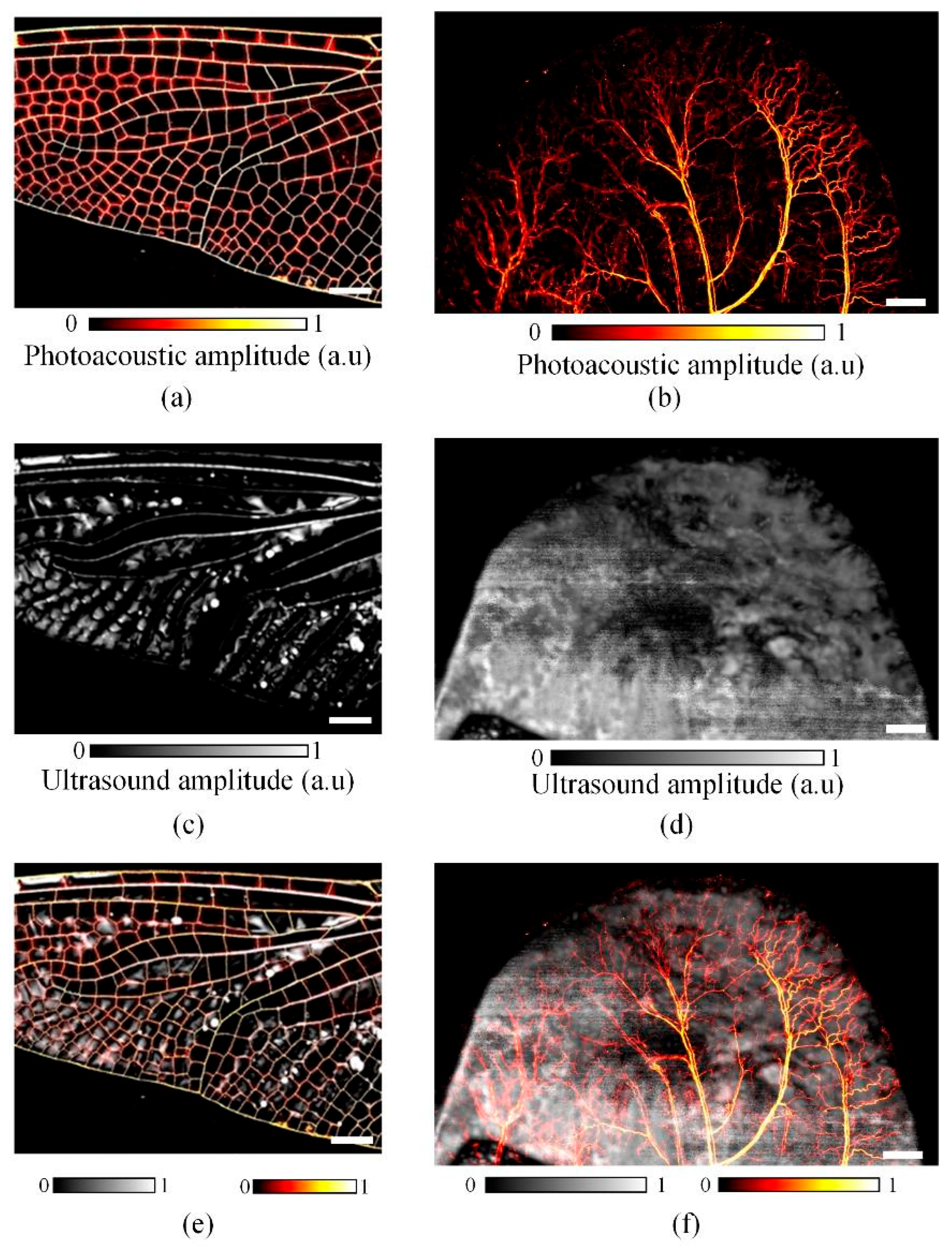
4.3. PAUS System Motion Based on a Combination of Slider Crank and Ball Screw Mechanisms
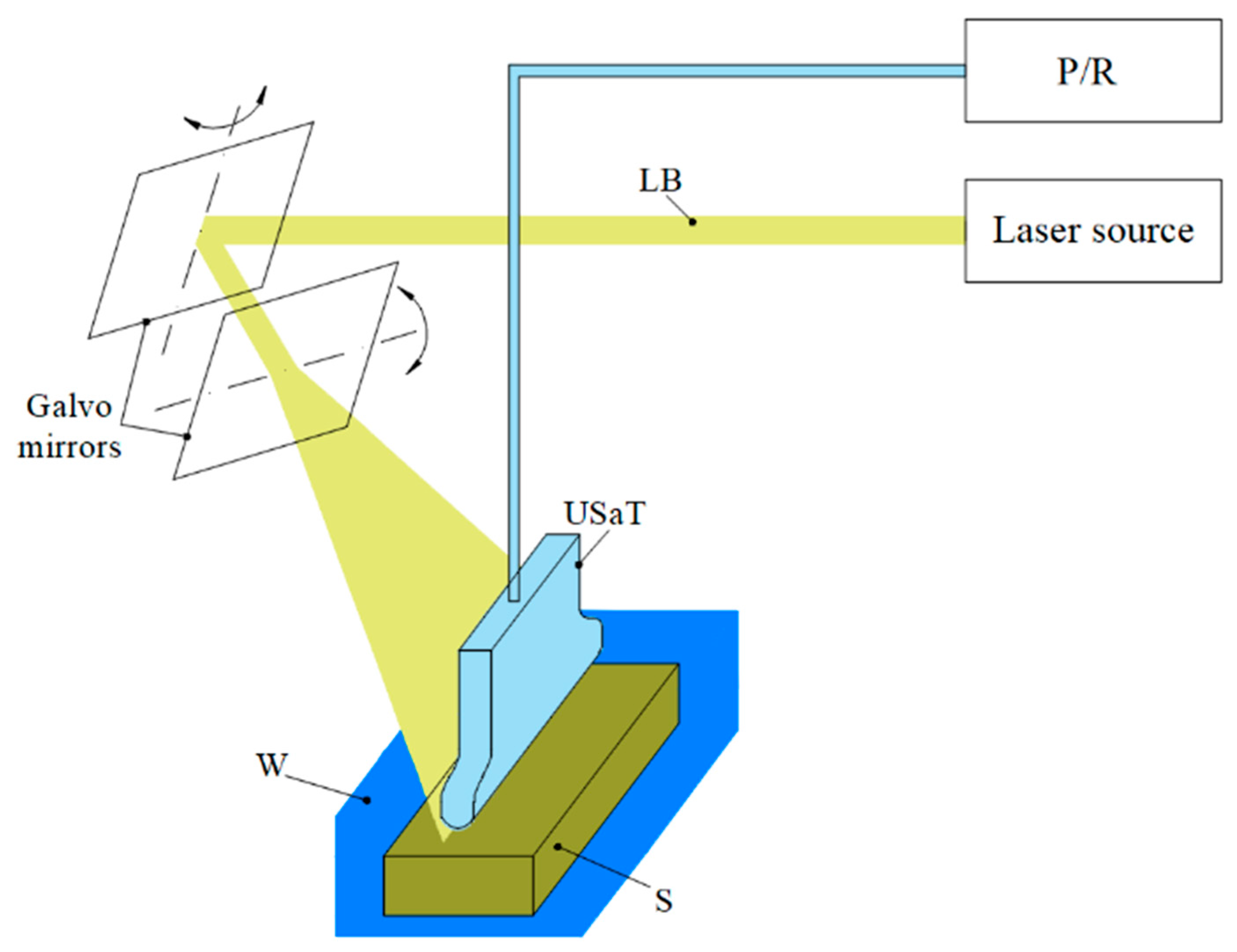
4.4. PAUS System Motion Based on the Galvo Mechanism
5. Summary and Future Perspectives
- (1)
- Improve image reconstruction tools to achieve uniform contrast across elements of linear array PAUS probes and synchronize signal-to-noise ratios of all elements to enhance overall image quality, which can be achieved by enabling the signal amplitude adjustment for each element of the linear array transducer.
- (2)
- Optimize image processing algorithms to handle the distortion problems when using the linear array PAUS probe to record images in real-time, thereby facilitating its broader adoption in clinical diagnosis and interventional applications. The distortion problems can be solved by adding the artificial intelligence (AI) module to the image processing framework.
- (3)
- Develop a linear array PAUS probe applied to the PAUS system utilizing a combination of slider crank and ball screw mechanisms to significantly reduce the scanning time that supports timely decision-making in both preclinical and clinical studies.
- (4)
- Design a PAUS system capable of simultaneous three-axis motion to scan the 3D sample without requiring a tillable, such as the foot and forearms. These movements can be controlled by a combination of motions of some mechanisms, such as a ball screw, a timing belt, and a slider crank.
- (5)
- Develop portable, compact, and high-performance PAUS systems suitable for widespread use in educational and scientific purposes by customizing the shape, size, and functional capabilities of all PAUS system components.
- (6)
- Integrate PAUS systems with deep learning and artificial intelligence frameworks to significantly enhance image processing capabilities and expand diagnostic potential for human diseases.
Author Contributions
Funding
Data Availability Statement
Conflicts of Interest
References
- Ntziachristos, V. Going deeper than microscopy: The optical imaging frontier in biology. Nat. Methods 2010, 7, 603–614. [Google Scholar] [CrossRef]
- Wang, S.; Lin, J.; Wang, T.; Chen, X.; Huang, P. Recent advances in photoacoustic imaging for deep-tissue biomedical applications. Theranostics 2016, 6, 2394. [Google Scholar] [CrossRef]
- Wang, D.; Wang, Y.; Wang, W.; Luo, D.; Chitgupi, U.; Geng, J.; Zhou, Y.; Wang, L.; Lovell, J.F.; Xia, J. Deep tissue photoacoustic computed tomography with a fast and compact laser system. Biomed. Opt. Express 2016, 8, 112–123. [Google Scholar] [CrossRef]
- Xia, J.; Yao, J.; Wang, L.V. Photoacoustic tomography: Principles and advances. Electromagn. Waves 2014, 147, 1. [Google Scholar] [CrossRef] [PubMed]
- Kim, C.; Favazza, C.; Wang, L.V. In vivo photoacoustic tomography of chemicals: High-resolution functional and molecular optical imaging at new depths. Chem. Rev. 2010, 110, 2756–2782. [Google Scholar] [CrossRef]
- Yao, J.; Wang, L.V. Photoacoustic microscopy. Laser Photonics Rev. 2013, 7, 758–778. [Google Scholar] [CrossRef] [PubMed]
- Karmacharya, M.B.; Sultan, L.R.; Sehgal, C.M. Photoacoustic monitoring of oxygenation changes induced by therapeutic ultrasound in murine hepatocellular carcinoma. Sci. Rep. 2021, 11, 4100. [Google Scholar] [CrossRef] [PubMed]
- Yang, H.; Qian, W.; Yang, L.; Xie, H.; Jiang, H. In vivo evaluation of a miniaturized fluorescence molecular tomography (FMT) endoscope for breast cancer detection using targeted Nanoprobes. Int. J. Mol. Sci. 2020, 21, 9389. [Google Scholar] [CrossRef]
- Xia, J.; Wang, L.V. Small-animal whole-body photoacoustic tomography: A review. IEEE Trans. Biomed. Eng. 2013, 61, 1380–1389. [Google Scholar] [CrossRef]
- Li, L.; Zhu, L.; Ma, C.; Lin, L.; Yao, J.; Wang, L.; Maslov, K.; Zhang, R.; Chen, W.; Shi, J. Single-impulse panoramic photoacoustic computed tomography of small-animal whole-body dynamics at high spatiotemporal resolution. Nat. Biomed. Eng. 2017, 1, 0071. [Google Scholar] [CrossRef]
- Kalva, S.K.; Dean-Ben, X.L.; Razansky, D. Single-sweep volumetric optoacoustic tomography of whole mice. Photonics Res. 2021, 9, 899–908. [Google Scholar] [CrossRef]
- Kye, H.; Song, Y.; Ninjbadgar, T.; Kim, C.; Kim, J. Whole-body photoacoustic imaging techniques for preclinical small animal studies. Sensors 2022, 22, 5130. [Google Scholar] [CrossRef]
- Dima, A.; Ntziachristos, V. In-vivo handheld optoacoustic tomography of the human thyroid. Photoacoustics 2016, 4, 65–69. [Google Scholar] [CrossRef] [PubMed]
- Xu, Q.; Wang, X.; Jiang, H. Convolutional neural network for breast cancer diagnosis using diffuse optical tomography. Vis. Comput. Ind. Biomed. Art 2019, 2, 1. [Google Scholar] [CrossRef] [PubMed]
- Becker, A.; Masthoff, M.; Claussen, J.; Ford, S.J.; Roll, W.; Burg, M.; Barth, P.J.; Heindel, W.; Schäfers, M.; Eisenblätter, M. Multispectral optoacoustic tomography of the human breast: Characterisation of healthy tissue and malignant lesions using a hybrid ultrasound-optoacoustic approach. Eur. Radiol. 2018, 28, 602–609. [Google Scholar] [CrossRef] [PubMed]
- Han, S.; Lee, H.; Kim, C.; Kim, J. Review on multispectral photoacoustic analysis of cancer: Thyroid and breast. Metabolites 2022, 12, 382. [Google Scholar] [CrossRef]
- Attia, A.B.E.; Balasundaram, G.; Moothanchery, M.; Dinish, U.; Bi, R.; Ntziachristos, V.; Olivo, M. A review of clinical photoacoustic imaging: Current and future trends. Photoacoustics 2019, 16, 100144. [Google Scholar] [CrossRef]
- Steinberg, I.; Kim, J.; Schneider, M.K.; Hyun, D.; Zlitni, A.; Hopper, S.M.; Klap, T.; Sonn, G.A.; Dahl, J.J.; Kim, C. Superiorized photo-acoustic non-negative reconstruction (SPANNER) for clinical photoacoustic imaging. IEEE Trans. Med. Imaging 2021, 40, 1888–1897. [Google Scholar] [CrossRef]
- Di Paola, V.; Mazzotta, G.; Pignatelli, V.; Bufi, E.; D’Angelo, A.; Conti, M.; Panico, C.; Fiorentino, V.; Pierconti, F.; Kilburn-Toppin, F. Beyond N staging in breast cancer: Importance of MRI and ultrasound-based imaging. Cancers 2022, 14, 4270. [Google Scholar] [CrossRef]
- Bene, I.; Ciurea, A.I.; Ciortea, C.A.; Ștefan, P.A.; Ciule, L.D.; Lupean, R.A.; Dudea, S.M. Radiomic signatures Derived from hybrid contrast-enhanced ultrasound images (CEUS) for the assessment of Histological characteristics of breast cancer: A pilot study. Cancers 2022, 14, 3905. [Google Scholar] [CrossRef]
- Jia, C.; Huang, S.-W.; Jin, Y.; Seo, C.H.; Huang, L.; Eary, J.F.; Gao, X.; O’Donnell, M. Integration of photoacoustic, ultrasound, and magnetomotive system. In Proceedings of the Photons Plus Ultrasound: Imaging and Sensing 2010, San Francisco, CA, USA, 24–26 January 2010; SPIE: Bellingham, WA, USA, 2010; pp. 275–280. [Google Scholar]
- Wells, P.N. Ultrasound imaging. Phys. Med. Biol. 2006, 51, R83. [Google Scholar] [CrossRef]
- Lee, H.; Choi, W.; Kim, C.; Park, B.; Kim, J. Review on ultrasound-guided photoacoustic imaging for complementary analyses of biological systems in vivo. Exp. Biol. Med. 2023, 248, 762–774. [Google Scholar] [CrossRef]
- Bouchard, R.; Sahin, O.; Emelianov, S. Ultrasound-guided photoacoustic imaging: Current state and future development. IEEE Trans. Ultrason. Ferroelectr. Freq. Control 2014, 61, 450–466. [Google Scholar] [CrossRef]
- Das, D.; Sharma, A.; Rajendran, P.; Pramanik, M. Another decade of photoacoustic imaging. Phys. Med. Biol. 2021, 66, 05TR01. [Google Scholar] [CrossRef]
- Pham, V.H.; Nguyen, V.T.; Ly, C.D.; Choi, J.; Park, S.; Mondal, S.; Vo, T.H.; Lim, H.G.; Oh, J. Development of fast photoacoustic and ultrasound imaging system based on slider-crank scanner for small animals and humans study. Expert Syst. Appl. 2022, 206, 117939. [Google Scholar] [CrossRef]
- Kang, J.; Koehler, R.C.; Graham, E.M.; Boctor, E.M. Photoacoustic assessment of the fetal brain and placenta as a method of non-invasive antepartum and intrapartum monitoring. Exp. Neurol. 2022, 347, 113898. [Google Scholar] [CrossRef] [PubMed]
- Dadkhah, A.; Jiao, S. Integrating photoacoustic microscopy with other imaging technologies for multimodal imaging. Exp. Biol. Med. 2021, 246, 771–777. [Google Scholar] [CrossRef] [PubMed]
- Hartman, R.K.; Hallam, K.A.; Donnelly, E.M.; Emelianov, S.Y. Photoacoustic imaging of gold nanorods in the brain delivered via microbubble-assisted focused ultrasound: A tool for in vivo molecular neuroimaging. Laser Phys. Lett. 2019, 16, 025603. [Google Scholar] [CrossRef]
- Dumani, D.S.; Sun, I.-C.; Emelianov, S.Y. Ultrasound-guided immunofunctional photoacoustic imaging for diagnosis of lymph node metastases. Nanoscale 2019, 11, 11649–11659. [Google Scholar] [CrossRef] [PubMed]
- Yamaleyeva, L.M.; Brosnihan, K.B.; Smith, L.M.; Sun, Y. Preclinical Ultrasound-Guided Photoacoustic Imaging of the Placenta in Normal and Pathologic Pregnancy. Mol. Imaging 2018, 17, 1536012118802721. [Google Scholar] [CrossRef]
- Kang, J.; Chang, J.H.; Kim, S.M.; Lee, H.J.; Kim, H.; Wilson, B.C.; Song, T.-K. Real-time sentinel lymph node biopsy guidance using combined ultrasound, photoacoustic, fluorescence imaging: In vivo proof-of-principle and validation with nodal obstruction. Sci. Rep. 2017, 7, 45008. [Google Scholar] [CrossRef]
- Salehi, H.; Li, H.; Merkulov, A.; Kumavor, P.; Vavadi, H.; Sanders, M.; Kueck, A.; Brewer, M.; Zhu, Q. Coregistered photoacoustic and ultrasound imaging and classification of ovarian cancer: Ex vivo and in vivo studies. J. Biomed. Opt. 2016, 21, 046006. [Google Scholar] [CrossRef]
- Mallidi, S.; Kim, S.; Karpiouk, A.; Joshi, P.P.; Sokolov, K.; Emelianov, S. Visualization of molecular composition and functionality of cancer cells using nanoparticle-augmented ultrasound-guided photoacoustics. Photoacoustics 2015, 3, 26–34. [Google Scholar] [CrossRef] [PubMed]
- Luke, G.P.; Emelianov, S.Y. Label-free detection of lymph node metastases with US-guided functional photoacoustic imaging. Radiology 2015, 277, 435–442. [Google Scholar] [CrossRef] [PubMed]
- Luke, G.P.; Myers, J.N.; Emelianov, S.Y.; Sokolov, K.V. Sentinel lymph node biopsy revisited: Ultrasound-guided photoacoustic detection of micrometastases using molecularly targeted plasmonic nanosensors. Cancer Res. 2014, 74, 5397–5408. [Google Scholar] [CrossRef]
- Gerling, M.; Zhao, Y.; Nania, S.; Norberg, K.J.; Verbeke, C.S.; Englert, B.; Kuiper, R.V.; Bergström, Å.; Hassan, M.; Neesse, A. Real-time assessment of tissue hypoxia in vivo with combined photoacoustics and high-frequency ultrasound. Theranostics 2014, 4, 604. [Google Scholar] [CrossRef] [PubMed]
- Karpiouk, A.B.; Wang, B.; Amirian, J.; Smalling, R.W.; Emelianov, S.Y. Feasibility of in vivo intravascular photoacoustic imaging using integrated ultrasound and photoacoustic imaging catheter. J. Biomed. Opt. 2012, 17, 096008. [Google Scholar] [CrossRef]
- Kruizinga, P.; Mastik, F.; Koeze, D.; Jong, N.D.; Van Der Steen, A.F.; Soest, G.V. Ultrasound-guided photoacoustic image reconstruction: Image completion and boundary suppression. J. Biomed. Opt. 2013, 18, 096017. [Google Scholar] [CrossRef]
- Nam, S.Y.; Ricles, L.M.; Suggs, L.J.; Emelianov, S.Y. In vivo ultrasound and photoacoustic monitoring of mesenchymal stem cells labeled with gold nanotracers. PLoS ONE 2012, 7, e37267. [Google Scholar] [CrossRef]
- Aguirre, A.; Guo, P.; Gamelin, J.; Yan, S.; Sanders, M.M.; Brewer, M.; Zhu, Q. Coregistered three-dimensional ultrasound and photoacoustic imaging system for ovarian tissue characterization. J. Biomed. Opt. 2009, 14, 054014. [Google Scholar] [CrossRef]
- Mallidi, S.; Watanabe, K.; Timerman, D.; Schoenfeld, D.; Hasan, T. Prediction of tumor recurrence and therapy monitoring using ultrasound-guided photoacoustic imaging. Theranostics 2015, 5, 289–301. [Google Scholar] [CrossRef]
- Wen, Y.; Guo, D.; Zhang, J.; Liu, X.; Liu, T.; Li, L.; Jiang, S.; Wu, D.; Jiang, H. Clinical photoacoustic/ultrasound dual-modal imaging: Current status and future trends. Front. Physiol. 2022, 13, 1036621. [Google Scholar] [CrossRef]
- Yu, Y.; Feng, T.; Qiu, H.; Gu, Y.; Chen, Q.; Zuo, C.; Ma, H. Simultaneous photoacoustic and ultrasound imaging: A review. Ultrasonics 2024, 139, 107277. [Google Scholar] [CrossRef]
- Mennes, O.A.; van Netten, J.J.; Slart, R.H.; Steenbergen, W. Novel optical techniques for imaging microcirculation in the diabetic foot. Curr. Pharm. Des. 2018, 24, 1304–1316. [Google Scholar] [CrossRef] [PubMed]
- Kim, H.; Chang, J.H. Multimodal photoacoustic imaging as a tool for sentinel lymph node identification and biopsy guidance. Biomed. Eng. Lett. 2018, 8, 183–191. [Google Scholar] [CrossRef]
- Lou, Y.; Zhou, W.; Matthews, T.P.; Appleton, C.M.; Anastasio, M.A. Generation of anatomically realistic numerical phantoms for photoacoustic and ultrasonic breast imaging. J. Biomed. Opt. 2017, 22, 041015. [Google Scholar] [CrossRef] [PubMed]
- Xavierselvan, M.; Singh, M.K.A.; Mallidi, S. Preclinical cancer imaging using a multispectral LED-based photoacoustic and ultrasound imaging system. In Proceedings of the Photons Plus Ultrasound: Imaging and Sensing 2021, Online, 6–11 March 2021; SPIE: Bellingham, WA, USA, 2021; p. 116422G. [Google Scholar]
- Shiina, T.; Toi, M.; Yagi, T. Development and clinical translation of photoacoustic mammography. Biomed. Eng. Lett. 2018, 8, 157–165. [Google Scholar] [CrossRef]
- Li, M.; Tang, Y.; Yao, J. Photoacoustic tomography of blood oxygenation: A mini review. Photoacoustics 2018, 10, 65–73. [Google Scholar] [CrossRef]
- Yang, M.; Zhao, L.; He, X.; Su, N.; Zhao, C.; Tang, H.; Hong, T.; Li, W.; Yang, F.; Lin, L. Photoacoustic/ultrasound dual imaging of human thyroid cancers: An initial clinical study. Biomed. Opt. Express 2017, 8, 3449–3457. [Google Scholar] [CrossRef]
- Neuschler, E.I.; Butler, R.; Young, C.A.; Barke, L.D.; Bertrand, M.L.; Böhm-Vélez, M.; Destounis, S.; Donlan, P.; Grobmyer, S.R.; Katzen, J. A pivotal study of optoacoustic imaging to diagnose benign and malignant breast masses: A new evaluation tool for radiologists. Radiology 2018, 287, 398–412. [Google Scholar] [CrossRef]
- Garcia-Uribe, A.; Erpelding, T.N.; Krumholz, A.; Ke, H.; Maslov, K.; Appleton, C.; Margenthaler, J.A.; Wang, L.V. Dual-modality photoacoustic and ultrasound imaging system for noninvasive sentinel lymph node detection in patients with breast cancer. Sci. Rep. 2015, 5, 15748. [Google Scholar] [CrossRef] [PubMed]
- Feng, T.; Zhu, Y.; Liu, C.; Du, S.; Ta, D.; Cheng, Q.; Yuan, J. Ultrasound-guided detection and segmentation of photoacoustic signals from bone tissue in vivo. Appl. Sci. 2020, 11, 19. [Google Scholar] [CrossRef]
- van den Berg, P.J.; Daoudi, K.; Moens, H.J.B.; Steenbergen, W. Feasibility of photoacoustic/ultrasound imaging of synovitis in finger joints using a point-of-care system. Photoacoustics 2017, 8, 8–14. [Google Scholar] [CrossRef] [PubMed]
- Wu, Y.; Zeng, F.; Zhao, Y.; Wu, S. Emerging contrast agents for multispectral optoacoustic imaging and their biomedical applications. Chem. Soc. Rev. 2021, 50, 7924–7940. [Google Scholar] [CrossRef]
- Wu, M.; Awasthi, N.; Rad, N.M.; Pluim, J.P.; Lopata, R.G. Advanced ultrasound and photoacoustic imaging in cardiology. Sensors 2021, 21, 7947. [Google Scholar] [CrossRef]
- Karlas, A.; Masthoff, M.; Kallmayer, M.; Helfen, A.; Bariotakis, M.; Fasoula, N.A.; Schäfers, M.; Seidensticker, M.; Eckstein, H.-H.; Ntziachristos, V. Multispectral optoacoustic tomography of peripheral arterial disease based on muscle hemoglobin gradients—A pilot clinical study. Ann. Transl. Med. 2021, 9, 36. [Google Scholar] [CrossRef]
- Karlas, A.; Kallmayer, M.; Bariotakis, M.; Fasoula, N.-A.; Liapis, E.; Hyafil, F.; Pelisek, J.; Wildgruber, M.; Eckstein, H.-H.; Ntziachristos, V. Multispectral optoacoustic tomography of lipid and hemoglobin contrast in human carotid atherosclerosis. Photoacoustics 2021, 23, 100283. [Google Scholar] [CrossRef]
- Kim, J.; Park, B.; Ha, J.; Steinberg, I.; Hooper, S.M.; Jeong, C.; Park, E.-Y.; Choi, W.; Liang, T.; Bae, J.S. Multiparametric photoacoustic analysis of human thyroid cancers in vivo. Cancer Res. 2021, 81, 4849–4860. [Google Scholar] [CrossRef]
- Zalev, J.; Herzog, D.; Clingman, B.; Miller, T.; Kist, K.; Dornbluth, N.C.; McCorvey, B.M.; Otto, P.; Ermilov, S.; Nadvoretsky, V. Clinical feasibility study of combined optoacoustic and ultrasonic imaging modality providing coregistered functional and anatomical maps of breast tumors. In Proceedings of the Photons Plus Ultrasound: Imaging and Sensing 2012, San Francisco, CA, USA, 22–24 January 2012; SPIE: Bellingham, WA, USA, 2012; pp. 53–58. [Google Scholar]
- Goh, Y.; Balasundaram, G.; Moothanchery, M.; Attia, A.; Li, X.; Lim, H.Q.; Burton, N.C.; Qiu, Y.; Putti, T.C.; Chan, C.W. Ultrasound guided optoacoustic tomography in assessment of tumor margins for lumpectomies. Transl. Oncol. 2020, 13, 254–261. [Google Scholar] [CrossRef]
- Oraevsky, A.; Clingman, B.; Zalev, J.; Stavros, A.; Yang, W.; Parikh, J. Clinical optoacoustic imaging combined with ultrasound for coregistered functional and anatomical mapping of breast tumors. Photoacoustics 2018, 12, 30–45. [Google Scholar] [CrossRef]
- Park, B.; Bang, C.; Lee, C.; Han, J.; Choi, W.; Kim, J.; Park, G.; Rhie, J.; Lee, J.; Kim, C. 3D wide-field multispectral photoacoustic imaging of human melanomas in vivo: A pilot study. J. Eur. Acad. Dermatol. Venereol. 2021, 35, 669–676. [Google Scholar] [CrossRef]
- Wang, S.; Zhang, L.; Zhao, J.; He, M.; Huang, Y.; Zhao, S. A tumor microenvironment–induced absorption red-shifted polymer nanoparticle for simultaneously activated photoacoustic imaging and photothermal therapy. Sci. Adv. 2021, 7, eabe3588. [Google Scholar] [CrossRef] [PubMed]
- Oeri, M.; Bost, W.; Sénégond, N.; Tretbar, S.; Fournelle, M. Hybrid photoacoustic/ultrasound tomograph for real-time finger imaging. Ultrasound Med. Biol. 2017, 43, 2200–2212. [Google Scholar] [CrossRef] [PubMed]
- Wu, M.; Jansen, K.; van der Steen, A.F.; van Soest, G. Specific imaging of atherosclerotic plaque lipids with two-wavelength intravascular photoacoustics. Biomed. Opt. Express 2015, 6, 3276–3286. [Google Scholar] [CrossRef]
- Agrawal, S.; Johnstonbaugh, K.; Clark, J.Y.; Raman, J.D.; Wang, X.; Kothapalli, S.-R. Design, development, and multi-characterization of an integrated clinical transrectal ultrasound and photoacoustic device for human prostate imaging. Diagnostics 2020, 10, 566. [Google Scholar] [CrossRef] [PubMed]
- Kothapalli, S.-R.; Sonn, G.A.; Choe, J.W.; Nikoozadeh, A.; Bhuyan, A.; Park, K.K.; Cristman, P.; Fan, R.; Moini, A.; Lee, B.C. Simultaneous transrectal ultrasound and photoacoustic human prostate imaging. Sci. Transl. Med. 2019, 11, eaav2169. [Google Scholar] [CrossRef]
- Maneas, E.; Aughwane, R.; Huynh, N.; Xia, W.; Ansari, R.; Kuniyil Ajith Singh, M.; Hutchinson, J.C.; Sebire, N.J.; Arthurs, O.J.; Deprest, J. Photoacoustic imaging of the human placental vasculature. J. Biophotonics 2020, 13, e201900167. [Google Scholar] [CrossRef]
- Xia, W.; Maneas, E.; Huynh, N.T.; Singh, M.K.A.; Brown, N.M.; Ourselin, S.; Gilbert-Kawai, E.; West, S.J.; Desjardins, A.E. Imaging of human peripheral blood vessels during cuff occlusion with a compact LED-based photoacoustic and ultrasound system. In Photons Plus Ultrasound: Imaging and Sensing 2019; SPIE: Bellingham, WA, USA, 2019; pp. 9–13. [Google Scholar]
- Yang, G.; Amidi, E.; Chapman, W.C., Jr.; Nandy, S.; Mostafa, A.; Abdelal, H.; Alipour, Z.; Chatterjee, D.; Mutch, M.; Zhu, Q. Co-registered photoacoustic and ultrasound imaging of human colorectal cancer. J. Biomed. Opt. 2019, 24, 121913. [Google Scholar] [CrossRef]
- Leng, X.; Chapman, W., Jr.; Rao, B.; Nandy, S.; Chen, R.; Rais, R.; Gonzalez, I.; Zhou, Q.; Chatterjee, D.; Mutch, M. Feasibility of co-registered ultrasound and acoustic-resolution photoacoustic imaging of human colorectal cancer. Biomed. Opt. Express 2018, 9, 5159–5172. [Google Scholar] [CrossRef]
- Knieling, F.; Neufert, C.; Hartmann, A.; Claussen, J.; Urich, A.; Egger, C.; Vetter, M.; Fischer, S.; Pfeifer, L.; Hagel, A. Multispectral optoacoustic tomography for assessment of Crohn’s disease activity. N. Engl. J. Med. 2017, 376, 1292–1294. [Google Scholar] [CrossRef] [PubMed]
- Mozaffarzadeh, M.; Moore, C.; Golmoghani, E.B.; Mantri, Y.; Hariri, A.; Jorns, A.; Fu, L.; Verweij, M.D.; Orooji, M.; de Jong, N. Motion-compensated noninvasive periodontal health monitoring using handheld and motor-based photoacoustic-ultrasound imaging systems. Biomed. Opt. Express 2021, 12, 1543–1558. [Google Scholar] [CrossRef] [PubMed]
- Gonzalez, E.A.; Jain, A.; Bell, M.A.L. Combined ultrasound and photoacoustic image guidance of spinal pedicle cannulation demonstrated with intact ex vivo specimens. IEEE Trans. Biomed. Eng. 2020, 68, 2479–2489. [Google Scholar] [CrossRef] [PubMed]
- Kim, C.; Erpelding, T.N.; Jankovic, L.; Pashley, M.D.; Wang, L.V. Deeply penetrating in vivo photoacoustic imaging using a clinical ultrasound array system. Biomed. Opt. Express 2010, 1, 278–284. [Google Scholar] [CrossRef]
- Needles, A.; Heinmiller, A.; Sun, J.; Theodoropoulos, C.; Bates, D.; Hirson, D.; Yin, M.; Foster, F.S. Development and initial application of a fully integrated photoacoustic micro-ultrasound system. IEEE Trans. Ultrason. Ferroelectr. Freq. Control 2013, 60, 888–897. [Google Scholar] [CrossRef]
- Levi, J.; Sathirachinda, A.; Gambhir, S.S. A high-affinity, high-stability photoacoustic agent for imaging gastrin-releasing peptide receptor in prostate cancer. Clin. Cancer Res. 2014, 20, 3721–3729. [Google Scholar] [CrossRef]
- Bayer, C.L.; Joshi, P.P.; Emelianov, S.Y. Photoacoustic imaging: A potential tool to detect early indicators of metastasis. Expert Rev. Med. Devices 2013, 10, 125–134. [Google Scholar] [CrossRef][Green Version]
- Yao, J.; Wang, L.V. Recent progress in photoacoustic molecular imaging. Curr. Opin. Chem. Biol. 2018, 45, 104–112. [Google Scholar] [CrossRef]
- Hoskins, P.; Martin, K.; Thrush, A. Diagnostic Ultrasound: Physics and Equipment; CRC Press: Boca Raton, FL, USA, 2019. [Google Scholar]
- Szabo, T.L. Diagnostic Ultrasound Imaging: Inside Out; Academic Press: Cambridge, MA, USA, 2013. [Google Scholar]
- Shang, Q.; Wu, M.; Yang, J.; Pan, T.; Zhang, G.; Wu, D.; Jiang, H. A comparative study on water and dry coupling in photoacoustic tomography of the finger joints. J. Innov. Opt. Health Sci. 2020, 13, 2050008. [Google Scholar] [CrossRef]
- Beard, P. Biomedical photoacoustic imaging. Interface Focus 2011, 1, 602–631. [Google Scholar] [CrossRef]
- Xu, M.; Wang, L.V. Photoacoustic imaging in biomedicine. Rev. Sci. Instrum. 2006, 77, 041101. [Google Scholar] [CrossRef]
- Han, Y.; Ding, L.; Ben, X.L.D.; Razansky, D.; Prakash, J.; Ntziachristos, V. Three-dimensional optoacoustic reconstruction using fast sparse representation. Opt. Lett. 2017, 42, 979–982. [Google Scholar] [CrossRef]
- Paridar, R.; Mozaffarzadeh, M.; Mehrmohammadi, M.; Orooji, M. Photoacoustic image formation based on sparse regularization of minimum variance beamformer. Biomed. Opt. Express 2018, 9, 2544–2561. [Google Scholar] [CrossRef] [PubMed]
- Matrone, G.; Savoia, A.S.; Caliano, G.; Magenes, G. The delay multiply and sum beamforming algorithm in ultrasound B-mode medical imaging. IEEE Trans. Med. Imaging 2014, 34, 940–949. [Google Scholar] [CrossRef] [PubMed]
- Mozaffarzadeh, M.; Mahloojifar, A.; Orooji, M.; Adabi, S.; Nasiriavanaki, M. Double-stage delay multiply and sum beamforming algorithm: Application to linear-array photoacoustic imaging. IEEE Trans. Biomed. Eng. 2017, 65, 31–42. [Google Scholar] [CrossRef]
- Merčep, E.; Deán-Ben, X.L.; Razansky, D. Combined pulse-echo ultrasound and multispectral optoacoustic tomography with a multi-segment detector array. IEEE Trans. Med. Imaging 2017, 36, 2129–2137. [Google Scholar] [CrossRef]
- Ke, H.; Erpelding, T.N.; Jankovic, L.; Liu, C.; Wang, L.V. Performance characterization of an integrated ultrasound, photoacoustic, and thermoacoustic imaging system. J. Biomed. Opt. 2012, 17, 056010. [Google Scholar] [CrossRef]
- Agrawal, S.; Kuniyil Ajith Singh, M.; Johnstonbaugh, K.; Han, D.C.; Pameijer, C.R.; Kothapalli, S.-R. Photoacoustic imaging of human vasculature using LED versus laser illumination: A comparison study on tissue phantoms and in vivo humans. Sensors 2021, 21, 424. [Google Scholar] [CrossRef] [PubMed]
- Erlöv, T.; Sheikh, R.; Dahlstrand, U.; Albinsson, J.; Malmsjö, M.; Cinthio, M. Regional motion correction for in vivo photoacoustic imaging in humans using interleaved ultrasound images. Biomed. Opt. Express 2021, 12, 3312–3322. [Google Scholar] [CrossRef]
- Niederhauser, J.J.; Jaeger, M.; Lemor, R.; Weber, P.; Frenz, M. Combined ultrasound and optoacoustic system for real-time high-contrast vascular imaging in vivo. IEEE Trans. Med. Imaging 2005, 24, 436–440. [Google Scholar] [CrossRef]
- Zhang, W.; Li, J.; Yang, S. Real-time interleaved photoacoustic and ultrasound imaging for guiding interventional procedures. Appl. Acoust. 2019, 156, 1–6. [Google Scholar] [CrossRef]
- Daoudi, K.; Van Den Berg, P.; Rabot, O.; Kohl, A.; Tisserand, S.; Brands, P.; Steenbergen, W. Handheld probe integrating laser diode and ultrasound transducer array for ultrasound/photoacoustic dual modality imaging. Opt. Express 2014, 22, 26365–26374. [Google Scholar] [CrossRef] [PubMed]
- Montilla, L.G.; Olafsson, R.; Bauer, D.R.; Witte, R.S. Real-time photoacoustic and ultrasound imaging: A simple solution for clinical ultrasound systems with linear arrays. Phys. Med. Biol. 2012, 58, N1. [Google Scholar] [CrossRef]
- Wang, Z.; Yang, F.; Ma, H.; Cheng, Z.; Yang, S. Photoacoustic and ultrasound (PAUS) dermoscope with high sensitivity and penetration depth by using a bimorph transducer. J. Biophotonics 2020, 13, e202000145. [Google Scholar] [CrossRef] [PubMed]
- Wei, W.; Li, X.; Zhou, Q.; Shung, K.K.; Chen, Z. Integrated ultrasound and photoacoustic probe for co-registered intravascular imaging. J. Biomed. Opt. 2011, 16, 106001. [Google Scholar] [CrossRef] [PubMed]
- Nyayapathi, N.; Lim, R.; Zhang, H.; Zheng, W.; Wang, Y.; Tiao, M.; Oh, K.W.; Fan, X.C.; Bonaccio, E.; Takabe, K. Dual scan mammoscope (DSM)—A new portable photoacoustic breast imaging system with scanning in craniocaudal plane. IEEE Trans. Biomed. Eng. 2019, 67, 1321–1327. [Google Scholar] [CrossRef]
- Sun, M.; Hu, D.; Zhou, W.; Liu, Y.; Qu, Y.; Ma, L. 3D photoacoustic tomography system based on full-view illumination and ultrasound detection. Appl. Sci. 2019, 9, 1904. [Google Scholar] [CrossRef]
- Harrison, T.; Ranasinghesagara, J.C.; Lu, H.; Mathewson, K.; Walsh, A.; Zemp, R.J. Combined photoacoustic and ultrasound biomicroscopy. Opt. Express 2009, 17, 22041–22046. [Google Scholar] [CrossRef]
- Kim, J.; Park, S.; Jung, Y.; Chang, S.; Park, J.; Zhang, Y.; Lovell, J.F.; Kim, C. Programmable real-time clinical photoacoustic and ultrasound imaging system. Sci. Rep. 2016, 6, 35137. [Google Scholar] [CrossRef]
- Park, E.-Y.; Park, S.; Lee, H.; Kang, M.; Kim, C.; Kim, J. Simultaneous dual-modal multispectral photoacoustic and ultrasound macroscopy for three-dimensional whole-body imaging of small animals. Photonics 2021, 8, 13. [Google Scholar] [CrossRef]
- Liu, Y.; Zhang, C.; Wang, L.V. Effects of light scattering on optical-resolution photoacoustic microscopy. J. Biomed. Opt. 2012, 17, 126014. [Google Scholar] [CrossRef][Green Version]
- Fang, C.; Hu, H.; Zou, J. A focused optically transparent PVDF transducer for photoacoustic microscopy. IEEE Sens. J. 2019, 20, 2313–2319. [Google Scholar] [CrossRef]
- Chen, M.; Jiang, L.; Cook, C.; Zeng, Y.; Vu, T.; Chen, R.; Lu, G.; Yang, W.; Hoffmann, U.; Zhou, Q. High-speed wide-field photoacoustic microscopy using a cylindrically focused transparent high-frequency ultrasound transducer. Photoacoustics 2022, 28, 100417. [Google Scholar] [CrossRef] [PubMed]
- Pham, V.H.; Tran, L.H.; Choi, J.; Truong, H.-S.; Vo, T.H.; Vu, D.D.; Park, S.; Oh, J. Novel Water Probe for High-Frequency Focused Transducer Applied to Scanning Acoustic Microscopy System: Simulation and Experimental Investigation. Sensors 2024, 24, 5179. [Google Scholar] [CrossRef]
- Shi, W.; Kerr, S.; Utkin, I.; Ranasinghesagara, J.; Pan, L.; Godwal, Y.; Zemp, R.J.; Fedosejevs, R. Optical resolution photoacoustic microscopy using novel high-repetition-rate passively Q-switched microchip and fiber lasers. J. Biomed. Opt. 2010, 15, 056017. [Google Scholar] [CrossRef]
- Maslov, K.; Zhang, H.F.; Hu, S.; Wang, L.V. Optical-resolution photoacoustic microscopy for in vivo imaging of single capillaries. Opt. Lett. 2008, 33, 929–931. [Google Scholar] [CrossRef] [PubMed]
- Rao, B.; Li, L.; Maslov, K.; Wang, L. Hybrid-scanning optical-resolution photoacoustic microscopy for in vivo vasculature imaging. Opt. Lett. 2010, 35, 1521–1523. [Google Scholar] [CrossRef] [PubMed]
- Ranasinghesagara, J.C.; Jian, Y.; Chen, X.; Mathewson, K.; Zemp, R.J. Photoacoustic technique for assessing optical scattering properties of turbid media. J. Biomed. Opt. 2009, 14, 040504. [Google Scholar] [CrossRef][Green Version]
- Sheikh, R.; Cinthio, M.; Dahlstrand, U.; Erlöv, T.; Naumovska, M.; Hammar, B.; Zackrisson, S.; Jansson, T.; Reistad, N.; Malmsjö, M. Clinical translation of a novel photoacoustic imaging system for examining the temporal artery. IEEE Trans. Ultrason. Ferroelectr. Freq. Control 2018, 66, 472–480. [Google Scholar] [CrossRef]
- Chen, H.; Agrawal, S.; Osman, M.; Minotto, J.; Mirg, S.; Liu, J.; Dangi, A.; Tran, Q.; Jackson, T.; Kothapalli, S.-R. A transparent ultrasound array for real-time optical, ultrasound, and photoacoustic imaging. BME Front. 2022, 2022, 9871098. [Google Scholar] [CrossRef]
- Chen, H.; Mirg, S.; Gaddale, P.; Agrawal, S.; Li, M.; Nguyen, V.; Xu, T.; Li, Q.; Liu, J.; Tu, W. Multiparametric brain hemodynamics imaging using a combined ultrafast ultrasound and photoacoustic system. Adv. Sci. 2024, 11, 2401467. [Google Scholar] [CrossRef]
- Tang, Y.; Wang, N.; Dong, Z.; Lowerison, M.; Del Aguila, A.; Johnston, N.; Vu, T.; Ma, C.; Xu, Y.; Yang, W. Non-invasive deep-brain imaging with 3D integrated photoacoustic tomography and ultrasound localization microscopy (3D-PAULM). IEEE Trans. Med. Imaging 2024, 44, 994–1004. [Google Scholar] [CrossRef] [PubMed]
- Zhao, S.; Hartanto, J.; Joseph, R.; Wu, C.-H.; Zhao, Y.; Chen, Y.-S. Hybrid photoacoustic and fast super-resolution ultrasound imaging. Nat. Commun. 2023, 14, 2191. [Google Scholar] [CrossRef] [PubMed]
- Wang, L.; Maslov, K.; Xing, W.; Garcia-Uribe, A.; Wang, L.V. Video-rate functional photoacoustic microscopy at depths. J. Biomed. Opt. 2012, 17, 106007. [Google Scholar] [CrossRef]
- Park, J.; Park, B.; Kim, T.Y.; Jung, S.; Choi, W.J.; Ahn, J.; Yoon, D.H.; Kim, J.; Jeon, S.; Lee, D. Quadruple ultrasound, photoacoustic, optical coherence, and fluorescence fusion imaging with a transparent ultrasound transducer. Proc. Natl. Acad. Sci. USA 2021, 118, e1920879118. [Google Scholar] [CrossRef]
- Jeon, M.; Song, W.; Huynh, E.; Kim, J.; Kim, J.; Helfield, B.L.; Leung, B.Y.; Goertz, D.E.; Zheng, G.; Oh, J. Methylene blue microbubbles as a model dual-modality contrast agent for ultrasound and activatable photoacoustic imaging. J. Biomed. Opt. 2014, 19, 016005. [Google Scholar] [CrossRef]
- Karpiouk, A.B.; Aglyamov, S.R.; Mallidi, S.; Shah, J.; Scott, W.G.; Rubin, J.M.; Emelianov, S.Y. Combined ultrasound and photoacoustic imaging to detect and stage deep vein thrombosis: Phantom and ex vivo studies. J. Biomed. Opt. 2008, 13, 054061. [Google Scholar] [CrossRef]
- THORLAB Translation Stage. Available online: https://www.thorlabs.com/newgrouppage9.cfm?objectgroup_id=3002 (accessed on 18 January 2026).
- THORLAB Brushless DC Motor Driven XY Stage. Available online: https://www.thorlabs.com/newgrouppage9.cfm?objectgroup_id=16022 (accessed on 18 January 2026).
- Truong, N.T.P.; Choi, J.; Park, S.; Ly, C.D.; Cho, S.-W.; Mondal, S.; Lim, H.G.; Kim, C.-S.; Oh, J. Ultra-widefield photoacoustic microscopy with a dual-channel slider-crank laser-scanning apparatus for in vivo biomedical study. Photoacoustics 2021, 23, 100274. [Google Scholar]
- Pham, V.H.; Choi, J.; Vo, T.H.; Vu, D.D.; Park, S.; Lee, B.-i.; Oh, J. An innovative application of double slider-crank mechanism in efficient of the scanning acoustic microscopy system. Mech. Based Des. Struct. Mach. 2024, 52, 4066–4076. [Google Scholar] [CrossRef]
- Pham, V.H.; Nguyen Van, T.; Cong Hong Nguyen, P.; Anh Do, T.; Truong, H.-S.; Nguyen Dinh, T.; Le, X.L. A simple approach in balancing the slider-crank mechanisms applied to new systems. Sci. Rep. 2025, 15, 19546. [Google Scholar] [CrossRef]
- Wei, C.-W.; Nguyen, T.-M.; Xia, J.; Arnal, B.; Wong, E.Y.; Pelivanov, I.M.; O’Donnell, M. Real-time integrated photoacoustic and ultrasound (PAUS) imaging system to guide interventional procedures: Ex vivo study. IEEE Trans. Ultrason. Ferroelectr. Freq. Control 2015, 62, 319–328. [Google Scholar] [CrossRef] [PubMed]
- Yoon, S.J.; Hsieh, B.-Y.; Wei, C.-w.; Nguyen, T.-M.; Arnal, B.; Pelivanov, I.; O’Donnell, M. Optimization of the laser irradiation pattern in a high frame rate integrated photoacoustic/ultrasound (PAUS) imaging system. In Proceedings of the 2015 IEEE International Ultrasonics Symposium (IUS), Taipei, Taiwan, 21–24 October 2015; IEEE: Piscataway, NJ, USA, 2015; pp. 1–4. [Google Scholar]



| Laser Source | Center Frequency of the US Transducer (MHz) | No. of Elements | Resolution (µm) | References | Advantages | Disadvantages | ||
|---|---|---|---|---|---|---|---|---|
| PA Lateral | US Lateral | Axial | ||||||
| Q-switched pump laser with a wavelength that ranges from 690 to 930 nm | 5 | Single | 760 | 1160 | 310 | [105] | - Simple design and practical for manufacturing and assembly - Deep penetration | - Low resolution - Large size of the probe - Only suitable for use with a scanning system |
| Q-switched diode-pumped solid-state laser with a wavelength of 532 nm and a PRR of 25 kHz | 25 | Single | 10.2 | 136 | 76 | [26] | - Compact size of the probe - High resolution | - Complex housing component - Shallow depth - Only suitable for use with a scanning system |
| A pulsed laser with a wavelength of 532 nm and a PRR of 10 kHz | 35 | Single | 6.8 | 45 | 57.8 | [99] | - Compact size of the probe - High resolution | - Modify the structure of the US transducer - Shallow depth - Only suitable for use with a scanning system |
| A Q-switched Nd:YAG laser with a wavelength of 1064 nm and a PRR of 20 kHz | 10 | 128 | 693 | 600 | 400 | [96] | - Simple design of the probe - Large scanning coverage of B-scan - Deep penetration - Appropriate for use with hand-held and scanning systems | - Low resolution - Distorted image - High cost |
| A pulsed Nd:YAG-pumped laser with a wavelength that ranges from 680 to 980 nm and a PRR of 25 kHz | 7.5 | 256 | 870 ÷ 1440 | 930 ÷ 1430 | 90 ÷ 130 | [91] | - Simple design of the probe - Large scanning coverage of B-scan - Deep penetration - Appropriate for use with hand-held and scanning systems | - Low resolution - Distorted image - High cost |
| Motion Type | ROI | Scanning Speed | Step Size | Scanning Time | References | Advantages | Disadvantages |
|---|---|---|---|---|---|---|---|
| Motion stage | 60 mm × 40 mm | - | 0.2 mm and 0.5 mm in the x- and y-axes, respectively | 30 min | [105] | - Simple design - Facilitate the extension of ROI - Appropriate for a probe with a single element and an array transducer | - Low speed - Long-time consumption |
| Voice coil | 9 mm in one direction | 20 fps | - | - | [103] | - Simple design - High speed - Short-time consumption - Appropriate for a probe with a single element and an array transducer | - Small scanning coverage - Vibration heat generation problems |
| A combination of slider crank and ball screw mechanisms | 10 mm × 4 mm | 30 fps | 10 μm | 14 s | [26] | - Simple design - High speed - Short-time consumption - Appropriate for a probe with a single element and an array transducer | - Fixed scanning coverage - Vibration problem |
| 18 mm× 14 mm | 26 fps | 54 s | |||||
| 26 mm × 16 mm | 18 fps | 89 s | |||||
| Galvo | 28 mm × 28 mm | 30 fps | - | - | [128] | - Simple design - High speed - Short-time consumption | - Only suitable for a probe with an array transducer - Low resolution - Distorted image |
Disclaimer/Publisher’s Note: The statements, opinions and data contained in all publications are solely those of the individual author(s) and contributor(s) and not of MDPI and/or the editor(s). MDPI and/or the editor(s) disclaim responsibility for any injury to people or property resulting from any ideas, methods, instructions or products referred to in the content. |
© 2026 by the authors. Licensee MDPI, Basel, Switzerland. This article is an open access article distributed under the terms and conditions of the Creative Commons Attribution (CC BY) license.
Share and Cite
Pham, V.H.; Nguyen Van, T. Development of a Dual Photoacoustic–Ultrasound Imaging System: Current Status and Future Perspectives. Sensors 2026, 26, 823. https://doi.org/10.3390/s26030823
Pham VH, Nguyen Van T. Development of a Dual Photoacoustic–Ultrasound Imaging System: Current Status and Future Perspectives. Sensors. 2026; 26(3):823. https://doi.org/10.3390/s26030823
Chicago/Turabian StylePham, Van Hiep, and Tuan Nguyen Van. 2026. "Development of a Dual Photoacoustic–Ultrasound Imaging System: Current Status and Future Perspectives" Sensors 26, no. 3: 823. https://doi.org/10.3390/s26030823
APA StylePham, V. H., & Nguyen Van, T. (2026). Development of a Dual Photoacoustic–Ultrasound Imaging System: Current Status and Future Perspectives. Sensors, 26(3), 823. https://doi.org/10.3390/s26030823