You are currently on the new version of our website. Access the old version .
SensorsSensors
  • Article
  • Open Access

30 March 2020

Multibody System-Based Adaptive Formation Scheme for Multiple Under-Actuated AUVs


,
,
,
,
and
1
National Defense Key Laboratory of Underwater Vehicles Technology, Harbin Engineering University, Harbin 150001, China
2
Laboratory of Robotics and Multibody System, Tongji University, Shanghai 201804, China
*
Author to whom correspondence should be addressed.
This article belongs to the Section Remote Sensors

Abstract

Underwater vehicles’ coordination and formation have attracted increasing attention since they have great potential for real-world applications. However, such vehicles are usually under-actuated and with very limited communication capabilities. On the basis of the multibody system concept, a multiple autonomous underwater vehicle formation and communication link framework has been established with an adaptive and radial basis function (RBF) strategy. For acoustic communication, a packets transmission scheme with topology and protocol has been investigated on the basis of an acoustic communication framework and transmission model. Moreover, the cooperative localization errors caused by packet loss are estimated through reinforcement learning radial basis function neural networks. Furthermore, in order to realize formation cruising, an adaptive RBF formation scheme with magnitude reduced multi-layered potential energy functions has been designed on the basis of a time-delayed network framework. Finally, simulations and experiments have been extensively performed to validate the effectiveness of the proposed methods.

1. Introduction

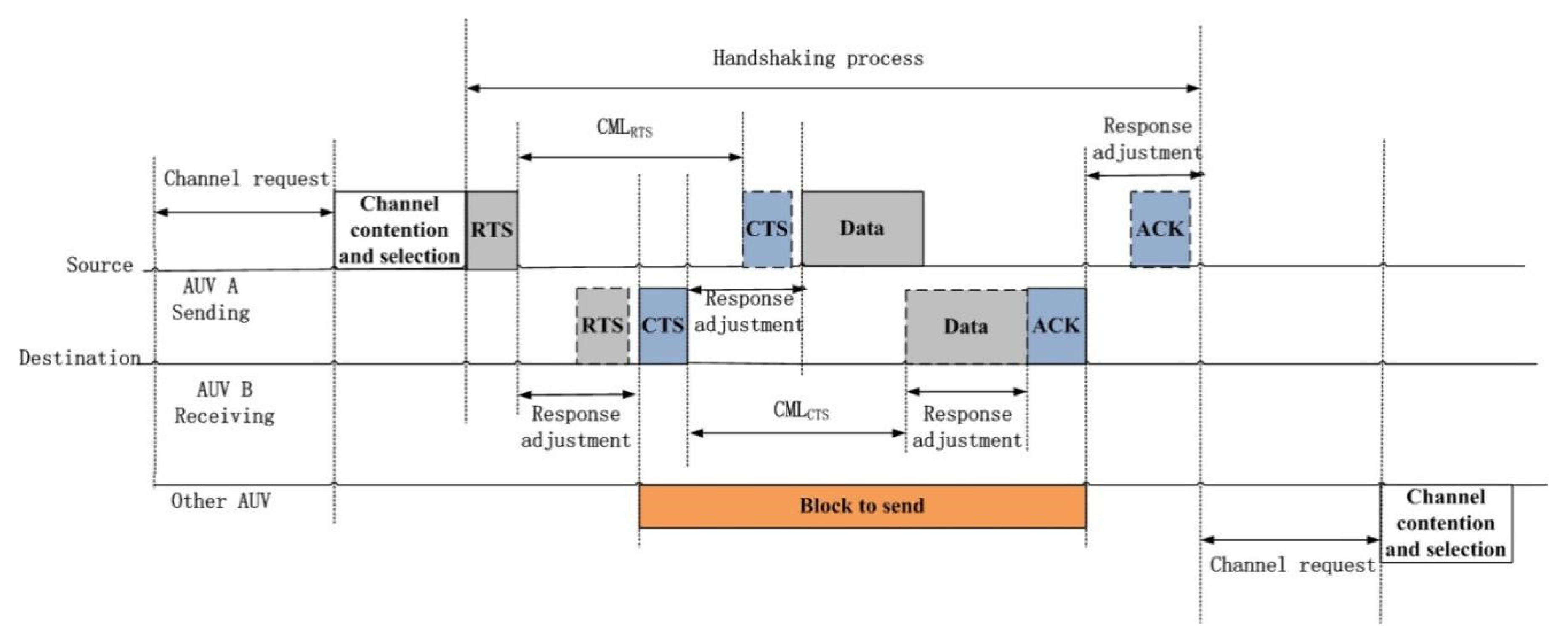
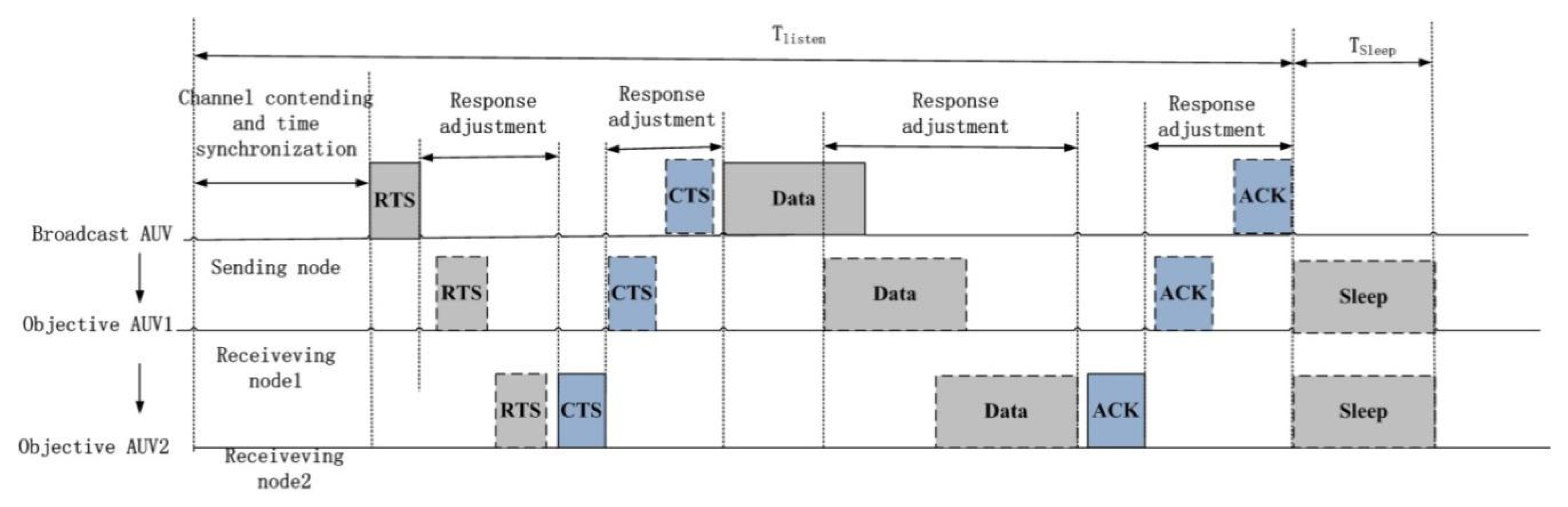
Currently, Autonomous Underwater Vehicles (AUVs) are increasingly attractive for various underwater tasks such as environmental exploration [1], seabed survey [2], harbor protection [3], and submarine search and rescue [4]. Recent advances in Autonomous Underwater Vehicle (AUV) research have enabled the utilization of multiple AUVs (MAUVs) to realize complex marine missions [5,6,7]. Moreover, although acoustic communications allow the improvement of localization precision, they are still limited with propagating delays and communication channel noise [8]. The upper bound range rate of underwater acoustic channel is 40 km·kb/s [9]. In order to achieve a global objective, each AUV can be taken as a relay and mobile node [10]. Information flow with interconnection topology graphs is necessary for reliable communication [11]. These graphs can have undirected or directed edges for the model of position constraints, information flow, or leader following inter-agent control specifications [12]. Therefore, the MAUVs’ acoustic communication structure should include both communication topology structure [13] and some collision-free data link schemes [14] in order to reduce information congestion and improve flow efficiency [15]. Meng, Shi, and Wang [16] presented a multi-channel scheme based on the multiple access with collision avoidance protocol to improve the network efficiency using code division multiple access (CDMA). Two channels are used for RTS (request to send)/CTS (clear to send) data packets. All nodes in the network are assigned to the same common channel for any packet arrival. One of the disadvantages of this protocol is the centralized nature of the CDMA scheme. In modular and scalable communication architecture, the data infrastructure includes navigation data, tracking data, target data, data request telegrams, etc. [17]. It can be reused, expanded, and bridged for wide area networks. However, the data for transmission is so great that wireless communication was used to assist acoustic communication during the sea trials of two AUVs’ cooperative missions [18]. Guo, Frater, and Ryan [19] proposed an adaptive propagation-delay tolerant media access control (MAC) [20] protocol for an underwater acoustic communication network. The protocol performs an improved handshaking with destination using RTS and CTS frames before transmitting the actual data frame to improve the communication efficiency. In order to further consider the channel blocking effect for simultaneous localization, artificial intelligence-based learning strategies have been employed for controllers [21,22].
In order to realize MAUVs’ formation, the vehicles’ trajectories not only depend on their own dead reckoning and control [23,24], but also depend on group objectives and environmental obstacles. Pramod Abichandani et al. [25] proposed a mixed integer nonlinear programming method for MAUVs’ motion planning under constraint communication. The collision-free trajectories accommodate stricter safety requirements despite intersecting or overlapping paths. Yukun Lin et al. [26] utilized a leader/follower multi-AUV control system to enable the AUVs to drive toward the target through a collision-free path. Mingzhi Chen et al. [27] proposed a novel cooperative hunting algorithm for inhomogeneous MAUVs to achieve quick and active path pursuit and planning. Marcello Farina et al. [28] proposed a distributed predictive control approach for robot coordination. The cost function was defined for rapid exploring formation control [12], coverage sensing, and collision avoidance. However, MAUVs’ formation in unknown environments and navigation in hostile environments [29] are often baffled with vehicle nonlinearity, constraint communications, environmental disturbance, and obstacles. Xiang Cao et al. [30] proposed a target following a cooperative search approach by combining the Glasius bio-inspired neural network with a bio-inspired cascaded tracking control approach to improve their search efficiency and reduce tracking errors. Hao Wang et al. [31] designed a smoothly switching function-based neural network adaptive technique to compensate system uncertainties for cooperative path following. Chengzhi Yuan et al. [32] proposed a learning-based formation scheme for multiple AUVs on heterogeneous nonlinear uncertain dynamics under the virtual leader-following framework, which includes an adaptive observer and a deterministic learning controller. The learned knowledge can be effectively stored in a time-invariant fashion by using radial basis function (RBF) neural networks. However, the formation error and stability not only lie in the controller quality, but they also are affected by the cooperative localization errors caused by packet transmission losses.
This paper proposed an adaptive formation scheme on the basis of multibody system concept, the contributions can be summarized in the following:
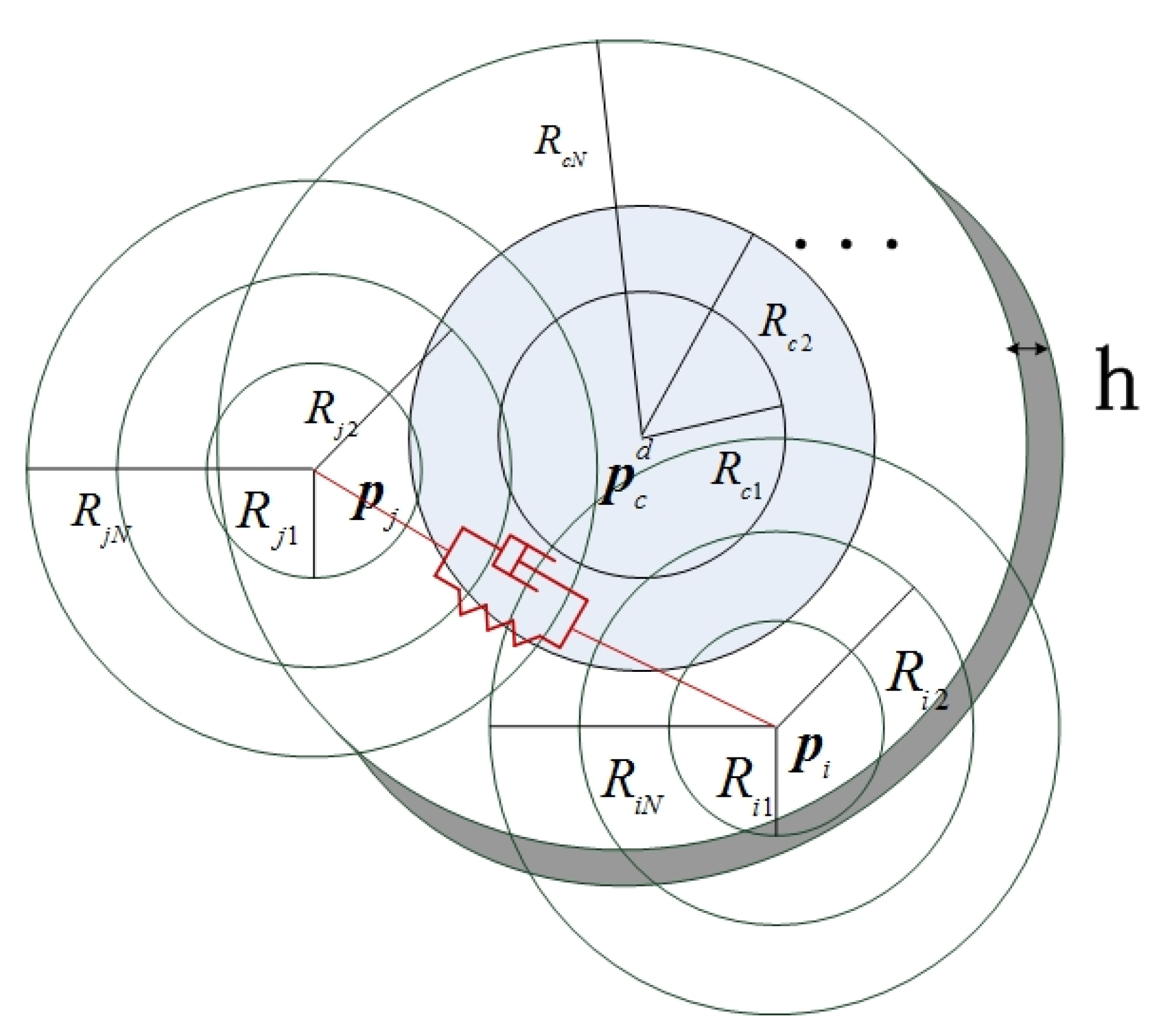
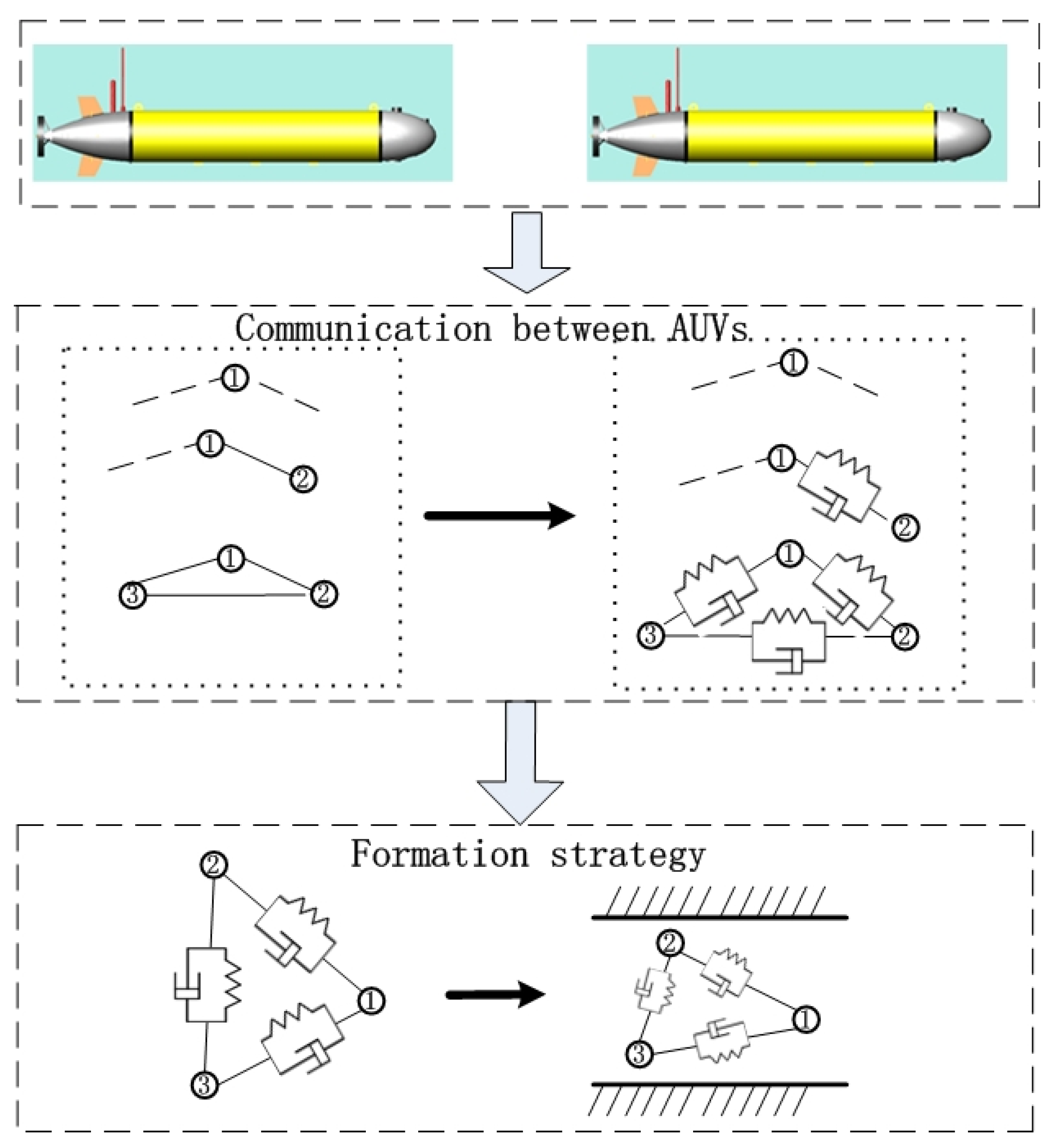
  • On the basis of the multibody system concept, the MAUVs’ formation and communication link framework has been established. The connection between AUVs can be viewed as a springs and damping system. An adaptive control strategy has been set up for multiple under-actuated AUVs formation with a desired formation region and magnitude reduced artificial potential function.
  • On the basis of the MAUVs’ formation and communication link framework, the packets transmission scheme has been designed with learning-based multi-layered network topology; the cooperative localization errors caused by packet loss are estimated and modified through reinforcement learning RBF neural networks.
  • On the basis of the MAUVs’ formation and communication link framework, an adaptive RBF formation scheme with magnitude reduced multi-layered potential energy functions has been designed on the basis of the time-delayed network framework. Simulations and experiments have verified the performance of the purposed schemes.
The rest of this study is organized as follows. In Section 2, the MAUVs’ formation and communication link framework will be proposed. An adaptive formation control approach of multiple AUVs will be proposed in Section 3. Simulations and experiments will be discussed and analyzed in Section 4. We will present the conclusion in Section 5.

3. Adaptive RBF Formation Scheme

The dynamic equation of the i-th AUV can be expressed as:
M i ( p i ) p ¨ i + C i ( p i ) p ˙ i + D i ( p i ) p ˙ i + g i ( p i ) + Δ i ( p i ) = T i
where M i ( p i ) is the 6 × 6 mass matrix of the AUV, C i ( p i ) is a 6 × 6 matrix of centrifugal and coriolis terms, D i ( p i ) is the damping matrix, g i ( p i ) is the vector of gravitational forces and moments, Δ i ( p i ) is uncertain dynamics, and T i contains the forces and torques from thrusts. If we define:
p ˙ c i = p ˙ c d ( α i Δ ξ i + γ j = 1 N i Δ ρ i j )
and set Δ ε i = α i Δ ξ i + γ j = 1 N i Δ ρ i j , we have p ˙ c i = p ˙ c d Δ ε i , where p ¨ c i = p ˙ c d Δ ε ˙ i . We define a sliding vector for the i-th AUV as:
s i = p ˙ i p ˙ c i = p ˙ i p ˙ c d + Δ ε i .
Thus, we obtain:
s ˙ i = p ¨ i p ¨ c d + Δ ε ˙ i .
Substituting Equations (28) and (29) into Equation (27), one has:
M i ( p i ) s ˙ i + C i ( p i ) s i + D i ( p i ) s i + M i ( p i ) p ¨ c d + C i ( p i ) p ˙ c d + D i ( p i ) p ˙ c d + g i ( p i ) + Δ i ( p i ) = T i .
According to the adaptive control principle, we obtain:
M i ( p i ) p ¨ c d + C i ( p i ) p ˙ c d + D i ( p i ) p ˙ c d + g i ( p i ) + Δ i ( p i ) = ϒ i ( p i , p ˙ i , p ˙ c d , p ¨ c d ) λ i
where ϒ i ( p i , p ˙ i , p ˙ c d , p ¨ c d ) is a known regressor matrix and λ i represents the dynamic parameters. Therefore, the RBF-based region based adaptive controller is:
T i = K s i s i K p Δ ε i + ϒ i ( p i , p ˙ i , p ˙ c d , p ¨ c d ) λ ^ i + W ^ i T σ ( s i ) .
If we set L i as positive definite matrices, the estimated parameter λ ^ i is updated as:
λ ^ i = L i ϒ i T ( q i , q ˙ i , q ˙ c d , q ¨ c d ) s i .
Therefore,
M i ( q i ) s ˙ i + C i ( q i ) s i + D i ( q i ) s i + K s i s i + K p Δ ε i + ϒ i ( q i , q ˙ i , q ˙ c d , q ¨ c d ) Δ λ i + W ^ i T σ ( s i ) = 0
where Δ λ i = λ i λ ^ i .
In order to prove the stability of the RBF-based adaptive formation scheme, we obtain a Lyapunov-like function for the multiple AUVs system as:
V = i = 1 N 1 2 s i T M i ( q i ) s i + i = 1 N 1 2 Δ λ i T M i ( q i ) λ i + k = 1 3 1 2 W ˜ k , i T Γ k , i 1 W ˜ k , i + i = 1 N 1 2 α i K p l = 1 6 K l P S m ( δ q l o m ) + i = 1 N 1 2 γ i K p j = 1 N K i j Q 2 i j ( δ q i j )
We obtain from Equations (20), (31), and (32):
V ˙ i = i = 1 N s i T K s i s i i = 1 N s i T D i ( q i ) s i i = 1 N s i T K p Δ ε i + i = 1 N α i K p e ˙ T Δ ξ i + i = 1 N 1 2 γ i K p j = 1 N i h = 1 L k h i j δ q ˙ i j T [ max ( 0 , g h i j ( δ q i j ) ) ] ( g h i j ( δ q i j ) δ q i j ) T k = 1 3 1 2 W ˜ k , i T ( σ ( s i ) η k , i + τ k , i W ^ k , i T )
If we set E N i = [ 1 , , 1 N i ] T , the last term of the Equation (36) can be rewritten by using Equation (25):
i = 1 N 1 2 γ i j = 1 N i K p e ˙ Δ ρ i j i = 1 N 1 2 γ i K p j = 1 N i h = 1 L k h i j e ˙ T [ max ( 0 , g h i j ( δ q i j ) ) ] ( g h i j ( δ q i j ) δ q i j ) T .
From Equation (22), we can obtain
g h i j ( δ q i j ) = g h j i ( δ q j i ) a n d g h i j ( δ q i j ) δ q i j = g h j i ( δ q j i ) δ q j i .
Thus, the last term of Equation (35) can be written as
i = 1 N 1 2 γ i K p j = 1 N i h = 1 L k h i j e ˙ T [ max ( 0 , g h j i ( δ q j i ) ) ] ( g h j i ( δ q j i ) δ q j i ) T = i = 1 N 1 2 γ i K p j = 1 N i h = 1 L k h j i e ˙ T [ max ( 0 , g h j i ( δ q j i ) ) ] ( g h j i ( δ q j i ) δ q j i ) T = i = 1 N 1 2 γ i K p j = 1 N i h = 1 L k h j i e ˙ T [ max ( 0 , g h j i ( δ q j i ) ) ] ( g h j i ( δ q j i ) δ q j i ) T = i = 1 N 1 2 γ i K p j = 1 N i e ˙ T Δ ρ j i = i = 1 N 1 2 γ i K p j = 1 N i e ˙ T Δ ρ i j
Moreover, τ k , i W ˜ k , i W ^ k , i T 1 2 τ k , i ( W ˜ k , i 2 + W ˜ k , i * 2 ) , W k , i * denotes the ideal constant weights.
Therefore, the time derivative of the Lyapunov function in Equation (37) is
V ˙ i i = 1 N s i T K s i s i i = 1 N s i T D i ( q i ) s i i = 1 N K p Δ ε i T Δ ε i 1 2 τ k , i ( W ˜ k , i 2 + W ˜ k , i * 2 ) 0 .
From Equation (40), it can be obtained that s i , Δ ε i , Δ ξ ˙ i , Δ ρ ˙ i j and Δ ε ˙ i are bounded. q ¨ r i is bounded if e ¨ is bounded. Thus, s ˙ i is bounded from Equation (32). Applying Barbalat’s lemma, we obtain and s i 0 as t if e ˙ 0 . From Equation (28), Δ ρ i j 0 .
Since
Δ ε i = α i Δ ξ i + γ j = 1 N i Δ ρ i j 0
as t , all the error terms are summing yields:
i = 1 N ( α i Δ ξ i + γ j = 1 N i Δ ρ i j ) 0
Since the interactive forces between AUVs are bi-directional, the summation of all the interactive forces in the systems is zero, we obtain:
i = 1 N α i Δ ξ i 0 .
One trivial solution of Equation (43) is Δ ξ i 0 , which means that all the AUVs remain in the desired region all the time because of Equation (40). This means that each AUV is in the desired region and maintains a minimum distance among themselves simultaneously. On the contrary, if we assume Δ ξ i 0 , the AUV are outside the desired region. Thus, some of the AUVs must be on the opposite sides of the desired region and their Δ ξ i values can not be cancelled out, which contradicts with the fact that i = 1 N α i Δ ξ i = 0 . Therefore, the only possibility is i = 1 N α i Δ ξ i = 0 when Δ ξ i = 0 . From Equation (41), Δ ρ i j = 0 . Therefore, if and only if all the forces of Δ ξ i are zero or cancelled out, does i = 1 N α i Δ ξ i = 0 . This means that some AUVs must be on the opposite sides of the desired region. When there are interactions or coupling among the AUVs from different sides of the desired region, a reasonable weightage can be obtained for Δ ξ i by adjusting α i . Finally, since s i 0 and Δ ξ i 0 , we can conclude from Equation (28) that Δ ρ i j 0 . Hence, all the AUVs are synchronized to the same speed and maintain constant distances among themselves at steady state.

4. Simulations and Experiments

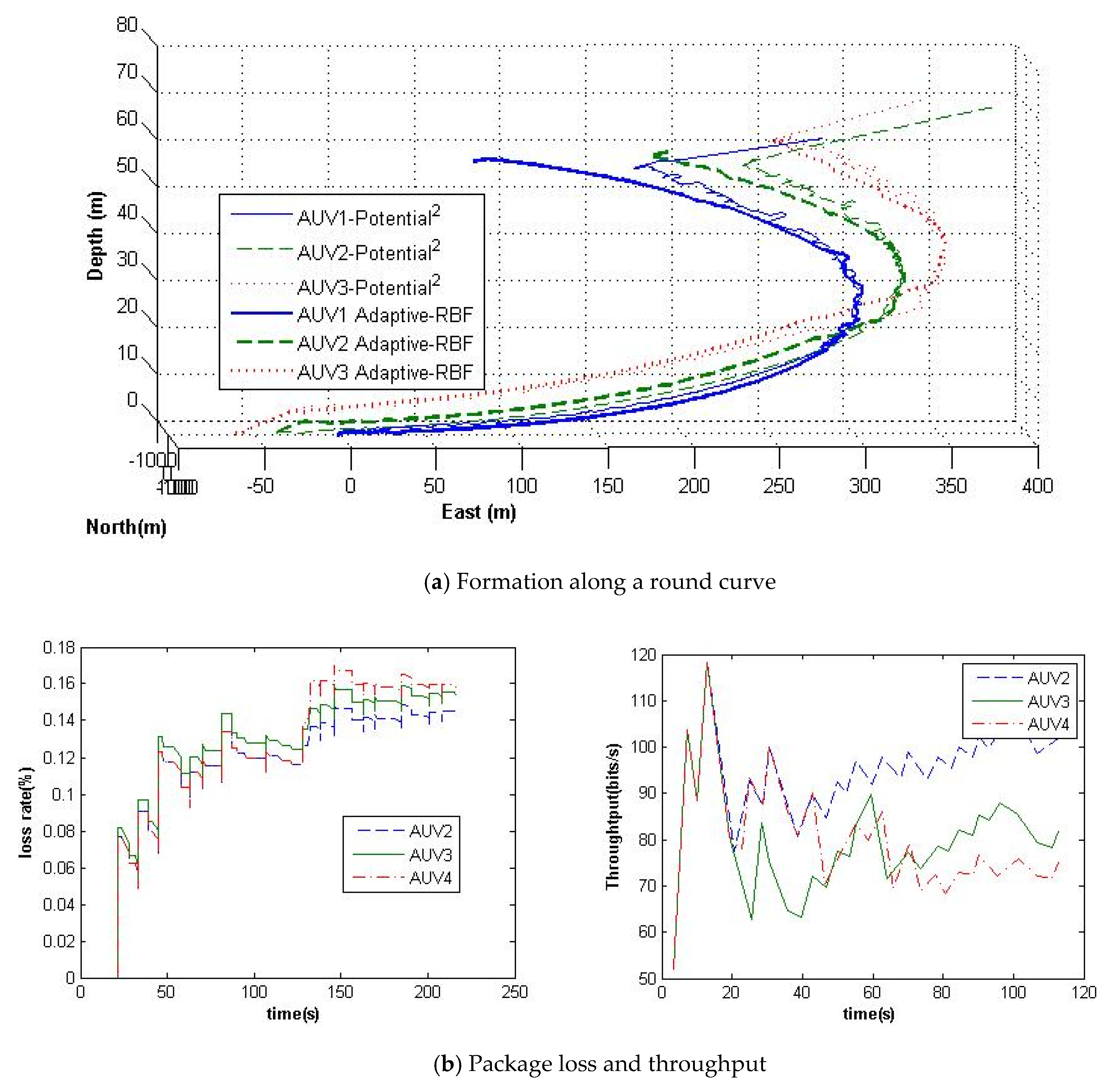
In order to analyze and verify the designed communication link framework and formation scheme, simulations and experiments have been launched. In the formation simulations of Figure 6 and Figure 7, comparisons have been made on the proposed adaptive formation scheme with and without the RBF neural network. The disturbance is set with a current speed as 0.1 m/s in the west direction. The simulation includes the formation along a round curve and cruising in the confined channel. Their communications are simulated in the NS-2 simulator on the basis of the communication protocol of Section 2. The formation control simulation platform was established on the basis of AUV hydrodynamic equations.
Figure 6. Formation simulation along a round curve.
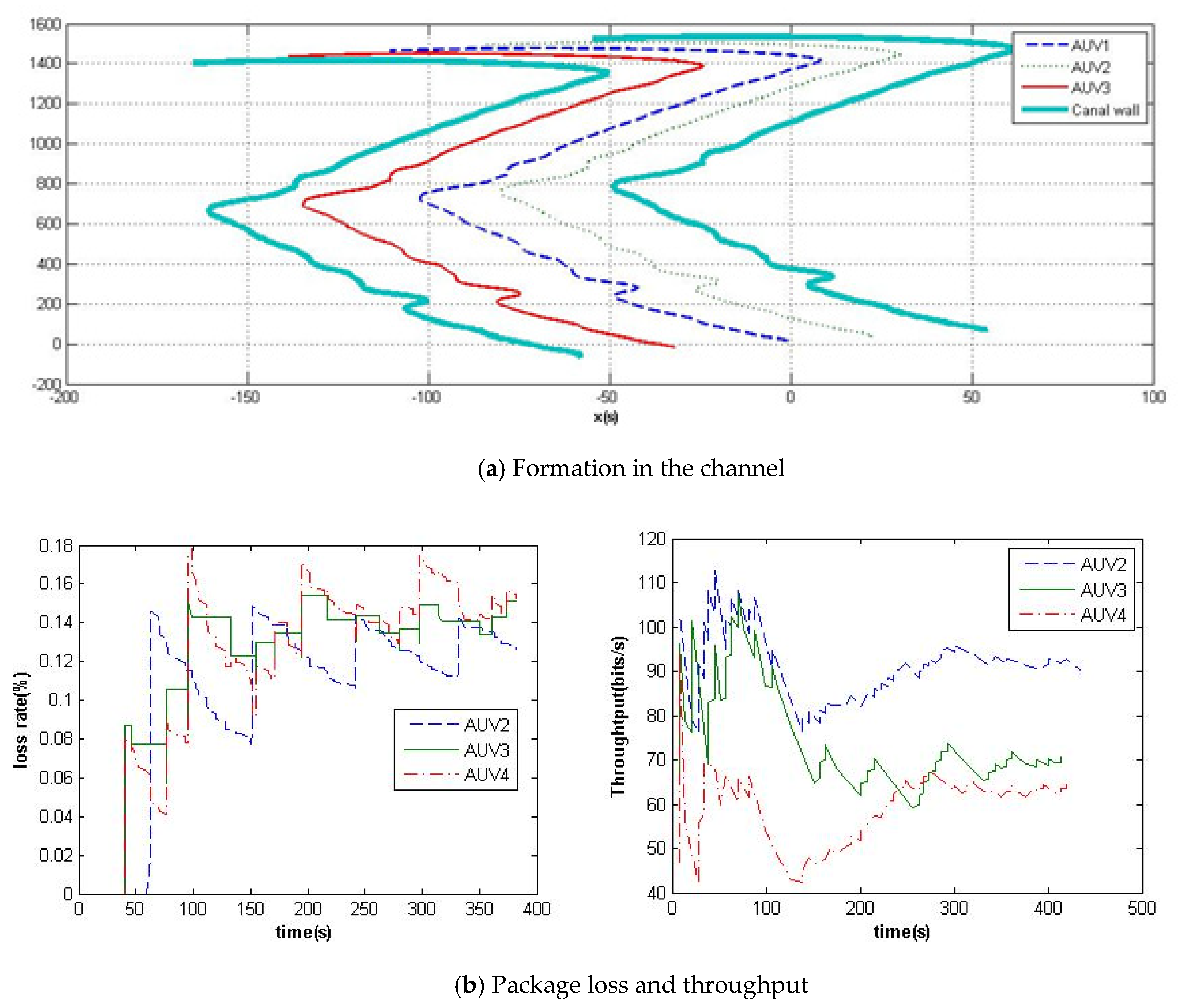
Figure 7. Formation simulation in the channel.
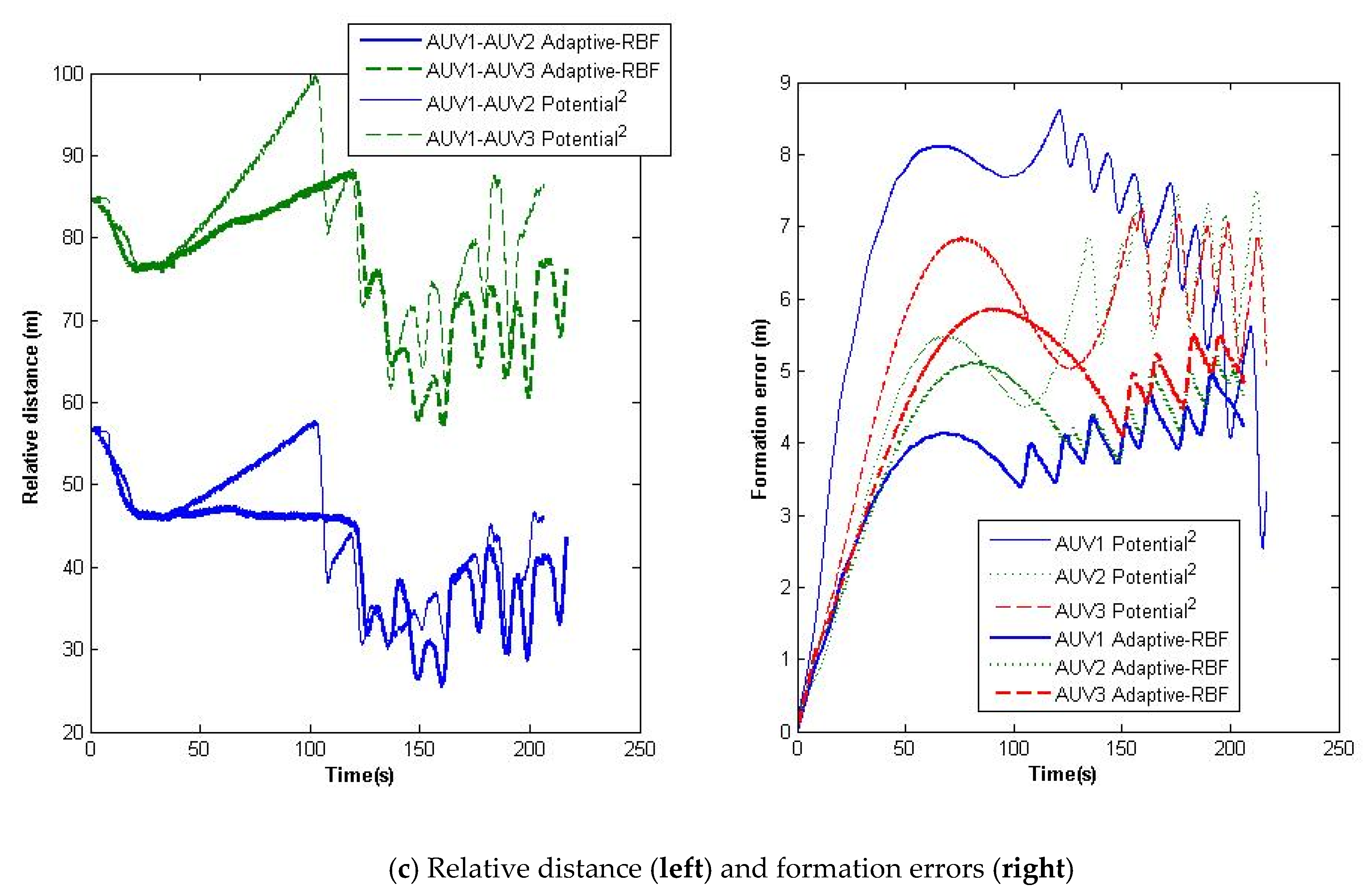
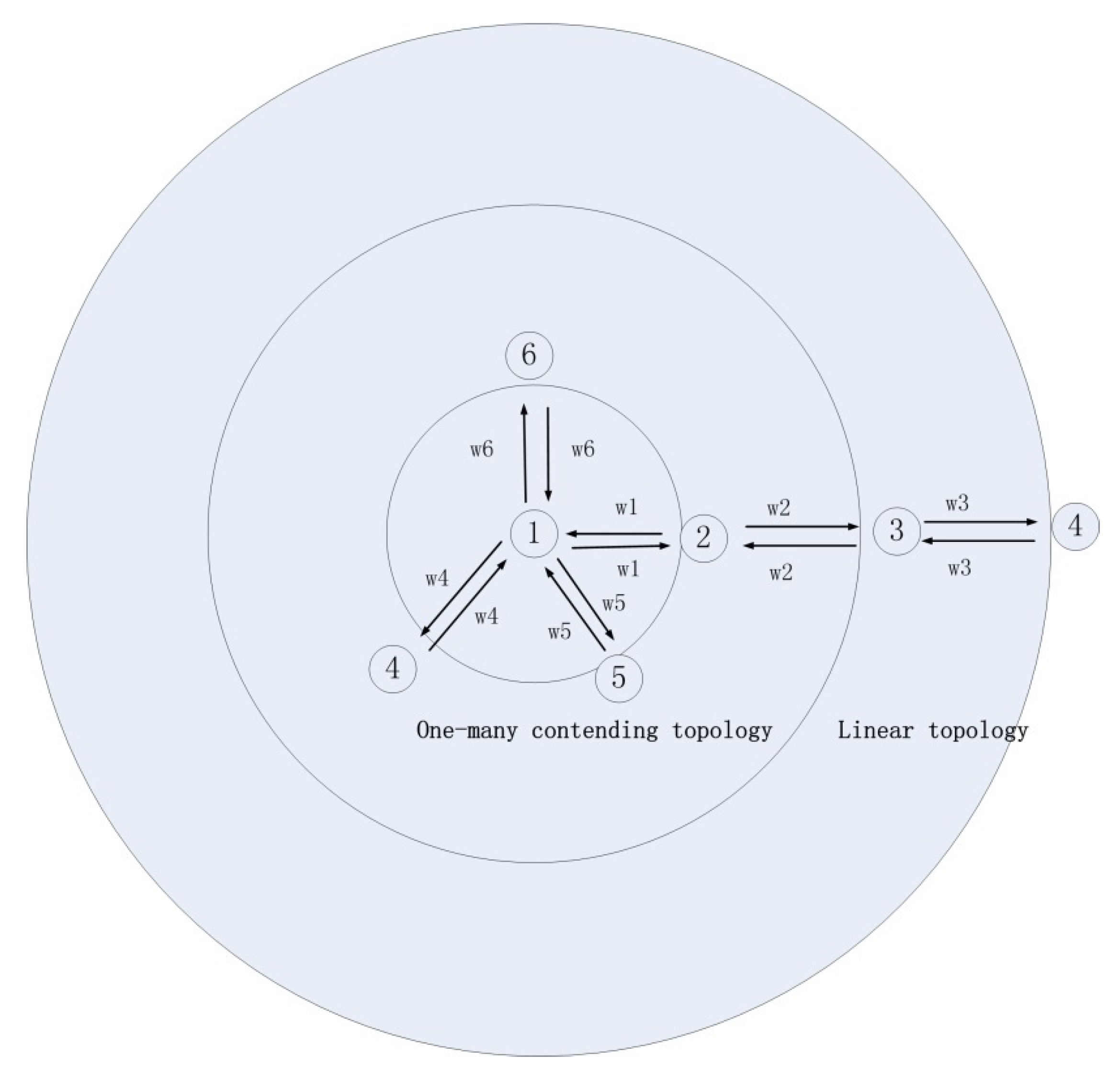
In Figure 6, the three AUVs are planned to follow a round curve with a line shape, e.g., the followers are planned to maintain the same distance one after another. The protocol for linear topology has been applied for the formation communication on the basis of the network framework of Section 2. Since the radius of the trace curvature is greater than the radius of the AUVs’ gyration, these three AUVs can keep formation cruising precisely. The package loss and data transmission throughput are illustrated in Figure 6b; one can improve the cooperative localization accuracy through reinforcement learning RBF neural network and therefore improve the formation stability. From Figure 6c, the reinforcement learning RBF neural network can compensate and reduce the cooperative localization errors caused by communication loss through Equations (12)–(14).
Channel cooperative exploration is one of the important applications, and it is very difficult for MAUVs because of the change of channel size and curve. Through the reinforcement learning RBF neural network, the MAUVs’ formation can obtain more accurate cooperative localization information. The multibody system-based potential field can help MAUVs maintain and change their formation shape according to the environment. The protocol for one–many contending topology and linear topology have been applied and switched according to the shape requirements.
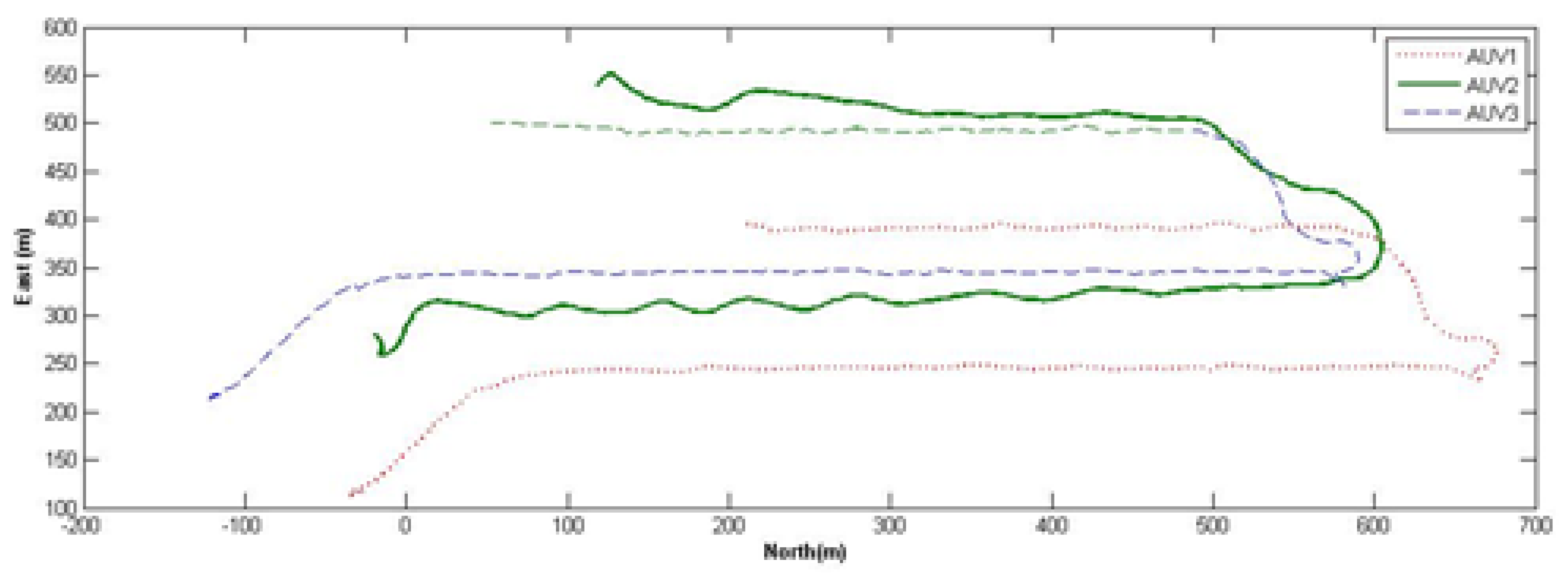
Offshore experiments of MAUVs formation coverage exploration are illustrated in Figure 8. The vehicles were given folding lines with a 90-degree yaw path to test the formation performance of heterogeneous AUVs. The three AUVs can keep their formation while cruising under the strategies proposed in this study.
Figure 8. Formation coverage experiments.

5. Conclusions

MAUVs’ formation is of great significance for marine surveys and exploration. In order to realize MAUVs’ formation, this study has focused on their communication and formation. On the basis of the multibody system concept, the MAUVs’ formation and communication link framework has been established with an adaptive RBF strategy. The connection for communication and formation between AUVs can be viewed as a springs and damping system. The packets transmission scheme has been designed with multi-layered network topology, which reduces the packets’ loss rate and improves the throughput of the network. Moreover, through the reinforcement-learning RBF neural networks, an adaptive RBF formation strategy can be improved with more accurate cooperative localization information. Simulations and offshore experiments with multiple heterogeneous under-actuated AUVs testify the performance of proposed method.

Author Contributions

Conceptualization, Y.P.; methodology, L.W. and Q.T.; data curation, G.Z.; writing—original draft preparation, H.H.; writing—review and editing, T.Z. and Q.T. All authors have read and agreed to the published version of the manuscript.

Funding

This project is funded by the National Nature Science Foundation of China, grant number: 61633009, 51579053, 51779059; and Field Fund of the 13th Five-Year Plan for Pre-research Equipment, grant number: 61403120301, and also funded by the Key Basic Research Project of “Shanghai Science and Technology Innovation Plan”, grant number: No.15JC1403300.

Conflicts of Interest

The authors declare no conflict of interest.

References

  1. Mohammad Pourmahmood Aghababa. 3D path planning for underwater vehicles using five evolutionary optimization algorithms avoiding static and energetic obstacles. Appl. Ocean Res. 2012, 38, 48–62. [Google Scholar] [CrossRef]
  2. Cheng, C.-T.; Fallahi, K.; Leung, H.; Tse, C.K. A Genetic Algorithm-Inspired UUV Path Planner Based on Dynamic Programming. IEEE Trans. Syst. ManCybernytics-Part C Appl. Rev. 2012, 42, 1128–1134. [Google Scholar] [CrossRef]
  3. Lee, T.-S.; Lee, B.H. A new hybrid terrain coverage method for underwater robotic exploration. J. Mar. Sci. Technol. 2014, 19, 75–89. [Google Scholar] [CrossRef]
  4. Zeng, Z.; Lian, L.; Sammut, K.; He, F.; Tang, Y.; Lammas, A. A survey on path planning for persistent autonomy of autonomous underwater vehicles. Ocean Eng. 2015, 110, 303–313. [Google Scholar] [CrossRef]
  5. Enrico, P.; Fabio, L.; Marco, C. High Accuracy Buoyancy for Underwater Gliders: The Uncertainty in the Depth Control. Sensors 2019, 19, 1831. [Google Scholar]
  6. Mario, A.; Antonelli, G. Experiments on Sampling/Patrolling with two Autonomous Underwater Vehicles. Robot. Auton. Syst. 2015, 67, 61–71. [Google Scholar] [CrossRef]
  7. Petritoli, E.; Leccese, F. High accuracy attitude and navigation system for an autonomous underwater vehicle (AUV). Acta Imeko 2018, 7, 3–9. [Google Scholar] [CrossRef]
  8. Park, B.S. Adaptive formation control of underactuated autonomous underwater vehicles. Ocean Eng. 2015, 96, 1–7. [Google Scholar] [CrossRef]
  9. Zheng, H.; Wang, N.; Wu, J. Minimizing deep sea data collection delay with autonomous underwater vehicles. J. Parallel Distrib. Comput. 2017, 104, 99–113. [Google Scholar] [CrossRef]
  10. Liang, H.; Kang, F.; Li, H. UUV formation system modeling and simulation research based on Multi-Agent Interaction Chain. Int. J. Modeling Simul. Sci. Comput. 2015, 6, 1550019–1–23. [Google Scholar] [CrossRef]
  11. Zhang, L.; Wang, T.; Zhang, F.; Xu, D. Cooperative Localization for Multi-AUVs Based on GM-PHD Filters and Information Entropy Theory. Sensors 2017, 17, 1–16. [Google Scholar]
  12. Allotta, B.; Caiti, A.; Costanzi, R.; Corato, F.D.; Fenucci, D.; Monni, N.; Pugi, L.; Ridolfi, A. Cooperative navigation of AUVs via acoustic communication networking: Field experience with the Typhoon vehicles. Auton. Robot 2016, 40, 1229–1244. [Google Scholar] [CrossRef]
  13. Walls, J.M.; Eustice, R.M. An origin state method for communication constrained cooperative localization with robustness to packet loss. Int. J. Robot. Res. 2014, 33, 1191–1208. [Google Scholar] [CrossRef]
  14. Khan, J.U.; Cho, H.-S. Data-Gathering Scheme Using AUVs in Large-Scale Underwater Sensor Networks: A Multihop Approach. Sensors 2016, 16, 1626. [Google Scholar] [CrossRef]
  15. Yan, Z.; Wu, Y.; Du, X.; Li, J. Limited Communication Consensus Control of Leader-Following Multi-UUVs in a Swarm System Under Multi-Independent Switching Topologies and Time Delay. IEEE Access 2018, 5, 33183–33200. [Google Scholar] [CrossRef]
  16. Meng, T.; Shi, H.; Wang, Y. A MAC protocol for underwater sensor networks. In Proceedings of the 8th International Conference on Electronic Measurement and Instruments, Xi’an, China, 16–18 August 2007. [Google Scholar]
  17. Bharamagoudra, M.R.; Manvi, S.S.; Gonen, B. Event driven energy depth and channel aware routing for underwater acoustic sensor networks: Agent oriented clustering based approach. Comput. Electr. Eng. 2017, 58, 1–19. [Google Scholar] [CrossRef]
  18. Brignone, L.; Alves, J.; Opderbecke, J. GREX sea trials: First experiences in multiple underwater vehicle coordination based on acoustic communication. In Proceedings of the OCEANS 2009-EUROPE, Bremen, Germany, 11–14 May 2009; pp. 1–6. [Google Scholar]
  19. Guo, X.; Frater, M.R.; Ryan, M.J. Design of a propagation-delay-tolerant MAC protocol for underwater acoustic sensor networks. IEEE J. Ocean. Eng. 2009, 34, 170–180. [Google Scholar]
  20. Kim, S.; Yoo, Y. Impact of MAC Delay on AUV Localization: Underwater Localization Based on Hyperbolic Frequency Modulation Signal. Sensors 2018, 18, 356. [Google Scholar] [CrossRef]
  21. Guerra, R.E.H.; Quiza, R.; Villalongda, A.; Arenas, J.; Castaño, F. Digital Twin-Based Optimization for Ultraprecision Motion Systems with Backlash and Friction. IEEE Access 2019. [Google Scholar] [CrossRef]
  22. Beruvides, G.; Juanes, C.; Castaño, F.; Guerra, R.E.H. A self-learning strategy for artificial cognitive control systems. In Proceedings of the 2015 IEEE International Conference on Industrial Informatics, Cambridge, UK, 22–24 July 2015; pp. 1180–1185. [Google Scholar]
  23. Qi, X. Adaptive coordinated tracking control of multiple autonomous underwater vehicles. Ocean Eng. 2014, 91, 84–90. [Google Scholar] [CrossRef]
  24. Abichandani, P.; Torabi, S.; Basu, S.; Benson, H. Mixed Integer Nonlinear Programming Framework for Fixed Path Coordination of Multiple Underwater Vehicles under Acoustic Communication Constraints. IEEE J. Ocean. Eng. 2015, 40, 864–873. [Google Scholar] [CrossRef]
  25. Lin, Y.; Hsiung, J.; Piersall, R.; White, C.; Lowe, C.G.; Clark, C.M. A Multi-Autonomous Underwater Vehicle System for Autonomous Tracking of Marine Life. J. Field Robot. 2017, 34, 757–774. [Google Scholar] [CrossRef]
  26. Chen, M.; Zhu, D. A Novel Cooperative Hunting Algorithm for Inhomogeneous Multiple Autonomous Underwater Vehicles. IEEE Access 2018, 6, 7818–7828. [Google Scholar] [CrossRef]
  27. Farina, M.; Perizzato, A.; Scattolini, R. Application of distributed predictive control to motion and coordination problems for unicycle autonomous robots. Robot. Auton. Syst. 2015, 72, 248–260. [Google Scholar] [CrossRef]
  28. Li, Y.; Cui, R.; Li, Z.; Xu, D. Neural Network Approximation Based Near-Optimal Motion Planning with Kinodynamic Constraints Using RRT. IEEE Trans. Ind. Electron. 2018, 65, 8718–8729. [Google Scholar] [CrossRef]
  29. Liu, Y.; Jia, Y. An iterative learning approach to formation control of multi-agent systems. Syst. Control Lett. 2012, 61, 148–154. [Google Scholar] [CrossRef]
  30. Cao, X.; Sun, H.; Jan, G.E. Multi-AUV cooperative target search and tracking in unknown underwater environment. Ocean Eng. 2018, 150, 1–11. [Google Scholar] [CrossRef]
  31. Wang, H.; Liu, K.; Li, S. Command filter based globally stable adaptive neural control for cooperative path following of multiple underactuated autonomous underwater vehicles with partial knowledge of the reference speed. Neurocomputing 2018, 275, 1478–1489. [Google Scholar] [CrossRef]
  32. Yuan, C.; Licht, S.; He, H. Formation Learning Control of Multiple Autonomous Underwater Vehicles with Heterogeneous Nonlinear Uncertain Dynamics. IEEE Trans. Cybern. 2018, 48, 2920–2934. [Google Scholar] [CrossRef]
Article Metrics

Citations

Article Access Statistics

Multiple requests from the same IP address are counted as one view.