You are currently viewing a new version of our website. To view the old version click .
Sensors
  • Article
  • Open Access

31 October 2019

An Anti-Interference Scheme for UAV Data Links in Air–Ground Integrated Vehicular Networks


,
,
,
and
1
Department of Communication Engineering, Northwestern Polytechnical University, Xi’an 710072, China
2
Department of Computer and Information Sciences, Temple University, Philadelphia, PA 19122, USA
3
Department of Computer Science and Engineering, Qatar University, Doha 2713, Qatar
*
Author to whom correspondence should be addressed.
This article belongs to the Special Issue UAV-Based Applications in the Internet of Things (IoT)

Abstract

As one of the main applications of the Internet of things (IoT), the vehicular ad-hoc network (VANET) is the core of the intelligent transportation system (ITS). Air–ground integrated vehicular networks (AGIVNs) assisted by unmanned aerial vehicles (UAVs) have the advantages of wide coverage and flexible configuration, which outperform the ground-based VANET in terms of communication quality. However, the complex electromagnetic interference (EMI) severely degrades the communication performance of UAV sensors. Therefore, it is meaningful and challenging to design an efficient anti-interference scheme for UAV data links in AGIVNs. In this paper, we propose an anti-interference scheme, named as Mary-MCM, for UAV data links in AGIVNs based on multi-ary (M-ary) spread spectrum and multi-carrier modulation (MCM). Specifically, the Mary-MCM disperses the interference power by expanding the signal spectrum, such that the anti-interference ability of AGIVNs is enhanced. Besides, by using MCM and multiple-input multiple-output (MIMO) technologies, the Mary-MCM improves the spectrum utilization effectively while ensuring system performance. The simulation results verify that the Mary-MCM achieves excellent anti-interference performance under different EMI combinations.

1. Introduction

In recent years, with the rapid development of the Internet of things (IoT) industry and the rise of some new businesses such as smart society, smart parks and smart cities, the world has entered the era of the Internet of everything [1]. Specifically, IoT has penetrated every aspect of life, including medicine, environment, agriculture, transportation, and education [2].
The vehicular ad-hoc network (VANET) is one of the main applications of the IoT, which has received extensive attention as the core of the intelligent transportation systems (ITS) [3]. VANET can provide users with various types of services through sensors, including road safety, entertainment, and path planning [4]. In ITS, the vehicle not only needs to acquire a wide range of traffic conditions and warning information in real time, but also needs to transmit this information. However, in larger spatial scales, obstacles, electromagnetic interference, and bad weather may lead to the quality decline or even breakdown of the data link [5]. In some extreme environments, due to the lack of infrastructure, it is sometimes difficult to meet the demand only based on the ground-based VANET [6,7]. In the future, ITS applications will be supported by a new VANET architecture with greater coverage and more flexible, efficient means of communication.
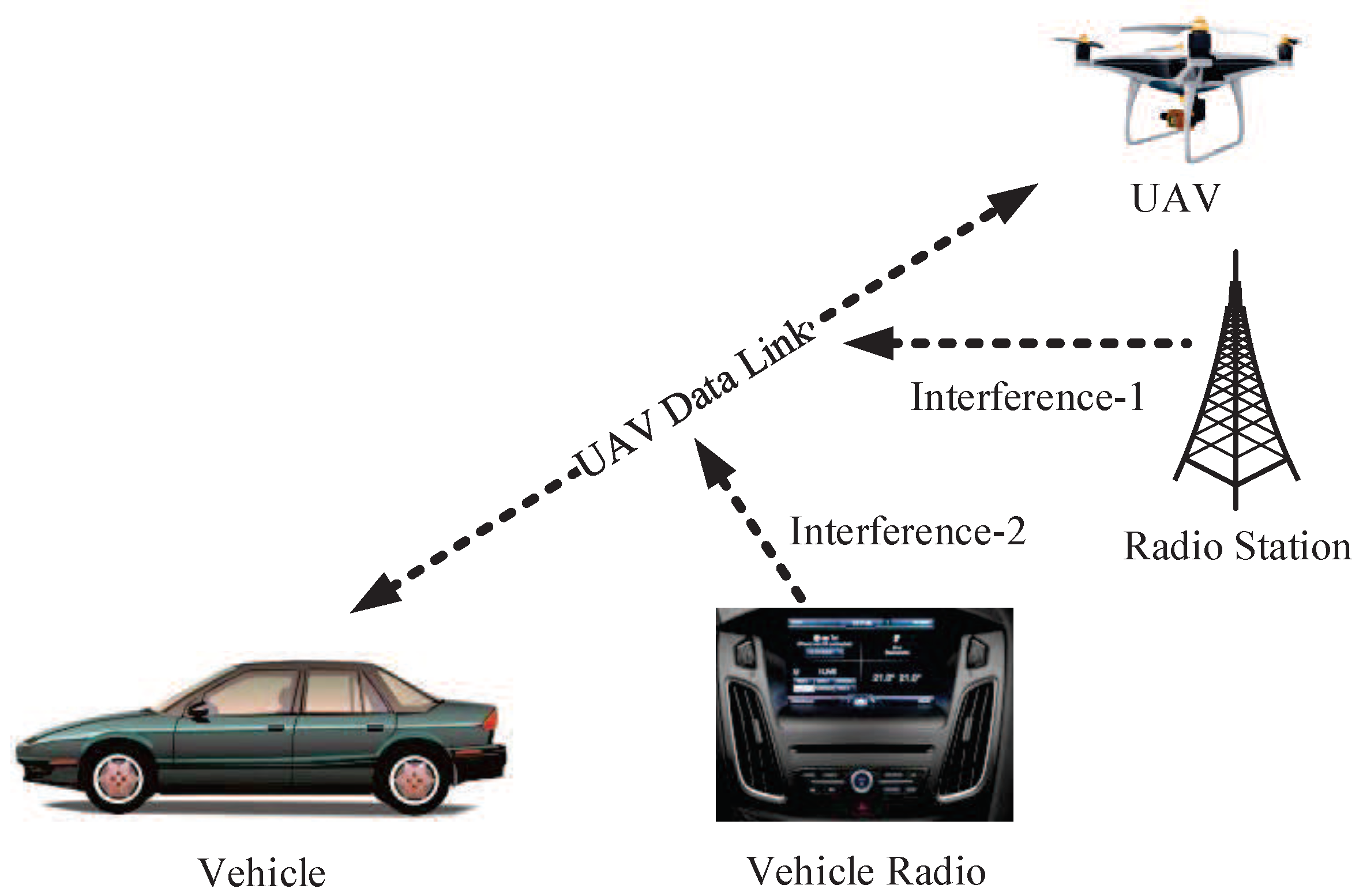
Inspired by the above, we propose an air–ground integrated vehicular networks (AGIVNs) architecture that utilizes UAV-assisted communication to improve the quality of VANET communication. AGIVNs are typically composed of many low-cost and low-power sensors, which can perform sensing, simple computations, and short-range wireless communications [8]. Sensors mounted on UAVs or vehicles can intelligently detect road conditions, such as real-time traffic congestion, average speed, surface condition, or high-speed tolling. The information obtained through sensors can be forwarded to the driver via AGIVNs to assist the driver to avoid collisions at crowded intersections and highway entries [9]. From the above, the information acquisition, processing, and transmission are three important functions of the sensors in AGIVNs.
However, with the rapid growth of wireless services and mobile devices, electromagnetic interference (EMI) is increasingly serious [10]. At present, the main anti-interference technologies such as direct sequence spread spectrum (DSSS), frequency-hopping spread spectrum (FHSS), and time hopping (TH) cannot solve the EMI problem of AGIVNs [11]. Therefore, for the sensor information transmission, developing radio access technologies (RATs) that enable reliable and low-latency AGIVNs communications has become a hot topic.
In recent years, some researchers have proposed that vehicle-to-everything (V2X) communications can improve the reliability of communication services, lower the end-to-end latency and support applications that require high throughput. For instance, the authors of [12] indicated that V2X communications have the potential to significantly bring down the number of vehicle crashes, thereby reducing the number of associated fatalities. In addition, V2X-capable vehicles can assist in better traffic management leading to greener vehicles and lower fuel costs [13,14]. Most of them have been devoted to improving the performance of transmission technologies for V2X. However, AGIVNs are different from VANET, the transmission technologies for V2X are difficult to guarantee the accurate transmission of information in the environment of strong EMI. Because the transmission technologies for V2X do not take account of the impacts of UAV data links on AGIVNs performance.
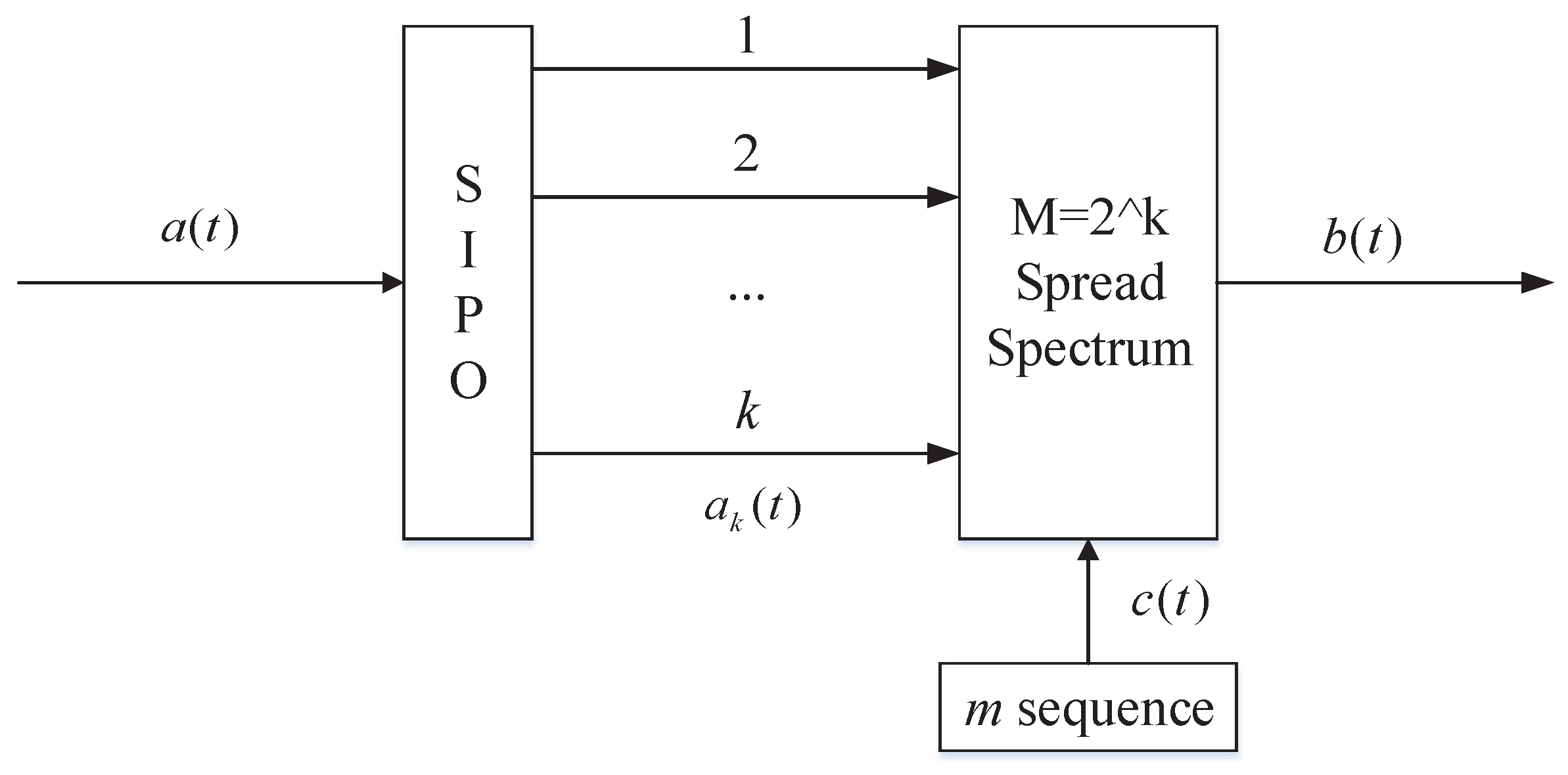
In this paper, different from aforementioned schemes, we take into consideration the characteristics of spreading and utilize multi-ary (M-ary) spread spectrum to improve the spectrum utilization of the UAV data link. M-ary spread spectrum can use orthogonal variable spreading factor (OVSF) to transmit information. At the same baud rate and spreading gain, the system bandwidth of M-ary is only 1 / log 2 M of DSSS. In addition, we also adopt the multi-carrier modulation (MCM) technology to improve the anti-interference performance. Specifically, MCM splits the data stream into several substreams, thus dispersing the interference signal. Therefore, the anti-interference scheme combining M-ary spread spectrum and MCM can not only obtain the same anti-interference performance as DSSS, but also improve spectrum utilization effectively.
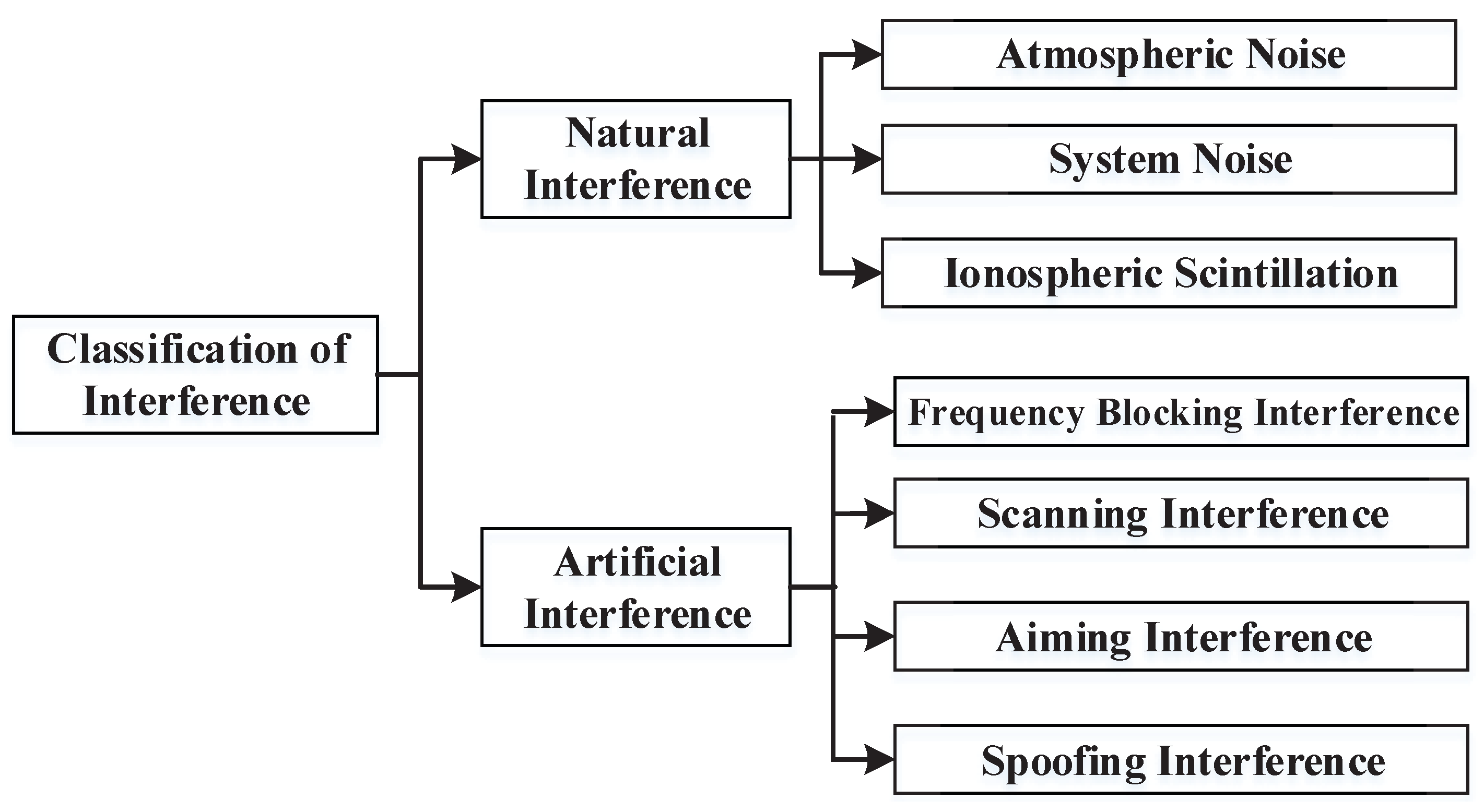
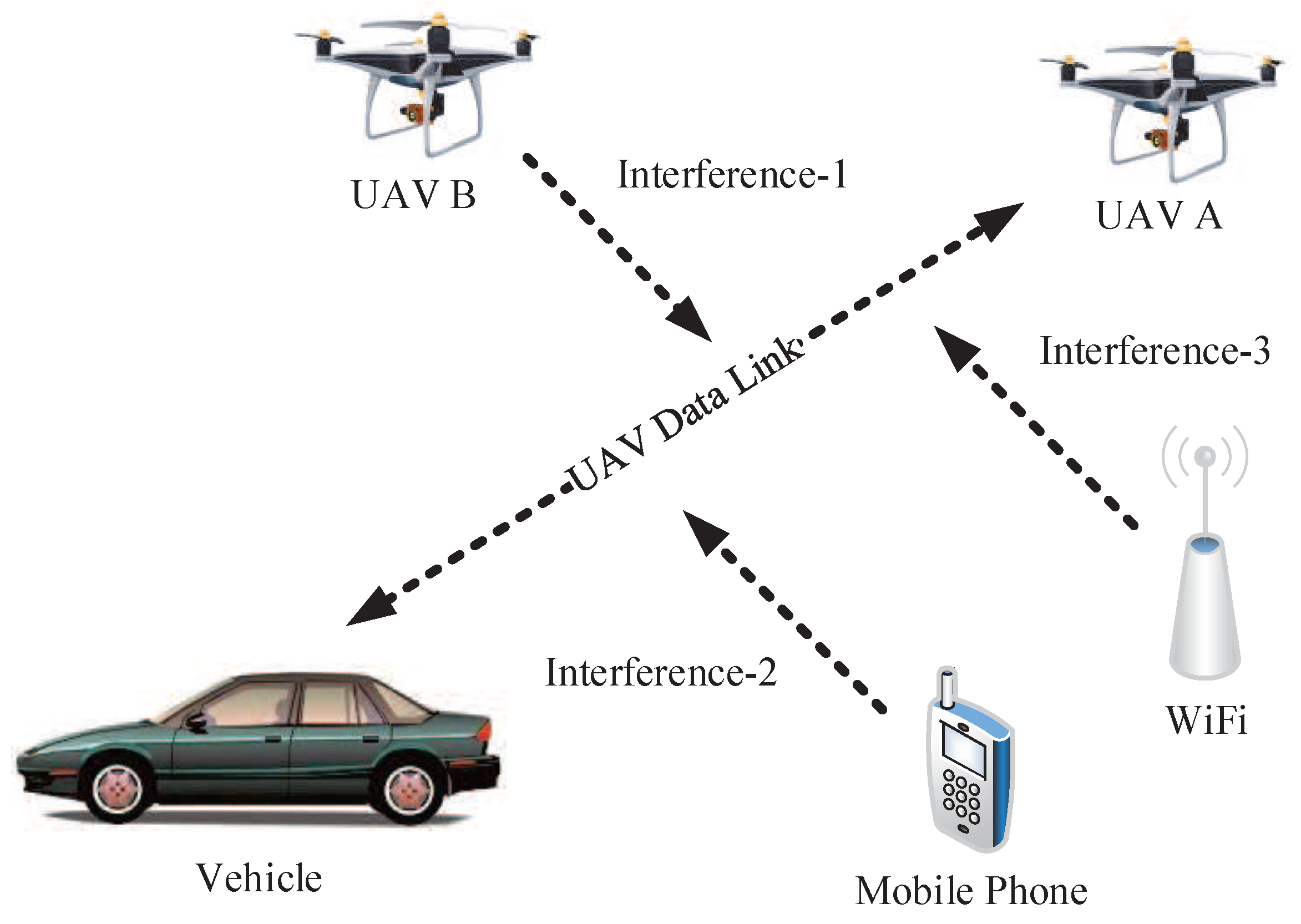
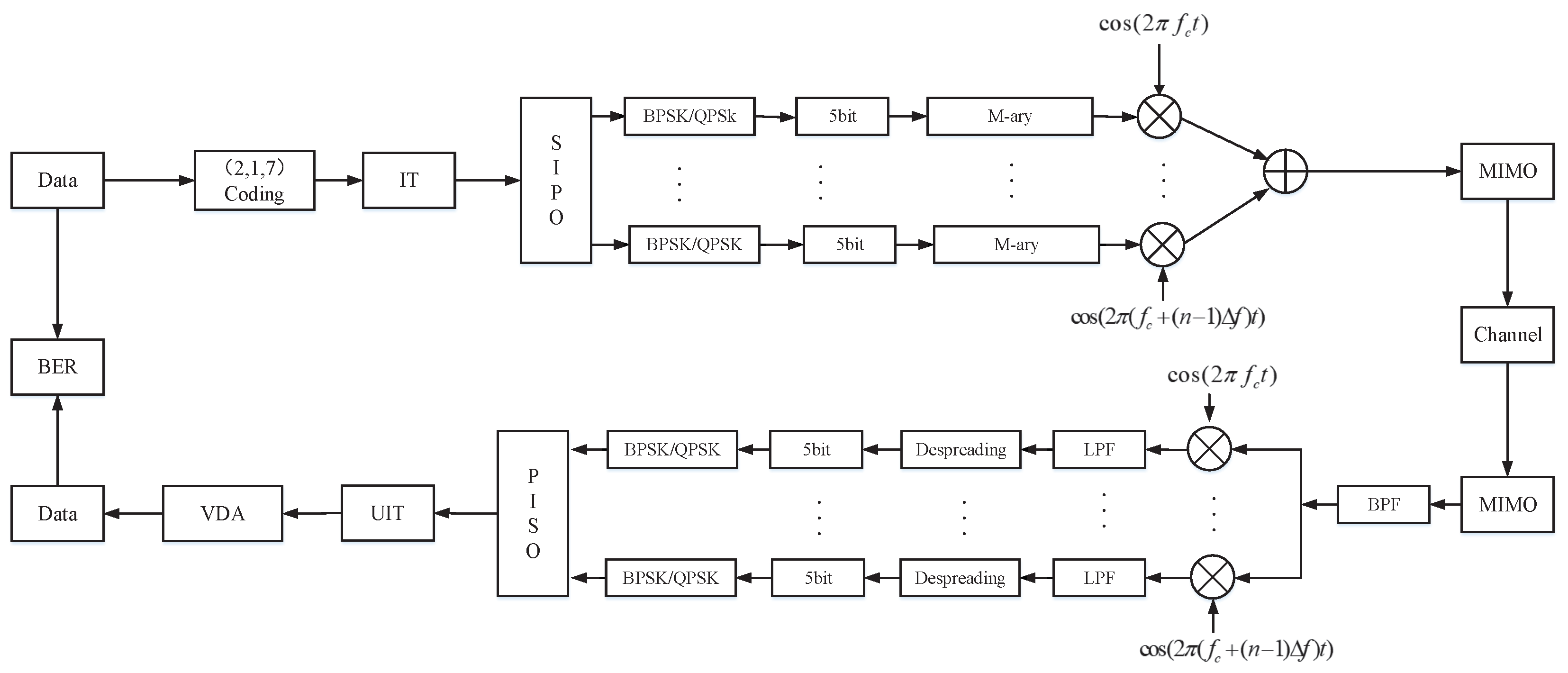
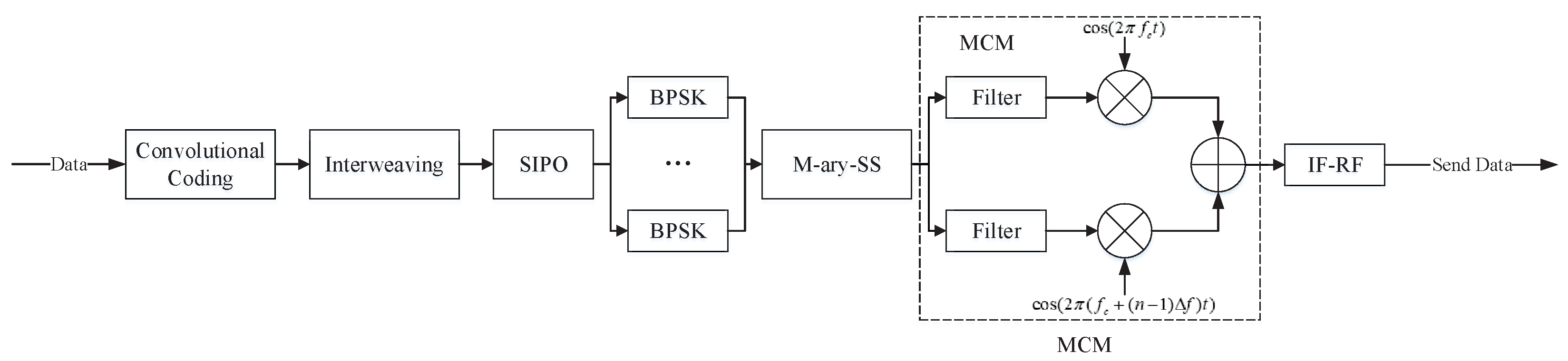
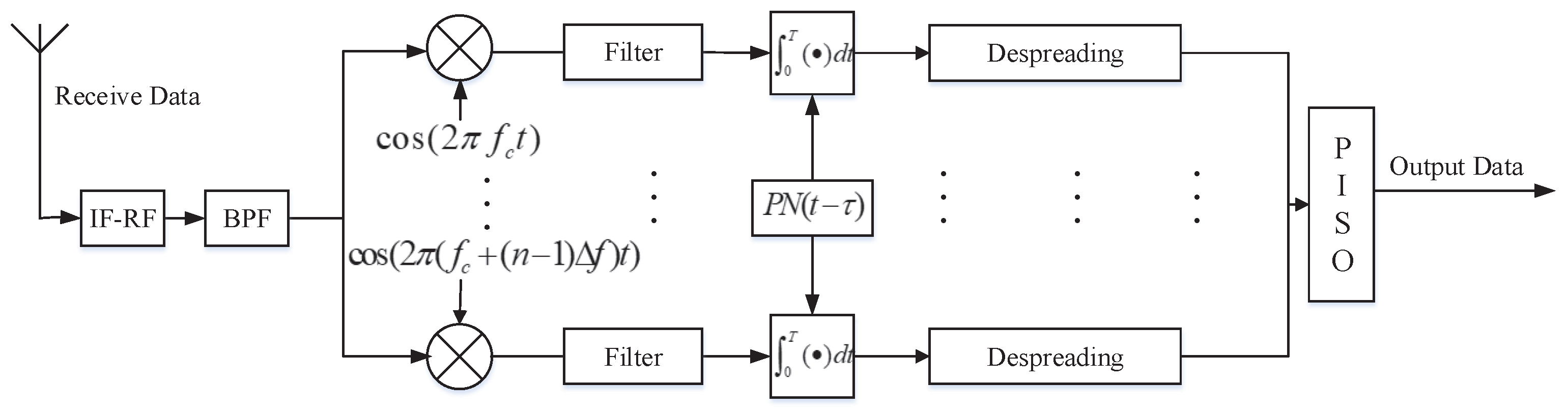
Motivated by the above reasons, we propose an anti-interference scheme for the UAV data links in AGIVNs based on M-ary spread spectrum and MCM, named as Mary-MCM. In this paper, we analyze the EMI of UAV data link, establish the EMI model, and classify different EMI types. Then, we apply the Mary-MCM anti-interference scheme into the sensor transmitter (STX) and the sensor receiver (SRX). In this respect, Mary-MCM scheme enables efficient message delivery and effectively limits the symbol error rate (SER). Furthermore, we performed extensive simulations to evaluate the performance of our proposed anti-interference scheme under unusual interference combinations.
Compared with the existing anti-interference technology, the proposed Mary-MCM scheme has the following advantages
  • We adopt M-ary spread spectrum technology to expand the spectrum of the signal and disperse the interference power of the signal. Therefore, the accuracy of information transmission can be improved and the bit error rate (BER) can be reduced without increasing the transmission power.
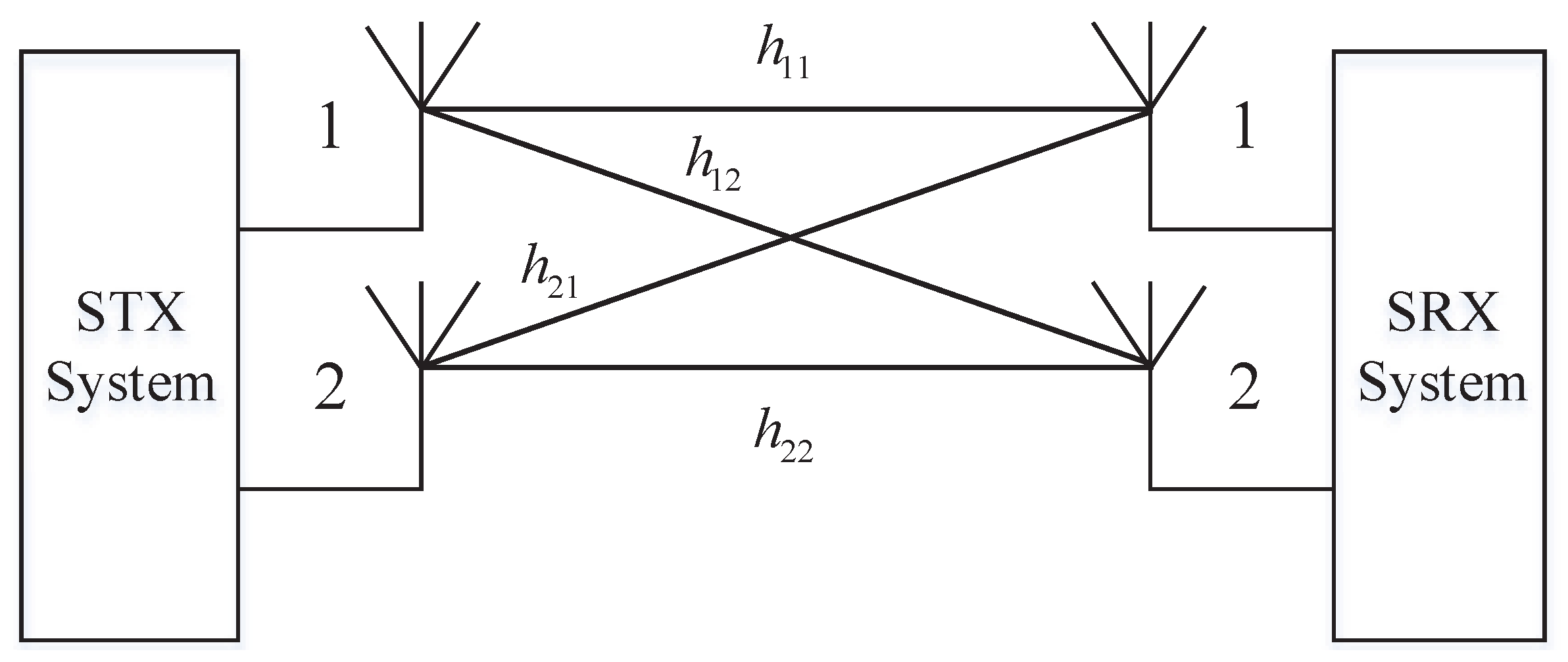
  • We adopt multi-carrier technology to modulate the signal and send it through multiple-input multiple-output (MIMO) antennas. Therefore, Mary-MCM scheme can improve channel capacity and spectrum utilization. In addition, Mary-MCM scheme can be used in IoT environments with limited radio spectrum resources to meet the user’s demand for multiple services and large capacity.
  • Compared with transmission technologies for V2X, Mary-MCM scheme aims to improve anti-interference performance of UAV data links. Considering the influence of EMI in three-dimensional (3D) environment, the proposed Mary-MCM scheme can improve the reliability of communication services, lower the end-to-end latency, and support applications that require high throughput.
The rest of the paper is organized as follows. Section 2 introduces the principle of anti-interference technology and summarizes the advantages and disadvantages of the existing technology. In Section 3, we model and analyze the EMI in AGIVNs. Section 4 proposes the Mary-MCM scheme and analyzes the anti-interference performance of Mary-MCM scheme theoretically. Extensive simulations are present in Section 5 to measure the performance of Mary-MCM by comparing it with DSSS. Finally, the conclusions and future works are presented in Section 6.

5. Simulation Results

We used MATLAB to simulate the proposed anti-interference scheme and compared Mary-MCM to DSSS.

5.1. Simulation Results

In our simulation, we used 50 UAV sensor nodes and 600 vehicle sensor nodes to simulate the proposed anti-interference scheme. Each sensor node uses the IEEE 802.11p protocol for data transmission. The communication frequency band is 5.9 GHz, and the source node and the destination node are randomly chosen in the network. Both the UAV and the vehicle use the shortest path map based movement (SPMBM) to plan the path, and assume that each sensor node does not discard the data due to factors such as cache and energy.
Simulation condition settings are shown in Table 1, and the Monte Carlo method is adopted to analyze the results.
Table 1. Mary-MCM scheme simulation parameters.
The simulated signal to interference ratio (SIR) is defined as follows
SIR = 10 log 10 ( S / J ) ,
where S is the signal power and J is the total power of interference, which can be expressed as
J = N + J I ,
where N is the noise power and J I is the interference power.
We use SER as a measure of the performance of the anti-interference algorithm and treat SER < 10 5 as normal communication. SER is defined as follows
SER = N e N × 100 %
where N e is the error code in transmission and N a is the total number code of transmissions.
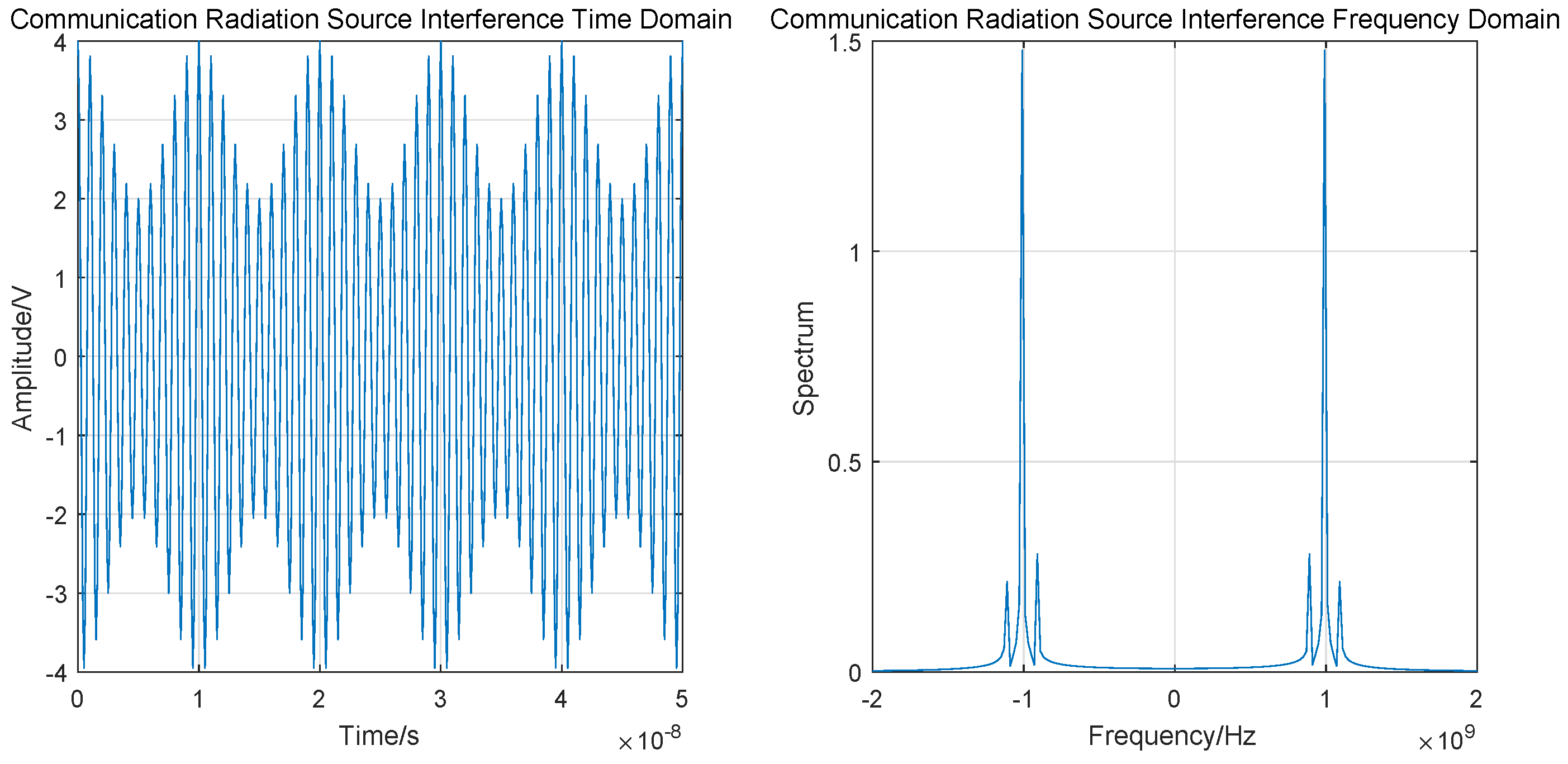
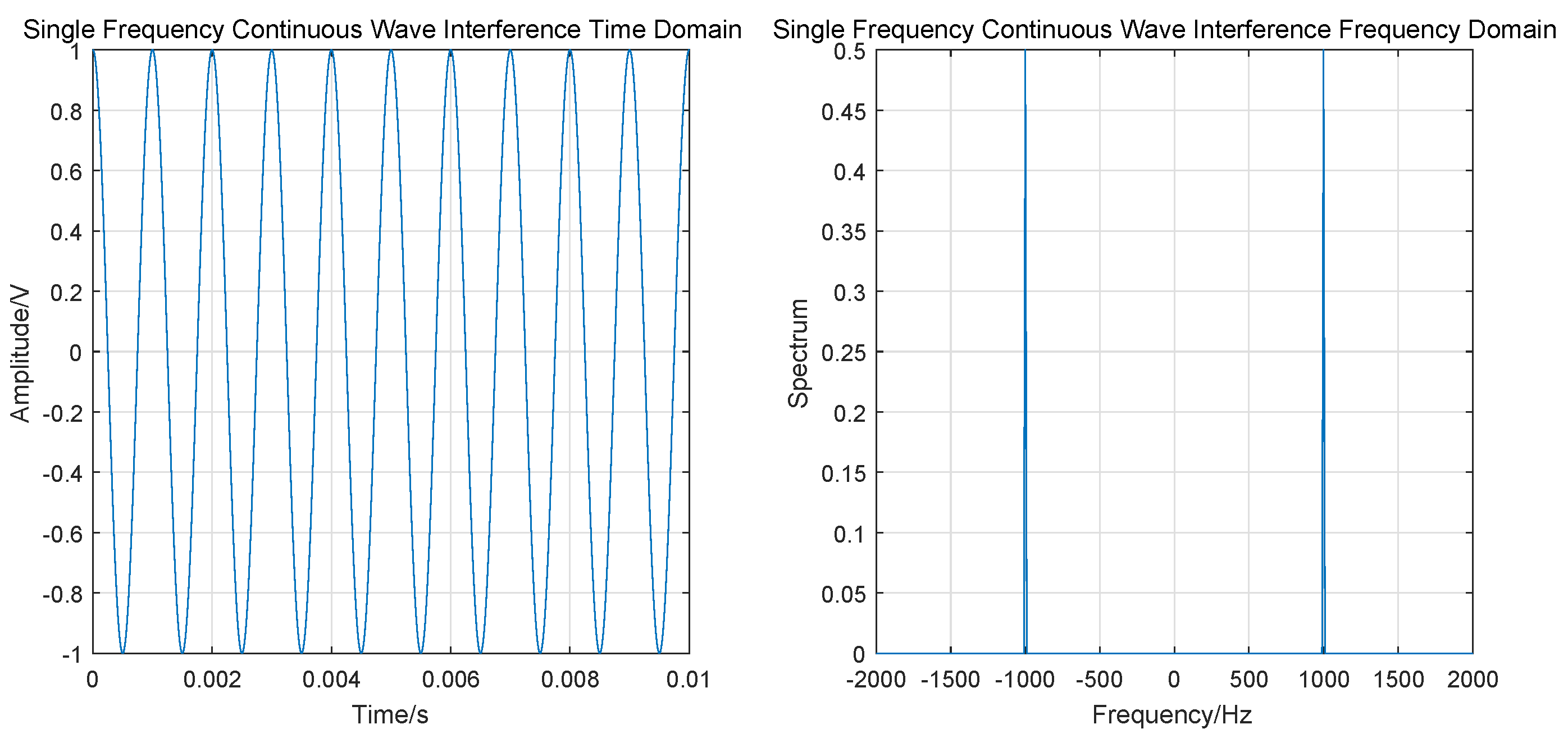
In our simulation, we simulated the common interference, and the interference signal simulation parameter settings are shown in Table 2.
Table 2. Interference signal simulation parameter settings.
In general, the EMI that the UAV data link faces is not single. Therefore, common EMI was combined to explore the influence of different interference combinations on anti-interference schemes. Common EMI combinations are shown in Table 3.
Table 3. Common EMI combinations.

5.2. Impact of Different EMI Combinations on Anti-Interference Schemes

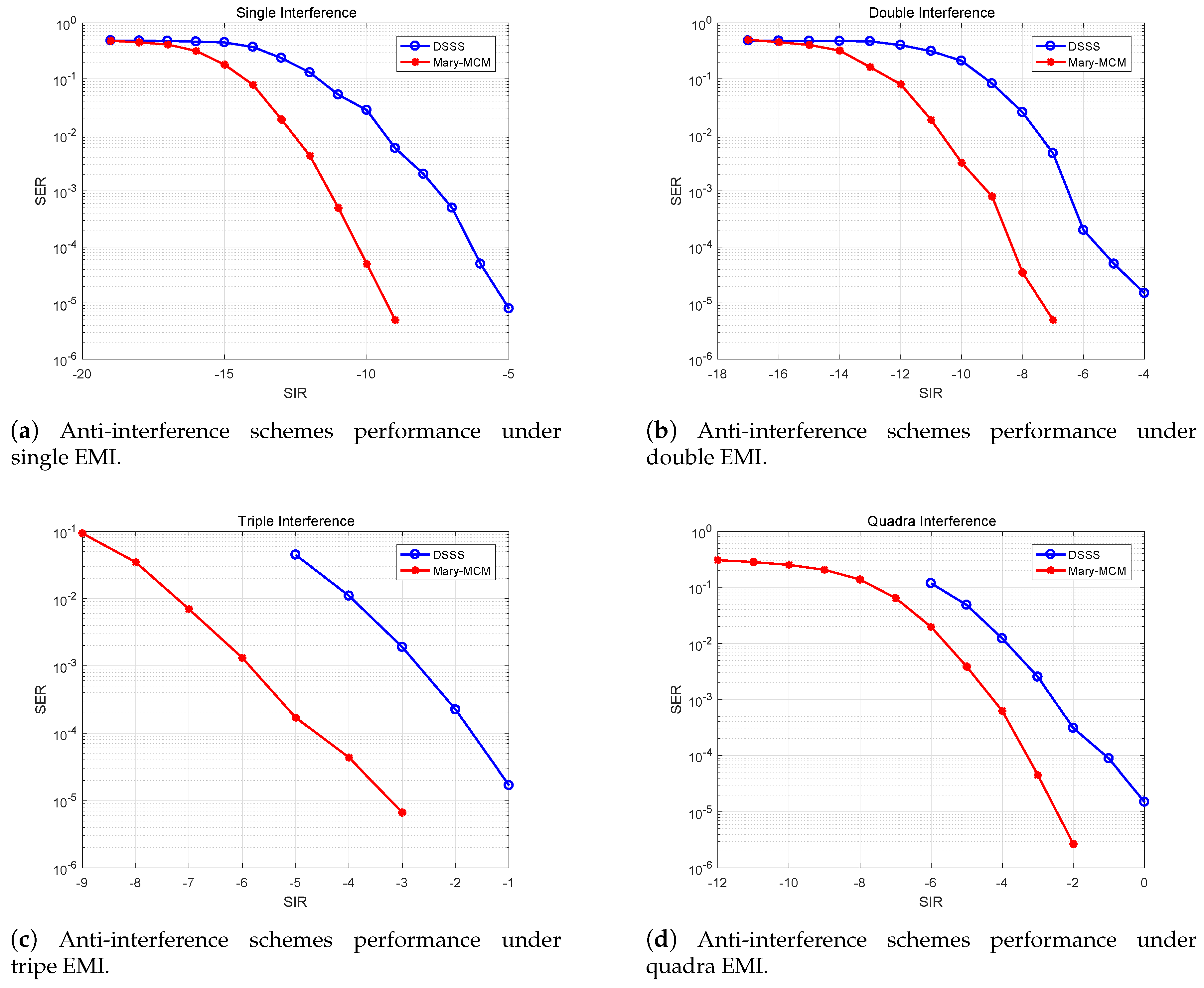
Figure 17 indicates that the anti-interference performance of Mary-MCM scheme and DSSS scheme under different EMI combinations. From the data in Figure 17, it is apparent that with the increase of the amount of EMI, the performance of the two anti-interference schemes is decreasing. However, the performance of Mary-MCM scheme is always higher than DSSS scheme. Taking Figure 17d as an example, under the influence of quantum interference, the SIR of DSSS scheme can normally communicate is 0 dB ( SER < 10 5 ). However, the SIR of Mary-MCM scheme is only −2.6 dB. Therefore, Mary-MCM scheme improves the anti-interference performance of the UAV data link 2.6 dB.
Figure 17. Anti-interference schemes performance under different EMI combinations.
In addition, as shown in Figure 17a–c, the SIR of Mary-MCM scheme for normal communication is −9.5, −7.5, and −3.3 dB, but the SIR of DSSS scheme for normal communication is 4.5, 3.5, and 2.3 dB. Thus, anti-interference performance has been improved by 4.5, 3.5, and 2.3 dB, respectively. With the decrease of the amount of EMI, the anti-interference performance of Mary-MCM is more significant. Therefore, compared with the traditional DSSS scheme, the proposed Mary-MCM scheme can transmit information more accurately in complex EMI environment.

5.3. Impact of Different Spreading Factors on Anti-Interference Schemes

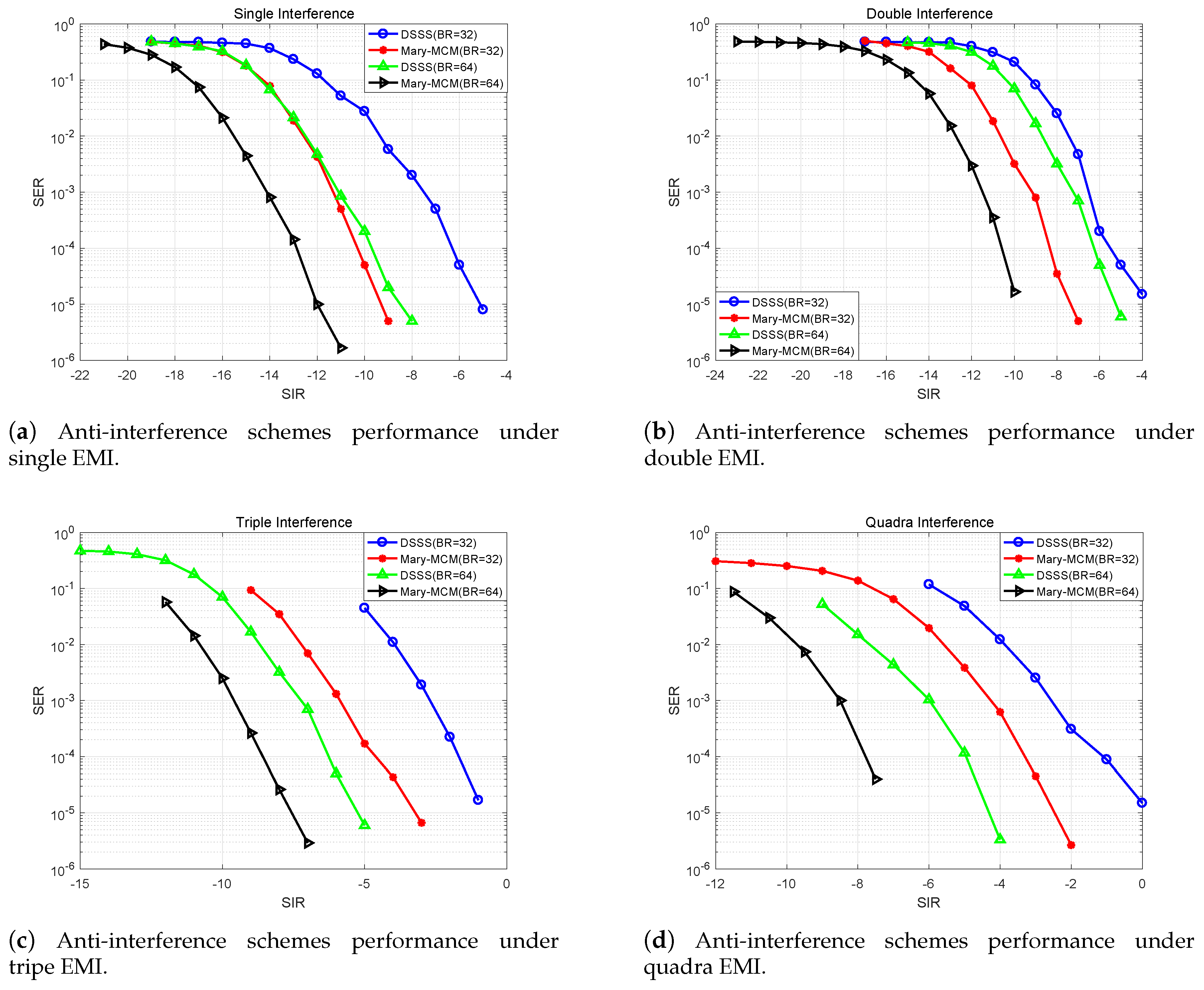
Figure 18 shows the impact of different spreading factors on anti-interference schemes. We extend the signal spectrum of Mary-MCM scheme and DSSS scheme by 32 and 64 times, respectively. As can be observed in Figure 18, we can extend the spectrum to improve the anti-interference performance of the UAV data link. With Figure 18d as an example, under quadra EMI combinations, the SIR that SRX can work normally is −7, −2.6, −4.5 dB, and 0 dB (Mary-MCM (BP = 64), Mary-MCM (BP = 32), DSSS (BP = 64), and DSSS (BP = 32), respectively). Therefore, the anti-interference performance of Mary-MCM (BP = 64) is 3.5 dB higher than that of Mary-MCM (BP = 32), and the anti-interference performance of DSSS (BP = 64) is 2.6 dB higher than that of DSSS (BP = 32). The anti-interference performance of Mary-MCM scheme is 34.62% better than DSSS scheme.
Figure 18. Anti-interference schemes performance under different spreading factors.
However, in AGIVNs, the spectrum resources are very limited, and it is impossible to expand the signal spectrum without limit. As showed in Figure 18a, under the WGN interference, the anti-interference performance of Mary-MCM (BP = 32) scheme and DSSS (BP = 64) scheme are similar. In addition, the anti-interference performance of Mary-MCM (BP = 32) is slightly better than DSSS (BP = 64), which is 1 dB higher. Therefore, the Mary-MCM scheme can effectively improve the spectrum utilization of the system, facilitate the frequency sharing of more services and accommodate more users.

5.4. Impact of Different Numbers on Anti-Interference Schemes

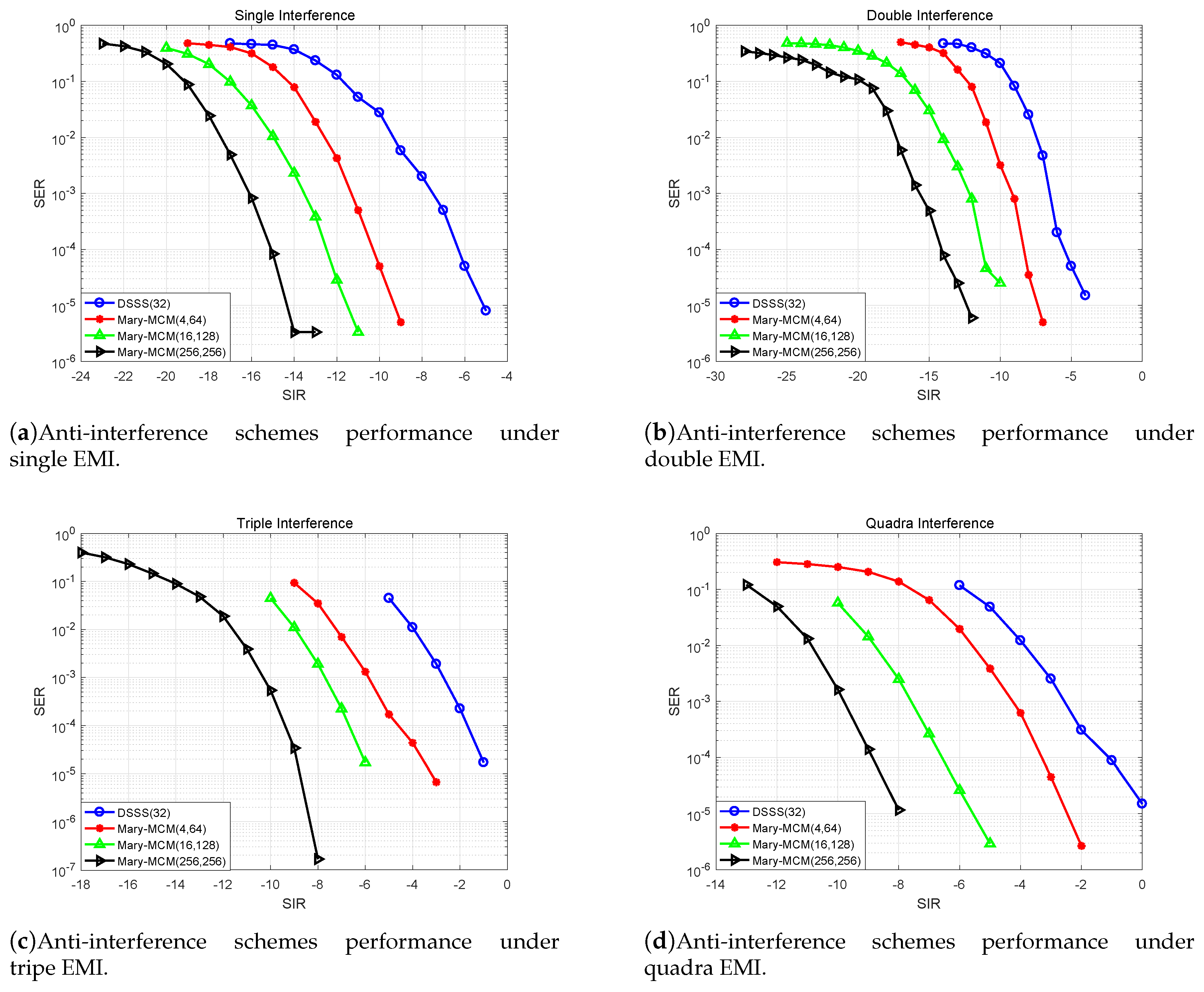
Figure 19 shows the impact of different numbers on anti-interference schemes. We extend both Mary-MCM scheme and DSSS scheme by 32 times. The Mary-MCM scheme is used to spread spectrum in 4-ary, 16-ary, and 256-ary. It can be observed in the figure that increasing numbers can improve the anti-interference ability of the UAV data link. This is because Mary-MCM scheme adopts M-ary spread spectrum technology to disperse the EMI power, so the signal interference power is only 1/M when the total EMI power remains unchanged.
Figure 19. Anti-interference scheme performance under different numbers.
In addition, as shown in Figure 19d, under the influence of quadra EMI, the SIR that can transmit information normally is −8, −5.6, −2.6, and 0 dB (Mary-MCM (4,64), Mary-MCM (16,128), Mary-MCM (16,128), DSSS). Therefore, the anti-interference performance of Mary-MCM scheme using 256-ary spread spectrum is 8 dB higher than that of DSSS scheme, and the anti-interference performance of the UAV data link is greatly improved.
The simulation results show that Mary-MCM scheme has better anti-interference performance than DSSS scheme. This is because the Mary-MCM scheme disperses the noise power by using M-ary spread spectrum, which reduces the system error rate, and enables the information to be transmitted more accurately. In addition, we use MIMO and MCM technologies in STX and SRX to improve the spectrum utilization and Mary-MCM scheme can better adapt to the multi-service, high-capacity, high-speed network environment.

6. Conclusions

In AGIVNs, the anti-interference technology of the UAV data link plays a critical role in reliable information transmission. In this paper, we design an UAV data link anti-interference scheme (Mary-MCM) based on the M-ary spread spectrum, the MCM, and the MIMO technologies to decrease the BER of the UAV information transmission. We use M-ary technology to expand the signal spectrum to improve the anti-interference ability of the UAV data link, and use MCM technology to improve the spectrum utilization while ensuring the anti-interference performance. In addition, we also adopt MIMO technology to improve the channel capacity. Simulation results show that Mary-MCM scheme has good anti-interference performance in complex EMI environment and can maintain the low BER under the condition of low SIR. Therefore, improving wireless sensor networks (WSN) performance by combining UAVs with the Internet of vehicles is an interesting research topic that deserves further study.

Author Contributions

Conceptualization, R.Z., D.Z., and Y.H.; Methodology, Y.H., R.Z. and D.Z.; Software, Y.H. and R.Z.; Validation, Y.H. and D.Z.; Formal Analysis, X.D.; Investigation, Y.H. and R.Z.; Resources, X.D.; Data Curation, Y.H. and D.Z.; Writing— Original Draft Preparation, Y.H. and R.Z.; Writing—Review and Editing, D.Z., X.D., and M.G.; Visualization, Y.H. and R.Z.; Supervision, X.D. and M.G.; Project Administration, R.Z.; and Funding Acquisition, R.Z.

Funding

This work was supported in part by the National Natural Science Foundation of China under Grants 61571370, 61601365, 61901381, 61801388, 61901378, and 61901379; in part by the Science and Technology Research Program of Shaanxi Province under Grants 2018ZDCXL-GY-03-04, 2019ZDLGY07-10, 2019JQ-253, 2019JQ-631, and 2019JM-345; in part by the Advance Research Program on Common Information System Technologies under Grant 315075702; in part by the Postdoctoral Science Foundation of China under Grants BX20180262, BX20190287, 2018M641020, and 2018M641019; and in part by the Fundamental Research Funds for the Central Universities under Grants G2019KY05302, 31020180QD095, and 3102017OQD091.

Conflicts of Interest

The authors declare no conflict of interest.

References

  1. Miao, Y.; Liu, X.; Choo, K.R.; Deng, R.H.; Wu, H.; Li, H. Fair and Dynamic Data Sharing Framework in Cloud-Assisted Internet of Everything. IEEE Internet Things J. 2019, 6, 7201–7212. [Google Scholar] [CrossRef]
  2. He, Y.X.; Tang, X.; Zhang, R.N.; Du, X.J. A Course-Aware Opportunistic Routing Protocol for FANETs. IEEE Access. 2019, 7, 144303–144312. [Google Scholar] [CrossRef]
  3. Zhu, L.; Yu, F.R.; Ning, B.; Tang, T. Big Data Analytics in Intelligent Transportation Systems: A Survey. IEEE Trans. Intell. Transp. Syst. 2019, 20, 383–398. [Google Scholar] [CrossRef]
  4. Liu, F.; Chen, Z.; Xia, B. Data Dissemination with Network Coding in Two-Way Vehicle-to-Vehicle Networks. IEEE Trans. Veh. Technol. 2016, 65, 2445–2456. [Google Scholar] [CrossRef]
  5. Pu, C. Jamming-Resilient Multipath Routing Protocol for Flying Ad Hoc Networks. IEEE Access 2018, 6, 68472–68486. [Google Scholar] [CrossRef]
  6. Zhang, R.N.; Guo, Q.; Zhai, D.S.; Du, X.J. Channel Measurement and Resource Allocation Scheme for Dual-Band Airborne Access Networks. IEEE Access. 2019, 7, 80870–80883. [Google Scholar] [CrossRef]
  7. Wang, K.; Zhang, R.N. Path loss measurement and modeling for low-altitude UAV access channels. In Proceedings of the 2017 IEEE 86th Vehicular Technology Conference (VTC-Fall), Toronto, ON, Canada, 24–27 September 2017; pp. 1–5. [Google Scholar]
  8. Ma, C.F.; Wei, L.; Zheng, M. A Connectivity-Aware Approximation Algorithm for Relay Node Placement in Wireless Sensor Networks. IEEE Sens. J. 2016, 16, 515–528. [Google Scholar] [CrossRef]
  9. Seliem, H.; Reza, S.; Ahmed, M.H. Drone-Based Highway-VANET and DAS Service. IEEE Access 2018, 6, 20125–20137. [Google Scholar] [CrossRef]
  10. Park, S.; Shin, S.; Jeong, D.; Lee, H. Network Reconstruction through Connectivity Probing and Relay Deployment by Multiple UAVs in Ad Hoc Networks. IEEE Trans. Veh. Technol. 2018, 67, 11192–11207. [Google Scholar] [CrossRef]
  11. Di, B.; Bayat, S.; Song, L.; Li, Y.; Han, Z. Joint User Pairing, Subchannel, and Power Allocation in Full-Duplex Multi-User OFDMA Networks. IEEE Trans. Wirel. Commun. 2016, 15, 8260–8272. [Google Scholar] [CrossRef]
  12. Naik, G.; Choudhury, B.; Park, J.M. IEEE 802.11 bd & 5G NR V2X: Evolution of Radio Access Technologies for V2X Communications. IEEE Access 2019, 7, 70169–70184. [Google Scholar]
  13. Wang, P.F.; Di, B.Y.; Zhang, H.L. Cellular V2X Communications in Unlicensed Spectrum: Harmonious Coexistence with VANET in 5G Systems. IEEE Trans. Wirel. Commun. 2018, 17, 5212–5224. [Google Scholar] [CrossRef]
  14. Rafael, M.M.; Javier, G. LTE-V for Sidelink 5G V2X Vehicular Communications: A New 5G Technology for Short-Range Vehicle-to-Everything Communications. IEEE Veh. Technol. Mag. 2017, 12, 30–39. [Google Scholar]
  15. Azpúrua, M.A.; Pous, M.; Silva, F. Decomposition of Electromagnetic Interferences in the Time-Domain. IEEE Trans. Electromagn. Compat. 2016, 58, 385–392. [Google Scholar] [CrossRef]
  16. Munir, M.A.; Maud, A.R.M. Direct-Sequence Spread Spectrum with Variable Spreading Sequence for Jamming Immunity. In Proceedings of the 2019 16th International Bhurban Conference on Applied Sciences and Technology (IBCAST), Islamabad, Pakistan, 8–12 January 2019; pp. 933–937. [Google Scholar]
  17. Xiao, L.; Xuan, G.; Wu, Y. Research on an improved chaotic spread spectrum sequence. In Proceedings of the 2018 IEEE 3rd International Conference on Cloud Computing and Big Data Analysis (ICCCBDA), Chengdu, China, 20–22 April 2018; pp. 420–423. [Google Scholar]
  18. Ashush, Y.; Engelberg, S. Generation of “Optimal” PN Sequences for Use in Direct Sequence Spread Spectrum. In Proceedings of the 2018 IEEE International Conference on the Science of Electrical Engineering in Israel (ICSEE), Eilat, Israel, 12–14 December 2018; pp. 1–4. [Google Scholar]
  19. Gupta, R.; Anuradha, S. A Direct Sequence Spread Spectrum Transceiver with Enhanced Security Using Chaotic and Gold Sequence. In Proceedings of the 2018 9th International Conference on Computing, Communication and Networking Technologies (ICCCNT), Bangalore, India, 10–12 July 2018; pp. 1–6. [Google Scholar]
  20. Xia, Q.; Sasamori, F.; Handa, S.; Takyu, O. Performance evaluation of M-ary SS/OFDM systems with short spread spectrum codes over visible light channels. In Proceedings of the 2017 International Conference on Information and Communication Technology Convergence (ICTC), Jeju, Korea, 18–20 October 2017; pp. 226–228. [Google Scholar]
  21. Li, Q.; Wen, M.; Basar, E.; Chen, F. Index Modulated OFDM Spread Spectrum. IEEE Trans. Wirel. Commun. 2018, 17, 2360–2374. [Google Scholar] [CrossRef]
  22. Ding, X.; Xiong, H.; Gong, S.; Peng, M.; Tang, J. M-ary Orthogonal Signal and BER Performance in Wireless Communication Systems. In Proceedings of the 2018 IEEE 4th International Conference on Computer and Communications (ICCC), Chengdu, China, 7–10 December 2018; pp. 1268–1272. [Google Scholar]
  23. ElMossallamy, M.A.; Pan, M.; Jäntti, R.; Seddik, K.G. Noncoherent Backscatter Communications over Ambient OFDM Signals. IEEE Trans. Commun. 2019, 67, 1268–1272. [Google Scholar] [CrossRef]
  24. Guo, S.; Wang, Y.; Liu, R. Multi-dimensional and complicated electromagnetic interference hardware-in-the- loop simulation method. J. Syst. Eng. Electron. 2015, 26, 1142–1148. [Google Scholar] [CrossRef]

Article Metrics

Citations

Article Access Statistics

Multiple requests from the same IP address are counted as one view.