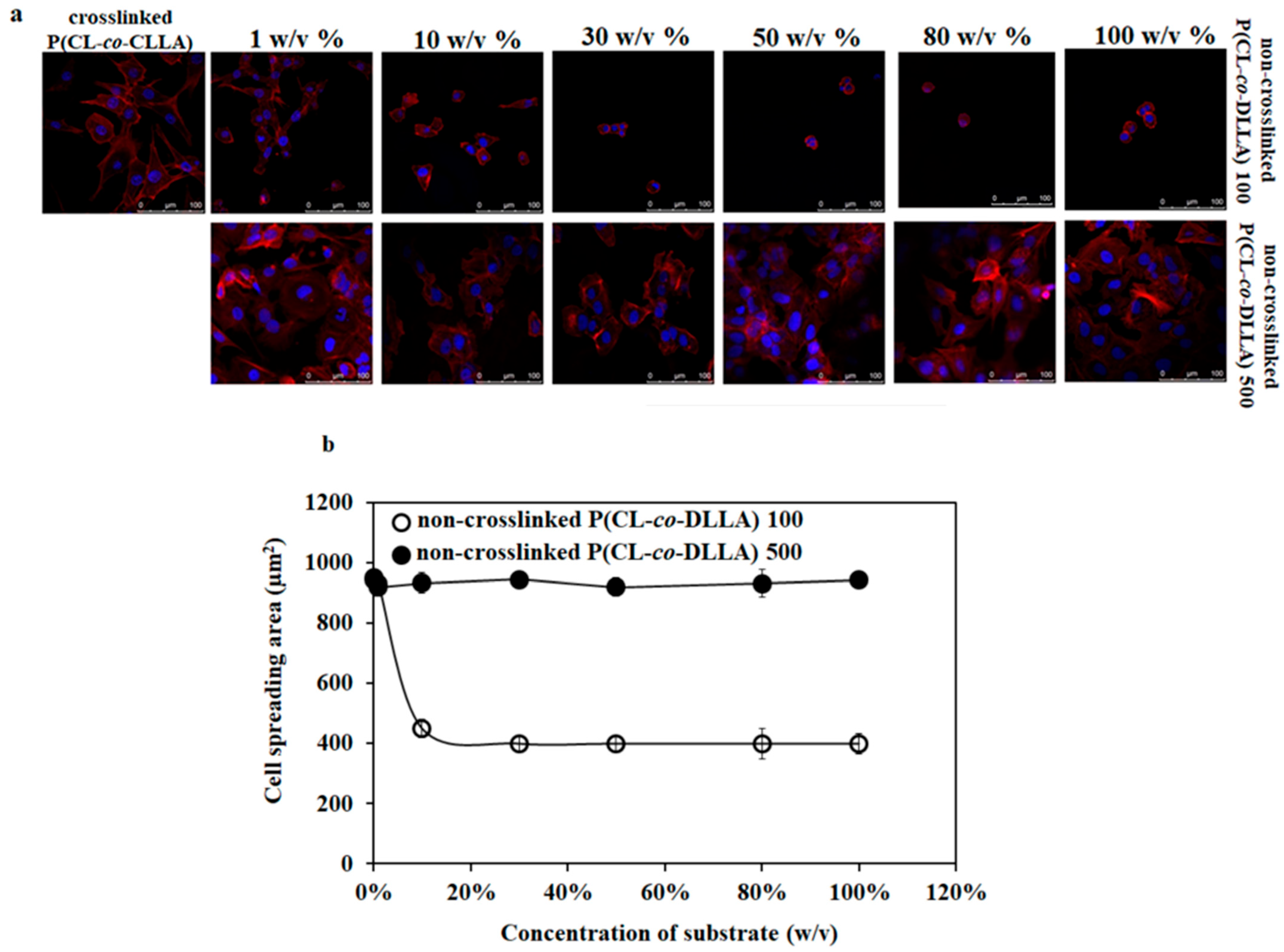
Correction: Mano et al. Fluidity of Poly (ε-Caprolactone)-Based Material Induces Epithelial-to-Mesenchymal Transition. Int. J. Mol. Sci. 2020, 21, 1757




Reference
- Mano, S.S.; Uto, K.; Ebara, M. Fluidity of Poly (ε-Caprolactone)-Based Material Induces Epithelial-to-Mesenchymal Transition. Int. J. Mol. Sci. 2020, 21, 1757. [Google Scholar] [CrossRef] [Scilit] [PubMed]
Disclaimer/Publisher’s Note: The statements, opinions and data contained in all publications are solely those of the individual author(s) and contributor(s) and not of MDPI and/or the editor(s). MDPI and/or the editor(s) disclaim responsibility for any injury to people or property resulting from any ideas, methods, instructions or products referred to in the content. |
© 2026 by the authors. Licensee MDPI, Basel, Switzerland. This article is an open access article distributed under the terms and conditions of the Creative Commons Attribution (CC BY) license.
Share and Cite
Mano, S.S.; Uto, K.; Ebara, M. Correction: Mano et al. Fluidity of Poly (ε-Caprolactone)-Based Material Induces Epithelial-to-Mesenchymal Transition. Int. J. Mol. Sci. 2020, 21, 1757. Int. J. Mol. Sci. 2026, 27, 536. https://doi.org/10.3390/ijms27010536
Mano SS, Uto K, Ebara M. Correction: Mano et al. Fluidity of Poly (ε-Caprolactone)-Based Material Induces Epithelial-to-Mesenchymal Transition. Int. J. Mol. Sci. 2020, 21, 1757. International Journal of Molecular Sciences. 2026; 27(1):536. https://doi.org/10.3390/ijms27010536
Chicago/Turabian StyleMano, Sharmy Saimon, Koichiro Uto, and Mitsuhiro Ebara. 2026. "Correction: Mano et al. Fluidity of Poly (ε-Caprolactone)-Based Material Induces Epithelial-to-Mesenchymal Transition. Int. J. Mol. Sci. 2020, 21, 1757" International Journal of Molecular Sciences 27, no. 1: 536. https://doi.org/10.3390/ijms27010536
APA StyleMano, S. S., Uto, K., & Ebara, M. (2026). Correction: Mano et al. Fluidity of Poly (ε-Caprolactone)-Based Material Induces Epithelial-to-Mesenchymal Transition. Int. J. Mol. Sci. 2020, 21, 1757. International Journal of Molecular Sciences, 27(1), 536. https://doi.org/10.3390/ijms27010536