
Male Stress Is Associated with Ovarian and Endometrial Responses in ICSI Cycles: Is Seminal Plasma the Linchpin?
 , , , , , and
Abstract
1. Introduction
2. Results
2.1. Demographic, Clinical, and Reproductive Characteristics Related to ICSI Outcomes
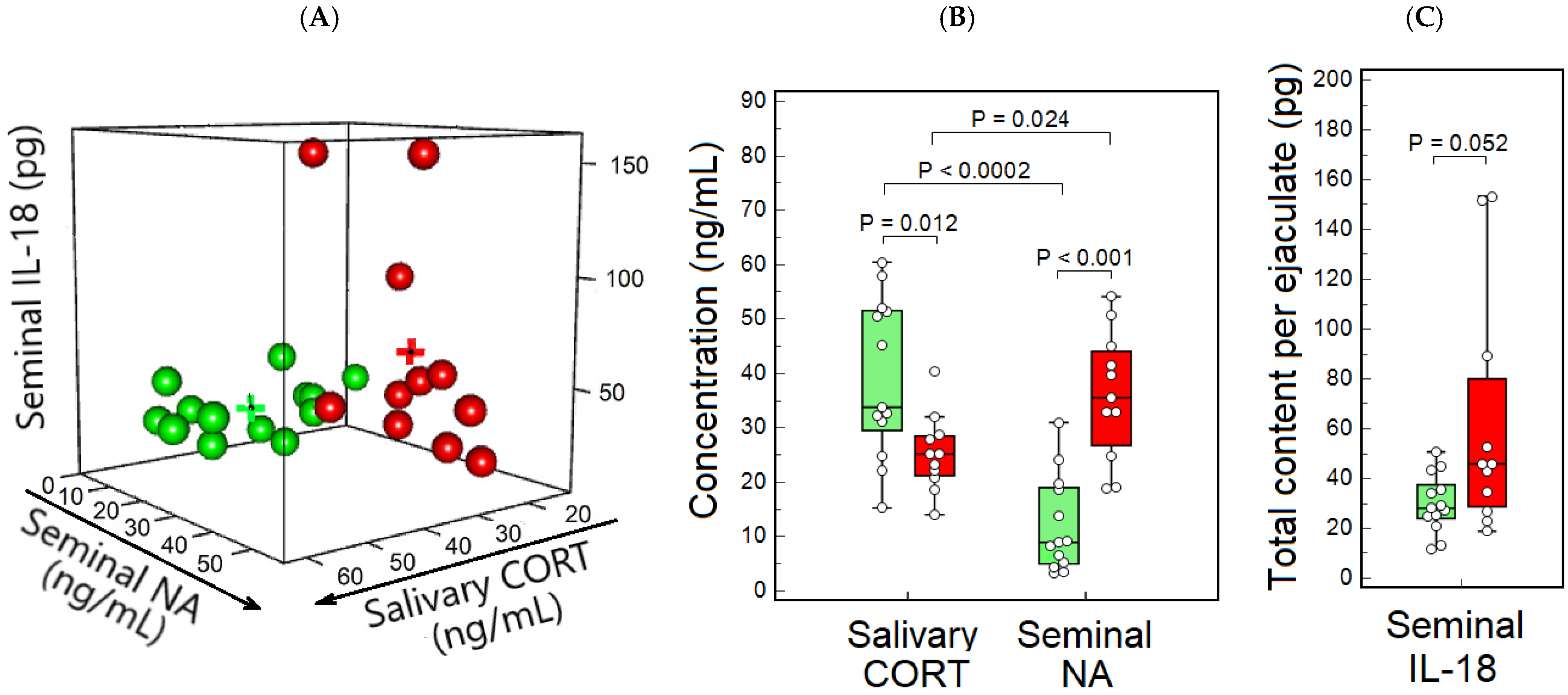
2.2. Neuroendocrine-Immune Phenotypes in Male ICSI Patients
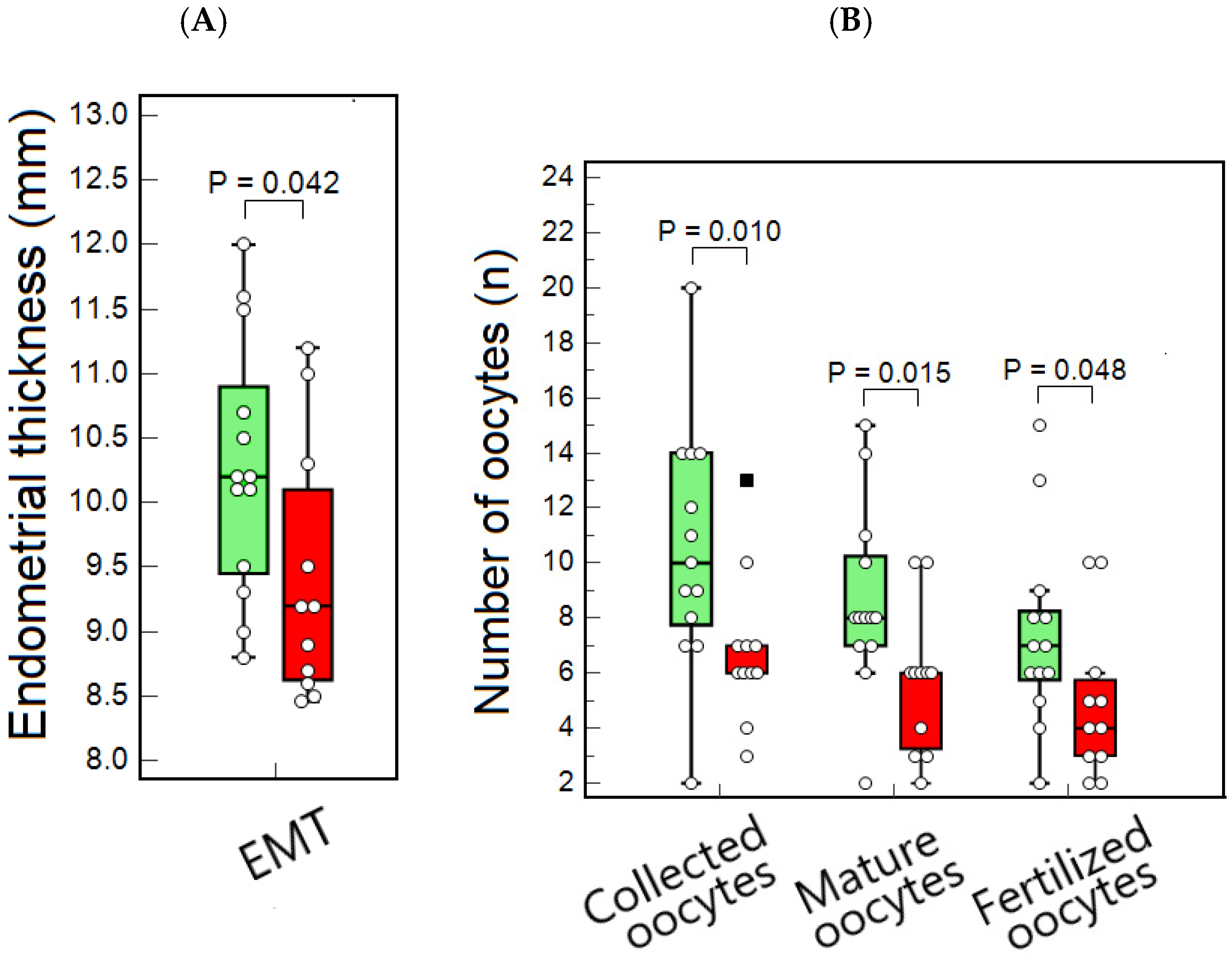
2.3. Demographic, Clinical, and Reproductive Characteristics of ICSI Couples by Male NEI Phenotype
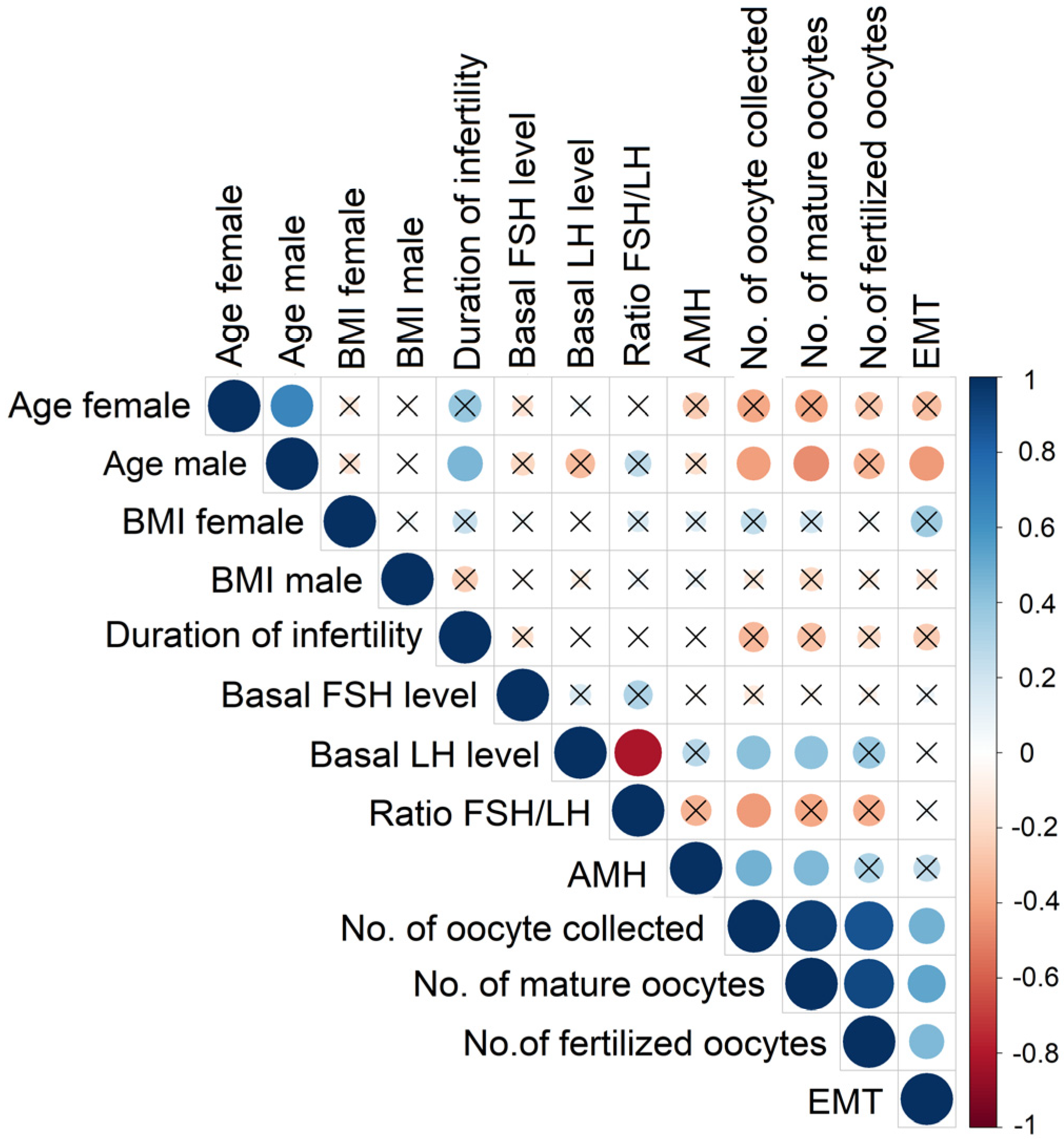
2.4. Univariate Correlation Analysis Between Stress Biomarkers and Demographic, Clinical, and Reproductive Characteristics of ICSI Patients
2.5. Correlations Between Demographic, Clinical, and Reproductive Characteristics of ICSI Patients
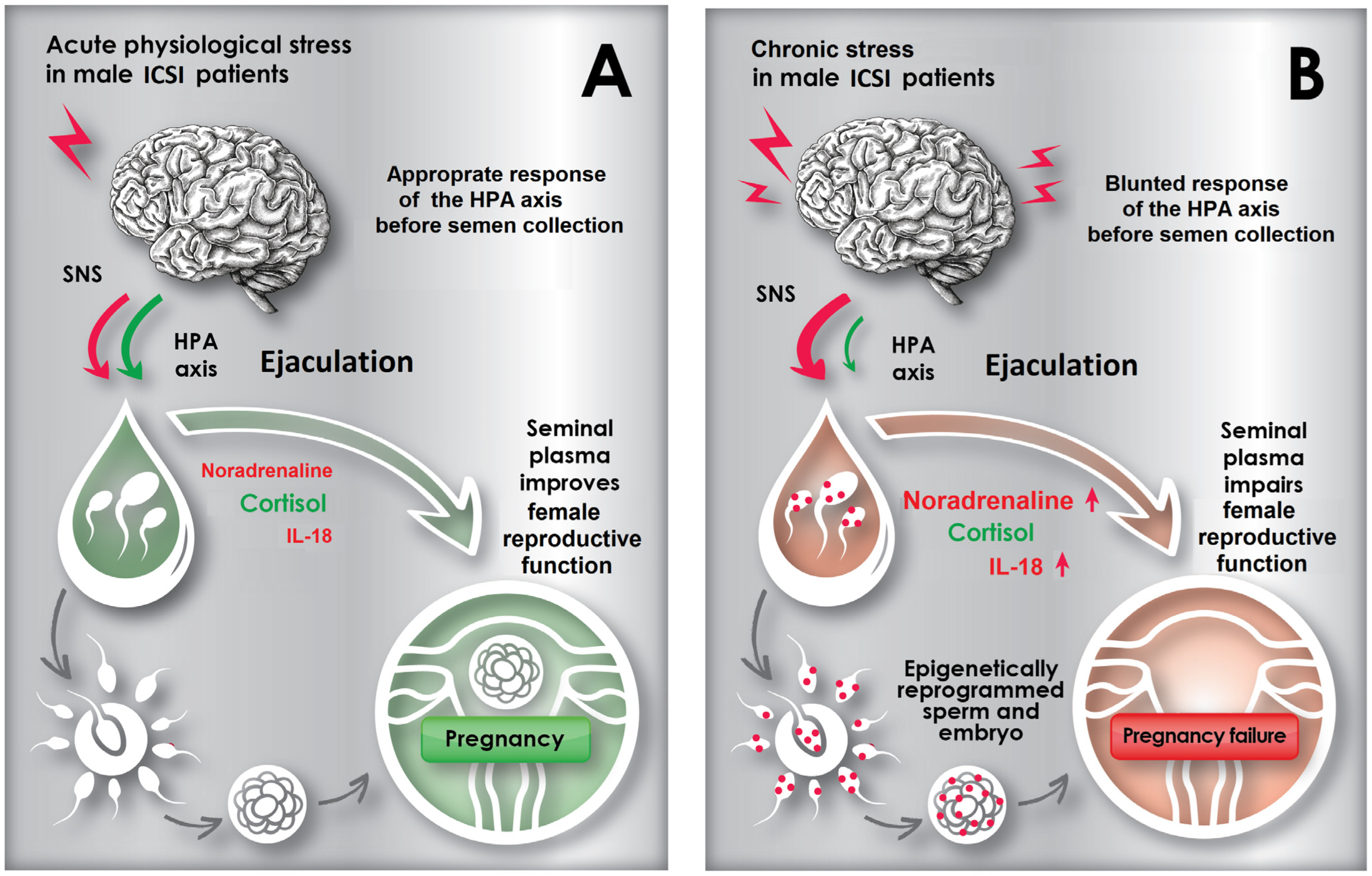
3. Discussion
4. Materials and Methods
4.1. Study Design and Participants
4.2. Controlled Ovarian Stimulation
4.3. Specimen Preparation and Evaluation
4.4. Measurement of Catecholamines
4.5. Measurement of Cortisol
4.6. Measurement of Interleukin-18
4.7. Statistical Analysis
5. Conclusions
Author Contributions
Funding
Institutional Review Board Statement
Informed Consent Statement
Data Availability Statement
Acknowledgments
Conflicts of Interest
Abbreviations
| ADR | Adrenaline |
| AMH | Anti-Müllerian hormone |
| ARs | Adrenoreceptors |
| ART | Artificial reproductive technologies |
| BMI | Body mass index |
| CORT | Cortisol |
| Day-OPU | Day of ovum pickup |
| DOP | Dopamine |
| ELISA | Enzyme-linked immunosorbent assay |
| EMT | Endometrial thickness |
| ET | Embryo transfer |
| FRT | Female reproductive tract |
| FSH | Follicle-stimulating hormone |
| GnRH | Gonadotropin-releasing hormone |
| hCG | Human chorionic gonadotropin |
| HPA | Hypothalamic–pituitary–adrenal axis |
| HPG | Hypothalamic-pituitary-gonadal axis |
| ICSI | Intracytoplasmic sperm injection |
| IL-18 | Interleukin-18 |
| IQR | Interquartile range |
| IVF | In vitro fertilization |
| LH | Luteinizing hormone |
| LOD | Limits of detection |
| MAR | Mixed agglutination reaction |
| NA | Noradrenaline |
| NEI | Neuroendocrine-immune system |
| PCOS | Polycystic ovary syndrome |
| SNS | Sympathetic nervous system |
| SP | Seminal plasma |
| TVP | Transvaginal ovarian puncture |
| WHO | World Health Organization |
References
- World Health Organization. Infertility Prevalence Estimates, 1990–2021; World Health Organization: Geneva, Switzerland, 2023. [Google Scholar]
- European IVF Monitoring Consortium (EIM) for the European Society of Human Reproduction and Embryology (ESHRE); Smeenk, J.; Wyns, C.; De Geyter, C.; Kupka, M.S.; Bergh, C.; Cuevas Saiz, I.; De Neubourg, D.; Rezabek, K.; Tandler-Schneider, A.; et al. ART in Europe, 2020: Results generated from European registries by ESHRE. Hum. Reprod. 2025, 40, 20038–22055. [Google Scholar] [CrossRef]
- Sunder, S.; Lenton, E.A. Endocrinology of the peri-implantation period. Baillieres Best Pract. Res. Clin. Obstet. Gynaecol. 2000, 14, 789–800. [Google Scholar] [CrossRef]
- Kayisli, U.A.; Guzeloglu-Kayisli, O.; Arici, A. Endocrine-immune interactions in human endometrium. Ann. N. Y. Acad. Sci. 2004, 1034, 50–63. [Google Scholar] [CrossRef]
- Robertson, S.A.; Moldenhauer, L.M.; Green, E.S.; Care, A.S.; Hull, M.L. Immune determinants of endometrial receptivity: A biological perspective. Fertil. Steril. 2022, 117, 1107–1120. [Google Scholar] [CrossRef]
- Günther, V.; Allahqoli, L.; Deenadayal-Mettler, A.; Maass, N.; Mettler, L.; Gitas, G.; Andresen, K.; Schubert, M.; Ackermann, J.; von Otte, S.; et al. Molecular determinants of uterine receptivity: Comparison of successful implantation, recurrent miscarriage, and recurrent implantation failure. Int. J. Mol. Sci. 2023, 24, 17616. [Google Scholar] [CrossRef]
- Edwards, R.G. Human implantation: The last barrier in assisted reproduction technologies? Reprod. Biomed. Online 2006, 13, 887–904. [Google Scholar] [CrossRef] [PubMed]
- Chan, H.Y.; Robertson, S.A. Seminal fluid effects on uterine receptivity to embryo implantation: Transcriptomic strategies to define molecular mechanisms. Reprod. Fertil. Dev. 2025, 37, RD24162. [Google Scholar] [CrossRef]
- Gutsche, S.; von Wolff, M.; Strowitzki, T.; Thaler, C.J. Seminal plasma induces mRNA expression of IL-1beta, IL-6, and LIF in endometrial epithelial cells in vitro. Mol. Hum. Reprod. 2003, 9, 785–791. [Google Scholar] [CrossRef] [PubMed]
- Chen, J.C.; Johnson, B.A.; Erikson, D.W.; Piltonen, T.T.; Barragan, F.; Chu, S.; Kohgadai, N.; Irwin, J.C.; Greene, W.C.; Giudice, L.C.; et al. Seminal plasma induces global transcriptomic changes associated with cell migration, proliferation and viability in endometrial epithelial cells and stromal fibroblasts. Hum. Reprod. 2014, 29, 1255–1270. [Google Scholar] [CrossRef] [PubMed]
- Rodriguez-Caro, H.; Dragovic, R.; Shen, M.; Dombi, E.; Mounce, G.; Field, K.; Meadows, J.; Turner, K.; Lunn, D.; Child, T.; et al. In vitro decidualisation of human endometrial stromal cells is enhanced by seminal fluid extracellular vesicles. J. Extracell. Vesicles 2019, 8, 1565262. [Google Scholar] [CrossRef]
- George, A.F.; Jang, K.S.; Nyegaard, M.; Neidleman, J.; Spitzer, T.L.; Xie, G.; Chen, J.C.; Herzig, E.; Laustsen, A.; Marques de Menezes, E.G.; et al. Seminal plasma promotes decidualization of endometrial stromal fibroblasts in vitro from women with and without inflammatory disorders in a manner dependent on interleukin-11 signaling. Hum. Reprod. 2020, 35, 617–640. [Google Scholar] [CrossRef] [PubMed]
- Moharrami, T.; Ai, J.; Ebrahimi-Barough, S.; Nouri, M.; Ziadi, M.; Pashaiefar, H.; Yazarlou, F.; Ahmadvand, M.; Najafi, S.; Modarressi, M.H. Influence of follicular fluid and seminal plasma on the expression of endometrial receptivity genes in endometrial cells. Cell J. 2021, 22, 457–466. [Google Scholar]
- Vallet-Buisan, M.; Mecca, R.; Jones, C.; Coward, K.; Yeste, M. Contribution of semen to early embryo development: Fertilization and beyond. Hum. Reprod. Update 2023, 29, 395–433. [Google Scholar] [CrossRef]
- Catalini, L.; Burton, M.; Egeberg, D.L.; Eskildsen, T.V.; Thomassen, M.; Fedder, J. In vivo effect of vaginal seminal plasma application on the human endometrial transcriptome: A randomized controlled trial. Mol. Hum. Reprod. 2024, 30, gaae017. [Google Scholar] [CrossRef]
- van den Berg, J.S.; Molina, N.M.; Altmäe, S.; Arends, B.; Steba, G.S. A systematic review identifying seminal plasma biomarkers and their predictive ability on IVF and ICSI outcomes. Reprod. Biomed. Online 2024, 48, 103622. [Google Scholar] [CrossRef]
- Wang, H.; Lin, Y.; Chen, R.; Zhu, Y.; Wang, H.; Li, S.; Yu, L.; Zhang, K.; Liu, Y.; Jing, T.; et al. Human seminal extracellular vesicles enhance endometrial receptivity through leukemia inhibitory factor. Endocrinology 2024, 165, bqae035. [Google Scholar] [CrossRef]
- van den Berg, J.S.; Toros, M.; Abendroth, M.S.; Zhang, Y.; Arends, B.; Verpoest, W.M.J.A.; Broekmans, F.J.M.; Steba, G.S. Seminal plasma induces receptivity-associated genes and pathways in endometrial epithelial organoids. Reprod. Biomed. Online 2025, 51, 104982. [Google Scholar] [CrossRef]
- Ata, B.; Abou-Setta, A.M.; Seyhan, A.; Buckett, W. Application of seminal plasma to female genital tract prior to embryo transfer in assisted reproductive technology cycles (IVF, ICSI and frozen embryo transfer). Cochrane Database Syst. Rev. 2018, 2, CD011809. [Google Scholar] [CrossRef]
- Liffner, S.; Bladh, M.; Rodriguez-Martinez, H.; Sydsjö, G.; Zalavary, S.; Nedstrand, E. Intravaginal exposure to seminal plasma after ovum pick-up does not increase live birth rates after in vitro fertilization or intracytoplasmic sperm injection treatment: A double-blind, placebo-controlled randomized trial. Fertil. Steril. 2024, 122, 131–139. [Google Scholar] [CrossRef] [PubMed]
- Nikolaeva, M.; Arefieva, A.; Babayan, A.; Aksenov, V.; Zhukova, A.; Kalinina, E.; Krechetova, L.; Sukhikh, G. Stress biomarkers transferred into the female reproductive tract by seminal plasma are associated with ICSI outcomes. Reprod. Sci. 2024, 31, 1732–1746. [Google Scholar] [CrossRef] [PubMed]
- Selye, H. Confusion and controversy in the stress field. J. Hum. Stress 1975, 1, 37–44. [Google Scholar] [CrossRef]
- McEwen, B.S. Protective and damaging effects of stress mediators. N. Engl. J. Med. 1998, 338, 171–179. [Google Scholar] [CrossRef]
- Elenkov, I.J. Neurohormonal-cytokine interactions: Implications for inflammation, common human diseases and well-being. Neurochem. Int. 2008, 52, 40–51. [Google Scholar] [CrossRef]
- Elenkov, I.J.; Wilder, R.L.; Chrousos, G.P.; Vizi, E.S. The sympathetic nerve—An integrative interface between two supersystems: The brain and the immune system. Pharmacol. Rev. 2000, 52, 595–638. [Google Scholar] [CrossRef]
- Kirschbaum, C.; Hellhammer, D.H. Salivary cortisol in psychoneuroendocrine research: Recent developments and applications. Psychoneuroendocrinology 1994, 19, 313–333. [Google Scholar] [CrossRef]
- Chrousos, G.P. The hypothalamic–pituitary–adrenal axis and immune-mediated inflammation. N. Engl. J. Med. 1995, 332, 1351–1362. [Google Scholar] [CrossRef]
- Dhabhar, F.S.; McEwen, B.S. Enhancing versus suppressive effects of stress hormones on skin immune function. Proc. Natl. Acad. Sci. USA 1999, 96, 1059–1064. [Google Scholar] [CrossRef] [PubMed]
- Rohleder, N. Stress and inflammation—The need to address the gap in the transition between acute and chronic stress effects. Psychoneuroendocrinology 2019, 105, 164–171. [Google Scholar] [CrossRef] [PubMed]
- Walsh, C.P.; Bovbjerg, D.H.; Marsland, A.L. Glucocorticoid resistance and β2-adrenergic receptor signaling pathways promote peripheral pro-inflammatory conditions associated with chronic psychological stress: A systematic review across species. Neurosci. Biobehav. Rev. 2021, 128, 117–135. [Google Scholar] [CrossRef]
- Sugama, S.; Conti, B. Interleukin-18 and stress. Brain Res. Rev. 2008, 58, 85–95. [Google Scholar] [CrossRef] [PubMed]
- Alboni, S.; Tascedda, F.; Uezato, A.; Sugama, S.; Chen, Z.; Marcondes, M.C.G.; Conti, B. Interleukin 18 and the brain: Neuronal functions, neuronal survival and psycho-neuro-immunology during stress. Mol. Psychiatry 2025, 30, 3197–3208. [Google Scholar] [CrossRef] [PubMed]
- Sterling, P.; Eyer, J. Allostasis: A new paradigm to explain arousal pathology. In Handbook of Life Stress, Cognition and Health; Fisher, S., Reason, J., Eds.; John Wiley & Sons: New York, NY, USA, 1988; pp. 629–649. [Google Scholar]
- Besedovsky, H.O.; del Rey, A. Immune-neuro-endocrine interactions: Facts and hypotheses. Endocr. Rev. 1996, 17, 64–102. [Google Scholar] [CrossRef]
- McEwen, B.S. Protective and damaging effects of stress mediators: Central role of the brain. Dialogues Clin. Neurosci. 2006, 8, 367–381. [Google Scholar] [CrossRef]
- Zefferino, R.; Di Gioia, S.; Conese, M. Molecular links between endocrine, nervous and immune system during chronic stress. Brain Behav. 2021, 11, e01960. [Google Scholar] [CrossRef]
- Mueller, B.; Figueroa, A.; Robinson-Papp, J. Structural and functional connections between the autonomic nervous system, hypothalamic-pituitary-adrenal axis, and the immune system: A context and time dependent stress response network. Neurol. Sci. 2022, 43, 951–960. [Google Scholar] [CrossRef]
- Ashley, N.T.; Demas, G.E. Neuroendocrine-immune circuits, phenotypes, and interactions. Horm. Behav. 2017, 87, 25–34. [Google Scholar] [CrossRef]
- McEwen, B.S. Stress, adaptation, and disease. Allostasis and allostatic load. Ann. N. Y. Acad. Sci. 1998, 840, 33–44. [Google Scholar] [CrossRef]
- Bauer, A.M.; Quas, J.A.; Boyce, W.T. Associations between physiological reactivity and children’s behavior: Advantages of a multisystem approach. J. Dev. Behav. Pediatr. 2002, 23, 102–113. [Google Scholar] [CrossRef]
- Jones, E.J.; Rohleder, N.; Schreier, H.M.C. Neuroendocrine coordination and youth behavior problems: A review of studies assessing sympathetic nervous system and hypothalamic-pituitary adrenal axis activity using salivary alpha amylase and salivary cortisol. Horm. Behav. 2020, 122, 104750. [Google Scholar] [CrossRef] [PubMed]
- Pérez, A.R.; Maya-Monteiro, C.M.; Carvalho, V.F. Editorial: Neuroendocrine-immunological interactions in health and disease. Front. Endocrinol. 2021, 12, 718893. [Google Scholar] [CrossRef] [PubMed]
- Huerta, K.; Contis-Montes de Oca, A.; López-Martínez, K.M.; Bautista-Rodríguez, E.; Chin-Chan, J.M.; Pavón, L.; Pérez-Sánchez, G. Comprehensive view of suicide: A neuro-immune-endocrine approach. World J. Psychiatry 2025, 15, 98484. [Google Scholar]
- Boivin, J.; Schmidt, L. Infertility-related stress in men and women predicts treatment outcome 1 year later. Fertil. Steril. 2005, 83, 1745–1752. [Google Scholar] [CrossRef]
- Peterson, B.D.; Newton, C.R.; Feingold, T. Anxiety and sexual stress in men and women undergoing infertility treatment. Fertil. Steril. 2007, 88, 911–914. [Google Scholar] [CrossRef]
- Donarelli, Z.; Lo Coco, G.; Gullo, S.; Marino, A.; Volpes, A.; Allegra, A. Are attachment dimensions associated with infertility-related stress in couples undergoing their first IVF treatment? A study on the individual and cross-partner effect. Hum. Reprod. 2012, 27, 3215–3225. [Google Scholar] [CrossRef]
- Ying, L.; Wu, L.H.; Loke, A.Y. Gender differences in emotional reactions to in vitro fertilization treatment: A systematic review. J. Assist. Reprod. Genet. 2016, 33, 167–179. [Google Scholar] [CrossRef]
- Haimovici, F.; Anderson, J.L.; Bates, G.W.; Racowsky, C.; Ginsburg, E.S.; Simovici, D.; Fichorova, R.N. Stress, anxiety, and depression of both partners in infertile couples are associated with cytokine levels and adverse IVF outcome. Am. J. Reprod. Immunol. 2018, 79, e12832. [Google Scholar] [CrossRef] [PubMed]
- Vellani, E.; Colasante, A.; Mamazza, L.; Minasi, M.G.; Greco, E.; Bevilacqua, A. Association of state and trait anxiety to semen quality of in vitro fertilization patients: A controlled study. Fertil. Steril. 2013, 99, 1565–1572. [Google Scholar] [CrossRef] [PubMed]
- Nargund, V.H. Effects of psychological stress on male fertility. Nat. Rev. Urol. 2015, 12, 373–382. [Google Scholar] [CrossRef] [PubMed]
- Nordkap, L.; Priskorn, L.; Bräuner, E.V.; Hansen, Å.M.; Bang, A.K.; Holmboe, S.A.; Winge, S.B.; Palme, D.L.E.; Mørup, N.; Skakkebaek, N.E.; et al. Impact of psychological stress measured in three different scales on testis function: A cross-sectional study of 1362 young men. Andrology 2020, 8, 1674–1686. [Google Scholar] [CrossRef]
- Zhang, Y.; Chen, B.; Wang, Y.; Liu, C.; Sun, J.; Zhang, Z.; Guan, L.; Xiao, K.; Zhu, Z.; Luo, J. Association between mental health and male fertility: Depression, rather than anxiety, is linked to decreased semen quality. Front. Endocrinol. 2024, 15, 1478848. [Google Scholar] [CrossRef]
- Reddy, A.G.; Williams, P.L.; Souter, I.; Ford, J.B.; Dadd, R.; Abou-Ghayda, R.; Hauser, R.; Chavarro, J.E.; Mínguez-Alarcón, L.; EARTH Study Team. Perceived stress in relation to testicular function markers among men attending a fertility center. Fertil. Steril. 2025, 124, 62–70. [Google Scholar] [CrossRef]
- Bräuner, E.V.; Nordkap, L.; Priskorn, L.; Hansen, Å.M.; Bang, A.K.; Holmboe, S.A.; Schmidt, L.; Jensen, T.K.; Jørgensen, N. Psychological stress, stressful life events, male factor infertility, and testicular function: A cross-sectional study. Fertil. Steril. 2020, 113, 865–875. [Google Scholar] [CrossRef]
- Walker, Z.; Ernandez, J.; Lanes, A.; Srouji, S.S.; Ginsburg, E.; Kathrins, M. The effects of male anxiety and depression on IVF outcomes. Hum. Reprod. 2023, 38, 2119–2127. [Google Scholar] [CrossRef] [PubMed]
- Nikolaeva, M.A.; Babayan, A.A.; Stepanova, E.O.; Smolnikova, V.Y.; Kalinina, E.A.; Fernández, N.; Krechetova, L.V.; Vanko, L.V.; Sukhikh, G.T. The relationship of seminal transforming growth factor-β1 and interleukin-18 with reproductive success in women exposed to seminal plasma during IVF/ICSI treatment. J. Reprod. Immunol. 2016, 117, 45–51. [Google Scholar] [CrossRef]
- Cicinelli, E.; de Ziegler, D. Transvaginal progesterone: Evidence for a new functional ‘portal system’ flowing from the vagina to the uterus. Hum. Reprod. Update 1999, 5, 365–372. [Google Scholar] [CrossRef]
- Einer-Jensen, N.; Hunter, R. Counter-current transfer in reproductive biology. Reproduction 2005, 129, 9–18. [Google Scholar] [CrossRef]
- O’Leary, S.; Jasper, M.J.; Warnes, G.M.; Armstrong, D.T.; Robertson, S.A. Seminal plasma regulates endometrial cytokine expression, leukocyte recruitment and embryo development in the pig. Reproduction 2004, 128, 237–247. [Google Scholar] [CrossRef]
- Rodriguez-Martinez, H.; Martinez, E.A.; Calvete, J.J.; Peña Vega, F.J.; Roca, J. Seminal plasma: Relevant for fertility? Int. J. Mol. Sci. 2021, 22, 4368. [Google Scholar] [CrossRef]
- Schjenken, J.E.; Sharkey, D.J.; Green, E.S.; Chan, H.Y.; Matias, R.A.; Moldenhauer, L.M.; Robertson, S.A. Sperm modulate uterine immune parameters relevant to embryo implantation and reproductive success in mice. Commun. Biol. 2021, 4, 572. [Google Scholar] [CrossRef] [PubMed]
- Doyle, U.; Sampson, N.; Zenzmaier, C.; Schwärzler, P.; Berger, P. Seminal plasma enhances and accelerates progesterone-induced decidualisation of human endometrial stromal cells. Reprod. Fertil. Dev. 2012, 24, 517–522. [Google Scholar] [CrossRef] [PubMed]
- Shen, Q.; Wu, X.; Chen, J.; He, C.; Wang, Z.; Zhou, B.; Zhang, H. Immune regulation of seminal plasma on the endometrial microenvironment: Physiological and pathological conditions. Int. J. Mol. Sci. 2023, 24, 14639. [Google Scholar] [CrossRef]
- O’Leary, S.; Jasper, M.J.; Robertson, S.A.; Armstrong, D.T. Seminal plasma regulates ovarian progesterone production, leukocyte recruitment and follicular cell responses in the pig. Reproduction 2006, 132, 147–158. [Google Scholar] [CrossRef] [PubMed]
- Ratto, M.H.; Leduc, Y.A.; Valderrama, X.P.; van Straaten, K.E.; Delbaere, L.T.; Pierson, R.A.; Adams, G.P. The nerve of ovulation-inducing factor in semen. Proc. Natl. Acad. Sci. USA 2012, 109, 15042–15047. [Google Scholar] [CrossRef] [PubMed]
- Baerwald, A.R.; Pierson, R.A. Endometrial development in association with ovarian follicular waves during the menstrual cycle. Ultrasound Obstet. Gynecol. 2004, 24, 453–460. [Google Scholar] [CrossRef] [PubMed]
- Lea, R.G.; Sandra, O. Immunoendocrine aspects of endometrial function and implantation. Reproduction 2007, 134, 389–404. [Google Scholar] [CrossRef]
- Palatnik, A.; Strawn, E.; Szabo, A.; Robb, P. What is the optimal follicular size before triggering ovulation in intrauterine insemination cycles with clomiphene citrate or letrozole? An analysis of 988 cycles. Fertil. Steril. 2012, 97, 1089–1094. [Google Scholar] [CrossRef]
- Sengupta, J.; Ghosh, D. Multi-level and multi-scale integrative approach to the understanding of human blastocyst implantation. Prog. Biophys. Mol. Biol. 2014, 114, 49–60. [Google Scholar] [CrossRef]
- Vaegter, K.K.; Lakic, T.G.; Olovsson, M.; Berglund, L.; Brodin, T.; Holte, J. Which factors are most predictive for live birth after in vitro fertilization and intracytoplasmic sperm injection (IVF/ICSI) treatments? Analysis of 100 prospectively recorded variables in 8,400 IVF/ICSI single-embryo transfers. Fertil. Steril. 2017, 107, 641–648.e2. [Google Scholar] [CrossRef]
- Wang, C.; Li, Q.L.; Xu, Y.S.; Cao, K.X.; Zhang, Y.Q.; Chang, L.; Tong, Y.; Yang, A.J.; Liu, Z.; Zhang, L.; et al. Interplay of endocrine and psychological factors in IVF/ICSI outcomes: A prospective cohort analysis. Front. Endocrinol. 2025, 16, 1596664. [Google Scholar] [CrossRef]
- Sternberg, E.M.; Hill, J.M.; Chrousos, G.P.; Kamilaris, T.; Listwak, S.J.; Gold, P.W.; Wilder, R.L. Inflammatory mediator-induced hypothalamic-pituitary-adrenal axis activation is defective in streptococcal cell wall arthritis-susceptible Lewis rats. Proc. Natl. Acad. Sci. USA 1989, 86, 2374–2378. [Google Scholar] [CrossRef]
- Elenkov, I.J.; Kvetnansky, R.; Hashiramoto, A.; Bakalov, V.K.; Link, A.A.; Zachman, K.; Crane, M.; Jezova, D.; Rovensky, J.; Dimitrov, M.A.; et al. Low-versus high-baseline epinephrine output shapes opposite innate cytokine profiles: Presence of Lewis- and Fischer-like neurohormonal immune phenotypes in humans? J. Immunol. 2008, 181, 1737–1745. [Google Scholar] [CrossRef]
- Nazar, F.N.; Estevez, I.; Correa, S.G.; Marin, R.H. Stress induced polarization of immune-neuroendocrine phenotypes in Gallus gallus. Sci. Rep. 2017, 7, 8102. [Google Scholar] [CrossRef]
- Shim, Y.J.; Hong, Y.H.; Kim, S.K.; Jee, B.C. Optimal numbers of mature oocytes to produce at least one or multiple top-quality day-3 embryos in normal responders. Clin. Exp. Reprod. Med. 2020, 47, 221–226. [Google Scholar] [CrossRef]
- van der Gaast, M.H.; Eijkemans, M.J.; van der Net, J.B.; de Boer, E.J.; Burger, C.W.; van Leeuwen, F.E.; Fauser, B.C.; Macklon, N.S. Optimum number of oocytes for a successful first IVF treatment cycle. Reprod. Biomed. Online 2006, 13, 476–480. [Google Scholar] [CrossRef]
- Lara, H.E.; Porcile, A.; Espinoza, J.; Romero, C.; Luza, S.M.; Fuhrer, J.; Miranda, C.; Roblero, L. Release of norepinephrine from human ovary: Coupling to steroidogenic response. Endocrine 2001, 15, 187–192. [Google Scholar] [CrossRef]
- Hernandez, E.R.; Jimenez, J.L.; Payne, D.W.; Adashi, E.Y. Adrenergic regulation of ovarian androgen biosynthesis is mediated via beta 2-adrenergic theca-interstitial cell recognition sites. Endocrinology 1988, 122, 1592–1602. [Google Scholar] [CrossRef] [PubMed]
- Merz, C.; Saller, S.; Kunz, L.; Xu, J.; Yeoman, R.R.; Ting, A.Y.; Lawson, M.S.; Stouffer, R.L.; Hennebold, J.D.; Pau, F.; et al. Expression of the beta-2 adrenergic receptor (ADRB-2) in human and monkey ovarian follicles: A marker of growing follicles? J. Ovarian Res. 2015, 8, 8. [Google Scholar] [CrossRef]
- Wang, L.; Zhou, C.; Sun, J.; Zhang, Q.; Lai, D. Glutamine and norepinephrine in follicular fluid synergistically enhance the antioxidant capacity of human granulosa cells and the outcome of IVF-ET. Sci. Rep. 2022, 12, 9936. [Google Scholar] [CrossRef] [PubMed]
- Li, X.H.; Ma, Y.G.; Geng, L.H.; Qin, L.; Hu, H.; Li, S.W. Baseline psychological stress and ovarian norepinephrine levels negatively affect the outcome of in vitro fertilisation. Gynecol. Endocrinol. 2011, 27, 139–143. [Google Scholar] [CrossRef] [PubMed]
- Lansdown, A.; Rees, D.A. The sympathetic nervous system in polycystic ovary syndrome: A novel therapeutic target? Clin. Endocrinol. 2012, 77, 791–801. [Google Scholar] [CrossRef]
- Yu, Y.; Chen, T.; Zheng, Z.; Jia, F.; Liao, Y.; Ren, Y.; Liu, X.; Liu, Y. The role of the autonomic nervous system in polycystic ovary syndrome. Front. Endocrinol. 2024, 14, 1295061. [Google Scholar] [CrossRef]
- Kim, J.; You, Y.J. Oocyte quiescence: From formation to awakening. Endocrinology 2022, 163, bqac049. [Google Scholar] [CrossRef] [PubMed]
- Zhao, S.; Xu, H.; Wu, X.; Xia, L.; Li, J.; Zhang, D.; Zhang, A.; Xu, B. The serum follicle stimulating hormone-to-luteinizing hormone ratios can predict assisted reproductive technology outcomes in women undergoing gonadotropin releasing hormone antagonist protocol. Front. Endocrinol. 2023, 14, 1093954. [Google Scholar] [CrossRef] [PubMed]
- Silva, M.E.; Smulders, J.P.; Guerra, M.; Valderrama, X.P.; Letelier, C.; Adams, G.P.; Ratto, M.H. Cetrorelix suppresses the preovulatory LH surge and ovulation induced by ovulation-inducing factor (OIF) present in llama seminal plasma. Reprod. Biol. Endocrinol. 2011, 9, 74. [Google Scholar] [CrossRef]
- Paiva, L.; Silva, M.; Carrasco, R.; Ratto, V.; Goicochea, J.; Ratto, M. Seminal plasma nerve growth factor signaling on the reproductive physiology of female llamas. Anim. Reprod. 2023, 19, e20220116. [Google Scholar] [CrossRef]
- Li, P.H. Catecholamine inhibition of luteinizing hormone secretion in isolated pig pituitary cells. Biol. Reprod. 1989, 40, 914–919. [Google Scholar] [CrossRef]
- Han, S.K.; Herbison, A.E. Norepinephrine suppresses gonadotropin-releasing hormone neuron excitability in the adult mouse. Endocrinology 2008, 149, 1129–1135. [Google Scholar] [CrossRef] [PubMed]
- Rachmawati, A.; Krisnadi, S.R.; Santoso, S.A.; Nugrahani, A.D. Association between follicle size, endometrial thickness, and types of ovarian stimulation (Clomiphene citrate and Letrozole) with biochemical pregnancy rate in women undergone intrauterine insemination. BMC Res. Notes 2023, 16, 286. [Google Scholar] [CrossRef]
- Hansson, S.R.; Bottalico, B.; Noskova, V.; Casslén, B. Monoamine transporters in human endometrium and decidua. Hum. Reprod. Update 2009, 15, 249–260. [Google Scholar] [CrossRef]
- Kosmas, I.P.; Malvasi, A.; Vergara, D.; Mynbaev, O.A.; Sparic, R.; Tinelli, A. Adrenergic and cholinergic uterine innervation and the impact on reproduction in aged women. Curr. Pharm. Des. 2020, 26, 358–362. [Google Scholar] [CrossRef]
- Wu, J.X.; Lin, S.; Kong, S.B. Psychological stress and functional endometrial disorders: Update of mechanism insights. Front. Endocrinol. 2021, 12, 690255. [Google Scholar] [CrossRef]
- Calvani, M.; Dabraio, A.; Subbiani, A.; Buonvicino, D.; De Gregorio, V.; Ciullini Mannurita, S.; Pini, A.; Nardini, P.; Favre, C.; Filippi, L. β3-Adrenoceptors as putative regulator of immune tolerance in cancer and pregnancy. Front. Immunol. 2020, 11, 2098. [Google Scholar] [CrossRef] [PubMed]
- Wang, J.; Tang, Y.; Wang, S.; Cui, L.; Li, D.; Du, M. Norepinephrine exposure restrains endometrial decidualization during early pregnancy. J. Endocrinol. 2021, 248, 277–288. [Google Scholar] [CrossRef] [PubMed]
- Yu, Z.; Huang, P.; Wang, L.; Meng, F.; Shi, Q.; Huang, X.; Qiu, L.; Wang, H.; Kong, S.; Wu, J. Monoamine oxidases activity maintains endometrial monoamine homeostasis and participates in embryo implantation and development. BMC Biol. 2024, 22, 166. [Google Scholar] [CrossRef]
- Fries, E.; Hesse, J.; Hellhammer, J.; Hellhammer, D.H. A new view on hypocortisolism. Psychoneuroendocrinology 2005, 30, 1010–1016. [Google Scholar] [CrossRef] [PubMed]
- Golczynska, A.; Lenders, J.W.; Goldstein, D.S. Glucocorticoid-induced sympathoinhibition in humans. Clin. Pharmacol. Ther. 1995, 58, 90–98. [Google Scholar] [CrossRef]
- Kvetnanský, R.; Pacák, K.; Fukuhara, K.; Viskupic, E.; Hiremagalur, B.; Nankova, B.; Goldstein, D.S.; Sabban, E.L.; Kopin, I.J. Sympathoadrenal system in stress. Interaction with the hypothalamic-pituitary-adrenocortical system. Ann. N. Y. Acad. Sci. 1995, 771, 131–158. [Google Scholar] [CrossRef]
- Munck, A.; Guyre, P.M.; Holbrook, N.J. Physiological functions of glucocorticoids in stress and their relation to pharmacological actions. Endocr. Rev. 1984, 5, 25–44. [Google Scholar] [CrossRef]
- Tekampe, J.; van Middendorp, H.; Sweep, F.C.G.J.; Roerink, S.H.P.P.; Hermus, A.R.M.M.; Evers, A.W.M. Conditioning cortisol in humans: Design and pilot study of a randomized controlled trial. Pilot Feasibility Stud. 2019, 5, 9. [Google Scholar] [CrossRef]
- Seizer, L. Anticipated stress predicts the cortisol awakening response: An intensive longitudinal pilot study. Biol. Psychol. 2024, 192, 108852. [Google Scholar] [CrossRef]
- Raison, C.L.; Miller, A.H. When not enough is too much: The role of insufficient glucocorticoid signaling in the pathophysiology of stress-related disorders. Am. J. Psychiatry 2003, 160, 1554–1565. [Google Scholar] [CrossRef]
- Exton, M.S.; Krüger, T.H.; Bursch, N.; Haake, P.; Knapp, W.; Schedlowski, M.; Hartmann, U. Endocrine response to masturbation-induced orgasm in healthy men following a 3-week sexual abstinence. World J. Urol. 2001, 19, 377–382. [Google Scholar] [CrossRef]
- Krüger, T.H.; Haake, P.; Chereath, D.; Knapp, W.; Janssen, O.E.; Exton, M.S.; Schedlowski, M.; Hartmann, U. Specificity of the neuroendocrine response to orgasm during sexual arousal in men. J. Endocrinol. 2003, 177, 57–64. [Google Scholar] [CrossRef]
- Clement, P.; Giuliano, F. Physiology and pharmacology of ejaculation. Basic Clin. Pharmacol. Toxicol. 2016, 119, 18–25. [Google Scholar] [CrossRef]
- Courtois, F.; Dubray, S. The Neurophysiology of orgasm. Curr. Sex. Health Rep. 2014, 6, 201–210. [Google Scholar] [CrossRef]
- Stein, R.A. Cardiovascular response to sexual activity. Am. J. Cardiol. 2000, 86, 27F–29F. [Google Scholar] [CrossRef] [PubMed]
- Fait, G.; Vered, Y.; Yogev, L.; Gamzu, R.; Lessing, J.B.; Paz, G.; Yavetz, H. High levels of catecholamines in human semen: A preliminary study. Andrologia 2001, 33, 347–350. [Google Scholar] [CrossRef]
- Gao, Q.; Yang, B.; Han, Y.; Dai, Y.; Yu, W.; Ni, D. Sympathetic hyperactivity in situational delayed ejaculation (intravaginal anejaculation phenotype): A neurophysiological case-control study. Transl. Androl. Urol. 2025, 14, 2315–2324. [Google Scholar] [CrossRef] [PubMed]
- Safi, A.M.; Stein, R.A. Cardiovascular risks of sexual activity. Curr. Psychiatry Rep. 2001, 3, 209–214. [Google Scholar] [CrossRef] [PubMed]
- Johnson, J.D.; Campisi, J.; Sharkey, C.M.; Kennedy, S.L.; Nickerson, M.; Greenwood, B.N.; Fleshner, M. Catecholamines mediate stress-induced increases in peripheral and central inflammatory cytokines. Neuroscience 2005, 135, 1295–1307. [Google Scholar] [CrossRef]
- Sapolsky, R.M.; Romero, L.M.; Munck, A.U. How do glucocorticoids influence stress responses? Integrating permissive, suppressive, stimulatory, and preparative actions. Endocr. Rev. 2000, 21, 55–89. [Google Scholar] [PubMed]
- Cain, D.W.; Cidlowski, J.A. Immune regulation by glucocorticoids. Nat. Rev. Immunol. 2017, 17, 233–247. [Google Scholar] [CrossRef]
- Kunz-Ebrecht, S.R.; Mohamed-Ali, V.; Feldman, P.J.; Kirschbaum, C.; Steptoe, A. Cortisol responses to mild psychological stress are inversely associated with proinflammatory cytokines. Brain Behav. Immun. 2003, 17, 373–383. [Google Scholar] [CrossRef]
- Rohleder, N. Stimulation of systemic low-grade inflammation by psychosocial stress. Psychosom. Med. 2014, 76, 181–189. [Google Scholar] [CrossRef] [PubMed]
- Yehuda, R.; Hoge, C.W.; McFarlane, A.C.; Vermetten, E.; Lanius, R.A.; Nievergelt, C.M.; Hobfoll, S.E.; Koenen, K.C.; Neylan, T.C.; Hyman, S.E. Post-traumatic stress disorder. Nat. Rev. Dis. Primers 2015, 1, 15057. [Google Scholar] [CrossRef] [PubMed]
- Sarapultsev, A.; Sarapultsev, P.; Dremencov, E.; Komelkova, M.; Tseilikman, O.; Tseilikman, V. Low glucocorticoids in stress-related disorders: The role of inflammation. Stress 2020, 23, 651–661. [Google Scholar] [CrossRef]
- von Majewski, K.; Kraus, O.; Rhein, C.; Lieb, M.; Erim, Y.; Rohleder, N. Acute stress responses of autonomous nervous system, HPA axis, and inflammatory system in posttraumatic stress disorder. Transl. Psychiatry 2023, 13, 36. [Google Scholar] [CrossRef]
- Politch, J.A.; Tucker, L.; Bowman, F.P.; Anderson, D.J. Concentrations and significance of cytokines and other immunologic factors in semen of healthy fertile men. Hum. Reprod. 2007, 22, 2928–2935. [Google Scholar] [CrossRef]
- Robertson, S.A.; Ingman, W.V.; O’Leary, S.; Sharkey, D.J.; Tremellen, K.P. Transforming growth factor beta—A mediator of immune deviation in seminal plasma. J. Reprod. Immunol. 2002, 57, 109–128. [Google Scholar] [CrossRef]
- Seshadri, S.; Bates, M.; Vince, G.; Jones, D.I. Cytokine expression in the seminal plasma and its effects on fertilisation rates in an IVF Cycle. Andrologia 2011, 43, 378–386. [Google Scholar] [CrossRef]
- Sharkey, D.J.; Glynn, D.J.; Schjenken, J.E.; Tremellen, K.P.; Robertson, S.A. Interferon-γ inhibits seminal plasma induction of colony-stimulating factor 2 in mouse and human reproductive tract epithelial cells. Biol. Reprod. 2018, 99, 514–526. [Google Scholar] [CrossRef]
- du Fossé, N.A.; Lashley, E.E.L.O.; Anholts, J.D.H.; van Beelen, E.; le Cessie, S.; van Lith, J.M.M.; Eikmans, M.; van der Hoorn, M.L.P. Impaired immunomodulatory effects of seminal plasma may play a role in unexplained recurrent pregnancy loss: Results of an in vitro study. J. Reprod. Immunol. 2022, 151, 103500. [Google Scholar] [CrossRef]
- Martinez, M.S.; Chocobar, Y.A.; Fariz, Y.; Paira, D.A.; Rivero, V.E.; Motrich, R.D. Effects of semen inflammation on embryo implantation, placentation, pregnancy outcomes and offspring health. Placenta 2025. Online ahead of print. [Google Scholar] [CrossRef]
- Nikolaeva, M.A.; Babayan, A.A.; Arefieva, A.S.; Chagovets, V.V.; Starodubtseva, N.L.; Frankevich, V.E.; Kalinina, E.A.; Krechetova, L.V.; Sukhikh, G.T. Does sexual intercourse during IVF/ICSI cycle affect endometrial thickness in the presence of immunohormonal markers of stress in the seminal plasma? Akusherstvo Ginekol./Obstet. Gynecol. 2022, 10, 103–114. [Google Scholar] [CrossRef]
- Lv, H.; Zhao, G.; Jiang, P.; Wang, H.; Wang, Z.; Yao, S.; Zhou, Z.; Wang, L.; Liu, D.; Deng, W.; et al. Deciphering the endometrial niche of human thin endometrium at single-cell resolution. Proc. Natl. Acad. Sci. USA 2022, 119, e2115912119. [Google Scholar] [CrossRef] [PubMed]
- Chen, K.; Yu, Q.; Sha, Q.; Wang, J.; Fang, J.; Li, X.; Shen, X.; Fu, B.; Guo, C. Single-cell transcriptomic analysis of immune cell dynamics in the healthy human endometrium. Biochem. Biophys. Rep. 2024, 39, 101802. [Google Scholar] [CrossRef] [PubMed]
- Nikolaeva, M.; Babayan, A.; Stepanova, E.; Arefieva, A.; Dontsova, T.; Smolnikova, V.; Kalinina, E.; Krechetova, L.; Pavlovich, S.; Sukhikh, G. The link between seminal cytokine interleukin 18, female circulating regulatory T cells, and IVF/ICSI success. Reprod. Sci. 2019, 26, 1034–1044. [Google Scholar] [CrossRef]
- Shan, J.; Ding, J.; Li, D.J.; Wang, X.Q. The double-edged role of IL-18 in reproductive endocrine and reproductive immune related disorders. Int. Immunopharmacol. 2025, 147, 113859. [Google Scholar] [CrossRef]
- Yoshino, O.; Osuga, Y.; Koga, K.; Tsutsumi, O.; Yano, T.; Fujii, T.; Kugu, K.; Momoeda, M.; Fujiwara, T.; Tomita, K.; et al. Evidence for the expression of interleukin (IL)-18, IL-18 receptor and IL-18 binding protein in the human endometrium. Mol. Hum. Reprod. 2001, 7, 649–654. [Google Scholar] [CrossRef] [PubMed]
- Lédée, N.; Petitbarat, M.; Dray, G.; Chevrier, L.; Kazhalawi, A.; Rahmati, M.; Vicaut, E.; Diallo, A.; Cassuto, N.G.; Ruoso, L.; et al. Endometrial immune profiling and precision therapy increase live birth rate after embryo transfer: A randomised controlled trial. Front. Immunol. 2025, 16, 1523871. [Google Scholar] [CrossRef]
- Chen, L.H.; Chan, S.H.; Li, C.J.; Wu, H.M.; Huang, H.Y. Altered expression of interleukin-18 system mRNA at the level of endometrial myometrial interface in women with adenomyosis. Curr. Issues Mol. Biol. 2022, 44, 5550–5561. [Google Scholar] [CrossRef]
- Oku, H.; Tsuji, Y.; Kashiwamura, S.I.; Adachi, S.; Kubota, A.; Okamura, H.; Koyama, K. Role of IL-18 in pathogenesis of endometriosis. Hum. Reprod. 2004, 19, 709–714. [Google Scholar] [CrossRef]
- Long, X.; Li, R.; Yang, Y.; Qiao, J. Overexpression of IL-18 in the proliferative phase endometrium of patients with polycystic ovary syndrome. Reprod. Sci. 2017, 24, 252–257. [Google Scholar] [CrossRef]
- Oyola, M.G.; Handa, R.J. Hypothalamic-pituitary-adrenal and hypothalamic-pituitary-gonadal axes: Sex differences in regulation of stress responsivity. Stress 2017, 20, 476–494. [Google Scholar] [CrossRef]
- Phumsatitpong, C.; Wagenmaker, E.R.; Moenter, S.M. Neuroendocrine interactions of the stress and reproductive axes. Front. Neuroendocrinol. 2021, 63, 100928. [Google Scholar] [CrossRef] [PubMed]
- Simitsidellis, I.; Saunders, P.T.K.; Gibson, D.A. Androgens and endometrium: New insights and new targets. Mol. Cell Endocrinol. 2018, 465, 48–60. [Google Scholar] [CrossRef] [PubMed]
- Nikolaeva, M.; Arefieva, A.; Babayan, A.; Chagovets, V.; Kitsilovskaya, N.; Starodubtseva, N.; Frankevich, V.; Kalinina, E.; Krechetova, L.; Sukhikh, G. Immunoendocrine markers of stress in seminal plasma at IVF/ICSI failure: A preliminary study. Reprod. Sci. 2021, 28, 144–158. [Google Scholar] [CrossRef] [PubMed]
- Zelena, D. The janus face of stress on reproduction: From health to disease. Int. J. Endocrinol. 2015, 2015, 458129. [Google Scholar] [CrossRef]
- Edwards, K.L.; Edes, A.N.; Brown, J.L. Stress, well-being and reproductive success. Adv. Exp. Med. Biol. 2019, 1200, 91–162. [Google Scholar]
- Spitzer, T.L.; Trussell, J.C.; Coward, R.M.; Hansen, K.R.; Barnhart, K.T.; Cedars, M.I.; Diamond, M.P.; Krawetz, S.A.; Sun, F.; Zhang, H.; et al. Biomarkers of stress and male fertility. Reprod. Sci. 2022, 29, 1262–1270. [Google Scholar] [CrossRef]
- Domes, G.; Linnig, K.; von Dawans, B. Gonads under stress: A systematic review and meta-analysis on the effects of acute psychosocial stress on gonadal steroids secretion in humans. Psychoneuroendocrinology 2024, 164, 107004. [Google Scholar] [CrossRef]
- Moon, N.; Morgan, C.P.; Marx-Rattner, R.; Jeng, A.; Johnson, R.L.; Chikezie, I.; Mannella, C.; Sammel, M.D.; Epperson, C.N.; Bale, T.L. Stress increases sperm respiration and motility in mice and men. Nat. Commun. 2024, 15, 7900. [Google Scholar] [CrossRef] [PubMed]
- Zanettoullis, A.T.; Mastorakos, G.; Vakas, P.; Vlahos, N.; Valsamakis, G. Effect of stress on each of the stages of the IVF procedure: A systematic review. Int. J. Mol. Sci. 2024, 25, 726. [Google Scholar] [CrossRef] [PubMed]
- Jiang, Y.; Mo, F.; Wang, S.; Huang, Y.; Cheng, X.; Xing, L. Research on the perception of pre-semen collection stress and its influencing factors in men on the day of oocyte retrieval in IVF-ET. J. Assist. Reprod. Genet. 2025, 42, 1875–1883. [Google Scholar] [CrossRef]
- Clarke, R.N.; Klock, S.C.; Geoghegan, A.; Travassos, D.E. Relationship between psychological stress and semen quality among in-vitro fertilization patients. Hum. Reprod. 1999, 14, 753–758. [Google Scholar] [CrossRef]
- Lorenz, T.K. Autonomic, endocrine, and psychological stress responses to different forms of blood draw. PLoS ONE 2021, 16, e0257110. [Google Scholar] [CrossRef] [PubMed]
- Romero, L.M. Seasonal changes in plasma glucocorticoid concentrations in free-living vertebrates. Gen. Comp. Endocrinol. 2002, 128, 1–24. [Google Scholar] [CrossRef]
- Milich, K.M.; Georgiev, A.V.; Petersen, R.M.; Emery Thompson, M.; Maestripieri, D. Alpha male status and availability of conceptive females are associated with high glucocorticoid concentrations in high-ranking male rhesus macaques (Macaca mulatta) during the mating season. Horm. Behav. 2018, 97, 5–13. [Google Scholar] [CrossRef]
- Gaffey, A.E.; Bergeman, C.S.; Clark, L.A.; Wirth, M.M. Aging and the HPA axis: Stress and resilience in older adults. Neurosci. Biobehav. Rev. 2016, 68, 928–945. [Google Scholar] [CrossRef] [PubMed]
- Stamou, M.I.; Colling, C.; Dichtel, L.E. Adrenal aging and its effects on the stress response and immunosenescence. Maturitas 2023, 168, 13–19. [Google Scholar]
- Lam, J.C.W.; Shields, G.S.; Trainor, B.C.; Slavich, G.M.; Yonelinas, A.P. Greater lifetime stress exposure predicts blunted cortisol but heightened DHEA responses to acute stress. Stress Health 2019, 35, 15–26. [Google Scholar] [CrossRef]
- Ribeiro, S.; Sousa, M. In vitro fertilisation and intracytoplasmic sperm injection predictive factors: A review of the effect of female age, ovarian reserve, male age, and male factor on IVF/ICSI treatment outcomes. JBRA Assist. Reprod. 2023, 27, 97–111. [Google Scholar] [CrossRef] [PubMed]
- Datta, A.K.; Campbell, S.; Diaz-Fernandez, R.; Nargund, G. Livebirth rates are influenced by an interaction between male and female partners’ age: Analysis of 59,951 fresh IVF/ICSI cycles with and without male infertility. Hum. Reprod. 2024, 39, 2491–2500. [Google Scholar] [CrossRef]
- Wang, X.; Tian, P.Z.; Zhao, Y.J.; Lu, J.; Dong, C.Y.; Zhang, C.L. The association between female age and pregnancy outcomes in patients receiving first elective single embryo transfer cycle: A retrospective cohort study. Sci. Rep. 2024, 14, 19216. [Google Scholar] [CrossRef]
- Gapp, K.; Jawaid, A.; Sarkies, P.; Bohacek, J.; Pelczar, P.; Prados, J.; Farinelli, L.; Miska, E.; Mansuy, I.M. Implication of sperm RNAs in transgenerational inheritance of the effects of early trauma in mice. Nat. Neurosci. 2014, 17, 667–669. [Google Scholar] [CrossRef]
- Rodgers, A.B.; Morgan, C.P.; Leu, N.A.; Bale, T.L. Transgenerational epigenetic programming via sperm microRNA recapitulates effects of paternal stress. Proc. Natl. Acad. Sci. USA 2015, 112, 13699–13704. [Google Scholar] [CrossRef]
- Lei, J.; Nie, Q.; Chen, D.B. A Single-cell epigenetic model for paternal psychological stress-induced transgenerational reprogramming in offspring. Biol. Reprod. 2018, 98, 846–855. [Google Scholar] [CrossRef]
- Quant, H.S.; Zapantis, A.; Nihsen, M.; Bevilacqua, K.; Jindal, S.; Pal, L. Reproductive implications of psychological distress for couples undergoing IVF. J. Assist. Reprod. Genet. 2013, 30, 1451–1458. [Google Scholar] [CrossRef]
- Doerr, J.M.; Nater, U.M.; Ehlert, U.; Ditzen, B. Co-variation of fatigue and psychobiological stress in couples’ everyday life. Psychoneuroendocrinology 2018, 92, 135–141. [Google Scholar] [CrossRef]
- McCosh, R.B.; Breen, K.M.; Kauffman, A.S. Neural and endocrine mechanisms underlying stress-induced suppression of pulsatile LH secretion. Mol. Cell. Endocrinol. 2019, 498, 110579. [Google Scholar] [CrossRef] [PubMed]
- Klonoff-Cohen, H.; Chu, E.; Natarajan, L.; Sieber, W.A. Prospective study of stress among women undergoing in vitro fertilization or gamete intrafallopian transfer. Fertil. Steril. 2001, 76, 675–687. [Google Scholar] [CrossRef] [PubMed]
- Ebbesen, S.M.S.; Zachariae, R.; Mehlsen, M.Y.; Thomsen, D.; Højgaard, A.; Ottosen, L.; Petersen, T.; Ingerslev, H.J. Stressful life events are associated with a poor in-vitro fertilization (IVF) outcome: A prospective study. Hum. Reprod. 2009, 24, 2173–2182. [Google Scholar] [CrossRef] [PubMed]
- Cesta, C.E.; Johansson, A.L.V.; Hreinsson, J.; Rodriguez-Wallberg, K.A.; Olofsson, J.I.; Holte, J.; Wramsby, H.; Wramsby, M.; Cnattingius, S.; Skalkidou, A.; et al. Prospective investigation of perceived stress, infertility-related stress, and cortisol levels in women undergoing in vitro fertilization: Influence on embryo quality and clinical pregnancy rate. Acta Obstet. Gynecol. Scand. 2018, 97, 258–268. [Google Scholar] [CrossRef]
- Miller, N.; Herzberger, E.H.; Pasternak, Y.; Klement, A.H.; Shavit, T.; Yaniv, R.T.; Ghetler, Y.; Neumark, E.; Eisenberg, M.M.; Berkovitz, A.; et al. Does stress affect IVF outcomes? a prospective study of physiological and psychological stress in women undergoing IVF. Reprod. Biomed. Online 2019, 39, 93–101. [Google Scholar] [CrossRef] [PubMed]
- Peng, M.; Wen, M.; Jiang, T.; Jiang, Y.; Lv, H.; Chen, T.; Ling, X.; Li, H.; Meng, Q.; Huang, B.; et al. Stress, anxiety, and depression in infertile couples are not associated with a first IVF or ICSI treatment outcome. BMC Pregnancy Childbirth 2021, 21, 725. [Google Scholar] [CrossRef]
- Leeners, B.; Krüger, T.H.C.; Geraedts, K.; Tronci, E.; Mancini, T.; Egli, M.; Röblitz, S.; Saleh, L.; Spanaus, K.; Schippert, C.; et al. Associations between natural physiological and supraphysiological estradiol levels and stress perception. Front. Psychol. 2019, 10, 1296. [Google Scholar] [CrossRef]
- Kong, G.W.; Cheung, L.P.; Haines, C.J.; Lam, P.M. Comprehensive assessment of serum estradiol impact on selected physiologic markers observed during in-vitro fertilization and embryo transfer cycles. J. Exp. Clin. Assist. Reprod. 2009, 6, 5. [Google Scholar] [PubMed]
- Sousa, E.; Nery, S.F.; Casalechi, M.; Thimóteo, L.C.; Paiva, S.P.; Silva-Filho, A.L.; Reis, F.M. Characteristics, prevalence and sources of stress in individuals who discontinue assisted reproductive technology treatments: A systematic review. Reprod. Biomed. Online 2023, 46, 819–825. [Google Scholar] [CrossRef]
- Butts, C.D.; Bloom, M.S.; Frye, C.A.; Walf, A.A.; Parsons, P.J.; Steuerwald, A.J.; Ilonze, C.; Fujimoto, V.Y. Urine cortisol concentration as a biomarker of stress is unrelated to IVF outcomes in women and men. J. Assist. Reprod. Genet. 2014, 31, 1647–1653. [Google Scholar] [CrossRef]
- Zhou, F.J.; Cai, Y.N.; Dong, Y.Z. Stress increases the risk of pregnancy failure in couples undergoing IVF. Stress 2019, 22, 414–420. [Google Scholar] [CrossRef]
- Wagner, A.; Reifegerste, D. Real men don’t talk? Relationships among depressiveness, loneliness, conformity to masculine norms, and male non-disclosure of mental distress. SSM-Ment. Health 2024, 5, 100296. [Google Scholar] [CrossRef]
- Mokhwelepa, L.W.; Sumbane, G.O. Men’s Mental Health Matters: The impact of traditional masculinity norms on men’s willingness to seek mental health support; a systematic review of literature. Am. J. Mens Health 2025, 19, 15579883251321670. [Google Scholar] [CrossRef] [PubMed]
- Gardner, D.K.; Schoolcraft, W.B. In vitro culture of human blastocyst. In Towards Reproductive Certainty: Infertility and Genetics Beyond; Jansen, R., Mortimer, D., Eds.; Parthenon Publishing: Carnforth, UK, 1999; pp. 378–388. [Google Scholar]
- World Health Organization. WHO Laboratory Manual for the Examination and Processing of Human Semen, 6th ed.; World Health Organization: Geneva, Switzerland, 2021. [Google Scholar]
- Hacker-Klom, U.B.; Göhde, W.; Nieschlag, E.; Behre, H.M. DNA flow cytometry of human semen. Hum. Reprod. 1999, 14, 2506–2512. [Google Scholar] [CrossRef] [PubMed]
- Hinting, A.; Vermeulen, L.; Comhaire, F. The indirect mixed antiglobulin reaction test using a commercially available kit for the detection of antisperm antibodies in serum. Fertil. Steril. 1988, 49, 1039–1044. [Google Scholar] [CrossRef] [PubMed]



| Characteristics | Successful ICSI (n = 13) | ICSI Failure (n = 11) | p-Value |
|---|---|---|---|
| Demographic and clinical characteristics | |||
| Age, male (years) | 32.0 (29.8; 33.5) | 35.0 (31.3; 41.0) | 0.124 |
| Age, female (years) | 30.0 (29.0; 34.0) | 32.0 (30.0; 34.5) | 0.559 |
| BMI, male (kg/m2) | 25.0 (24.0; 28.0) | 26.0 (24.3; 28.8) | 0.539 |
| BMI, female (kg/m2) | 23.0 (20.0; 24.5) | 24.0 (20.3; 25.8) | 0.598 |
| Duration of infertility (years) | 5.0 (3.0; 6.3) | 7.0 (5.3; 7.0) | 0.132 |
| Basal FSH levels (IU/L) | 7.5 (6.6; 9.1) | 7.8 (5.9; 9.5) | 0.839 |
| Basal LH levels (IU/L) | 5.3 (4.3; 7.0) | 3.5 (3.1; 5.7) | 0.173 |
| Ratio of FSH/LH | 1.5 (0.9; 1.7) | 1.8 (1.5; 2.0) | 0.099 |
| AMH (ng/mL) | 2.4 (1.4; 3.3) | 2.0 (1.5; 3.0) | 0.794 |
| Semen parameters | |||
| Volume, mL | 3.5 (2.7; 4.3) | 3.3 (2.9; 4.5) | 0.977 |
| Sperm concentration (×106/mL) | 48.0 (24.8; 90.0) | 99.0 (49.0; 111.0) | 0.271 |
| Total sperm number (×106) | 175.0 (108.3; 250.0) | 228.0 (157.3; 378.7) | 0.284 |
| Progressive motility (%) | 56.0 (49.0; 64.8) | 60.0 (48.0; 64.8) | 0.772 |
| Sperm morphology (normal forms, %) | 3.0 (2.0; 3.0) | 2.0 (2.0; 2.8) | 0.198 |
| Leukocyte (×106/mL) | 0.4 (0.2; 0.7) | 0.8 (0.2; 1.3) | 0.180 |
| Female fertility characteristics | |||
| EMT (mm) | 10.1 (9.3; 10.6) | 9.2 (8.6; 10.8) | 0.310 |
| No. of oocytes collected | 9.0 (7.0; 12.5) | 7.0 (6.0; 9.8) | 0.179 |
| No. of mature oocytes | 8.0 (6.0; 10.3) | 6.0 (3.3; 7.8) | 0.078 |
| No. of fertilized oocytes | 6.0 (5.8; 8.3) | 4.0 (3.0; 7.3) | 0.091 |
| Male stress biomarkers | |||
| Salivary CORT (ng/mL) | 32.8 (28.5; 50.9) | 23.3 (19.2; 30.4) | 0.012 * |
| Serum CORT (ng/mL) | 83.4 (66.6; 114.6) | 52.8 (42.0; 82.0) | 0.013 * |
| Seminal CORT (ng/mL) | 58.1 (44.0; 70.6) | 45.2 (29.4; 64.4) | 0.246 |
| Seminal CORT (total content, ng) | 185.8 (161.1; 290.6) | 208.0 (88.5; 234.0) | 0.531 |
| Seminal NA (ng/mL) | 13.8 (5.0; 25.9) | 33.0 (18.9; 38.8) | 0.077 |
| Seminal NA (total content, ng) | 48.5 (20.5; 89.8) | 90.0 (59.7; 147.3) | 0.087 |
| Seminal IL-18 (pg/mL) | 7.8 (4.5; 14.4) | 11.9 (9.6; 16.6) | 0.247 |
| Seminal IL-18 (total content, pg) | 28.1 (24.0; 43.9) | 42.8 (28.7; 50.9) | 0.247 |
| Male Stress Biomarkers | Cluster 1 (n = 13) | Cluster 2 (n = 11) | p-Value |
|---|---|---|---|
| Salivary CORT (ng/mL) | 33.8 (29.5; 51.6) | 25.2 (21.2; 28.5) | 0.012 * |
| Serum CORT (ng/mL) | 79.6 (58.3; 114.6) | 63.4 (42.5; 84.1) | 0.264 |
| Seminal CORT (ng/mL) | 53.4 (40.2; 70.6) | 51.1 (40.0; 65.5) | 0.602 |
| Seminal CORT (total content, ng) | 187.4 (134.3; 290.6) | 178.9 (122.8; 215.0) | 0.569 |
| Seminal NA (ng/mL) | 9.0 (5.0; 19.0) | 35.6 (26.8; 44.1) | <0.001 *** |
| Seminal NA (total content, ng) | 29.4 (18.3; 49.9) | 108.8 (80.0; 161.8) | <0.001 *** |
| Seminal IL-18 (pg/mL) | 7.8 (4.5; 13.0) | 12.3 (10.0; 26.1) | 0.068 |
| Seminal IL-18 (total content, pg) | 28.1 (24.0; 37.6) | 45.9 (28.8; 80.0) | 0.052 |
| Characteristics | NEI Phenotype-1 (n = 13) | NEI Phenotype-2 (n = 11) | p-Value |
|---|---|---|---|
| Age, male (years) | 31.0 (28.8; 33.0) | 36.0 (32.3; 43.3) | 0.010 * |
| Age, female (years) | 30.0 (28.8; 32.3) | 33.0 (30.3; 36.0) | 0.031 * |
| BMI, male (kg/m2) | 26.0 (24.0; 28.3) | 25.0 (24.3; 28.0) | 0.838 |
| BMI, female (kg/m2) | 23.0 (20.0; 26.5) | 23.0 (20.0; 24.8) | 0.639 |
| Duration of infertility (years) | 5.0 (3.0; 6.3) | 7.0 (5.3; 7.0) | 0.048 * |
| Basal FSH levels (IU/L) | 6.7 (6.4; 9.1) | 7.9 (6.2; 9.5) | 0.622 |
| Basal LH levels (IU/L) | 5.5 (4.3; 7.9) | 3.5 (3.0; 5.4) | 0.035 * |
| Ratio of FSH/LH | 1.4 (0.8; 1.6) | 1.8 (1.5; 2.4) | 0.010 * |
| AMH (ng/mL) | 2.7 (1.6; 3.9) | 1.7 (1.1; 2.7) | 0.099 |
| EMT (mm) | 10.2 (9.5; 10.9) | 9.2 (8.6; 10.1) | 0.042 * |
| No. of oocytes collected | 10.0 (7.8; 14.0) | 6.0 (6.0; 7.0) | 0.010 * |
| No. of mature oocytes | 8.0 (7.0; 10.3) | 6.0 (3.3; 6.0) | 0.015 * |
| No. fertilized of oocytes | 7.0 (5.8; 8.3) | 4.0 (3.0; 5.8) | 0.048 * |
| Pregnancy rate (n, %) | 11 (84.6%) | 2 (18.2%) | 0.003 ** |
| Characteristics | Salivary CORT | Seminal NA | Seminal IL-18 | |||
|---|---|---|---|---|---|---|
| rs | p Value | rs | p Value | rs | p Value | |
| Age, male | −0.485 | 0.016 * | 0.537 | 0.007 ** | 0.441 | 0.031 * |
| Age, female | −0.374 | 0.072 | 0.421 | 0.040 * | 0.371 | 0.074 |
| BMI, male | −0.063 | 0.771 | 0.088 | 0.683 | 0.304 | 0.149 |
| BMI, female | −0.027 | 0.901 | −0.022 | 0.919 | −0.092 | 0.668 |
| Duration of infertility | −0.349 | 0.094 | 0.506 | 0.012 * | 0.242 | 0.254 |
| Basal FSH levels | 0.122 | 0.571 | 0.272 | 0.198 | −0.120 | 0.576 |
| Basal LH levels | 0.203 | 0.342 | −0.358 | 0.086 | −0.039 | 0.858 |
| Ratio of FSH/LH | −0.015 | 0.945 | 0.538 | 0.007 ** | 0.116 | 0.590 |
| AMH | −0.250 | 0.238 | −0.284 | 0.178 | −0.228 | 0.283 |
| EMT | 0.296 | 0.160 | −0.396 | 0.055 | −0.240 | 0.259 |
| No. of oocytes collected | 0.181 | 0.397 | −0.622 | 0.001 ** | −0.209 | 0.326 |
| No. of mature oocytes | 0.265 | 0.211 | −0.533 | 0.007 ** | −0.165 | 0.442 |
| No. fertilized of oocytes | 0.275 | 0.194 | −0.414 | 0.044 * | −0.015 | 0.944 |
Disclaimer/Publisher’s Note: The statements, opinions and data contained in all publications are solely those of the individual author(s) and contributor(s) and not of MDPI and/or the editor(s). MDPI and/or the editor(s) disclaim responsibility for any injury to people or property resulting from any ideas, methods, instructions or products referred to in the content. |
© 2026 by the authors. Licensee MDPI, Basel, Switzerland. This article is an open access article distributed under the terms and conditions of the Creative Commons Attribution (CC BY) license.
Share and Cite
Nikolaeva, M.; Arefieva, A.; Babayan, A.; Romanov, A.; Makarova, N.; Krechetova, L.; Kalinina, E.; Sukhikh, G. Male Stress Is Associated with Ovarian and Endometrial Responses in ICSI Cycles: Is Seminal Plasma the Linchpin? Int. J. Mol. Sci. 2026, 27, 534. https://doi.org/10.3390/ijms27010534
Nikolaeva M, Arefieva A, Babayan A, Romanov A, Makarova N, Krechetova L, Kalinina E, Sukhikh G. Male Stress Is Associated with Ovarian and Endometrial Responses in ICSI Cycles: Is Seminal Plasma the Linchpin? International Journal of Molecular Sciences. 2026; 27(1):534. https://doi.org/10.3390/ijms27010534
Chicago/Turabian StyleNikolaeva, Marina, Alla Arefieva, Alina Babayan, Andrey Romanov, Nataliya Makarova, Liubov Krechetova, Elena Kalinina, and Gennady Sukhikh. 2026. "Male Stress Is Associated with Ovarian and Endometrial Responses in ICSI Cycles: Is Seminal Plasma the Linchpin?" International Journal of Molecular Sciences 27, no. 1: 534. https://doi.org/10.3390/ijms27010534
APA StyleNikolaeva, M., Arefieva, A., Babayan, A., Romanov, A., Makarova, N., Krechetova, L., Kalinina, E., & Sukhikh, G. (2026). Male Stress Is Associated with Ovarian and Endometrial Responses in ICSI Cycles: Is Seminal Plasma the Linchpin? International Journal of Molecular Sciences, 27(1), 534. https://doi.org/10.3390/ijms27010534