Biologically Informed Machine Learning Prioritizes Dietary Supplements That Protect Neural Crest Cells from Ethanol-Induced Epigenetic Dysregulation and Developmental Impairment

 ,
, 
Abstract
1. Introduction
2. Results
2.1. Development and Optimization of the Biologically Informed Machine Learning Models for Each Epigenetic Regulator Module
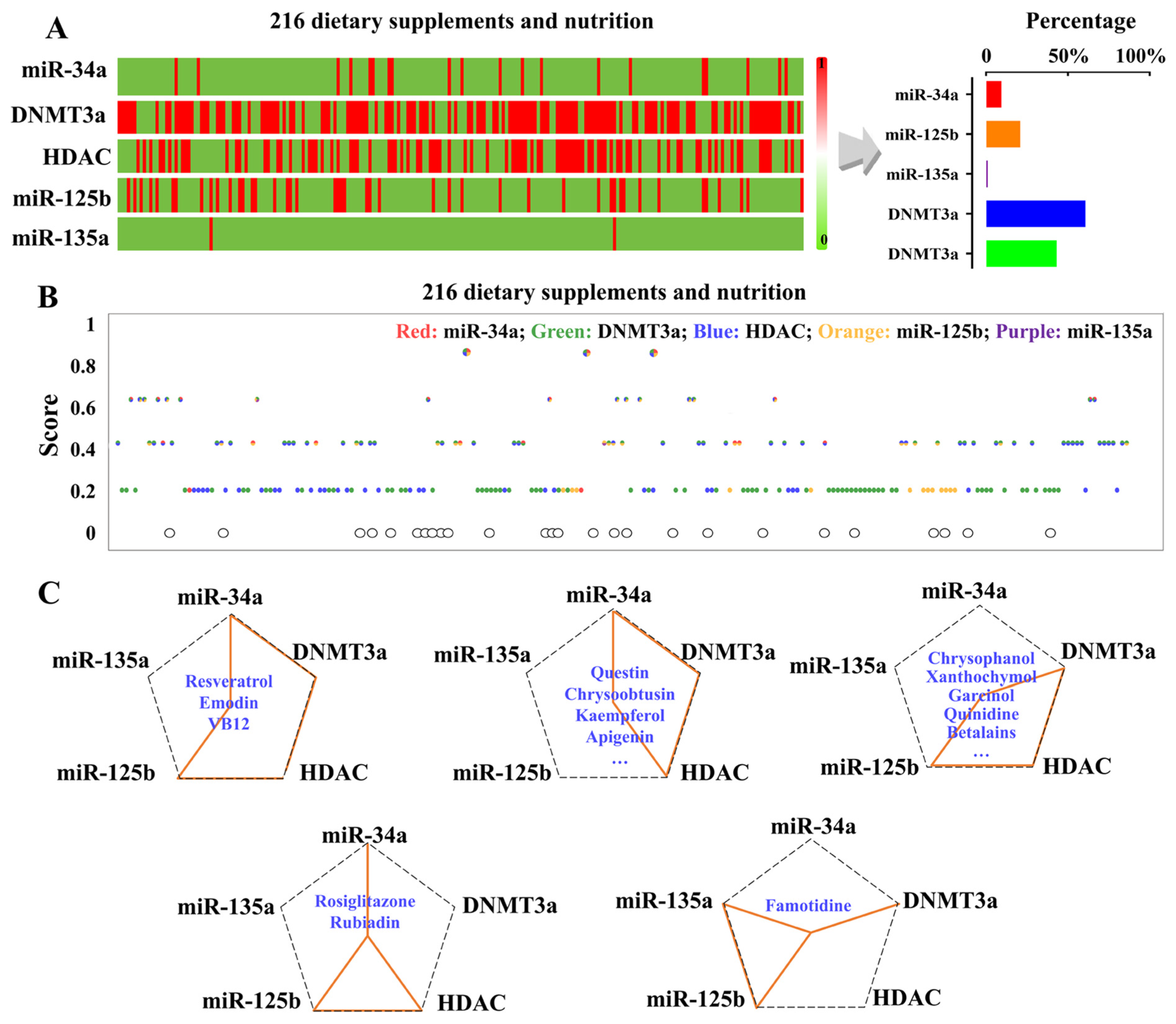
2.2. Developed Machine Learning Models Predicted Various Dietary Supplements or Nutrients with the Potential to Mitigate Ethanol-Induced Impairment in NCCs by Targeting Epigenetic Regulators
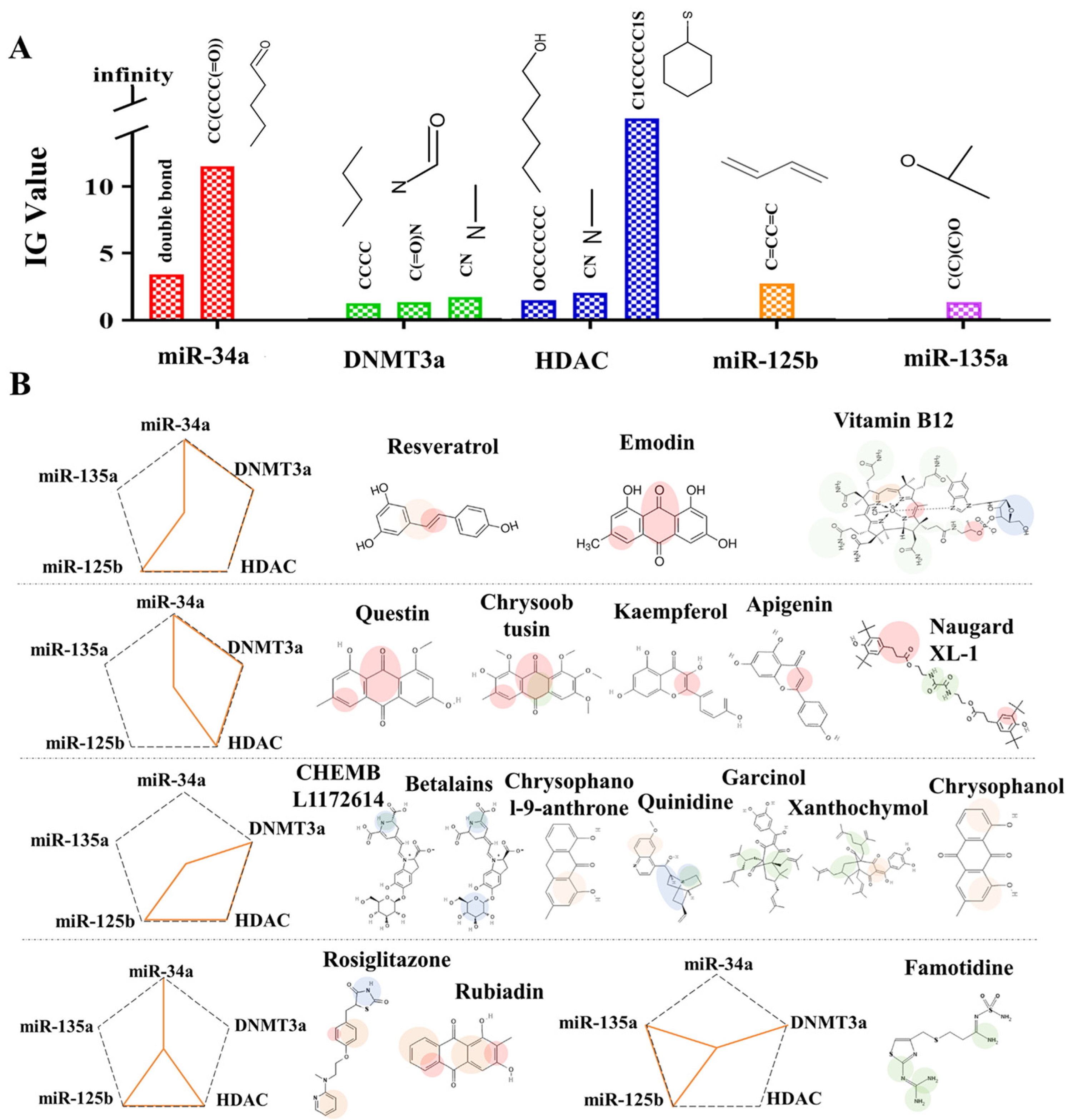
2.3. Key Structural Features in Predicted Dietary Supplements and Nutrients That Contribute to Epigenetic Regulation and the Mitigation of Ethanol’s Adverse Effects Were Identified Using the Developed Machine Learning Models
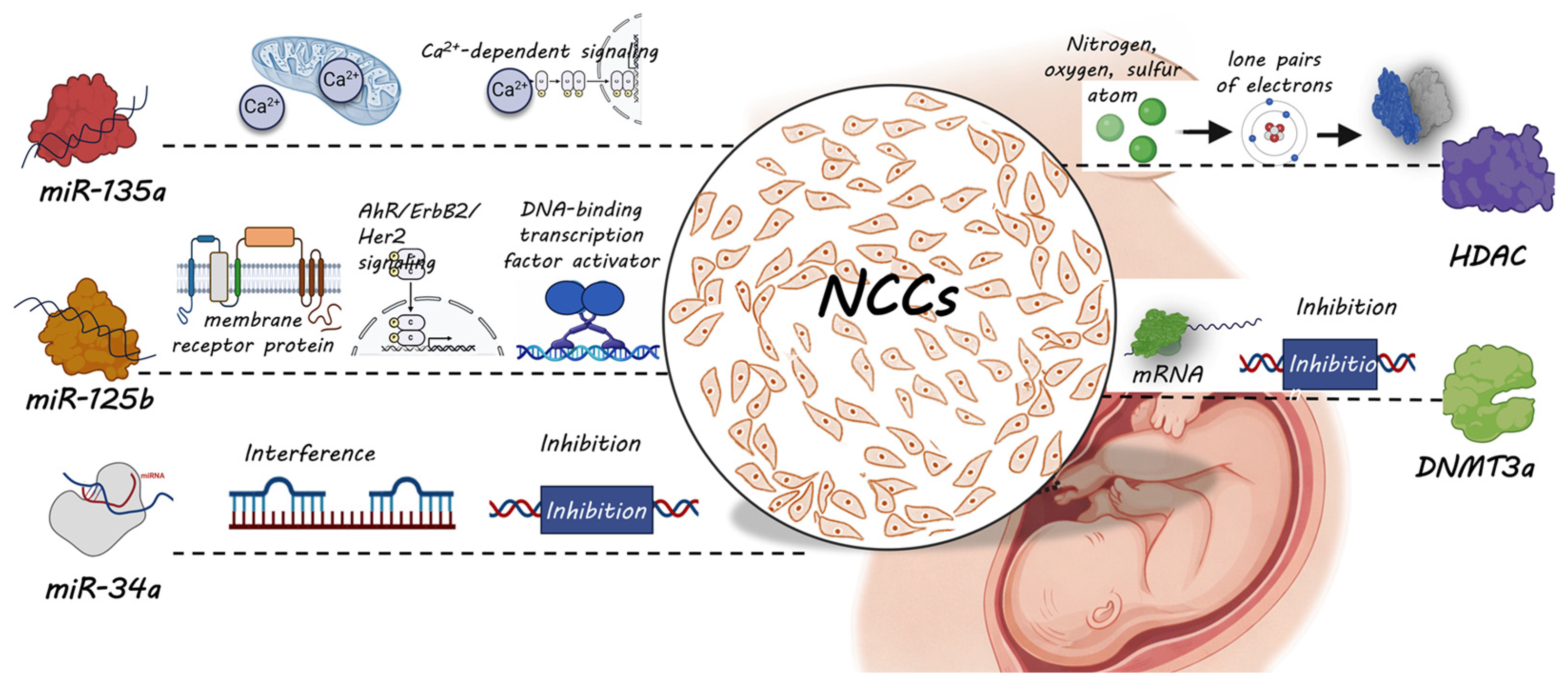
3. Discussion
4. Materials and Methods
4.1. Construction of a Representative Dataset of Epigenetic Regulators Through Data Retrieval and Preprocessing
4.2. Preparation and Balancing of Molecular Input Data for the Development of Biologically Informed Machine Learning Models
4.3. Development and Validation of Biologically Informed Machine Learning Models
4.4. Performance Evaluation and Optimization of the Developed Biologically Informed Machine Learning Models
4.5. Predicting and Prioritizing Potential Dietary Supplements and Nutrients by Using the Developed Machine Learning Models
4.6. Identification of Key Structural Features in Predicted Dietary Supplements and Nutrients That Contribute to Epigenetic Regulation and the Mitigation of Ethanol’s Adverse Effects
5. Conclusions
Supplementary Materials
Author Contributions
Funding
Institutional Review Board Statement
Informed Consent Statement
Data Availability Statement
Acknowledgments
Conflicts of Interest
Abbreviations
| FASDs | Fetal Alcohol Spectrum Disorders |
| NCCs | Neural crest cells |
| miR-34a | microRNA-34a |
| miR-125b | microRNA-125b |
| miR-135a | microRNA-135a |
| DNMT3a | DNA methyltransferases |
| HDAC | Histone deacetylases |
| Atg9a | Autophagy-related 9A |
| Snail1 | Snail family transcriptional repressor 1 |
| EMT | Epithelial–mesenchymal transition |
| Bcl-2 | B-cell lymphoma 2 |
| PUMA | p53 upregulated modulator of apoptosis |
| Siah1 | Seven in absentia homolog 1 |
| p38 MAPK | P38 mitogen-activated protein kinase |
| P53 | Tumor protein P53 |
| ACC | Accuracy |
| AUC | Area under the receiver operating characteristic curve |
| PPV | Positive predictive value |
| Recall | Ratio of correct positive predictions to actual positives |
| MCC | Matthews correlation coefficient |
| EstFP | Estate fingerprint |
| MACCS | MACCS fingerprint |
| PubchemFP | PubChem fingerprint |
| GraphFP | CDK Graph Only fingerprint |
| KRFP | Klekota–Roth fingerprint |
| ANN | Multilayer Perceptron -Based Neural Networks |
| KNN | K-neighbors classifier |
| GNB | Gaussian naive bayes |
| RF | Random forest |
| SVC | Support vector machine |
| XGB | Extreme gradient boosting decision tree |
References
- Chen, S.Y.; Kannan, M. Neural crest cells and fetal alcohol spectrum disorders: Mechanisms and potential targets for prevention. Pharmacol. Res. 2023, 194, 106855. [Google Scholar] [CrossRef] [PubMed]
- Ehrhart, F.; Roozen, S.; Verbeek, J.; Koek, G.; Kok, G.; van Kranen, H.; Evelo, C.T.; Curfs, L.M.G. Review and gap analysis: Molecular pathways leading to fetal alcohol spectrum disorders. Mol. Psychiatry 2019, 24, 10–17. [Google Scholar] [CrossRef] [PubMed]
- Medina, A.E. Fetal alcohol spectrum disorders and abnormal neuronal plasticity. Neuroscientist 2011, 17, 274–287. [Google Scholar] [CrossRef] [PubMed]
- Smith, S.M.; Garic, A.; Flentke, G.R.; Berres, M.E. Neural crest development in fetal alcohol syndrome. Birth Defects Res. C Embryo Today 2014, 102, 210–220. [Google Scholar] [CrossRef]
- Popova, S.; Charness, M.E.; Burd, L.; Crawford, A.; Hoyme, H.E.; Mukherjee, R.A.S.; Riley, E.P.; Elliott, E.J. Fetal alcohol spectrum disorders. Nat. Rev. Dis. Primers 2023, 9, 11. [Google Scholar] [CrossRef]
- Choate, P.; Badry, D.; MacLaurin, B.; Ariyo, K.; Sobhani, D. Fetal alcohol spectrum disorder: What does public awareness tell us about prevention programming? Int. J. Environ. Res. Public Health 2019, 16, 4229. [Google Scholar] [CrossRef]
- Smith, S.M. Alcohol-induced cell death in the embryo. Alcohol Health Res. World 1997, 21, 287–297. [Google Scholar]
- Dunty, W.C., Jr.; Chen, S.Y.; Zucker, R.M.; Dehart, D.B.; Sulik, K.K. Selective vulnerability of embryonic cell populations to ethanol-induced apoptosis: Implications for alcohol-related birth defects and neurodevelopmental disorder. Alcohol. Clin. Exp. Res. 2001, 25, 1523–1535. [Google Scholar]
- Kotch, L.E.; Sulik, K.K. Experimental fetal alcohol syndrome: Proposed pathogenic basis for a variety of associated facial and brain anomalies. Am. J. Med. Genet. 1992, 44, 168–176. [Google Scholar] [CrossRef]
- Cartwright, M.M.; Smith, S.M. Stage-dependent effects of ethanol on cranial neural crest cell development: Partial basis for the phenotypic variations observed in fetal alcohol syndrome. Alcohol Clin. Exp. Res. 1995, 19, 1454–1462. [Google Scholar] [CrossRef]
- Chen, S.Y.; Sulik, K.K. Free radicals and ethanol-induced cytotoxicity in neural crest cells. Alcohol Clin. Exp. Res. 1996, 20, 1071–1076. [Google Scholar] [CrossRef] [PubMed]
- Chen, S.Y.; Sulik, K.K. Iron-mediated free radical injury in ethanol-exposed mouse neural crest cells. J. Pharmacol. Exp. Ther. 2000, 294, 134–140. [Google Scholar] [CrossRef] [PubMed]
- Teng, L.; Labosky, P.A. Neural crest stem cells. Adv. Exp. Med. Biol. 2006, 589, 206–212. [Google Scholar] [PubMed]
- Delfino-Machin, M.; Chipperfield, T.R.; Rodrigues, F.S.; Kelsh, R.N. The proliferating field of neural crest stem cells. Dev. Dyn. 2007, 236, 3242–3454. [Google Scholar] [CrossRef]
- Hall, B.K. The neural crest and neural crest cells: Discovery and significance for theories of embryonic organization. J. Biosci. 2008, 33, 781–793. [Google Scholar] [CrossRef]
- Vega-Lopez, G.A.; Cerrizuela, S.; Tribulo, C.; Aybar, M.J. Neurocristopathies: New insights 150 years after the neural crest discovery. Dev. Biol. 2018, 444, S110–S143. [Google Scholar] [CrossRef]
- Chen, X.; Liu, J.; Feng, W.K.; Wu, X.; Chen, S.Y. MiR-125b protects against ethanol-induced apoptosis in neural crest cells and mouse embryos by targeting Bak 1 and PUMA. Exp. Neurol. 2015, 271, 104–111. [Google Scholar] [CrossRef]
- Fan, H.; Li, Y.; Yuan, F.; Lu, L.; Liu, J.; Feng, W.; Zhang, H.G.; Chen, S.Y. Up-regulation of microRNA-34a mediates ethanol-induced impairment of neural crest cell migration in vitro and in zebrafish embryos through modulating epithelial-mesenchymal transition by targeting Snail1. Toxicol. Lett. 2022, 358, 17–26. [Google Scholar] [CrossRef]
- Li, Y.; Fan, H.; Yuan, F.; Lu, L.; Liu, J.; Feng, W.; Zhang, H.G.; Chen, S.Y. Sulforaphane protects against ethanol-induced apoptosis in human neural crest cells through diminishing ethanol-induced hypermethylation at the promoters of the genes encoding the inhibitor of apoptosis proteins. Front. Cell Dev. Biol. 2021, 9, 622152. [Google Scholar] [CrossRef]
- Yuan, F.; Chen, X.; Liu, J.; Feng, W.; Cai, L.; Wu, X.; Chen, S.Y. Sulforaphane restores acetyl-histone H3 binding to Bcl-2 promoter and prevents apoptosis in ethanol-exposed neural crest cells and mouse embryos. Exp. Neurol. 2018, 300, 60–66. [Google Scholar] [CrossRef]
- Yuan, F.; Yun, Y.; Fan, H.; Li, Y.; Lu, L.; Liu, J.; Feng, W.; Chen, S.Y. MicroRNA-135a protects against ethanol-induced apoptosis in neural crest cells and craniofacial defects in zebrafish by modulating the siah1/p38/p53 pathway. Front. Cell Dev. Biol. 2020, 8, 583959. [Google Scholar] [CrossRef] [PubMed]
- Fan, H.; Yuan, F.; Yun, Y.; Wu, T.; Lu, L.; Liu, J.; Feng, W.; Chen, S.Y. MicroRNA-34a mediates ethanol-induced impairment of neural differentiation of neural crest cells by targeting autophagy-related gene 9a. Exp. Neurol. 2019, 320, 112981. [Google Scholar] [CrossRef] [PubMed]
- Li, Y.; Yuan, F.; Wu, T.; Lu, L.; Liu, J.; Feng, W.; Chen, S.Y. Sulforaphane protects against ethanol-induced apoptosis in neural crest cells through restoring epithelial-mesenchymal transition by epigenetically modulating the expression of Snail1. Biochim. Biophys. Acta Mol. Basis Dis. 2019, 1865, 2586–2594. [Google Scholar] [CrossRef] [PubMed]
- Chen, S.Y.; Dehart, D.B.; Sulik, K.K. Protection from ethanol-induced limb malformations by the superoxide dismutase/catalase mimetic, EUK-134. FASEB J. 2004, 18, 1234–1236. [Google Scholar] [CrossRef]
- Parnell, S.E.; Sulik, K.K.; Dehart, D.B.; Chen, S.Y. Reduction of ethanol-induced ocular abnormalities in mice through dietary administration of N-acetylcysteine. Alcohol 2010, 44, 699–705. [Google Scholar] [CrossRef]
- Yan, D.; Dong, J.; Sulik, K.K.; Chen, S.Y. Induction of the Nrf2-driven antioxidant response by tert-butylhydroquinone prevents ethanol-induced apoptosis in cranial neural crest cells. Biochem. Pharmacol. 2010, 80, 144–149. [Google Scholar] [CrossRef]
- Wang, L.L.; Zhang, Z.; Li, Q.; Yang, R.; Pei, X.; Xu, Y.; Wang, J.; Zhou, S.F.; Li, Y. Ethanol exposure induces differential microRNA and target gene expression and teratogenic effects which can be suppressed by folic acid supplementation. Hum. Reprod. 2009, 24, 562–579. [Google Scholar] [CrossRef]
- Thomas, J.D.; Biane, J.S.; O’Bryan, K.A.; O’Neill, T.M.; Dominguez, H.D. Choline supplementation following third-trimester-equivalent alcohol exposure attenuates behavioral alterations in rats. Behav. Neurosci. 2007, 121, 120–130. [Google Scholar] [CrossRef]
- Summers, B.L.; Henry, C.M.; Rofe, A.M.; Coyle, P. Dietary zinc supplementation during pregnancy prevents spatial and object recognition memory impairments caused by early prenatal ethanol exposure. Behav. Brain Res. 2008, 186, 230–238. [Google Scholar] [CrossRef]
- Summers, B.L.; Rofe, A.M.; Coyle, P. Dietary zinc supplementation throughout pregnancy protects against fetal dysmorphology and improves postnatal survival after prenatal ethanol exposure in mice. Alcohol Clin. Exp. Res. 2009, 33, 591–600. [Google Scholar] [CrossRef]
- Cohen-Kerem, R.; Koren, G. Antioxidants and fetal protection against ethanol teratogenicity. I. Review of the experimental data and implications to humans. Neurotoxicol. Teratol. 2003, 25, 1–9. [Google Scholar] [CrossRef] [PubMed]
- Occhipinti, A.; Verma, S.; Doan, L.M.T.; Angione, C. Mechanism-aware and multimodal AI: Beyond model-agnostic interpretation. Trends Cell Biol. 2024, 34, 85–89. [Google Scholar] [CrossRef]
- Zhou, Y.; Wang, F.; Tang, J.; Nussinov, R.; Cheng, F. Artificial intelligence in COVID-19 drug repurposing. Lancet Digit. Health 2020, 2, e667–e676. [Google Scholar] [CrossRef] [PubMed]
- Webb, S. Deep learning for biology. Nature 2018, 554, 555–557, Erratum in Nature 2018, 555, 547. [Google Scholar] [CrossRef] [PubMed]
- You, Y.; Lai, X.; Pan, Y.; Zheng, H.; Vera, J.; Liu, S.; Deng, S.; Zhang, L. Artificial intelligence in cancer target identification and drug discovery. Signal Transduct. Target. Ther. 2022, 7, 156. [Google Scholar] [CrossRef]
- Song, H.; Chen, L.; Cui, Y.; Li, Q.; Wang, Q.; Fan, J.; Yang, J.; Zhang, L. Denoising of MR and CT images using cascaded multi-supervision convolutional neural networks with progressive training. Neurocomputing 2022, 469, 354–365. [Google Scholar] [CrossRef]
- Gao, J.; Liu, P.; Liu, G.-D.; Zhang, L. Robust needle localization and enhancement algorithm for ultrasound by deep learning and beam steering methods. J. Comput. Sci. Technol. 2021, 36, 334–346. [Google Scholar] [CrossRef]
- Zhang, L.; Zhang, L.; Guo, Y.; Xiao, M.; Feng, L.; Yang, C.; Wang, G.; Ouyang, L. MCDB: A comprehensive curated mitotic catastrophe database for retrieval, protein sequence alignment, and target prediction. Acta Pharm. Sin. 2021, 11, 3092–3104. [Google Scholar] [CrossRef]
- Ramos-Triguero, A.; Navarro-Tapia, E.; Vieiros, M.; Mirahi, A.; Astals Vizcaino, M.; Almela, L.; Martinez, L.; Garcia-Algar, O.; Andreu-Fernandez, V. Machine learning algorithms to the early diagnosis of fetal alcohol spectrum disorders. Front. Neurosci. 2024, 18, 1400933. [Google Scholar] [CrossRef]
- Lange, S.; Shield, K.; Rehm, J.; Anagnostou, E.; Popova, S. Fetal alcohol spectrum disorder: Neurodevelopmentally and behaviorally indistinguishable from other neurodevelopmental disorders. BMC Psychiatry 2019, 19, 322. [Google Scholar] [CrossRef]
- Rodriguez, C.I.; Vergara, V.M.; Davies, S.; Calhoun, V.D.; Savage, D.D.; Hamilton, D.A. Detection of prenatal alcohol exposure using machine learning classification of resting-state functional network connectivity data. Alcohol 2021, 93, 25–34. [Google Scholar] [CrossRef] [PubMed]
- Ehrig, L.; Wagner, A.C.; Wolter, H.; Correll, C.U.; Geisel, O.; Konigorski, S. FASDetect as a machine learning-based screening app for FASD in youth with ADHD. NPJ Digit. Med. 2023, 6, 130. [Google Scholar] [CrossRef] [PubMed]
- Chen, X.; Liu, J.; Chen, S.Y. Over-expression of Nrf2 diminishes ethanol-induced oxidative stress and apoptosis in neural crest cells by inducing an antioxidant response. Reprod. Toxicol. 2013, 42, 102–109. [Google Scholar] [CrossRef] [PubMed]
- Chen, X.; Liu, J.; Chen, S.Y. Sulforaphane protects against ethanol-induced oxidative stress and apoptosis in neural crest cells by the induction of Nrf2-mediated antioxidant response. Br. J. Pharmacol. 2013, 169, 437–448. [Google Scholar] [CrossRef]
- Yuan, F.; Chen, X.; Liu, J.; Feng, W.; Wu, X.; Chen, S.Y. Up-regulation of Siah1 by ethanol triggers apoptosis in neural crest cells through p38 MAPK-mediated activation of p53 signaling pathway. Arch. Toxicol. 2017, 91, 775–784. [Google Scholar] [CrossRef]
- Shi, Y.; Li, J.; Chen, C.; Gong, M.; Chen, Y.; Liu, Y.; Chen, J.; Li, T.; Song, W. 5-Mehtyltetrahydrofolate rescues alcohol-induced neural crest cell migration abnormalities. Mol. Brain 2014, 7, 67. [Google Scholar] [CrossRef]
- Singh, N.; Agrawal, M.; Dore, S. Neuroprotective properties and mechanisms of resveratrol in in vitro and in vivo experimental cerebral stroke models. ACS Chem. Neurosci. 2013, 4, 1151–1162. [Google Scholar] [CrossRef]
- Bastianetto, S.; Menard, C.; Quirion, R. Neuroprotective action of resveratrol. Biochim. Biophys. Acta 2015, 1852, 1195–1201. [Google Scholar] [CrossRef]
- Cassiano, L.M.G.; da Silva Oliveira, M.; Coimbra, R.S. Vitamin B12 as a neuroprotectant in neuroinflammation. In Vitamins and Minerals in Neurological Disorders; Martin, C.R., Patel, V.B., Preedy, V.R., Eds.; Academic Press: Cambridge, MA, USA, 2023; pp. 399–416. [Google Scholar]
- Wu, L.; Zhang, Y.; Ren, J. Epigenetic modification in alcohol use disorder and alcoholic cardiomyopathy: From pathophysiology to therapeutic opportunities. Metabolism 2021, 125, 154909. [Google Scholar] [CrossRef]
- Dong, X.; Fu, J.; Yin, X.; Cao, S.; Li, X.; Lin, L.; Huyiligeqi; Ni, J. Emodin: A review of its pharmacology, toxicity and pharmacokinetics. Phytother. Res. 2016, 30, 1207–1218. [Google Scholar] [CrossRef]
- Liu, T.; Jin, H.; Sun, Q.R.; Xu, J.H.; Hu, H.T. Neuroprotective effects of emodin in rat cortical neurons against beta-amyloid-induced neurotoxicity. Brain Res. 2010, 1347, 149–160. [Google Scholar] [CrossRef] [PubMed]
- Chiang, M.C.; Tsai, T.Y.; Wang, C.J. The potential benefits of quercetin for brain health: A review of anti-inflammatory and neuroprotective mechanisms. Int. J. Mol. Sci. 2023, 24, 6328. [Google Scholar] [CrossRef] [PubMed]
- Agrawal, K.; Chakraborty, P.; Dewanjee, S.; Arfin, S.; Das, S.S.; Dey, A.; Moustafa, M.; Mishra, P.C.; Jafari, S.M.; Jha, N.K.; et al. Neuropharmacological interventions of quercetin and its derivatives in neurological and psychological disorders. Neurosci. Biobehav. Rev. 2023, 144, 104955. [Google Scholar] [CrossRef] [PubMed]
- Jin, S.; Zhang, L.; Wang, L. Kaempferol, a potential neuroprotective agent in neurodegenerative diseases: From chemistry to medicine. Biomed. Pharmacother. 2023, 165, 115215. [Google Scholar] [CrossRef]
- Ling, C.; Lei, C.; Zou, M.; Cai, X.; Xiang, Y.; Xie, Y.; Li, X.; Huang, D.; Wang, Y. Neuroprotective effect of apigenin against cerebral ischemia/reperfusion injury. J. Int. Med. Res. 2020, 48, 300060520945859. [Google Scholar] [CrossRef]
- Lin, F.; Zhang, C.; Chen, X.; Song, E.; Sun, S.; Chen, M.; Pan, T.; Deng, X. Chrysophanol affords neuroprotection against microglial activation and free radical-mediated oxidative damage in BV2 murine microglia. Int. J. Clin. Exp. Med. 2015, 8, 3447–3455. [Google Scholar]
- Prateeksha; Yusuf, M.A.; Singh, B.N.; Sudheer, S.; Kharwar, R.N.; Siddiqui, S.; Abdel-Azeem, A.M.; Fernandes Fraceto, L.; Dashora, K.; Gupta, V.K. Chrysophanol: A natural anthraquinone with multifaceted biotherapeutic potential. Biomolecules 2019, 9, 68. [Google Scholar] [CrossRef]
- El-Din, N.M.N.; Abdel-Moati, M.A.R. Accumulation of trace metals, petroleum hydrocarbons, and polycyclic aromatic hydrocarbons in marine copepods from the Arabian Gulf. Bull. Environ. Contam. Toxicol. 2001, 66, 110–117. [Google Scholar] [CrossRef]
- He, L.; He, X.; Lim, L.P.; de Stanchina, E.; Xuan, Z.; Liang, Y.; Xue, W.; Zender, L.; Magnus, J.; Ridzon, D.; et al. A microRNA component of the p53 tumour suppressor network. Nature 2007, 447, 1130–1134. [Google Scholar] [CrossRef]
- Li, X.J.; Ren, Z.J.; Tang, J.H. MicroRNA-34a: A potential therapeutic target in human cancer. Cell Death Dis. 2014, 5, e1327. [Google Scholar] [CrossRef]
- Slabakova, E.; Culig, Z.; Remsik, J.; Soucek, K. Alternative mechanisms of miR-34a regulation in cancer. Cell Death Dis. 2017, 8, e3100, Correction in Cell Death Dis. 2018, 9, 783. [Google Scholar] [CrossRef]
- Krattinger, R.; Bostrom, A.; Lee, S.M.L.; Thasler, W.E.; Schioth, H.B.; Kullak-Ublick, G.A.; Mwinyi, J. Chenodeoxycholic acid significantly impacts the expression of miRNAs and genes involved in lipid, bile acid and drug metabolism in human hepatocytes. Life Sci. 2016, 156, 47–56. [Google Scholar] [CrossRef] [PubMed]
- Castro, R.E.; Ferreira, D.M.; Afonso, M.B.; Borralho, P.M.; Machado, M.V.; Cortez-Pinto, H.; Rodrigues, C.M. miR-34a/SIRT1/p53 is suppressed by ursodeoxycholic acid in the rat liver and activated by disease severity in human non-alcoholic fatty liver disease. J. Hepatol. 2013, 58, 119–125. [Google Scholar] [CrossRef] [PubMed]
- Loboda, A.; Stachurska, A.; Sobczak, M.; Podkalicka, P.; Mucha, O.; Jozkowicz, A.; Dulak, J. Nrf2 deficiency exacerbates ochratoxin A-induced toxicity in vitro and in vivo. Toxicology 2017, 389, 42–52. [Google Scholar] [CrossRef] [PubMed]
- Mavingire, N.; Campbell, P.; Liu, T.; Wooten, J.; Khan, S.; Chen, X.; Matthews, J.; Wang, C.; Brantley, E. Aminoflavone upregulates putative tumor suppressor miR-125b-2-3p to inhibit luminal A breast cancer stem cell-like properties. Precis. Clin. Med. 2022, 5, pbac008. [Google Scholar] [CrossRef]
- Sun, Y.; Liu, X.; Zhang, Q.; Mao, X.; Feng, L.; Su, P.; Chen, H.; Guo, Y.; Jin, F. Oncogenic potential of TSTA3 in breast cancer and its regulation by the tumor suppressors miR-125a-5p and miR-125b. Tumour Biol. 2016, 37, 4963–4972. [Google Scholar] [CrossRef]
- Rajabi, H.; Jin, C.; Ahmad, R.; McClary, C.; Joshi, M.D.; Kufe, D. Mucin 1 oncoprotein expression is suppressed by the mir-125b oncomir. Genes Cancer 2010, 1, 62–68. [Google Scholar] [CrossRef]
- Zhang, Y.; Yan, L.X.; Wu, Q.N.; Du, Z.M.; Chen, J.; Liao, D.Z.; Huang, M.Y.; Hou, J.H.; Wu, Q.L.; Zeng, M.S.; et al. miR-125b is methylated and functions as a tumor suppressor by regulating the ETS1 proto-oncogene in human invasive breast cancer. Cancer Res. 2011, 71, 3552–3562. [Google Scholar] [CrossRef]
- Qin, M.; Li, Q.; Wang, Y.; Li, T.; Gu, Z.; Huang, P.; Ren, L. Rutin treats myocardial damage caused by pirarubicin via regulating miR-22-5p-regulated RAP1/ERK signaling pathway. J. Biochem. Mol. Toxicol. 2021, 35, e22615. [Google Scholar] [CrossRef]
- Alyaqoub, F.S.; Liu, Y.; Tao, L.; Steele, V.E.; Lubet, R.A.; Pereira, M.A. Modulation by bexarotene of mRNA expression of genes in mouse lung tumors. Mol. Carcinog. 2008, 47, 165–171. [Google Scholar] [CrossRef]
- Fan, Y.; Fan, X.; Yan, H.; Liu, Z.; Wang, X.; Yuan, Q.; Xie, J.; Lu, X.; Yang, Y. Hypermethylation of microRNA-497-3p contributes to progression of thyroid cancer through activation of PAK1/beta-catenin. Cell Biol. Toxicol. 2023, 39, 1979–1994. [Google Scholar] [CrossRef] [PubMed]
- Hu, C.; Liu, X.; Zeng, Y.; Liu, J.; Wu, F. DNA methyltransferase inhibitors combination therapy for the treatment of solid tumor: Mechanism and clinical application. Clin. Epigenet. 2021, 13, 166. [Google Scholar] [CrossRef] [PubMed]
- Ferlay, J.; Soerjomataram, I.; Dikshit, R.; Eser, S.; Mathers, C.; Rebelo, M.; Parkin, D.M.; Forman, D.; Bray, F. Cancer incidence and mortality worldwide: Sources, methods and major patterns in GLOBOCAN 2012. Int. J. Cancer 2015, 136, E359–E386. [Google Scholar] [CrossRef] [PubMed]
- Rilova, E.; Erdmann, A.; Gros, C.; Masson, V.; Aussagues, Y.; Poughon-Cassabois, V.; Rajavelu, A.; Jeltsch, A.; Menon, Y.; Novosad, N.; et al. Design, synthesis and biological evaluation of 4-amino-N- (4-aminophenyl)benzamide analogues of quinoline-based SGI-1027 as inhibitors of DNA methylation. ChemMedChem 2014, 9, 590–601. [Google Scholar] [CrossRef]
- Rotili, D.; Tarantino, D.; Marrocco, B.; Gros, C.; Masson, V.; Poughon, V.; Ausseil, F.; Chang, Y.; Labella, D.; Cosconati, S.; et al. Properly substituted analogues of BIX-01294 lose inhibition of G9a histone methyltransferase and gain selective anti-DNA methyltransferase 3A activity. PLoS ONE 2014, 9, e96941. [Google Scholar] [CrossRef]
- Xu, Y.; Li, Y.; Tang, Y.; Wang, J.; Shen, X.; Long, Z.; Zheng, X. The maternal combined supplementation of folic acid and Vitamin B(12) suppresses ethanol-induced developmental toxicity in mouse fetuses. Reprod. Toxicol. 2006, 22, 56–61. [Google Scholar] [CrossRef]
- Akbari, E.; Hossaini, D.; Amiry, G.Y.; Ansari, M.; Haidary, M.; Beheshti, F.; Ahmadi-Soleimani, S.M. Vitamin B12 administration prevents ethanol-induced learning and memory impairment through re-establishment of the brain oxidant/antioxidant balance, enhancement of BDNF and suppression of GFAP. Behav. Brain Res. 2023, 438, 114156. [Google Scholar] [CrossRef]
- Shanmugam, G.; Rakshit, S.; Sarkar, K. HDAC inhibitors: Targets for tumor therapy, immune modulation and lung diseases. Transl. Oncol. 2022, 16, 101312. [Google Scholar] [CrossRef]
- Bolden, J.E.; Peart, M.J.; Johnstone, R.W. Anticancer activities of histone deacetylase inhibitors. Nat. Rev. Drug Discov. 2006, 5, 769–784. [Google Scholar] [CrossRef]
- Dokmanovic, M.; Marks, P.A. Prospects: Histone deacetylase inhibitors. J. Cell Biochem. 2005, 96, 293–304. [Google Scholar] [CrossRef]
- Zhang, J.; Zhong, Q. Histone deacetylase inhibitors and cell death. Cell Mol. Life Sci. 2014, 71, 3885–3901. [Google Scholar] [CrossRef]
- Flores, B.M.; Uppalapati, C.K.; Pascual, A.S.; Vong, A.; Baatz, M.A.; Harrison, A.M.; Leyva, K.J.; Hull, E.E. Biological effects of HDAC inhibitors vary with zinc binding group: Differential effects on zinc bioavailability, ROS production, and R175H p53 mutant protein reactivation. Biomolecules 2023, 13, 1588. [Google Scholar] [CrossRef] [PubMed]
- Enbanathan, S.; Munusamy, S.; Jothi, D.; Manojkumar, S.; Manickam, S.; Iyer, S.K. Zinc ion detection using a benzothiazole-based highly selective fluorescence “turn-on” chemosensor and its real-time application. RSC Adv. 2022, 12, 27839–27845. [Google Scholar] [CrossRef] [PubMed]
- Judson, R.; Richard, A.; Dix, D.; Houck, K.; Elloumi, F.; Martin, M.; Cathey, T.; Transue, T.R.; Spencer, R.; Wolf, M. ACToR--Aggregated computational toxicology resource. Toxicol. Appl. Pharmacol. 2008, 233, 7–13. [Google Scholar] [CrossRef] [PubMed]
- Du, H.; Cai, Y.; Yang, H.; Zhang, H.; Xue, Y.; Liu, G.; Tang, Y.; Li, W. In Silico prediction of chemicals binding to aromatase with machine learning methods. Chem. Res. Toxicol. 2017, 30, 1209–1218. [Google Scholar] [CrossRef]
- Martin, T.M.; Harten, P.; Young, D.M.; Muratov, E.N.; Golbraikh, A.; Zhu, H.; Tropsha, A. Does rational selection of training and test sets improve the outcome of QSAR modeling? J. Chem. Inf. Model. 2012, 52, 2570–2578. [Google Scholar] [CrossRef]
- Wang, X.; Li, F.; Chen, J.; Teng, Y.; Ji, C.; Wu, H. Critical features identification for chemical chronic toxicity based on mechanistic forecast models. Environ. Pollut. 2022, 307, 119584. [Google Scholar] [CrossRef]
- Zhang, Y.; Xie, L.; Zhang, D.; Xu, X.; Xu, L. Application of machine learning methods to predict the air half-lives of persistent organic pollutants. Molecules 2023, 28, 7457. [Google Scholar] [CrossRef]
- Russo, D.P.; Strickland, J.; Karmaus, A.L.; Wang, W.; Shende, S.; Hartung, T.; Aleksunes, L.M.; Zhu, H. Nonanimal models for acute toxicity evaluations: Applying data-driven profiling and read-across. Environ. Health Perspect. 2019, 127, 47001. [Google Scholar] [CrossRef]
- Basant, N.; Gupta, S.; Singh, K.P. Predicting toxicities of diverse chemical pesticides in multiple avian species using tree-based qsar approaches for regulatory purposes. J. Chem. Inf. Model. 2015, 55, 1337–1348. [Google Scholar] [CrossRef]
- Ciallella, H.L.; Russo, D.P.; Aleksunes, L.M.; Grimm, F.A.; Zhu, H. Revealing adverse outcome pathways from public high-throughput screening data to evaluate new toxicants by a knowledge-based deep neural network approach. Environ. Sci. Technol. 2021, 55, 10875–10887. [Google Scholar] [CrossRef]
- Nendza, M.; Muller, M.; Wenzel, A. Classification of baseline toxicants for QSAR predictions to replace fish acute toxicity studies. Environ. Sci. Process Impacts 2017, 19, 429–437. [Google Scholar] [CrossRef]
- Ferrari, T.; Cattaneo, D.; Gini, G.; Golbamaki Bakhtyari, N.; Manganaro, A.; Benfenati, E. Automatic knowledge extraction from chemical structures: The case of mutagenicity prediction. SAR QSAR Environ. Res. 2013, 24, 365–383. [Google Scholar] [CrossRef]
- Gimbel, B.A.; Anthony, M.E.; Ernst, A.M.; Roediger, D.J.; de Water, E.; Eckerle, J.K.; Boys, C.J.; Radke, J.P.; Mueller, B.A.; Fuglestad, A.J.; et al. Long-term follow-up of a randomized controlled trial of choline for neurodevelopment in fetal alcohol spectrum disorder: Corpus callosum white matter microstructure and neurocognitive outcomes. J. Neurodev. Disord. 2022, 14, 59. [Google Scholar] [CrossRef]


Disclaimer/Publisher’s Note: The statements, opinions and data contained in all publications are solely those of the individual author(s) and contributor(s) and not of MDPI and/or the editor(s). MDPI and/or the editor(s) disclaim responsibility for any injury to people or property resulting from any ideas, methods, instructions or products referred to in the content. |
© 2025 by the authors. Licensee MDPI, Basel, Switzerland. This article is an open access article distributed under the terms and conditions of the Creative Commons Attribution (CC BY) license.
Share and Cite
Wang, X.; Bai, M.; Wang, S.; Qian, H.; Liu, J.; Feng, W.; Zhang, H.-g.; Wu, X.; Chen, S.-y. Biologically Informed Machine Learning Prioritizes Dietary Supplements That Protect Neural Crest Cells from Ethanol-Induced Epigenetic Dysregulation and Developmental Impairment. Int. J. Mol. Sci. 2026, 27, 295. https://doi.org/10.3390/ijms27010295
Wang X, Bai M, Wang S, Qian H, Liu J, Feng W, Zhang H-g, Wu X, Chen S-y. Biologically Informed Machine Learning Prioritizes Dietary Supplements That Protect Neural Crest Cells from Ethanol-Induced Epigenetic Dysregulation and Developmental Impairment. International Journal of Molecular Sciences. 2026; 27(1):295. https://doi.org/10.3390/ijms27010295
Chicago/Turabian StyleWang, Xiaoqing, Miao Bai, Shuoyang Wang, Hongjia Qian, Jie Liu, Wenke Feng, Huang-ge Zhang, Xiaoyang Wu, and Shao-yu Chen. 2026. "Biologically Informed Machine Learning Prioritizes Dietary Supplements That Protect Neural Crest Cells from Ethanol-Induced Epigenetic Dysregulation and Developmental Impairment" International Journal of Molecular Sciences 27, no. 1: 295. https://doi.org/10.3390/ijms27010295
APA StyleWang, X., Bai, M., Wang, S., Qian, H., Liu, J., Feng, W., Zhang, H.-g., Wu, X., & Chen, S.-y. (2026). Biologically Informed Machine Learning Prioritizes Dietary Supplements That Protect Neural Crest Cells from Ethanol-Induced Epigenetic Dysregulation and Developmental Impairment. International Journal of Molecular Sciences, 27(1), 295. https://doi.org/10.3390/ijms27010295