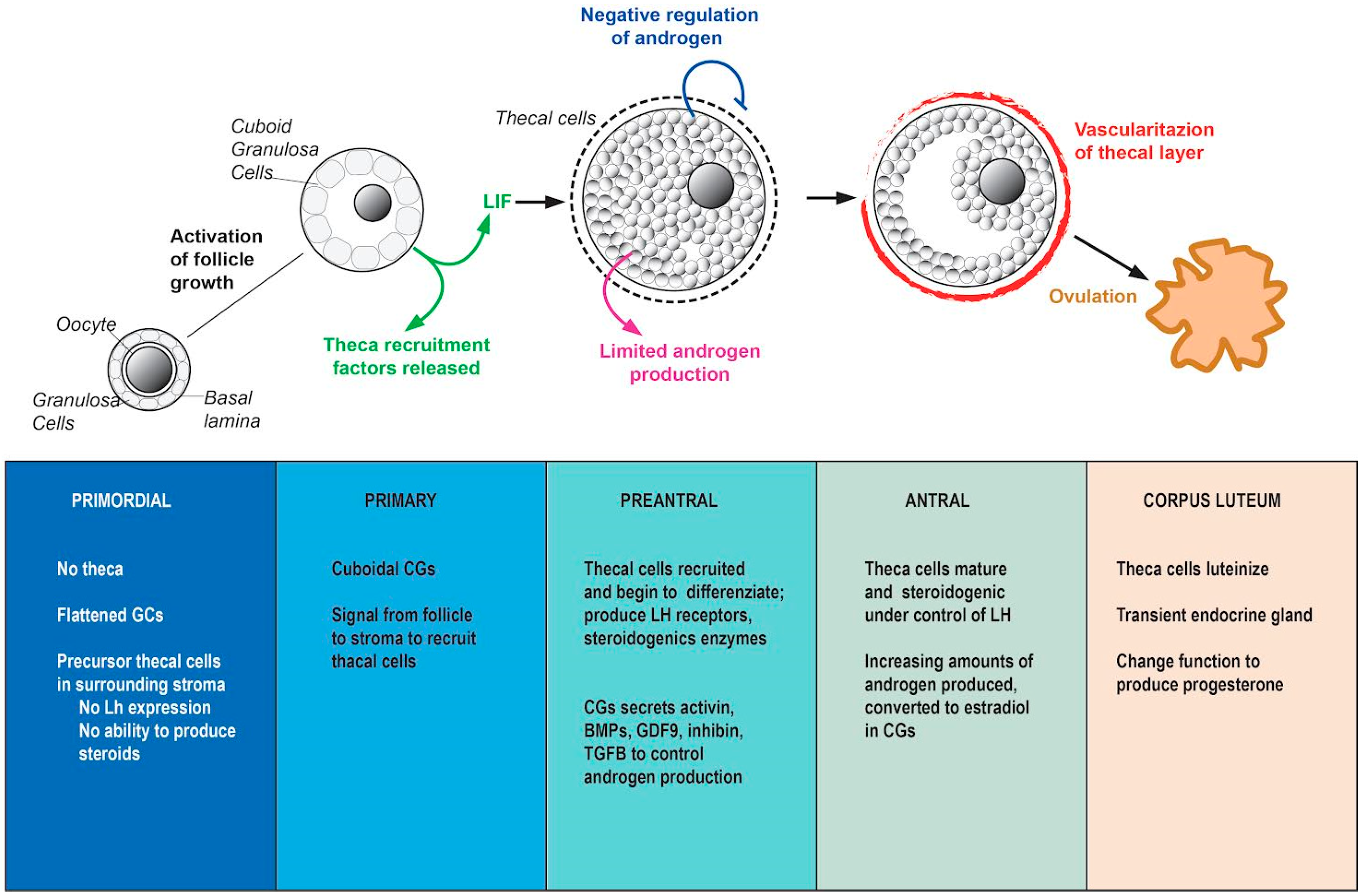
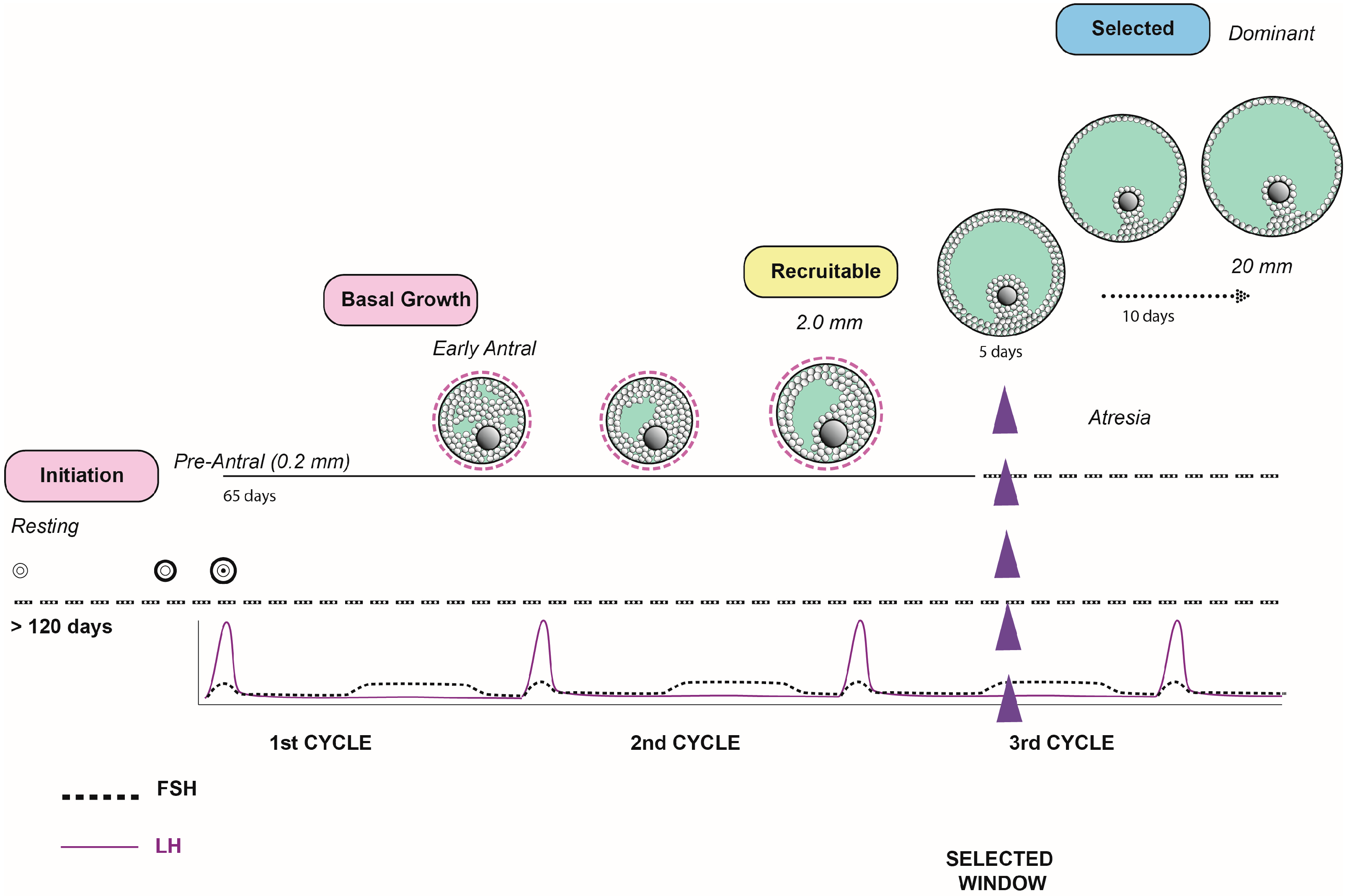
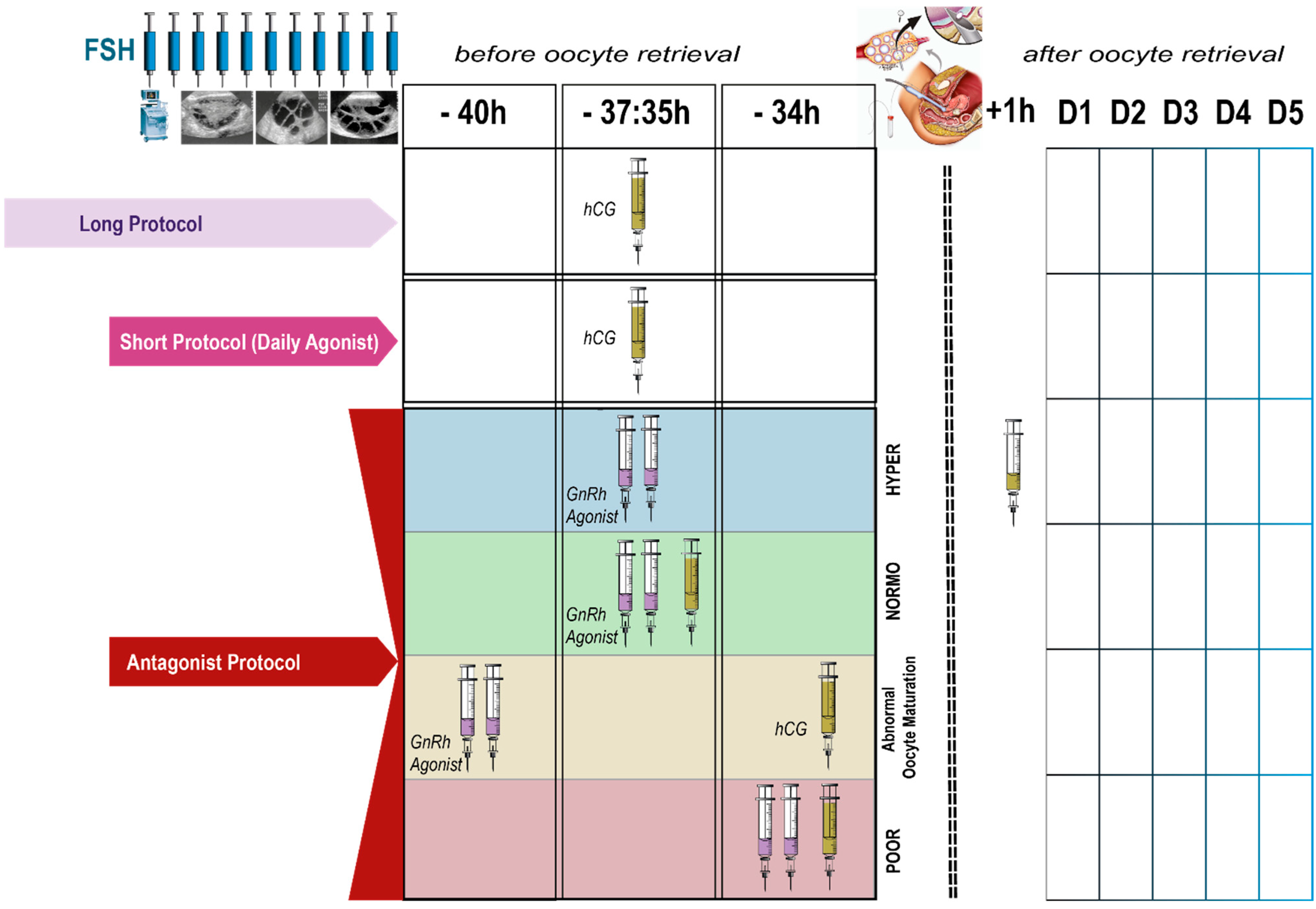
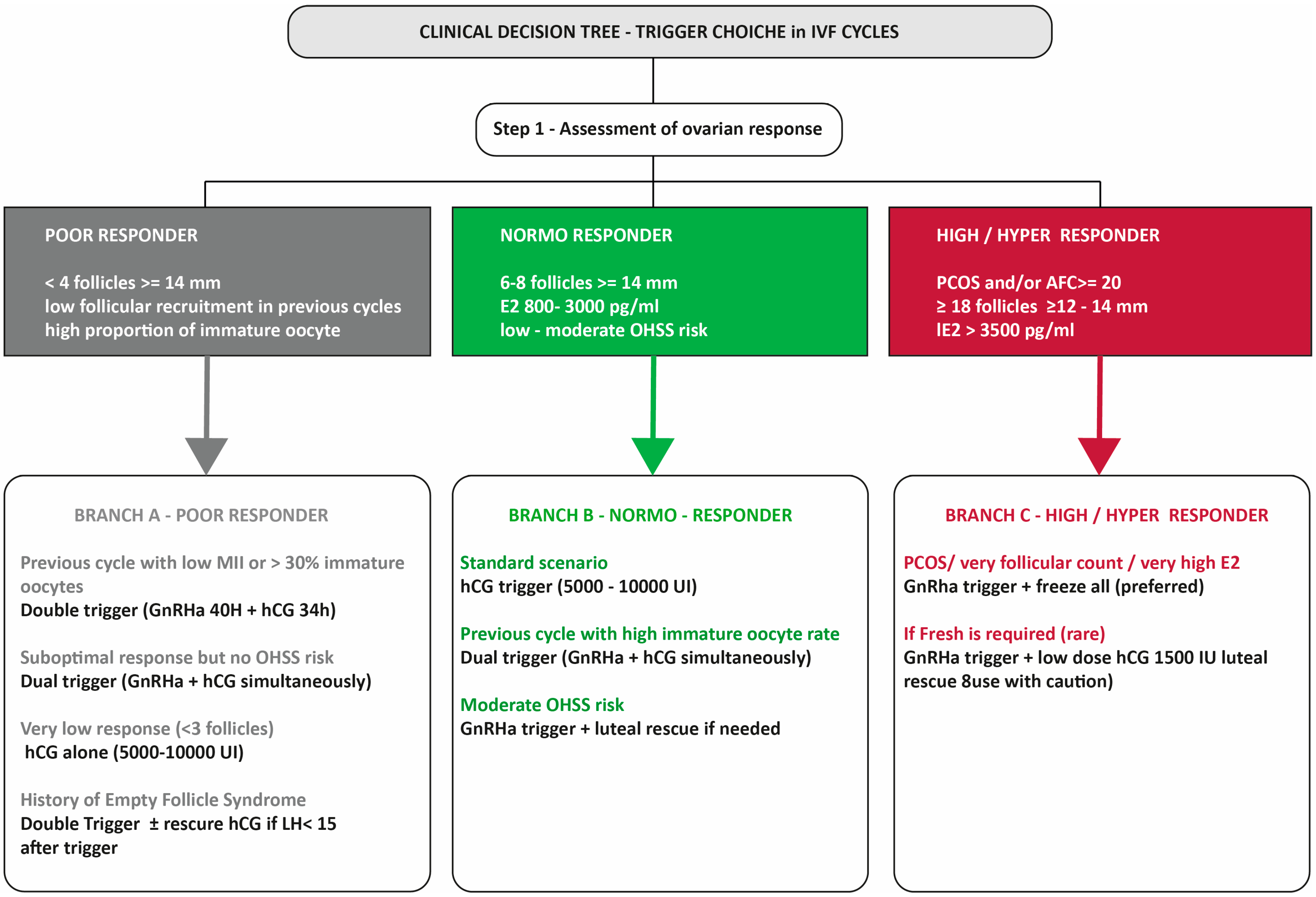
The Trigger in IVF Cycles: Molecular Pathways and Clinical Implications
 , , , and
Abstract
1. Introduction
2. Literature Search Methodology
3. Trigger Timing in IVF Cycles
3.1. Follicular Size and Trigger Timing
3.2. Correlation Between the Trigger and Endocrine Monitoring in Stimulated Cycles
3.3. Specific Considerations on Timing
3.4. Timing of Oocyte Pick-Up
3.5. The Role of Molecules Assisting the Trigger
4. Trigger Molecules
4.1. Kisspeptin
4.2. hCG
4.3. Alternative Approaches and Limitations of hCG
4.4. GnRH Analog as a Trigger
4.5. Dual Trigger (GnRHa + hCG) and Double Trigger (Staggered GnRHa and hCG)
5. Comparison Between Molecules
6. Conclusions
Author Contributions
Funding
Data Availability Statement
Conflicts of Interest
References
- Youssef, M.A.; Van der Veen, F.; Al-Inany, H.G.; Mochtar, M.H.; Griesinger, G.; Nagi Mohesen, M.; Aboulfoutouh, I.; van Wely, M. Gonadotropin-releasing hormone agonist versus HCG for oocyte triggering in antagonist-assisted reproductive technology. Cochrane Database Syst. Rev. 2014, 2014, CD008046. [Google Scholar] [CrossRef] [PubMed] [PubMed Central]
- Griesinger, G.; Diedrich, K.; Devroey, P.; Kolibianakis, E.M. GnRH agonist for triggering final oocyte maturation in the GnRH antagonist protocol: A systematic review and meta-analysis. Hum. Reprod. Update 2006, 12, 159–168. [Google Scholar] [CrossRef]
- Humaidan, P.; Bredkjaer, H.E.; Bungum, L.; Bungum, M.; Grøndahl, M.L.; Westergaard, L.; Andersen, C.Y. GnRH agonist (buserelin) or hCG for ovulation induction in GnRH antagonist IVF/ICSI cycles: A prospective randomized study. Hum. Reprod. 2005, 20, 1213–1220. [Google Scholar] [CrossRef]
- Engmann, L.; DiLuigi, A.; Schmidt, D.; Nulsen, J.; Maier, D.; Benadiva, C. The use of gonadotropin-releasing hormone (GnRH) agonist to induce oocyte maturation after cotreatment with GnRH antagonist in high-risk patients undergoing in vitro fertilization prevents the risk of ovarian hyperstimulation syndrome: A prospective randomized controlled study. Fertil. Steril. 2008, 89, 84–91. [Google Scholar] [CrossRef]
- Hu, K.L.; Wang, S.; Ye, X.; Zhang, D.; Hunt, S. GnRH agonist and hCG (dual trigger) versus hCG trigger for follicular maturation: A systematic review and meta-analysis of randomized trials. Reprod. Biol. Endocrinol. 2021, 19, 78. [Google Scholar] [CrossRef]
- Hsia, L.H.; Lee, T.H.; Lin, Y.H.; Huang, Y.Y.; Chang, H.J.; Liu, Y.L. Dual trigger improves the pregnancy rate in fresh in vitro fertilization (IVF) cycles compared with the human chorionic gonadotropin (hCG) trigger: A systematic review and meta-analysis of randomized trials. J. Assist. Reprod. Genet. 2023, 40, 2063–2077. [Google Scholar] [CrossRef] [PubMed]
- Sloth, A.; Kjølhede, M.; Sarmon, K.G.; Knudsen, U.B. Effect of dual trigger on reproductive outcome in low responders: A systematic PRISMA review and meta-analysis. Gynecol. Endocrinol. 2022, 38, 213–221. [Google Scholar] [CrossRef] [PubMed]
- Keskin, M.; Ecemiş, T.; Atik, A.; Yeğen, P.; Kalkan, E.; Yücel, G.S. Cycle outcomes of dual trigger (GnRH agonist+ hCG) versus human chorionic gonadotropin trigger alone in POSEDION group 3-4 poor-responders and normo-responders: A prospective randomized study. J. Gynecol. Obstet. Hum. Reprod. 2023, 52, 102633. [Google Scholar] [CrossRef] [PubMed]
- Haas, J.; Ophir, L.; Barzilay, E.; Machtinger, R.; Yung, Y.; Orvieto, R.; Hourvitz, A. Standard human chorionic gonadotropin versus double trigger for final oocyte maturation results in different granulosa cells gene expressions: A pilot study. Fertil. Steril. 2016, 106, 653–659.e1. [Google Scholar] [CrossRef] [PubMed]
- Haas, J.; Zilberberg, E.; Nahum, R.; Mor Sason, A.; Hourvitz, A.; Gat, I.; Orvieto, R. Does double trigger (GnRH-agonist + hCG) improve outcome in poor responders undergoing IVF-ET cycle? A pilot study. Gynecol. Endocrinol. 2019, 35, 628–630. [Google Scholar] [CrossRef] [PubMed]
- Haas, J.; Kedem, A.; Machtinger, R.; Dar, S.; Hourvitz, A.; Yerushalmi, G.; Orvieto, R. HCG (1500IU) administration on day 3 after oocytes retrieval, following GnRH-agonist trigger for final follicular maturation, results in high sufficient mid luteal progesterone levels—A proof of concept. J. Ovarian Res. 2014, 7, 35. [Google Scholar] [CrossRef]
- Haas, J.; Bassil, R.; Samara, N.; Zilberberg, E.; Mehta, C.; Orvieto, R.; Casper, R.F. GnRH agonist and hCG (dual trigger) versus hCG trigger for final follicular maturation: A double-blinded, randomized controlled study. Hum. Reprod. 2020, 35, 1648–1654. [Google Scholar] [CrossRef] [PubMed]
- Zhu, H.; Zhao, C.; Pan, Y.; Zhou, H.; Jin, X.; Xu, W.; Zhang, S. Dual Trigger for Final Follicular Maturation Improves Cumulative Live-Birth Rate in Ovarian Stimulation for Freeze-All In Vitro Fertilization/Intracytoplasmic Sperm Injection Cycles. Front Endocrinol 2021, 12, 708247. [Google Scholar] [CrossRef]
- Jayasena, C.N.; Abbara, A.; Comninos, A.N.; Nijher, G.M.; Christopoulos, G.; Narayanaswamy, S.; Izzi-Engbeaya, C.; Sridharan, M.; Mason, A.J.; Warwick, J.; et al. Kisspeptin-54 triggers egg maturation in women undergoing in vitro fertilization. J. Clin. Invest. 2014, 124, 3667–3677. [Google Scholar] [CrossRef]
- Abbara, A.; Jayasena, C.N.; Christopoulos, G.; Narayanaswamy, S.; Izzi-Engbeaya, C.; Nijher, G.M.K.; Comninos, A.N.; Peters, D.; Buckley, A.; Ratnasabapathy, R.; et al. Efficacy of Kisspeptin-54 to Trigger Oocyte Maturation in Women at High Risk of Ovarian Hyperstimulation Syndrome (OHSS) During In Vitro Fertilization (IVF) Therapy. J. Clin. Endocrinol. Metab. 2015, 100, 3322–3331. [Google Scholar] [CrossRef] [PubMed]
- Owens, L.A.; Abbara, A.; Lerner, A.; O’Floinn, S.; Christopoulos, G.; Khanjani, S.; Islam, R.; Hardy, K.; Hanyaloglu, A.C.; Lavery, S.A.; et al. The direct and indirect effects of kisspeptin-54 on granulosa lutein cell function. Hum. Reprod. 2018, 33, 292–302. [Google Scholar] [CrossRef]
- De Cesare, R.; Morenghi, E.; Cirillo, F.; Ronchetti, C.; Canevisio, V.; Persico, P.; Baggiani, A.; Sandri, M.T.; Levi-Setti, P.E. The Role of hCG Triggering Progesterone Levels: A Real-World Retrospective Cohort Study of More Than 8000 IVF/ICSI Cycles. Front. Endocrinol. 2020, 11, 547684. [Google Scholar] [CrossRef] [PubMed] [PubMed Central]
- Durinzi, K.L.; Saniga, E.M.; Lanzendorf, S.E. The relationship between size and maturation in vitro in the unstimulated human oocyte. Fertil. Steril. 1995, 63, 404–406. [Google Scholar] [CrossRef] [PubMed]
- Rosen, M.; Shen, S.; Dobson, A.; Rinaudo, P.; McCulloch, C.; Cedars, M. A quantitative assessment of follicle size on oocyte developmental competence. Fertil. Steril. 2008, 90, 684–690. [Google Scholar] [CrossRef] [PubMed]
- Mohr-Sasson, A.; Orvieto, R.; Blumenfeld, S.; Axelrod, M.; Mor-Hadar, D.; Grin, L.; Aizer, A.; Haas, J. The association between follicle size and oocyte development as a function of final follicular maturation triggering. Reprod. Biomed. Online 2020, 40, 887–893. [Google Scholar] [CrossRef] [PubMed]
- Campbell, B.K.; McNeilly, A.S. Follicular dominance and oocyte maturation. Zygote 1996, 4, 327–334. [Google Scholar] [CrossRef]
- Driancourt, M.A.; Thuel, B. Control of oocyte growth and maturation by follicular cells and molecules present in follicular fluid: A review. Reprod. Nutr. Dev. 1998, 38, 345–362. [Google Scholar] [CrossRef] [PubMed]
- Hunter, M.G. Follicular factors regulating oocyte maturation and quality. Hum. Fertil. 1998, 1, 69–74. [Google Scholar] [CrossRef]
- Shapiro, B.S.; Daneshmand, S.T.; Garner, F.C.; Aguirre, M.; Hudson, C. Comparison of “triggers” using leuprolide acetate alone or in combination with low-dose human chorionic gonadotropin. Fertil. Steril. 2011, 95, 2715–2717. [Google Scholar] [CrossRef]
- Wittmaack, F.M.; Kreger, D.O.; Blasco, L.; Tureck, R.W.; Mastroianni, L., Jr.; Lessey, B.A. Effect of follicular size on oocyte retrieval, fertilization, cleavage, and embryo quality in IVF cycles: A 6-year data collection. Fertil. Steril. 1994, 62, 1205–1210. [Google Scholar] [CrossRef] [PubMed]
- Shmorgun, D.; Hughes, E.; Mohide, P.; Roberts, R. Prospective cohort study of three- versus two-dimensional ultrasound for prediction of oocyte maturity. Fertil. Steril. 2010, 93, 1333–1337. [Google Scholar] [CrossRef] [PubMed]
- Abbara, A.; Vuong, L.N.; Ho, V.N.A.; Clarke, S.A.; Jeffers, L.; Comninos, A.N.; Salim, R.; Ho, T.M.; Kelsey, T.W.; Trew, G.H.; et al. Follicle size on day of trigger most likely to yield a mature oocyte. Front. Endocrinol. 2018, 9, 193. [Google Scholar] [CrossRef] [PubMed] [PubMed Central]
- Helmer, A.; Magaton, I.; Stalder, O.; Stute, P.; Surbek, D.; von Wolff, M. Optimal Timing of Ovulation Triggering to Achieve Highest Success Rates in Natural Cycles-An Analysis Based on Follicle Size and Oestradiol Concentration in Natural Cycle IVF. Front. Endocrinol. 2022, 13, 855131. [Google Scholar] [CrossRef] [PubMed] [PubMed Central]
- Yenigül, N.N.; Özelci, R.; Başer, E.; Dilbaz, S.; Aldemir, O.; Dilbaz, B.; Moraloğlu Tekin, Ö. Does the decrease in E2 levels between the trigger of ovulation and embryo transfer affect the reproductive outcome in IVF-ICSI cycles? Turk. J. Obstet. Gynecol. 2023, 20, 199–205. [Google Scholar] [CrossRef] [PubMed] [PubMed Central]
- Orvieto RRabinson, J.; Meltcer, S.; Gemer, O.; Anteby, E.Y.; Zohav, E. Does physicians’ experience influence in vitro fertilization success in patients undergoing controlled ovarian hyperstimulation with GnRH antagonists? Fertil. Steril. 2008, 89, 736–737. [Google Scholar] [CrossRef]
- Baldini, D.; Bartoli, V.M.; Mastrorocco, A.; Ferri, D.; Dellino, M.; Laganà, A.S.; Hatirnaz, S.; Baldini, G.M.; Malvasi, A.; Vimercati, A.; et al. Progesterone peak influences embryonic developmental morphokinetics on trigger day? A retrospective study. J. Ovarian Res. 2024, 17, 216. [Google Scholar] [CrossRef] [PubMed]
- Baldini, D.; Savoia, M.V.; Sciancalepore, A.G.; Malvasi, A.; Vizziello, D.; Beck, R.; Vizziello, G. High progesterone levels on the day of hCG administration do not affect embryo quality and reproductive outcomes of frozen embryo transfers. Clin. Ter. 2018, 169, e91–e95. [Google Scholar] [CrossRef] [PubMed]
- Davar, R.; Naghshineh, E.; Neghab, N. The effect of 24 hours delay in oocyte maturation triggering in IVF/ICSI cycles with antagonist protocol and not-elevated progesterone: A randomized control trial. Int. J. Reprod. Biomed. 2017, 15, 441–446. [Google Scholar] [CrossRef] [PubMed] [PubMed Central]
- Vandekerckhove, F.; Gerris, J.; Vansteelandt, S.; De Baerdemaeker, A.; Tilleman, K.; De Sutter, P. Delaying the oocyte maturation trigger by one day leads to a higher metaphase II oocyte yield in IVF/ICSI: A randomized controlled trial. Reprod. Biol. Endocrinol. 2014, 12, 31. [Google Scholar] [CrossRef]
- Chen, Q.L.; Shuai, J.; Pei, L.; Huang, G.N.; Ye, H. Impact of trigger timing of gonadotropin-releasing hormone antagonist regimen for infertility patients of various ages. Zhonghua Fu Chan Ke Za Zhi 2021, 56, 474–481. (In Chinese) [Google Scholar] [CrossRef] [PubMed]
- Ranit, H.; Shmuel, H.; Ahlad, A.; Shirley, G.; Meny, H.; Tal, I.; Assaf, B.-M.; Chana, A.L.; Yaakov, B.; Efrat, E.-B.; et al. Is there a preferred time interval between GnRH agonist trigger and oocyte retrieval in GnRH antagonist cycles? A retrospective cohort of planned fertility preservation cycles. J. Assist. Reprod. Genet. 2024, 41, 1531–1538. [Google Scholar] [CrossRef]
- Weng, Y.W.; Lin, M.H.; Kuo-Kuang Lee, R.; Li, S.H.; Jou, Q.B.; Chen, Y.J. Is there an optimal timing interval between hCG trigger and oocyte vitrification? Taiwan. J. Obstet. Gynecol. 2022, 61, 485–488. [Google Scholar] [CrossRef]
- Cadenas, J.; Adrados, C.S.; Kumar, A.; Kalra, B.; Salto Mamsen, L.; Andersen, C.Y. Regulating human oocyte maturation in vitro: A hypothesis based on oocytes retrieved from small antral follicles during ovarian tissue cryopreservation. J. Assist. Reprod. Genet. 2025, 42, 1461–1472. [Google Scholar] [CrossRef]
- Zelinski-Wooten, M.B.; Lanzendorf, S.E.; Wolf, D.P.; Chandrasekher, Y.A.; Stouffer, R.L. Titrating luteinizing hormone surge requirements for ovulatory changes in primate follicles. I. Oocyte maturation and corpus luteum function. J. Clin. Endocrinol. Metab. 1991, 73, 577–583. [Google Scholar] [CrossRef]
- Arroyo, A.; Kim, B.; Yeh, J. Luteinizing Hormone Action in Human Oocyte Maturation and Quality: Signaling Pathways, Regulation, and Clinical Impact. Reprod. Sci. 2020, 27, 1223–1252. [Google Scholar] [CrossRef] [PubMed] [PubMed Central]
- Zhang, H.; Lu, S.; Xu, R.; Tang, Y.; Liu, J.; Li, C.; Wei, J.; Yao, R.; Zhao, X.; Wei, Q.; et al. Mechanisms of Estradiol-induced EGF-like Factor Expression and Oocyte Maturation via G Protein-coupled Estrogen Receptor. Endocrinology 2020, 161, bqaa190. [Google Scholar] [CrossRef] [PubMed]
- Alak, B.M.; Smith, G.D.; Woodruff, T.K.; Stouffer, R.L.; Wolf, D.P. Enhancement of primate oocyte maturation and fertilization in vitro by inhibin A and activin A. Fertil. Steril. 1996, 66, 646–653. [Google Scholar] [CrossRef] [PubMed]
- Chang, C.L.; Wang, T.H.; Horng, S.G.; Wu, H.M.; Wang, H.S.; Soong, Y.K. The concentration of inhibin B in follicular fluid: Relation to oocyte maturation and embryo development. Hum. Reprod. 2002, 17, 1724–1728. [Google Scholar] [CrossRef] [PubMed][Green Version]
- Lawrenz, B.; Depret Bixio, L.; Coughlan, C.; Andersen, C.Y.; Melado, L.; Kalra, B.; Savjani, G.; Fatemi, H.M.; Kumar, A. Inhibin A: A promising predictive parameter for determination of final oocyte maturation in ovarian stimulation for IVF/ICSI. Front. Endocrinol. 2020, 11, 307. [Google Scholar] [CrossRef]
- Kala, M.; Shaikh, M.V.; Nivsarkar, M. Equilibrium between anti-oxidants and reactive oxygen species: A requisite for oocyte development and maturation. Reprod. Med. Biol. 2016, 16, 28–35. [Google Scholar] [CrossRef] [PubMed] [PubMed Central]
- Masumi, S.; Lee, E.B.; Dilower, I.; Upadhyaya, S.; Chakravarthi, V.P.; Fields, P.E.; Rumi, M.A.K. The role of kisspeptin signaling in oocyte maturation. Front. Endocrinol. 2022, 13, 917464. [Google Scholar] [CrossRef]
- Kuspinar, G.; Cakır, C.; Kasapoglu, I.; Saribal, S.; Oral, B.; Budak, F.; Uncu, G.; Avcı, B. The Kisspeptin and Kisspeptin receptor in follicular microenvironment: Is that really necessary for oocyte maturation and fertilisation? J. Obstet. Gynaecol. 2022, 42, 3241–3247. [Google Scholar] [CrossRef]
- Sharma, B.; Koysombat, K.; Comninos, A.N.; Dhillo, W.S.; Abbara, A. Use of kisspeptin to trigger oocyte maturation during in vitro fertilisation (IVF) treatment. Front. Endocrinol. 2022, 13, 972137. [Google Scholar] [CrossRef]
- Taniguchi, Y.; Kuwahara, A.; Tachibana, A.; Yano, Y.; Yano, K.; Yamamoto, Y.; Yamasaki, M.; Iwasa, T.; Hinokio, K.; Matsuzaki, T.; et al. Intra-follicular kisspeptin levels are related to oocyte maturation and gonadal hormones in patients undergoing ART. Reprod. Med. Biol. 2017, 16, 380–385. [Google Scholar] [CrossRef]
- Kasum, M.; Franulić, D.; Čehić, E.; Orešković, S.; Lila, A.; Ejubović, E. Kisspeptin as a promising oocyte maturation trigger for IVF in humans. Gynecol. Endocrinol. 2017, 33, 583–587. [Google Scholar] [CrossRef] [PubMed]
- Singh, N.; Girish, B.; Malhotra, N.; Mahey, R.; Perumal, V. Does Double Dose of Recombinant Human Chorionic Gonadotropin for Final Follicular Maturation in In vitro Fertilization Cycles Improve Oocyte Quality: A Prospective Randomized Study. J. Hum. Reprod. Sci. 2019, 12, 310–315. [Google Scholar] [CrossRef] [PubMed] [PubMed Central]
- Kolibianakis, E.M.; Papanikolaou, E.G.; Tournaye, H.; Camus, M.; Van Steirteghem, A.C.; Devroey, P. Triggering final oocyte maturation using different doses of human chorionic gonadotropin: A randomized pilot study in patients with polycystic ovary syndrome treated with gonadotropin-releasing hormone antagonists and recombinant follicle-stimulating hormone. Fertil. Steril. 2007, 88, 1382–1388. [Google Scholar] [CrossRef] [PubMed]
- Lin, H.; Wang, W.; Li, Y.; Chen, X.; Yang, D.; Zhang, Q. Triggering final oocyte maturation with reduced doses of hCG in IVF/ICSI: A prospective, randomized and controlled study. Eur. J. Obstet. Gynecol. Reprod. Biol. 2011, 159, 143–147. [Google Scholar] [CrossRef] [PubMed]
- Ashkenazi, J.; Bar-Hava, I.; Meltcer, S.; Rabinson, J.; Anteby, E.Y.; Orvieto, R. The possible influence of increased body mass index on the clinical efficacy of standard human chorionic gonadotropin dosage. Clin. Exp. Obstet. Gynecol. 2009, 36, 20–22. [Google Scholar] [PubMed]
- Svenstrup, L.; Möller, S.; Fedder, J.; Pedersen, D.E.; Erb, K.; Andersen, C.Y.; Humaidan, P. Does the HCG trigger dose used for IVF impact luteal progesterone concentrations? a randomized controlled trial. Reprod. Biomed. Online 2022, 45, 793–804. [Google Scholar] [CrossRef] [PubMed]
- Youssef, M.A.; Al-Inany, H.G.; Aboulghar, M.; Mansour, R.; Abou-Setta, A.M. Recombinant versus urinary human chorionic gonadotrophin for final oocyte maturation triggering in IVF and ICSI cycles. Cochrane Database Syst. Rev. 2011, CD003719, Update in Cochrane Database Syst. Rev. 2016, CD003719.. [Google Scholar] [CrossRef] [PubMed]
- Andersen, C.Y.; Kelsey, T.; Mamsen, L.S.; Vuong, L.N. Shortcomings of an unphysiological triggering of oocyte maturation using human chorionic gonadotropin. Fertil. Steril. 2020, 114, 200–208. [Google Scholar] [CrossRef] [PubMed]
- Kol, S.; Humaidan, P. GnRH agonist triggering: Recent developments. Reprod. Biomed. Online 2013, 26, 226–230. [Google Scholar] [CrossRef] [PubMed]
- Orvieto, R.; Nahum, R.; Frei, J.; Zandman, O.; Frenkel, Y.; Haas, J. GnRH-Agonist Ovulation Trigger in Patients Undergoing Controlled Ovarian Hyperstimulation for IVF with Stop GnRH-Agonist Combined with Multidose GnRH-Antagonist Protocol. Gynecol. Obstet. Invest. 2021, 86, 427–431. [Google Scholar] [CrossRef] [PubMed]
- Budinetz, T.H.; Mann, J.S.; Griffin, D.W.; Benadiva, C.A.; Nulsen, J.C.; Engmann, L.L. Maternal and neonatal outcomes after gonadotropin-releasing hormone agonist trigger for final oocyte maturation in patients undergoing in vitro fertilization. Fertil. Steril. 2014, 102, 753–758. [Google Scholar] [CrossRef]
- Hoff, J.D.; Quigley, M.E.; Yen, S.S. Hormonal dynamics at midcycle: A reevaluation. J. Clin. Endocrinol. Metab. 1983, 57, 792–796. [Google Scholar] [CrossRef]
- Babayof, R.; Margalioth, E.J.; Huleihel, M.; Amash, A.; Zylber-Haran, E.; Gal, M.; Brooks, B.; Mimoni, T.; Eldar-Geva, T. Serum inhibin A, VEGF and TNFalpha levels after triggering oocyte maturation with GnRH agonist compared with HCG in women with polycystic ovaries undergoing IVF treatment: A prospective randomized trial. Hum. Reprod. 2006, 21, 1260–1265. [Google Scholar] [CrossRef]
- Engmann, L.; DiLuigi, A.; Schmidt, D.; Benadiva, C.; Maier, D.; Nulsen, J. The effect of luteal phase vaginal estradiol supplementation on the success of in vitro fertilization treatment: A prospective randomized study. Fertil. Steril. 2008, 89, 554–561. [Google Scholar] [CrossRef]
- Garcia-Velasco, J.A.; Motta, L.; López, A.; Mayoral, M.; Cerrillo, M.; Pacheco, A. Low-dose human chorionic gonadotropin versus estradiol/progesterone luteal phase support in gonadotropin-releasing hormone agonist-triggered assisted reproductive technique cycles: Understanding a new approach. Fertil. Steril. 2010, 94, 2820–2823. [Google Scholar] [CrossRef] [PubMed]
- DiLuigi, A.J.; Engmann, L.; Schmidt, D.W.; Maier, D.B.; Nulsen, J.C.; Benadiva, C.A. Gonadotropin-releasing hormone agonist to induce final oocyte maturation prevents the development of ovarian hyperstimulation syndrome in high-risk patients and leads to improved clinical outcomes compared with coasting. Fertil. Steril. 2010, 94, 1111–1114. [Google Scholar] [CrossRef] [PubMed]
- Kol, S.; Muchtar, M. Recombinant gonadotrophin-based, ovarian hyperstimulation syndrome-free stimulation of the high responder: Suggested protocol for further research. Reprod. Biomed. Online 2005, 10, 575–577. [Google Scholar] [CrossRef] [PubMed]
- Humaidan, P.; Kol, S.; Papanikolaou, E.; Copenhagen GnRH Agonist Triggering Workshop Group. GnRH agonist for triggering final oocyte maturation: Time for a change of practice? Hum. Reprod. Update 2011, 17, 510–524. [Google Scholar] [CrossRef] [PubMed]
- Seyhan, A.; Ata, B.; Polat, M.; Son, W.Y.; Yarali, H.; Dahan, M.H. Severe early ovarian hyperstimulation syndrome following GnRH agonist trigger with the addition of 1500 IU hCG. Hum. Reprod. 2013, 28, 2522–2528. [Google Scholar] [CrossRef]
- Ling, L.P.; Phoon, J.W.; Lau, M.S.; Chan, J.K.; Viardot-Foucault, V.; Tan, T.Y.; Nadarajah, S.; Tan, H.H. GnRH agonist trigger and ovarian hyperstimulation syndrome: Relook at ‘freeze-all strategy’. Reprod. Biomed. Online 2014, 29, 392–394. [Google Scholar] [CrossRef]
- Orvieto, R.; Vanni, V.S. Ovarian hyperstimulation syndrome following GnRH agonist trigger- think ectopic. J. Assist. Reprod. Genet. 2017, 34, 1161–1165. [Google Scholar] [CrossRef]
- Al-Inany, H.G.; Youssef, M.A.; Ayeleke, R.O.; Brown, J.; Lam, W.S.; Broekmans, F.J. Gonadotrophin-releasing hormone antagonists for assisted reproductive technology. Cochrane Database Syst. Rev. 2016, 4, CD001750. [Google Scholar] [CrossRef]
- Jing, M.; Lin, C.; Zhu, W.; Tu, X.; Chen, Q.; Wang, X.; Zheng, Y.; Zhang, R. Cost-effectiveness analysis of GnRH-agonist long-protocol and GnRH-antagonist protocol for in vitro fertilization. Sci. Rep. 2020, 10, 8732. [Google Scholar] [CrossRef] [PubMed]
- Murber, Á.; Fancsovits, P.; Ledó, N.; Gilán, Z.T.; Rigó, J., Jr.; Urbancsek, J. Impact of GnRH analogues on oocyte/embryo quality and embryo development in in vitro fertilization/intracytoplasmic sperm injection cycles: A case control study. Reprod. Biol. Endocrinol. 2009, 7, 103. [Google Scholar] [CrossRef] [PubMed]
- Lambalk, C.B.; Banga, F.R.; Huirne, J.A.; Toftager, M.; Pinborg, A.; Homburg, R.; van der Veen, F.; van Wely, M. GnRH antagonist versus long agonist protocols in IVF: Systematic review and meta-analysis accounting for patient type. Hum. Reprod. Update 2017, 23, 560–579. [Google Scholar] [CrossRef]
- Humaidan, P.; Engmann, L.; Benadiva, C. Luteal phase supplementation after gonadotropin-releasing hormone agonist trigger in fresh ET: The American versus European approaches. Fertil. Steril. 2015, 103, 879–885. [Google Scholar] [CrossRef]
- Vuong, T.N.; Ho, M.T.; Ha, T.D.; Phung, H.T.; Huynh, G.B.; Humaidan, P. Gonadotropin-releasing hormone agonist trigger in oocyte donors co-treated with a gonadotropin-releasing hormone antagonist: A dose-finding study. Fertil. Steril. 2016, 105, 356–363. [Google Scholar] [CrossRef] [PubMed]
- Andersen, C.Y.; Humaidan, P.; Ejdrup, H.B.; Bungum, L.; Grøndahl, M.L.; Westergaard, L.G. Hormonal characteristics of follicular fluid from women receiving either GnRH agonist or hCG for ovulation induction. Hum. Reprod. 2006, 21, 2126–2130. [Google Scholar] [CrossRef] [PubMed]
- Kummer, N.E.; Feinn, R.S.; Griffin, D.W.; Nulsen, J.C.; Benadiva, C.A.; Engmann, L.L. Predicting successful induction of oocyte maturation after GnRH agonist trigger. Hum. Reprod. 2013, 28, 152–159. [Google Scholar] [CrossRef]
- Chang, F.E.; Beall, S.A.; Cox, J.M.; Richter, K.S.; DeCherney, A.H.; Levy, M.J. Assessing the adequacy of gonadotropin-releasing hormone agonist leuprolide to trigger oocyte maturation and management of inadequate response. Fertil. Steril. 2016, 106, 1093–1100.e3. [Google Scholar] [CrossRef]
- O’Neill, K.E.; Senapati, S.; Dokras, A. Use of gonadotropin-releasing hormone agonist trigger during in vitro fertilization is associated with similar endocrine profiles and oocyte measures in women with and without polycystic ovary syndrome. Fertil. Steril. 2015, 103, 264–269. [Google Scholar] [CrossRef]
- El Tokhy, O.; Kopeika, J.; El-Toukhy, T. An update on the prevention of ovarian hyperstimulation syndrome. Womens Health 2016, 12, 496–503. [Google Scholar] [CrossRef]
- Roque, M.; Haahr, T.; Geber, S.; Esteves, S.C.; Humaidan, P. Fresh versus elective frozen embryo transfer in IVF/ICSI cycles: A systematic review and meta-analysis of reproductive outcomes. Hum. Reprod. Update 2019, 25, 2–14. [Google Scholar] [CrossRef]
- Stormlund, S.; Løssl, K.; Zedeler, A.; Bogstad, J.; Prætorius, L.; Nielsen, H.S.; Bungum, M.; Skouby, S.O.; Mikkelsen, A.L.; Andersen, A.N.; et al. Comparison of a ‘freeze-all’ strategy including GnRH agonist trigger versus a ‘fresh transfer’ strategy including hCG trigger in assisted reproductive technology (ART): A study protocol for a randomised controlled trial. BMJ Open 2017, 7, e016106. [Google Scholar] [CrossRef] [PubMed] [PubMed Central]
- Wiser, A.; Klement, A.H.; Shavit, T.; Berkovitz, A.; Koren, R.R.; Gonen, O.; Amichay, K.; Shulman, A. Repeated GnRH agonist doses for luteal support: A proof of concept. Reprod. Biomed. Online 2019, 39, 770–776, Erratum in Reprod. Biomed. Online 2020, 40, 343. https://doi.org/10.1016/j.rbmo.2019.12.010. PMID: 31628035. [Google Scholar] [CrossRef]
- Orvieto, R.; Rabinson, J.; Meltzer, S.; Zohav, E.; Anteby, E.; Homburg, R. Substituting hCG with GnRH agonist to trigger final follicular maturation- a retrospective comparison of three different ovarian stimulation protocols. Reprod. Biomed. Online 2006, 13, 198–201. [Google Scholar] [CrossRef] [PubMed]
- Humaidan, P.; Papanikolaou, E.G.; Kyrou, D.; Alsbjerg, B.; Polyzos, N.P.; Devroey, P.; Fatemi, H.M. The luteal phase after GnRH-agonist triggering of ovulation: Present and future perspectives. Reprod. Biomed. Online 2012, 24, 134–141. [Google Scholar] [CrossRef] [PubMed]
- Yanushpolsky, E.H. Luteal phase support in in vitro fertilization. Semin. Reprod. Med. 2015, 33, 118–127. [Google Scholar] [CrossRef]
- Lawrenz, B.; Humaidan, P.; Kol, S.; Fatemi, H.M. GnRHa trigger and luteal coasting: A new approach for the ovarian hyperstimulation syndrome high-risk patient? Reprod. Biomed. Online 2018, 36, 75–77. [Google Scholar] [CrossRef] [PubMed]
- Liu, Y.; Huang, K.; Chen, C.; Wen, L.; Lei, M.; Guo, Y.; Tang, B. Effect of luteal-phase GnRH agonist on frozen-thawed embryo transfer during artificial cycles: A randomised clinical pilot study. Front. Endocrinol. 2023, 14, 1098576. [Google Scholar] [CrossRef]
- Orvieto, R. Triggering final follicular maturation—hCG, GnRH-agonist or both, when and to whom? J. Ovarian Res. 2015, 8, 60. [Google Scholar] [CrossRef]
- Popovic-Todorovic, B.; Santos-Ribeiro, S.; Drakopoulos, P.; De Vos, M.; Racca, A.; Mackens, S.; Thorrez, Y.; Verheyen, G.; Tournaye, H.; Quintero, L.; et al. Predicting suboptimal oocyte yield following GnRH agonist trigger by measuring serum LH at the start of ovarian stimulation. Hum. Reprod. 2019, 34, 2027–2035. [Google Scholar] [CrossRef] [PubMed]
- Hershko Klement, A.; Orvieto, R.; Esh Broder, E.; Frei, J.; Solnica, A.; Zandman, O.; Holzer, H.; Haas, J. How far is too far? Does time interval between GnRH antagonist and GnRH agonist trigger in GnRH antagonist cycles matter? Reprod. Biomed. Online 2021, 43, 233–238. [Google Scholar] [CrossRef] [PubMed]
- Humaidan, P.; Papanikolaou, E.G.; Tarlatzis, B.C. GnRHa to trigger final oocyte maturation: Time to reconsider. Hum. Reprod. 2009, 24, 2389–2394. [Google Scholar] [CrossRef] [PubMed]
- Horowitz, E.; Mizrachi, Y.; Farhi, J.; Raziel, A.; Weissman, A. Does the interval between last GnRH antagonist dose and GnRH agonist trigger affect oocyte recovery and maturation rates? Reprod. Biomed. Online 2020, 41, 917–924. [Google Scholar] [CrossRef]
- Reissmann, T.; Schally, A.V.; Bouchard, P.; Riethmiiller, H.; Engel, J.B. The LHRH antagonist cetrorelix: A review. Hum. Reprod. Update 2000, 6, 322–331. [Google Scholar] [CrossRef] [PubMed]
- Zaat, T.; Zagers, M.; Mol, F.; Goddijn, M.; van Wely, M.; Mastenbroek, S. Fresh versus frozen embryo transfers in assisted reproduction. Cochrane Database Syst. Rev. 2021, 2, CD011184. [Google Scholar] [PubMed]
- Toftager, M.; Bogstad, J.; Bryndorf, T.; Løssl, K.; Roskær, J.; Holland, T.; Prætorius, L.; Zedeler, A.; Nilas, L.; Pinborg, A. Risk of severe ovarian hyperstimulation syndrome in GnRH antagonist versus GnRH agonist protocol: RCT including 1050 first IVF/ICSI cycles. Hum. Reprod. 2016, 31, 1253–1264. [Google Scholar] [CrossRef] [PubMed]
- Rahav Koren, R.; Miller, N.; Moran, R.; Decter, D.; Berkowitz, A.; Haikin Herzberger, E.; Wiser, A. GnRH agonist-triggering ovulation in women with advanced age. Sci. Rep. 2022, 12, 16401. [Google Scholar] [CrossRef] [PubMed] [PubMed Central]
- Orvieto, R. Intensive luteal-phase support with oestradiol and progesterone after GnRH-agonist triggering: Does it help? Reprod. Biomed. Online 2012, 24, 680–681. [Google Scholar] [CrossRef]
- Bodri, D.; Guillén, J.J.; Trullenque, M.; Schwenn, K.; Esteve, C.; Coll, O. Early ovarian hyperstimulation syndrome is completely prevented by gonadotropin releasing-hormone agonist triggering in high-risk oocyte donor cycles: A prospective, luteal-phase follow-up study. Fertil. Steril. 2010, 93, 2418–2420. [Google Scholar] [CrossRef]
- Shapiro, B.S.; Daneshmand, S.T.; Garner, F.C.; Aguirre, M.; Thomas, S. Gonadotropin-releasing hormone agonist combined with a reduced dose of human chorionic gonadotropin for final oocyte maturation in fresh autologous cycles of in vitro fertilization. Fertil. Steril. 2008, 90, 231–233. [Google Scholar] [CrossRef] [PubMed]
- Cerrillo, M.; Rodríguez, S.; Mayoral, M.; Pacheco, A.; Martínez-Salazar, J.; Garcia-Velasco, J.A. Differential regulation of VEGF after final oocyte maturation with GnRH agonist versus hCG: A rationale for OHSS reduction. Fertil. Steril. 2009, 91 (Suppl. S4), 1526–1528. [Google Scholar] [CrossRef] [PubMed]
- Decleer, W.; Osmanagaoglu, K.; Seynhave, B.; Kolibianakis, S.; Tarlatzis, B.; Devroey, P. Comparison of hCG triggering versus hCG in combination with a GnRH agonist: A prospective randomized controlled trial. Facts Views Vis. Obgyn 2014, 6, 203–209. [Google Scholar] [PubMed] [PubMed Central]
- Zilberberg, E.; Haas, J.; Dar, S.; Kedem, A.; Machtinger, R.; Orvieto, R. Co-administration of GnRH-agonist and hCG, for final oocyte maturation (double trigger), in patients with low proportion of mature oocytes. Gynecol. Endocrinol. 2015, 31, 145–147. [Google Scholar] [CrossRef] [PubMed]
- Beck-Fruchter, R.; Weiss, A.; Lavee, M.; Geslevich, Y.; Shalev, E. Empty follicle syndrome: Successful treatment in a recurrent case and review of the literature. Hum. Reprod. 2012, 27, 1357–1367. [Google Scholar] [CrossRef]
- Lok, F.; Pritchard, J.; Lashen, H. Successful treatment of empty follicle syndrome by triggering endogenous LH surge using GnRH agonist in an antagonist down-regulated IVF cycle. Hum. Reprod. 2003, 18, 2079–2081. [Google Scholar] [CrossRef]
- Humaidan, P.; Ejdrup Bredkjær, H.; Westergaard, L.G.; Yding Andersen, C. 1,500 IU human chorionic gonadotropin administered at oocyte retrieval rescues the luteal phase when gonadotropin-releasing hormone agonist is used for ovulation induction: A prospective, randomized, controlled study. Fertil. Steril. 2010, 93, 847–854. [Google Scholar] [CrossRef]
- Papanikolaou, E.G.; Verpoest, W.; Fatemi, H.; Tarlatzis, B.; Devroey, P.; Tournaye, H. A novel method of luteal supplementation with recombinant luteinizing hormone when a gonadotropin-releasing hormone agonist is used instead of human chorionic gonadotropin for ovulation triggering: A randomized prospective proof of concept study. Fertil. Steril. 2011, 95, 1174–1177. [Google Scholar] [CrossRef]
- Tu, B.; Zhang, H.; Chen, L.; Yang, R.; Liu, P.; Li, R.; Qiao, J. Co-administration of GnRH-agonist and hCG (double trigger) for final oocyte maturation increases the number of top-quality embryos in patients undergoing IVF/ICSI cycles. J. Ovarian Res. 2024, 17, 137. [Google Scholar] [CrossRef] [PubMed] [PubMed Central]
- Maged, A.M.; Ragab, M.A.; Shohayeb, A.; Saber, W.; Ekladious, S.; Hussein, E.A.; El-Mazny, A.; Hany, A. Comparative study between single versus dual trigger for poor responders in GnRH-antagonist ICSI cycles: A randomized controlled study. Int. J. Gynaecol. Obstet. 2021, 152, 395–400. [Google Scholar] [CrossRef] [PubMed]
- Benadiva, C.; Engmann, L. Luteal phase support after gonadotropin-releasing hormone agonist triggering: Does it still matter? Fertil. Steril. 2018, 109, 763–767. [Google Scholar] [CrossRef]
- Ansaripour, S.; Tamizi, N.; Sadeghi, M.R.; Mohammad-Akbari, A. Comparison of Triggering Final Oocyte Maturation with Follicle Stimulating Hormone Plus Human Chorionic Gonadotropin, versus Human Chorionic Gonadotropin Alonein Normoresponder Women Undergoing Intracytoplasmic Sperm Injection: A Randomized Clinical Trial. Int. J. Fertil. Steril. 2022, 16, 162–166. [Google Scholar] [CrossRef] [PubMed] [PubMed Central]
- Youssef, M.A.; Abdelmoty, H.I.; Ahmed, M.A.; Elmohamady, M. GnRH agonist for final oocyte maturation in GnRH antagonist co-treated IVF/ICSI treatment cycles: Systematic review and meta-analysis. J. Adv. Res. 2015, 6, 341–349. [Google Scholar] [CrossRef] [PubMed] [PubMed Central]
- Engmann, L.L.; Maslow, B.S.; Kaye, L.A.; Griffin, D.W.; DiLuigi, A.J.; Schmidt, D.W.; Grow, D.R.; Nulsen, J.C.; Benadiva, C.A. Low dose human chorionic gonadotropin administration at the time of gonadotropin releasing-hormone agonist trigger versus 35 h later in women at high risk of developing ovarian hyperstimulation syndrome—A prospective randomized double-blind clinical trial. J. Ovarian Res. 2019, 12, 8. [Google Scholar] [CrossRef] [PubMed] [PubMed Central]
- Humaidan, P.; Polyzos, N.P.; Alsbjerg, B.; Erb, K.; Mikkelsen, A.L.; Elbaek, H.O.; Papanikolaou, E.G.; Andersen, C.Y. GnRHa trigger and individualized luteal phase hCG support according to ovarian response to stimulation: Two prospective randomized controlled multi-centre studies in IVF patients. Hum. Reprod. 2013, 28, 2511–2521. [Google Scholar] [CrossRef] [PubMed]
- Seikkula, J.; Ahinko, K.; Polo-Kantola, P.; Anttila, L.; Hurme, S.; Tinkanen, H.; Jokimaa, V. Mid-luteal phase gonadotropin-releasing hormone agonist support in frozen-thawed embryo transfers during artificial cycles: A prospective interventional pilot study. J. Gynecol. Obstet. Hum. Reprod. 2018, 47, 391–395. [Google Scholar] [CrossRef] [PubMed]
- Zhou, C.; Yang, X.; Wang, Y.; Xi, J.; Pan, H.; Wang, M.; Zhou, Y.; Xiao, Y. Ovulation triggering with hCG alone, GnRH agonist alone or in combination? A randomized controlled trial in advanced-age women undergoing IVF/ICSI cycles. Hum. Reprod. 2022, 37, 1795–1805. [Google Scholar] [CrossRef] [PubMed]
- He, F.F.; Hu, W.; Yong, L.; Li, Y.M. Triggering of ovulation for GnRH-antagonist cycles in normal and low ovarian responders undergoing IVF/ICSI: A systematic review and meta-analysis of randomized trials. Eur. J. Obstet. Gynecol. Reprod. Biol. 2023, 289, 65–73. [Google Scholar] [CrossRef] [PubMed]
- Santos-Ribeiro, S.; Mackens, S.; Popovic-Todorovic, B.; Racca, A.; Polyzos, N.P.; Van Landuyt, L.; Drakopoulos, P.; de Vos, M.; Tournaye, H.; Blockeel, C. The freeze-all strategy versus agonist triggering with low-dose hCG for luteal phase support in IVF/ICSI for high responders: A randomized controlled trial. Hum. Reprod. 2020, 35, 2808–2818. [Google Scholar] [CrossRef] [PubMed]
- Dong, L.; Lian, F.; Wu, H.; Xiang, S.; Li, Y.; Wei, C.; Yu, X.; Xin, X. Reproductive outcomes of dual trigger with combination GnRH agonist and hCG versus trigger with hCG alone in women undergoing IVF/ICSI cycles: A retrospective cohort study with propensity score matching. BMC Pregnancy Childbirth 2022, 22, 583. [Google Scholar] [CrossRef] [PubMed] [PubMed Central]
- Chen, K.; Zhang, C.; Chen, L.; Zhao, Y.; Li, H. Reproductive outcomes of dual trigger therapy with GnRH agonist and hCG versus hCG trigger in women with diminished ovarian reserve: A retrospective study. Reprod. Biol. Endocrinol. 2024, 22, 35. [Google Scholar] [CrossRef] [PubMed] [PubMed Central]
- González, V.G.; Triana, A.M.; García, I.S.; Nieto, S.O.; Urrutia, M.C.; García, I.C.; Gastañaga-Holguera, T. Dual trigger vs. Conventional trigger outcomes in In Vitro Fertilization. Systematic review and meta-analysis. JBRA Assist. Reprod. 2023, 27, 112–119. [Google Scholar] [CrossRef] [PubMed] [PubMed Central]
- Buhbut, E.; Nabulsi, R.; Avigdor, G.; Ben-Ami, I. Comparison of pregnancy rates in antagonist cycles after luteal support with GnRH-agonist versus progesterone: Prospective randomized study. Arch. Gynecol. Obstet. 2023, 308, 255–263. [Google Scholar] [CrossRef] [PubMed]
- Lin, M.H.; Wu, F.S.; Lee, R.K.; Li, S.H.; Lin, S.Y.; Hwu, Y.M. Dual trigger with combination of gonadotropin-releasing hormone agonist and human chorionic gonadotropin significantly improves the live-birth rate for normal responders in GnRH-antagonist cycles. Fertil. Steril. 2013, 100, 1296–1302. [Google Scholar] [CrossRef]




| First Author (Year) | Study Type/Level of Evidence | Population/Setting | Trigger Comparison | Main Outcomes |
|---|---|---|---|---|
| Youssef (2014) [1] | Cochrane meta-analyses (Level I) | IVF/ICSI cycles, GnRH-ant | Recombinant hCG vs. urinary hCG | No significant differences in ongoing pregnancy/live birth or OHSS risk between rhCG and uhCG. |
| Griesinger (2006) [2] | Systematic review and meta-analysis (Level I) | GnRH-ant cycles | GnRHa trigger vs. hCG | GnRHa markedly reduces/abolishes OHSS but may reduce clinical pregnancy/live birth without adequate luteal support. |
| Humaidan et al. (2013) [3] | RCTs (Level II) | High responders, GnRH-ant | GnRHa trigger ± individualized low-dose hCG | Adequate MII yield; improved luteal stability with on-demand low-dose hCG; markedly reduced OHSS risk. |
| Engmann et al. (2008) [4] | RCTs (Level II) | High responders/PCOS | GnRHa trigger + variable hCG rescue vs. hCG trigger | Comparable pregnancy rates with tailored luteal support; essentially no severe OHSS in GnRHa-based protocols. |
| Hu et al. (2021) [5] | Systematic review and meta-analysis (Level I) | GnRH-ant cycles | Dual trigger vs. hCG | Dual trigger associated with higher MII rate and improved clinical outcomes in selected populations; notable heterogeneity and small RCTs. |
| Hsia et al. (2023) [6] | Systematic review and meta-analysis of RCTs (Level I) | 10 RCTs, 825 dual vs. 813 hCG | Dual trigger vs. hCG | Dual trigger increased retrieved oocytes (+1), MII (+0.8), CPR (OR 1.48), LBR (OR 1.61); no clear difference in OHSS. |
| Sloth et al. (2022) [7] | Systematic review and meta-analysis (Level I) | Poor responders (Bologna/POSEIDON) | Dual trigger vs. hCG | Higher MII yield; inconsistent effects on pregnancy/live birth; high heterogeneity. |
| Keskin et al. (2023) [8] | Multicentre RCT (Level II) | POSEIDON 3/4 (poor responders) | Dual trigger vs. hCG | Lower live birth in dual trigger group (19% vs. 39%); raises concern about use in POR. |
| Haas et al. (2014, 2016, 2019, 2020) [9,10,11,12] | RCT + pilot RCTs (Level II) | Normo-responders and low responders | Double/dual trigger vs. hCG | Increased MII and top-quality embryos; mixed effects on pregnancy/live birth; benefit appears subgroup-specific. |
| Zhu et al. (2021) [13] | Large retrospective cohort (Level III) | 4438 freeze-all cycles | Dual trigger vs. hCG | Higher cumulative pregnancy and live birth with dual trigger in freeze-all strategy. |
| Jayasena et al. (2014) [14] | Phase II open-label study (Level II) | 53 women undergoing IVF | Kisspeptin-54 single dose | Dose-dependent LH surge and oocyte maturation; CPR 23%; LBR limited by small sample. |
| Abbara et al. (2015) [15] Owens et al. (2018) [16] | Phase II randomized dose-finding trials (Level II) | High OHSS-risk patients | Kisspeptin-54 single vs. double dose | Oocyte maturation in 95%; ≥60% MII in ~70% with optimized dosing; CPR ~53%, LBR ~45%; no moderate/severe OHSS. |
| De Cesare et al. (2020) [17] | Large retrospective cohort (Level III) | >8000 IVF/ICSI cycles | hCG-trigger progesterone level | P4 ≥ 1.75 ng/mL at trigger associated with reduced CPR and LBR; supports freeze-all in this context. |
| Trigger Strategy | Retrieved Oocytes | MII Oocytes | Clinical Pregnancy (%) | Live Birth (%) | OHSS (%) |
|---|---|---|---|---|---|
| Urinary hCG (historical reference) | Typical yield; depends on response | ~70–80% MII | ~35–40% (variable) | ~30–35% | ~5–10% |
| Recombinant hCG (Cochrane review; equivalence to u-hCG) | Equivalent to urinary hCG | Equivalent | OR 1.15 (95% CI 0.89–1.49) vs. u-hCG [56] | Equivalent | Equivalent |
| GnRH agonist trigger (RCTs) | Similar or slightly lower | Variable (depends on luteal support) | Risk of reduced CPR without adequate luteal support | Equivalent with luteal reinforcement | Markedly reduced vs. hCG (RR ↓) |
| Dual trigger (simultaneous GnRHa + hCG) (meta-analyses; RCTs) | +1.05 oocyte retrieved vs. [6] | +0.8 0.82 MII vs. hCG (MD 0.82, 95% CI 0.48–1.16) [6] | OR 1.48 (95% CI 1.08–2.01) [6] | OR 1.61 (95% CI 1.16–2.25) [6] | Similarly to hCG; evidence heterogeneous |
| Double trigger (staggered GnRHa → hCG) (pilot studies; small cohorts) | Limited data | Limited data | Trend toward improvement [102,103,106] | Similar | Trend toward OHSS reduction [102,103,106] |
| Kisspeptin (early-phase clinical trials) | Comparable to GnRHa/hCG [48,50] | 71% achieving MII ≥ 60% [16] | ~45% CPR [15] | ~45% [15] | No moderate or severe OHSS |
| hCG + FSH trigger (RCT) | Non-inferior | Non-inferior | RR 0.91 (95% CI 0.83–1.00) [112] | Non-inferior | Limited data |
| Study (Year) | Design | Population | Intervention | Key Outcomes | OHSS |
|---|---|---|---|---|---|
| Maged et al., 2021 [110] | RCT | 200 normo-responders | hCG vs. GnRHa | Similar MII rate and fertilization; higher progesterone support needed with GnRHa | No severe OHSS |
| Keskin et al., 2023 [8] | RCT | 180 antagonist cycles | GnRHa vs. hCG | Higher MII rate with GnRHa; similar CPR | Reduced vs. hCG |
| Zhou et al., 2022 [117] | Retrospective cohort | 412 patients | Dual trigger vs. hCG | ↑ MII oocytes, ↑ blastocyst rate | Similar |
| Haas et al., 2020 [12] | RCT | 150 low responders | Double trigger vs. hCG | ↑ Oocyte yield (NS), ↑ MII | No difference |
| Lambalk et al., 2017 [74] | Meta-analysis | 52 studies, 9950 cycles | Agonist vs. antagonist protocols | Equivalent LBR; lower OHSS in antagonist cycles | OHSS ↓ |
| Abbara et al., 2015 [15] | Phase I/II trial | High-risk OHSS | Kisspeptin-54 | 95% oocyte maturation; optimal dose identified | No moderate/severe |
| Engmann et al., 2019 [114] | RCT | High responders | GnRHa + low-dose hCG rescue | Improved luteal stability | 0% severe OHSS |
| Vuong et al., 2016 [76] | Randomized dose-finding study | Oocyte donors | 0.1–0.5 mg GnRHa | No difference in oocyte competence | NR |
| Study (Year) | Design | POR Criteria | Intervention | Key Findings | Pregnancy/LBR | OHSS |
|---|---|---|---|---|---|---|
| Sloth et al., 2022 [7] | Systematic review and meta-analysis | Bologna/POSEIDON | Dual trigger vs. hCG | ↑ MII oocytes; inconsistent embryo outcomes | OR 1.48 CPR; OR 1.61 LBR | Similar |
| Keskin et al., 2023 [8] | RCT | Bologna criteria | Double trigger vs. hCG | No difference in retrieved oocytes | CPR NR; LBR 18% | No severe OHSS |
| Haas et al., 2020 [12] | RCT | Low responders | Double trigger vs. hCG | ↑ MII, ↑ fertilization rate | CPR ↑ (NS) | Similar |
| Zhou et al., 2022 [117] | Retrospective | POSEIDON 3/4 | Dual trigger vs. hCG | ↑ MII oocytes, ↑ usable embryos | CPR ↑ (significant) | Similar |
| Keskin et al., 2023 [8] | RCT | 2474 POR | Dual trigger vs. hCG | Lower LBR in dual trigger group (19% vs. 39%) | LBR significantly lower | Similar |
Disclaimer/Publisher’s Note: The statements, opinions and data contained in all publications are solely those of the individual author(s) and contributor(s) and not of MDPI and/or the editor(s). MDPI and/or the editor(s) disclaim responsibility for any injury to people or property resulting from any ideas, methods, instructions or products referred to in the content. |
© 2025 by the authors. Licensee MDPI, Basel, Switzerland. This article is an open access article distributed under the terms and conditions of the Creative Commons Attribution (CC BY) license (https://creativecommons.org/licenses/by/4.0/).
Share and Cite
Baldini, G.M.; Baldini, D.; Lot, D.; Ferri, D.; Malvasi, A.; Fioretti, B.; Matteo, M.; Orvieto, R. The Trigger in IVF Cycles: Molecular Pathways and Clinical Implications. Int. J. Mol. Sci. 2025, 26, 11962. https://doi.org/10.3390/ijms262411962
Baldini GM, Baldini D, Lot D, Ferri D, Malvasi A, Fioretti B, Matteo M, Orvieto R. The Trigger in IVF Cycles: Molecular Pathways and Clinical Implications. International Journal of Molecular Sciences. 2025; 26(24):11962. https://doi.org/10.3390/ijms262411962
Chicago/Turabian StyleBaldini, Giorgio Maria, Domenico Baldini, Dario Lot, Daniele Ferri, Antonio Malvasi, Bernard Fioretti, Maria Matteo, and Raoul Orvieto. 2025. "The Trigger in IVF Cycles: Molecular Pathways and Clinical Implications" International Journal of Molecular Sciences 26, no. 24: 11962. https://doi.org/10.3390/ijms262411962
APA StyleBaldini, G. M., Baldini, D., Lot, D., Ferri, D., Malvasi, A., Fioretti, B., Matteo, M., & Orvieto, R. (2025). The Trigger in IVF Cycles: Molecular Pathways and Clinical Implications. International Journal of Molecular Sciences, 26(24), 11962. https://doi.org/10.3390/ijms262411962