Agathisflavone Modulates the Kynurenine Pathway and Glial Inflammatory Responses with Implications for Neuroprotection

 , , , , ,
 , , , and
Abstract
1. Introduction
2. Results
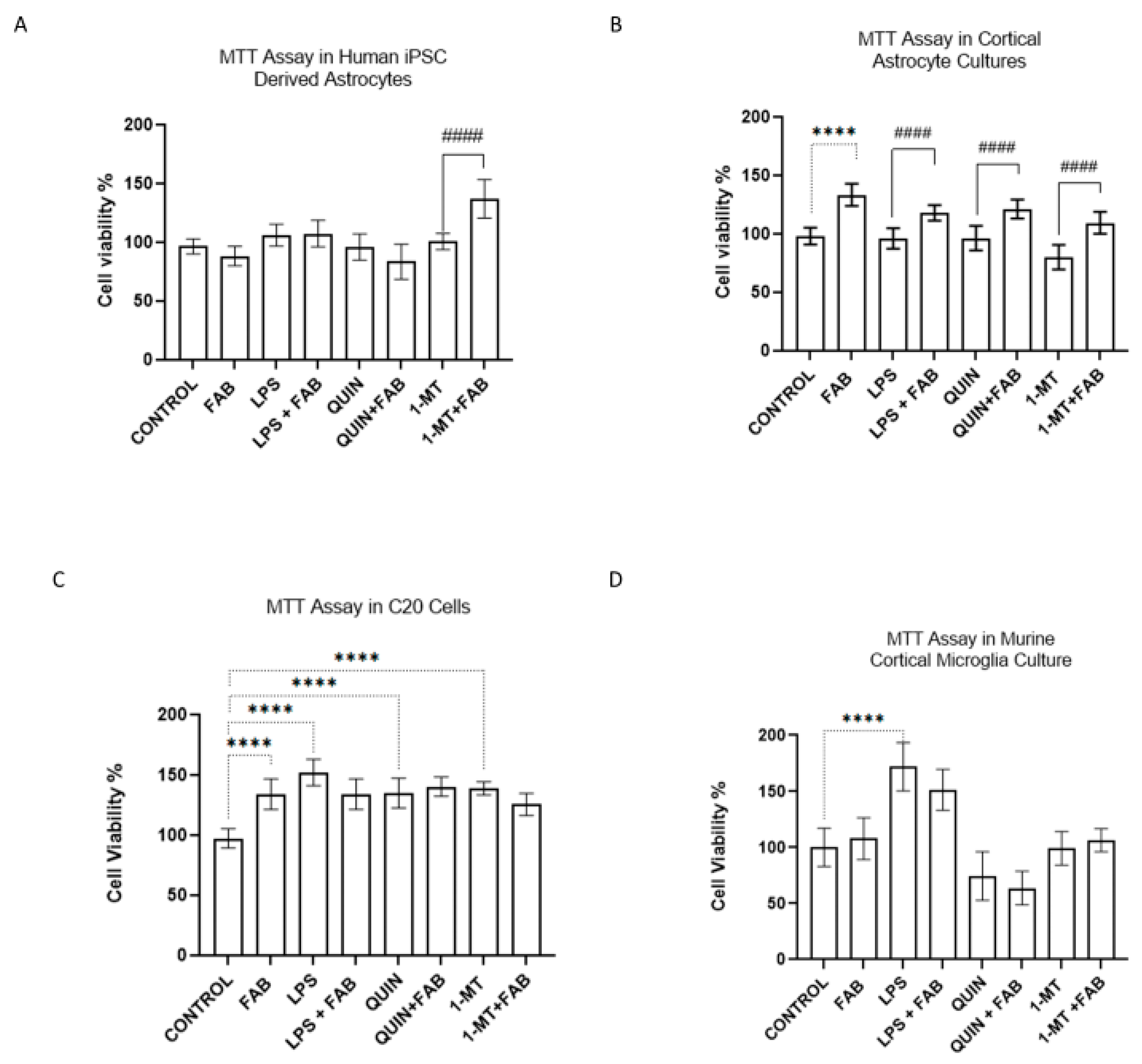
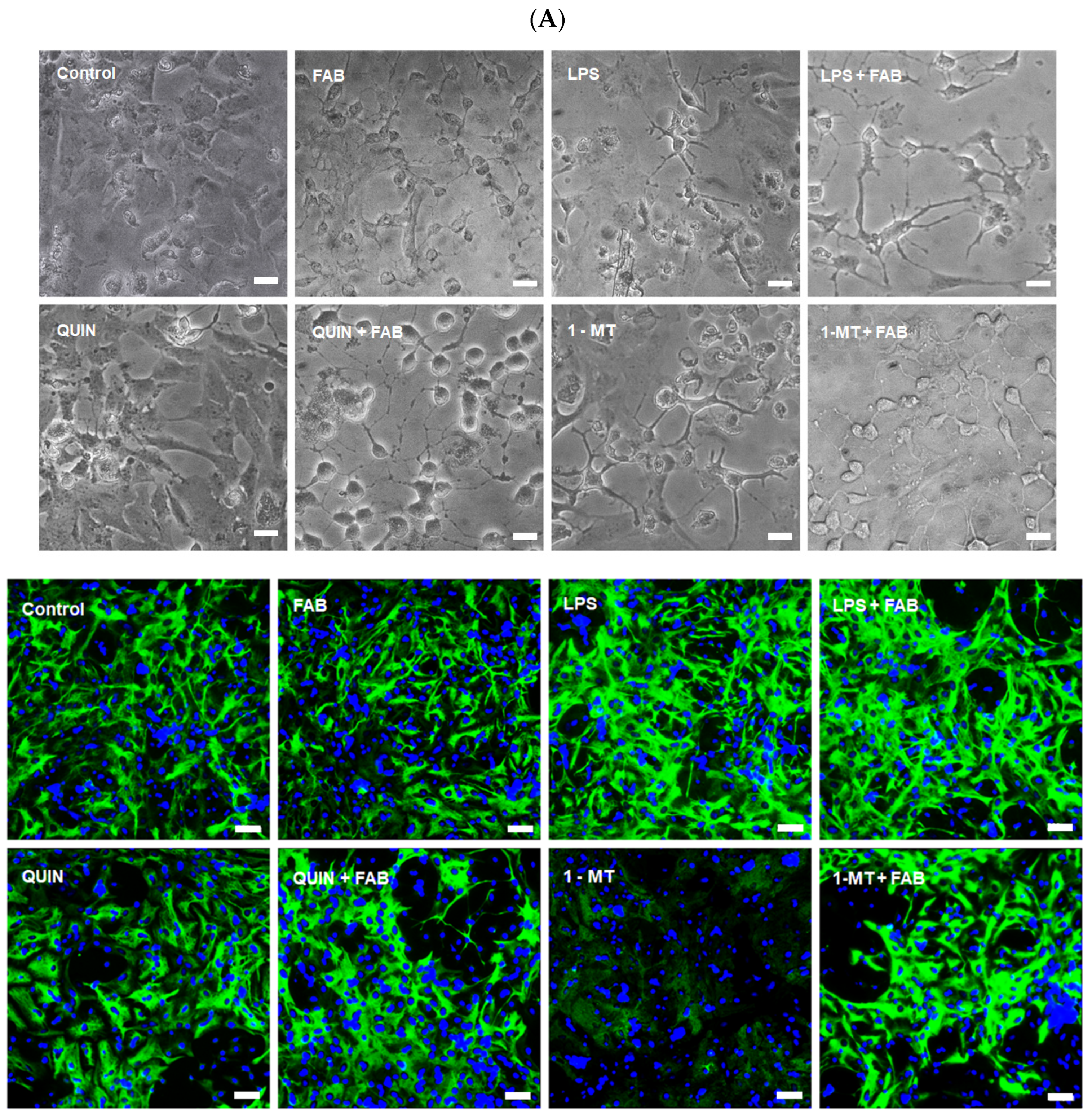
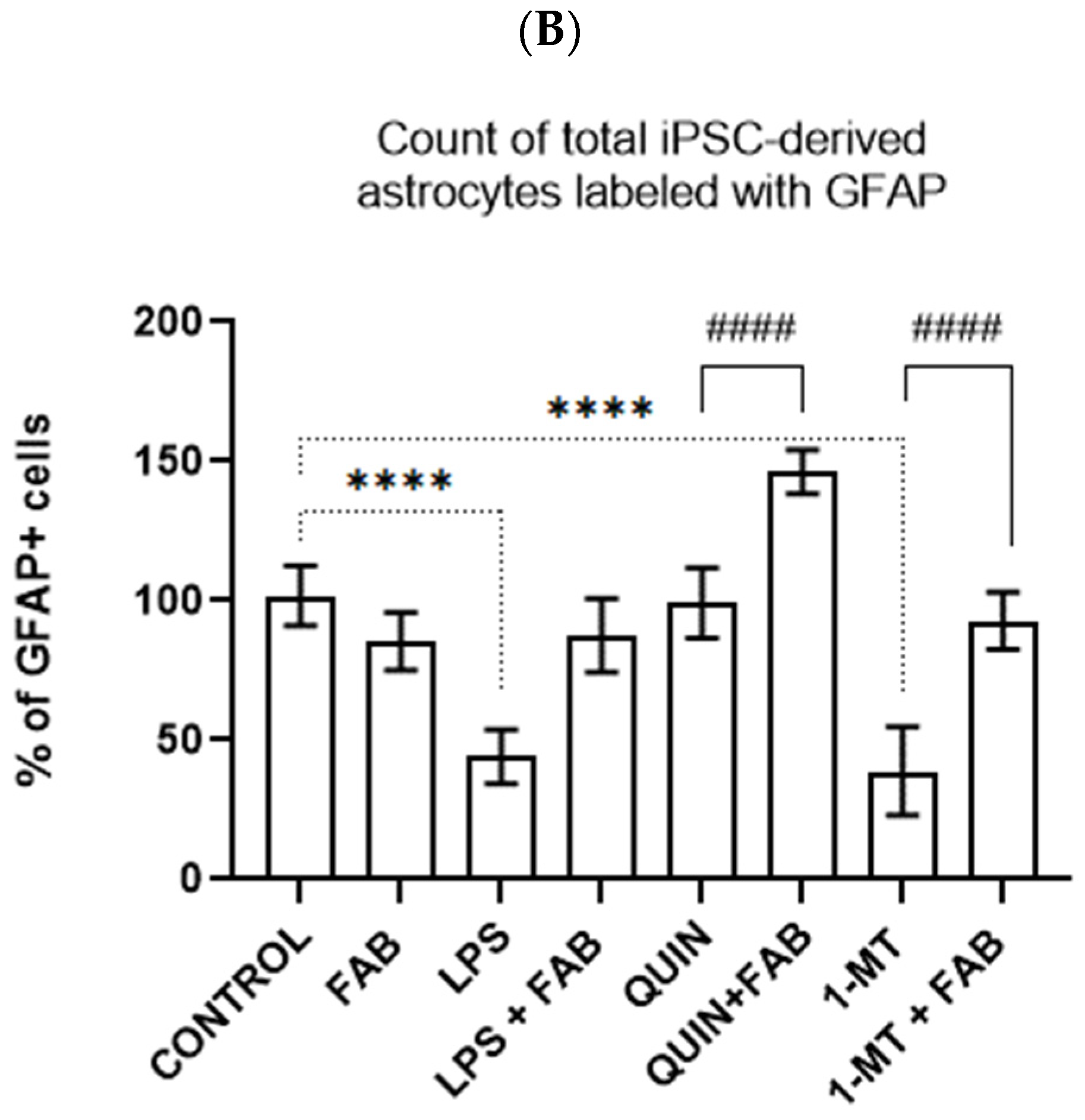
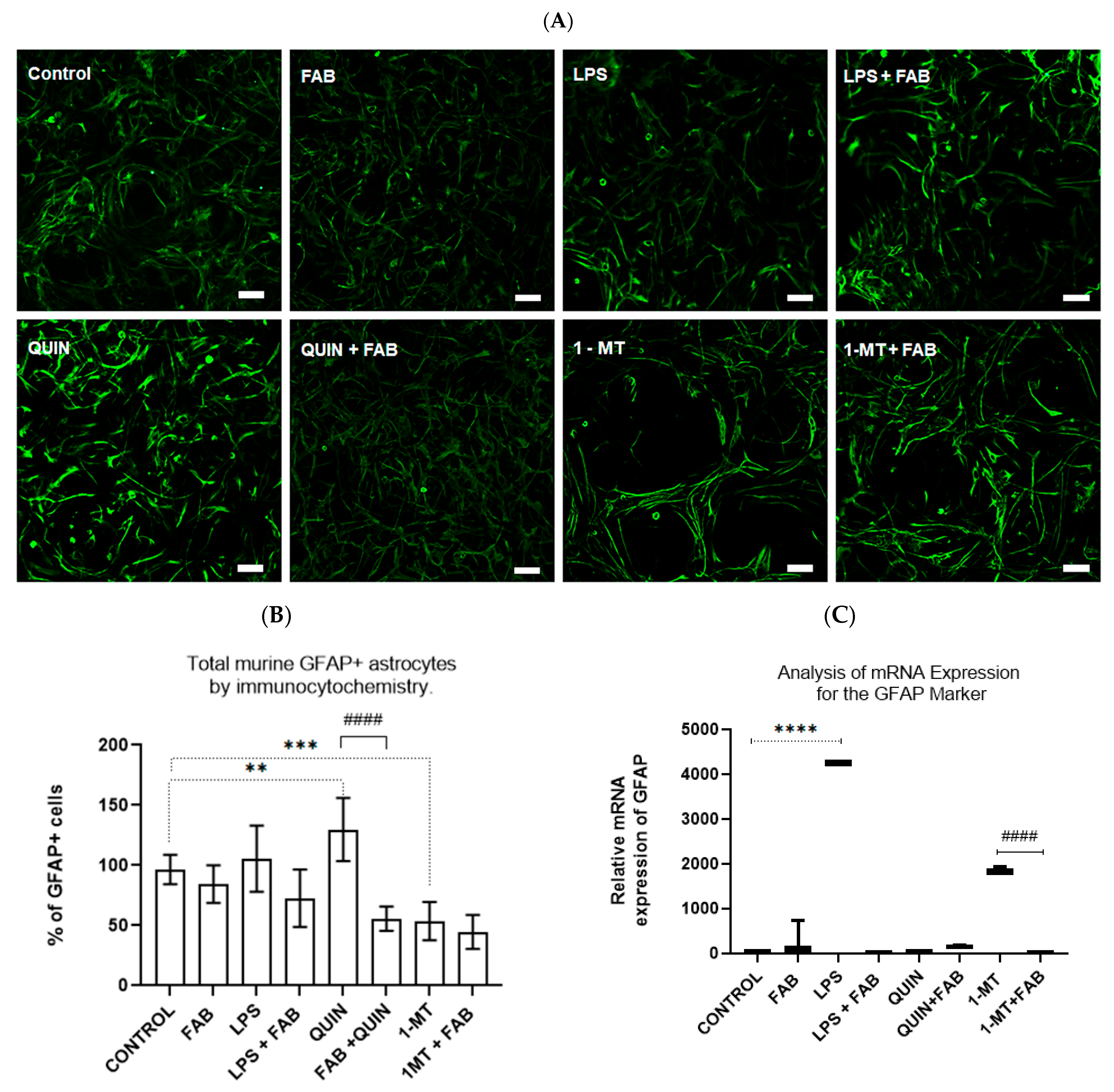
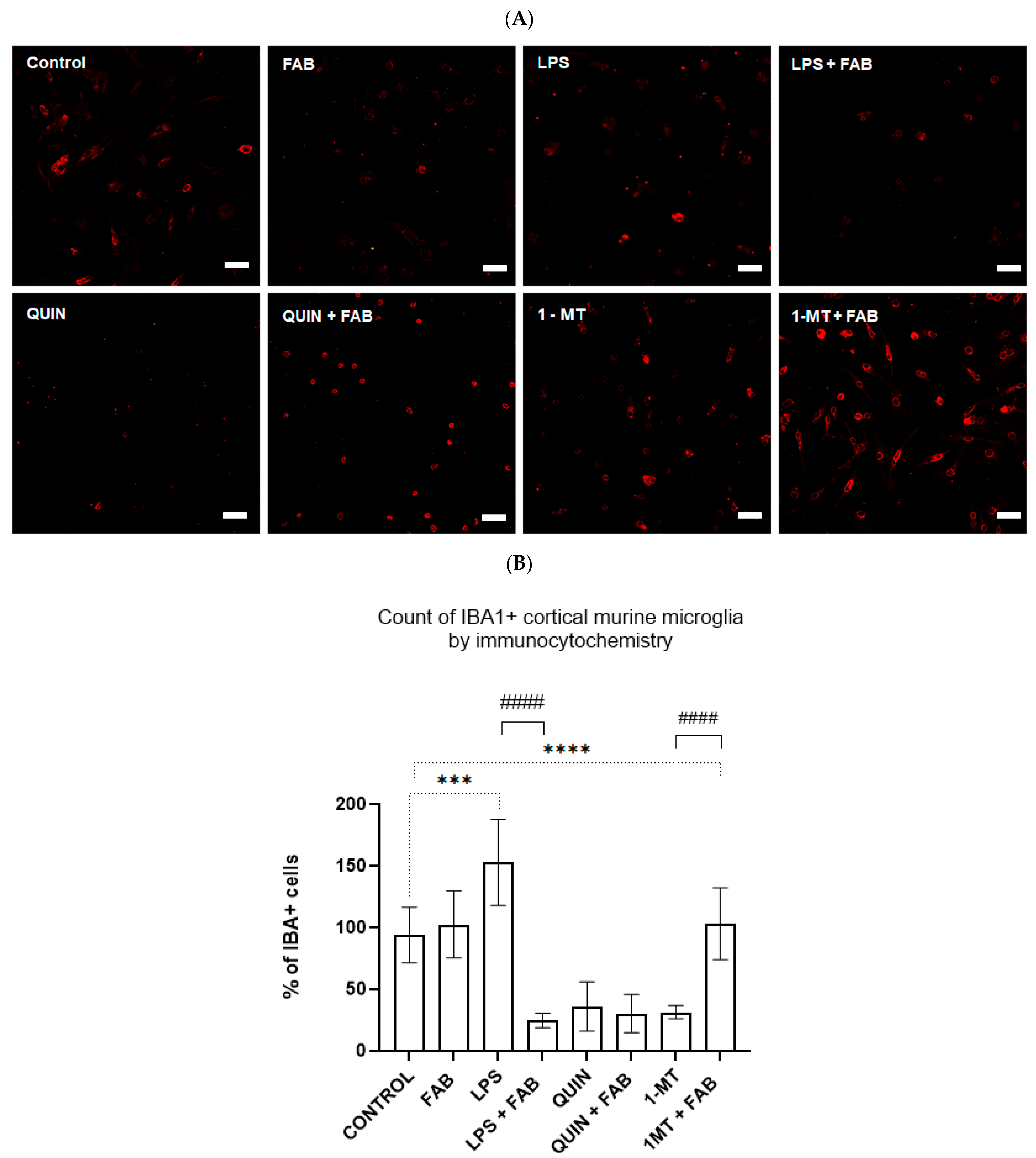
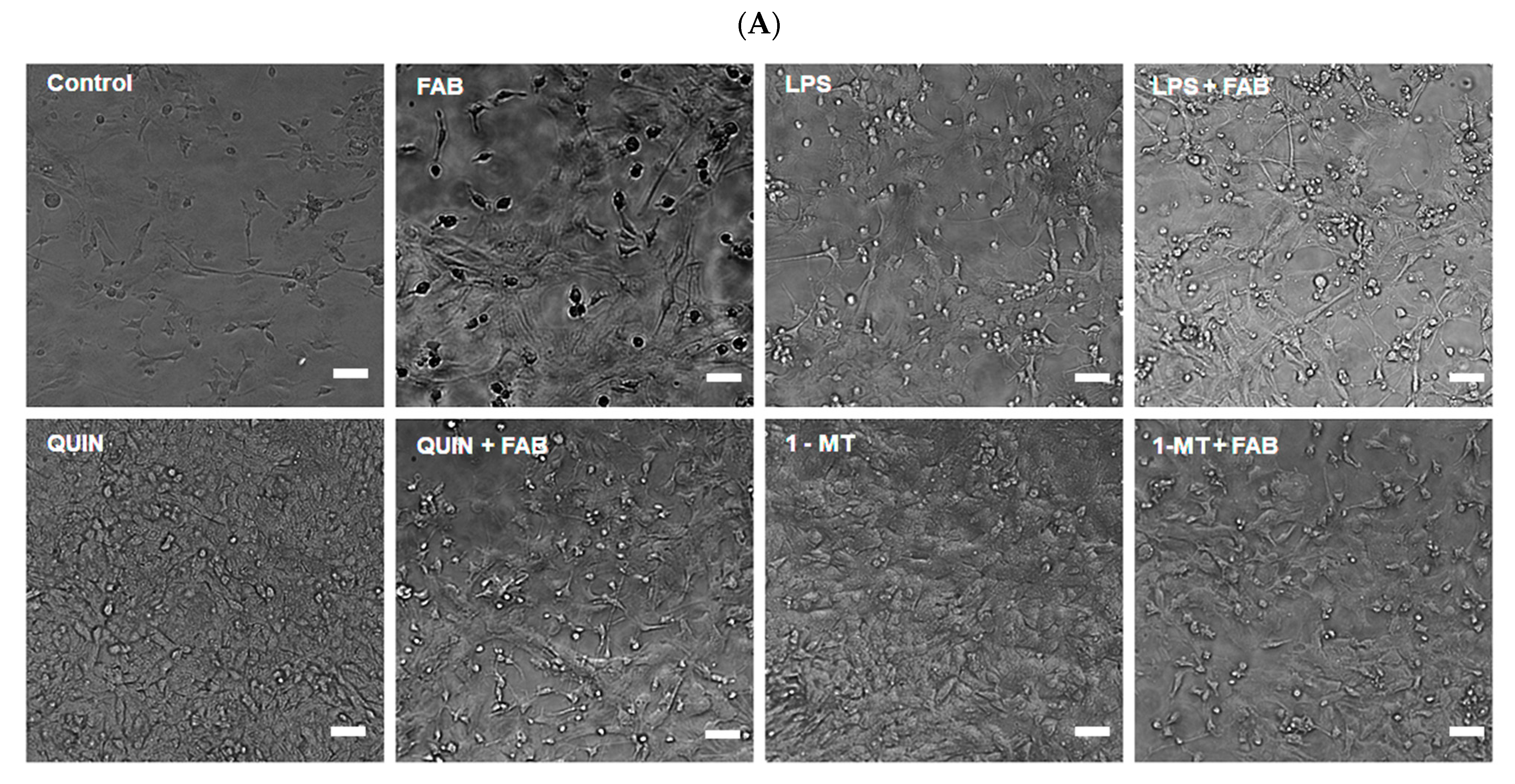
2.1. Modulation of Astrocyte and Microglial Toxicity and Reactivity by Agathisflavone and Kynurenine Pathway Agents
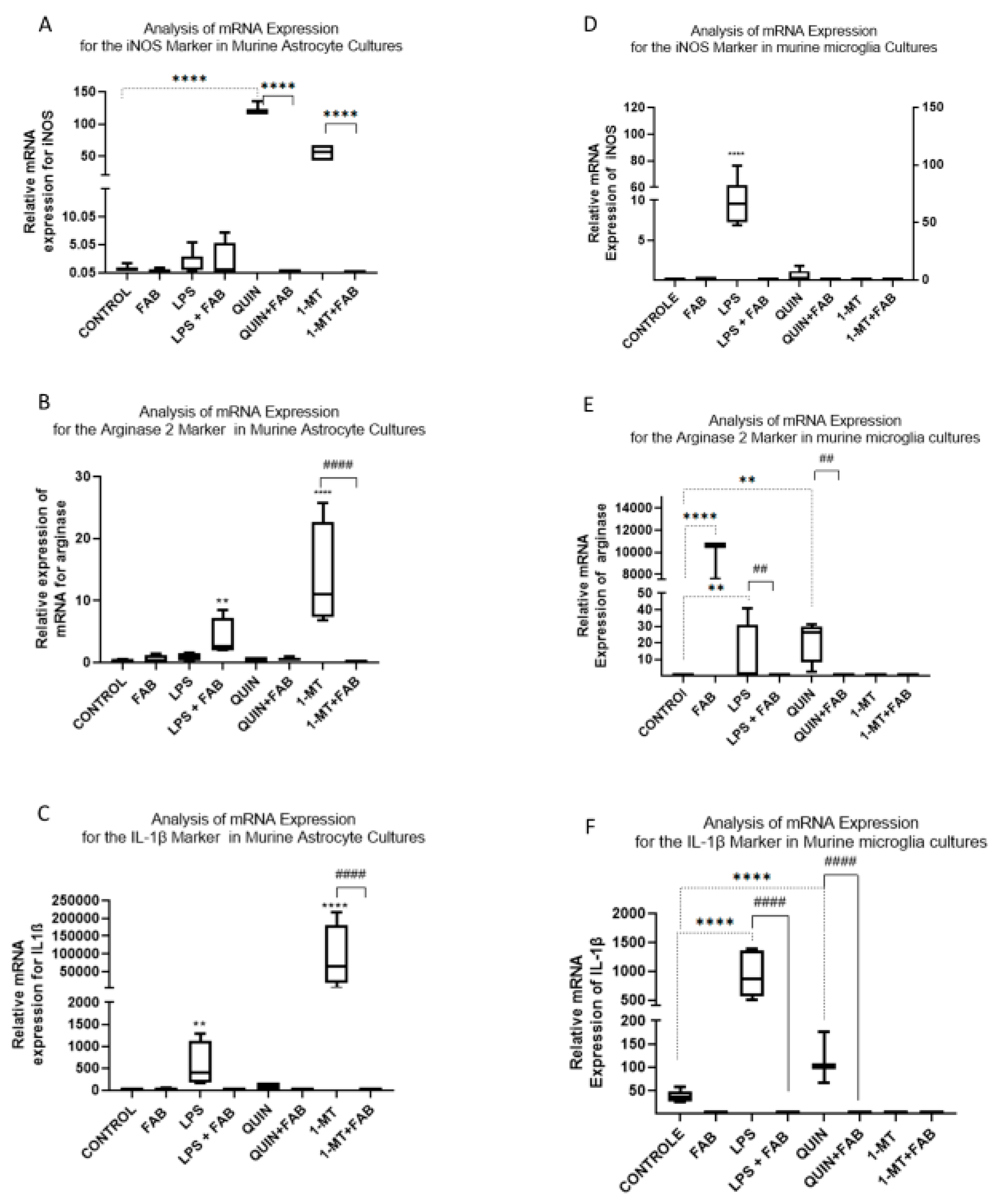
2.2. Agathisflavone Modulates the Gene Expression of Inflammatory Markers Through KP
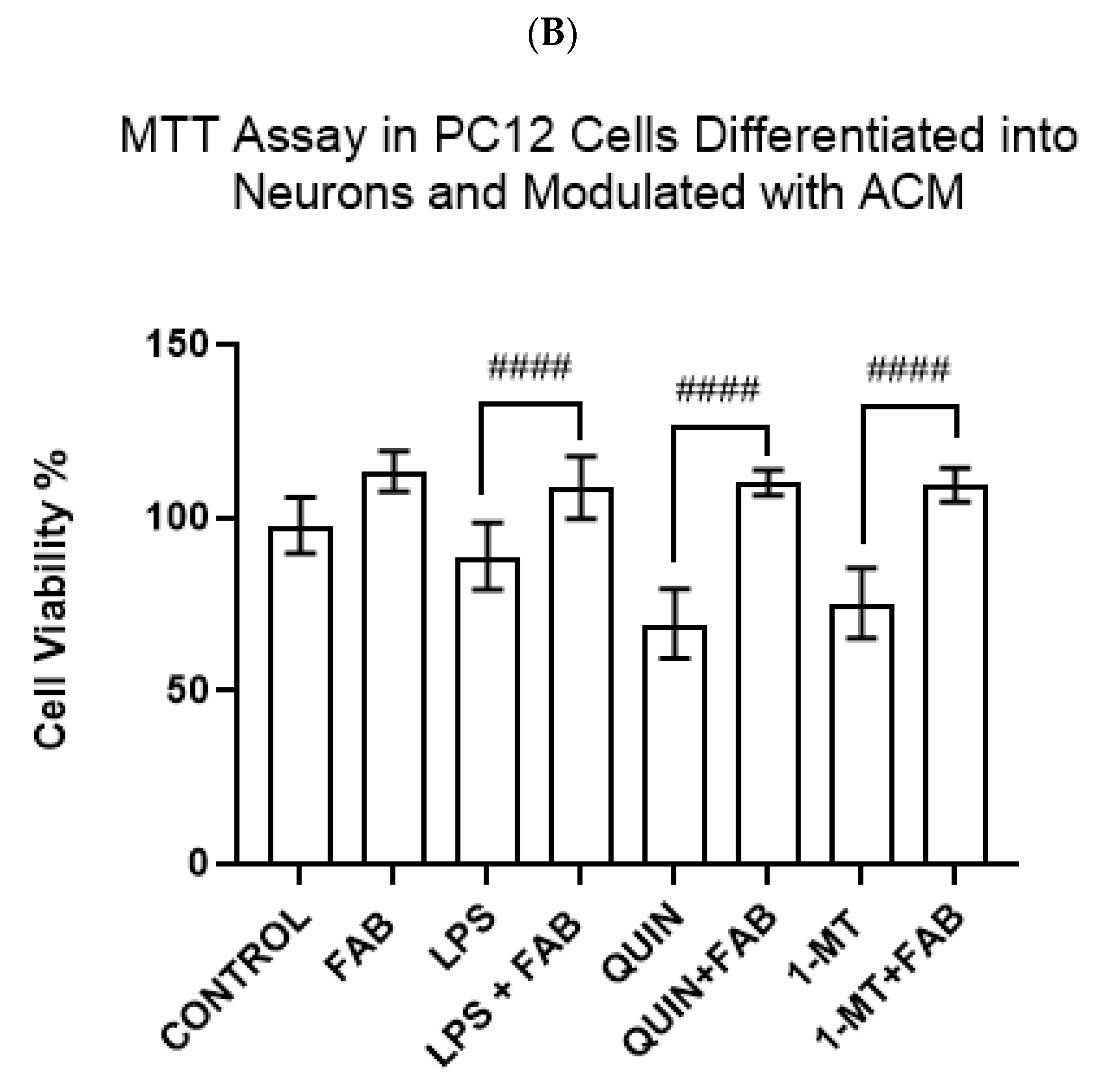
2.3. Neuroprotective Effect of the Secretome from Astrocytes Treated with Agathisflavone and Kynurenine Pathway Modulators on Differentiated PC12 Cells
2.4. Detection of Tryptophan Metabolites in Media from Astrocytes, Microglia and PC12 Cells
3. Discussion
4. Materials & Methods
4.1. Cell Cultures
4.1.1. Primary Glial and Isolated Microglial Cell Cultures
4.1.2. Human iPSC-Derived Astrocyte Cultures
4.1.3. Human Microglia C20 Cell Line
4.1.4. PC12 Neuronal Cell Culture and Differentiation
4.2. Compounds and Treatments
4.3. Rationale for Drug Concentrations
4.4. Analytical Methods
4.4.1. MTT Cytotoxicity Assay
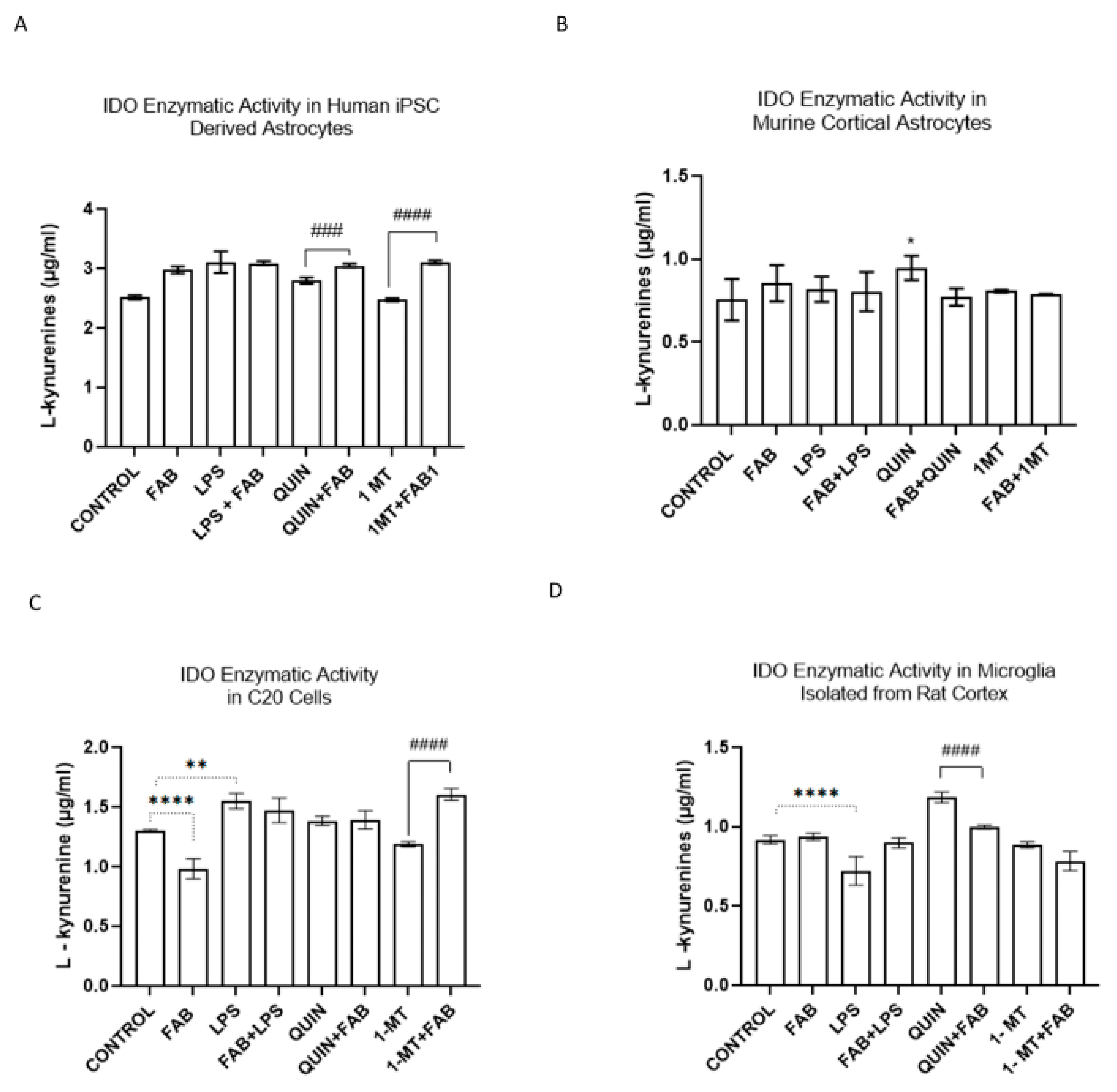
4.4.2. Quantification of L-Kynurenine as an Indirect Measure of IDO Activity
4.4.3. Immunofluorescence Analysis (GFAP, Iba1, Ki-67)
4.4.4. RT-qPCR for Gene Expression Analysis
4.4.5. HPLC Analysis of Kynurenine Pathway Metabolites
- -
- 0–20 min: 3–25% B
- -
- 20–22 min: 100% B
- -
- 22–25 min: 100% B
- -
- 25–29 min: 3% B
4.5. Statistical Analysis
5. Conclusions
Supplementary Materials
Author Contributions
Funding
Institutional Review Board Statement
Informed Consent Statement
Data Availability Statement
Acknowledgments
Conflicts of Interest
Abbreviations
| FAB | Agathisflavone |
| IDO | Indoleamine 2,3-Dioxygenase |
| KMO | Kynurenine Monooxygenase |
| KAT | Kynurenine Aminotransferase |
| KP | Kynurenine Pathway |
| QUIN | Quinolinic Acid |
| KYNA | Kynurenic Acid |
| LPS | Lipopolysaccharide |
| 1-MT | 1-Methyl-D-Tryptophan |
| hAst | Human iPSC-derived Astrocytes |
| GFAP | Glial Fibrillary Acidic Protein |
| IL-10 | Interleukin-10 |
| iNOS | Inducible Nitric Oxide Synthase |
| ARG 1/2 | Arginase ½ |
| MTT | Methylthiazolyldiphenyl-tetrazolium bromide assay |
| HPLC | High Performance Liquid Chromatography |
| CM | Conditioned Medium |
| MCM/ACM | Microglia-/Astrocyte-conditioned Medium |
References
- Guillemin, G.J.; Kerr, S.J.; Smythe, G.A.; Smith, D.G.; Kapoor, V.; Armati, P.J.; Croitoru, J.; Brew, B.J. Kynurenine pathway metabolism in human astrocytes: A paradox for neuronal protection. J. Neurochem. 2001, 78, 842–853. [Google Scholar] [CrossRef] [PubMed]
- Guillemin, G.J.; Croitoru-Lamoury, J.; Dormont, D.; Armati, P.J.; Brew, B.J. Quinolinic acid upregulates chemokine production and chemokine receptor expression in astrocytes. Glia 2003, 41, 371–381. [Google Scholar] [CrossRef]
- Stone, T.W. Neuropharmacology of quinolinic and kynurenic acids. Pharmacol. Rev. 1993, 45, 309–379. [Google Scholar] [CrossRef] [PubMed]
- Wang, Y.; Zhang, Y.; Wang, W.; Zhang, Y.; Dong, X.; Liu, Y. Diverse physiological roles of kynurenine pathway metabolites: Updated implications for health and disease. Metabolites 2025, 15, 210. [Google Scholar] [CrossRef] [PubMed]
- Pocivavsek, A.; Schwarcz, R.; Erhardt, S. Neuroactive kynurenines as pharmacological targets: New experimental tools and exciting therapeutic opportunities. Pharmacol. Rev. 2024, 76, 978–1008. [Google Scholar] [CrossRef]
- Fujigaki, H.; Yamamoto, Y.; Saito, K. L-Tryptophan–kynurenine pathway enzymes are therapeutic target for neuropsychiatric diseases: Focus on cell type differences. Neuropharmacology 2017, 112, 264–274. [Google Scholar] [CrossRef]
- Guillemin, G.J. Quinolinic acid, the inescapable neurotoxin. FEBS J. 2012, 279, 1356–1365. [Google Scholar] [CrossRef]
- Heyes, M.P.; Saito, K.; Markey, S.P. Human macrophages convert L-tryptophan into the neurotoxin quinolinic acid. Biochem. J. 1992, 283, 633–635. [Google Scholar] [CrossRef]
- Heylen, A.; Vermeiren, Y.; Kema, I.P.; van Faassen, M.; van der Ley, C.; Van Dam, D.; De Deyn, P.P. Brain kynurenine pathway metabolite levels may reflect extent of neuroinflammation in ALS, FTD and early onset AD. Pharmaceuticals 2023, 16, 615. [Google Scholar] [CrossRef]
- Skorobogatov, K.; Autier, V.; Foiselle, M.; Richard, J.R.; Boukouaci, W.; Wu, C.L.; Raynal, S.; Carbonne, C.; Laukens, K.; Meysman, P.; et al. Kynurenine pathway abnormalities are state-specific but not diagnosis-specific in schizophrenia and bipolar disorder. Brain Behav. Immun. Health 2023, 27, 100584. [Google Scholar] [CrossRef]
- Stone, T.W.; Clanchy, F.I.L.; Huang, Y.S.; Chiang, N.Y.; Darlington, L.G.; Williams, R.O. An integrated cytokine and kynurenine network as the basis of neuroimmune communication. Front. Neurosci. 2022, 16, 1002004. [Google Scholar] [CrossRef]
- Collier, M.E.; Zhang, S.; Scrutton, N.S.; Giorgini, F. Inflammation control and improvement of cognitive function in COVID-19 infections: Is there a role for kynurenine 3-monooxygenase inhibition? Drug Discov. Today 2021, 26, 1473–1481. [Google Scholar] [CrossRef] [PubMed]
- Birch, P.J.; Grossman, C.J.; Hayes, A.G. Kynurenic acid antagonises responses to NMDA via an action at the strychnine-insensitive glycine receptor. Eur. J. Pharmacol. 1988, 154, 85–87. [Google Scholar] [CrossRef] [PubMed]
- Fujigaki, H.; Mouri, A.; Yamamoto, Y.; Nabeshima, T.; Saito, K. Linking phencyclidine intoxication to the tryptophan–kynurenine pathway: Therapeutic implications for schizophrenia. Neurochem. Int. 2019, 125, 1–6. [Google Scholar] [CrossRef] [PubMed]
- Souza, C.D.S.; Grangeiro, M.S.; Pereira, E.P.L.; dos Santos, C.C.; da Silva, A.B.; Sampaio, G.P.; Figueiredo, D.D.R.; David, J.M.; David, J.P.; da Silva, V.D.A.; et al. Agathisflavone, a flavonoid derived from Poincianella pyramidalis (Tul.), enhances neuronal population and protects against glutamate excitotoxicity. Neurotoxicology 2018, 65, 85–97. [Google Scholar] [CrossRef]
- de Almeida, M.M.A.; Souza, C.d.S.; Dourado, N.S.; da Silva, A.B.; Ferreira, R.S.; David, J.M.; David, J.P.; Costa, M.d.F.D.; da Silva, V.D.A.; Butt, A.M.; et al. Phytoestrogen agathisflavone ameliorates neuroinflammation induced by LPS and IL-1β and protects neurons in cocultures of glia/neurons. Biomolecules 2020, 10, 562. [Google Scholar] [CrossRef]
- de Almeida, M.M.A.; Pieropan, F.; Footz, T.; David, J.M.; David, J.P.; da Silva, V.D.A.; dos Santos Souza, C.; Voronova, A.; Butt, A.M.; Costa, S.L. Agathisflavone modifies microglial activation state and myelination in organotypic cerebellar slices culture. J. Neuroimmune Pharmacol. 2022, 17, 206–217. [Google Scholar] [CrossRef]
- dos Santos, B.L.; dos Santos, C.C.; Soares, J.R.P.; da Silva, K.C.; de Oliveira, J.V.R.; Pereira, G.S.; de Araújo, F.M.; Costa, M.d.F.D.; David, J.M.; da Silva, V.D.A.; et al. The flavonoid agathisflavone directs brain microglia/macrophages to a neuroprotective anti-inflammatory and antioxidant state via regulation of NLRP3 inflammasome. Pharmaceutics 2023, 15, 1410. [Google Scholar] [CrossRef]
- do Nascimento, R.P.; dos Santos, B.L.; Amparo, J.A.O.; Soares, J.R.P.; da Silva, K.C.; Santana, M.R.; Almeida, Á.M.A.N.; da Silva, V.D.A.; Costa, M.d.F.D.; Ulrich, H.; et al. Neuroimmunomodulatory properties of flavonoids and derivates: A potential action as adjuvants for the treatment of glioblastoma. Pharmaceutics 2022, 14, 116. [Google Scholar] [CrossRef]
- Utpal, B.K.; Sutradhar, B.; Zehravi, M.; Sweilam, S.H.; Durgawale, T.P.; Arjun, U.V.N.V.; Shanmugarajan, T.S.; Kannan, S.P.; Prasad, P.D.; Usman, R.M.; et al. Cellular stress response and neuroprotection of flavonoids in neurodegenerative diseases: Clinical insights into targeted therapy and molecular signaling pathways. Brain Res. 2025, 1847, 149310. [Google Scholar] [CrossRef]
- Ting, K.K.; Brew, B.J.; Guillemin, G.J. Effect of quinolinic acid on human astrocytes morphology and functions: Implications in Alzheimer’s disease. J. Neuroinflamm. 2009, 6, 36. [Google Scholar] [CrossRef]
- Kim, S.; Son, Y. Astrocytes stimulate microglial proliferation and M2 polarization in vitro through crosstalk between astrocytes and microglia. Int. J. Mol. Sci. 2021, 22, 8800. [Google Scholar] [CrossRef]
- Escartin, C.; Bonvento, G. Targeted activation of astrocytes: A potential neuroprotective strategy. Mol. Neurobiol. 2008, 38, 231–241. [Google Scholar] [CrossRef] [PubMed]
- Escartin, C.; Galea, E.; Lakatos, A.; O’Callaghan, J.P.; Petzold, G.C.; Serrano-Pozo, A.; Steinhäuser, C.; Volterra, A.; Carmignoto, G.; Agarwal, A.; et al. Reactive astrocyte nomenclature, definitions, and future directions. Nat. Neurosci. 2021, 24, 312–325. [Google Scholar] [CrossRef] [PubMed]
- Hasan, S.; Khatri, N.; Rahman, Z.N.; Menezes, A.A.; Martini, J.; Shehjar, F.; Mujeeb, N.; Shah, Z.A. Neuroprotective potential of flavonoids in brain disorders. Brain Sci. 2023, 13, 1258. [Google Scholar] [CrossRef] [PubMed]
- Jones, S.P.; Guillemin, G.J.; Brew, B.J. The kynurenine pathway in stem cell biology. Int. J. Tryptophan Res. 2013, 6, 57–66. [Google Scholar] [CrossRef]
- Lovelace, M.D.; Varney, B.; Sundaram, G.; Lennon, M.J.; Lim, C.K.; Jacobs, K.; Guillemin, G.J.; Brew, B.J. Recent evidence for an expanded role of the kynurenine pathway of tryptophan metabolism in neurological diseases. Neuropharmacology 2017, 112, 373–388. [Google Scholar] [CrossRef]
- Guillemin, G.J.; Smythe, G.; Takikawa, O.; Brew, B.J. Expression of indoleamine 2,3-dioxygenase and production of quinolinic acid by human microglia, astrocytes, and neurons. Glia 2005, 49, 15–23. [Google Scholar] [CrossRef]
- Pathak, S.; Nadar, R.; Kim, S.; Liu, K.; Govindarajulu, M.; Cook, P.; Alexander, C.S.W.; Dhanasekaran, M.; Moore, T. The influence of kynurenine metabolites on neurodegenerative pathologies. Int. J. Mol. Sci. 2024, 25, 853. [Google Scholar] [CrossRef]
- Allaman, I.; Bélanger, M.; Magistretti, P.J. Astrocyte–neuron metabolic relationships: For better and for worse. Trends Neurosci. 2011, 34, 76–87. [Google Scholar] [CrossRef]
- Verkhratsky, A.; Butt, A.; Li, B.; Illes, P.; Zorec, R.; Semyanov, A.; Tang, Y.; Sofroniew, M.V. Astrocytes in human central nervous system diseases: A frontier for new therapies. Signal Transduct. Target Ther. 2023, 8, 396. [Google Scholar] [CrossRef] [PubMed]
- Jesus, L.B.; Santos, A.B.; Jesus, E.E.V.; Santos, R.G.D.; Grangeiro, M.S.; Bispo-da-Silva, A.; Arruda, M.R.; Argolo, D.S.; Pinheiro, A.M.; El-Bachá, R.S.; et al. IDO, COX and iNOS have an important role in the proliferation of Neospora caninum in neuron/glia co-cultures. Vet. Parasitol. 2019, 266, 96–102. [Google Scholar] [CrossRef] [PubMed]
- Li, J.; Li, Y.; Du, M.; Zang, D.; Men, Q.; Su, P.; Guo, S. Exogenous melatonin improves drought stress tolerance via regulating tryptophan metabolism and flavonoid biosynthesis pathways in wheat. Physiol. Plant. 2024, 176, e70006. [Google Scholar] [CrossRef] [PubMed]
- Santana, M.R.; Santos, Y.B.; Santos, K.S.; Santos, M.C.J.; Victor, M.M.; Ramos, G.S.; Nascimento, R.P.D.; Costa, S.L. Differential interactions of flavonoids with the aryl hydrocarbon receptor in silico and their impact on receptor activity in vitro. Pharmaceuticals 2024, 17, 980. [Google Scholar] [CrossRef]
- Trindade, P.; Nascimento, J.M.; Casas, B.S.; Monteverde, T.; Gasparotto, J.; Ribeiro, C.T.; Devalle, S.; Sauma, D.; Moreira, J.C.F.; Gelain, D.P.; et al. Induced pluripotent stem cell-derived astrocytes from patients with schizophrenia exhibit an inflammatory phenotype that affects vascularization. Mol. Psychiatry 2023, 28, 871–882. [Google Scholar] [CrossRef]
- Miranda-Negrón, Y.; García-Arrarás, J.E. Radial glia and radial glia-like cells: Their role in neurogenesis and regeneration. Front. Neurosci. 2022, 16, 1048535. [Google Scholar] [CrossRef]
- Yang, R.; Yang, B.; Liu, W.; Tan, C.; Chen, H.; Wang, X. Emerging role of non-coding RNAs in neuroinflammation mediated by microglia and astrocytes. J. Neuroinflamm. 2023, 20, 173. [Google Scholar] [CrossRef]
- Yoon, H.; Walters, G.; Paulsen, A.R.; Scarisbrick, I.A. Astrocyte heterogeneity across the brain and spinal cord occurs developmentally, in adulthood and in response to demyelination. PLoS ONE 2017, 12, e0180697. [Google Scholar] [CrossRef]
- Mithaiwala, M.N.; Geiger, J.D.; Gendelman, H.E. Neuroinflammation and the kynurenine pathway in CNS disease. Cells 2021, 10, 1548. [Google Scholar] [CrossRef]
- Schwarcz, R.; Bruno, J.P.; Muchowski, P.J.; Wu, H.Q. The kynurenine pathway and the brain: Challenges, controversies and promises. Neuropharmacology 2016, 112, 237–247. [Google Scholar] [CrossRef]
- Stone, T.W.; Darlington, L.G. The kynurenine pathway as a therapeutic target in cognitive and neurodegenerative disorders. Br. J. Pharmacol. 2013, 169, 1211–1227. [Google Scholar] [CrossRef]
- Campbell, B.M.; White, A.M.; McCauley, M.E. Kynurenines in CNS disease: Regulation by inflammatory cytokines. Front. Neurosci. 2014, 8, 12. [Google Scholar] [CrossRef]
- Dostal, C.R.; Stone, T.W. Glial and tissue-specific regulation of kynurenine pathway metabolism. Adv. Neuroimmune Biol. 2017, 8, 1–15. [Google Scholar] [CrossRef]
- Parrott, J.M.; O’Connor, J.C. Kynurenine metabolic balance is disrupted in the brain and blood of socially stressed rats: A possible mechanistic link to depression. J. Neuroinflamm. 2016, 13, 46. [Google Scholar] [CrossRef]


Disclaimer/Publisher’s Note: The statements, opinions and data contained in all publications are solely those of the individual author(s) and contributor(s) and not of MDPI and/or the editor(s). MDPI and/or the editor(s) disclaim responsibility for any injury to people or property resulting from any ideas, methods, instructions or products referred to in the content. |
© 2025 by the authors. Licensee MDPI, Basel, Switzerland. This article is an open access article distributed under the terms and conditions of the Creative Commons Attribution (CC BY) license (https://creativecommons.org/licenses/by/4.0/).
Share and Cite
Argolo, D.S.; Oliveira, L.M.G.; Santos, C.C.d.; da Penha Gonçalves, L.V.; Loiola, E.C.; de Freitas Souza, B.S.; Barreto, G.E.; Butt, A.M.; David, J.M.; Branco, A.; et al. Agathisflavone Modulates the Kynurenine Pathway and Glial Inflammatory Responses with Implications for Neuroprotection. Int. J. Mol. Sci. 2025, 26, 11951. https://doi.org/10.3390/ijms262411951
Argolo DS, Oliveira LMG, Santos CCd, da Penha Gonçalves LV, Loiola EC, de Freitas Souza BS, Barreto GE, Butt AM, David JM, Branco A, et al. Agathisflavone Modulates the Kynurenine Pathway and Glial Inflammatory Responses with Implications for Neuroprotection. International Journal of Molecular Sciences. 2025; 26(24):11951. https://doi.org/10.3390/ijms262411951
Chicago/Turabian StyleArgolo, Deivison Silva, Lucas Matheus Gonçalves Oliveira, Cleonice Creusa dos Santos, Lilian Vanessa da Penha Gonçalves, Erick Correia Loiola, Bruno Solano de Freitas Souza, George E. Barreto, Arthur Morgan Butt, Jorge Mauricio David, Alexsandro Branco, and et al. 2025. "Agathisflavone Modulates the Kynurenine Pathway and Glial Inflammatory Responses with Implications for Neuroprotection" International Journal of Molecular Sciences 26, no. 24: 11951. https://doi.org/10.3390/ijms262411951
APA StyleArgolo, D. S., Oliveira, L. M. G., Santos, C. C. d., da Penha Gonçalves, L. V., Loiola, E. C., de Freitas Souza, B. S., Barreto, G. E., Butt, A. M., David, J. M., Branco, A., Reis, I. M. A., Azevedo-Silva, A., Costa, S. L., & Costa, M. d. F. D. (2025). Agathisflavone Modulates the Kynurenine Pathway and Glial Inflammatory Responses with Implications for Neuroprotection. International Journal of Molecular Sciences, 26(24), 11951. https://doi.org/10.3390/ijms262411951