Combination of Noble Metal and Gold–Silver Nanoclusters as Enhanced Antibacterial Coatings for Ti-Based Medical Implants


 ,
,  , , ,
, , , 
Abstract

1. Introduction
2. Results
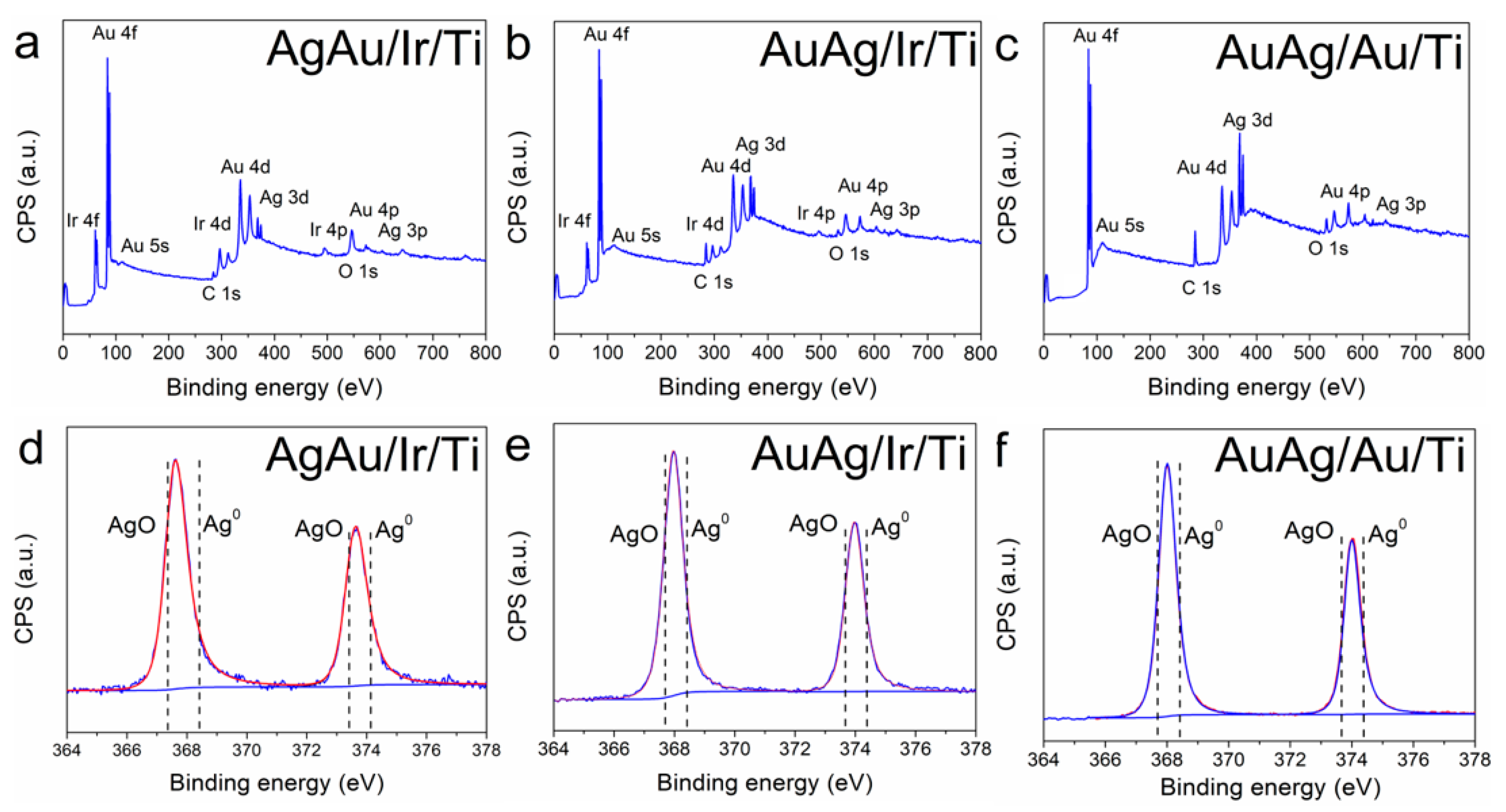
2.1. Samples Characterization
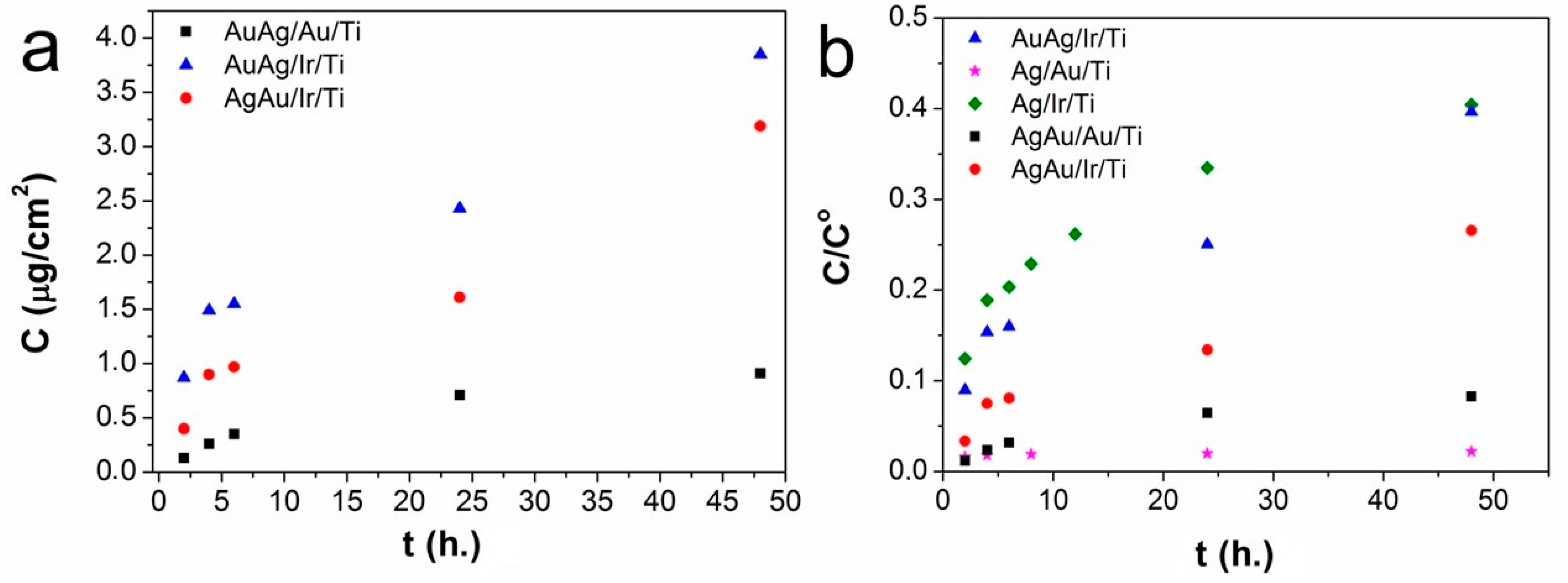
2.2. Dynamics of Metal Ions’ Release
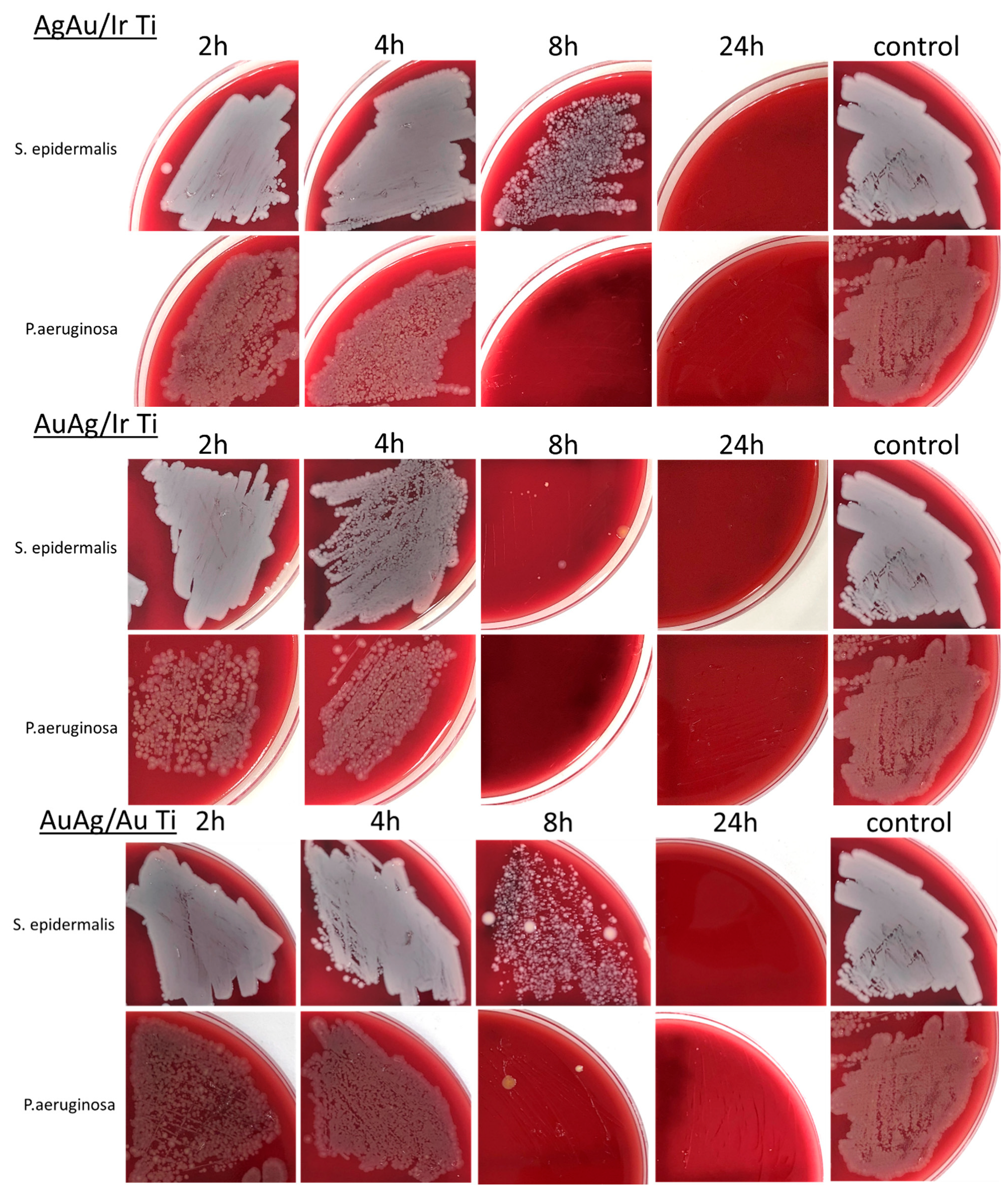
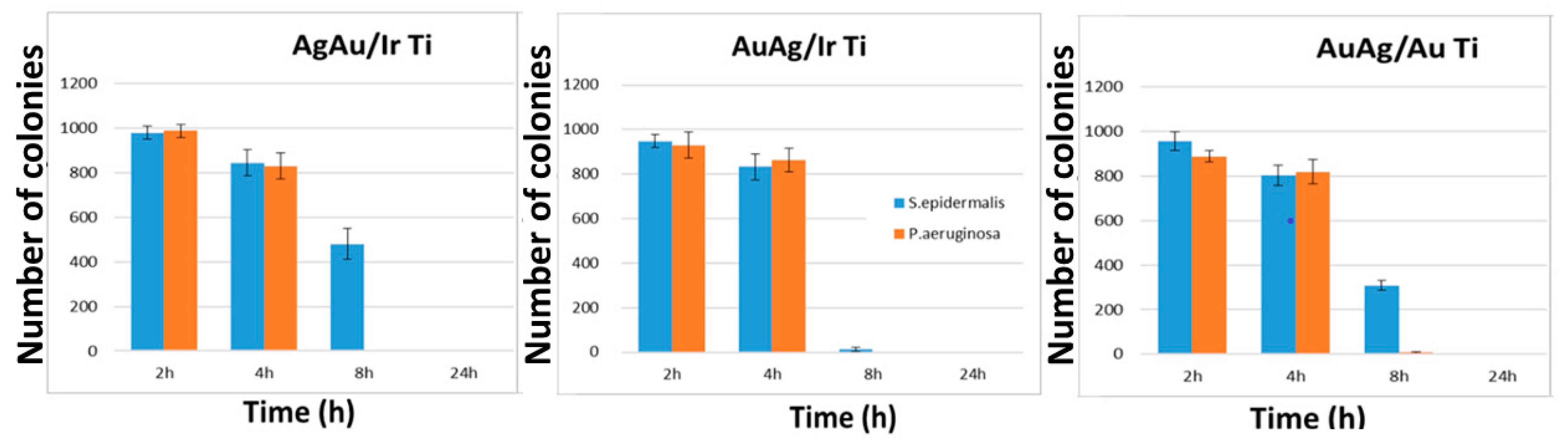
2.3. Antibacterial Study of Heterostructures with Bimetallic Nanocomposites
2.4. In Vivo Biocompatibility Studies
3. Discussion
4. Materials and Methods
4.1. Materials and Samples Preparation
4.2. Methods
4.3. Dynamic of Metal Ions Release
4.4. Biological Studies
4.4.1. Antibacterial Activity
4.4.2. Biocompatibility In Vivo
4.4.3. Histological Studies
4.4.4. Statistical Analysis
5. Conclusions
Supplementary Materials
Author Contributions
Funding
Institutional Review Board Statement
Informed Consent Statement
Data Availability Statement
Acknowledgments
Conflicts of Interest
References
- Topolnitskiy, E.; Chekalkin, T.; Marchenko, E.; Yasenchuk, Y.; Kang, S.-B.; Kang, J.-H.; Obrosov, A. Evaluation of Clinical Performance of TiNi-Based Implants Used in Chest Wall Repair After Resection for Malignant Tumors. J. Funct. Biomater. 2021, 12, 60. [Google Scholar] [CrossRef] [Scilit]
- Wu, Y.; Wan, K.; Lu, J.; Yuan, C.; Cui, Y.; Duan, R.; Yu, J. Research Progress on Surface Modification of Titanium Implants. Coatings 2025, 15, 229. [Google Scholar] [CrossRef] [Scilit]
- Amsheev, D.Y.; Kashevskii, A.V.; Ponomarenko, I.A.; Safronov, A.Y.; Akimov, V.V.; Tauson, V.L.; Belozerova, O.Y.; Klimenkov, I.V.; Shurygina, I.A.; Dremina, N.N.; et al. Morphology and Biological Characteristics of the Electrochemically Modified Titanium Surface. Bioelectrochemistry 2025, 168, 109156. [Google Scholar] [CrossRef] [Scilit]
- Kia, C.; Antonacci, C.L.; Wellington, I.; Makanji, H.S.; Esmende, S.M. Spinal Implant Osseointegration and the Role of 3D Printing: An Analysis and Review of the Literature. Bioengineering 2022, 9, 108. [Google Scholar] [CrossRef] [Scilit]
- Li, Y.; Brånemark, R. Osseointegrated Prostheses for Rehabilitation Following Amputation. Unfallchirurg 2017, 120, 285–292. [Google Scholar] [CrossRef] [Scilit]
- Jacombs, A.S.W.; Karatassas, A.; Klosterhalfen, B.; Richter, K.; Patiniott, P.; Hensman, C. Biofilms and Effective Porosity of Hernia Mesh: Are They Silent Assassins? Hernia 2020, 24, 197–204. [Google Scholar] [CrossRef] [Scilit]
- Abd-Elaziem, W.; Darwish, M.A.; Hamada, A.; Daoush, W.M. Titanium-Based Alloys and Composites for Orthopedic Implants Applications: A Comprehensive Review. Mater. Des. 2024, 241, 112850. [Google Scholar] [CrossRef] [Scilit]
- Barber, C.C.; Burnham, M.; Ojameruaye, O.; McKee, M.D. A Systematic Review of the Use of Titanium versus Stainless Steel Implants for Fracture Fixation. OTA Int. Open Access J. Orthop. Trauma 2021, 4, e138. [Google Scholar] [CrossRef] [Scilit]
- Yang, S.; Jiang, W.; Ma, X.; Wang, Z.; Sah, R.L.; Wang, J.; Sun, Y. Nanoscale Morphologies on the Surface of 3D-Printed Titanium Implants for Improved Osseointegration: A Systematic Review of the Literature. Int. J. Nanomed. 2023, 18, 4171–4191. [Google Scholar] [CrossRef] [Scilit] [PubMed]
- Briguglio, F.; Falcomatà, D.; Marconcini, S.; Fiorillo, L.; Briguglio, R.; Farronato, D. The Use of Titanium Mesh in Guided Bone Regeneration: A Systematic Review. Int. J. Dent. 2019, 2019, 9065423. [Google Scholar] [CrossRef] [Scilit] [PubMed]
- Dickens, A.J.; Salas, C.; Rise, L.; Murray-Krezan, C.; Taha, M.R.; DeCoster, T.A.; Gehlert, R.J. Titanium Mesh as a Low-Profile Alternative for Tension-Band Augmentation in Patella Fracture Fixation: A Biomechanical Study. Injury 2015, 46, 1001–1006. [Google Scholar] [CrossRef] [Scilit]
- Novitsky, Y.W. Biology of Biological Meshes Used in Hernia Repair. Surg. Clin. N. Am. 2013, 93, 1211–1215. [Google Scholar] [CrossRef] [Scilit]
- Azimov, R.H.; Kurbanov, F.S.; Chinikov, M.A.; Shemyatovskij, K.A.; Tarkhani, M.K.M.; Dzhumanov, A.K. Four years of experience in plastic surgery of anterior abdominal wall hernias with mesh implants made of titanium thread. Pirogov Russ. J. Surg. 2021, 2, 73–79. [Google Scholar] [CrossRef] [Scilit]
- Wada, M.; Mameno, T.; Otsuki, M.; Kani, M.; Tsujioka, Y.; Ikebe, K. Prevalence and Risk Indicators for Peri-Implant Diseases: A Literature Review. Jpn. Dent. Sci. Rev. 2021, 57, 78–84. [Google Scholar] [CrossRef] [Scilit] [PubMed]
- Rather, M.A.; Gupta, K.; Mandal, M. Microbial Biofilm: Formation, Architecture, Antibiotic Resistance, and Control Strategies. Braz. J. Microbiol. 2021, 52, 1701–1718. [Google Scholar] [CrossRef] [Scilit]
- Khan, J.; Tarar, S.M.; Gul, I.; Nawaz, U.; Arshad, M. Challenges of Antibiotic Resistance Biofilms and Potential Combating Strategies: A Review. 3 Biotech 2021, 11, 169. [Google Scholar] [CrossRef] [Scilit] [PubMed]
- Ma, Y.; Yan, J.; Yan, T.; Wang, Q.; Bao, Z.; Yi, Z. Biological Properties of Cu-Bearing and Ag-Bearing Titanium-Based Alloys and Their Surface Modi Fi Cations: A Review of Antibacterial Aspect. Front. Mater. 2022, 9, 1–20. [Google Scholar] [CrossRef] [Scilit]
- Zhang, E.; Wang, X.; Chen, M.; Hou, B. Effect of the Existing Form of Cu Element on the Mechanical Properties, Bio-Corrosion and Antibacterial Properties of Ti-Cu Alloys for Biomedical Application. Mater. Sci. Eng. C 2016, 69, 1210–1221. [Google Scholar] [CrossRef] [Scilit]
- Zhuang, Y.; Ren, L.; Zhang, S.; Wei, X.; Yang, K.; Dai, K. Antibacterial Effect of a Copper-Containing Titanium Alloy against Implant-Associated Infection Induced by Methicillin-Resistant Staphylococcus aureus. Acta Biomater. 2021, 119, 472–484. [Google Scholar] [CrossRef] [Scilit]
- Wu, Y.; Zhou, H.; Zeng, Y.; Xie, H.; Ma, D.; Wang, Z.; Liang, H. Recent Advances in Copper-Doped Titanium Implants. Materials 2022, 15, 2342. [Google Scholar] [CrossRef] [Scilit]
- Köller, M.; Sengstock, C.; Motemani, Y.; Khare, C.; Buenconsejo, P.J.S.; Geukes, J.; Schildhauer, T.A.; Ludwig, A. Antibacterial Activity of Microstructured Ag/Au Sacrificial Anode Thin Films. Mater. Sci. Eng. C 2015, 46, 276–280. [Google Scholar] [CrossRef] [Scilit] [PubMed]
- Markowska-Szczupak, A.; Wróbel, R.J.; Kiełbus-Rąpała, A.; Michalkiewicz, B. Durable Antibacterial Performance of Au–Ag–Cu Thin Films Prepared by Magnetron Sputtering: Real-World Applications. Molecules 2025, 30, 3348. [Google Scholar] [CrossRef] [Scilit]
- Abdurazova, P.A.; Nazarbek, U.B.; Bolysbek, A.A.; Sarypbekova, N.K.; Kenzhibayeva, G.S.; Kambarova, G.A.; Sataev, M.S.; Koshkarbaeva, S.T.; Tleuova, A.B.; Perni, S.; et al. Preparation of Photochemical Coatings of Metal Films (Copper, Silver and Gold) on Dielectric Surfaces and Studying Their Antimicrobial Properties. Colloids Surf. A Physicochem. Eng. Asp. 2017, 532, 63–69. [Google Scholar] [CrossRef] [Scilit]
- Dorovskikh, S.; Vikulova, E.; Sergeevichev, D.; Guselnikova, T.; Korolkov, I.; Fedorenko, A.; Nasimov, D.; Vasilieva, M.; Chepeleva, E.; Zherikova, K.; et al. Heterostructures Based on Noble Metal Films with Ag and Au Nanoparticles: Fabrication, Study of In Vivo Biocompatibility and Antibacterial Activity. Coatings 2023, 13, 1269. [Google Scholar] [CrossRef] [Scilit]
- Sergeevichev, D.S.; Dorovskikh, S.I.; Vikulova, E.S.; Chepeleva, E.V.; Vasiliyeva, M.B.; Koretskaya, T.P.; Fedorenko, A.D.; Nasimov, D.A.; Guselnikova, T.Y.; Popovetsky, P.S.; et al. Vapor-Phase-Deposited Ag/Ir and Ag/Au Film Heterostructures for Implant Materials: Cytotoxic, Antibacterial and Histological Studies. Int. J. Mol. Sci. 2024, 25, 1100. [Google Scholar] [CrossRef] [Scilit]
- Köller, M.; Bellova, P.; Javid, S.M.; Motemani, Y.; Khare, C.; Sengstock, C.; Tschulik, K.; Schildhauer, T.A.; Ludwig, A. Antibacterial Activity of Microstructured Sacrificial Anode Thin Films by Combination of Silver with Platinum Group Elements (Platinum, Palladium, Iridium). Mater. Sci. Eng. C 2017, 74, 536–541. [Google Scholar] [CrossRef] [Scilit] [PubMed]
- Hendi, A.A.; Awad, M.A.; Alanazi, M.M.; Virk, P.; Alrowaily, A.W.; Bahlool, T.; Merghan, N.M.; Aouaini, F.; Hagmusa, B. Phytomediated Synthesis of Bimetallic Ag/Au Nanoparticles Using Orange Peel Extract and Assessment of Their Antibacterial and Anitcancer Potential. J. King Saud Univ.—Sci. 2023, 35, 102510. [Google Scholar] [CrossRef] [Scilit]
- Ramakritinan, C.M.; Kaarunya, E.; Shankar, S.; Kumaraguru, A.K. Antibacterial Effects of Ag, Au and Bimetallic (Ag-Au) Nanoparticles Synthesized from Red Algae. Solid State Phenom. 2013, 201, 211–230. [Google Scholar] [CrossRef] [Scilit]
- Duran, N.; Seabra, A. Biogenic Synthesized Ag/Au Nanoparticles: Production, Characterization, and Applications. Curr. Nanosci. 2018, 14, 82–94. [Google Scholar] [CrossRef] [Scilit]
- Abdul Hak, A.; Zedan, H.H.; El-Mahallawy, H.A.; El-Sayyad, G.S.; Zafer, M.M. In Vivo and in Vitro Activity of Colistin-Conjugated Bimetallic Silver-Copper Oxide Nanoparticles against Pandrug-Resistant Pseudomonas Aeruginosa. BMC Microbiol. 2024, 24, 213. [Google Scholar] [CrossRef] [Scilit]
- Rezk, A.I.; Ramachandra Kurup Sasikala, A.; Nejad, A.G.; Mousa, H.M.; Oh, Y.M.; Park, C.H.; Kim, C.S. Strategic Design of a Mussel-Inspired in Situ Reduced Ag/Au-Nanoparticle Coated Magnesium Alloy for Enhanced Viability, Antibacterial Property and Decelerated Corrosion Rates for Degradable Implant Applications. Sci. Rep. 2019, 9, 117. [Google Scholar] [CrossRef] [Scilit]
- Singh, C.; Mehata, A.K.; Priya, V.; Malik, A.K.; Setia, A.; Suseela, M.N.L.; Vikas; Gokul, P.; Samridhi; Singh, S.K.; et al. Bimetallic Au–Ag Nanoparticles: Advanced Nanotechnology for Tackling Antimicrobial Resistance. Molecules 2022, 27, 7059. [Google Scholar] [CrossRef] [Scilit] [PubMed]
- Stein, F.; Kohsakowski, S.; Martinez-Hincapie, R.; Reichenberger, S.; Rehbock, C.; Colic, V.; Guay, D.; Barcikowski, S. Disproportional Surface Segregation in Ligand-Free Gold–Silver Alloy Solid Solution Nanoparticles, and Its Implication for Catalysis and Biomedicine. Faraday Discuss. 2023, 242, 301–325. [Google Scholar] [CrossRef] [Scilit]
- Saw, E.N.; Grasmik, V.; Rurainsky, C.; Epple, M.; Tschulik, K. Electrochemistry at Single Bimetallic Nanoparticles—Using Nano Impacts for Sizing and Compositional Analysis of Individual AgAu Alloy Nanoparticles. Faraday Discuss. 2016, 193, 327–338. [Google Scholar] [CrossRef] [Scilit]
- Moreau, L.M.; Schurman, C.A.; Kewalramani, S.; Shahjamali, M.M.; Mirkin, C.A.; Bedzyk, M.J. How Ag Nanospheres Are Transformed into AgAu Nanocages. J. Am. Chem. Soc. 2017, 139, 12291–12298. [Google Scholar] [CrossRef] [Scilit]
- Bankura, K.; Maity, D.; Mollick, M.M.R.; Mondal, D.; Bhowmick, B.; Roy, I.; Midya, T.; Sarkar, J.; Rana, D.; Acharya, K.; et al. Antibacterial Activity of Ag–Au Alloy NPs and Chemical Sensor Property of Au NPs Synthesized by Dextran. Carbohydr. Polym. 2014, 107, 151–157. [Google Scholar] [CrossRef] [Scilit]
- Nazarov, D.; Kozlova, L.; Rogacheva, E.; Kraeva, L.; Maximov, M. Atomic Layer Deposition of Antibacterial Nanocoatings: A Review. Antibiotics 2023, 12, 1656. [Google Scholar] [CrossRef] [Scilit]
- Nieto-Argüello, A.; Medina-Cruz, D.; Pérez-Ramírez, Y.S.; Pérez-García, S.A.; Velasco-Soto, M.A.; Jafari, Z.; De Leon, I.; González, M.U.; Huttel, Y.; Martínez, L.; et al. Composition-Dependent Cytotoxic and Antibacterial Activity of Biopolymer-Capped Ag/Au Bimetallic Nanoparticles against Melanoma and Multidrug-Resistant Pathogens. Nanomaterials 2022, 12, 779. [Google Scholar] [CrossRef] [Scilit]
- Aparicio, C.; Rodriguez, D.; Gil, F.J. Variation of Roughness and Adhesion Strength of Deposited Apatite Layers on Titanium Dental Implants. Mater. Sci. Eng. C 2011, 31, 320–324. [Google Scholar] [CrossRef] [Scilit]
- Khlifi, K.; Dhiflaoui, H.; Ben Rhouma, A.; Faure, J.; Benhayoune, H.; Ben Cheikh Laarbi, A. Nanomechanical Behavior, Adhesion and Corrosion Resistance of Hydroxyapatite Coatings for Orthopedic Implant Applications. Coatings 2021, 11, 477. [Google Scholar] [CrossRef] [Scilit]
- Feng, Y.; Wang, G.; Chang, Y.; Cheng, Y.; Sun, B.; Wang, L.; Chen, C.; Zhang, H. Electron Compensation Effect Suppressed Silver Ion Release and Contributed Safety of Au@Ag Core–Shell Nanoparticles. Nano Lett. 2019, 19, 4478–4489, Erratum in Nano Lett. 2025, 25, 7628.. [Google Scholar] [CrossRef] [Scilit] [PubMed]
- Firet, N.J.; Blommaert, M.A.; Burdyny, T.; Venugopal, A.; Bohra, D.; Longo, A.; Smith, W.A. Operando EXAFS Study Reveals Presence of Oxygen in Oxide-Derived Silver Catalysts for Electrochemical CO2 Reduction. J. Mater. Chem. A 2019, 7, 2597–2607. [Google Scholar] [CrossRef] [Scilit]
- Tzomos, E.; Mikkelä, M.-H.; Öhrwall, G.; Björneholm, O.; Tchaplyguine, M. Ag-Oxide Signature in Ag 3d Photoelectron Spectra: A Study on Free Nanoparticles. Surf. Sci. 2023, 733, 122307. [Google Scholar] [CrossRef] [Scilit]
- Barman, P.; Deka, A.; Bhattacharyya, S. Interaction of Size-Selected Ag-Clusters on Au-Thin Films: A Composition Study with in-Situ XPS Analysis at an Elevated Temperature. J. Phys. D Appl. Phys. 2021, 54, 275301. [Google Scholar] [CrossRef] [Scilit]
- Nazemi, M.; Soule, L.; Liu, M.; El-Sayed, M.A. Ambient Ammonia Electrosynthesis from Nitrogen and Water by Incorporating Palladium in Bimetallic Gold–Silver Nanocages. J. Electrochem. Soc. 2020, 167, 54511. [Google Scholar] [CrossRef] [Scilit]
- Lin, Y.-J.; Lee, C.-T. Surface Analysis of (NH4)2Sx-Treated InGaN Using x-Ray Photoelectron Spectroscopy. J. Vac. Sci. Technol. B Microelectron. Nanometer Struct. Process. Meas. Phenom. 2001, 19, 1734–1738. [Google Scholar] [CrossRef] [Scilit]
- Yang, M.; You, R.; Li, D.; Zhang, Z.; Huang, W. Methanol Partial Oxidation Over Shaped Silver Nanoparticles Derived from Cubic and Octahedral Ag2O Nanocrystals. Catal. Lett. 2019, 149, 2482–2491. [Google Scholar] [CrossRef] [Scilit]
- Reeve, L.; Baldrick, P. Biocompatibility Assessments for Medical Devices—Evolving Regulatory Considerations. Expert Rev. Med. Devices 2017, 14, 161–167. [Google Scholar] [CrossRef] [Scilit]
- ISO 10993-6:2017; Biological Evaluation of Medical Devices—Part 6: Testing for Local Effects After Implantation. International Organization for Standardization: Geneva, Switzerland, 2017; 48p.
- Frisch, E.; Clavier, L.; Belhamdi, A.; Vrana, N.E.; Lavalle, P.; Frisch, B.; Heurtault, B.; Gribova, V. Preclinical in Vitro Evaluation of Implantable Materials: Conventional Approaches, New Models and Future Directions. Front. Bioeng. Biotechnol. 2023, 11, 1193204. [Google Scholar] [CrossRef] [Scilit] [PubMed]
- Wang, C.; Yang, Y.; Sun, T.; Yao, L.; Zhang, C.; Xu, S. Synthesis of Polymer- Encapsulated AgAu Nanoparticles with High Affinity to Cotton Fabric. Mater. Today Commun. 2025, 45, 112315. [Google Scholar] [CrossRef] [Scilit]
- Yasuyuki, M.; Kunihiro, K.; Kurissery, S.; Kanavillil, N.; Sato, Y.; Kikuchi, Y. Antibacterial Properties of Nine Pure Metals: A Laboratory Study Using Staphylococcus aureus and Escherichia coli. Biofouling 2010, 26, 851–858. [Google Scholar] [CrossRef] [Scilit] [PubMed]
- Jung, W.K.; Koo, H.C.; Kim, K.W.; Shin, S.; Kim, S.H.; Park, Y.H. Antibacterial Activity and Mechanism of Action of the Silver Ion in Staphylococcus aureus and Escherichia coli. Appl. Environ. Microbiol. 2008, 74, 2171–2178. [Google Scholar] [CrossRef] [Scilit]
- Breisch, M.; Loza, K.; Pappert, K.; Rostek, A.; Rurainsky, C.; Tschulik, K.; Heggen, M.; Epple, M.; Tiller, J.C.; Schildhauer, T.A.; et al. Enhanced Dissolution of Silver Nanoparticles in a Physical Mixture with Platinum Nanoparticles Based on the Sacrificial Anode Effect. Nanotechnology 2019, 31, 055703. [Google Scholar] [CrossRef] [Scilit]
- Lu, Q.; Ma, X.; Yu, J.; Wang, B.; Feng, Y.; Hao, X.; Qian, Y.; Ma, Q. Synthesis of Ag Nanoparticles by Cathode Glow Discharge Electrolysis Using Sacrificial Ag Foil of Anode. Colloid Polym. Sci. 2023, 301, 1459–1474. [Google Scholar] [CrossRef] [Scilit]
- Panicker, S.; Ahmady, I.M.; Han, C.; Chehimi, M.; Mohamed, A.A. On Demand Release of Ionic Silver from Gold-Silver Alloy Nanoparticles: Fundamental Antibacterial Mechanisms Study. Mater. Today Chem. 2020, 16, 100237. [Google Scholar] [CrossRef] [Scilit]
- Zhu, J.; Liu, S.; Zhang, T.; Zhang, Y.; Zhang, X.; Liu, X.; Tie, Z.; Dou, Y.; Lu, Z.; Hu, Y. Porous Gold Layer Coated Silver Nanoplates with Efficient Antimicrobial Activity. Colloids Surfaces B Biointerfaces 2020, 186, 110727. [Google Scholar] [CrossRef] [Scilit]
- Su, C.; Huang, K.; Li, H.-H.; Lu, Y.-G.; Zheng, D.-L. Antibacterial Properties of Functionalized Gold Nanoparticles and Their Application in Oral Biology. J. Nanomater. 2020, 2020, 5616379. [Google Scholar] [CrossRef] [Scilit]
- Zhan, X.; Yan, J.; Tang, H.; Xia, D.; Lin, H. Antibacterial Properties of Gold Nanoparticles in the Modification of Medical Implants: A Systematic Review. Pharmaceutics 2022, 14, 2654. [Google Scholar] [CrossRef] [Scilit]
- Freakley, S.J.; Ruiz-Esquius, J.; Morgan, D.J. The X-Ray Photoelectron Spectra of Ir, IrO2 and IrCl3 Revisited. Surf. Interface Anal. 2017, 49, 794–799. [Google Scholar] [CrossRef] [Scilit]
- Vikulova, E.S.; Ilyin, I.Y.; Karakovskaya, K.I.; Piryazev, D.A.; Turgambaeva, A.E.; Morozova, N.B. Volatile iridium(I) complexes with β-diketones and cyclooctadiene: Syntheses, structures and thermal properties. J. Coord. Chem. 2016, 69, 2281–2290. [Google Scholar] [CrossRef] [Scilit]
- Parkhomenko, R.G.; Morozova, N.B.; Zharkova, G.I.; Shubin, Y.V.; Trubin, S.V.; Kriventsov, V.V.; Igumenov, I.K. Deposition of Au thin films and nanoparticles by MOCVD. Chem. Vap. Depos. 2012, 18, 336–342. [Google Scholar] [CrossRef] [Scilit]
- Vikulova, E.S.; Il’in, I.Y.; Sukhikh, T.S.; Artamonova, P.K.; Morozova, N.B. Complexes of Silver 1,1,1,5,5,6,6,6-Octafluorohexane-2, 4-dionate with π-Donor Ligands: Synthesis, Structure, and Thermal Properties. Russ. J. Coord. Chem. 2023, 49, 743–752. [Google Scholar] [CrossRef] [Scilit]



| Samples | Packing Density | Microvessels | Macrophages | Lymphocytes | Mast Cells | |||||
|---|---|---|---|---|---|---|---|---|---|---|
| 1 m | 3 m | 1 m | 3 m | 1 m | 3 m | 1 m | 3 m | 1 m | 3 m | |
| AgAu/Ir/Ti | 1 | 3 | 1–2 | 0 | 1 | 2 | 1 | 2 | 2 | 0 |
| AuAg/Ir/Ti | 3 | 2 | 1 | 2–3 | 1 | 1 | 1 | 2 | 1 | 1 |
| AuAg/Au/Ti | 1–3 | 1 | 0–2 | 3 | 1 | 1 | 1 | 1 | 1 | 1 |
| Samples | Metal (Implantation Period) | |||||
|---|---|---|---|---|---|---|
| Ag (Intial) | Au (Intial) | Ag (1 m) | Au (1 m) | Ag (3 m) | Au (3 m) | |
| AuAg/Ir/Ti | 9.7 | 5 | 6.7 | 4.3 | 5.8 | 4.0 |
| AuAg/Au/Ti | 12 | 5.5 | 9.4 | 5.1 | 7.6 | 4.4 |
| AgAu/Ir/Ti | 11 | 5.8 | 7.7 | 5.3 | 6.7 | 4.2 |
| Method | Equipment and Experimental Details | Interpretation |
|---|---|---|
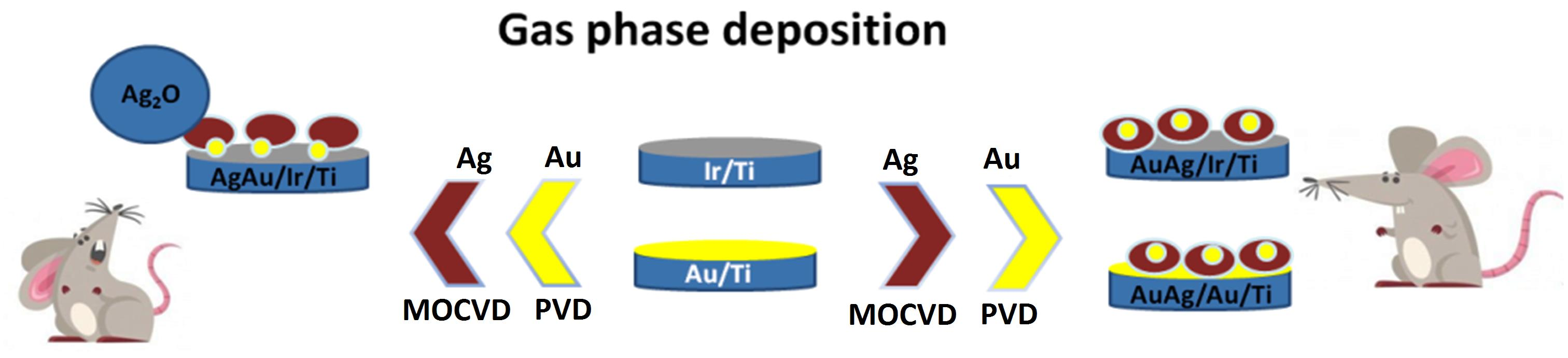
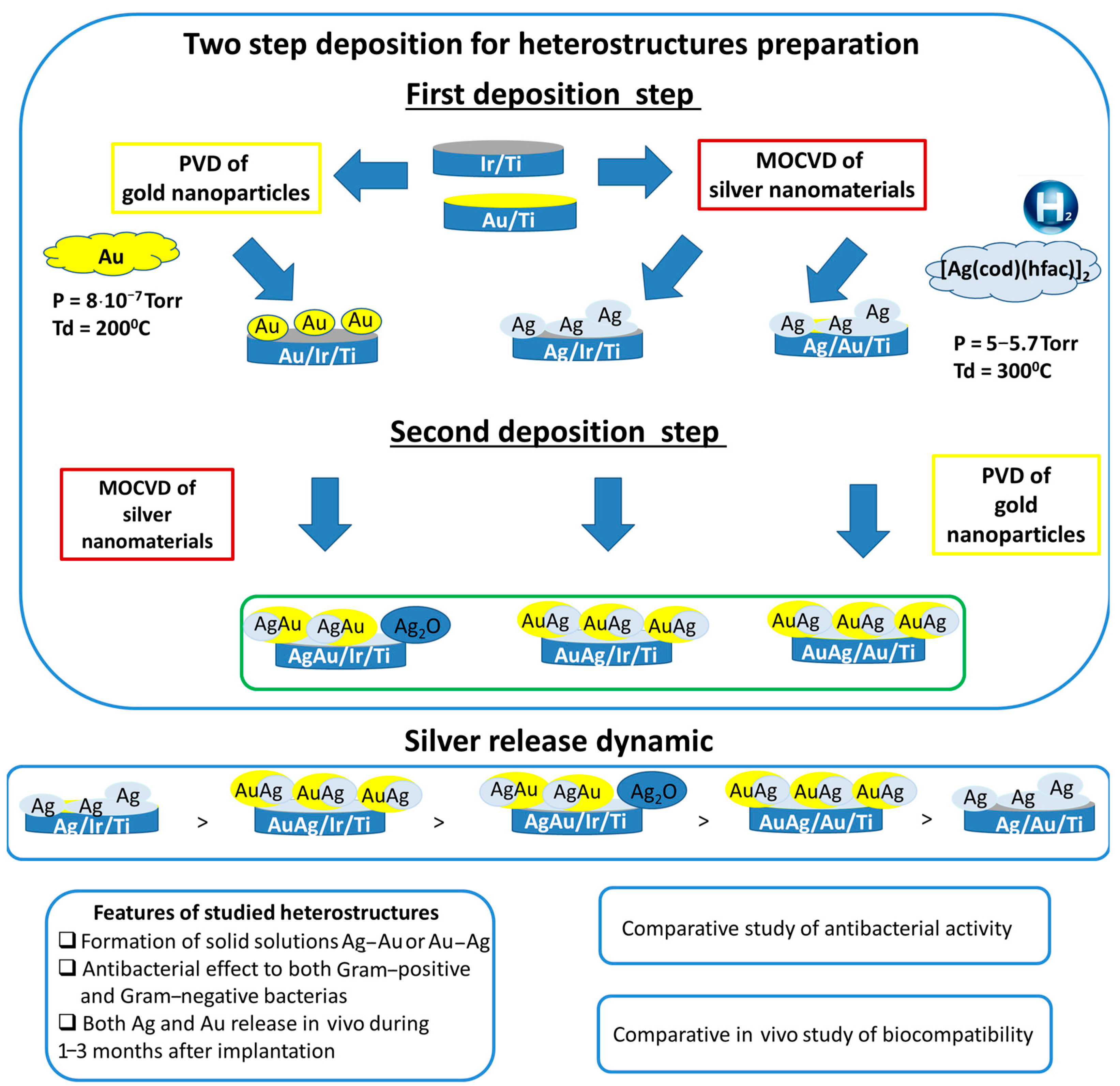
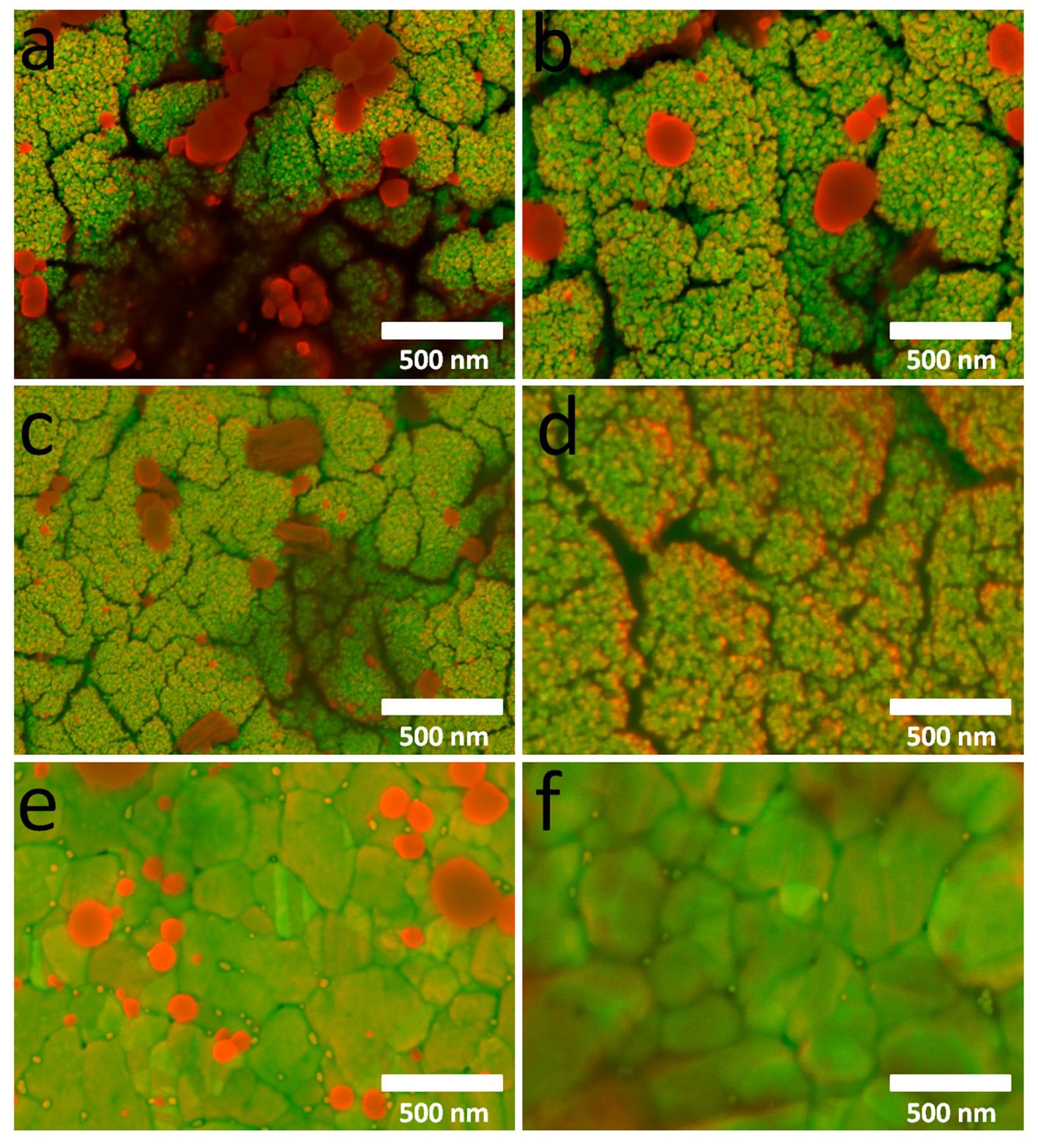
| Inductively coupled plasma atomic emission spectroscopy (ICP-OES) | A high-resolution spectrometer iCAP 6500 (Thermo Fisher Scientific, Waltham, MA USA) was used. The registration of samples was performed at the axial observation of plasma: cooling argon flow was 12 L/min, secondary was 0.5 L/min, nebulization was 0.7 L/min, registration time was 5 s, and power supplied to an ICP inductor was 1150 W. | The as-deposited samples (Figure 1) and samples after implantation were dissolved in HNO3 and HCl acids, and then analyzed. The Ag and Au content in the samples were calculated using the most intense analytical lines: 242.795, 267.595 nm for Au and 328.068, 338.289 nm for Ag. |
| X-ray photoelectron spectroscopy (XPS) | FlexPS spectrometer (SPECS, Berlin, Germany), PHOIBOS-150 analyzer (SPECS, Berlin, Germany) with 1D-DLD detector (SPECS, Berlin, Germany), FOCUS-500 monochromator (SPECS, Berlin, Germany), Al Kα radiation, hv = 1486.71 eV, 14 kV, 200 W. The calibration of binding energies conducted via the Fermi level of the valence band (0.0 eV). | CASA program version 2.3 software (Tokyo, Japan) was used. The Au 4f and Ag 3d spectra deconvolution was performed using the Functional Lorentzian (LF) lineshapes. For Ir peak fitting, the fine-tuning parameters were applied according to [60]. Other spectra were fitted by the Gaussian–Lorentzian product functions. Subtracting the background was utilized via the Shirley method. |
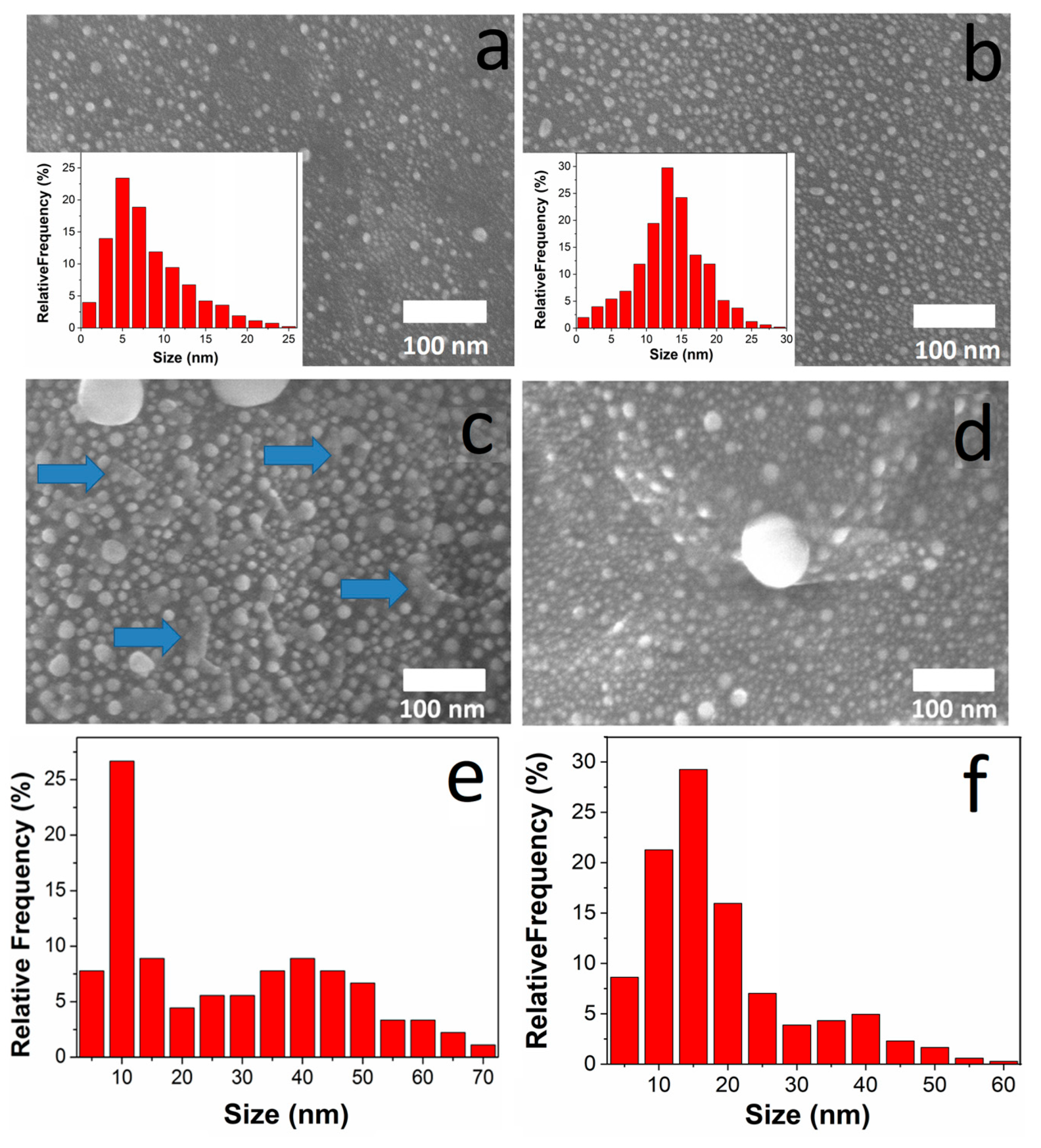
| Scanning Electron Microscopy (SEM) | HITACHI UHR FE-SEM SU8200, Hitachi, Ltd., Hitachi, Tokyo, Japan (3 keV, LA detector) | To determine Ag, Au clusters sizes, SEM images of the samples (Tiff files) were imported into the program image analysis version 1.54 software (ImageJ) National Institutes of Health, 9000 Rockville Pike, Bethesda, Rockville, MA, USA (version 2.0.0) |
| Scanning probe microscope with surface topology registration in atomic force microscopy mode (AFM) | CMM-2000 microscope (№46918), Manufacturer: Ltd. PROTON, Zelenograd, Russia (https://www.z-proton.ru (accessed on 8 December 2025)) | The probes used were CSG-01 cantilevers(NT-MDT Tips, Moscow, Russia) with a tip curvature radius of 10 nm. The achievable resolution was up to 4 nm for lateral relief dimensions and up to 0.02 nm for relief heights. Sample roughness parameters were calculated using the CMM-2000 microscope software (Proton-MIET Plant Ltd., Moscow, Russia). |
Disclaimer/Publisher’s Note: The statements, opinions and data contained in all publications are solely those of the individual author(s) and contributor(s) and not of MDPI and/or the editor(s). MDPI and/or the editor(s) disclaim responsibility for any injury to people or property resulting from any ideas, methods, instructions or products referred to in the content. |
© 2025 by the authors. Licensee MDPI, Basel, Switzerland. This article is an open access article distributed under the terms and conditions of the Creative Commons Attribution (CC BY) license (https://creativecommons.org/licenses/by/4.0/).
Share and Cite
Vikulova, E.S.; Dorovskikh, S.I.; Sergeevichev, D.S.; Guselnikova, T.Y.; Fedorenko, A.D.; Zheravin, A.A.; Morozova, N.B. Combination of Noble Metal and Gold–Silver Nanoclusters as Enhanced Antibacterial Coatings for Ti-Based Medical Implants. Int. J. Mol. Sci. 2025, 26, 11945. https://doi.org/10.3390/ijms262411945
Vikulova ES, Dorovskikh SI, Sergeevichev DS, Guselnikova TY, Fedorenko AD, Zheravin AA, Morozova NB. Combination of Noble Metal and Gold–Silver Nanoclusters as Enhanced Antibacterial Coatings for Ti-Based Medical Implants. International Journal of Molecular Sciences. 2025; 26(24):11945. https://doi.org/10.3390/ijms262411945
Chicago/Turabian StyleVikulova, Evgeniia S., Svetlana I. Dorovskikh, David S. Sergeevichev, Tatiana Ya. Guselnikova, Anastasiya D. Fedorenko, Alexander A. Zheravin, and Natalya B. Morozova. 2025. "Combination of Noble Metal and Gold–Silver Nanoclusters as Enhanced Antibacterial Coatings for Ti-Based Medical Implants" International Journal of Molecular Sciences 26, no. 24: 11945. https://doi.org/10.3390/ijms262411945
APA StyleVikulova, E. S., Dorovskikh, S. I., Sergeevichev, D. S., Guselnikova, T. Y., Fedorenko, A. D., Zheravin, A. A., & Morozova, N. B. (2025). Combination of Noble Metal and Gold–Silver Nanoclusters as Enhanced Antibacterial Coatings for Ti-Based Medical Implants. International Journal of Molecular Sciences, 26(24), 11945. https://doi.org/10.3390/ijms262411945