Associations Between Non-Genetic Risk Factors and DNA Methylation Alterations in Barrett’s Esophagus and Its Progression to Esophageal Adenocarcinoma


Abstract
1. Introduction
2. Barrett’s Esophagus and Esophageal Adenocarcinoma
2.1. Definition and Diagnosis of BE
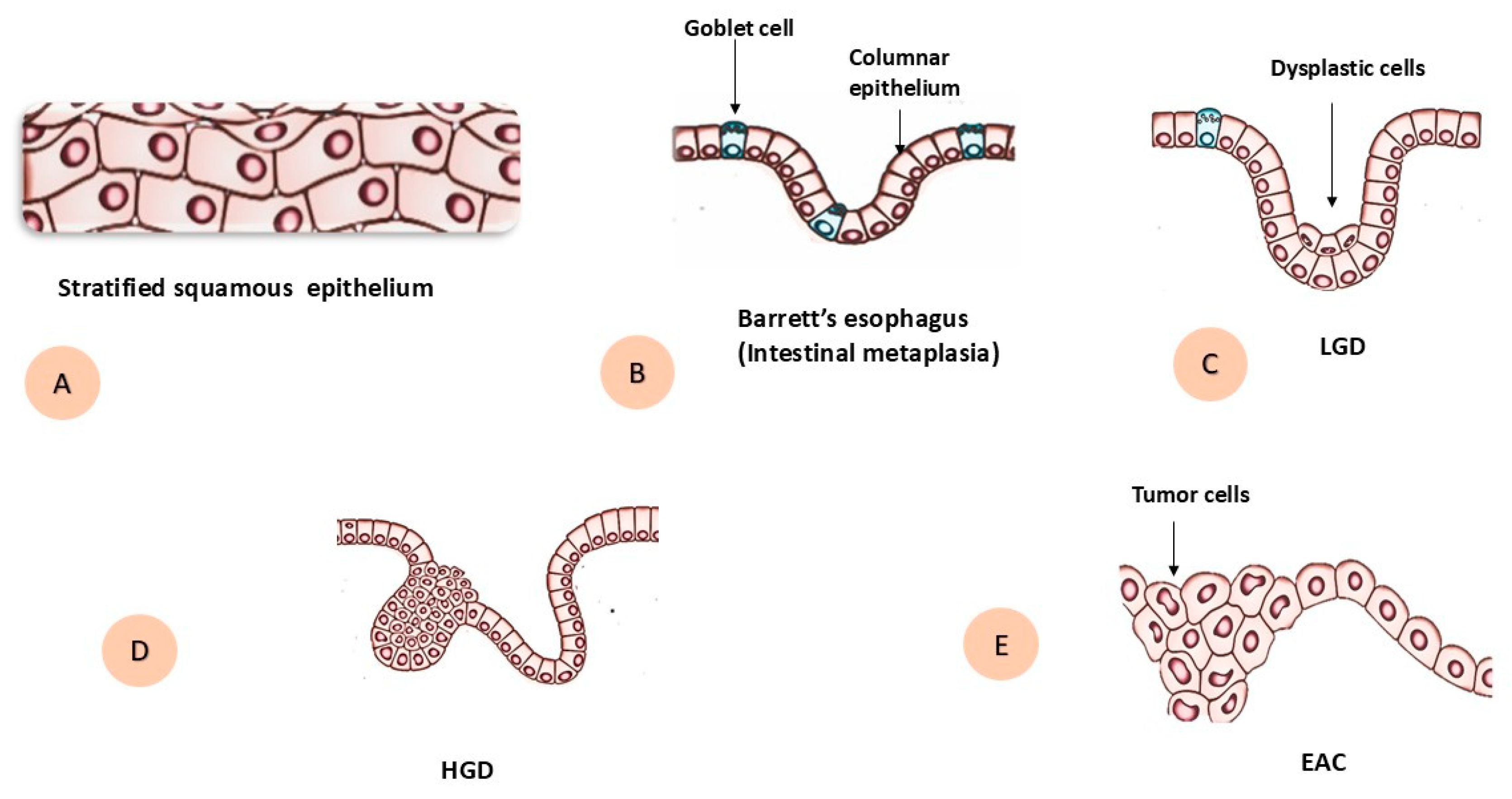
2.2. BE Classification and Progression
2.3. Risk Factors for BE and EAC
2.3.1. Demographics and Lifestyle Factors
2.3.2. Anatomical and Clinical Features
2.4. Molecular Pathogenesis of BE and EAC
2.4.1. Genomic Alterations
2.4.2. Epigenomic Alterations
3. DNA Methylation in BE and EAC
3.1. Technologies for Assessing DNA Methylation
3.1.1. Targeted Locus-Specific Methylation Assays
MSP
MethyLight
Digital MSP
3.1.2. Array-Based Profiling
3.1.3. Sequencing-Based, Genome-Wide Profiling
Bisulfite-Based
Affinity Enrichment-Based
Enzymatic Conversion (EM-seq)
3.2. Clinical Implications and Biomarker Potential
3.2.1. Methylation Profiling in Esophageal Exfoliated Cells
3.2.2. Methylation Profiling in Circulating Cell-Free DNA
3.3. Non-Genetic Risk Factors and DNA Methylation Alterations
3.3.1. Obesity-Related Methylation Changes
3.3.2. GERD-Related Methylation Changes
3.3.3. Smoking-Related Methylation Changes
3.3.4. Segment Length-Related Methylation Changes
4. Conclusions
Author Contributions
Funding
Institutional Review Board Statement
Informed Consent Statement
Data Availability Statement
Acknowledgments
Conflicts of Interest
References
- International Agency for Research on Cancer (IARC). Global Cancer Observatory: Cancer Today. Available online: https://gco.iarc.fr/ (accessed on 16 January 2024).
- Uhlenhopp, D.J.; Then, E.O.; Sunkara, T.; Gaduputi, V. Epidemiology of Esophageal Cancer: Update in Global Trends, Etiology and Risk Factors. Clin. J. Gastroenterol. 2020, 13, 1010–1021. [Google Scholar] [CrossRef]
- Arnold, M.; Laversanne, M.; Brown, L.M.; Devesa, S.S.; Bray, F. Predicting the Future Burden of Esophageal Cancer by Histological Subtype: International Trends in Incidence up to 2030. Am. J. Gastroenterol. 2017, 112, 1247–1255. [Google Scholar] [CrossRef] [PubMed]
- Short, M.W.; Burgers, K.G.; Fry, V.T. Esophageal Cancer. Am. Fam. Physician 2017, 95, 22–28. [Google Scholar]
- Thrift, A.P. Global Burden and Epidemiology of Barrett Oesophagus and Oesophageal Cancer. Nat. Rev. Gastroenterol. Hepatol. 2021, 18, 432–443. [Google Scholar] [CrossRef]
- Grady, W.M.; Yu, M. Molecular Evolution of Metaplasia to Adenocarcinoma in the Esophagus. Dig. Dis. Sci. 2018, 63, 2059–2069. [Google Scholar] [CrossRef]
- Weusten, B.L.A.M.; Bisschops, R.; Dinis-Ribeiro, M.; di Pietro, M.; Pech, O.; Spaander, M.C.W.; Baldaque-Silva, F.; Barret, M.; Coron, E.; Fernández-Esparrach, G.; et al. Diagnosis and Management of Barrett Esophagus: European Society of Gastrointestinal Endoscopy (ESGE) Guideline. Endoscopy 2023, 55, 1124–1146. [Google Scholar] [CrossRef]
- Clermont, M.; Falk, G.W. Clinical Guidelines Update on the Diagnosis and Management of Barrett’s Esophagus. Dig. Dis. Sci. 2018, 63, 2122–2128. [Google Scholar] [CrossRef] [PubMed]
- Gu, M.; Ren, B.; Fang, Y.; Ren, J.; Liu, X.; Wang, X.; Zhou, F.; Xiao, R.; Luo, X.; You, L.; et al. Epigenetic Regulation in Cancer. MedComm (2020) 2024, 5, e495. [Google Scholar] [CrossRef] [PubMed]
- Liu, W.-J.; Zhao, Y.; Chen, X.; Miao, M.-L.; Zhang, R.-Q. Epigenetic Modifications in Esophageal Cancer: An Evolving Biomarker. Front. Genet. 2022, 13, 1087479. [Google Scholar] [CrossRef]
- Tang, J.; Shi, X.; Song, C.; Zhang, W.; Yan, Y.; Dai, L.; Wu, D.; Qiu, J.; Liu, J.; Wang, T.; et al. DNA Methylation in Esophageal Cancer: Technological Advances and Early Detection Clinical Applications. Front. Oncol. 2025, 15, 1543190. [Google Scholar] [CrossRef]
- Bao, Y.; Wang, X.; Zeng, B.; Shi, Y.; Huang, Y.; Huang, Y.; Shang, S.; Shan, L.; Ma, L. Research Progress of Liquid Biopsy Based on DNA Methylation in Tumor Diagnosis and Treatment. Biomolecules 2024, 14, 1634. [Google Scholar] [CrossRef]
- Palanca-Ballester, C.; Rodriguez-Casanova, A.; Torres, S.; Calabuig-Fariñas, S.; Exposito, F.; Serrano, D.; Redin, E.; Valencia, K.; Jantus-Lewintre, E.; Diaz-Lagares, A.; et al. Cancer Epigenetic Biomarkers in Liquid Biopsy for High Incidence Malignancies. Cancers 2021, 13, 3016. [Google Scholar] [CrossRef]
- Li, D.; Zhang, L.; Liu, Y.; Sun, H.; Onwuka, J.U.; Zhao, Z.; Tian, W.; Xu, J.; Zhao, Y.; Xu, H. Specific DNA Methylation Markers in the Diagnosis and Prognosis of Esophageal Cancer. Aging 2019, 11, 11640–11658. [Google Scholar] [CrossRef] [PubMed]
- Veugelers, P.J.; Porter, G.A.; Guernsey, D.L.; Casson, A.G. Obesity and Lifestyle Risk Factors for Gastroesophageal Reflux Disease, Barrett Esophagus and Esophageal Adenocarcinoma. Dis. Esophagus 2006, 19, 321–328. [Google Scholar] [CrossRef]
- Thrift, A.P. Barrett’s Esophagus and Esophageal Adenocarcinoma: How Common Are They Really? Dig. Dis. Sci. 2018, 63, 1988–1996. [Google Scholar] [CrossRef]
- Bujanda, D.E.; Hachem, C. Barrett’s Esophagus. Mo. Med. 2018, 115, 211–213. [Google Scholar]
- Naini, B.V.; Souza, R.F.; Odze, R.D. Barrett’s Esophagus: A Comprehensive and Contemporary Review for Pathologists. Am. J. Surg. Pathol. 2016, 40, e45–e66. [Google Scholar] [CrossRef]
- Grin, A.; Streutker, C.J. Histopathology in Barrett Esophagus and Barrett Esophagus-Related Dysplasia. Clin. Endosc. 2014, 47, 31–39. [Google Scholar] [CrossRef] [PubMed]
- Odze, R. Histology of Barrett’s Metaplasia: Do Goblet Cells Matter? Dig. Dis. Sci. 2018, 63, 2042–2051. [Google Scholar] [CrossRef]
- Stawinski, P.M.; Dziadkowiec, K.N.; Kuo, L.A.; Echavarria, J.; Saligram, S. Barrett’s Esophagus: An Updated Review. Diagnostics 2023, 13, 321. [Google Scholar] [CrossRef] [PubMed]
- Hamade, N.; Vennelaganti, S.; Parasa, S.; Vennalaganti, P.; Gaddam, S.; Spaander, M.C.W.; Van Olphen, S.H.; Thota, P.N.; Kennedy, K.F.; Bruno, M.J.; et al. Lower Annual Rate of Progression of Short-Segment vs Long-Segment Barrett’s Esophagus to Esophageal Adenocarcinoma. Clin. Gastroenterol. Hepatol. 2019, 17, 864–868. [Google Scholar] [CrossRef]
- Duits, L.C.; Van Der Wel, M.J.; Cotton, C.C.; Phoa, K.N.; Ten Kate, F.J.W.; Seldenrijk, C.A.; Offerhaus, G.J.A.; Visser, M.; Meijer, S.L.; Mallant-Hent, R.C.; et al. Patients with Barrett’s Esophagus and Confirmed Persistent Low-Grade Dysplasia Are at Increased Risk for Progression to Neoplasia. Gastroenterology 2017, 152, 993–1001.e1. [Google Scholar] [CrossRef] [PubMed]
- Verheij, E.P.D.; Van Munster, S.N.; Chan, M.W.; Malekzadeh, A.; Cotton, C.C.; Weusten, B.L.A.M.; Alvarez Herrero, L.; Koch, A.D.; Nagengast, W.B.; Westerhof, J.; et al. Natural Course of High-Grade Dysplasia in Barrett’s Esophagus: A Scoping Review and Case Series. Gastrointest. Endosc. 2025, 102, 538–547.e6. [Google Scholar] [CrossRef] [PubMed]
- Chakraborty, S.; Iyer, P.G. Predictors of Progression in Barrett’s Esophagus. Curr. Treat. Options Gastroenterol. 2019, 17, 18–31. [Google Scholar] [CrossRef] [PubMed]
- Asge Standards of Practice Committee; Qumseya, B.; Sultan, S.; Bain, P.; Jamil, L.; Jacobson, B.; Anandasabapathy, S.; Agrawal, D.; Buxbaum, J.L.; Fishman, D.S.; et al. ASGE Guideline on Screening and Surveillance of Barrett’s Esophagus. Gastrointest. Endosc. 2019, 90, 335–359.e2. [Google Scholar] [CrossRef]
- Codipilly, D.C.; Chandar, A.K.; Singh, S.; Wani, S.; Shaheen, N.J.; Inadomi, J.M.; Chak, A.; Iyer, P.G. The Effect of Endoscopic Surveillance in Patients with Barrett’s Esophagus: A Systematic Review and Meta-Analysis. Gastroenterology 2018, 154, 2068–2086.e5. [Google Scholar] [CrossRef]
- Cook, M.B.; Thrift, A.P. Epidemiology of Barrett’s Esophagus and Esophageal Adenocarcinoma: Implications for Screening and Surveillance. Gastrointest. Endosc. Clin. N. Am. 2021, 31, 1–26. [Google Scholar] [CrossRef]
- Thrift, A.P.; Whiteman, D.C. The Incidence of Esophageal Adenocarcinoma Continues to Rise: Analysis of Period and Birth Cohort Effects on Recent Trends. Ann. Oncol. 2012, 23, 3155–3162. [Google Scholar] [CrossRef]
- Sharma, N.; Ho, K.Y. Risk Factors for Barrett’s Oesophagus. Gastrointest. Tumors 2016, 3, 103–108. [Google Scholar] [CrossRef]
- Abbas, G.; Krasna, M. Overview of Esophageal Cancer. Ann. Cardiothorac. Surg. 2017, 6, 131–136. [Google Scholar] [CrossRef]
- Katzke, V.A.; Kaaks, R.; Kühn, T. Lifestyle and Cancer Risk. Cancer J. 2015, 21, 104–110. [Google Scholar] [CrossRef]
- Kramer, J.R.; Fischbach, L.A.; Richardson, P.; Alsarraj, A.; Fitzgerald, S.; Shaib, Y.; Abraham, N.S.; Velez, M.; Cole, R.; Anand, B.; et al. Waist-to-Hip Ratio, but Not Body Mass Index, Is Associated with an Increased Risk of Barrett’s Esophagus in White Men. Clin. Gastroenterol. Hepatol. 2013, 11, 373–381.e1. [Google Scholar] [CrossRef] [PubMed]
- Krishnamoorthi, R.; Singh, S.; Ragunathan, K.; Visrodia, K.; Wang, K.K.; Katzka, D.A.; Iyer, P.G. Factors Associated with Progression of Barrett’s Esophagus: A Systematic Review and Meta-Analysis. Clin. Gastroenterol. Hepatol. 2018, 16, 1046–1055.e8. [Google Scholar] [CrossRef]
- Ali, S.; Bailey, A.; Ash, S.; Haghighat, M.; Leedham, S.J.; Lu, X.; East, J.E.; Rittscher, J.; Braden, B.; Allan, P.; et al. A Pilot Study on Automatic Three-Dimensional Quantification of Barrett’s Esophagus for Risk Stratification and Therapy Monitoring. Gastroenterology 2021, 161, 865–878.e8. [Google Scholar] [CrossRef]
- Sharma, P.; Dent, J.; Armstrong, D.; Bergman, J.J.G.H.M.; Gossner, L.; Hoshihara, Y.; Jankowski, J.A.; Junghard, O.; Lundell, L.; Tytgat, G.N.J.; et al. The Development and Validation of an Endoscopic Grading System for Barrett’s Esophagus: The Prague C & M Criteria. Gastroenterology 2006, 131, 1392–1399. [Google Scholar] [CrossRef]
- Dam, A.N.; Klapman, J. A Narrative Review of Barrett’s Esophagus in 2020, Molecular and Clinical Update. Ann. Transl. Med. 2020, 8, 1107. [Google Scholar] [CrossRef]
- Anaparthy, R.; Sharma, P. Progression of Barrett Oesophagus: Role of Endoscopic and Histological Predictors. Nat. Rev. Gastroenterol. Hepatol. 2014, 11, 525–534. [Google Scholar] [CrossRef] [PubMed]
- Spechler, S.J. Barrett Esophagus and Risk of Esophageal Cancer: A Clinical Review. JAMA 2013, 310, 627–636. [Google Scholar] [CrossRef] [PubMed]
- Chandrasekar, V.T.; Hamade, N.; Desai, M.; Rai, T.; Gorrepati, V.S.; Jegadeesan, R.; Sathyamurthy, A.; Sharma, P. Significantly Lower Annual Rates of Neoplastic Progression in Short-Compared to Long-Segment Non-Dysplastic Barrett’s Esophagus: A Systematic Review and Meta-Analysis. Endoscopy 2019, 51, 665–672. [Google Scholar] [CrossRef]
- Spechler, S.J.; Souza, R.F. Barrett’s Esophagus. N. Engl. J. Med. 2014, 371, 836–845. [Google Scholar] [CrossRef]
- Andrici, J.; Tio, M.; Cox, M.R.; Eslick, G.D. Hiatal Hernia and the Risk of Barrett’s Esophagus. J. Gastroenterol. Hepatol. 2013, 28, 415–431. [Google Scholar] [CrossRef] [PubMed]
- Balasubramanian, G.; Singh, M.; Gupta, N.; Gaddam, S.; Giacchino, M.; Wani, S.B.; Moloney, B.; Higbee, A.D.; Rastogi, A.; Bansal, A.; et al. Prevalence and Predictors of Columnar Lined Esophagus in Gastroesophageal Reflux Disease (GERD) Patients Undergoing Upper Endoscopy. Am. J. Gastroenterol. 2012, 107, 1655–1661. [Google Scholar] [CrossRef] [PubMed]
- Eloubeidi, M.A.; Provenzale, D. Clinical and Demographic Predictors of Barrett’s Esophagus among Patients with Gastroesophageal Reflux Disease: A Multivariable Analysis in Veterans. J. Clin. Gastroenterol. 2001, 33, 306–309. [Google Scholar] [CrossRef] [PubMed]
- Ireland, C.J.; Thompson, S.K.; Laws, T.A.; Esterman, A. Risk Factors for Barrett’s Esophagus: A Scoping Review. Cancer Causes Control. 2016, 27, 301–323. [Google Scholar] [CrossRef]
- Thiruvengadam, S.K.; Tieu, A.H.; Luber, B.; Wang, H.; Meltzer, S.J. Risk Factors for Progression of Barrett’s Esophagus to High Grade Dysplasia and Esophageal Adenocarcinoma. Sci. Rep. 2020, 10, 4899. [Google Scholar] [CrossRef]
- Barrett, M.T.; Galipeau, P.C.; Sanchez, C.A.; Emond, M.J.; Reid, B.J. Determination of the Frequency of Loss of Heterozygosity in Esophageal Adenocarcinoma by Cell Sorting, Whole Genome Amplification and Microsatellite Polymorphisms. Oncogene 1996, 12, 1873–1878. [Google Scholar]
- Wu, T.-T.; Watanabe, T.; Heitmiller, R.; Zahurak, M.; Forastiere, A.A.; Hamilton, S.R. Genetic Alterations in Barrett Esophagus and Adenocarcinomas of the Esophagus and Esophagogastric Junction Region. Am. J. Pathol. 1998, 153, 287–294. [Google Scholar] [CrossRef]
- Galipeau, P.C.; Prevo, L.J.; Sanchez, C.A.; Longton, G.M.; Reid, B.J. Clonal Expansion and Loss of Heterozygosity at Chromosomes 9p and 17p in Premalignant Esophageal (Barrett’s) Tissue. JNCI J. Natl. Cancer Inst. 1999, 91, 2087–2095. [Google Scholar] [CrossRef]
- Kaz, A.M.; Grady, W.M.; Stachler, M.D.; Bass, A.J. Genetic and Epigenetic Alterations in Barrett’s Esophagus and Esophageal Adenocarcinoma. Gastroenterol. Clin. N. Am. 2015, 44, 473–489. [Google Scholar] [CrossRef]
- Maley, C.C.; Galipeau, P.C.; Finley, J.C.; Wongsurawat, V.J.; Li, X.; Sanchez, C.A.; Paulson, T.G.; Blount, P.L.; Risques, R.-A.; Rabinovitch, P.S.; et al. Genetic Clonal Diversity Predicts Progression to Esophageal Adenocarcinoma. Nat. Genet. 2006, 38, 468–473. [Google Scholar] [CrossRef]
- Maley, C.C.; Galipeau, P.C.; Li, X.; Sanchez, C.A.; Paulson, T.G.; Reid, B.J. Selectively Advantageous Mutations and Hitchhikers in Neoplasms: P16 Lesions Are Selected in Barrett’s Esophagus. Cancer Res. 2004, 64, 3414–3427. [Google Scholar] [CrossRef]
- Werther, M.; Saure, C.; Pahl, R.; Schorr, F.; Rüschoff, J.; Alles, J.U.; Heinmöller, E. Molecular Genetic Analysis of Surveillance Biopsy Samples from Barrett’s Mucosa--Significance of Sampling. Pathol. Res. Pract. 2008, 204, 285–294. [Google Scholar] [CrossRef]
- Fitzgerald, R.C. Complex Diseases in Gastroenterology and Hepatology: GERD, Barrett’s, and Esophageal Adenocarcinoma. Clin. Gastroenterol. Hepatol. 2005, 3, 529–537. [Google Scholar] [CrossRef] [PubMed]
- Weaver, J.M.J.; Ross-Innes, C.S.; Shannon, N.; Lynch, A.G.; Forshew, T.; Barbera, M.; Murtaza, M.; Ong, C.-A.J.; Lao-Sirieix, P.; Dunning, M.J.; et al. Ordering of Mutations in Preinvasive Disease Stages of Esophageal Carcinogenesis. Nat. Genet. 2014, 46, 837–843. [Google Scholar] [CrossRef]
- Baylin, S.B.; Jones, P.A. Epigenetic Determinants of Cancer. Cold Spring Harb. Perspect. Biol. 2016, 8, a019505. [Google Scholar] [CrossRef]
- Agarwal, A.; Polineni, R.; Hussein, Z.; Vigoda, I.; Bhagat, T.D.; Bhattacharyya, S.; Maitra, A.; Verma, A. Role of Epigenetic Alterations in the Pathogenesis of Barrett’s Esophagus and Esophageal Adenocarcinoma. Int. J. Clin. Exp. Pathol. 2012, 5, 382–396. [Google Scholar]
- Eads, C.A.; Lord, R.V.; Wickramasinghe, K.; Long, T.I.; Kurumboor, S.K.; Bernstein, L.; Peters, J.H.; DeMeester, S.R.; DeMeester, T.R.; Skinner, K.A.; et al. Epigenetic Patterns in the Progression of Esophageal Adenocarcinoma. Cancer Res. 2001, 61, 3410–3418. [Google Scholar] [PubMed]
- Islam, F.; Tang, J.C.; Gopalan, V.; Lam, A.K. Epigenetics: DNA Methylation Analysis in Esophageal Adenocarcinoma. Methods Mol. Biol. 2018, 1756, 247–256. [Google Scholar] [CrossRef] [PubMed]
- Peng, D.-F.; Kanai, Y.; Sawada, M.; Ushijima, S.; Hiraoka, N.; Kitazawa, S.; Hirohashi, S. DNA Methylation of Multiple Tumor-Related Genes in Association with Overexpression of DNA Methyltransferase 1 (DNMT1) during Multistage Carcinogenesis of the Pancreas. Carcinogenesis 2006, 27, 1160–1168. [Google Scholar] [CrossRef]
- Zhang, J.; Yang, C.; Wu, C.; Cui, W.; Wang, L. DNA Methyltransferases in Cancer: Biology, Paradox, Aberrations, and Targeted Therapy. Cancers 2020, 12, 2123. [Google Scholar] [CrossRef]
- Lister, R.; Pelizzola, M.; Dowen, R.H.; Hawkins, R.D.; Hon, G.; Tonti-Filippini, J.; Nery, J.R.; Lee, L.; Ye, Z.; Ngo, Q.-M.; et al. Human DNA Methylomes at Base Resolution Show Widespread Epigenomic Differences. Nature 2009, 462, 315–322. [Google Scholar] [CrossRef]
- Wang, H.; DeFina, S.M.; Bajpai, M.; Yan, Q.; Yang, L.; Zhou, Z. DNA Methylation Markers in Esophageal Cancer: An Emerging Tool for Cancer Surveillance and Treatment. Am. J. Cancer Res. 2021, 11, 5644–5658. [Google Scholar]
- Ebrahimi, V.; Soleimanian, A.; Ebrahimi, T.; Azargun, R.; Yazdani, P.; Eyvazi, S.; Tarhriz, V. Epigenetic Modifications in Gastric Cancer: Focus on DNA Methylation. Gene 2020, 742, 144577. [Google Scholar] [CrossRef] [PubMed]
- Ergun, P.; Kipcak, S.; Bor, S. Epigenetic Alterations from Barrett’s Esophagus to Esophageal Adenocarcinoma. Int. J. Mol. Sci. 2023, 24, 7817. [Google Scholar] [CrossRef]
- Wu, W.; Bhagat, T.D.; Yang, X.; Song, J.H.; Cheng, Y.; Agarwal, R.; Abraham, J.M.; Ibrahim, S.; Bartenstein, M.; Hussain, Z.; et al. Hypomethylation of Noncoding DNA Regions and Overexpression of the Long Noncoding RNA, AFAP1-AS1, in Barrett’s Esophagus and Esophageal Adenocarcinoma. Gastroenterology 2013, 144, 956–966.e4. [Google Scholar] [CrossRef]
- Zheng, Y.; Ziman, B.; Ho, A.S.; Sinha, U.K.; Xu, L.-Y.; Li, E.-M.; Koeffler, H.P.; Berman, B.P.; Lin, D.-C. Comprehensive Analyses of Partially Methylated Domains and Differentially Methylated Regions in Esophageal Cancer Reveal Both Cell-Type- and Cancer-Specific Epigenetic Regulation. Genome Biol. 2023, 24, 193. [Google Scholar] [CrossRef]
- Abe, I.; Suzuki, K.; Kimura, Y.; Tamaki, S.; Endo, Y.; Ichida, K.; Muto, Y.; Watanabe, F.; Saito, M.; Konishi, F.; et al. Enhancement of DNA Hypomethylation Alterations by Gastric and Bile Acids Promotes Chromosomal Instability in Barrett’s Epithelial Cell Line. Sci. Rep. 2022, 12, 20710. [Google Scholar] [CrossRef]
- Zhang, X.; Zhang, R.; Yu, J. New Understanding of the Relevant Role of LINE-1 Retrotransposition in Human Disease and Immune Modulation. Front. Cell Dev. Biol. 2020, 8, 657. [Google Scholar] [CrossRef]
- Barchi, A.; Dell’Anna, G.; Massimino, L.; Mandarino, F.V.; Vespa, E.; Viale, E.; Passaretti, S.; Annese, V.; Malesci, A.; Danese, S.; et al. Unraveling the Pathogenesis of Barrett’s Esophagus and Esophageal Adenocarcinoma: The “Omics” Era. Front. Oncol. 2024, 14, 1458138. [Google Scholar] [CrossRef] [PubMed]
- Li, S.; Tollefsbol, T.O. DNA Methylation Methods: Global DNA Methylation and Methylomic Analyses. Methods 2021, 187, 28–43. [Google Scholar] [CrossRef] [PubMed]
- Kurdyukov, S.; Bullock, M. DNA Methylation Analysis: Choosing the Right Method. Biology 2016, 5, 3. [Google Scholar] [CrossRef]
- Pajares, M.J.; Palanca-Ballester, C.; Urtasun, R.; Alemany-Cosme, E.; Lahoz, A.; Sandoval, J. Methods for Analysis of Specific DNA Methylation Status. Methods 2021, 187, 3–12. [Google Scholar] [CrossRef]
- Quan, P.-L.; Sauzade, M.; Brouzes, E. dPCR: A Technology Review. Sensors 2018, 18, 1271. [Google Scholar] [CrossRef] [PubMed]
- Pidsley, R.; Zotenko, E.; Peters, T.J.; Lawrence, M.G.; Risbridger, G.P.; Molloy, P.; Van Djik, S.; Muhlhausler, B.; Stirzaker, C.; Clark, S.J. Critical Evaluation of the Illumina MethylationEPIC BeadChip Microarray for Whole-Genome DNA Methylation Profiling. Genome Biol. 2016, 17, 208. [Google Scholar] [CrossRef] [PubMed]
- Ross, J.P.; van Dijk, S.; Phang, M.; Skilton, M.R.; Molloy, P.L.; Oytam, Y. Batch-Effect Detection, Correction and Characterisation in Illumina HumanMethylation450 and MethylationEPIC BeadChip Array Data. Clin. Epigenet. 2022, 14, 58. [Google Scholar] [CrossRef] [PubMed]
- Leontiou, C.A.; Hadjidaniel, M.D.; Mina, P.; Antoniou, P.; Ioannides, M.; Patsalis, P.C. Bisulfite Conversion of DNA: Performance Comparison of Different Kits and Methylation Quantitation of Epigenetic Biomarkers That Have the Potential to Be Used in Non-Invasive Prenatal Testing. PLoS ONE 2015, 10, e0135058. [Google Scholar] [CrossRef]
- Mehrmohamadi, M.; Sepehri, M.H.; Nazer, N.; Norouzi, M.R. A Comparative Overview of Epigenomic Profiling Methods. Front. Cell Dev. Biol. 2021, 9, 714687. [Google Scholar] [CrossRef]
- Liu, X.; Pang, Y.; Shan, J.; Wang, Y.; Zheng, Y.; Xue, Y.; Zhou, X.; Wang, W.; Sun, Y.; Yan, X.; et al. Beyond the Base Pairs: Comparative Genome-Wide DNA Methylation Profiling across Sequencing Technologies. Brief. Bioinform. 2024, 25, bbae440. [Google Scholar] [CrossRef]
- Simons, R.B.; Karkala, F.; Kukk, M.M.; Adams, H.H.H.; Kayser, M.; Vidaki, A. Comparative Performance Evaluation of Bisulfite- and Enzyme-Based DNA Conversion Methods. Clin. Epigenet. 2025, 17, 56. [Google Scholar] [CrossRef]
- Taiwo, O.; Wilson, G.A.; Morris, T.; Seisenberger, S.; Reik, W.; Pearce, D.; Beck, S.; Butcher, L.M. Methylome Analysis Using MeDIP-Seq with Low DNA Concentrations. Nat. Protoc. 2012, 7, 617–636. [Google Scholar] [CrossRef]
- Li, D.; Zhang, B.; Xing, X.; Wang, T. Combining MeDIP-Seq and MRE-Seq to Investigate Genome-Wide CpG Methylation. Methods 2015, 72, 29–40. [Google Scholar] [CrossRef] [PubMed]
- Vaisvila, R.; Ponnaluri, V.K.C.; Sun, Z.; Langhorst, B.W.; Saleh, L.; Guan, S.; Dai, N.; Campbell, M.A.; Sexton, B.S.; Marks, K.; et al. Enzymatic Methyl Sequencing Detects DNA Methylation at Single-Base Resolution from Picograms of DNA. Genome Res. 2021, 31, 1280–1289. [Google Scholar] [CrossRef]
- Feng, S.; Zhong, Z.; Wang, M.; Jacobsen, S.E. Efficient and Accurate Determination of Genome-Wide DNA Methylation Patterns in Arabidopsis Thaliana with Enzymatic Methyl Sequencing. Epigenet. Chromatin 2020, 13, 42. [Google Scholar] [CrossRef]
- Han, Y.; Zheleznyakova, G.Y.; Marincevic-Zuniga, Y.; Kakhki, M.P.; Raine, A.; Needhamsen, M.; Jagodic, M. Comparison of EM-Seq and PBAT Methylome Library Methods for Low-Input DNA. Epigenetics 2022, 17, 1195–1204. [Google Scholar] [CrossRef] [PubMed]
- Qureshi, A.P.; Stachler, M.D.; Haque, O.; Odze, R.D. Biomarkers for Barrett’s Esophagus—A Contemporary Review. Expert. Rev. Mol. Diagn. 2018, 18, 939–946. [Google Scholar] [CrossRef]
- Sund, M.; Kalluri, R. Tumor Stroma Derived Biomarkers in Cancer. Cancer Metastasis Rev. 2009, 28, 177–183. [Google Scholar] [CrossRef] [PubMed]
- Shah, A.K.; Saunders, N.A.; Barbour, A.P.; Hill, M.M. Early Diagnostic Biomarkers for Esophageal Adenocarcinoma—The Current State of Play. Cancer Epidemiol. Biomark. Prev. 2013, 22, 1185–1209. [Google Scholar] [CrossRef]
- Iyer, P.G.; Taylor, W.R.; Slettedahl, S.W.; Lansing, R.L.; Hemminger, L.L.; Cayer, F.K.; Mahoney, D.W.; Giakoumopoulos, M.; Allawi, H.T.; Wu, T.-T.; et al. Validation of a Methylated DNA Marker Panel for the Nonendoscopic Detection of Barrett’s Esophagus in a Multisite Case-Control Study. Gastrointest. Endosc. 2021, 94, 498–505. [Google Scholar] [CrossRef]
- Moinova, H.R.; LaFramboise, T.; Lutterbaugh, J.D.; Chandar, A.K.; Dumot, J.; Faulx, A.; Brock, W.; De la Cruz Cabrera, O.; Guda, K.; Barnholtz-Sloan, J.S.; et al. Identifying DNA Methylation Biomarkers for Non-Endoscopic Detection of Barrett’s Esophagus. Sci. Transl. Med. 2018, 10, eaao5848. [Google Scholar] [CrossRef]
- Wang, Z.; Kambhampati Thiruvengadam, S.; Cheng, Y.; Ma, K.; Simsek, C.; Tieu, A.H.; Abraham, J.M.; Liu, X.; Prasath, V.; Duncan, M.; et al. Methylation Biomarker Panel Performance in EsophaCap Cytology Samples for Diagnosing Barrett’s Esophagus: A Prospective Validation Study. Clin. Cancer Res. 2019, 25, 2127–2135. [Google Scholar] [CrossRef]
- Chettouh, H.; Mowforth, O.; Galeano-Dalmau, N.; Bezawada, N.; Ross-Innes, C.; MacRae, S.; Debiram-Beecham, I.; O’Donovan, M.; Fitzgerald, R.C. Methylation Panel Is a Diagnostic Biomarker for Barrett’s Oesophagus in Endoscopic Biopsies and Non-Endoscopic Cytology Specimens. Gut 2018, 67, 1942–1949. [Google Scholar] [CrossRef] [PubMed]
- Shaheen, N.J.; Othman, M.O.; Taunk, J.; Chang, K.J.; Jaganmohan, S.; Yachimski, P.S.; Fang, J.C.; Spataro, J.S.; Verma, S.; Lee, V.T.; et al. Use of a Two-Gene Methylated DNA Biomarker Assay and Nonendoscopic Balloon for Detection of Barrett Esophagus Among High-Risk Individuals in a Screening Population. Am. J. Gastroenterol. 2025, 120, 1511–1520. [Google Scholar] [CrossRef]
- Xu, Y.; Wang, Z.; Pei, B.; Wang, J.; Xue, Y.; Zhao, G. DNA Methylation Markers in Esophageal Cancer. Front. Genet. 2024, 15, 1354195. [Google Scholar] [CrossRef]
- Li, P.; Liu, S.; Du, L.; Mohseni, G.; Zhang, Y.; Wang, C. Liquid Biopsies Based on DNA Methylation as Biomarkers for the Detection and Prognosis of Lung Cancer. Clin. Epigenet. 2022, 14, 118. [Google Scholar] [CrossRef] [PubMed]
- Rothwell, D.G.; Ayub, M.; Cook, N.; Thistlethwaite, F.; Carter, L.; Dean, E.; Smith, N.; Villa, S.; Dransfield, J.; Clipson, A.; et al. Utility of ctDNA to Support Patient Selection for Early Phase Clinical Trials: The TARGET Study. Nat. Med. 2019, 25, 738–743. [Google Scholar] [CrossRef] [PubMed]
- Lee, J.-S.; Kim, M.; Seong, M.-W.; Kim, H.-S.; Lee, Y.K.; Kang, H.J. Plasma vs. Serum in Circulating Tumor DNA Measurement: Characterization by DNA Fragment Sizing and Digital Droplet Polymerase Chain Reaction. Clin. Chem. Lab. Med. (CCLM) 2020, 58, 527–532. [Google Scholar] [CrossRef]
- Pittella-Silva, F.; Chin, Y.M.; Chan, H.T.; Nagayama, S.; Miyauchi, E.; Low, S.-K.; Nakamura, Y. Plasma or Serum: Which Is Preferable for Mutation Detection in Liquid Biopsy? Clin. Chem. 2020, 66, 946–957. [Google Scholar] [CrossRef]
- Samoila, A.; Sosa, J.; Padilla, J.; Wutkowski, M.; Vanness, K.; Viale, A.; Berger, M.; Houck-Loomis, B.; Pessin, M.; Peerschke, E.I. Developing Quality Programs for Cell-Free DNA (cfDNA) Extraction from Peripheral Blood. J. Appl. Lab. Med. 2020, 5, 788–797. [Google Scholar] [CrossRef]
- Abbosh, C.; Swanton, C.; Birkbak, N.J. Clonal Haematopoiesis: A Source of Biological Noise in Cell-Free DNA Analyses. Ann. Oncol. 2019, 30, 358–359. [Google Scholar] [CrossRef]
- Liu, M.C.; Oxnard, G.R.; Klein, E.A.; Swanton, C.; Seiden, M.V.; Liu, M.C.; Oxnard, G.R.; Klein, E.A.; Smith, D.; Richards, D.; et al. Sensitive and Specific Multi-Cancer Detection and Localization Using Methylation Signatures in Cell-Free DNA. Ann. Oncol. 2020, 31, 745–759. [Google Scholar] [CrossRef]
- Jin, Z.; Olaru, A.; Yang, J.; Sato, F.; Cheng, Y.; Kan, T.; Mori, Y.; Mantzur, C.; Paun, B.; Hamilton, J.P.; et al. Hypermethylation of Tachykinin-1 Is a Potential Biomarker in Human Esophageal Cancer. Clin. Cancer Res. 2007, 13, 6293–6300. [Google Scholar] [CrossRef]
- You, Y.-J.; Chen, Y.-P.; Zheng, X.-X.; Meltzer, S.J.; Zhang, H. Aberrant Methylation of the PTPRO Gene in Peripheral Blood as a Potential Biomarker in Esophageal Squamous Cell Carcinoma Patients. Cancer Lett. 2012, 315, 138–144. [Google Scholar] [CrossRef][Green Version]
- Qin, Y.; Wu, C.W.; Taylor, W.R.; Sawas, T.; Burger, K.N.; Mahoney, D.W.; Sun, Z.; Yab, T.C.; Lidgard, G.P.; Allawi, H.T.; et al. Discovery, Validation, and Application of Novel Methylated DNA Markers for Detection of Esophageal Cancer in Plasma. Clin. Cancer Res. 2019, 25, 7396–7404. [Google Scholar] [CrossRef]
- Wang, X.; Kang, G.H.; Campan, M.; Weisenberger, D.J.; Long, T.I.; Cozen, W.; Bernstein, L.; Wu, A.H.; Siegmund, K.D.; Shibata, D.; et al. Epigenetic Subgroups of Esophageal and Gastric Adenocarcinoma with Differential GATA5 DNA Methylation Associated with Clinical and Lifestyle Factors. PLoS ONE 2011, 6, e25985. [Google Scholar] [CrossRef] [PubMed]
- Gu, Y.; Zhang, C.W.-H.; Wang, L.; Zhao, Y.; Wang, H.; Ye, Q.; Gao, S. Association Analysis between Body Mass Index and Genomic DNA Methylation across 15 Major Cancer Types. J. Cancer 2018, 9, 2532–2542. [Google Scholar] [CrossRef] [PubMed]
- Pietrzyk, L.; Torres, A.; Maciejewski, R.; Torres, K. Obesity and Obese-Related Chronic Low-Grade Inflammation in Promotion of Colorectal Cancer Development. Asian Pac. J. Cancer Prev. 2015, 16, 4161–4168. [Google Scholar] [CrossRef]
- Gregor, M.F.; Hotamisligil, G.S. Inflammatory Mechanisms in Obesity. Annu. Rev. Immunol. 2011, 29, 415–445. [Google Scholar] [CrossRef]
- Lee, F.; Moore, J.; Markouli, M.; Ghusn, W. The Oncogenic Burden of Obesity: Mechanistic Links Between Adiposity and Gastrointestinal Cancers—A Comprehensive Narrative Review. Biomedicines 2025, 13, 1571. [Google Scholar] [CrossRef]
- Wang, H.; Kim, S.J.; Lei, Y.; Wang, S.; Wang, H.; Huang, H.; Zhang, H.; Tsung, A. Neutrophil Extracellular Traps in Homeostasis and Disease. Signal Transduct. Target. Ther. 2024, 9, 235. [Google Scholar] [CrossRef]
- Hong, J.; Resnick, M.; Behar, J.; Wang, L.J.; Wands, J.; DeLellis, R.A.; Souza, R.F.; Spechler, S.J.; Cao, W. Acid-Induced P16 Hypermethylation Contributes to Development of Esophageal Adenocarcinoma via Activation of NADPH Oxidase NOX5-S. Am. J. Physiol.-Gastrointest. Liver Physiol. 2010, 299, G697–G706. [Google Scholar] [CrossRef]
- Dick, K.J.; Nelson, C.P.; Tsaprouni, L.; Sandling, J.K.; Aïssi, D.; Wahl, S.; Meduri, E.; Morange, P.-E.; Gagnon, F.; Grallert, H.; et al. DNA Methylation and Body-Mass Index: A Genome-Wide Analysis. Lancet 2014, 383, 1990–1998. [Google Scholar] [CrossRef]
- Hair, B.Y.; Troester, M.A.; Edmiston, S.N.; Parrish, E.A.; Robinson, W.R.; Wu, M.C.; Olshan, A.F.; Swift-Scanlan, T.; Conway, K. Body Mass Index Is Associated with Gene Methylation in Estrogen Receptor-Positive Breast Tumors. Cancer Epidemiol. Biomarkers Prev. 2015, 24, 580–586. [Google Scholar] [CrossRef] [PubMed]
- Mohammad Ganji, S.; Miotto, E.; Callegari, E.; Sayehmiri, K.; Fereidooni, F.; Yazdanbod, M.; Rastgar-Jazii, F.; Negrini, M. Associations of Risk Factors Obesity and Occupational Airborne Exposures with CDKN2A/P16 Aberrant DNA Methylation in Esophageal Cancer Patients. Dis. Esophagus 2010, 23, 597–602. [Google Scholar] [CrossRef] [PubMed]
- Kaz, A.M.; Grady, W.M. Epigenetics in Obesity and Esophageal Cancer. In Epigenetics, Energy Balance, and Cancer; Berger, N.A., Ed.; Energy Balance and Cancer; Springer International Publishing: Cham, Switzerland, 2016; Volume 11, pp. 191–209. ISBN 978-3-319-41608-3. [Google Scholar]
- Lagergren, J. Influence of Obesity on the Risk of Esophageal Disorders. Nat. Rev. Gastroenterol. Hepatol. 2011, 8, 340–347. [Google Scholar] [CrossRef]
- Paris, S.; Ekeanyanwu, R.; Jiang, Y.; Davis, D.; Spechler, S.J.; Souza, R.F. Obesity and Its Effects on the Esophageal Mucosal Barrier. Am. J. Physiol. Gastrointest. Liver Physiol. 2021, 321, G335–G343. [Google Scholar] [CrossRef]
- Alexandre, L.; Long, E.; Beales, I.L. Pathophysiological Mechanisms Linking Obesity and Esophageal Adenocarcinoma. World J. Gastrointest. Pathophysiol. 2014, 5, 534–549. [Google Scholar] [CrossRef] [PubMed]
- Kaz, A.M.; Wong, C.-J.; Varadan, V.; Willis, J.E.; Chak, A.; Grady, W.M. Global DNA Methylation Patterns in Barrett’s Esophagus, Dysplastic Barrett’s, and Esophageal Adenocarcinoma Are Associated with BMI, Gender, and Tobacco Use. Clin. Epigenet. 2016, 8, 111. [Google Scholar] [CrossRef]
- Souza, R.F. Reflux Esophagitis and Its Role in the Pathogenesis of Barrett’s Metaplasia. J. Gastroenterol. 2017, 52, 767–776. [Google Scholar] [CrossRef]
- Kundu, J.; Surh, Y. Inflammation: Gearing the Journey to Cancer. Mutat. Res./Rev. Mutat. Res. 2008, 659, 15–30. [Google Scholar] [CrossRef]
- Hayes, J.D.; Dinkova-Kostova, A.T.; Tew, K.D. Oxidative Stress in Cancer. Cancer Cell 2020, 38, 167–197. [Google Scholar] [CrossRef]
- Poehlmann, A.; Kuester, D.; Malfertheiner, P.; Guenther, T.; Roessner, A. Inflammation and Barrett’s Carcinogenesis. Pathol. Res. Pract. 2012, 208, 269–280. [Google Scholar] [CrossRef] [PubMed]
- Nakamura, H.; Takada, K. Reactive Oxygen Species in Cancer: Current Findings and Future Directions. Cancer Sci. 2021, 112, 3945–3952. [Google Scholar] [CrossRef]
- Song, J.H.; Han, Y.-M.; Kim, W.H.; Park, J.-M.; Jeong, M.; Go, E.J.; Hong, S.P.; Hahm, K.B. Oxidative Stress from Reflux Esophagitis to Esophageal Cancer: The Alleviation with Antioxidants. Free. Radic. Res. 2016, 50, 1071–1079. [Google Scholar] [CrossRef]
- Peng, D.F.; Razvi, M.; Chen, H.; Washington, K.; Roessner, A.; Schneider-Stock, R.; El-Rifai, W. DNA Hypermethylation Regulates the Expression of Members of the Mu-Class Glutathione S-Transferases and Glutathione Peroxidases in Barrett’s Adenocarcinoma. Gut 2009, 58, 5–15. [Google Scholar] [CrossRef]
- Lee, O.-J.; Schneider-Stock, R.; McChesney, P.A.; Kuester, D.; Roessner, A.; Vieth, M.; Moskaluk, C.A.; El-Rifai, W. Hypermethylation and Loss of Expression of Glutathione Peroxidase-3 in Barrett’s Tumorigenesis. Neoplasia 2005, 7, 854–861. [Google Scholar] [CrossRef]
- De Melo Viana, T.C.; Nakamura, E.T.; Park, A.; Filardi, K.F.X.C.; De Almeida Leite, R.M.; Baltazar, L.F.S.R.; Usón Junior, P.L.S.; Tustumi, F. Molecular Abnormalities and Carcinogenesis in Barrett’s Esophagus: Implications for Cancer Treatment and Prevention. Genes 2025, 16, 270. [Google Scholar] [CrossRef]
- Chueca, E.; Valero, A.; Hördnler, C.; Puertas, A.; Carrera, P.; García-González, M.A.; Strunk, M.; Lanas, A.; Piazuelo, E. Quantitative Analysis of P16 Methylation in Barrett’s Carcinogenesis. Ann. Diagn. Pathol. 2020, 47, 151554. [Google Scholar] [CrossRef]
- Wang, J.S.; Guo, M.; Montgomery, E.A.; Thompson, R.E.; Cosby, H.; Hicks, L.; Wang, S.; Herman, J.G.; Canto, M.I. DNA Promoter Hypermethylation of P16 and APC Predicts Neoplastic Progression in Barrett’s Esophagus. Am. J. Gastroenterol. 2009, 104, 2153–2160. [Google Scholar] [CrossRef] [PubMed]
- Schulmann, K.; Sterian, A.; Berki, A.; Yin, J.; Sato, F.; Xu, Y.; Olaru, A.; Wang, S.; Mori, Y.; Deacu, E.; et al. Inactivation of P16, RUNX3, and HPP1 Occurs Early in Barrett’s-Associated Neoplastic Progression and Predicts Progression Risk. Oncogene 2005, 24, 4138–4148. [Google Scholar] [CrossRef] [PubMed]
- Brabender, J.; Arbab, D.; Huan, X.; Vallböhmer, D.; Grimminger, P.; Ling, F.; Neiss, S.; Bollschweiler, E.; Schneider, P.M.; Hölscher, A.H.; et al. Death-Associated Protein Kinase (DAPK) Promoter Methylation and Response to Neoadjuvant Radiochemotherapy in Esophageal Cancer. Ann. Surg. Oncol. 2009, 16, 1378–1383. [Google Scholar] [CrossRef]
- Michie, A.M.; McCaig, A.M.; Nakagawa, R.; Vukovic, M. Death-associated Protein Kinase (DAPK) and Signal Transduction: Regulation in Cancer. FEBS J. 2010, 277, 74–80. [Google Scholar] [CrossRef]
- Kissil, J.L.; Feinstein, E.; Cohen, O.; Jones, P.A.; Tsai, Y.C.; Knowles, M.A.; Eydmann, M.E.; Kimchi, A. DAP-Kinase Loss of Expression in Various Carcinoma and B-Cell Lymphoma Cell Lines: Possible Implications for Role as Tumor Suppressor Gene. Oncogene 1997, 15, 403–407. [Google Scholar] [CrossRef]
- Kuester, D.; Dar, A.A.; Moskaluk, C.C.; Krueger, S.; Meyer, F.; Hartig, R.; Stolte, M.; Malfertheiner, P.; Lippert, H.; Roessner, A.; et al. Early Involvement of Death-Associated Protein Kinase Promoter Hypermethylation in the Carcinogenesis of Barrett’s Esophageal Adenocarcinoma and Its Association with Clinical Progression. Neoplasia 2007, 9, 236–245. [Google Scholar] [CrossRef]
- Kang, Y.-H.; Bae, S.; Kim, W. Comprehensive Analysis of Promoter Methylation and Altered Expression of hMLH1 in Gastric Cancer Cell Lines with Microsatellite Instability. J. Cancer Res. Clin. Oncol. 2002, 128, 119–124. [Google Scholar] [CrossRef] [PubMed]
- Deng, G.; Chen, A.; Hong, J.; Chae, H.S.; Kim, Y.S. Methylation of CpG in a Small Region of the hMLH1 Promoter Invariably Correlates with the Absence of Gene Expression. Cancer Res. 1999, 59, 2029–2033. [Google Scholar] [PubMed]
- Cunningham, J.M.; Christensen, E.R.; Tester, D.J.; Kim, C.Y.; Roche, P.C.; Burgart, L.J.; Thibodeau, S.N. Hypermethylation of the hMLH1 Promoter in Colon Cancer with Microsatellite Instability. Cancer Res. 1998, 58, 3455–3460. [Google Scholar] [PubMed]
- Leung, S.Y.; Yuen, S.T.; Chung, L.P.; Chu, K.M.; Chan, A.S.; Ho, J.C. hMLH1 Promoter Methylation and Lack of hMLH1 Expression in Sporadic Gastric Carcinomas with High-Frequency Microsatellite Instability. Cancer Res. 1999, 59, 159–164. [Google Scholar]
- Jiricny, J. Replication Errors: Cha(Lle)Nging the Genome. EMBO J. 1998, 17, 6427–6436. [Google Scholar] [CrossRef]
- Vasavi, M.; Ponnala, S.; Gujjari, K.; Boddu, P.; Bharatula, R.S.; Prasad, R.; Ahuja, Y.R.; Hasan, Q. DNA Methylation in Esophageal Diseases Including Cancer: Special Reference to hMLH1 Gene Promoter Status. Tumori 2006, 92, 155–162. [Google Scholar] [CrossRef]
- Pinto, R.; Hauge, T.; Jeanmougin, M.; Pharo, H.D.; Kresse, S.H.; Honne, H.; Winge, S.B.; Five, M.-B.; Kumar, T.; Mala, T.; et al. Targeted Genetic and Epigenetic Profiling of Esophageal Adenocarcinomas and Non-Dysplastic Barrett’s Esophagus. Clin. Epigenet. 2022, 14, 77. [Google Scholar] [CrossRef]
- Zeilinger, S.; Kühnel, B.; Klopp, N.; Baurecht, H.; Kleinschmidt, A.; Gieger, C.; Weidinger, S.; Lattka, E.; Adamski, J.; Peters, A.; et al. Tobacco Smoking Leads to Extensive Genome-Wide Changes in DNA Methylation. PLoS ONE 2013, 8, e63812. [Google Scholar] [CrossRef]
- Huang, Y.; Chang, X.; Lee, J.; Cho, Y.G.; Zhong, X.; Park, I.; Liu, J.; Califano, J.A.; Ratovitski, E.A.; Sidransky, D.; et al. Cigarette Smoke Induces Promoter Methylation of Single-stranded DNA-binding Protein 2 in Human Esophageal Squamous Cell Carcinoma. Intl J. Cancer 2011, 128, 2261–2273. [Google Scholar] [CrossRef] [PubMed]
- Qin, Y.; Taylor, W.; Bamlet, W.R.; Ravindran, A.; Buglioni, A.; Cao, X.; Foote, P.H.; Slettedahl, S.W.; Mahoney, D.W.; Albert, P.S.; et al. Methylated DNA Markers of Esophageal Squamous Cancer and Dysplasia: An International Study. Cancer Epidemiol. Biomark. Prev. 2020, 29, 2642–2650. [Google Scholar] [CrossRef] [PubMed]
- Oka, D.; Yamashita, S.; Tomioka, T.; Nakanishi, Y.; Kato, H.; Kaminishi, M.; Ushijima, T. The Presence of Aberrant DNA Methylation in Noncancerous Esophageal Mucosae in Association with Smoking History: A Target for Risk Diagnosis and Prevention of Esophageal Cancers. Cancer 2009, 115, 3412–3426. [Google Scholar] [CrossRef]
- Lévy, P.; Ripoche, H.; Laurendeau, I.; Lazar, V.; Ortonne, N.; Parfait, B.; Leroy, K.; Wechsler, J.; Salmon, I.; Wolkenstein, P.; et al. Microarray-Based Identification of Tenascin C and Tenascin XB, Genes Possibly Involved in Tumorigenesis Associated with Neurofibromatosis Type 1. Clin. Cancer Res. 2007, 13, 398–407. [Google Scholar] [CrossRef] [PubMed]
- Phelan, J.D.; Saba, I.; Zeng, H.; Kosan, C.; Messer, M.S.; Olsson, H.A.; Fraszczak, J.; Hildeman, D.A.; Aronow, B.J.; Möröy, T.; et al. Growth Factor Independent-1 Maintains Notch1-Dependent Transcriptional Programming of Lymphoid Precursors. PLoS Genet. 2013, 9, e1003713. [Google Scholar] [CrossRef]
- Khandanpour, C.; Möröy, T. Growth Factor Independence 1 (Gfi1) as a Regulator of P53 Activity and a New Therapeutical Target for ALL. Oncotarget 2013, 4, 374–375. [Google Scholar] [CrossRef]
- Ahmed, D.; Danielsen, S.A.; Aagesen, T.H.; Bretthauer, M.; Thiis-Evensen, E.; Hoff, G.; Rognum, T.O.; Nesbakken, A.; Lothe, R.A.; Lind, G.E. A Tissue-Based Comparative Effectiveness Analysis of Biomarkers for Early Detection of Colorectal Tumors. Clin. Transl. Gastroenterol. 2012, 3, e27. [Google Scholar] [CrossRef]
- Luo, Y.; Kaz, A.M.; Kanngurn, S.; Welsch, P.; Morris, S.M.; Wang, J.; Lutterbaugh, J.D.; Markowitz, S.D.; Grady, W.M. NTRK3 Is a Potential Tumor Suppressor Gene Commonly Inactivated by Epigenetic Mechanisms in Colorectal Cancer. PLoS Genet. 2013, 9, e1003552. [Google Scholar] [CrossRef]
- Vaz, M.; Hwang, S.Y.; Kagiampakis, I.; Phallen, J.; Patil, A.; O’Hagan, H.M.; Murphy, L.; Zahnow, C.A.; Gabrielson, E.; Velculescu, V.E.; et al. Chronic Cigarette Smoke-Induced Epigenomic Changes Precede Sensitization of Bronchial Epithelial Cells to Single-Step Transformation by KRAS Mutations. Cancer Cell 2017, 32, 360–376.e6. [Google Scholar] [CrossRef]
- Matuleviciute, R.; Cunha, P.P.; Johnson, R.S.; Foskolou, I.P. Oxygen Regulation of TET Enzymes. FEBS J. 2021, 288, 7143–7161. [Google Scholar] [CrossRef]
- Fan, Y.; Mao, R.; Yang, J. NF-κB and STAT3 Signaling Pathways Collaboratively Link Inflammation to Cancer. Protein Cell 2013, 4, 176–185. [Google Scholar] [CrossRef]
- Shivanna, B.; Chu, C.; Moorthy, B. The Aryl Hydrocarbon Receptor (AHR): A Novel Therapeutic Target for Pulmonary Diseases? Int. J. Mol. Sci. 2022, 23, 1516. [Google Scholar] [CrossRef] [PubMed]
- Joehanes, R.; Just, A.C.; Marioni, R.E.; Pilling, L.C.; Reynolds, L.M.; Mandaviya, P.R.; Guan, W.; Xu, T.; Elks, C.E.; Aslibekyan, S.; et al. Epigenetic Signatures of Cigarette Smoking. Circ. Cardiovasc. Genet. 2016, 9, 436–447. [Google Scholar] [CrossRef]
- Agarwal, R.; Mori, Y.; Cheng, Y.; Jin, Z.; Olaru, A.V.; Hamilton, J.P.; David, S.; Selaru, F.M.; Yang, J.; Abraham, J.M.; et al. Silencing of Claudin-11 Is Associated with Increased Invasiveness of Gastric Cancer Cells. PLoS ONE 2009, 4, e8002. [Google Scholar] [CrossRef]
- Anaparthy, R.; Gaddam, S.; Kanakadandi, V.; Alsop, B.R.; Gupta, N.; Higbee, A.D.; Wani, S.B.; Singh, M.; Rastogi, A.; Bansal, A.; et al. Association between Length of Barrett’s Esophagus and Risk of High-Grade Dysplasia or Adenocarcinoma in Patients without Dysplasia. Clin. Gastroenterol. Hepatol. 2013, 11, 1430–1436. [Google Scholar] [CrossRef]
- Watanabe, T.K.; Katagiri, T.; Suzuki, M.; Shimizu, F.; Fujiwara, T.; Kanemoto, N.; Nakamura, Y.; Hirai, Y.; Maekawa, H.; Takahashi, E. Cloning and Characterization of Two Novel Human cDNAs (NELL1 and NELL2) Encoding Proteins with Six EGF-like Repeats. Genomics 1996, 38, 273–276. [Google Scholar] [CrossRef] [PubMed]
- Dolan, K.; Garde, J.; Gosney, J.; Sissons, M.; Wright, T.; Kingsnorth, A.N.; Walker, S.J.; Sutton, R.; Meltzer, S.J.; Field, J.K. Allelotype Analysis of Oesophageal Adenocarcinoma: Loss of Heterozygosity Occurs at Multiple Sites. Br. J. Cancer 1998, 78, 950–957. [Google Scholar] [CrossRef]
- Jin, Z.; Mori, Y.; Yang, J.; Sato, F.; Ito, T.; Cheng, Y.; Paun, B.; Hamilton, J.P.; Kan, T.; Olaru, A.; et al. Hypermethylation of the Nel-like 1 Gene Is a Common and Early Event and Is Associated with Poor Prognosis in Early-Stage Esophageal Adenocarcinoma. Oncogene 2007, 26, 6332–6340. [Google Scholar] [CrossRef]
- Andreeva, A.V.; Kutuzov, M.A. Cadherin 13 in Cancer. Genes Chromosom. Cancer 2010, 49, 775–790. [Google Scholar] [CrossRef]
- Jin, Z.; Cheng, Y.; Olaru, A.; Kan, T.; Yang, J.; Paun, B.; Ito, T.; Hamilton, J.P.; David, S.; Agarwal, R.; et al. Promoter Hypermethylation of CDH13 Is a Common, Early Event in Human Esophageal Adenocarcinogenesis and Correlates with Clinical Risk Factors. Int. J. Cancer 2008, 123, 2331–2336. [Google Scholar] [CrossRef] [PubMed]
- Shamsi, B.H.; Chatoo, M.; Xu, X.K.; Xu, X.; Chen, X.Q. Versatile Functions of Somatostatin and Somatostatin Receptors in the Gastrointestinal System. Front. Endocrinol. 2021, 12, 652363. [Google Scholar] [CrossRef] [PubMed]
- Leiszter, K.; Sipos, F.; Galamb, O.; Krenács, T.; Veres, G.; Wichmann, B.; Fűri, I.; Kalmár, A.; Patai, Á.V.; Tóth, K.; et al. Promoter Hypermethylation-Related Reduced Somatostatin Production Promotes Uncontrolled Cell Proliferation in Colorectal Cancer. PLoS ONE 2015, 10, e0118332. [Google Scholar] [CrossRef] [PubMed]
- Jin, Z.; Mori, Y.; Hamilton, J.P.; Olaru, A.; Sato, F.; Yang, J.; Ito, T.; Kan, T.; Agarwal, R.; Meltzer, S.J. Hypermethylation of the Somatostatin Promoter Is a Common, Early Event in Human Esophageal Carcinogenesis. Cancer 2008, 112, 43–49. [Google Scholar] [CrossRef]
- Kim, N.; Jung, J. Exploring the Role of AKAP12 in Cancer Progression and Therapeutic Implication. Drug Targets Ther. 2025, 4, 59–66. [Google Scholar] [CrossRef]
- Wu, W.; Zhang, J.; Yang, H.; Shao, Y.; Yu, B. Examination of AKAP12 Promoter Methylation in Skin Cancer Using Methylation-Sensitive High-Resolution Melting Analysis. Clin. Exp. Dermatol. 2011, 36, 381–385. [Google Scholar] [CrossRef]
- Jin, Z.; Hamilton, J.P.; Yang, J.; Mori, Y.; Olaru, A.; Sato, F.; Ito, T.; Kan, T.; Cheng, Y.; Paun, B.; et al. Hypermethylation of the AKAP12 Promoter Is a Biomarker of Barrett’s-Associated Esophageal Neoplastic Progression. Cancer Epidemiol. Biomarkers Prev. 2008, 17, 111–117. [Google Scholar] [CrossRef]


| Classification | Gene | Stage(s) with Signals | Specimen | Methylation Assay | Readout | Notes | Ref(s) |
|---|---|---|---|---|---|---|---|
| Obesity-related genes | IGFBP1 | BE (high-BMI) | Biopsy | 450K/EPIC array | Quant (β-value) | Hypermethylated in BE among high-BMI | [119] |
| IRS2 | BE (high-BMI) | Biopsy | 450K/EPIC array | Quant (β-value) | Hypermethylated in BE among high-BMI | [119] | |
| IL1B | HGD/EAC (high-BMI) | Biopsy | 450K/EPIC array | Quant (β-value) | Hypermethylated in HGD/EAC among high-BMI | [119] | |
| GERD-related genes | GPX3 | BE → HGD/EAC | Biopsy | Pyrosequencing/MSP | Quant/Qual | Hypermethylation linked to oxidative stress | [126,127] |
| GPX7 | BE → HGD/EAC | Biopsy | Pyrosequencing | Quantitative | Hypermethylation linked to oxidative stress | [126] | |
| GSTM2 | BE → HGD/EAC | Biopsy | Pyrosequencing | Quantitative | Detox pathway; GERD-linked | [126] | |
| GSTM3 | BE → HGD/EAC | Biopsy | Pyrosequencing | Quantitative | Detox pathway; GERD-linked | [126] | |
| CDKN2A | BE → HGD/EAC | Biopsy | pyrosequencing MSP/qMSP | Qual/Quant | Hypermethylation observed in GERD-associated context across BE progression | [129,130,131] | |
| DAPK | BE → HGD/EAC | Biopsy | MSP | Qualitative | Hypermethylation reported across BE progression | [135] | |
| MLH1 | Occasional in BE/HGD/EAC | Biopsy | Restriction enzyme–based | Qualitative | Less frequent than classic BE markers; GERD-associated note | [141] | |
| Smoking-related genes | TNXB | BE (smokers vs. non-smokers) | Biopsy | 450K/EPIC array | Quant (β-value) | Differential methylation in smokers | [119] |
| GFI1 | HGD/EAC (smokers vs. non-smokers) | Biopsy | 450K/EPIC array | Quant (β-value) | Differential methylation in smokers | [119] | |
| CLDN11 | HGD/EAC (smokers vs. non-smokers) | Biopsy | 450K/EPIC array | Quant (β-value) | Differential methylation in smokers | [119] | |
| NTRK2 | HGD/EAC (smokers) | Biopsy | 450K/EPIC array | Quant (β-value) | Hypermethylated in smokers | [119] | |
| NTRK3 | HGD/EAC (smokers) | Biopsy | 450K/EPIC array | Quant (β-value) | Hypermethylated in smokers | [119] | |
| Segment length -related genes | NELL1 | NDBE → HGD/EAC | Biopsy | qMSP | Quantitative | Methylation increases with segment length; early event | [57,161] |
| CDH13 | BE, BD, EAC | Biopsy | qMSP | Quantitative | Segment-length association, risk stratification | [163] | |
| SST | NDBE → HGD/EAC | Biopsy | qMSP | Quantitative | Early/frequent hypermethylation; stronger in LSBE | [166] | |
| AKAP12 | NDBE → HGD/EAC | Biopsy | qMSP | Quantitative | Early methylation; associated with longer BE segment | [169] |
Disclaimer/Publisher’s Note: The statements, opinions and data contained in all publications are solely those of the individual author(s) and contributor(s) and not of MDPI and/or the editor(s). MDPI and/or the editor(s) disclaim responsibility for any injury to people or property resulting from any ideas, methods, instructions or products referred to in the content. |
© 2025 by the authors. Licensee MDPI, Basel, Switzerland. This article is an open access article distributed under the terms and conditions of the Creative Commons Attribution (CC BY) license (https://creativecommons.org/licenses/by/4.0/).
Share and Cite
Riahi Dehkordi, N.; Kruusmaa, K.; Krishnadath, K.K.; Bertossi, A. Associations Between Non-Genetic Risk Factors and DNA Methylation Alterations in Barrett’s Esophagus and Its Progression to Esophageal Adenocarcinoma. Int. J. Mol. Sci. 2025, 26, 11704. https://doi.org/10.3390/ijms262311704
Riahi Dehkordi N, Kruusmaa K, Krishnadath KK, Bertossi A. Associations Between Non-Genetic Risk Factors and DNA Methylation Alterations in Barrett’s Esophagus and Its Progression to Esophageal Adenocarcinoma. International Journal of Molecular Sciences. 2025; 26(23):11704. https://doi.org/10.3390/ijms262311704
Chicago/Turabian StyleRiahi Dehkordi, Nastaran, Kristi Kruusmaa, Kausilia K. Krishnadath, and Arianna Bertossi. 2025. "Associations Between Non-Genetic Risk Factors and DNA Methylation Alterations in Barrett’s Esophagus and Its Progression to Esophageal Adenocarcinoma" International Journal of Molecular Sciences 26, no. 23: 11704. https://doi.org/10.3390/ijms262311704
APA StyleRiahi Dehkordi, N., Kruusmaa, K., Krishnadath, K. K., & Bertossi, A. (2025). Associations Between Non-Genetic Risk Factors and DNA Methylation Alterations in Barrett’s Esophagus and Its Progression to Esophageal Adenocarcinoma. International Journal of Molecular Sciences, 26(23), 11704. https://doi.org/10.3390/ijms262311704