Abstract
Pharyngeal cartilage, derived from neural crest cells (NCCs), undergoes complex morphogenesis driven by signals from the pharyngeal endoderm. However, the molecular mechanisms governing NCC proliferation and differentiation in response to endoderm-derived signals remain poorly understood. Here, we investigate the role of klf5a, a zinc-finger transcription factor expressed in pharyngeal endodermal pouches, in zebrafish pharyngeal cartilage development. Knockdown of klf5a using morpholinos minimally affected cranial NCC specification and migration but significantly impaired their proliferation and differentiation in the pharyngeal region. Notably, klf5a deficiency reduced expression of fgfbp2b, a modulator of FGF signaling, in the pharyngeal endoderm. Co-injection of klf5a mRNA rescued the cartilage defects, but injection of fgfbp2b mRNA alone failed to restore normal cartilage morphogenesis, suggesting that fgfbp2b is not the sole mediator of klf5a’s effects. These findings indicate that klf5a regulates endodermal signaling to direct NCC-derived pharyngeal cartilage formation, likely through multiple downstream targets including fgfbp2b. This study provides insights into the complex molecular network underlying craniofacial development and highlights potential therapeutic targets for craniofacial disorders.
1. Introduction
Craniofacial malformations encompass a diverse group of developmental defects affecting the skull and face, often leading to breathing and feeding difficulties, and in severe cases, even mortality [1]. Mandibular hypoplasia is a hallmark of many congenital craniofacial disorders, with the mandible being the only mobile bone in the craniofacial skeleton. Extensive research has elucidated the molecular mechanisms underlying mandibular development, highlighting the crucial role of transcription factors in orchestrating this intricate process.
During vertebrate craniofacial development, the pharyngeal endoderm, adjacent to neural crest cells (NCCs), acts as a critical signaling center that guides NCCs differentiation into cartilage. The absence of endoderm, observed in the sox32 (casanova, cas) mutant, leads to hypoplastic cartilage, underscoring the vital role of the endoderm in cartilage development [2]. Similarly, in van gogh mutants, defective pharyngeal pouch formation disrupts pharyngeal arch segmentation, despite normal initial NCC migration, highlighting the importance of pharyngeal pouches as signaling hubs for NCC differentiation [3]. This evidence emphasizes the significance of pharyngeal pouches as signaling centers that direct the differentiation of pharyngeal NCCs into cartilage. However, the precise molecular mechanisms by which the endoderm regulates NCC development remain poorly understood.
Several transcription factors essential for chondrogenesis. For instance, RUNX1, primarily known for its role in hematopoiesis, also regulates cartilage formation during bone development and repair [4]. Sox9 is indispensable for chondrocyte differentiation across all stages of growth plate development, and its loss leads to severe mandibular defects and impaired chondrogenesis [5]. Other transcription factors, including Runx2, Twist1, AP-2α, and pax1a, interact with signaling pathways such as Wnt, Bmp, Fgf and EphrinB2a to regulate target gene expression during chondrogenesis [6,7,8,9].
Krüppel-like factor 5 (KLF5), a zinc-finger transcription regulator, modulates gene expression by binding GC-rich promoters. Initially identified in stem cells, KLF5 regulates cell proliferation and differentiation through pathways such as WNT and HIPPO signaling [10,11]. In cartilage, KLF5 promotes degradation via MMP9 and influences proliferation and differentiation in other contexts by regulating FGFBP [12,13]. Fibroblast growth factor binding proteins (FGFBPs) enhance the bioactivity of paracrine fibroblast growth factors (FGFs) by facilitating their interaction with cell surface receptors [14]. FGF signaling is critical for endodermal regulation of NCC development, and craniofacial morphogenesis [15], with fgf3, fgf8, fgf4, fgf17, and fgf24 essential for pharyngeal pouch formation, and Fgfr1–3 inactivation causing chondrodysplasia [16,17,18]. Additionally, fgfr4 and other factors like nkx2.3 and vwa1 regulate pharyngeal cartilage development via FGF signaling [19].
In this study, we investigate the role of klf5a, a zebrafish ortholog of KLF5, in pharyngeal cartilage development. By examining its expression and function, we aim to elucidate the molecular mechanisms by which the pharyngeal endoderm regulates NCC differentiation during mandibular morphogenesis.
2. Results
2.1. klf5a Is Specifically Expressed in Pharyngeal Endodermal Pouches
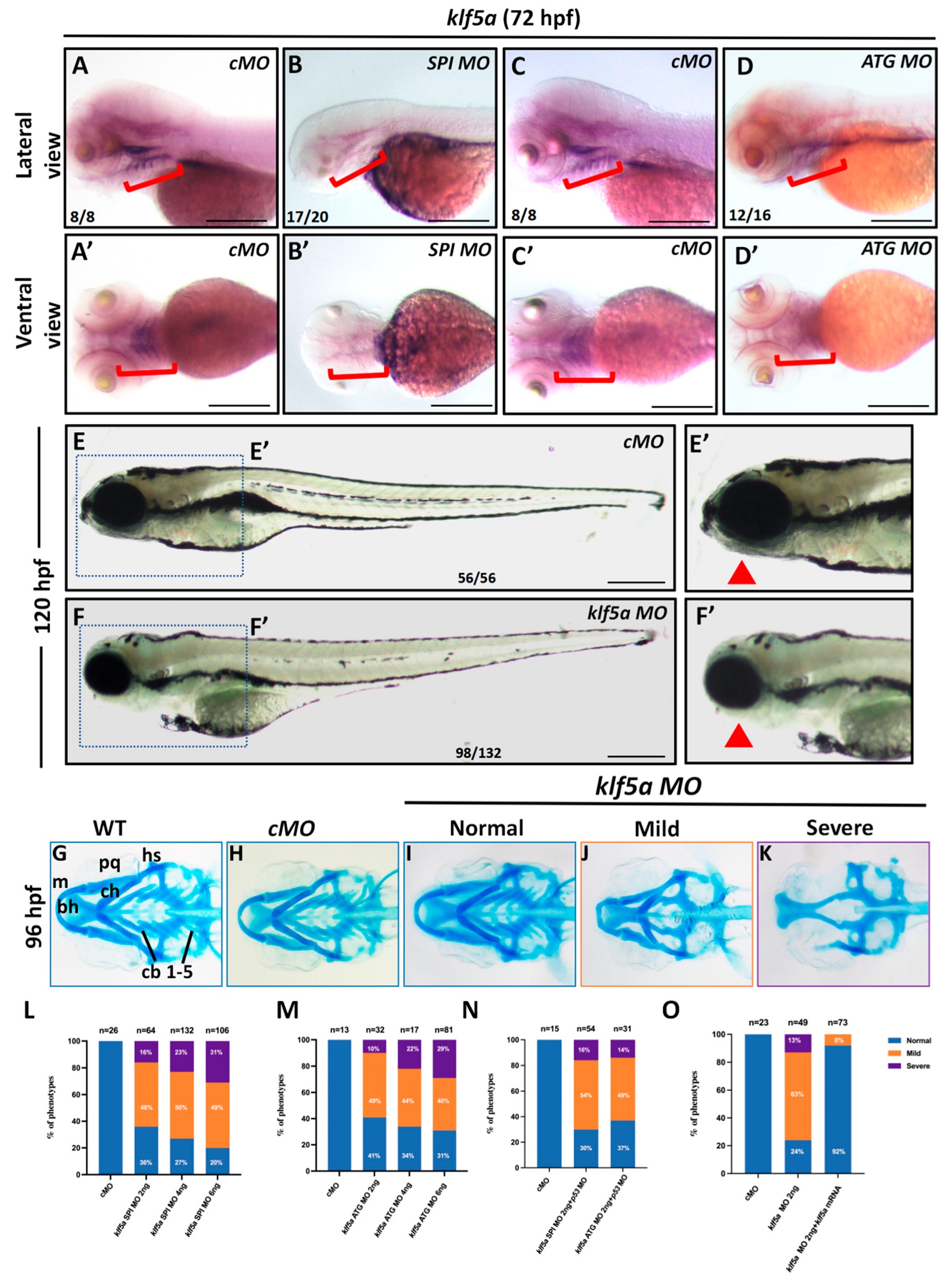
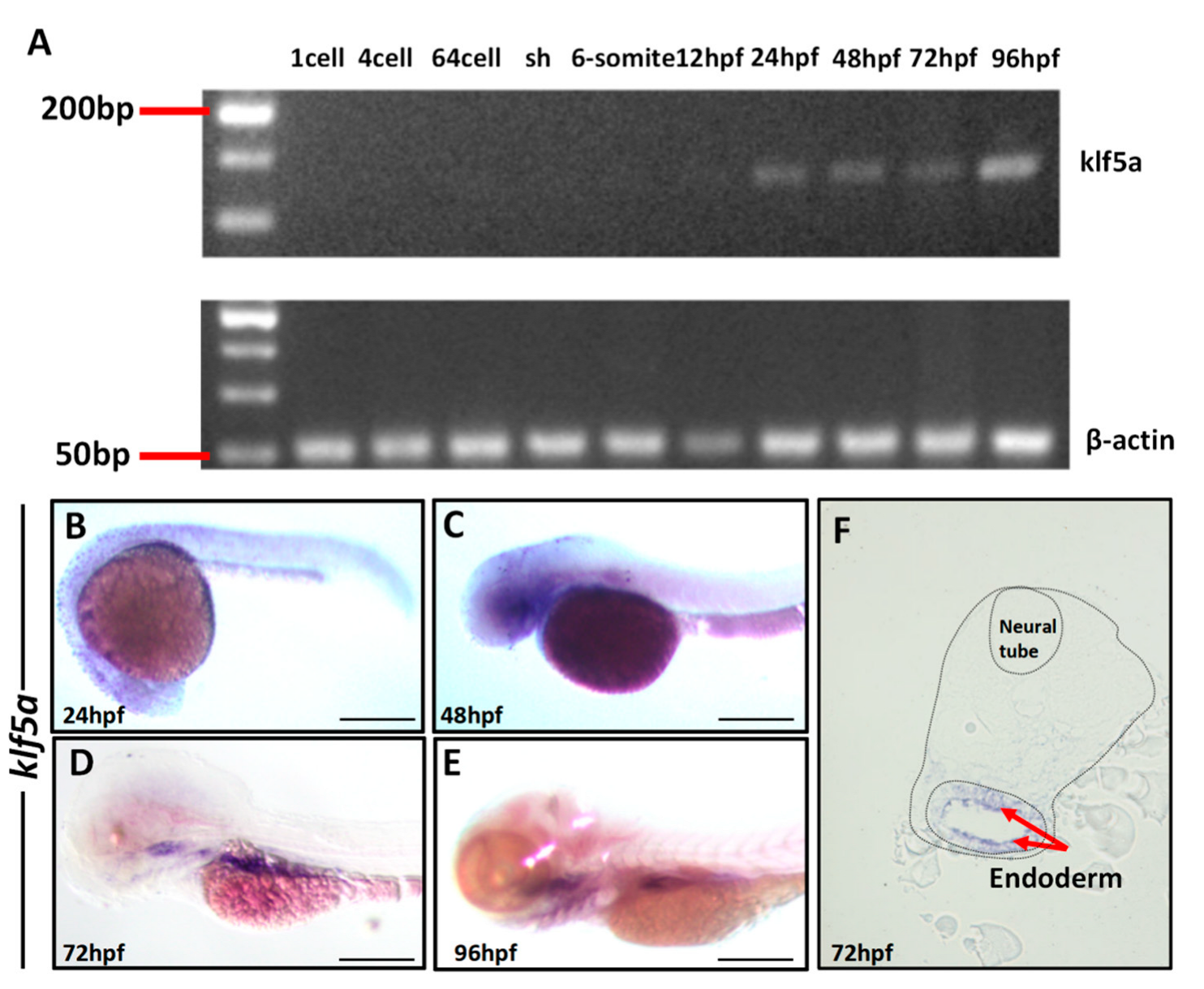
To investigate the role of klf5a in zebrafish craniofacial development, we first characterized its spatiotemporal expression during embryogenesis using semi-quantitative reverse transcription PCR (RT-PCR) and whole-mount in situ hybridization (WISH). RT-PCR analysis detected klf5a mRNA as early as 24 h post-fertilization (hpf), with expression persisting through 96 hpf, a critical period for pharyngeal cartilage development (Appendix A, Figure A1A). WISH revealed ubiquitous klf5a expression throughout the embryo at 24 hpf (Figure A1B), which became progressively restricted to the head region by 48 hpf (Figure A1C). By 72–96 hpf, klf5a expression was significantly upregulated in the pharyngeal region, particularly in the endodermal pouches (Figure 1A,C and Figure A1A,D,E). To confirm the precise localization of klf5a, we performed histological sectioning of WISH stained embryos at 72 hpf, which demonstrated specific klf5a expression in the endodermal cells lining the pharyngeal pouches (Figure A1F). These results indicate that klf5a is dynamically expressed in the pharyngeal endoderm during stages critical for NCC-derived cartilage morphogenesis, suggesting a potential role in regulating this process.
Figure 1.
Knockdown of klf5a impairs pharyngeal cartilage development in zebrafish. (A–D) Whole-mount in situ hybridization (WISH) showing klf5a mRNA expression in zebrafish embryos at 48 h post-fertilization (hpf). (A,A′) Control morpholino (cMO)-injected embryos display robust klf5a expression in the pharyngeal region (lateral and ventral views, respectively). (B,B′) Embryos injected with klf5a splice-blocking morpholino (SPI MO) show diminished klf5a expression. (C,C′) cMO-injected embryos, as in (A,A′). (D,D′) Embryos injected with klf5a translation-blocking (ATG) MO exhibit diminished klf5a expression. (E,F) Lateral views of 120 hpf embryos injected with cMO (E,E′) or klf5a SPI MO (F,F′), showing mandibular hypoplasia and pericardial edema in morphants. (G–K) Alcian blue staining of cranial cartilage at 96 hpf in wild-type (WT) (G), cMO-injected (H), and klf5a MO-injected embryos (I–K), revealing absent or reduced cartilage in morphants. (L) Quantification of mandibular cartilage phenotype in embryos injected with increasing doses of klf5a SPI MO (chi-square test, p < 0.0001). (M) Quantification of mandibular cartilage phenotype in embryos injected with increasing doses of klf5a ATG MO (chi-square test, p < 0.0001). (N) Quantification of cartilage defects in embryos co-injected with klf5a SPI MOs and p53 MO to rule out off-target effects (chi-square test, p < 0.0001). (O) Rescue experiments showing restored cartilage formation in klf5a MO-injected embryos co-injected with klf5a mRNA (chi-square test, p < 0.0001). Cartilage structures: m, Meckel′s cartilage; bh, basihyal; ch, ceratohyal; pq, palatoquadrate; hs, hyosymplectic; cb, ceratobranchial. The red brackets (in A–D, A′–D′) indicate the domain expression of klf5 mRNA in pharyngeal arches. The red trianges indicate the lower jaw. Scale bar: 50 μm.
2.2. klf5a Knockdown Causes Severe Pharyngeal Cartilage Defects
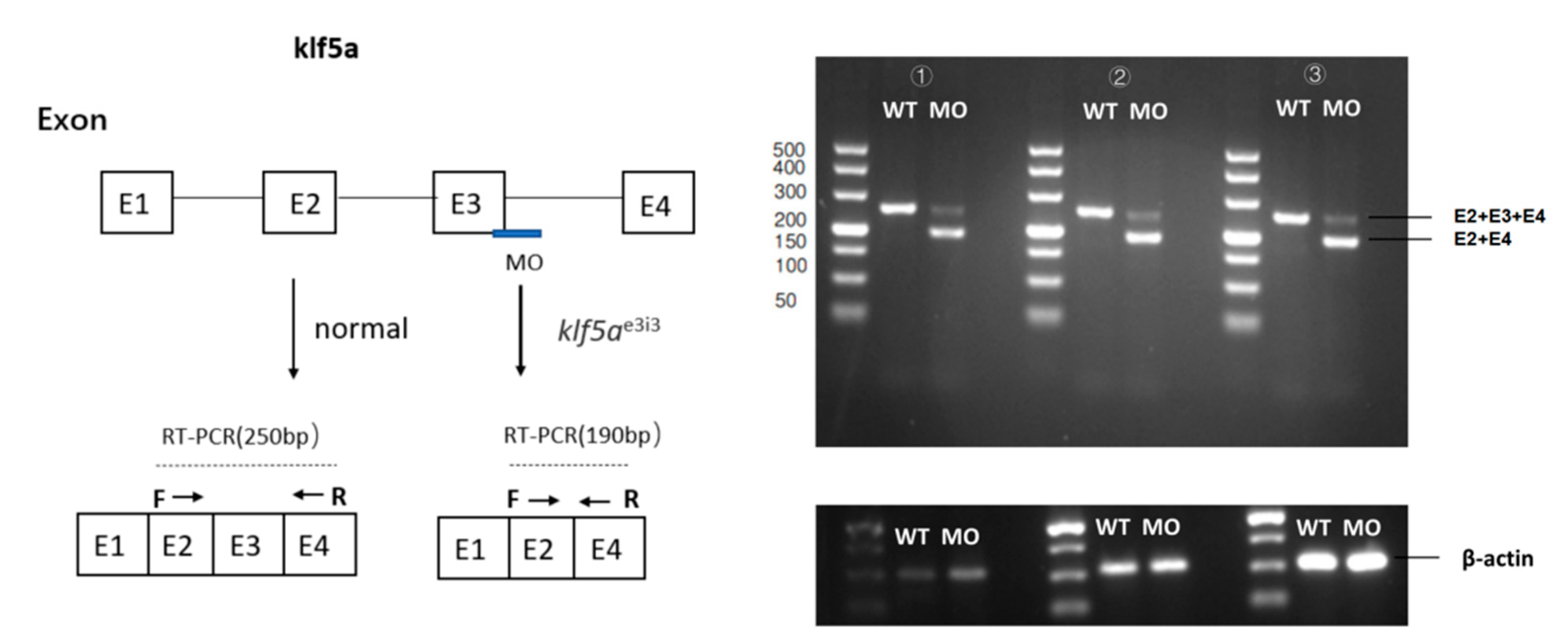
To elucidate the function of klf5a in pharyngeal cartilage development, we knocked down its expression using morpholinos (MOs) targeting klf5a (Figure A2). Morpholinos were injected into wild-type zebrafish embryos at the 1-cell stage, and knockdown efficacy was validated by WISH, which showed a significant reduction in klf5a expression in the pharyngeal region of klf5a MO-injected embryos compared to those injected with a control morpholino (cMO) (Figure 1B,D).
Phenotypic analysis revealed that klf5a morphants exhibited severe developmental abnormalities, including reduced body length, smaller head size, pericardial edema, and pronounced mandibular hypoplasia compared to cMO-injected embryos (Figure 1E,F). To assess cartilage development, we performed Alcian blue staining at 96 hpf, which revealed a defective cartilage structures in the pharyngeal region of most klf5a morphants, in contrast to the well-defined cartilage elements in wild-type and cMO embryos (Figure 1G–K). We categorized the cartilage phenotypes into three types: normal (intact cartilages), mild (absence of hyoid and branchial cartilages), and severe (near-complete loss of all cranial cartilages). The incidence of mild and severe phenotypes increased dose-dependently with higher klf5a MO concentrations (Figure 1L,M), confirming a specific effect of klf5a knockdown on cartilage morphogenesis.
To exclude off-target effects, we co-injected klf5a MO with a p53 MO to suppress potential morpholino-induced apoptosis. Cartilage defects persisted in co-injected embryos, indicating that the phenotype was specific to klf5a knockdown (Figure 1N). To further validate specificity, we performed rescue experiments by co-injecting klf5a mRNA with klf5a MO. This significantly restored cartilage formation, with 92% embryos exhibiting near-normal pharyngeal cartilage morphology (Figure 1O). These findings collectively demonstrate that klf5a is essential for the proper formation of NCC-derived pharyngeal cartilage in zebrafish.
2.3. klf5a Deficiency Impairs NCC Proliferation and Differentiation but Not Specification or Migration
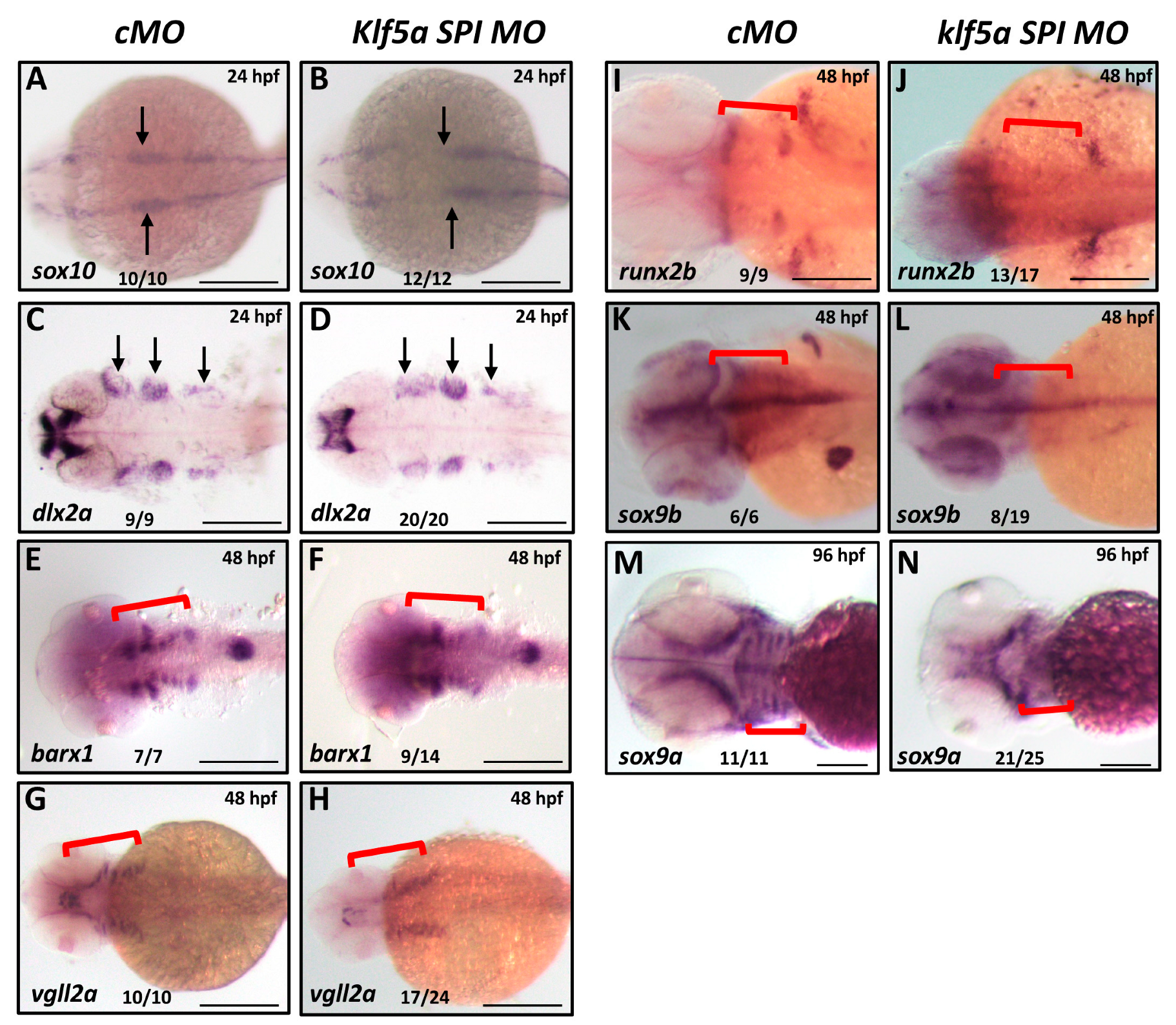
To determine how klf5a regulates NCC development, we investigated its effects on NCC specification, migration, aggregation, and differentiation using WISH with established markers [20]. At 24 hpf, expression of sox10, a marker of NCC specification [21], and dlx2a, a marker of NCC migration [22], was comparable between klf5a morphants and cMO-injected embryos (Figure 2A–D). These results suggest that klf5a is not required for the initial specification or migratory phases of cranial NCCs.
Figure 2.
klf5a knockdown disrupts NCC differentiation but not specification or migration. Whole-mount in situ hybridization (WISH) assessing neural crest cell (NCC) markers in control morpholino (cMO)- and klf5a SPI MO-injected zebrafish embryos. (A,B) sox10 expression at 24 hpf, showing normal NCC specification in cMO (A) and klf5a SPI MO (B) embryos. (C,D) dlx2a expression at 24 hpf, indicating intact NCC migration in both groups. (E,F) barx1 expression at 48 hpf, revealing reduced NCC aggregation in klf5a SPI MO embryos (F) compared to cMO (E). (G,H) vgll2a expression at 48 hpf, showing decreased NCC aggregation in klf5a SPI MO embryos (H) compared to cMO (G). (I,J) runx2b expression at 48 hpf, indicating impaired chondrocyte differentiation in klf5a SPI MO embryos (J) compared to cMO (I). (K,L) sox9b expression at 48 hpf, reduced in klf5a SPI MO embryos (L) compared to cMO (K). (M,N) sox9a expression at 48 hpf, reduced in klf5a SPI MO embryos (N) compared to cMO (M). The black arrows and red brackets indicate the domain development of neural crest cells. Scale bar: 50 μm.
We next examined NCC aggregation in the pharyngeal region at 48 hpf using barx1 [23] and vgll2a, markers of NCC condensation prior to chondrogenesis. In klf5a morphants, barx1 and vgll2a expression was significantly reduced in the pharyngeal arches compared to controls, indicating impaired NCC aggregation (Figure 2E–H). To assess differentiation, we analyzed the expression of runx2b and sox9a/b, key markers of chondrocyte differentiation [24]. In klf5a morphants, expression of these markers was markedly decreased at 48 and 96 hpf (Figure 2I–N), suggesting defective differentiation of NCCs into chondrocytes.
These findings indicate that klf5a is dispensable for NCC specification and migration but plays a critical role in regulating NCC aggregation and differentiation into cartilage in the pharyngeal region.
2.4. klf5a Knockdown Does Not Disrupt Pharyngeal Pouch Formation or Endodermal Differentiation
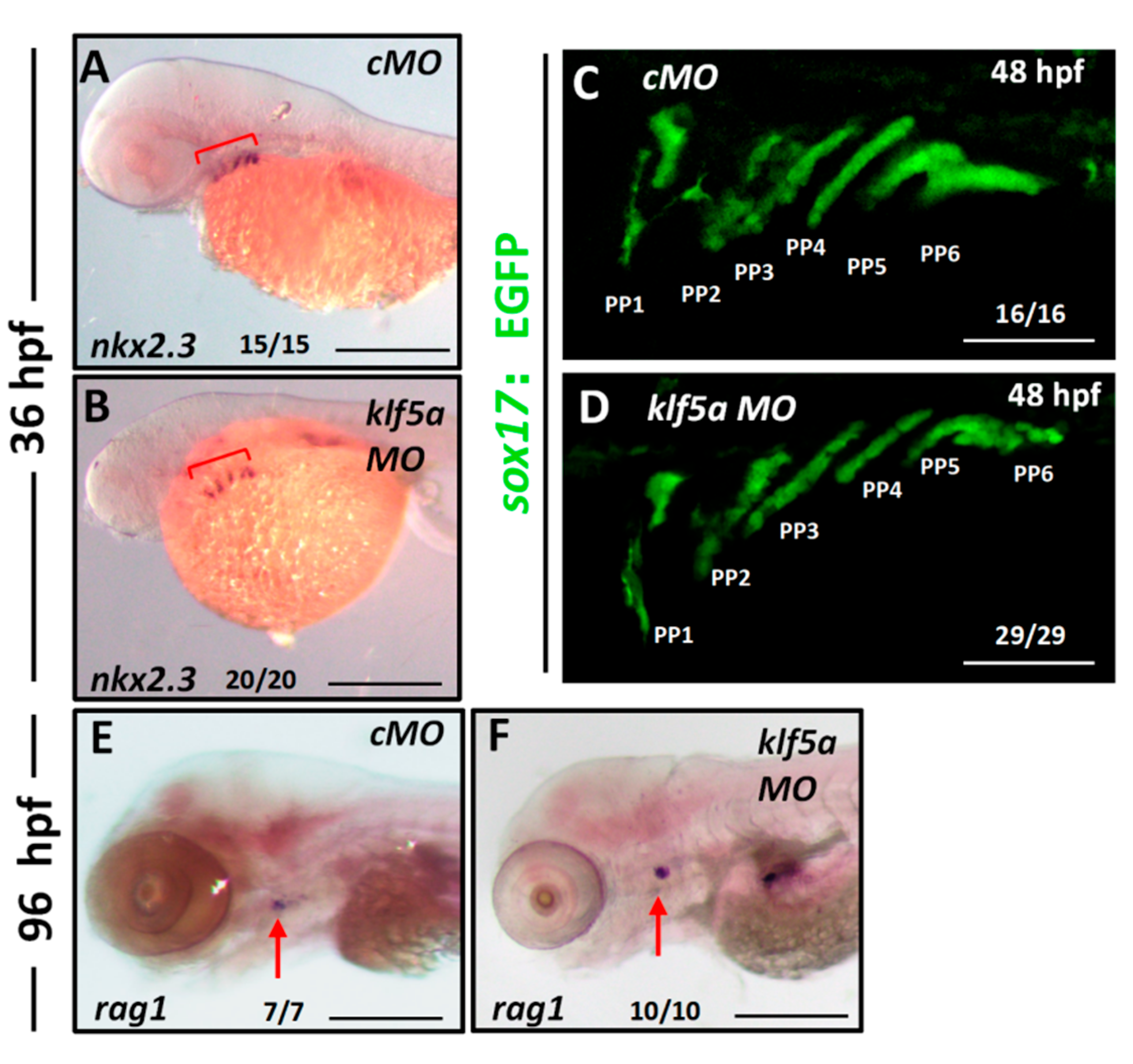
Given the critical role of the pharyngeal endoderm in regulating NCC development [25,26], we investigated whether klf5a knockdown affects pharyngeal pouch formation or endodermal differentiation. We performed WISH for nkx2.3, an endodermal marker expressed in pharyngeal pouches [27]. At 48 hpf, nkx2.3 expression was indistinguishable between klf5a morphants and cMO-injected embryos, indicating normal pouch segmentation (Figure A3A,B). To further confirm pouch morphology, we analyzed sox17:GFP transgenic embryos, which label the endoderm. In klf5a morphants, six pairs of pharyngeal pouches formed normally, with no detectable morphological defects compared to controls (Figure A3C,D).
We also examined endodermal differentiation by analyzing rag1 [28], a marker of thymus development, at 96 hpf. The expression of rag1 was unaffected in klf5a morphants, suggesting that klf5a knockdown does not impair endodermal differentiation into thymus tissue (Figure A3E,F). These results collectively demonstrate that klf5a is not required for pharyngeal pouch formation or endodermal differentiation, suggesting that its role in cartilage development is specific to regulating NCC behavior rather than endodermal development.
2.5. klf5a Promotes NCC Proliferation in the Pharyngeal Region
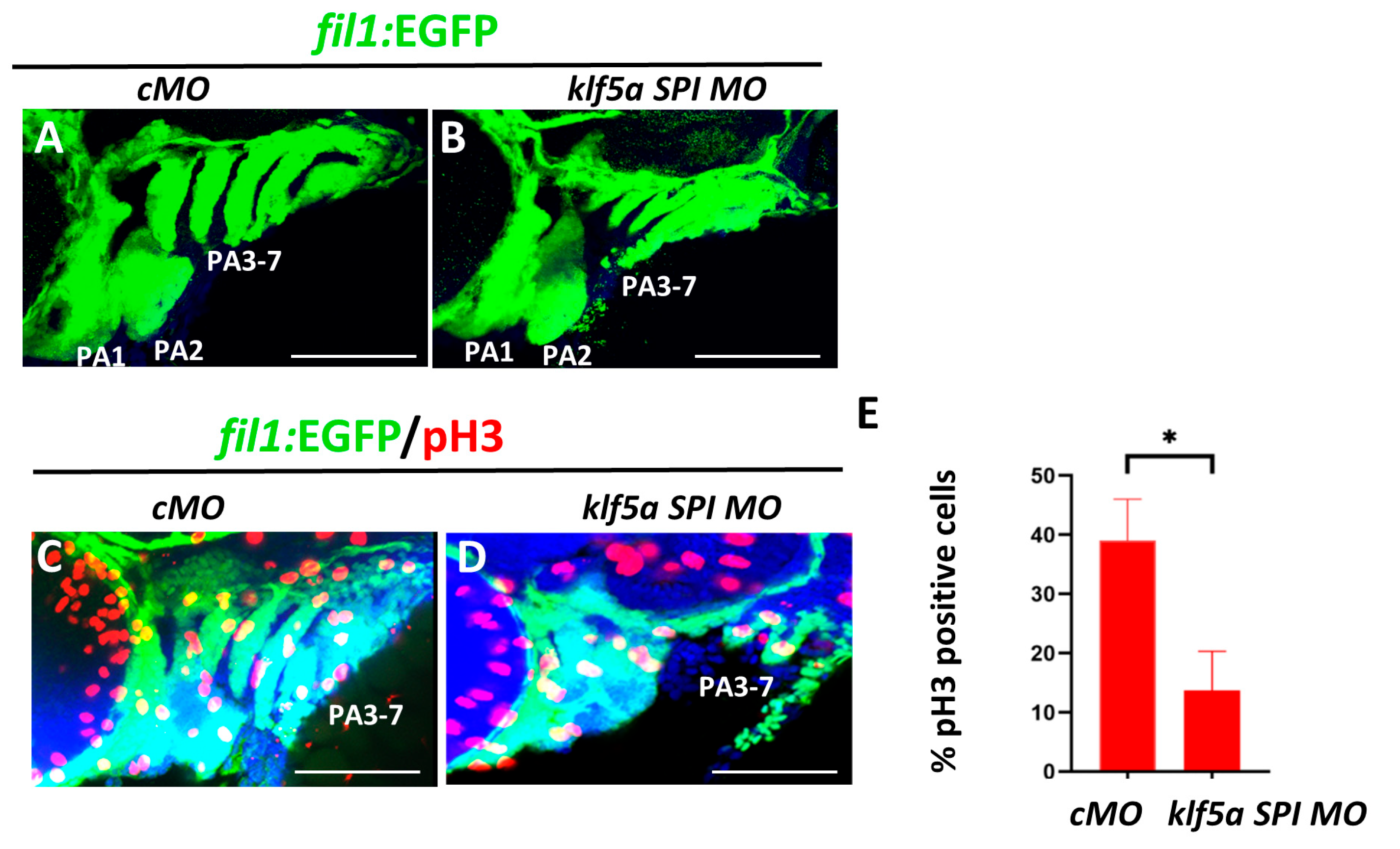
To further explore the cellular mechanisms underlying the role of klf5a in NCC regulation, we examined pharyngeal arch development and NCC dynamics using fli1:GFP transgenic zebrafish, which label NCCs in the pharyngeal arches. Immunofluorescence at 48 hpf revealed that klf5a morphants exhibited significantly smaller and disorganized pharyngeal arches compared to cMO-injected controls, which displayed seven well-formed arch pairs (Figure 3A,B).
Figure 3.
klf5a knockdown reduces NCC proliferation in the pharyngeal arches. Immunofluorescence analysis of fli1:GFP transgenic zebrafish embryos at 48 hpf. (A,B) Whole-embryo imaging with DAPI and GFP staining, showing normal pharyngeal arch development in control morpholino (cMO)-injected embryos (A) and smaller, disorganized arches in klf5a SPI MO-injected embryos (B). (C,D) Phosphorylated histone H3 (pH3) immunofluorescence, indicating reduced proliferation in the pharyngeal arches of klf5a SPI MO embryos (D) compared to cMO (C). (E) Quantification of pH3-positive cells in the pharyngeal arches, showing a significant decrease in klf5a SPI MO embryos (* p < 0.01, Student′s t-test). n = 19 for cMOs and n = 22 for klf5a MO. Scale bar: 50 μm.
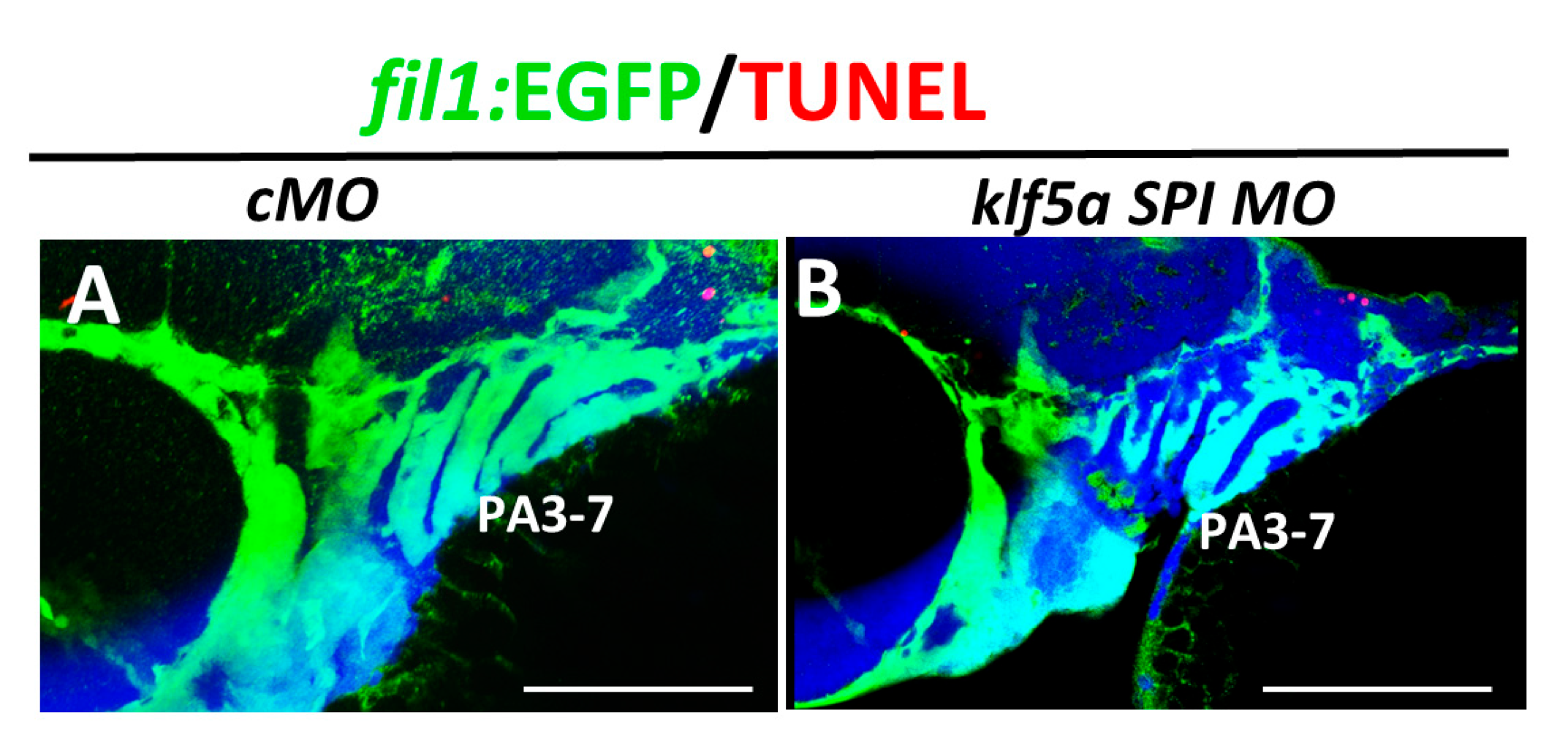
We hypothesized that klf5a knockdown might affect NCC proliferation or survival. To test this, we performed TUNEL assays to detect apoptosis in fli1:GFP embryos at 48 hpf. Minimal apoptotic signals were observed in both klf5a morphants and controls, with no specific increase in apoptosis in the pharyngeal region of morphants (Figure A4A,B). In contrast, immunofluorescence for phosphorylated histone H3 (pH3), a marker of cell proliferation, revealed a significant reduction in pH3-positive cells in the pharyngeal arches of klf5a morphants compared to controls (Figure 3D). Quantitative analysis confirmed a statistically significant decrease in NCC proliferation in the pharyngeal region (Figure 3E).
These findings suggest that klf5a promotes NCC proliferation in the pharyngeal arches but does not affect their survival, providing a mechanistic basis for the observed cartilage defects in klf5a morphants.
2.6. Klf5a Regulates Pharyngeal Cartilage Development via fgfbp2b
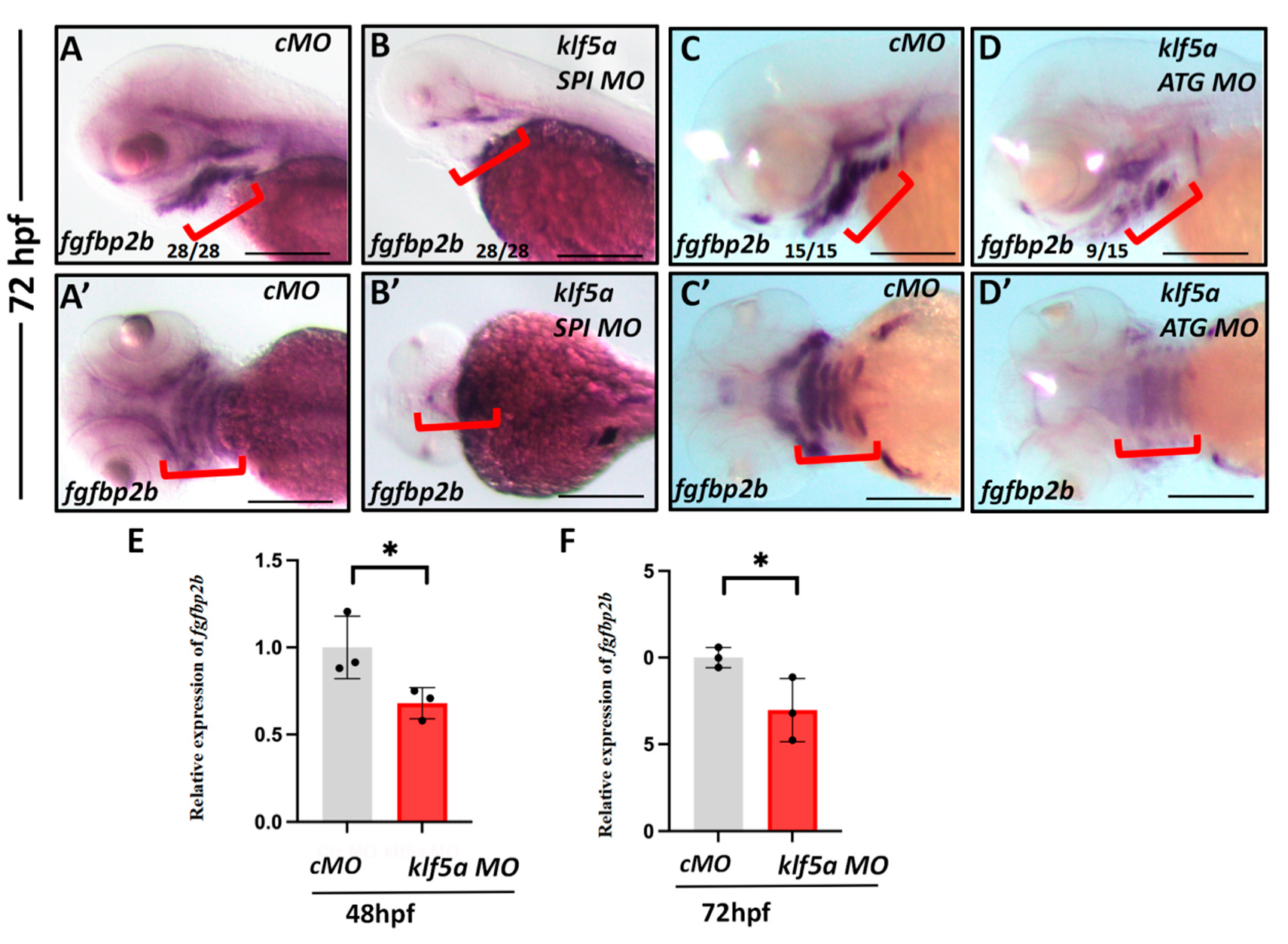
To identify the downstream targets of klf5a, we performed RNA sequencing on klf5a morphant embryos at 48 hpf. Transcriptome analysis revealed a significant downregulation of fgfbp2b, a gene encoding a fibroblast growth factor binding protein, in the pharyngeal endoderm of klf5a morphants. WISH confirmed decreased fgfbp2b expression specifically in the pharyngeal pouches of klf5a morphants at 48 hpf (Figure 4A–D). qRT-PCR validated a significant reduction in fgfbp2b mRNA levels (Figure 4E,F). Given the role of FGF-BP in enhancing FGF signaling [29], which is critical for endodermal regulation of NCC proliferation and differentiation [14], we hypothesized that klf5a regulates cartilage development through fgfbp2b.
Figure 4.
klf5a regulates fgfbp2b expression in the pharyngeal endoderm. (A–D) Whole-mount in situ hybridization (WISH) showing fgfbp2b mRNA expression at 72 hpf in zebrafish embryos. (A,A′) Control morpholino (cMO)-injected embryos display robust fgfbp2b expression in the pharyngeal endoderm (lateral and dorsal views, respectively). (B,B′) klf5a splice-blocking (SPI) MO-injected embryos show reduced fgfbp2b expression (lateral and dorsal views, respectively). (C,C′) cMO-injected embryos, as in (A). (D,D′) klf5a translation-blocking (ATG) MO-injected embryos exhibit reduced fgfbp2b expression (lateral and dorsal views, respectively). (E,F) Quantitative RT-PCR (qRT-PCR) analysis of fgfbp2b expression at 48 hpf (E) and 72 hpf (F) in cMO and klf5a SPI MO embryos, confirming significant downregulation in morphants (* p < 0.01, Student′s t-test). The red brackets indicate the domain expression of fgfbp2b during pharyngeal development. Scale bar: 50 μm.
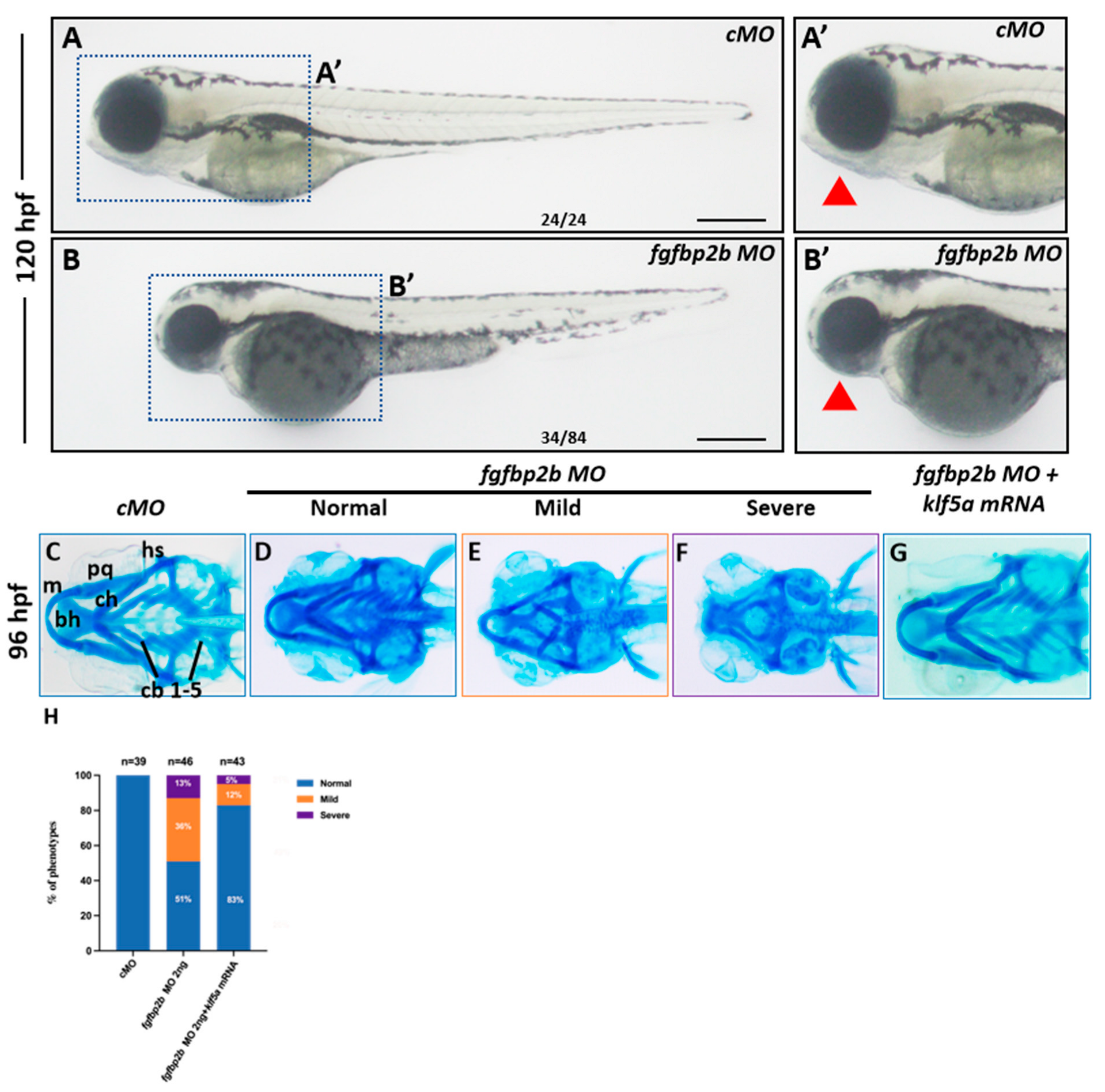
To test this, we knocked down fgfbp2b using specific MOs, which resulted in reduced fgfbp2b expression and mandibular hypoplasia, phenocopying klf5a morphants (Figure 5A,B). Alcian blue staining at 96 hpf revealed mild to severe cartilage defects in fgfbp2b morphants, similar to those in klf5a morphants (Figure 5C–F,H).
Figure 5.
fgfbp2b contributes, to but does not fully mediate, klf5a-dependent pharyngeal cartilage development. (A,A′,B,B′) Lateral views of zebrafish embryos at 120 hpf, showing normal morphology in control morpholino (cMO)-injected embryos (A,A′) and mandibular hypoplasia in fgfbp2b MO-injected embryos (B,B′). (C–F) Alcian blue staining of cranial cartilage at 96 hpf in cMO (C) and fgfbp2b MO embryos (D–F), revealing mild to severe cartilage defects in morphants. (G) Representative images of Alcian blue-stained embryos from the rescue experiment, showing restored cartilage in fgfbp2b MO and klf5a mRNA co-injected embryos. (H) Quantification of cartilage defects in fgfbp2b MO embryos (47% with defects) and fgfbp2b MO embryos co-injected with klf5a mRNA (83.3% normal), (Chi-square test, p < 0.001). Cartilage structures: m, Meckel’s cartilage; bh, basihyal; ch, ceratohyal; pq, palatoquadrate; hs, hyosymplectic; cb, ceratobranchial. The red trianges indicate the lower jaw.
To investigate whether fgfbp2b mediates the effects of klf5a, we performed rescue experiments by co-injecting klf5a MO with fgfbp2b mRNA. However, fgfbp2b mRNA injection failed to restore cartilage formation in klf5a morphants, suggesting that fgfbp2b is not the sole mediator of klf5a’s effects. In contrast, co-injection of fgfbp2b MO with klf5a mRNA significantly reduced the incidence of cartilage defects, with many embryos showing restored cartilage formation (Figure 5G,H).
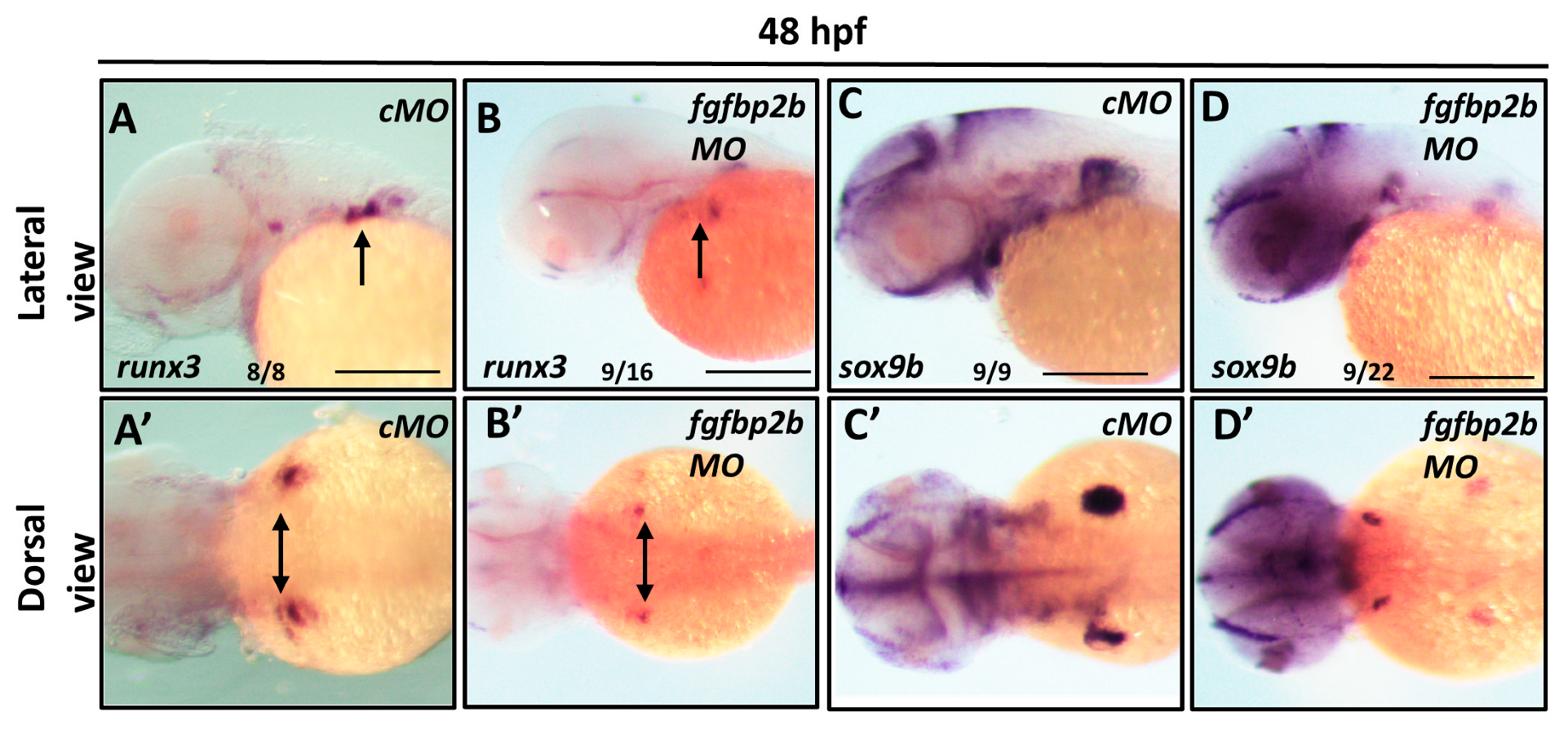
We also examined runx3 and sox9b expression in fgfbp2b morphants and found it significantly reduced (Figure A4B). These results suggest that klf5a regulates fgfbp2b expression in the pharyngeal endoderm, which in turn modulates NCC proliferation and differentiation, thereby promoting pharyngeal cartilage morphogenesis.
3. Discussion
The development of vertebrate craniofacial structures, particularly pharyngeal cartilage, relies on a complex signaling network orchestrated by the pharyngeal endoderm to regulate neural crest cell (NCC) differentiation and morphogenesis. In this study, we demonstrate that klf5a, a zinc-finger transcription factor specifically expressed in the endodermal pouches of zebrafish, plays a critical role in pharyngeal cartilage formation by modulating fgfbp2b expression and likely other downstream targets. Our findings reveal that klf5a knockdown does not affect cranial NCC specification or migration but significantly impairs their proliferation and differentiation in the pharyngeal region. These results highlight klf5a as a key regulator of later-stage NCC development, specifically in the context of endodermal signaling that directs cartilage morphogenesis.
Previous studies have underscored the conserved role of KLF5 in cartilage development across vertebrates. For instance, Klf5 acts as a downstream effector of Erg1 in articular cartilage, contributing to chondrocyte hypertrophy and degeneration in osteoarthritis [30]. In Klf5 heterozygous (Klf5+/−) mice, skeletal development is altered due to impaired cartilage matrix degradation, leading to delayed ossification and an elongated hypertrophic chondrocyte layer in neonatal growth plates [31]. This phenotype is partly attributed to reduced expression of Mmp9, a matrix metalloproteinase directly regulated by Klf5, which is critical for matrix remodeling and vascularization during endochondral ossification. Similarly, ectopic klf5a expression in zebrafish larvae disrupts head cartilage formation, including ceratobranchial, ceratohyal, and Meckel’s cartilage. Our results align with these findings, demonstrating that the important role of klf5a knockdown in zebrafish leads to severe mandibular hypoplasia and loss of pharyngeal cartilage structures, likely due to defective NCC proliferation and differentiation. However, unlike in mice, where Klf5 primarily affects matrix degradation, our data suggest that klf5a in zebrafish primarily regulates NCC dynamics, indicating species-specific or context-dependent roles for Klf5 in cartilage development.
The pharyngeal endoderm is a well-established signaling center that directs NCC differentiation into cartilage [32]. In zebrafish sox32 mutants, endoderm ablation results in hypoplastic cartilage, while van gogh mutants with defective pharyngeal pouch formation exhibit disrupted arch segmentation [2,33]. Our observation that klf5a knockdown does not impair pharyngeal pouch formation or endodermal differentiation, as evidenced by normal nkx2.3 and rag1 expression and sox17:GFP transgenic analysis, suggests that the role klf5a is specific to endodermal signaling rather than pouch morphogenesis. This is consistent with the role of other endodermal signaling molecules, such as edn1, which is expressed in the pharyngeal endoderm and signals through ednrA1 and ednrA2 receptors in NCCs to promote cartilage formation [34]. Knockdown of edn1 or its receptors results in cartilage loss similar to that observed in klf5a morphants, supporting the hypothesis that klf5a regulates endodermal signals critical for NCC development.
Our finding that klf5a knockdown downregulates fgfbp2b expression in the pharyngeal endoderm provides a mechanistic link to cartilage defects. Fibroblast growth factor binding proteins (FGFBPs) enhance FGF signaling by facilitating ligand-receptor interactions [14,35]. FGF signaling is essential for craniofacial development, with fgf3, fgf8, fgf4, fgf17, and fgf24 driving pharyngeal pouch formation and fgfr1–3 supporting chondrogenesis [16,36,37]. The reduced fgfbp2b expression in klf5a morphants likely disrupts FGF signaling, impairing NCC proliferation and differentiation, as evidenced by decreased expression of barx1, vgll2a, runx2b, and sox9a/b. However, our rescue experiments demonstrate that fgfbp2b mRNA injection does not restore cartilage formation in klf5a morphants, indicating that fgfbp2b is not the sole mediator of klf5a’s effects. The incomplete efficiency of morpholino-mediated klf5a knockdown, which may result in residual klf5a protein activity, could contribute to this outcome, as fgfbp2b overexpression may not fully compensate for the broader regulatory network controlled by klf5a. Due to funding constraints, we were unable to perform RNA-seq or ChIP-seq to identify additional klf5a targets, but the partial phenocopy of klf5a morphants by fgfbp2b knockdown and the reduction in runx3 and sox9b expression in fgfbp2b morphants support a model where fgfbp2b is one of several factors regulated by klf5a.
The specificity of klf5a on NCC proliferation and differentiation, but not specification or migration, distinguishes it from other transcription factors like sox9 and runx2, which broadly regulate NCC development. This stage-specific role suggests that klf5a fine-tunes endodermal signaling during the critical transition from NCC aggregation to chondrocyte differentiation. The absence of apoptosis in klf5a morphants further indicates that the cartilage defects result from proliferative and differentiative failures rather than cell loss, reinforcing the importance of klf5a in sustaining NCC populations in the pharyngeal arches.
Future studies should explore the direct transcriptional targets of klf5a in the pharyngeal endoderm, particularly whether it binds the fgfbp2b promoter, and investigate potential interactions with other signaling pathways, such as WNT or BMP, which also regulate craniofacial development [38]. The conserved role of klf5 across species suggests that insights from zebrafish could inform studies of craniofacial disorders in humans, where FGF signaling disruptions are implicated in conditions like Pierre Robin sequence and Treacher Collins syndrome [19,39,40]. By elucidating the role of klf5a in endodermal regulation of NCC-derived cartilage, this study provides a foundation for understanding the molecular basis of craniofacial morphogenesis and identifying therapeutic targets for congenital craniofacial anomalies.
4. Materials and Methods
4.1. Zebrafish Husbandry and Strains
We used zebrafish (Danio rerio) lines: wild type (AB), Tg(sox17:GFP), Tg(fil1:GFP), Tg(sox10:GFP), obtained from China Zebrafish Resource Center-National Aquatic Biological Resource Center (NABRC-CZRC, Shanghai, China). Embryos were collected post-fertilization and maintained at 28.5 °C in the embryo medium (5 mM NaCl, 0.17 mM KCl, 0.33 mM CaCl2, 0.33 mM MgSO4, and 0.002% methylene blue; all chemicals sourced from Sigma-Aldrich, St. Louis, MO, USA). Embryos were staged by morphology as previously described [41]. All animal experiments complied with the guidelines approved by the Committee on Animal Experimentation of Shenzhen University. Animal work followed the Animal Research: Reporting of In Vivo Experiments 2.0 (ARRIVE 2.0) guidelines.
4.2. Morpholino (MO) and Microinjections
We designed two different MO-targeting klf5a based on previous reports [42] The ATG MO targets the mRNA translation initiation site, preventing its normal translation, while the Splice MO targets the site between the third intron and the third exon, preventing normal splicing (Figure A2). We injected 2–4 ng of control MO (5′-CCTCTTAC CTCAGTTACAATTTATA-3′) or 2–4 ng of klf5a Exon3 splice MO (5′-TTAATTGCGGAACTCTT ACCAGTGT-3′) or 2–4ng of klf5a ATG MO (5′-GTAAGAAGCGTAGCGGCCATAAACC-3′) into embryos. All morpholinos were synthesized by Gene Tools, LLC (Philomath, OR, USA).
4.3. Whole-Mount In Situ Hybridization
cDNA fragments for klf5a, sox9a, sox9b, runx3, runx2b sox10, barx1, nkx2.3, rag1 and fgfbp2b were amplified by RT-PCR with specific primers (Table S2), Digoxigenin-UTP-labeled antisense RNA probes were then synthesized using a Transcription Kit (Roche, Basel, Switzerland, Catalog No. 11175025910) following the manufacturer’s instructions. The probes were purified with a purification kit (Roche, Basel, Switzerland, Catalog No. 940200) and then stored at −80 °C. Whole-mount in situ hybridization was performed as previously described [43].
4.4. Quantitative Real-Time PCR
For quantitative real-time PCR (qRT-PCR), total RNA was extracted from individual zebrafish embryos using TRIzol reagent, and the first-strand cDNA was synthesized with GoScript™ Reverse Transcriptase (Promega, Madison, WI, USA, Catalog No. A5002). Applied Biosystems was employed to perform qRT-PCR using SYBR® Green Ex Taq™ dye (Takara Bio, Kusatsu, Shiga, Japan, Catalog No. NJ400). The target genes were amplified with the primers listed in Table S1. Expression levels of the investigated genes were quantified via the 2−ΔΔCT method and normalized to β-actin transcripts. Statistical analysis was carried out with an unpaired t-test.
4.5. Immunofluorescence and TUNEL Assay
Zebrafish embryos were fixed in 4% paraformaldehyde (Sigma-Aldrich, St. Louis, MO, USA) overnight at 4 °C. Fixed embryos were then washed three times with PBST (PBS + 0.2% Triton-X100) for 5 min each. After being treated with proteinase K (10 μg/mL, Sigma-Aldrich, St. Louis, MO, USA) at room temperature, the embryos were blocked with 10% heat-inactivated goat serum (Sigma-Aldrich, St. Louis, MO, USA) at room temperature for 1 h. The embryos were then stained overnight at 4 °C with the following primary antibodies: anti-GFP (1:500; Abcam, Cambridge, UK) and anti-PH3 (1:500; Cell Signaling Technology, Danvers, MA, USA). Samples were washed 3 times with PBST, and incubated with secondary antibodies (Alexa Fluor, Thermo Fisher Scientific, Waltham, MA, USA). The stained embryos were embedded with 2% low melting agarose and imaged using an Olympus confocal microscope (Olympus, Tokyo, Japan).
For the TUNEL assay, collected embryos were fixed overnight at 4 °C in paraformaldehyde (Sigma-Aldrich, St. Louis, MO, USA), followed by triple washes in PBST and proteinase K-mediated permeabilization. The permeabilized embryos were re-fixed in 4% paraformaldehyde for 30 min at room temperature, washed three times in PBST, and incubated with TUNEL staining according to the manufacturer’s instructions (Roche, Basel, Switzerland, Catalog No. 1215679210).
4.6. Alcian Blue Staining
Embryos were fixed, washed, and stained with Alcian blue (Sigma-Aldrich, St. Louis, MO, USA). After staining, embryos were rehydrated and de-stained for imaging.
4.7. Rescue Experiments
To perform rescue experiments, we amplified the full length klf5a transcript from WT embryos cDNA (Table S3). The sequences were then cloned into pCS2+ vector (Thermo Fisher Scientific, Waltham, MA, USA). To obtain klf5a mRNA, in vitro transcription was performed using the mMESSAGE mMACHINE SP6 kit (Ambion, Austin, TX, USA, Carlsbad, CA, USA) and polyadenylation was performed using the Poly (A) Tailing Kit The purified klf5a mRNAs (100 pg/embryo) were microinjected into one-cell stage embryos.
4.8. Statistical Analysis
The qRT-PCR results were analyzed using a t-test with Prism software (GraphPad v9.5.1, San Diego, CA, USA). Immunofluorescence signals were analyzed by ImageJ software 1.53k (National Institutes of Health, Bethesda, MD, USA). To compare the percentage of abnormal embryos across multiple groups, a Chi-square test of independence was used. Statistical significance was determined, with * indicating p < 0.05, ** indicating p < 0.01, and *** indicating p < 0.001.
Supplementary Materials
The following supporting information can be downloaded at: https://www.mdpi.com/article/10.3390/ijms262211044/s1.
Author Contributions
Conceptualization, X.W., Z.Z. and O.S.; methodology, W.L.; software, W.L. and Z.Z.; validation, X.W. and O.S.; formal analysis, X.W.; investigation, X.W.; resources, X.W. and O.S.; data curation, X.W.; writing—original draft preparation, W.L. and X.W.; writing—review and editing, X.W. and Z.Z.; visualization, X.W.; supervision, X.W.; project administration, O.S.; funding acquisition, X.W., Z.Z. and O.S. All authors have read and agreed to the published version of the manuscript.
Funding
This research was funded by Science, Technology and Innovation Commission of Shenzhen Municipality (JCYJ20230807093205012) and Guangdong Basic and Applied Basic Research Foundation (2023A1515010615).
Institutional Review Board Statement
Ethical review and approval were waived for this study due to Shenzhen University’s classification of zebrafish (Danio rerio) as lower vertebrates, which, under institutional guidelines, do not require formal Ethics Committee approval.
Informed Consent Statement
Not applicable.
Data Availability Statement
The data used to support the findings of this study are available from the corresponding author upon reasonable request.
Conflicts of Interest
The authors declare no conflicts of interest.
Appendix A
Figure A1.
Spatiotemporal Expression of klf5a in Zebrafish Embryos. (A) Semi-quantitative RT-PCR showing klf5a mRNA expression from 1 cell stage to 96 h post-fertilization (hpf). (B–E) Whole-mount in situ hybridization (WISH) of klf5a expression: (B) ubiquitous expression at 24 hpf; (C) head-enriched expression at 48 hpf; (D) specific expression in the pharyngeal region at 72 hpf; (E) increased pharyngeal expression at 96 hpf. (F) Histological section at 72 hpf showing klf5a expression localized to pharyngeal pouch endoderm. The red signal indicates the development of endoderm. Scale bar: 50 μm.
Figure A2.
Validation of klf5a Knockdown and Downstream Effects. RT-PCR of cDNA from control morpholino (cMO)- and klf5a splice-blocking (SPI) MO-injected embryos, showing exon 3 skipping in klf5a morphants.
Figure A3.
klf5a knockdown does not affect pharyngeal pouch formation or endodermal differentiation. (A,B) Whole-mount in situ hybridization (WISH) showing nkx2.3 mRNA expression at 36 hpf in control morpholino (cMO)-injected (A) and klf5a SPI MO-injected (B) embryos, indicating normal pharyngeal pouch segmentation. (C,D) Immunofluorescence of sox17:GFP transgenic embryos at 48 hpf, revealing normal formation of six pharyngeal pouch pairs in cMO (C) and klf5a SPI MO (D) embryos. (E,F) WISH for rag1 mRNA at 120 hpf, showing intact thymus differentiation in cMO (E) and klf5a SPI MO (F) embryos. The red signal indicates the development of pharyngeal pouch. The red arrow indicates the development of thymus. Scale bar: 50 μm.
Figure A4.
(A,B) TUNEL assay detecting apoptosis in cMO (B) and klf5a SPI MO (A) embryos, with minimal apoptotic signals in the pharyngeal region of both groups.
Figure A5.
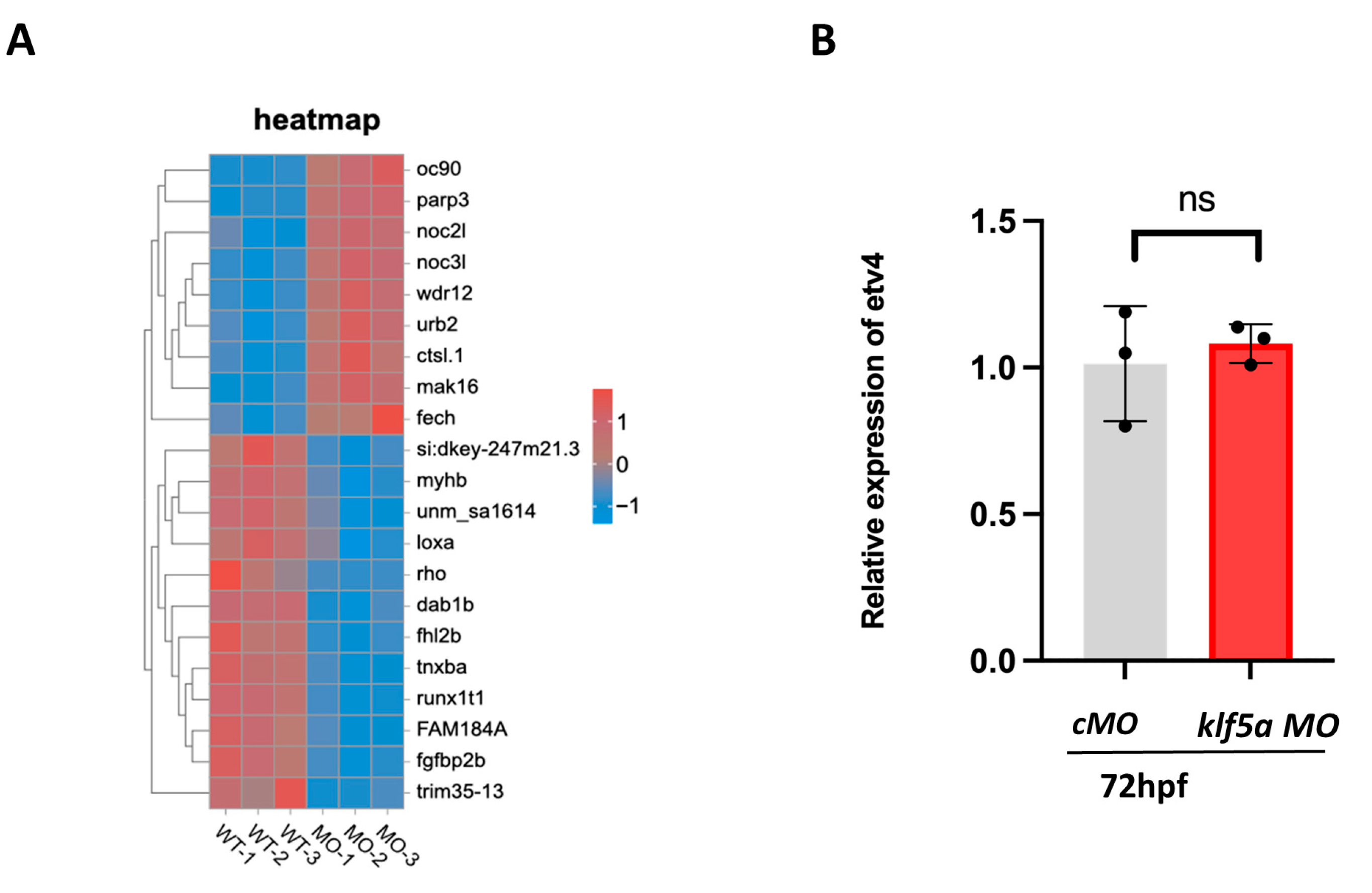
kl5a sequencing and analysis. (A) Cluster analysis of differentially expressed genes after klf5a knockdown (B). Quantitative RT-PCR (qRT-PCR) analysis of etv4 expression at 72 hpf in cMO and klf5a SPI MO embryos. The black dots represent the results of the three samples.
Figure A6.
fgfbp2b knockdown disrupts chondrogenic marker expression. (A,A′,B,B′) Whole-mount in situ hybridization (WISH) showing runx3 mRNA expression at 48 hpf in control morpholino (cMO)-injected (A,A′) and fgfbp2b MO-injected (B,B′) zebrafish embryos, indicating reduced expression in morphants. (C,C′,D,D′) WISH for sox9b at 48 hpf, showing decreased expression in fgfbp2b MO embryos (D,D′) compared to cMO (C,C′). The arrow indicates the expression of runx3. Scale bar: 50 μm.
References
- Basar, M.A.; Beck, D.B.; Werner, A. Deubiquitylases in developmental ubiquitin signaling and congenital diseases. Cell Death Differ. 2021, 28, 538–556. [Google Scholar] [CrossRef] [PubMed]
- Lunde, K.; Belting, H.G.; Driever, W. Zebrafish pou5f1/pou2, homolog of mammalian Oct4, functions in the endoderm specification cascade. Curr. Biol. 2004, 14, 48–55. [Google Scholar] [CrossRef]
- Piotrowski, T.; Ahn, D.G.; Schilling, T.F.; Nair, S.; Ruvinsky, I.; Geisler, R.; Rauch, G.J.; Haffter, P.; Zon, L.I.; Zhou, Y.; et al. The zebrafish van gogh mutation disrupts tbx1, which is involved in the DiGeorge deletion syndrome in humans. Development 2003, 130, 5043–5052. [Google Scholar] [CrossRef]
- Zhou, C.; Cui, Y.; Yang, Y.; Guo, D.; Zhang, D.; Fan, Y.; Li, X.; Zou, J.; Xie, J. Runx1 protects against the pathological progression of osteoarthritis. Bone Res. 2021, 9, 50. [Google Scholar] [CrossRef]
- Song, H.; Park, K.H. Regulation and function of SOX9 during cartilage development and regeneration. Semin. Cancer Biol. 2020, 67, 12–23. [Google Scholar] [CrossRef]
- Jeon, H.; Jin, S.; Kim, J.; Joo, S.; Choe, C.P. Pax1a-EphrinB2a pathway in the first pharyngeal pouch controls hyomandibular plate formation by promoting chondrocyte formation in zebrafish. Front. Cell Dev. Biol. 2025, 13, 1482906. [Google Scholar] [CrossRef] [PubMed]
- Tang, G.H.; Rabie, A.B. Runx2 regulates endochondral ossification in condyle during mandibular advancement. J. Dent. Res. 2005, 84, 166–171. [Google Scholar] [CrossRef] [PubMed]
- Van Otterloo, E.; Milanda, I.; Pike, H.; Thompson, J.A.; Li, H.; Jones, K.L.; Williams, T. AP-2α and AP-2β cooperatively function in the craniofacial surface ectoderm to regulate chromatin and gene expression dynamics during facial development. Elife 2022, 11, e70511. [Google Scholar] [CrossRef]
- Zhang, Y.; Blackwell, E.L.; McKnight, M.T.; Knutsen, G.R.; Vu, W.T.; Ruest, L.B. Specific inactivation of Twist1 in the mandibular arch neural crest cells affects the development of the ramus and reveals interactions with hand2. Dev. Dyn. 2012, 241, 924–940. [Google Scholar] [CrossRef]
- Nakaya, T.; Ogawa, S.; Manabe, I.; Tanaka, M.; Sanada, M.; Sato, T.; Taketo, M.M.; Nakao, K.; Clevers, H.; Fukayama, M.; et al. KLF5 regulates the integrity and oncogenicity of intestinal stem cells. Cancer Res. 2014, 74, 2882–2891. [Google Scholar] [CrossRef]
- Zou, H.; Luo, J.; Guo, Y.; Tong, T.; Liu, Y.; Chen, Y.; Xiao, Y.; Ye, L.; Zhu, C.; Deng, L.; et al. Tyrosine kinase SRC-induced YAP1-KLF5 module regulates cancer stemness and metastasis in triple-negative breast cancer. Cell Mol. Life Sci. 2023, 80, 41. [Google Scholar] [CrossRef]
- Delgado-Olguín, P.; Dang, L.T.; He, D.; Thomas, S.; Chi, L.; Sukonnik, T.; Khyzha, N.; Dobenecker, M.W.; Fish, J.E.; Bruneau, B.G. Ezh2-mediated repression of a transcriptional pathway upstream of Mmp9 maintains integrity of the developing vasculature. Dev. (Camb. Engl.) 2014, 141, 4610–4617. [Google Scholar] [CrossRef]
- Zheng, H.Q.; Zhou, Z.; Huang, J.; Chaudhury, L.; Dong, J.T.; Chen, C. Krüppel-like factor 5 promotes breast cell proliferation partially through upregulating the transcription of fibroblast growth factor binding protein 1. Oncogene 2009, 28, 3702–3713. [Google Scholar] [CrossRef]
- Taetzsch, T.; Brayman, V.L.; Valdez, G. FGF binding proteins (FGFBPs): Modulators of FGF signaling in the developing, adult, and stressed nervous system. Biochim. Biophys. Acta Mol. Basis Dis. 2018, 1864, 2983–2991. [Google Scholar] [CrossRef]
- Vitelli, F.; Taddei, I.; Morishima, M.; Meyers, E.N.; Lindsay, E.A.; Baldini, A. A genetic link between Tbx1 and fibroblast growth factor signaling. Development 2002, 129, 4605–4611. [Google Scholar] [CrossRef]
- Jin, S.; Choe, C.P. A Potential Role of fgf4, fgf24, and fgf17 in Pharyngeal Pouch Formation in Zebrafish. Dev. Reprod. 2024, 28, 55–65. [Google Scholar] [CrossRef]
- Landart, M.; Benichi, S.; James, S.; Arnaud, É.; Paternoster, G.; Khonsari, R.H. Frontal bone resorption after fronto-facial monobloc advancement in FGFR-related craniosynostoses: Predictive factors. Plast. Reconstr. Surg. 2024, 155, 1027e–1035e. [Google Scholar] [CrossRef] [PubMed]
- Su, N.; Jin, M.; Chen, L. Role of FGF/FGFR signaling in skeletal development and homeostasis: Learning from mouse models. Bone Res. 2014, 2, 14003. [Google Scholar] [CrossRef] [PubMed]
- Yang, S.; Xu, X.; Yin, Z.; Liu, Y.; Wang, H.; Guo, J.; Wang, F.; Bao, Y.; Zhang, T.; Sun, S. nkx2.3 is responsible for posterior pharyngeal cartilage formation by inhibiting Fgf signaling. Heliyon 2023, 9, e21915. [Google Scholar] [CrossRef] [PubMed]
- Kinikoglu, B.; Kong, Y.; Liao, E.C. Characterization of cultured multipotent zebrafish neural crest cells. Exp. Biol. Med. 2014, 239, 159–168. [Google Scholar] [CrossRef]
- Saxena, A.; Peng, B.N.; Bronner, M.E. Sox10-dependent neural crest origin of olfactory microvillous neurons in zebrafish. Elife 2013, 2, e00336. [Google Scholar] [CrossRef]
- Sperber, S.M.; Saxena, V.; Hatch, G.; Ekker, M. Zebrafish dlx2a contributes to hindbrain neural crest survival, is necessary for differentiation of sensory ganglia and functions with dlx1a in maturation of the arch cartilage elements. Dev. Biol. 2008, 314, 59–70. [Google Scholar] [CrossRef]
- Nichols, J.T.; Pan, L.; Moens, C.B.; Kimmel, C.B. barx1 represses joints and promotes cartilage in the craniofacial skeleton. Development 2013, 140, 2765–2775. [Google Scholar] [CrossRef] [PubMed]
- Yan, Y.L.; Miller, C.T.; Nissen, R.M.; Singer, A.; Liu, D.; Kirn, A.; Draper, B.; Willoughby, J.; Morcos, P.A.; Amsterdam, A.; et al. A zebrafish sox9 gene required for cartilage morphogenesis. Development 2002, 129, 5065–5079. [Google Scholar] [CrossRef]
- Johnson, C.W.; Hernandez-Lagunas, L.; Feng, W.; Melvin, V.S.; Williams, T.; Artinger, K.B. Vgll2a is required for neural crest cell survival during zebrafish craniofacial development. Dev. Biol. 2011, 357, 269–281, Erratum in: Dev Biol. 2012, 363, 332. [Google Scholar] [CrossRef]
- Wei, Z.; Hong, Q.; Ding, Z.; Liu, J. cxcl12a plays an essential role in pharyngeal cartilage development. Front. Cell Dev. Biol. 2023, 11, 1243265. [Google Scholar] [CrossRef] [PubMed]
- Nissen, R.M.; Yan, J.; Amsterdam, A.; Hopkins, N.; Burgess, S.M. Zebrafish foxi one modulates cellular responses to Fgf signaling required for the integrity of ear and jaw patterning. Development 2003, 130, 2543–2554. [Google Scholar] [CrossRef] [PubMed]
- Mombaerts, P.; Iacomini, J.; Johnson, R.S.; Herrup, K.; Tonegawa, S.; Papaioannou, V.E. RAG-1-deficient mice have no mature B and T lymphocytes. Cell 1992, 68, 869–877. [Google Scholar] [CrossRef]
- Abuharbeid, S.; Czubayko, F.; Aigner, A. The fibroblast growth factor-binding protein FGF-BP. Int. J. Biochem. Cell Biol. 2006, 38, 1463–1468. [Google Scholar] [CrossRef]
- Sun, X.; Huang, H.; Pan, X.; Li, S.; Xie, Z.; Ma, Y.; Hu, B.; Wang, J.; Chen, Z.; Shi, P. EGR1 promotes the cartilage degeneration and hypertrophy by activating the Krüppel-like factor 5 and β-catenin signaling. Biochim. Biophys. Acta Mol. Basis Dis. 2019, 1865, 2490–2503. [Google Scholar] [CrossRef]
- Zhang, D.H.; Yin, H.D.; Li, J.J.; Wang, Y.; Yang, C.W.; Jiang, X.S.; Du, H.R.; Liu, Y.P. KLF5 regulates chicken skeletal muscle atrophy via the canonical Wnt/β-catenin signaling pathway. Exp. Anim. 2020, 69, 430–440. [Google Scholar] [CrossRef]
- Crump, J.G.; Maves, L.; Lawson, N.D.; Weinstein, B.M.; Kimmel, C.B. An essential role for Fgfs in endodermal pouch formation influences later craniofacial skeletal patterning. Development 2004, 131, 5703–5716. [Google Scholar] [CrossRef]
- Johal, S.; Elsayed, R.; Panfilio, K.A.; Nelson, A.C. The molecular basis for functional divergence of duplicated SOX factors controlling endoderm formation and left-right patterning in zebrafish. bioRxiv 2024. [Google Scholar] [CrossRef]
- Miller, C.T.; Schilling, T.F.; Lee, K.; Parker, J.; Kimmel, C.B. Sucker encodes a zebrafish Endothelin-1 required for ventral pharyngeal arch development. Dev. (Camb. Engl.) 2000, 127, 3815–3828. [Google Scholar] [CrossRef]
- Tassi, E.; Wellstein, A. The angiogenic switch molecule, secreted FGF-binding protein, an indicator of early stages of pancreatic and colorectal adenocarcinoma. Semin. Oncol. 2006, 33, S50–S56. [Google Scholar] [CrossRef]
- Phillips, B.T.; Bolding, K.; Riley, B.B. Zebrafish fgf3 and fgf8 encode redundant functions required for otic placode induction. Dev. Biol. 2001, 235, 351–365. [Google Scholar] [CrossRef]
- Walshe, J.; Mason, I. Fgf signalling is required for formation of cartilage in the head. Dev. Biol. 2003, 264, 522–536. [Google Scholar] [CrossRef] [PubMed]
- Alexander, C.; Piloto, S.; Le Pabic, P.; Schilling, T.F. Wnt signaling interacts with bmp and edn1 to regulate dorsal-ventral patterning and growth of the craniofacial skeleton. PLoS Genet. 2014, 10, e1004479. [Google Scholar] [CrossRef]
- Li, H.Z.; Zhang, J.L.; Yuan, D.L.; Xie, W.Q.; Ladel, C.H.; Mobasheri, A.; Li, Y.S. Role of signaling pathways in age-related orthopedic diseases: Focus on the fibroblast growth factor family. Mil. Med. Res. 2024, 11, 40. [Google Scholar] [CrossRef] [PubMed]
- Zhu, S.; Bennett, S.; Kuek, V.; Xiang, C.; Xu, H.; Rosen, V.; Xu, J. Endothelial cells produce angiocrine factors to regulate bone and cartilage via versatile mechanisms. Theranostics 2020, 10, 5957–5965. [Google Scholar] [CrossRef] [PubMed]
- Kimmel, C.B.; Sepich, D.S.; Trevarrow, B. Development of segmentation in zebrafish. Development 1988, 104, 197–207. [Google Scholar] [CrossRef] [PubMed]
- Zeng, L.; Childs, S.J. The smooth muscle microRNA miR-145 regulates gut epithelial development via a paracrine mechanism. Dev. Biol. 2012, 367, 178–186. [Google Scholar] [CrossRef] [PubMed]
- Thisse, C.; Thisse, B. High-resolution in situ hybridization to whole-mount zebrafish embryos. Nat. Protoc. 2008, 3, 59–69. [Google Scholar] [CrossRef] [PubMed]
Disclaimer/Publisher’s Note: The statements, opinions and data contained in all publications are solely those of the individual author(s) and contributor(s) and not of MDPI and/or the editor(s). MDPI and/or the editor(s) disclaim responsibility for any injury to people or property resulting from any ideas, methods, instructions or products referred to in the content. |
© 2025 by the authors. Licensee MDPI, Basel, Switzerland. This article is an open access article distributed under the terms and conditions of the Creative Commons Attribution (CC BY) license (https://creativecommons.org/licenses/by/4.0/).