Touch DNA Sampling Methods: Efficacy Evaluation and Systematic Review



Abstract
1. Introduction
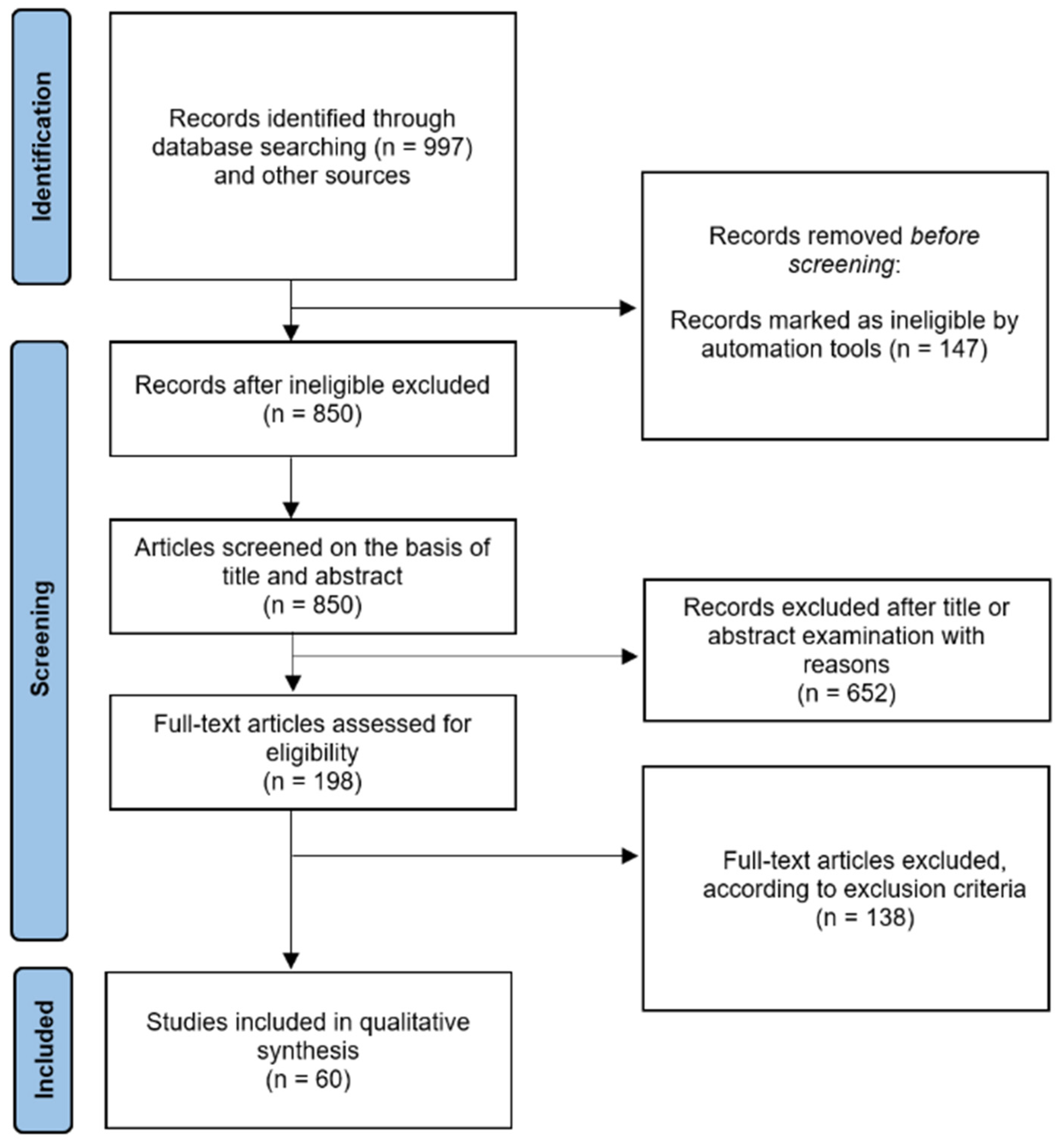
2. Materials and Methods
3. Results
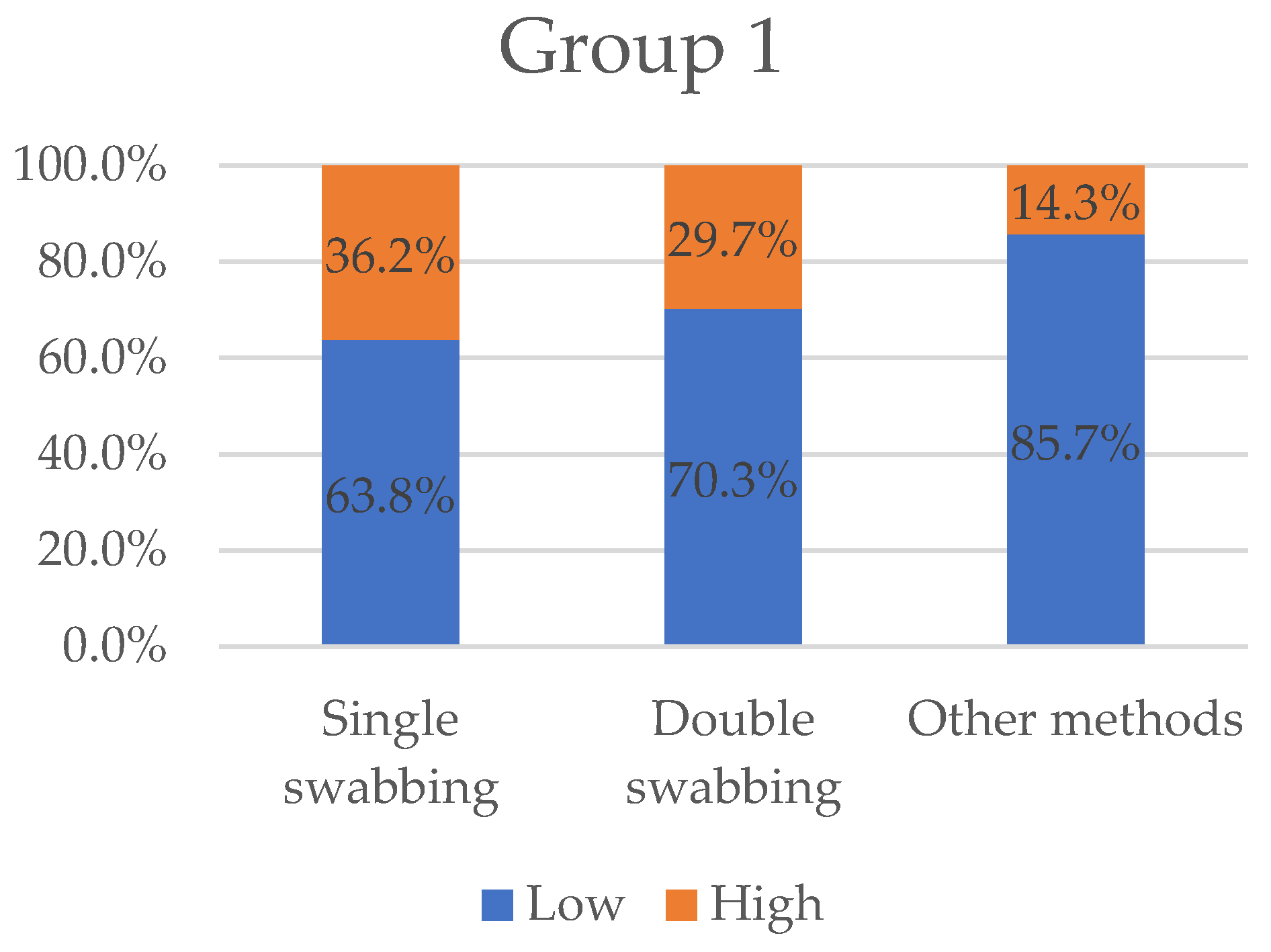
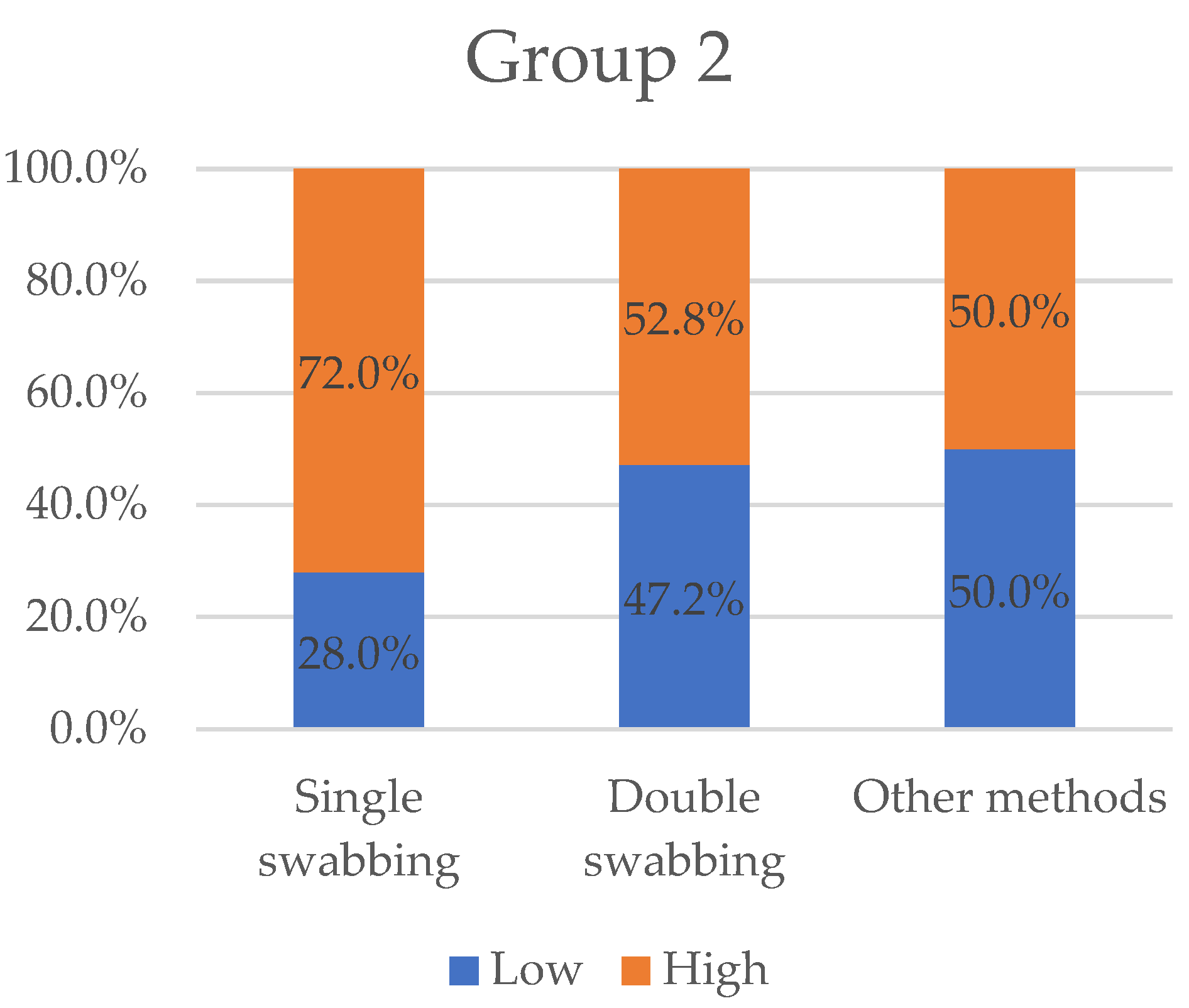
3.1. STR Alleles and Informative Profiles
3.2. DNA Quantitation
4. Discussion
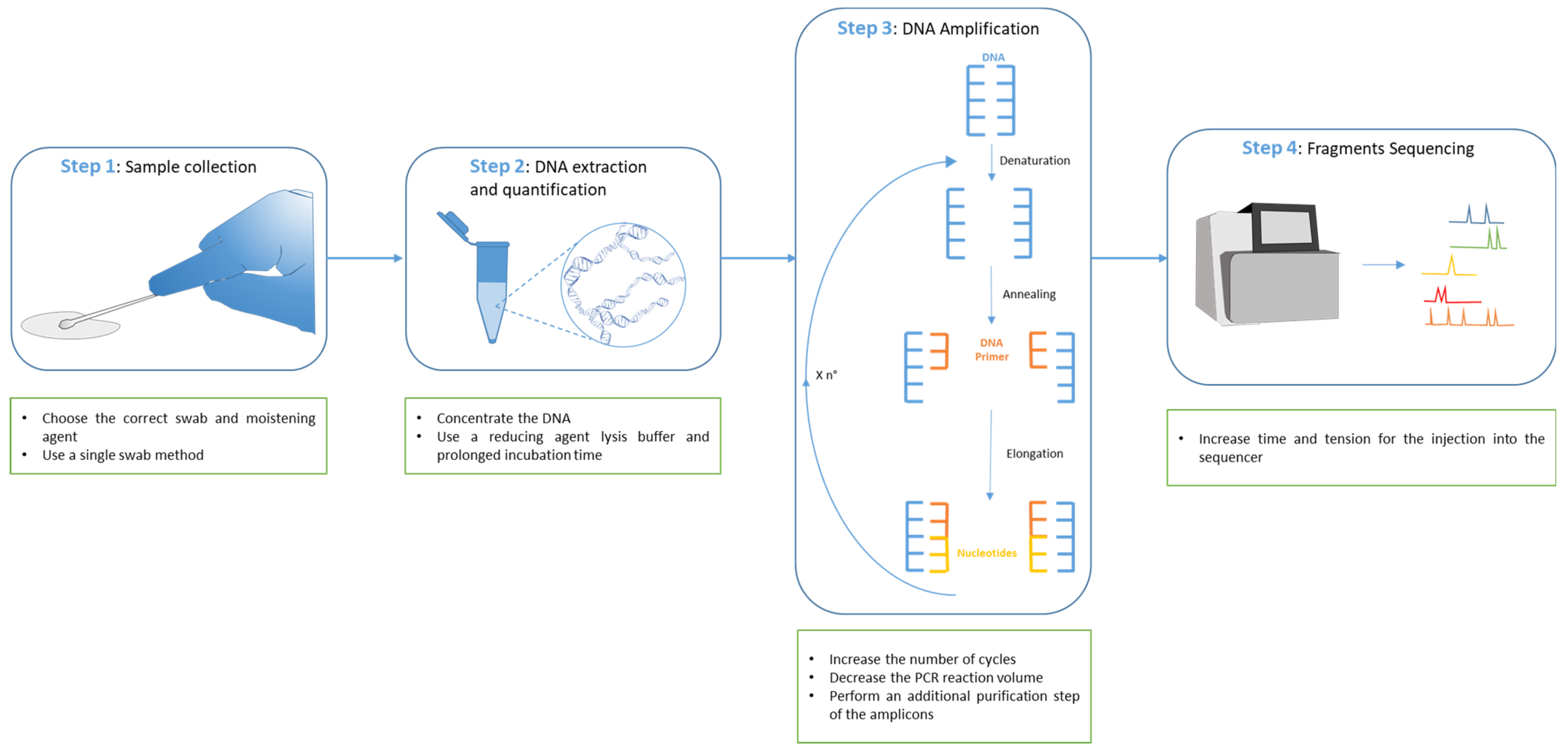
4.1. Single-Swabbing
4.2. Double-Swabbing
4.3. Other Methods
5. Conclusions
Author Contributions
Funding
Institutional Review Board Statement
Informed Consent Statement
Data Availability Statement
Conflicts of Interest
References
- Bonsu, D.O.M.; Higgins, D.; Austin, J.J. Forensic Touch DNA Recovery from Metal Surfaces—A Review. Sci. Justice 2020, 60, 206–215. [Google Scholar] [CrossRef] [PubMed]
- Travers, A.; Muskhelishvili, G. DNA Structure and Function. FEBS J. 2015, 282, 2279–2295. [Google Scholar] [CrossRef] [PubMed]
- Edwards, A.; Civitello, A.; Hammond, H.A.; Caskey, C.T. DNA Typing and Genetic Mapping with Trimeric and Tetrameric Tandem Repeats. Am. J. Hum. Genet. 1991, 49, 746–756. [Google Scholar] [PubMed]
- Gill, P.; Brinkmann, B.; d’Aloja, E.; Andersen, J.; Bar, W.; Carracedo, A.; Dupuy, B.; Eriksen, B.; Jangblad, M.; Johnsson, V.; et al. Considerations from the European DNA Profiling Group (EDNAP) Concerning STR Nomenclature. Forensic Sci. Int. 1997, 87, 185–192. [Google Scholar] [CrossRef]
- Kimpton, C.P.; Gill, P.; Walton, A.; Urquhart, A.; Millican, E.S.; Adams, M. Automated DNA Profiling Employing Multiplex Amplification of Short Tandem Repeat Loci. Genome Res. 1993, 3, 13–22. [Google Scholar] [CrossRef]
- Jäger, R. New Perspectives for Whole Genome Amplification in Forensic STR Analysis. Int. J. Mol. Sci. 2022, 23, 7090. [Google Scholar] [CrossRef]
- Wiegand, P.; Kleiber, M. DNA Typing of Epithelial Cells after Strangulation. Int. J. Leg. Med. 1997, 110, 181–183. [Google Scholar] [CrossRef]
- Comte, J.; Baechler, S.; Gervaix, J.; Lock, E.; Milon, M.-P.; Delémont, O.; Castella, V. Touch DNA Collection—Performance of Four Different Swabs. Forensic Sci. Int. Genet. 2019, 43, 102113. [Google Scholar] [CrossRef]
- Burrill, J.; Daniel, B.; Frascione, N. A Review of Trace “Touch DNA” Deposits: Variability Factors and an Exploration of Cellular Composition. Forensic Sci. Int. Genet. 2019, 39, 8–18. [Google Scholar] [CrossRef]
- Quinones, I.; Daniel, B. Cell Free DNA as a Component of Forensic Evidence Recovered from Touched Surfaces. Forensic Sci. Int. Genet. 2012, 6, 26–30. [Google Scholar] [CrossRef]
- Miller, M.; Philpott, M.K.; Olsen, A.; Tootham, M.; Yadavalli, V.K.; Ehrhardt, C.J. Technical Note: Survey of Extracellular and Cell-Pellet-Associated DNA from ‘Touch’/Trace Samples. Forensic Sci. Int. 2021, 318, 110557. [Google Scholar] [CrossRef] [PubMed]
- Oleiwi, A.A.; Morris, M.R.; Schmerer, W.M.; Sutton, R. The Relative DNA-Shedding Propensity of the Palm and Finger Surfaces. Sci. Justice 2015, 55, 329–334. [Google Scholar] [CrossRef] [PubMed]
- Wickenheiser, R.A. Trace DNA: A Review, Discussion of Theory, and Application of the Transfer of Trace Quantities of DNA through Skin Contact. J. Forensic Sci. 2002, 47, 442–450. [Google Scholar] [CrossRef]
- Burrill, J.; Daniel, B.; Frascione, N. Technical Note: Lysis and Purification Methods for Increased Recovery of Degraded DNA from Touch Deposit Swabs. Forensic Sci. Int. 2022, 330, 111102. [Google Scholar] [CrossRef] [PubMed]
- Gettings, K.B.; Kiesler, K.M.; Vallone, P.M. Performance of a next Generation Sequencing SNP Assay on Degraded DNA. Forensic Sci. Int. Genet. 2015, 19, 1–9. [Google Scholar] [CrossRef] [PubMed]
- Nimbkar, P.H.; Bhatt, V.D. A Review on Touch DNA Collection, Extraction, Amplification, Analysis and Determination of Phenotype. Forensic Sci. Int. 2022, 336, 111352. [Google Scholar] [CrossRef]
- Diegoli, T.M.; Farr, M.; Cromartie, C.; Coble, M.D.; Bille, T.W. An Optimized Protocol for Forensic Application of the PreCRTM Repair Mix to Multiplex STR Amplification of UV-Damaged DNA. Forensic Sci. Int. Genet. 2012, 6, 498–503. [Google Scholar] [CrossRef]
- Horsman-Hall, K.M.; Orihuela, Y.; Karczynski, S.L.; Davis, A.L.; Ban, J.D.; Greenspoon, S.A. Development of STR Profiles from Firearms and Fired Cartridge Cases. Forensic Sci. Int. Genet. 2009, 3, 242–250. [Google Scholar] [CrossRef]
- Young, J.M.; Power, D.; Kanokwongnuwut, P.; Linacre, A. Ancestry and Phenotype Predictions from Touch DNA Using Massively Parallel Sequencing. Int. J. Leg. Med. 2021, 135, 81–89. [Google Scholar] [CrossRef]
- Bose, N.; Carlberg, K.; Sensabaugh, G.; Erlich, H.; Calloway, C. Target Capture Enrichment of Nuclear SNP Markers for Massively Parallel Sequencing of Degraded and Mixed Samples. Forensic Sci. Int. Genet. 2018, 34, 186–196. [Google Scholar] [CrossRef]
- Timken, M.D.; Klein, S.B.; Buoncristiani, M.R. Stochastic Sampling Effects in STR Typing: Implications for Analysis and Interpretation. Forensic Sci. Int. Genet. 2014, 11, 195–204. [Google Scholar] [CrossRef] [PubMed]
- Gill, P.; Buckleton, J. A Universal Strategy to Interpret DNA Profiles That Does Not Require a Definition of Low-Copy-Number. Forensic Sci. Int. Genet. 2010, 4, 221–227. [Google Scholar] [CrossRef] [PubMed]
- Ladd, C.; Adamowicz, M.S.; Bourke, M.T.; Scherczinger, C.A.; Lee, H.C. A Systematic Analysis of Secondary DNA Transfer. J. Forensic Sci. 1999, 44, 1270–1272. [Google Scholar] [CrossRef] [PubMed]
- Jansson, L.; Swensson, M.; Gifvars, E.; Hedell, R.; Forsberg, C.; Ansell, R.; Hedman, J. Individual Shedder Status and the Origin of Touch DNA. Forensic Sci. Int. Genet. 2022, 56, 102626. [Google Scholar] [CrossRef] [PubMed]
- Kanokwongnuwut, P.; Martin, B.; Kirkbride, K.P.; Linacre, A. Shedding Light on Shedders. Forensic Sci. Int. Genet. 2018, 36, 20–25. [Google Scholar] [CrossRef] [PubMed]
- Tan, J.; Lee, J.Y.; Lee, L.Y.C.; Aw, Z.Q.; Chew, M.H.; Ishak, N.I.B.; Lee, Y.S.; Mugni, M.A.; Syn, C.K.C. Shedder Status: Does It Really Exist? Forensic Sci. Int. Genet. Suppl. Ser. 2019, 7, 360–362. [Google Scholar] [CrossRef]
- van den Berge, M.; Ozcanhan, G.; Zijlstra, S.; Lindenbergh, A.; Sijen, T. Prevalence of Human Cell Material: DNA and RNA Profiling of Public and Private Objects and after Activity Scenarios. Forensic Sci. Int. Genet. 2016, 21, 81–89. [Google Scholar] [CrossRef]
- Gosch, A.; Courts, C. On DNA Transfer: The Lack and Difficulty of Systematic Research and How to Do It Better. Forensic Sci. Int. Genet. 2019, 40, 24–36. [Google Scholar] [CrossRef]
- Daly, D.J.; Murphy, C.; McDermott, S.D. The Transfer of Touch DNA from Hands to Glass, Fabric and Wood. Forensic Sci. Int. Genet. 2012, 6, 41–46. [Google Scholar] [CrossRef]
- Wood, I.; Park, S.; Tooke, J.; Smith, O.; Morgan, R.M.; Meakin, G.E. Efficiencies of Recovery and Extraction of Trace DNA from Non-Porous Surfaces. Forensic Sci. Int. Genet. Suppl. Ser. 2017, 6, e153–e155. [Google Scholar] [CrossRef]
- Tobias, S.H.A.; Jacques, G.S.; Morgan, R.M.; Meakin, G.E. The Effect of Pressure on DNA Deposition by Touch. Forensic Sci. Int. Genet. Suppl. Ser. 2017, 6, e12–e14. [Google Scholar] [CrossRef]
- Oldoni, F.; Castella, V.; Hall, D. Shedding Light on the Relative DNA Contribution of Two Persons Handling the Same Object. Forensic Sci. Int. Genet. 2016, 24, 148–157. [Google Scholar] [CrossRef] [PubMed]
- Balogh, M.K.; Burger, J.; Bender, K.; Schneider, P.M.; Alt, K.W. STR Genotyping and MtDNA Sequencing of Latent Fingerprint on Paper. Forensic Sci. Int. 2003, 137, 188–195. [Google Scholar] [CrossRef] [PubMed]
- Tozzo, P.; Giuliodori, A.; Rodriguez, D.; Caenazzo, L. Effect of Dactyloscopic Powders on DNA Profiling from Enhanced Fingerprints: Results from an Experimental Study. Am. J. Forensic Med. Pathol. 2014, 35, 68–72. [Google Scholar] [CrossRef] [PubMed]
- Van Hoofstat, D.E.; Deforce, D.L.; Hubert De Pauw, I.P.; Van den Eeckhout, E.G. DNA Typing of Fingerprints Using Capillary Electrophoresis: Effect of Dactyloscopic Powders. Electrophoresis 1999, 20, 2870–2876. [Google Scholar] [CrossRef]
- Della Manna, A.; Montpetit, S. A Novel Approach to Obtaining Reliable PCR Results from Luminol Treated Bloodstains. J. Forensic Sci. 2000, 45, 886–890. [Google Scholar]
- Goray, M.; Kokshoorn, B.; Steensma, K.; Szkuta, B.; van Oorschot, R.A.H. DNA Detection of a Temporary and Original User of an Office Space. Forensic Sci. Int. Genet. 2020, 44, 102203. [Google Scholar] [CrossRef]
- Pang, B.C.M.; Cheung, B.K.K. Double Swab Technique for Collecting Touched Evidence. Leg. Med. Tokyo Jpn. 2007, 9, 181–184. [Google Scholar] [CrossRef]
- Benschop, C.C.G.; Wiebosch, D.C.; Kloosterman, A.D.; Sijen, T. Post-Coital Vaginal Sampling with Nylon Flocked Swabs Improves DNA Typing. Forensic Sci. Int. Genet. 2010, 4, 115–121. [Google Scholar] [CrossRef]
- Colussi, A.; Viegas, M.; Beltramo, J.; Lojo, M. Efficiency of DNA IQ System® in Recovering Semen DNA from Cotton Swabs. Forensic Sci. Int. Genet. Suppl. Ser. 2009, 2, 87–88. [Google Scholar] [CrossRef]
- Sweet, D.; Lorente, M.; Lorente, J.A.; Valenzuela, A.; Villanueva, E. An Improved Method to Recover Saliva from Human Skin: The Double Swab Technique. J. Forensic Sci. 1997, 42, 320–322. [Google Scholar] [CrossRef] [PubMed]
- Sessa, F.; Salerno, M.; Bertozzi, G.; Messina, G.; Ricci, P.; Ledda, C.; Rapisarda, V.; Cantatore, S.; Turillazzi, E.; Pomara, C. Touch DNA: Impact of Handling Time on Touch Deposit and Evaluation of Different Recovery Techniques: An Experimental Study. Sci. Rep. 2019, 9, 9542. [Google Scholar] [CrossRef]
- Forsberg, C.; Jansson, L.; Ansell, R.; Hedman, J. High-Throughput DNA Extraction of Forensic Adhesive Tapes. Forensic Sci. Int. Genet. 2016, 24, 158–163. [Google Scholar] [CrossRef] [PubMed]
- Plaza, D.T.; Mealy, J.L.; Lane, J.N.; Parsons, M.N.; Bathrick, A.S.; Slack, D.P. Nondestructive Biological Evidence Collection with Alternative Swabs and Adhesive Lifters. J. Forensic Sci. 2016, 61, 485–488. [Google Scholar] [CrossRef] [PubMed]
- Verdon, T.J.; Mitchell, R.J.; van Oorschot, R.A.H. Evaluation of Tapelifting as a Collection Method for Touch DNA. Forensic Sci. Int. Genet. 2014, 8, 179–186. [Google Scholar] [CrossRef]
- Hansson, O.; Finnebraaten, M.; Heitmann, I.K.; Ramse, M.; Bouzga, M. Trace DNA Collection—Performance of Minitape and Three Different Swabs. Forensic Sci. Int. Genet. Suppl. Ser. 2009, 2, 189–190. [Google Scholar] [CrossRef]
- Solomon, A.D.; Hytinen, M.E.; McClain, A.M.; Miller, M.T.; Dawson Cruz, T. An Optimized DNA Analysis Workflow for the Sampling, Extraction, and Concentration of DNA Obtained from Archived Latent Fingerprints. J. Forensic Sci. 2018, 63, 47–57. [Google Scholar] [CrossRef]
- Lee, S.B.; McCord, B.; Buel, E. Advances in Forensic DNA Quantification: A Review. Electrophoresis 2014, 35, 3044–3052. [Google Scholar] [CrossRef]
- Cavanaugh, S.E.; Bathrick, A.S. Direct PCR Amplification of Forensic Touch and Other Challenging DNA Samples: A Review. Forensic Sci. Int. Genet. 2018, 32, 40–49. [Google Scholar] [CrossRef]
- Butler, J.M. The Future of Forensic DNA Analysis. Philos. Trans. R. Soc. B Biol. Sci. 2015, 370, 20140252. [Google Scholar] [CrossRef]
- Nwawuba Stanley, U.; Mohammed Khadija, A.; Bukola, A.T.; Omusi Precious, I.; Ayevbuomwan Davidson, E. Forensic DNA Profiling: Autosomal Short Tandem Repeat as a Prominent Marker in Crime Investigation. Malays. J. Med. Sci. 2020, 27, 22–35. [Google Scholar] [PubMed]
- Page, M.J.; McKenzie, J.E.; Bossuyt, P.M.; Boutron, I.; Hoffmann, T.C.; Mulrow, C.D.; Shamseer, L.; Tetzlaff, J.M.; Akl, E.A.; Brennan, S.E.; et al. The PRISMA 2020 Statement: An Updated Guideline for Reporting Systematic Reviews. BMJ 2021, 372, n71. [Google Scholar] [CrossRef] [PubMed]
- Kallupurackal, V.; Kummer, S.; Voegeli, P.; Kratzer, A.; Dørum, G.; Haas, C.; Hess, S. Sampling Touch DNA from Human Skin Following Skin-to-Skin Contact in Mock Assault Scenarios-A Comparison of Nine Collection Methods. J. Forensic Sci. 2021, 66, 1889–1900. [Google Scholar] [CrossRef] [PubMed]
- Meixner, E.; Kallupurackal, V.; Kratzer, A.; Voegeli, P.; Thali, M.J.; Bolliger, S.A. Persistence and Detection of Touch DNA and Blood Stain DNA on Pig Skin Exposed to Water. Forensic Sci. Med. Pathol. 2020, 16, 243–251. [Google Scholar] [CrossRef] [PubMed]
- Hefetz, I.; Einot, N.; Faerman, M.; Horowitz, M.; Almog, J. Touch DNA: The Effect of the Deposition Pressure on the Quality of Latent Fingermarks and STR Profiles. Forensic Sci. Int. Genet. 2019, 38, 105–112. [Google Scholar] [CrossRef]
- Kirgiz, I.A.; Calloway, C. Increased Recovery of Touch DNA Evidence Using FTA Paper Compared to Conventional Collection Methods. J. Forensic Leg. Med. 2017, 47, 9–15. [Google Scholar] [CrossRef]
- Tonkrongjun, P.; Phetpeng, S.; Asawutmangkul, W.; Sotthibandhu, S.; Kitpipit, T.; Thanakiatkrai, P. Improved STR Profiles from Improvised Explosive Device (IED): Fluorescence Latent DNA Detection and Direct PCR. Forensic Sci. Int. Genet. 2019, 41, 168–176. [Google Scholar] [CrossRef]
- Thanakiatkrai, P.; Rerkamnuaychoke, B. Direct STR Typing from Fired and Unfired Bullet Casings. Forensic Sci. Int. 2019, 301, 182–189. [Google Scholar] [CrossRef]
- Baechler, S. Study of Criteria Influencing the Success Rate of DNA Swabs in Operational Conditions: A Contribution to an Evidence-Based Approach to Crime Scene Investigation and Triage. Forensic Sci. Int. Genet. 2016, 20, 130–139. [Google Scholar] [CrossRef]
- Schwender, M.; Bamberg, M.; Dierig, L.; Kunz, S.N.; Wiegand, P. The Diversity of Shedder Tests and a Novel Factor That Affects DNA Transfer. Int. J. Leg. Med. 2021, 135, 1267–1280. [Google Scholar] [CrossRef]
- Kanokwongnuwut, P.; Martin, B.; Taylor, D.; Kirkbride, K.P.; Linacre, A. How Many Cells Are Required for Successful DNA Profiling? Forensic Sci. Int. Genet. 2021, 51, 102453. [Google Scholar] [CrossRef]
- Al-Snan, N.R. The Recovery of Touch DNA from RDX-C4 Evidences. Int. J. Leg. Med. 2021, 135, 393–397. [Google Scholar] [CrossRef] [PubMed]
- de Francisco, D.O.; Lopez, L.F.; de Gonçalves, F.T.; Fridman, C. Casework Direct Kit as an Alternative Extraction Method to Enhance Touch DNA Samples Analysis. Forensic Sci. Int. Genet. 2020, 47, 102307. [Google Scholar] [CrossRef] [PubMed]
- Martin, B.; Blackie, R.; Taylor, D.; Linacre, A. DNA Profiles Generated from a Range of Touched Sample Types. Forensic Sci. Int. Genet. 2018, 36, 13–19. [Google Scholar] [CrossRef] [PubMed]
- Kanokwongnuwut, P.; Kirkbride, K.P.; Kobus, H.; Linacre, A. Enhancement of Fingermarks and Visualizing DNA. Forensic Sci. Int. 2019, 300, 99–105. [Google Scholar] [CrossRef] [PubMed]
- Falkena, K.; Hoveling, R.J.M.; van Weert, A.; Lambrechts, S.A.G.; van Leeuwen, T.G.; Aalders, M.C.G.; van Dam, A. Prediction of DNA Concentration in Fingermarks Using Autofluorescence Properties. Forensic Sci. Int. 2019, 295, 128–136. [Google Scholar] [CrossRef]
- Sołtyszewski, I.; Szeremeta, M.; Skawrońska, M.; Niemcunowicz-Janica, A.; Pepiński, W. Typeability of DNA in Touch Traces Deposited on Paper and Optical Data Discs. Adv. Clin. Exp. Med. 2015, 24, 437–440. [Google Scholar] [CrossRef]
- Templeton, J.E.L.; Linacre, A. DNA Profiles from Fingermarks. BioTechniques 2014, 57, 259–266. [Google Scholar] [CrossRef]
- Romano, C.G.; Mangiaracina, R.; Donato, L.; D’Angelo, R.; Scimone, C.; Sidoti, A. Aged Fingerprints for DNA Profile: First Report of Successful Typing. Forensic Sci. Int. 2019, 302, 109905. [Google Scholar] [CrossRef]
- Ip, S.C.Y.; Lin, S.-W.; Lai, K.-M. An Evaluation of the Performance of Five Extraction Methods: Chelex® 100, QIAamp® DNA Blood Mini Kit, QIAamp® DNA Investigator Kit, QIAsymphony® DNA Investigator® Kit and DNA IQTM. Sci. Justice J. Forensic Sci. Soc. 2015, 55, 200–208. [Google Scholar] [CrossRef]
- Subhani, Z.; Daniel, B.; Frascione, N. DNA Profiles from Fingerprint Lifts-Enhancing the Evidential Value of Fingermarks Through Successful DNA Typing. J. Forensic Sci. 2019, 64, 201–206. [Google Scholar] [CrossRef] [PubMed]
- Phipps, M.; Petricevic, S. The Tendency of Individuals to Transfer DNA to Handled Items. Forensic Sci. Int. 2007, 168, 162–168. [Google Scholar] [CrossRef] [PubMed]
- Templeton, J.E.L.; Taylor, D.; Handt, O.; Linacre, A. Typing DNA Profiles from Previously Enhanced Fingerprints Using Direct PCR. Forensic Sci. Int. Genet. 2017, 29, 276–282. [Google Scholar] [CrossRef]
- Jansson, L.; Forsberg, C.; Akel, Y.; Dufva, C.; Ansell, C.; Ansell, R.; Hedman, J. Factors Affecting DNA Recovery from Cartridge Cases. Forensic Sci. Int. Genet. 2020, 48, 102343. [Google Scholar] [CrossRef] [PubMed]
- Tasker, E.; LaRue, B.; Beherec, C.; Gangitano, D.; Hughes-Stamm, S. Analysis of DNA from Post-Blast Pipe Bomb Fragments for Identification and Determination of Ancestry. Forensic Sci. Int. Genet. 2017, 28, 195–202. [Google Scholar] [CrossRef] [PubMed]
- Parsons, L.; Sharfe, G.; Vintiner, S. DNA Analysis and Document Examination: The Impact of Each Technique on Respective Analyses. J. Forensic Sci. 2016, 61, 26–34. [Google Scholar] [CrossRef]
- Tobe, S.S.; Govan, J.; Welch, L.A. Recovery of Human DNA Profiles from Poached Deer Remains: A Feasibility Study. Sci. Justice J. Forensic Sci. Soc. 2011, 51, 190–195. [Google Scholar] [CrossRef]
- Sewell, J.; Quinones, I.; Ames, C.; Multaney, B.; Curtis, S.; Seeboruth, H.; Moore, S.; Daniel, B. Recovery of DNA and Fingerprints from Touched Documents. Forensic Sci. Int. Genet. 2008, 2, 281–285. [Google Scholar] [CrossRef]
- Ostojic, L.; Klempner, S.A.; Patel, R.A.; Mitchell, A.A.; Axler-DiPerte, G.L.; Wurmbach, E. Qualitative and Quantitative Assessment of Single Fingerprints in Forensic DNA Analysis. Electrophoresis 2014, 35, 3165–3172. [Google Scholar] [CrossRef]
- Oldoni, F.; Castella, V.; Hall, D. Application of DIP-STRs to Sexual/Physical Assault Investigations: Eight Case Reports. Forensic Sci. Int. Genet. 2017, 30, 106–113. [Google Scholar] [CrossRef]
- Yudianto, A.; Nuraini, M.I.; Furqoni, A.H.; Nzilibili, S.M.M.; Harjanto, P. The Use of Touch DNA Analysis in Forensic Identification Focusing on Short Tandem Repeat- Combined DNA Index System Loci THO1, CSF1PO and TPOX. Infect. Dis. Rep. 2020, 12, 8716. [Google Scholar] [CrossRef] [PubMed]
- Giovanelli, A.; Grazinoli Garrido, R.; Rocha, A.; Hessab, T. Touch DNA Recovery from Vehicle Surfaces Using Different Swabs. J. Forensic Sci. 2022, 67, 707–711. [Google Scholar] [CrossRef] [PubMed]
- Moore, D.; Beaumont, D.; Brown, M.; Clayton, T.; Coleman, K.; Subhani, Z.; Thomson, J. An Investigation of Two Methods of DNA Recovery from Fired and Unfired 9 Mm Ammunition. Sci. Justice J. Forensic Sci. Soc. 2021, 61, 160–169. [Google Scholar] [CrossRef]
- Stoop, B.; Defaux, P.M.; Utz, S.; Zieger, M. Touch DNA Sampling with SceneSafe FastTM Minitapes. Leg. Med. Tokyo Jpn. 2017, 29, 68–71. [Google Scholar] [CrossRef] [PubMed]
- Lim, S.; Subhani, Z.; Daniel, B.; Frascione, N. Touch DNA—The Prospect of DNA Profiles from Cables. Sci. Justice 2016, 56, 210–215. [Google Scholar] [CrossRef] [PubMed]
- Dong, H.; Wang, J.; Zhang, T.; Ge, J.-Y.; Dong, Y.-Q.; Sun, Q.-F.; Liu, C.; Li, C.-X. Comparison of Preprocessing Methods and Storage Times for Touch DNA Samples. Croat. Med. J. 2017, 58, 4–13. [Google Scholar] [CrossRef]
- Boyko, T.; Szkuta, B.; Mitchell, R.J.; van Oorschot, R.A.H. Prevalence of DNA from the Driver, Passengers and Others within a Car of an Exclusive Driver. Forensic Sci. Int. 2020, 307, 110139. [Google Scholar] [CrossRef] [PubMed]
- Ruan, T.; Barash, M.; Gunn, P.; Bruce, D. Investigation of DNA Transfer onto Clothing during Regular Daily Activities. Int. J. Leg. Med. 2018, 132, 1035–1042. [Google Scholar] [CrossRef]
- al Oleiwi, A.; Hussain, I.; McWhorter, A.; Sutton, R.; King, R.S.P. DNA Recovery from Latent Fingermarks Treated with an Infrared Fluorescent Fingerprint Powder. Forensic Sci. Int. 2017, 277, e39–e43. [Google Scholar] [CrossRef]
- Lacerenza, D.; Aneli, S.; Omedei, M.; Gino, S.; Pasino, S.; Berchialla, P.; Robino, C. A Molecular Exploration of Human DNA/RNA Co-Extracted from the Palmar Surface of the Hands and Fingers. Forensic Sci. Int. Genet. 2016, 22, 44–53. [Google Scholar] [CrossRef]
- Bowman, Z.E.; Mosse, K.S.A.; Sungaila, A.M.; van Oorschot, R.A.H.; Hartman, D. Detection of Offender DNA Following Skin-to-Skin Contact with a Victim. Forensic Sci. Int. Genet. 2018, 37, 252–259. [Google Scholar] [CrossRef] [PubMed]
- Bonsu, D.O.M.; Rodie, M.; Higgins, D.; Henry, J.; Austin, J.J. Comparison of IsohelixTM and Rayon Swabbing Systems for Touch DNA Recovery from Metal Surfaces. Forensic Sci. Med. Pathol. 2021, 17, 577–584. [Google Scholar] [CrossRef] [PubMed]
- Sterling, S.-A.; Mason, K.E.; Anex, D.S.; Parker, G.J.; Hart, B.; Prinz, M. Combined DNA Typing and Protein Identification from Unfired Brass Cartridges. J. Forensic Sci. 2019, 64, 1475–1481. [Google Scholar] [CrossRef] [PubMed]
- Butcher, E.V.; van Oorschot, R.A.H.; Morgan, R.M.; Meakin, G.E. Opportunistic Crimes: Evaluation of DNA from Regularly-Used Knives after a Brief Use by a Different Person. Forensic Sci. Int. Genet. 2019, 42, 135–140. [Google Scholar] [CrossRef] [PubMed]
- Dierig, L.; Schmidt, M.; Wiegand, P. Looking for the Pinpoint: Optimizing Identification, Recovery and DNA Extraction of Micro Traces in Forensic Casework. Forensic Sci. Int. Genet. 2020, 44, 102191. [Google Scholar] [CrossRef] [PubMed]
- Bathrick, A.S.; Norsworthy, S.; Plaza, D.T.; McCormick, M.N.; Slack, D.; Ramotowski, R.S. DNA Recovery after Sequential Processing of Latent Fingerprints on Copy Paper. J. Forensic Sci. 2022, 67, 149–160. [Google Scholar] [CrossRef]
- Goray, M.; Fowler, S.; Szkuta, B.; van Oorschot, R.A.H. Shedder Status-An Analysis of Self and Non-Self DNA in Multiple Handprints Deposited by the Same Individuals over Time. Forensic Sci. Int. Genet. 2016, 23, 190–196. [Google Scholar] [CrossRef]
- Breathnach, M.; Williams, L.; McKenna, L.; Moore, E. Probability of Detection of DNA Deposited by Habitual Wearer and/or the Second Individual Who Touched the Garment. Forensic Sci. Int. Genet. 2016, 20, 53–60. [Google Scholar] [CrossRef]
- Kita, T.; Yamaguchi, H.; Yokoyama, M.; Tanaka, T.; Tanaka, N. Morphological Study of Fragmented DNA on Touched Objects. Forensic Sci. Int. Genet. 2008, 3, 32–36. [Google Scholar] [CrossRef]
- van Oorschot, R.A.H.; Glavich, G.; Mitchell, R.J. Persistence of DNA Deposited by the Original User on Objects after Subsequent Use by a Second Person. Forensic Sci. Int. Genet. 2014, 8, 219–225. [Google Scholar] [CrossRef]
- Raymond, J.J.; van Oorschot, R.A.H.; Gunn, P.R.; Walsh, S.J.; Roux, C. Trace DNA Success Rates Relating to Volume Crime Offences. Forensic Sci. Int. Genet. Suppl. Ser. 2009, 2, 136–137. [Google Scholar] [CrossRef]
- Magee, A.M.; Breathnach, M.; Doak, S.; Thornton, F.; Noone, C.; McKenna, L.G. Wearer and Non-Wearer DNA on the Collars and Cuffs of Upper Garments of Worn Clothing. Forensic Sci. Int. Genet. 2018, 34, 152–161. [Google Scholar] [CrossRef] [PubMed]
- Verdon, T.J.; Mitchell, R.J.; van Oorschot, R.A.H. Swabs as DNA Collection Devices for Sampling Different Biological Materials from Different Substrates. J. Forensic Sci. 2014, 59, 1080–1089. [Google Scholar] [CrossRef] [PubMed]
- Thomasma, S.M.; Foran, D.R. The Influence of Swabbing Solutions on DNA Recovery from Touch Samples. J. Forensic Sci. 2013, 58, 465–469. [Google Scholar] [CrossRef]
- van Oorschot, R.A.; Ballantyne, K.N.; Mitchell, R.J. Forensic Trace DNA: A Review. Investig. Genet. 2010, 1, 14. [Google Scholar] [CrossRef] [PubMed]
- de Bruin, K.G.; Verheij, S.M.; Veenhoven, M.; Sijen, T. Comparison of Stubbing and the Double Swab Method for Collecting Offender Epithelial Material from a Victim’s Skin. Forensic Sci. Int. Genet. 2012, 6, 219–223. [Google Scholar] [CrossRef]
- Vickar, T.; Bache, K.; Daniel, B.; Frascione, N. The Use of the M-Vac® Wet-Vacuum System as a Method for DNA Recovery. Sci. Justice J. Forensic Sci. Soc. 2018, 58, 282–286. [Google Scholar] [CrossRef]
- Barash, M.; Reshef, A.; Brauner, P. The Use of Adhesive Tape for Recovery of DNA from Crime Scene Items. J. Forensic Sci. 2010, 55, 1058–1064. [Google Scholar] [CrossRef]
- Pizzamiglio, M.; Mameli, A.; My, D.; Garofano, L. Forensic Identification of a Murderer by LCN DNA Collected from the inside of the Victim’s Car. Int. Congr. Ser. 2004, 1261, 437–439. [Google Scholar] [CrossRef]

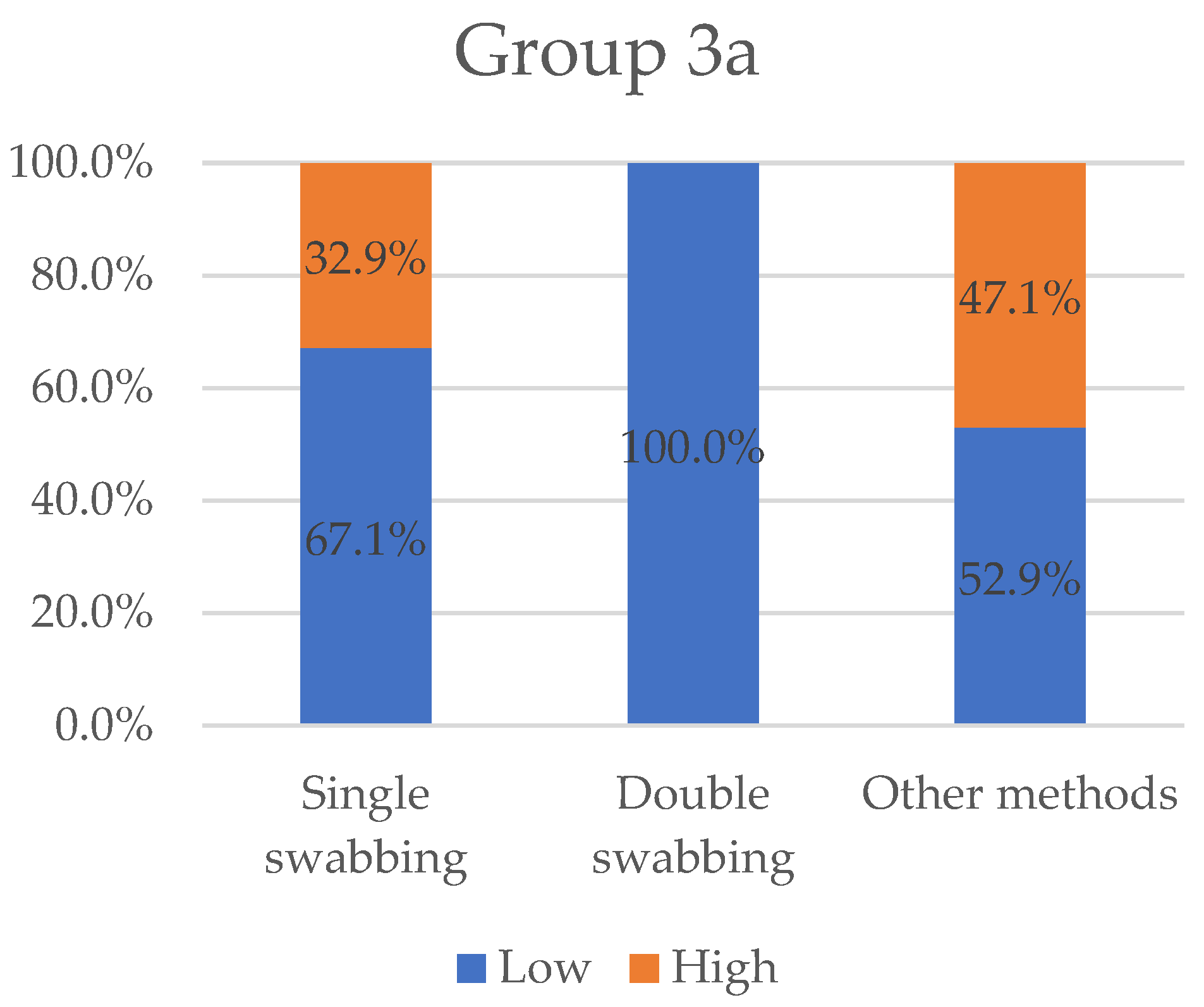
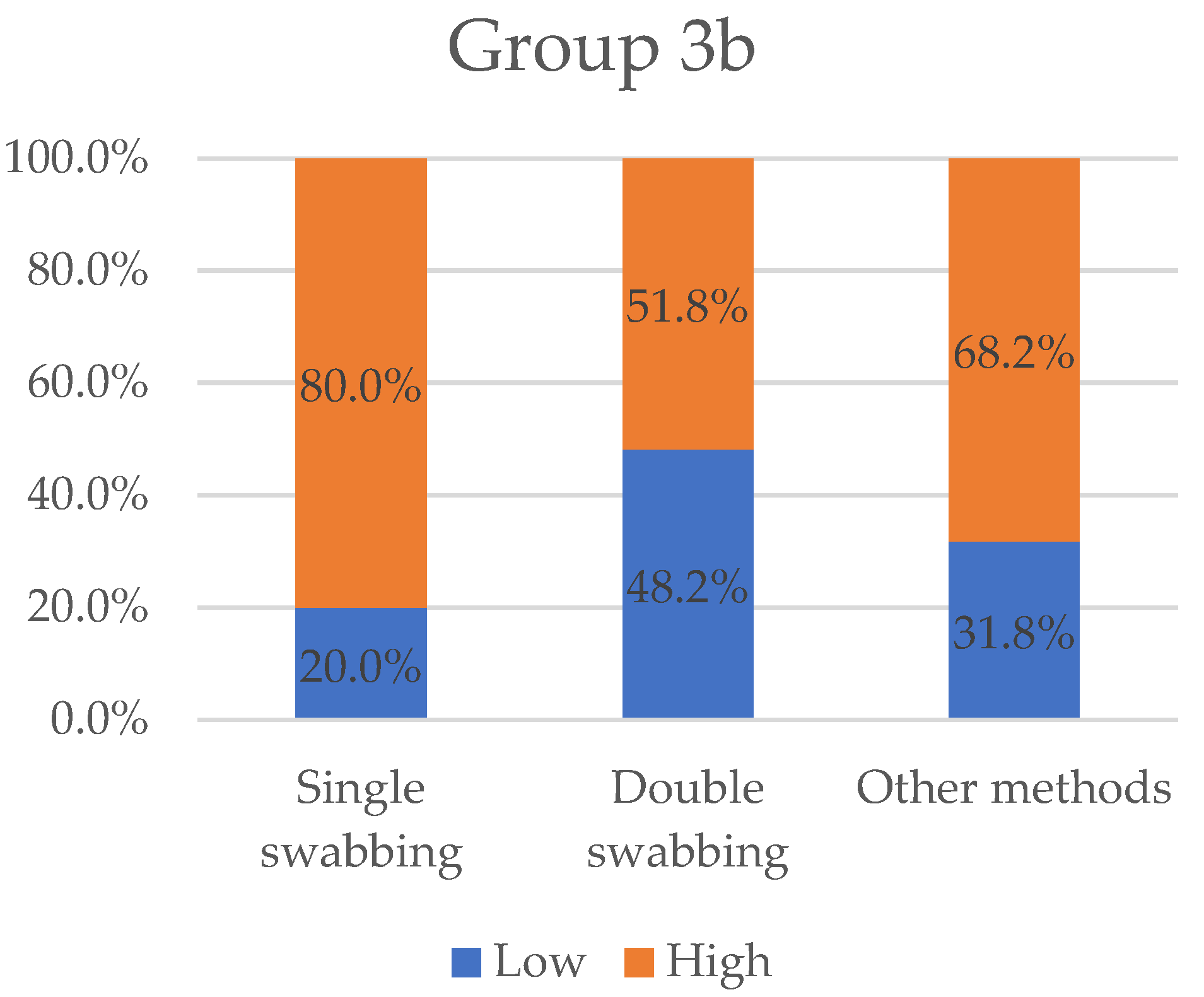

| Authors | Samples n° | Sampling Methods | Important Findings | Remarks |
|---|---|---|---|---|
| Kallupurackal et al., 2021 [53] | 180 | Single-swabbing, double-swabbing, adhesive tapes | Results indicate COPAN FLOQTM, double-swab technique and regular swabbing techniques with cotton swab performed equally well across all tested methods. | Results could be retested and confirmed by selecting some of the best-performing methods and taking a larger number of samples per method in a future study. |
| Meixner et al., 2020 [54] | 67 | Single-swabbing | It is possible to obtain a complete DNA profile from both blood stains and touch DNA on skin specimens immersed in water even after several days, depending on the aquatic environment. | Samples immersed in water hold potential for the forensic identification of an offender who has left touch DNA or blood stains on the victim. |
| Hefetz et al., 2019 [55] | 240 | Double-swabbing, adhesive tapes | Deposition pressure significantly influenced the size of the developed fingermark, their quality, and the number of the amplified STR loci and forensically useful DNA profiles recovered. | When collecting fingermarks from donors excessive deposition pressure should be avoided, otherwise the processed impressions might appear blurred. |
| Kirgiz and Calloway, 2017 [56] | 140 | Swabbing, adhesive tapes, FTA paper scraping | In particular cases, there may be enough touch DNA on the steering wheel of vehicles to yield a complete STR profile of the last driver. | DNA collected from steering wheels using FTA paper is more likely to result in a more complete STR profile compared to swabbing or tape lifting. |
| Tonkrongjun et al., 2019 [57] | 50 | Single-swabbing | Combining the staining process with direct STR amplification resulted in more alleles being recovered from mock improvised explosive device (IED) evidence. | Fluorescence level directly correlated with the number of alleles obtained, suggesting that the dyes can be used to locate areas with higher concentrations of touch DNA. |
| Thanakiatkrai and Rerkamnuaychoke, 2019 [58] | 270 | Single-swabbing | Direct PCR should be considered for processing bullet casings. In mock casework experiments to mimic real-world gun sharing, direct PCR mainly picked up the alleles of the person who loaded the bullets. | The use of direct PCR with touch DNA from bullet casings detected more alleles than DNA extraction. |
| Baechler, 2016 [59] | 1236 | Double-swabbing | Results provide useful information for decision-making and prioritisation at the crime scene, at the triage step, and insights for DNA database managers and users. | Whatever the operational context, better-informed decisions contribute to enhance resource allocation and the efficiency of forensic science efforts. |
| Horsman-Hall et al., 2009 [18] | 292 | Double-swabbing | The Plexor® HY System results proved DNA recovery to be sufficient for STR typing. When testing samplings of individuals handling shotshells only as necessary for firing, no significant difference was observed when comparing results obtained from the PowerPlex1 16 BIO and MinifilerTM kits. | Data does not support PCR inhibitors being present in the majority of shotshell case samples, but poor STR amplification results in shotshell cases are more likely due to DNA damage, possible degradation, and/or low-level DNA. |
| Schwender et al., 2021 [60] | 168 | Single-swabbing | The shedder test results and data ranges were comparable to those of other shedder tests. This study identified moisturisers as a novel factor influencing proposed shedder statuses and corresponding DNA transfer. | To address activity-level hypotheses or questions during legal proceedings, transfer studies with high and low DNA depositors could be executed to encompass a range of possible transfer outcomes. |
| Authors | Samples n° | Sampling Methods | Important Findings | Remarks |
|---|---|---|---|---|
| Kanokwongnuwut et al., 2021 [61] | 100 | Swabbing, adhesive tapes | Tapelifting is unsuitable for cell-free DNA collection from non-porous surfaces and only facilitates the collection of corneocytes, which carry a lower amount of DNA. | Where no alternative to tapelifting exists, it is recommended processing the samples through direct PCR; this approach requires ≥4000 visualised corneocytes for the generation of a full DNA profile. |
| Al-Snan, 2021 [62] | 5 | Swabbing, adhesive tapes, direct cutting | Proper handling of RDX-C4 samples is needed. Many acceptable and fit STR profiles were generated using the techniques mentioned in the study. | Collecting DNA from the RDX-C4 sample will give a forensic lead to directly identify the suspect(s) who manufactured the improvised explosive device (IED). |
| Hefetz et al., 2019 [55] | 240 | Double-swabbing, adhesive tapes | Deposition pressure significantly influenced the size of the developed fingermark, their quality, and the number of the amplified STR loci and forensically useful DNA profiles recovered. | The authors suggest that when collecting fingermarks from donors one should avoid excessive deposition pressure, otherwise the processed impressions might appear blurred. |
| Francisco et al., 2020 [63] | 104 | Double swabbing | The Casework Direct Kit showed better efficiency for processing touch DNA samples, enhancing the chance of recovering deposited DNA and improving STR profile quality when compared with DNA IQ. | Limitations on the quantification step for these samples with a low quantity of DNA were highlighted. More studies are necessary to compare quantification kits using samples extracted with casework. |
| Martin et al., 2018 [64] | 312 | Double-swabbing | The STR kit employed for amplification impacts the quality of the DNA profile obtained. Findings further demonstrate the success of direct PCR to enhance the STR profiles from touch DNA. | With some restrictions, Identifiler® Plus should be used in preference of GlobalFiler® for the amplification of touch DNA samples. |
| Kanokwongnuwut et al., 2019 [65] | 24 | Double-moistened swabbing | Touch DNA can be visualised after fingermark enhancement has been performed. DNA profiles were obtained from treated marks except after cyanoacrylate treatment. | For plain and un-patterned surfaces, the Diamond™ Dye fluorescence can be seen in ambient light, and this will be convenient for application at crime scenes. |
| Falkena et al., 2018 [66] | 100 | Single-swabbing | The correlation between the autofluorescent signal and DNA concentration in fingermarks was too weak to predict their DNA content. | The autofluorescent signals of fingermarks are not able to guide the forensic investigator reliably to fingermarks with a considerable DNA content. |
| Sołtyszewski et al., 2015 [67] | 120 | Single-swabbing | There was no significant difference between the amount of DNA deposited by male and female contributors. | When using AmpFlSTR® NGM™, it is recommended to increase the number of PCR cycles from the standard 30 to 34 to boost the typeability of LT-DNA samples. |
| Templeton and Linacre, 2014 [68] | 170 | Double-swabbing | The authors demonstrate the ability to generate informative DNA profiles from latent fingermarks deposited by touch. | By eliminating the need to increase the PCR cycle number or concentrate the amplified products, the procedure described is easily adapted into working practices. |
| Romano et al., 2019 [69] | 12 | Adhesive tapes | This study illustrates the possibility to type DNA from fingerprints archived several years ago under uncontrolled conditions. | Contamination of the fingerprint represents a factor interfering with correct genotyping, rendering the interpretation of mixed profiles ambiguous. |
| Ip et al., 2015 [70] | 76 | Double-swabbing | QIAcube, QIAsymphony, and IQ all yielded extracts with a higher success rate for the subsequent DNA typing analysis, as opposed to Chelex and Blood Mini even after their concentration with Microcon. | The use of serially diluted blood and buffy coat samples, as well as the simulated touch DNA samples, could shed light on the effectiveness of these extraction methods on DNA analysis. |
| Subhani et al., 2019 [71] | 72 | Adhesive tapes | DNA profiles can be recovered from fingerprints, both groomed and natural, enhanced, and lifted using some of the most common powder/lift combinations. | Profiles obtained from fingerprint lifts are used as an intelligence tool to supplement the investigation rather than for identification. |
| Phipps and Petricevic, 2007 [72] | 60 | Double-swabbing | The success rate of obtaining a trace DNA profile on forensic casework items will depend on both the characteristics of the DNA contributor and the specific activities performed by the contributor before touching the item. | This study sheds some light on the variables affecting transfer DNA, such as the time since a person last washed their hands and which of the two hands an item is touched with. |
| Templeton et al., 2017 [73] | 160 | Single-swabbing | Direct PCR generates meaningful DNA profiles from powdered fingerprints, speeds up the processing of samples, and minimises contamination. Powders tested did not inhibit the direct PCR amplification. | However, DNA quantification of the sample cannot take place and there is no opportunity to remove potential PCR inhibitors. |
| Authors | Samples n° | Sampling Methods | Important Findings | Remarks |
| Sessa et al., 2019 [42] | 240 | Swabbing, adhesive tapes, direct cutting | The presence of a single DNA profile or the major contributor to a mixture obtained by sampling worn garments may not necessarily belong to the wearer. | Further knowledge of the frequency of detection of wearer and/or handler DNA profiles is required. |
| Oldoni et al., 2016 [32] | 234 | Double-swabbing, direct cutting | A large proportion of samples was characterised by the presence of unknown “background” alleles; indirectly transferred DNA is most often detected as partial/full minor DNA profile and less frequently as full major profile, whereas first and second users can provide major/minor autosomal STR profiles. | Further studies should explore both sets of porous and non-porous substrates, variable manner of contact, shorter experimental periods, longer time between DNA deposition and sample collection, and sample exposure to real casework conditions. |
| Comte et al., 2019 [8] | 360 | Single-swabbing | DNA seemed to remain stable after the time intervals, except when using the COPAN 4N6FLOQSwabs™ treated with an antimicrobial agent (crime scene variety), which resulted in significant DNA degradation. | Other combinations of the processes tested may provide good results elsewhere. However, findings from the different steps of this project may be useful or inspirational for other practitioners. |
| Hefetz et al., 2019 [55] | 240 | Double-swabbing, adhesive tapes | Deposition pressure significantly influenced the size of the developed fingermark, their quality, and the number of the amplified STR loci and forensically useful DNA profiles recovered. | When collecting fingermarks from donors, excessive deposition pressure should be avoided, otherwise the processed impressions might appear blurred. |
| Jansson et al., 2020 [74] | 4 | Single-swabbing | A sampling protocol for cartridge cases applying nylon-flocked swabs was developed. It was found that the material of the cartridge case, as well as the type of firearm, have a substantial impact on DNA yield. | It was not possible to take full advantage of the elevated DNA yield given by nylon-flocked swabs. Still, the number of usable STR profiles increased, but remained unchanged for cartridges. |
| Templeton and Linacre, 2014 [68] | 170 | Double-swabbing, single swabs | The authors demonstrate the ability to generate informative DNA profiles from latent fingermarks deposited by touch. | By eliminating the need to increase the PCR cycle number or concentrate the amplified products, the procedure described is easily adapted into working practices. |
| Forsberg et al., 2016 [43] | N.A. | Adhesive tapes | The introduction of the developed direct lysis protocol reduced the amount of manual labour by half and doubled the potential throughput for tapes at the laboratory. The reduction in pipetting steps and sample transfers lowers the contamination risk. | Differences in number of single-donor profiles and mixtures are related to differences in the sampled material rather than the tape-type or extraction procedure. |
| Tasker et al., 2017 [75] | 83 | Single-swabbing | DNA identification was equally successful when DNA was recovered from the end caps or the pipe shaft of PVC pipe bombs. However, the majority of STR profiles were of poor quality. | Heterozygote peak height imbalance and allelic drop-out were frequently observed, highlighting the difficulties of recovering DNA and generating reliable STR profiles from low-template and moderately degraded samples. |
| Parsons et al., 2016 [76] | N.A. | Double-swabbing | Through a predetermined examination strategy, it is possible to obtain both DNA profiling results and document examination findings, maximising the evidentiary value of these analyses for document exhibits. | This collaborative testing strategy could be extended to include fingerprint analysis. If successful, this would then allow fingerprint evidence to be recovered along with DNA and document examination evidence. |
| Tobe et al., 2011 [77] | N.A. | Adhesive tapes | Obtaining human DNA profiles from touched areas of animal carcasses could be rapidly implemented in laboratories already undertaking low-template DNA casework. | Future work is required to determine after which PMI (post-mortem interval) it would be impractical to analyse poaching remains. |
| Sewell et al., 2008 [78] | N.A. | Direct cutting | It was found that certain paper-types interfered with the successful extraction of DNA. Conversely, others allowed greater recovery of transferred DNA. | Whilst Low Copy Number DNA profiling increased the average percentage of the profile obtained, a higher incidence of PCR artefacts and contamination were observed. |
| Ostojic et al., 2014 [79] | 700 | Single-swabbing | It is difficult to obtain full STR profiles from single fingerprints reliably, but improvements are possible with different extraction methods and amplification kits and protocols. | Shedding score alone was not a reliable predictor of profile quality, because many deposited cells of a fingerprint may not be nucleated. |
| Oldoni et al., 2017 [80] | N.A. | N.A. | The DIP-STR markers perform well on challenging casework DNA samples containing low total DNA or high major/minor DNA ratio, irrespective of the sex of the DNA contributors and when paternally related males are involved. | More research on specificity and sensitivity thresholds beyond previously tested conditions, multiplex markers development, and further development of the statistical framework are needed. |
| Pang et al., 2007 [38] | 40 | Single-swabbing | The study presents a swabbing protocol for collecting trace DNA samples, which should improve the recovery of DNA from the crime scene exhibits. It also helps in standardising the swabbing protocol and preventing DNA contamination. | DNA profiling results can be improved by pooling the first wet and the second dry swabs together for extraction. |
| Yudianto et al., 2020 [81] | 4 | Single-swabbing | Property (cell phone and watch) swabs can be used as alternative materials in forensic identification using touch DNA analysis. | For adequate visualisation of the results, sufficient levels and purity of the DNA are needed. |
| Giovanelli et al., 2022 [82] | 108 | Single-swabbing | Success in DNA recovery is influenced by the type of swab used and by the shedder status. The PurFlock® swab was more efficient for recovering donor alleles than the others | The study highlights the need to assess different materials and methods of collection of biological samples, considering collection, extraction, and amplification. |
| Moore et al., 2021 [83] | 90 | Double-swabbing, direct cutting | Informative DNA profiles were successfully obtained from both unfired and fired cartridges. Mixtures of DNA were observed from most cartridges, suggesting indirect transfer of DNA to the cartridges via the hands. | Further work is required to assess the impact of direct lysis and the mechanical agitation employed during sample lysis, as well as on firing and striation marks often examined on spent ammunition. |
| Authors | Samples n° | Sampling Methods | Important Findings | Remarks |
|---|---|---|---|---|
| Stoop et al., 2017 [84] | 36 | Single-swabbing, adhesive tapes | Data demonstrates that SceneSafe Fast™ Mini-tape sampling of touch DNA in combination with organic solvent extraction is more efficient than touch DNA sampling by swab. | The authors point out the importance of choosing the right extraction method, as conclusions need to be restricted to the tested cotton tissue. |
| Lim et al., 2016 [85] | 16 | Single-swabbing, adhesive tapes | The double-swab technique and mini-taping are equally viable choices for the recovery of touch DNA from cables. The enhancement allows for targeted recovery of DNA with more full profiles obtained. | Wet powder suspensions revealed disadvantages in their application procedures resulting in less DNA yields, poor profiles, and contamination issues. |
| Kirgiz and Calloway, 2017 [56] | 140 | Swabs, adhesive tapes, FTA paper scraping | In particular cases, there is enough touch DNA on the steering wheel of vehicles to yield a complete STR profile of the last driver. | DNA collected from steering wheels using FTA paper is more likely to result in a more complete STR profile compared to swabbing or tape lifting. |
| Dong et al., 2017 [86] | 156 | Double-swabbing | Greater amounts of DNA and number of alleles were detected on the porous substrates. The direct cutting method displayed advantages for porous substrates and the vacuum cleaner method was advantageous for non-porous substrates. | Although different pre-processing methods have a significant impact on the detection of touch DNA samples, the choice of the extraction method after pre-processing of the sample also plays a vital role in the examination of the sample. |
| Jansson et al., 2022 [24] | 41 | Single-swabbing | In many cases, the majority of DNA deposited on items and surfaces does not originate from the hands themselves but may have been transferred to the hands by touching, rubbing, or scratching other body parts or handling personal objects. | The strong association to facial DNA accumulation suggests that physiological mechanisms rather than differences in personal habits dictate individual shedder status. |
| Goray et al., 2020 [37] | 143 | Double-swabbing, single-swabbing | The findings may assist in assigning probabilities to DNA-TPPR events in cases where a person has temporarily occupied another environment. | More research is needed to ascertain the impact of using different methodologies (from collection to profiling) and to generate data to help determine frequency estimations for different types of profiles. |
| Daly et al., 2012 [29] | 300 | Adhesive tapes | In terms of DNA transfer and recovery, wood gave the best yield, followed by fabric and glass. There was no significant difference between the amount of DNA transferred by male or female volunteers. | In routine casework, a low-level DNA quantification result (less than 0.03 ng/μL of DNA) can be used as a cut-off point in deciding whether or not to profile certain samples. |
| Boyko et al., 2020 [87] | 142 | Double-swabbing | DNA of known recent passengers, close associates of the driver, and unknown individuals was collected. These findings may assist in sample-targeting within cars and the evaluation of DNA evidence. | The data on the types of profiles collected and who are contributing sources, given the known histories of the cars and their occupants, may assist those addressing questions regarding the presence and activities of a specific individual. |
| Ruan et al., 2018 [88] | 300 | Adhesive tapes | The transfer of foreign DNA onto an individual’s external clothing during a regular day is commonplace. Extraneous DNA may have been present on the clothing item prior to being worn and may have been transferred during laundering. | Further studies which examine ‘background’ DNA acquisition, are recommended to gain a better understanding of the mechanisms that lead to the transfer of trace DNA. |
| Al Oleiwi et al., 2017 [89] | 40 | Double-swabbing | The ability to recover DNA from samples treated with this infrared fluorescent powder highlights the minimally invasive nature of this fingerprint visualisation process, which when coupled with its inherent optical properties, provides the investigator with an extremely powerful tool. | Untreated latent fingermarks resulted in higher human quantification and relative fluorescent unit (RFU) values than samples treated with the powder alone. The inherent properties of the infrared fluorescent fingerprint powder allow for contrast in samples that would otherwise be very difficult to detect and treat for fingerprints. |
| Lacerenza et al., 2016 [90] | 120 | Single-swabbing, adhesive tapes | Transfer of cellular material different from the skin may underlie the occasional recovery of quality STR profiles from handled items. Gender may represent an important factor influencing the propensity of individuals to carry and transfer DNA through hand contact. | Further work, including an analysis of larger and more diverse experimental samples, as well as a study of the DNA/RNA transfer and persistence after different types of contact, is necessary to better support “activity level” inferences. |
| Bowman et al., 2018 [91] | 266 | Double-swabbing | Sampling from clothing worn over the assaulted area may be a better avenue for the recovery of the offender’s DNA post-assault where there has been significant time between assault and sampling. | The sampling from clothing requires further investigations to increase the accuracy of the probabilities of the LR of alternative scenario propositions. |
| Bonsu et al., 2021 [92] | N.A. | Single-swabbing, adhesive tapes | The study reinforces the previous finding of improved efficiency of trace DNA recovery from problematic metal surfaces utilizing the Isohelix™ swab moistened with isopropyl alcohol in contrast to a rayon swab moistened with water. | Further research on the impact of cautionary measures taken against the spread of infections in a pandemic situation on touch DNA transfer and persistence, and the recovery efficiency and the integrity of recovered DNA and STR profiles generated is required. |
| Sterling et al., 2019 [93] | 20 | Single-swabbing, adhesive tapes | The combined DNA extraction/protein trypsin digestion assay was able to generate full DNA STR profiles. Combining DNA and protein polymorphism maximises the information that can be gained from contact traces. | Further work is needed to identify reliable genetically variant peptide (GVP) markers, address background protein levels, and work on mixture detection and interpretation. |
| Butcher et al., 2019 [94] | 36 | Adhesive tapes | DNA from the second user of regularly used knives is detectable even after 2 sec of use. Removal of regular user DNA by a second user can impact proportional profile contributions. The proportion of indirectly transferred DNA is generally lower than directly transferred DNA. | Caution should be taken when relying solely on absolute quantities of DNA to inform evaluative interpretations, and other parameters, such as profile quality and relative contributions to mixed profiles, should also be considered. |
| Dierig et al., 2019 [95] | N.A. | Single-swabbing | Staining of bio-particles is only necessary for use in single-shed skin flake collection. However, it is proposed to prefer the swabbing of small areas over single-shed skin collection to largely avoid mixture generation and improve DNA yield. | Evolving biostatistical evaluation tools using continuous statistic models, such as EuroForMix, GenoProof Mixture 3, or STRmix™, might help to enable better separation of contributor profiles. |
| Oldoni et al., 2016 [32] | 234 | Double-swabbing, direct cutting | A large proportion of samples was characterised by the presence of unknown “background” alleles; indirectly transferred DNA is most often detected as partial/full minor DNA profile and less frequently as full major profile, whereas first and second users can provide major/minor autosomal STR profiles. | Further studies should explore both sets of porous and non-porous substrates, variable manner of contact, shorter experimental periods, longer time between DNA deposition and sample collection, and sample exposure to real casework conditions. |
| Solomon et al., 2018 [47] | 2600 | Double-swabbing, single-swabbing, direct cutting | Viable DNA is available in some archived latent fingerprint samples, and it can be retrieved for DNA profiling. | The addition of a post-amplification purification step fails to improve the STR profiles obtained from these samples and the increased sensitivity is more likely to intensify the presence of artefacts that further complicate data interpretation. |
| Bathrick et al., 2022 [96] | 144 | Double-swabbing | The number and type of fingerprint development treatments that are used can negatively impact the ability to obtain DNA from fingerprints. | Although the selection of appropriate development treatments can minimise the opportunities for DNA loss and damage, the development of CODIS-eligible DNA profiles is not guaranteed due to the variable amounts of DNA contained within fingerprints. |
| Goray et al., 2016 [97] | 240 | Double-swabbing | Shedder categorisation may be limited to the palm and the fingers of the hand and have relevance only to hand-touched surfaces and items. | Further research is needed to determine the shedder status of a DNA sample collected from casework-related items of interest. |
| Breathnach et al., 2016 [98] | N.A. | Adhesive tapes. | On worn garments, the probability of observing reportable DNA profiles is 61.9%. The wearer was detected as a single profile or part of a mixed profile in 50.8% of samples. When the wearer was present in a mixture, he was always observed as the major contributor. | Greater knowledge of the frequency of detection of reportable wearer DNA and/or toucher allows scientists to evaluate the likelihood of observing a matching profile if an individual wore a garment rather than touched it in disputed case scenarios. |
| Kita et al., 2008 [99] | 6 | Single-swabbing | Small amounts of fragmented DNA may be constantly sloughed off the cornified layers and sweat may contain the fragmented DNA. Therefore, it is conceivable that a genetic profile might be retrievable from any object touched. | Electron microscopic analysis showed the presence of small pieces of fragmented DNA on the cotton swabs. Therefore, the DNA on the swabs must have originated from skin tissue and become fragmented. |
| Van Oorschot et al., 2014 [100] | 120 | Double-swabbing, adhesive tapes, direct cutting | The degree of persistence of DNA from a prior user of an object depends on the type of object, the substrate it is made of, the area of the object targeted for sampling, and the duration and manner of contact by a subsequent user. | Greater knowledge of persistence will inform investigators regarding the likelihood of detecting a profile of a particular individual and assist with identifying the best area(s) of an object to target for DNA sampling. |
| Horsman-Hall et al., 2009 [18] | 292 | Double-swabbing | The Plexor® HY System results proved DNA recovery to be sufficient for STR typing for some samples. When testing a sampling of individuals handling shotshells only as necessary for firing, no significant difference was observed when comparing results obtained from the PowerPlex1 16 BIO and MinifilerTM kits. | Data does not support PCR inhibitors being present in the majority of shotshell case samples, but the results are suggestive that poor STR amplification results in shotshell cases are more likely due to DNA damage, possible degradation, and/or low-level DNA. |
| Schwender et al., 2021 [60] | 168 | Single-swabbing | The shedder test results and data ranges were comparable to those of other shedder tests. This study identified moisturisers as a novel factor influencing proposed shedder statuses and corresponding DNA transfer. | To address activity-level hypotheses or questions during legal proceedings, transfer studies with high and low DNA depositors could be executed to encompass a range of possible transfer outcomes. |
| Jennifer et al., 2009 [101] | 252 | Double-swabbing | The overall level of DNA recovered from trace samples was quite low. | Considering the large investment in DNA evidence, the relatively simple task may have the potential to greatly increase the resulting number of viable profiles. |
Publisher’s Note: MDPI stays neutral with regard to jurisdictional claims in published maps and institutional affiliations. |
© 2022 by the authors. Licensee MDPI, Basel, Switzerland. This article is an open access article distributed under the terms and conditions of the Creative Commons Attribution (CC BY) license (https://creativecommons.org/licenses/by/4.0/).
Share and Cite
Tozzo, P.; Mazzobel, E.; Marcante, B.; Delicati, A.; Caenazzo, L. Touch DNA Sampling Methods: Efficacy Evaluation and Systematic Review. Int. J. Mol. Sci. 2022, 23, 15541. https://doi.org/10.3390/ijms232415541
Tozzo P, Mazzobel E, Marcante B, Delicati A, Caenazzo L. Touch DNA Sampling Methods: Efficacy Evaluation and Systematic Review. International Journal of Molecular Sciences. 2022; 23(24):15541. https://doi.org/10.3390/ijms232415541
Chicago/Turabian StyleTozzo, Pamela, Enrico Mazzobel, Beatrice Marcante, Arianna Delicati, and Luciana Caenazzo. 2022. "Touch DNA Sampling Methods: Efficacy Evaluation and Systematic Review" International Journal of Molecular Sciences 23, no. 24: 15541. https://doi.org/10.3390/ijms232415541
APA StyleTozzo, P., Mazzobel, E., Marcante, B., Delicati, A., & Caenazzo, L. (2022). Touch DNA Sampling Methods: Efficacy Evaluation and Systematic Review. International Journal of Molecular Sciences, 23(24), 15541. https://doi.org/10.3390/ijms232415541