


During the course of a review of our publication, we found two errors in Figure 4b and Figure 9. We wish to make the following corrections to this paper [1]. We have inserted SEM and H&E images mistakenly, but the results and conclusions of the paper are not affected. We have provided the correct figures below.
All co-authors agree with the content of this correction and we would like to apologize for any inconvenience caused to the readers by these changes.
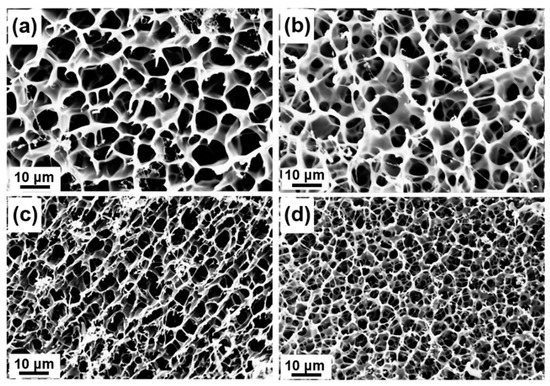
Figure 4.
SEM images of homogeneous peptide-based bis-acrylate/AAc hydrogels before biodegradation: (a) Gel-1; (b) Gel-2; (c) Gel-3; (d) Gel-4. With the increasing of peptide-based bis-acrylate contents, the pore size of the hydrogels would decrease.
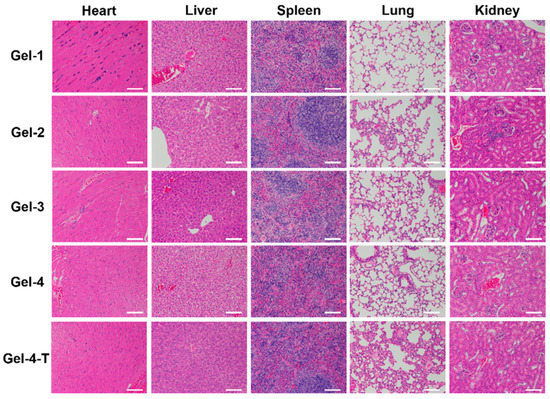
Figure 9.
In vivo toxicity assessment of hydrogels. Hematoxylin-eosin (H&E) stained tissue slices (liver, spleen, kidney, heart and lung) of mice injected with hydrogels after 24 h (the white scale bar is 200 µm).
Reference
- Zhu, J.; Han, H.; Ye, T.-T.; Li, F.-X.; Wang, X.-L.; Yu, J.-Y.; Wu, D.-Q. Biodegradable and pH Sensitive Peptide Based Hydrogel as Controlled Release System for Antibacterial Wound Dressing Application. Molecules 2018, 23, 3383. [Google Scholar] [CrossRef] [PubMed]
Publisher’s Note: MDPI stays neutral with regard to jurisdictional claims in published maps and institutional affiliations. |
© 2022 by the authors. Licensee MDPI, Basel, Switzerland. This article is an open access article distributed under the terms and conditions of the Creative Commons Attribution (CC BY) license (https://creativecommons.org/licenses/by/4.0/).