Article

Mechanical Properties and Weibull Scaling Laws of Unknown Spider Silks

1
Laboratory of Bio-inspired, Bionic, Nano, Meta Materials & Mechanics, Department of Civil, Environmental and Mechanical Engineering, University of Trento, Via Mesiano, 77, 38123 Trento, Italy
2
Queen Mary University of London, Mile End Rd, London E1 4NS, UK
*
Author to whom correspondence should be addressed.
Molecules 2020, 25(12), 2938; https://doi.org/10.3390/molecules25122938

Submission received: 24 March 2020 / Revised: 15 June 2020 / Accepted: 17 June 2020 / Published: 26 June 2020
(This article belongs to the Special Issue Silk Fibroin Materials)

Abstract

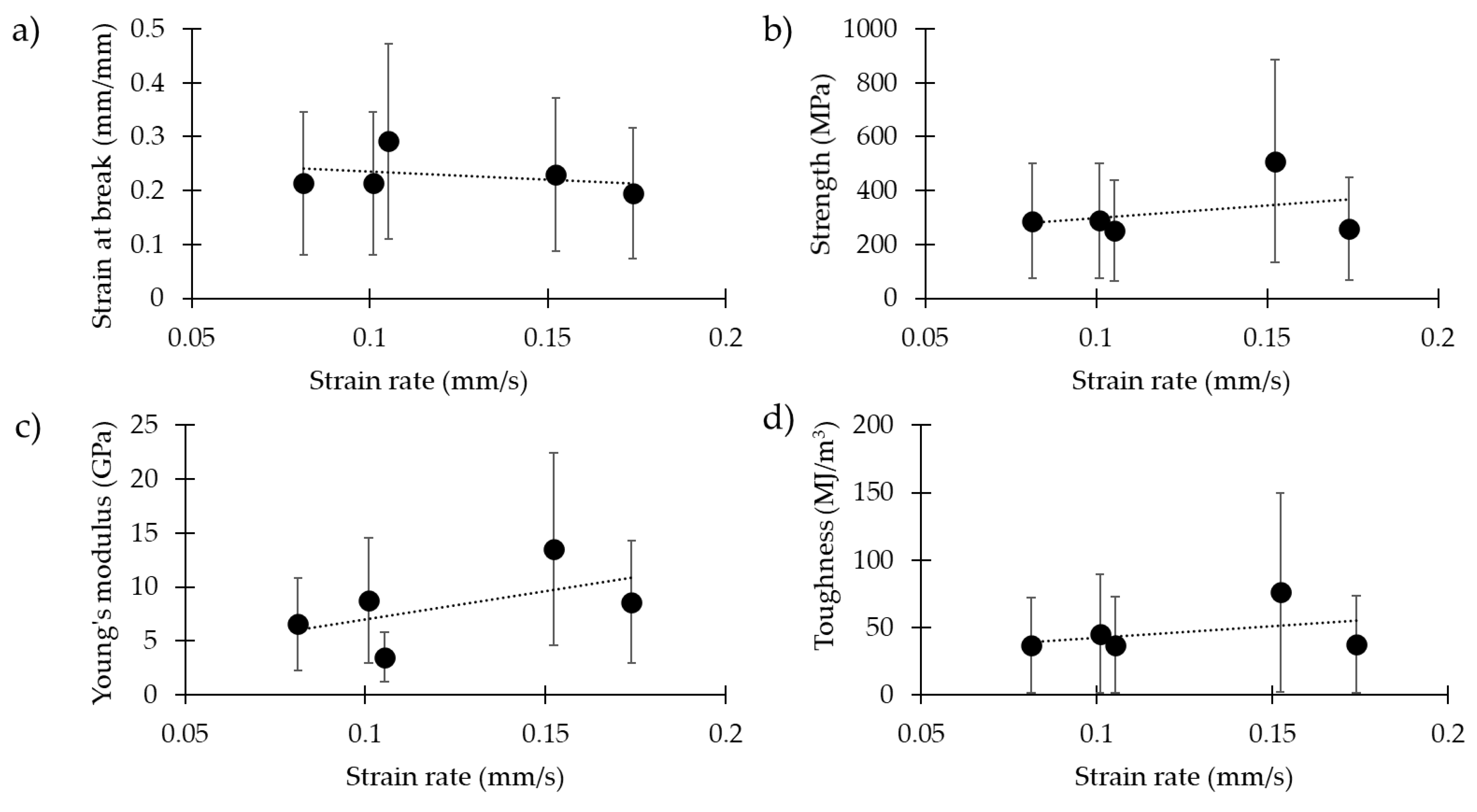
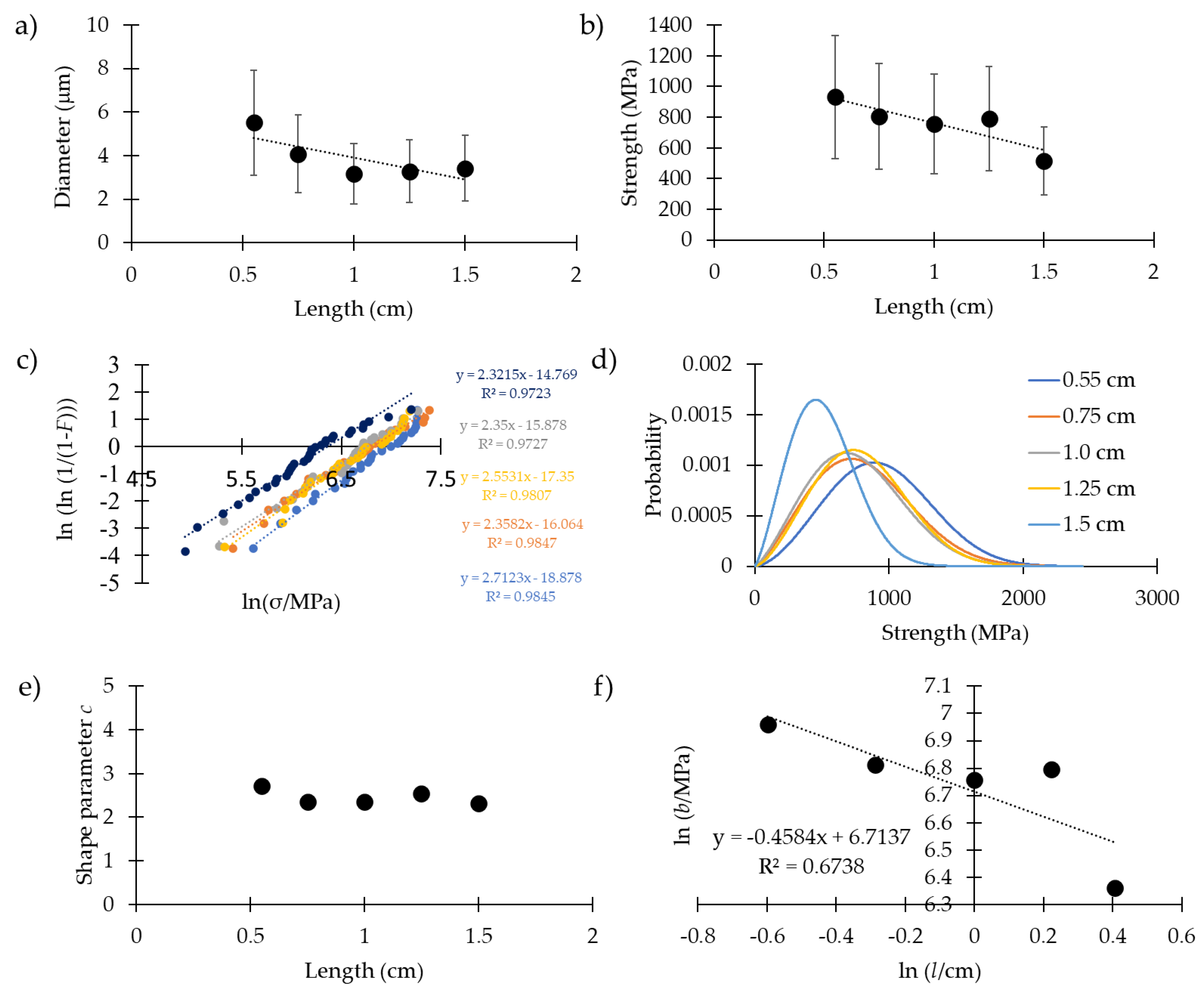
Spider silks present extraordinary mechanical properties, which have attracted the attention of material scientists in recent decades. In particular, the strength and the toughness of these protein-based materials outperform the ones of many man-made fibers. Unfortunately, despite the huge interest, there is an absence of statistical investigation on the mechanical properties of spider silks and their related size effects due to the length of the fibers. Moreover, several spider silks have never been mechanically tested. Accordingly, in this work, we measured the mechanical properties and computed the Weibull parameters for different spider silks, some of them unknown in the literature. We also measured the mechanical properties at different strain rates for the dragline of the species Cupiennius salei. For the same species, we measured the strength and Weibull parameters at different fiber lengths. In this way, we obtained the spider silk scaling laws directly and according to Weibull’s prediction. Both length and strain rates affect the mechanical properties of spider silk, as rationalized by Weibull’s statistics.
Keywords: statistics; Weibull statistics; effect size; strain rates statistics; Weibull statistics; effect size; strain rates